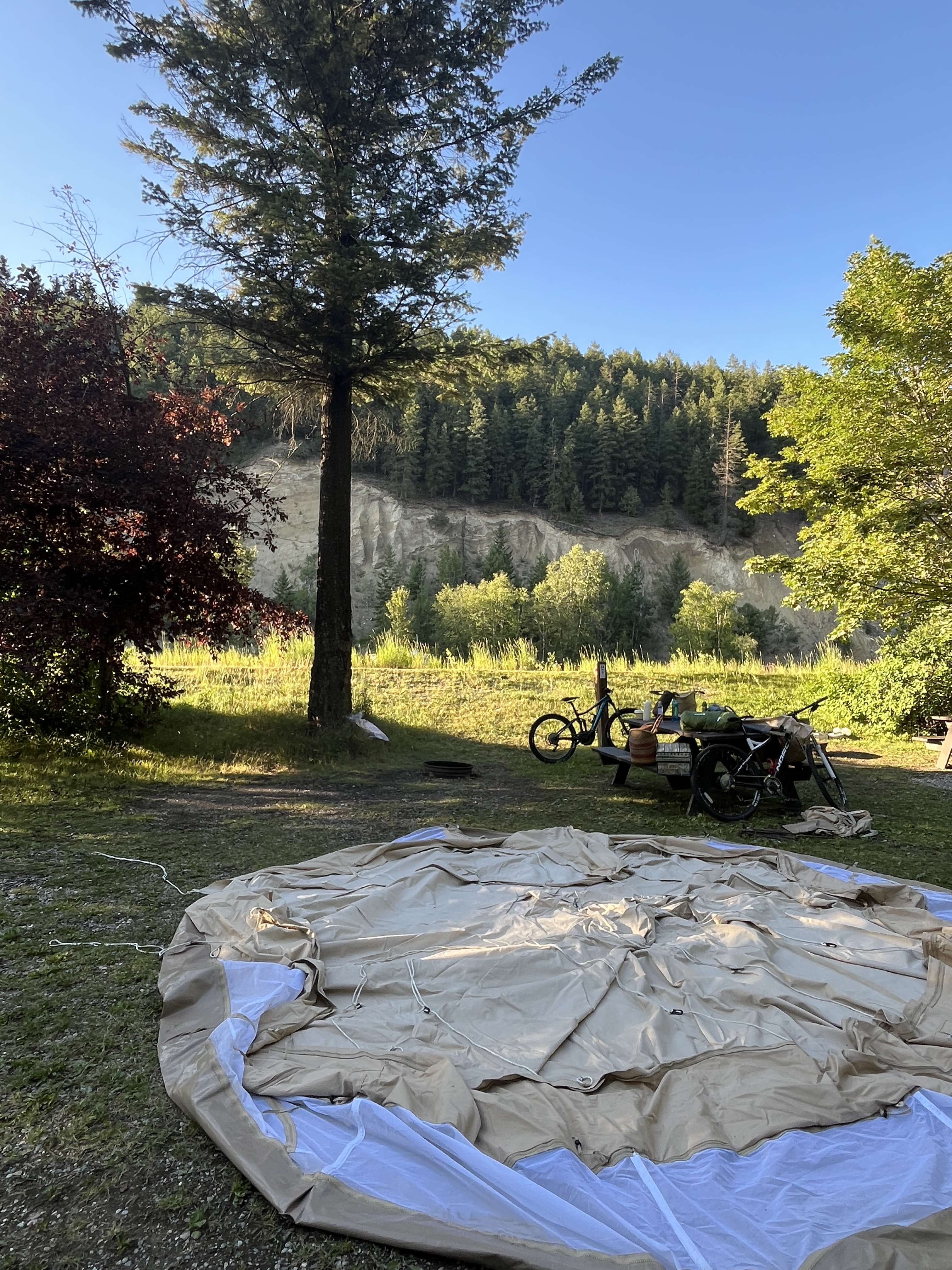


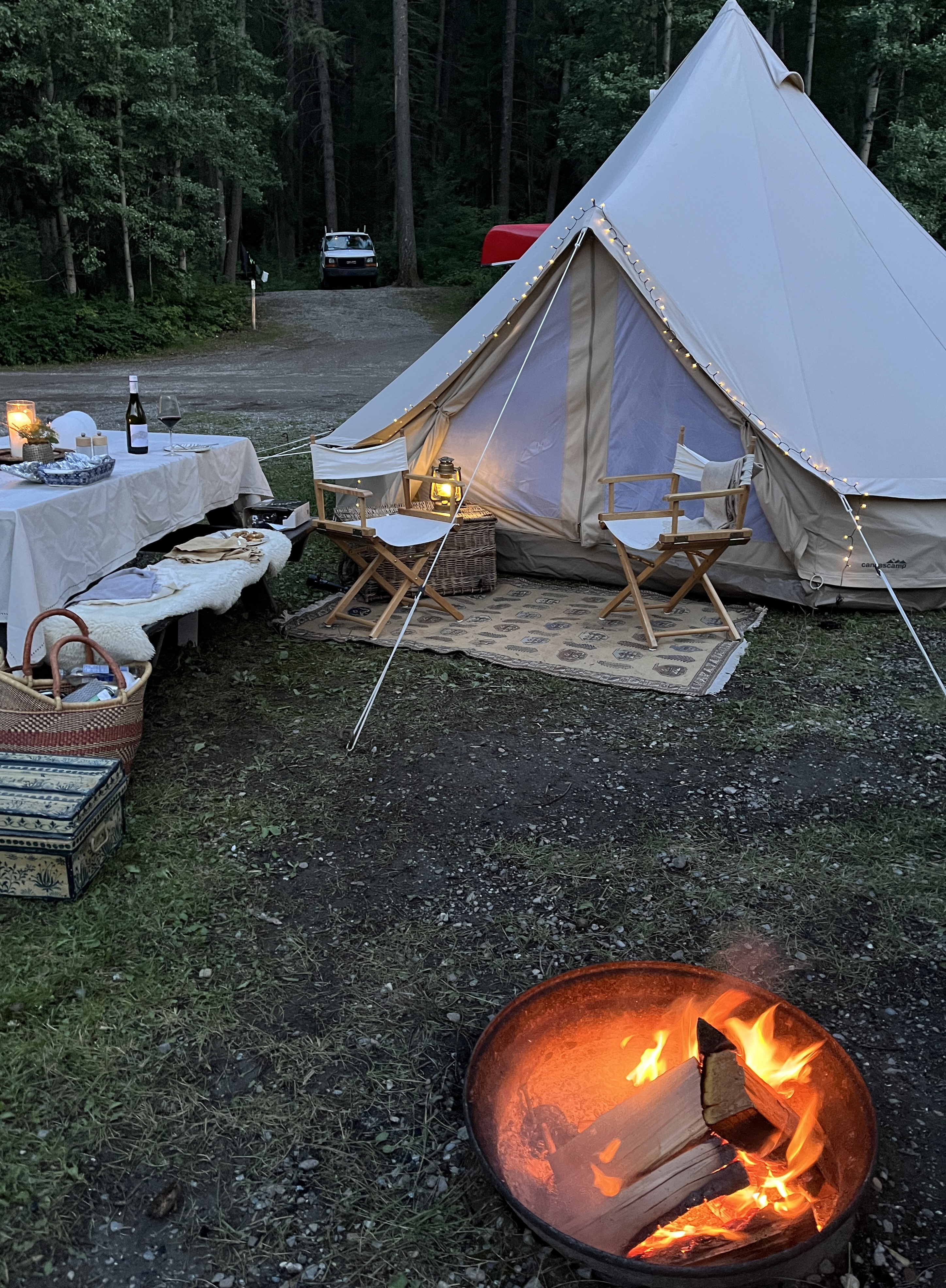

We call them mountain towns and nature has spoiled us with these veritable summer playgrounds. Nestled amongst majestic peaks and dazzling crystal-blue lakes and rivers, they’re gateways for hiking, biking, golfing, paddling, and camping. In our case glamping, as it comes with a dose of the glam with Lupin, our beloved Sibley Bell tent. With the car packed full to the gunnels, bikes and canoe strapped on, last month we chose a new mountain town to play in.
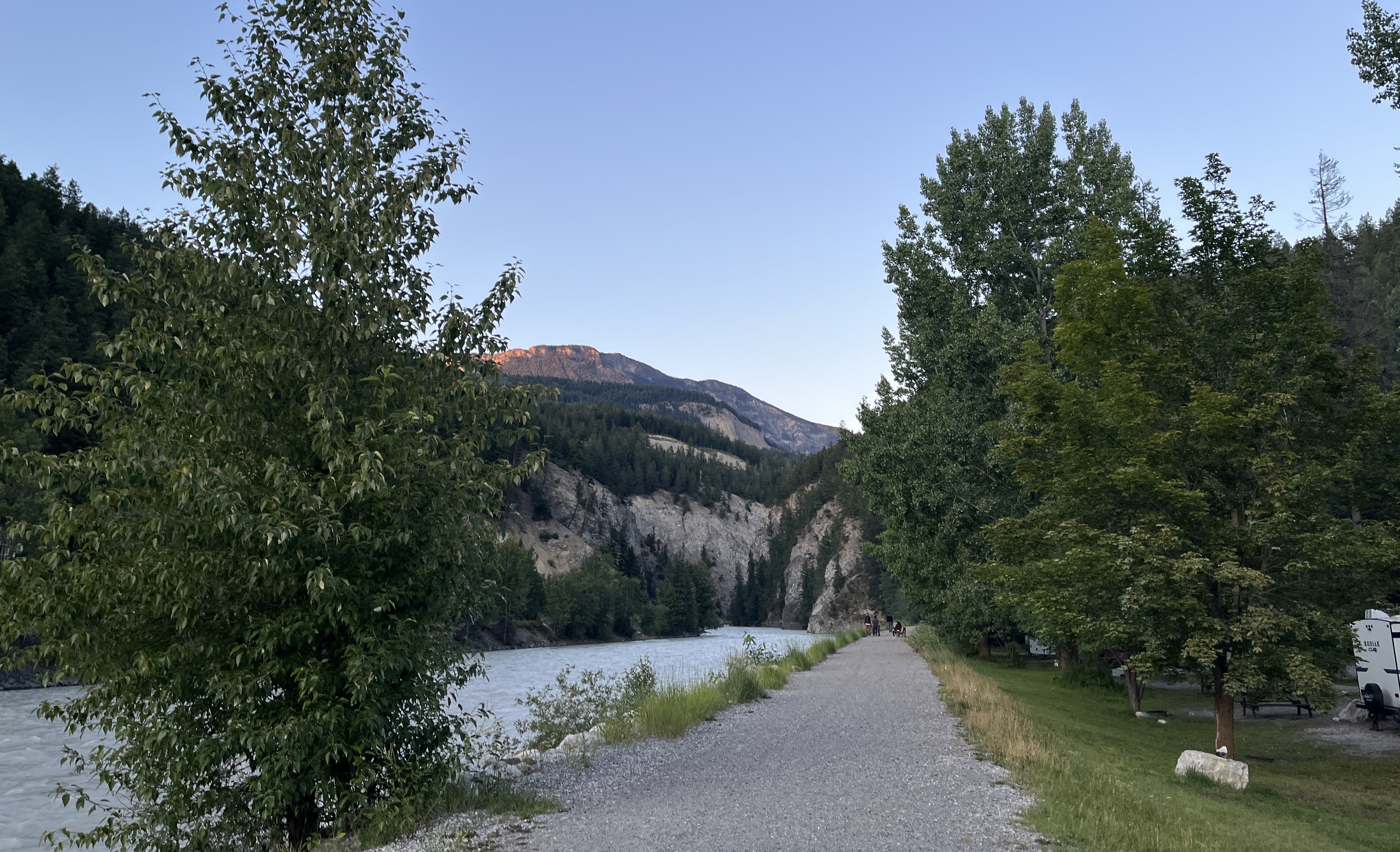
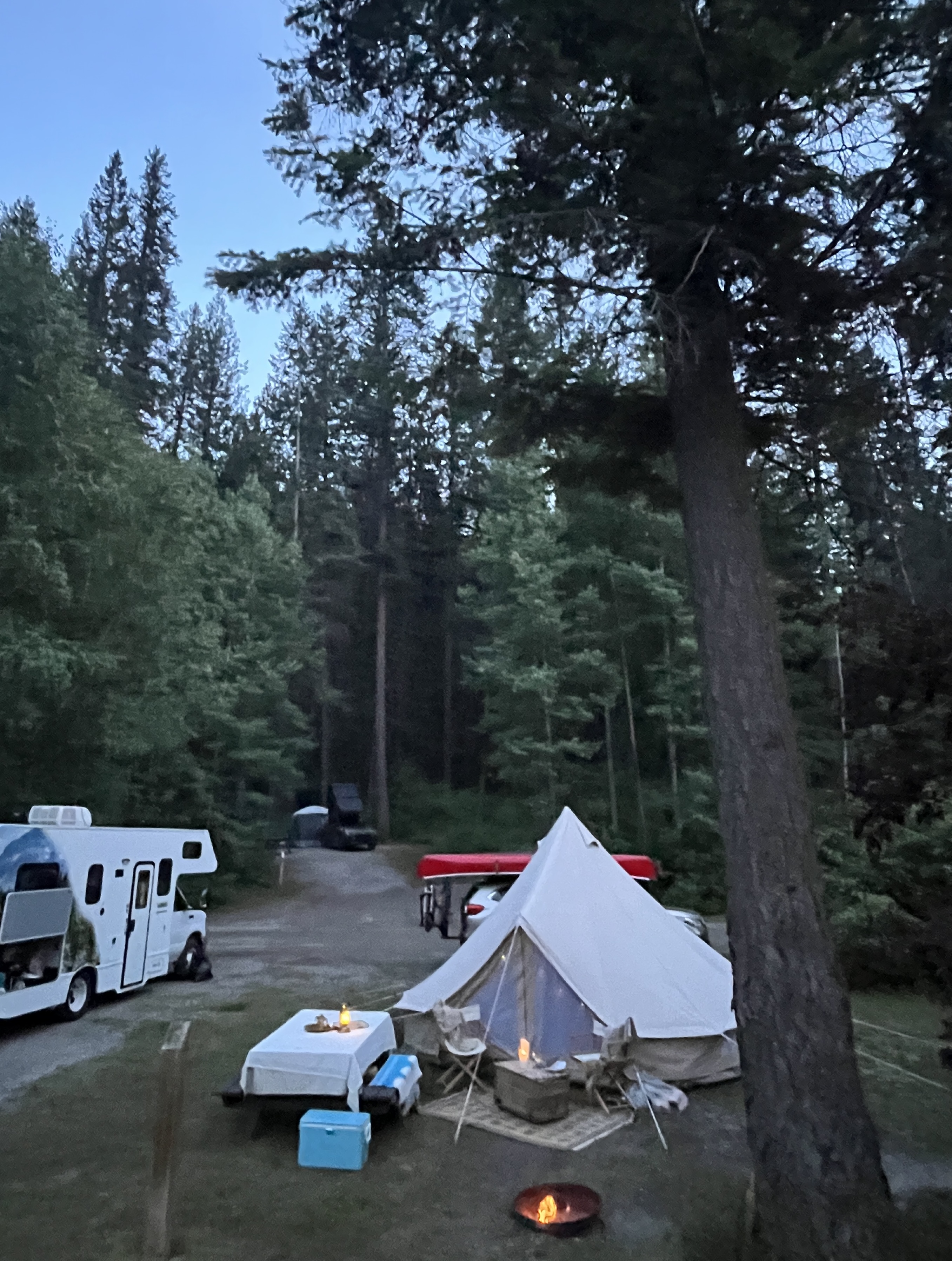
We often choose to stay in the heart of towns, in Municipal Campgrounds, as we did with our iconic glamp in Kaslo, near Nelson. In Golden, the choice graced us with a picturesque spot along the Kicking Horse River. Pesky mosquitoes were part of the welcome crew and with our site set up in about an hour, the campfire was soon crackling away, dinner and wine ensued. We savoured the slow unfolding of dusk and with the revelation of night upon us, we marvelled at a thousands stars in the twinkling sky above.
Nestled in the Rocky Mountain Trench, along the confluence of the Columbia and Kicking Horse Rivers, the town of Golden is surrounded by three different mountian ranges and five National Parks. Our camping spot was surrounded by other campers from the tiniest of tents, to grand trailers, to old-school camper trailers. It seemed that all of us – from the many Americans and overseas travellers, to fellow Canadians – were genuinely pleased just to be in the great outdoors, yet with amenities at our fingertips.
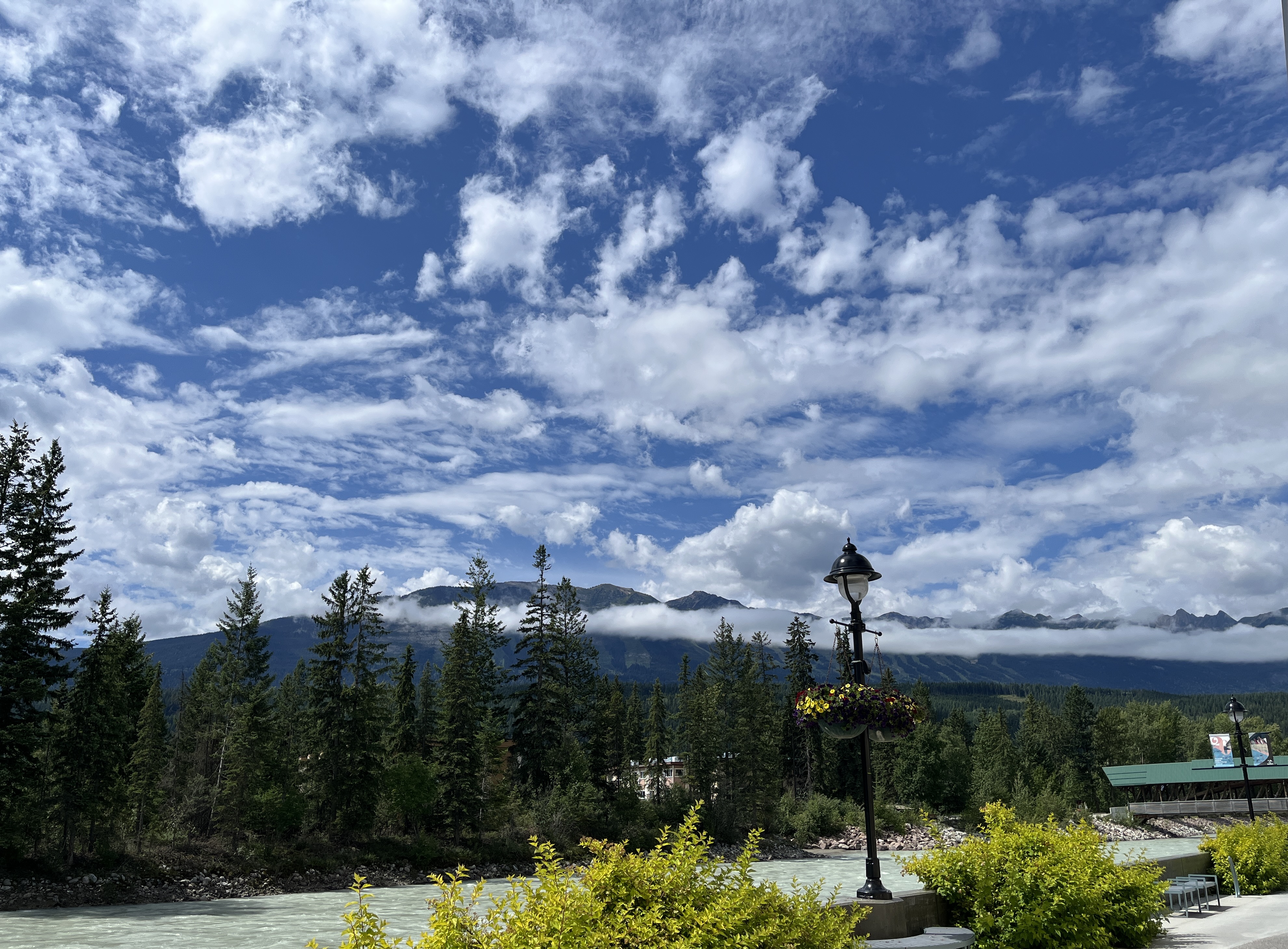
Each morning after coffee around the campfire, we’d set off on our bikes to explore the town. With its river running through it, Golden is bestowed with a stunning setting. The Kicking Horse Mountain Resort has an eagle eye’s view in the distance and a long promenade stretches alongside the river. Canada’s longest timber-framed bridge is its anchor.
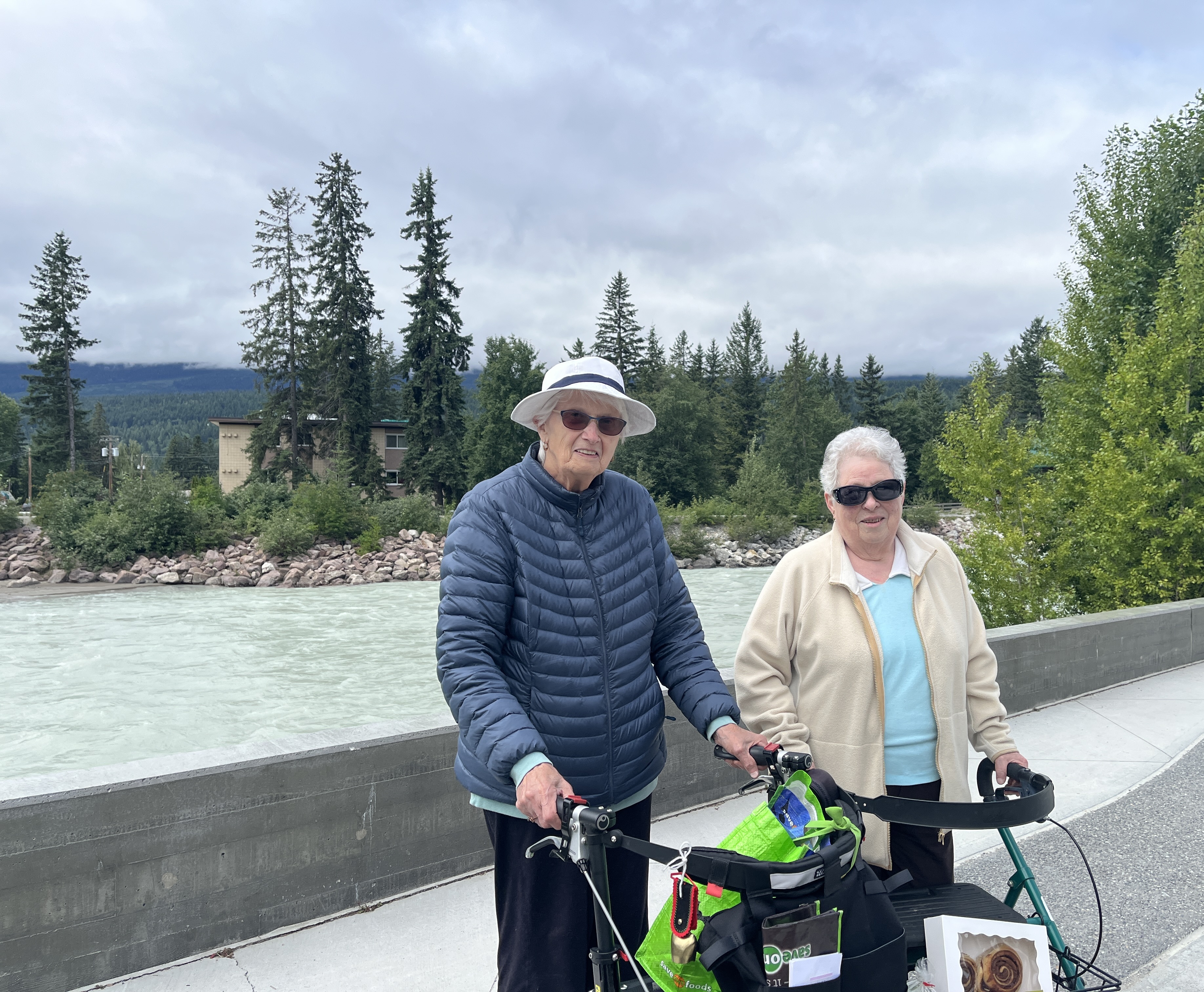
We chance upon Betty and Lynn out for a mid-morning stroll. “Such a beautiful spot for a morning walk,” I say with a smile. They immediately offer a sincere apologize,” We’re sorry that our mountain is hiding behind the clouds.”
“Oh I know it’s there,” I confirm, “your beloved ski hill is hiding! We’re from Kimberley, another ski hill town.”
“I was raised in Kimberley,” one of the ladies says fondly and from there our conversation flows.
The peaks soon reveal themselves in the unseasonably chilly morning and the ladies happily relate a few local stories of life here in the ’50’s.
“When we first arrived, there were only two telephones in the town and one of them was at my place… well you can imagine the commotion!” They admit the town has greatly changed as it’s now a world-class ski resort and hiking destination.
I‘ve written previously of the Swiss guides who first made Adventure Tourism possible in the area. The Canadian Pacific Railway brought the guides to the area in 1899. Earlier in that century, the renowned fur trader, surveyor and map maker David Thompson was tasked with opening a trading route to the Pacific Northwest. Navigating the vast and treacherous Rocky Mountains, he first travelled to the future site of Golden in 1807. It wasn’t until 1881 that the CPR hired A.B. Rogers to find a rail route through the region. The base camp established for his crew eventually first of the settlement now known as Golden.
The ladies tell me that the town was eventually named Golden. “It had to out-do nearby Silvertown.”


After our chat and a browse through the market, we cycle through the wide streets to the local Museum. It’s charming, full of information, and regals with stories about the original Columbia River Lumber Company which grew the settlement, while also attracting a large hard-working Sikh population. The Museum also pays homeage to Victory gardens, or war gardens, vital during the first World War; utilizing backyards for food, both for personal and the war effort. And of course there is much mention of the vital role those Swiss guides played.

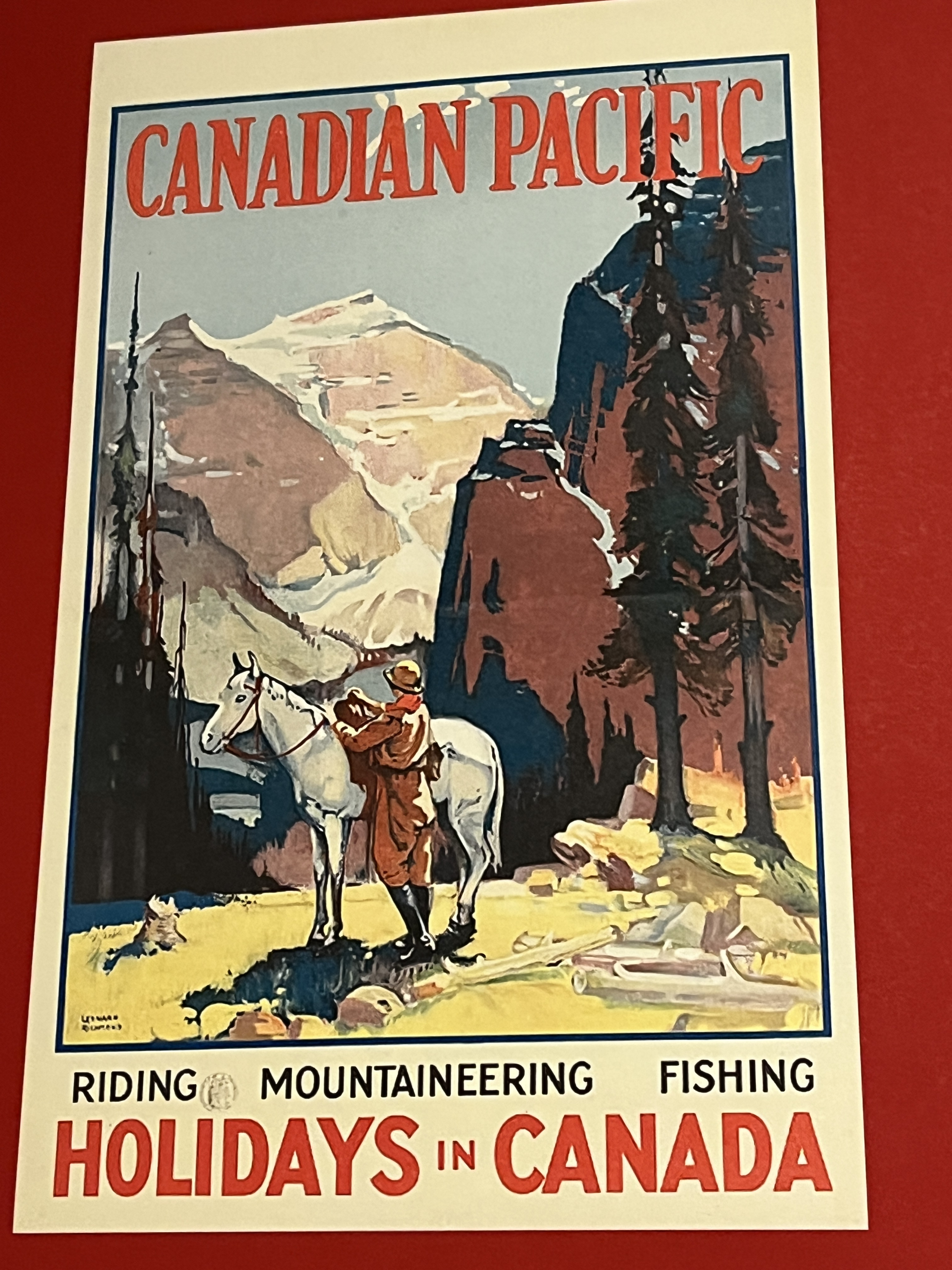
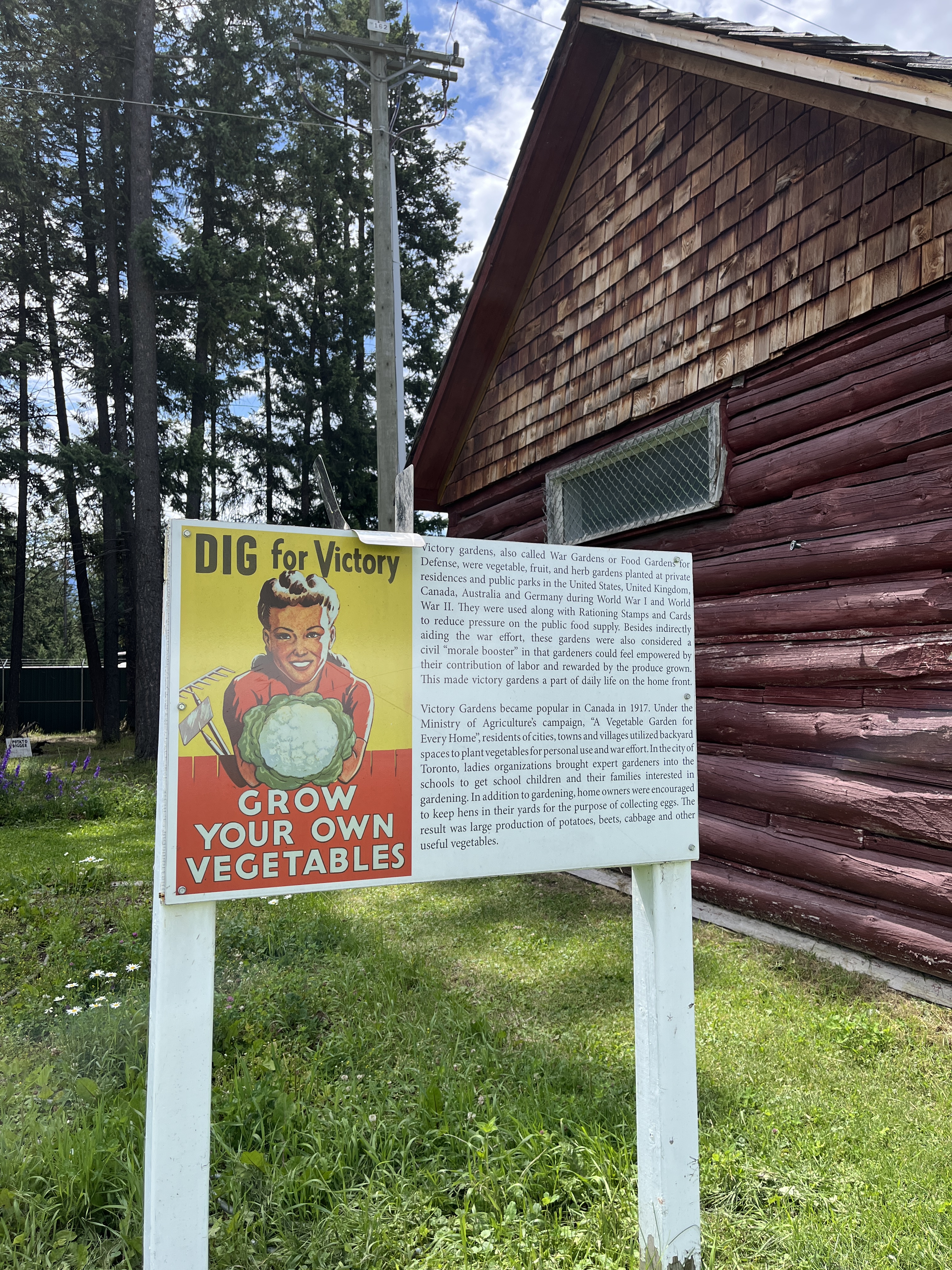
Swiss mountaineers were employed during the summers, returning home to Switzerland over the winter, most over-wintered working as caretakers for the seasonal CPR hotels. Of the fifty-six first ascents of mountains over 3000 metres prior to 1911, no fewer than 50 first ascents were made under the steady hand and sure foot of these experienced men. By 1925, CPR’s 35 Swiss Guides had led more than 250 first ascents in the mountains of western Canada. With no fatalities in their care, and perhaps basking in their reputation as gentlemen and colourful characters, many would bring their families to make their Golden home at the purpose-built Edelweiss Village.
We had visited their home-away-from-home a number of years ago, now it has greatly changed… refurbished, re-imagined and open to guests.


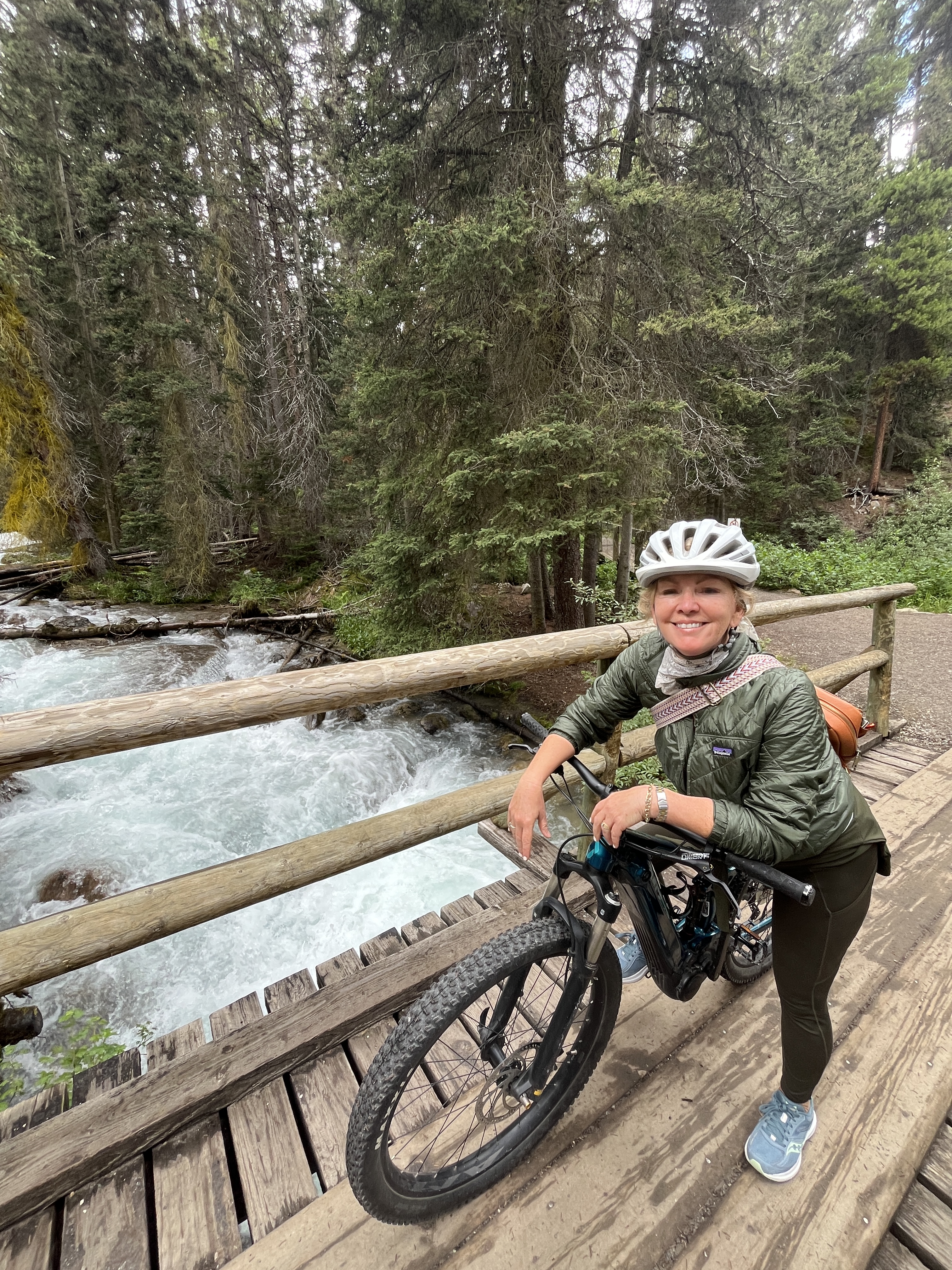
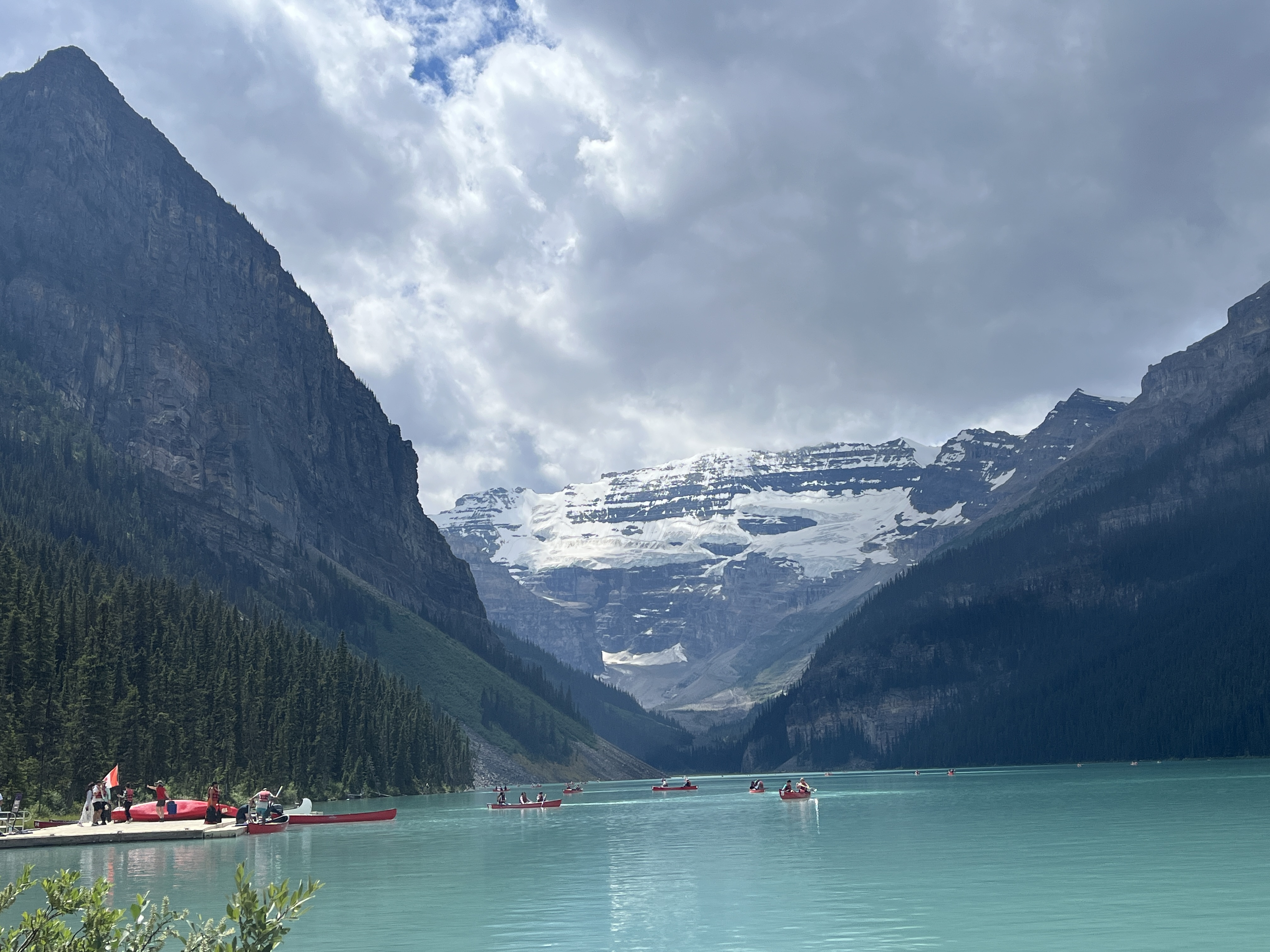
Our bike rides take us out of town, through forested trails, up and down mountains and on the last day to the famed Lake Louise… with a little driving in between. The beautiful drive from Golden to Lake Louise heads east, then south for about one hour through Yoho National Park. Stop at the Spiral Tunnels, the Golden Skybridge, Wapta Falls, Emerald Lake, or the sleepy but gloriously positioned town of Field.
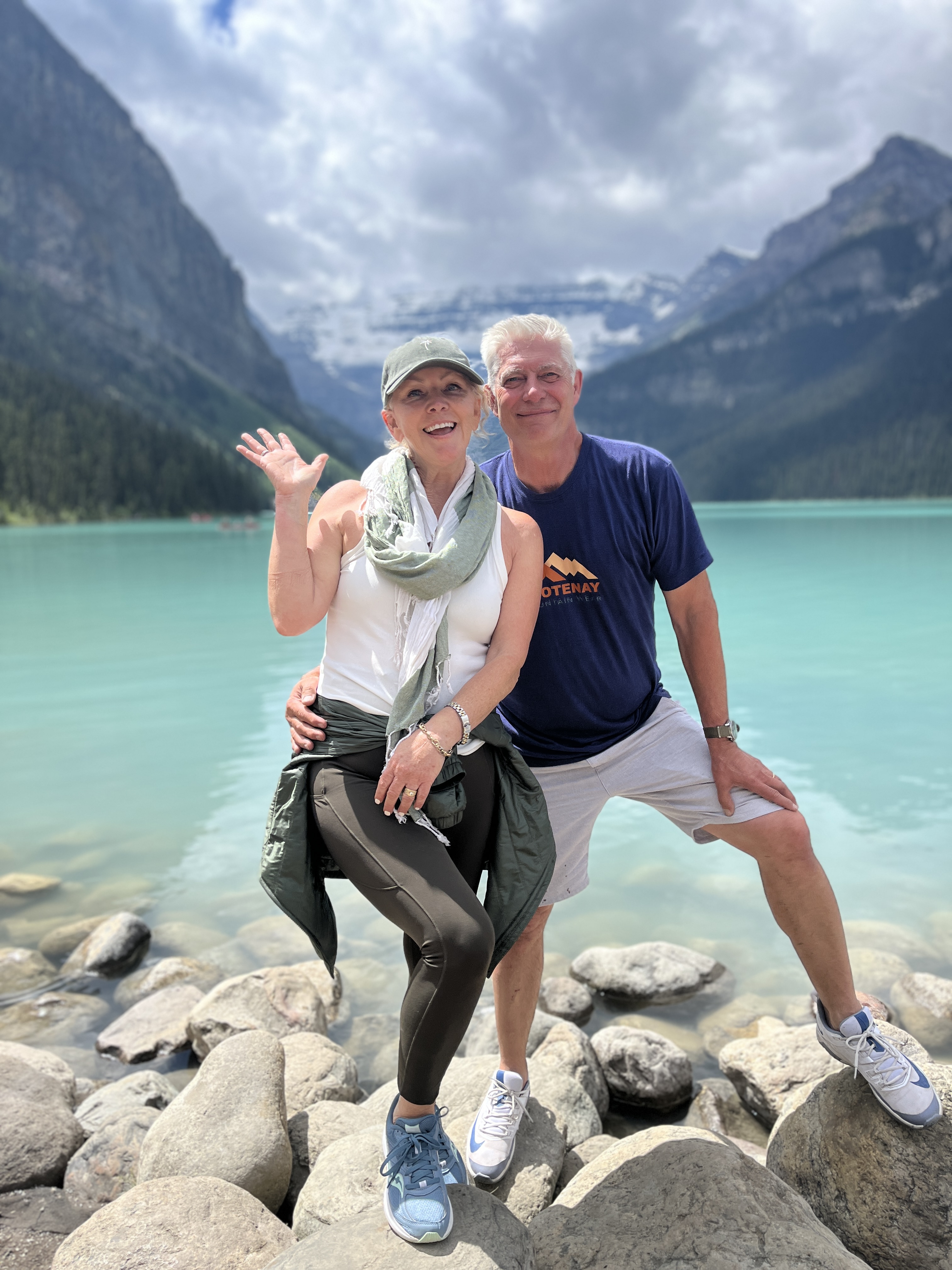
After parking in Lake Louise Village, we biked the former route of the tramway up to the lake – about 10 km both ways. The Tramline Trail leads you to one of Canada’s most breathtaking views. As always people have flocked from around the world to catch a glimpse of its iconic magic.
Back at the campsite on our last evening, a young father strolls past for a pre-bedtime walk with his children. “What a beautiful set-up, a bell tent. I know them well as I was in the military,” he tells me.
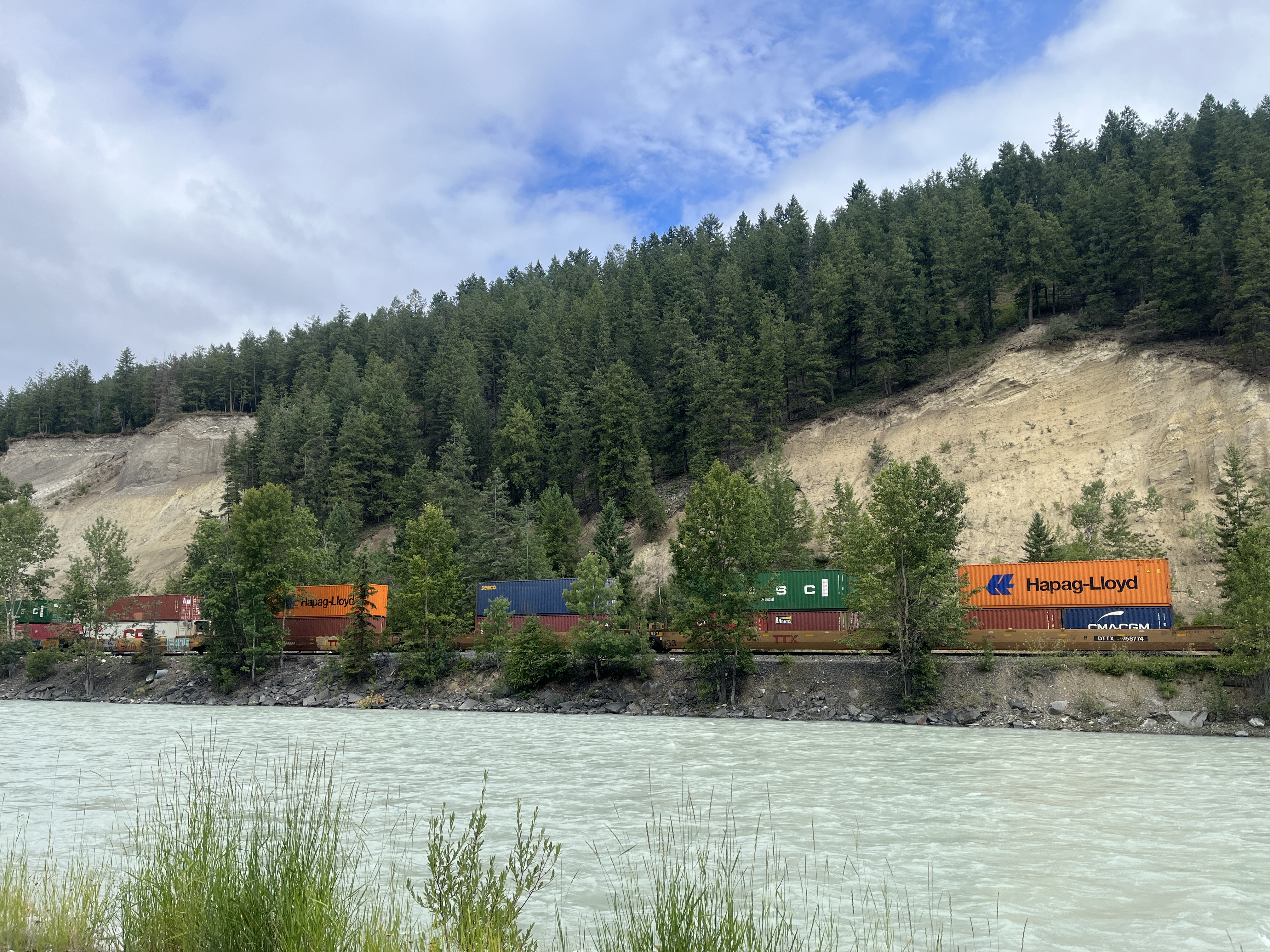
We’re used to compliments about our Lupin, she is always the ‘belle of the ball’ at any campsite. Dramatic on the outside, inside she’s cozy and warm. Shadows play on her canvas and the noises of the night may awaken you, but they accompany the scene like a grand outdoors sound track. Even the trains thundering past through the night, just on the other side of the river, weren’t bothersome but a tangible reminder of our vast country and the endless task of moving goods.
The Sibley Bell tent was invented by American military officer Henry Hopkins Sibley. Patented in 1856, the conical design stands about 3.7 metres high, 5.5 metres in diameter and can comfortably house about a dozen men. In our case, the most Lupin has slept is six adults and our grand-dog Captain… cozy indeed!
 notesonaboardingpass
what a beautiful trip you had! We are so lucky to live in this spectacular area! Love your writing Terry, keep it up! Pictures are wonderful!
Wonderful to hear, thank you. I muse often as well at how lucky we are to live where we do and summers are always so special to enjoy it all!