Category Archives: Family

They’ll be home… where the garden is, where memories live

Standard
IMG_6015

The pond, for fishing and skating

Our evening stroll offered swooping owls, waddling ducks and darting dogs. The sun sunk low into a newly planted field that borders the acreage, we call it home…’the farm.’ I’ve made my way back to Canada to surprise my parents for their 40th Anniversary, returning to a plot of land that embodies nature’s bounty, a lifetime of work and more memories than can be captured on film. But there’s no need; the images are imprinted on our hearts, embedded into our collective family memory.

This land, a grain field forty years ago, is now an oasis with towering blue and white spruce, and ponderosa pine that shelter from howling north winds. The grass is verdant this spring, its rich emerald hue a backdrop for flowers in bloom, golden spurge and delicate May Day trees.
IMG_6069

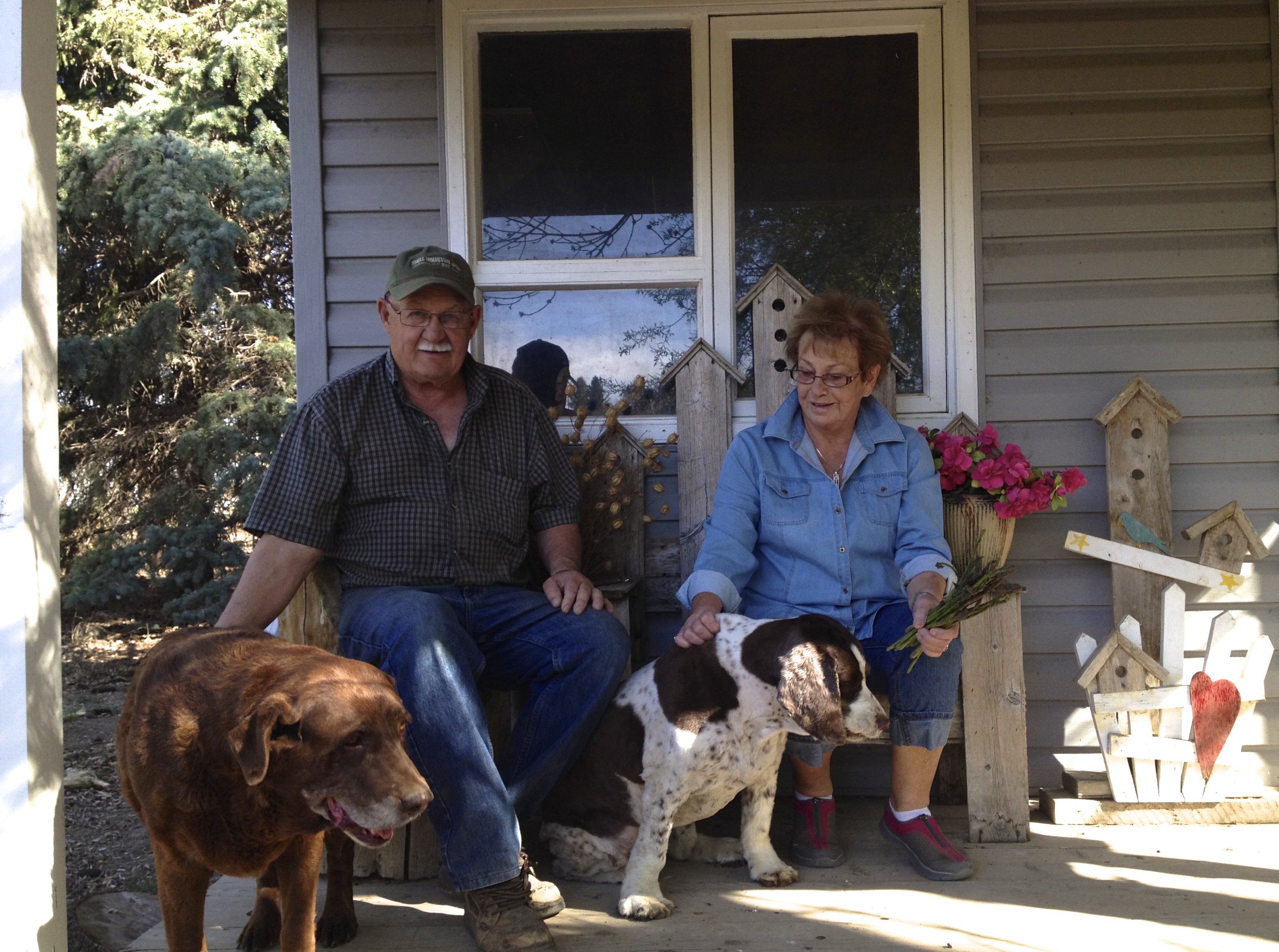
At the garden shed

These are the prairies of Western Canada where settlers have arrived for the past few hundred years; enticed by fertile farm land, hopeful for idyllic homesteads and new beginnings.

From their European homelands they ventured by ship, uncertain of what the future held. They journeyed onward by train, along the newly laid Canadian Pacific Railway, disembarking at communities across this vast country.

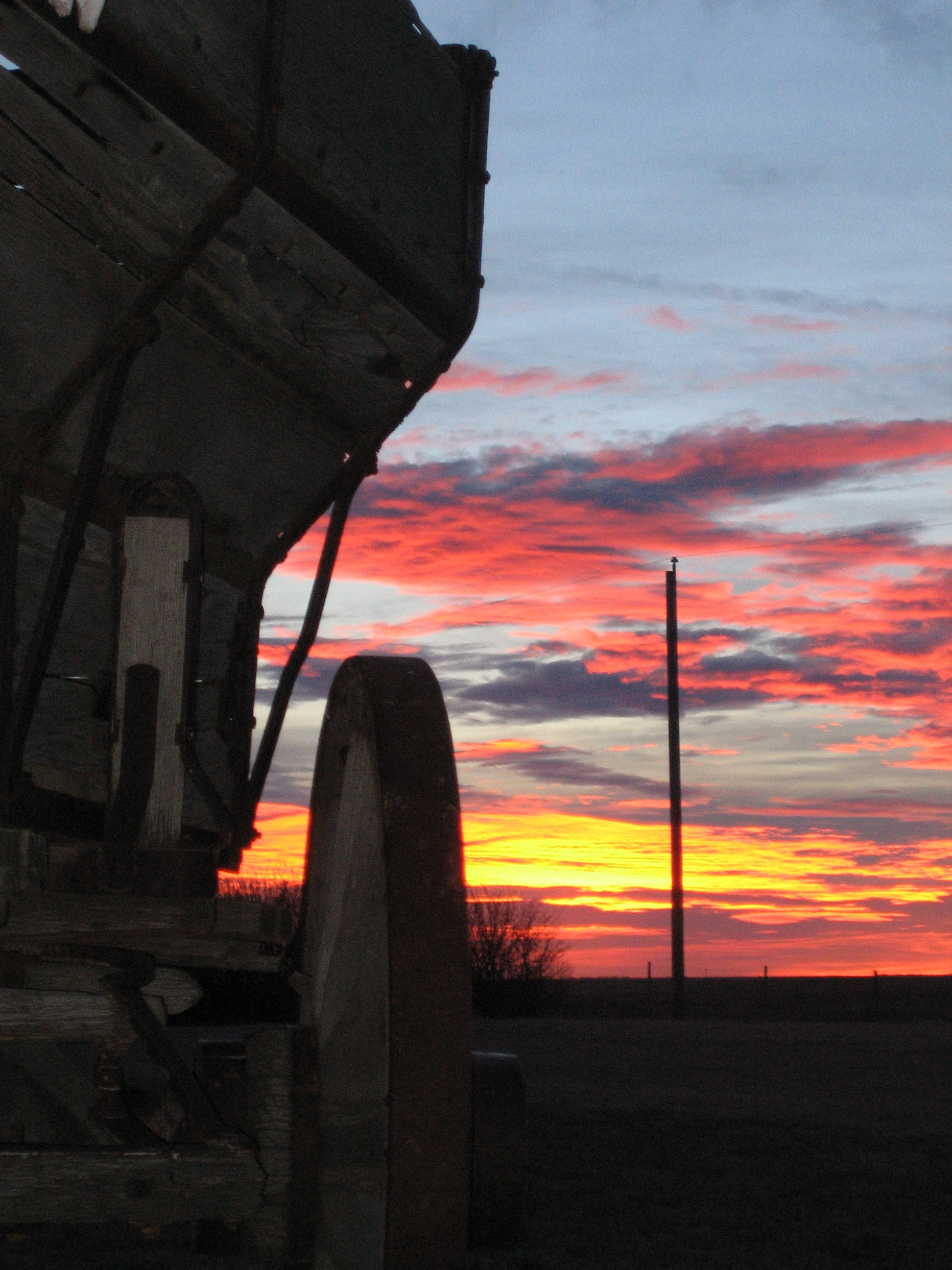
As with my mother’s family in the ’50’s, many arrived from the Netherlands, risking all for a new life; hard work and toil yielded success. Proud, new citizens in a welcoming land. Some settlers trekked from the east or the U.S. in caravans of wagons, stacked high with furniture and family. The wagon parked on the acreage from my father’s family, is a proud reminder of their storied journey. Now a backdrop for a yellow rose bush, it was once a means of transport. A working wagon for hauling hay, feed, grain to elevators.
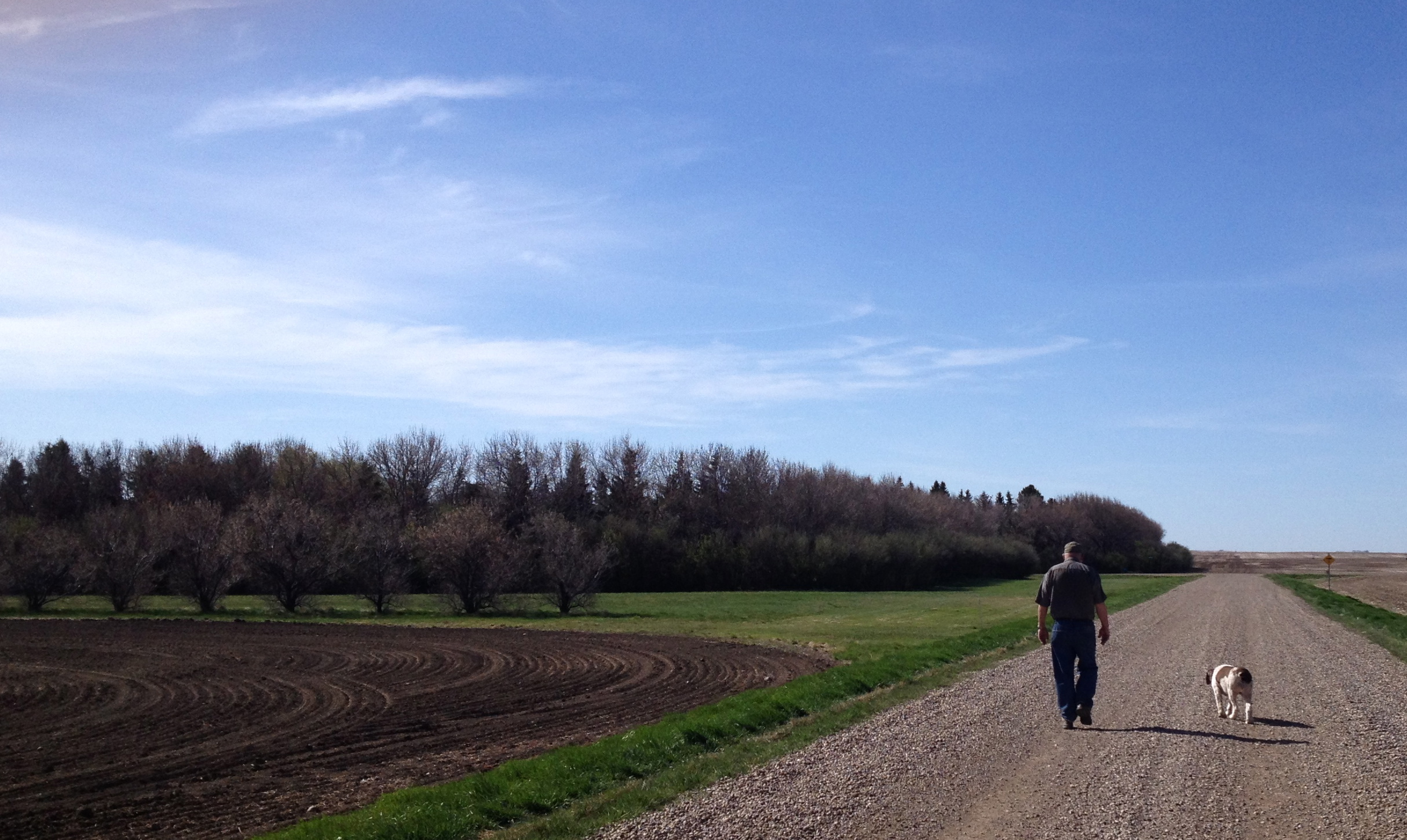
Quiet country roads

Quiet country roads

In my family, you garden, work in the yard, grow things, landscape and stroll the land; just as our ancestors have done. Is it in your blood, this need to commune with the land, I feel it is. I felt it wouldn’t be spring for me until I could dig a little, plant, walk the dogs along scented lilacs and quiet country roads.

And so, I’ve come home to my parents and I find them where they should be… where I’m delighted to be.

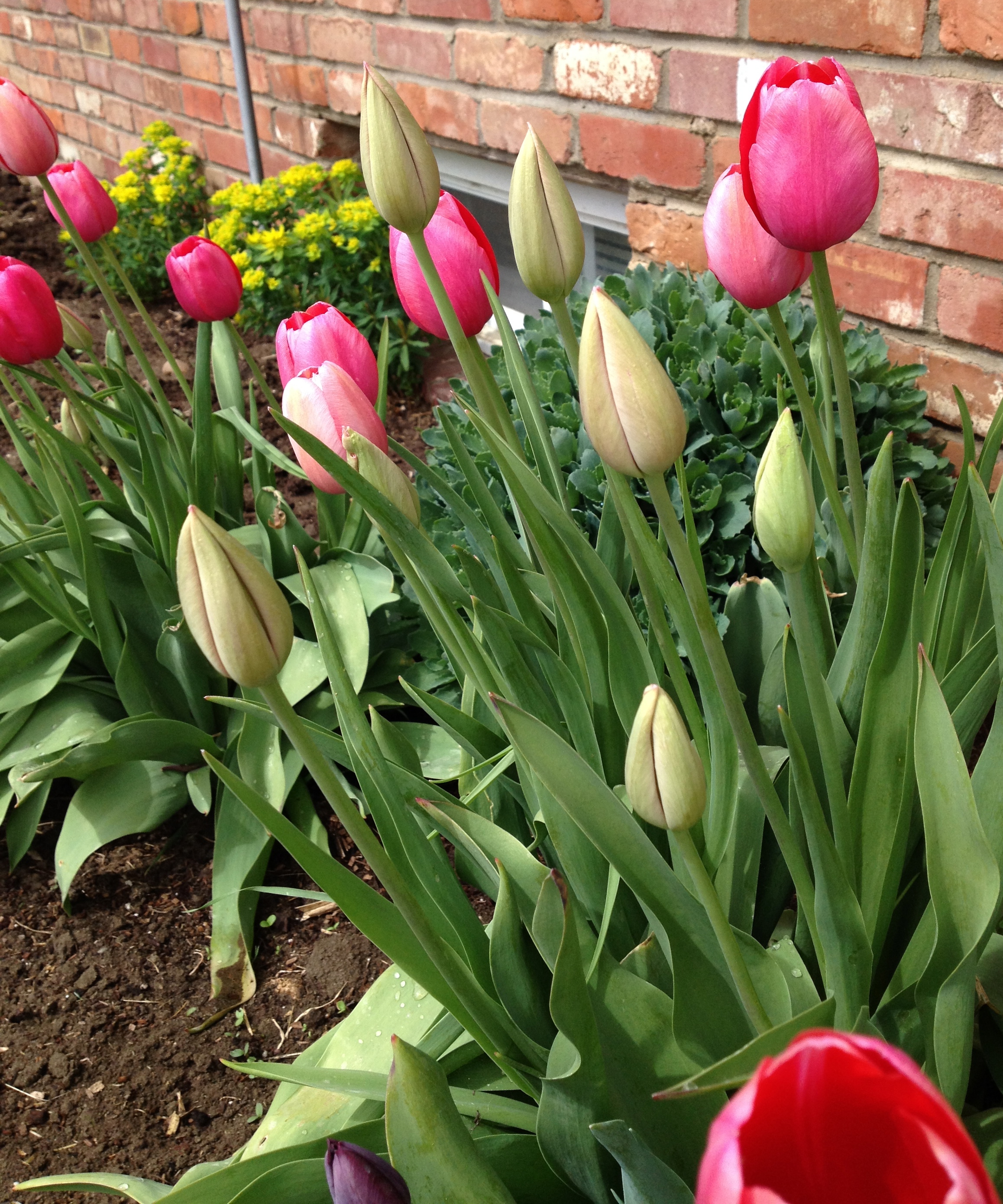
They’re ambling below dreamy blue skies, dogs nudging at their sides and geese gliding over sky. I’ve found them plucking asparagus, planting gladiolas and poking hollyhock seeds into tilled earth. It’s time to cut first grass, take the ‘storm plastic’ off and let the deck breath, prepare the planters and the ‘beds’. Soon the kitchen table will display their bounty; bouquets of lupins, tulips, dahlias, peonies, lilacs and glads.
IMG_6097

Tulips in bloom

My parents awaken, work and stroll to a symphony of cooing, cawing; a melody of birds. Plump robins, doves, meadowlarks and elusive owls. Partridges, pheasants, hawks and cowbirds chirp and squawk. Butterflies flutter and bees flit past, en route to blossoms and buds.
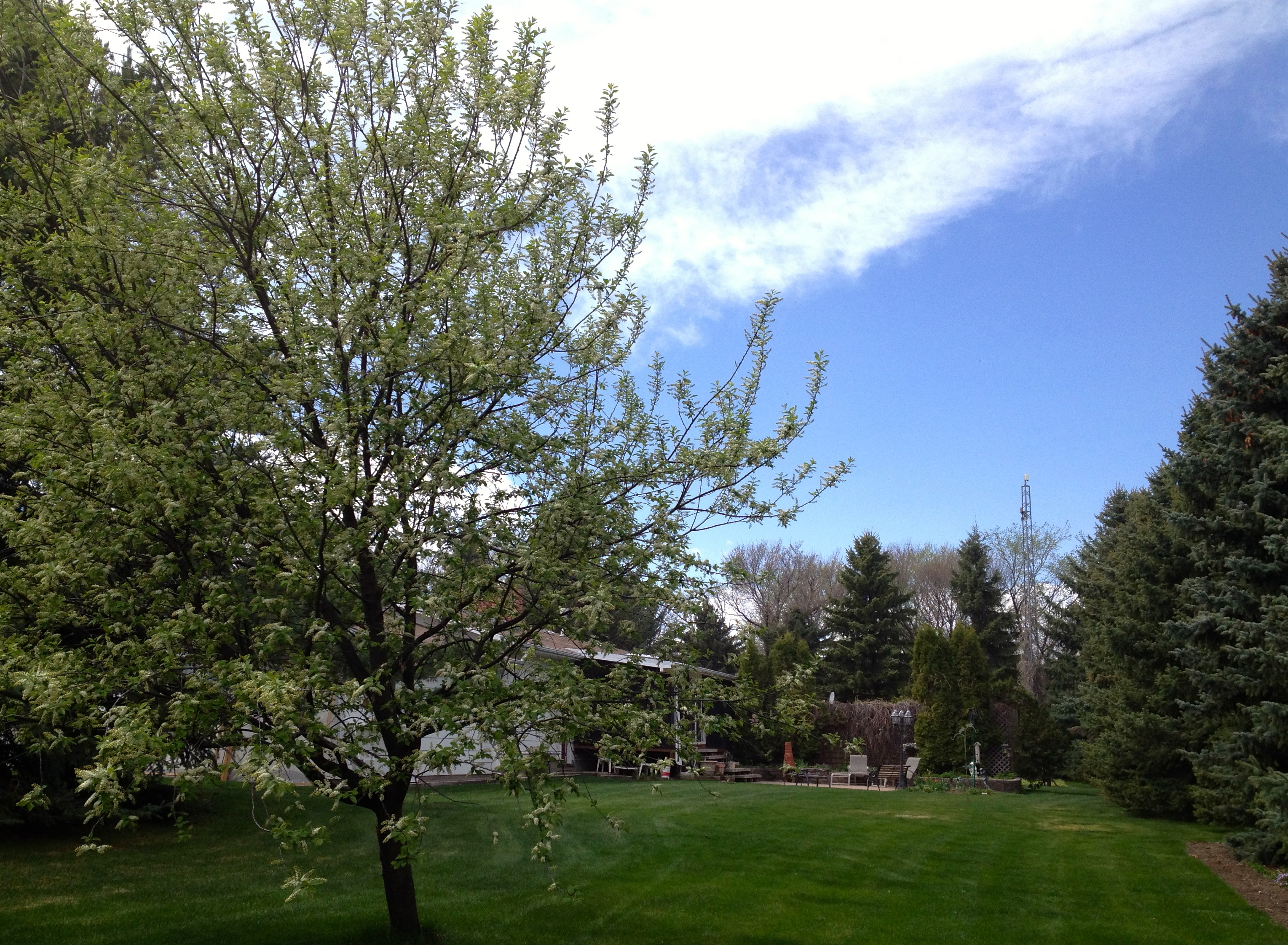
Where grandchildren played and played

Where grandchildren played and great- grandchildren now play

Under billowy clouds, skunks duck into warrens and gophers tunnel, deer prance through fields past gangly hares. The dogs wait patiently on a weathered deck as we have a ‘wee dram’ at dear, long time neighbours. Storm clouds brew, awakening our senses as we rush home through the shelter belt of trees.

These glorious days of spring find us reminiscing of grandchildren that grew up in this haven of outdoor activity. My children who were raised on different continents, came here…to be home.

Towering elms

Towering elms

Here, with cousins, they learned how to skate on a frozen pond and ‘hold on tight’ for tractor-drawn sleigh rides. How to build snow forts and duck snowballs. Summers passed in perpetual movement, running barefoot over green lawns, soaked and squealing. ‘Secret missions’ played out through trees and fields. Golf carts, bikes and trikes circled the yard, eager for an adventure.

It’s here they played ball, built campfires and gazed at a million stars. Where Grandpa taught them how to fish, to golf, to ‘drive a standard’ in a rusty, green pickup truck. Where Grandma ensured they knew how to play ‘Texas Hold Em’, sing ‘Hollandse leidjes’ and bake waffle cookies. Yes, it’s here they came to bond with family, find their roots, to become Canadian.

This oasis has been a constant in our lives, a refuge on the beloved flatlands of the prairies. I find my parents offering the same inviting hospitality that has always been for my family, since the day I was married here, on this land. The elms and pines are taller now, the wagon more weathered and the kitchen table a little scuffed from hearty meals and lively gatherings.
IMG_0503

Grandfather’s wagon

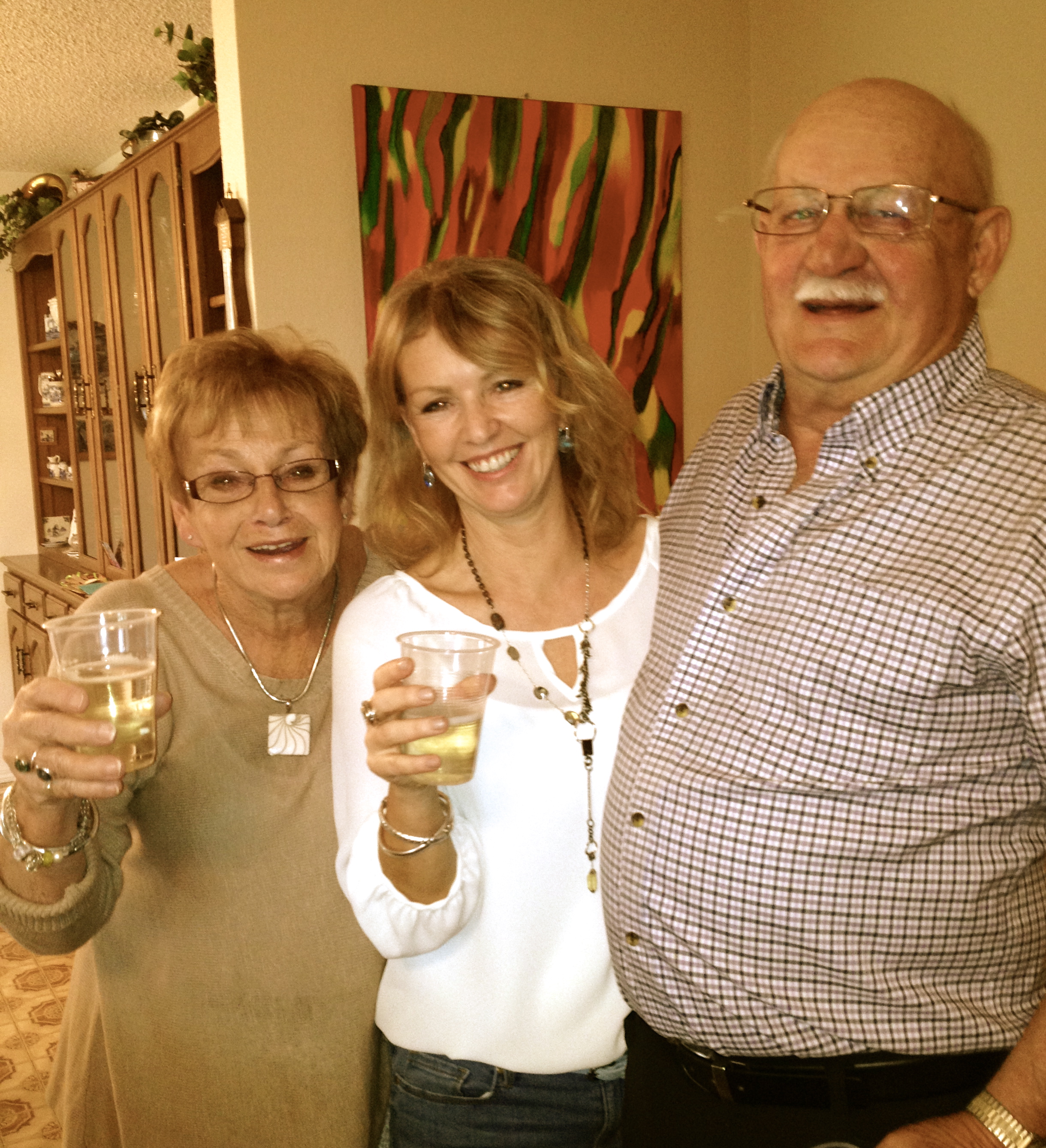
And as it was recently when I crept into their home from halfway around the world, it was as always, gezillig…that Dutch word for cozy. The surprise was genuine; as were the friends and family here to celebrate these two special people. I know we’re fortunate to live and travel the world. Yet, we have a haven to come home to…it’s just east of Barnwell*, Alberta, Canada. And my parents, I’ll find them here, home.
IMG_5951 2

An Anniversary surprise

IMG_6027

The colour of beehives

*Barnwell is not named after a barn and a well, but after William Barnwell who immigrated from England. His family dates back to the Baron de Barnwell who came from Normandy with William the Conqueror in 1066

IMG_6248

An early spring bouquet

IMG_6113

The neighbour’s barn

A poppy for Sarah…

Standard

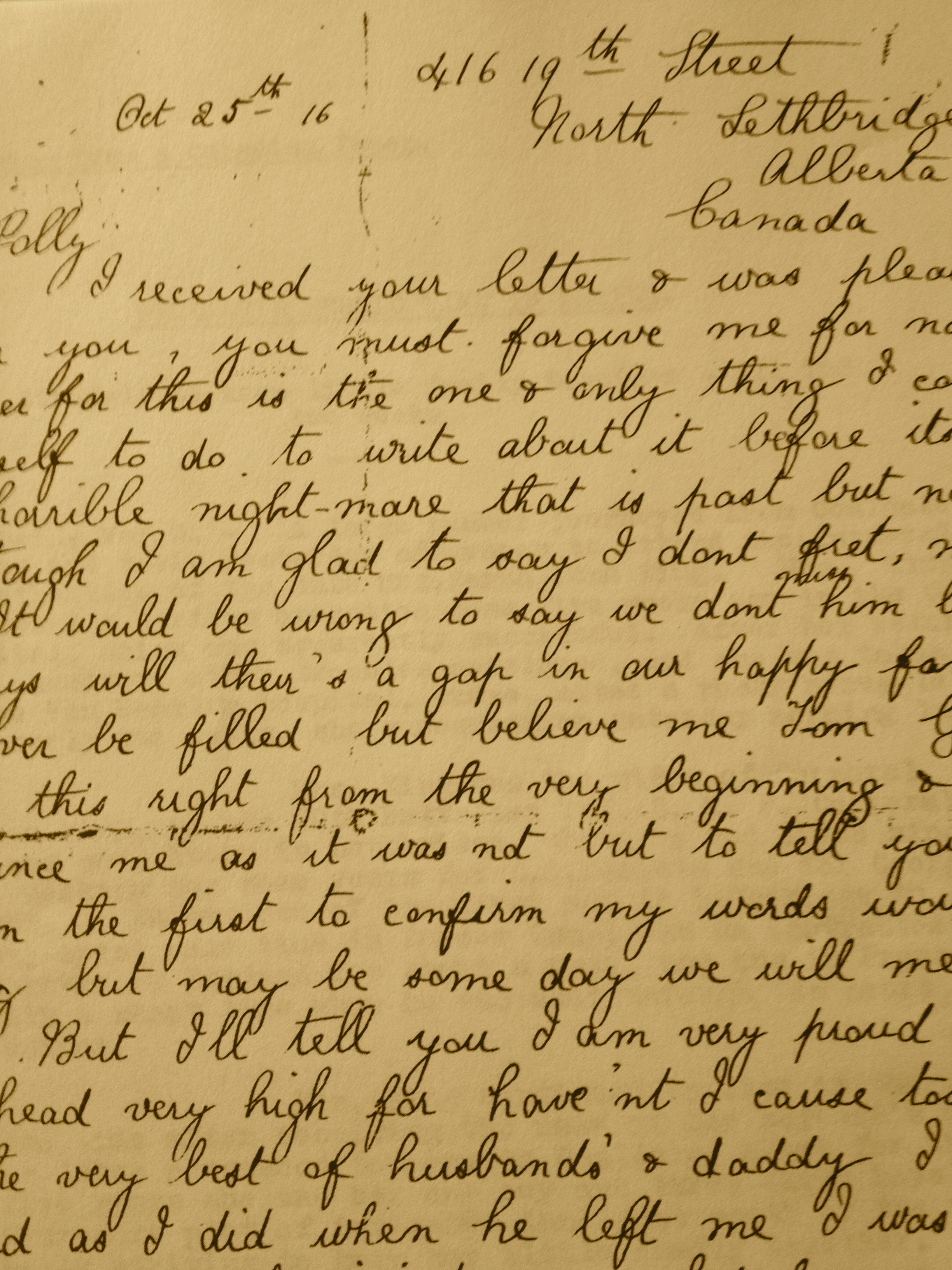
A haunting line in Sarah Jane’s letter spoke to me as I stood at the Tower of London this September. “I picked up the paper and the wind turned it over, when to my dismay Will’s name stared me in the face, he had been killed.”

IMG_3227

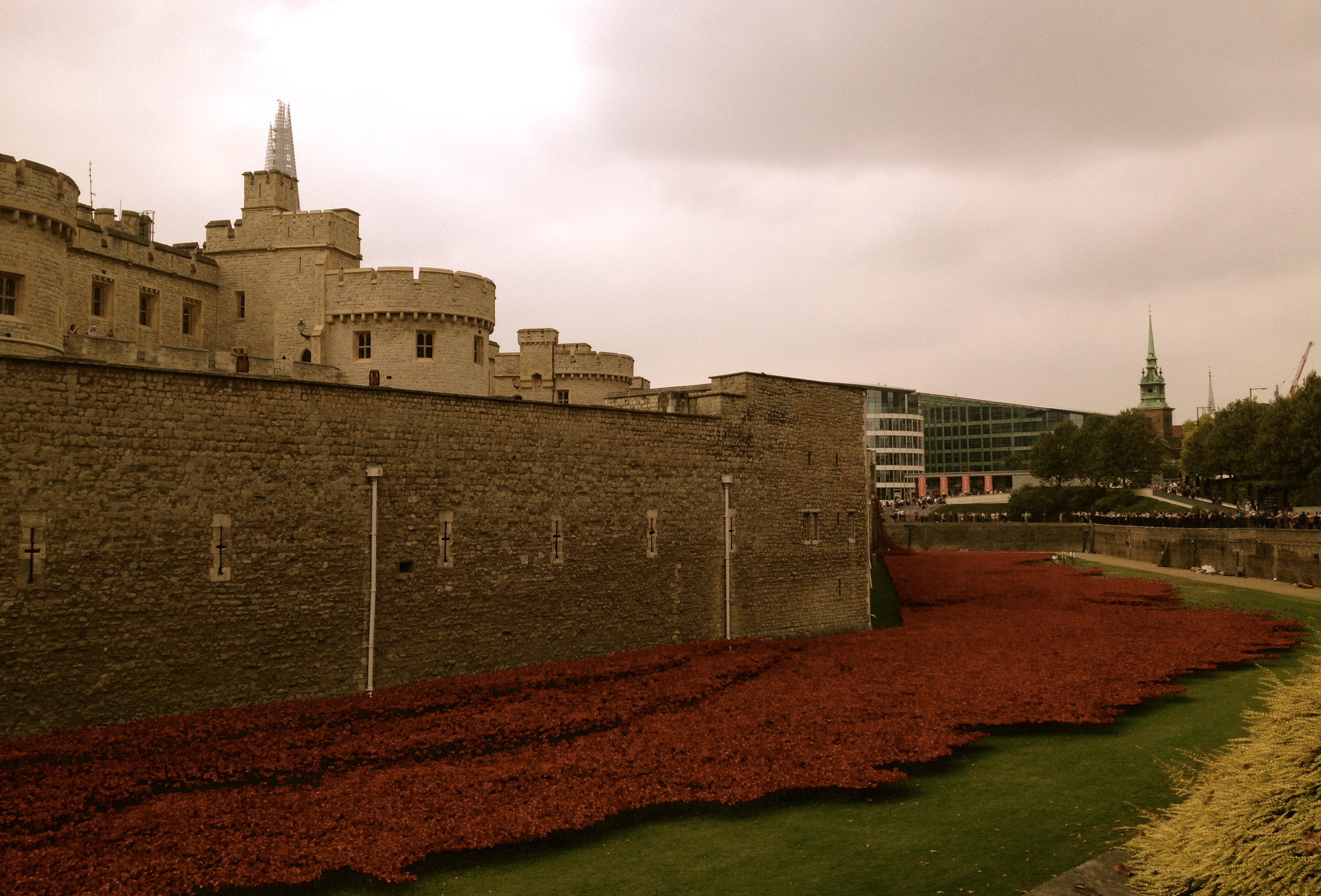
The Tower of London with its sea of poppies

As I watched volunteers ‘plant’ ceramic poppies into the grassy moat, I felt her devastating loss, as must the other families represented in the 888,246 poppies. The artistic installation entitled ‘Blood Swept Lands and Seas of Red’ filled the Tower’s moat, creating a powerful visual commemoration for the First World War Centenary. Each poppy symbolizes the life of a British or Commonwealth soldier, like that of Sarah’s young husband killed in France. It was 1916 and the young widow was left to raise their four young children alone; Sarah was my father’s grandmother. Her letter penned only two months after William King’s death, reveals a loving, brave young woman. I wish I could have known her.

Dated October 25th, 1916, Sarah wrote to her family in England where she had been raised in Marsh Gibbon, Buckinghamshire. The letter is soulful and poignant, a young mother finally able to convey on paper what had befallen her happy family, “like some horrible night-mare that is past but not forgotten.”

Sarah and William with their four children, my grandmother lies on her mother's lap

Sarah and William with their four children, my grandmother lies on her mother’s lap

That long ago day in August 1916, after stepping onto her porch to fetch the newspaper, a gust of wind opened the page that revealed her husband’s name…deceased. She kept it to herself, willing it to be a mistake. Sarah wrote, ” Still I had nothing official, so I did no more but wire to the War Office and ask for information at once, but the torture of suspense of two days and three nights, no sleep nor could I eat. But you could not wish for a more merciful death. He was shot through the heart, he was not fighting.”

Sarah would soon learn that William had died from a sniper’s bullet as he dug trenches; those muddy, rat infested warrens that offered scant protection for the front line troops. She would receive a cloth game of checkers that was found in her Will’s front breast pocket when he perished; his blood staining the centre of it.  I like to think that it was a comfort to her, holding something of his that had been with him at the end.

I also imagine the desire for her to return to her family in England must have been overwhelming at times. She wrote, “I don’t know what I shall do yet, but I shall not come back to England to stay, for Will took every precaution to leave us comfortably provided for in case of him being hurt or killed. It would be silly to wave it all on one side.” She seemed resilient and practical, all the while ensuring her husband’s efforts were not abandoned in death.

Sarah's letter dated 1916

Sarah’s letter dated 1916

I envision her sitting down to write after tucking her four children into bed, perhaps the cloak of loss and loneliness slipping off her shoulders ever so slightly. “I’ll tell you I am very proud of him and hold my head very high for he was one of the very best of husbands and fathers…I was simply awful for weeks and I didn’t care what became of us. We have four bonny children and I marvel sometimes that I ever lived through it.”

Despite her grief, Sarah wrote that she hadn’t been against William going to war if he wanted to and that “someone must step in to defend the atrocities, we would find it difficult if no one came to our assistance.” Even with her loss she was able to reconcile the sacrifice, as so many women were forced to do during the First World War.

IMG_5152

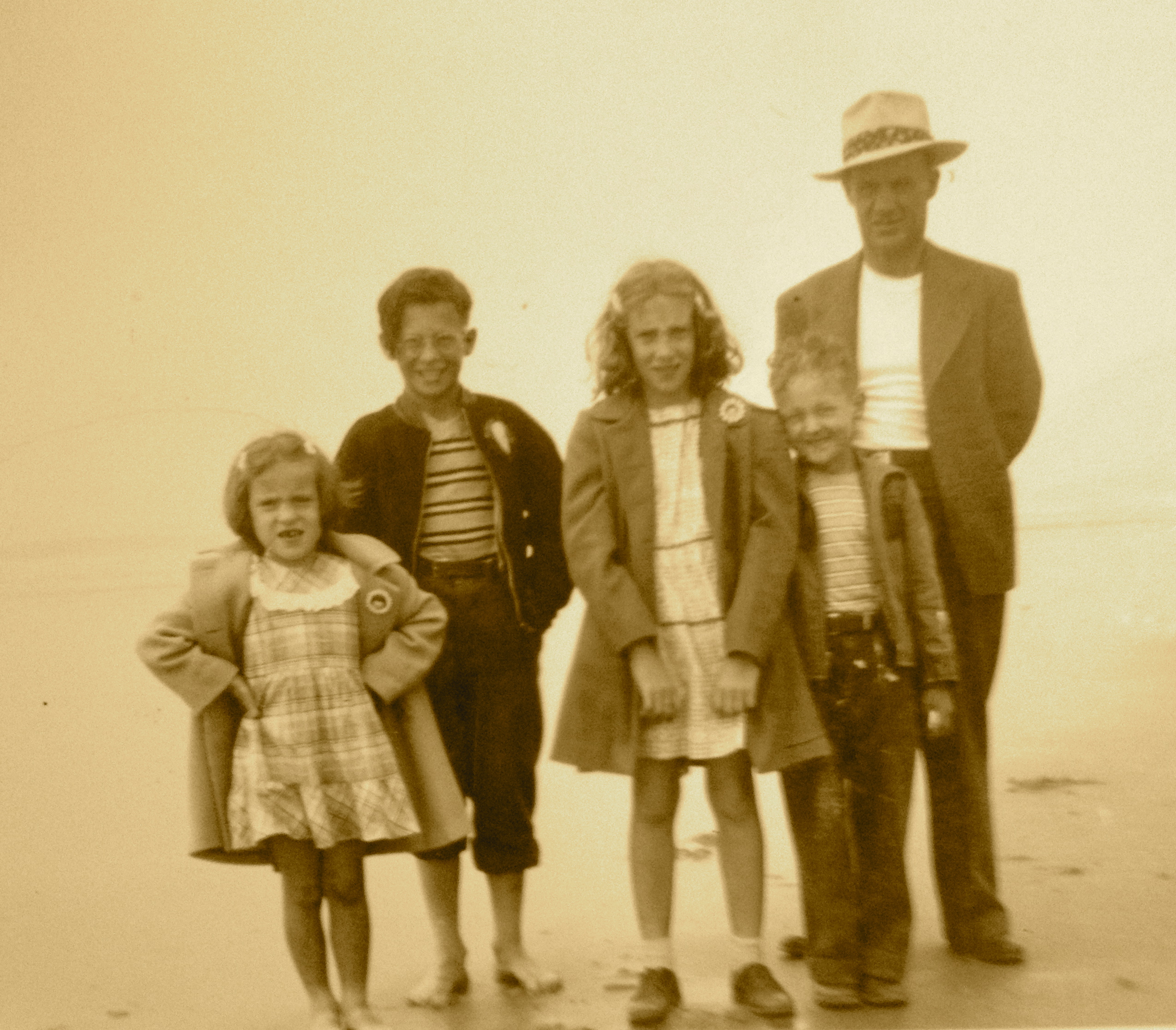
Sarah’s grandchildren with their father Albert, my father is far right

Women suddenly joined the workforce; they became munition workers and bankers, took over the fields and shops, drove trucks and became postmasters. They had no choice but to join the war effort, urged on by Queen Mary’s appeal to the ‘Women of the Empire” which urged all patriotic women to do their part in the war. She encouraged women of all ranks and ages to unite for the cause in the Mother Country and the Empire. Women’s participation in the paid workforce between 1911 and 1921 increased dramatically as they learned trades and skills. Widows like Sarah were often thrust into challenging new roles, while also having the daunting task of raising their children as single parents.

And yet Sarah wrote, “I don’t get much time to get blue, I can always find something to do to help others. I have two babies extra now as their mother has been taken to the hospital…and I went for them and thought how helpless and forlorn their house looked without a mother. And so I thanked God it was Will taken and not me and we should not grumble.”

IMG_5172

Sarah Jane’s sampler, stitched in 1893

I find it remarkable that these selfless sentiments were written only two months after her husband’s death. I picture Sarah busy with her four young children, able to reconcile her situation as she went about her daily tasks. The loneliness of the evenings however must have weighed heavily, and I suspect she spent many of those nights darning, knitting or stitching. She was a cross stitcher above all, a skill she learned at the age of eight as her sampler* stitched in 1893 declares. Her name, Sarah Jane Parker, is stitched proudly at the top, followed with a prayer. It is proudly displayed in my parents home, brought with her Sarah when she boarded the ship that carried her to a new life in Canada. Perhaps it was stowed in her steam trunk with the expectation of it decorating the bride to be’s new home. Her love of this craft was passed on to her daughters including her youngest child Sadie, my grandmother, who has also left a legacy of beautifully stitched works.

IMG_5142

Albert Campbell, a WWI veteran who would marry Sadie, some twenty years later

What Sarah couldn’t know at the time of William’s death was that her youngest, Sadie, would one day marry a man twenty years older. This man had fought in the same war as her father and it’s extraordinary to me that both my father’s grandfather and father, Albert Campbell, fought in World War I. Only one came home. Through the bravery shown by Sarah, her children had the love as if of two parents. Sadly however, that would be short lived.

In 1923 at only thirty-eight years old, the local newspaper announced that ‘Veteran’s Heroic Wife is Buried.’ It reported that many journeyed to attend the funeral of the late Mrs. Sarah Jane King. She had undergone a serious operation five weeks earlier, but succumbed to complications. The article mentions that ‘she had strived heroically to keep her little family together after her husband’s death.’

Sarah’s letter is one of many written archives that live on, as well as countless poems from that time. I’ve come across a young Canadian woman Phebe Florence Miller, a poet and postmistress from Newfoundland. During a long artistic life, she wrote many poems that capture the tragedy of the ‘Great War.’ Her poignant verse captures the courage, hard work and stoicism of many women. She echoed Sarah’s words when she wrote..

Can we have lived through it all?

Or was it some dream we dreamed?

Gleaming memorial shafts give us our answer.

IMG_5176

My father, Curtis King Campbell at William’s grave in Ypres, Belgium.

Those Memorials exist in almost every Canadian community and ask us to stop and remember, to respect the sacrifices. My parents have visited Yperes, Belgium, where William King was laid to rest. Every evening since that war’s end, a bugle mournfully calls out to honour the fallen. Sarah did not visit nor her children, yet I know my parents felt the weight of all the loved ones they represented as they stood at Corporal William King’s war grave.

I felt it as well as I gazed out over that ‘sea of poppies’ in London, knowing a family member was represented.  I’ve since claimed one for the family…one of the almost 900,000 ‘remembrances’ that have been boxed up and shipped out to the ‘Colonies’. It will be a remembrance in my parent’s home…a tribute to that handsome young man who gladly answered the call of duty to King and Country.

*A sampler is a stitching that was common for young girls to undertake at school, teaching them the skill of cross stitching.

It Takes A Village…

Standard

It occurred to me at the #FIGT conference, that I had never referred to my three sons as TCK’s or third culture kids.* Listening to the varied educators, authors and specialists at the conference, I came to understand why I hadn’t done this. I wanted them to be ‘normal’.

So despite having lived in seven countries, having had different experiences AND losing their friends every three, four or six years, they were supposed to be like any other child. What I realized throughout the conference is that excellent support and care exists for expat families who live overseas. There is often a need for this. I’m thankful that for the most part, my three coped fairly well. However partly what FIGT is concerned with and facilitates, is that for many children and their parents, this global life can be challenging, confusing and leave kids without a sense of belonging to any country.

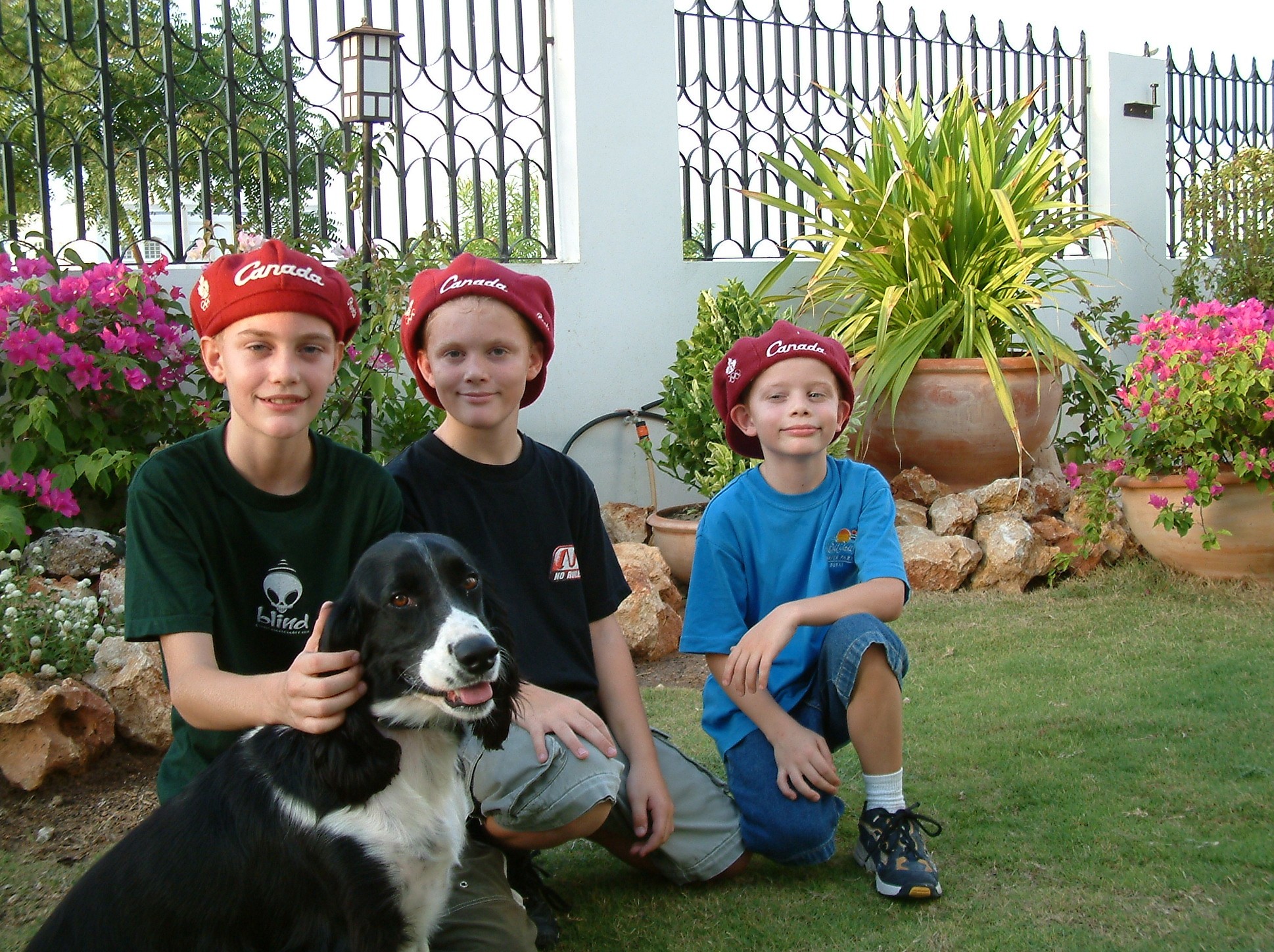
Three children raised by a global village

As parents we feel guilty that they may not have a home town to call their own. We worry that they only see extended family during holidays. We fret that they don’t have ownership to any one place, even their home country feels alien at times.

And yet as the esteemed Dr. Fanta Aw reminded us during her keynote speech at FGIT...it takes a village to raise a child. And this is precisely what we do as global parents. We pull out all the resources to ensure that our kids have a sense of home in which ever country they’re living in; parents, teachers, coaches and volunteers all contribute to raising expat children. We all become their village.

My husband and I created a sense of normality (from a Canadian’s viewpoint) by starting and coaching a baseball league in Oman. I wasn’t pleased that my boys may not grow up playing baseball and so with the help of passionate coaches and parents, I started a baseball league. We soon had over one-hundred kids from all over the world playing. Some of these families also helped with the hockey team, also a first to be formed in the stifling heat of Muscat. Our coach, Teppo Virta, will always be a hero in the eyes of my boys.

I was overwhelmed years later when one of my sons depicted me as a ‘hero’ for facilitating their desire to play a sport that wouldn’t have been possible. I had only done what many of us do for our children in foreign lands; form and nurture clubs and organizations of every description. For we know that when children grow up globally, it’s even more important that they belong to something that represents their home culture and identity.

As Dr. Aw, reminded us, “It’s an intersection of experiences, relationships and friendships that become family.  It’s the people that claimed you in good and bad.” And that is what a village does. Be it physical or not, as in the case of many global families, our extended family has helped raise our cherished children. We ask so much of these resilient kids; arriving, living and leaving so many countries. And yet if we all do our part to help raise them, the ‘village’ is a pretty good place to be.

I recently asked one of my sons if he would change anything from his overseas childhood. “No mom, look at the experiences and opportunities that I’ve had. Not to mention the friends I have all over the world.”

Yes, all part of that village that we’re fortunate indeed to be a part of.

*Note, a TCK is defined as a person who has spent a significant part of his/her development years outside their parents’ culture.  As summarized in Linda A. Janssen’s informative book, The Emotionally Resilient Expat published by Summertime Publishing