Tag Archives: Canada

St. Eugene Mission… Gordie’s Story

Standard

I first published this in October, 2015, and now on the day of Truth and Reconciliation, it is still as important as ever. This post was part two of my interviews with members of the Ktunaxa Nation.

“My grandmother brought me to the school, it was 1957. We pulled up in a horse and buggy, my brother and sister were already here which helped a little.”

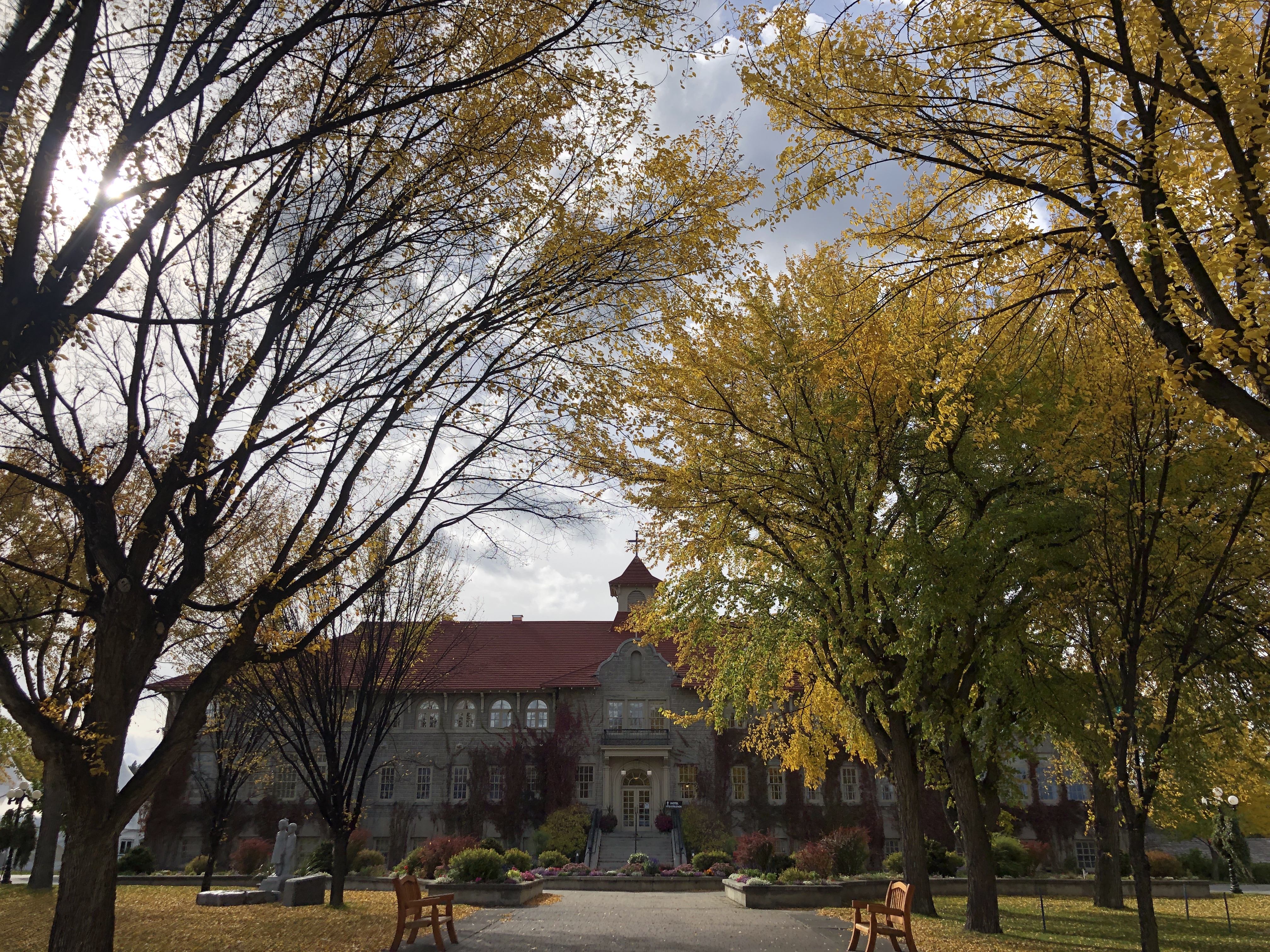
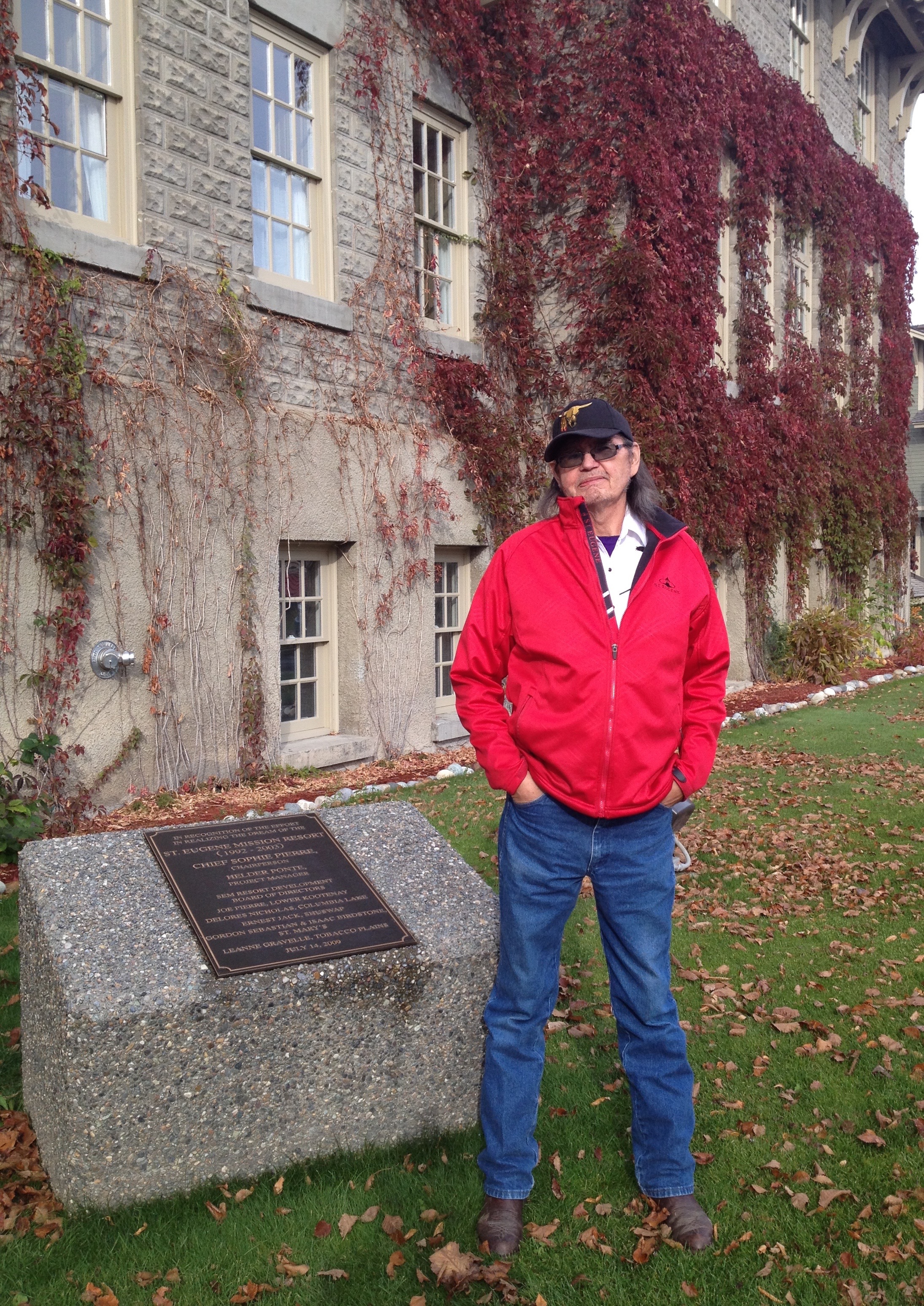
I‘m standing with Gordie at the bottom of the steps that lead to the imposing door of the St. Eugene Mission, once a Residential School. It is easy to imagine the foreboding, the instinctive fear that young Native children like Gordie felt when they entered the school for their first ten month term.

“I was frightened and remember the feeling of resentment towards my grandma. She had helped raise me. It wasn’t until later that I realized she didn’t have a choice but to let me go.”

Gordie is tall and lean, his long greying hair topped by a baseball cap. It’s the tradition of many First Nations to keep their hair long, it’s an extension of their spiritual self.

Having offered to give me a tour and talk about his time at the school, Gordie greets me warmly this cool autumn morning. He’s just finished his shift as the night-time superintendent of the St Eugene Mission Resort. As a student, Gordie lived and breathed this school, his memories are deeply etched. He now walks through it with some measure of peace and acceptance.

From 1912 to 1970, more than 5000 First Nation children were removed from their families to comply with the government assimilation program and brought to this school, one of eighty former schools across Canada. However, its perfect postcard setting in the interior of British Columbia is deceptive.
IMG_9011
Refurbished and renewed

“I suppose I was lucky, I was dropped off by a family member. Some kids were left here by Indian Agents, whisked away before their families even knew they were gone.”

Gordie explains the cruel truth that Agents were often paid to ‘round up’ ‘Indian’ children, especially in remote areas. The children were sometimes taken when they ran to a plane that had landed, then spirited away with the promise of a ‘ride’.

“They were given a number, with no consideration of their name, then placed in a Residential School.”

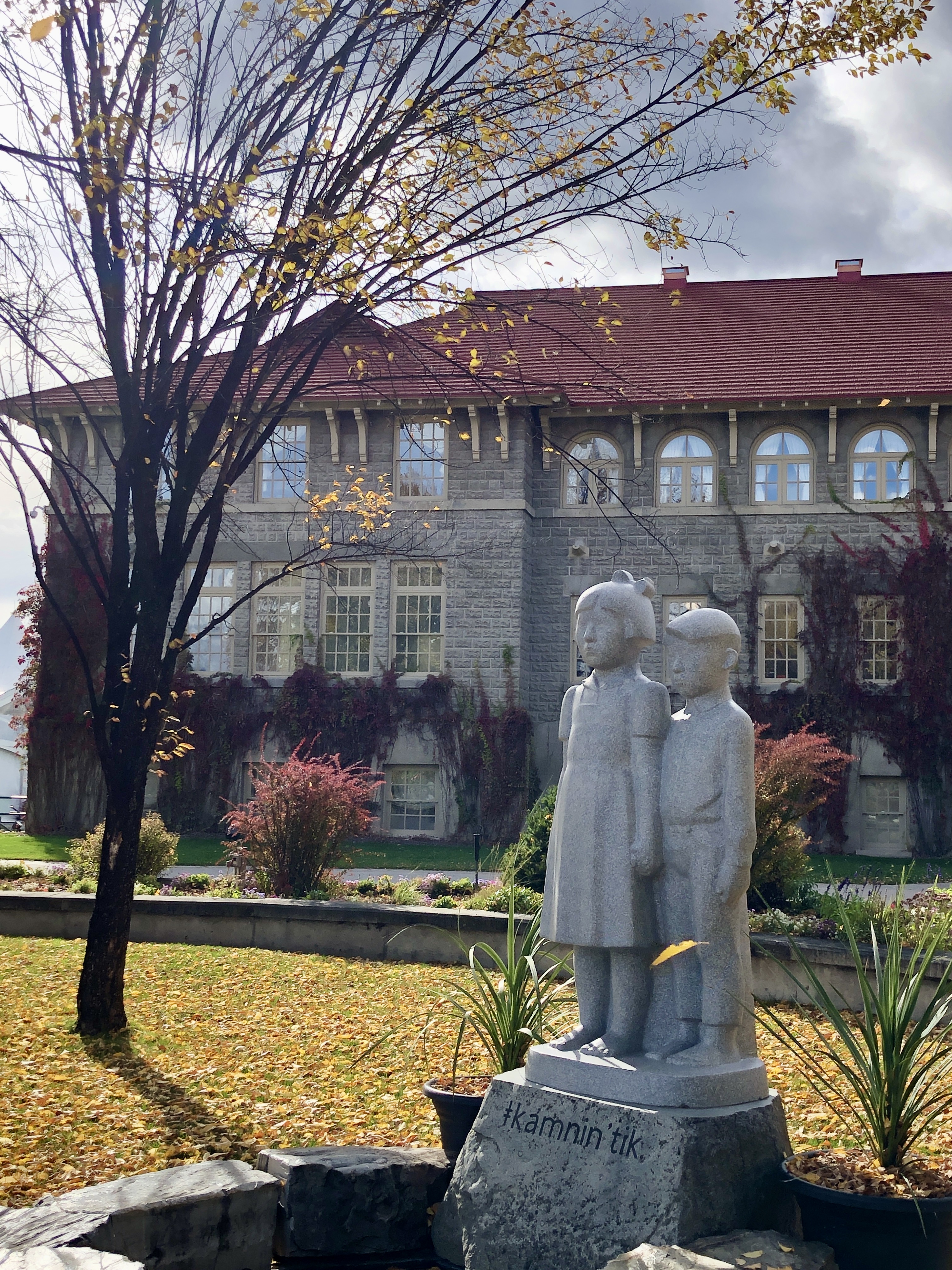
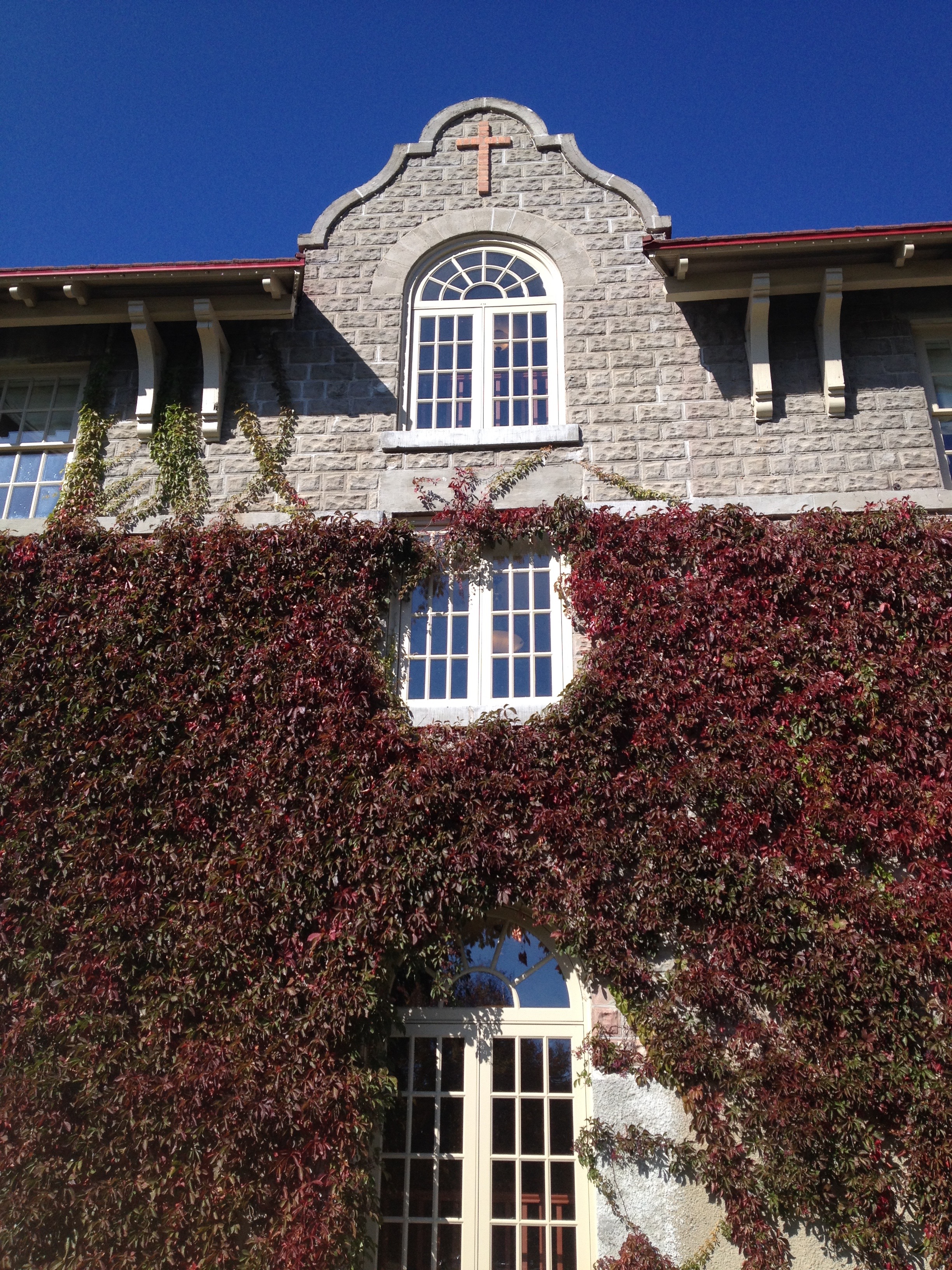
Gordie will tell you that this was by no means the worst of the Residential Schools. The entrance of the former St . Eugene Mission School is now a hotel lobby. It has a welcoming and dignified atmosphere, vastly different than it once was. Solid in their longevity, the red brick walls are invisibly marred with strife and untold hurts. People like Gordie are now willing to tell their story.

“Our hair was chopped off, and from that moment the school did its best to eradicate our language and culture. This is where you waited to be taken away by the nuns to the dormitories.”

‘Indian Hall’, I believe Gordie called it as we begin a tour and conversation that lasts five hours, but felt like just a few. He points to a black and white photo near the front desk. The image shows a group of older girls gathered in front of the school, smiling proudly astride their horses.
IMG_9100
Gordie Sebastian with a plaque that pays tribute to his role in the refurbishment of St. Eugene Mission

“Do you know anything about horses?” Gordie asks, pointing to their bridles and saddles. “Does this look like we were poor or wanting? No we had a culture, a life, it was taken away.”

I’m instinctively drawn to the collection of photos in the nearby corridor that I had been so taken with the previous day. Gordie reveals parts of his story through them, bringing the images to life with his narrative.

A seemingly typical school is portrayed; a hockey team, the school band, a choir, children in uniforms seated at their desks.

“It seems like you were involved in a lot of activities?”

“We were. Saturday was hockey, we also had a baseball field,” Gordie tells me.

“Are you in any of these?” I ask as my finger scans over children positioned in front of the school steps. Standing behind the children are a number of priests and nuns, some dressed in black habits, others in white.

“No I usually had some kind of injury when it was time for photos. One time I had a bruise on my eye from a hockey puck so couldn’t be in the photo. It might have looked like I had been hit by one of the staff…”

Gordie is referring to the now well-documented mental, physical and sexual abuse, even death, that students suffered at the hands of the priests and nuns who came from afar to work in these schools.

“I didn’t have as many issues as some. I was from one of the more respected Native families so was usually safe from the abuse of the staff and other students. My dad held some sway.”

Gordie Sebastian comes from a long line of prominent Ktunaxa who owned and bred horses. He points to a photo of a group of men, four sit on their horses. One of them wears a blanket, tucked-in at the waist.

“That’s my great-grandfather, Sabas, Joseph Sebastian. He was a medicine man.”

A medicine man was a highly respected member of an Indian tribe. They were healers or ‘shaman’ who did not believe in bloodshed.

Gordie explains that Sabas and the tribal head at the time, Chief Isadore, believed that no man had the right to erect fences on the Ktunaxa land. This held fast until European and Canadian settlers usurped their ancestral land following the signing of Treaty 7 in 1887. This treaty confined the First Nations peoples to Reserves, where many of the Ktunaxa stil live today.

Gordie gestures to the photo of St. Eugene Mission, the once cluster of tipis and houses around the church where his forebears would have gathered.

IMG_9018
Red brick walls

He shows me a detail that had escaped me. A house stands with the top of a tipi sticking out from its roof. Like most First Nations, the Ktunaxa people didn’t adapt well to the confines of a house.

“That’s Indian Pete’s house, set his tipi up in the middle of it.”

In another photo dated 1887, a man dressed in baggy trousers and a waist coat stands in front of the St. Eugene Church. He smiles widely, beside him is a priest. They seem to know each other.

“That’s Father Coccola and Indian Pete. They paid to have the church built. In fact Indian Pete paid our way into heaven,” Gordie says with a  chuckle.

Gordie is open and candid as he explains the more serious and devastating impact the Residential Schools have had on generations of First Nations people.

“But I’ve also been told by some people that these were the best of days, away from poverty and their alcoholic parents on the Reserves.” Gordie explains that many parents weren’t well adapted to parenting as they only saw their children during the two-month summer break and perhaps for a few hours once every three weeks. Also many of them had been students themselves; their own wounds ever present.

“My father was a student here, he never told me but I think he had been sexually abused. He always checked us for signs.” Gordie says quietly.

We talk about the Priests and the Nuns whose frequent indifference to their students’ humanity exacted so much pain.

“Some of the priests weren’t that bad, but the nuns were battle-axes. Some of them could teach well enough but they had little or no compassion. Through their actions we were taught hate. It was drilled into our heads that we were useless…little more than savages.”

IMG_9009
The healing power of the tipi

Perhaps because of Gordie’s influential family, he reports having pushed the envelope a little further than other students. By the time he was a young teenager, he railed against his situation.

“One time I argued with a nun over a basic fact that she was teaching,” Gordie confided. “Now you know that St. Eugene Mission sits between two mountain ranges, the Rockies and the Purcells. Well she had the two ranges mixed up and I told her so. We argued back and forth, I wasn’t backing down. All of a sudden she hit me and I pushed back.”

Gordie was made to sit in the Priests’ office for the day as punishment. Once he told his side of the story, he wasn’t reprimanded further.

“Did she teach the correct mountain ranges after that,” I ask.

“Oh no, she kept telling us the wrong thing,” he says, making light of the story all these years later.

But not all punishment was that easy. Male students who ran away from the school were often found again by the Indian Agents and returned to the school. For the next two weeks they were forced to dress as girls. As shaming as this would have been, it pales into comparison of other punishments that Gordie leaves untold.

I‘m particularly haunted by his accounts of the tuberculosis outbreaks. Nodding to a photo of a clearly ill student, his head bandaged, he precedes to tell me of the infectious conditions that existed in the school.

“That student had TB, he shouldn’t have been with other students,” Gordie says matter-of-factly. The rate of deaths in the schools from influenza and TB far exceeded that of elsewhere in Canada.
images-1
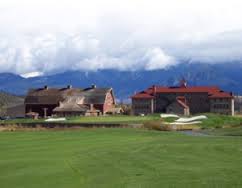
The St. Eugene Mission Resort and Golf Course

Unlike many Residential Schools, only one death occurred here.

“This is her,” Gordie says pointing to a young girl. “She died when snow fell onto her from the roof. It’s good that her relatives have been here. Her name was Anette.”

Late in the interview, Gordie and I have coffee in the former chapel. It’s being readied for a function and we sit at a long table that will soon be set with linen and fine china. I’m told that healing occurs at St. Eugene on a regular basis. As painful as it is, many former students and their families return to confront the hurts of the past.

“The tipi outside is there for a reason. Even as the school was being re-purposed, it was provided for prayers and counselling.”

We glance out towards the tall white canvas. I learn that the poles of a tipi represent the different spiritualities of all people, yet they are bound together as one.

IMG_9012
A painting of Elder Mary Paul

“Facing the past is difficult, but it brings peace. Just as Elder Mary Paul gave us the permission to do so.”

Gordie had pointed out the painting of Elder Paul as we entered the lobby. It is with her blessing that the re-construction of this building was undertaken.

We make our way upstairs to the ‘inner sanctuary’ of the school. Now mostly hotel rooms, Gordie points out the areas which were once dormitories, kitchens and mess halls. The rooms of the nuns and priests were close by.

My sense of this building’s history is suddenly very real. I’m shown the place where Gordie’s bed had stood. We look toward the window and beyond, where the road lies.

“At least I was able to look out of the window and see my father or grandfather pass on the road once in a while. Many kids were far, far from home.”

I’m shown where a young boy stood on a precarious ledge while attempting to run away. I see the burn marks from two arson attempts on the school. I become emotional as I contemplate the daunting stairs that girls as young as four had to negotiate in the middle of the night to go to the washroom. I feel their loneliness, the longing for their home, the yearning for a mother’s touch.

“There are 68 stairs,” Gordie tells me. “I should know, it was my job to sweep and scrub them.”

He tells me it was here that a young student was kicked down the stairs by a priest, tumbling helplessly to the bottom. Thankfully he lived.

a-first-nation-partnership-success-story-8-638

“One of the workers saw it happen and pinned the priest up against the wall by the throat. He warned him never to hurt a student again,” Gordie recounts. “The next day we noticed that all of the straps had been removed from the classrooms.”

As the students reached their mid teens, I imagine control must have become more difficult. By the time Gordie is this age, one of the ‘Fathers’ uses government money to fund a swimming pool and provide horses for the students. Gordie takes on the role of the ‘horse guy.’

“Finally on Sunday afternoons we were allowed to leave the school premises and ride free on our land.”

I agree with Gordie how important that must have been; that sense of independence and freedom. This also evolved naturally as the older students were sent to a local school to complete their education.

“It didn’t get much better for us. We weren’t Native anymore and we weren’t ‘white’, so we didn’t fit in. We were ‘apples’…white on the inside but red on the outside.”

Gordie was eventually asked to leave his new school over an incident that he didn’t explain. When his father found out, he was also told to leave the house. He was seventeen and on his own. Gordie went north to work in the logging industry.

I don’t hear the entire story of the years between then and now. But I know a number of family members passed away due to alcohol abuse. And I know Gordie is raising the young daughter of a relative who still battles with the trauma of Residential School.

images
Solace and Peace

I also know that Gordie is one of the good guys. Not only is he helping to heal his own family, but also many of those who walk through the doors of St. Eugene Mission. They seek solace and peace from the past.

I respect Gordie greatly.
Summer Glamping in Golden… An Iconic Canadian Mountain Town

Standard

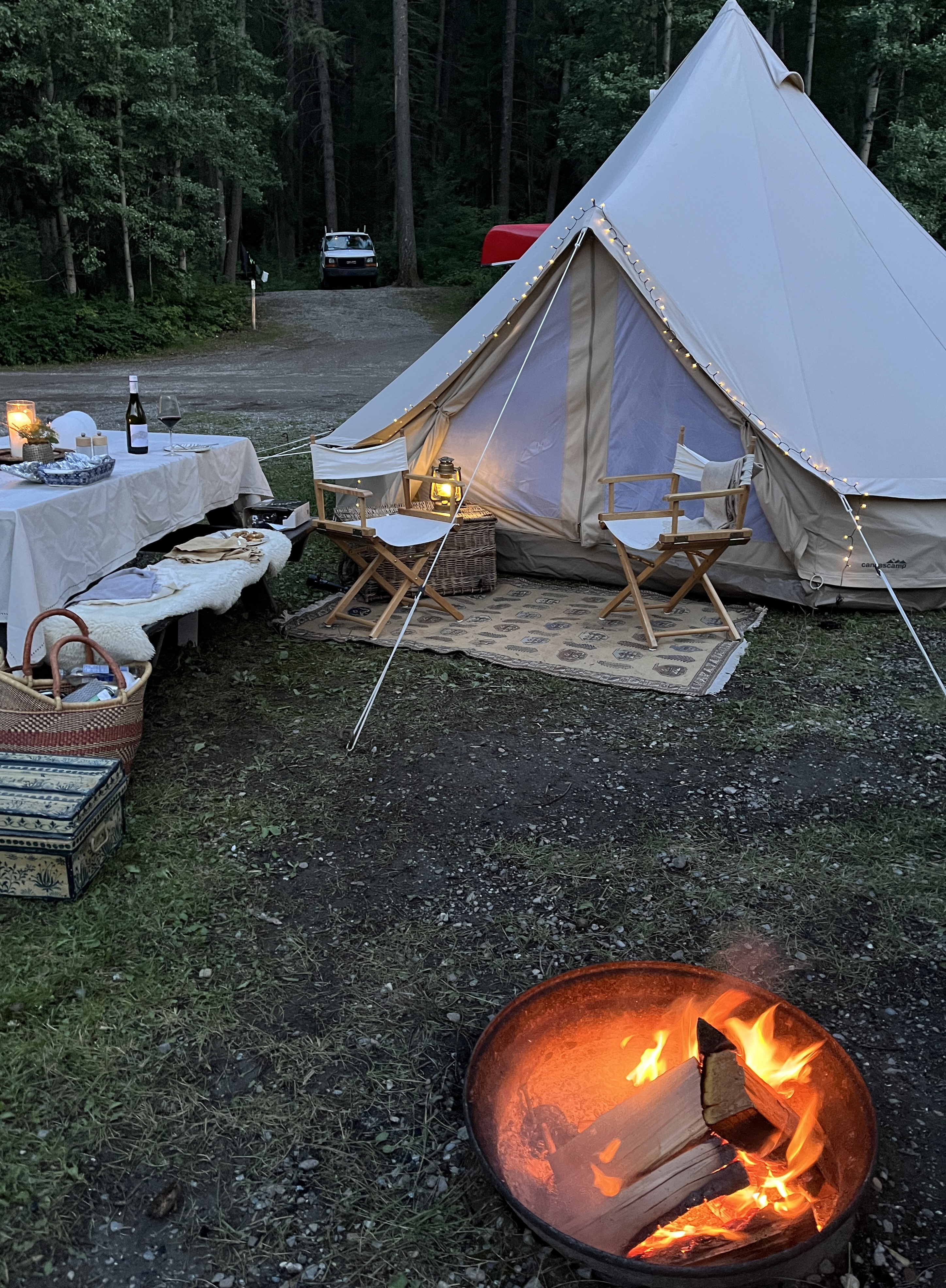
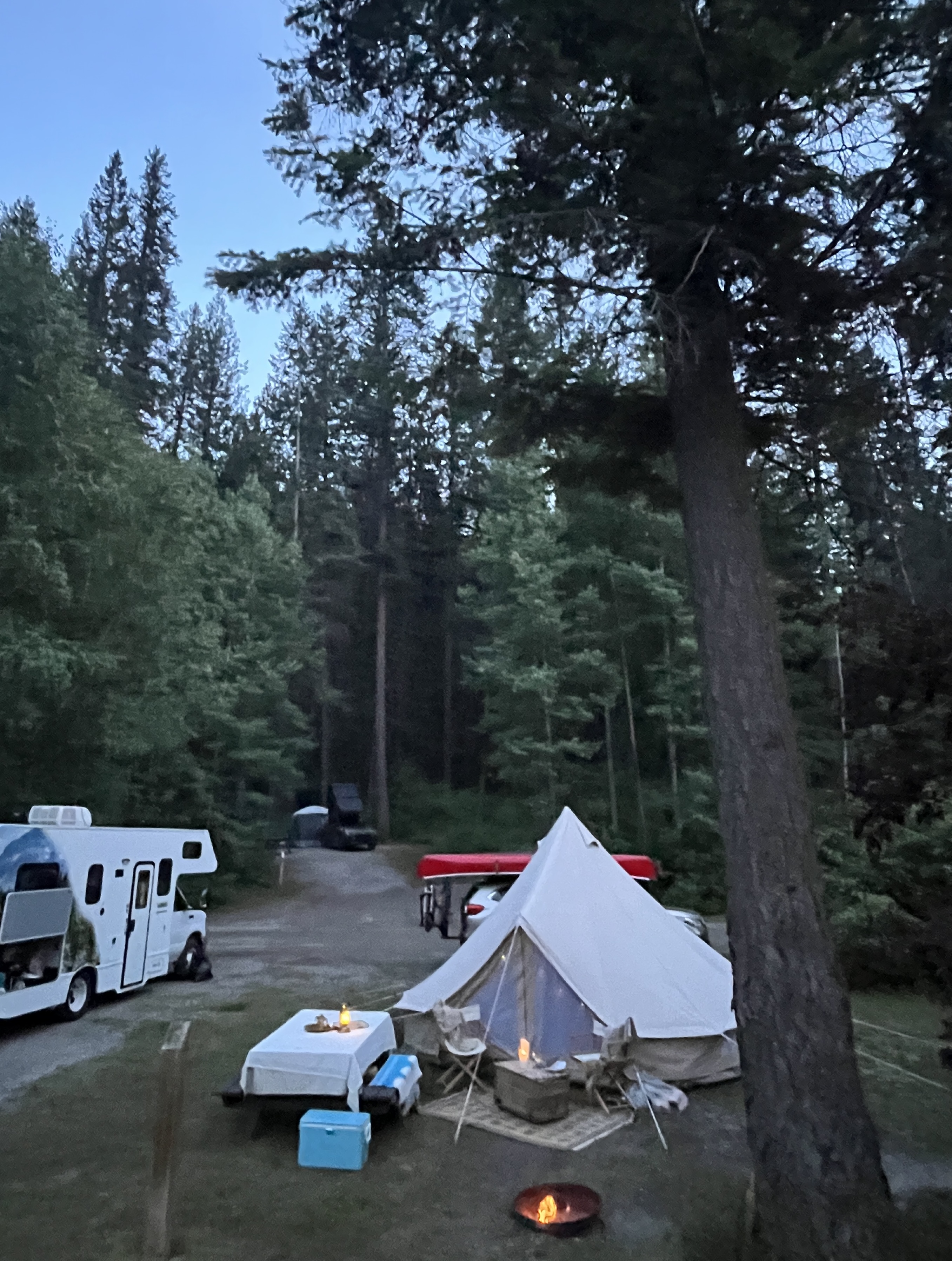
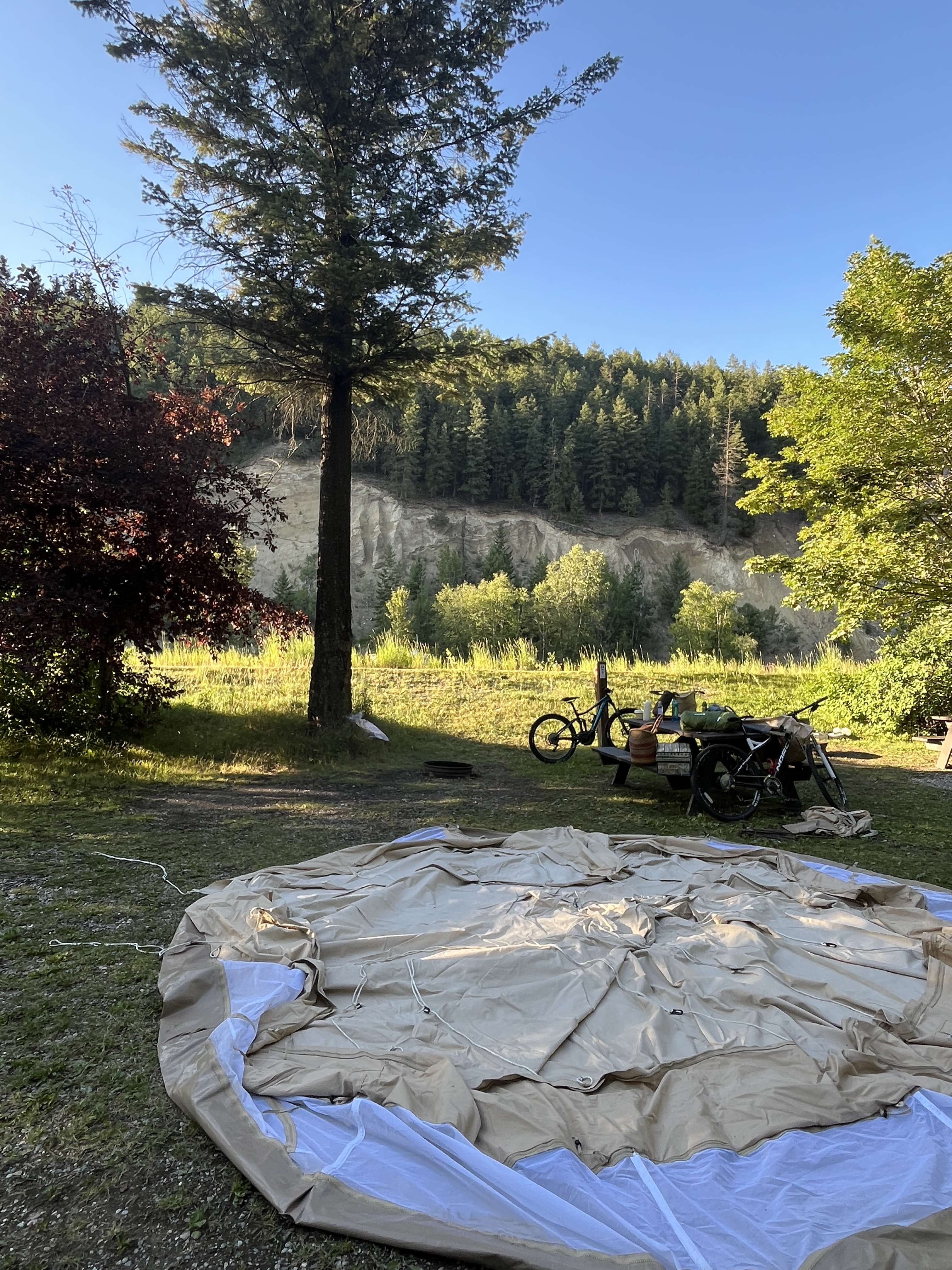
We call them mountain towns and nature has spoiled us with these veritable summer playgrounds. Nestled amongst majestic peaks and dazzling crystal-blue lakes and rivers, they’re gateways for hiking, biking, golfing, paddling, and camping. In our case glamping, as it comes with a dose of the glam with Lupin, our beloved Sibley Bell tent. With the car packed full to the gunnels, bikes and canoe strapped on, last month we chose a new mountain town to play in.

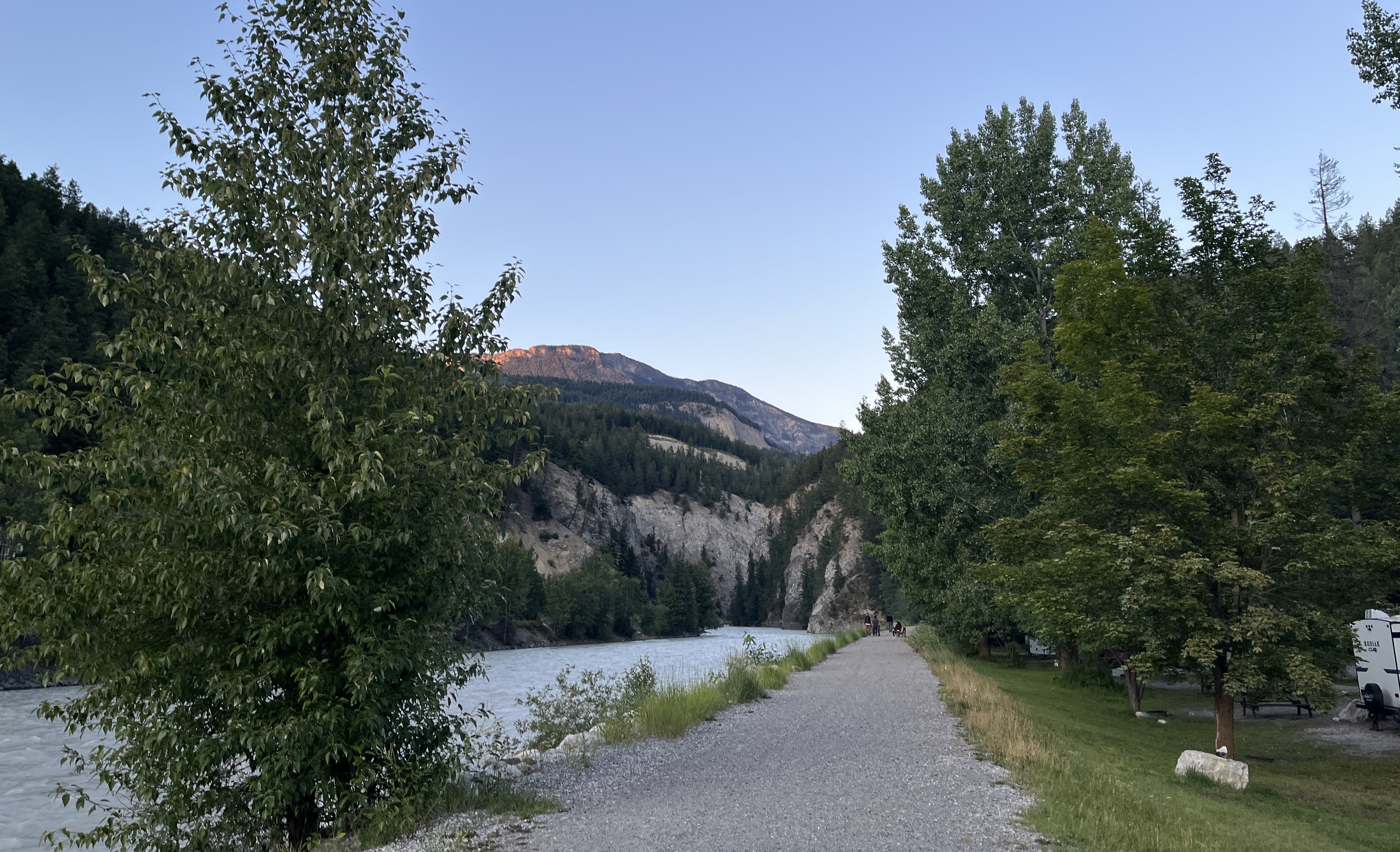
We often choose to stay in the heart of towns, in Municipal Campgrounds, as we did with our iconic glamp in Kaslo, near Nelson. In Golden, the choice graced us with a picturesque spot along the Kicking Horse River. Pesky mosquitoes were part of the welcome crew and with our site set up in about an hour, the campfire was soon crackling away, dinner and wine ensued. We savoured the slow unfolding of dusk and with the revelation of night upon us, we marvelled at a thousands stars in the twinkling sky above.

Nestled in the Rocky Mountain Trench, along the confluence of the Columbia and Kicking Horse Rivers, the town of Golden is surrounded by three different mountian ranges and five National Parks. Our camping spot was surrounded by other campers from the tiniest of tents, to grand trailers, to old-school camper trailers. It seemed that all of us – from the many Americans and overseas travellers, to fellow Canadians – were genuinely pleased just to be in the great outdoors, yet with amenities at our fingertips.

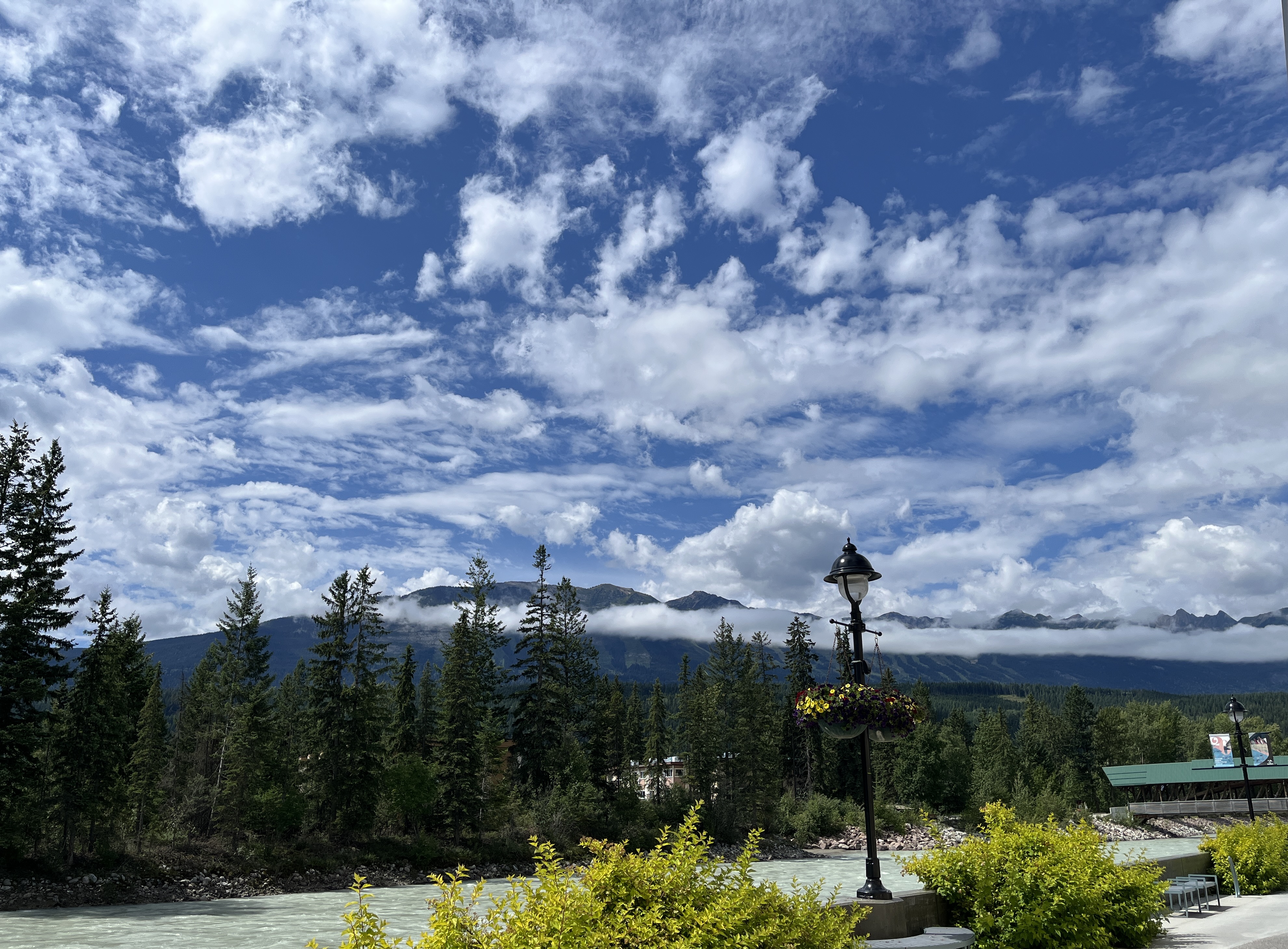
Each morning after coffee around the campfire, we’d set off on our bikes to explore the town. With its river running through it, Golden is bestowed with a stunning setting. The Kicking Horse Mountain Resort has an eagle eye’s view in the distance and a long promenade stretches alongside the river. Canada’s longest timber-framed bridge is its anchor.

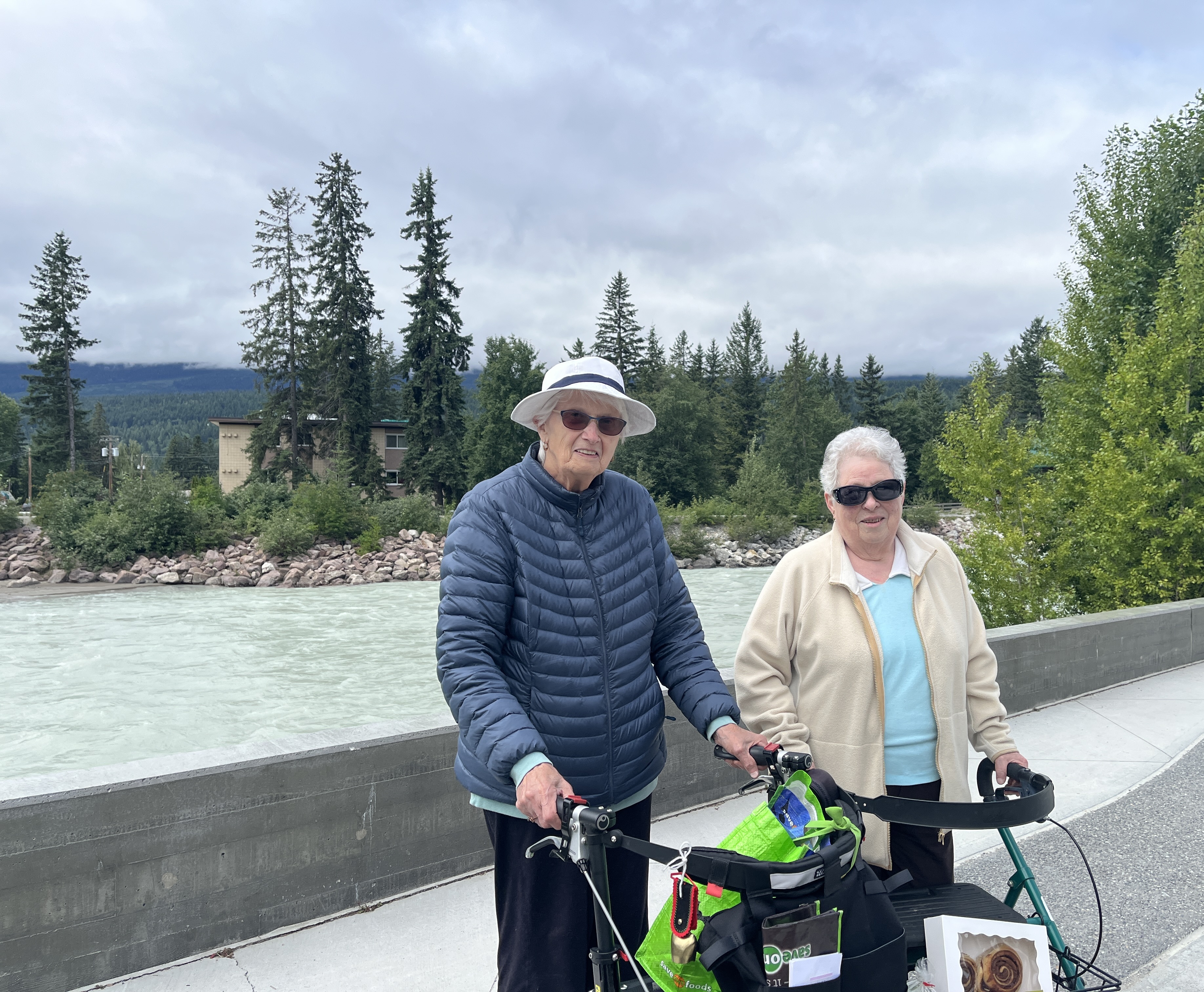
We chance upon Betty and Lynn out for a mid-morning stroll. “Such a beautiful spot for a morning walk,” I say with a smile. They immediately offer a sincere apologize,” We’re sorry that our mountain is hiding behind the clouds.”

“Oh I know it’s there,” I confirm, “your beloved ski hill is hiding! We’re from Kimberley, another ski hill town.”

“I was raised in Kimberley,” one of the ladies says fondly and from there our conversation flows.

The peaks soon reveal themselves in the unseasonably chilly morning and the ladies happily relate a few local stories of life here in the ’50’s.

“When we first arrived, there were only two telephones in the town and one of them was at my place… well you can imagine the commotion!” They admit the town has greatly changed as it’s now a world-class ski resort and hiking destination.

I‘ve written previously of the Swiss guides who first made Adventure Tourism possible in the area. The Canadian Pacific Railway brought the guides to the area in 1899. Earlier in that century, the renowned fur trader, surveyor and map maker David Thompson was tasked with opening a trading route to the Pacific Northwest. Navigating the vast and treacherous Rocky Mountains, he first travelled to the future site of Golden in 1807. It wasn’t until 1881 that the CPR hired A.B. Rogers to find a rail route through the region. The base camp established for his crew eventually first of the settlement now known as Golden.

The ladies tell me that the town was eventually named Golden. “It had to out-do nearby Silvertown.”

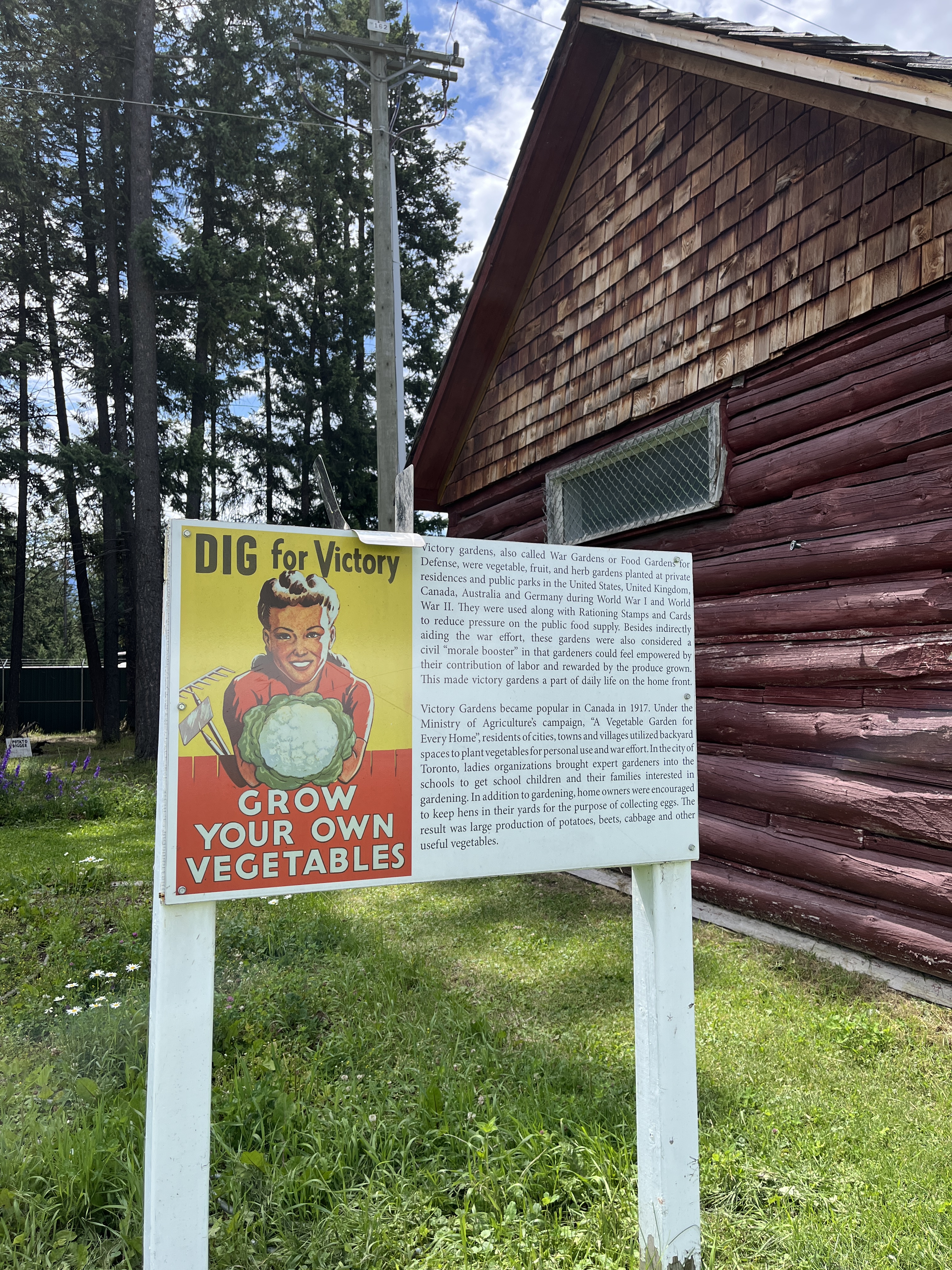
After our chat and a browse through the market, we cycle through the wide streets to the local Museum. It’s charming, full of information, and regals with stories about the original Columbia River Lumber Company which grew the settlement, while also attracting a large hard-working Sikh population. The Museum also pays homeage to Victory gardens, or war gardens, vital during the first World War; utilizing backyards for food, both for personal and the war effort. And of course there is much mention of the vital role those Swiss guides played.

Swiss mountaineers were employed during the summers, returning home to Switzerland over the winter, most over-wintered working as caretakers for the seasonal CPR hotels. Of the fifty-six first ascents of mountains over 3000 metres prior to 1911, no fewer than 50 first ascents were made under the steady hand and sure foot of these experienced men. By 1925, CPR’s 35 Swiss Guides had led more than 250 first ascents in the mountains of western Canada. With no fatalities in their care, and perhaps basking in their reputation as gentlemen and colourful characters, many would bring their families to make their Golden home at the purpose-built Edelweiss Village.

We had visited their home-away-from-home a number of years ago, now it has greatly changed… refurbished, re-imagined and open to guests.

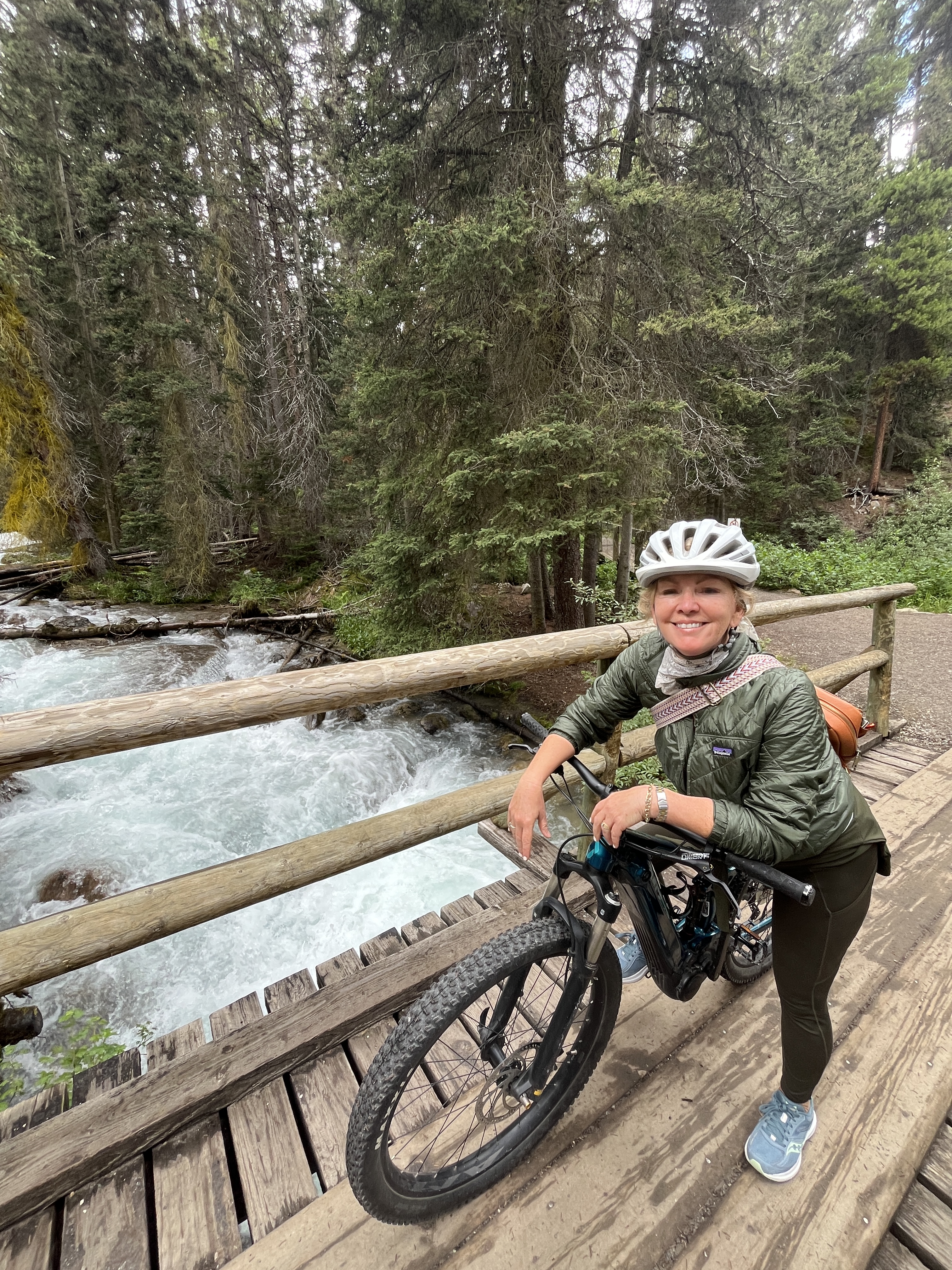
Our bike rides take us out of town, through forested trails, up and down mountains and on the last day to the famed Lake Louise… with a little driving in between. The beautiful drive from Golden to Lake Louise heads east, then south for about one hour through Yoho National Park. Stop at the Spiral Tunnels, the Golden Skybridge, Wapta Falls, Emerald Lake, or the sleepy but gloriously positioned town of Field.

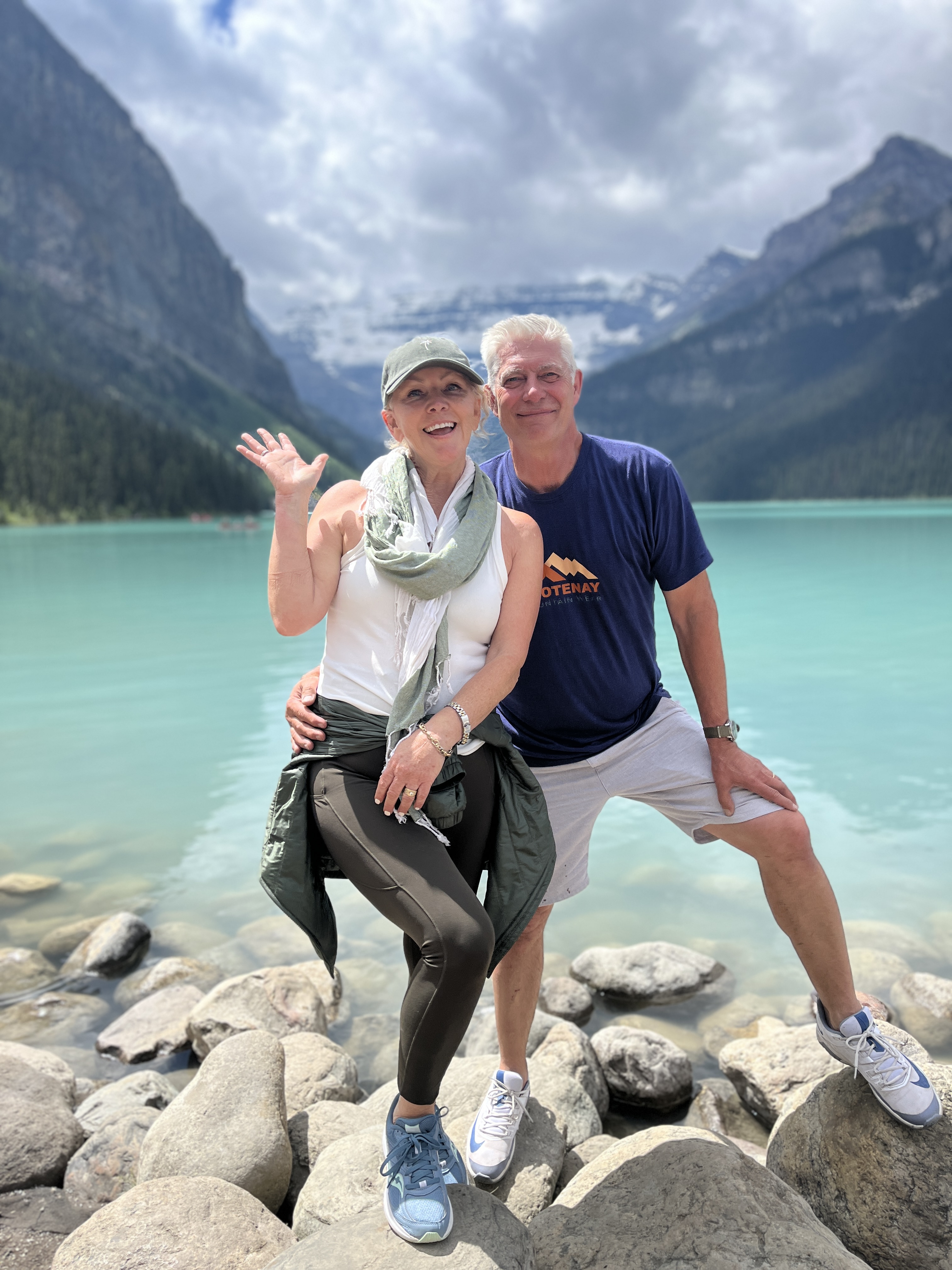
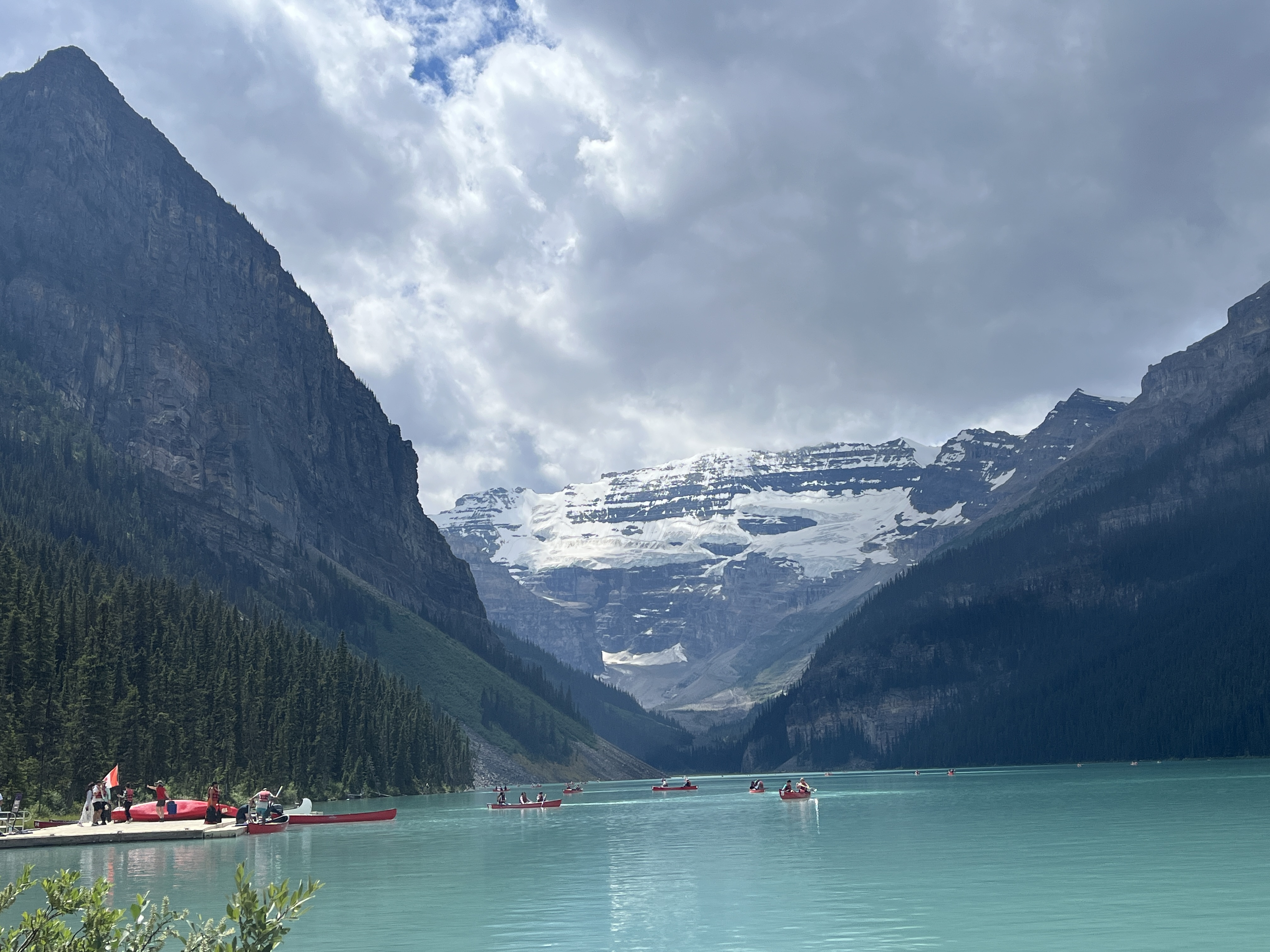
After parking in Lake Louise Village, we biked the former route of the tramway up to the lake – about 10 km both ways. The Tramline Trail leads you to one of Canada’s most breathtaking views. As always people have flocked from around the world to catch a glimpse of its iconic magic.

Back at the campsite on our last evening, a young father strolls past for a pre-bedtime walk with his children. “What a beautiful set-up, a bell tent. I know them well as I was in the military,” he tells me.

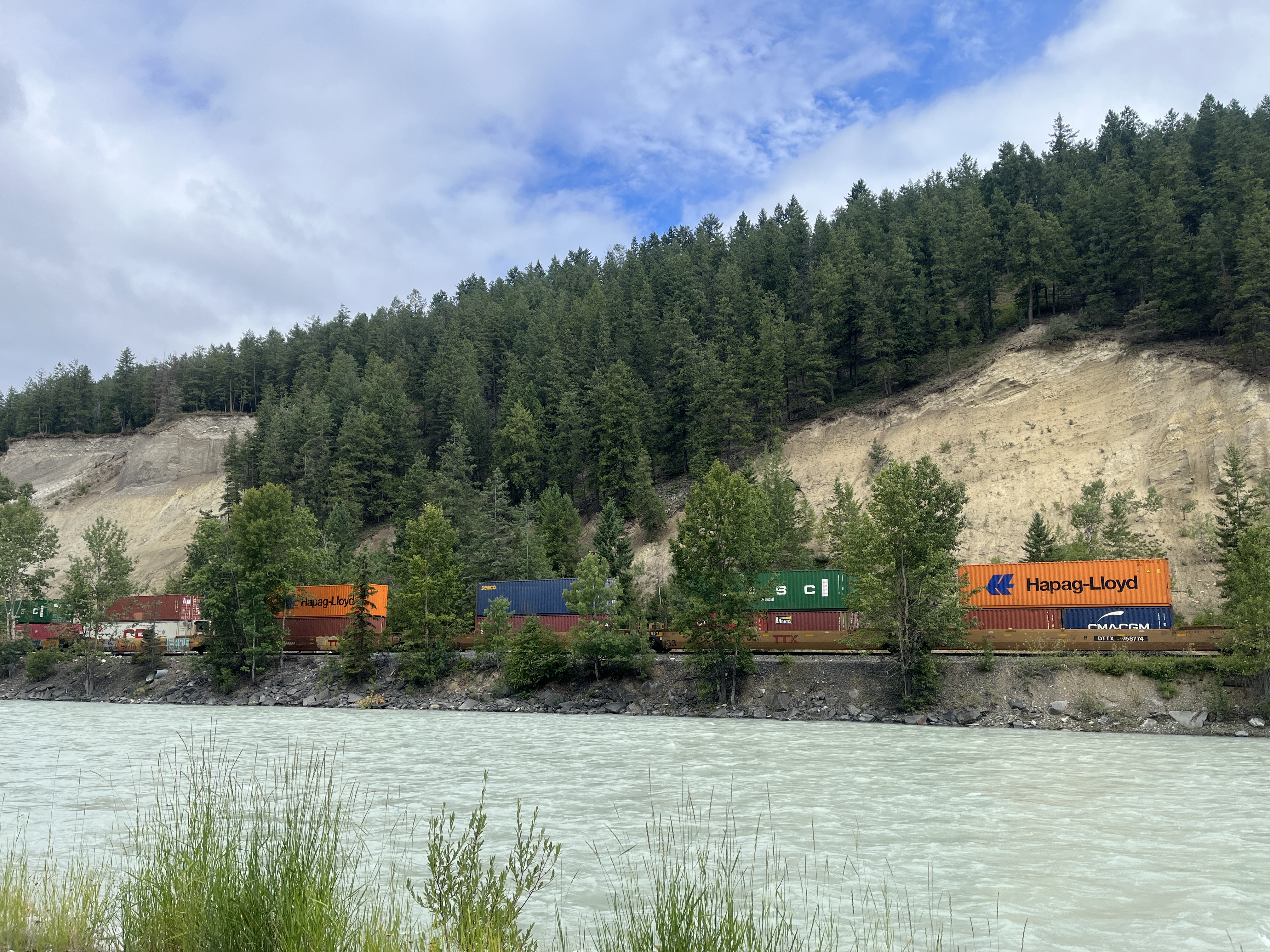
We’re used to compliments about our Lupin, she is always the ‘belle of the ball’ at any campsite. Dramatic on the outside, inside she’s cozy and warm. Shadows play on her canvas and the noises of the night may awaken you, but they accompany the scene like a grand outdoors sound track. Even the trains thundering past through the night, just on the other side of the river, weren’t bothersome but a tangible reminder of our vast country and the endless task of moving goods.

The Sibley Bell tent was invented by American military officer Henry Hopkins Sibley. Patented in 1856, the conical design stands about 3.7 metres high, 5.5 metres in diameter and can comfortably house about a dozen men. In our case, the most Lupin has slept is six adults and our grand-dog Captain… cozy indeed!

Poster-perfect Banff in the Canadian Rockies…

Standard

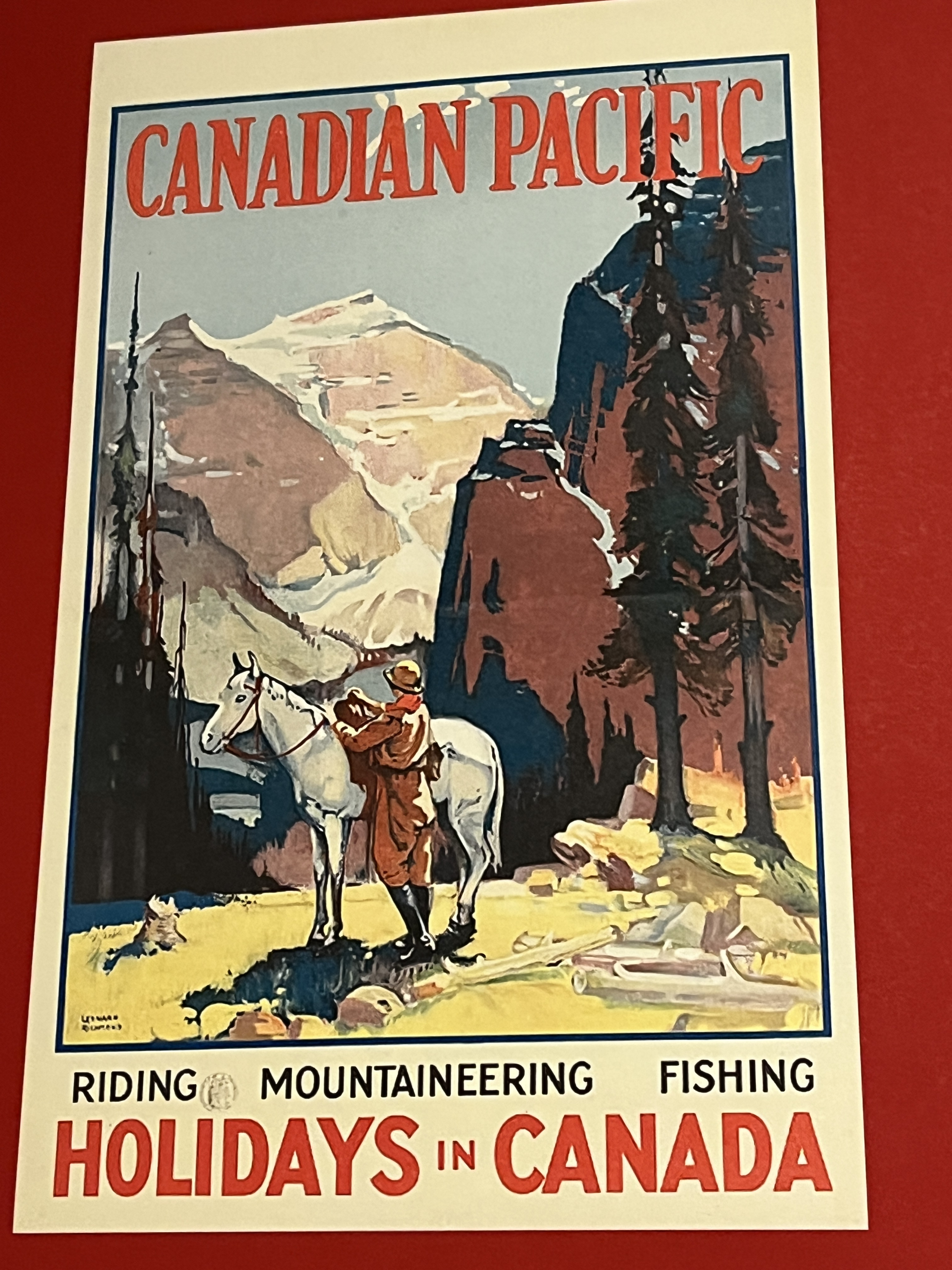
Still vibrant, these classic posters leap out, drawing you into their spectacular mountain scenes and alluring pastimes; skating, skiing, hiking, or just feeling glorious as a pampered world traveller. Depicting the splendour of the great Canadian outdoors, these advertisements weren’t created by happenstance. They spoke of the promise of luxury travel to the Canadian West and no place better epitomised this than Banff, in the Canadian Rockies.

I admit that a few years ago, I found it impossible to resist acquiring a limited reproduction of one of these treasured posters. They evoke a distinctive time and place and also represent one of the best advertising campaigns of the late 19th and 20th centuries – Canadian Pacific Railway decided who their market was and captured it well. The exacting quality and style that they sought often called for prominent artists who created posters by the thousands in different languages. Distributed globally, they portrayed a dream, a lifestyle and on a recent trip to Banff, I wanted to get a little more ‘into the ink of it all’. How did it come about? How did this once obscure settlement, once known as ‘Siding 29’ with little more than a house and a small log store, become world renowned Banff?

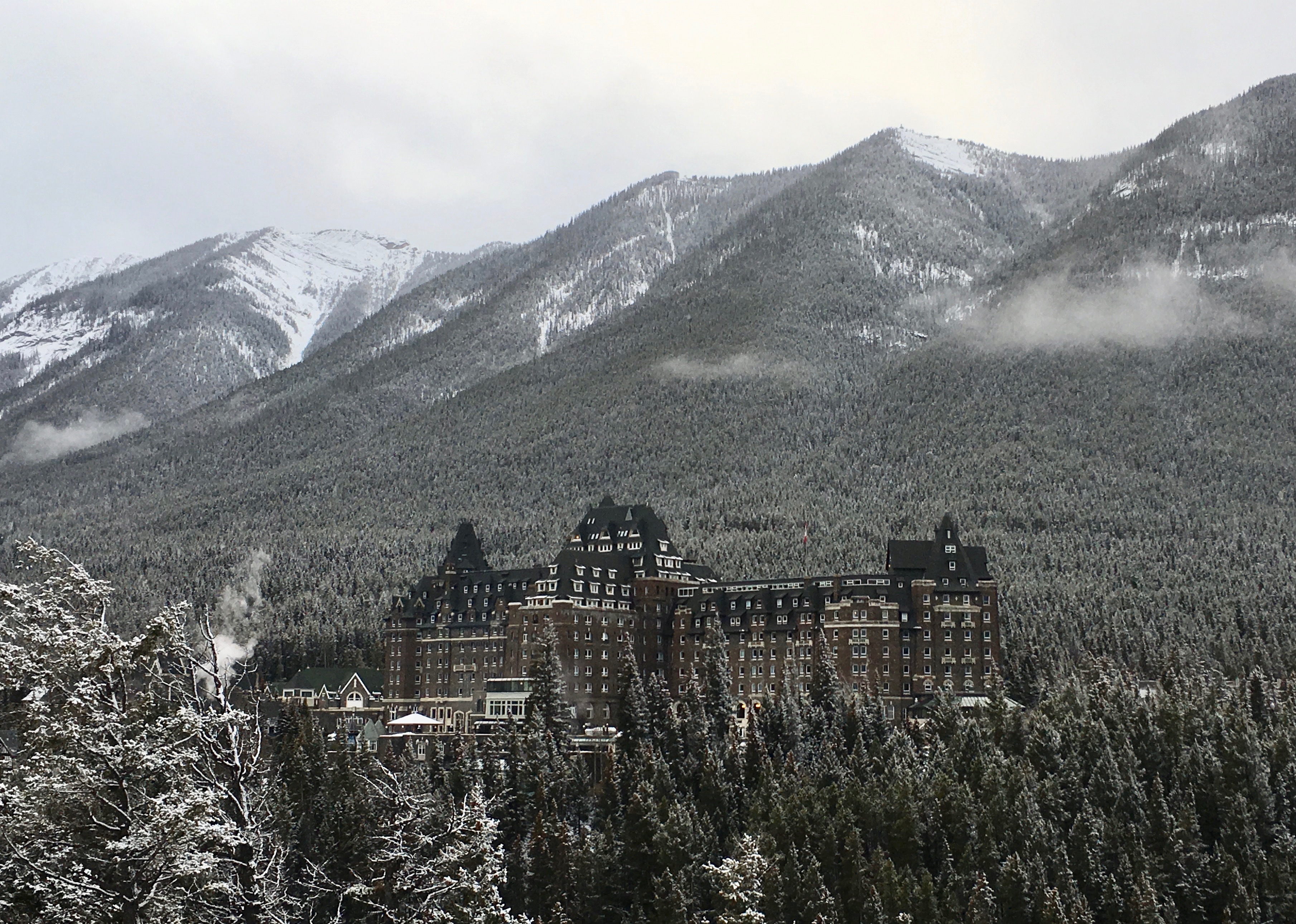
It’s quite simple. Without the Canadian Pacific Railway there would have been no unified Canada. Without the railway, Banff would never have achieved renown, nor would that splendid ‘castle in the mountains’, the Fairmont Banff Springs Hotel, exist. The railroad helped catapult Banff from obscurity and it all began with one man’s vision.

img_1565

His name was Cornelius Van Horne and he had a flair for railway ventures. Under his leadership, the Canadian Pacific Railway (CPR) was completed in 1885 and Canada had achieved its dream of becoming a united country; connected from the Atlantic to the Pacific. The Government of Canada was a mere eighteen years old. How would the CPR recover the enormous costs of building this ribbon of steel across thousands of acres of wilderness? They now had a railway and 25 million acres of land, an area larger than Ireland, granted to them by the government. Beyond the myriad small settlements that sprouted up close to the newly laid rails and the few burgeoning settlements such as Vancouver and Calgary, the vast tract of land was largely unsettled. But Van Horne soon realised there was an opportunity to attract tourists to Canada’s western frontier. In a moment of inspiration, he was reported to have exclaimed:

“Since we can’t export the scenery, we’ll have to import the tourists.”

Van Horne realised the potential of tourism and he executed the next phase. The CPR began building luxury lodgings such as the Banff Springs Hotel, the Empress Hotel in Victoria and the Chateau Frontenac in Quebec City. They would cater to wealthy visitors from Europe and the United States and the posters would become Canada’s ‘calling cards’… but mostly for the privileged few.

img_1615

Banff had it all from the outset. Health-giving natural hot springs, spectacular scenery and legendary mountains all rooted along and backdropped by the Bow River. Older than the mountains themselves, the Bow is a place where as long as 11,000 years ago, the First Nations people gathered wood for their bows along the banks… hence the name. They camped and fished the rivers replete in trout: brook, cutthroat, and Dolly Varden. They lived in what could be a harsh, but spiritual environment which they deeply revered. It was a place of seven hundred-year-old Douglas Firs. A landscape shared with grizzly and black bears, bison, moose, lynx, cougars and wolves.

Few Europeans had yet passed through the region; Simpson from the Hudson’s Bay Company, a few military detachments, one Reverend T. Rundle in 1847, and explorer J. Hector in 1858. But in the autumn of 1883, the first train tracks made steady progress up the Bow Valley passing and in 1886 through what would become Banff. This pristine wilderness was now part of the important link in the nation’s transportation and commercial corridor. Railway workers had noticed a natural hot springs and eventually Van Horne would convince the Government to reserve 26 square kilometres of land around the springs – the beginning of Canada’s national park system.

We spend our few days in Banff feeling as if we’re tourists. I’ve been coming here since ‘forever’, but this time we’re hosting family from The Netherlands and we savour the experience as a small holiday. We stay in a woodsy lodge where a roaring fireplace and a  colossal stuffed bison head presides over the grand room, watching tourists from around the world come and go. We stroll the streets of the small town, the prominent Cascade Mountain aligned perfectly on the axis of the bustling Banff Avenue. We admire a cluster of small cabins, some of the first homes of the original settlers, now part of the excellent Whyte Museum. People like David MacIntosh White, who in 1886 followed the adage to ‘Go West, Young Man’ first working for the CPR before becoming one of Banff’s founding businessmen. More brothers followed David from Eastern Canada and the White (later Whyte) family would become naturalists, poets, painters, park wardens, mountain guides, ski adventurers; they and the mountain community thrived.

Enthusiasm abounded and by the end of 1887, settlers had applied for almost 180 lots, both for home ownership and for businesses. There were six hotels, nine stores, two churches, a school and a post office. Along came a log railway station, roads were built. An impressive new hotel was under construction and, anticipating what would follow, access to the Cave and Basin and the Upper Hot Springs was improved.

We luxuriate in those same Upper Hot Springs one evening. It’s -5 degrees below outside and under a waxing gibbous moon, we steep in curative minerals, vapours steaming around us through the frigid mountain air. It’s nothing short of breathtaking and in the idyllic setting, we all understand the long-attraction of these health-giving waters. We return to our lodge room and gather around a crackling fire; a winter getaway to perfection!

img_1614

The next day, I’m determined to explore a little more of Van Horne’s iconic creation. Van Horne himself occupies a commanding position near the entrance to his Banff Springs Hotel, his statue presiding over the arrivals and departures of guests. Testament that without his vision of bringing the people to the mountains, none of this might be here. When the hotel opened in 1888, its architect Bruce Price of New York, described it as a ‘bastion of luxury’. And bastion it was! With two-hundred and fifty rooms that opened seasonally from mid May to early October, CPR’s advertising strategies quickly paid off and they continued building their chateau inspired masterpieces. Even as round-the-world tours began in  association with P&O, CPR also acquired their own steamships bringing the international set from far and wide to the Canadian Rockies.

The increasing popularity of the hotel as an international mountain destination cried out for the need to replace the original wooden structure. Soon an eleven storey tower and additional wings were added and in 1928 new styling was unveiled ‘in the spirt of a Scottish baronial castle’. Little expense appears to have been spared as stone-cutters from Italy and masons from Scotland were brought in to render this masterpiece.

As I wander through the sprawling hotel, it is rich with carvings, tartan carpets, soaring fireplaces and ballrooms that seem to beg for bagpipes. The million-dollar views are spectacular and I can easily imagine global travellers arriving at the station and being whisked to the ‘castle’ in a ‘tally-ho’, the original Brewster carriages. Many arrived for their four-month stay with stacks of luggage and a $50,000 letter of credit to see them through the season. Their’s was a life of luxury… just as the evocative posters had promised.

I peer out to the Bow River beyond. It’s always been a multi-use kind of river – perhaps a curling sheet, a hockey rink, a backdrop for one of Marilyn Monroe’s movies, or a royal visit by King George VI, Queen Elizabeth, Theodore Roosevelt and William Lyon Mackenzie King.

Yet as I gaze a little longer, I’m also reminded of those who laboured to bring the tracks to this setting. Those like the legendary Swedes, who they say handled the railway ties as though they were mere toothpicks. And the mixes of other ethnicities who contributed to unifying this country; Italians, Norwegians, Irish, Germans, Japanese, Chinese, British, Americans and Canadians. Most suffered hardship, many lost their lives, some stayed to settle this vast land. Their perseverance enabled more than two million settlers from Europe and the United States to pour into the west between 1886 and 1914 – the first and greatest wave of immigration in Canadian history. By 1901, this new country would have a population of five million, some 700,000 born overseas. Many would acquire plots from the CPR, choosing to homestead… our first farmers and ranchers. All of them welcomed and needed in the new colonial, cultural mosaic of Canada.

For me, Banff is much more than the opulence of a beautiful hotel and the lure of stupendous scenery or world-class ski hills. From the First Nations to present day peoples, it’s about the cultural heritage that still echoes throughout these grand peaks.

the_canadian_1955

If you go, allow me my suggestions:

Stay at the Buffalo Mountain Lodge, besides the lobby, fireplaces are also in individual rooms.

Stop, or stay, at the Fairmont Banff Springs. Take the stairs to the second level and wander!

Be sure to luxuriate at the Upper Hot Springs. Eat at the casual and fun Magpie and Stump. Don’t miss the iconic Hudson’s Bay store on Banff Avenue. Visit the Whyte Museum. Stop on your way, or afterwards in nearby Canmore, stroll the shops and the the beautiful scenery along the river.