Tag Archives: Costa Blanca

A Writer’s Retreat in Spain… kindred spirits & hometowns

Standard

The waiter places a dish of bacalao – confit of codfish – before me at Casa Grau Bistro. The Valencian creation is dappled with capers, pine nuts, slivered almonds and Javea’s legacy, raisins. “Like a painting,” he says with a wry smile.

As Javea was once an international exporter of raisins, I thought it was fitting to sample some and oh my, what a sublime blend of flavours. The long, leisurely luncheon is made even more enjoyable by Jacob, the Dutch transplant who’s made Javea his hometown for the past thirty-four years. He’s charming and witty, fitting right in with the our group gathered from around the world… The Netherlands, The UK, Canada, Australia and Spain itself.

“There’s just something special here and I could never go back home,” Jacob confides. The lunch has been a lovely ending to the excursion of the old town and as we leave, Jacob reverts to his Dutch culture and gifts me with a ‘three-kiss goodbye.’ “I’ll tell my mother that I’ve met someone from her home province in The Netherlands,” I promise.
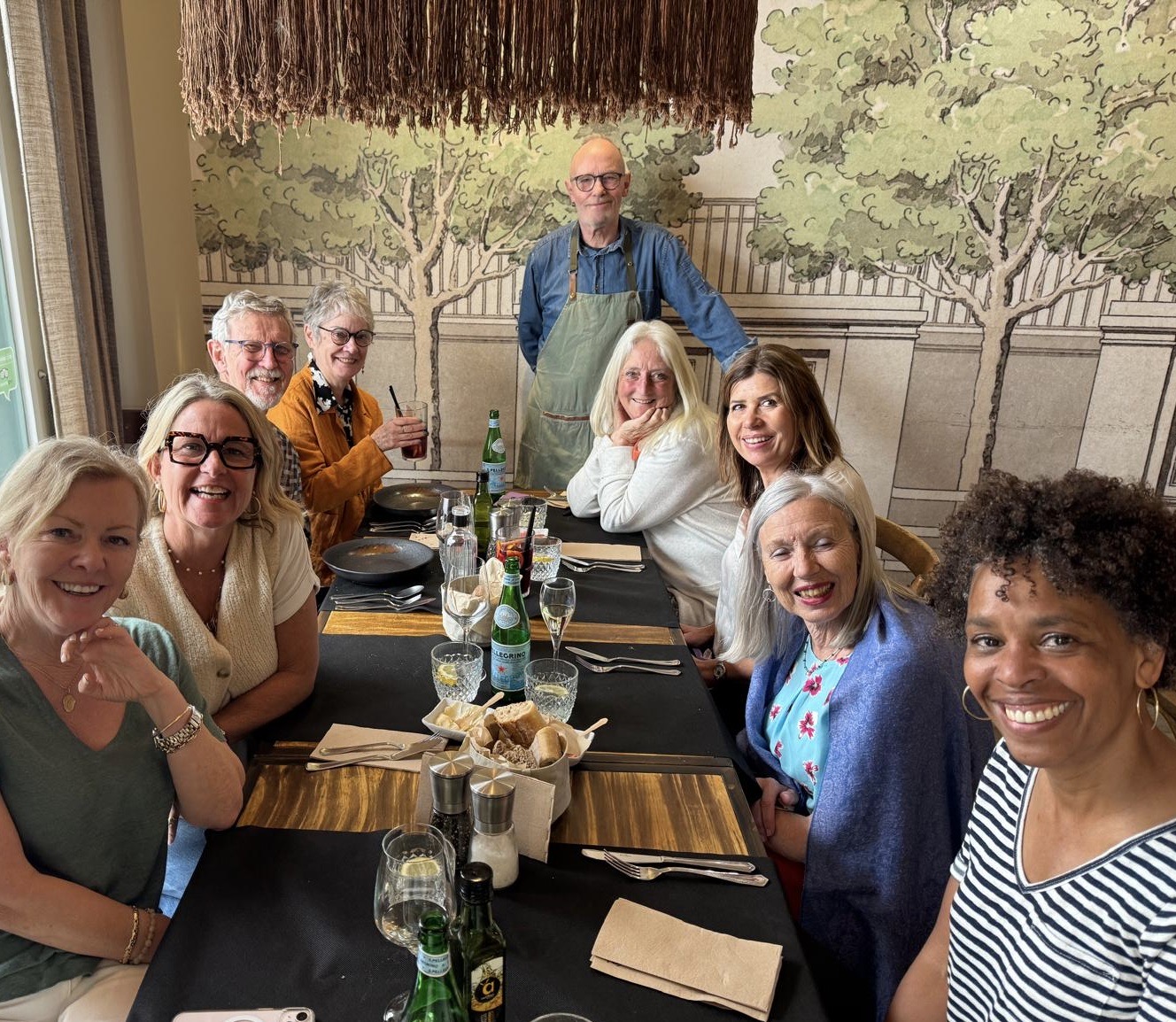
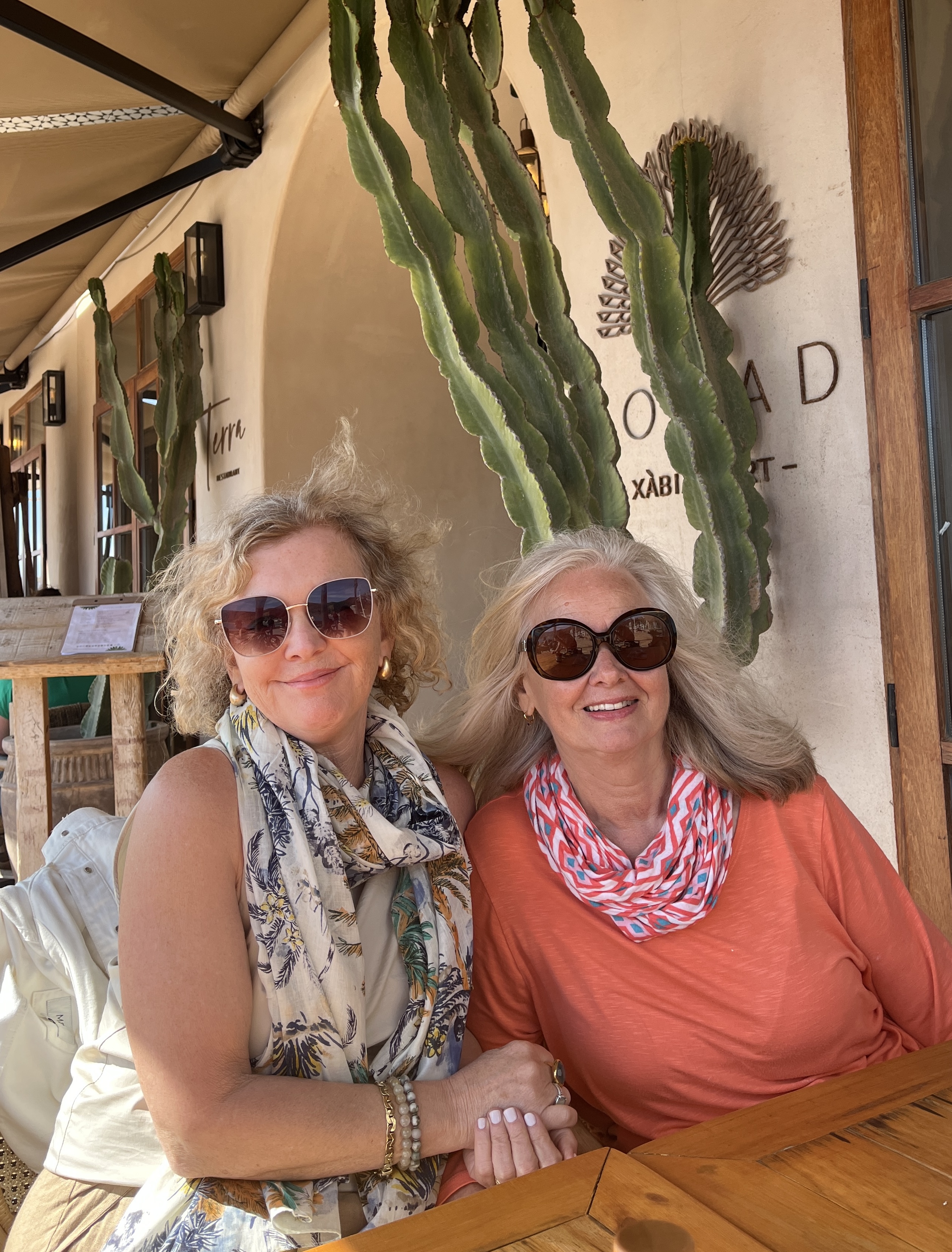
Led by my dear friend, Jo Parfitt, publisher, mentor and co-author of Monday Morning Emails, the writing retreat includes these leisurely lunches, dinners and tapas moments… an opportunity to connect with fellow writers. They’re also a chance to sample the local life style in what is said to be one of the prettiest towns along the Costa Blanca. I’ve been to nearby Alicante, yet Javea is known to have a special luminousity of colour and light, a richness of life. My good friend Nikki – author of The Soul’s Compass – and I made the commitment ages ago to attend the retreat; a good excuse to meet again, to be inspired in our writing, and why not, it’s Spain!


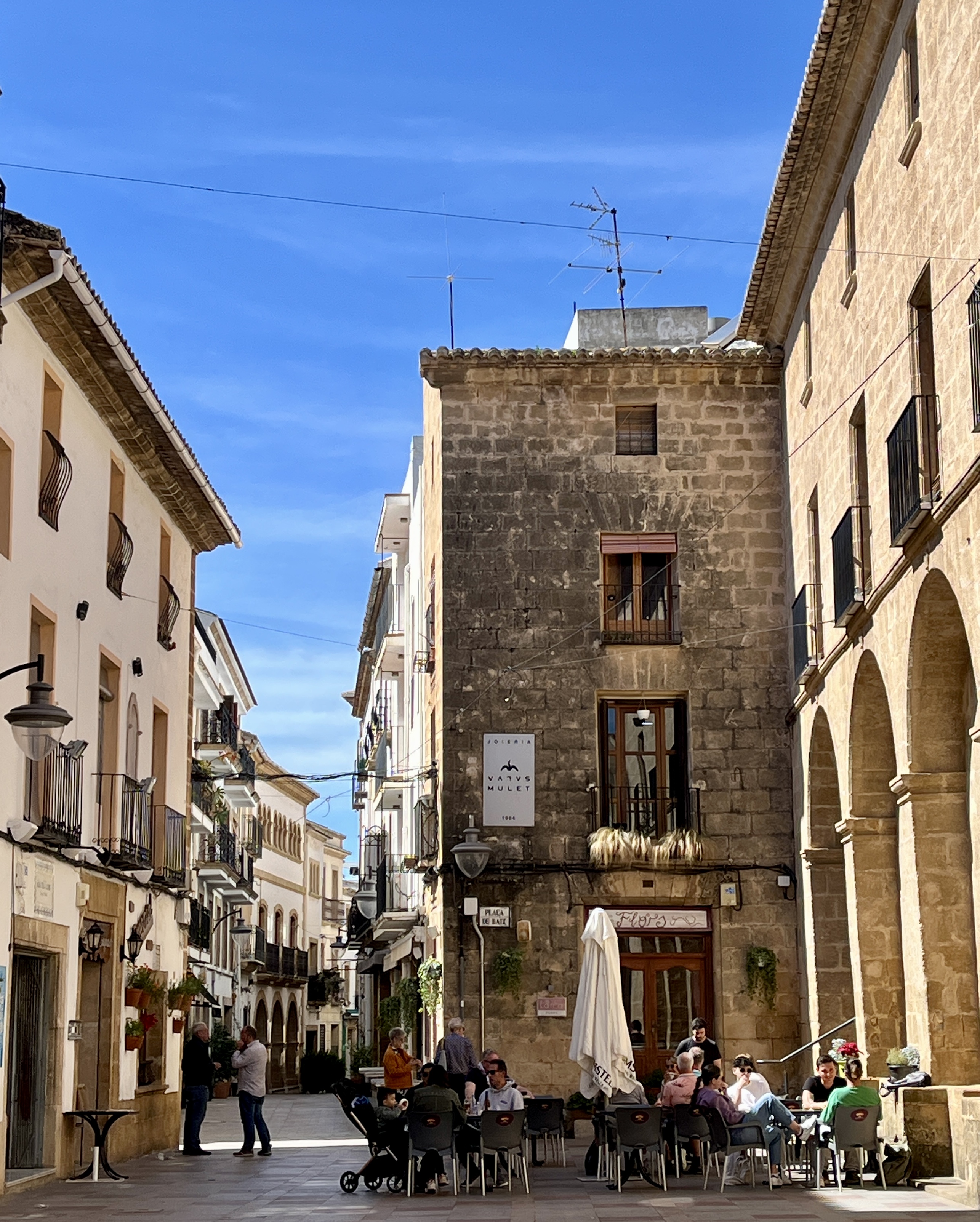
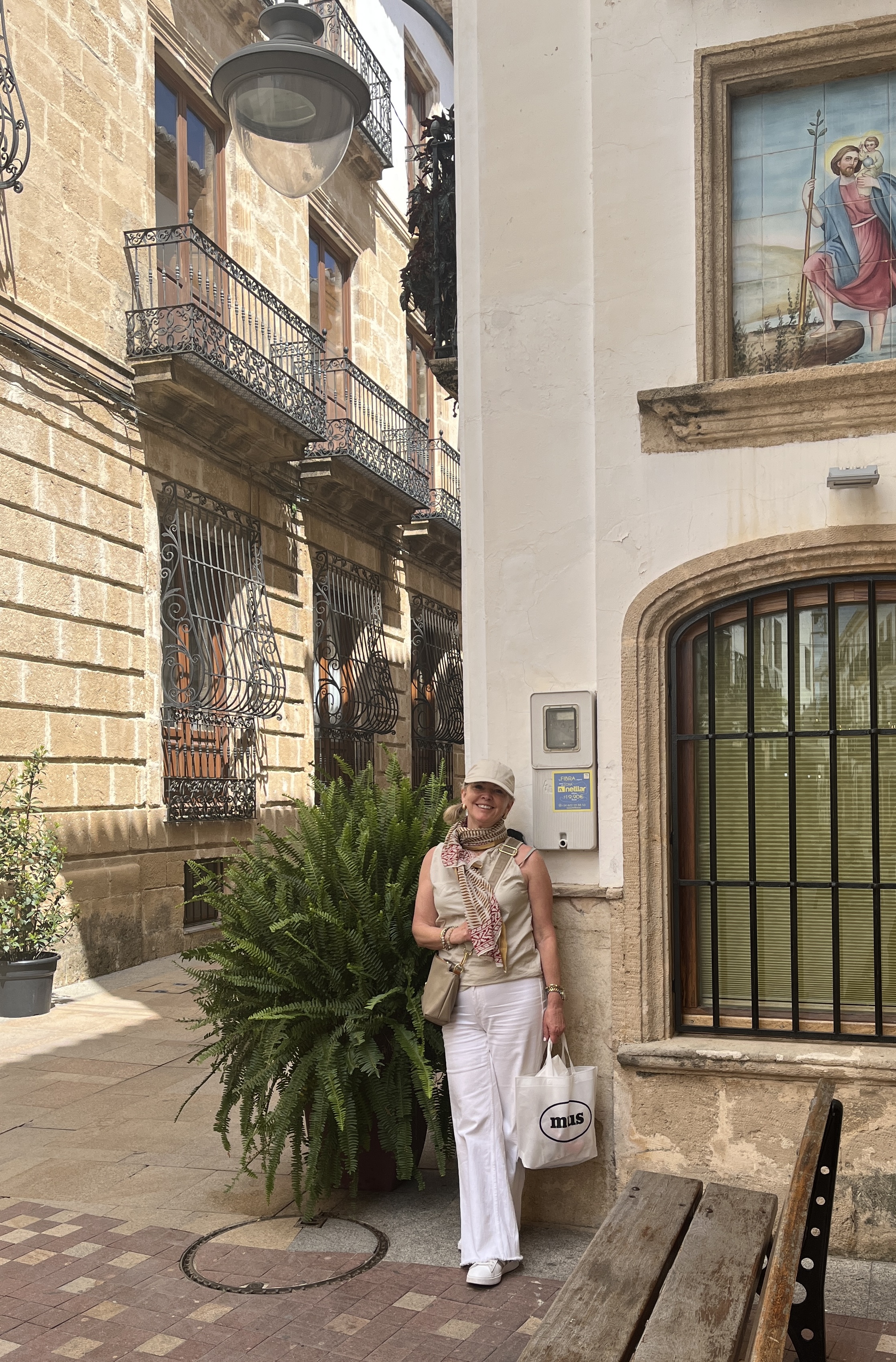
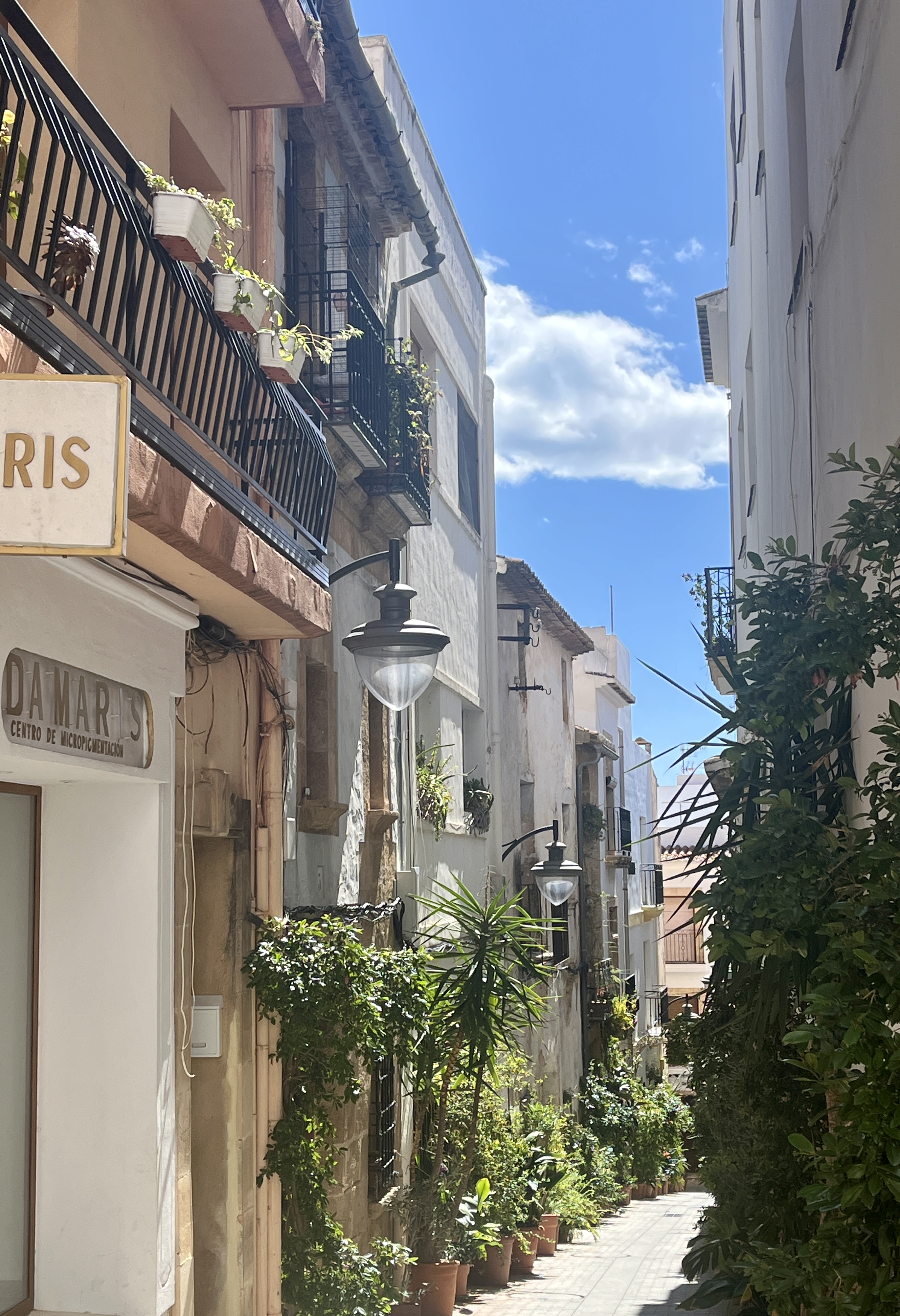
Today, our group has meandered from the seaside and sheltered lower bay of Javea, up a gentle inclined road to the historic old town; a labyrinth of historic cobbled streets, pretty tiles on white washed homes and quaint plazas ideal for tapas stops. We are at once delighted by the richness and history of the town.
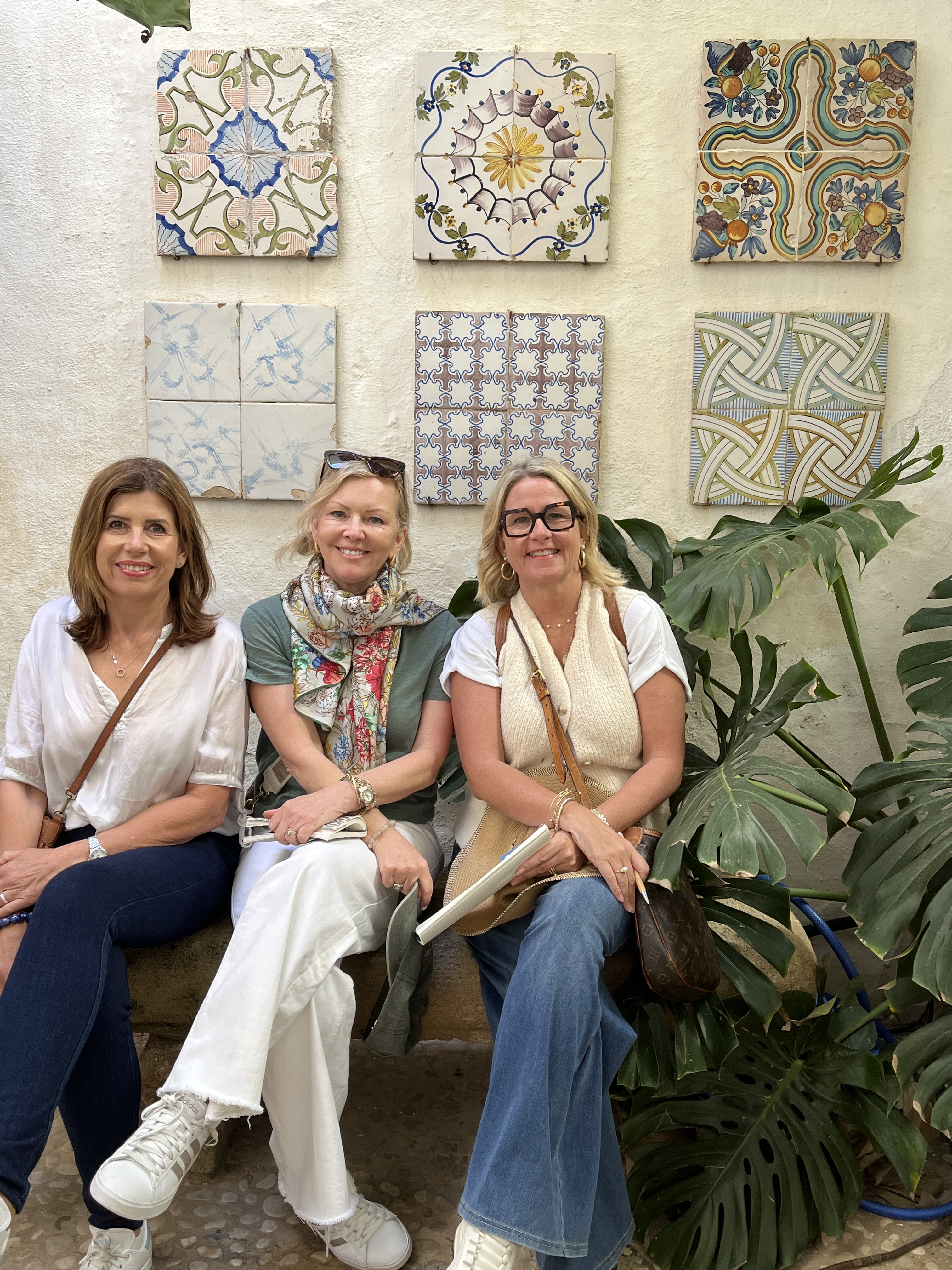
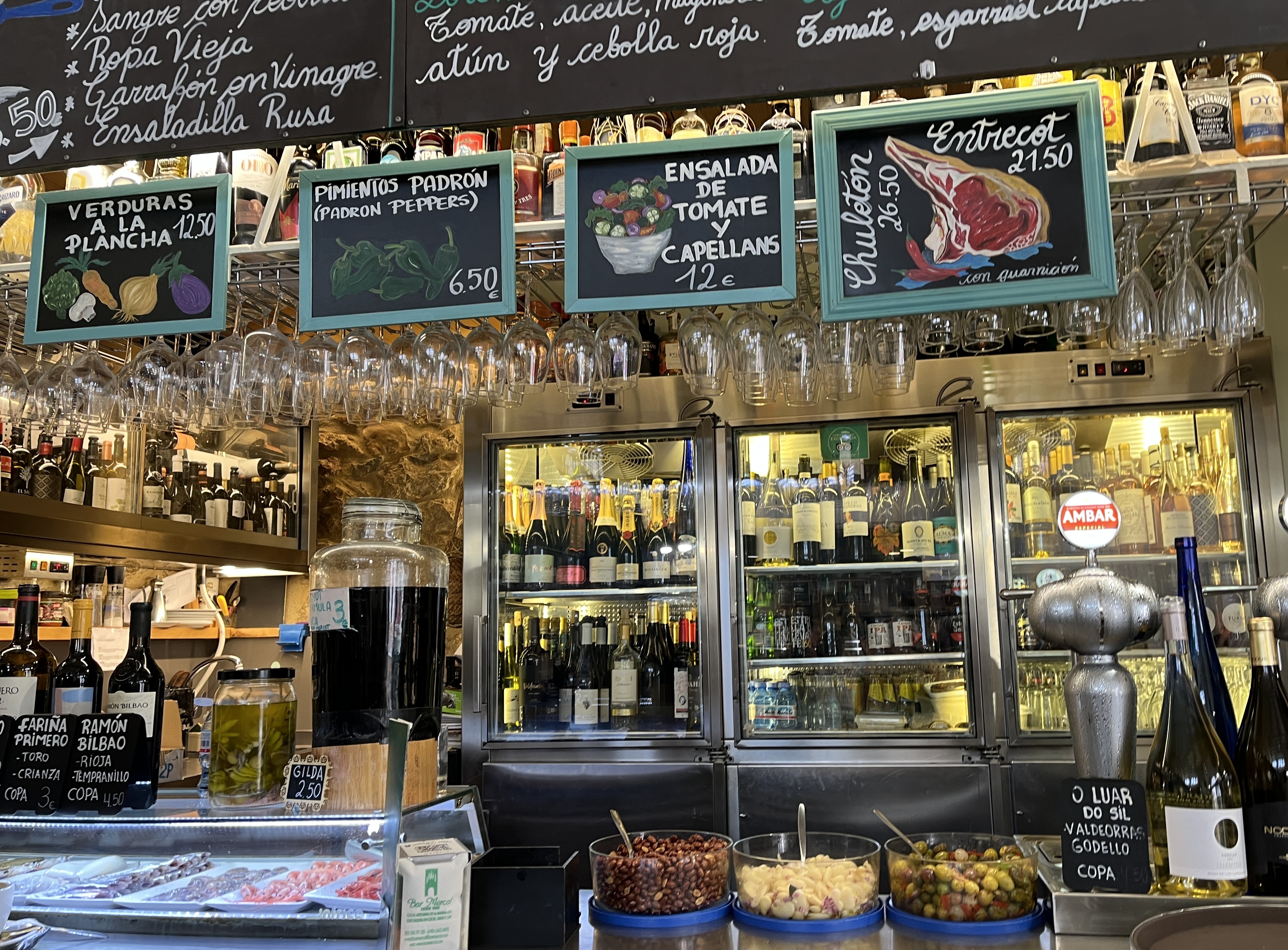
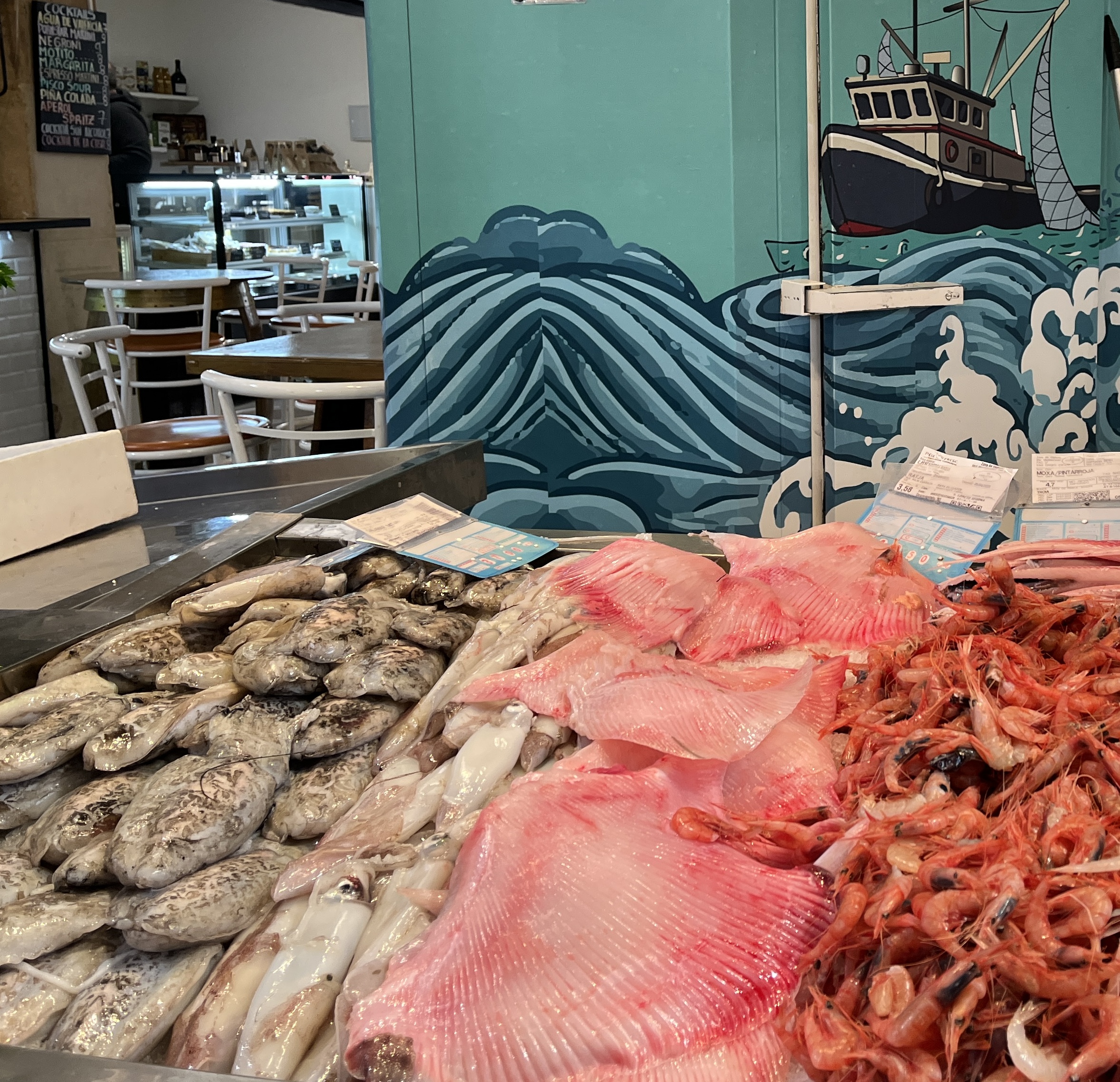
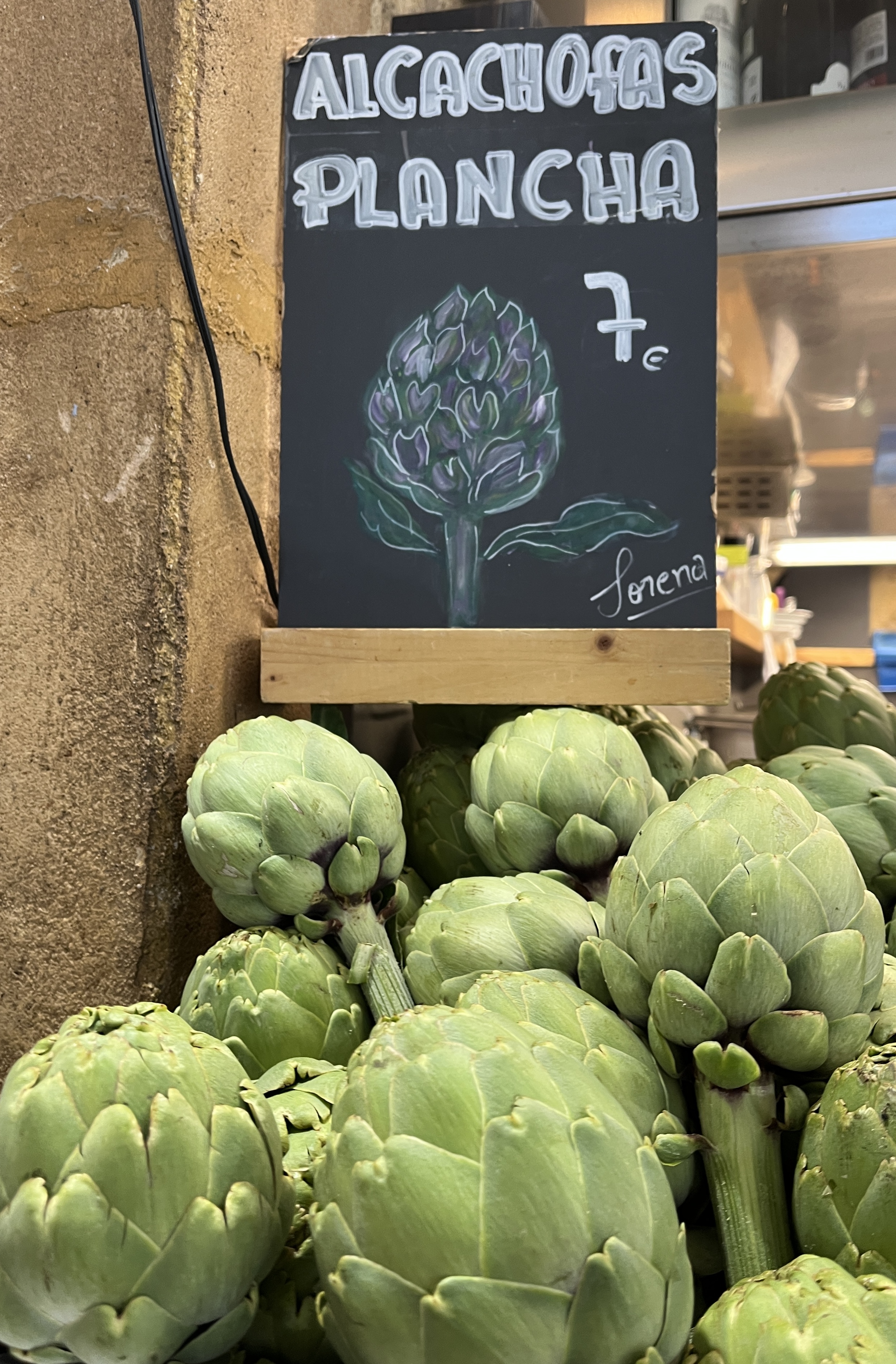
We meet Josh, our tour guide and Jo’s son, at the Mercato. The bustling indoor market is filled with a local’s favourite Cocteleria, Cocina, Panaderia and all those stalls bursting with earth-hued olives, mossy-green artichokes, cured Iberian ham, oil-bathed pimentos, seafood of every type, and sangria for inspiration! Like Jacob at the bistro, Josh has also settled here and is eager to reveal the history and secrets of his now-hometown.

As we exit the Mercato, across the way is the prominent Church of San Bartolome. Standing since 1304, it’s had time to expand to the fort-like edifice that once protected the locals from marauding Barbary pirates. As the tour begins, the bell tower which once doubled as a watchtower, makes itself known with a deep, rich cascade of bells. Charmingly, the carillon has individual identities too – Victoria, Sebastiana, Bertomeua – and are revered by the locals.

Making our way along narrow streets, Josh points out the many niches embedded high up on building walls. Behind the glass are carved wooden statues of San Sebastian, Javea’s Patron Saint. It was his duty to protect the town against the deadly plague in the middle ages and still today, each street may have its own niche, for prayer, for protection.

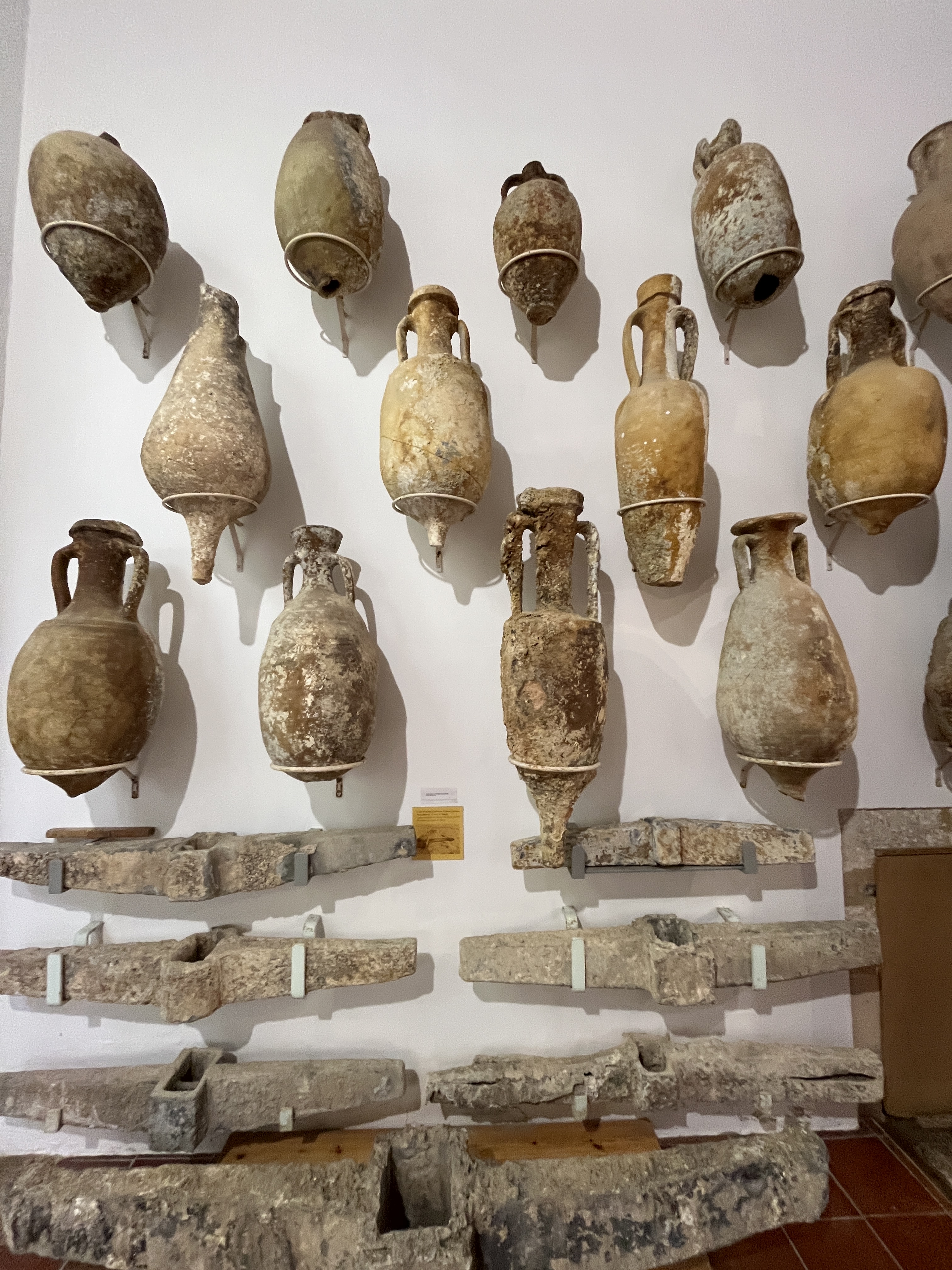
We also peek into the Soler Blasco Museum, housed in a magnificent rough stone facade. Built in the mid-1600’s by Antoni Banyuls, once a butler to King Felipe III, my eye is drawn to the Roman amphorea languishing in the lush courtyard. An amphora is a two-handled storage jar that held olive oil, wine, milk or grain; their pointed base allowed them to sit upright in soft ground or sand. I ponder their ages of use as the Romans, Visigoths, the Moors, and now the Spanish have all lived centuries of life on these shores. “Javea is a mongrel casserole, a melting pot, a rich and colourful fusion of history,” Josh tells us. We wander happily, delight in more local history, and I ask him how he had come to live here.

Like Jacob at the restaurant who had shared that he visited here on holiday and never really left, Josh tells me that this was never the place he planned or imagined moving to.

“I was posted here as a journalist to cover the Costa Blanca in English. I’d never even heard of it until I arrived in 2019. Discovering its history, culture and hidden secrets were a by-product of me covering it as a news writer and later as a content writer for local businesses. When I was furloughed during the Covid lockdown, I nearly went back to London to further my journalism career. But then realised, almost by accident, small-town Javea had become a place where I could walk down any street and probably bump into a familiar face. As someone who moved between 5-6 countries as a child, that was the kind of thing I always felt I had missed out on.”

I nod knowingly, so very knowingly. It echoes how my own children felt after being raised globally, moving from one continent to another. In fact, Jo’s and my account of this very specific way of life as expat mothers is the basis for our book, Monday Morning Emails. Like Josh, my three sons had a rich and varied childhood in various countries and cultures, yet they too didn’t have a hometown to call their own.

“Sure Javea is amazing – always a top 10 place in Spain to live.” Josh says. “But for me, it’s a place where I feel part of the community, that’s what has made me stay.”

It’s late afternoon as we stroll back to the seaside and I ponder how life has unfolded for Jo and myself since our book launch in 2018 at her lovely home in The Hague. I was living in India when we began writing emails back and forth, realizing we had so much to share about living a global life. Though time has passed, we’ve been fortunate to see each other in various places since… and now in this lovely spot.

A place where just beyond are shoulders of hills dotted with palm trees and neatly lined grapevines. Where white-washed and mustard-yellow villas of the once merchant families, now contrast with gleaming white and glass of expansive villas nestled in the hillside. Here, where the extraordinary play of light on the sea against the ginger cliffs has long rendered Javea as inspiring… indeed, quite the ideal spot for a writer’s retreat.
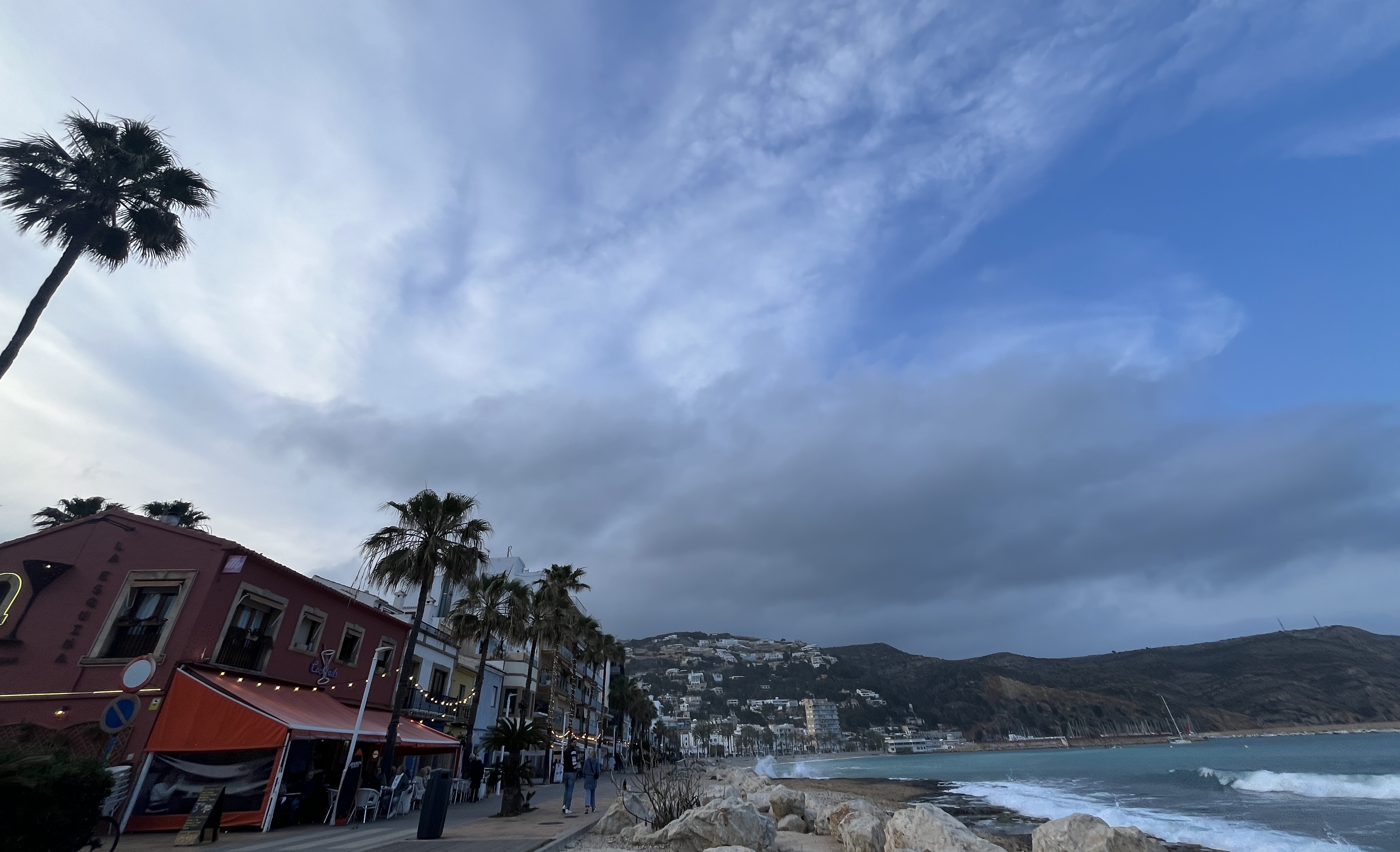
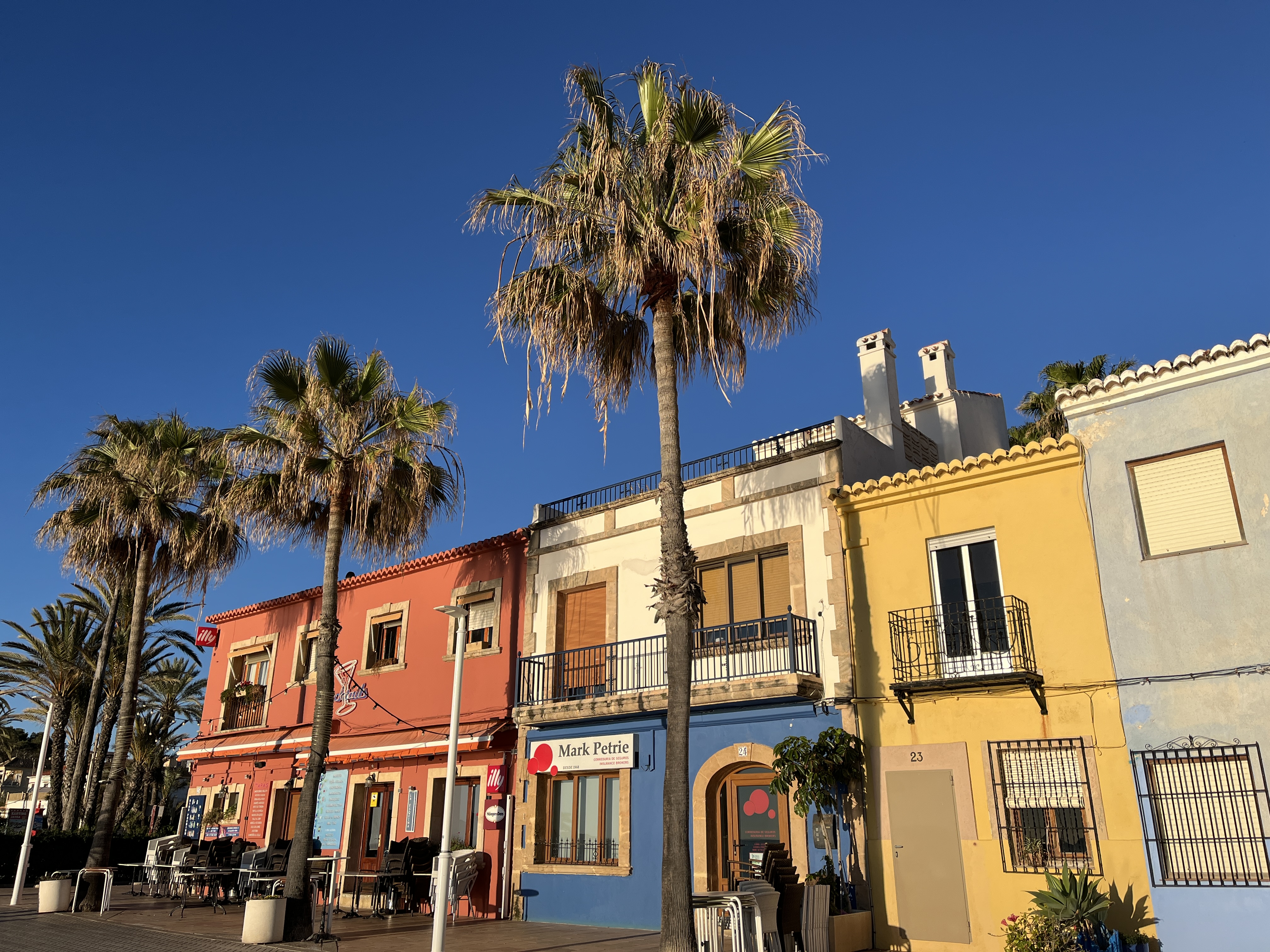
Over four days and three evenings, we writers take guidance from Jo and inspiration from each other. We ponder, muse, conjure words and stories. We delight in early morning walks along the seafront, we wine & dine, and share our work. We make new friends and rejoice in simply being with kindred spirits, all the while thankful for being cocooned from life’s daily commitments. Jo has inspired many writers and authors along the way, and as I know myself from my own writing workshops, the real reward is motivating fellow writers to put words to paper.

A quote from one of my participants from a workshop in Slovenia has always stuck with me. “Thank you so much for opening this new door for me. I’ve always known I can write, however, I never imagined that you could turn almost anything into a story. A child’s laugh… a van ride in the Cambodian countryside… my morning coffee… my feelings towards my grandma. You showed me that anything is possible. Can’t wait to create more! ”

And so, we writers also depart with a new zest for storytelling and renewed writing commitments. After the farewells, I decide to remain a few more days instead of going back to Barcelona to finish this Spanish sojourn. I move to the lovely Botanico Boutique Hotel, my balcony open wide to the sea-salt air and the hues of blue sky and sea seemingly melding into one glorious painting. I dip my toes in the cool Mediterranean Sea. I savour and soak up my beloved palm trees. I write some more. I stroll back up to the old town and like magic there’s Jacob. Savouring a repose at the door of Casa Grau, he greets me with three kisses, “Meisje, hoe gaat het?”
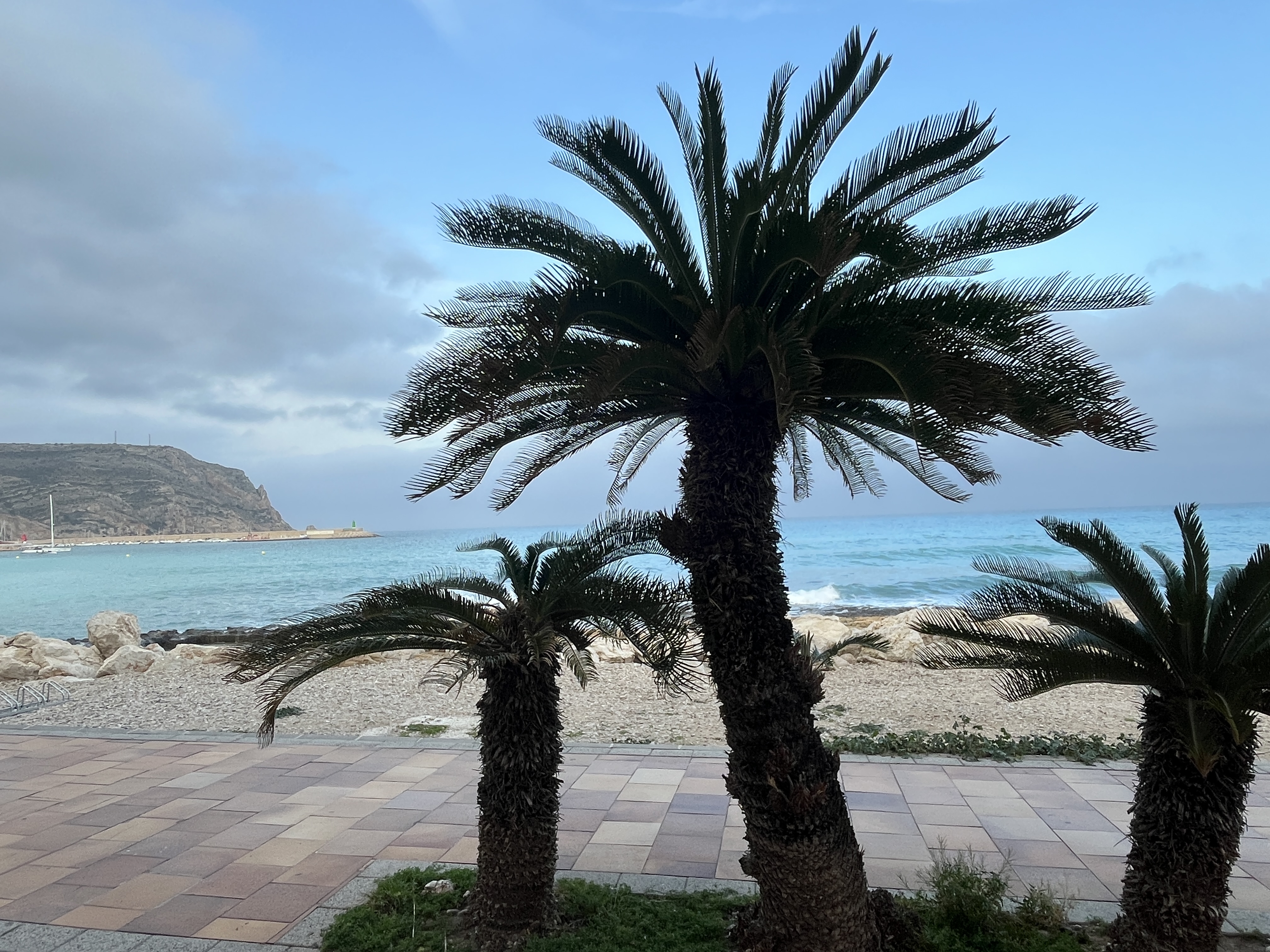
As Jo and I have one last chat at my favourite coffee stop overlooking the sea, the conversation meanders to our children. “It’s been so nice to see Josh again,” I tell her, “and how lovely you get to come here to visit!”

She comments on how special it must be for me to have our three children in one place. “It really is,” I agree. “It’s something Bruce and I couldn’t have imagined after so many years overseas. And like your kids Jo, they finally have their hometown, they’ve bloomed where they’ve planted themselves. Luke works virtually as a Communications Expert, Matt works locally in the Trades, and Andrew has a prominent position with our city’s Chamber of Commerce. And then there’s our two special daughters-in-law, even a grand-puppy!”

“So very blessed,” Jo agrees. “Sam is doing well in London and Josh is happy and settled here as you see.” After writing our book, Jo and I were often asked how our kids were, especially by readers who also lived a peripatetic life and could relate to the challenges. We’ve always been thankful that our collective five sons were gracious enough to allow us to share their journeys.

We also have gratitude for a friendship that began at a writing retreat in Tuscany. We reminisce that we once lived as neighbours, side by side for a month in The Hague. We speak fondly of the book project we worked on together in Penang, Malaysia and we share updates of mutual friends from both Families In Global Transition and writing retreats… the blessing of kindred spirits indeed!

With a final hug and a fond farewell, Jo and I part for now. The taxi arrives and I begin the long journey back to Canada… through Alicante, Barcelona, Paris, to Calgary. It’s been a fantastic trip, yet I feel the anticipation of being back in my hometown too.

Post Script

Josh can be found at https://townsquareseo.com/

Nikki Cornfields book, The Soul’s Compass and Monday Morning Emails can be ordered on amazon

Jo Parfitt can be found at https://www.joparfitt.com/

Smitten by Spain… of tapas and new shoes on the esplanade

Standard

IMG_7141

In Alicante

“Your cortada, señora,” the waiter says, placing the tiny coffee before me. Soaking up the atmosphere in a small Spanish plaza, it strikes me how lovely it is to be called señora. Far more exotic sounding than Ma’am or Mevrouw.

Having visited three countries in a two week period, it’s been hectic. I have half-written blogs on the delights of Quebec City, Canada’s gem, and picture-perfect Netherlands. But for now… I’m smitten by Spain.

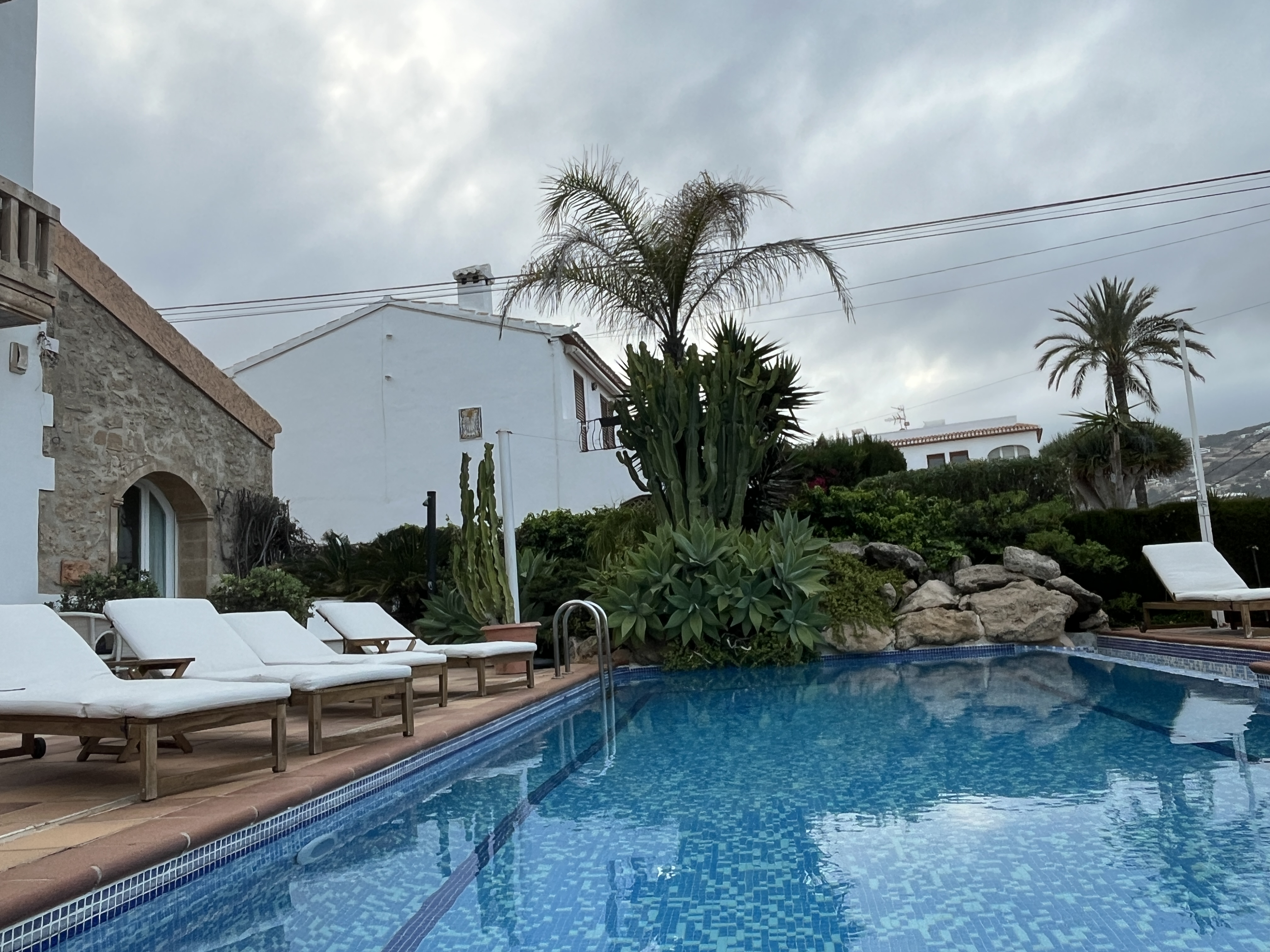
An unexpected trip with my mother and Dutch relatives has found us in the Alicante area, on the Mediterranean coast. Overlooking the Costa Blanca, we’re happily ensconced in a family villa. The terrace wraps around the long bungalow, leading to a pool with a tremendous view. We sunbathe and float, our gaze lingering on the sailboats and the fishing vessels beyond. The azure sea melds into the endless blue sky; I now understand why people adore Spain.

IMG_7119

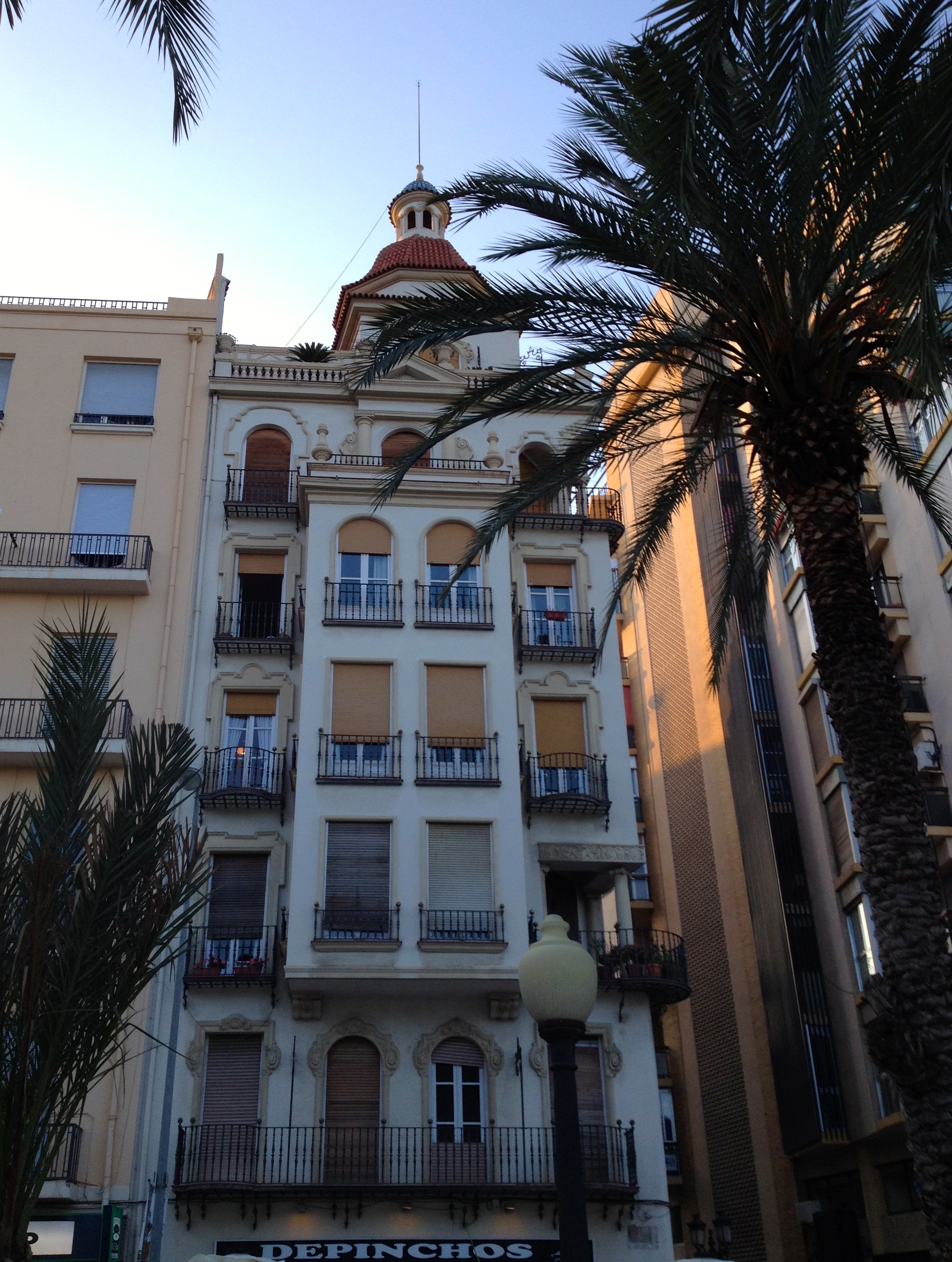
Architecture and ‘siesta blinds’ in Alicante

Indeed, this is the good life on the Mediterranean. We indulge ourselves with moonlit swims and champagne lunches by the poolside, happy to drip-dry in our swimming suits and wraps. Our hosts, my second cousins Alda and Margienus, don’t permit us the luxury of afternoon siestas however. There’s too much to see, as Alda knows well.

Her father acquired the villa some forty years ago. “I was about fifteen when we first came here for holidays. I feel some of my roots are here at Casalmar,” Alda had told us as we feasted our eyes on the spectacular view for the first time. We soon appreciated why one would chose to vacation or live here.

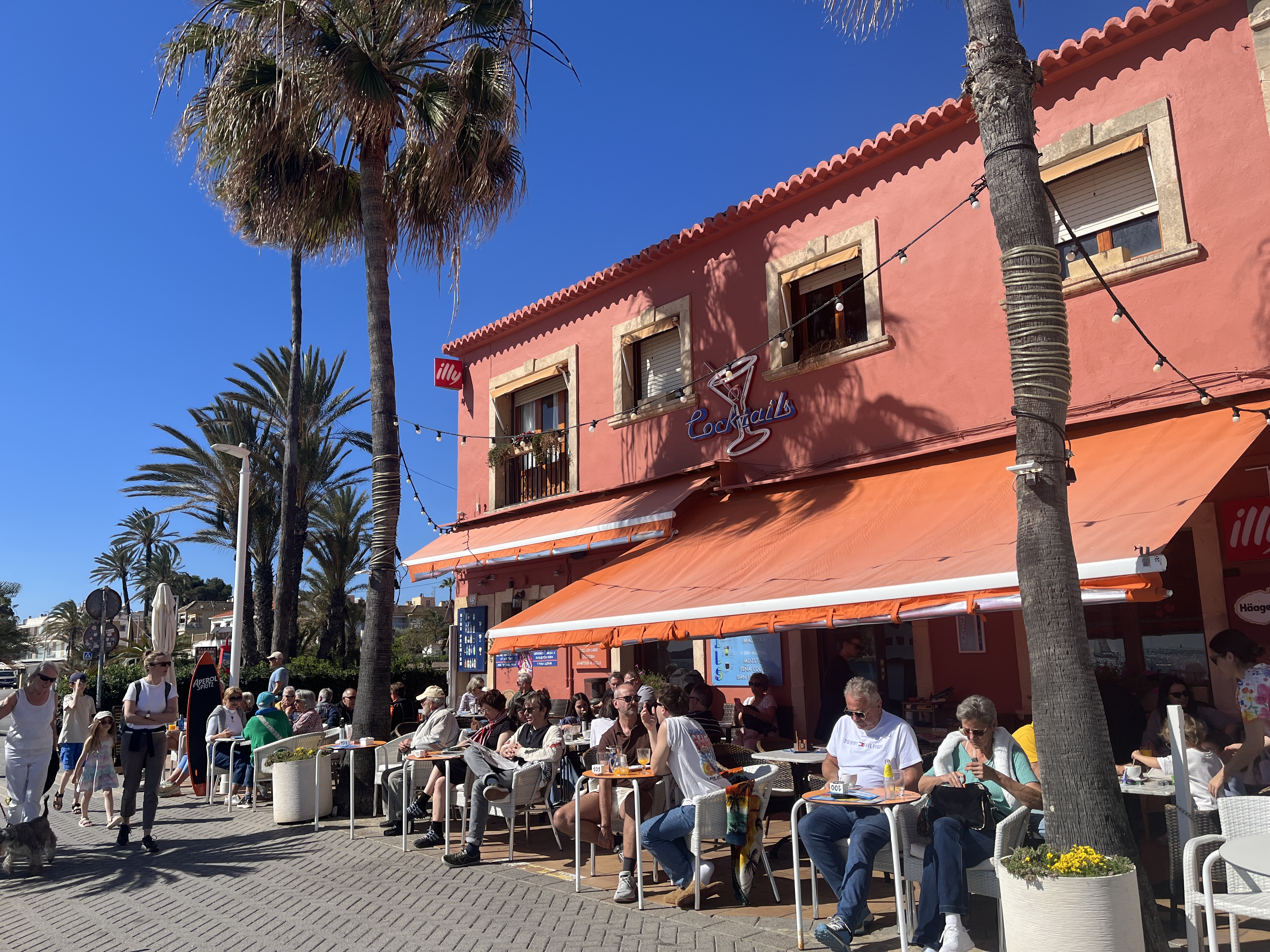
Villas crowd the coastline, bouganvila of fuscia, deep purple and crimson spilling over stone walls. Palm trees, cacti and giant aloe vera spring from the dry earth. Tiny corner stores and family run eateries seem to welcome on every street. Local markets sell the essentials for Spanish cuisine such as oranges, pimentos, chorizo, olives and rice. Fun, seaside attire entices us and we all come away with something; flouncy blouses, flowing pantaloons and billowy kaftans. But best of all, the sea is never far away.

IMG_7211

‘pool with a view’

Our neighbourhood of El Campello is tranquil, yet comes to life on the promenade. Large intricate sandcastles guard the beach, children dig with bright spades and pile fine sand into plastic buckets. Bars welcome us with vistas of the waves lapping against the shoreline. Naturally, a 16th century watchtower catches my attention.

The Alicante region wasn’t just a magnet for traders and settlers over the centuries, but also for the dreaded Barbary pirates or Ottoman Corsairs as they were also called. They plied the coast capturing local population, building their slave trade on Spanish captives. Some twenty defence towers still perch on prominent cliff tops; as if still watchful for the North African invaders.

“a handful of pencil crayons’

Some invaders came to stay and their legacy remains. The Moors over-ran southern Spain but brought enlightenment in the form of medical knowledge, irrigation and education. The coast also became a major Mediterranean trading station; rice, palms, olive oil, wool, wine and oranges. Valencia is further north and I can attest that the oranges are the tastiest you’ll ever try. And the wine? We sampled much of that as well; a delicious Spanish white costs no more than 2 Euros. It really is la dolce vita. Or should we say…la buena vida!

IMG_7287

The boulevard at Villa Joiosa

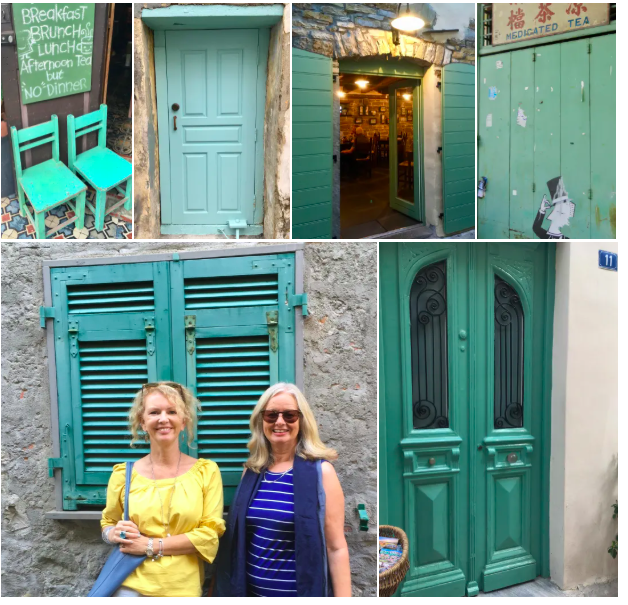
One afternoon sees us enjoying a bottle of white in the picturesque town of Villa Joiosa. A short trip along the coast, its name means ‘jewelled town’. The vibrant colours are intended to guide local fishermen home from the sea. Narrow, centuries-old houses lean against each other, each distinctly hued. Shades of powder blues, reds, pale lavenders, yellows and seaside greens. Imagine selecting a handful of your favourite pencil crayons and living amongst them…it’s fanciful and alive, jewels every one of them.

IMG_7240

Lavender and terracotta pots

As we while away the late afternoon at the small Placa Castelar, the town awakens from its siesta slumber. Locals emerge from the warren of streets that radiate from the cobbled square. Church bells peal laconically, shop doors unlock, dogs stroll with their humans and hats tip to neighbours.

We hear the the swish of blinds and shutters roll up. These outdoor coverings for doors and balconies are drawn down during siesta. It’s 5:30 now, time to come to life for the evening. I notice a few señoras trickling water into terracotta pots on tiny balconies. ‘Hola’, they venture.

I mention to Alda that we might peek into some shops back along the harbour. “I think you’ll want to wait for tomorrow,” she says and I remember what I’d read about Spanish shoes in Alicante.

IMG_7142

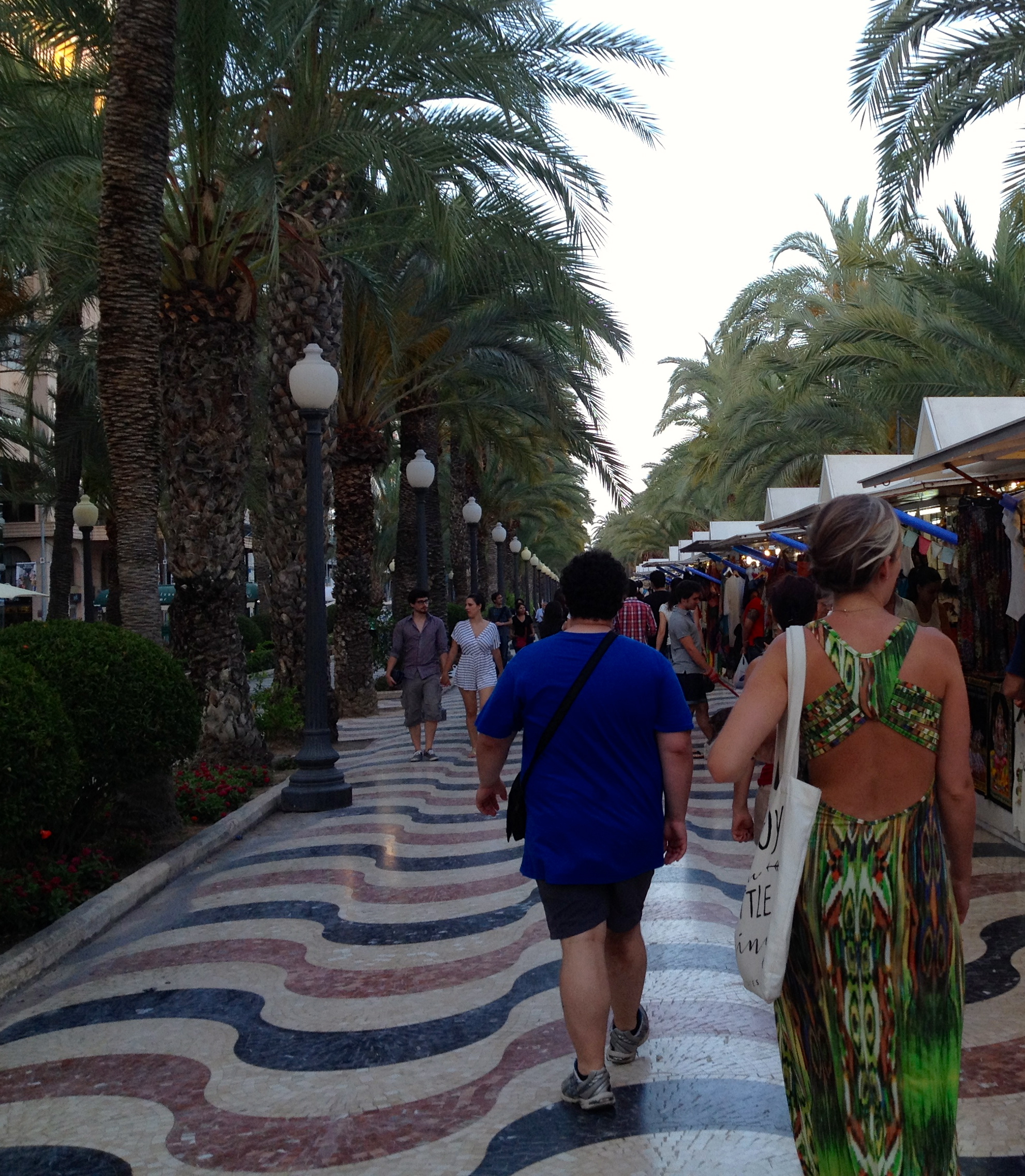
Waves of marble on the esplanade

We begin our outing the next day (after a stop for the promised pair of Pikolinos) with a stroll along the heart and soul of the city, the Esplanada de España. This grand boulevard stretches around the Alicante marina, all 6.6 million tiles of it; red, black and cream.

Created in 1867, it offers the place for a perfect paseo, a romantic evening stroll. The dramatic marble tiles depict the waves of the Mediterranean and rows of palm trees offer shade. Well-dressed couples stroll hand in hand, people peruse the kiosks, others sip coffee.

At a nearby bustling square we enjoy a cocktail and I befriend two charming waitresses, Maria and Katrina. We chat and pose for photographs, their natural friendliness epitomizes the hospitality of Spain.

After a first tapas at a nearby outdoor bar, we encounter them once again. Maria is standing in the elegant entrance of Le Turronena and I stop to ask the name of the imposing tree that shades the square.

New shoes on the esplanade

New shoes on the esplanade

“It’s a dragon tree, there’s another famous one in Tenerife,” she informs me, then asks if we’ve come back to dine.

“No,” I say a little apologetically, “we’re on the search for our next tapas bar.”

“Well then come with me, I’ll take you to where you’re going next.” And with that Maria marches us down the street, shouts Hola to fellow shop workers as we pass, then turns a corner. We’re suddenly upon a crowd gathered outside a small tapas bar.

As custom dictates, many of the locals are outside socializing in the warm June evening, tapas in hand. Maria informs one of the staff that she has a group of six and voila… we’re lucky enough to be seated at the bar. We know immediately that Maria is an angel in disguise.

IMG_7136

Katrina and Maria, our ‘angel’

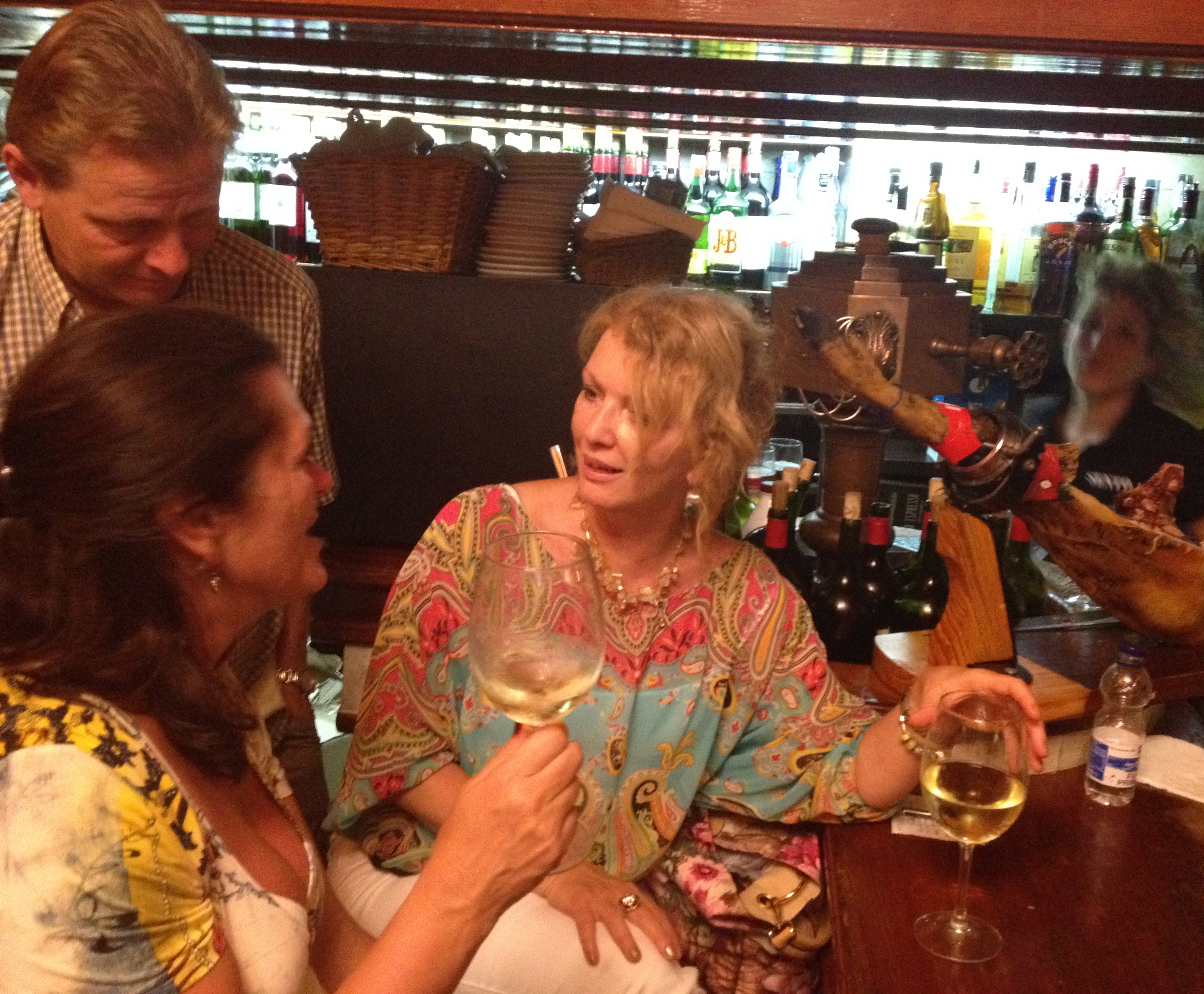
Alda had promised that we wouldn’t leave without an authentic tapas experience and this was it. The small bar is like a beehive; busy, exuberant and productive. Cured ham strung against mustard walls, tapas orders shouted out over the laughter and chat, staff weave in and out like a choreographed salsa dance. Each time their hospitality is rewarded with a tip, a loud clang erupts from a voluptuous bell behind the bar. “Fantastico!” one of the guys would sing-song and we in the bar would loudly echo it back. The ebullient Sara tells me it also means…”Our new friends are leaving and we hope they’ll come back.” I like that.

As the wine flowed and sumptuous dishes are presented to us, it’s understandable that tapas has evolved into a sophisticated cuisine. Perhaps eight to twelve different dishes are savoured one by one, designed to encourage conversation. We sampled tuna, chorizo alvino, calamares and dishes in between. But the art of tapas has far more humble beginnings.

It’s believed that since one would stand while eating a tapa in traditional Spanish bars, you’d need to place your plate on top of the drink to eat, making it a top. Others maintain the name originated sometime around the 16th century when tavern owners realized that the strong taste and smell of mature cheese disguised that of bad wine, so offered free cheese.

IMG_7161

Fantastico!

Another theory is that King Alfonso X of Castile recovered from an illness by drinking wine with small dishes between meals. After regaining his health, the king mandated that taverns shouldn’t be allowed to serve wine to customers unless accompanied by a small snack or “tapa”, the meaning of the word.

Then again, it’s said the same King once ordered a cup of wine on a windy beach. The waiter covered the glass with a slice of cured ham before offering it to the king, thus protecting the wine from sand. “I’ll have another, with the cover!” the king is said to have bellowed. He was onto something… in our opinion, wine and tapas go hand in hand.

IMG_7159

Sara and Roben

At one point in the evening, I ask Alda about her time spent here over the years. She fondly recalls shopping for a long gown, so she could stroll the esplanade as a teenager.

“Everyone dressed up then for the paseo, it was a special time,” she says and feels privileged to have experienced that era. Alda relates that Spain became her father’s home and in fact chose to be buried here, rather than back in the Netherlands. “He contributed a lot to improve our village, it became a tight knit community with pockets of Dutch and English.”

IMG_7180

“a new dress for paseo”

That had been evident over the days as I heard Dutch and distinct English accents throughout the area. Yet while living a true Spanish experience in the tapas bar, Cervecería Sento, one’s home country is miles away. It’s difficult to imagine yourself anywhere else at that moment in time.

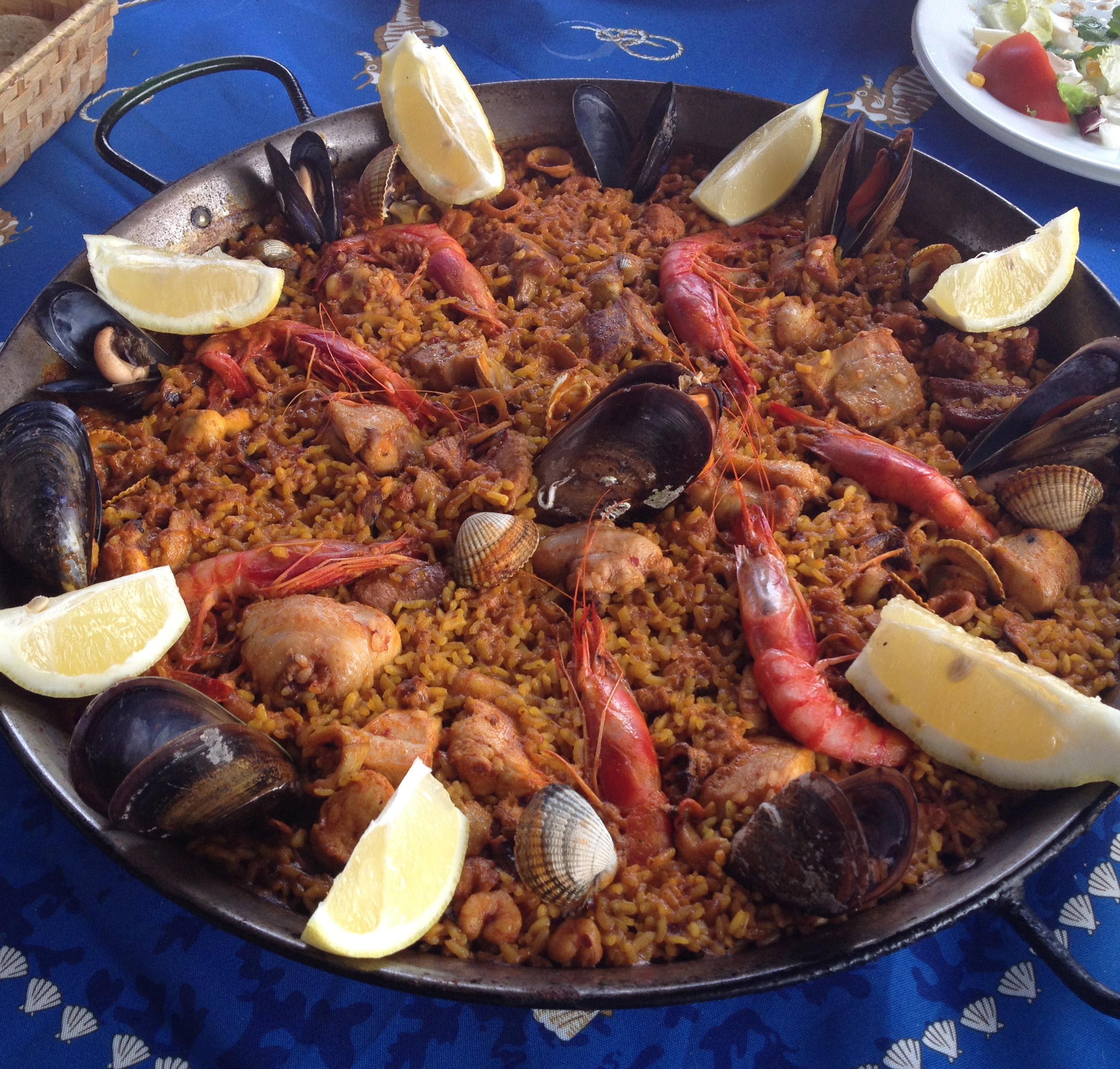
My story might leave you in our favourite tapas bar, yet I must share one last vignette. Our last day finds us back in the village for a traditional Sunday lunch. To complete our culinary experience, Margienus insists we have traditional paella, the Spanish rice dish that originated in the Valencia area.

We climb up a rocky hill where the restaurant sits, open to the breezy afternoon. Beach goers and picnics enjoy the sand below us, the day feels pleasant and timeless.

IMG_7344

At Casalmar before Sunday lunch, in our ‘flouncy blouses, flowing pantaloons and billowy kaftans’

No, it isn’t a fancy place, but the food and the family atmosphere is the attraction. Children play on the hillside and occasionally make their way to their parents who are enjoying yet another course and likely another bottle of wine. People wander up to the bar in bikinis or sit smartly dressed… and yes, the Spanish do craft beautiful shoes!

We’re offered a small plate of a national dish from a generous local at the table next to us. We feel welcome and at home. Yet, I long to hear some Spanish music, you know how I am about these things.

I ask one of the Thomas family members if they could indulge me. Generations of the family have welcomed the neighbourhood into their restaurant over the past forty years. On cue, a flamenco tune fills the restaurant. Now the experience is complete.

The Spanish melody drifts past us, out towards the Costa Blanca. Really and truly, every Sunday afternoon should be like this.

IMG_7382

Generations at the Casa Thomas

By the way, how was the paella? Like everything…it was Fantastico!

IMG_7375

Paella, bright with saffron