
The waiter places a dish of bacalao – confit of codfish – before me at Casa Grau Bistro. The Valencian creation is dappled with capers, pine nuts, slivered almonds and Javea’s legacy, raisins. “Like a painting,” he says with a wry smile.
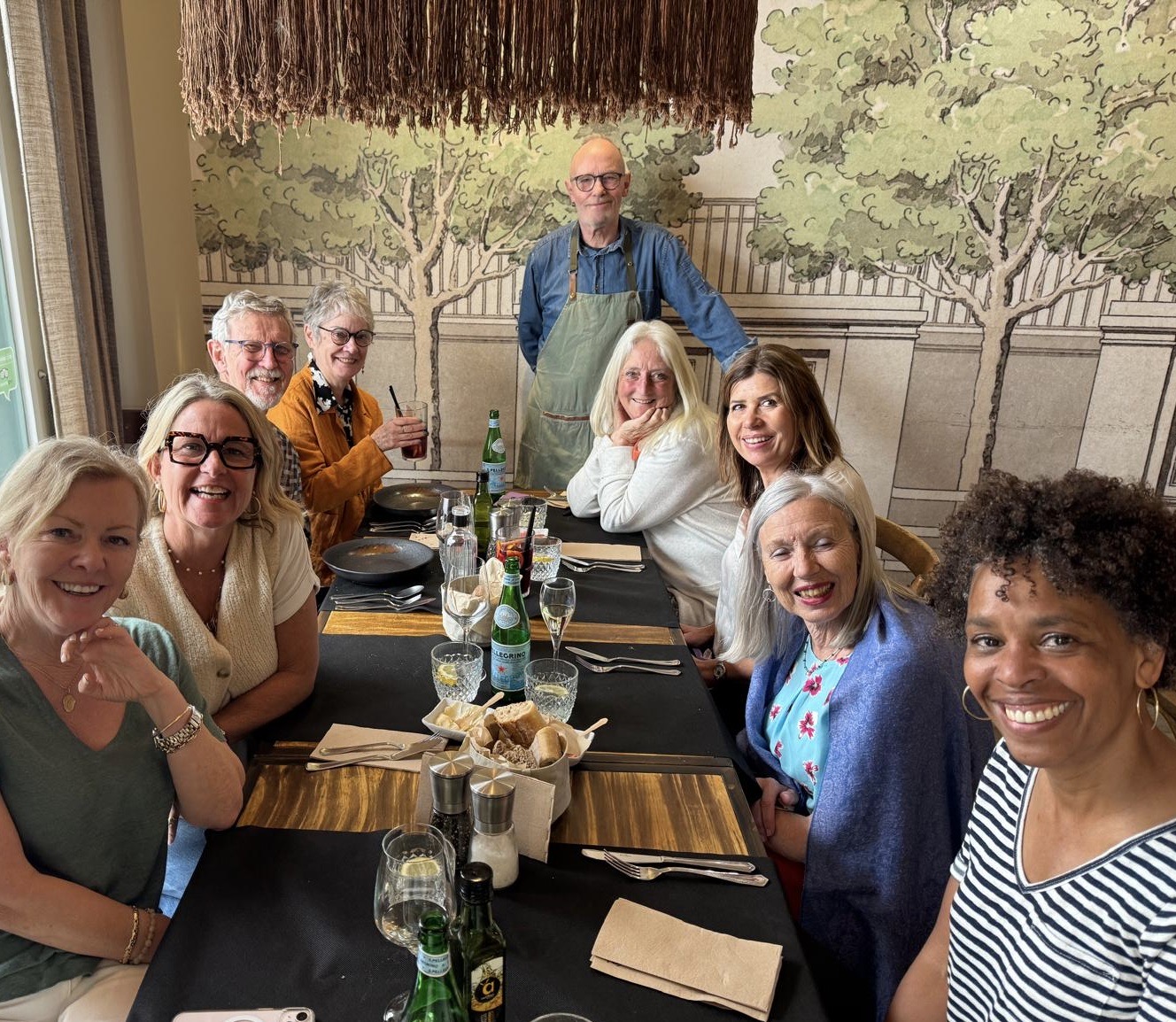
As Javea was once an international exporter of raisins, I thought it was fitting to sample some and oh my, what a sublime blend of flavours. The long, leisurely luncheon is made even more enjoyable by Jacob, the Dutch transplant who’s made Javea his hometown for the past thirty-four years. He’s charming and witty, fitting right in with the our group gathered from around the world… The Netherlands, The UK, Canada, Australia and Spain itself.
“There’s just something special here and I could never go back home,” Jacob confides. The lunch has been a lovely ending to the excursion of the old town and as we leave, Jacob reverts to his Dutch culture and gifts me with a ‘three-kiss goodbye.’ “I’ll tell my mother that I’ve met someone from her home province in The Netherlands,” I promise.
Led by my dear friend, Jo Parfitt, publisher, mentor and co-author of Monday Morning Emails, the writing retreat includes these leisurely lunches, dinners and tapas moments… an opportunity to connect with fellow writers. They’re also a chance to sample the local life style in what is said to be one of the prettiest towns along the Costa Blanca. I’ve been to nearby Alicante, yet Javea is known to have a special luminousity of colour and light, a richness of life. My good friend Nikki – author of The Soul’s Compass – and I made the commitment ages ago to attend the retreat; a good excuse to meet again, to be inspired in our writing, and why not, it’s Spain!
Today, our group has meandered from the seaside and sheltered lower bay of Javea, up a gentle inclined road to the historic old town; a labyrinth of historic cobbled streets, pretty tiles on white washed homes and quaint plazas ideal for tapas stops. We are at once delighted by the richness and history of the town.
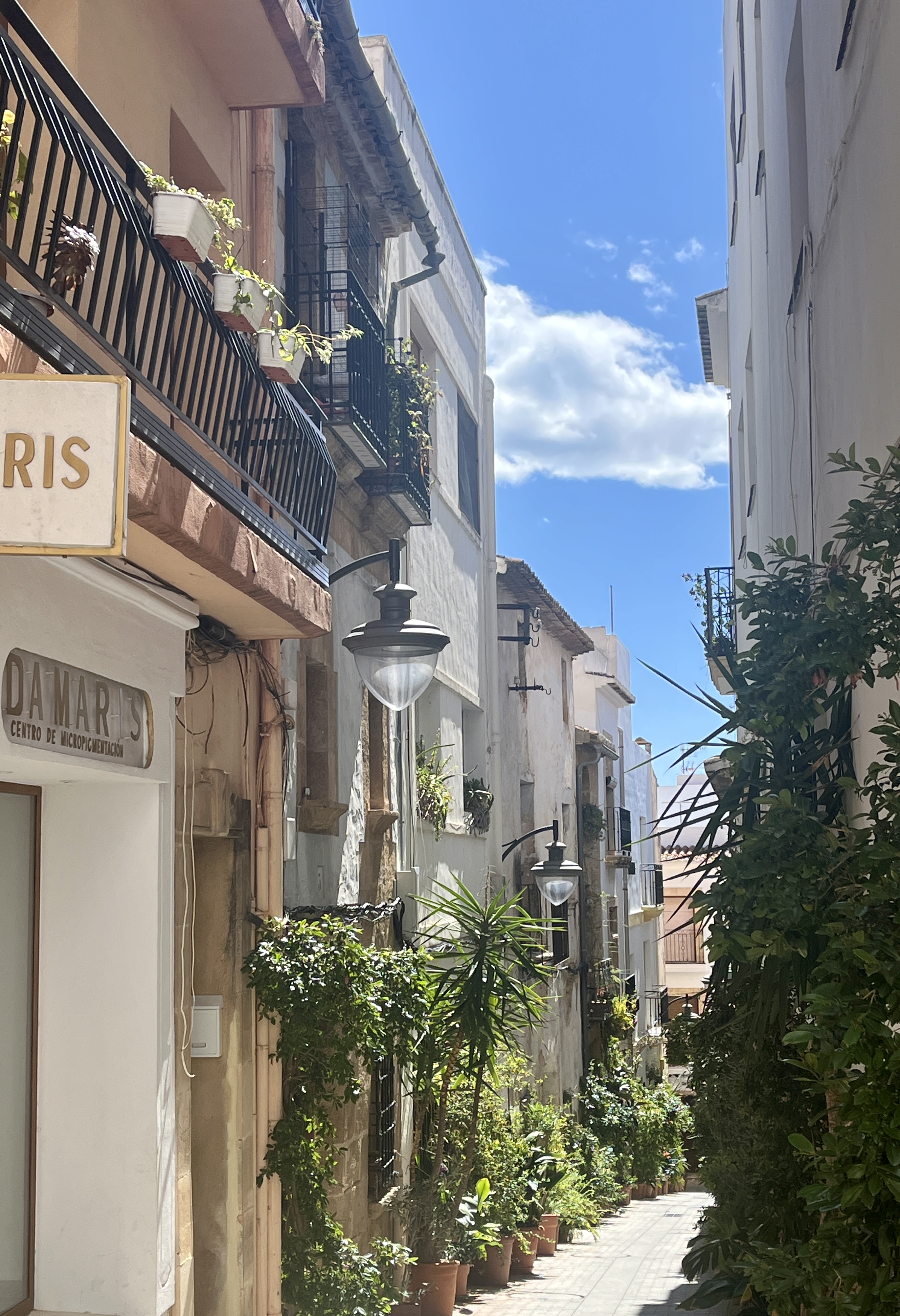
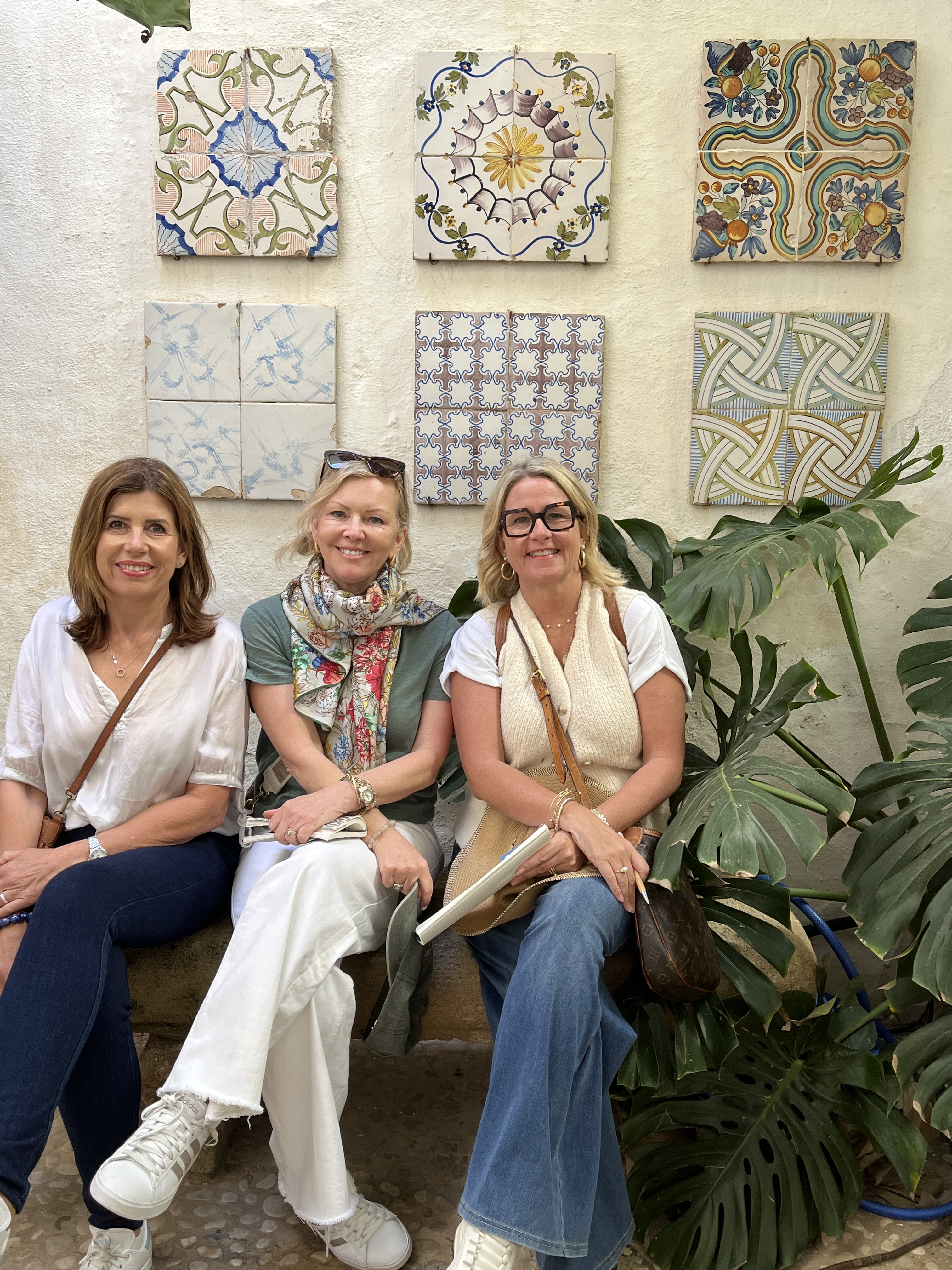


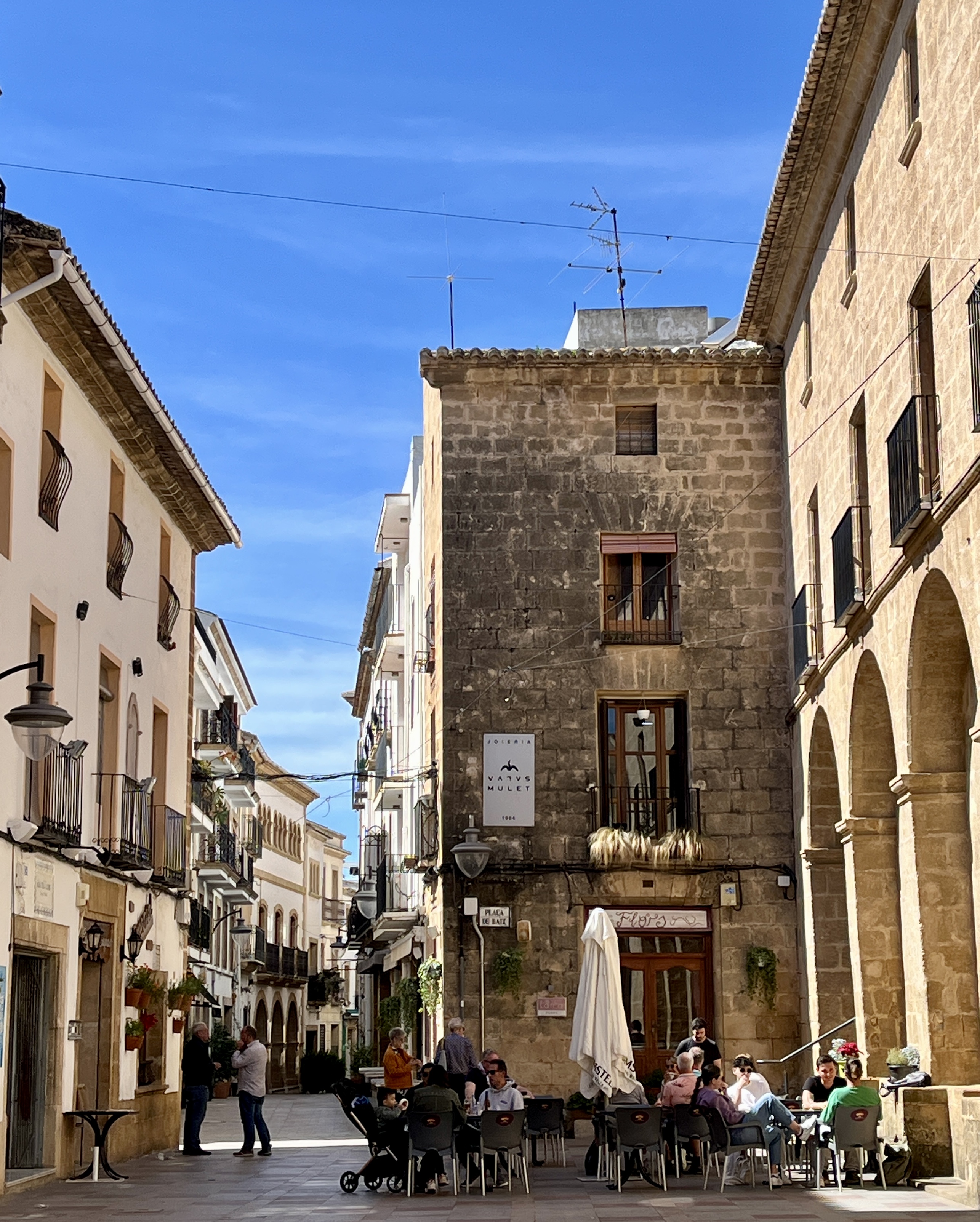
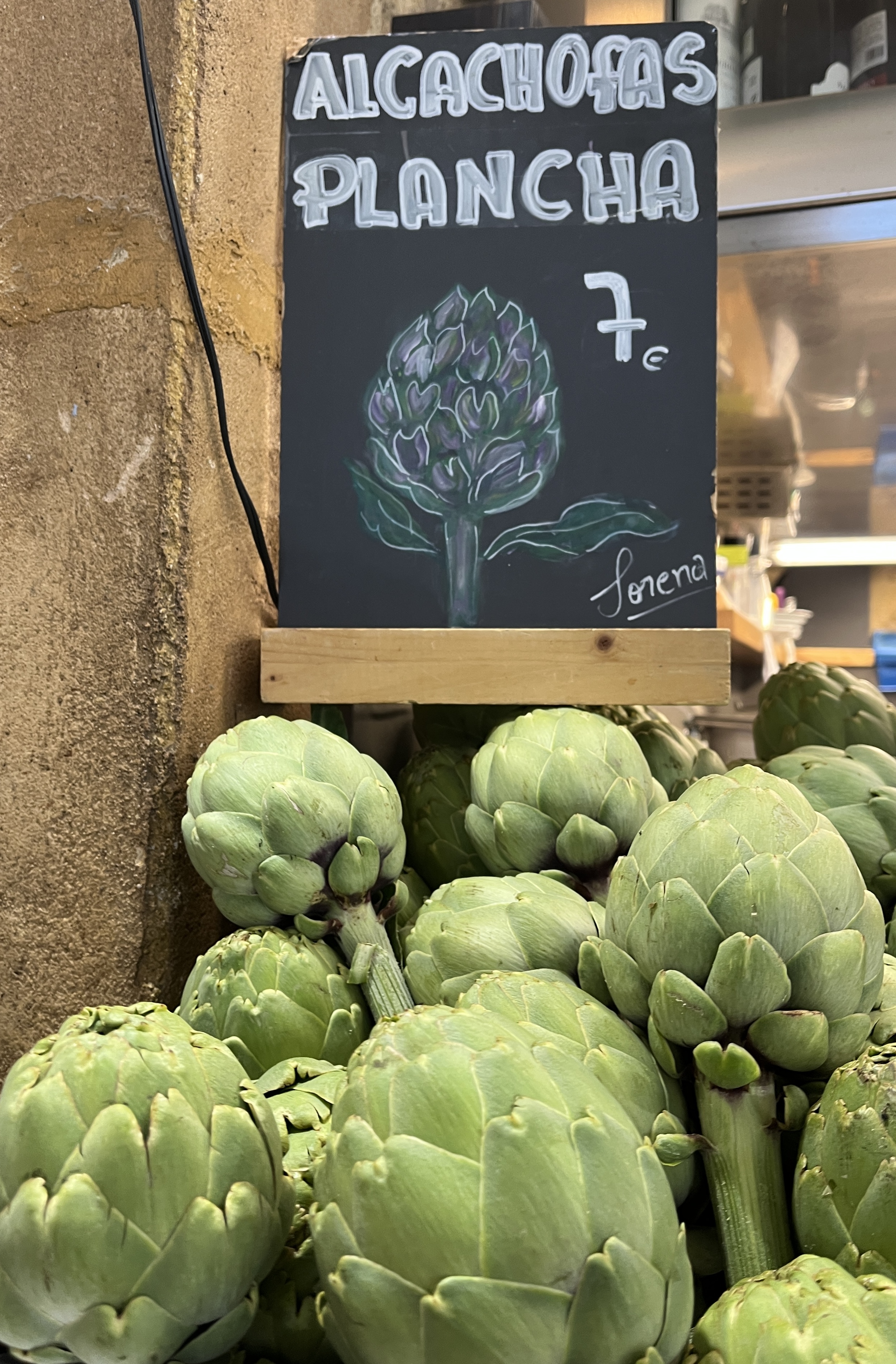
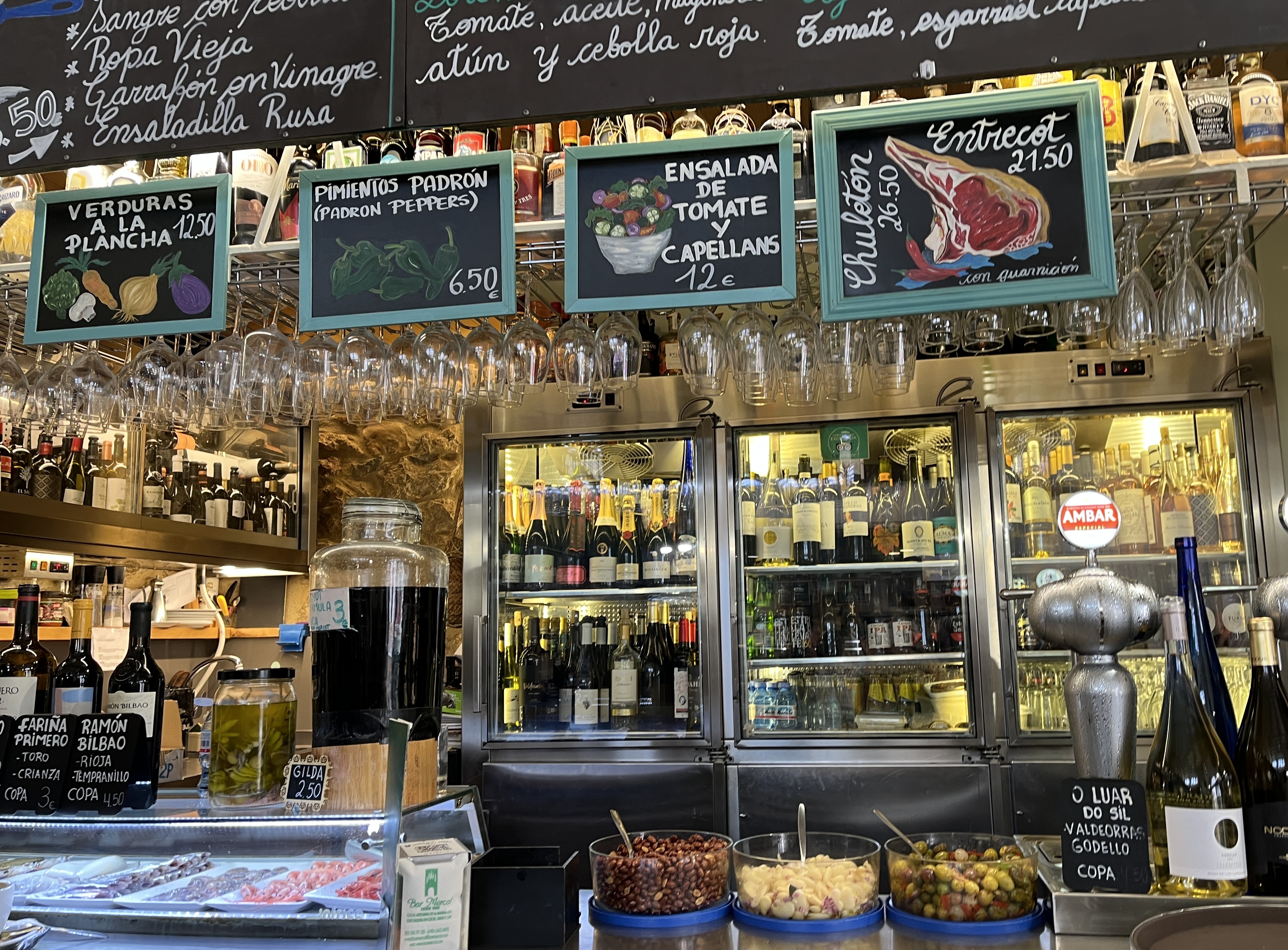
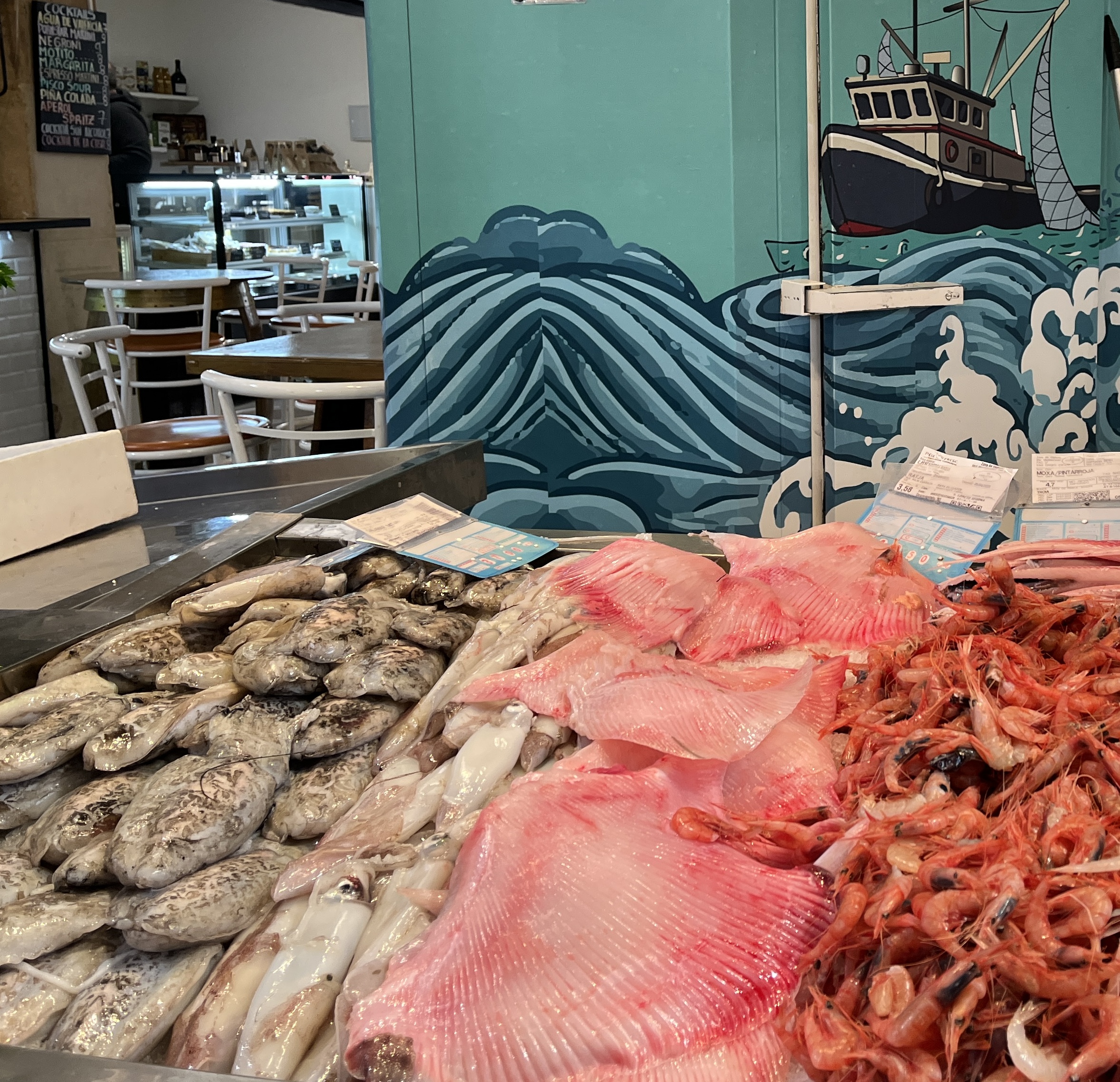
We meet Josh, our tour guide and Jo’s son, at the Mercato. The bustling indoor market is filled with a local’s favourite Cocteleria, Cocina, Panaderia and all those stalls bursting with earth-hued olives, mossy-green artichokes, cured Iberian ham, oil-bathed pimentos, seafood of every type, and sangria for inspiration! Like Jacob at the bistro, Josh has also settled here and is eager to reveal the history and secrets of his now-hometown.
As we exit the Mercato, across the way is the prominent Church of San Bartolome. Standing since 1304, it’s had time to expand to the fort-like edifice that once protected the locals from marauding Barbary pirates. As the tour begins, the bell tower which once doubled as a watchtower, makes itself known with a deep, rich cascade of bells. Charmingly, the carillon has individual identities too – Victoria, Sebastiana, Bertomeua – and are revered by the locals.
Making our way along narrow streets, Josh points out the many niches embedded high up on building walls. Behind the glass are carved wooden statues of San Sebastian, Javea’s Patron Saint. It was his duty to protect the town against the deadly plague in the middle ages and still today, each street may have its own niche, for prayer, for protection.
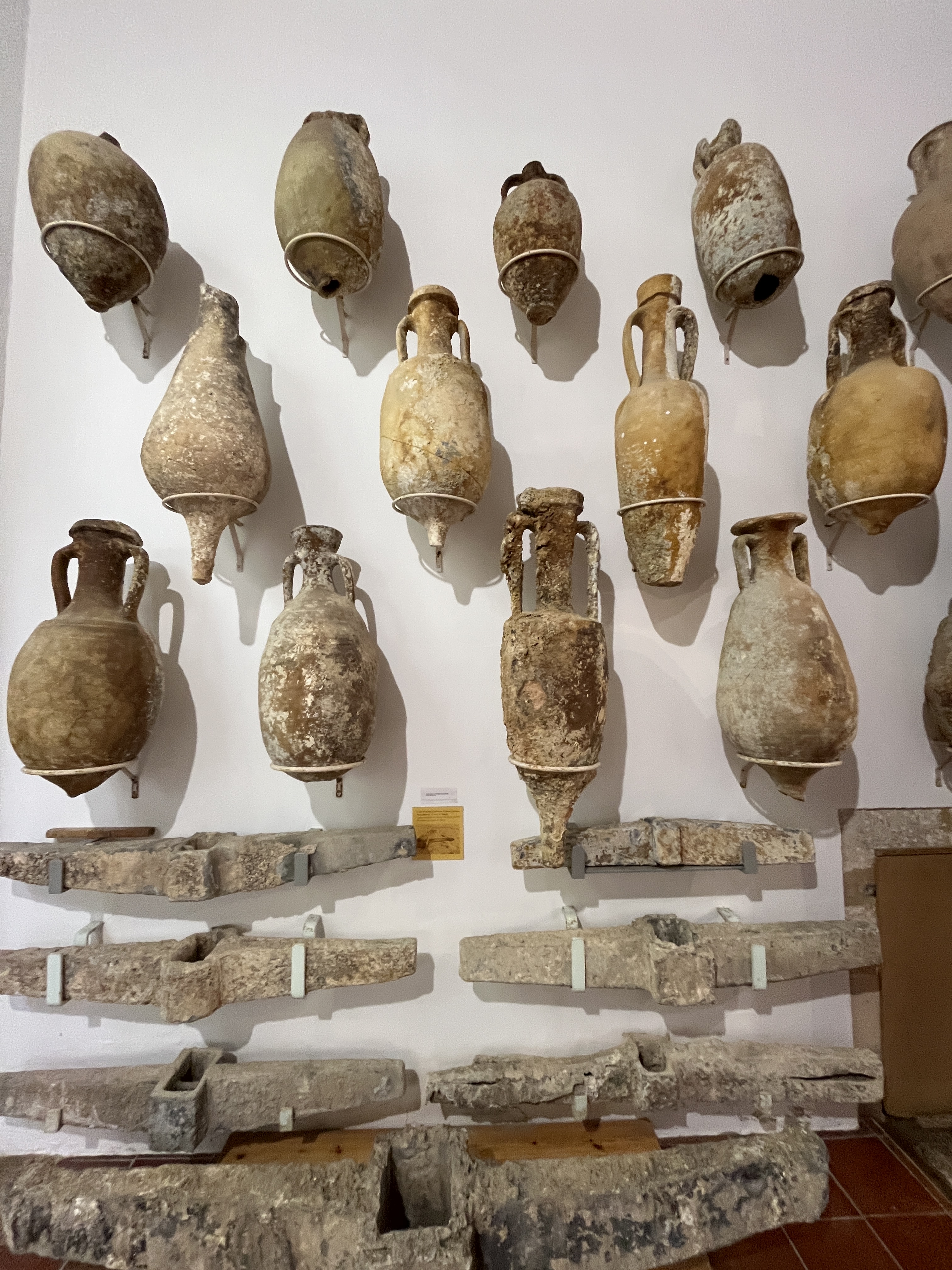
We also peek into the Soler Blasco Museum, housed in a magnificent rough stone facade. Built in the mid-1600’s by Antoni Banyuls, once a butler to King Felipe III, my eye is drawn to the Roman amphorea languishing in the lush courtyard. An amphora is a two-handled storage jar that held olive oil, wine, milk or grain; their pointed base allowed them to sit upright in soft ground or sand. I ponder their ages of use as the Romans, Visigoths, the Moors, and now the Spanish have all lived centuries of life on these shores. “Javea is a mongrel casserole, a melting pot, a rich and colourful fusion of history,” Josh tells us. We wander happily, delight in more local history, and I ask him how he had come to live here.
Like Jacob at the restaurant who had shared that he visited here on holiday and never really left, Josh tells me that this was never the place he planned or imagined moving to.
“I was posted here as a journalist to cover the Costa Blanca in English. I’d never even heard of it until I arrived in 2019. Discovering its history, culture and hidden secrets were a by-product of me covering it as a news writer and later as a content writer for local businesses. When I was furloughed during the Covid lockdown, I nearly went back to London to further my journalism career. But then realised, almost by accident, small-town Javea had become a place where I could walk down any street and probably bump into a familiar face. As someone who moved between 5-6 countries as a child, that was the kind of thing I always felt I had missed out on.”
I nod knowingly, so very knowingly. It echoes how my own children felt after being raised globally, moving from one continent to another. In fact, Jo’s and my account of this very specific way of life as expat mothers is the basis for our book, Monday Morning Emails. Like Josh, my three sons had a rich and varied childhood in various countries and cultures, yet they too didn’t have a hometown to call their own.
“Sure Javea is amazing – always a top 10 place in Spain to live.” Josh says. “But for me, it’s a place where I feel part of the community, that’s what has made me stay.”
It’s late afternoon as we stroll back to the seaside and I ponder how life has unfolded for Jo and myself since our book launch in 2018 at her lovely home in The Hague. I was living in India when we began writing emails back and forth, realizing we had so much to share about living a global life. Though time has passed, we’ve been fortunate to see each other in various places since… and now in this lovely spot.
A place where just beyond are shoulders of hills dotted with palm trees and neatly lined grapevines. Where white-washed and mustard-yellow villas of the once merchant families, now contrast with gleaming white and glass of expansive villas nestled in the hillside. Here, where the extraordinary play of light on the sea against the ginger cliffs has long rendered Javea as inspiring… indeed, quite the ideal spot for a writer’s retreat.
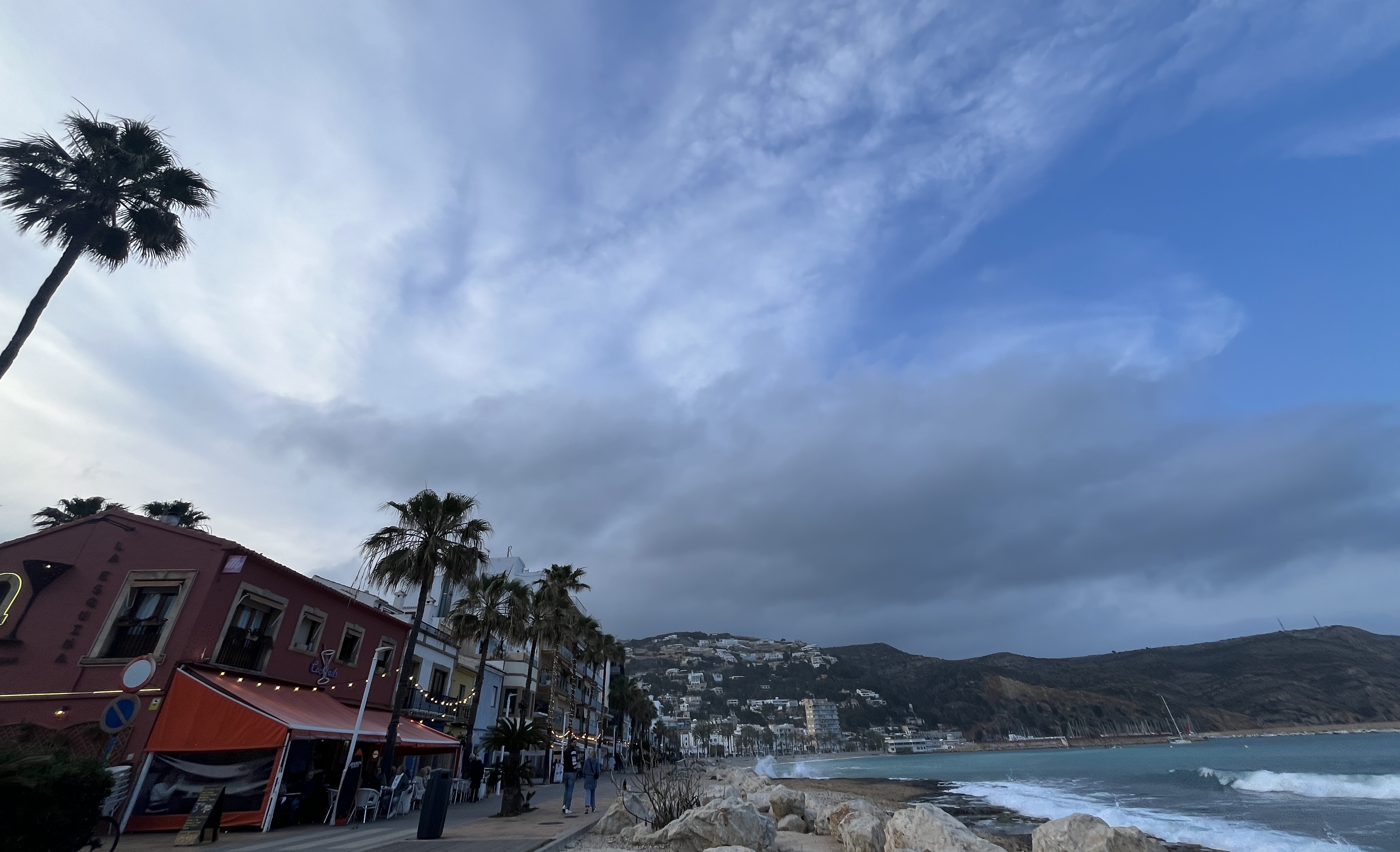
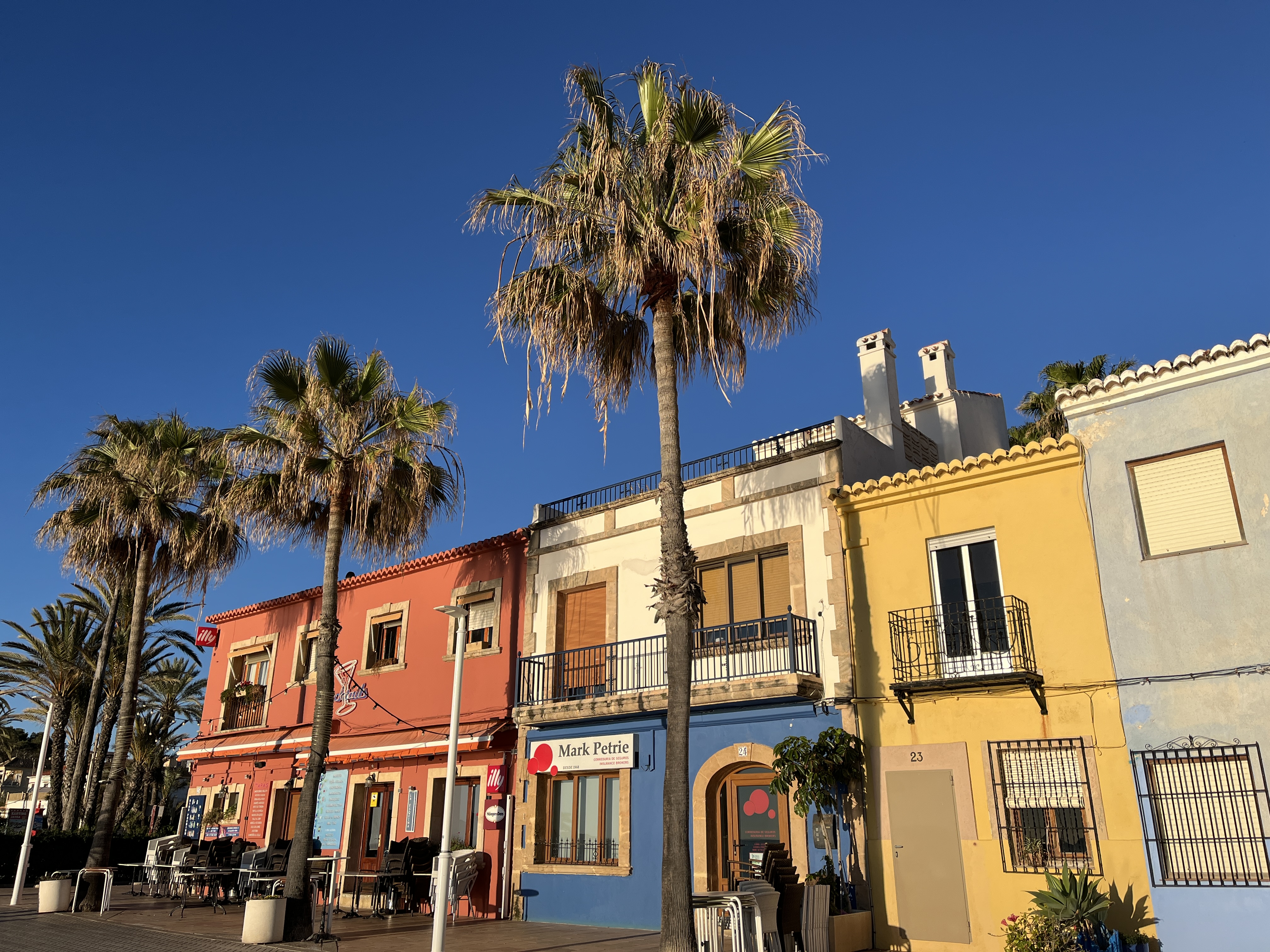

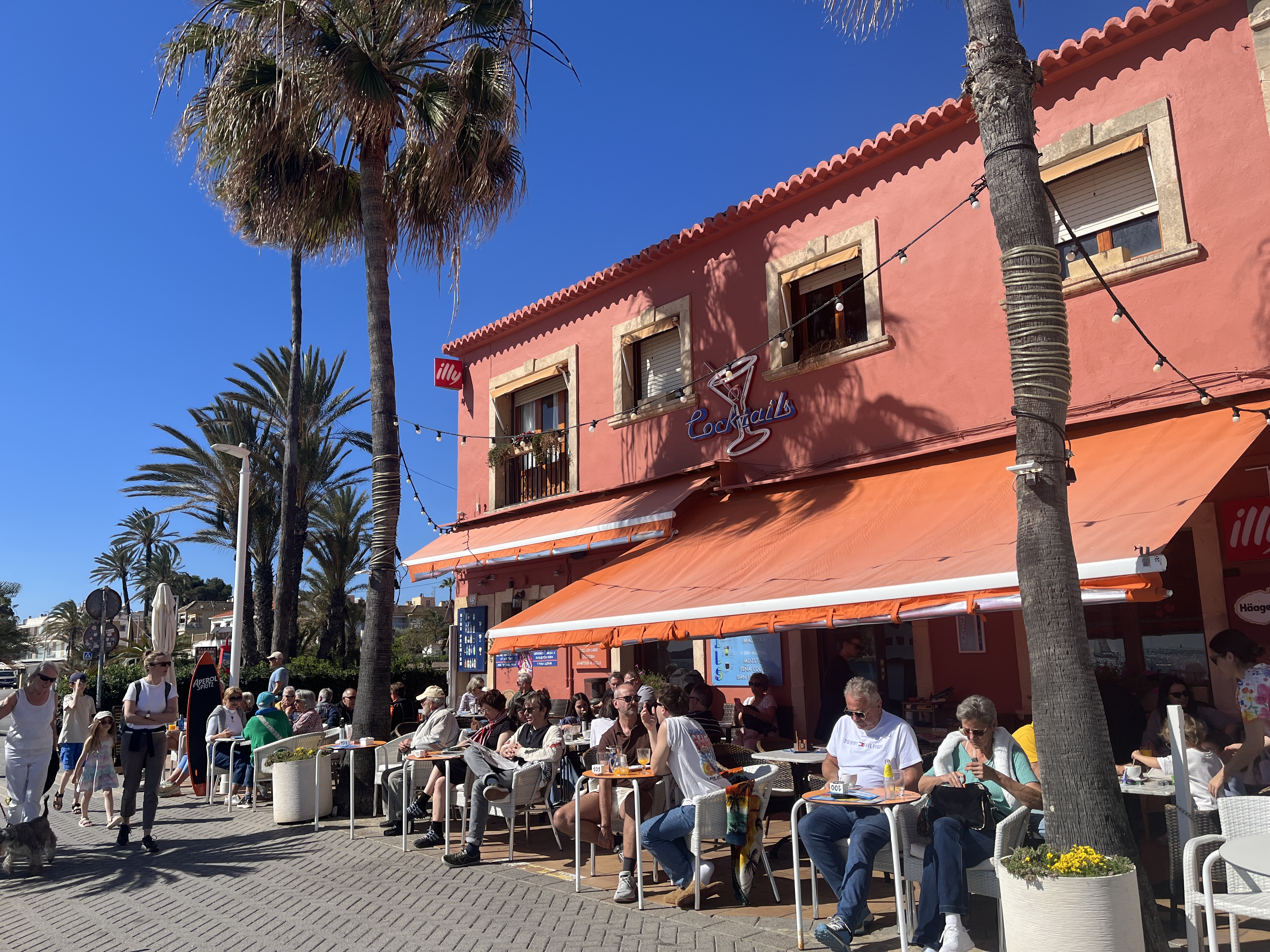

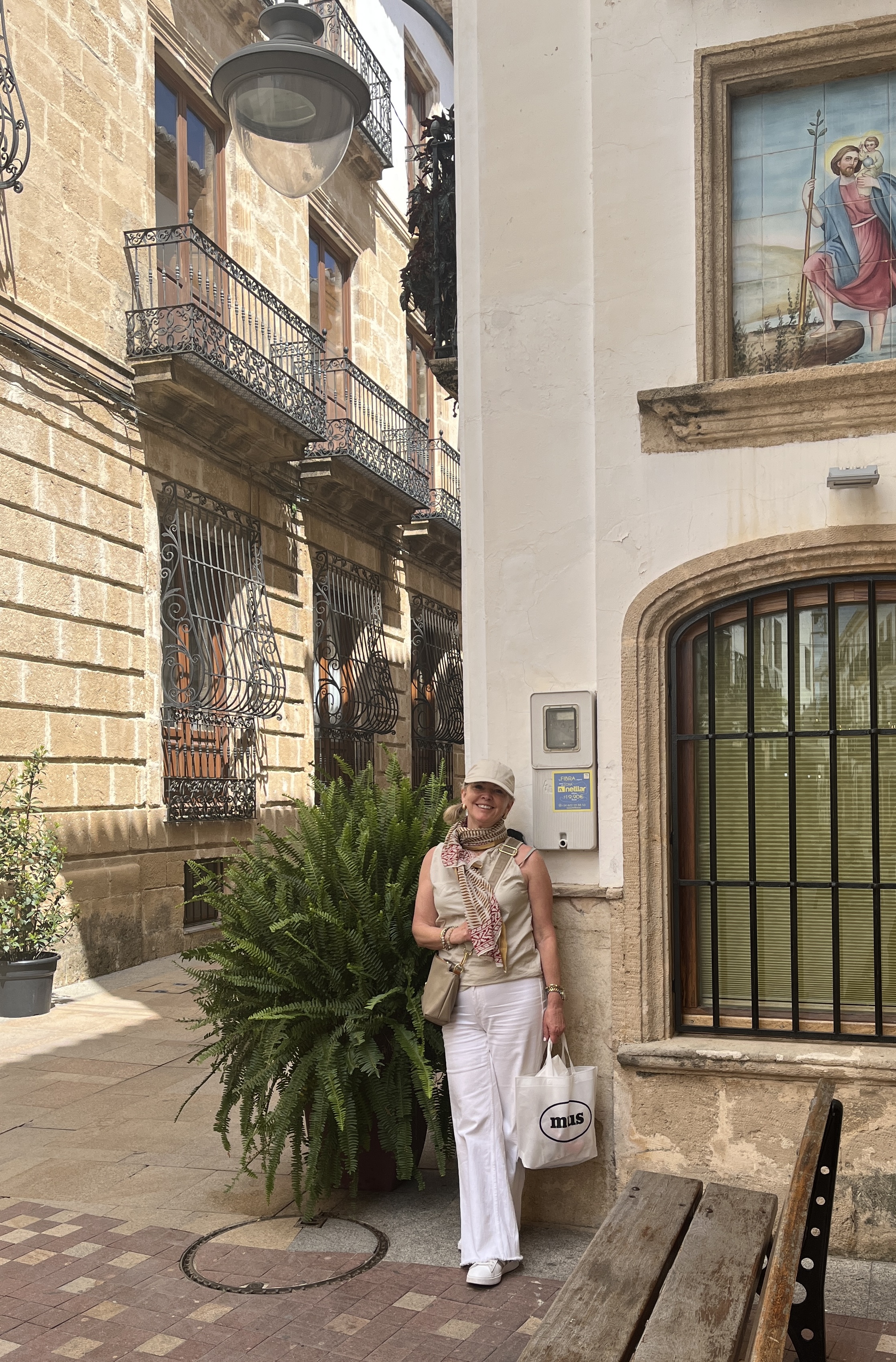
Over four days and three evenings, we writers take guidance from Jo and inspiration from each other. We ponder, muse, conjure words and stories. We delight in early morning walks along the seafront, we wine & dine, and share our work. We make new friends and rejoice in simply being with kindred spirits, all the while thankful for being cocooned from life’s daily commitments. Jo has inspired many writers and authors along the way, and as I know myself from my own writing workshops, the real reward is motivating fellow writers to put words to paper.
A quote from one of my participants from a workshop in Slovenia has always stuck with me. “Thank you so much for opening this new door for me. I’ve always known I can write, however, I never imagined that you could turn almost anything into a story. A child’s laugh… a van ride in the Cambodian countryside… my morning coffee… my feelings towards my grandma. You showed me that anything is possible. Can’t wait to create more! ”
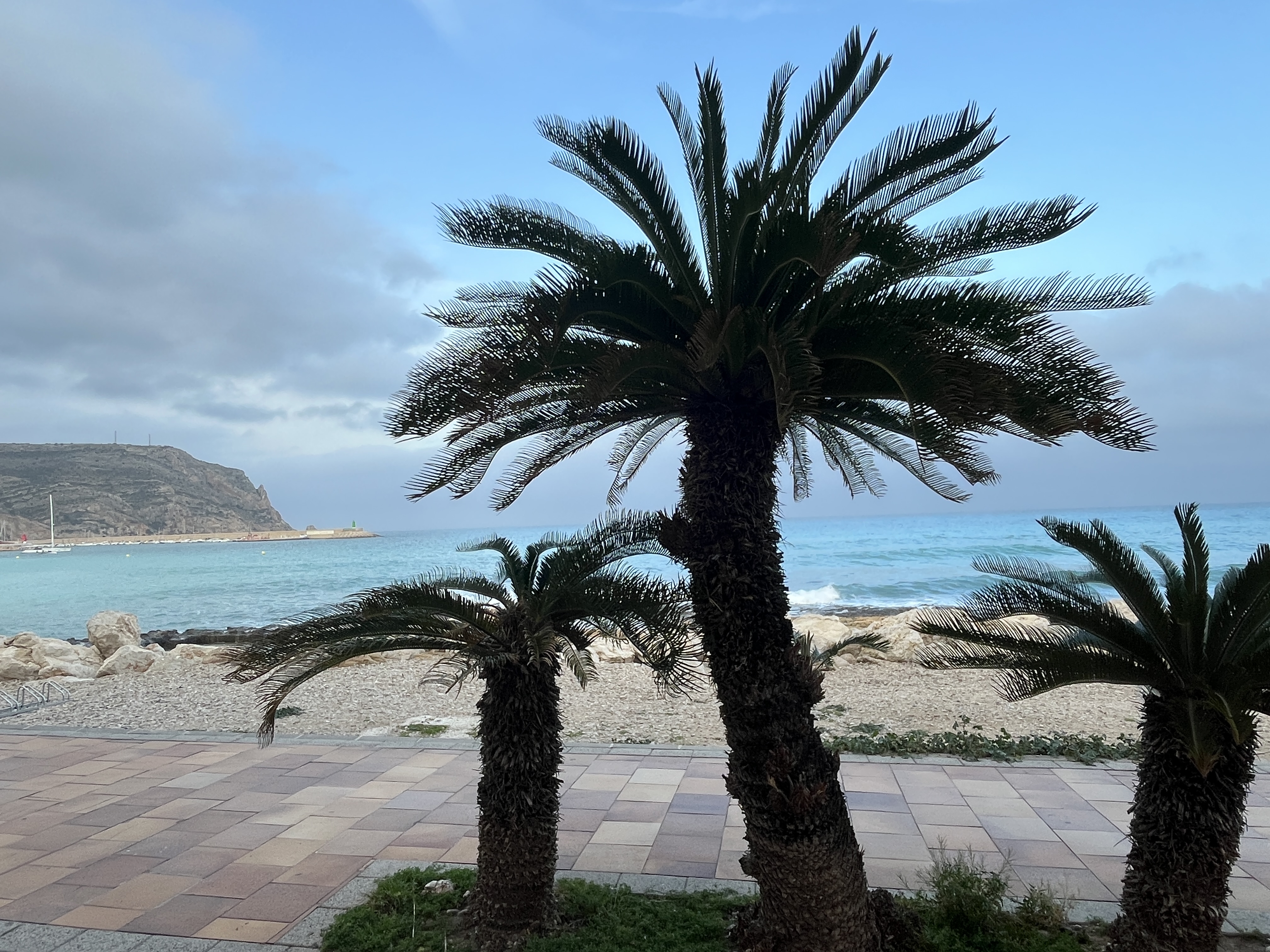
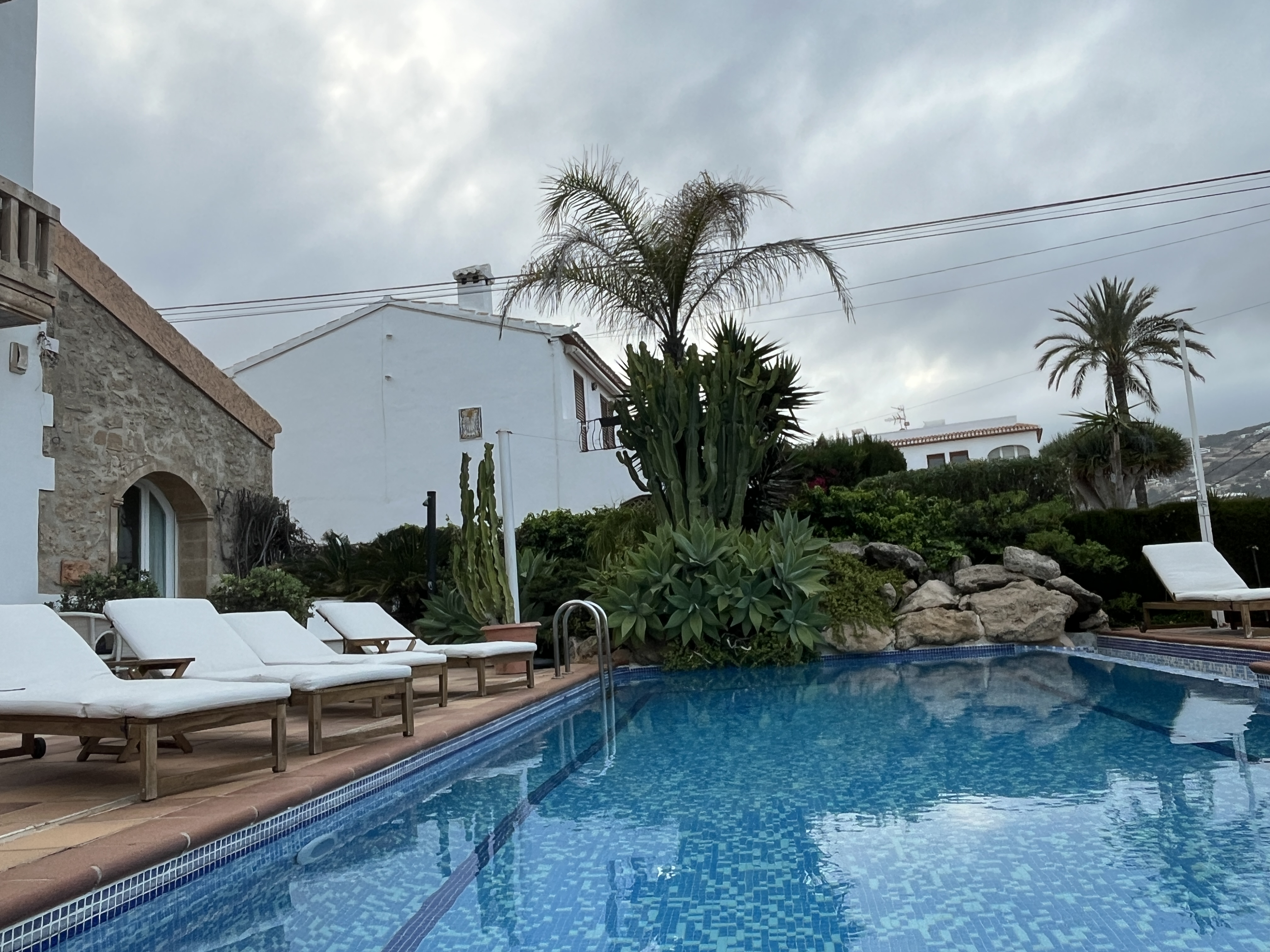
And so, we writers also depart with a new zest for storytelling and renewed writing commitments. After the farewells, I decide to remain a few more days instead of going back to Barcelona to finish this Spanish sojourn. I move to the lovely Botanico Boutique Hotel, my balcony open wide to the sea-salt air and the hues of blue sky and sea seemingly melding into one glorious painting. I dip my toes in the cool Mediterranean Sea. I savour and soak up my beloved palm trees. I write some more. I stroll back up to the old town and like magic there’s Jacob. Savouring a repose at the door of Casa Grau, he greets me with three kisses, “Meisje, hoe gaat het?”

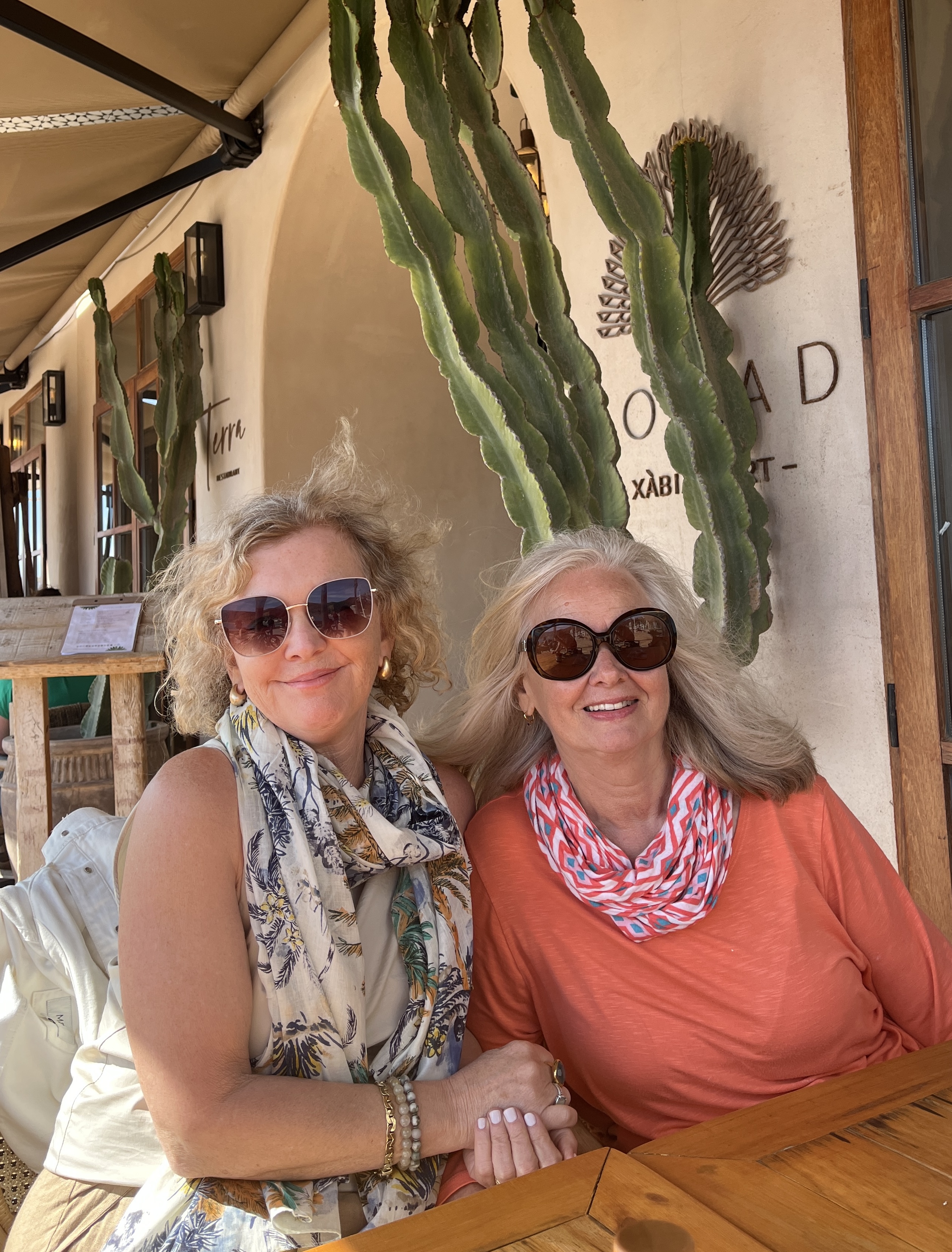
As Jo and I have one last chat at my favourite coffee stop overlooking the sea, the conversation meanders to our children. “It’s been so nice to see Josh again,” I tell her, “and how lovely you get to come here to visit!”
She comments on how special it must be for me to have our three children in one place. “It really is,” I agree. “It’s something Bruce and I couldn’t have imagined after so many years overseas. And like your kids Jo, they finally have their hometown, they’ve bloomed where they’ve planted themselves. Luke works virtually as a Communications Expert, Matt works locally in the Trades, and Andrew has a prominent position with our city’s Chamber of Commerce. And then there’s our two special daughters-in-law, even a grand-puppy!”
“So very blessed,” Jo agrees. “Sam is doing well in London and Josh is happy and settled here as you see.” After writing our book, Jo and I were often asked how our kids were, especially by readers who also lived a peripatetic life and could relate to the challenges. We’ve always been thankful that our collective five sons were gracious enough to allow us to share their journeys.
We also have gratitude for a friendship that began at a writing retreat in Tuscany. We reminisce that we once lived as neighbours, side by side for a month in The Hague. We speak fondly of the book project we worked on together in Penang, Malaysia and we share updates of mutual friends from both Families In Global Transition and writing retreats… the blessing of kindred spirits indeed!
With a final hug and a fond farewell, Jo and I part for now. The taxi arrives and I begin the long journey back to Canada… through Alicante, Barcelona, Paris, to Calgary. It’s been a fantastic trip, yet I feel the anticipation of being back in my hometown too.
Post Script
Josh can be found at https://townsquareseo.com/
Nikki Cornfields book, The Soul’s Compass and Monday Morning Emails can be ordered on amazon
Jo Parfitt can be found at https://www.joparfitt.com/
















 notesonaboardingpass