Tag Archives: europe

Spectacular Sicily… Taormina, Syracusa, Palermo & Noto

Standard

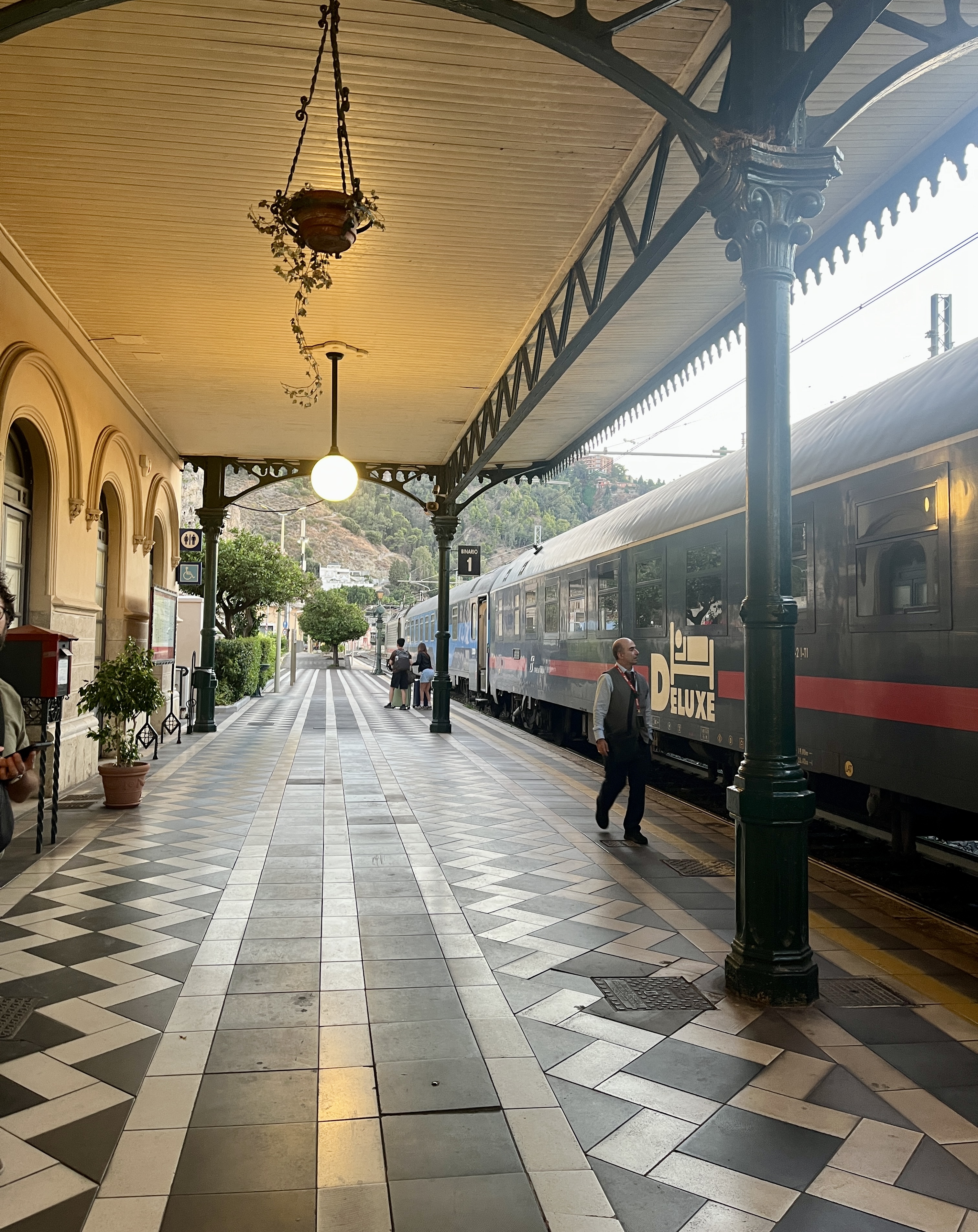
The train porter raps gently on our cabin door. “Buongiorno. Taormina, next stop. I crack the door open and he proffers my espresso, smiling. “Prego.”

We’ve taken the overnight train from Naples to Sicily – yes the last remaining train in Europe that actually rolls onto a ferry. The 6:45 am wakeup call is right on schedule and I feel a frisson of excitement.

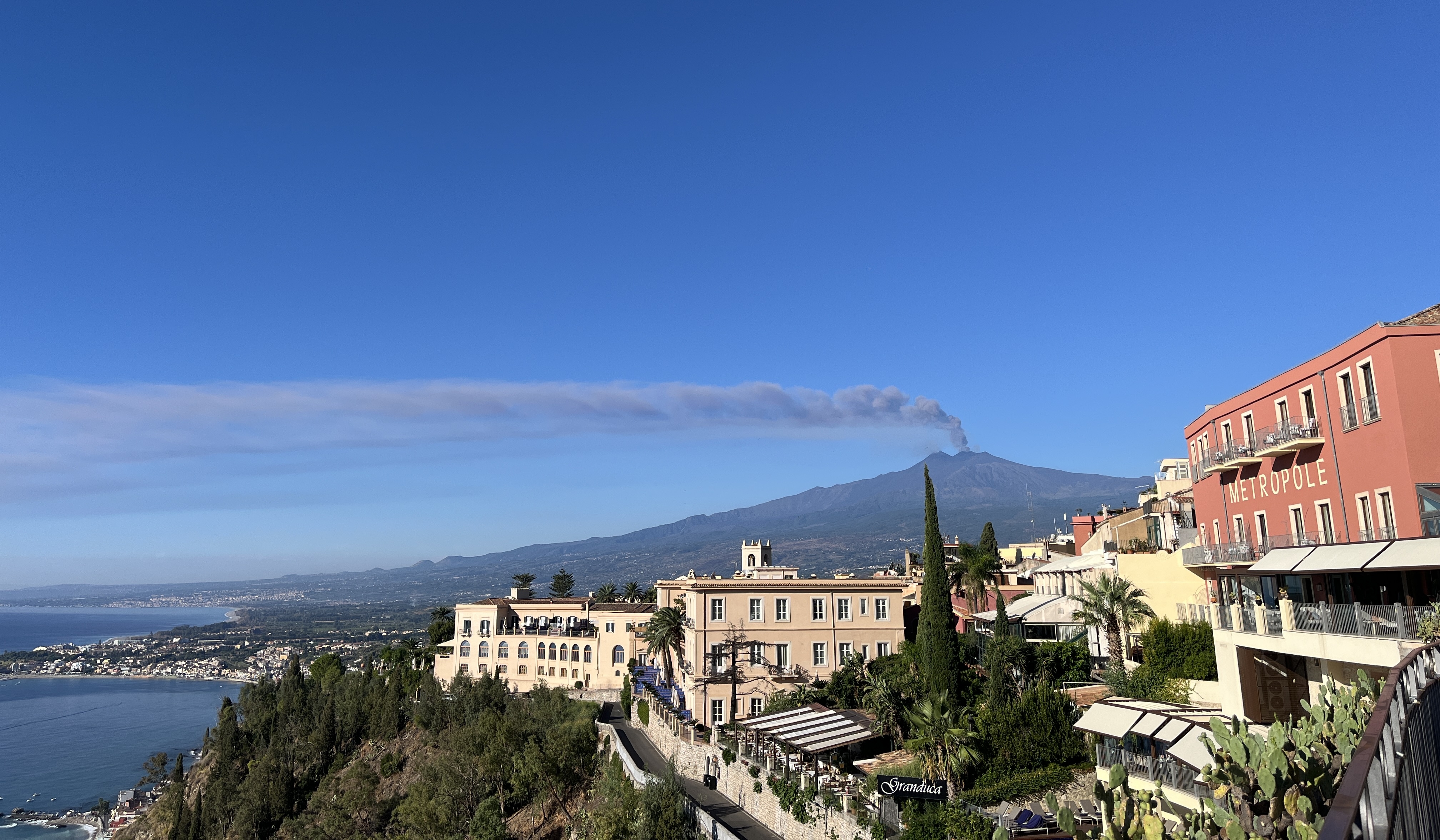
How delightful it all is! Pressed sheets, room service and now sipping my thimble-sized espresso, Mount Etna is welcoming us to Sicily. A long, grey-ish plume is trailing out to sea in the blue morning sky. Etna had recently erupted and more bursts of activity will soon disrupt flights while we’re on the island. Yet this morning, on our first trip to Sicily, she’s rather captivating.

Taormina
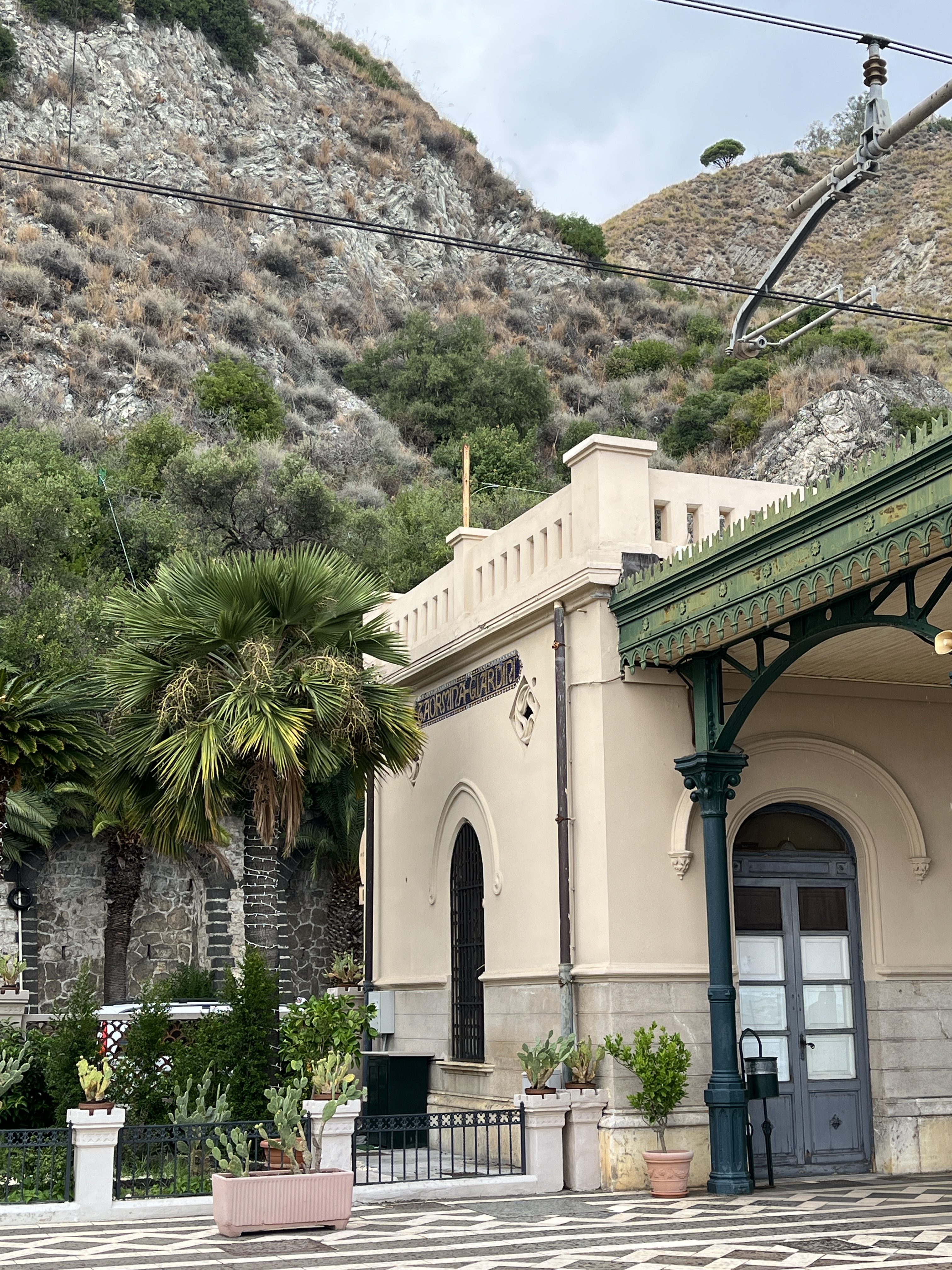
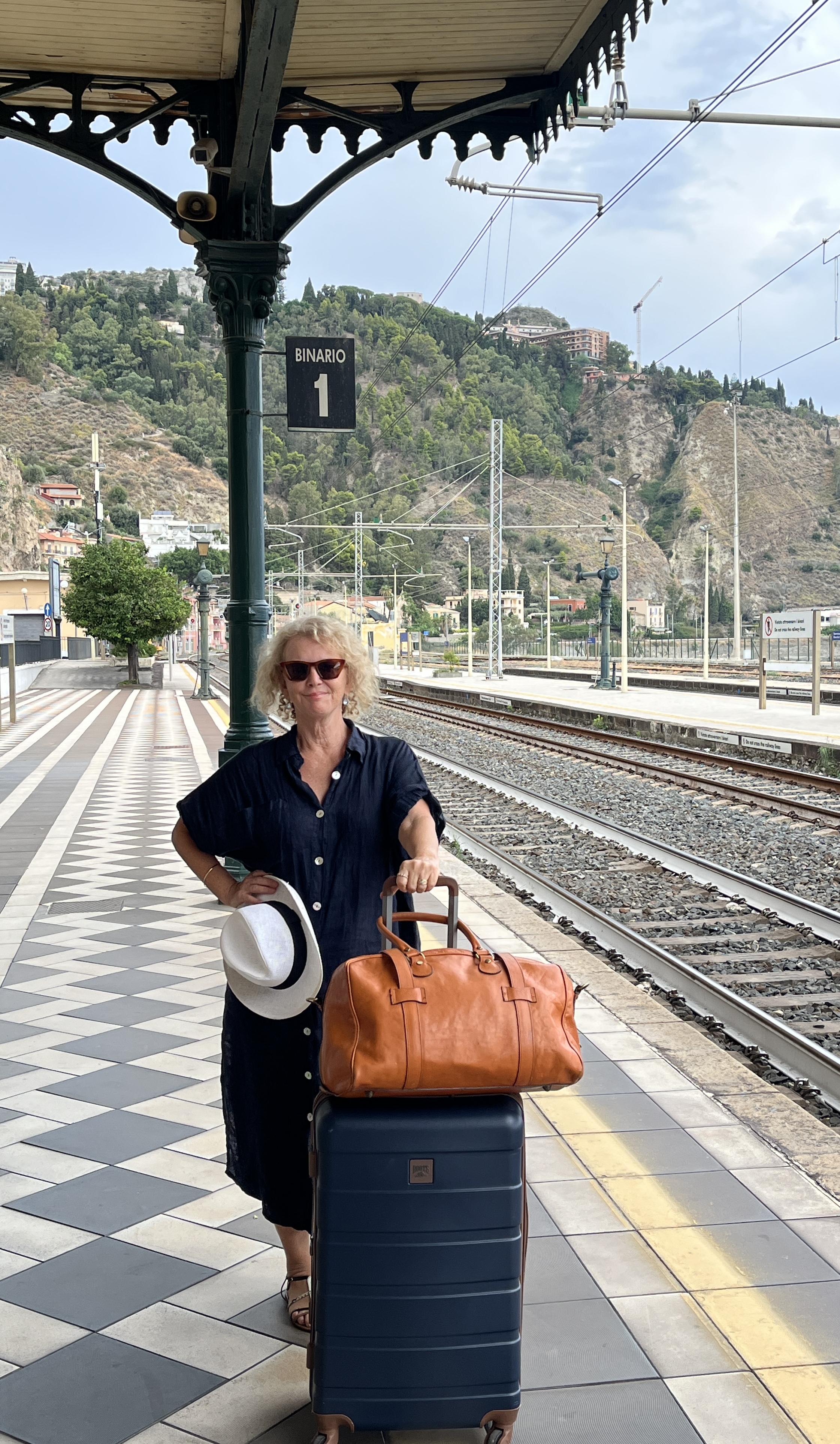
The train station at Taormina is a neo-Gothic beauty, complete with stained glass windows, ornate roof fringes, and dark Sicilian wood furniture. It transports you to another time, one of slow travel and prolonged sojourns. Our stay will be three nights, kicking off this two-week Sicilian adventure. Situated along the sea, it is still four kilometres to the hilltop town centre. Perhaps I’m already in love with this town after seeing it featured in The White Lotus series and the winding road ascending to town surely holds the promise of something special.

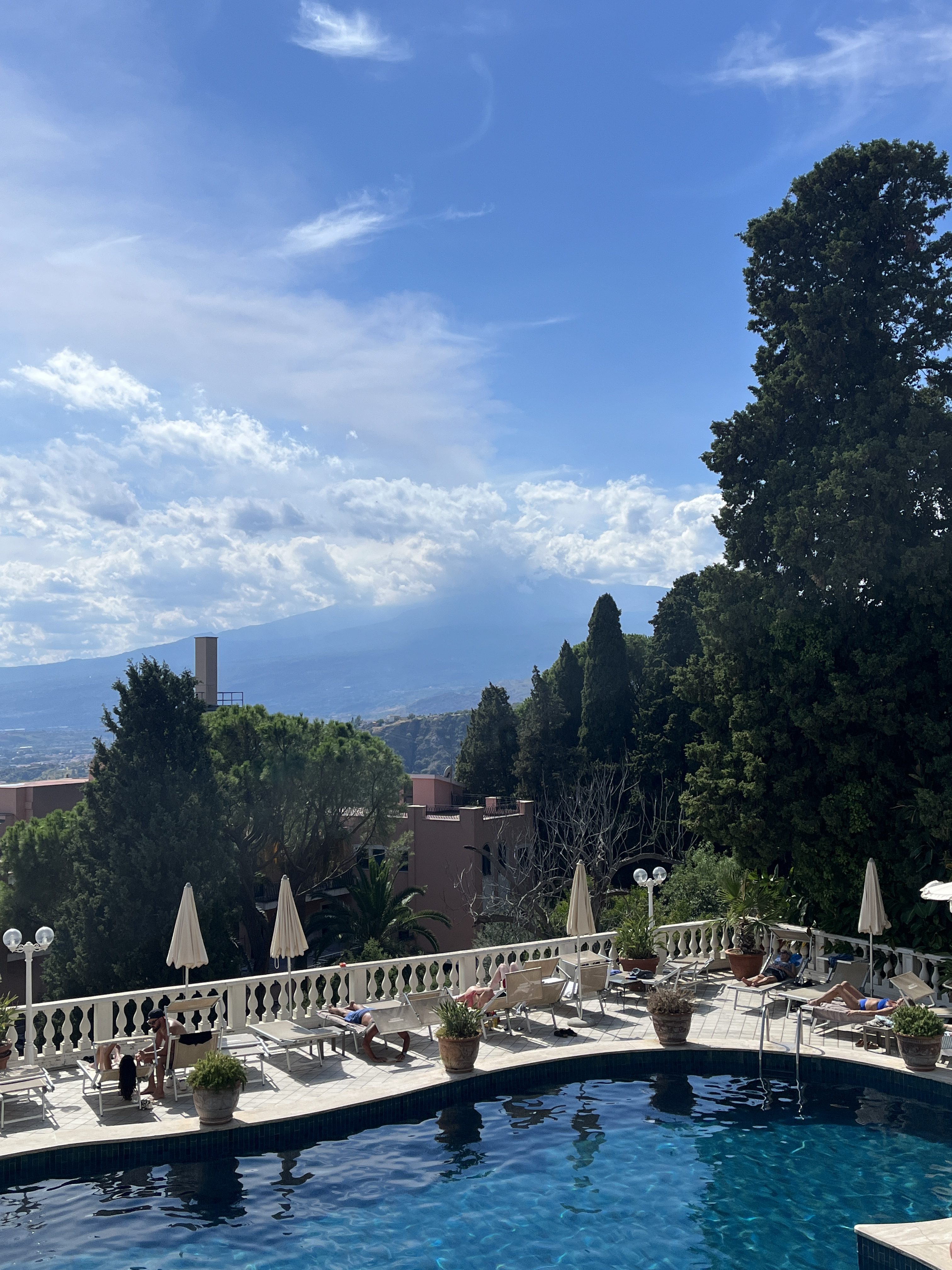
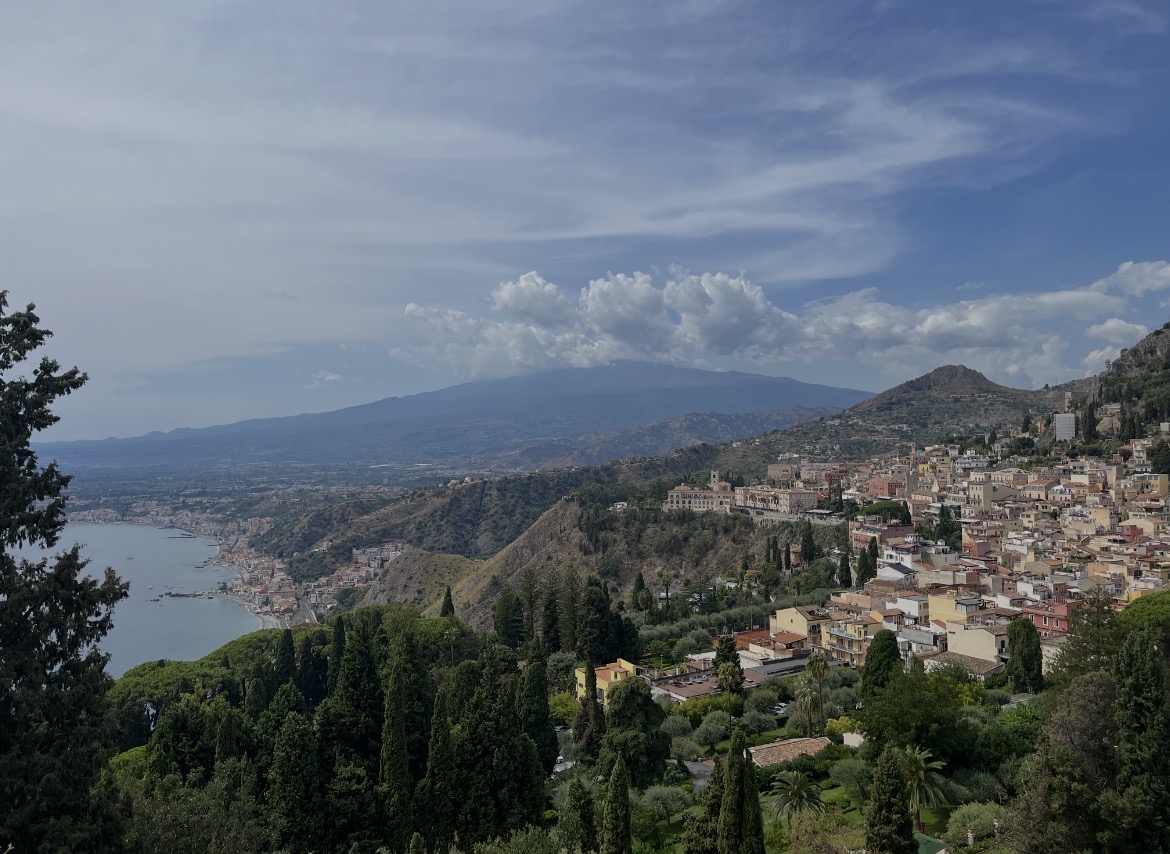
The Taormina Park Hotel is the essence of faded glory yet the swimming pool and the views are stunning – a broad vista unfolds under Etna’s watchful eye. One of four active volcanoes in Italy, Etna’s constant state of activity renders the land around it exceptionally fertile. Vineyards and orchards sprawl across the lower slopes, even a ski hill on its upper reaches. Yet having walked the plains around Mount Vesuvius – and the once ash-buried streets of Pompeii – I’m amazed at how many communities are nestled under Etna’s volatile caldera.

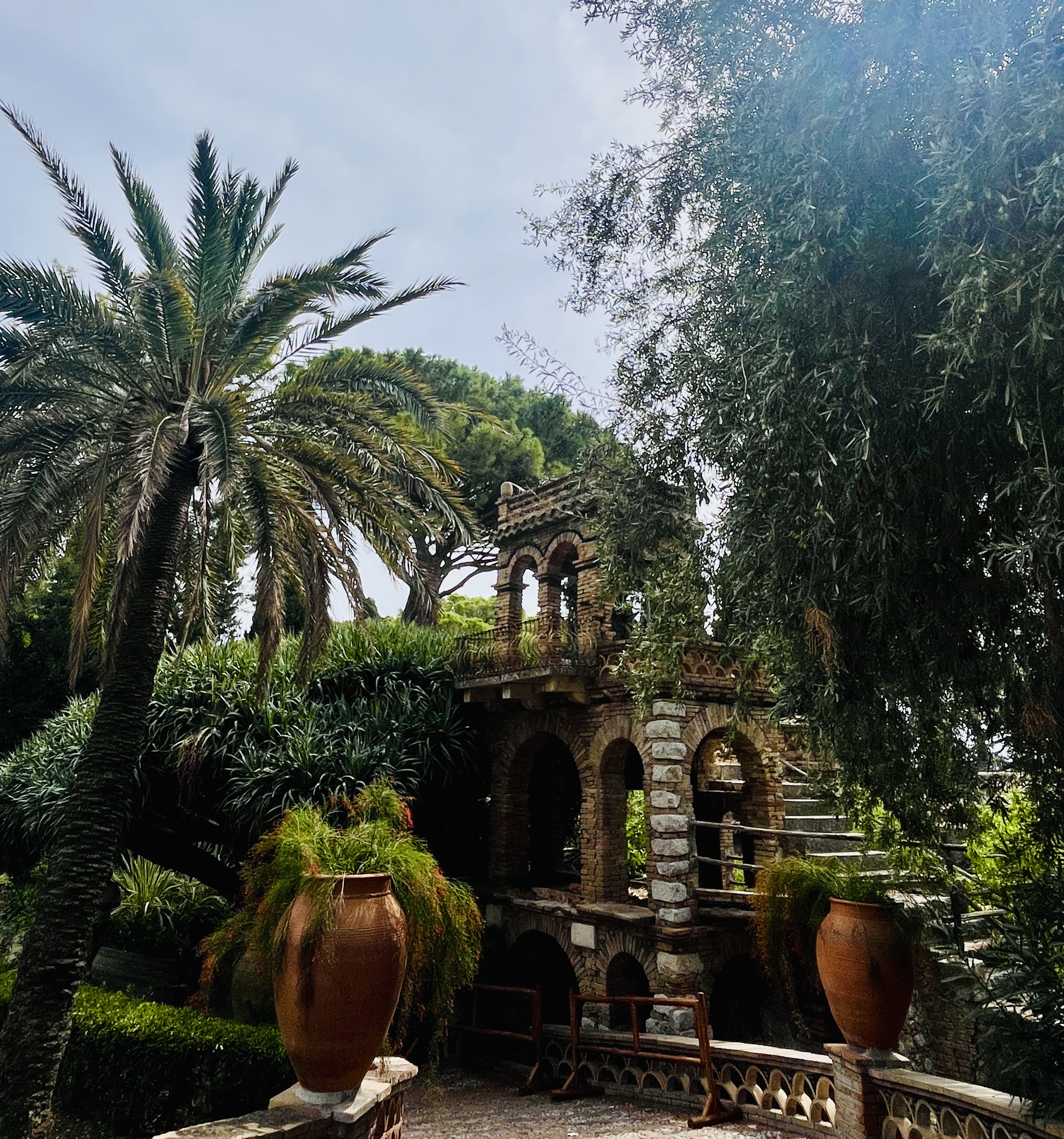
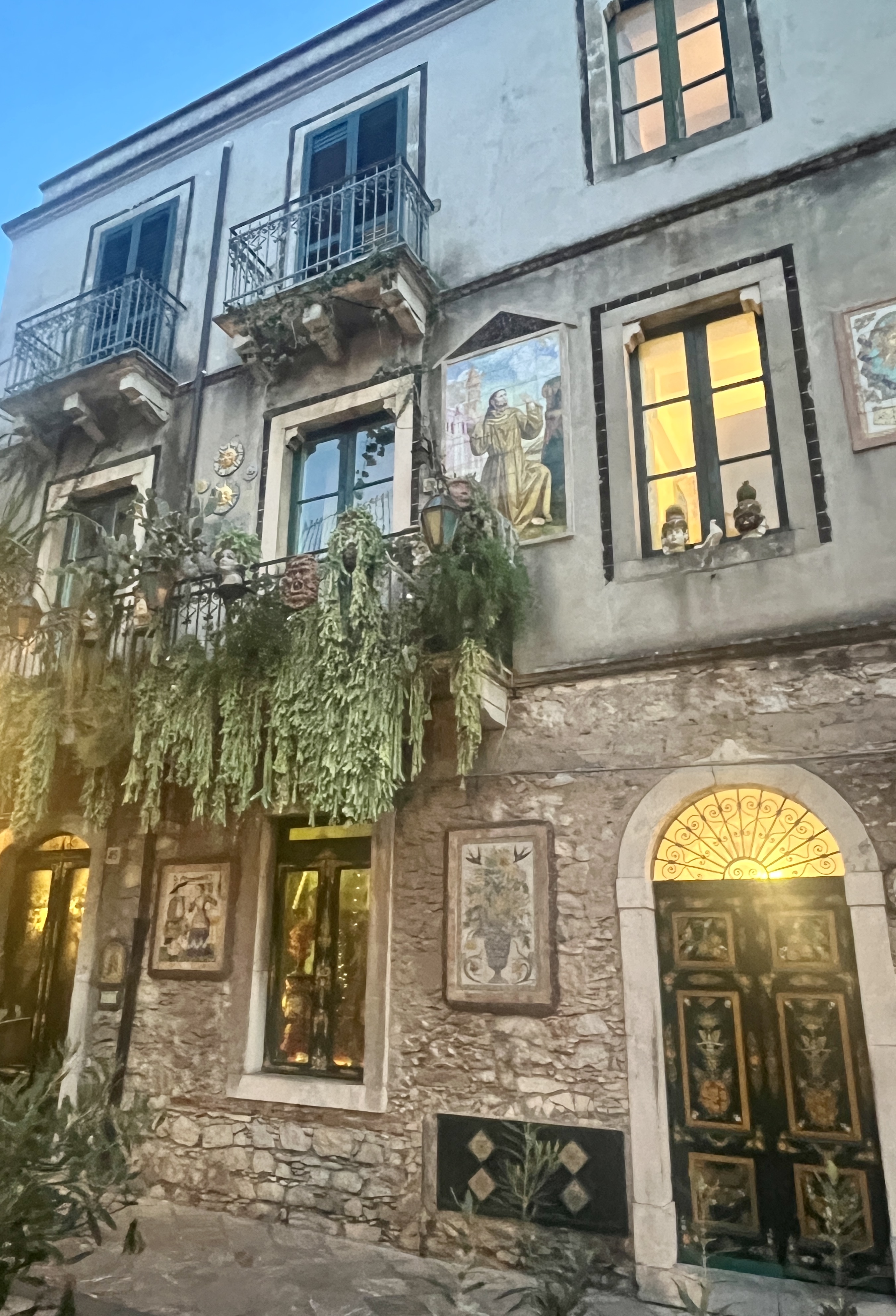
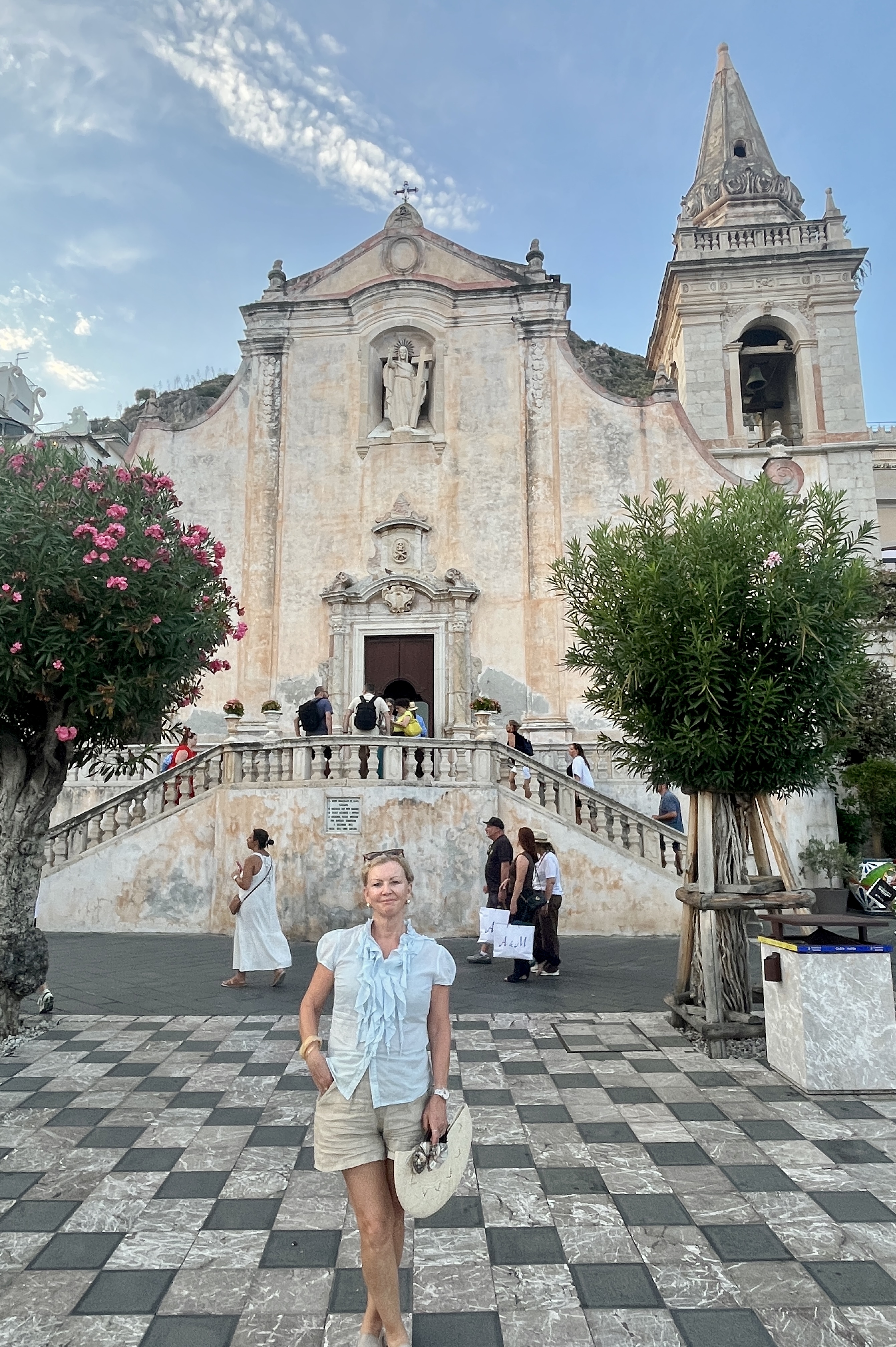
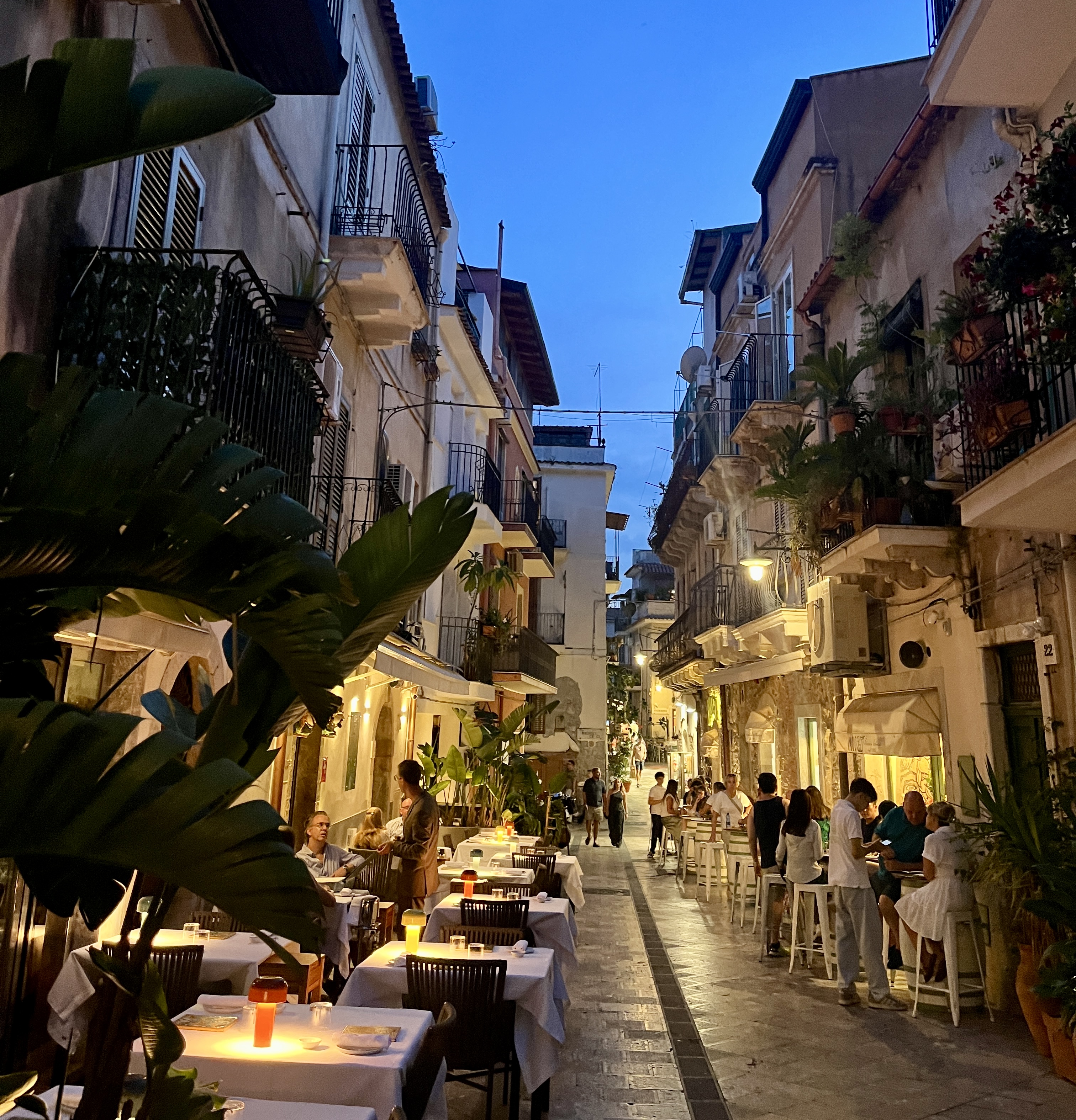
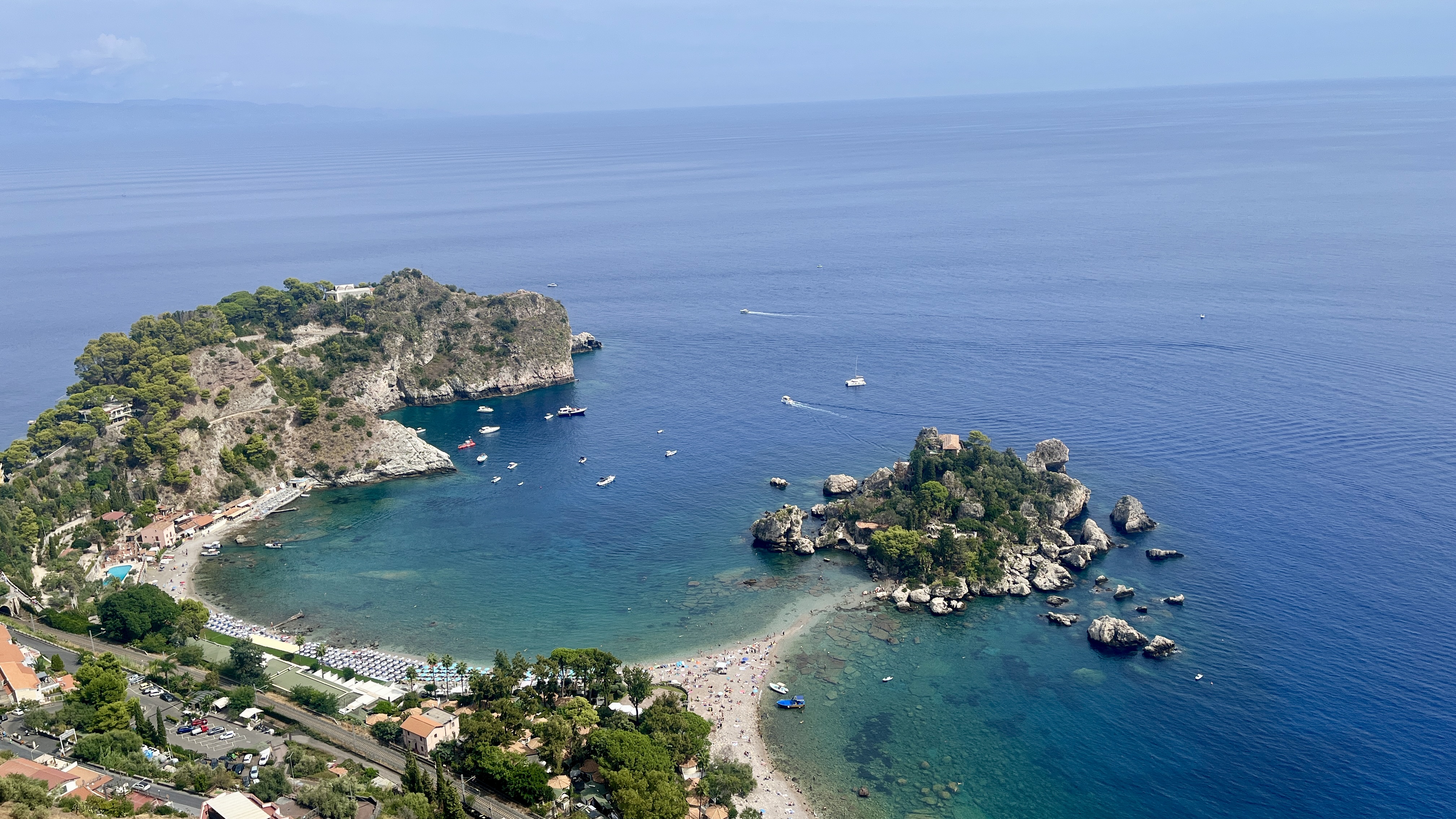
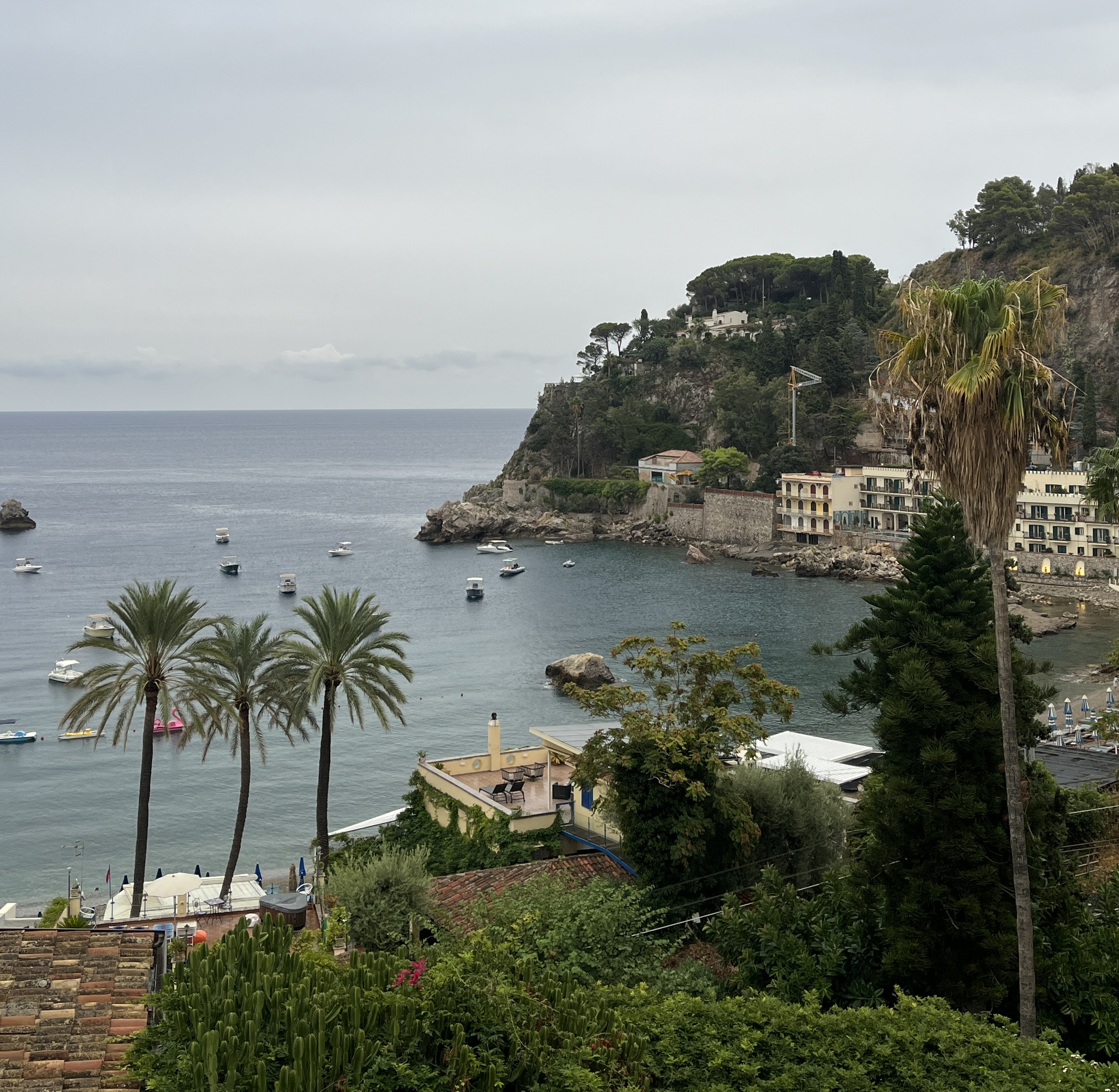
Taormina is what you might hope it to be. The views from belvederes are magical, sweeping out across the Ionian Sea. Smatterings of bougainvillea draped walls, tall palms, cook pines and luscious flowers are everywhere. The long Corso Umberto is bookended by the Porta Catania in the south and the Palazzo Corvaja at the center of it all. This busy street is fringed with cafes and high-end stores, becoming a vibrant runway for summer dresses and linen suits during the evening passeggiata.
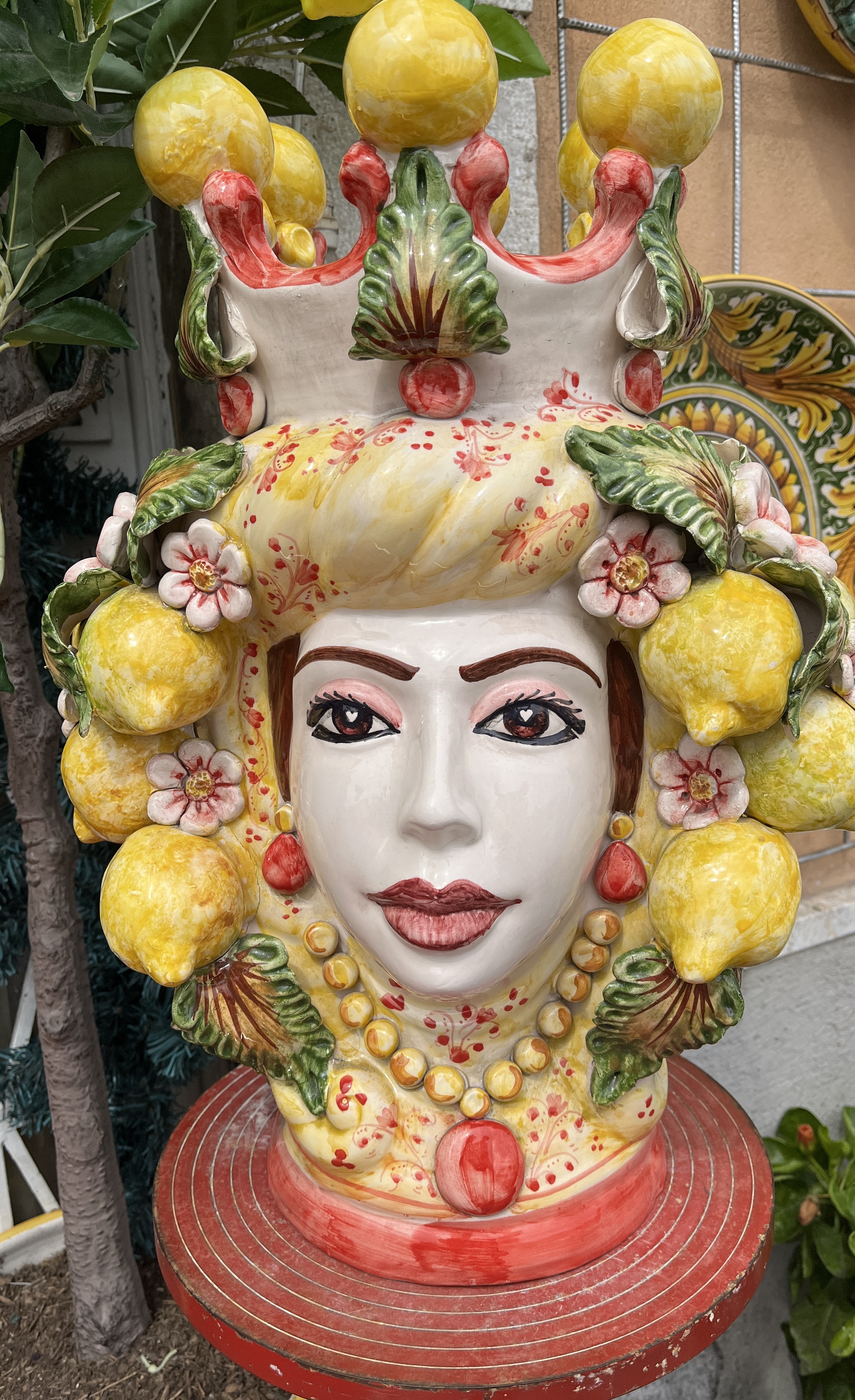
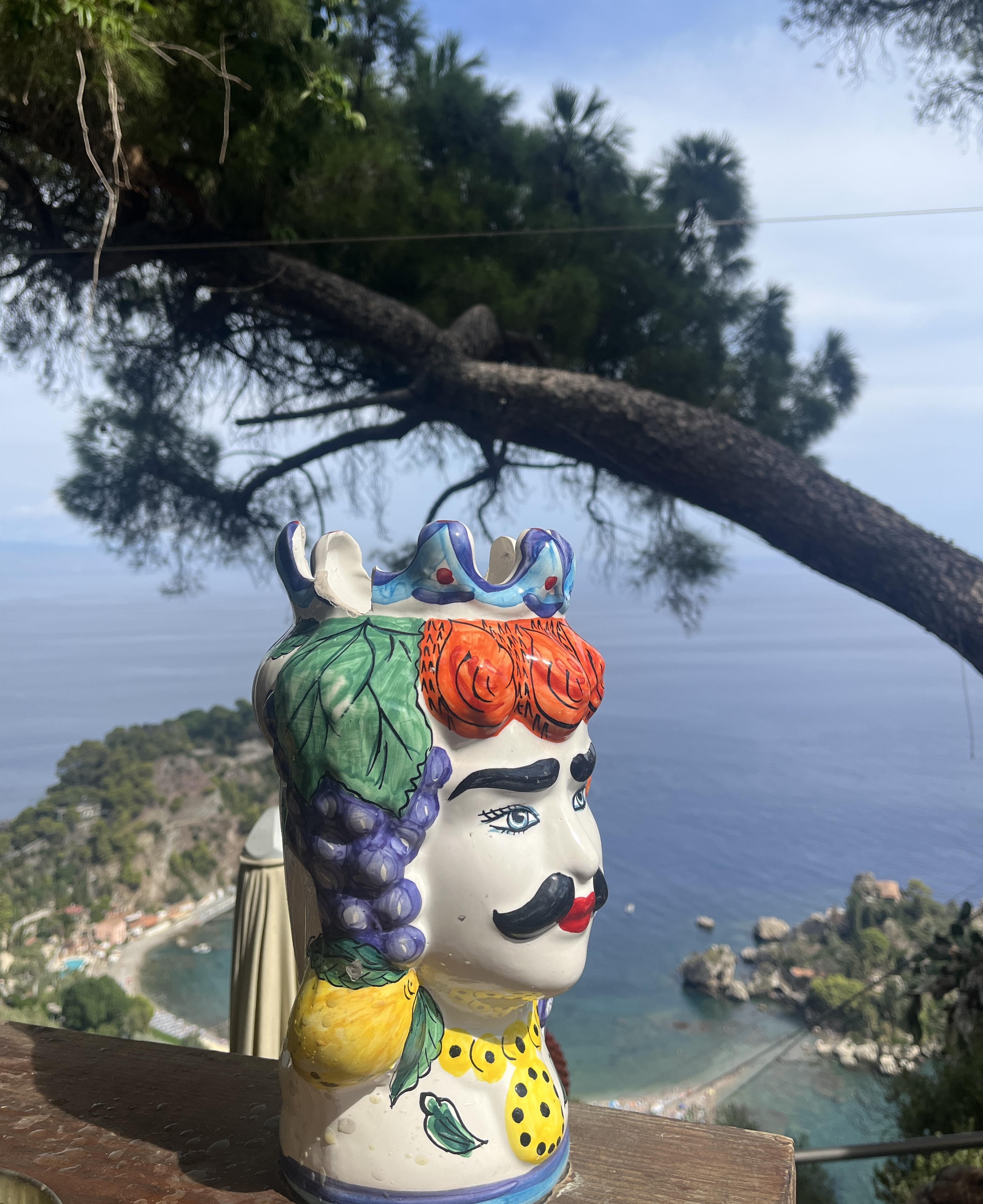
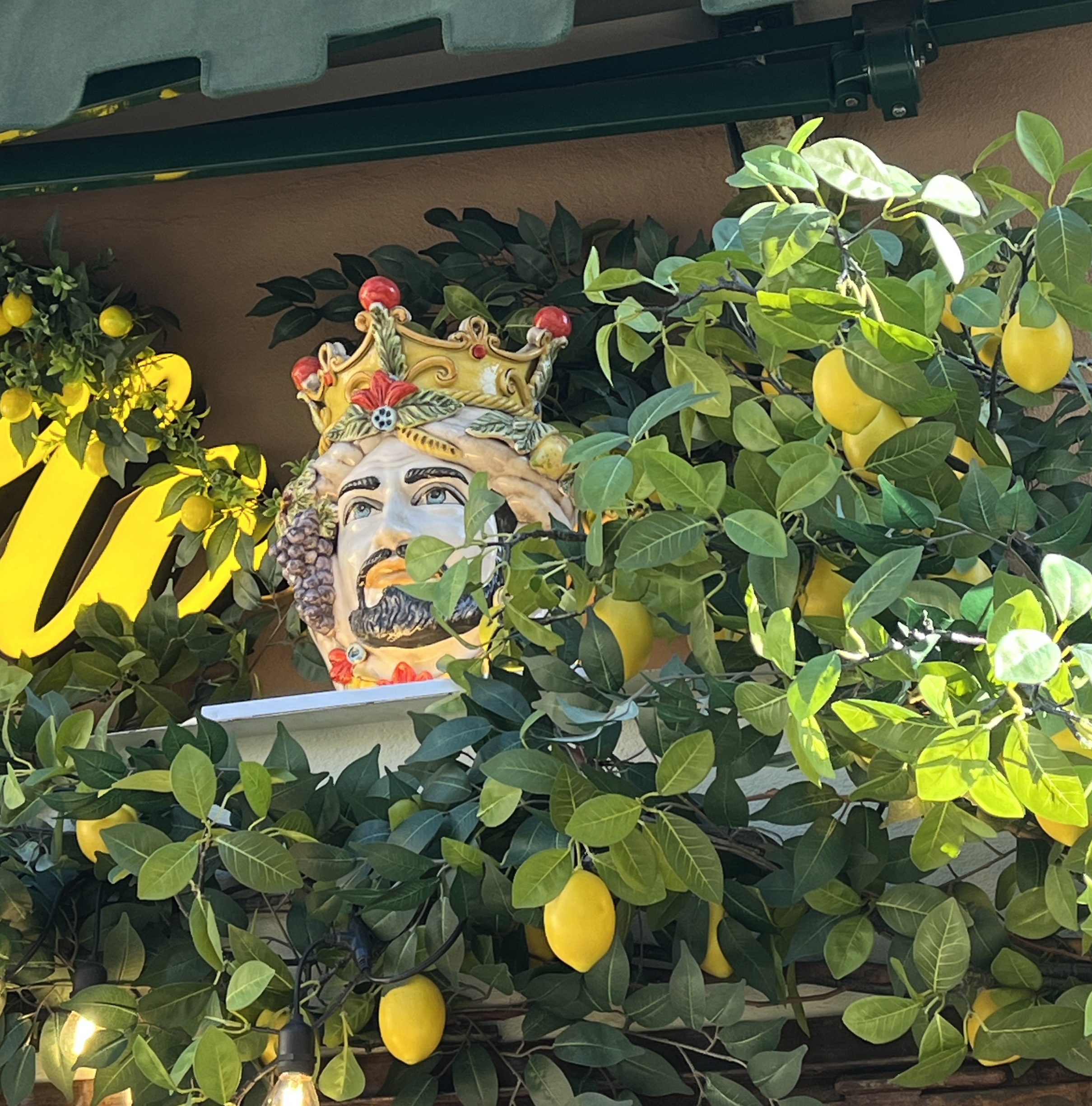
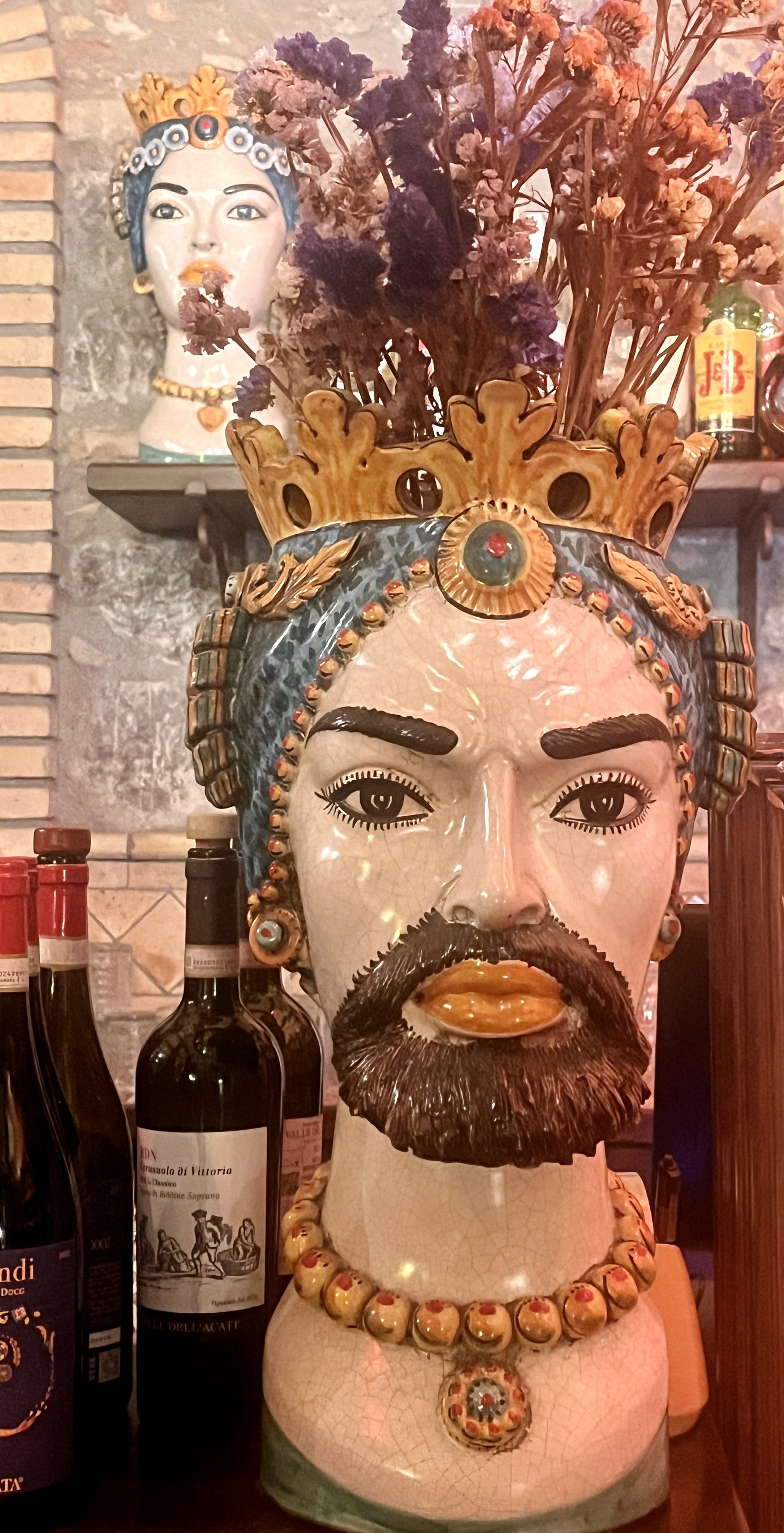
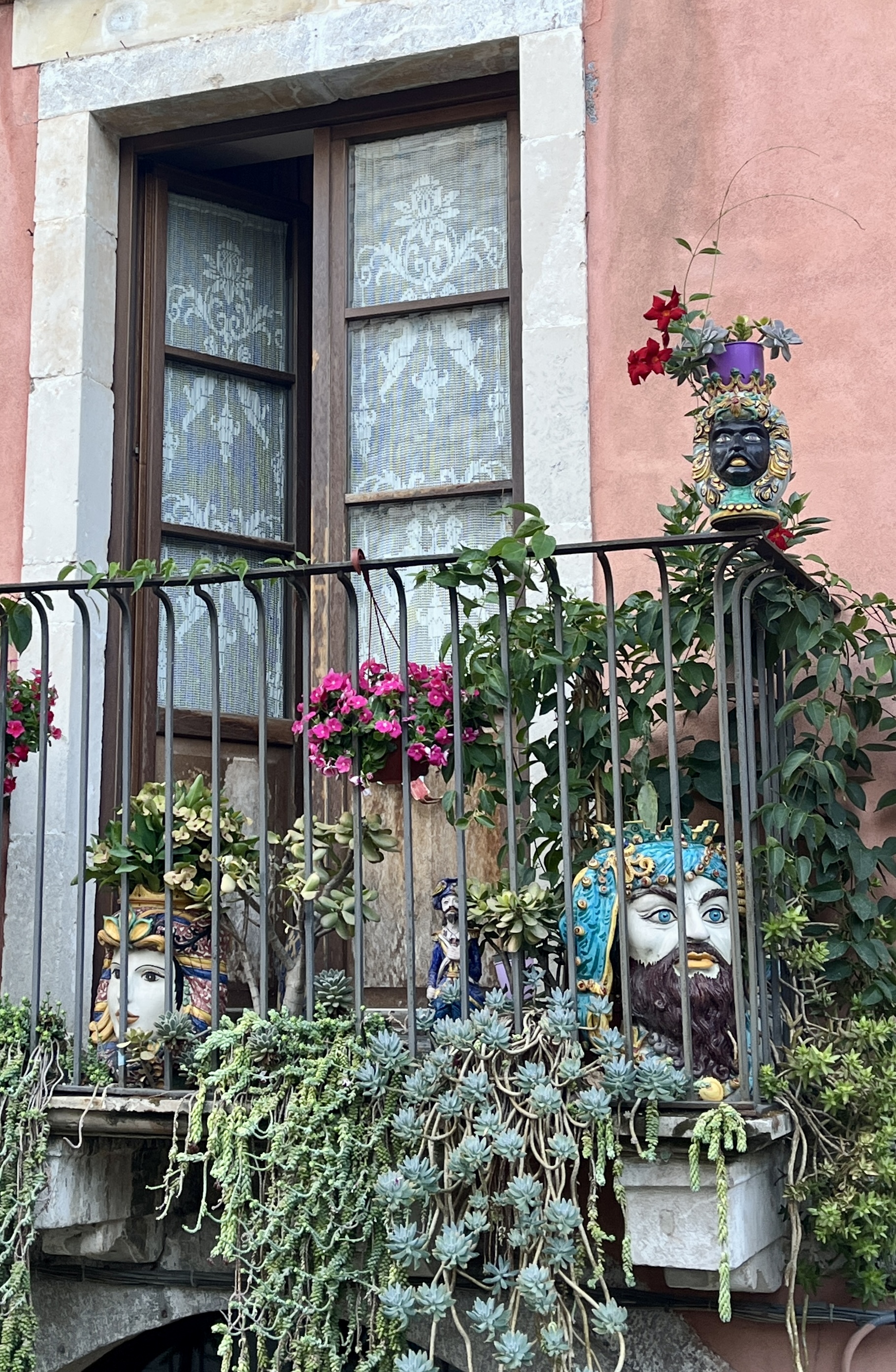
There’s a distinct vibe to Taormina. Is it partly due to the teste di moro? These ceramic art pieces are nestled everywhere; on balconies, in windows, in storefronts and bars. The folk legends of their origin are evocative, all set around the 11th century during the brief Arab rule. One legend in particular captures my imagination. A Sicilian woman tending plants on her balcony, is seduced by a Moorish merchant and a passionate romance ensues. Learning the painful truth that the man is already married prompts the woman to cut off her lover’s head. Turning the severed head into a plant pot, it turns out that basil grows lush and fragrant from the tears she sheds. Locals artisans down the ages are inspired to craft ceramic pots shaped in complimentary ‘his’ and ‘hers’. I marvel at the bold colours and intricate flourishes and become slightly smitten by them. Legend aside, today they are a proud, delightful symbols of Sicilian culture.
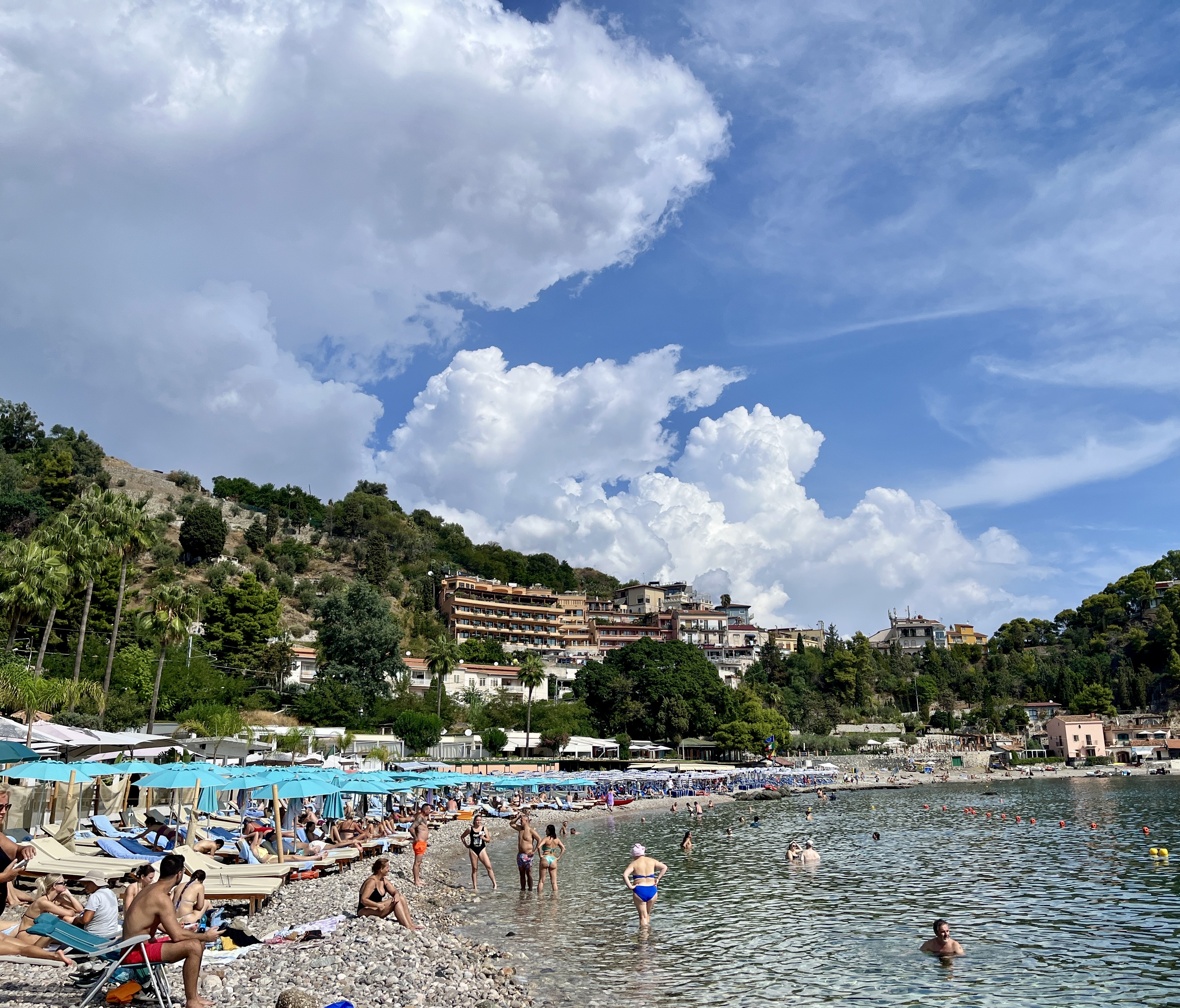
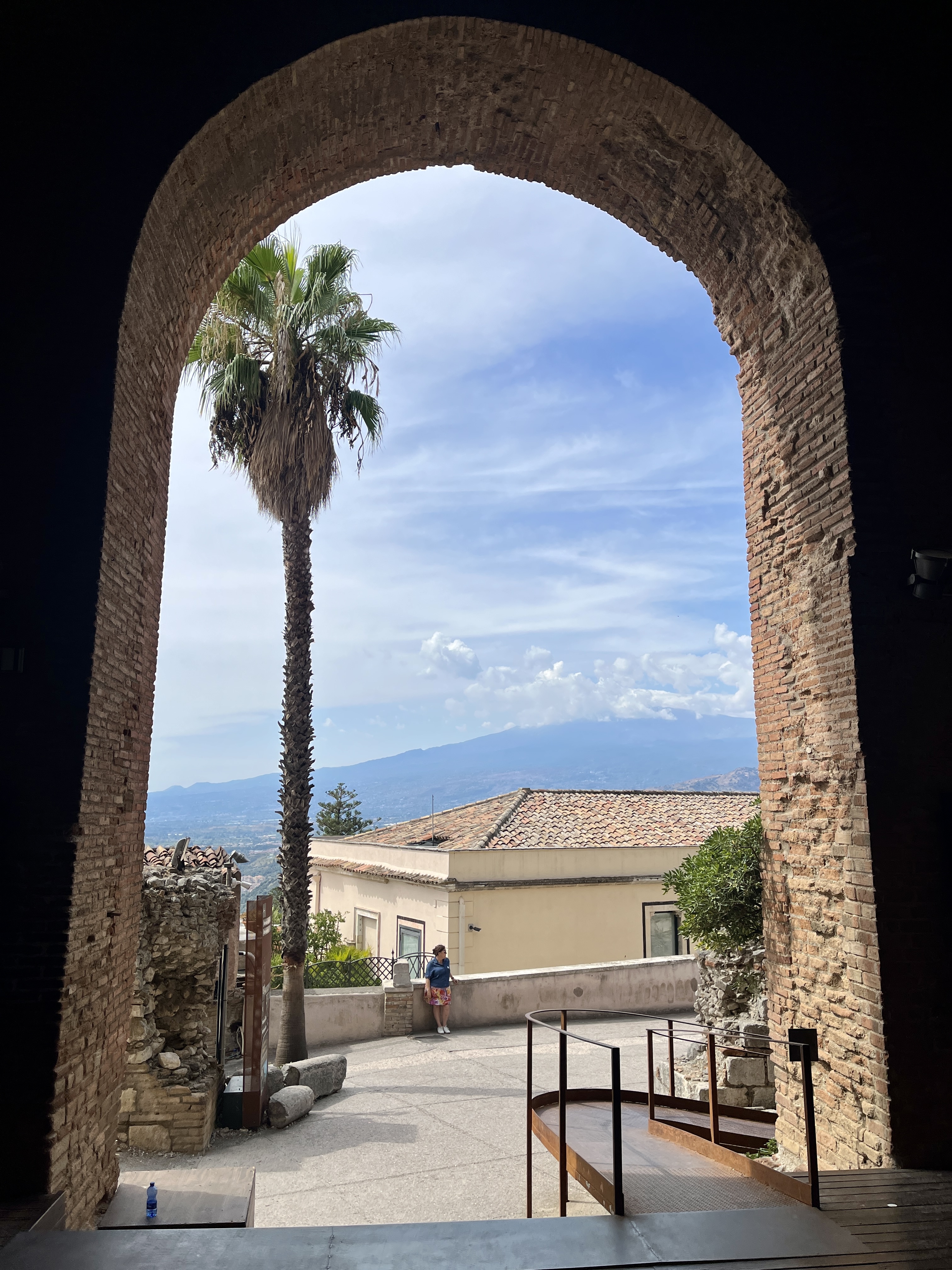
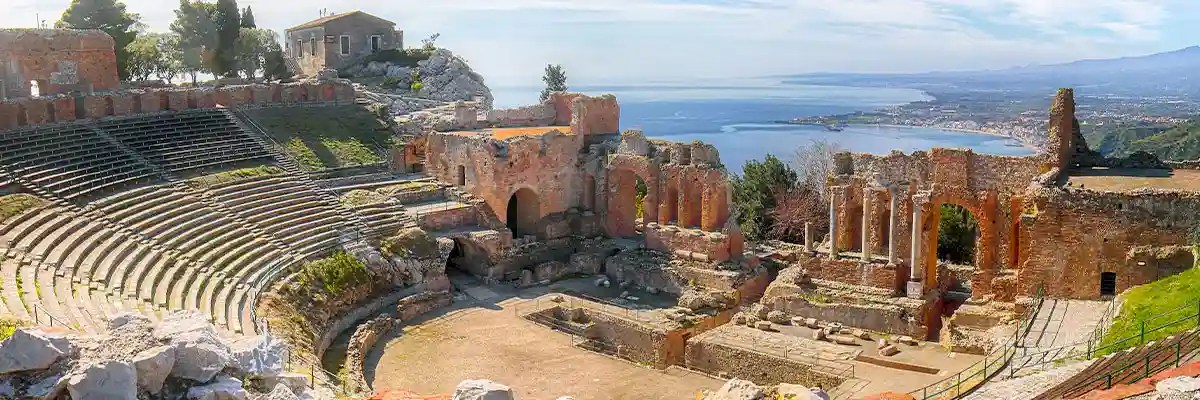
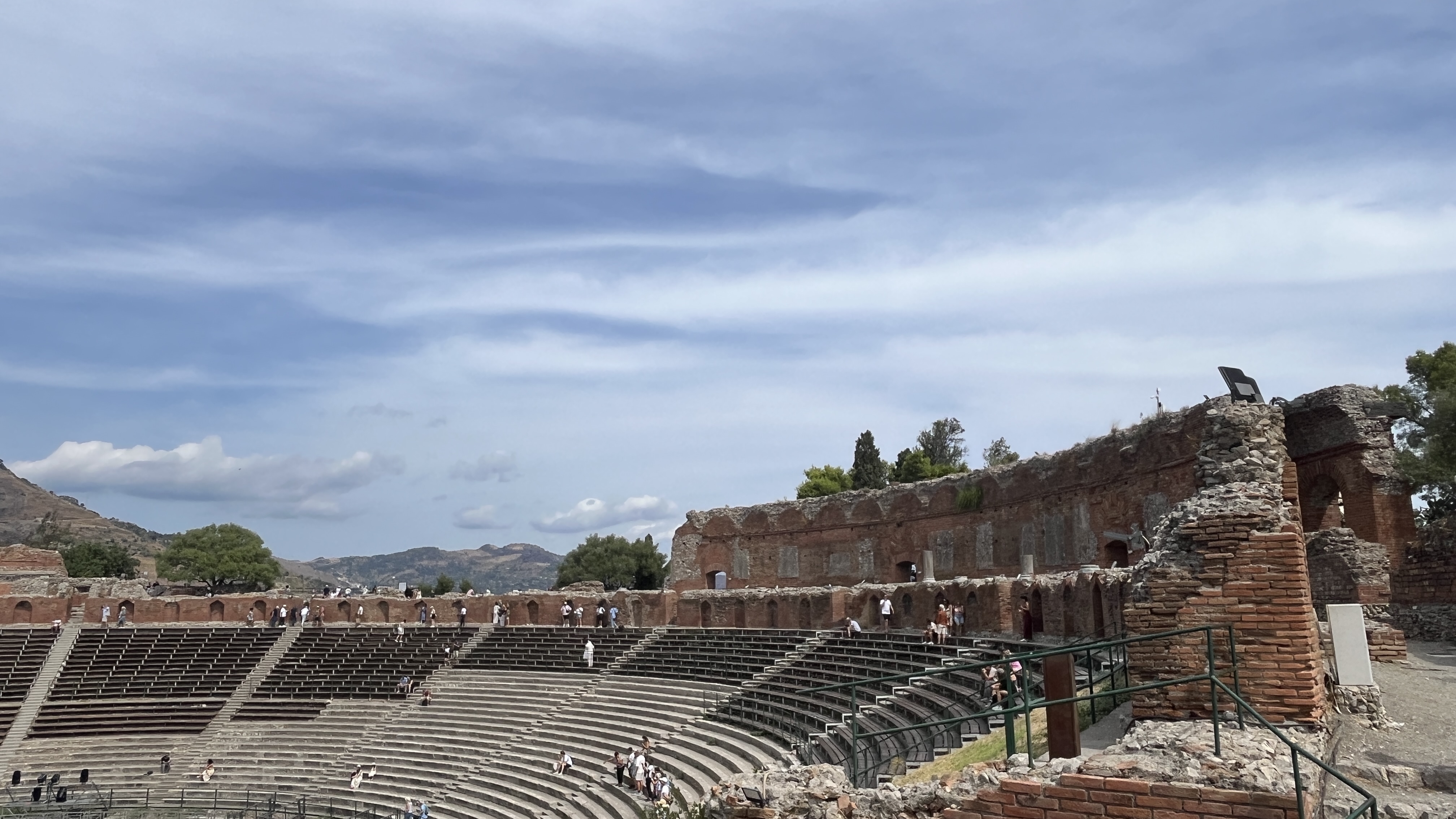
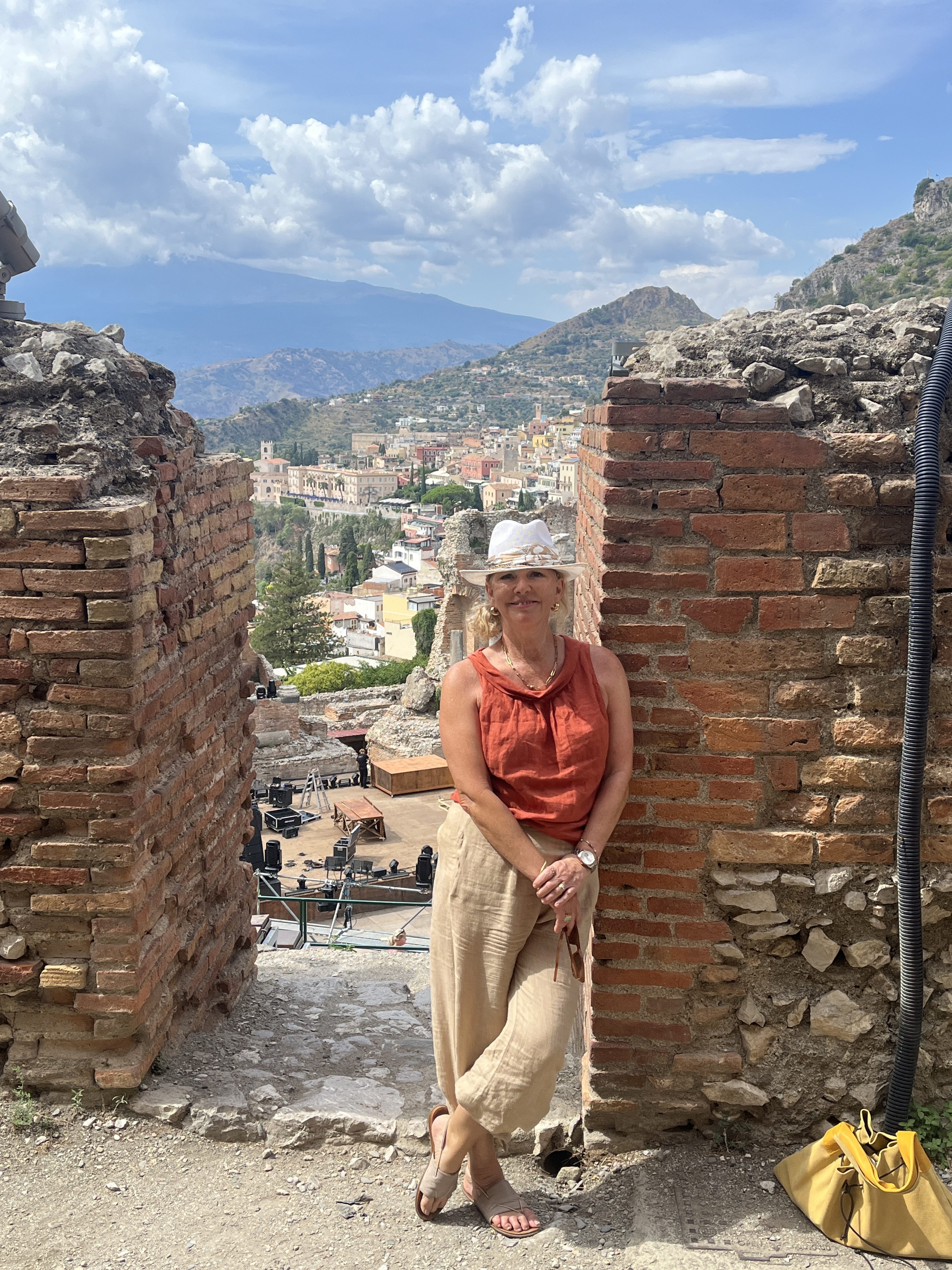
Strolling, swimming in the stunning bay at Isola Bella and of course sampling Etna wine are all on the agenda. And by chance, we’re able to play tennis on the clay courts of the Taormina Sporting Club, a charming oasis in the heart of the old town. Yet the main attraction is the impressive Teatro Antico di Taormina, commanding stunning views to Etna and the Ionian Sea.

The story of ‘rediscovery’ and preservation of the theatre during the Grand Tour years is intriguing. I’ve always been fascinated and perhaps a little envious of the Grand Tour crowd… think Room With a View. The tour was a journey of discovery and beauty, an immersion in classical art, historical landscapes and continental culture. Admittedly, my story of coming to Italy for the first time at 17 was an education in itself and though not as long nor extravagant as the Grand Tour, the discovery of this ancient land captivated me and inspired me to travel. The Grand Tour was often the final stamp on the education of the privileged through the 19th and 20th centuries and Sicily was often the last stop on the travellers two or three month tour. Taormina with its ancient theatre became instant videndae, must-sees, after travellers reports and printed illustrations were published. Indeed, this was the start of cultural tourism, partly thanks to the growing passion for antiquity and archaeological sites.

Built in the 3rd Century BC by the Greeks, and further aggrandised under Roman rule by order of Hadrian, the theatre held 10,000 spectators. In 1788, German writer Wolfgang von Goethe witnessed a performance. He marvelled at the unmatched panoramic view of nature and the backdrop of Etna, smouldering behind the stage. More publicity, greater curiosity, more travellers precipitated the beginnings of archaeological protection, starting with the theatre, then the city itself, even to protecting millennial chestnut trees on Mount Etna.
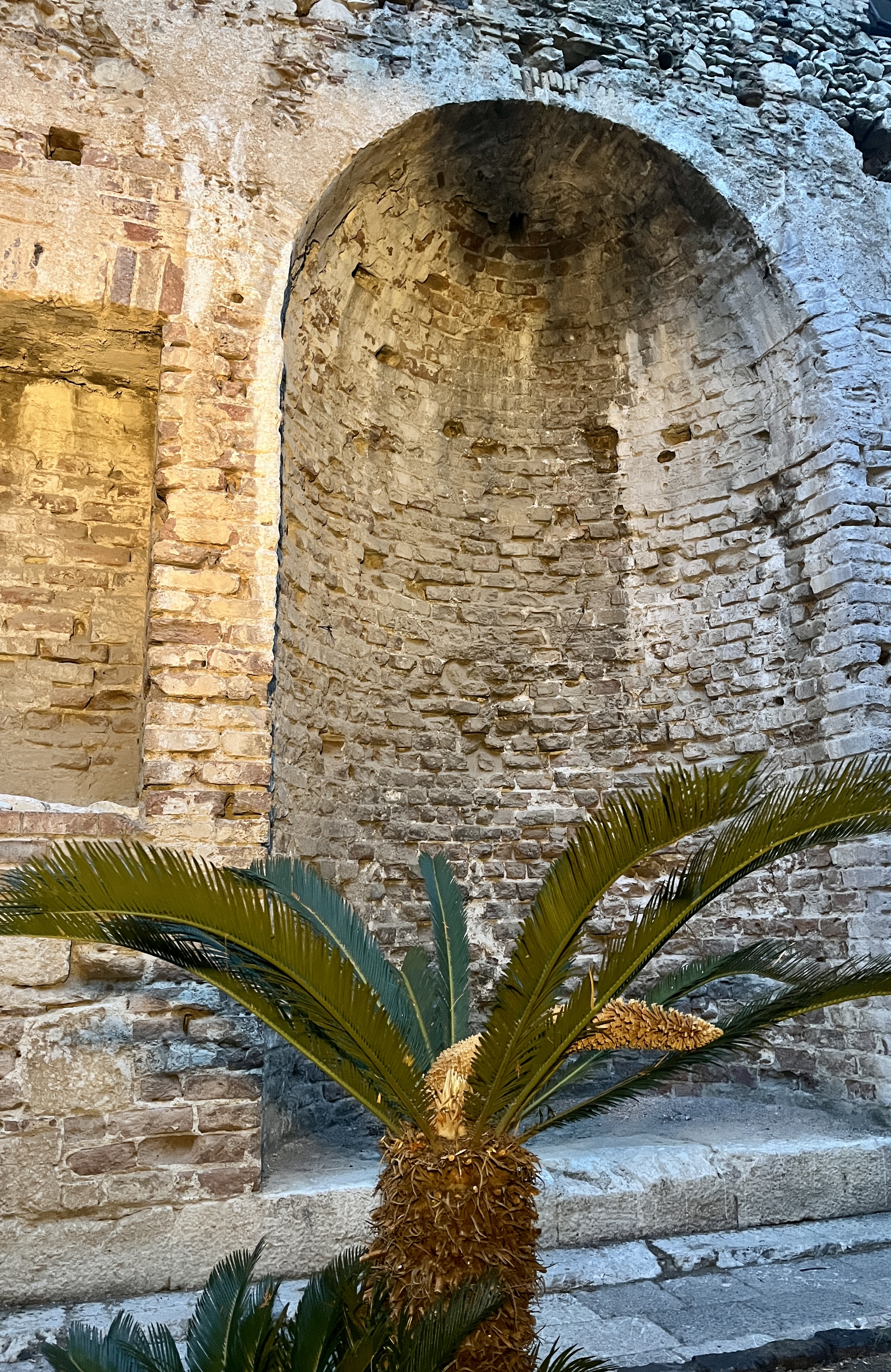
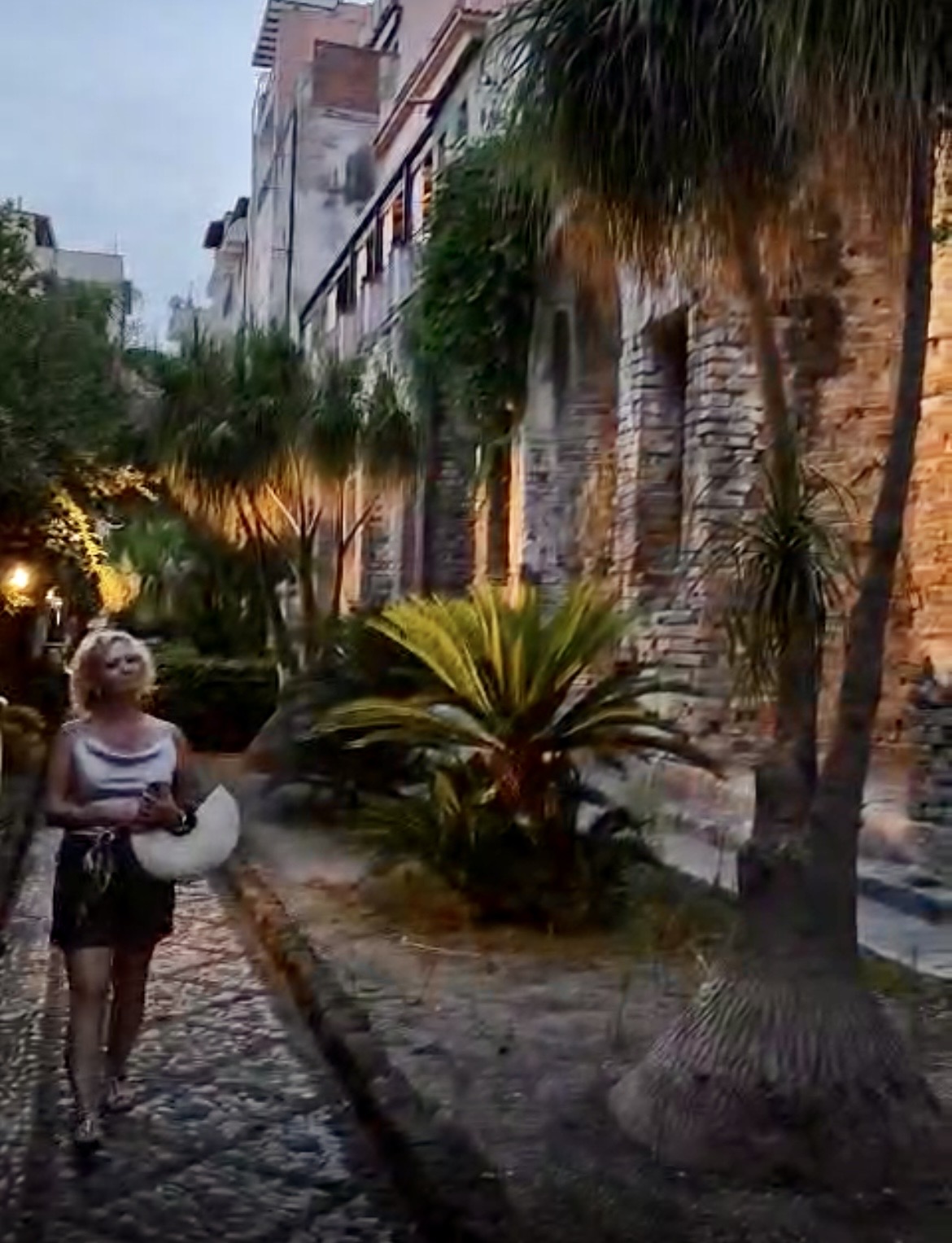
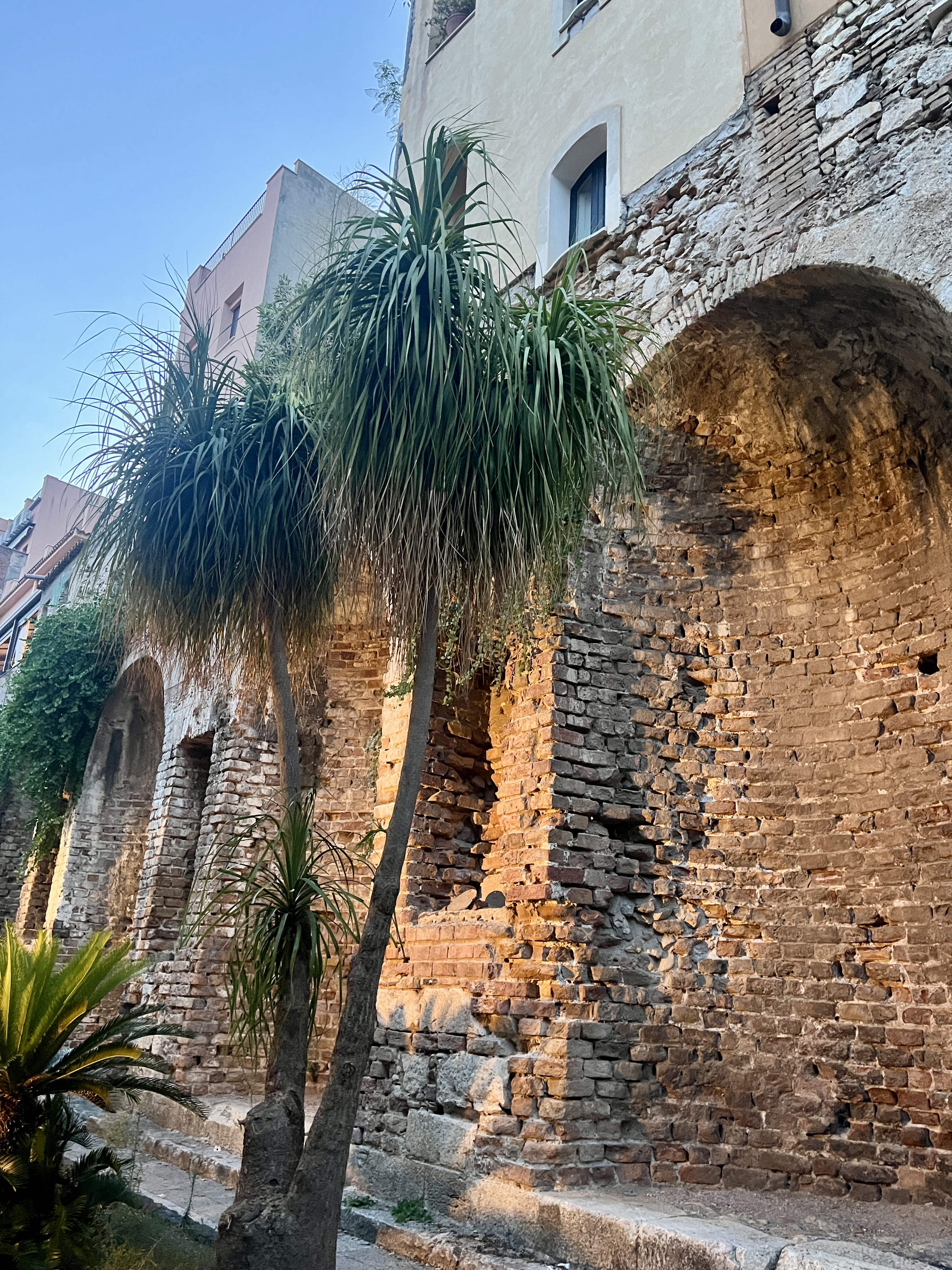
On our last evening stroll, happenstance leads us to something most magical. Reluctant to leave a single street undiscovered, we come across a nymphaeum tucked away down a back stairway. Once thought to be an enclave for mock naval battles, modern archaeologists now agree that it was a grand public fountain, a water circus dedicated to nature’s spirits. The long stone wall and niches (their statues long missing) from 2nd century AD is symmetrical, styled in the Greek manner, despite the Roman origin. A haven for mythical nymphs – beautiful maidens – who personified water, trees and mountains. In the evening moonlight it is breathtaking, another archive of Taormina’s fascinating history. Almost 600 years before this nymphaeum was built, the people of Tauromenion welcomed refugees from the Greek colony of Naxos, who allied with Athens had been defeated by mighty Syracuse. And that’s our next stop, onwards to Syracusa.
Syracusa ~ Ortigia ~ Noto
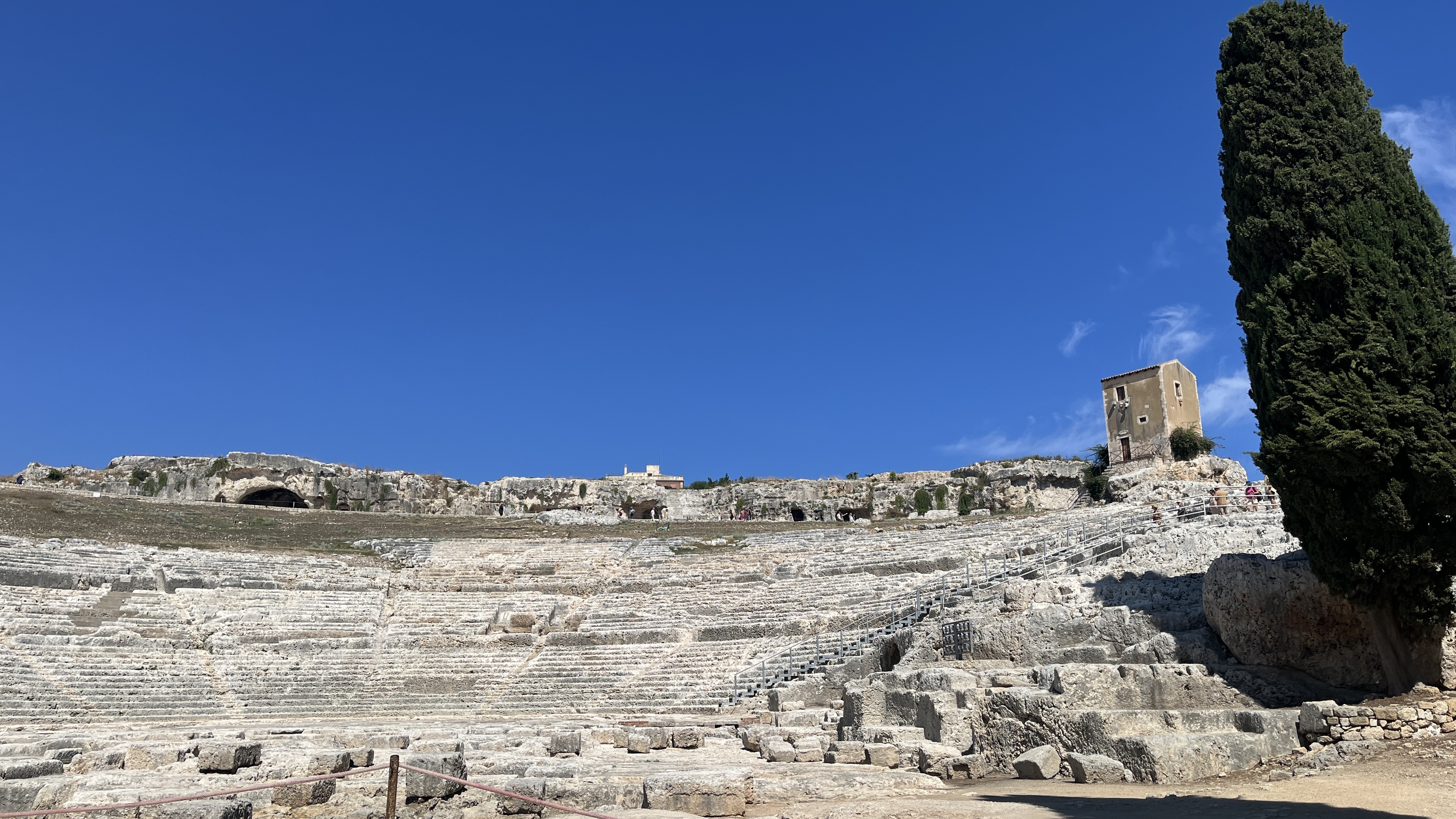
The great general, Nicias briefed the Athenian assembly that there were seven Sicilian cites equipped just like Athens. The year was 415 BC. Much later, around 40 BC, the great Roman statesman Cicero commented, ‘You have always heard it said that Siracusa is the greatest and the most beautiful of all Greek cities, it is indeed as they say.’

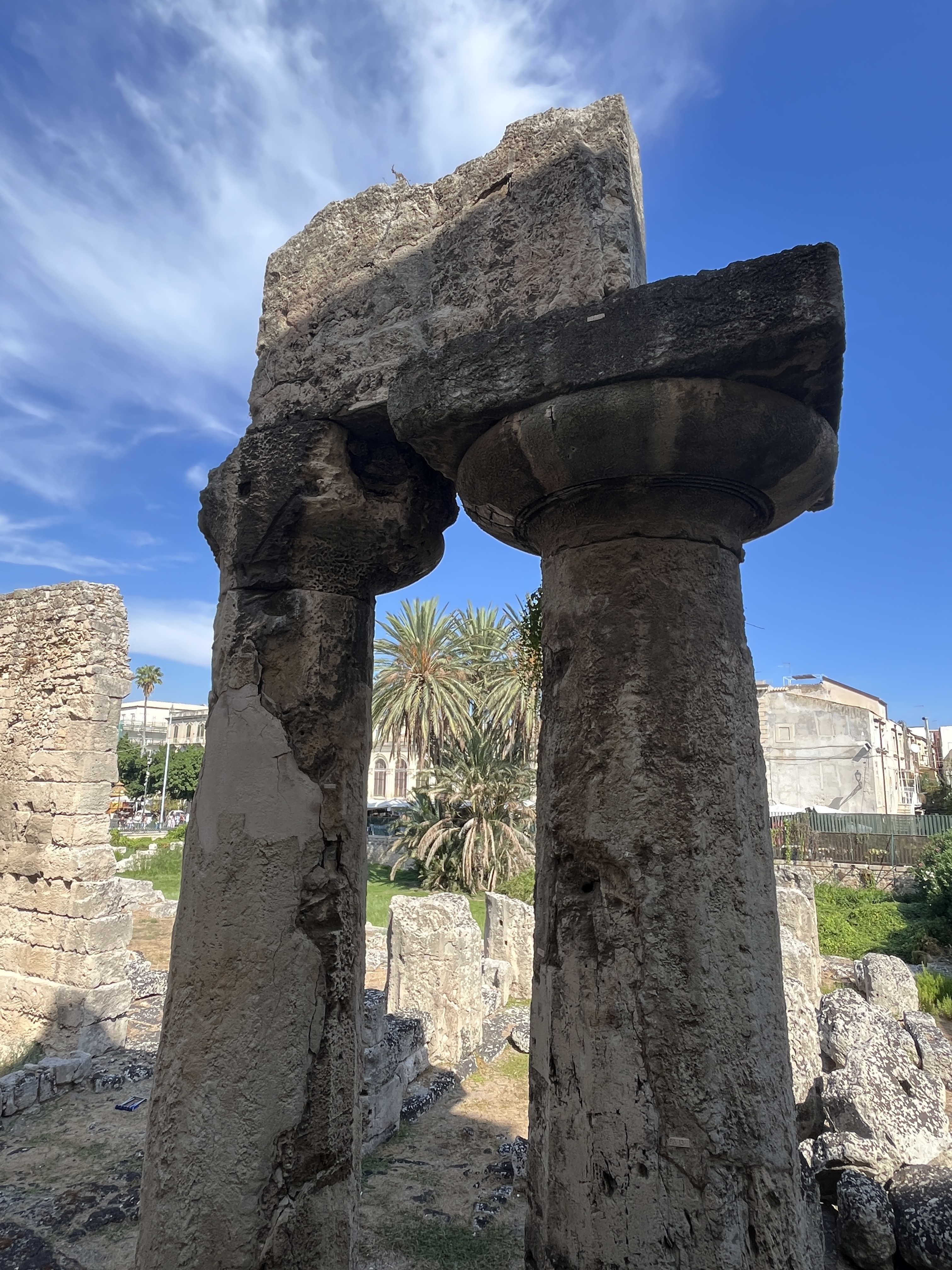
Cicero also noted its well-protected position on the Ionian Sea and now, standing in the great Neapolis Park, I try to envision the enormity of constructing this ancient theatre… one of the largest and most famous in the ancient world. Built in the 5th C. BC and rebuilt in the 3rd, this Unesco World Heritage Site is one of the reasons people visit Syracusa on the south eastern coast of Sicily. Its story is written in the layers of cultural influence, from the Sicils, Greeks, Romans, Byzantines, Arabs, Normans and Spaniards. The island has always been coveted, yet Sicily did not become part of Italy until 1861 and many Sicilians still claim their island heritage before Italian.

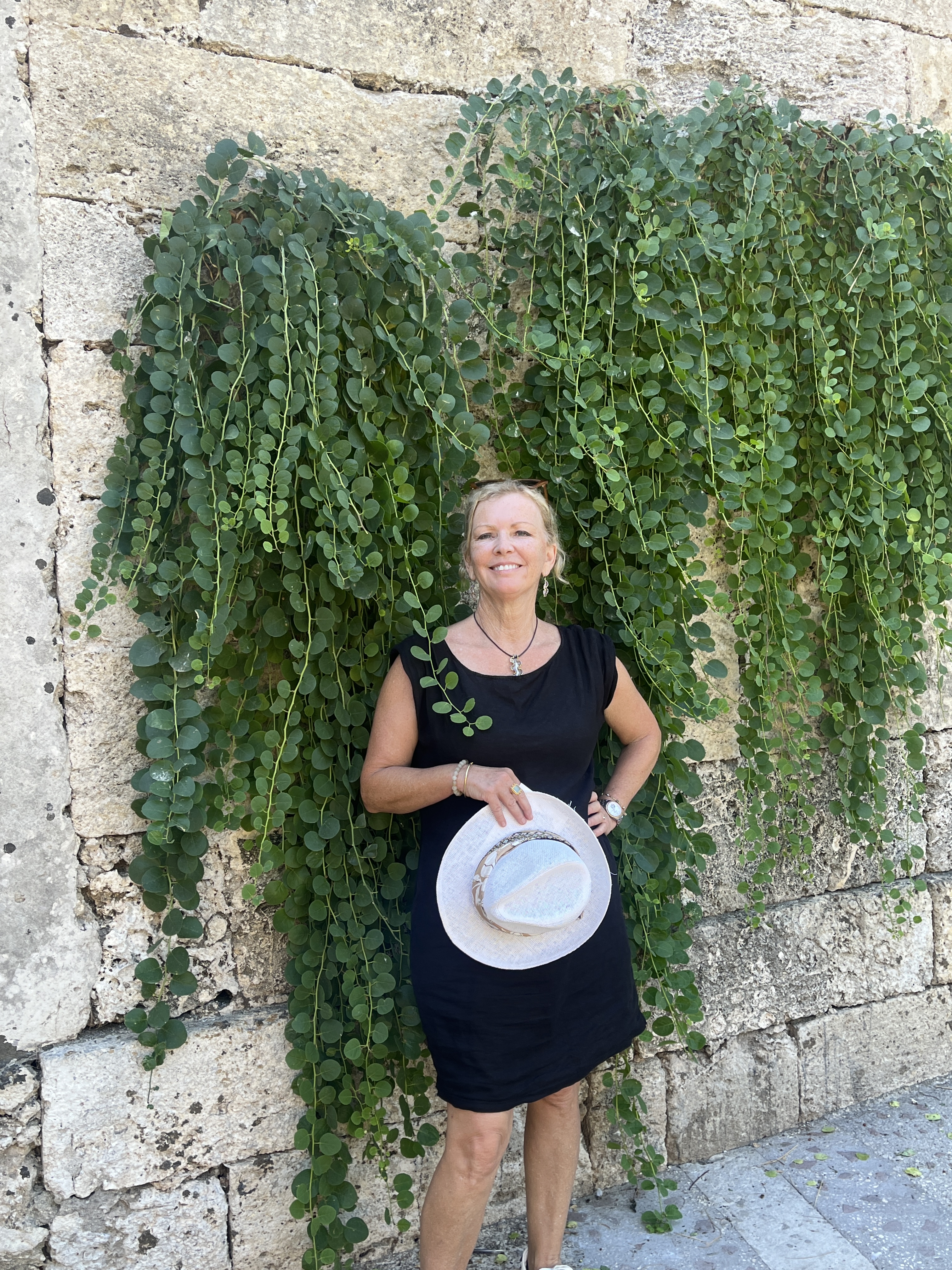
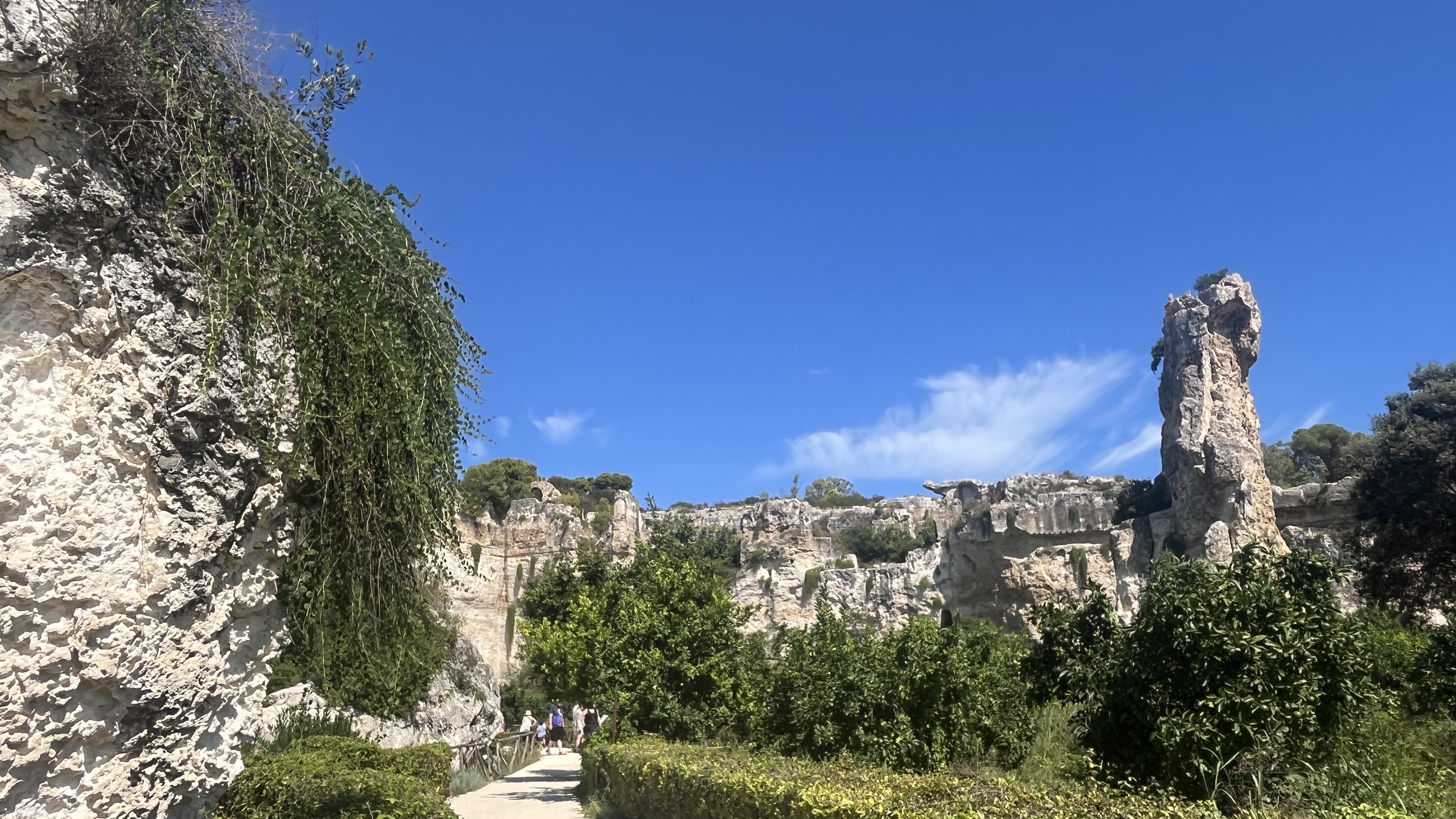
I read that in the ancient Greek world, the massive theatre, holding 15,000 citizens, wasn’t solely for plays or entertainment, but was also a place for religious rituals and public assemblies. It was the beating heart of the community, yet curiously the upper gallery was fringed with mausoleums of the wealthy. A counterpoint to the Greek theatre is the nearby Roman Amphitheater home to gory gladiatorial spectacles. Similar to the Colosseum in Rome, it was one of the grandest in the Mediterranean. As interesting as they are, nearby Paradise Quarry is incredible to see. Providing the stone for the theatres and the neapolis (new city), standing inside its cool enormous caverns is breathtaking. Naturally, I’m enchanted by the lush, extensive garden that now populates and softens the once stark lines of the quarry. Wild capers drape from the walls, orange and lemon trees transform it into the paradise that it now is.

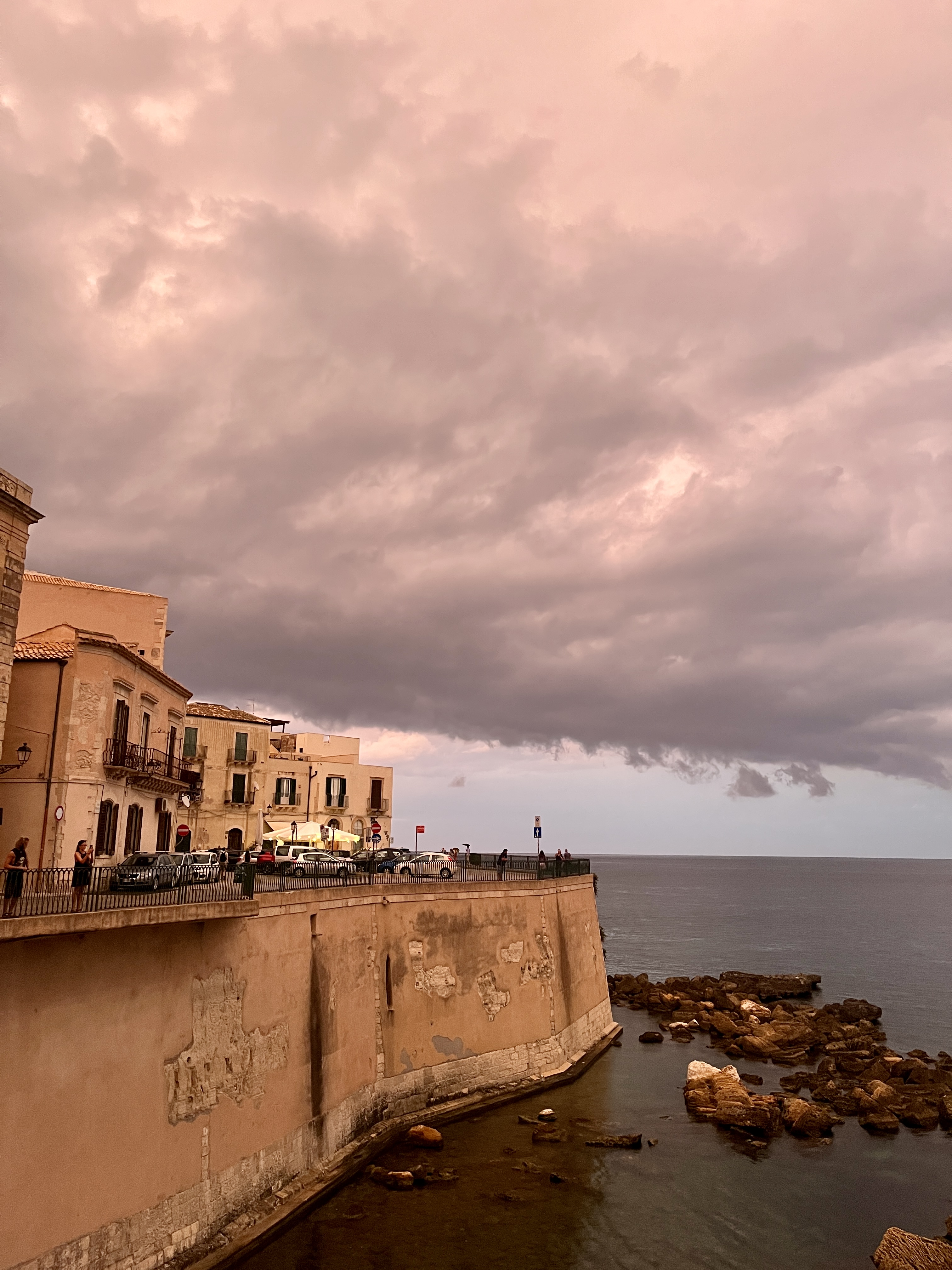
Long before preservation of antiquities became popular, the fate of many ancient structures was to have their limestone blocks appropriated, stripped for projects of the time such as fortifying the ancient seawalls of Ortigia. This small island is the historical heart of Syracusa, first settled by the Sicels, before the Greek colonists arrived. So yes, the Neapolis built in early BC’s was the new city. It’s quite simply mind-boggling.
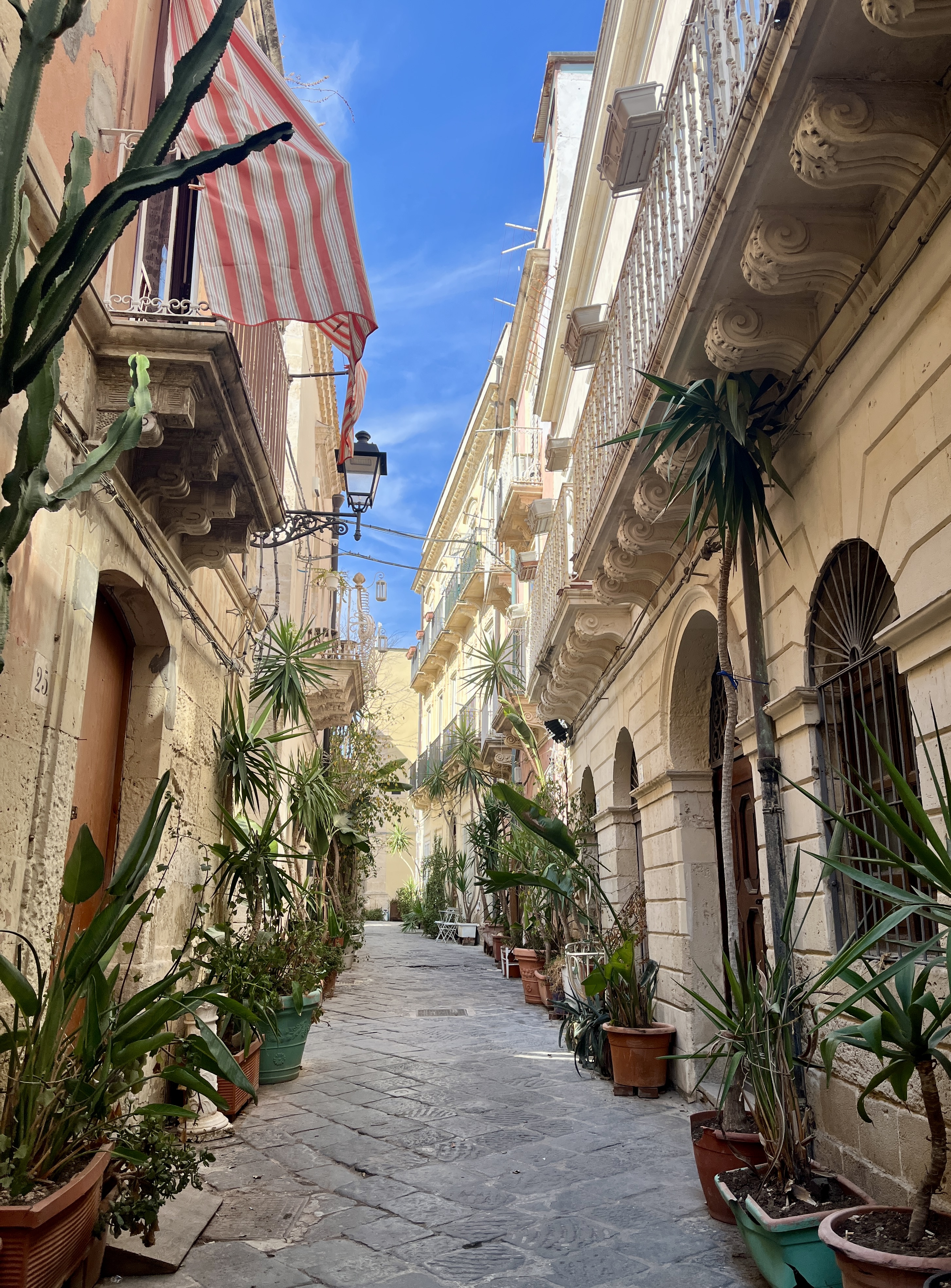
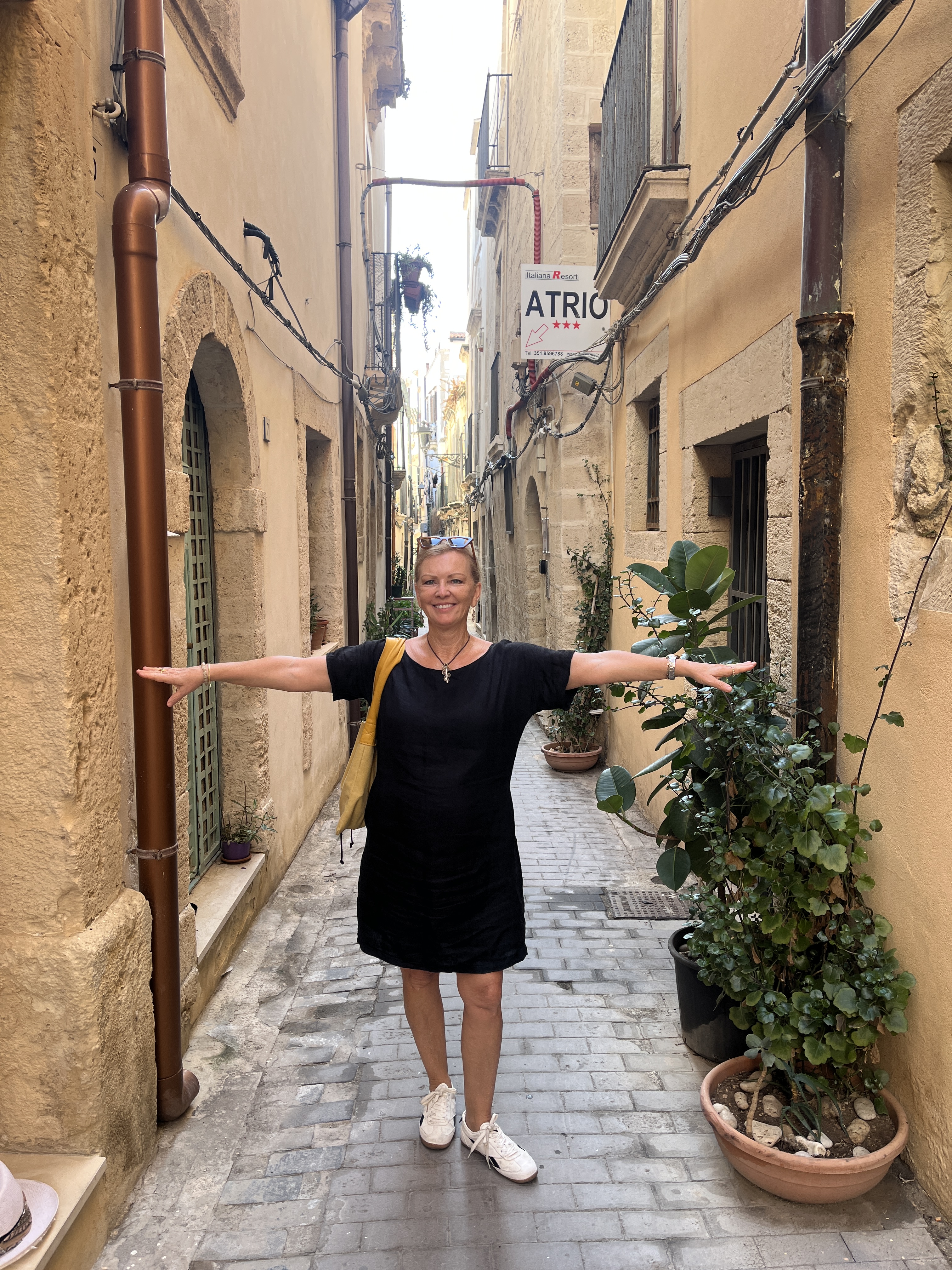
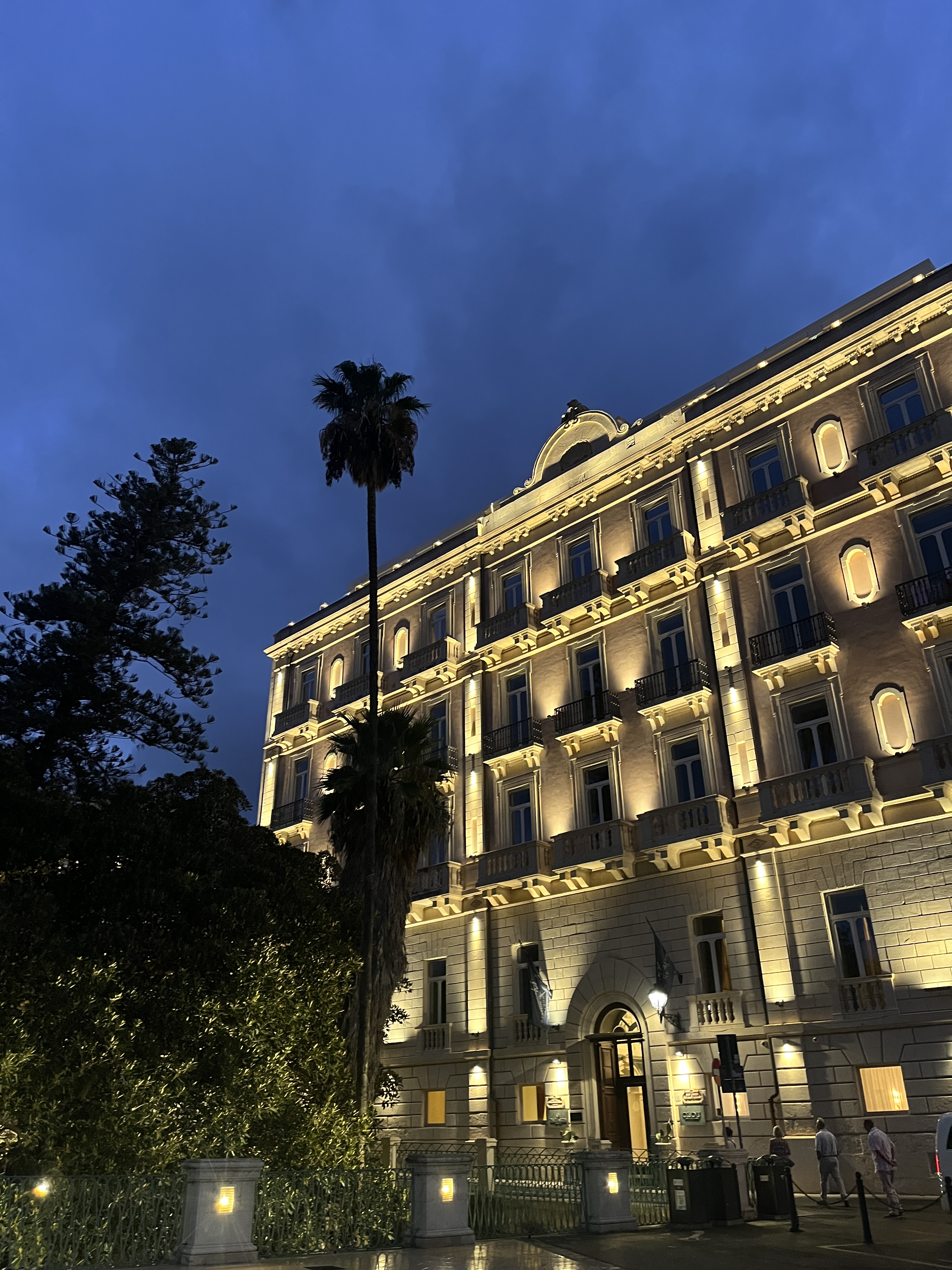
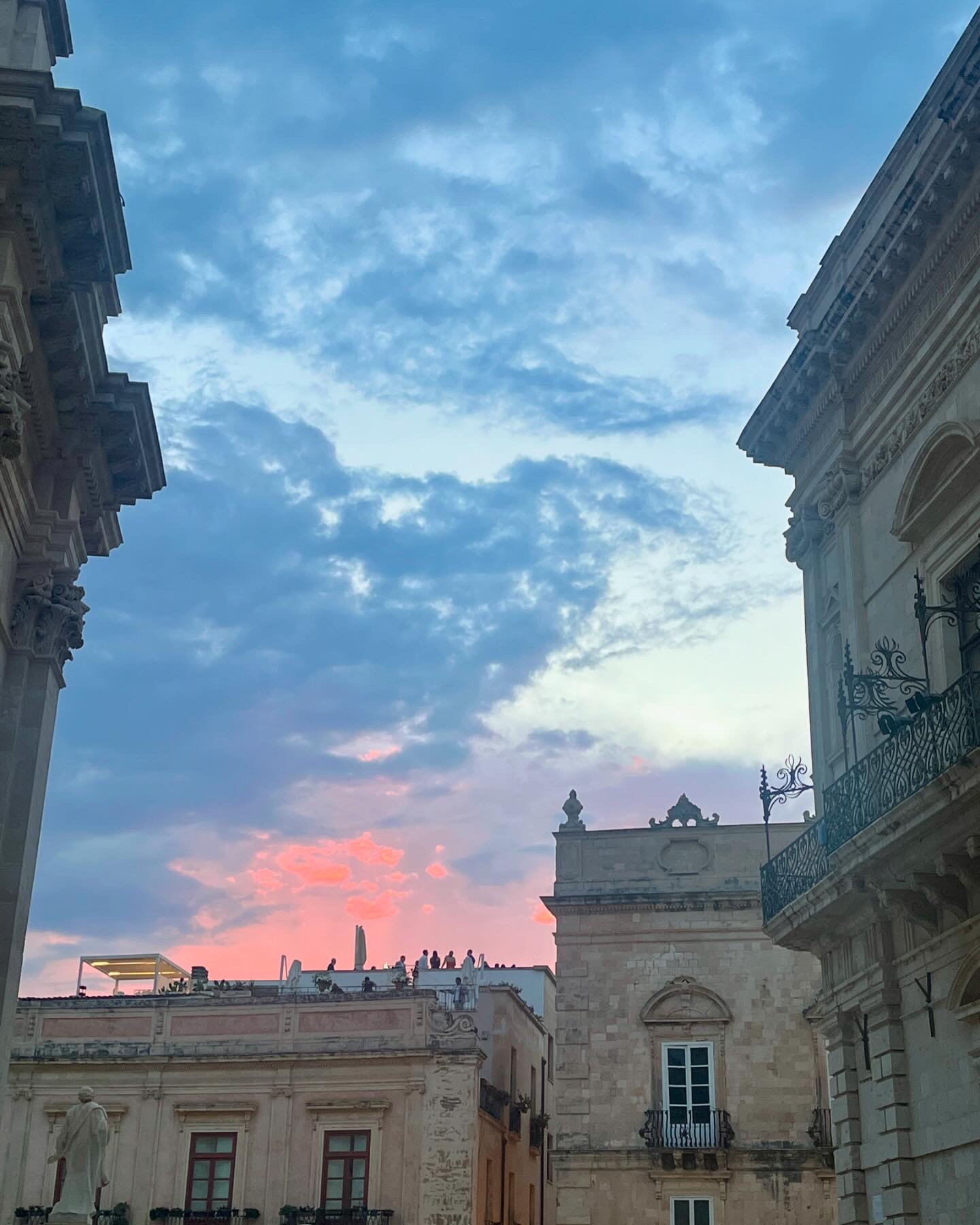
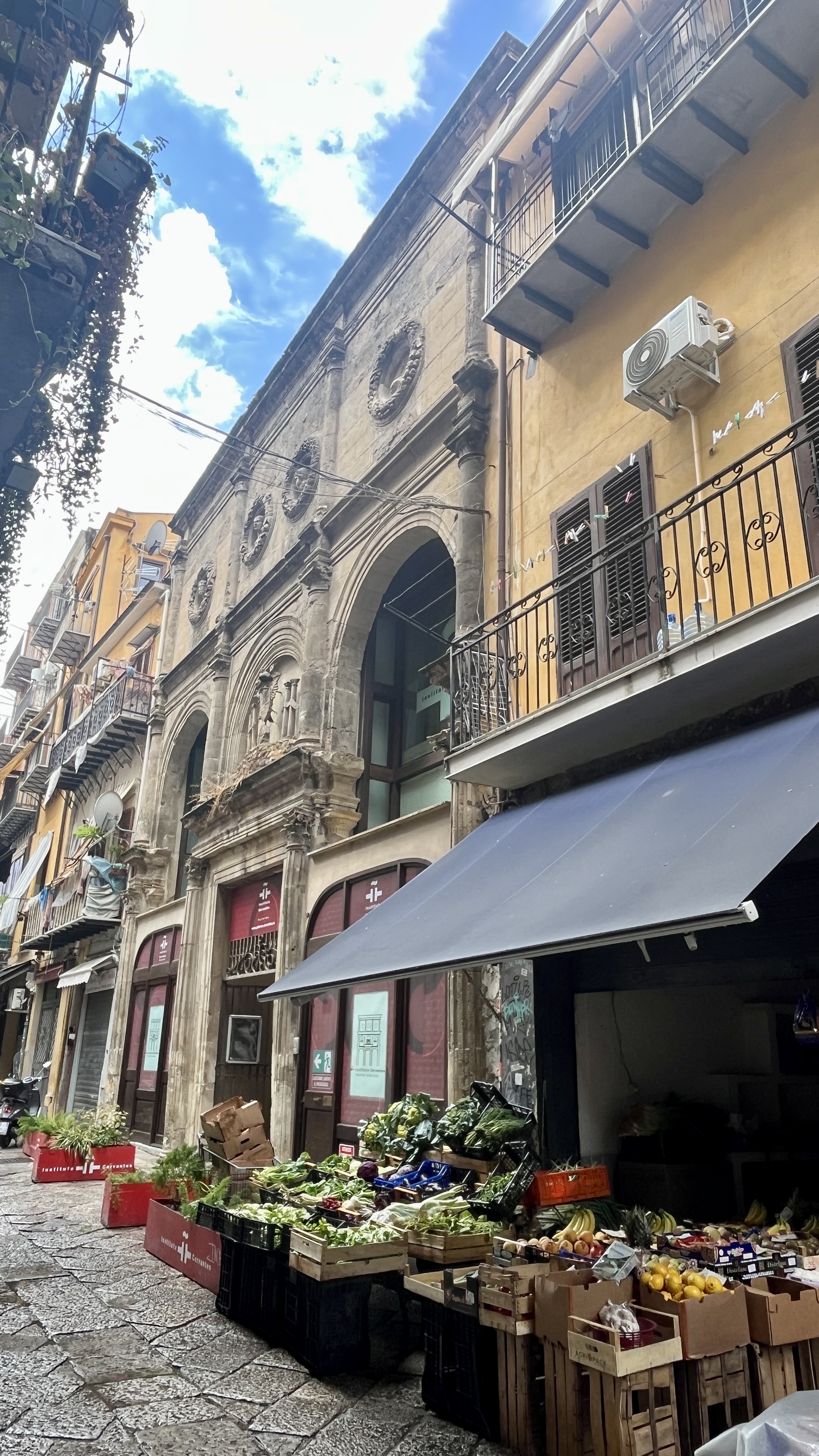
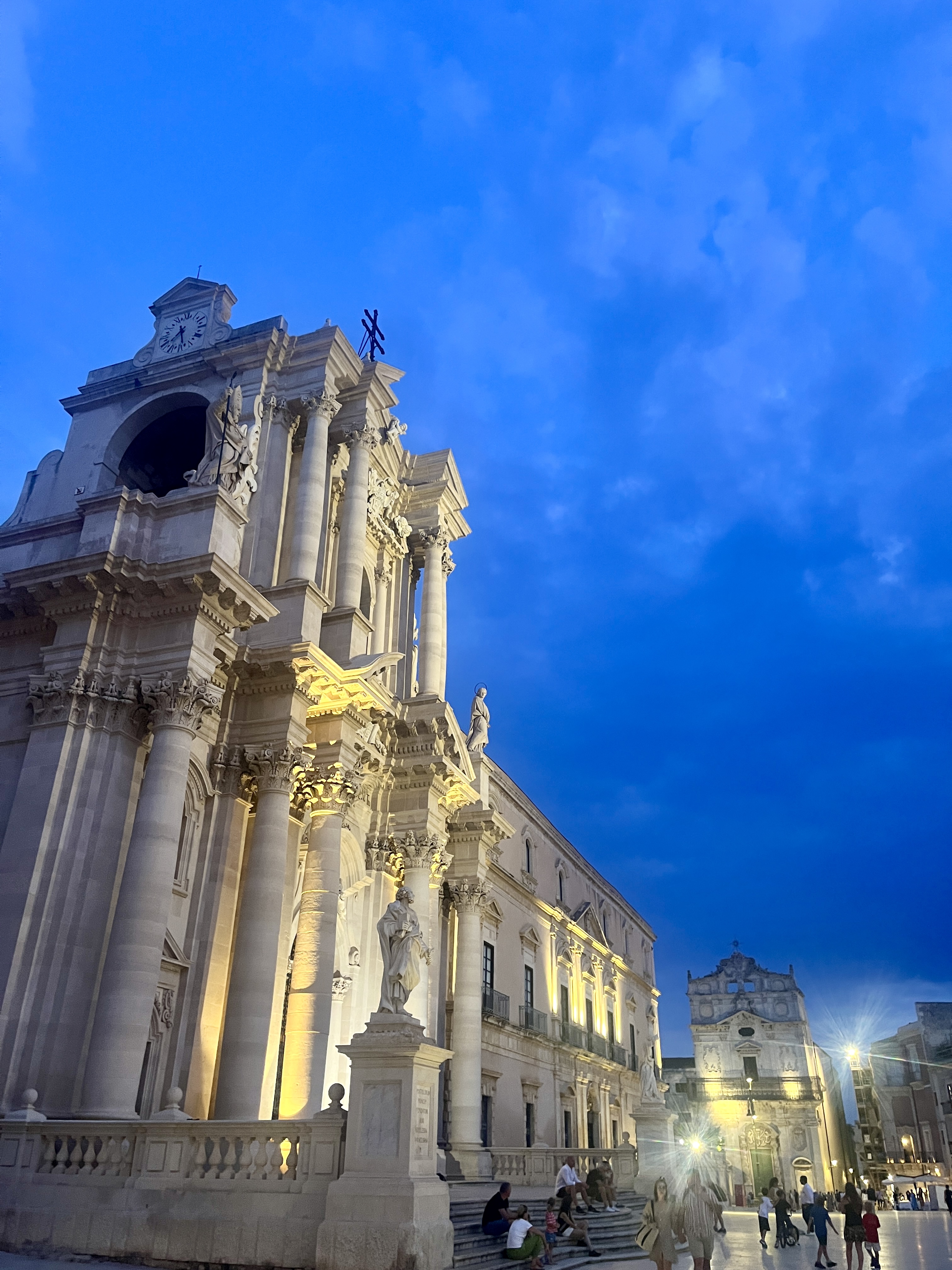
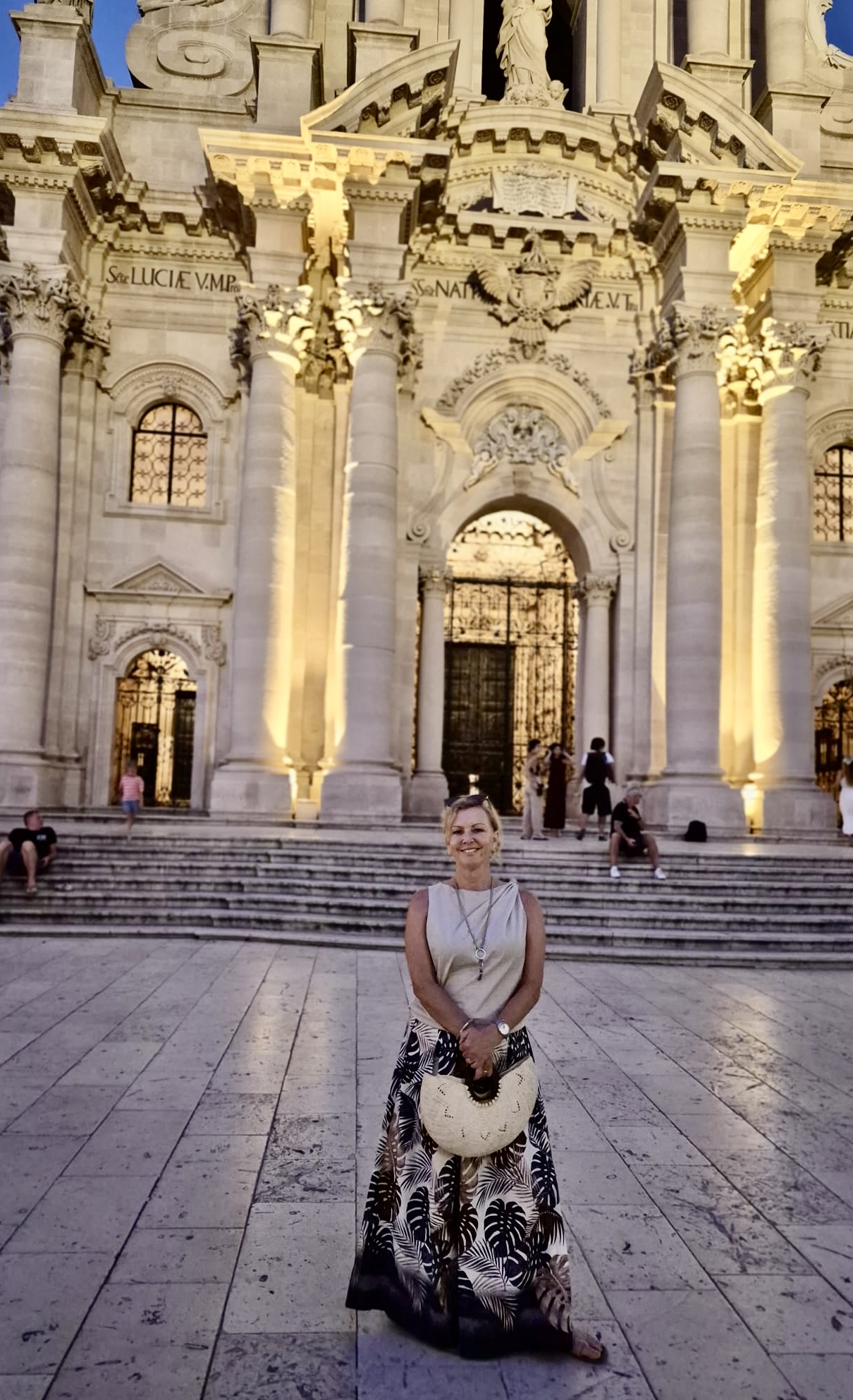
Our B&B is on a typical narrow street, barely wider than my arm’s length. Quaint balconies, potted palms, dozing neighbourhood cats and striped sun shades. Turning one way takes us to the sea, turning the other leads us through a labyrinth of antique streets, converging on the spectacular Duomo di Syracusa. Built directly over and fused into the ancient Greek Temple of Athena, it anchors the grand piazza, a resplendent emblem of the layered history, 3000 years in the making. At sunset, golden rays dance in the sky, upon the limestone, filling my traveller’s soul… Sicily continues to astound me.
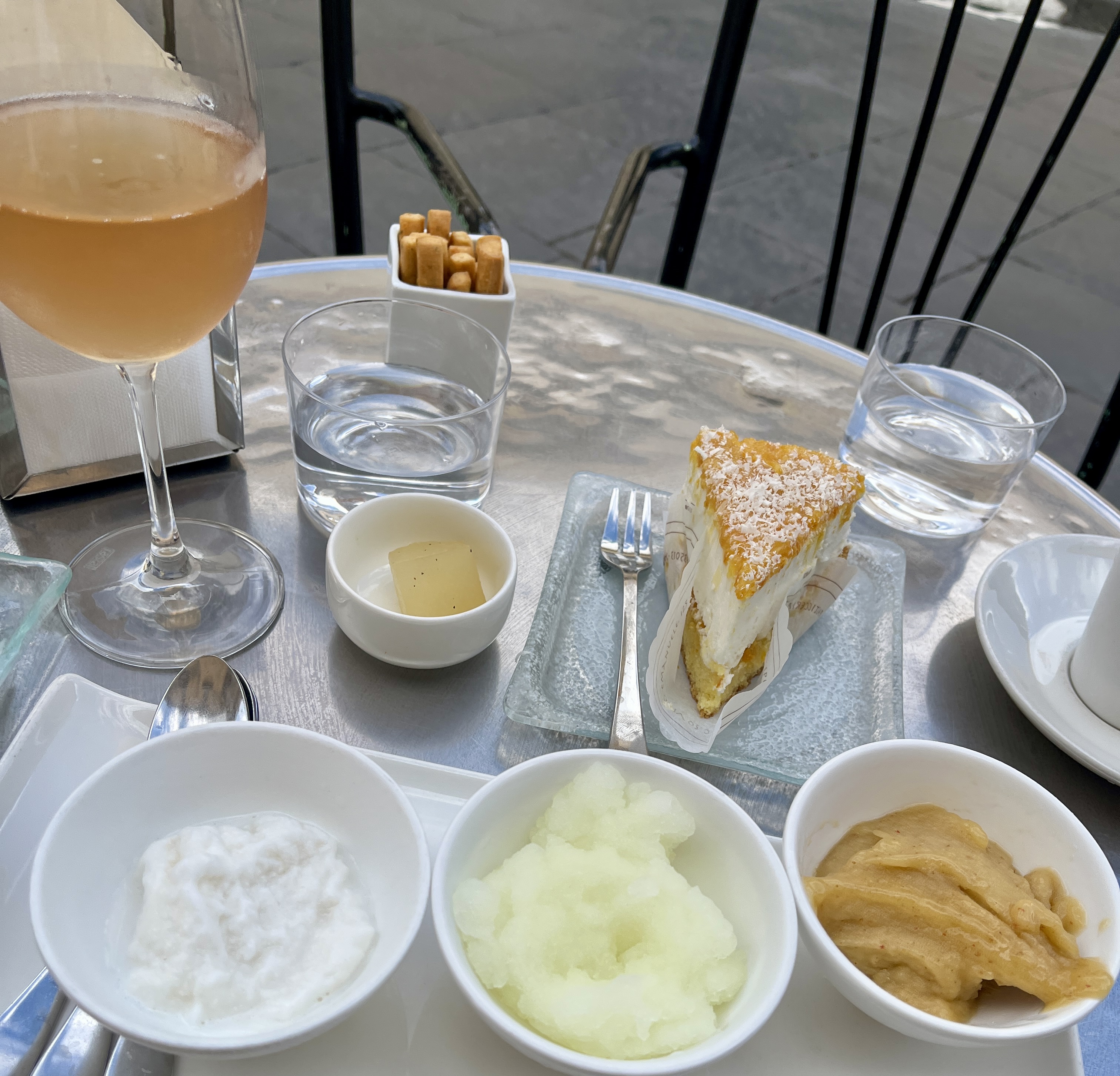
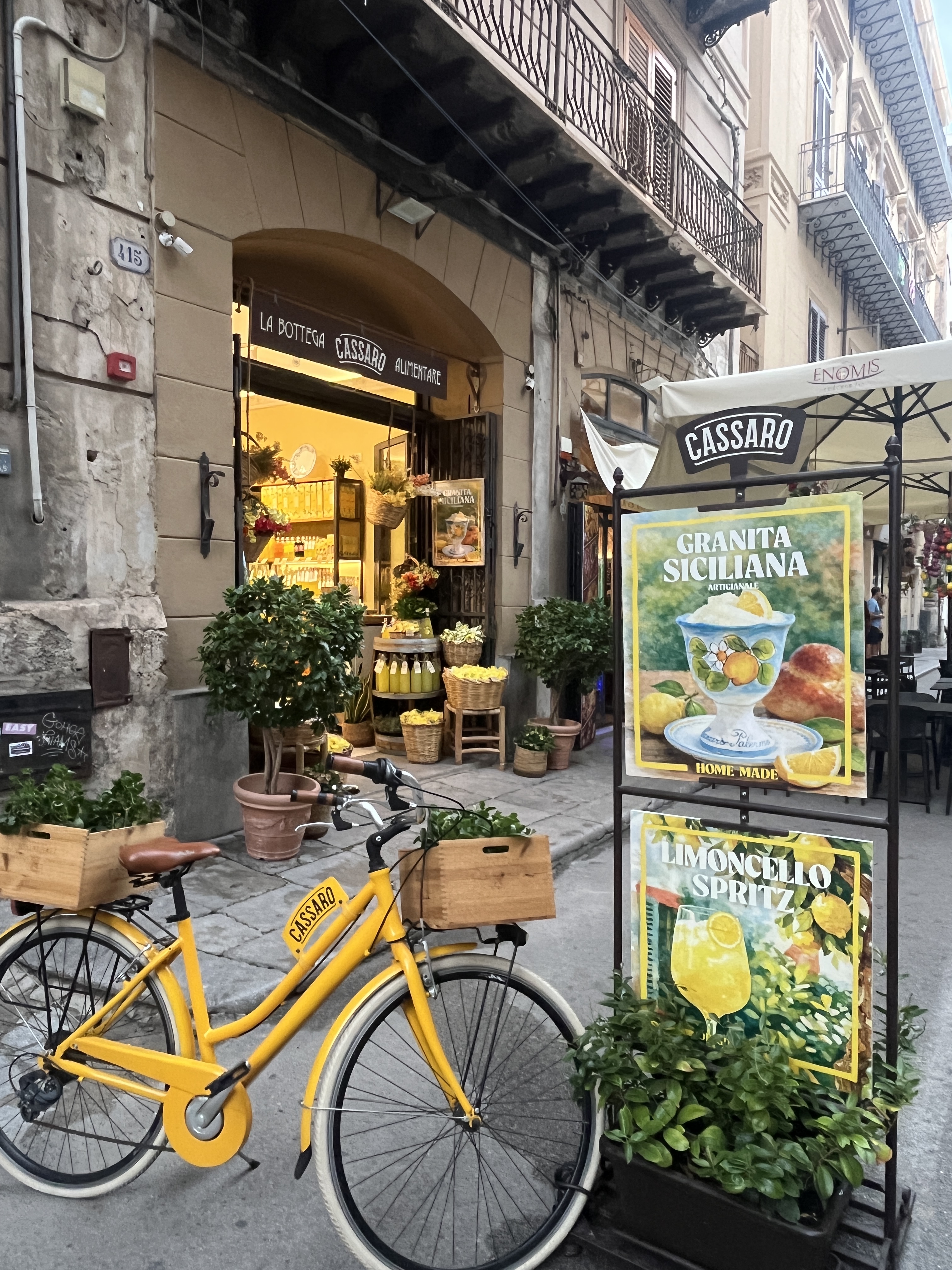
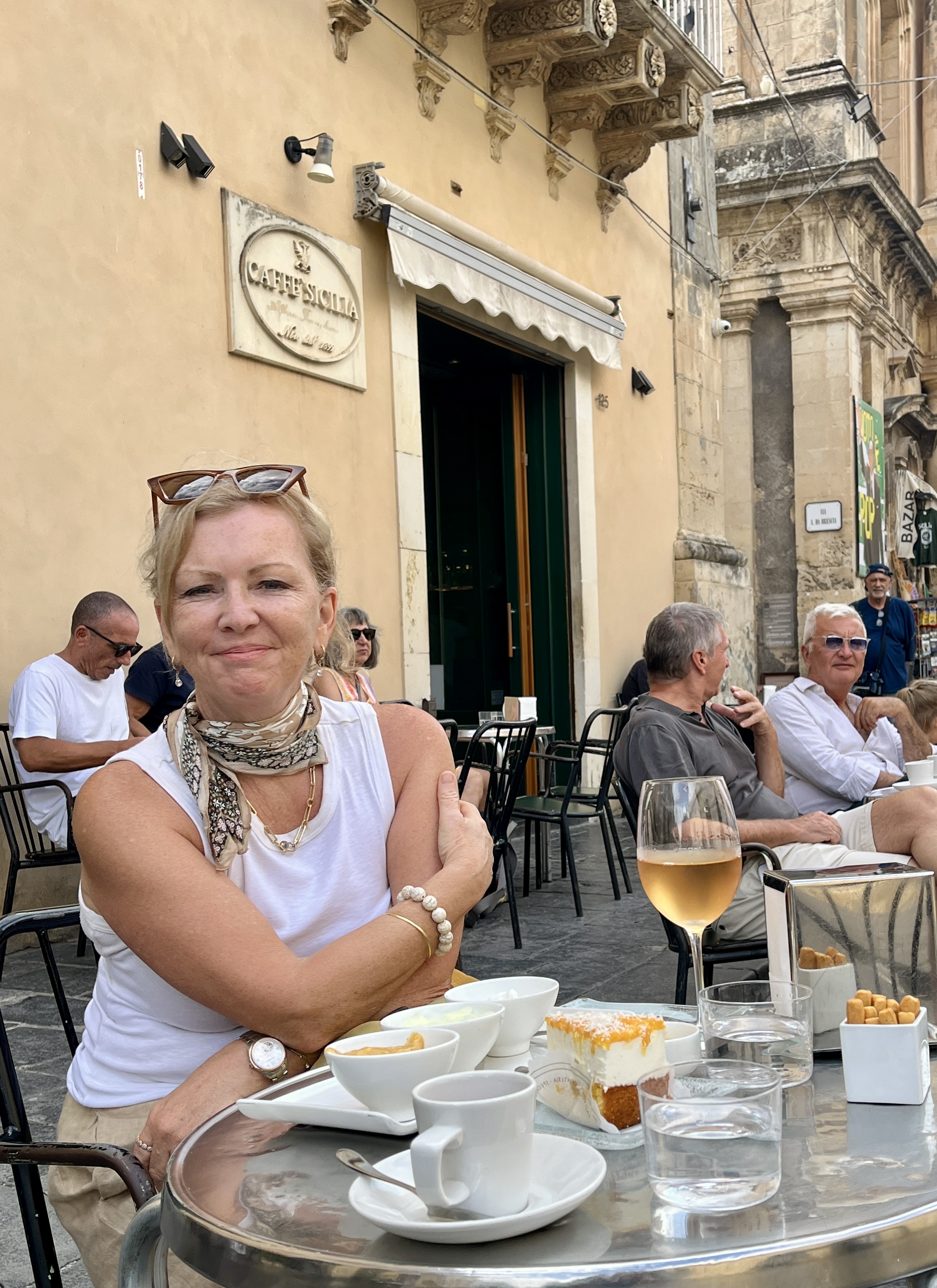
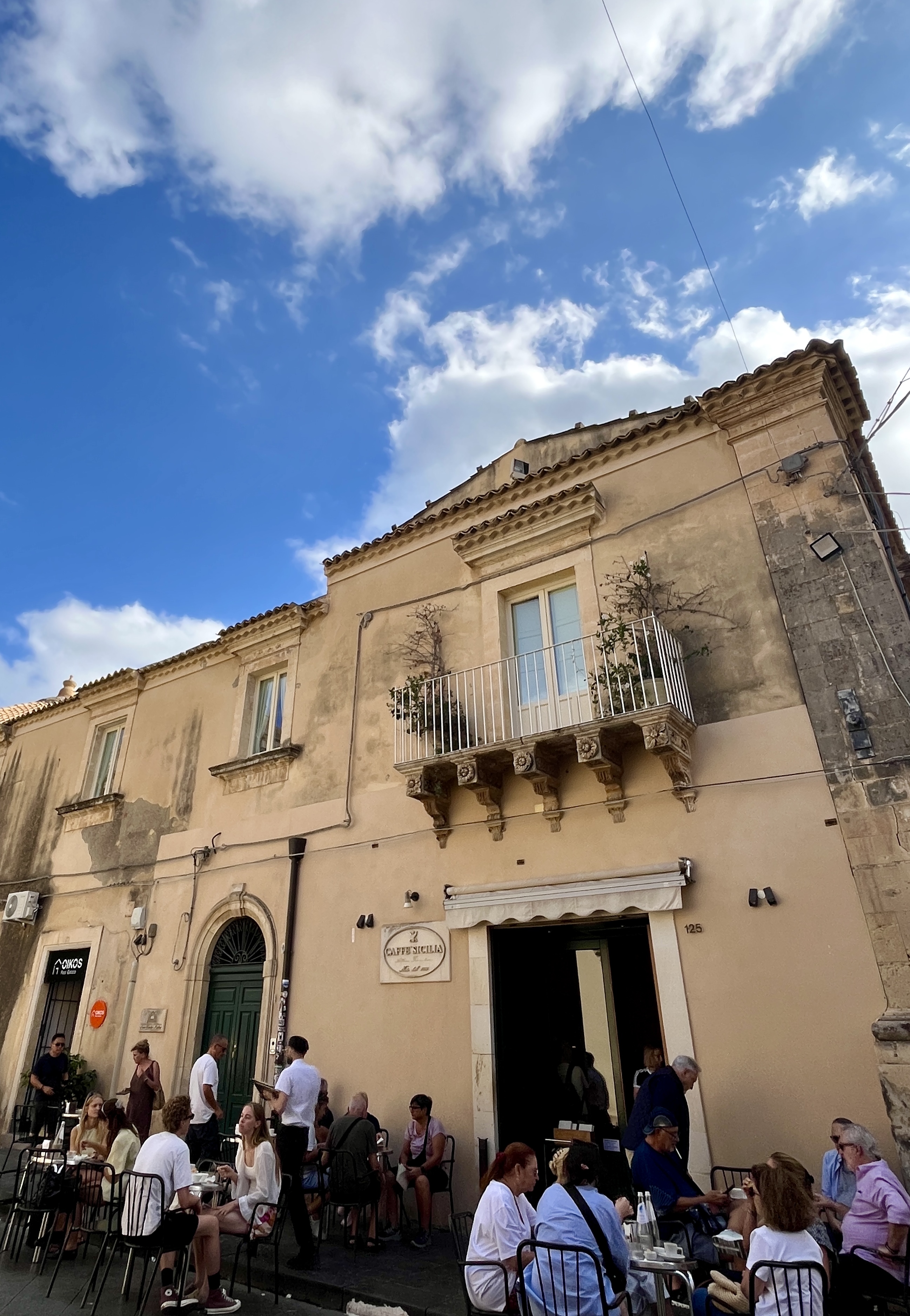
A day trip to Noto is a must from Sryracusa – a mere 30 minutes by train – and a good excuse to sample the renowned granita at the esteemed Cafe Sicilia. This historic cafe was featured on Netflix’s Chef’s Table. Unfortunately, the signature speciality granita di mandorla – almond granita – isn’t available so we sample other flavours; fig and chili is the winner. Granita is a refreshing Sicilian desert, somewhere between sorbet and ice cream and one of the island’s many specialties.

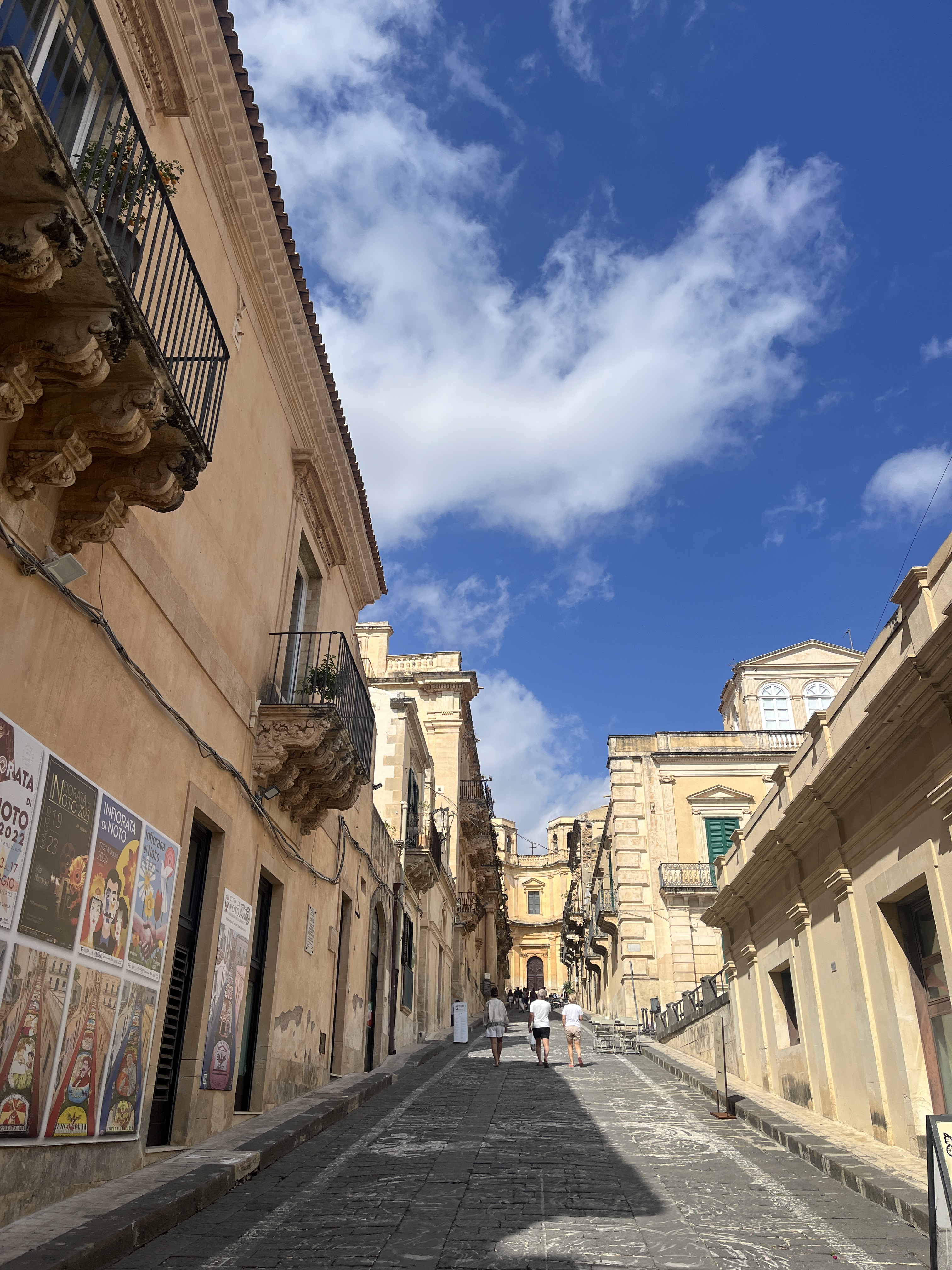
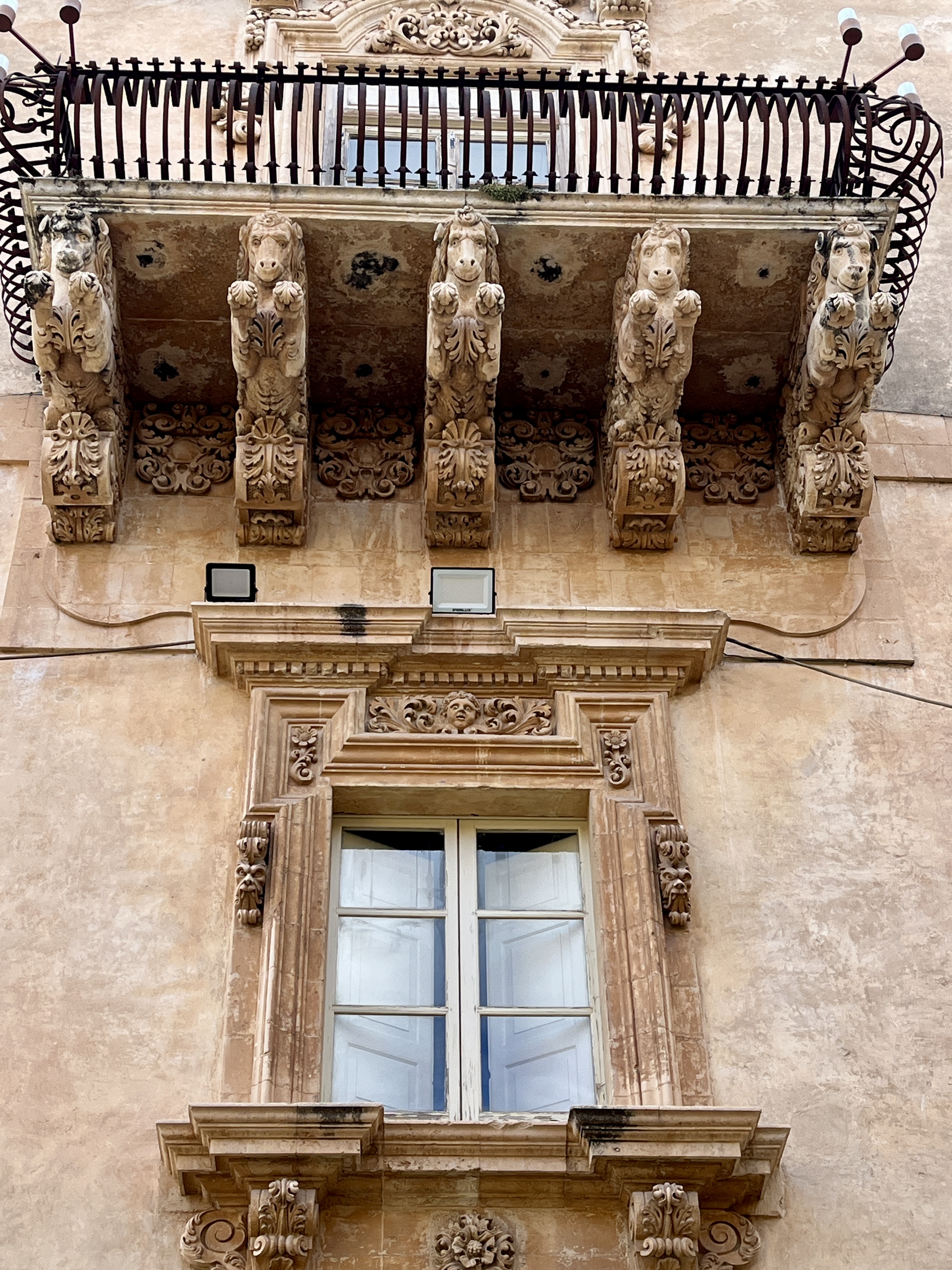
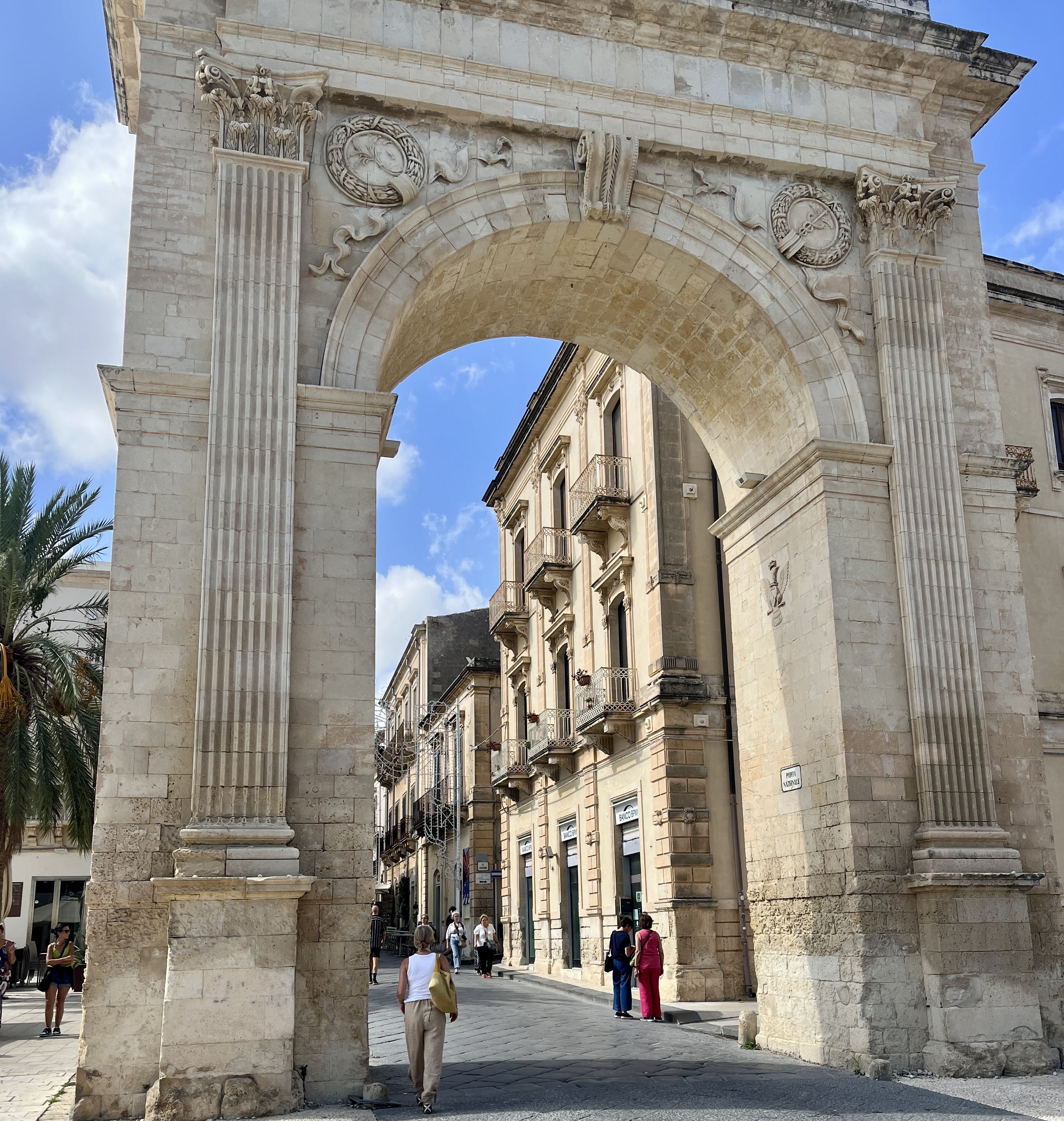
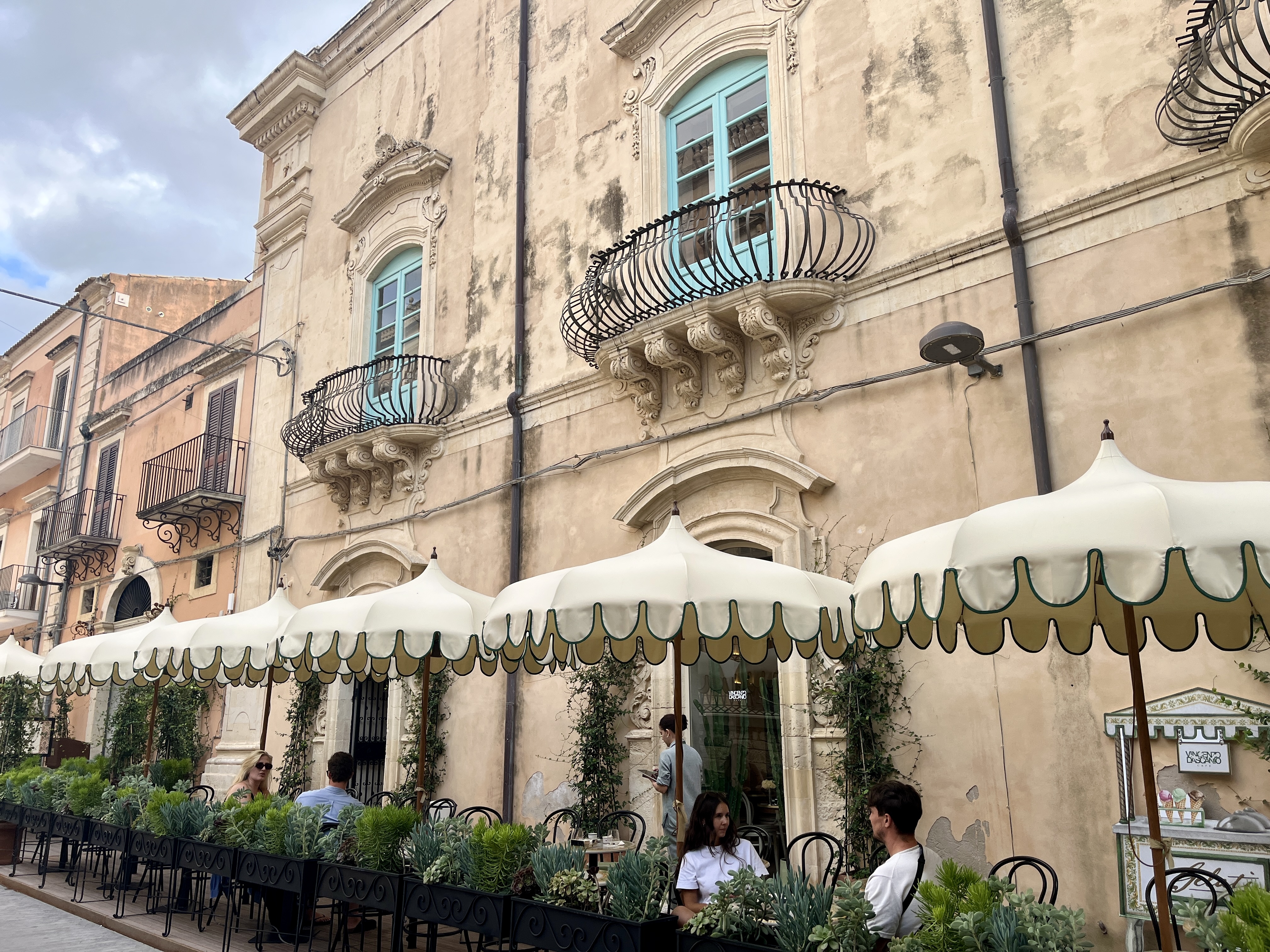
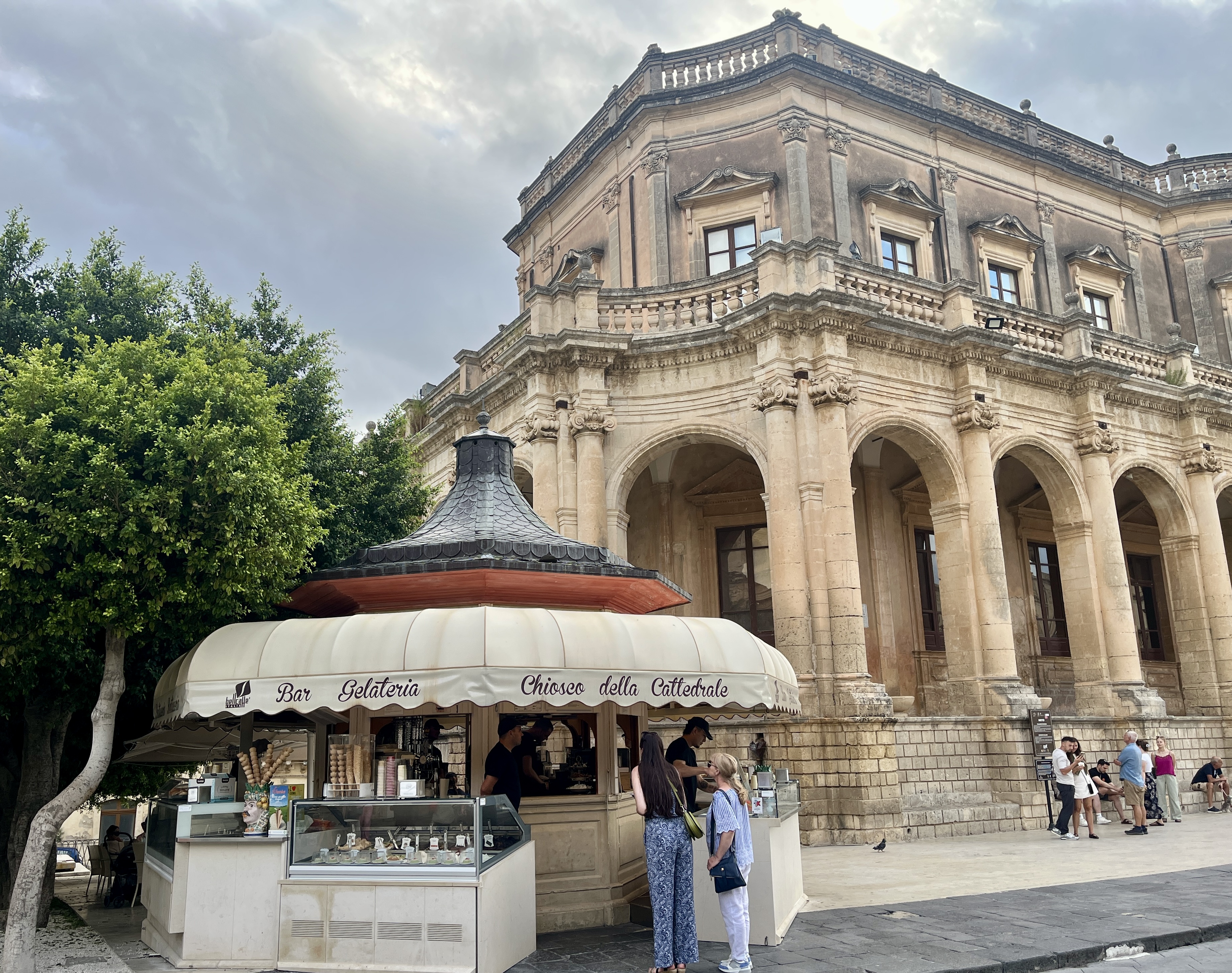
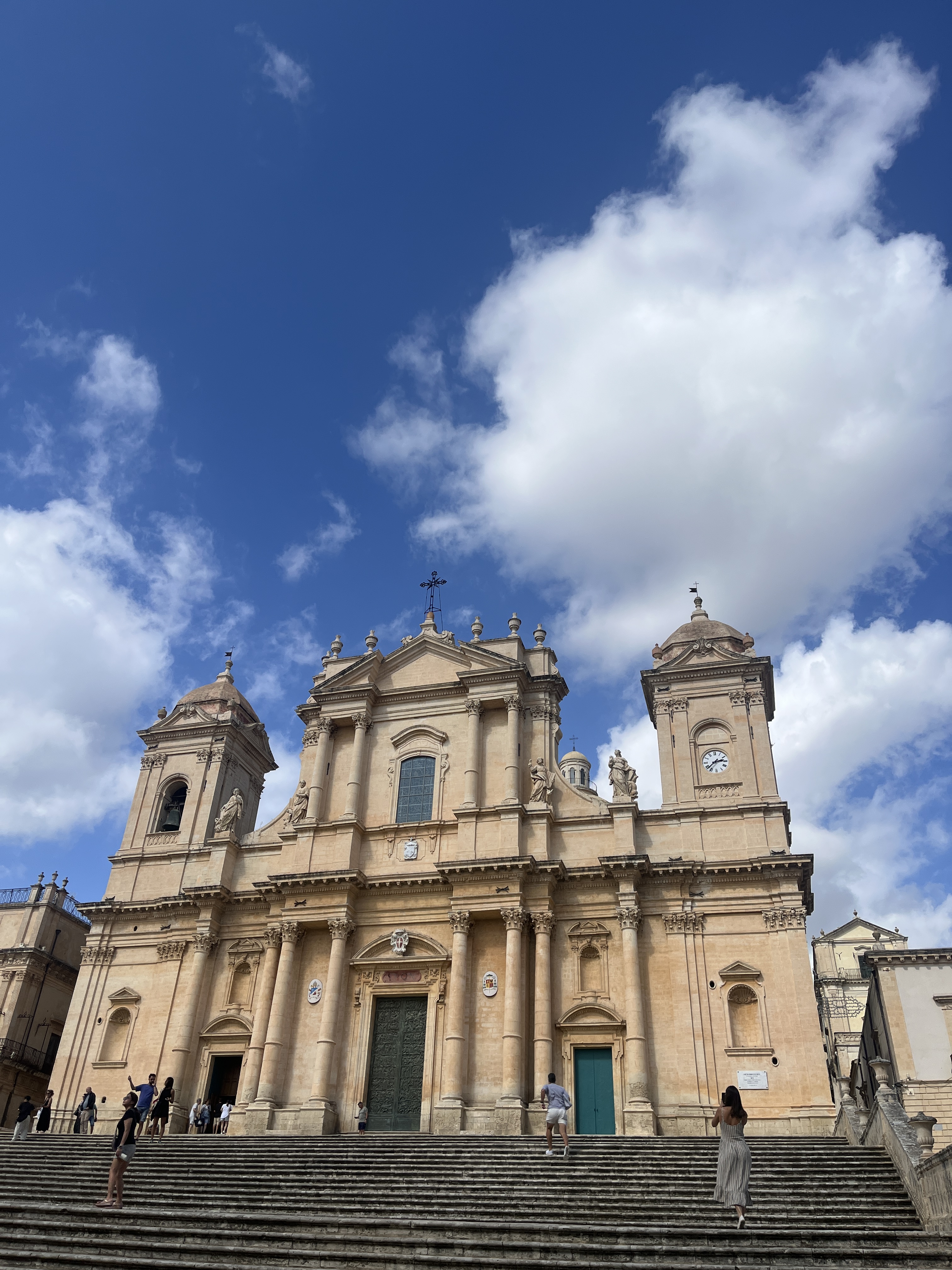
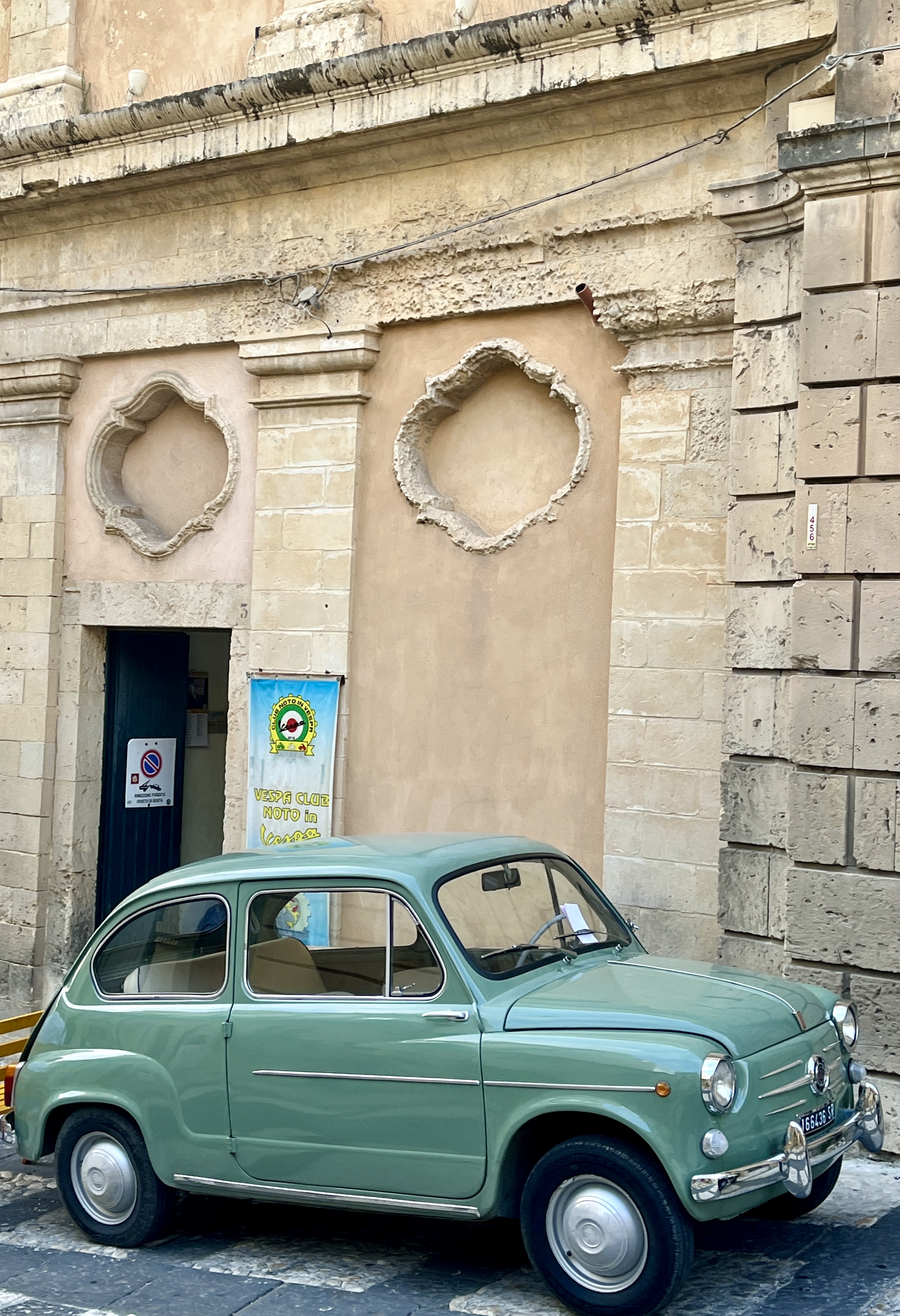
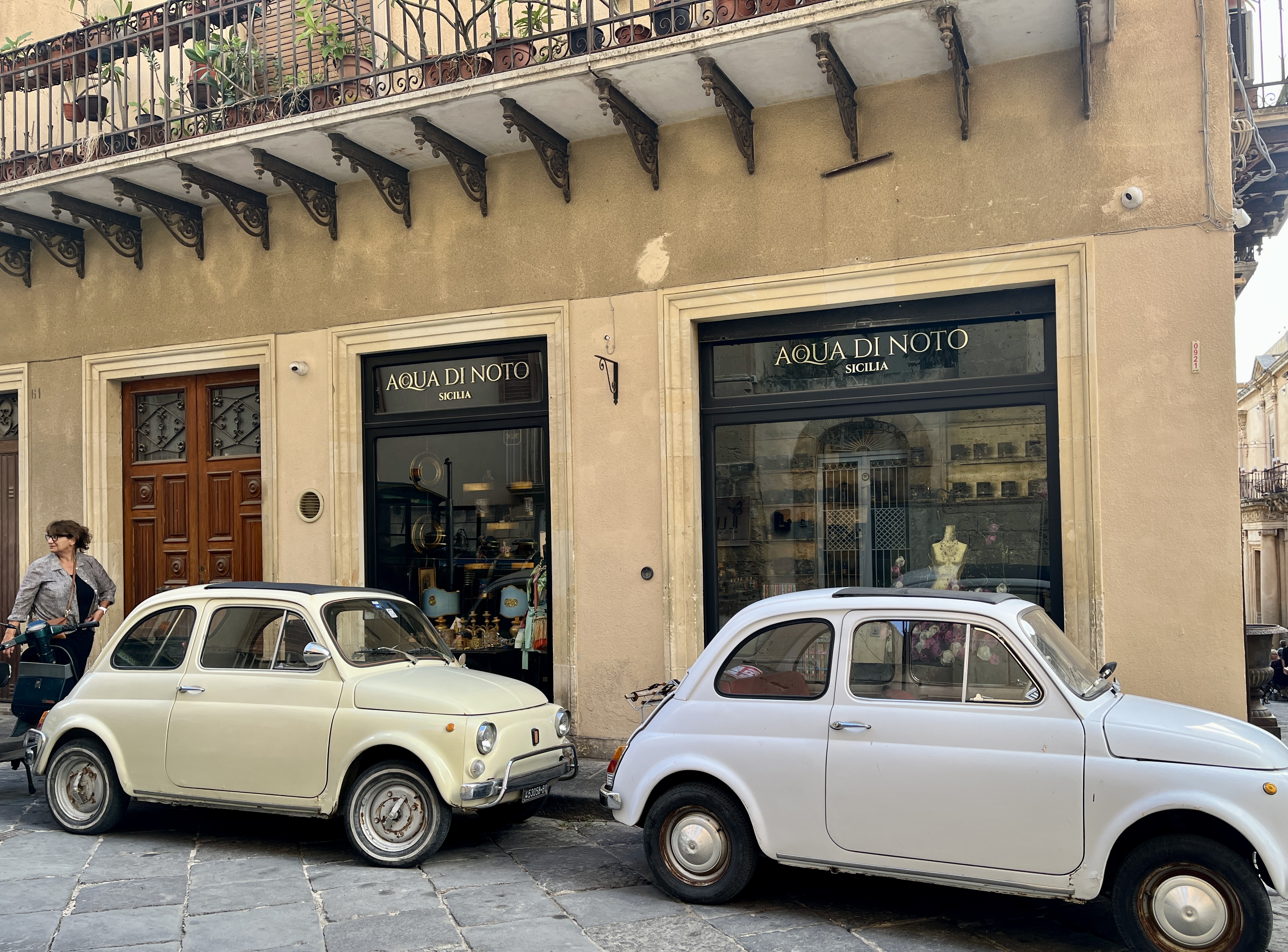
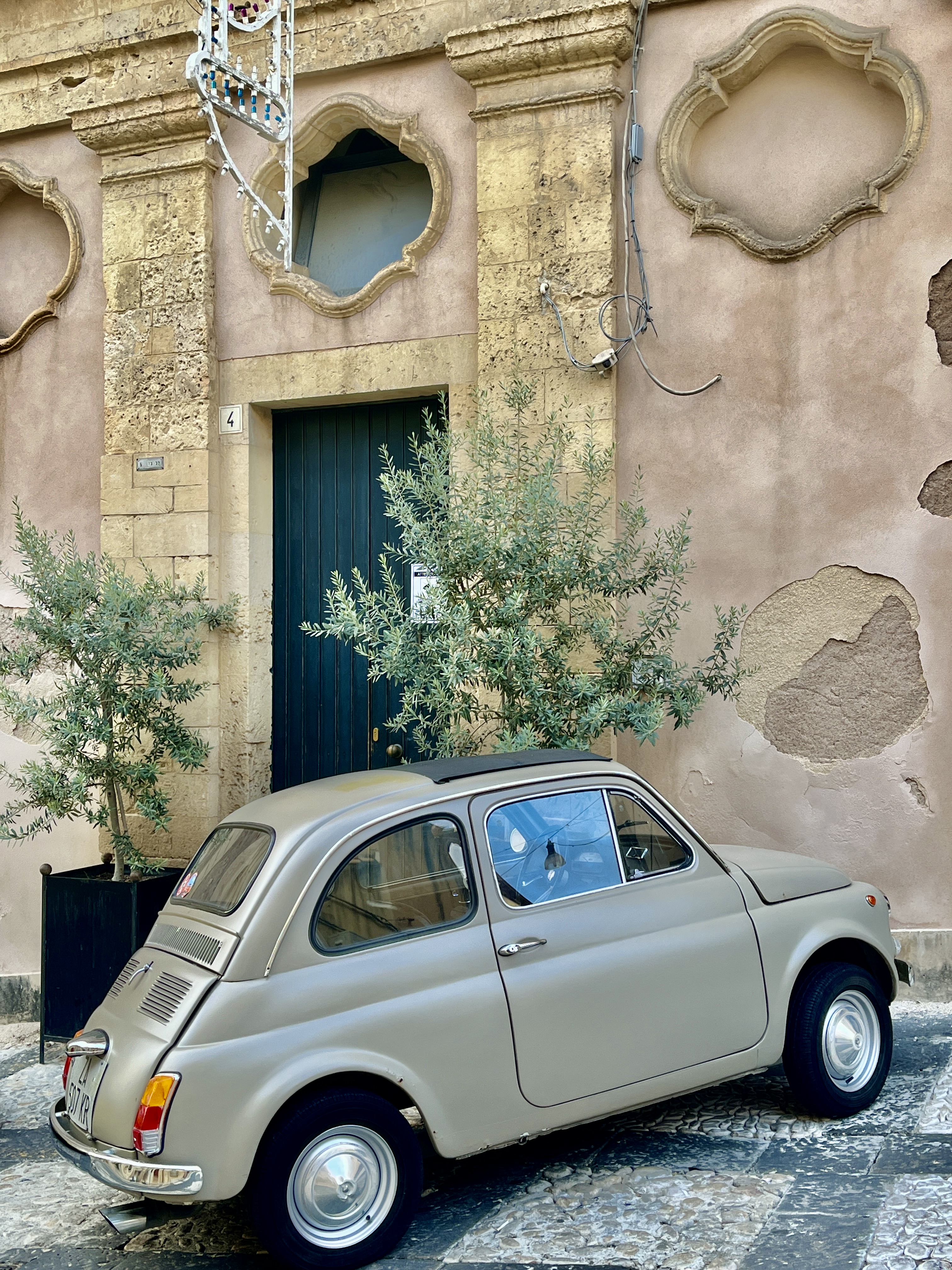
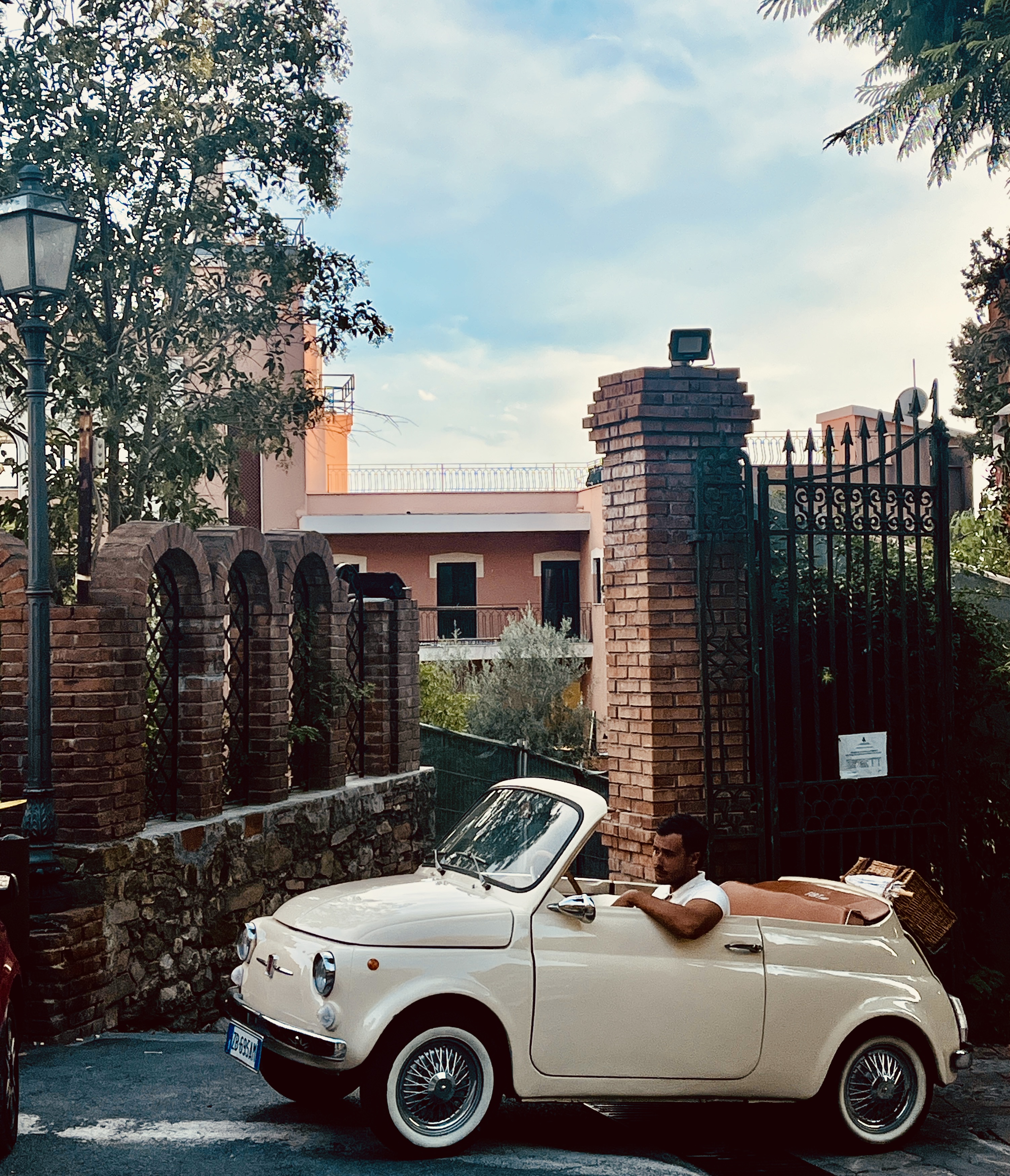
In Noto, the impressive Baroque buildings and ornate balconies gracing grandiose palazzos are its true speciality. After a devastating earthquake in 1693 destroyed the old town, Noto was rebuilt using golden-hued limestone. The elaborate, wrought-iron balconies supported by carved figures are impressive and widespread. I also can’t help but notice the plethora of vintage Fiats. I’m besotted with these lightweight iconic city cars built between 1936 to 1955. Could I pack one up and ship it back to Canada? And there is the question, how will I ever go back home? Allora, there’s still more time… Palermo and Cefalu are next on the itinerary.
Palermo ~ Cefalu

The train journey across Sicily from Syracusa to Palermo unveils the unique Sicilian countryside. As the landscape slips past our window, dry, sandy, hues give way to verdant fields of grain, citrus, almond and olive trees. Colonies of prickly-pear cacti show off their flowery fruit against the deadly spikes. Once-loved farm villas are testament to the honest, timeless endeavour of farmers who have long tilled this fertile soil. As we near the northern coast of Sicily, we see a countryside that is incredibly fertile and a proliferation of modern farm estates. The rhythm of the train and the undulating flow of the land are peaceful and evocative. Ahead, the vibrant capital of Palermo awaits.

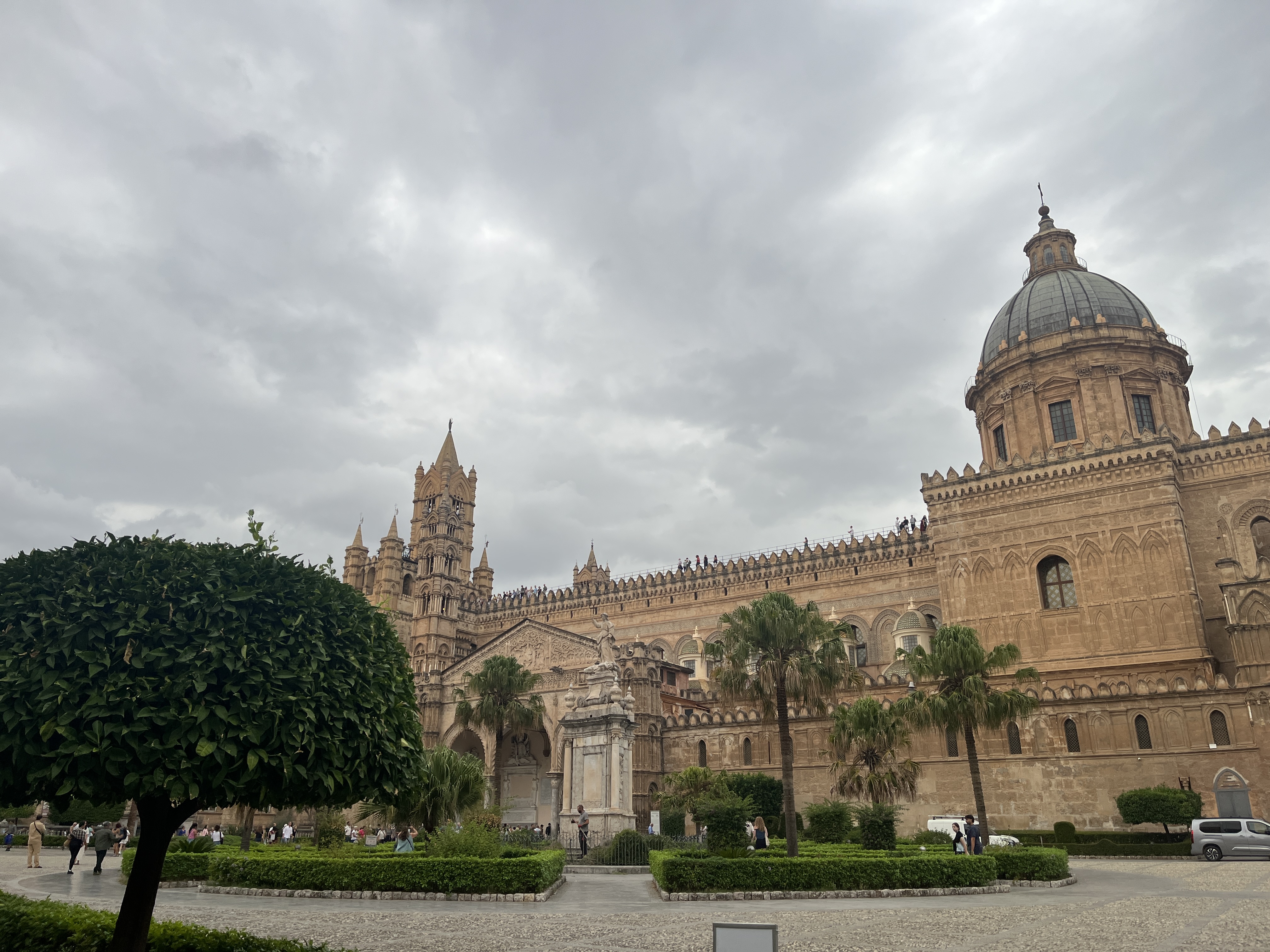
Only about 2700 years old and facing north toward the Tyrrhenian Sea, Palermo is everything all at once. True faded glory and rapturous grandeur. The past is unpolished, raw and honest. First impressions hit me all at once – busy, vibrant, a little grimy, and as always with palm trees, the tall lanky palms capture my heart..

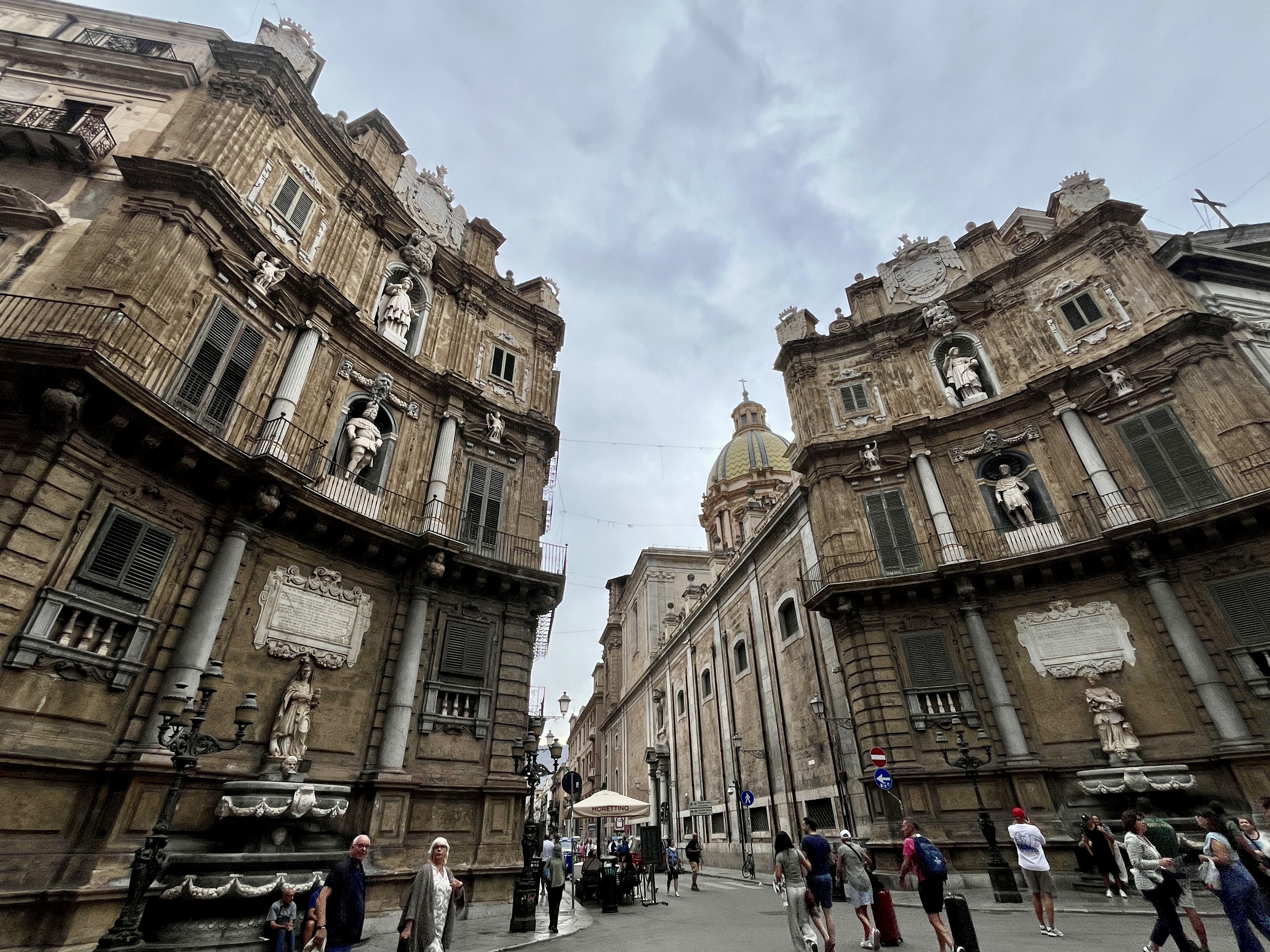
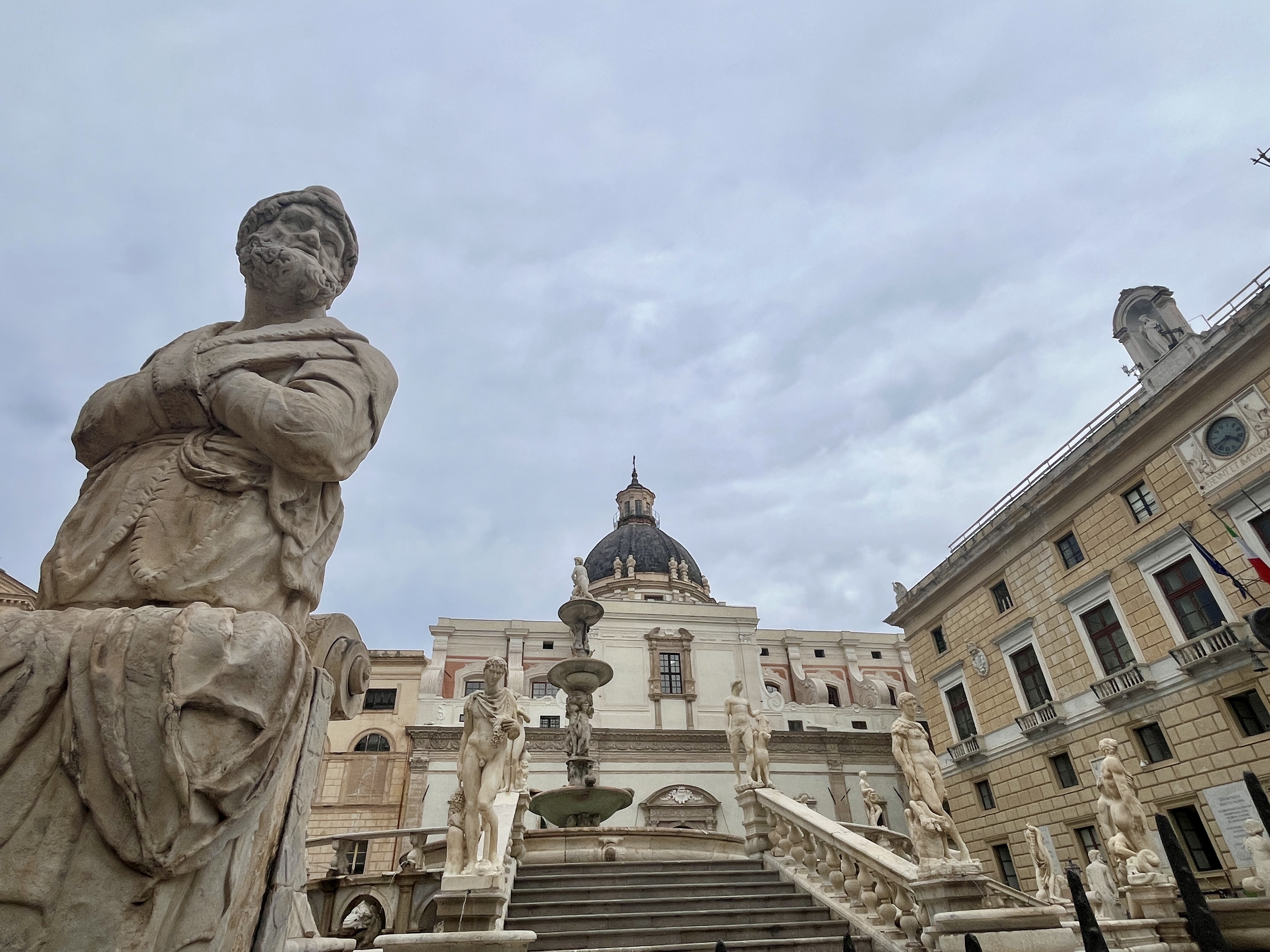
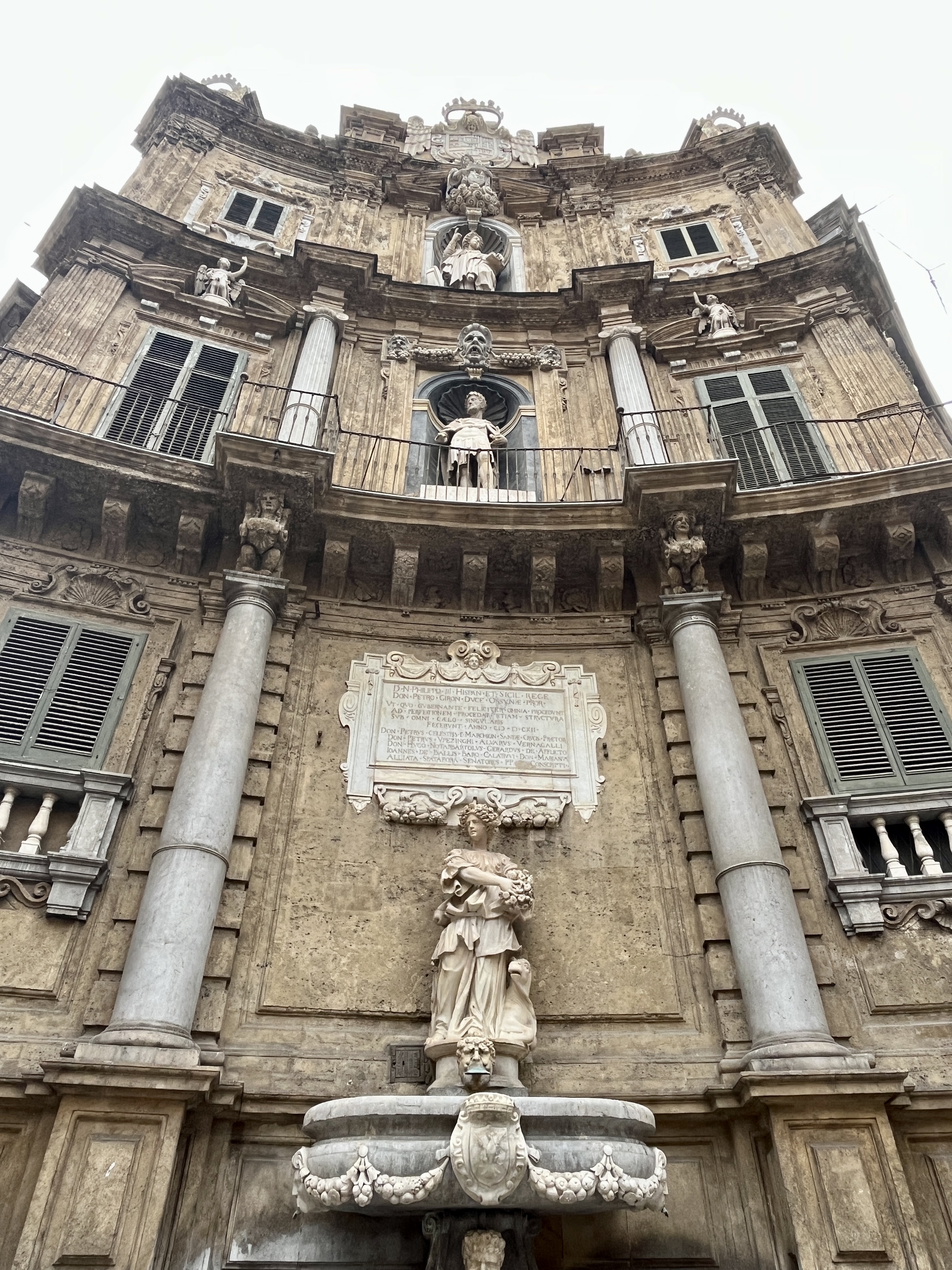
I stand in the middle of Quattro Canti, four roads grandly intersecting, and I soak it all in. This crossroads at the historic centre radiates out to the ancient four quarters of the city. Also called the Theatre of the Sun, at least two corners are always bathed in sunlight. Construction, by order of the Spanish Viceroys, commenced in the early 1600’s. The four Baroque concave and symmetrical facades, are a history lesson unto themselves. Statues of the Spanish rulers of Sicily, Charles V, Phillip II, III, IV, occupy the second tier. Look high up and beautifully carved female patron saints are honoured… Christina, Ninfa, Olivia, Agata. Back down at ground level, the four seasons are represented in intricate fountains.

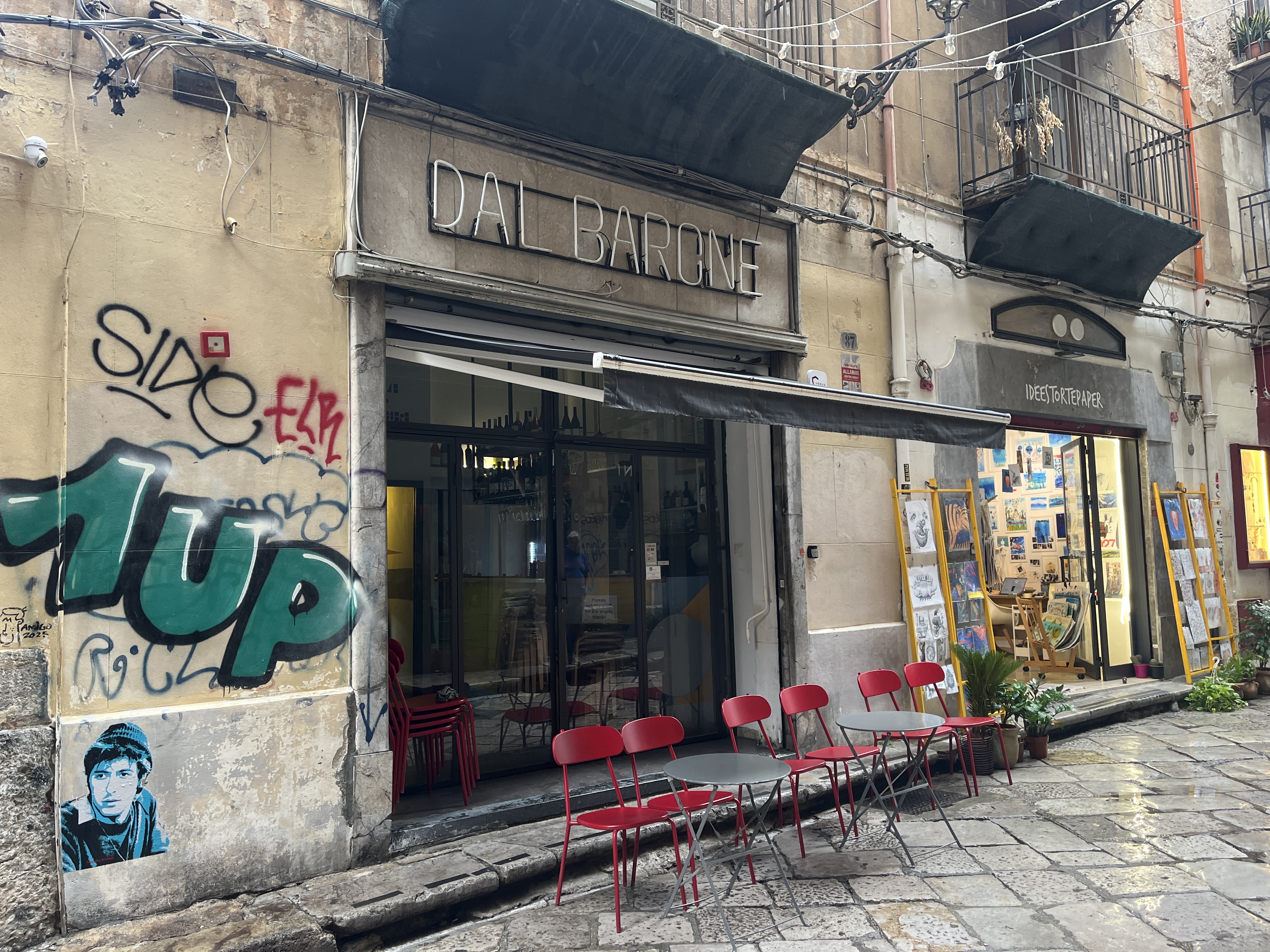
I imagine the time when the newly installed landmarks and piazza were the cutting-edge in urban planning. I see the nobility in fine carriages, the swirl of a ladies fine silk crinoline, a Capuchin friar in sombre brown rushing past to the nearby church. The weight of history embodied here clashes somewhat with the present day. Tourist golf carts vie for tourists alongside more traditional horse and carriage rides. Street hawkers with an eye on the weather forecast offer umbrellas alongside long-established bazaars. Ancient stone streets now littered with far too many cigarette butts and local graffiti adorns many city walls. Palermo is a little gritty along with the grand and historic.
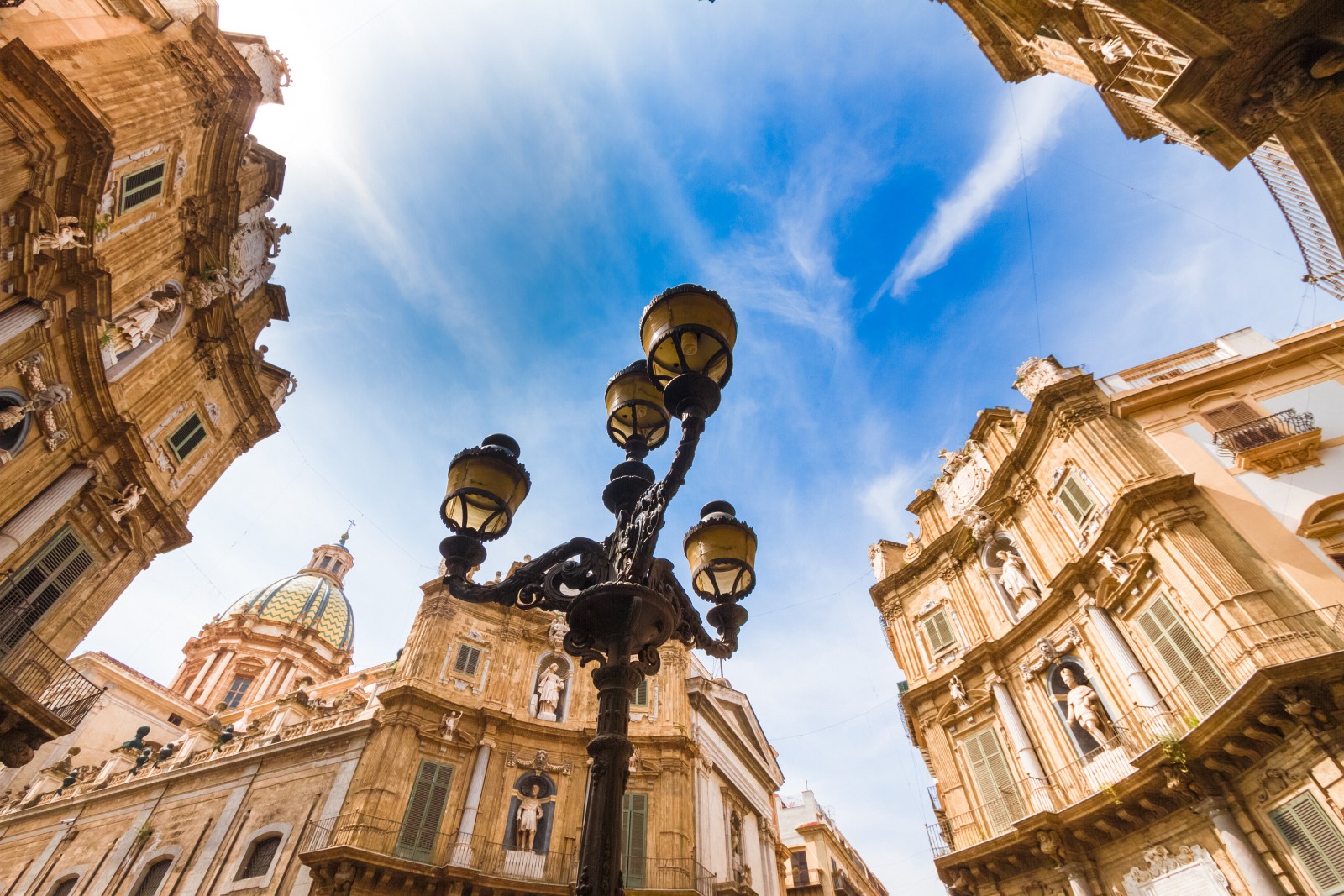
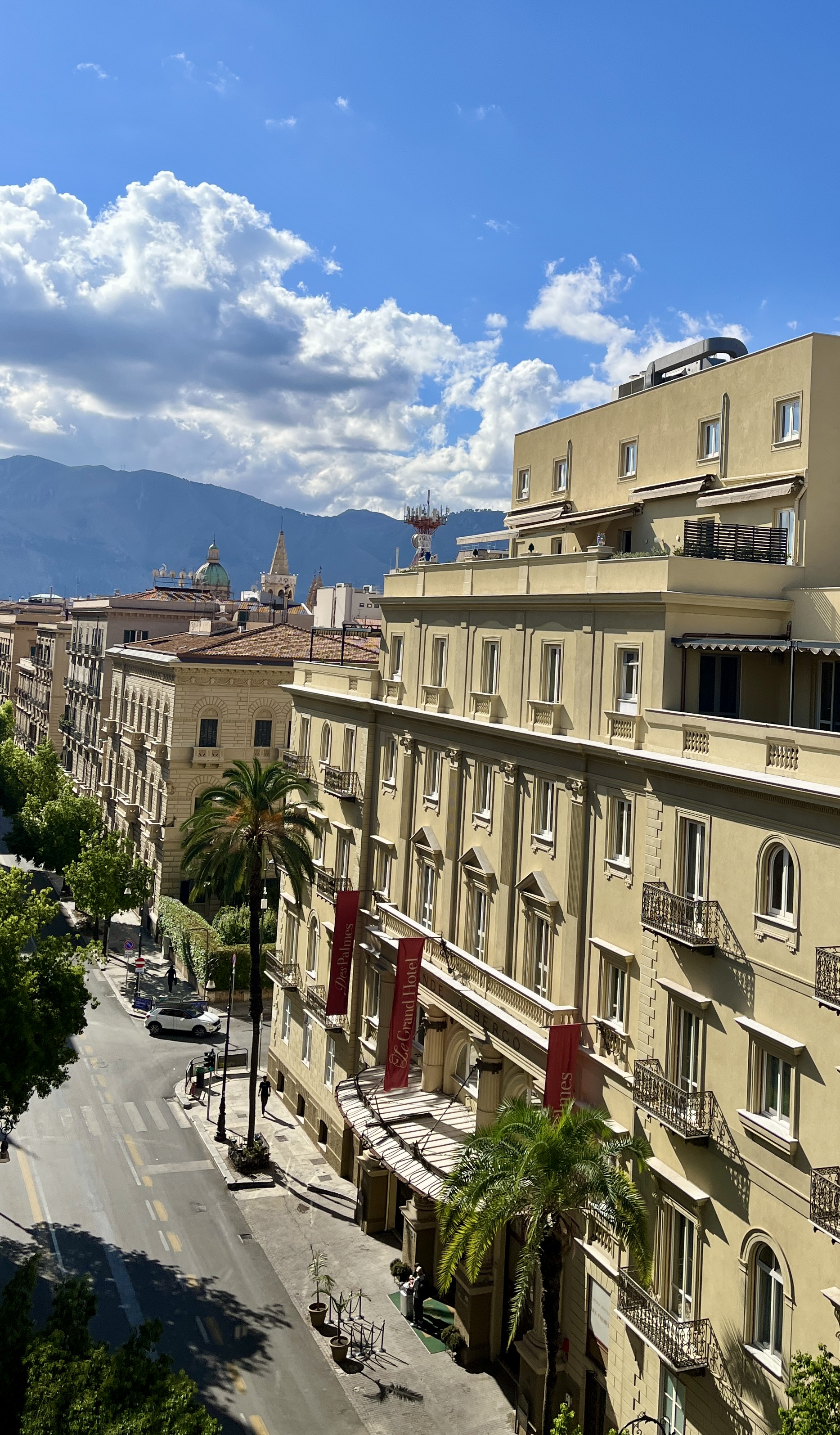
Unfortunately, we come down with a virus and have to take it a little easier than usual. Still, I muster the energy to treat myself to a pricey glass of wine at the Grand Hotel Et Des Palmes. Sitting on the outdoor terrace overlooking rooftops, one appreciates how embraced Palermo is by the surrounding mountains such as Mount Pellegrino. I sense that the original streets and piazzas were aligned to create sight lines to the peaks. Without a doubt Palermo is essential to see, to stitch together the full, incredible layered story of Sicily.

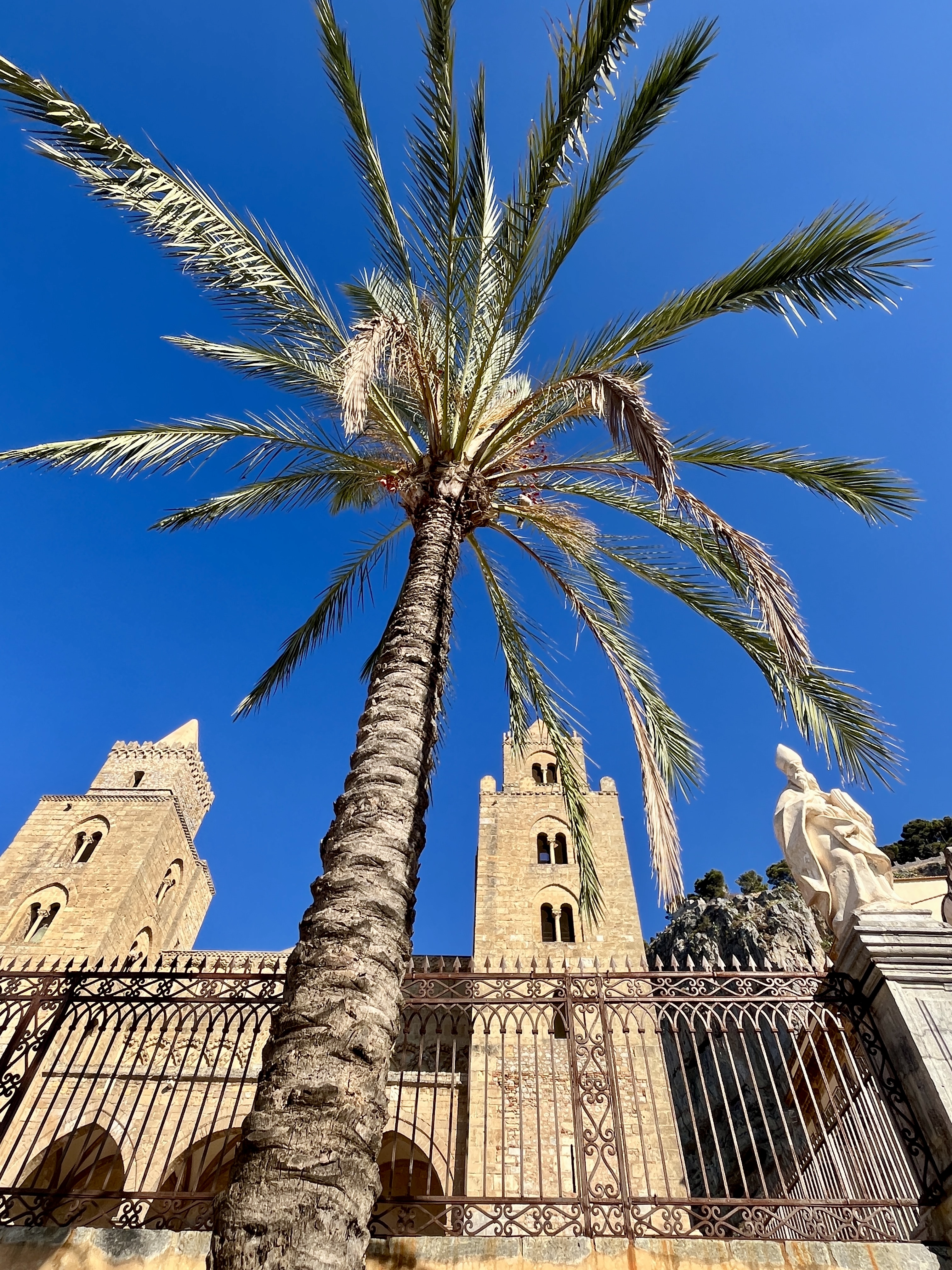
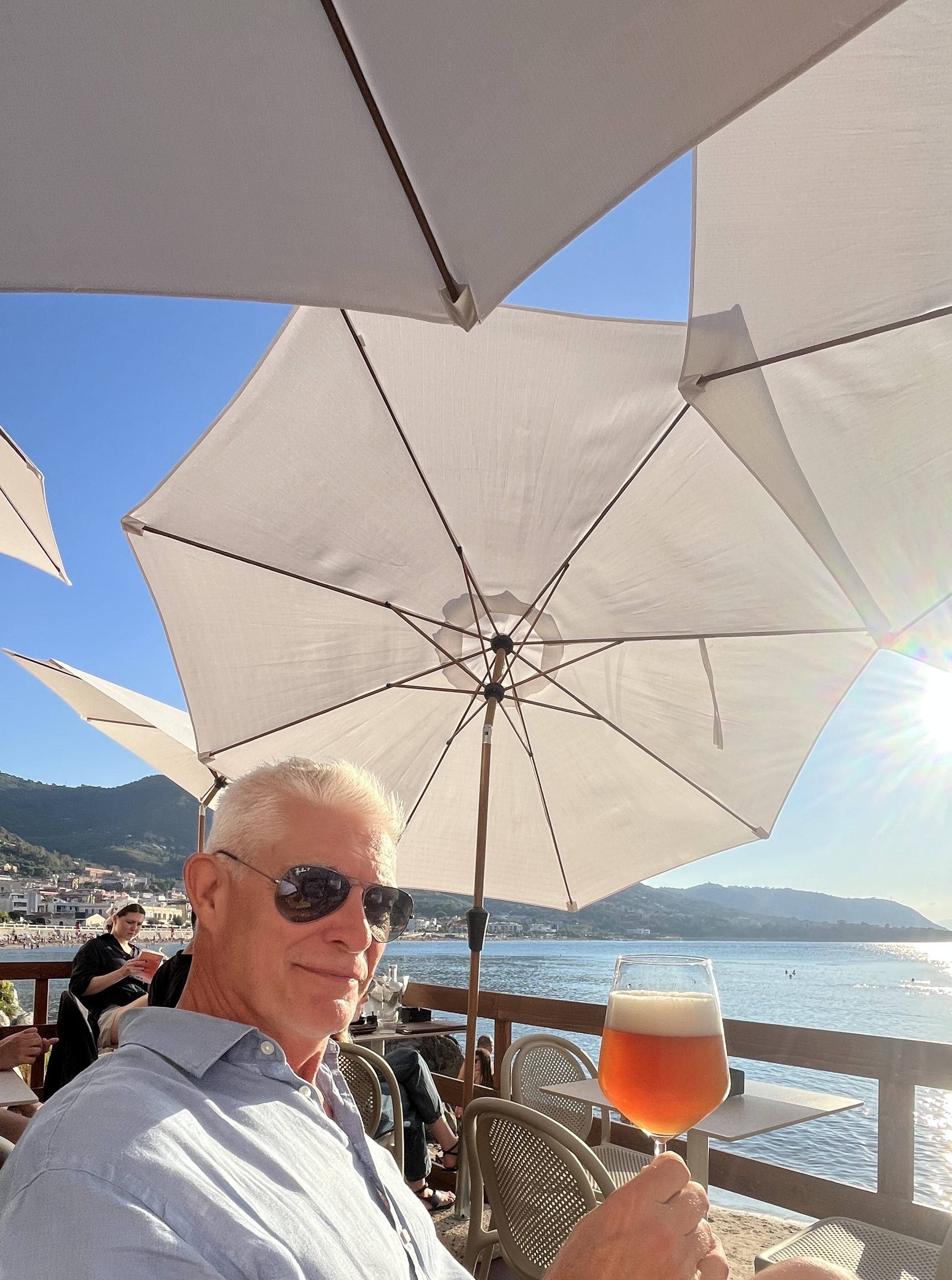
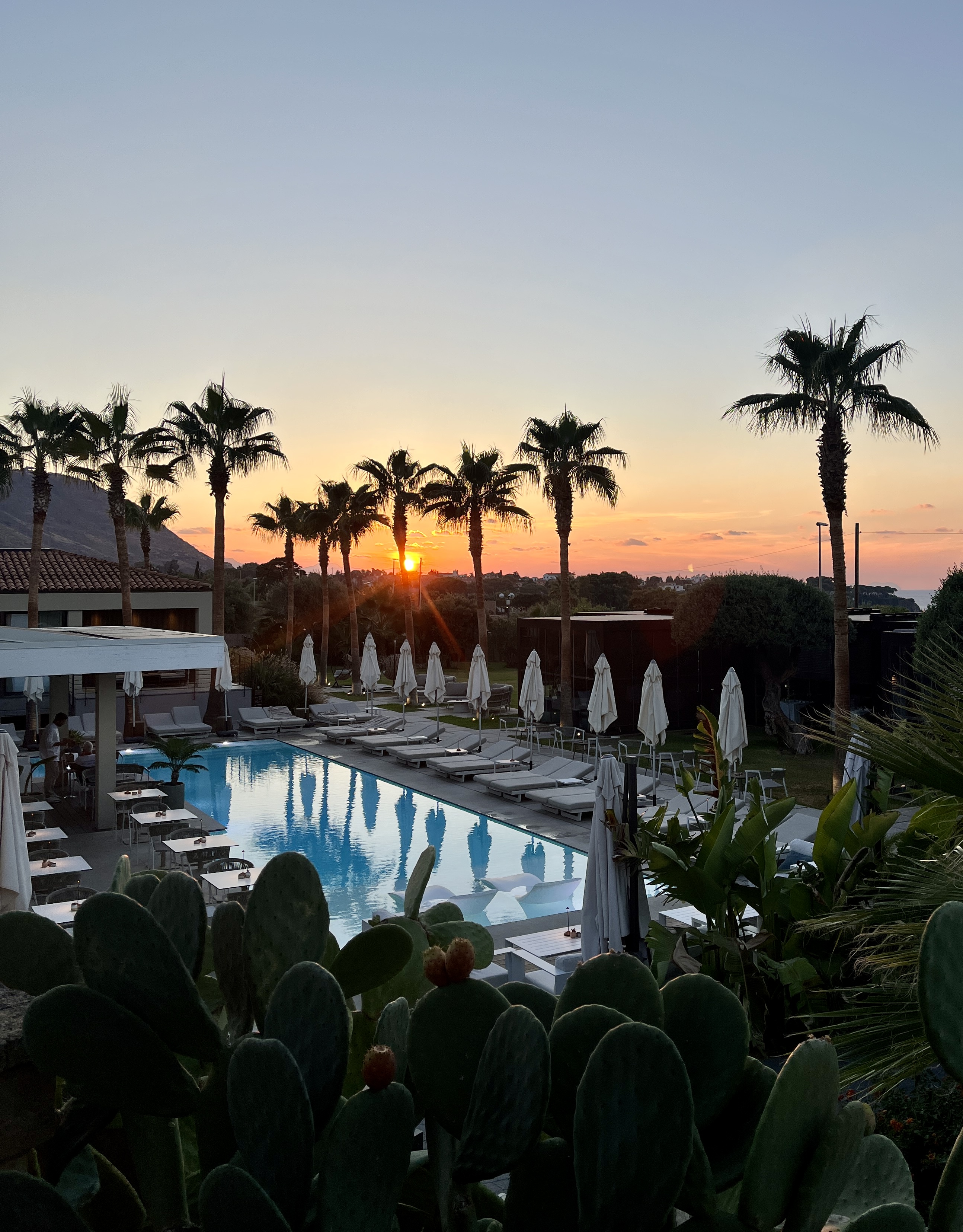
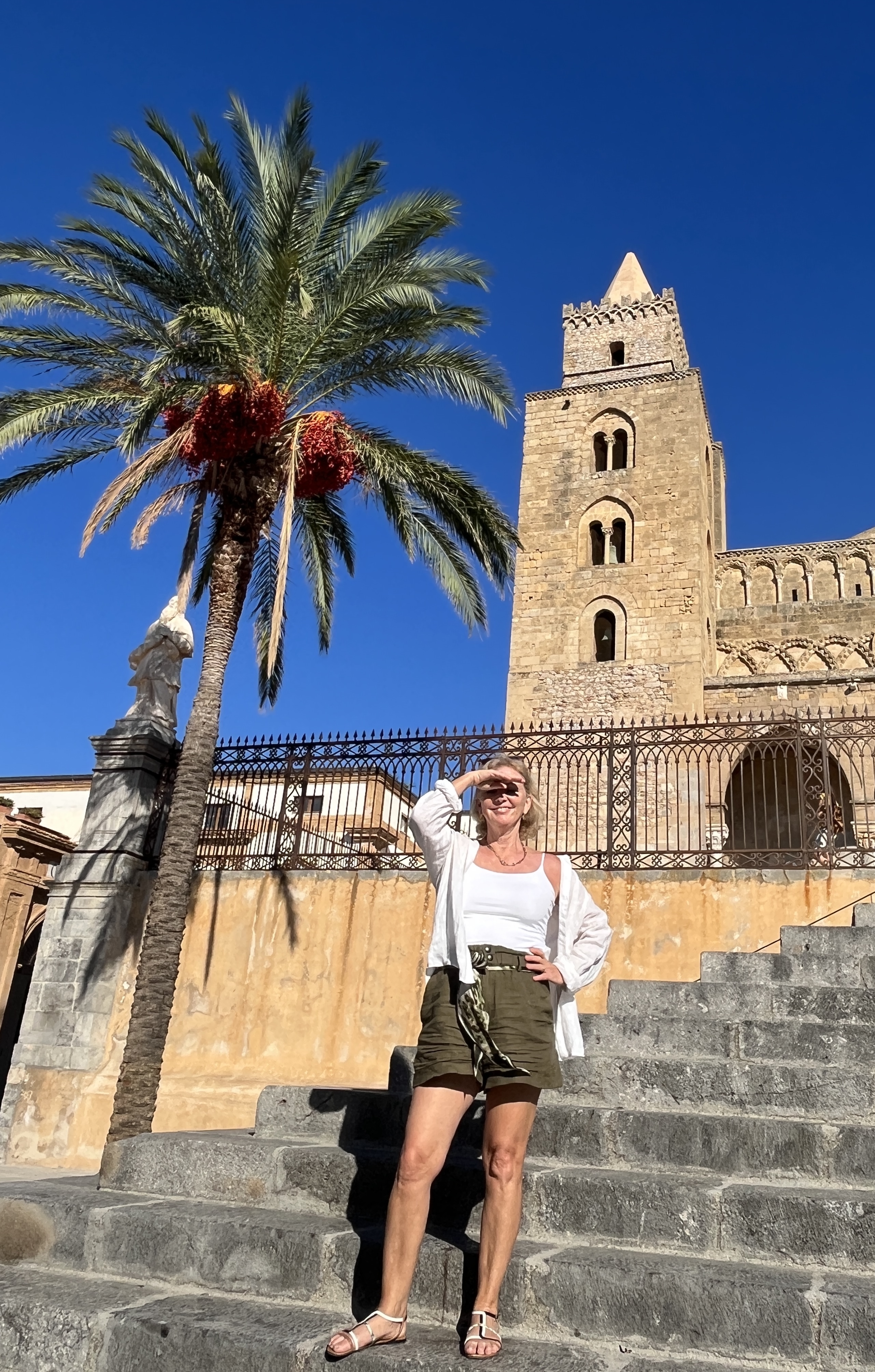
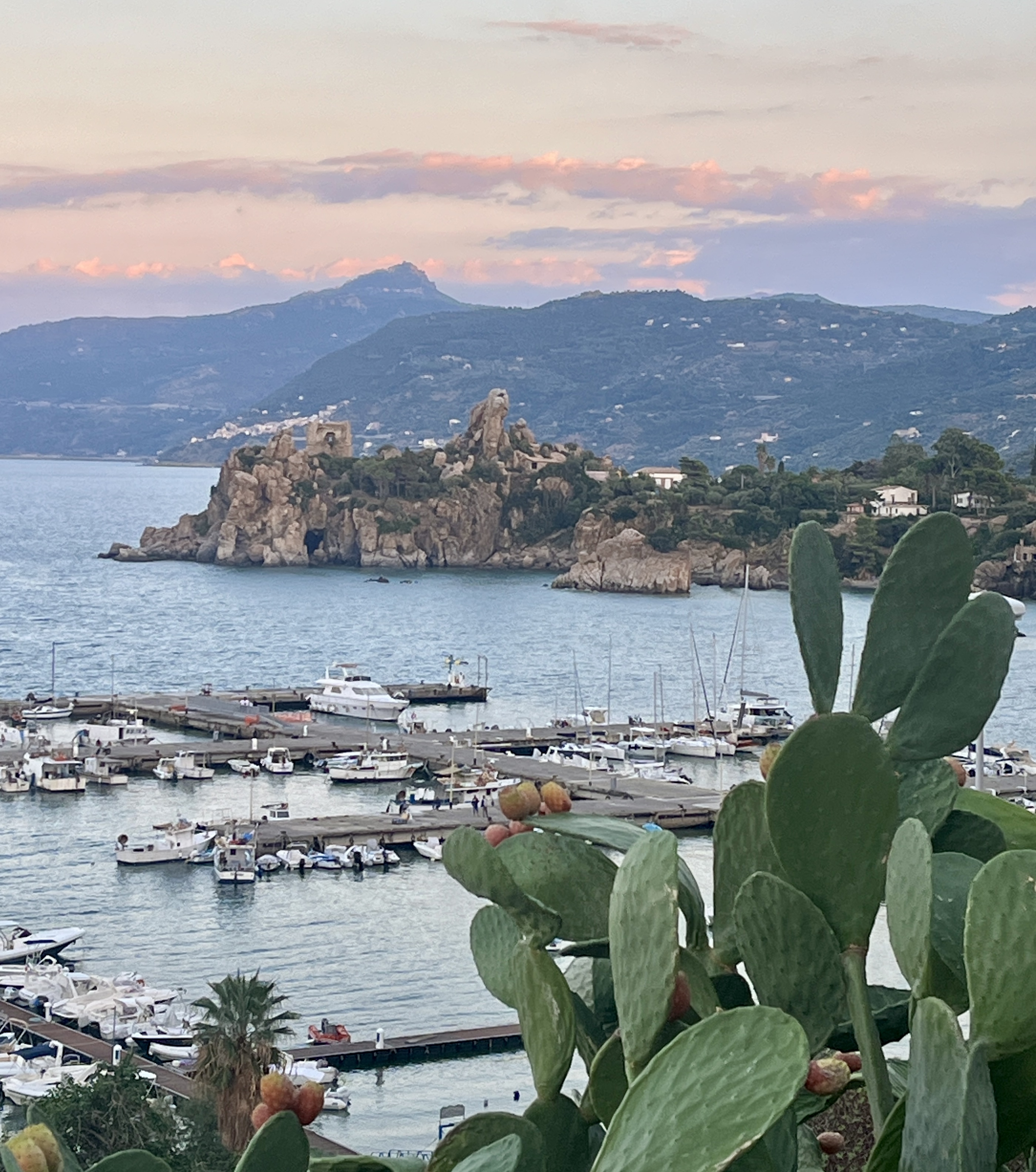
We complete this sojourn with a relaxing stay in Cefalu to the east. It’s precisely what we need to recover and our stay at the Insulae Resort is fabulous. We finally relax, read and write. We wander into the town for a slow stroll and a sunset drink overlooking the sea. A feeling of gratitude washes over me. Sicily has always been on my wish list and I’ve fallen for its ancient land and cities, the warm, friendly people, the excellent food and wine. I say a silent grazie millie as we board the flight from Palermo to Venice… Sicilia, I hope to return.
72 Hours in Madrid and Toledo…

Standard

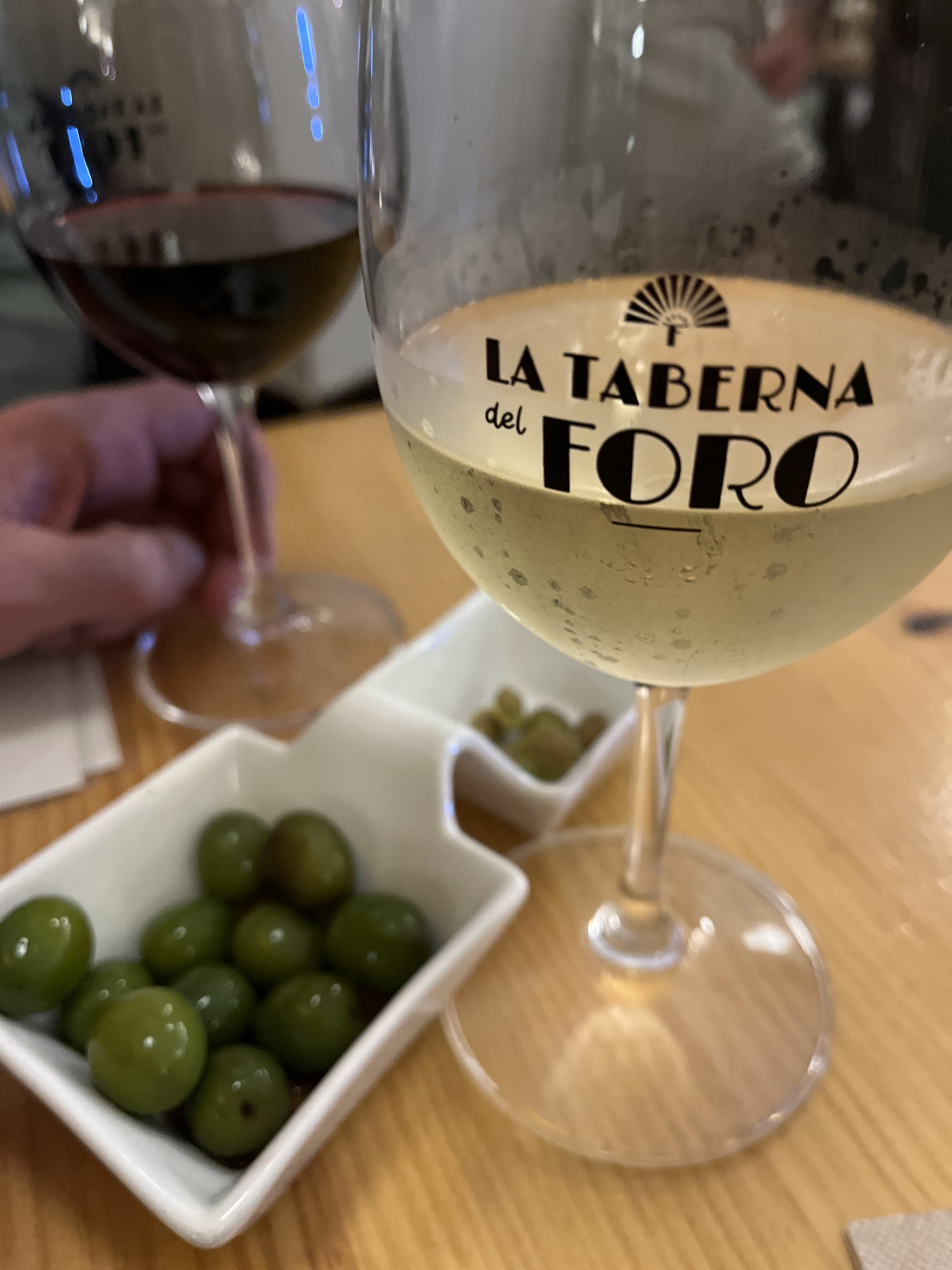
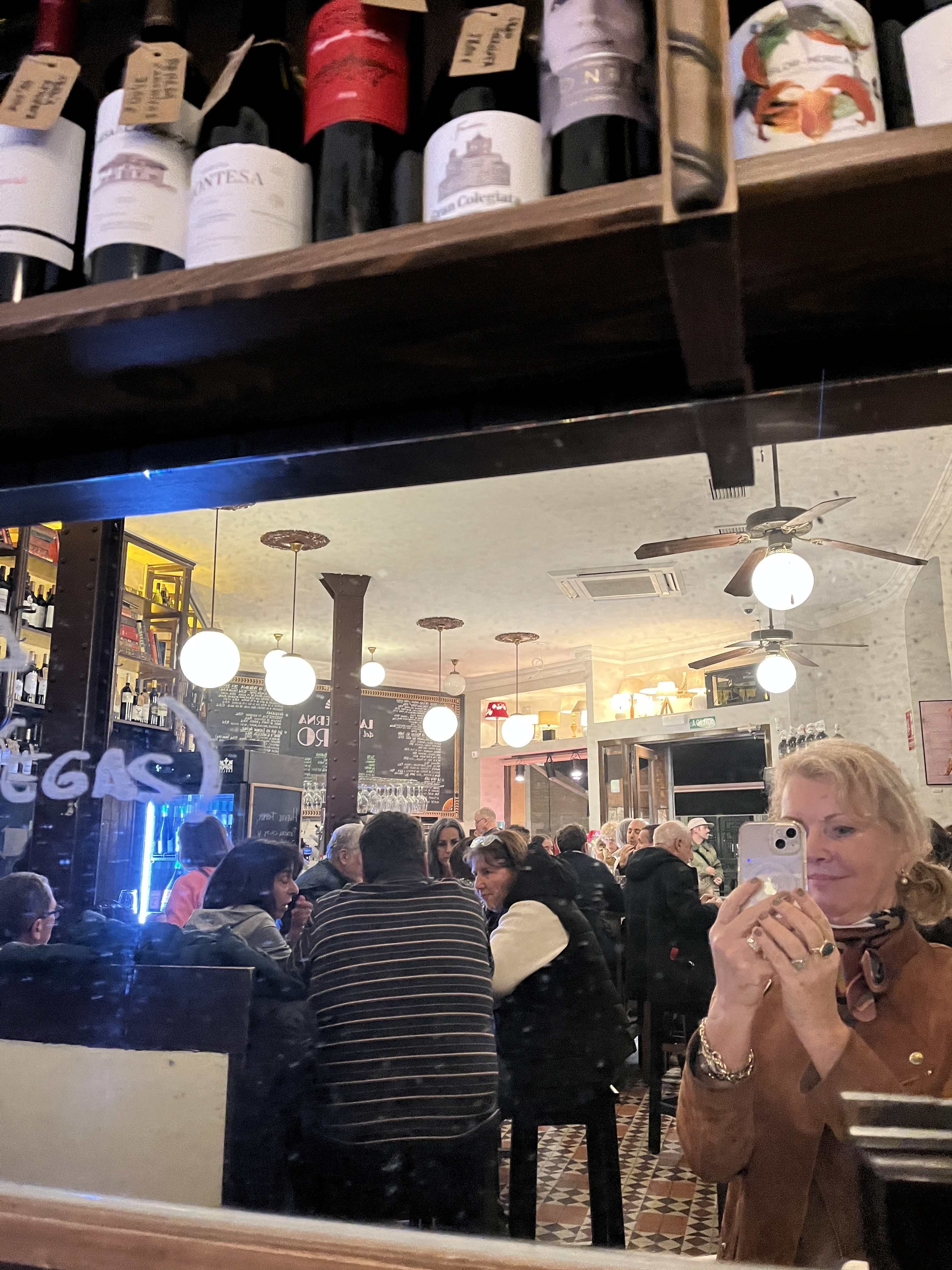
The Le Taberna del Foro is lively and crowded. It’s Friday evening in Madrid and a three-hour flight from Edinburgh lands us in time for drinks and tapas. We slide into a tiny table for two near the pie-shaped bar, lined adoringly with as many books as wine bottles. I order a glass of secco blanco, Bruce decides on a vino tinto and we expectantly unfold the pristine map of Madrid… the promise of a colourful canvas of streets and architecture, of life out to all four corners, a new city for us both!

After having checked into out hotel near Madrid Atocha, the main train station, we haven’t wandered too far into the surrounding charming neighbourhood. I admit to having felt a little overwhelmed by the thought of this capital city, conveniently situated in the middle of Spain, yet at once it feels familiar in its obvious elegant grandeur. We pour over the map noting the iconic sites – those must visits in any city – yet for us it’s more about the outlaying neighbourhoods, the barrios which give all Spanish cities their unique character.

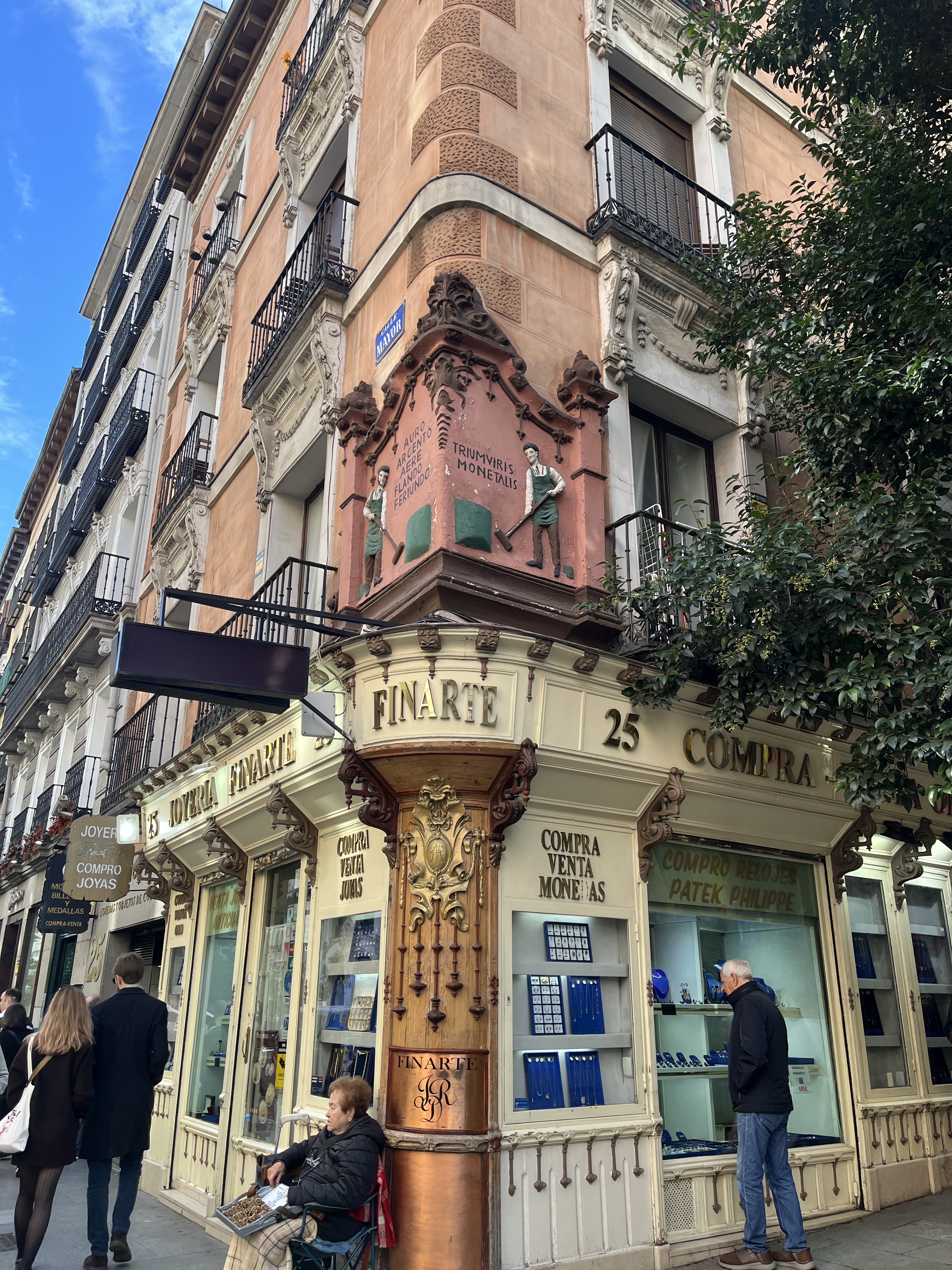
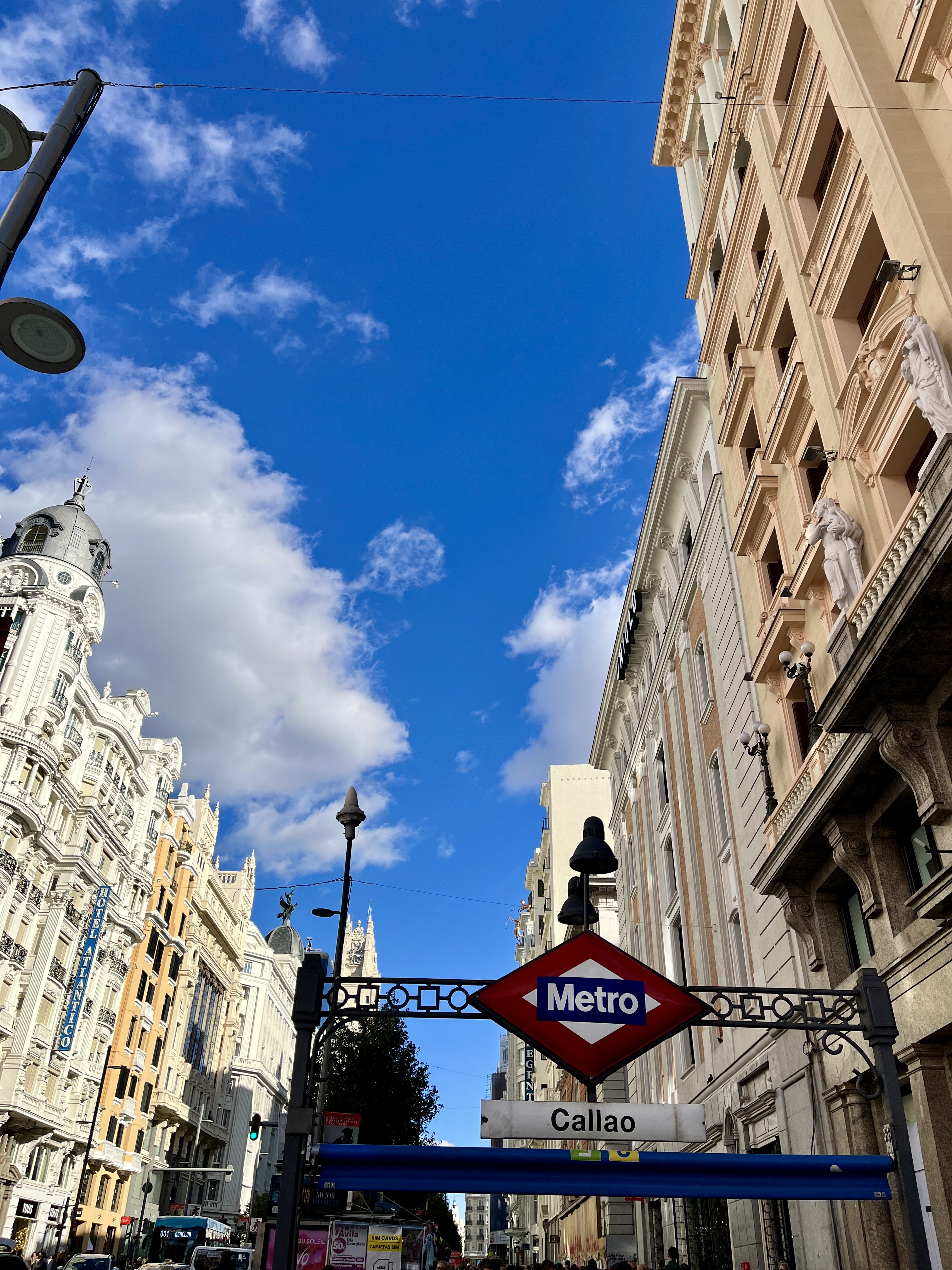
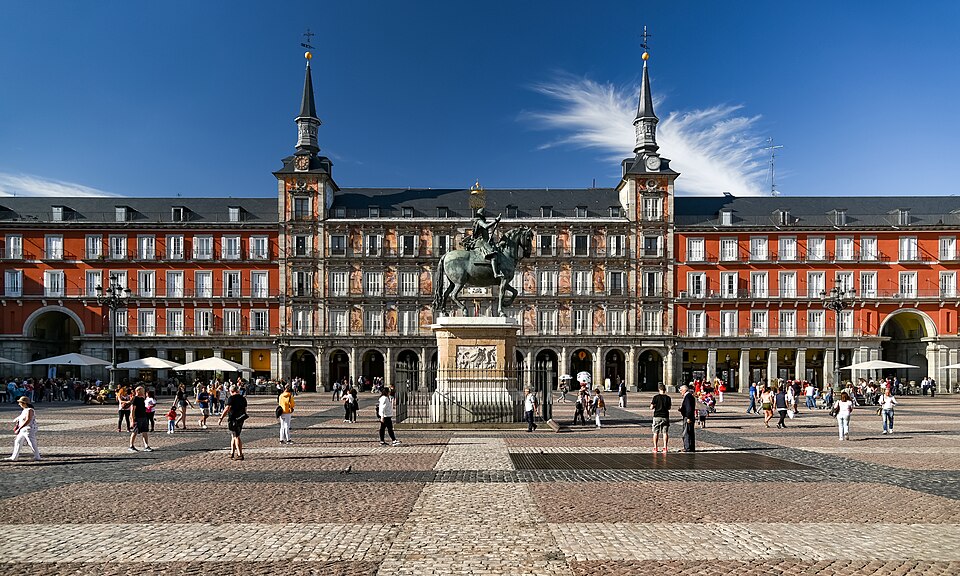
Saturday morning beams sunshine and warm temperatures for mid-November. The crowds are tremendous with locals, Spanish day trippers, tourists alike, and not surprisingly! This is the political, economic and cultural centre of the country with the second-largest GDP in the EU. Madrid is an iconic city and of course we beeline up the Grand Via to visit the landmarks – The Royal Palace and Almudena Catheral, Plaza Mayor, Puerto del Sol. The grand central square is an enduring symbol of the city and resplendent in century-layered architecture. Originally a bustling market, the plaza has also hosted bull fights, royal ceremonies and tragically, trials during the Spanish Inquisition. King Philip III sits atop a bronze equestrian statue paying homage to the reach of Spain in the late 1500’s… Kings of Portugal, of Naples, of Sicily, even Lord of the Seventeen Provinces of the Netherlands. The Philippines, a former Spanish colony, is named after Philip’s father, the II, also known as Philip the Prudent.

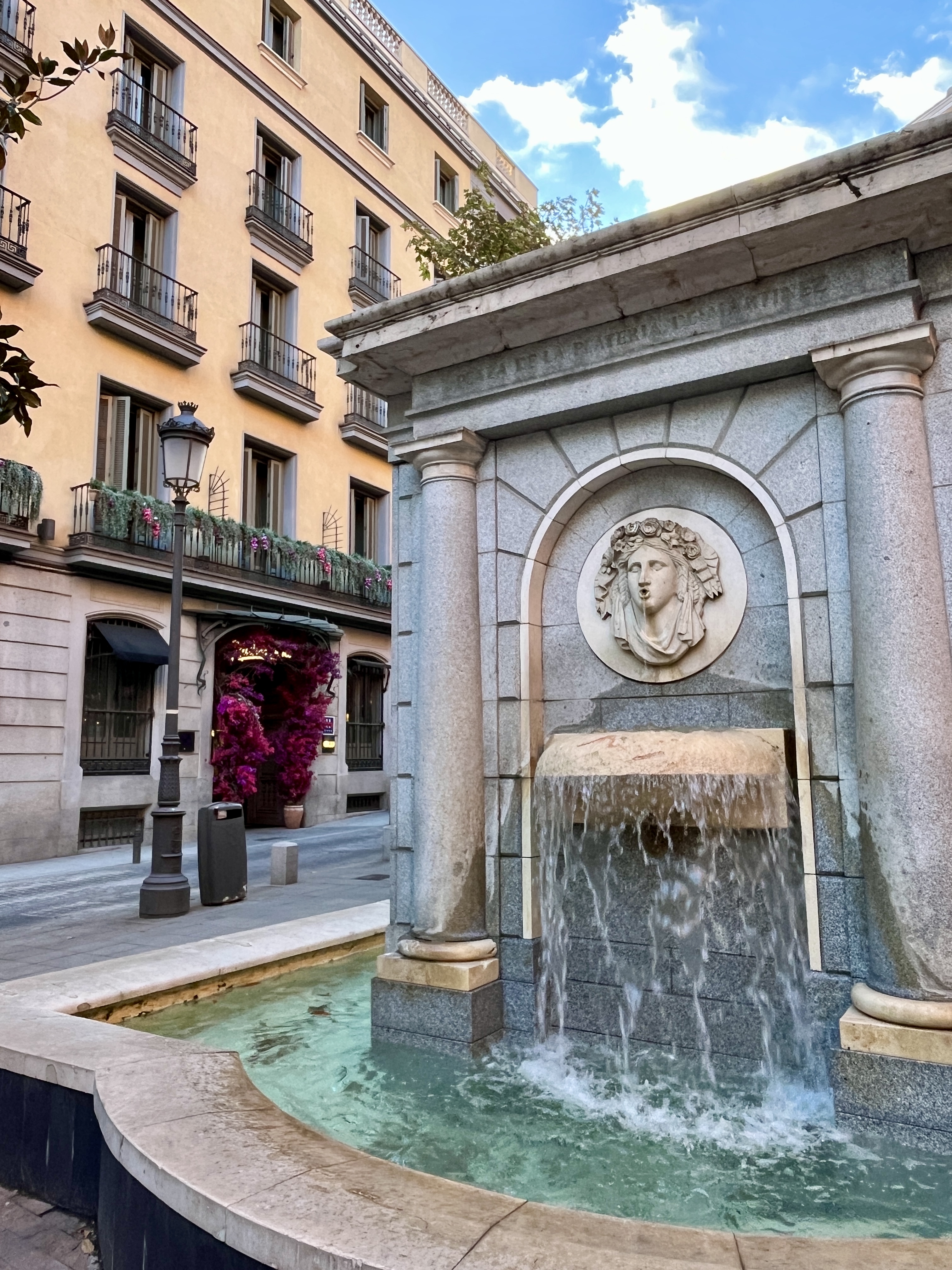
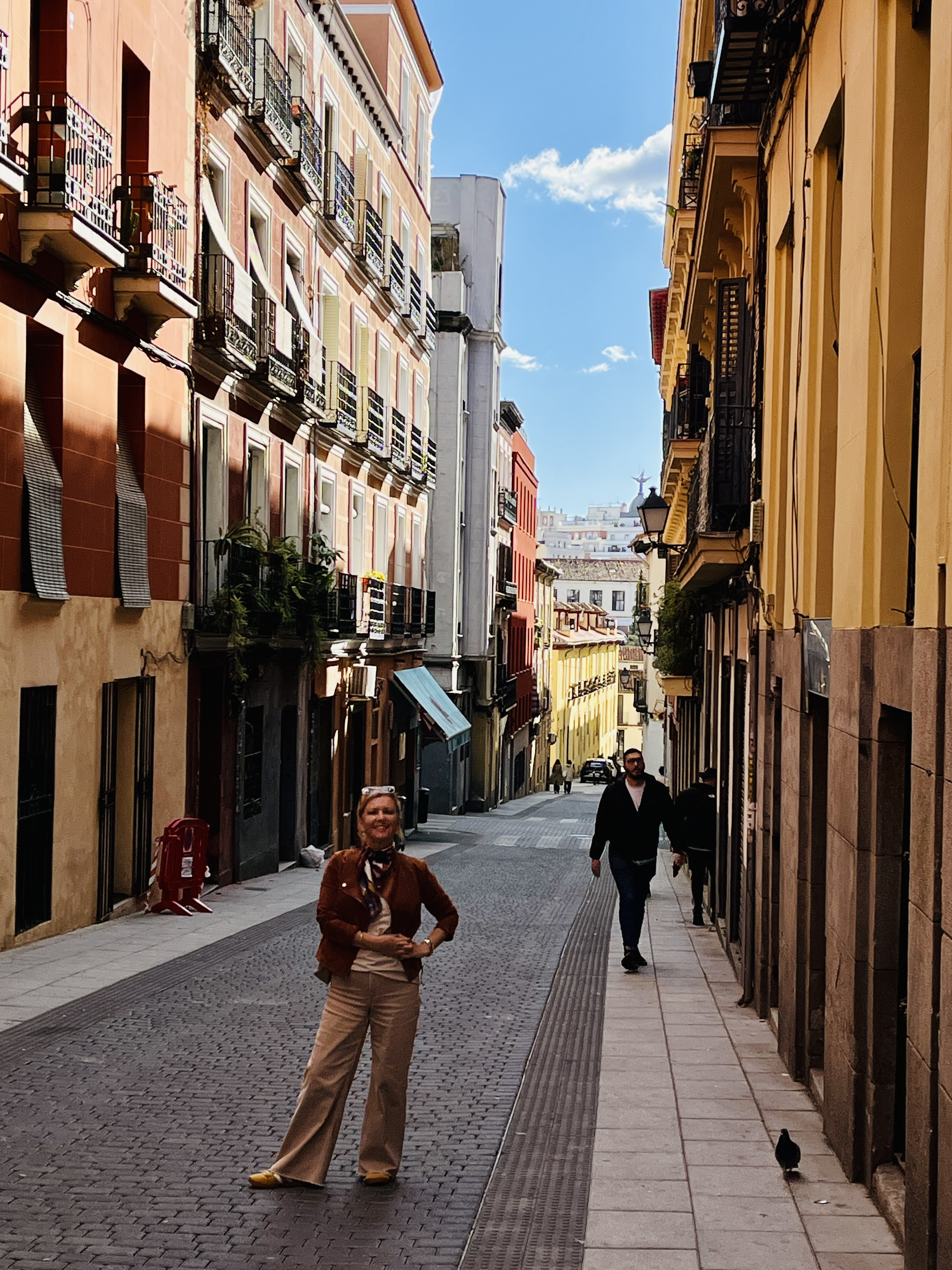
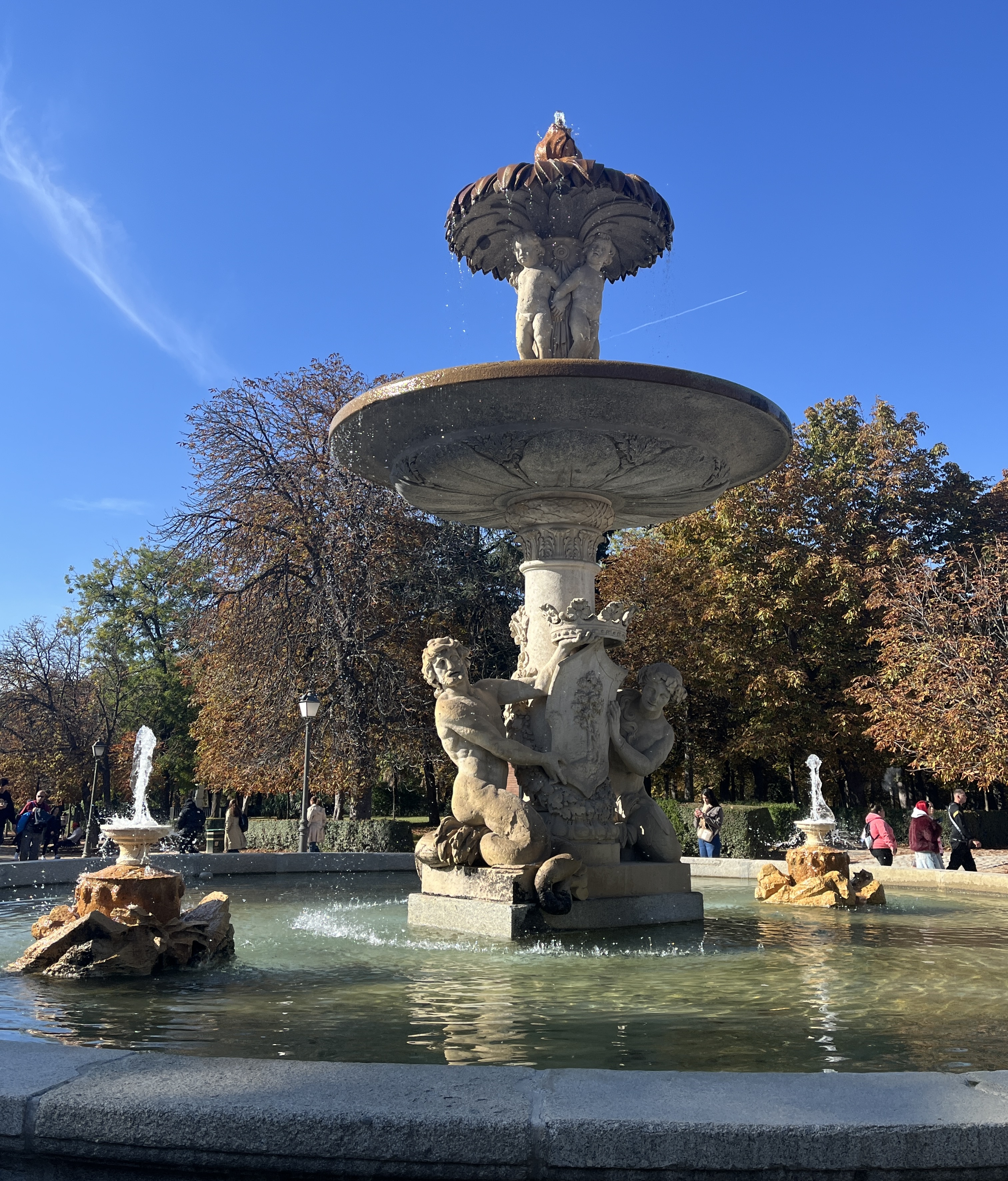
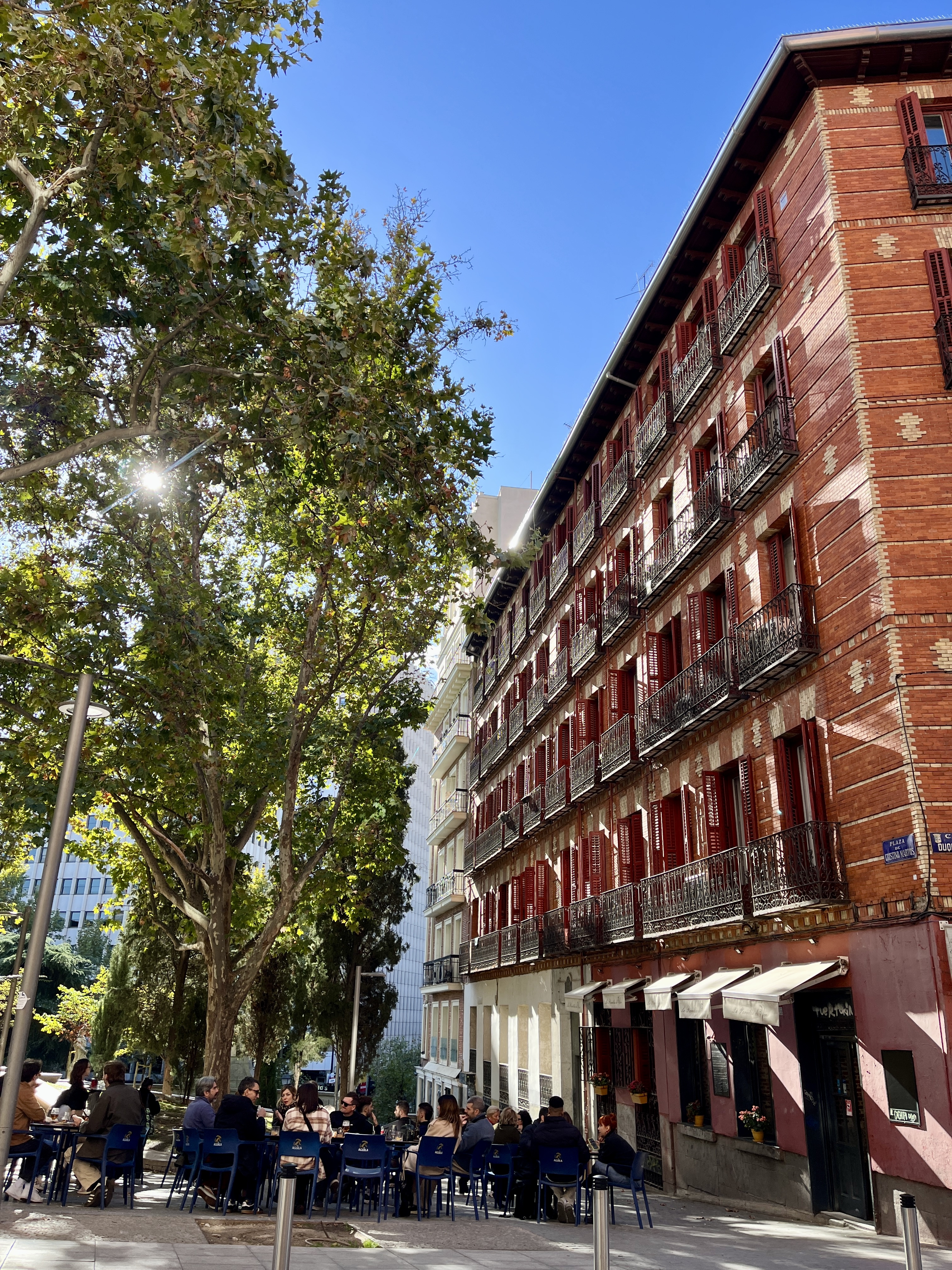
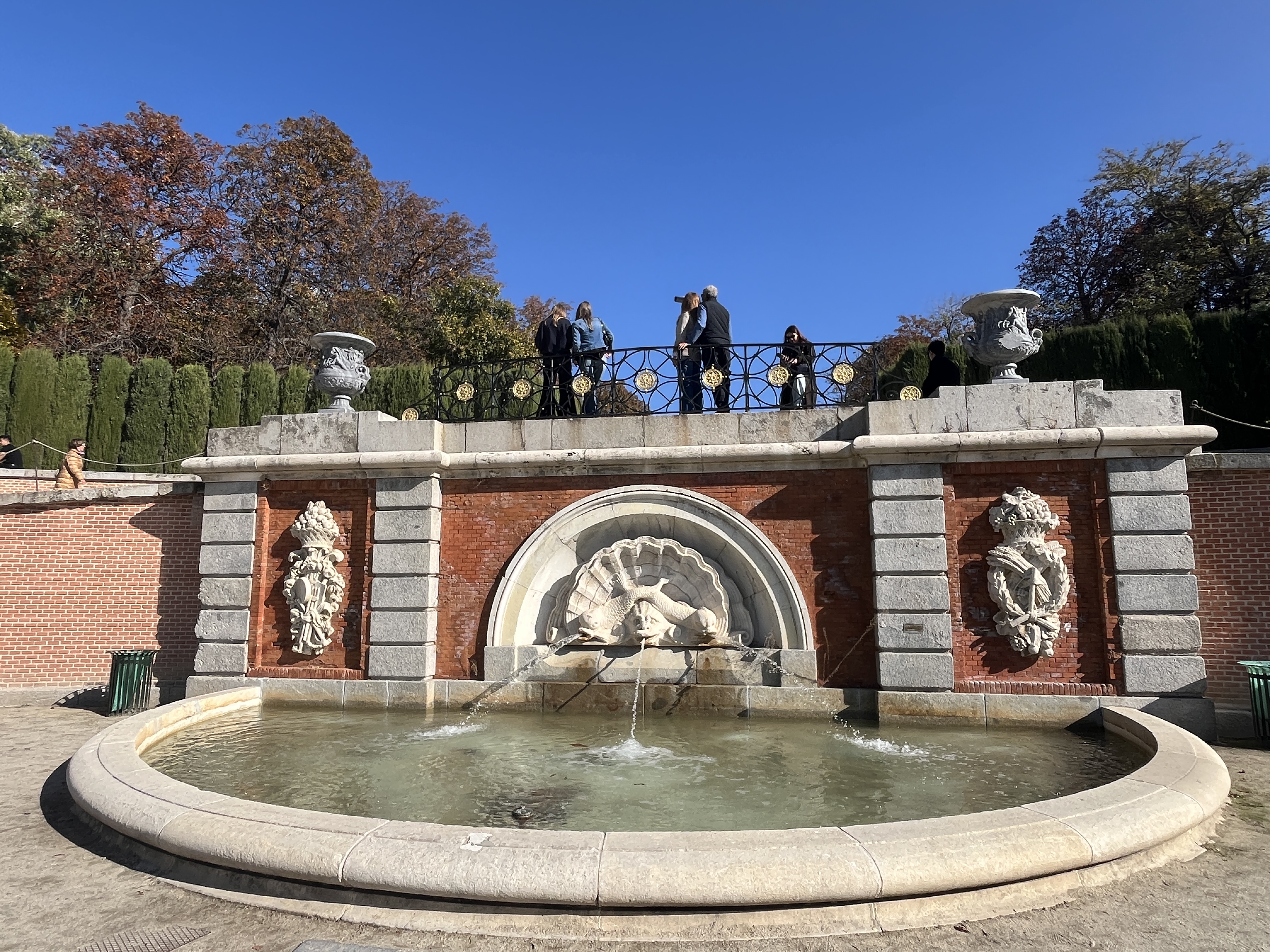
With the main sites orientating us, we stroll. Like the Italians, the Spanish love to perambulate their calles; always well dressed, well perfumed and with animated conversation. We meander, seemingly traversing the entire city that day. We leave the busy Gran Via for the intimate neighbourhoods of Salamanca, Lavapies, La Latina and more. The narrow streets are flourished with petite intricate wrought iron balconies, muted pastels and cozy tree-dappled plazas dotted with neighbourhood tapas bars. We chance upon a rose garden still abloom, quiet calles of towering cyress trees, pigeons frolicking in marble fountains, local gossip mingling with strains of classical guitars… all touchstones of life in this grand, yet surprisingly intimate city.

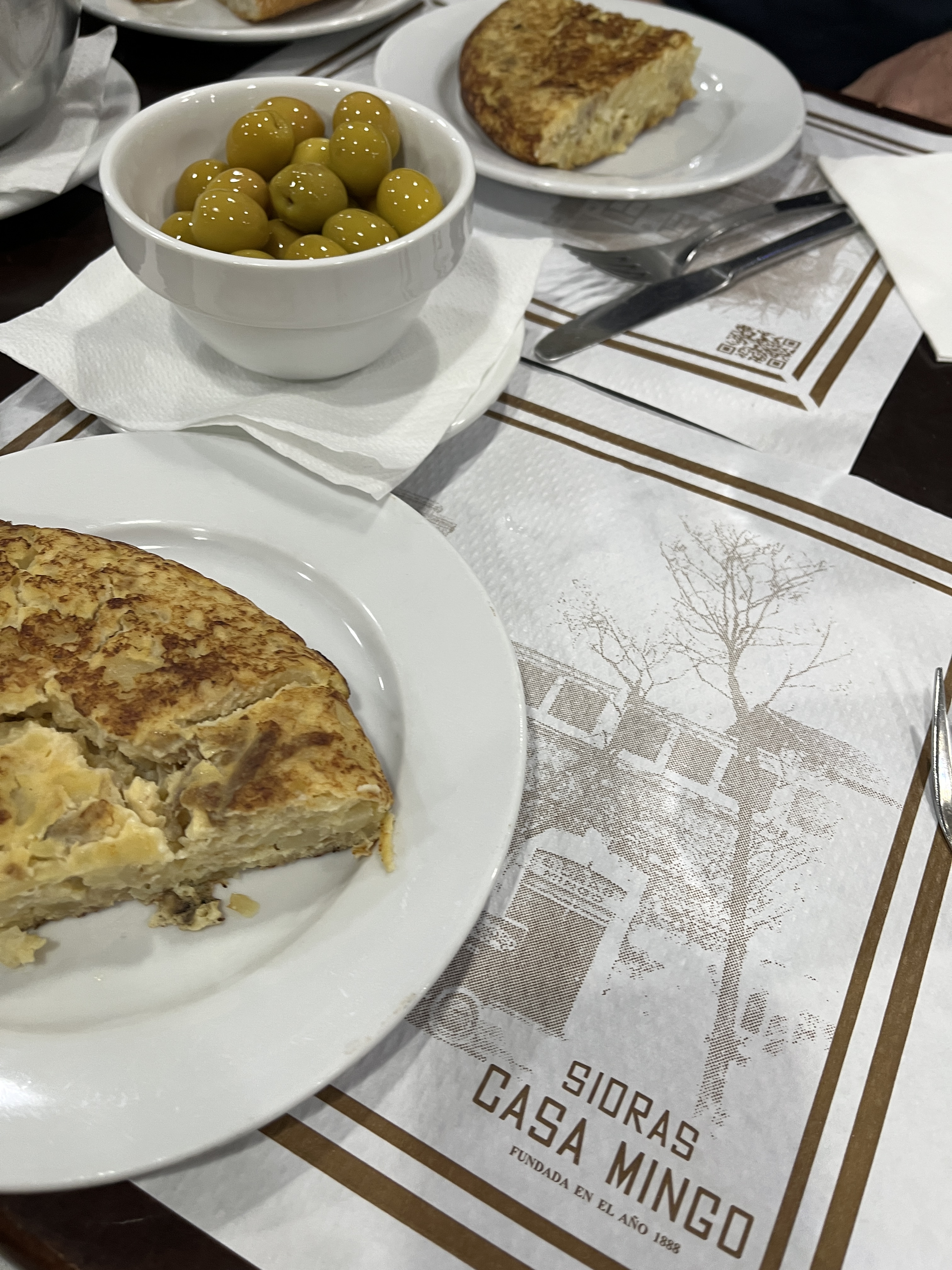
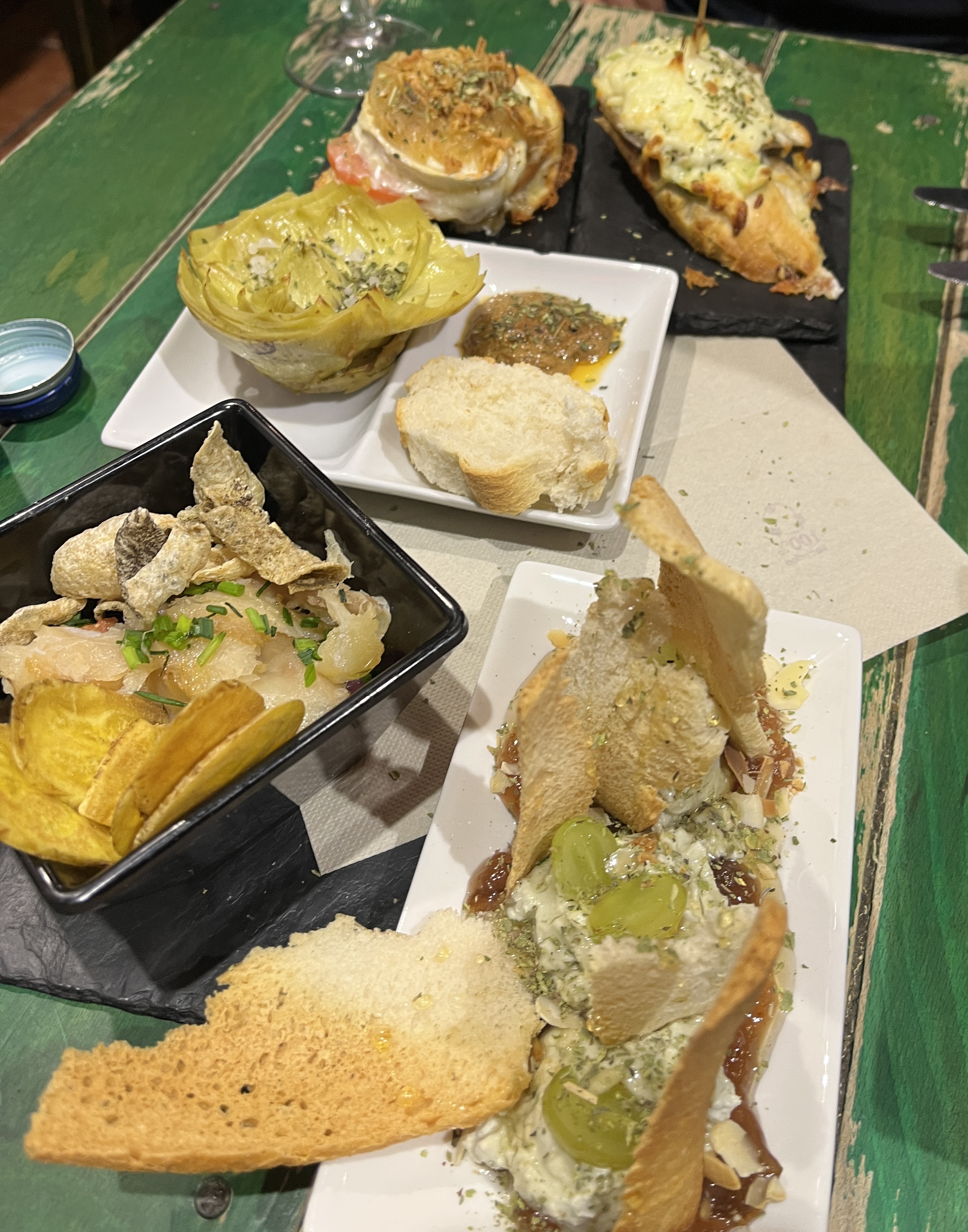
By 7 pm, we chance upon the smallest of bars with rickety vivid-green tables and a tapas menu that I’ll dream about for years. Alas, the kitchen doesn’t open until 8 so we have no choice but to order a bottle of roja and relive the day. Seventeen kilometres of bliss, excellent local food here and there, and admittedly because of the beautiful weather we hadn’t been enticed to join any inside tours. Just a spectacular day of soaking up the essence of Madrid.

“If Seville is a gentle Spainsh guitar tune, Madrid is a full-on flamenco dance,” I muse to Bruce. I fell in love with Seville on a previous trip and ideally one should visit both. If crowds and distances are difficult for you, Seville will give you all the flavour you need, yet the transportation system in Madrid is efficient and accessible. My feet are worn out so we plot tomorrow’s endeavours with a slightly slower pace, which we both agree must include The Prado Museum!

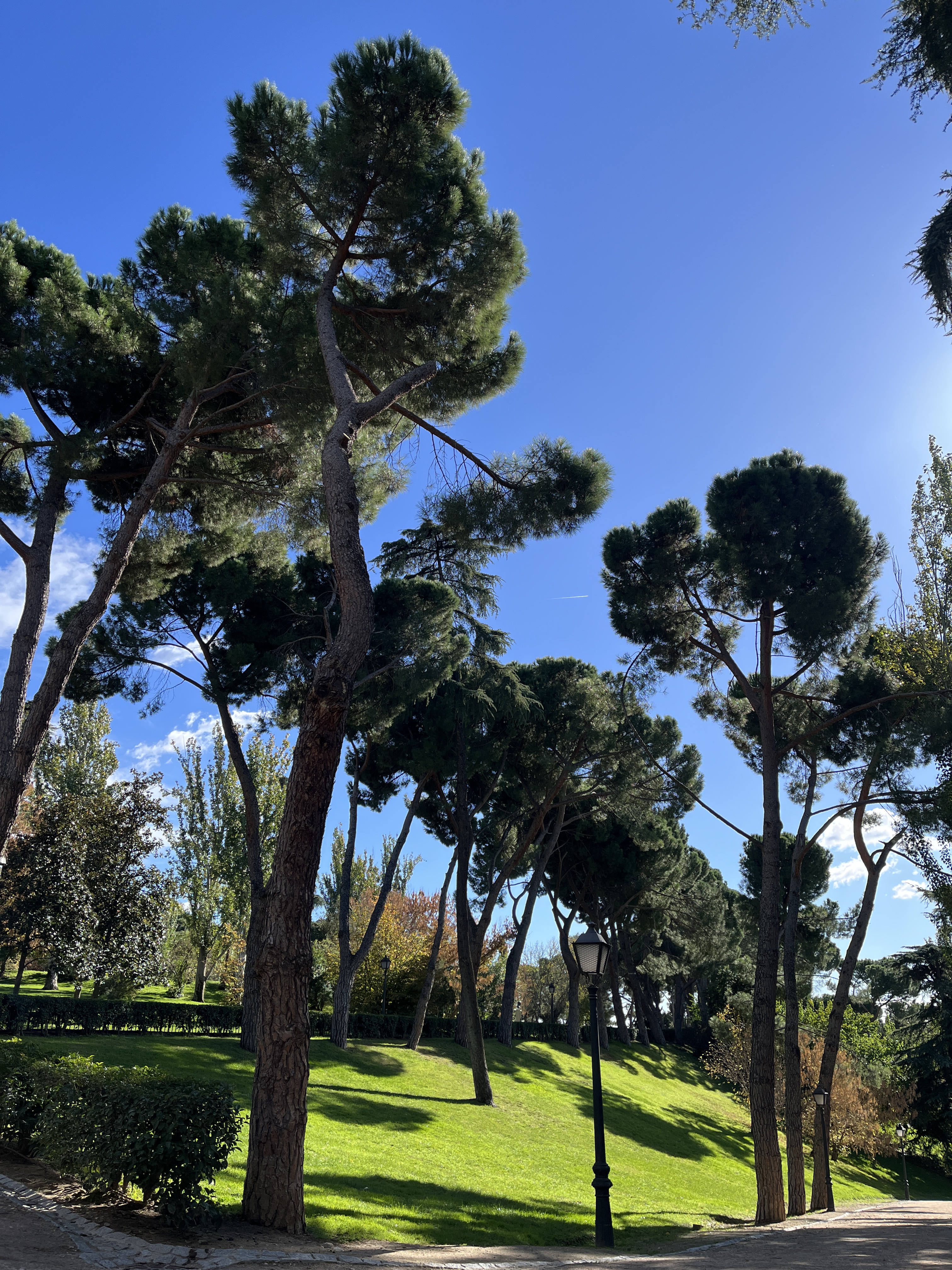
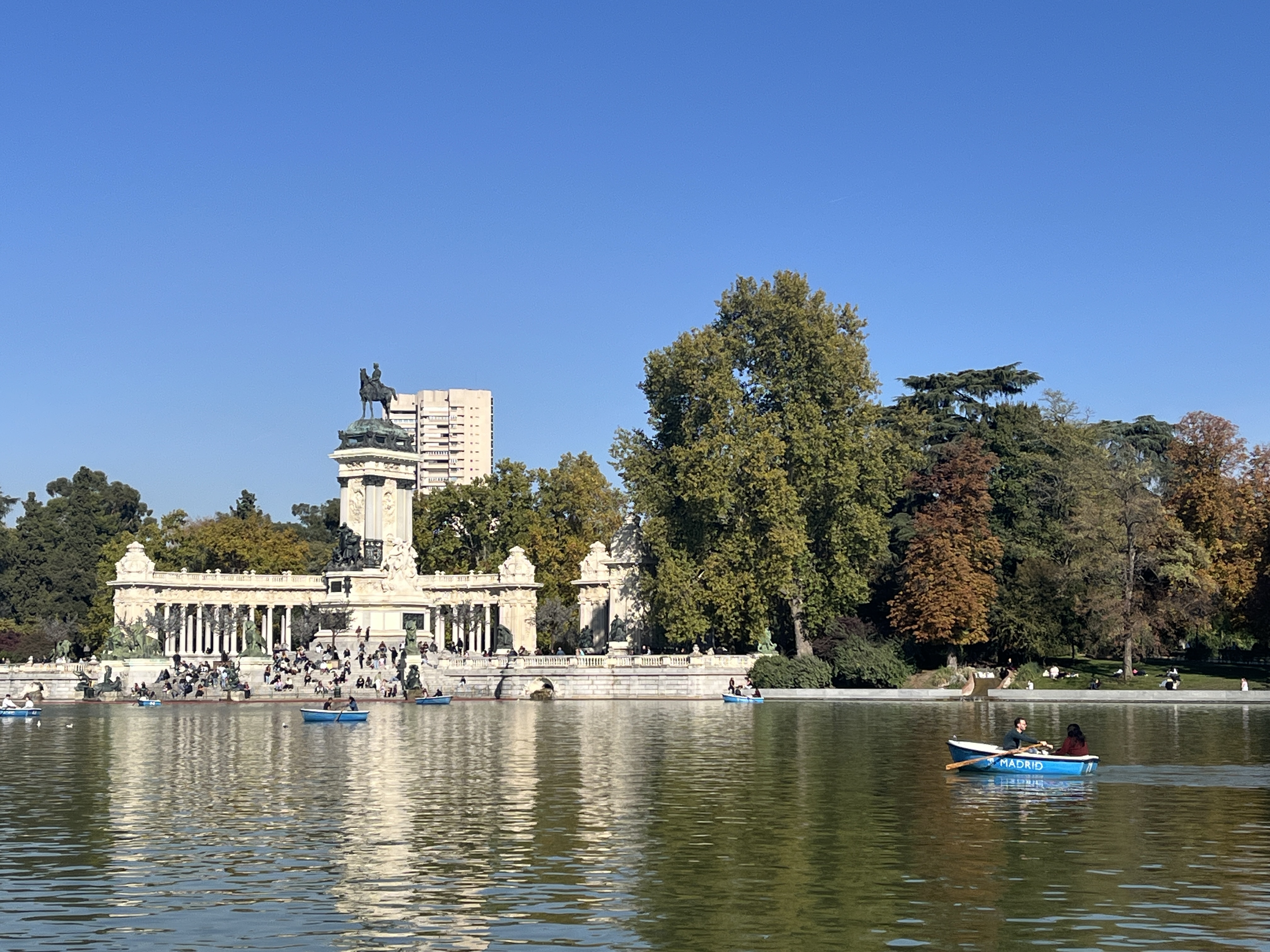
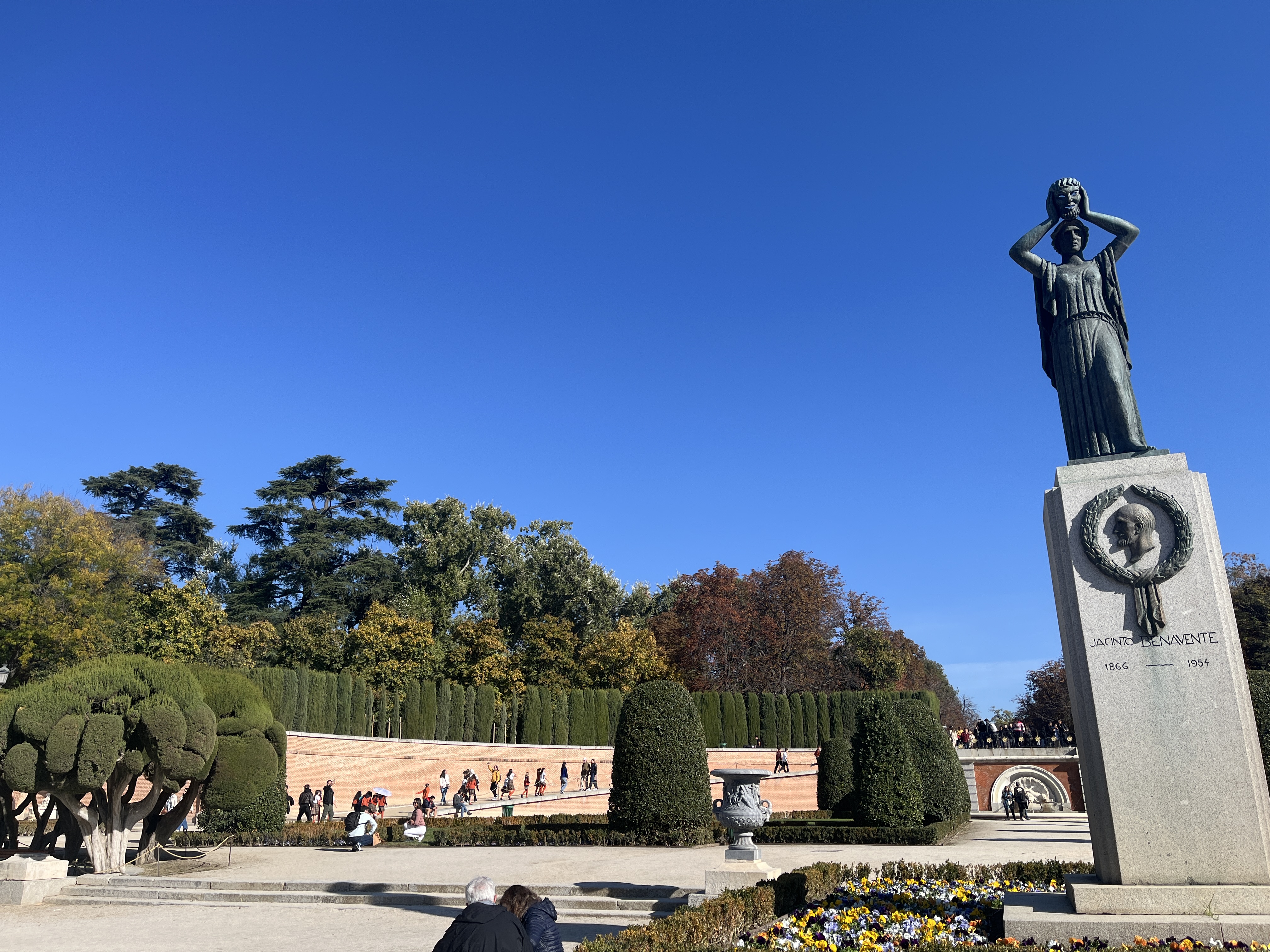
The Prado Museum is what the Louvre is to Paris, the British Museum to London, the Uffizi to Florence. Before losing yourself in the Prado, first wander its environs as the museum is nestled on the edge of the grand El Retiro Park. And the Retiro is to Madrid what Central Park is to New York City, what Hyde Park is to London, or Stanley Park to Vancouver… parks that are the breathing lungs and oases of calm. El Retiro is just that, a sprawling Unesco World Heritage Site, a former royal park with 19,000 trees, art galleries and a lake. Opened to the public in 1868, one can stroll, row, pedal, play tennis, or enjoy a picnic in the grounds.

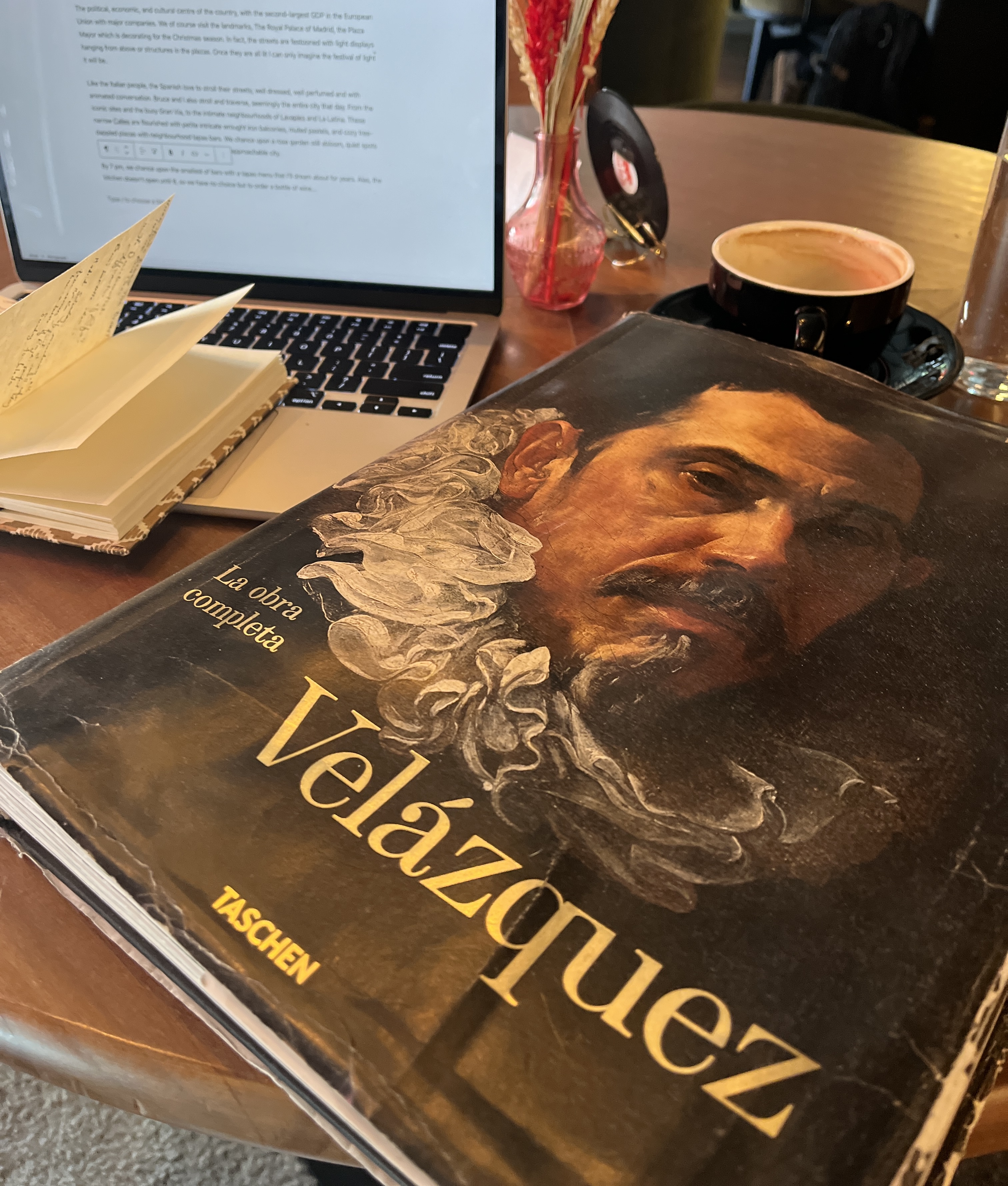
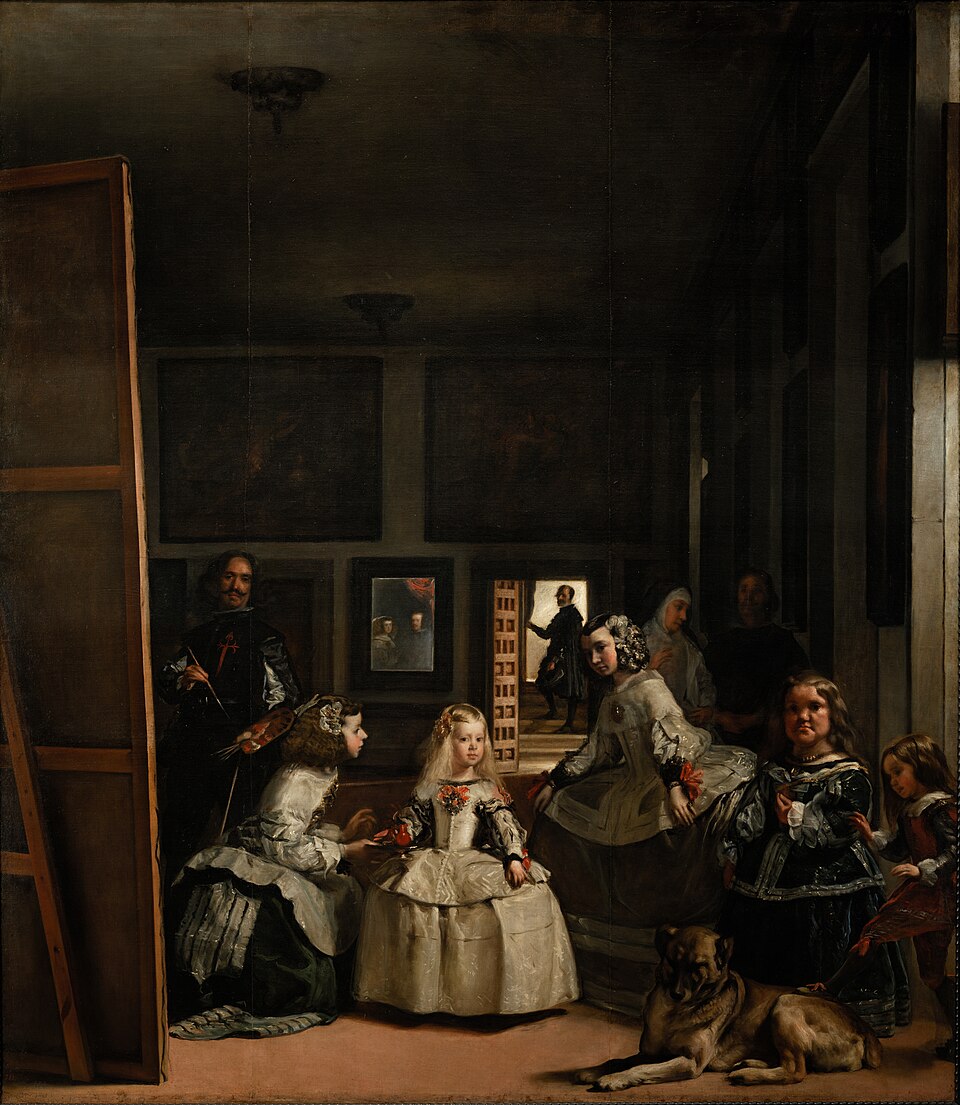
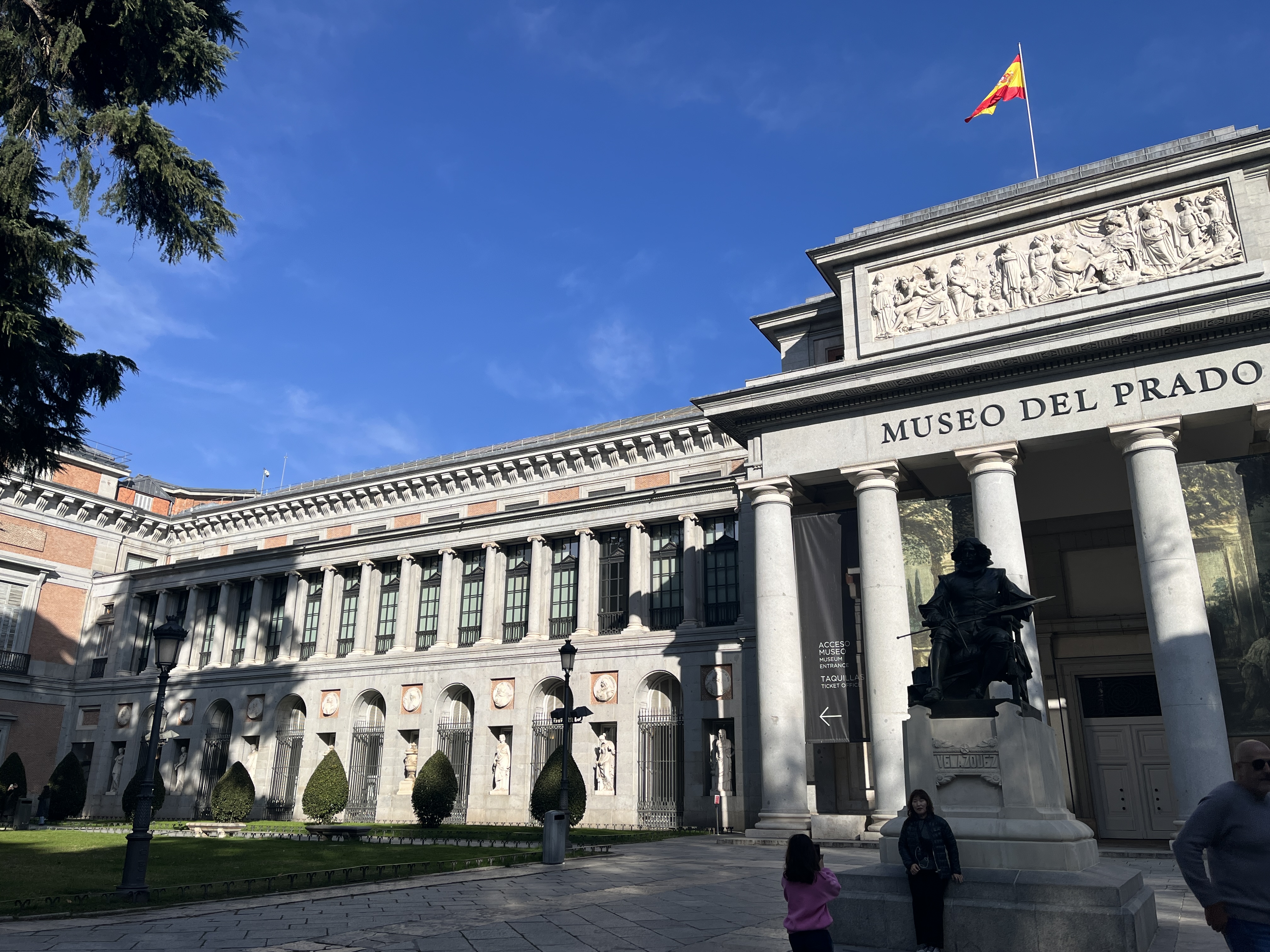
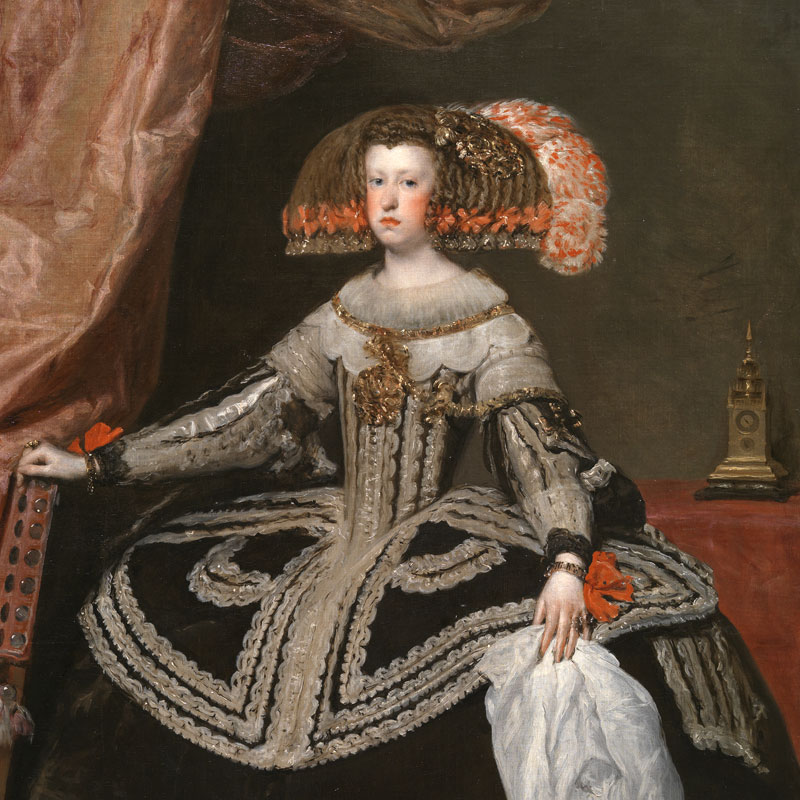
I absolutely adore museums of all kinds and like markets in a city, museums are also the touchstone of its citizens… the guardians of art and history, of a people’s story. The building that today houses the Museo Nacional del Prado is a splendid work of art in itself. Designed in 1785, it is sprawling, stately and the custodian of some 2300 paintings. The predominate mood is that of Tenebrism – dark, gloomy, mysterious – common of Baroque paintings and Diego Velazquez did this exceptionally well. A leading artist in the court of King Philip IV, the museum holds a vast collection of Velazquez’s celebrated paintings with Spain’s dramatic history coming alive on the evocative canvases. Masterpieces from Titian, Goya, Raphael and El Greco also regal the walls, testament that The Prado has certainly evolved since it opened in 1819 as a Natural History Museum.

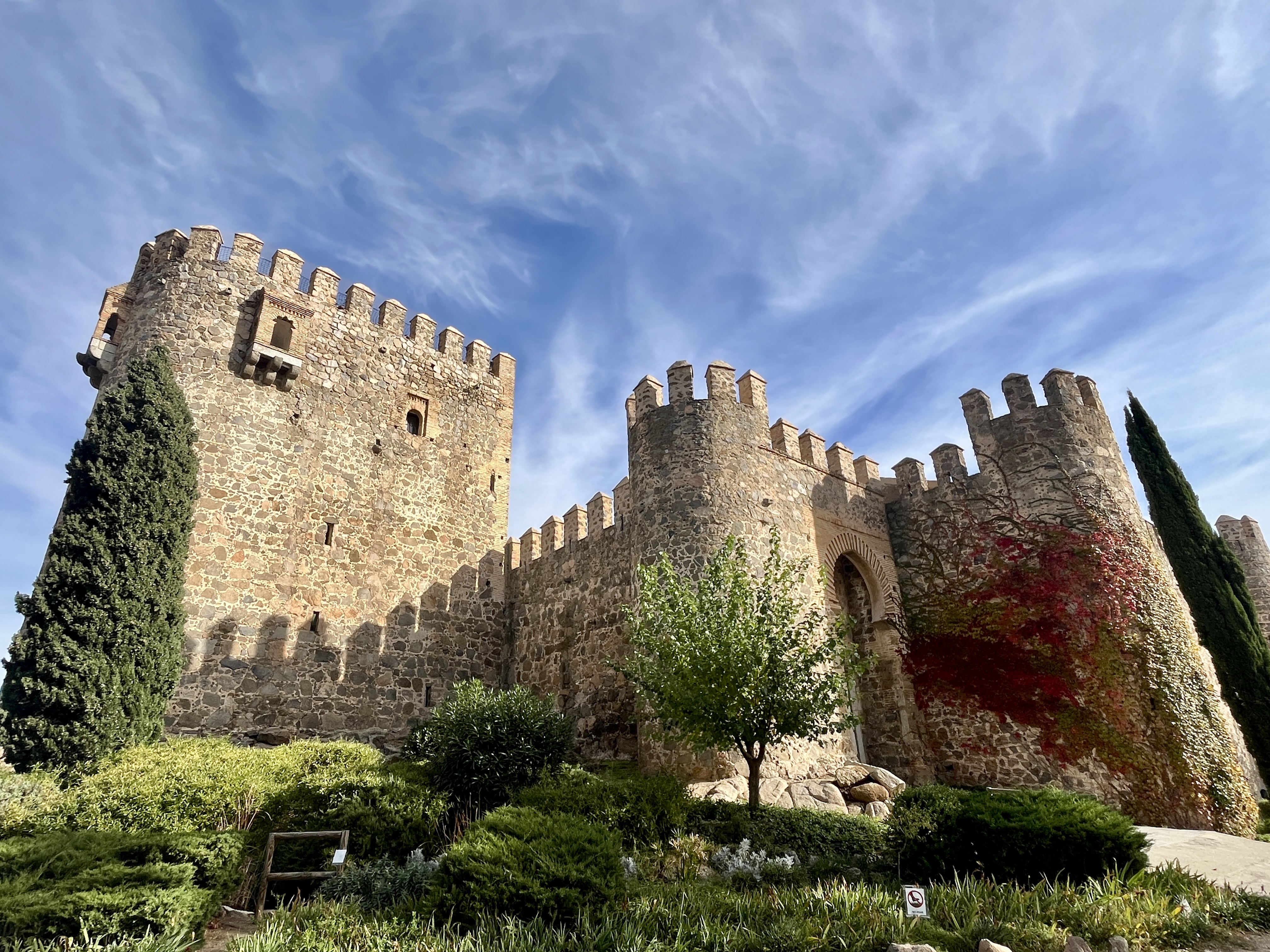
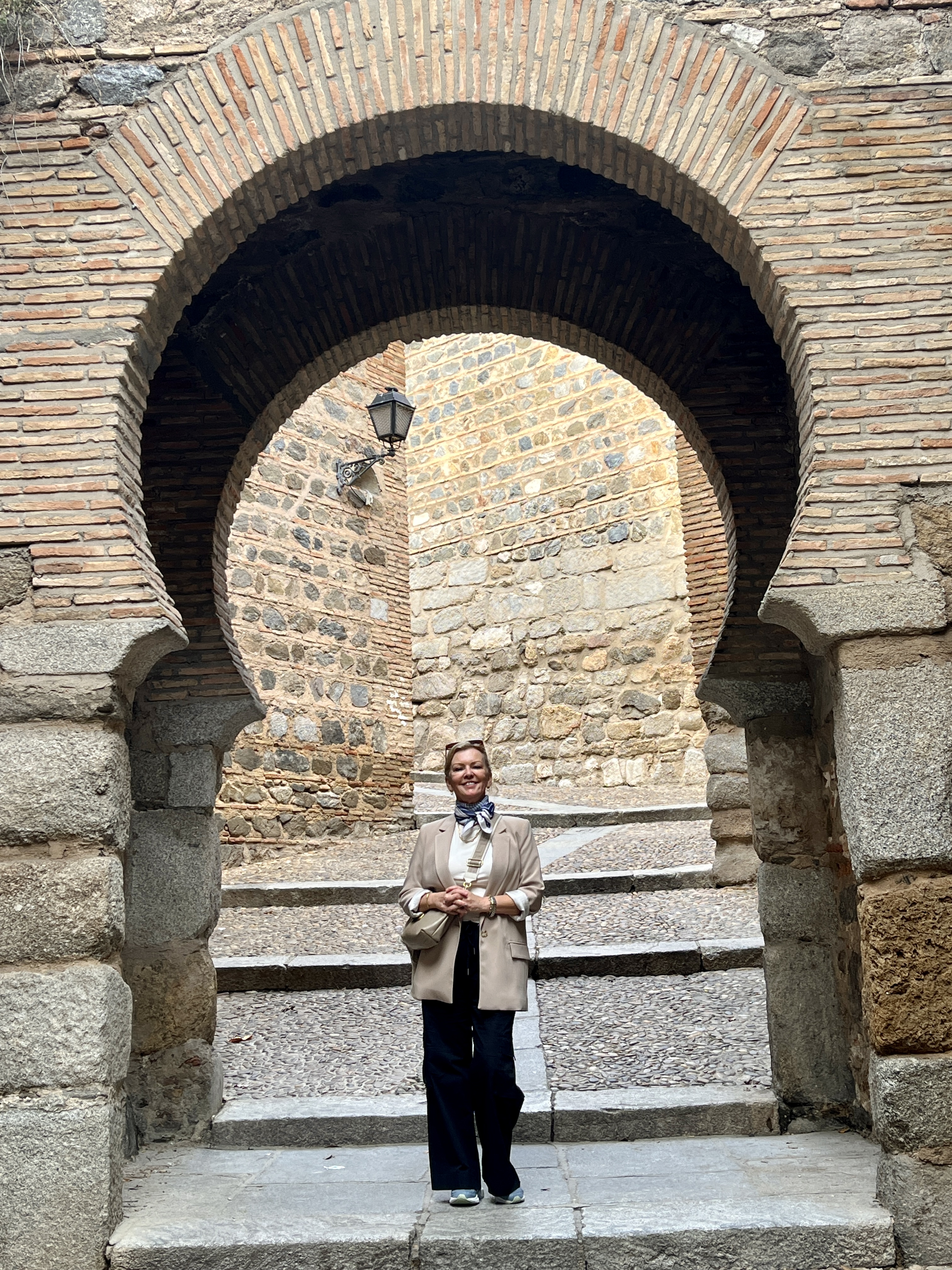
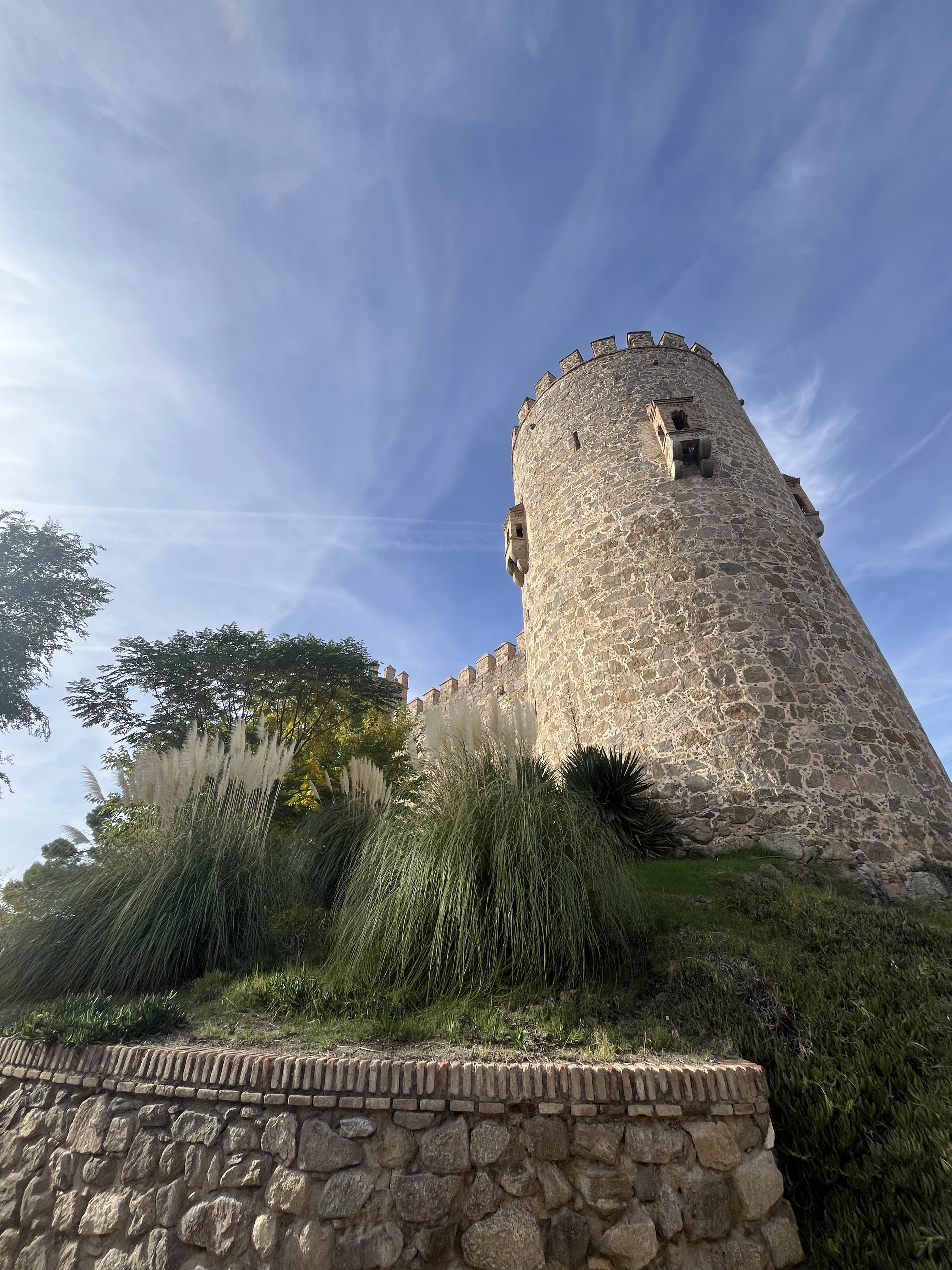
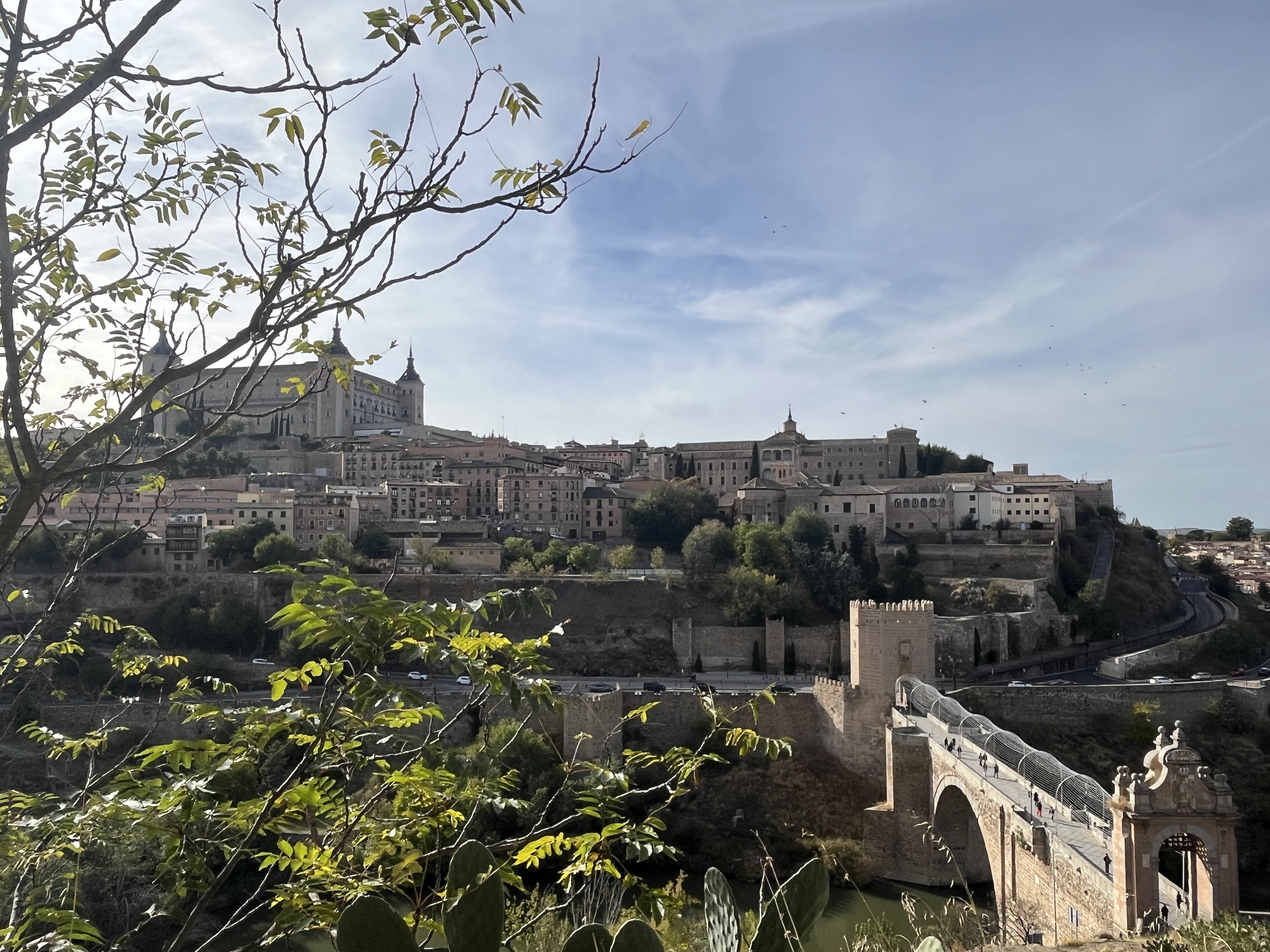
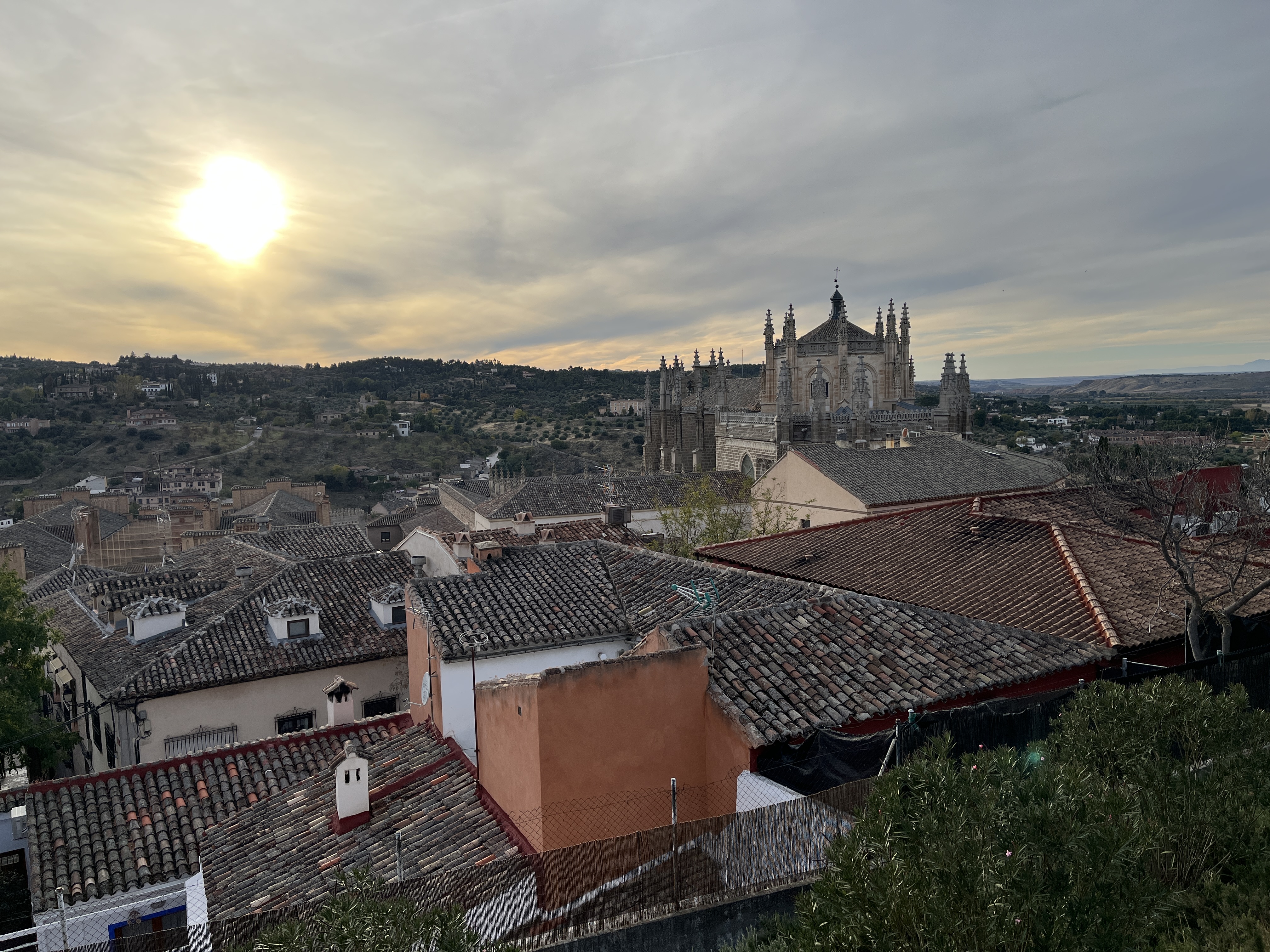
Late the next morning we hop on a Renfe train to Toledo, barely an hour’s journey south-west. A short walk from the train station reveals the ancient city nestled along the Tagus River. This World Heritage Site by UNESCO is immediately dramatic. Perched imposingly on a hilltop for defense purposes, it calls itself the ‘city of three cultures’ – Muslim, Christian and Jewish. All of their architectures still a mosaic of hues, cobblestones and ancient wooden doors. The Archways of the Alcazar welcome you in.

The Romans called this Toletum, incorporating it into their empire after a battle with Celtic tribes in 193 BC. This town of non-citizens is where one could obtain Roman citizenship in exchange for public service, and build they did! The Roman circus – an open-air venue for chariot races – along with an amphitheatre was one of the largest in Hispania, once the name for the Iberian Peninsula and now part of Spain. The circuses teemed with public entertainment to keep the population content and to prevent unrest. Many of the new citizens would have also helped build splendid villas for wealthy elites in the 3rd and 4th centuries as the city became a literary and ecclesiastic centre well into the the mid 700’s.

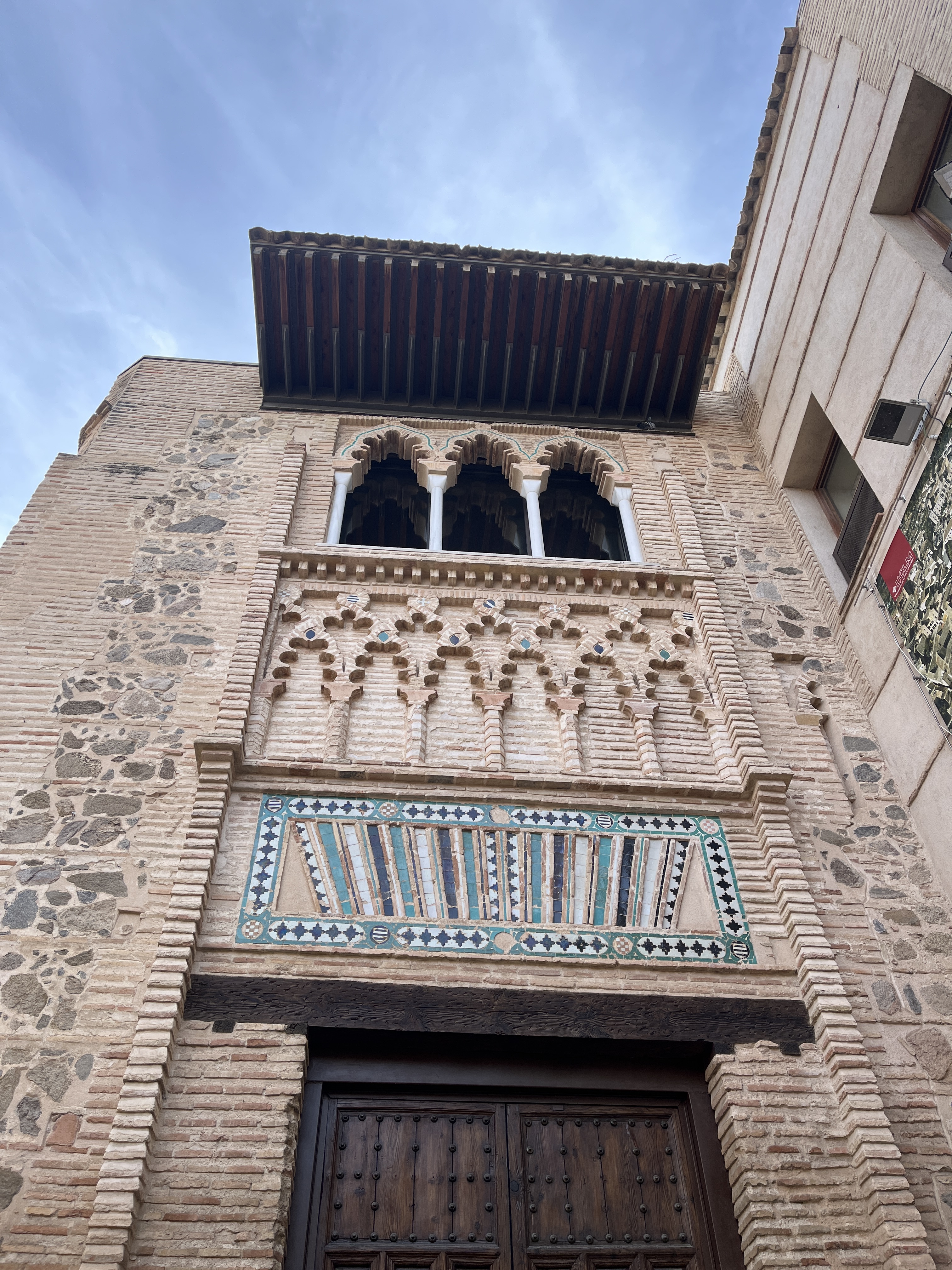
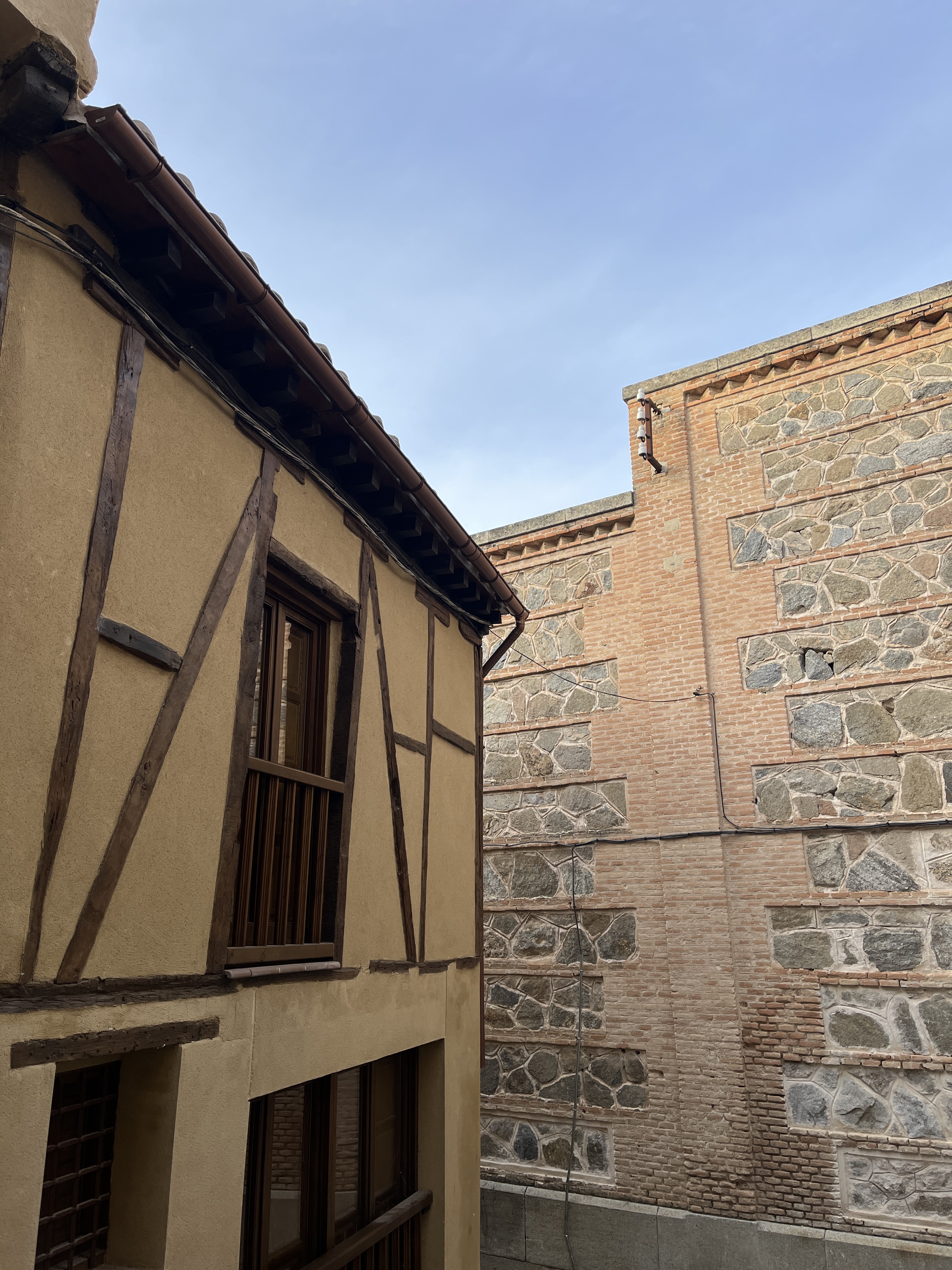
Toledo also became a major cultural centre promoting productive cultural exchanges between the Islamic world and Latin Christendom. Its long history of bladed weapons production and glass manufacturing is still evident as you wander the quiet streets into the old quarter. Winding cobblestoned lanes harken to a celebration of cultures and religions, each giving the city a rich architectural and artistic heritage. Today the city celebrates the harmonious living between Muslims, Jews and Christians alike.

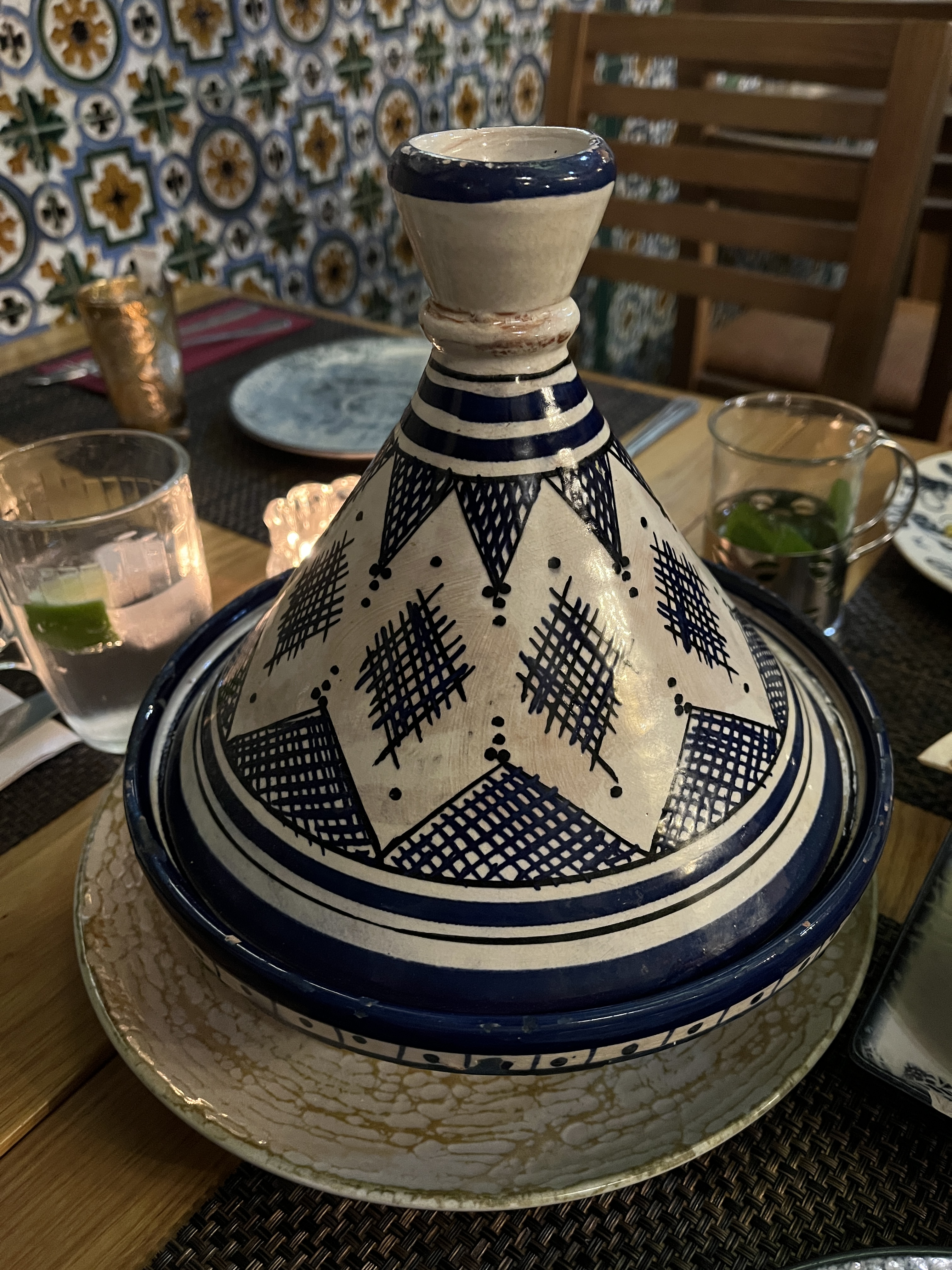
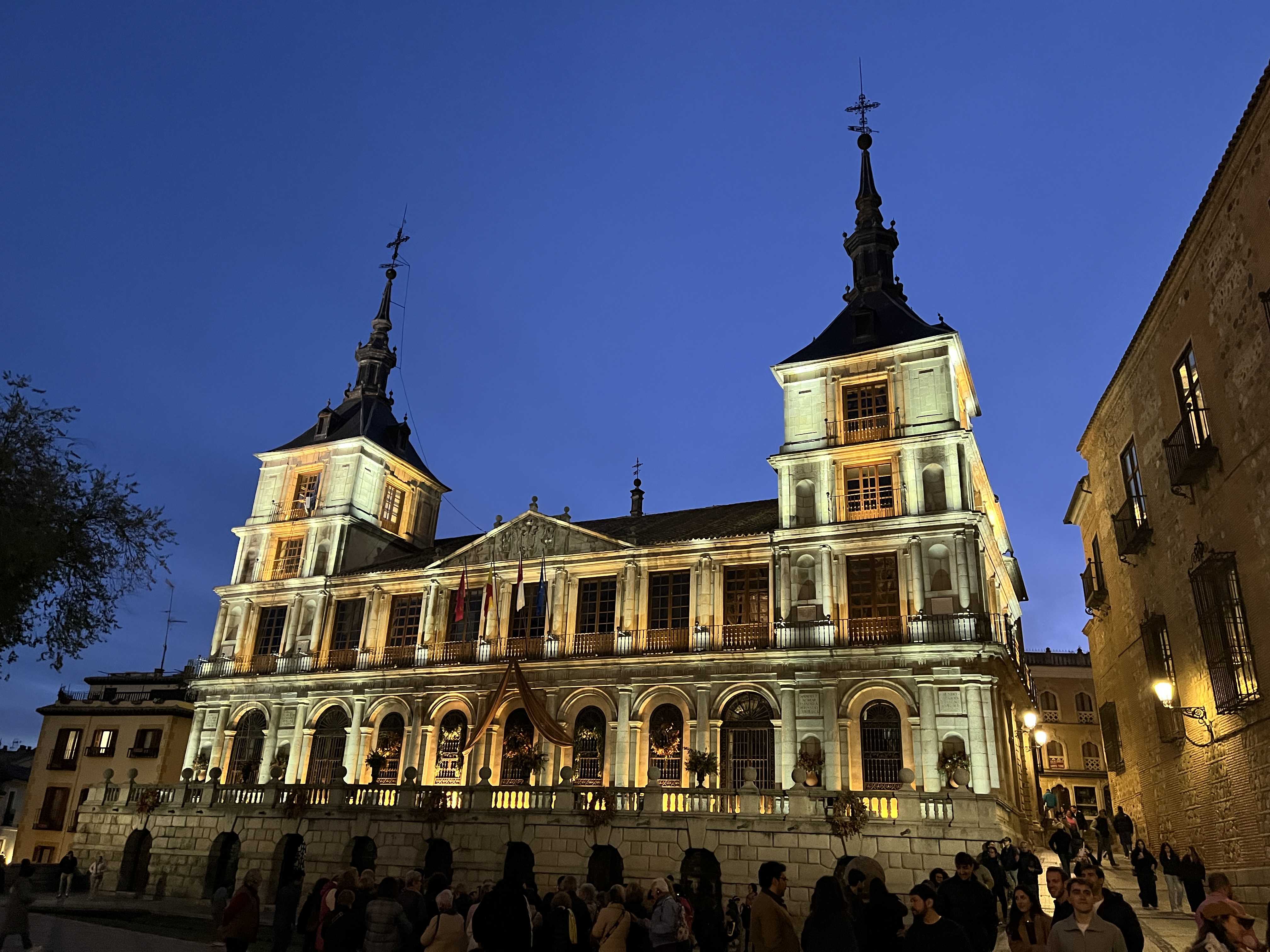
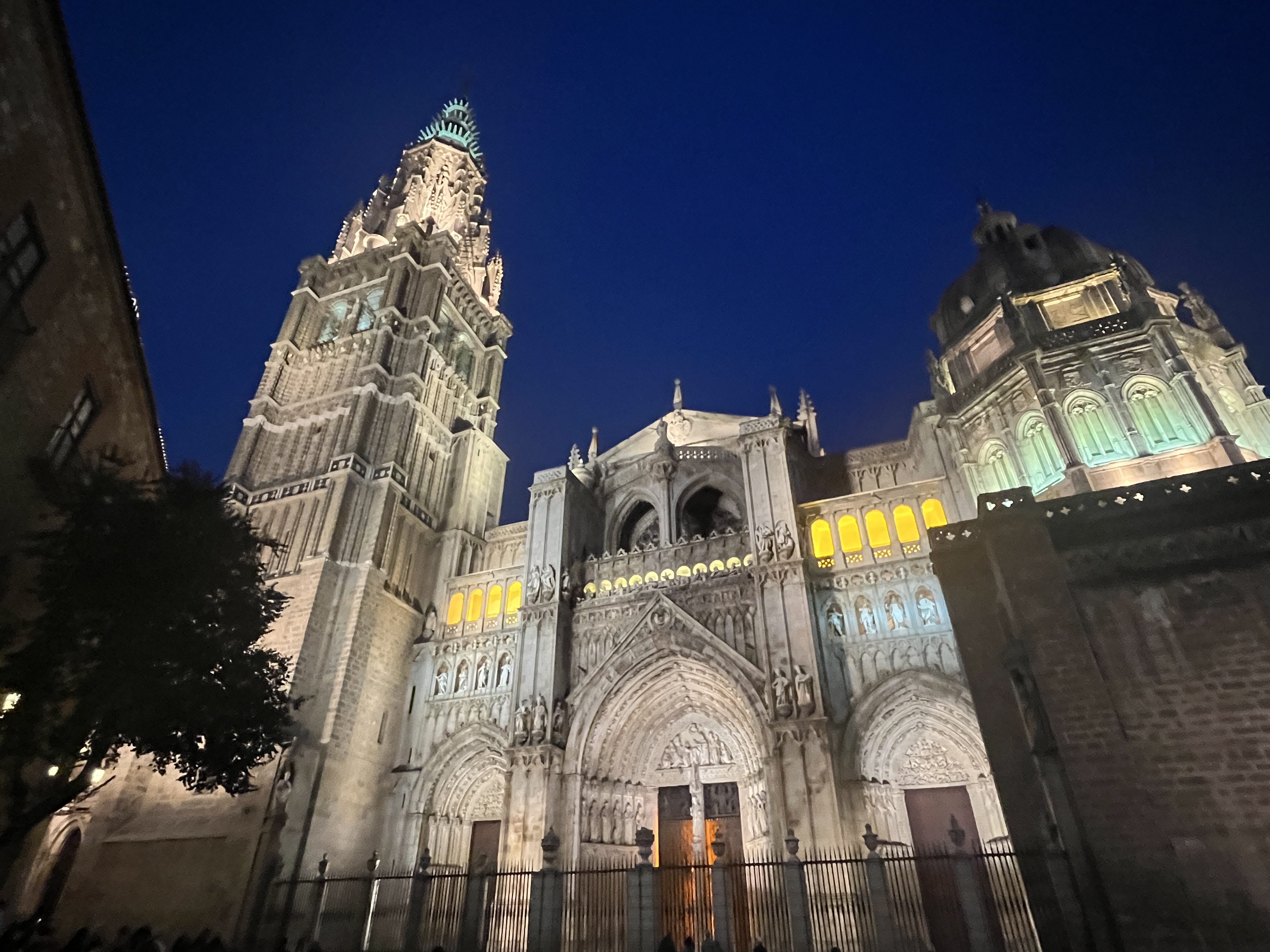
We happily dine in an Arabic restaurant, we savour the evening dusk and then the illumination of Toledo’s architectural wonders. It’s now eight in the evening, the streets and plazas begin to fill for evening strolls. For us, it’s time to catch the train back to Madrid. Time to savour the joys of jumping on a train. Time to plot tomorrow’s adventure!

Happy New Year 2026… Home in Canada & Scotland

Standard

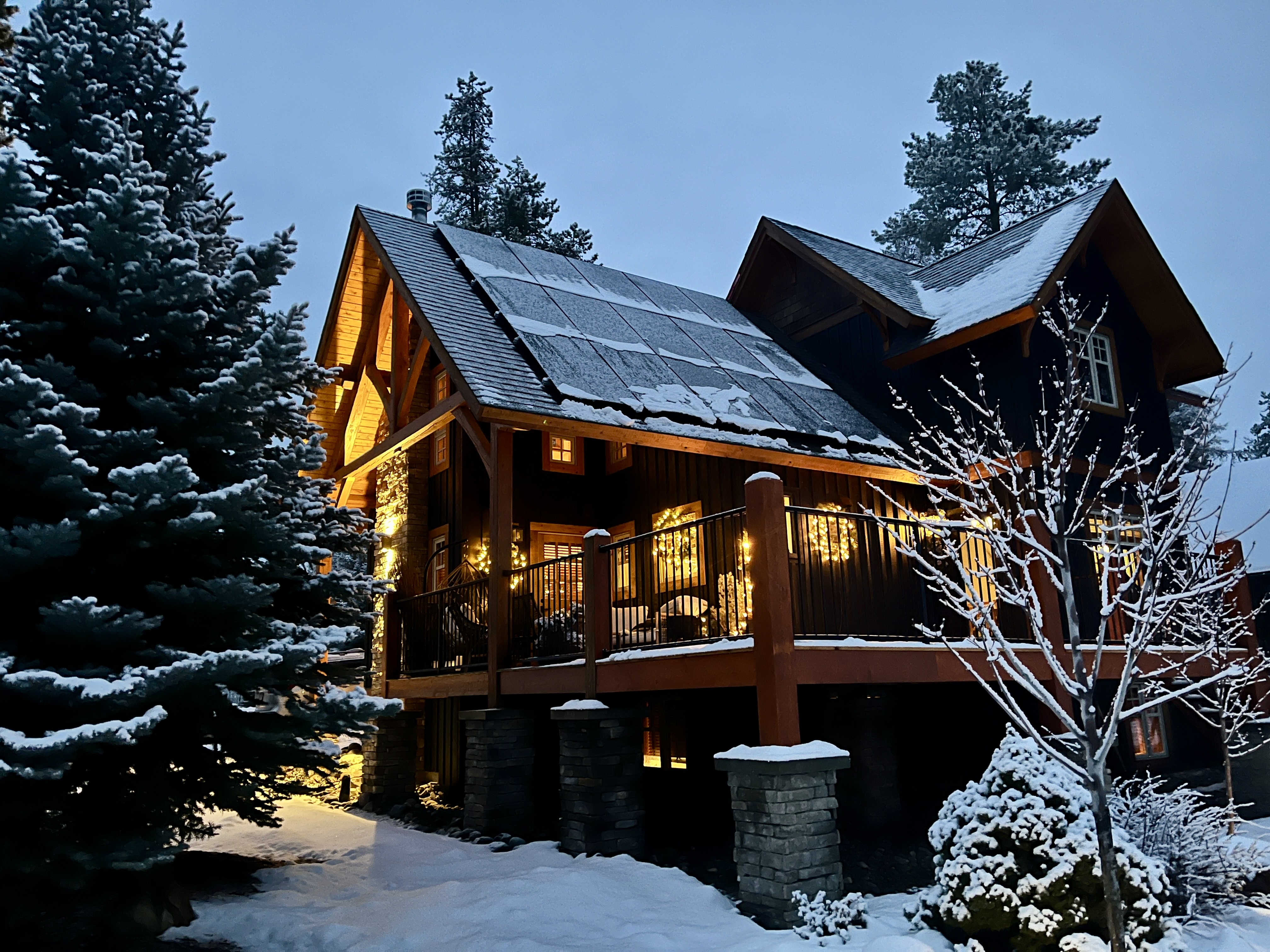
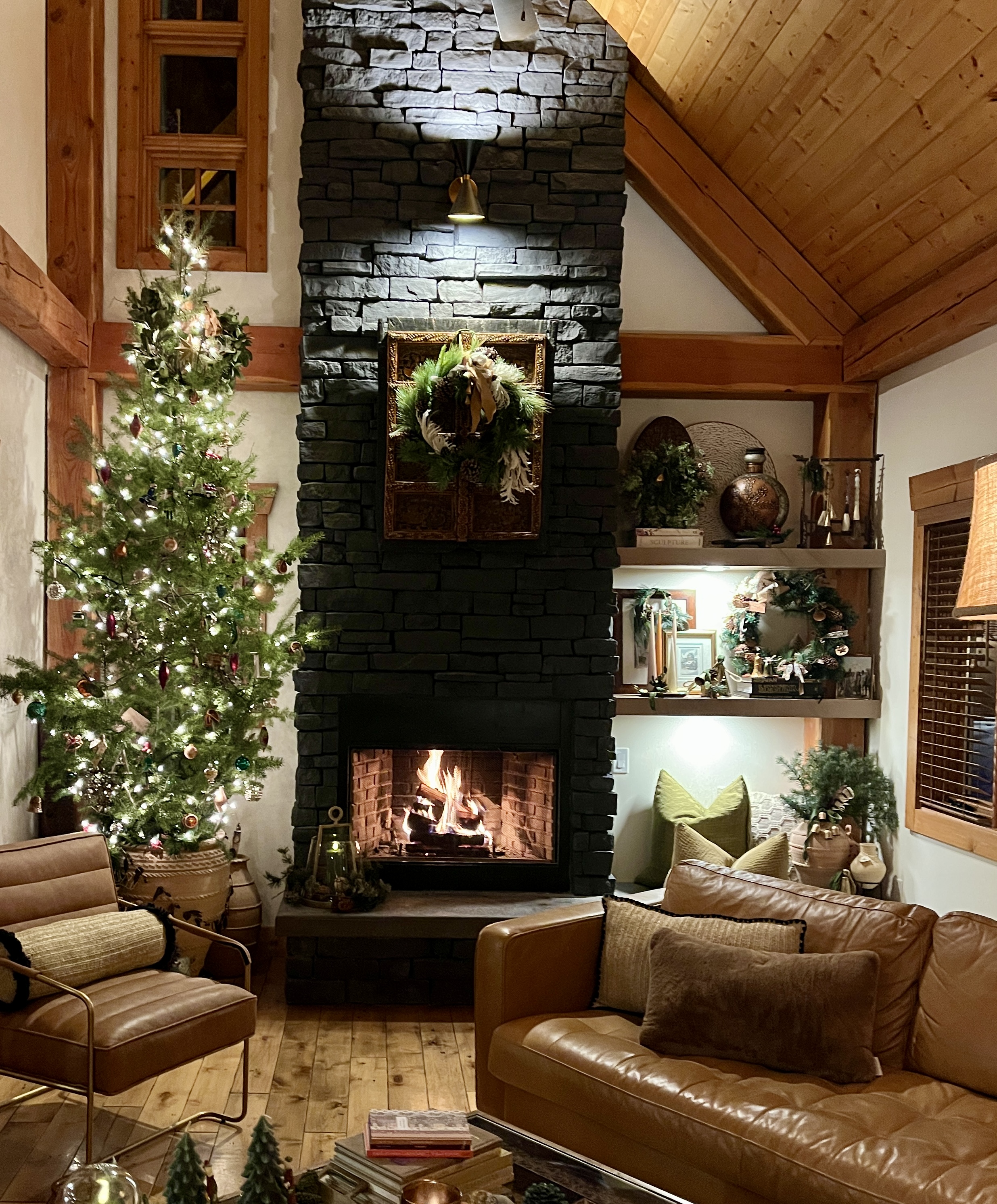
We rang in 2026 at our Canadian mountain home, cozy in the snow after a calm and picturesque Christmas. After an early family celebration, we were just three for the holidays – perfect for reading in front of the fireplace, playing games, watching home movies, and failing miserably at an intricate floral puzzle!

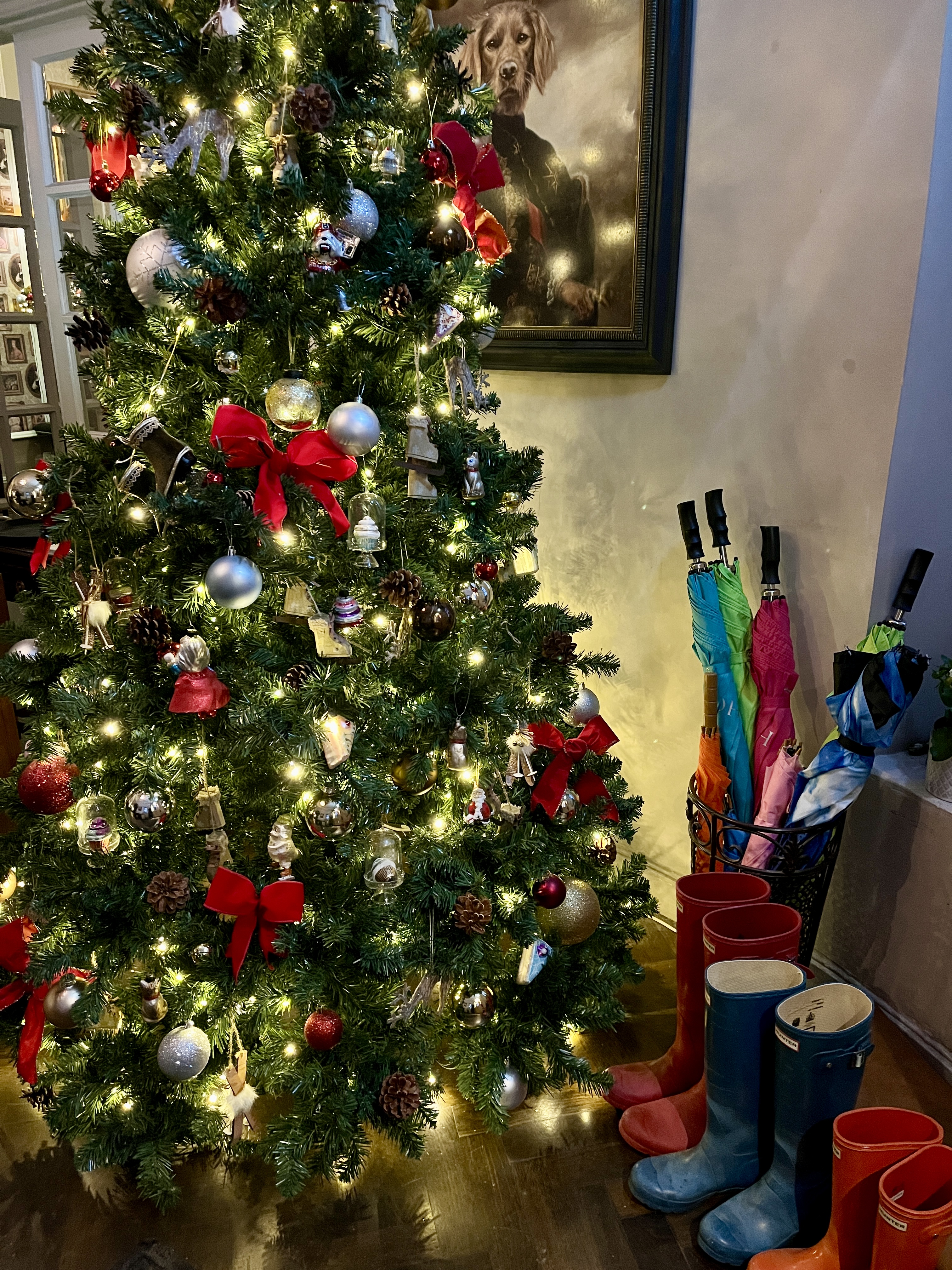
On that last day of 2025, I gazed at the twinkling Christmas tree lights, morning coffee in hand, reflecting with gratitude on an eventful year. Thankful for my small design business endeavours with my partner at Studio 1220, for our sparkling home renovation, for the two trips to Europe and for a beautiful summer wedding shared with family and friends from far and wide. I’ve also just closed a five-year chapter as the social media specialist for a local business… it’s finally time to concentrate on my next book project, a travel memoir.

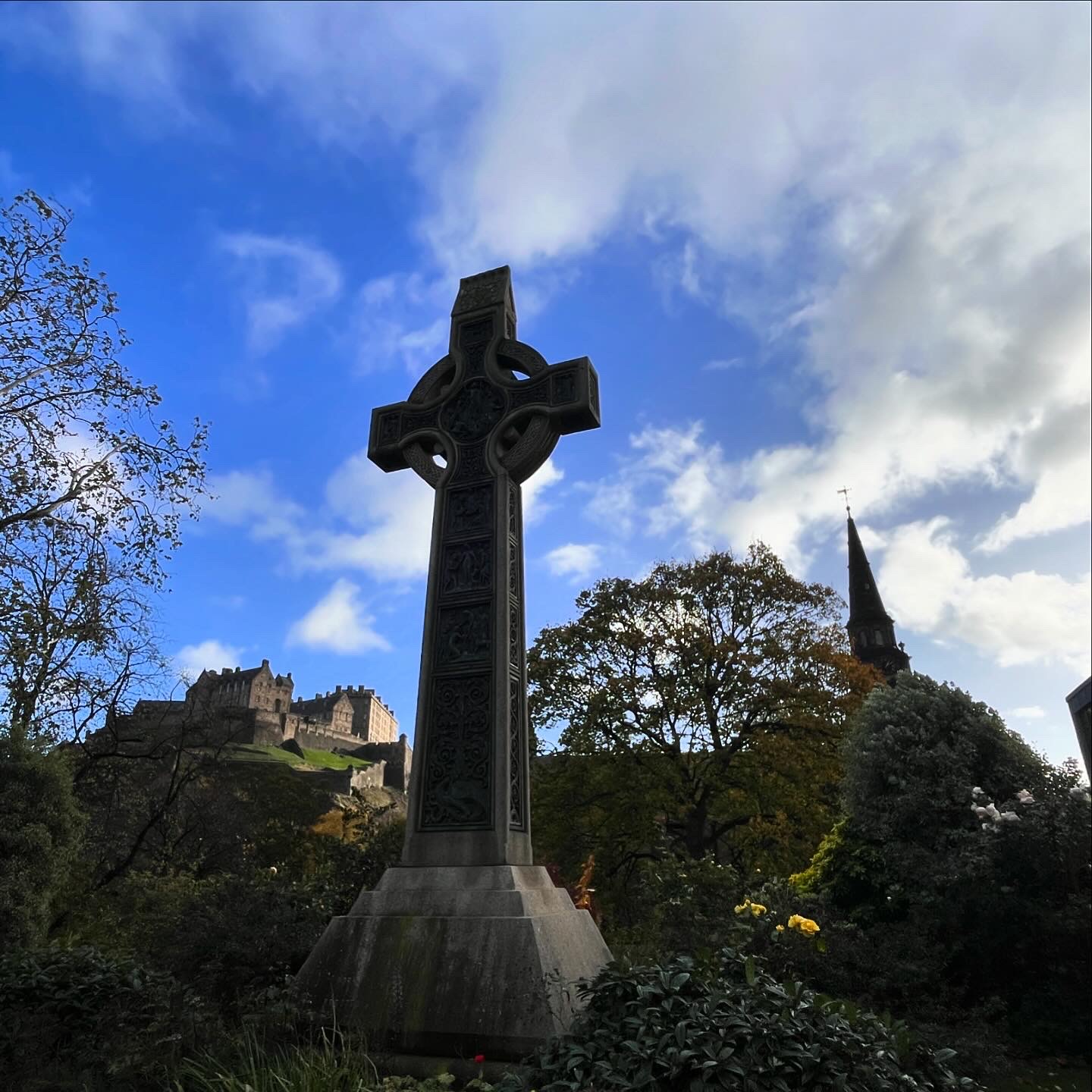
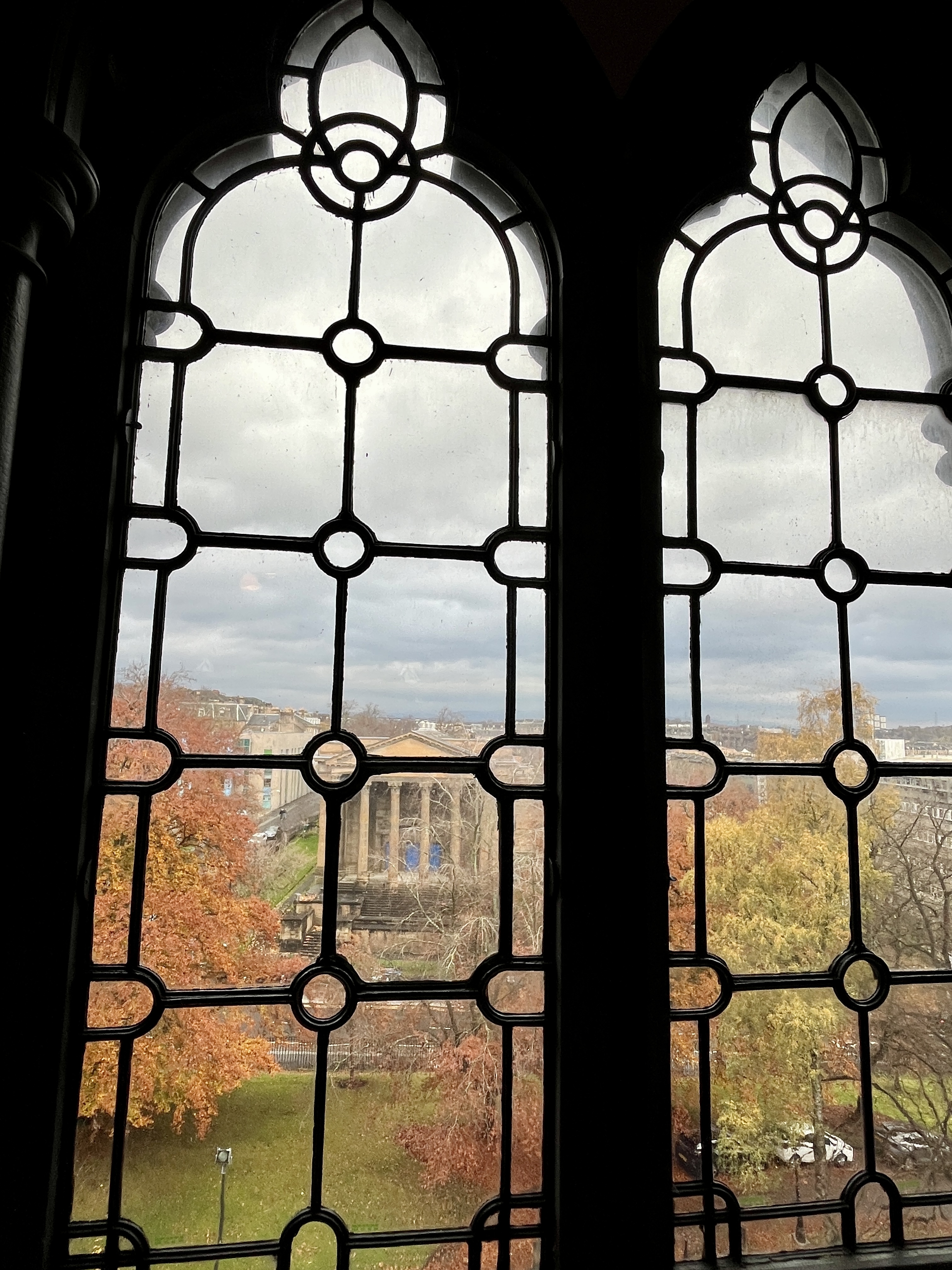
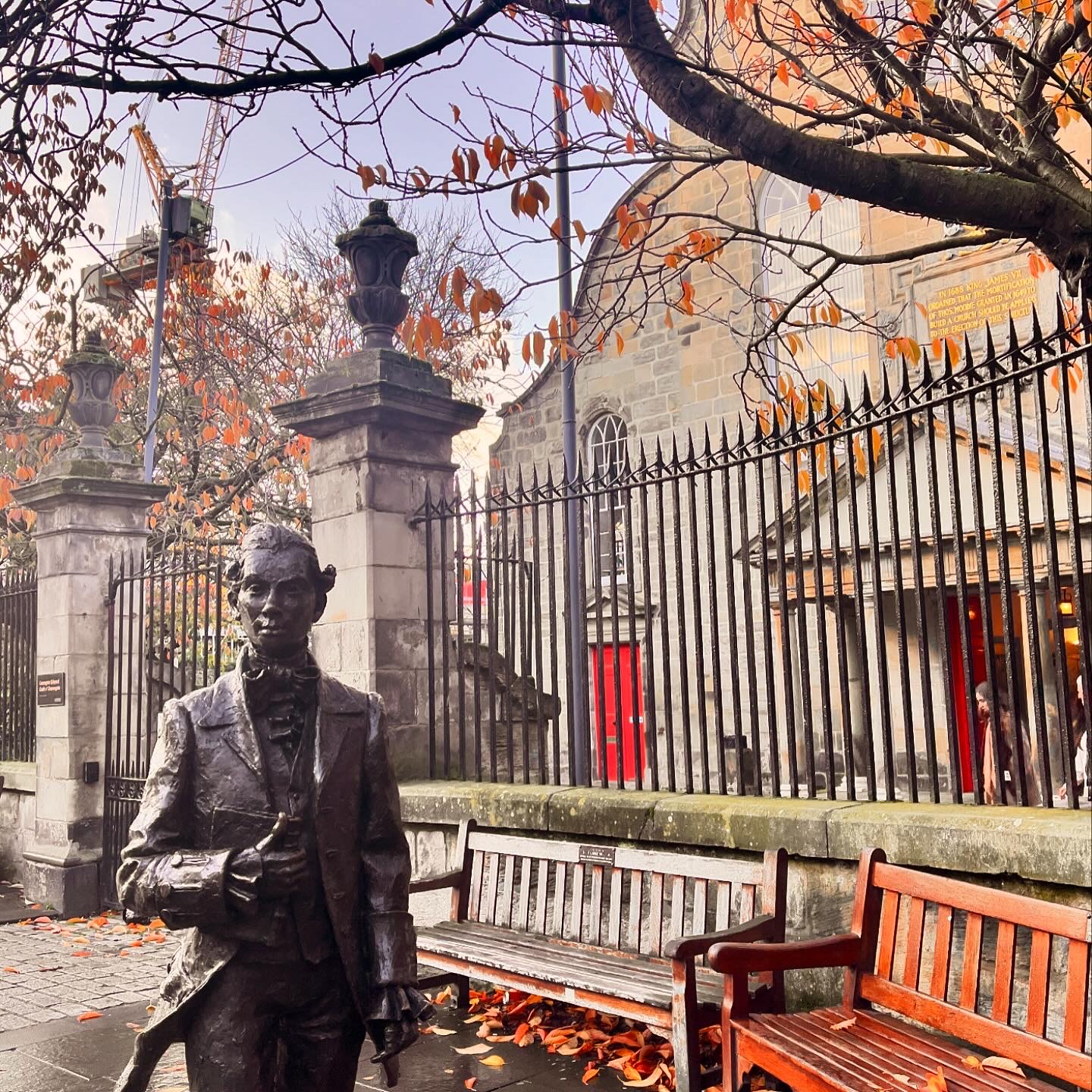
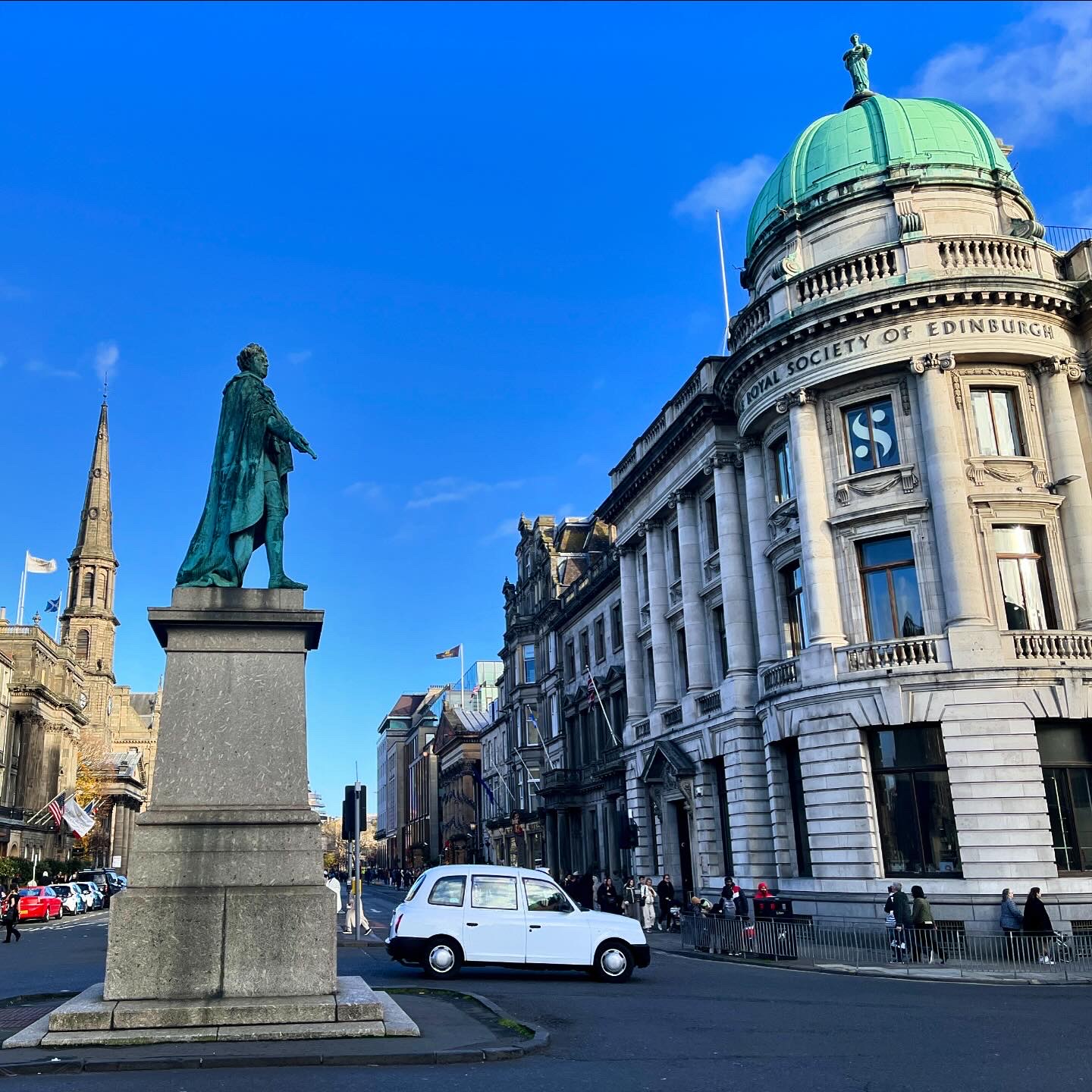
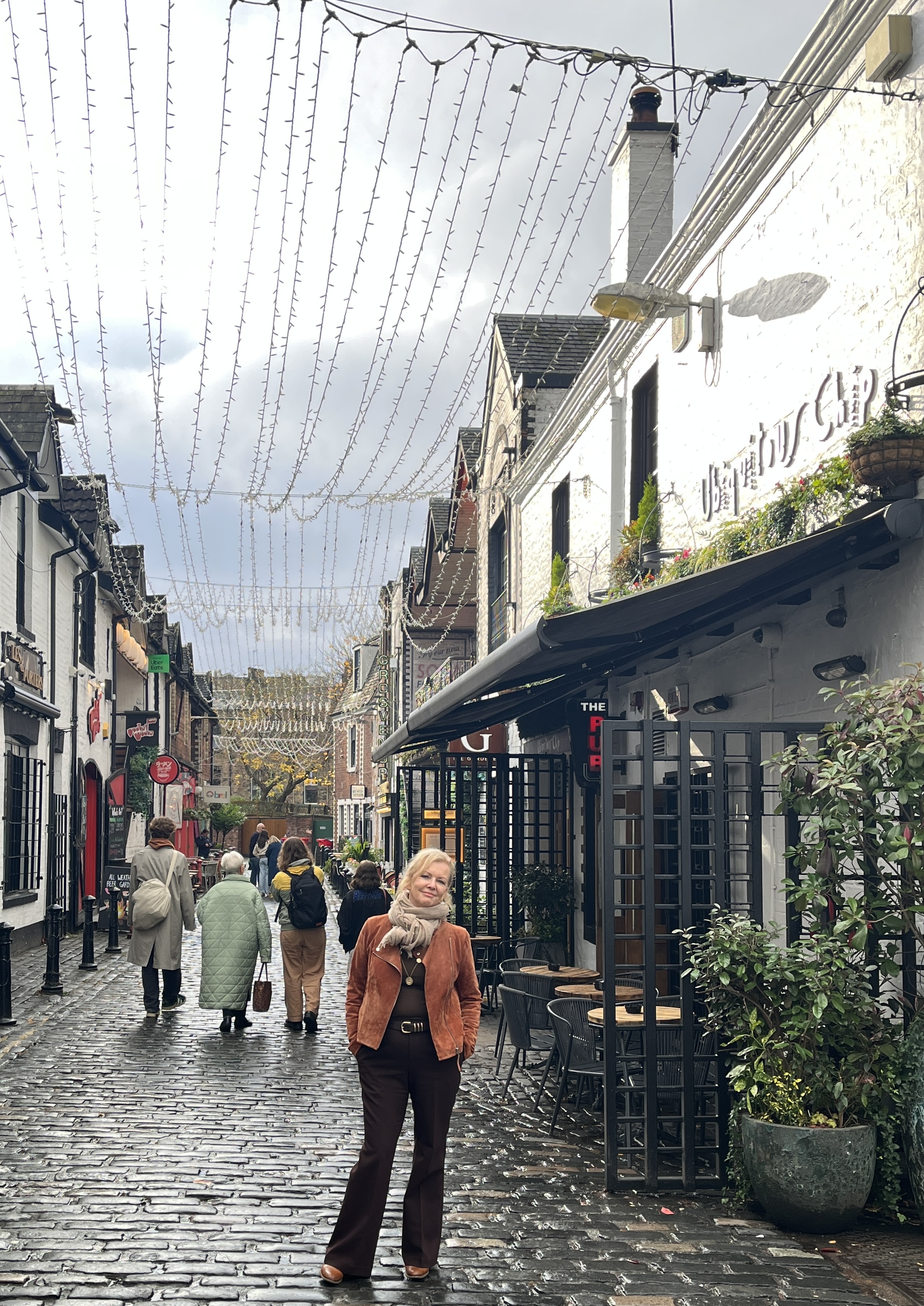
I was privileged to travel to Spain twice last year, yet I was so thankful to return to Scotland in November. A place that was once home and the dramatic country that my husband originally hails from. Rediscovering Scotland felt different this time with more connection and a deeper appreciation for the country that is part heritage to my children. We were primarily there for Bruce’s work project, yet we took the time to wander down well trodden memory lanes and also forge new interesting pathways.

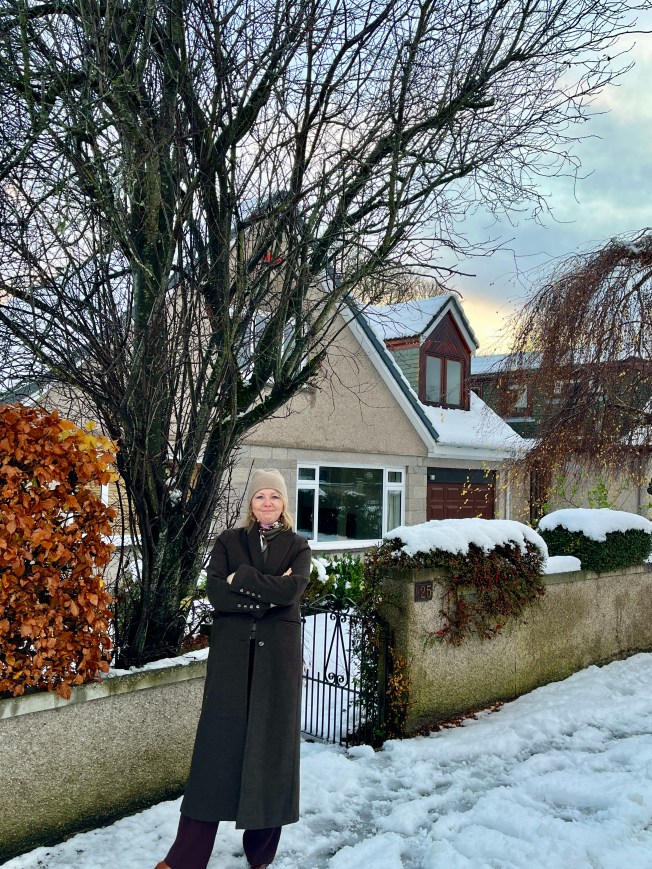
After stays in Edinburgh and Glasgow, we visited our former hometown of Banchory, a long stone’s throw from Aberdeen. Oh, how lovely it was to see our bonnie wee home again, still nestled behind a cotoneaster draped wall and the weeping birch that we planted. Memories came flooding back of our young family, the house like a time portal. I could see the boys riding tricycles in the back garden, banging on pots and pans in the kitchen, cuddling up to me as they listened to their favourite bedtime story.

Out of the thirteen homes that we’ve lived in around the world, this one is particularly special as it was the first home of our second son. It’s where we welcomed family and friends into its tartaned wallpaper and matching carpeted embrace. And also into the gorgeous garden where the sound of bagpipes might just drift along up to us. The house became a basecamp to explore from. Perhaps to the Highlands, through lavender, heather-covered hills, to the whiskey distilleries. Their pungent bold aromas soon forgotten after a taste of fine Scotch. Perhaps a trip to Lochness in the hopes of spotting the mythical ‘Nessie’. I can still hear our son Luke’s plaintive cry as he stood at the loch’s edge, ‘Nessie I’m here, where are you?” It has always felt like an incredibly special place to have lived!

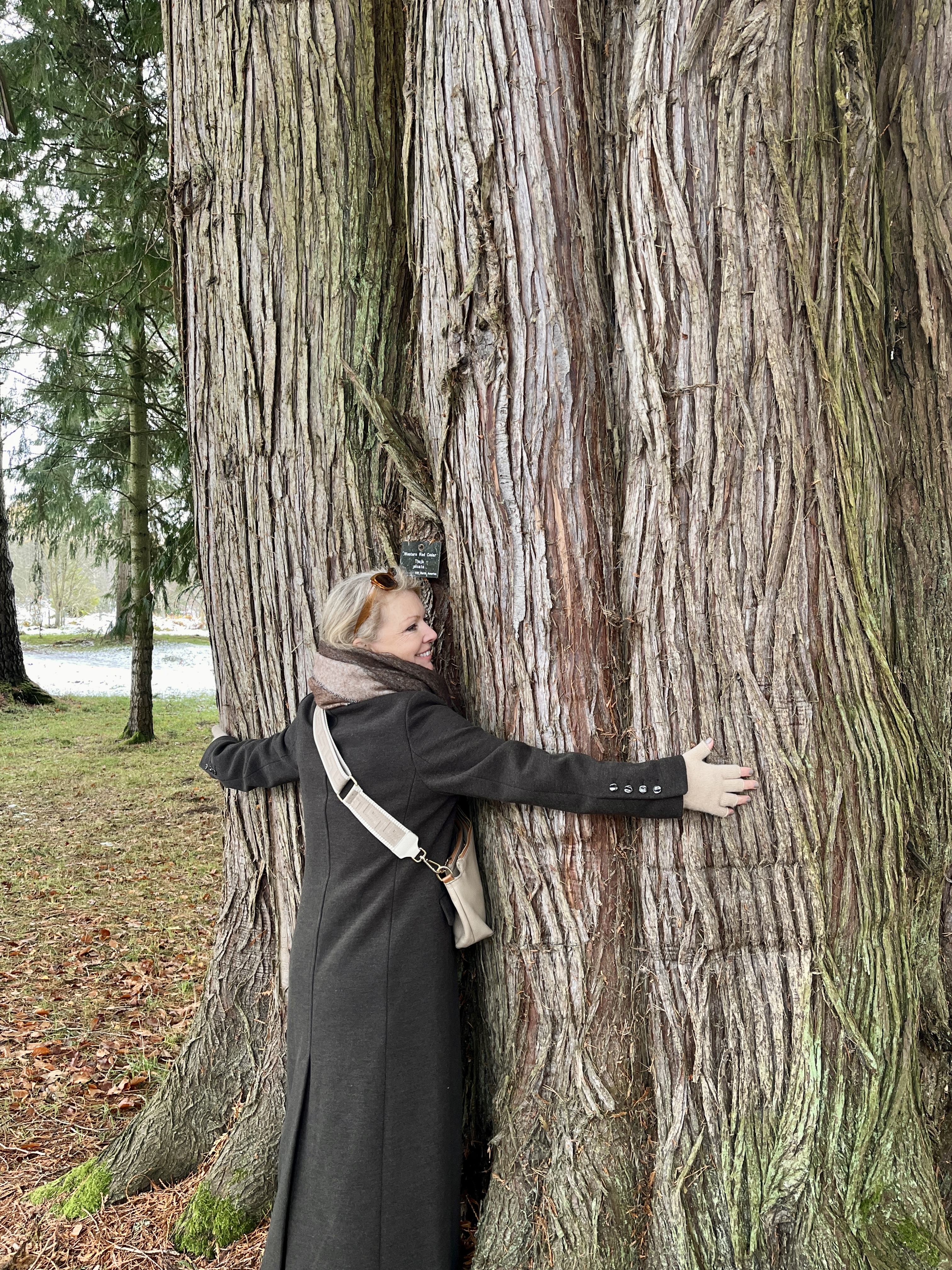
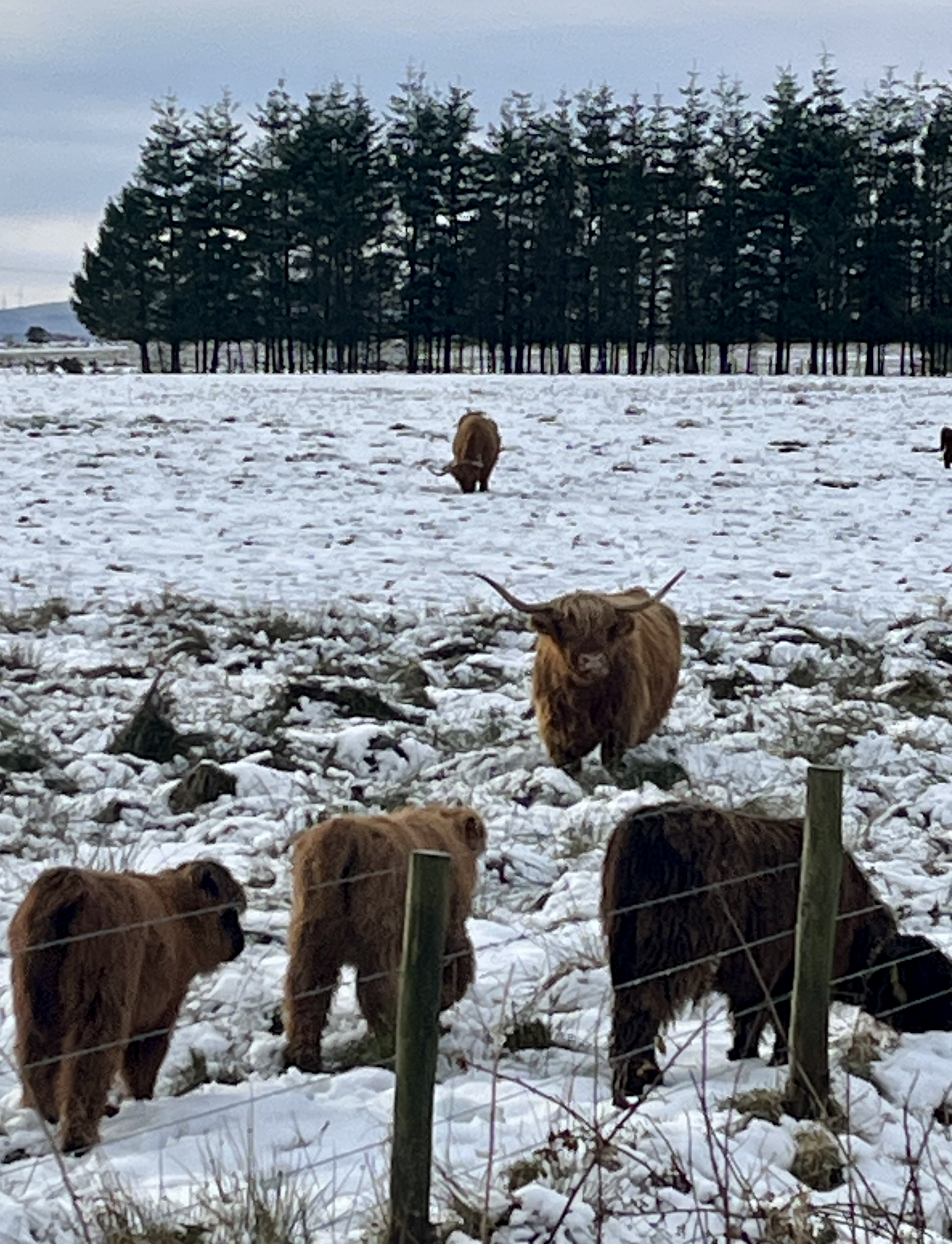
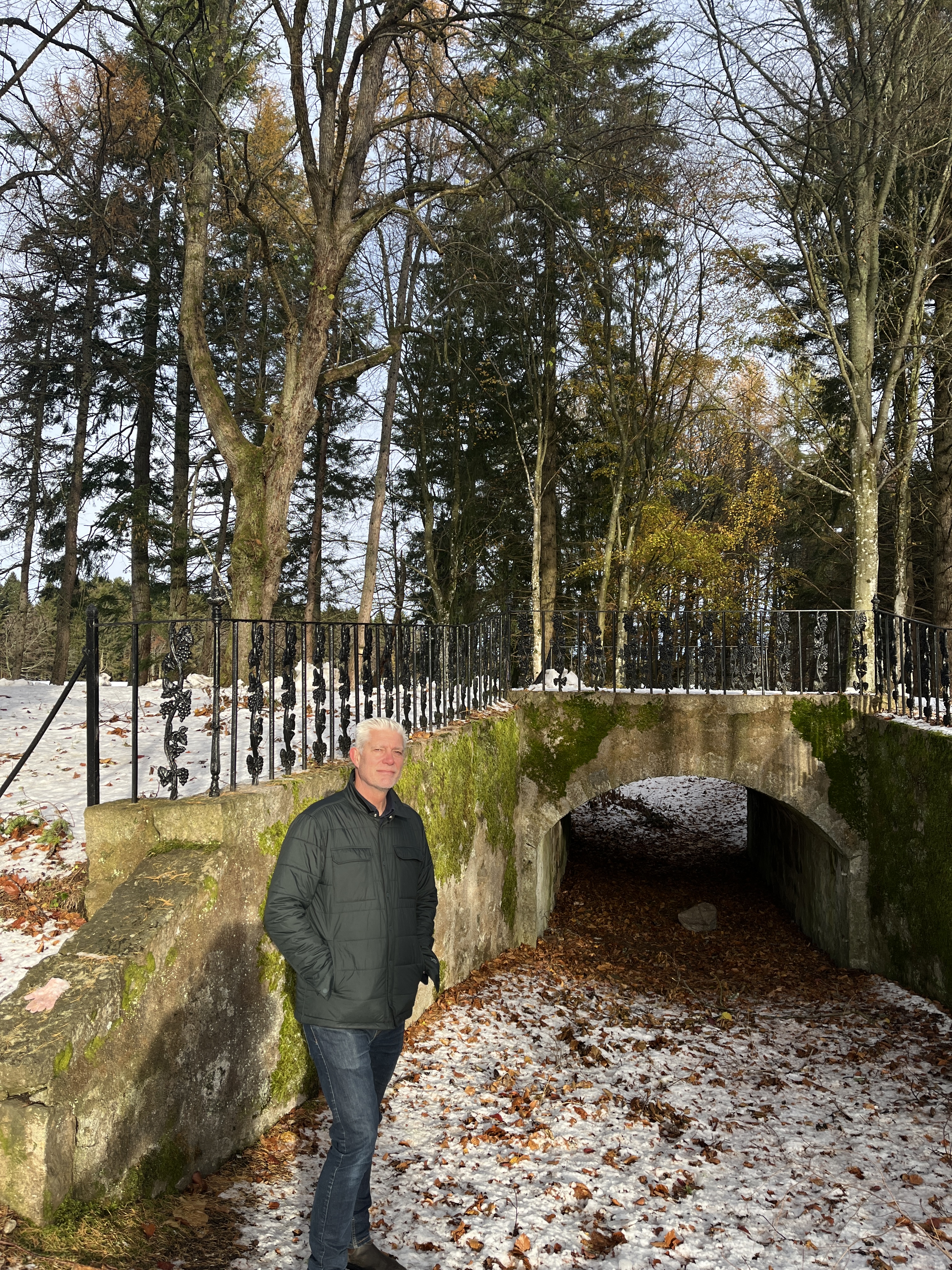
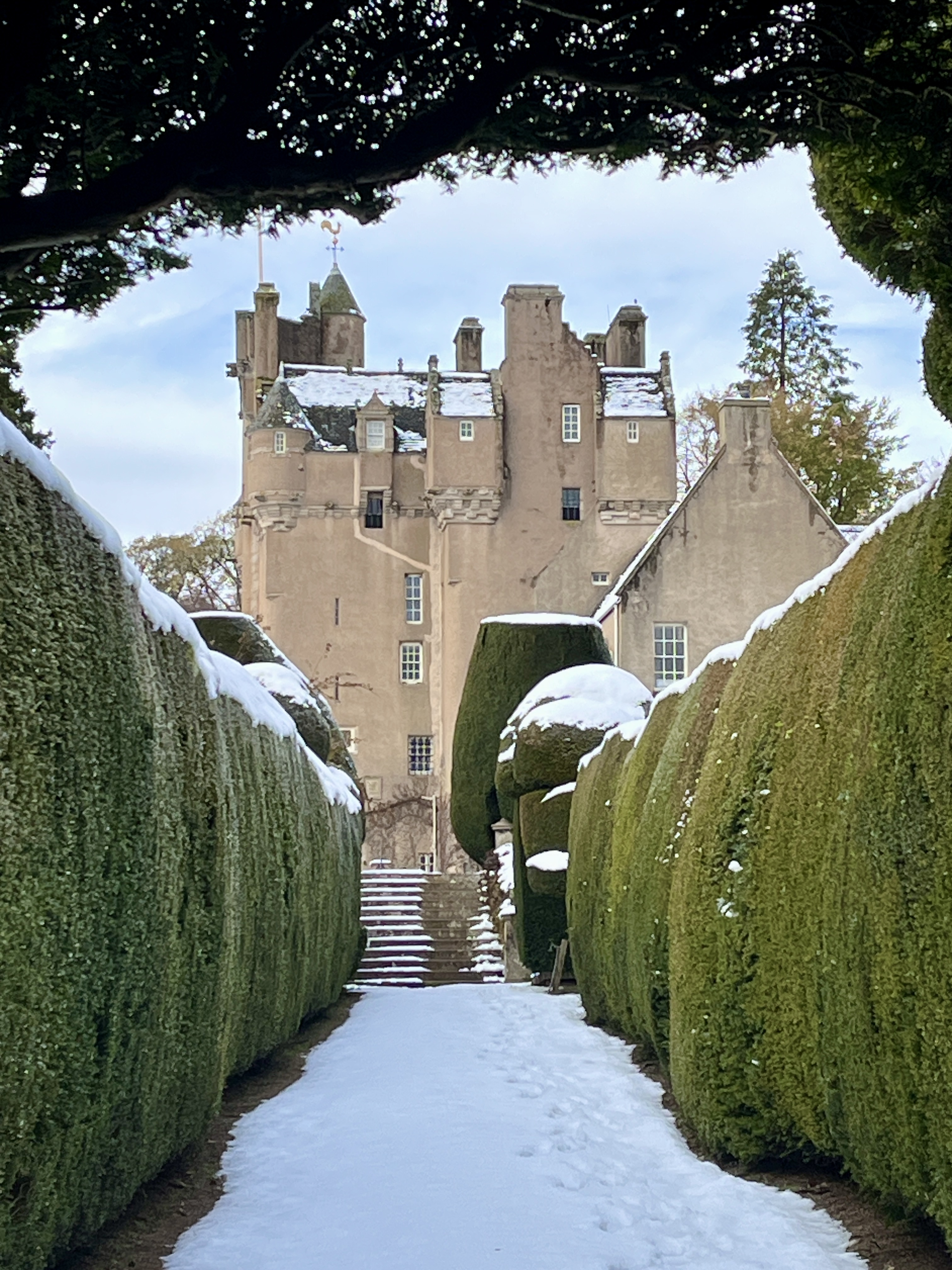
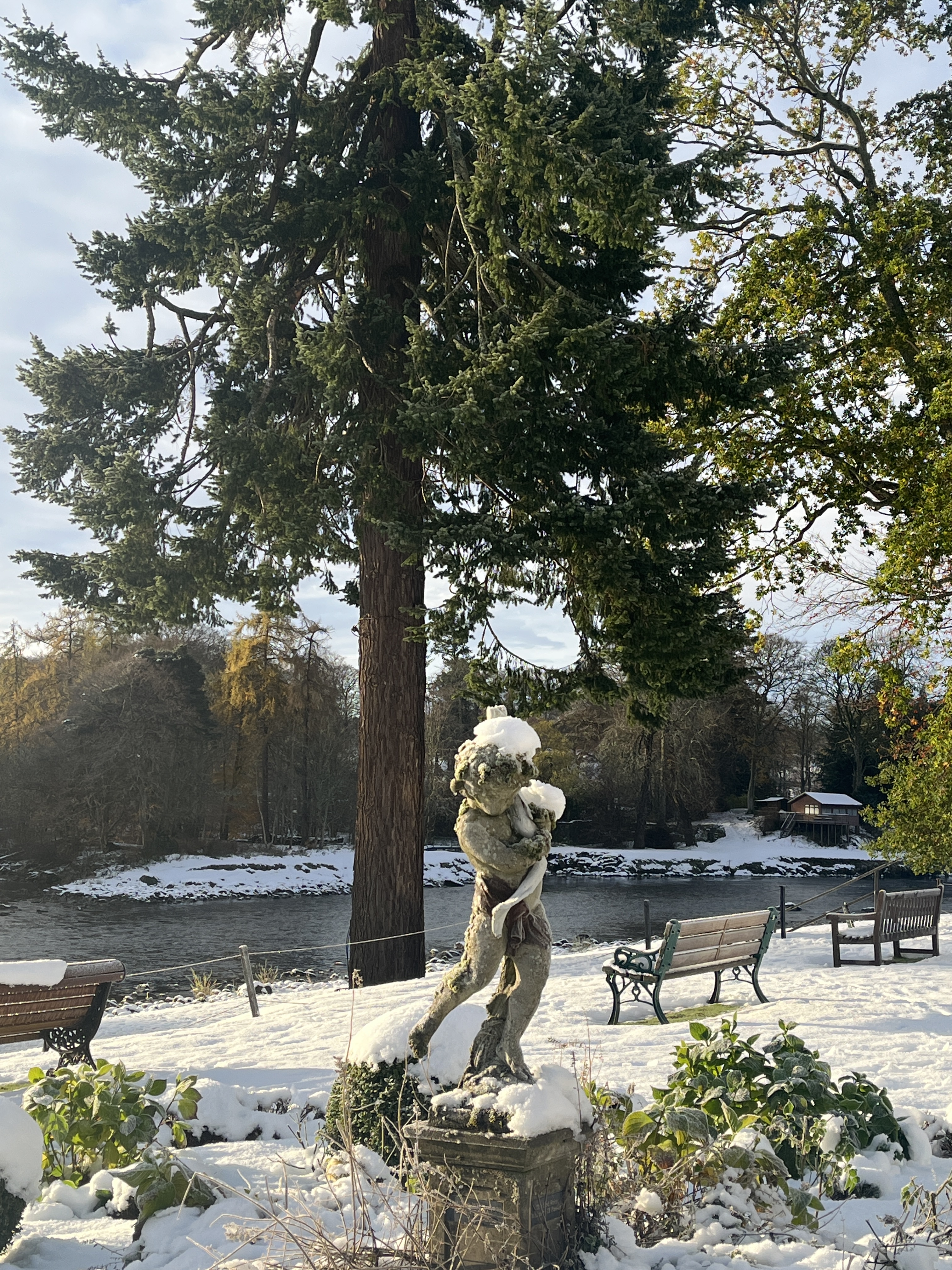
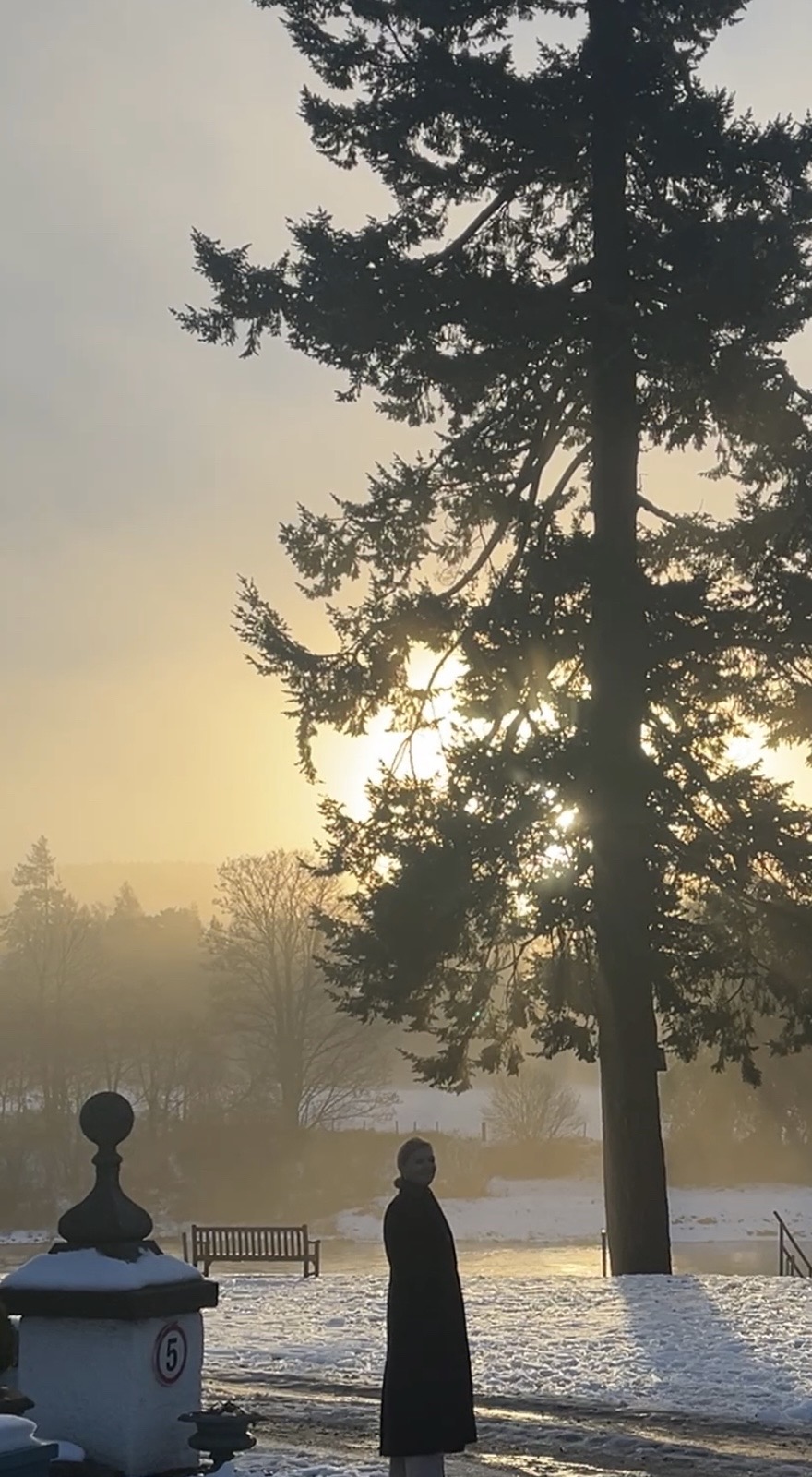
Nestled along the River Dee, Banchory is known as the Gateway to Royal Deeside. Queen Victoria and Queen Elizabeth visited their nearby Castle in Balmoral often. Between the 1940’s to 80’s, Banchory became world renowned for its lavender fields, now it’s better known for anglers hoping to catch prized salmon. Our local excursion on a chilly November afternoon wasn’t to fish, but to visit a number of castles, especially Crathes Castle, once a playground for our children. An unexpected snowfall had closed the road to the castle so we wandered through new-fallen snow through the pristine gardens and estate… catching glimpses of Highland Coos and hugging towering cedars – a counterpoint to the admirable topiary hedges of yew flanking the castle. Again in our mind’s eye, we pictured the kids running through the gardens on a summer’s day, the 16th century castle an unlikely yet stunning backdrop.

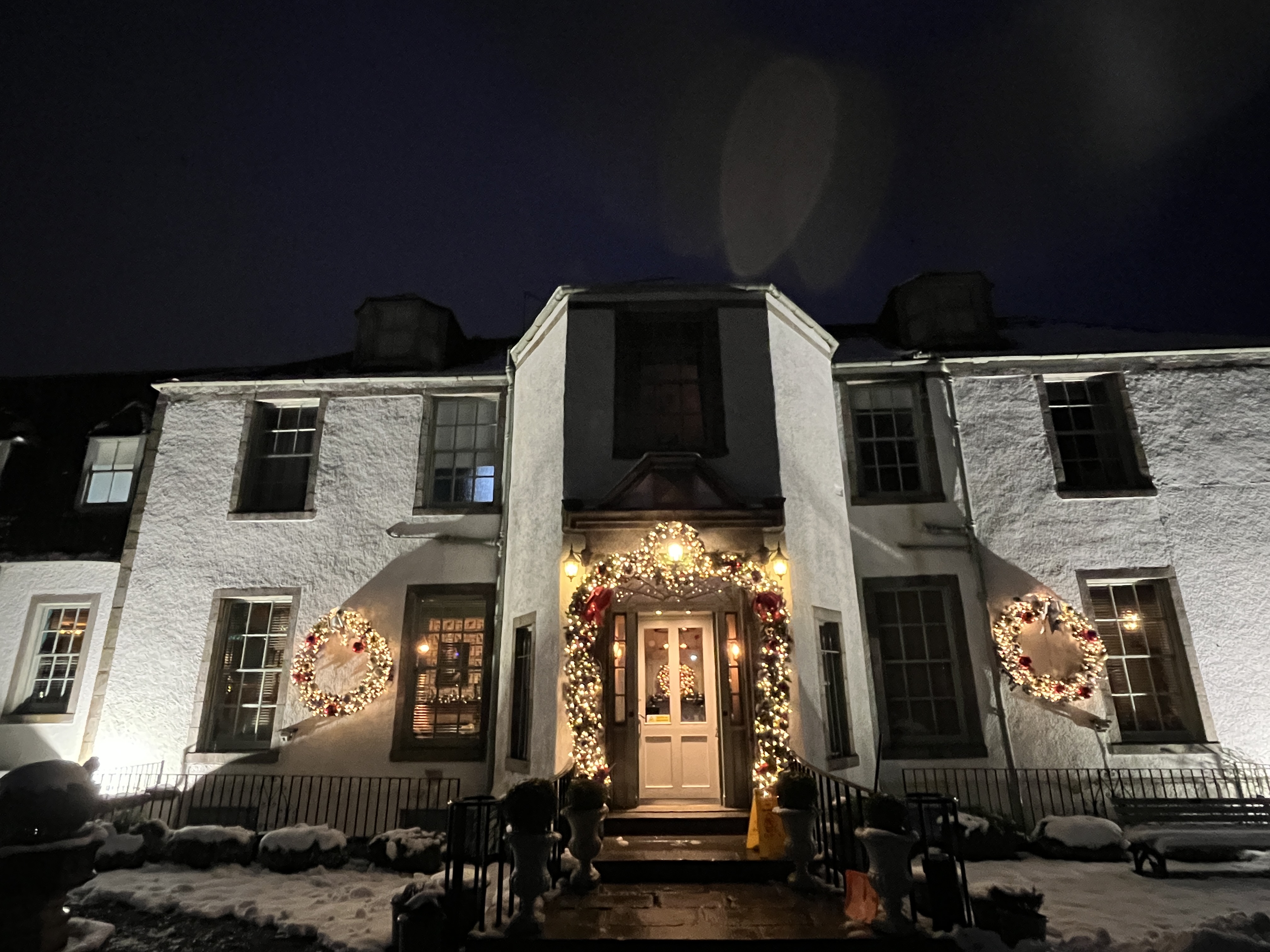
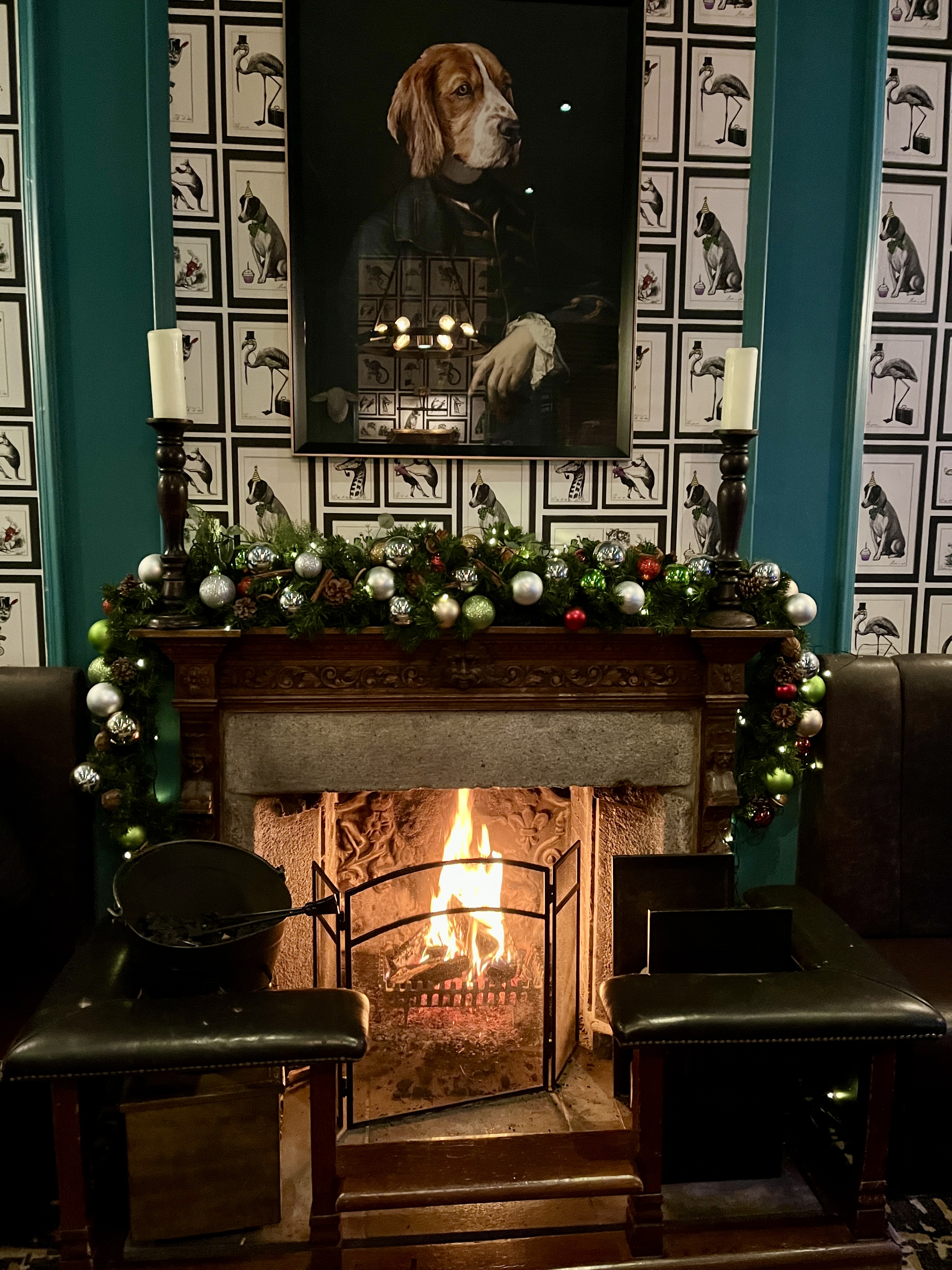
Memories, so many special memories. We stayed at the storied Banchory Lodge situated on the River Dee. Once a grand home, the reimagined boutique-style hotel is a blend of the historic and the modern. Over dinner and breakfast in front of the crackling fireplace, we took the time to relive and savour those early chapters in our life. We couldn’t have known how many more countries we’d be fortunate enough to live in – at 30 years old Scotland was already our third – and we didn’t yet have an inkling that we would gratefully welcome a third son into our family. Which circles back to the most important event of this year.

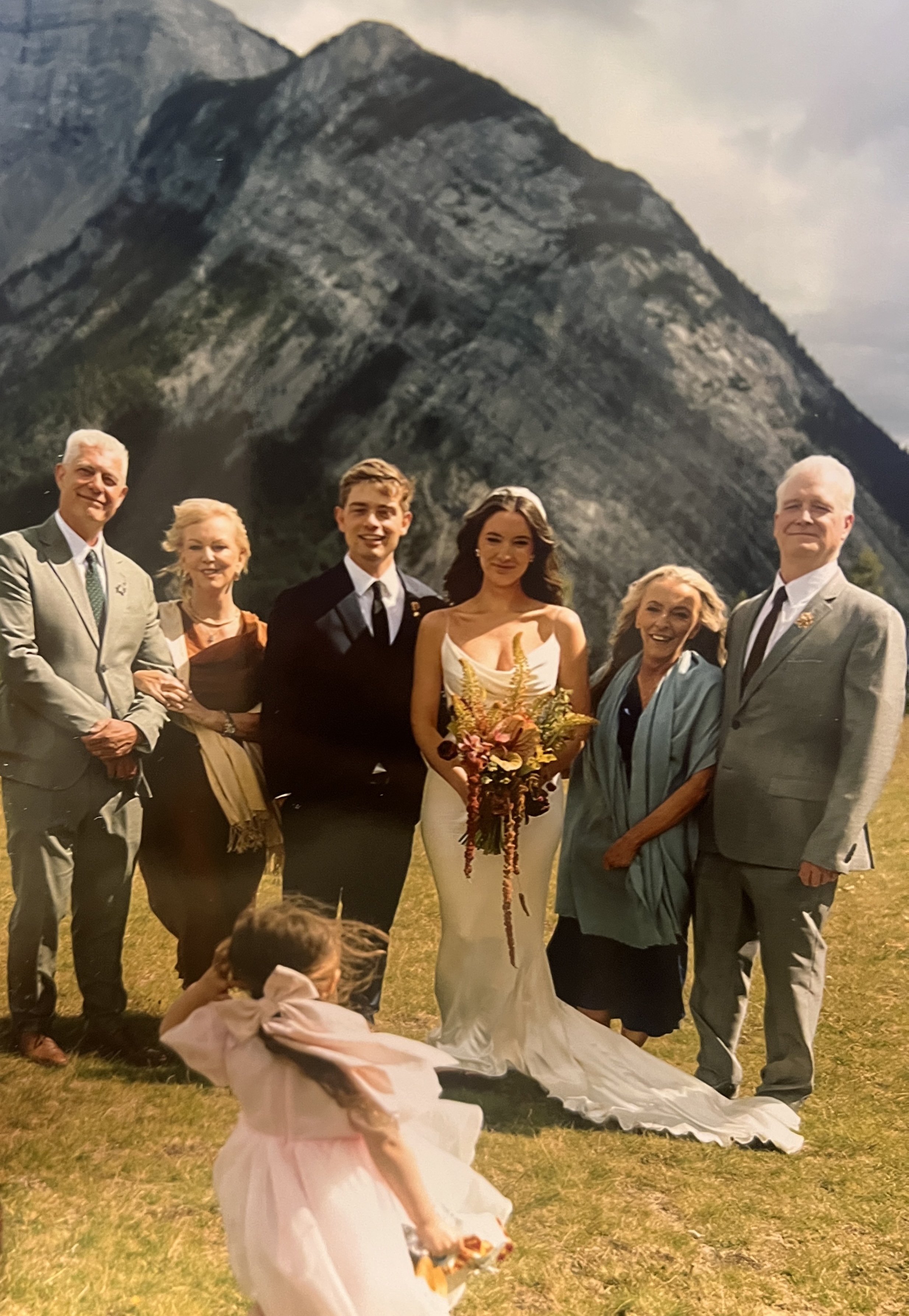
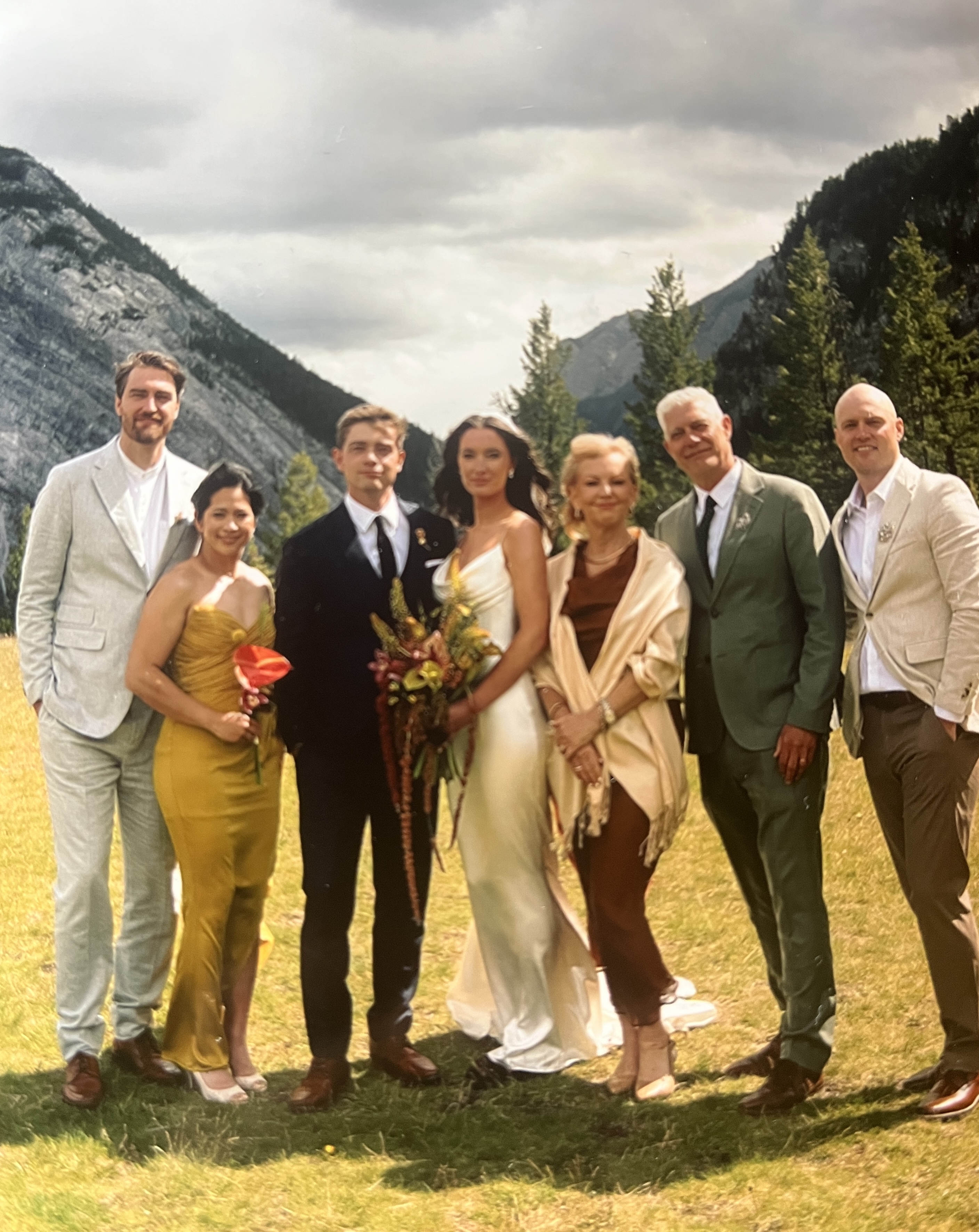
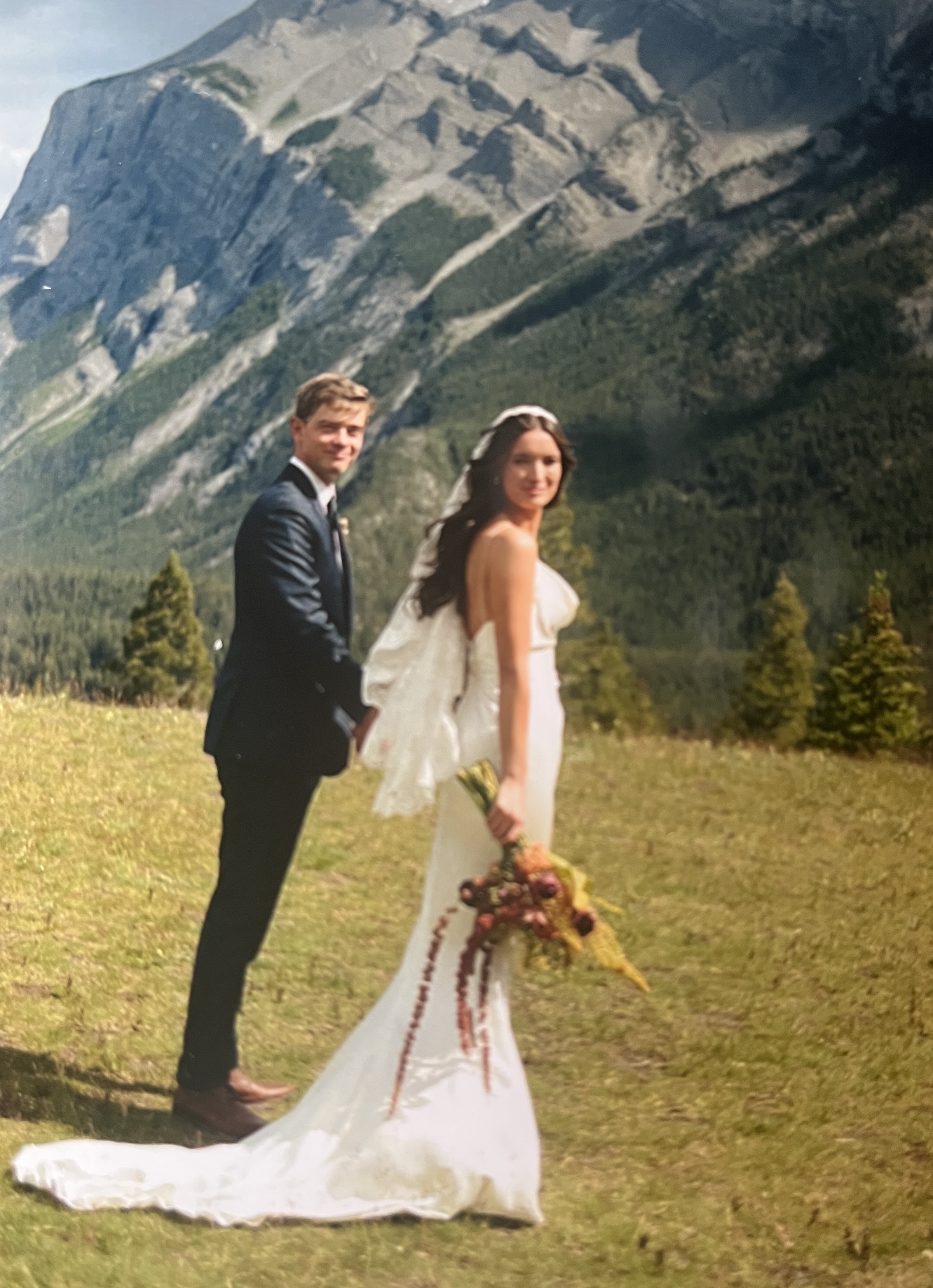
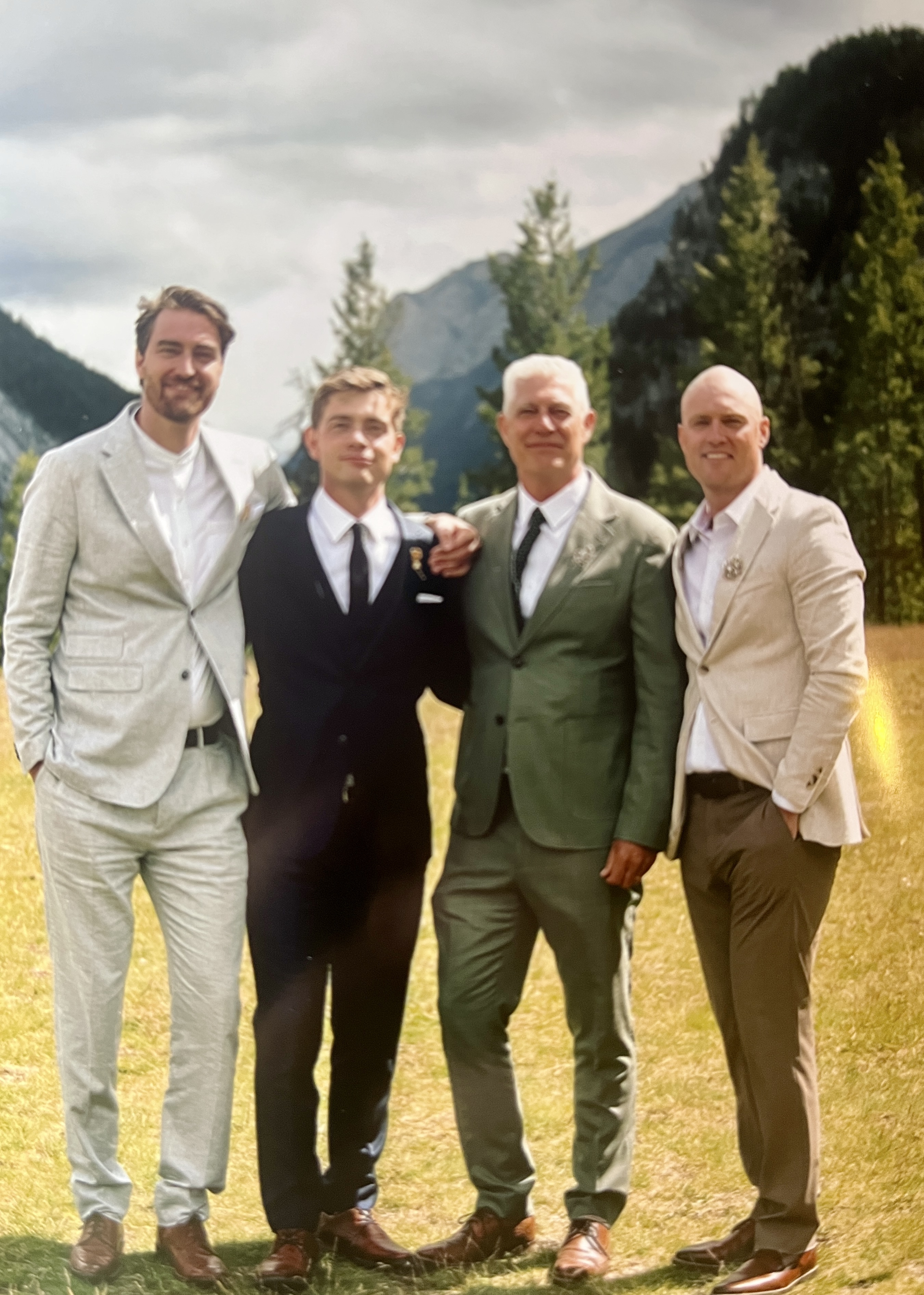
Just as Luke and Trixie’s nuptials three years ago in The Philippines were so special, Andrew and Ayla’s summer wedding closer to home was also a blessing and joyous occasion. A most perfect day. Another strong and loving daughter officially added to our family. Two families united, two celebrations between Banff and Kimberley, two events where family and friends mingled and danced the evenings away!

So with gratitude and hope for this year, I wish the same for you dear reader… calm and peacefulness that we all need more than ever.

Thank you for reading and a very Happy New Year, wherever you may be!

Post Script… 10 Things I Love About Scotland

The ‘New Scot’ – the term for new immigrants who are welcomed and encouraged to make the country their new home.

Friendly chit-chats at local pubs.

The deep, rich history that is still palpable and celebrated.

The beauty, from the architecture to the landscapes.

The proud tradition of music, you might even find yourself Scottish dancing in a pub on a Monday evening!

The beautiful heritage of tartan.

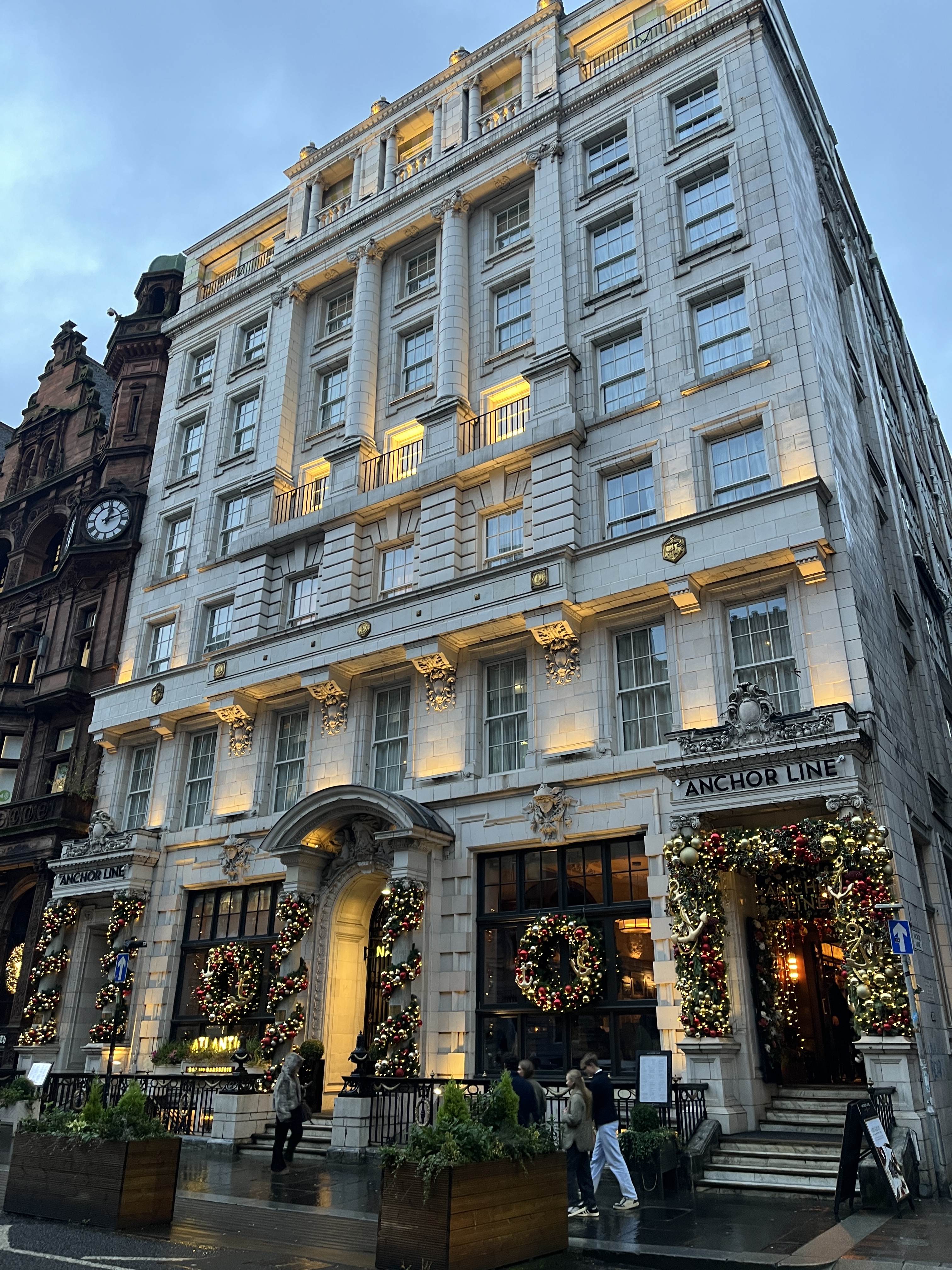
The culinary scene, from traditional to fusion to food from other lands… Dishoom Glasgow, Ivy Glasgow, Black Isle Brewery Inverness, The Chester Aberdeen, The Anchor Glasgow, Cafe Andaluz Edinburgh.

Train travel, easy and incredibly picturesque… The Caledonian Sleeper to London is a good option for flights arriving in London.

Museums, galleries and tours… informative and inspiring such as The National Museum of Scotland in Edinburgh, Aberdeen Art Gallery, Glasgow City Chambers Tour, Walking Tours Glasgow.

Hotels I’d recommend… Malmaison Aberdeen, The Address Glasgow, Banchory Lodge, Radisson Blu Edinburgh. AC Hotel by Marriott Inverness.

Sensational Seville… Solo travel Spanish style

Standard

As I check into the gorgeous Tayko Hotel, one of the friendly staff orientates me with the city. Miquel explains that there’s a fun saying in Seville. “There’s more tapas bars than people,” he quips as he jots down a few of his favourites on the city map. He explains that here in Andalusia, they love humour and exaggeration. Over the next four days, not only will I find my own favourite tapas bar, I’ll notice that the locals absolutely have a certain joy and exuberance for life, a love of music and dance… and then there’s the flamenco!

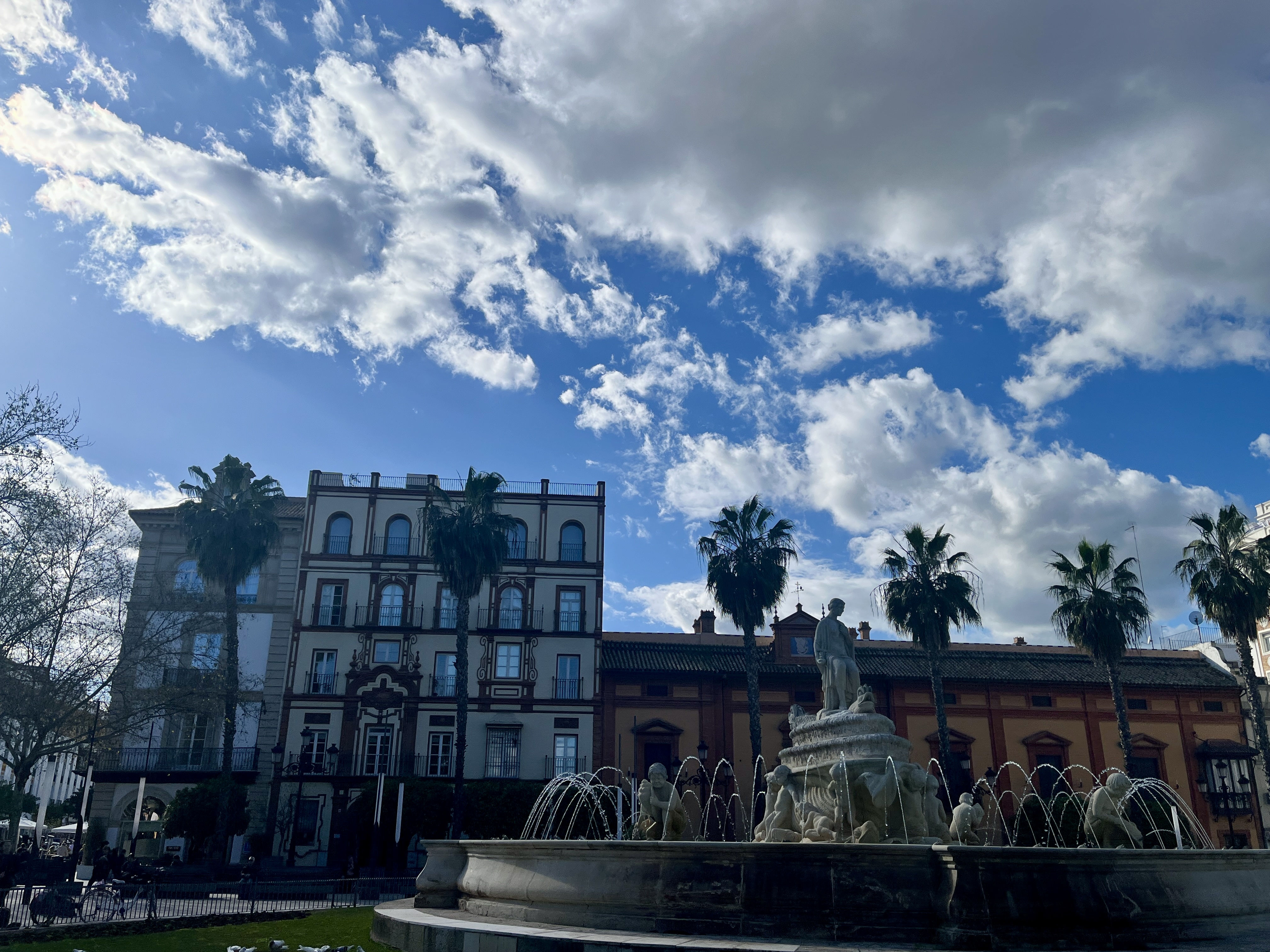
Seville (seh-VEE-yah) is flamboyant, beautiful, stately yet inviting. ‘A vibrant sangria of civilization,’ to borrow Rick Steve’s apt description. Also, I find it to be a veritable city garden, where luscious oranges and lemons really do dangle from tree-lined bouvelards. The City of Oranges, as it’s known, is also blessed with the tallest of palm trees, vivid bird-of-paradise, parakeets and white doves in abundance, gorgeous white bougainvillea against crinkly cacti, and the jasmine blooms are just beginning to perfume the late March air. Colourful mosaics adorn walls, musicians take their turns on street corners, and the layering of the past… Roman, Moorish and Spanish is an intoxicating palimpset of history.

I‘m delighted to have some warm weather as this trip started in rainy Barcelona. I use ‘I’m’ as this is mostly a trip of solo travel. Other than a lovely two day visit with a friend in Valencia and a writing retreat still to come with friends after Seville, I’m on my own. At breakfast this morning, another solo traveller from the Netherlands and I were discussing the advantages of meandering single. We celebrated the challenge and thrill of navigating and scheduling – thankfully the Spanish train system is efficient – and the satisfaction of arriving where you’d hope to be. Call me old school, yet I prefer a physical map to google – maps of Barcelona, Valencia and Seville are already tatty, marked and ‘souvenirs’.

Solo travel allows for serendipitous encounters, both with other travellers and locals. The Spanish are welcoming with a fascinating, proud culture. As a travel writer, being on my own allows me to observe and explore thoroughly, to fully embrace the history and nuances of a place. I admit by sunset, sitting alone at an outdoor cafe in a plaza thrumming with life can feel a little lonely and yet that’s how I’ve already met so many interesting people on this trip. Taking a local tour is also essential when you’re travelling alone. In Barcelona, I did a paella making course, fantastic and delicious! Here I tour twice in one day, the old town, then the Jewish area which finishes with a group tapas date… insightful, lively and lovely company for an evening.

Speaking of exploring, we know that explorers Amerigo Vespucci and Ferdinand Magellan sailed from this river harbour, discovering new trade routes and abundant sources of cocoa, tobacco, gold and silver. When Spain boomed as a gateway to the New World in the 1500’s, Sevilla also transformed. Yet another great explorer had sailed from nearby even earlier. In 1492, the Italian Christopher Columbus had persuaded the Spanish Monarchs to finance his bold scheme to trade with the East by sailing West.

Yet that’s really more ‘recent’ history. Seville was founded as the Roman city of Hispalis, one of the most important cities in the empire. Nearby Italica was founded in perhaps 200 BC, Trajan and Hadrian called it their hometown. Move forward to 711 AD, and it became Ishbiliyah during the Islamic conquest, then part of the Arab kingdom Taifa of Seville, eventually incorporated to the Crown of Castile in 1248.

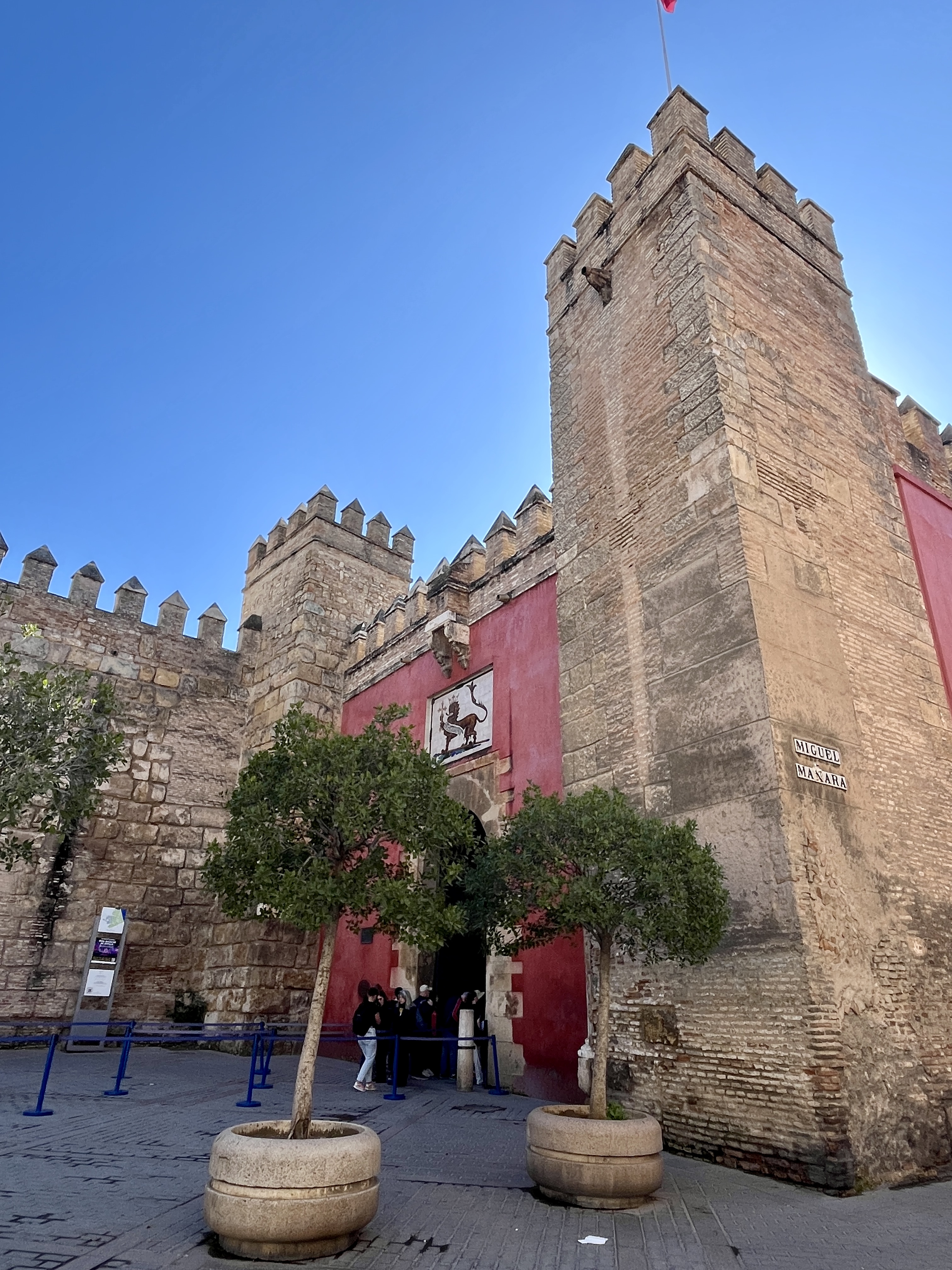
Today this rich history is now a UNESCO World Heritage Site known as the old town… the Alcazar palace, the largest Gothic cathedral in the world – once a mosque – and the General Archive of the Indies as its anchors.

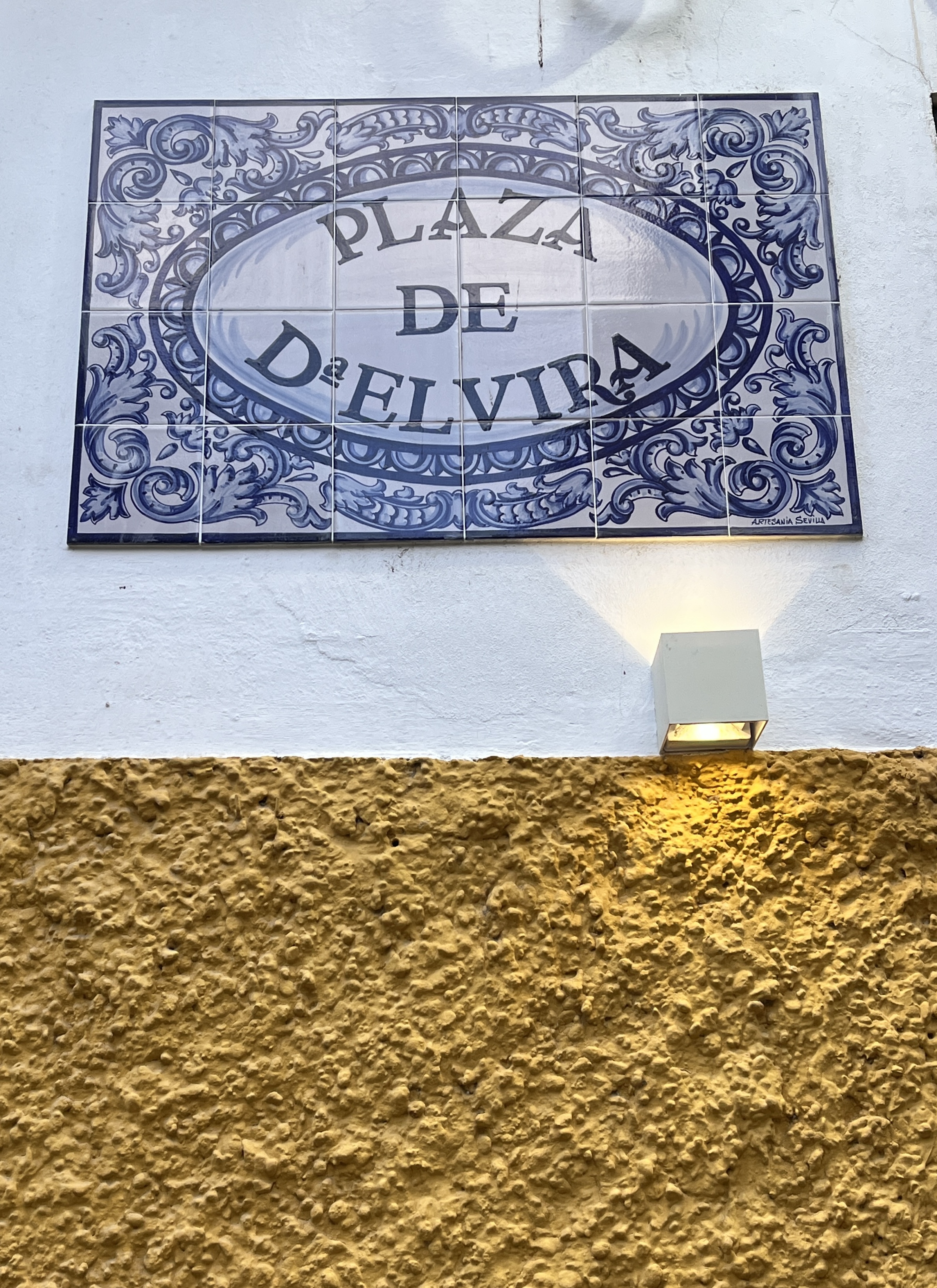
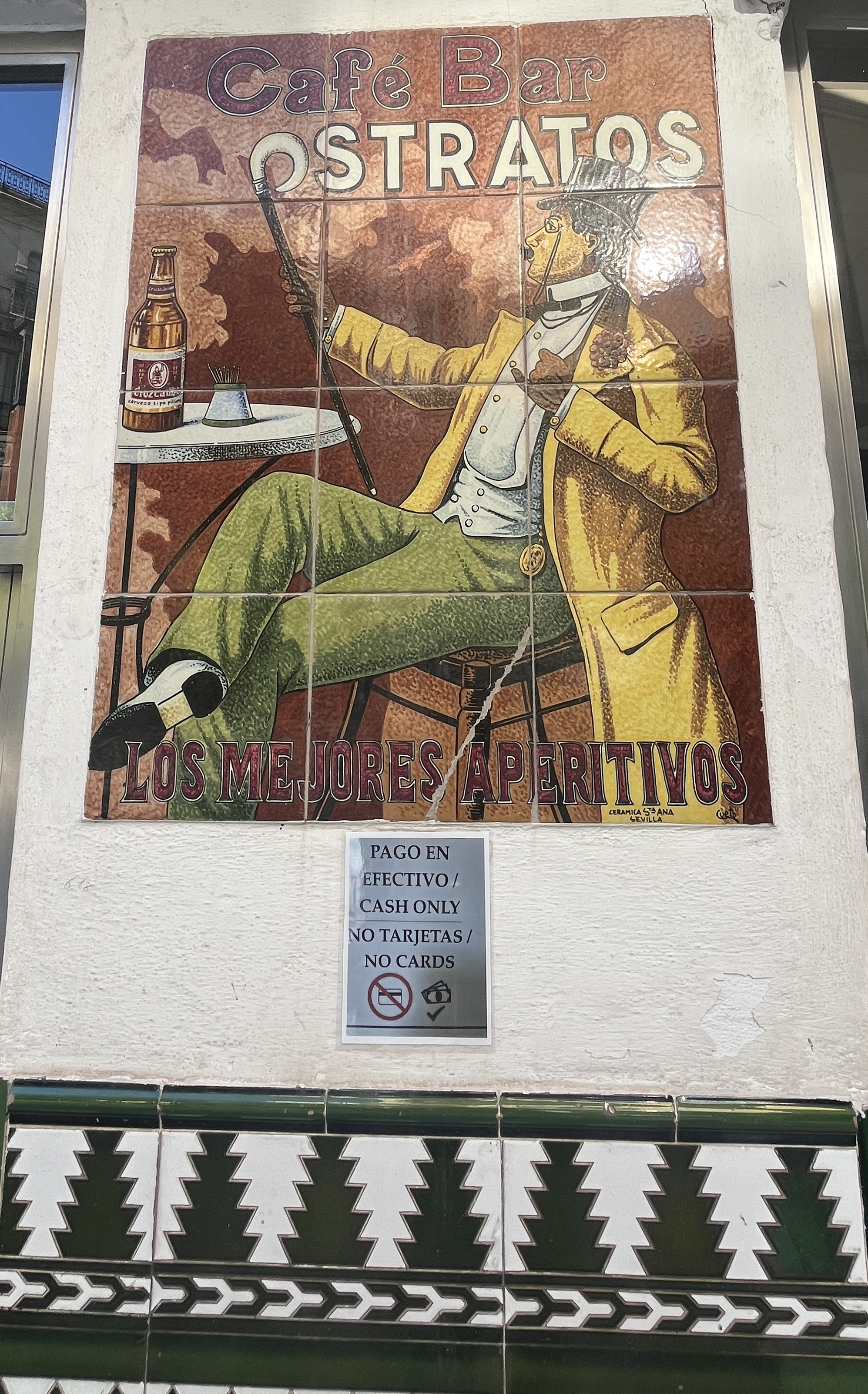
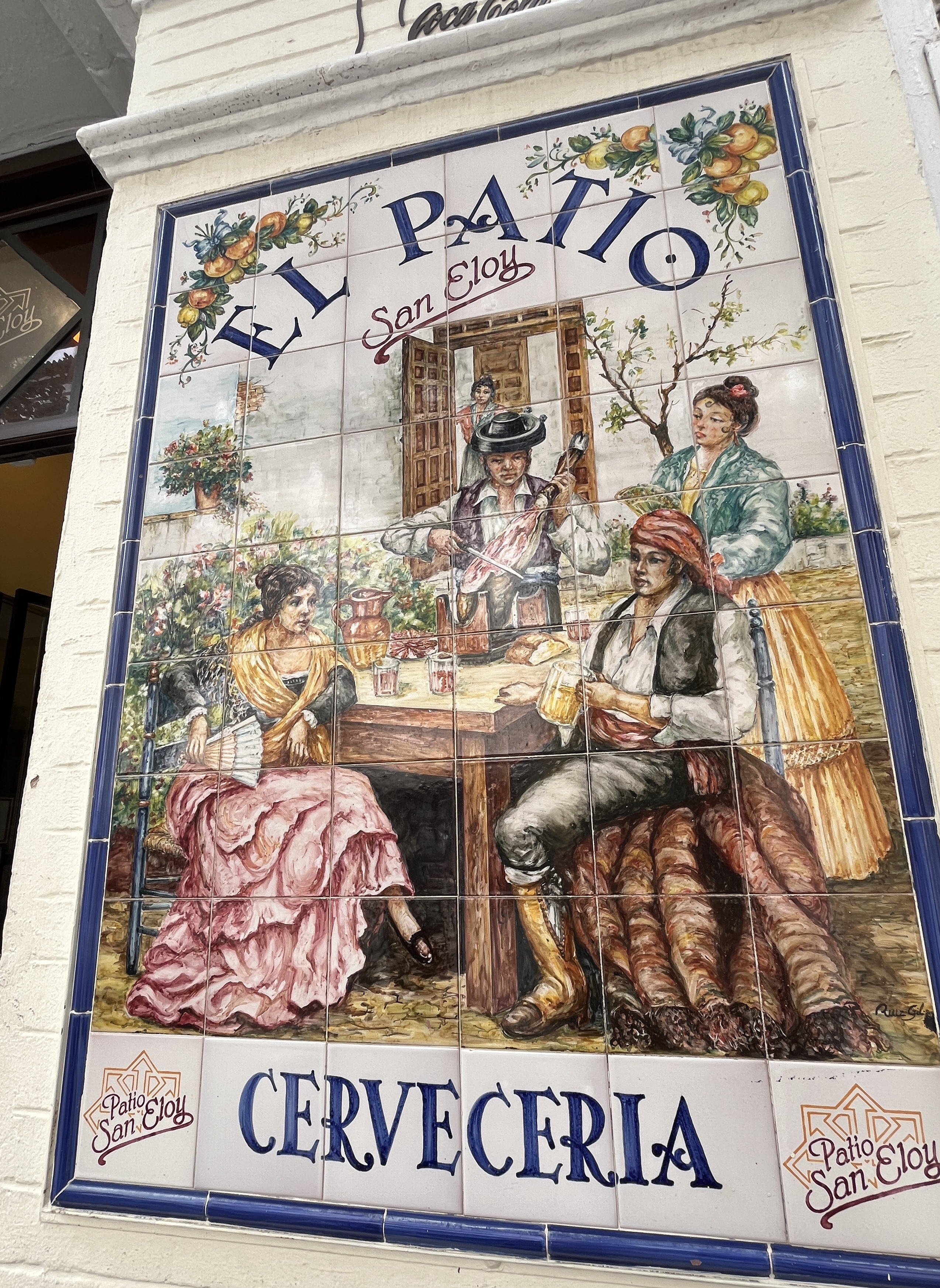
I tour the old town which finishes at the grand Plaza de Espana, a Renaissance/neo-Moorish monstrosity, built as a centerpiece for the Ibero-American Exhibition in 1929. Along with the multitude of pavilions and a canal for rowing, 48 alcoves and benches pay tribute to Spain’s provinces. Ensconced in Maria Luisa park, this masterpiece is also a showcase of azulejos, small tiles. Azulejos have been produced in Spain since the 14th century. Later, the bourgeoisie began embellishing their residences to identify their houses and portray their importance and wealth. Today they might also announce a town plaza or place of business; the Cerveceria, the Carnisseria, the Cocina, the Panaderia, the Taberna.

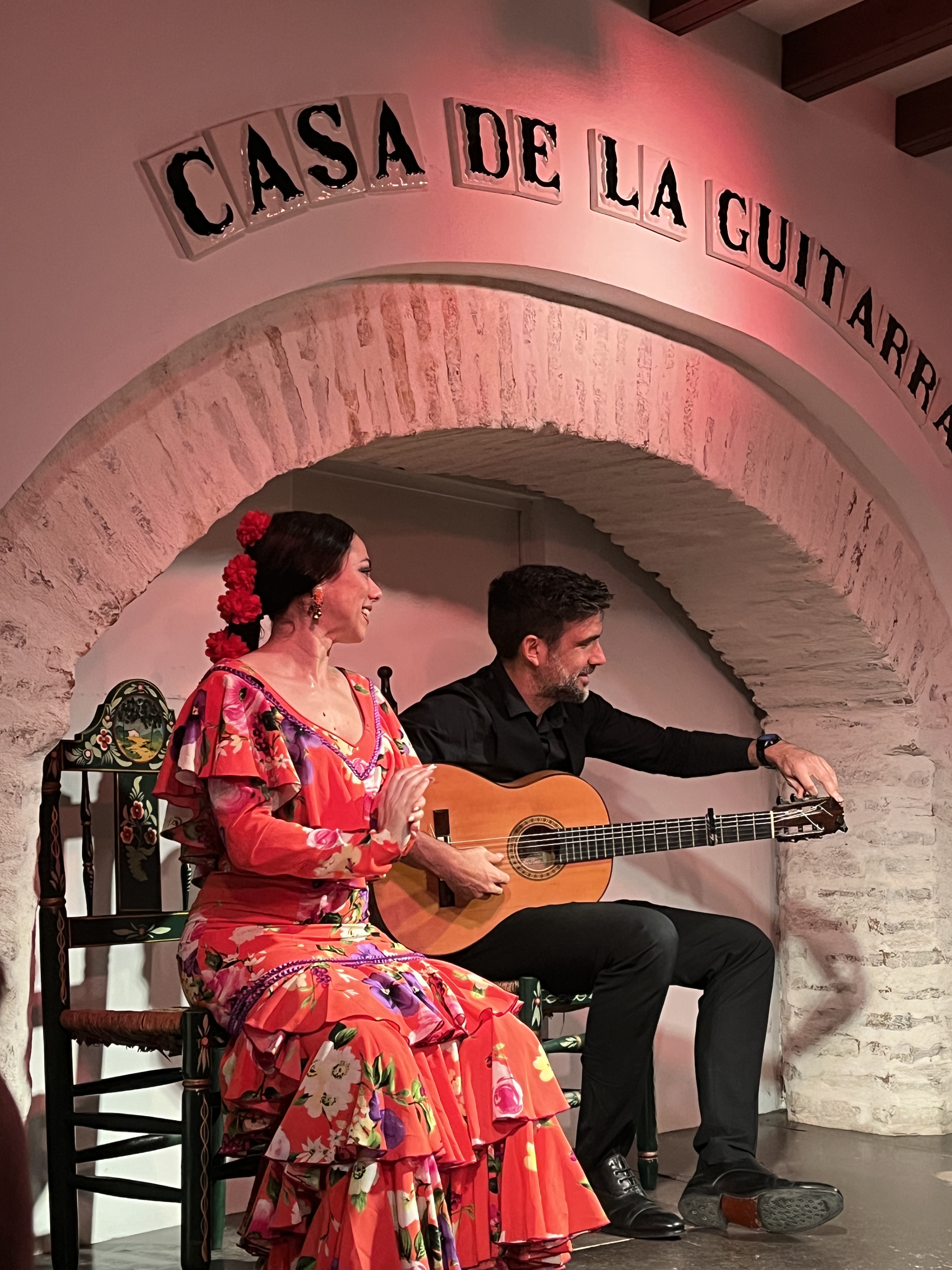
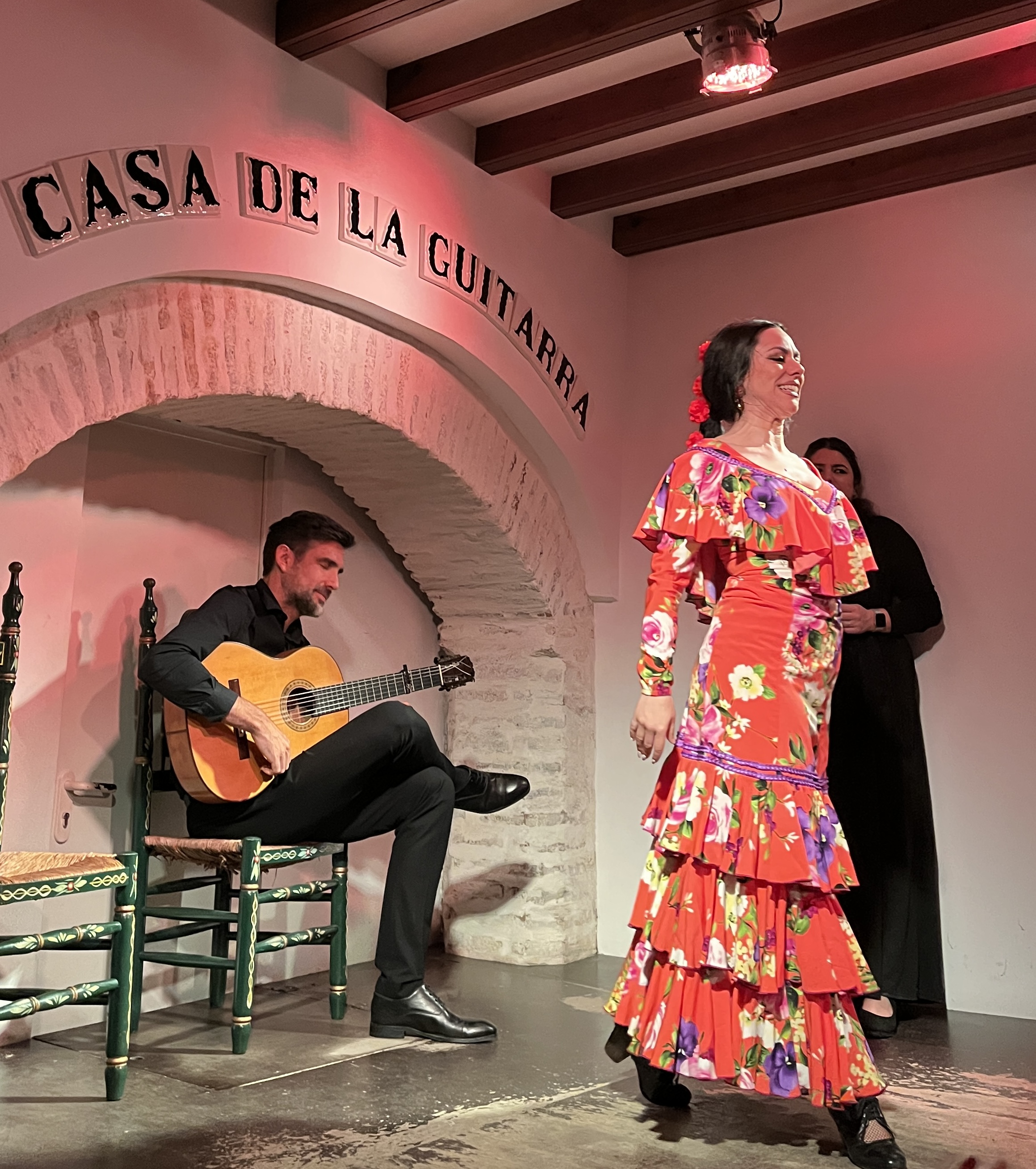
Cultural heritages are still relevant and part of everyday life in Seville and I immerse myself in two of them. One evening I attend my first-ever Flamenco performance at the intimate Casa De La Guitarra. This art form is based on folkloric music from this area, traditionally with performers of both Spanish and gitano heritage. Flamenco music dates back to 1774 and is a UNESCO declared Masterpiece of the Oral and Intangible Heritage of Humanity. The hour long performance is one of the most poignant you could experience.

The small audience waits in anticipation and soon our senses are filled with the evocative, the soulful, the sensual from the guitarist, the singer (cantaora) and the dancer. With fingers flying over his Spanish guitar, the guitarist leads the performance. The cantaora sings and claps the palmas, essential in flamenco music to punctuate and accentuate the song and dance, then carries the mournful, then exuberant tune with the occasional ole to cheer on and praise the dance performance. And of the dancer’s performance, I can hardly do it justice by describing her deep range of emotion, the raw magnetic energy, the machine gun-fire foot work, the grace, the soulful interpretation of the music. The audience is in awe of the three performers and their creation. Indeed, I now understand the poignancy in something I had read, ‘Seville is a place where little girls still dream of becoming a flamenco dancer.’

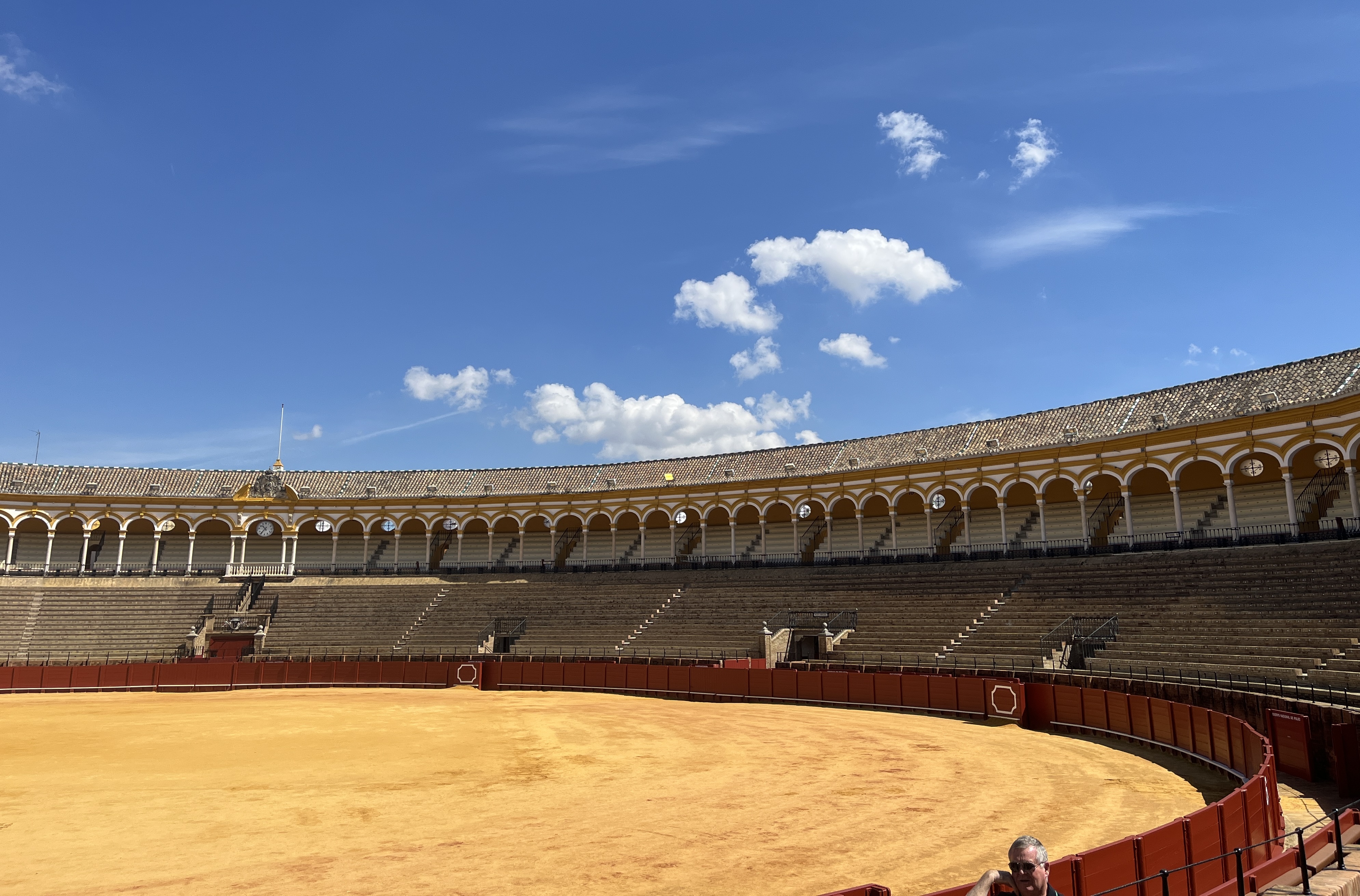
And of that other deep-rooted cultural tradition, of bullfighting? It’s not yet quite the season here in Seville and I wouldn’t have attended, yet as Miquel had told me back at the hotel, “Half of the population still revere it as a cultural practice, the other not.” And indeed, while some consider it a blood sport, many in Spain define bullfighting as an art form. Seville’s La Maestranze is the oldest bullring in Spain.

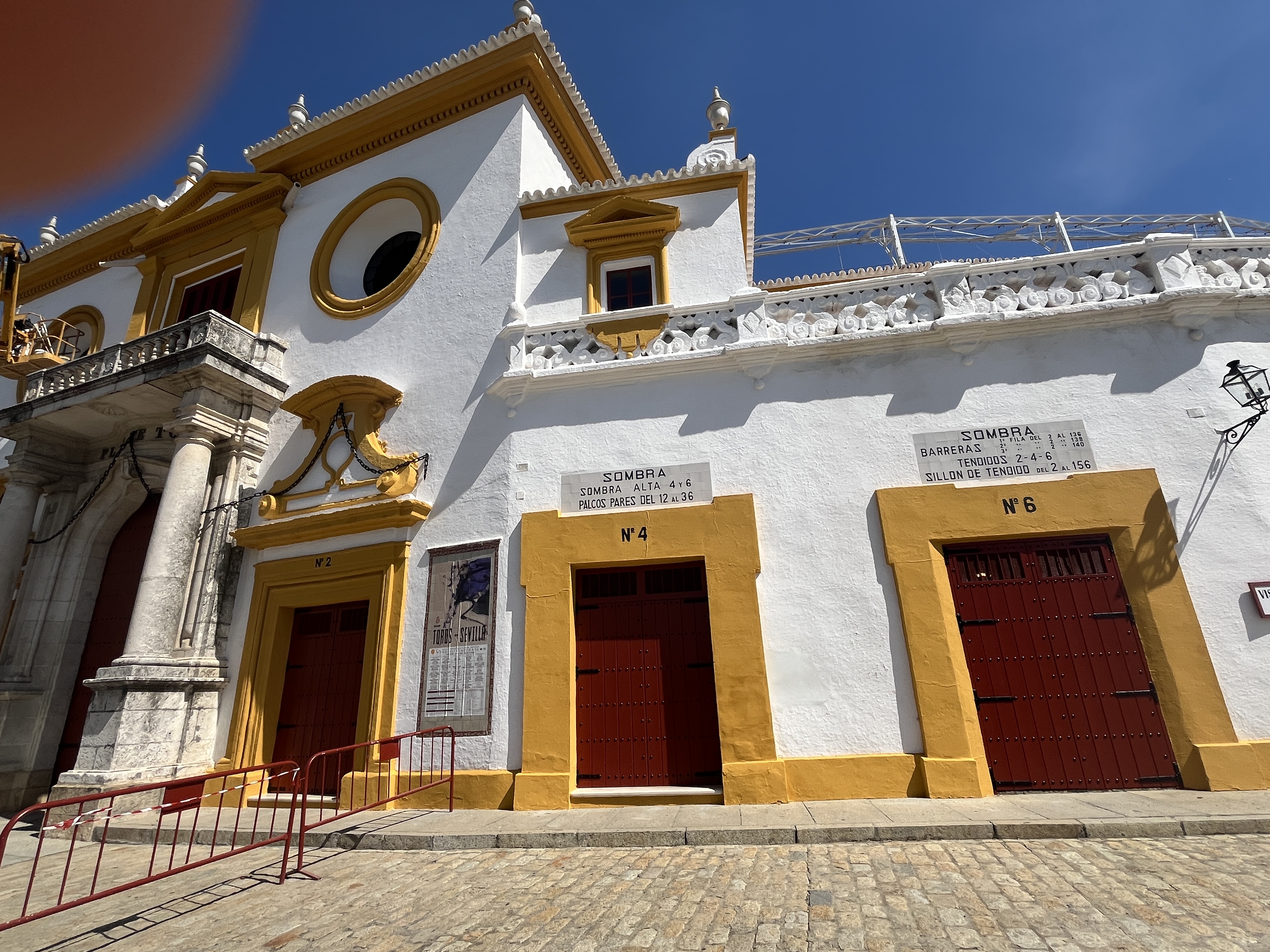
Situated within the heart of the city, I pay a small fee to visit apparently one of the world’s most challenging bullrings. For bullfighting aficionados, the history, memorabilia and grandeur of this bullring speaks volumes and is considered an essential visit when in Seville. Construction of the circular ring began in 1749 and has seen many evolutions, today’s seating capacity is 12,000. I wander through the museum, marvelling at the matador’s costumes, the awards and the posters that are works of art unto themselves. When I venture out into the stands, the vast ring before me, I get a small sense of what La Maestranze must be like during the season… this same sensation as standing in the Roman Colosseum and imagining the roar of the crowds, the excitement, and the misery.

By chance, my go-to bar pays homage to bullfighting with iconic, aged posters and the many regal heads of bulls on display throughout the cozy, historic bar. My new friend, Maria, explains the plaques under each majestic head; the bull’s name, to which matador it lost its life, where and when. They are noble even in death and there’s some relief in knowing they are preserved for posterity.

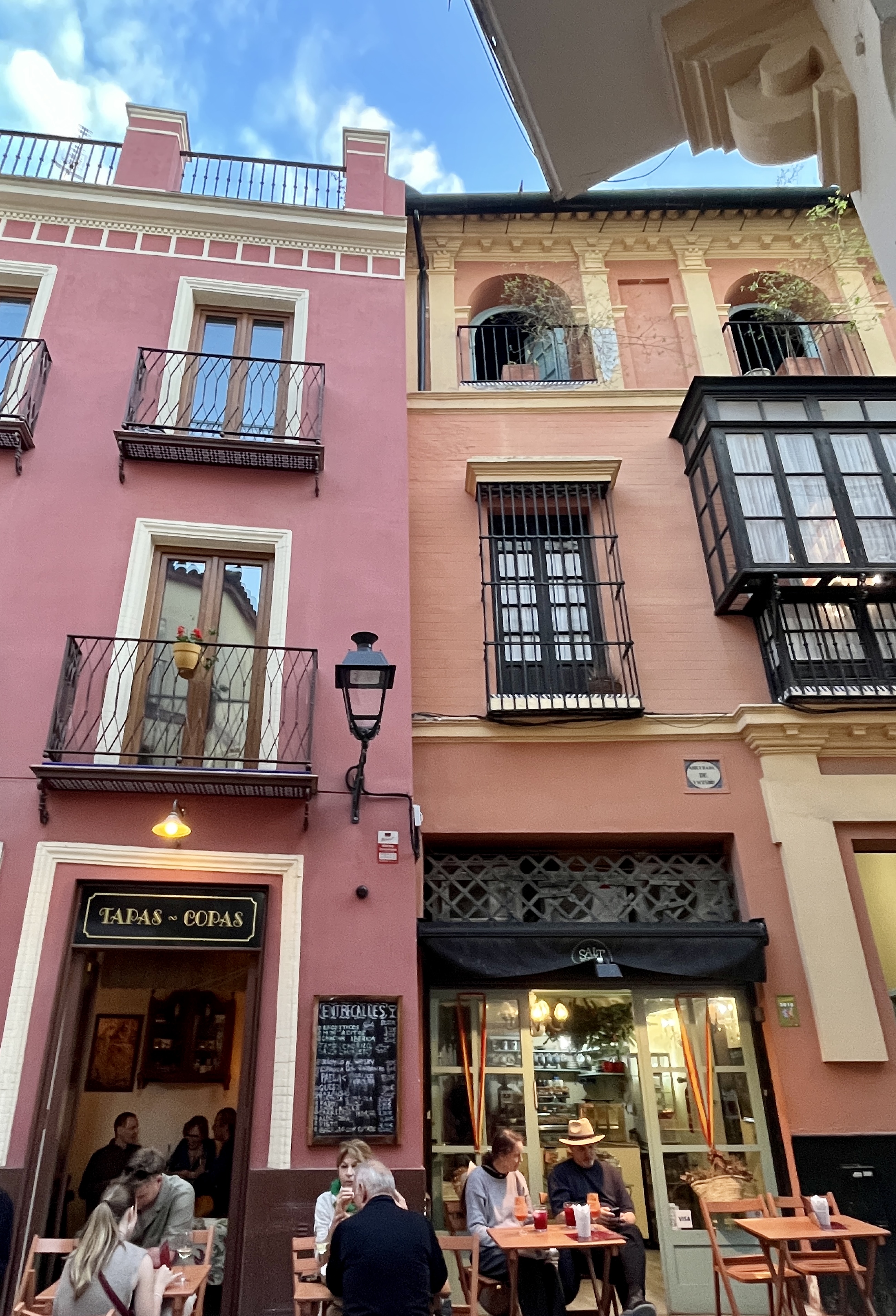
Located on the gastronomic haven of Mateos Gago Street, just along from the Cathedral, Cerveceria Catedral Bar becomes my once-daily pause for tapas, a glass of white redjo, and just to watch the world go by after a day of discovery. As a solo traveller, don’t be afraid to return to a place where you feel comfortable and welcomed.

“Hola la senora?” Maria says cheerily, “Same, a Verdejo?

I nod, “Si, por favor,” find a seat and plot which delectable tapas I’ll have this fine, late afternoon…

Ten Years of ‘notes’ from Italy… an ode to my travel partner

Standard

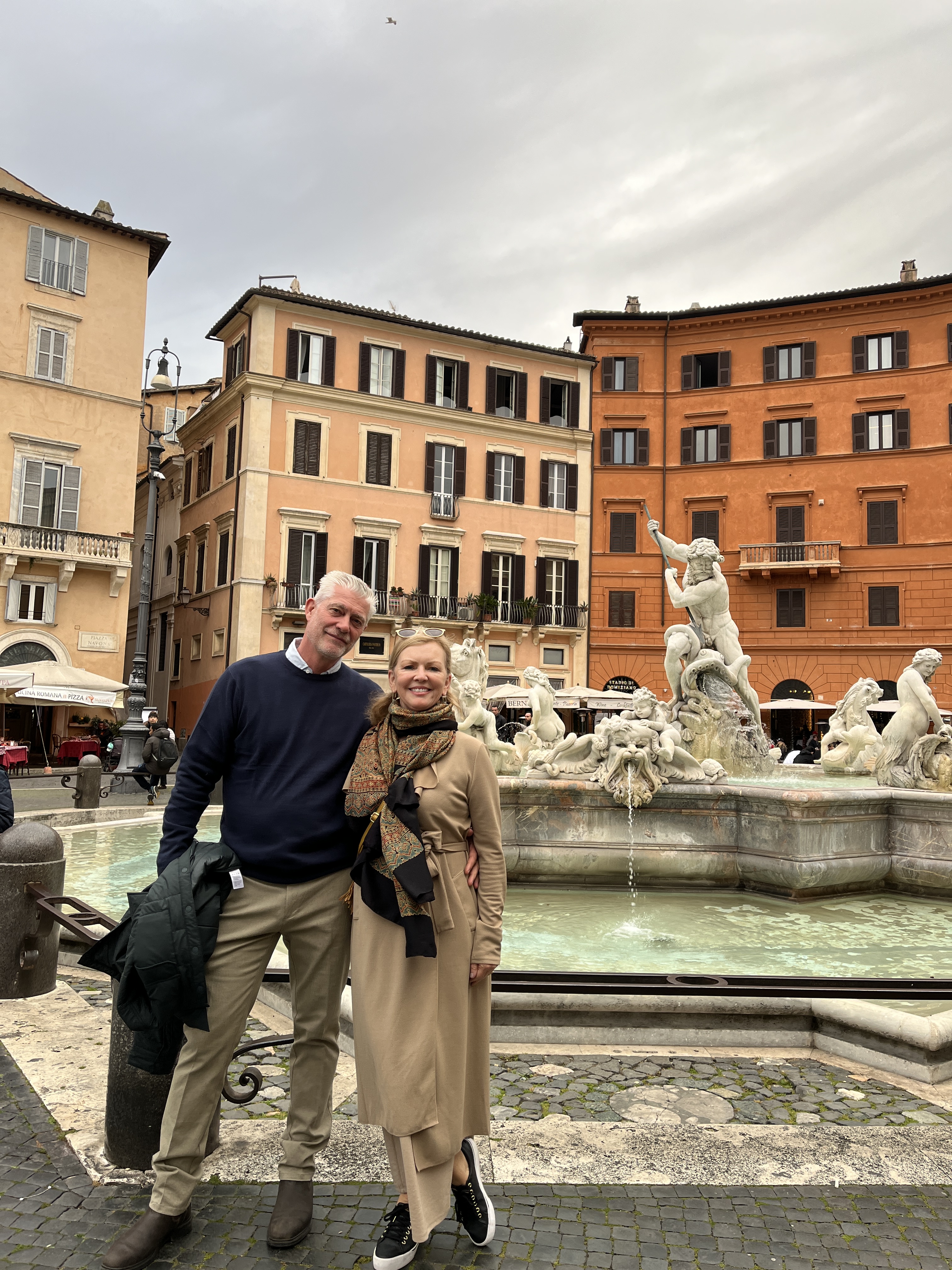
When I started ‘notes’, I wouldn’t have known that last week on the tenth anniversary of that first post, I’d be in the Eternal City of Rome. It seems almost too perfect a full circle; after all, it was here in Italy that my passion for travelling was first kindled. I’ve returned often since that first trip in the late ’80’s, yet this visit is more of a sojourn. Over these seven weeks, we’ll not only travel but situate ourselves in small Italian cities to gain a sense of actually ‘living’ here and embracing that dolce vita!
If you’ve followed along on ‘notes’ you’ll know that after thirty years of life overseas, we’ve settled in the beautiful Canadian mountain town of Kimberley in British Columbia. We have our children around us, we’re part of the community and Bruce and I are both working on projects that we love. And yet for us, travelling and journeying together is part of our ongoing story.

I opened my blog recently to a ‘Ten Year Congratulations’ message from WordPress, making me smile widely. Yes I wish I had written more often, yet I’m thankful that I’ve captured the essence of many travels and experiences. It’s also heartwarming to know that in 155 countries, people have taken the time to read my stories and I consider it an absolute honour to perhaps have made the world a smaller and more colourful place in my own little way. I’ve shared posts from Kazakhstan to Norway, from Malta to India and so many more in between. On this tenth anniversary, I’m especially thankful for my husband/travel partner for the inspiration that encourages me to research, wander, explore and then write.
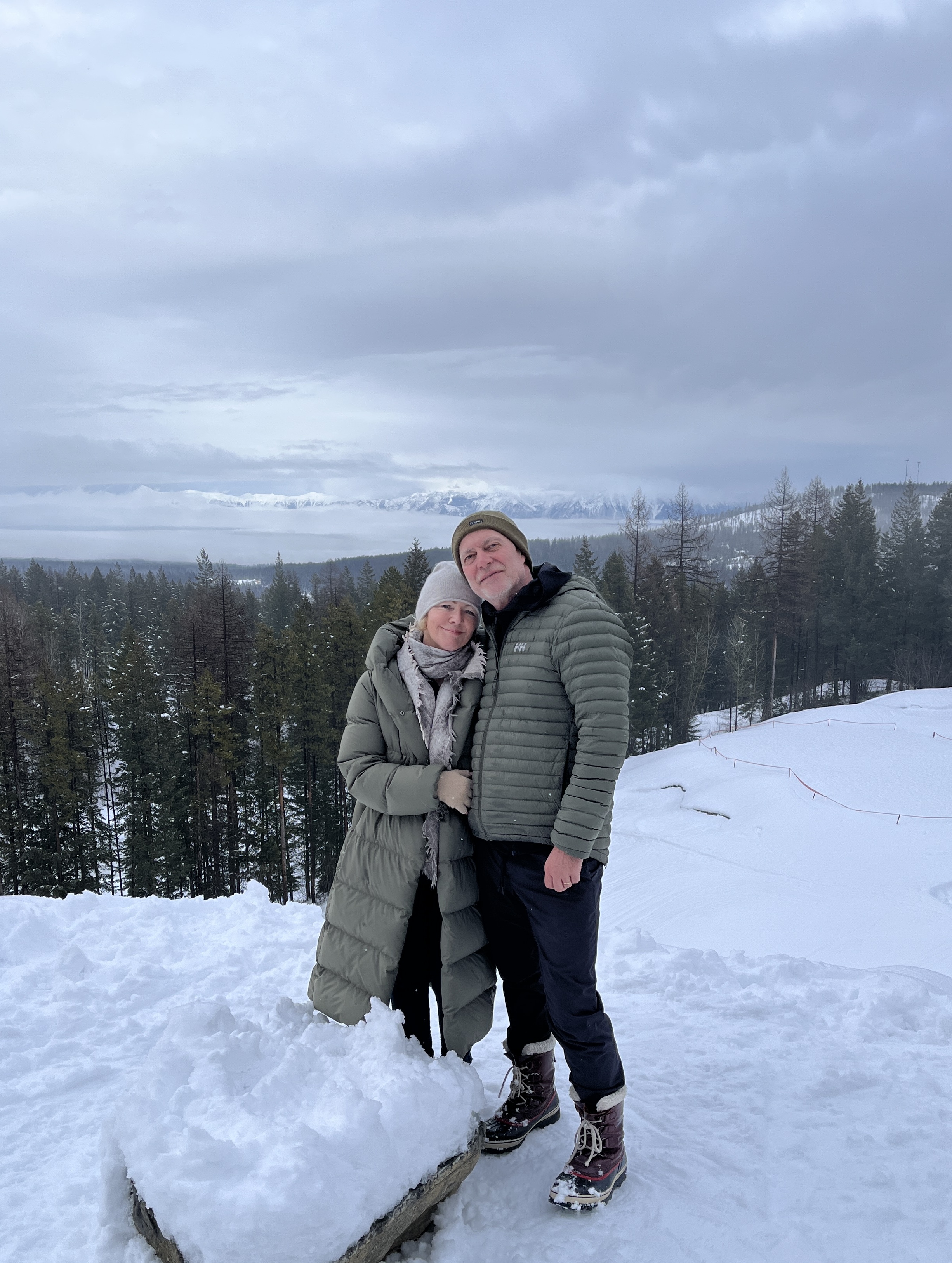
Before arriving in Rome, I received a message from Bruce who was working and travelling in Scotland. “Can’t wait for our first passeggiata in Rome sweetheart!’ This seemingly simple statement sums up so much as we both anticipated that first early evening stroll along cobblestoned strade, that Italian tradition of ambling leisurely to the piazza and watching life play out against the avenues and architecture that we have come to love. And so this milestone is really an ode to my travel partner. The one who carries that extra bag for me, navigates the train schedules, figures out the best route to hotels. The one who waits patiently or joins me as I meander down yet ‘one more side street.’ That once travel boyfriend who I’ve travelled through life with hand in hand while working and raising children… and to have the great fortune to experience life in many places. And through those experiences and this continued traveling life, we’re ever thankful for this precious gift of time together.

So this post is a short missive, an ode to embracing travel and the life experiences that it encourages. And most of all it’s a heartfelt grazie mille to Bruce – my forever partner-in wandering – see you in the piazza!

I leave you with a piece I wrote on Monday Morning Emails the last time we were in Italy together…

TRAVEL

Monday Morning Musings #20 – For the love of luggage, and a certain ‘porter’

terryannewilsonEdit”Monday Morning Musings #20 – For the love of luggage, and a certain ‘porter’”

IMG_E0480

This past month, while away on a month-long trip through Italy and Slovenia, a dear friend messaged me.

“How is it that you have so many clothes with you? Following your social media pics, it seems you always have the right thing to wear,” Gillian wrote. “A friend and I have a question – do you travel with a suitcase or only a carry on? The bet is on!”

I practically laughed out loud when I read it. Oh how I wish I could stroll onto a plane with just a sleek carry-on and a handbag… if only! But no, this traveller goes prepared; a selection of shoes, a good clutch of scarves, some basics of course, but also outfits I might only wear once as was the case for the writer’s retreat, the main pretext for this trip. Naturally it was all too much and I regretted over-packing, yet again.
Was it because I knew that in the back of my mind my porter, aka my travel companion of thirty years, was joining me? He does often joke that the sole reason he meets me, wherever I might roam, is to help carry my bags home. And it seems, this trip was no different.

After the writer’s retreat, we agreed to rendezvous in Florence before making our way north and onwards to Slovenia. Checking into a rather stately hotel, was it not confirmed that my beloved Bruce is surely my very own personal porter?

Let me back up. After fleeing an Air B n B (a veritable ‘subterranean cavern’) that he had inadvertently booked for our reunion (accommodation is usually my department), we arrived at that lovely hotel on one of Florence’s prettiest streets.

But no, we didn’t glide into the lobby as if we belonged there. It was more a barrage of luggage, backpacks and two overheated travellers. We had rattled our way from one end of town to the other, the clatter of my luggage causing an obnoxious racket on ancient cobblestone streets. Did I imagine looks of disdain as the locals enjoyed their la passeggiata, their evening stroll?

But allora, then, we present ourselves at the hotel.

“Checking in for Wilson,” I say to the perfectly coiffed, attractive lady behind the sleek check-in desk, all the while attempting graceful dabs at my ‘glowing’ forehead. The silk scarf looped around my neck has come in handy indeed!

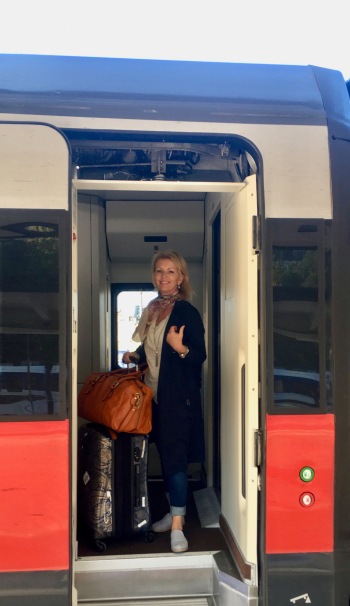
Bruce is standing off to the side, laden with two backpacks, my overstuffed suitcase and my shiny new leather grip-bag that I seemingly could not leave Pisa without. I glance over and smile at my travel companion, the one I’ve logged a ‘million’ miles, but the not so-romantic-image of the porters at Indian train stations suddenly pop into my mind – all he’s missing is yet another bag perched precariously on his handsome head.

“Yes, checking in… with my porter,” comes out of my mouth. It seems I’ve attempted a joke.

“But madam,” the lady replies matter of factly, “you’ve only booked for two.”

She surveys Bruce with a wry glance. Yes, she’s truly under the impression that indeed he is my porter and that apparently, my true romeo will appear at any moment. Perhaps he’s out front, parking the Maserati or the Lamborghini.

“Oh no, no, no,” I clarify. “He isn’t my porter, this is Mr. Wilson,” and hand over our passports as proof.

“Ah, va bene. Good then. Do you need help carrying the bags to your room Mr. Wilson?”

“Oh no,” my intrepid companion says with a grin, “I’ve got this!”

One last thing about that beautiful new leather bag. Surely it is part of a fervent plan. On my next trip, I will glide onto a plane with it and it alone… oh one can but dream!