Tag Archives: Italy

Spectacular Sicily… Taormina, Syracusa, Palermo & Noto

Standard

The train porter raps gently on our cabin door. “Buongiorno. Taormina, next stop. I crack the door open and he proffers my espresso, smiling. “Prego.”

We’ve taken the overnight train from Naples to Sicily – yes the last remaining train in Europe that actually rolls onto a ferry. The 6:45 am wakeup call is right on schedule and I feel a frisson of excitement.

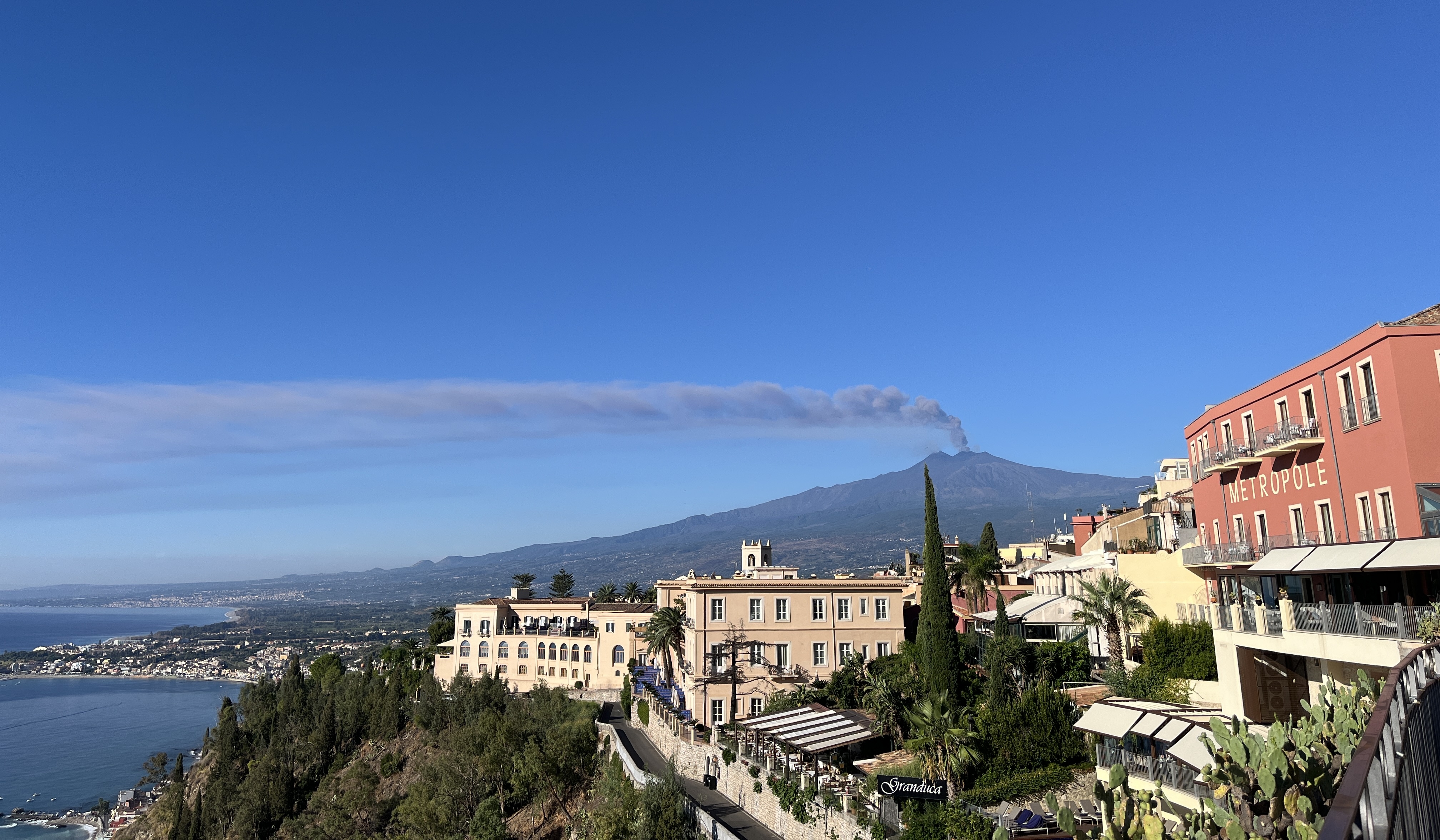
How delightful it all is! Pressed sheets, room service and now sipping my thimble-sized espresso, Mount Etna is welcoming us to Sicily. A long, grey-ish plume is trailing out to sea in the blue morning sky. Etna had recently erupted and more bursts of activity will soon disrupt flights while we’re on the island. Yet this morning, on our first trip to Sicily, she’s rather captivating.

Taormina
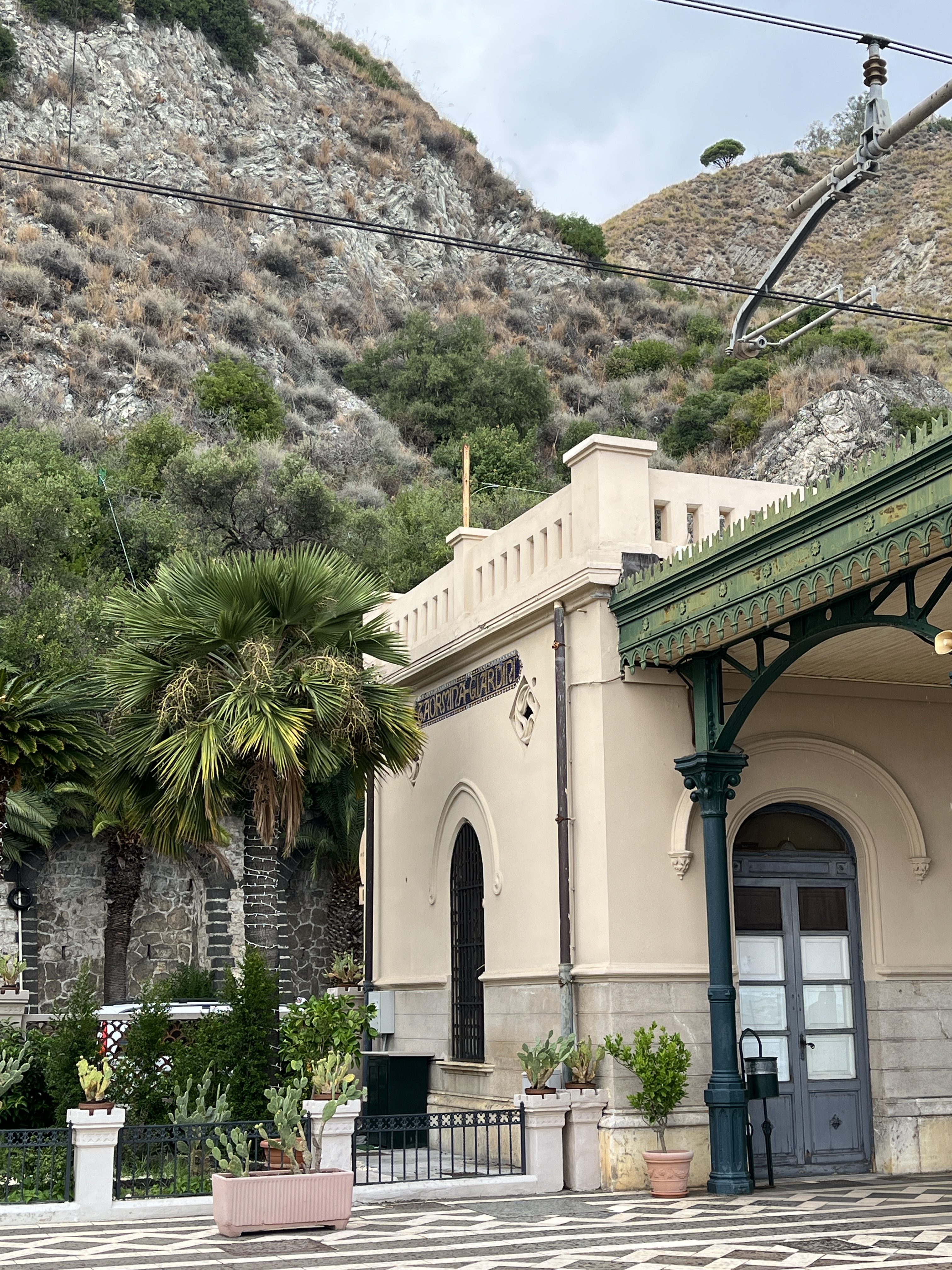
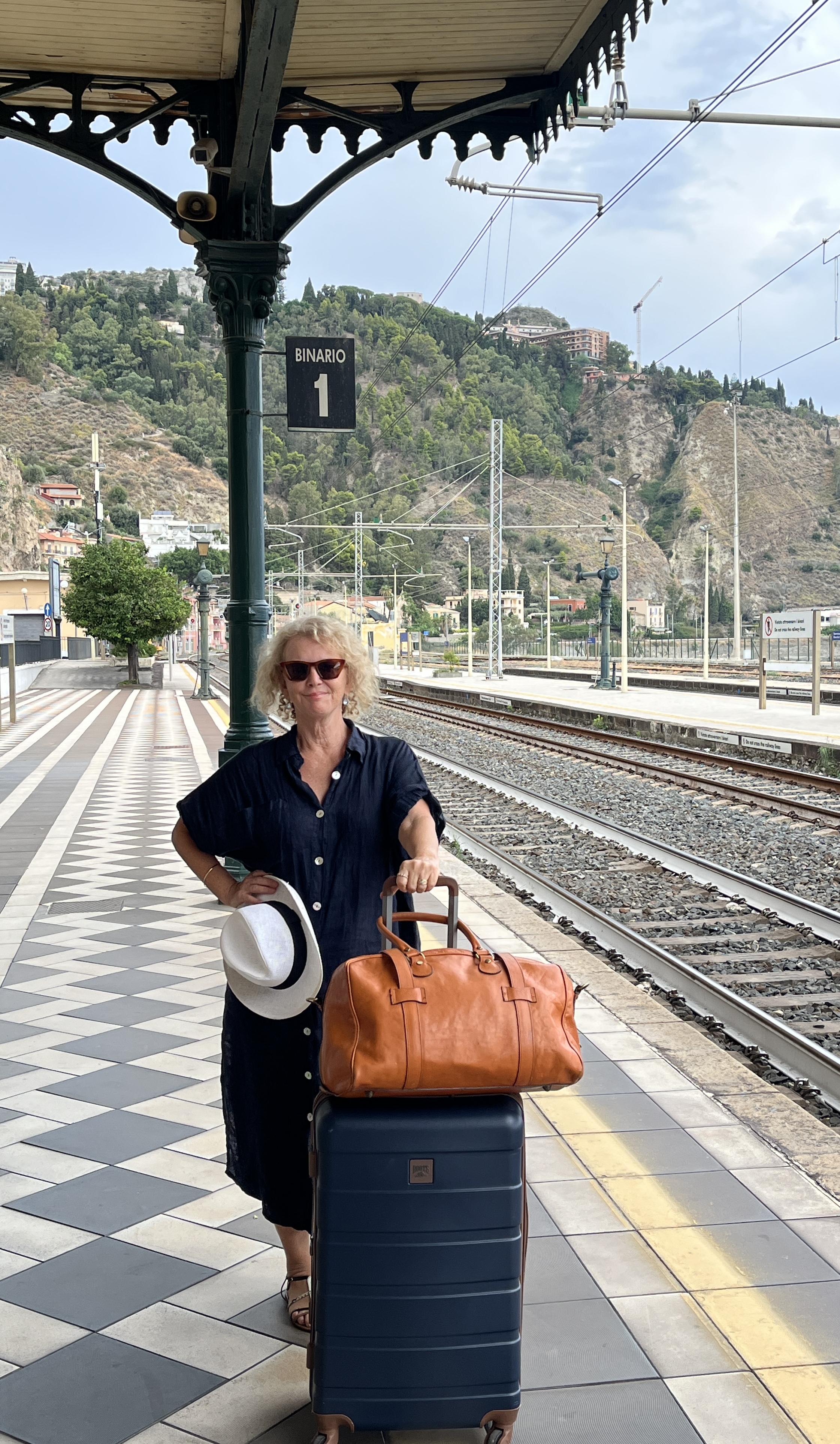
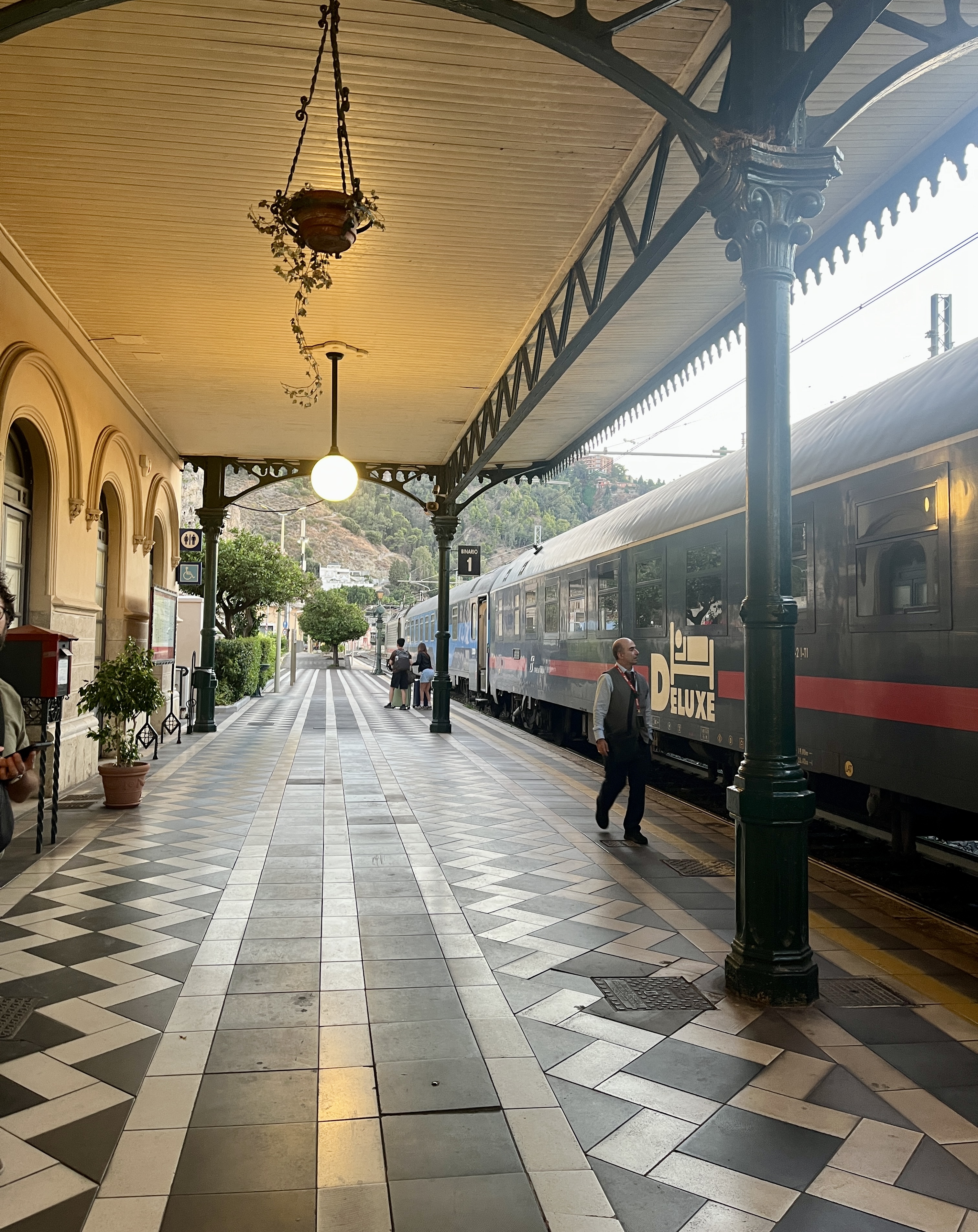
The train station at Taormina is a neo-Gothic beauty, complete with stained glass windows, ornate roof fringes, and dark Sicilian wood furniture. It transports you to another time, one of slow travel and prolonged sojourns. Our stay will be three nights, kicking off this two-week Sicilian adventure. Situated along the sea, it is still four kilometres to the hilltop town centre. Perhaps I’m already in love with this town after seeing it featured in The White Lotus series and the winding road ascending to town surely holds the promise of something special.

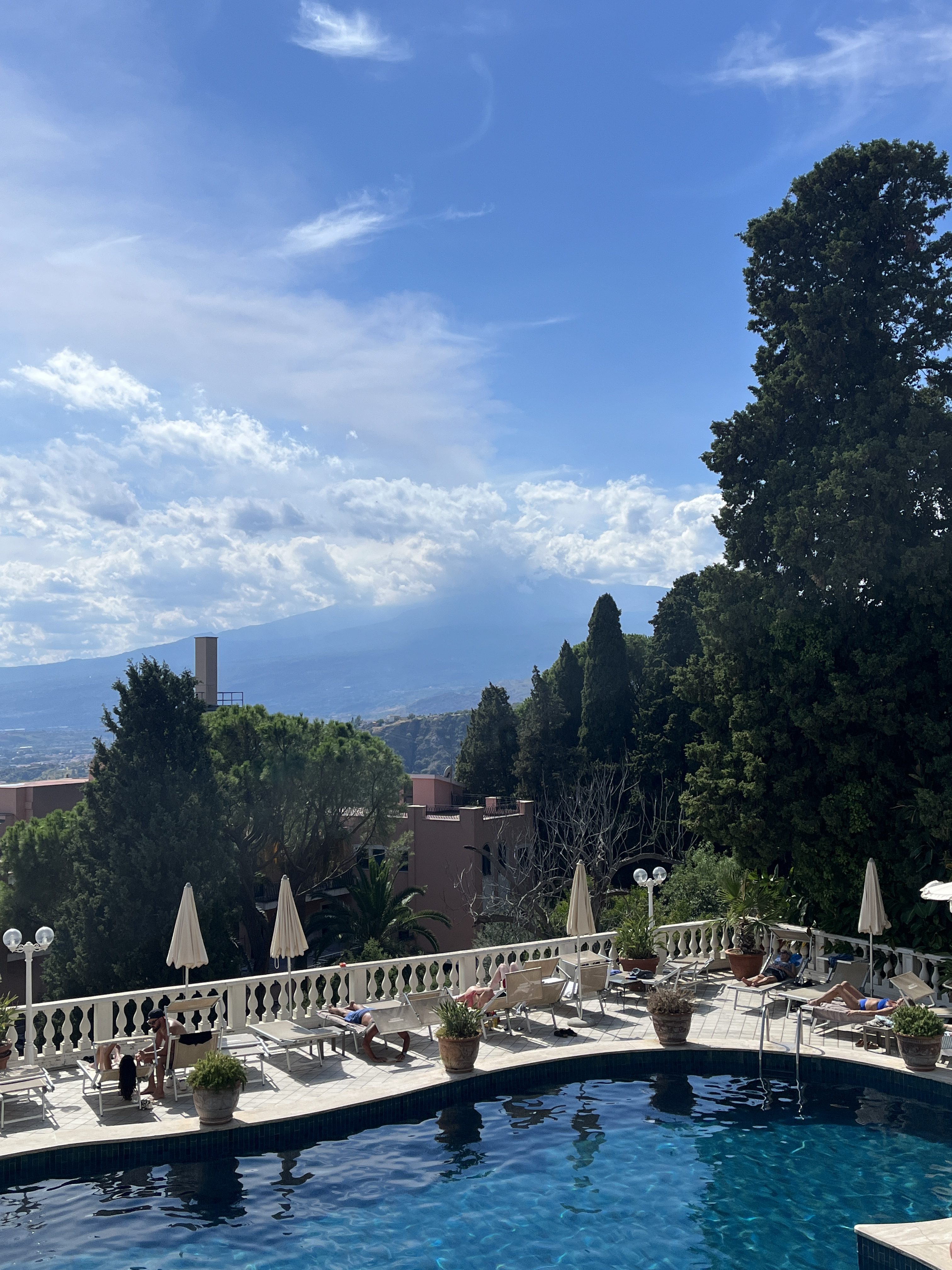
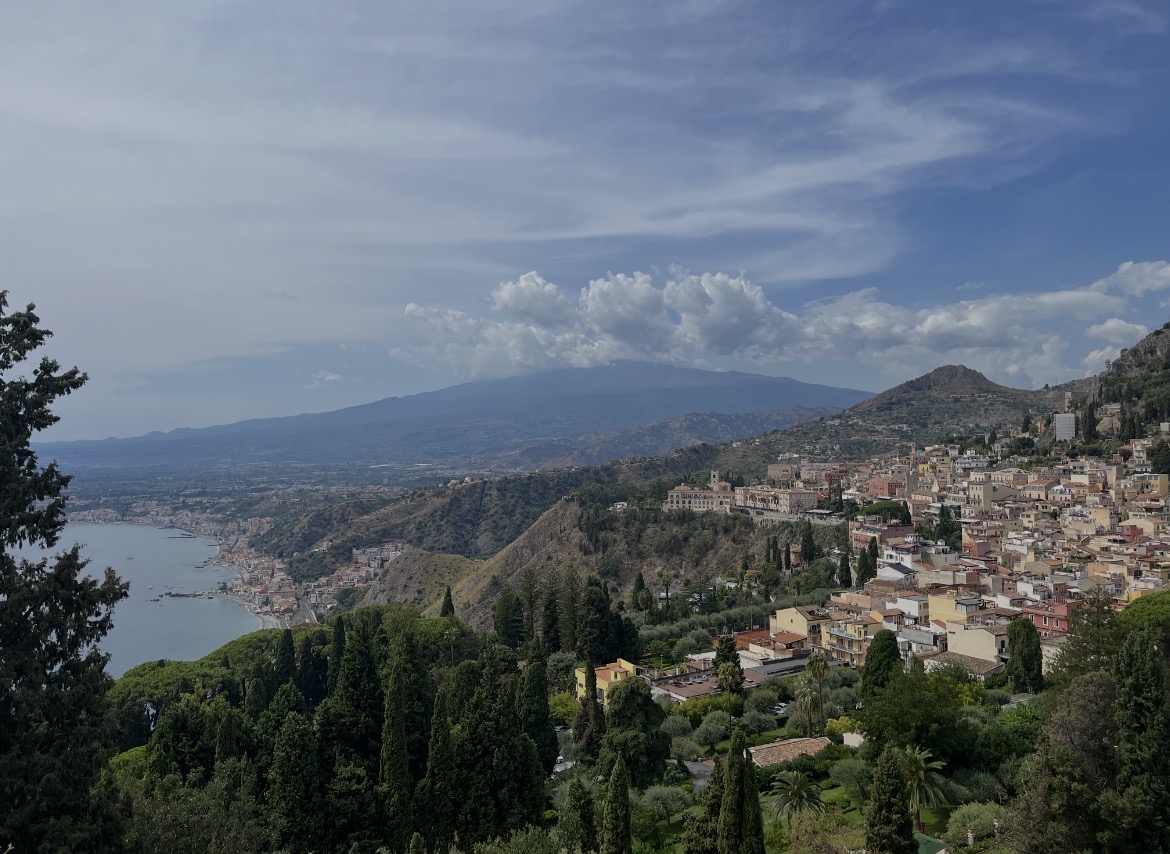
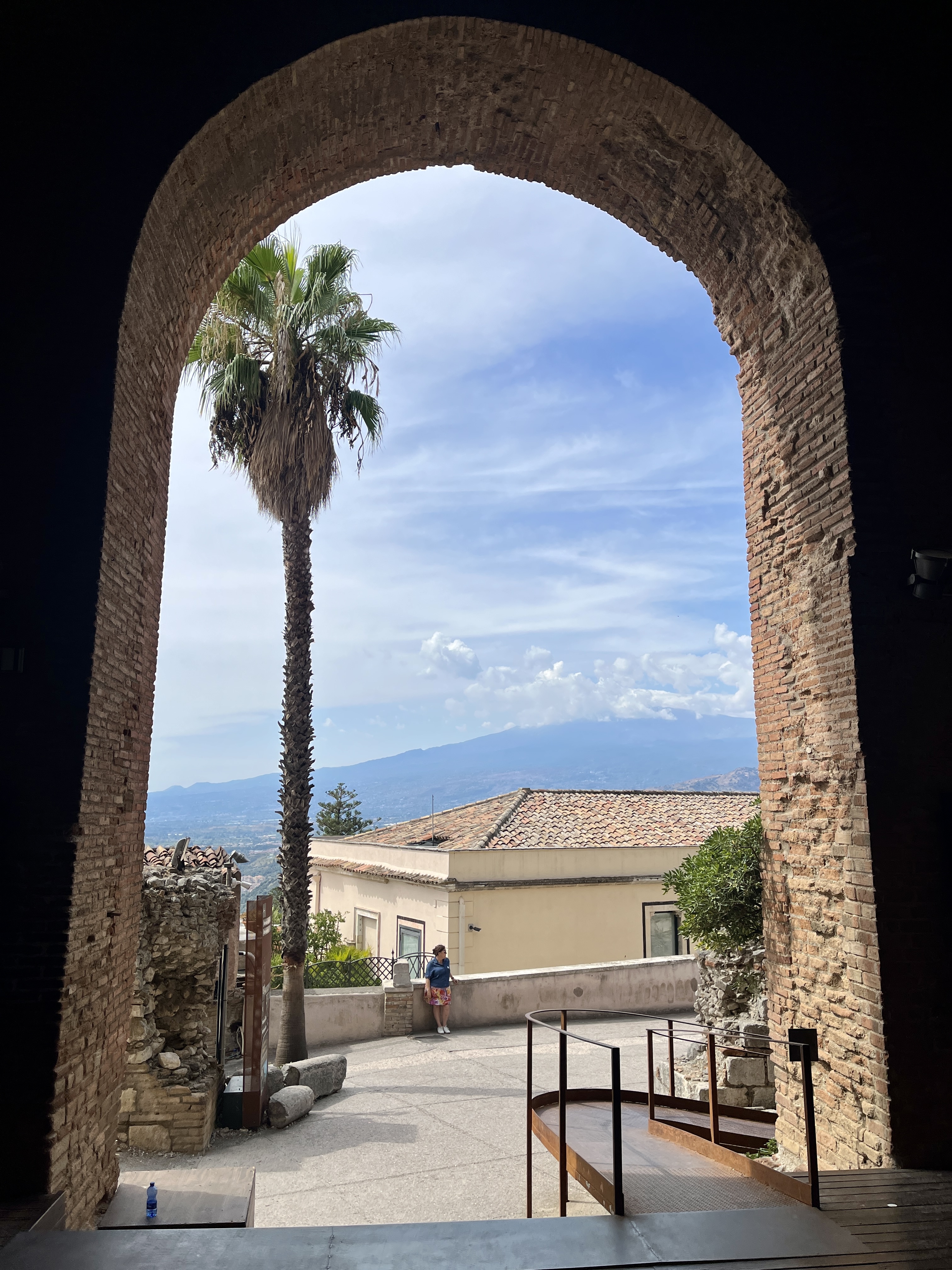
The Taormina Park Hotel is the essence of faded glory yet the swimming pool and the views are stunning – a broad vista unfolds under Etna’s watchful eye. One of four active volcanoes in Italy, Etna’s constant state of activity renders the land around it exceptionally fertile. Vineyards and orchards sprawl across the lower slopes, even a ski hill on its upper reaches. Yet having walked the plains around Mount Vesuvius – and the once ash-buried streets of Pompeii – I’m amazed at how many communities are nestled under Etna’s volatile caldera.

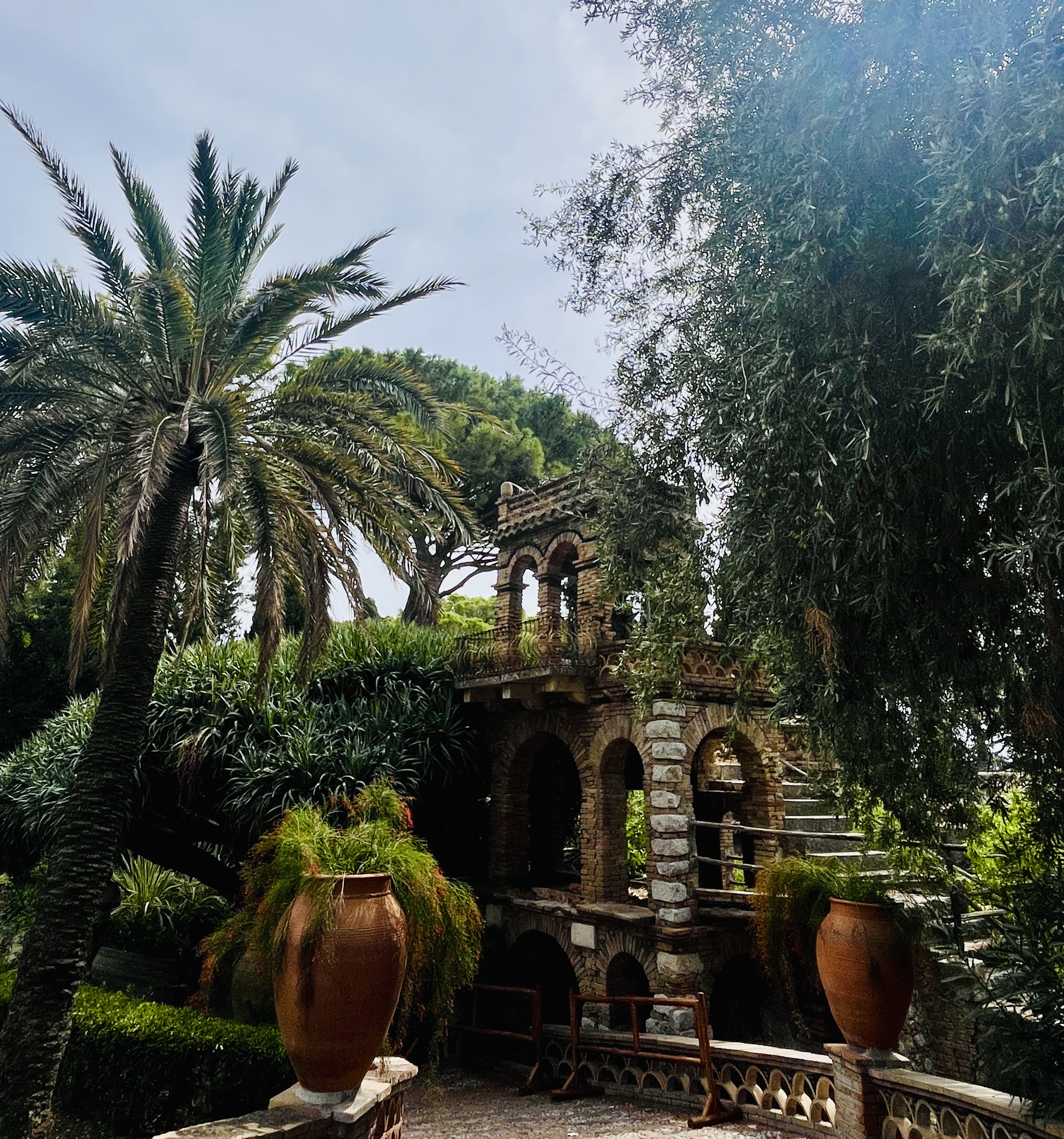
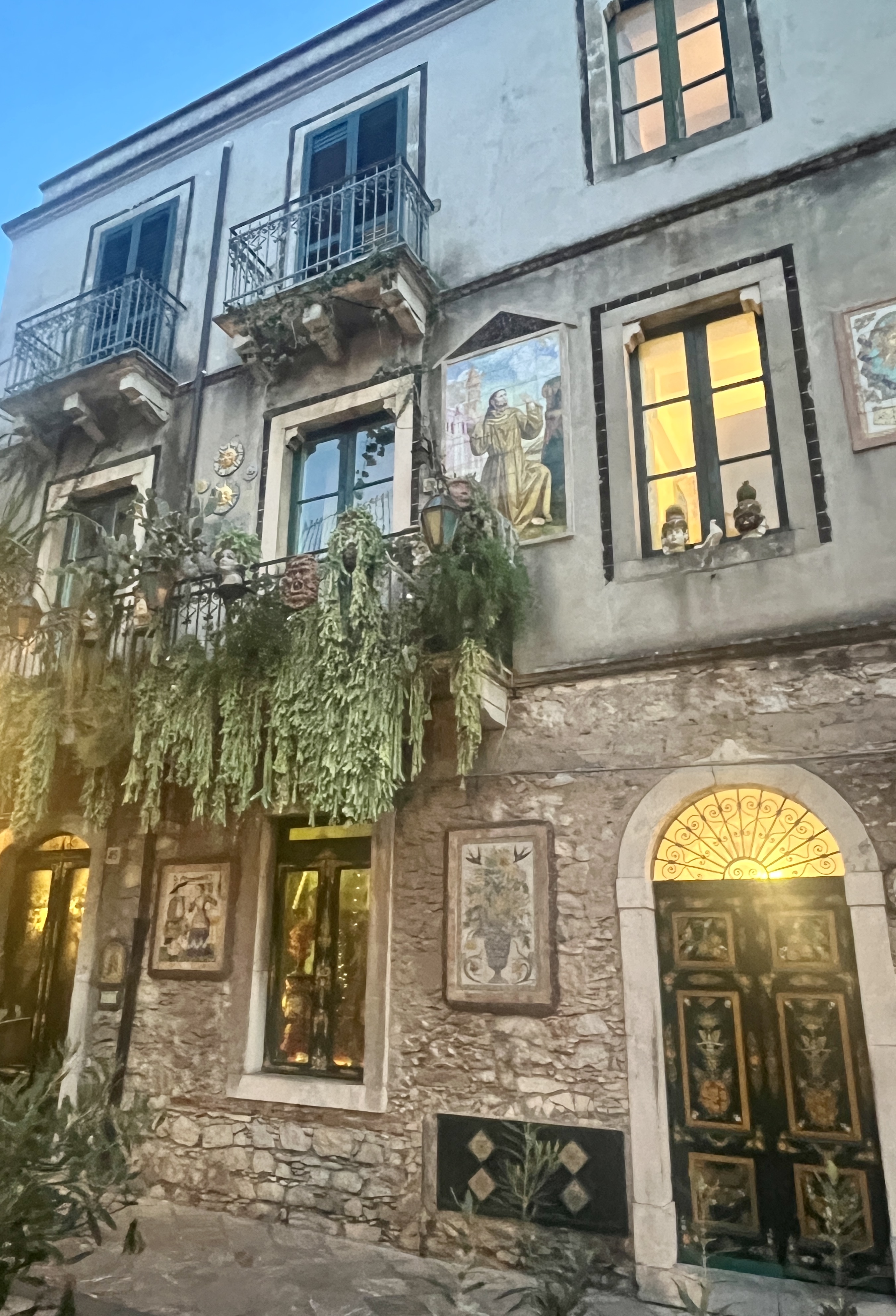
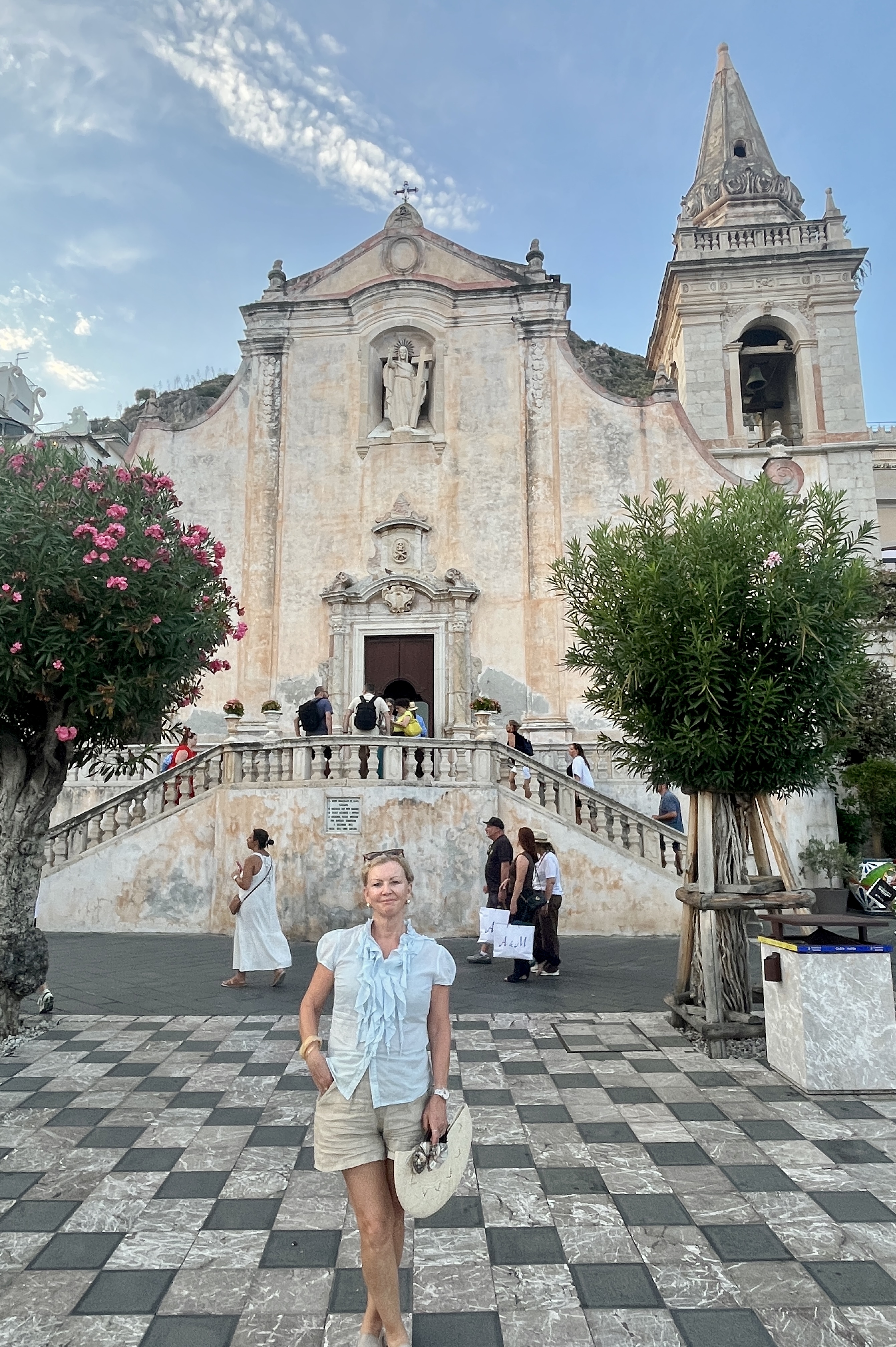
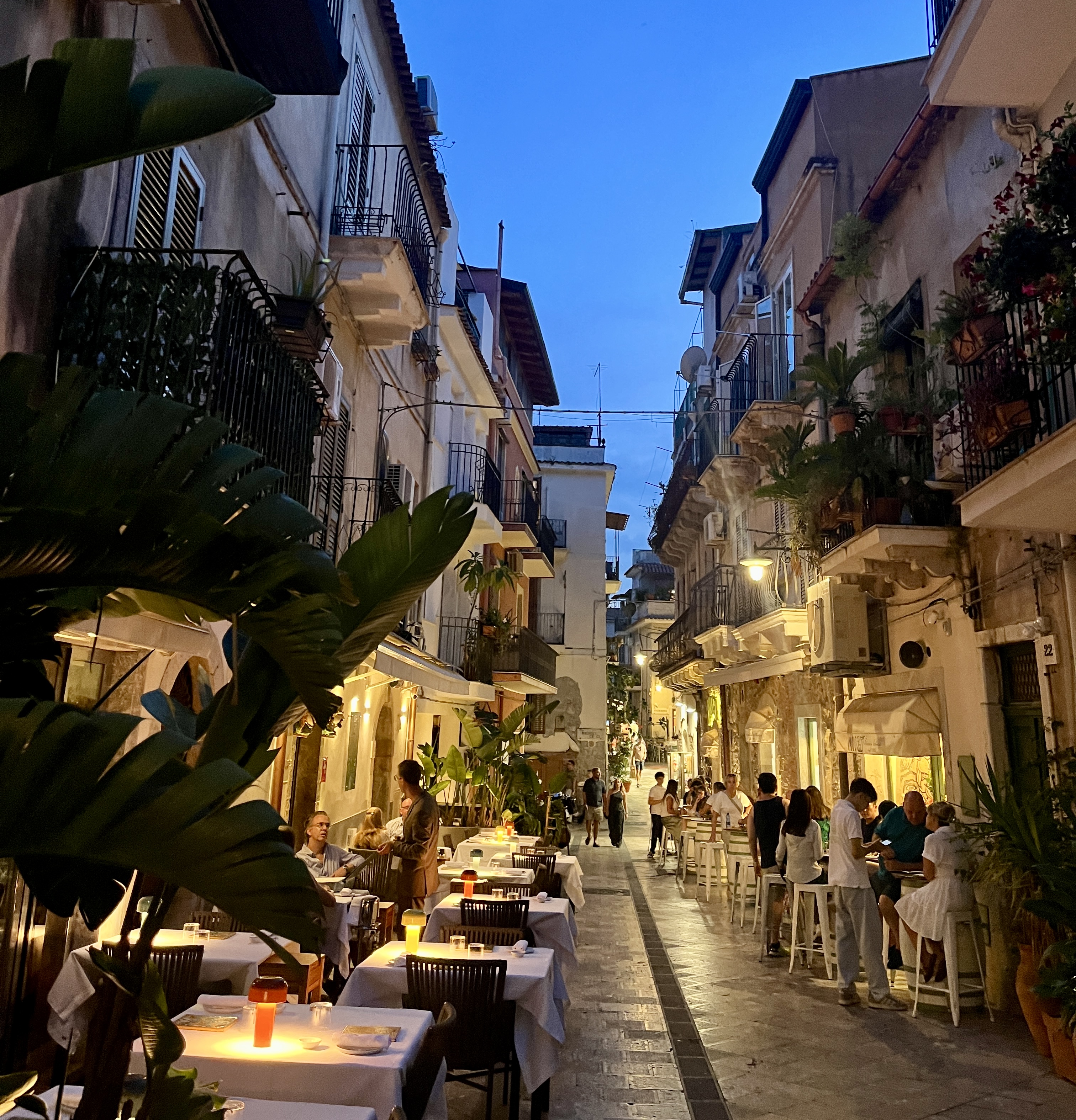
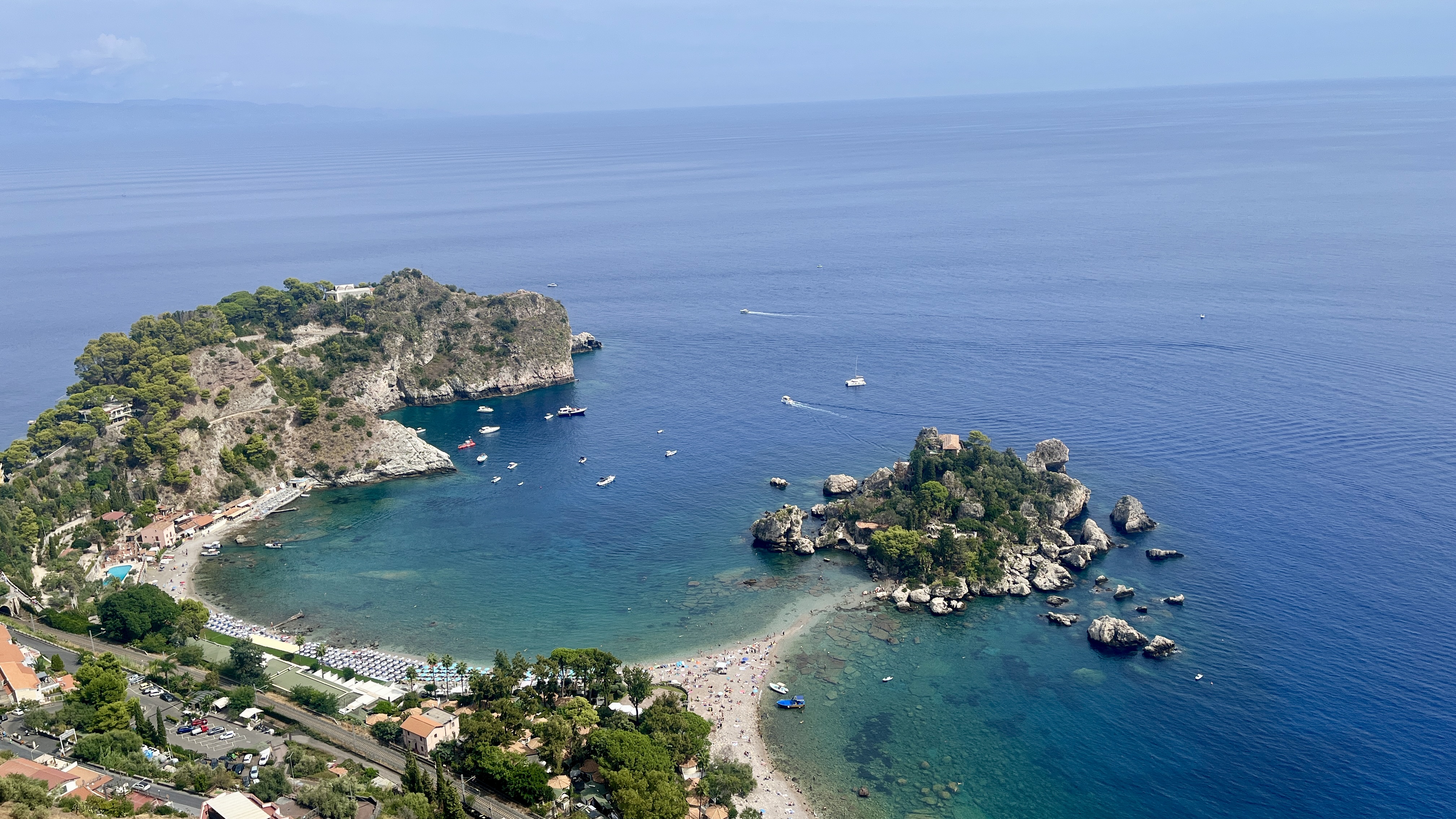
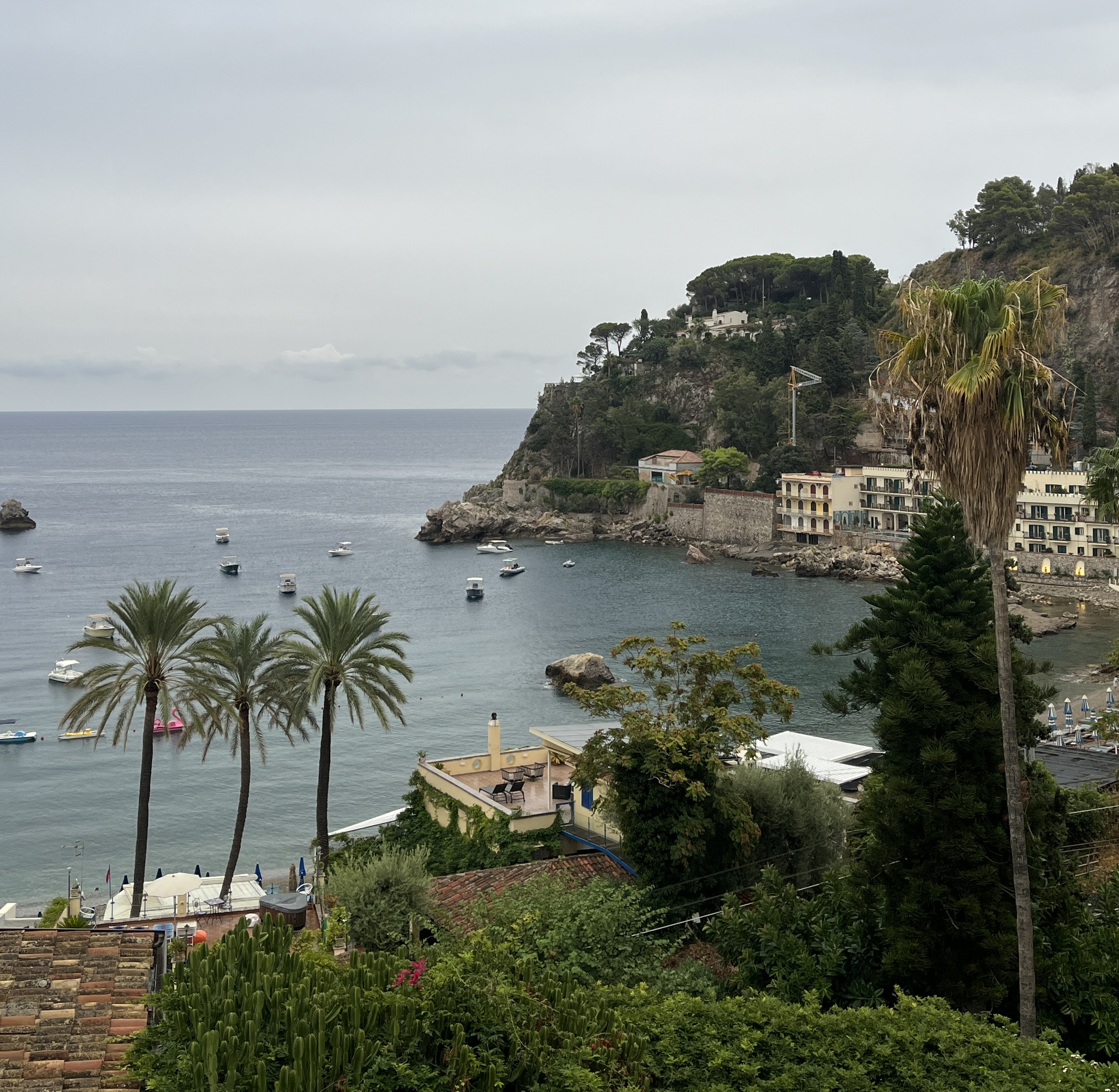
Taormina is what you might hope it to be. The views from belvederes are magical, sweeping out across the Ionian Sea. Smatterings of bougainvillea draped walls, tall palms, cook pines and luscious flowers are everywhere. The long Corso Umberto is bookended by the Porta Catania in the south and the Palazzo Corvaja at the center of it all. This busy street is fringed with cafes and high-end stores, becoming a vibrant runway for summer dresses and linen suits during the evening passeggiata.
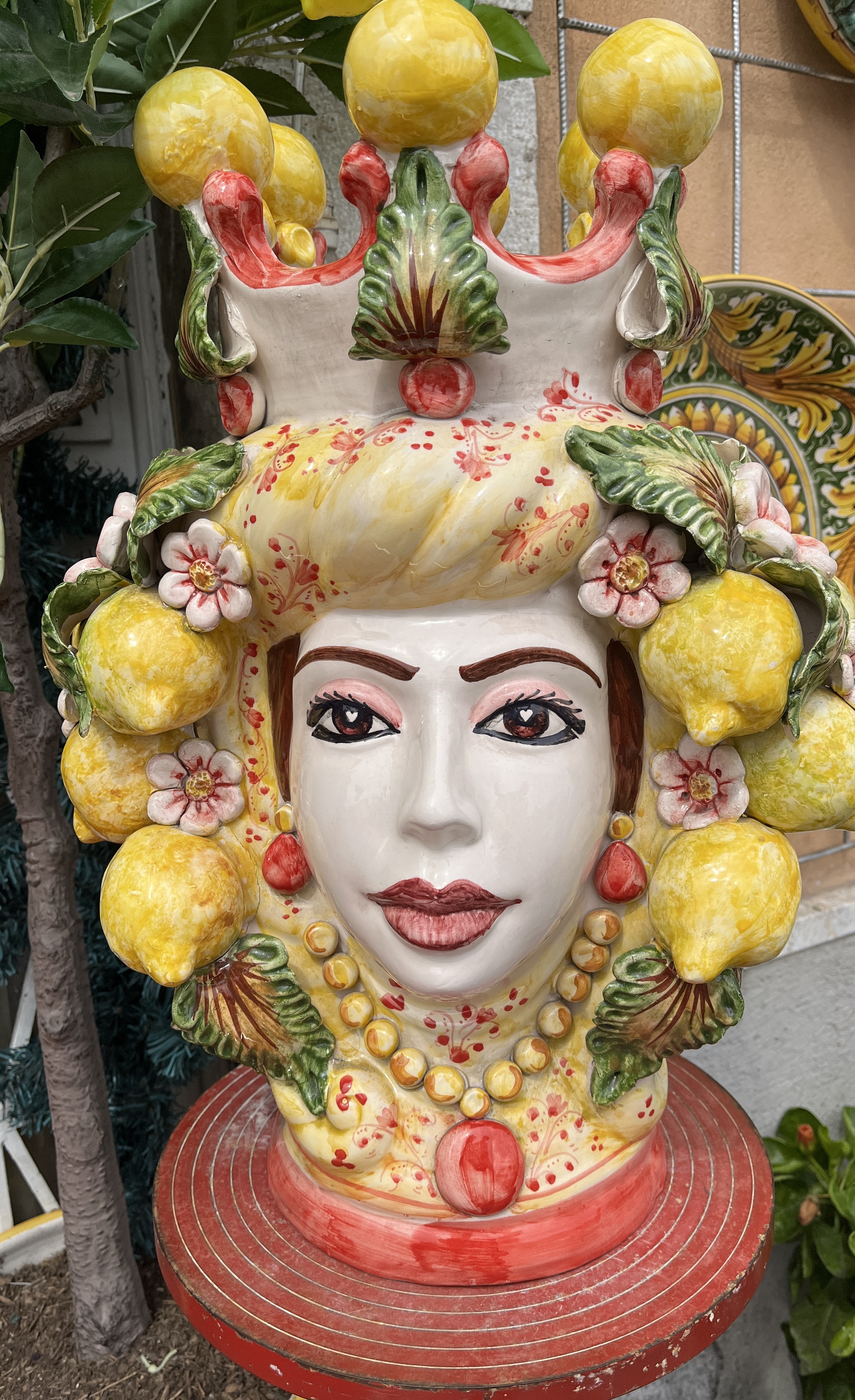
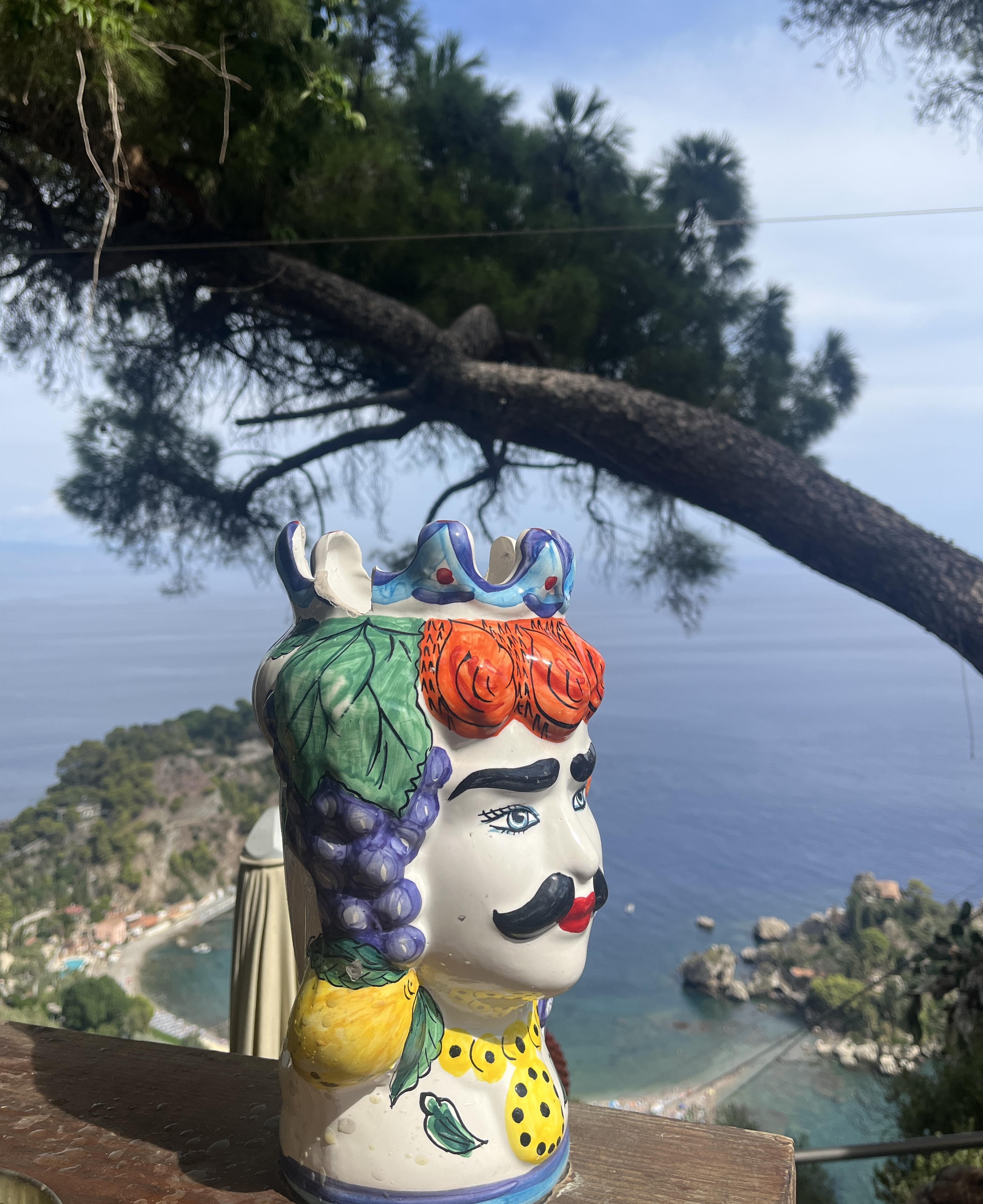
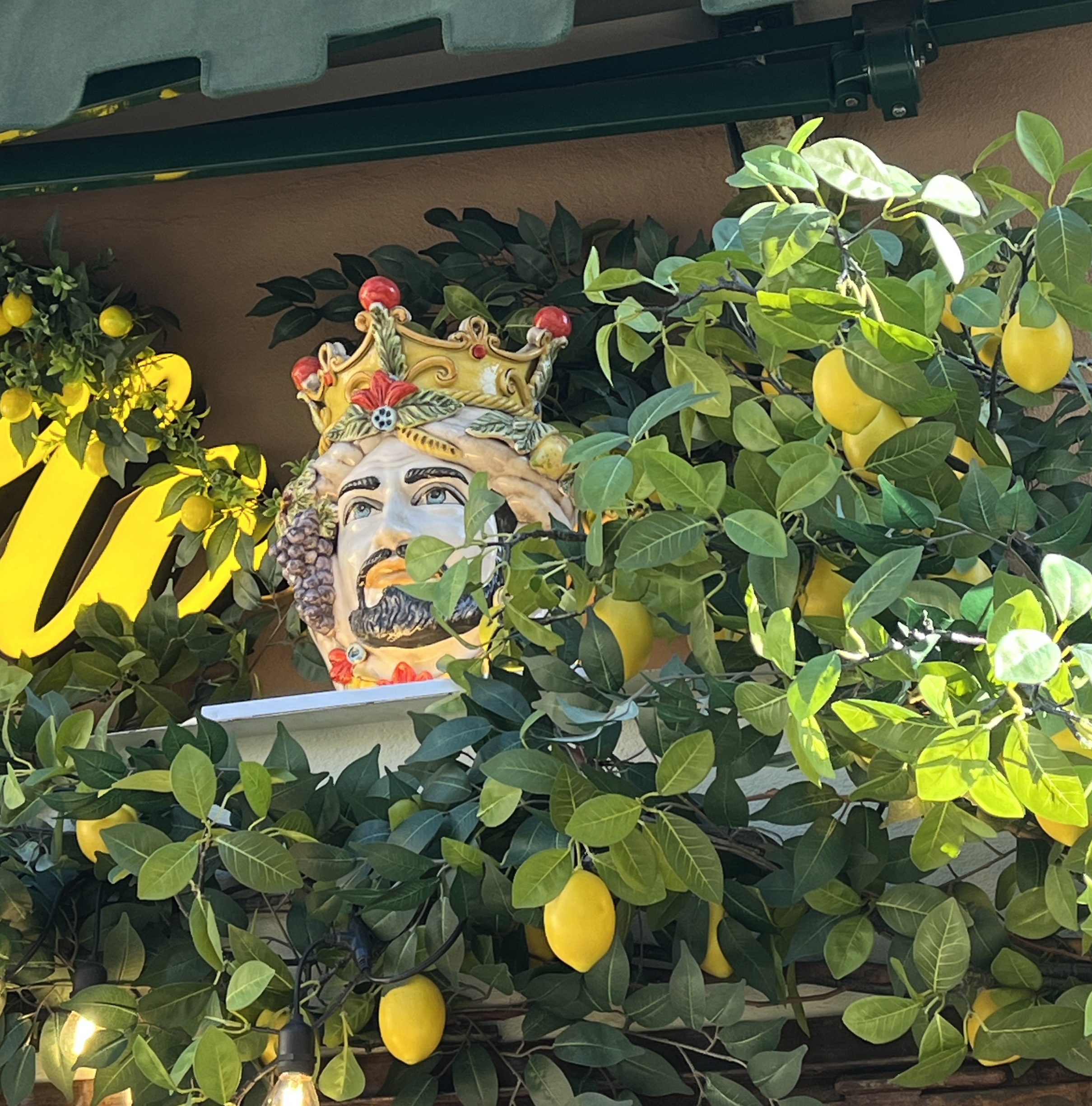
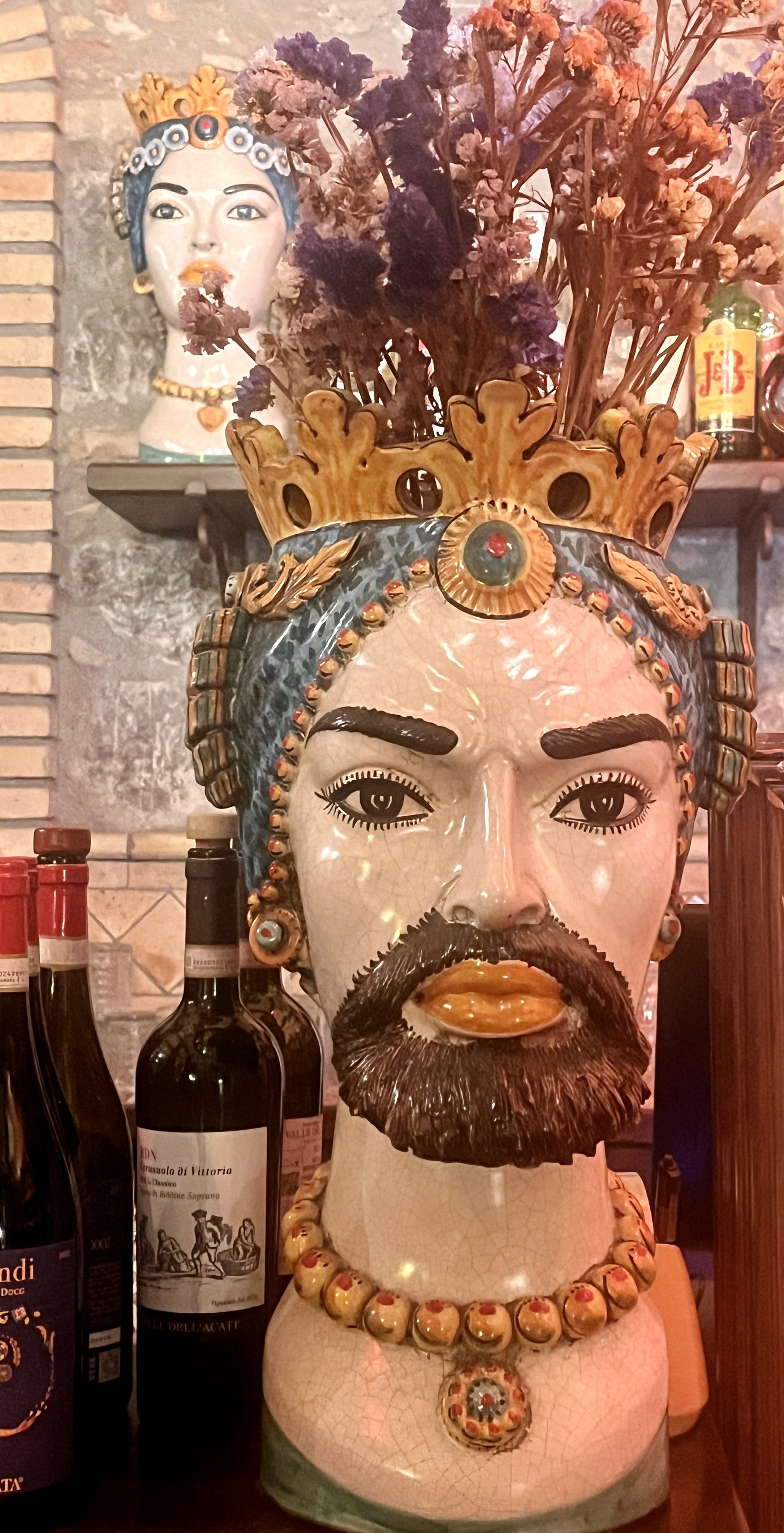
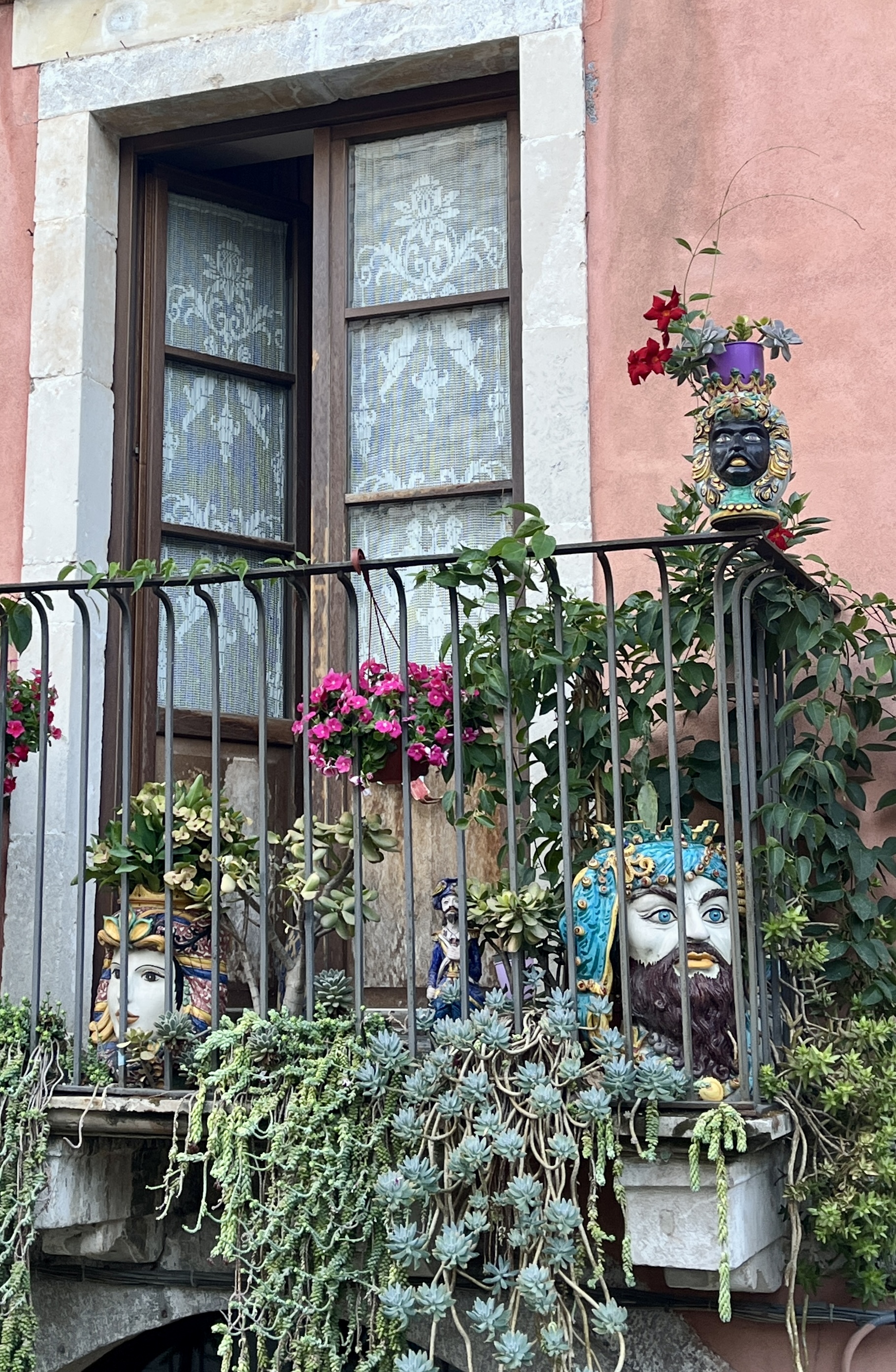
There’s a distinct vibe to Taormina. Is it partly due to the teste di moro? These ceramic art pieces are nestled everywhere; on balconies, in windows, in storefronts and bars. The folk legends of their origin are evocative, all set around the 11th century during the brief Arab rule. One legend in particular captures my imagination. A Sicilian woman tending plants on her balcony, is seduced by a Moorish merchant and a passionate romance ensues. Learning the painful truth that the man is already married prompts the woman to cut off her lover’s head. Turning the severed head into a plant pot, it turns out that basil grows lush and fragrant from the tears she sheds. Locals artisans down the ages are inspired to craft ceramic pots shaped in complimentary ‘his’ and ‘hers’. I marvel at the bold colours and intricate flourishes and become slightly smitten by them. Legend aside, today they are a proud, delightful symbols of Sicilian culture.
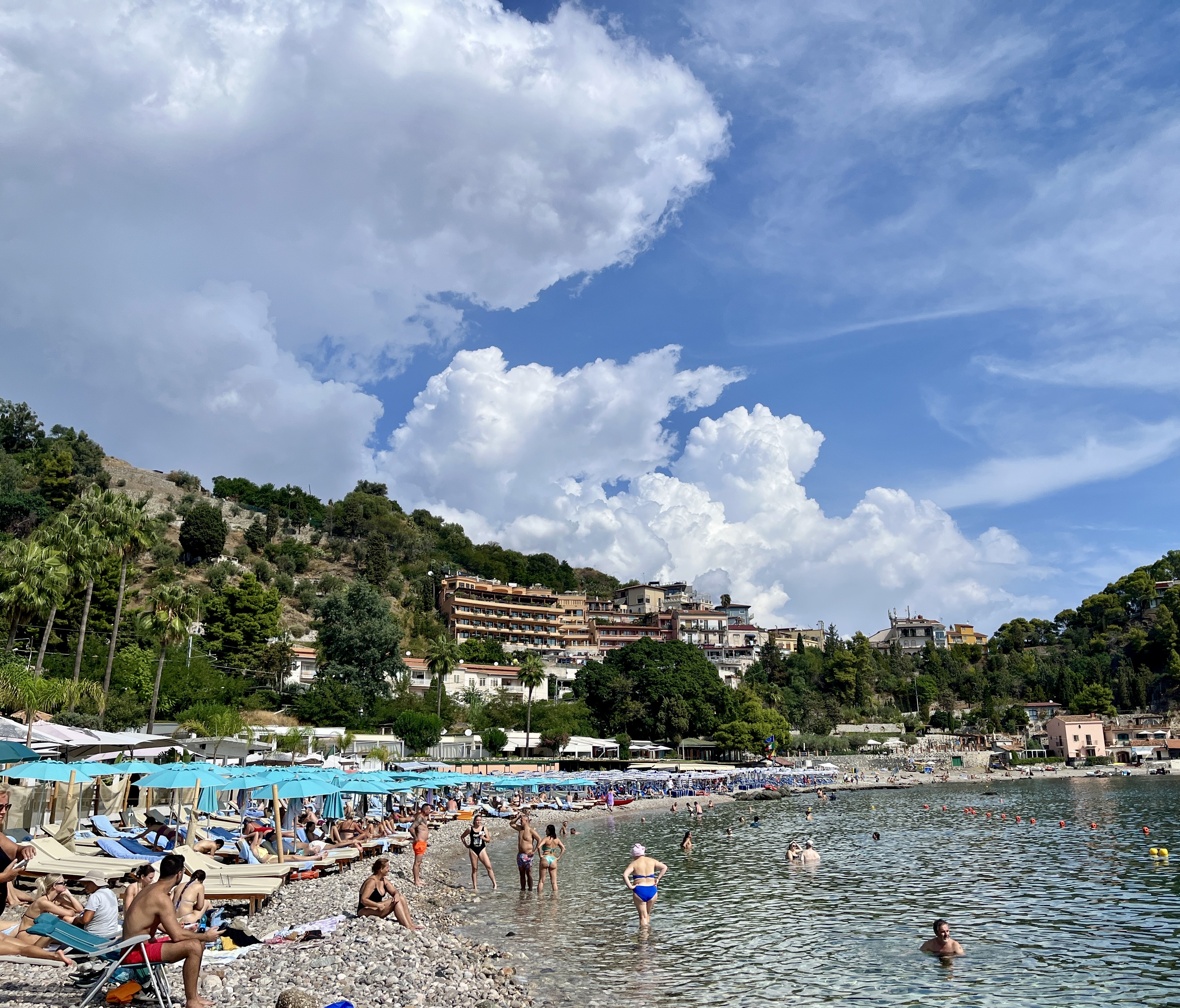
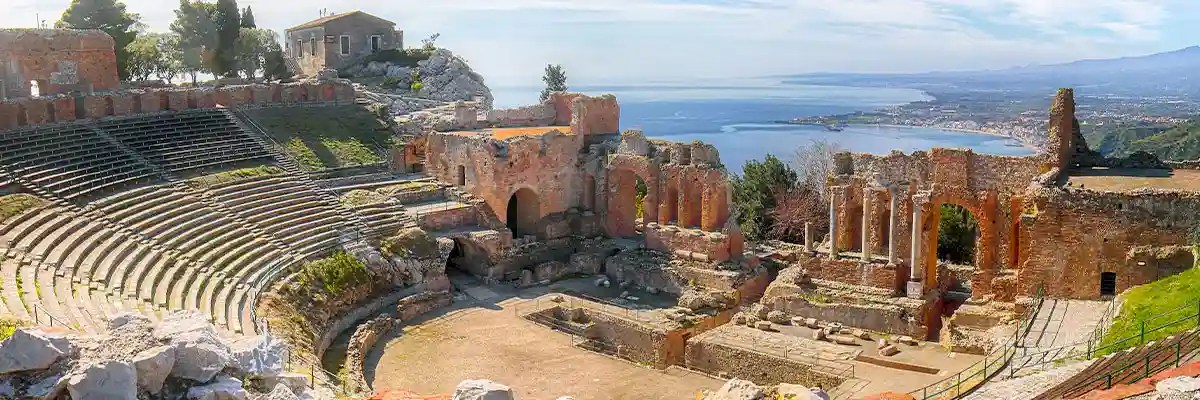
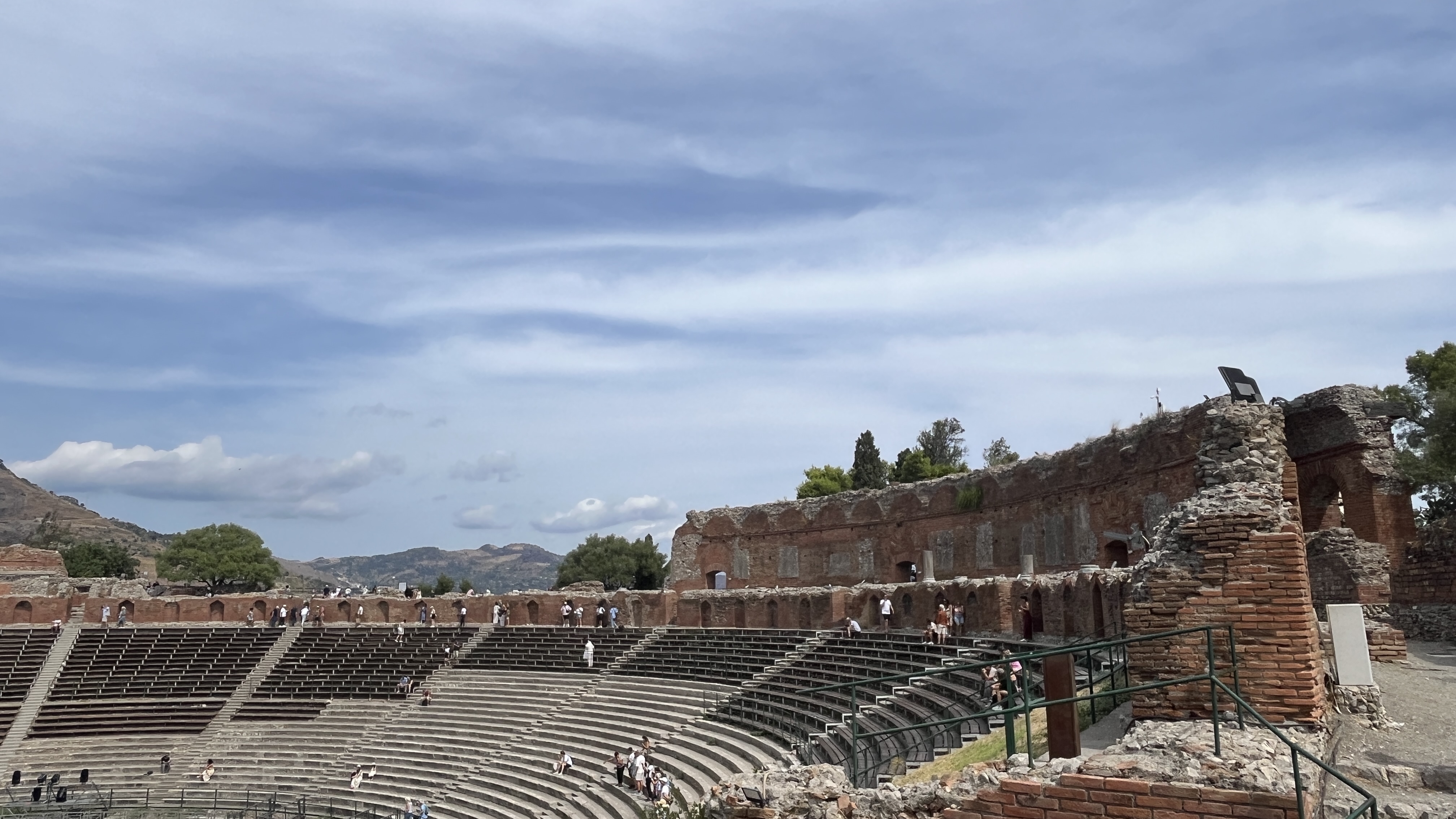
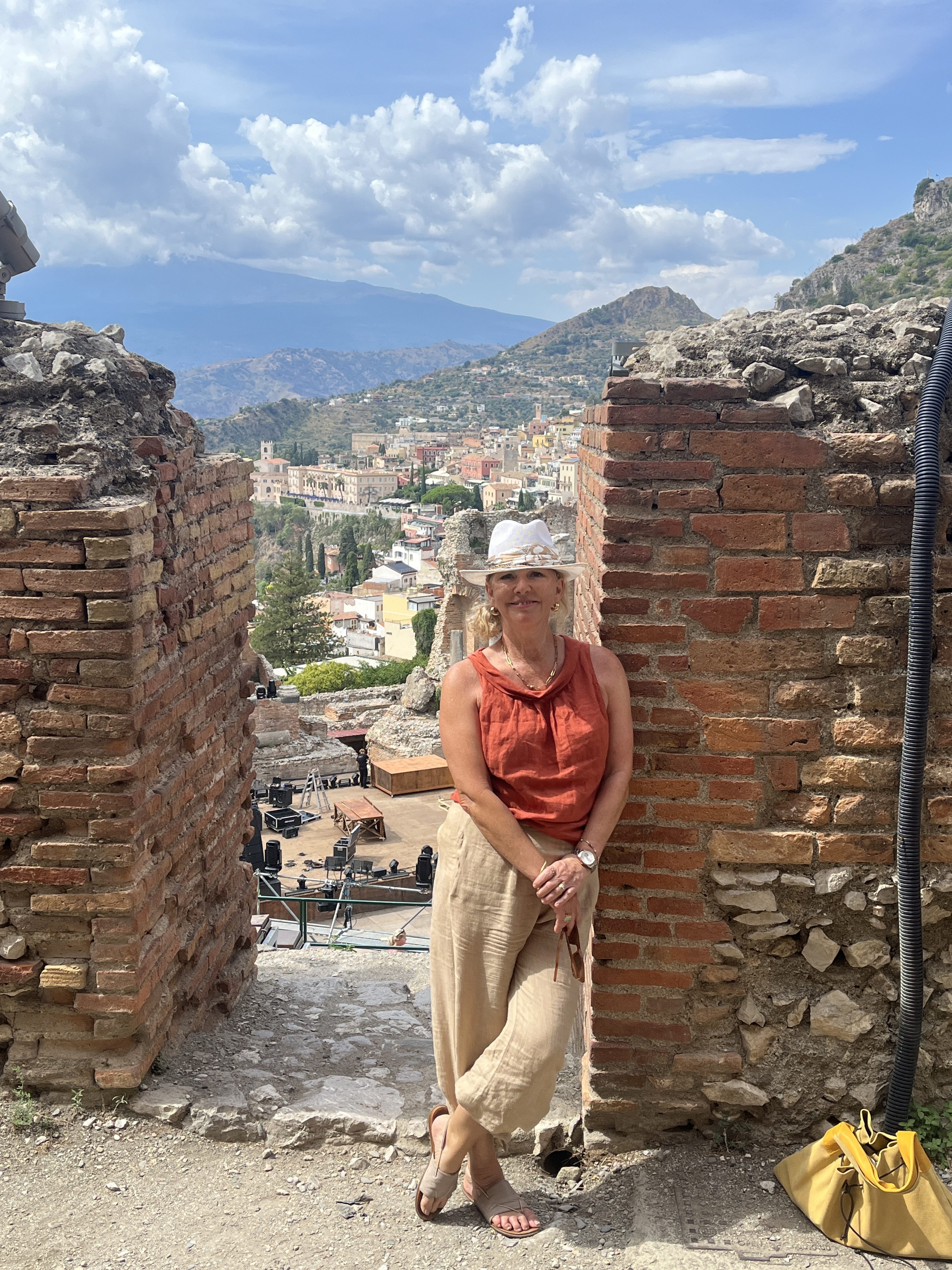
Strolling, swimming in the stunning bay at Isola Bella and of course sampling Etna wine are all on the agenda. And by chance, we’re able to play tennis on the clay courts of the Taormina Sporting Club, a charming oasis in the heart of the old town. Yet the main attraction is the impressive Teatro Antico di Taormina, commanding stunning views to Etna and the Ionian Sea.

The story of ‘rediscovery’ and preservation of the theatre during the Grand Tour years is intriguing. I’ve always been fascinated and perhaps a little envious of the Grand Tour crowd… think Room With a View. The tour was a journey of discovery and beauty, an immersion in classical art, historical landscapes and continental culture. Admittedly, my story of coming to Italy for the first time at 17 was an education in itself and though not as long nor extravagant as the Grand Tour, the discovery of this ancient land captivated me and inspired me to travel. The Grand Tour was often the final stamp on the education of the privileged through the 19th and 20th centuries and Sicily was often the last stop on the travellers two or three month tour. Taormina with its ancient theatre became instant videndae, must-sees, after travellers reports and printed illustrations were published. Indeed, this was the start of cultural tourism, partly thanks to the growing passion for antiquity and archaeological sites.

Built in the 3rd Century BC by the Greeks, and further aggrandised under Roman rule by order of Hadrian, the theatre held 10,000 spectators. In 1788, German writer Wolfgang von Goethe witnessed a performance. He marvelled at the unmatched panoramic view of nature and the backdrop of Etna, smouldering behind the stage. More publicity, greater curiosity, more travellers precipitated the beginnings of archaeological protection, starting with the theatre, then the city itself, even to protecting millennial chestnut trees on Mount Etna.
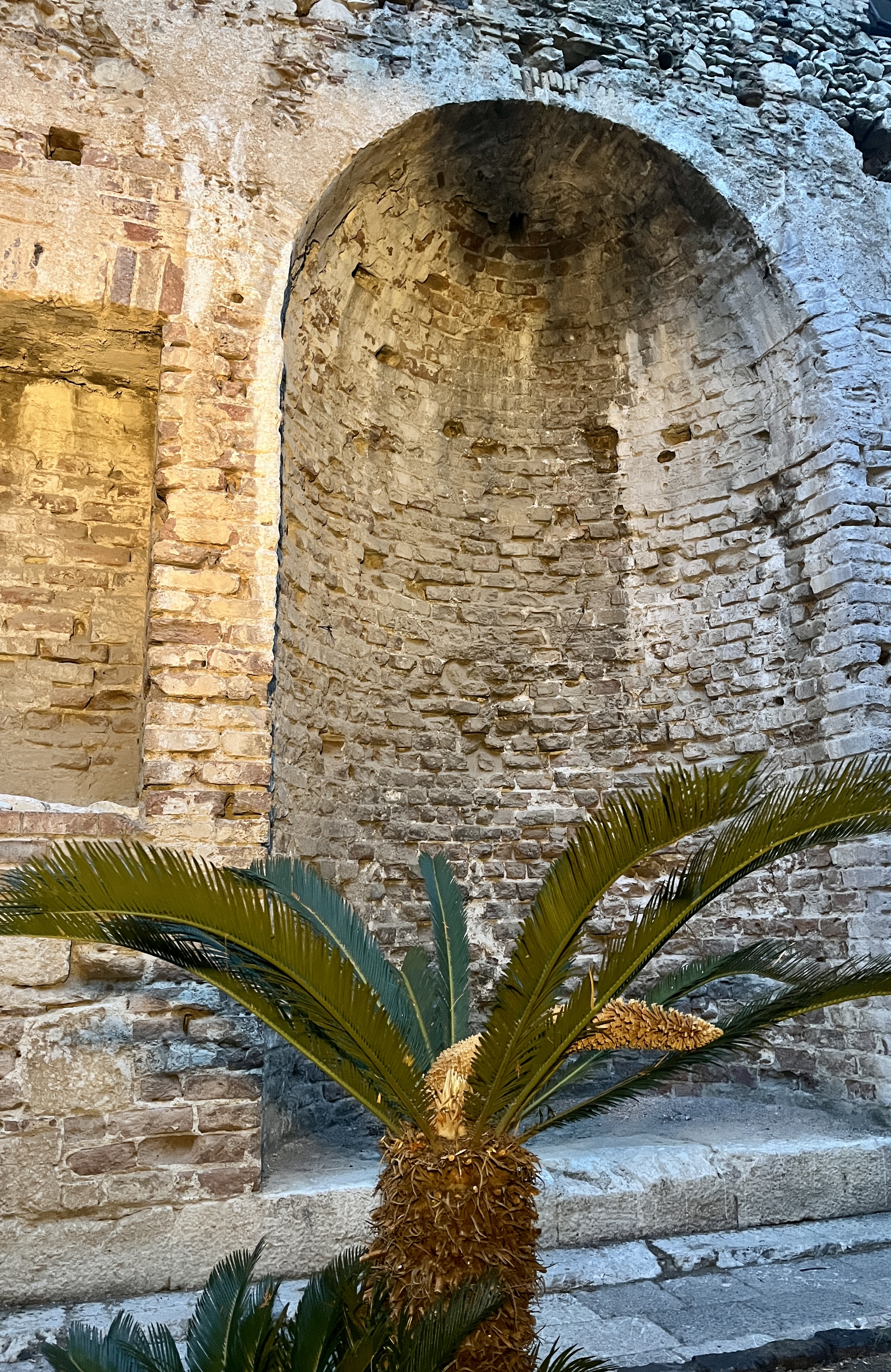
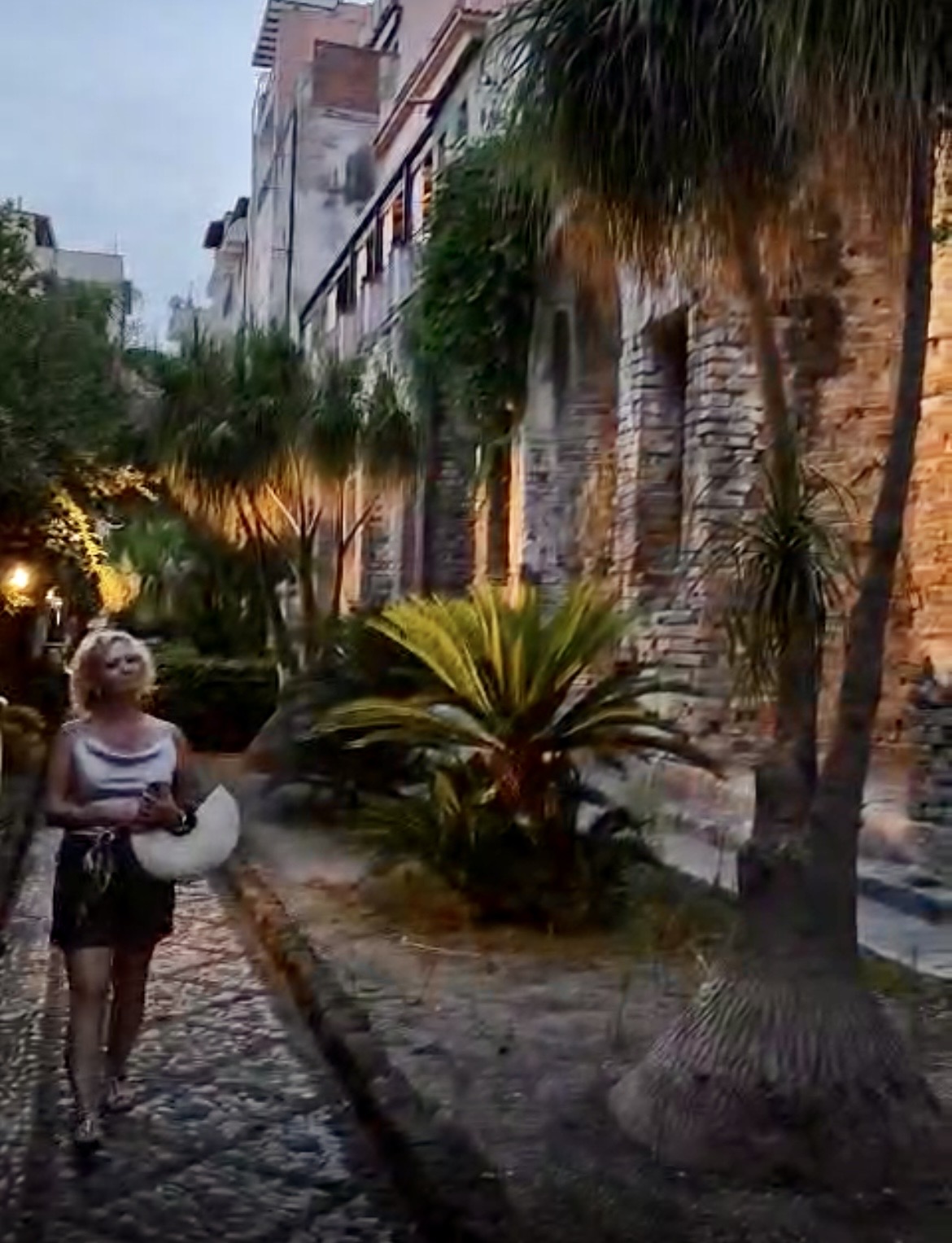
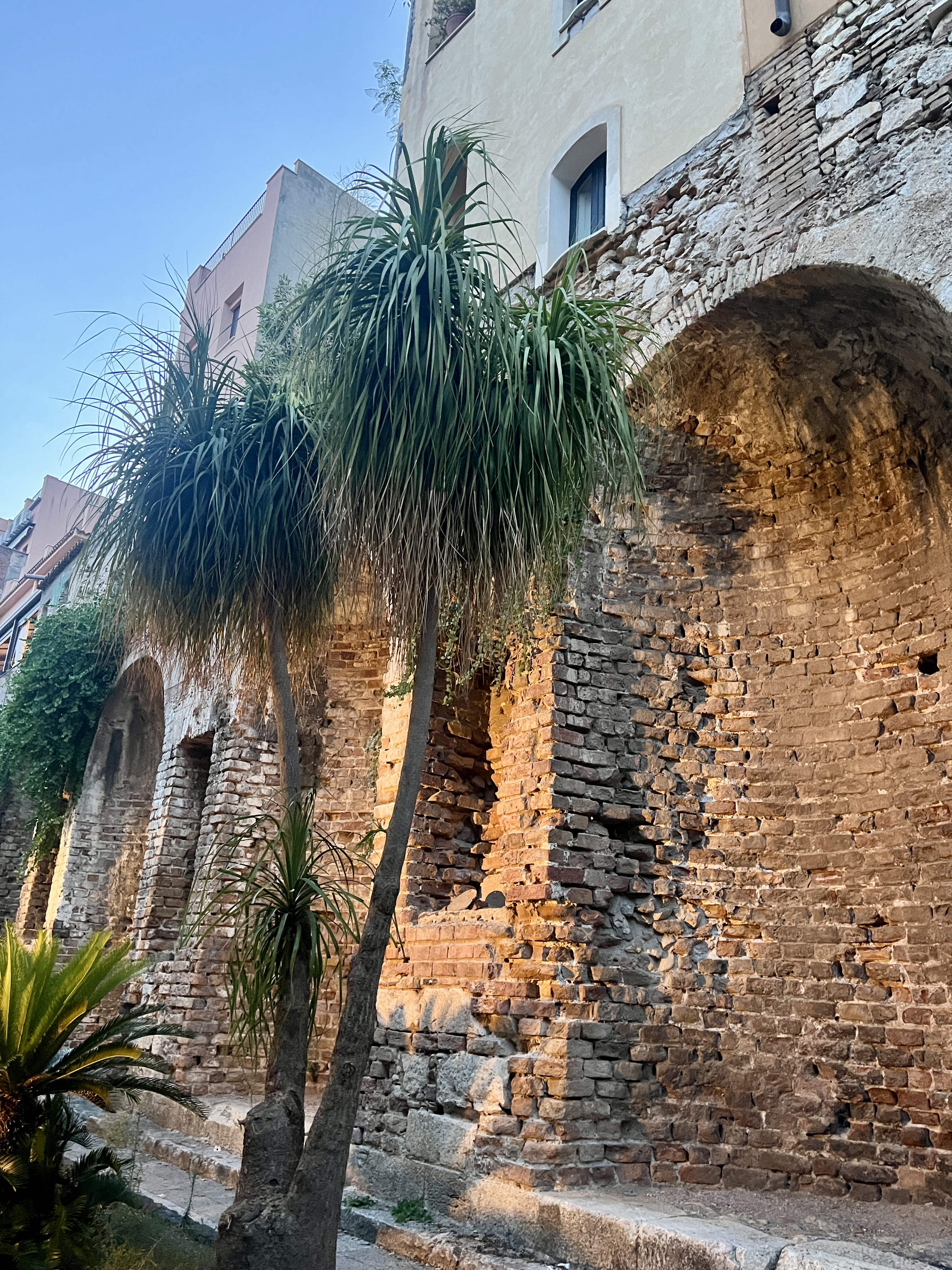
On our last evening stroll, happenstance leads us to something most magical. Reluctant to leave a single street undiscovered, we come across a nymphaeum tucked away down a back stairway. Once thought to be an enclave for mock naval battles, modern archaeologists now agree that it was a grand public fountain, a water circus dedicated to nature’s spirits. The long stone wall and niches (their statues long missing) from 2nd century AD is symmetrical, styled in the Greek manner, despite the Roman origin. A haven for mythical nymphs – beautiful maidens – who personified water, trees and mountains. In the evening moonlight it is breathtaking, another archive of Taormina’s fascinating history. Almost 600 years before this nymphaeum was built, the people of Tauromenion welcomed refugees from the Greek colony of Naxos, who allied with Athens had been defeated by mighty Syracuse. And that’s our next stop, onwards to Syracusa.
Syracusa ~ Ortigia ~ Noto
The great general, Nicias briefed the Athenian assembly that there were seven Sicilian cites equipped just like Athens. The year was 415 BC. Much later, around 40 BC, the great Roman statesman Cicero commented, ‘You have always heard it said that Siracusa is the greatest and the most beautiful of all Greek cities, it is indeed as they say.’

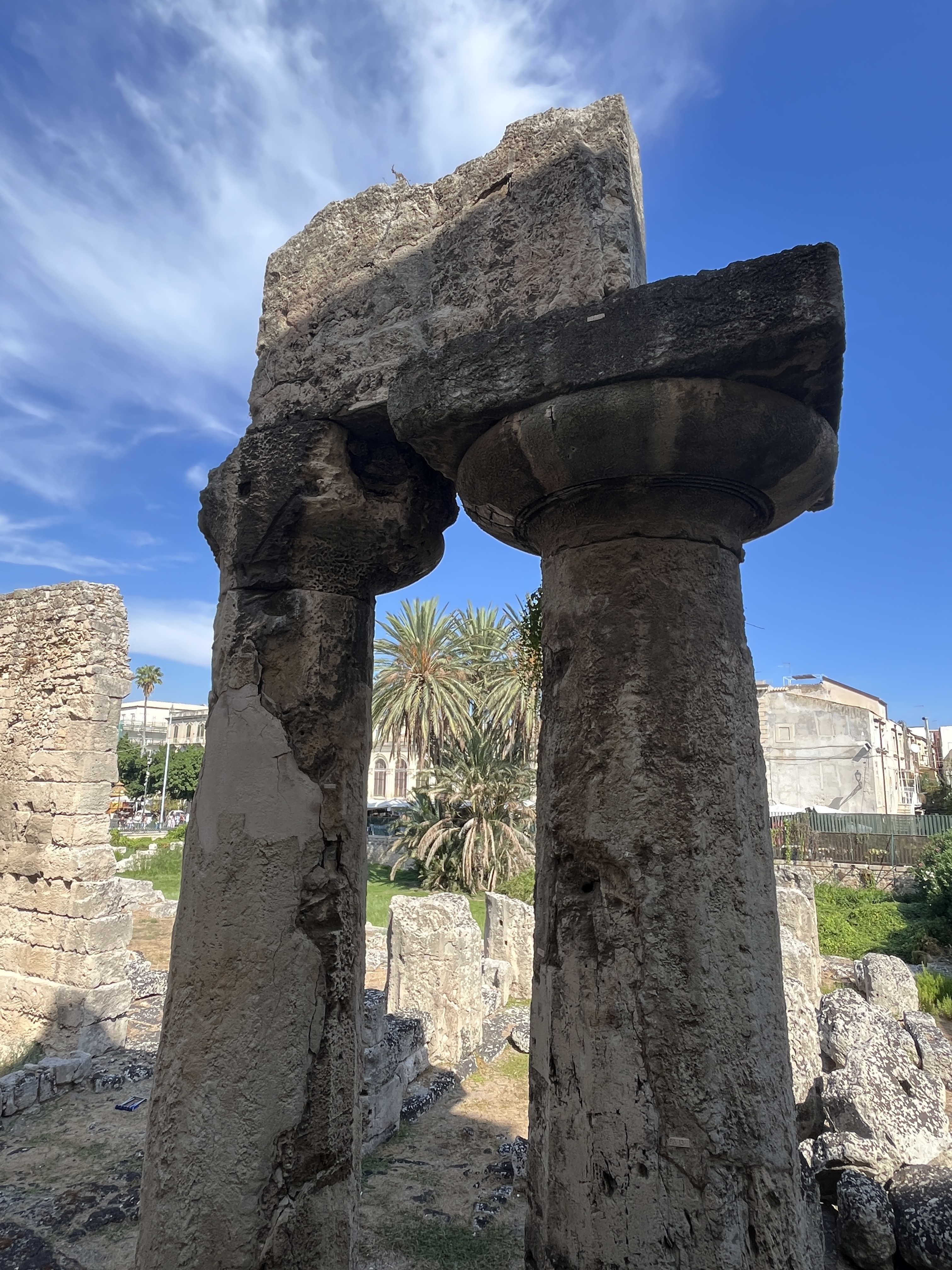
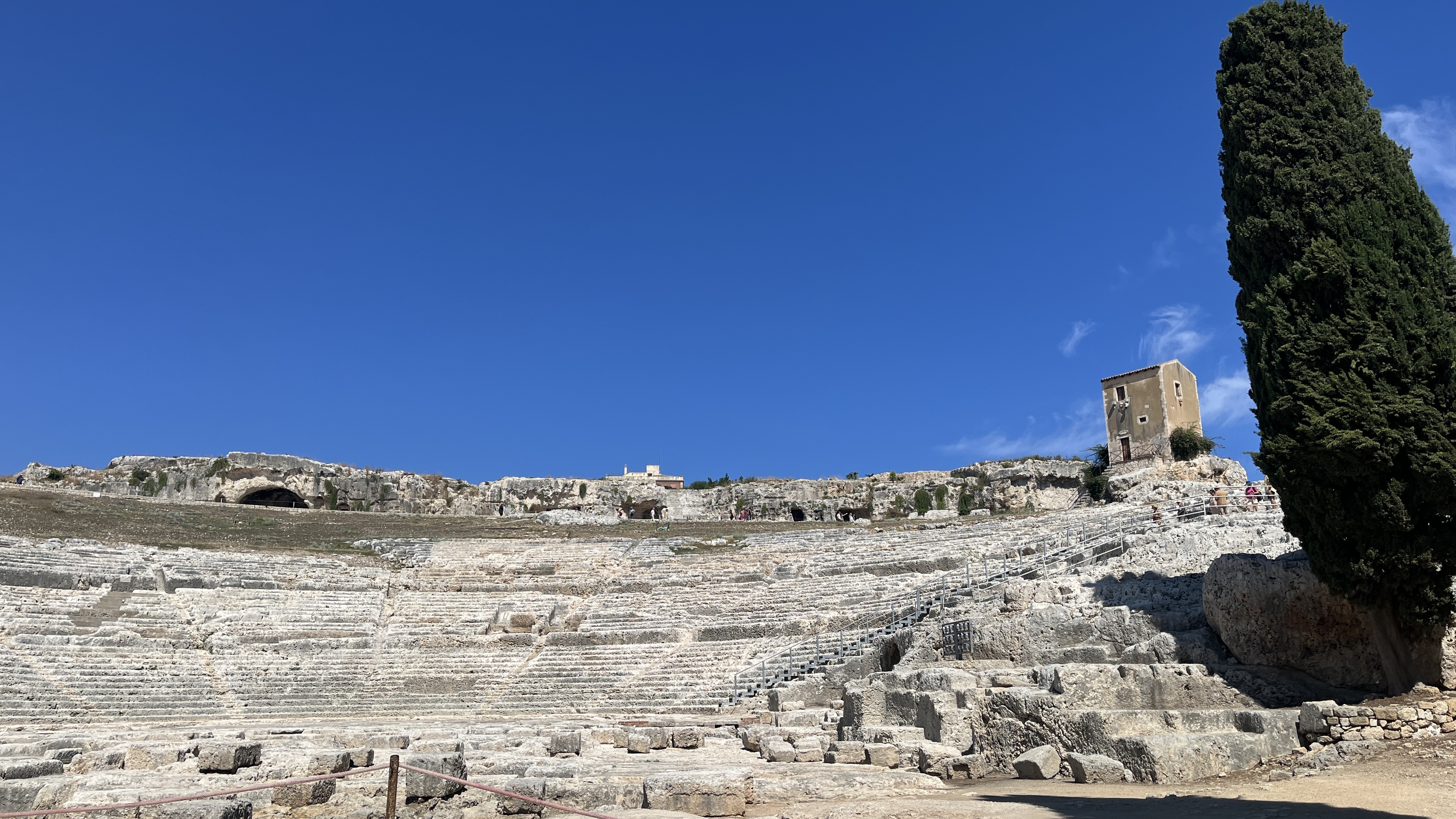
Cicero also noted its well-protected position on the Ionian Sea and now, standing in the great Neapolis Park, I try to envision the enormity of constructing this ancient theatre… one of the largest and most famous in the ancient world. Built in the 5th C. BC and rebuilt in the 3rd, this Unesco World Heritage Site is one of the reasons people visit Syracusa on the south eastern coast of Sicily. Its story is written in the layers of cultural influence, from the Sicils, Greeks, Romans, Byzantines, Arabs, Normans and Spaniards. The island has always been coveted, yet Sicily did not become part of Italy until 1861 and many Sicilians still claim their island heritage before Italian.

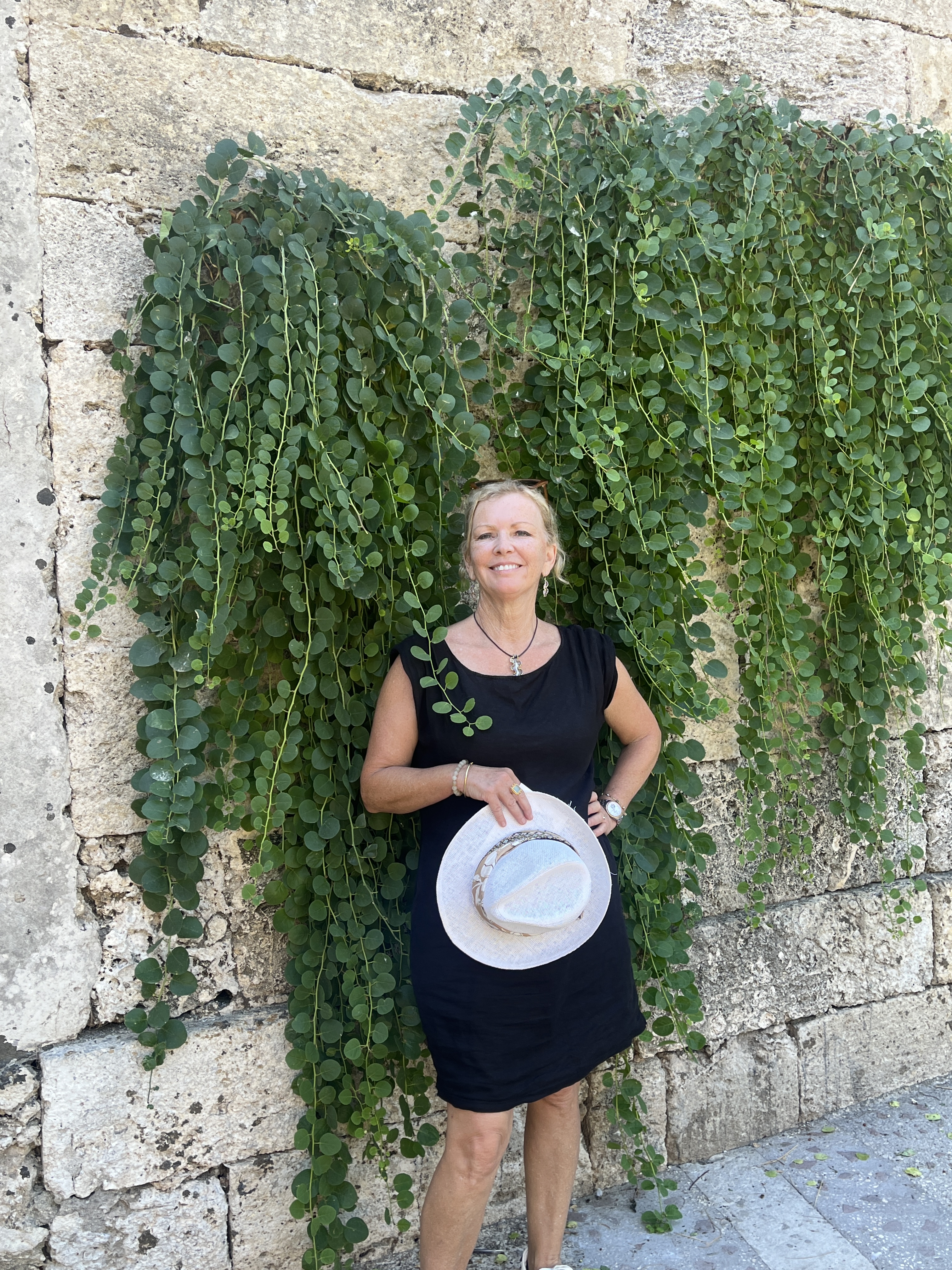
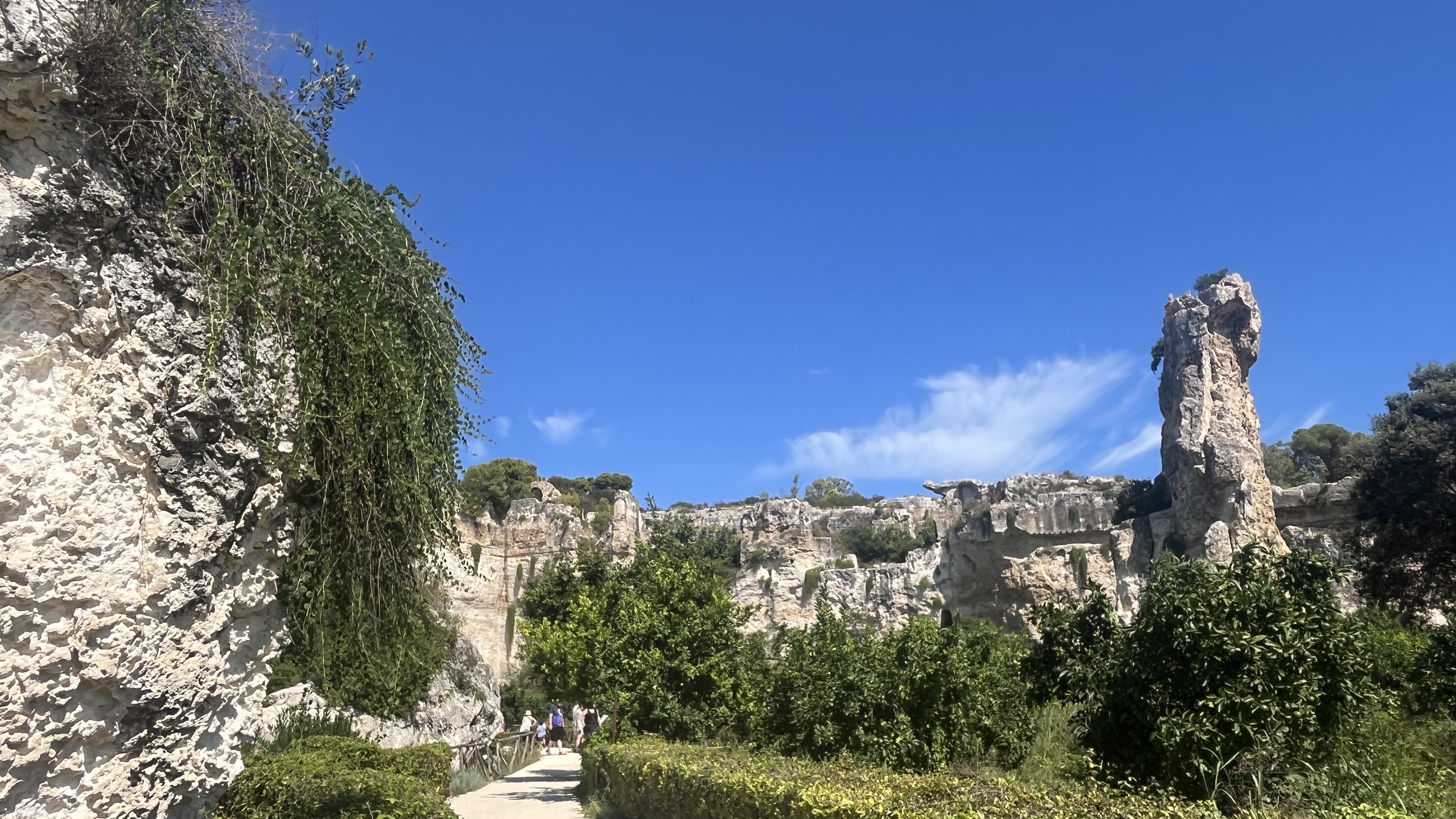
I read that in the ancient Greek world, the massive theatre, holding 15,000 citizens, wasn’t solely for plays or entertainment, but was also a place for religious rituals and public assemblies. It was the beating heart of the community, yet curiously the upper gallery was fringed with mausoleums of the wealthy. A counterpoint to the Greek theatre is the nearby Roman Amphitheater home to gory gladiatorial spectacles. Similar to the Colosseum in Rome, it was one of the grandest in the Mediterranean. As interesting as they are, nearby Paradise Quarry is incredible to see. Providing the stone for the theatres and the neapolis (new city), standing inside its cool enormous caverns is breathtaking. Naturally, I’m enchanted by the lush, extensive garden that now populates and softens the once stark lines of the quarry. Wild capers drape from the walls, orange and lemon trees transform it into the paradise that it now is.

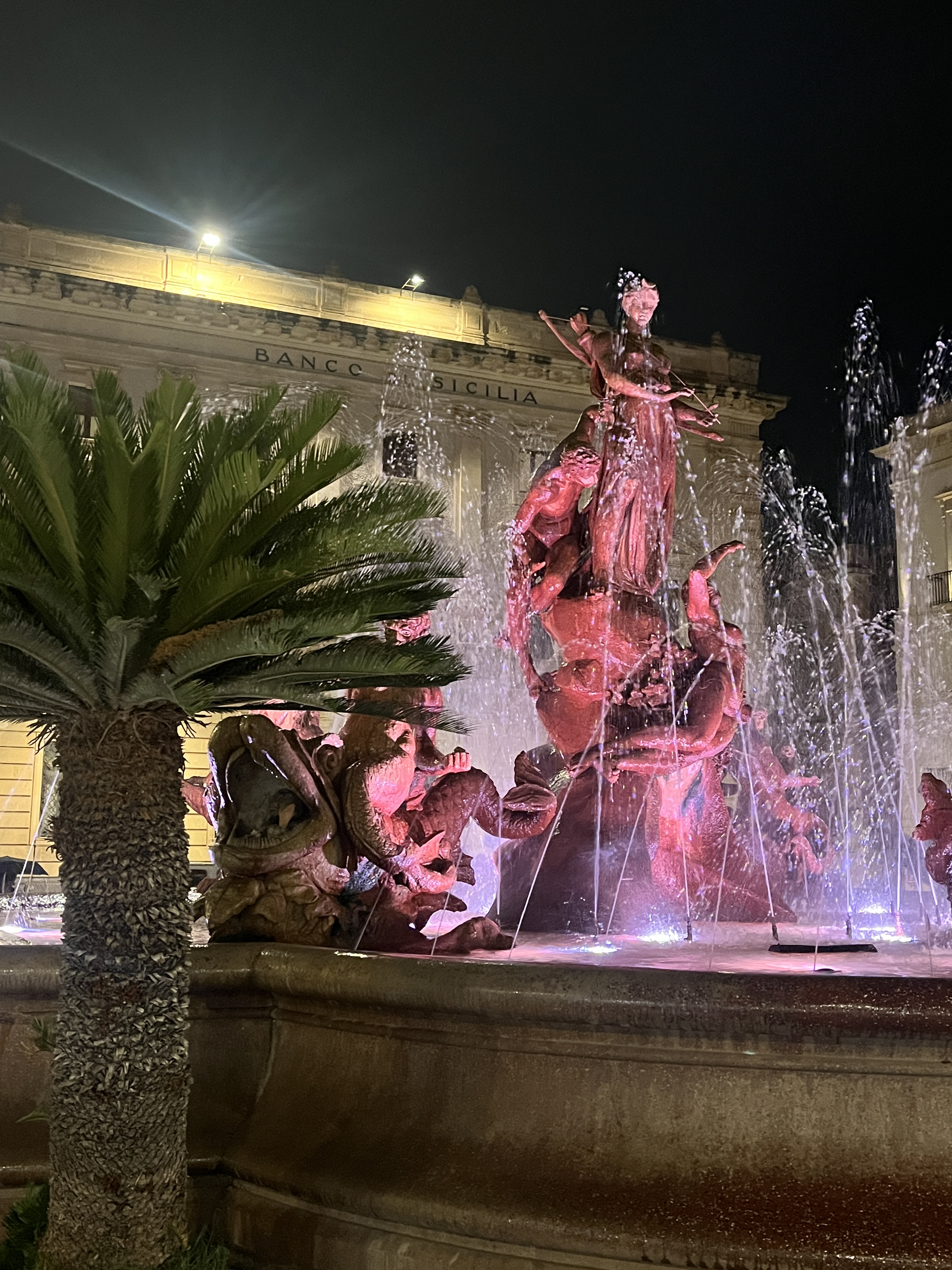
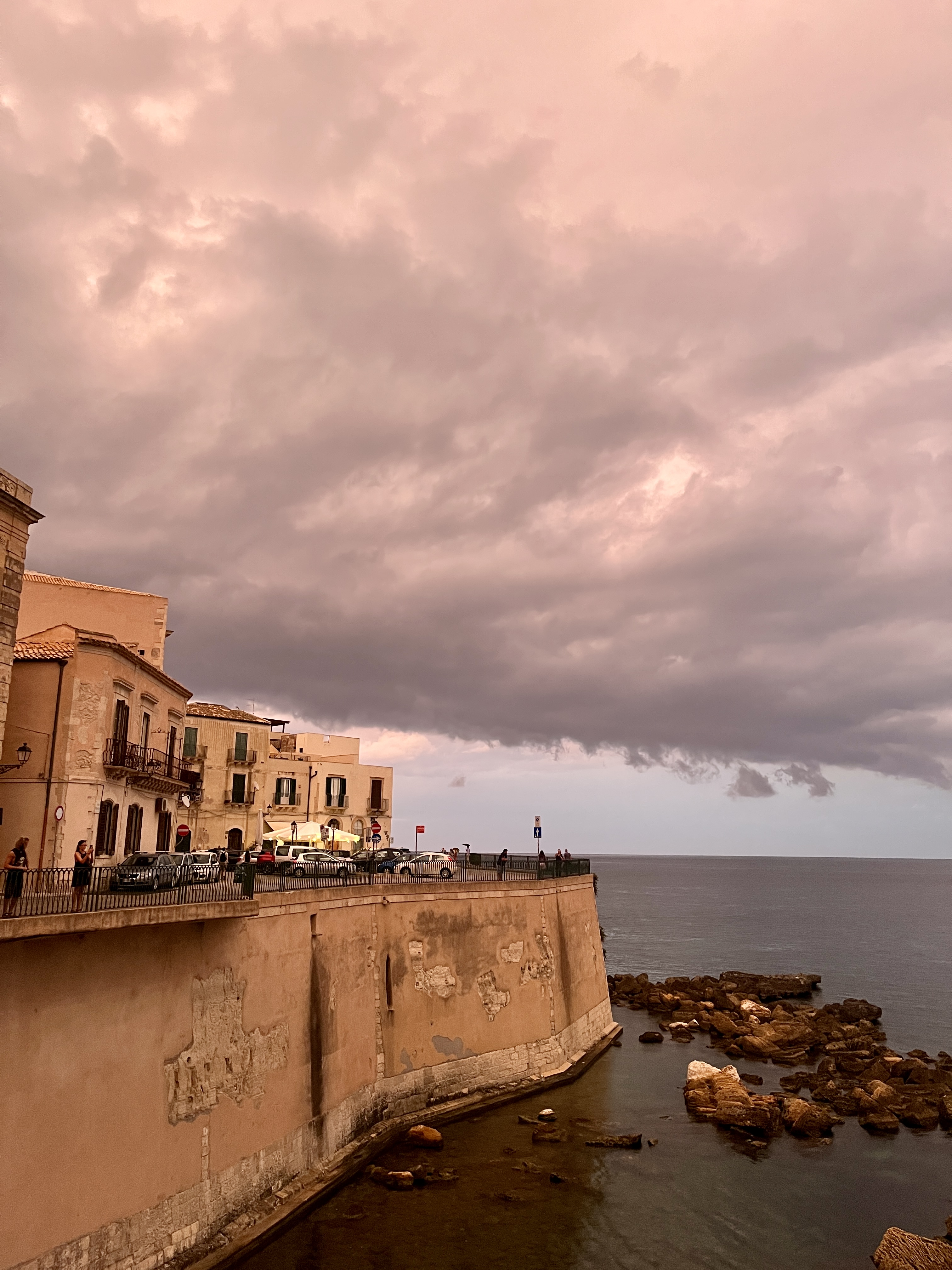
Long before preservation of antiquities became popular, the fate of many ancient structures was to have their limestone blocks appropriated, stripped for projects of the time such as fortifying the ancient seawalls of Ortigia. This small island is the historical heart of Syracusa, first settled by the Sicels, before the Greek colonists arrived. So yes, the Neapolis built in early BC’s was the new city. It’s quite simply mind-boggling.
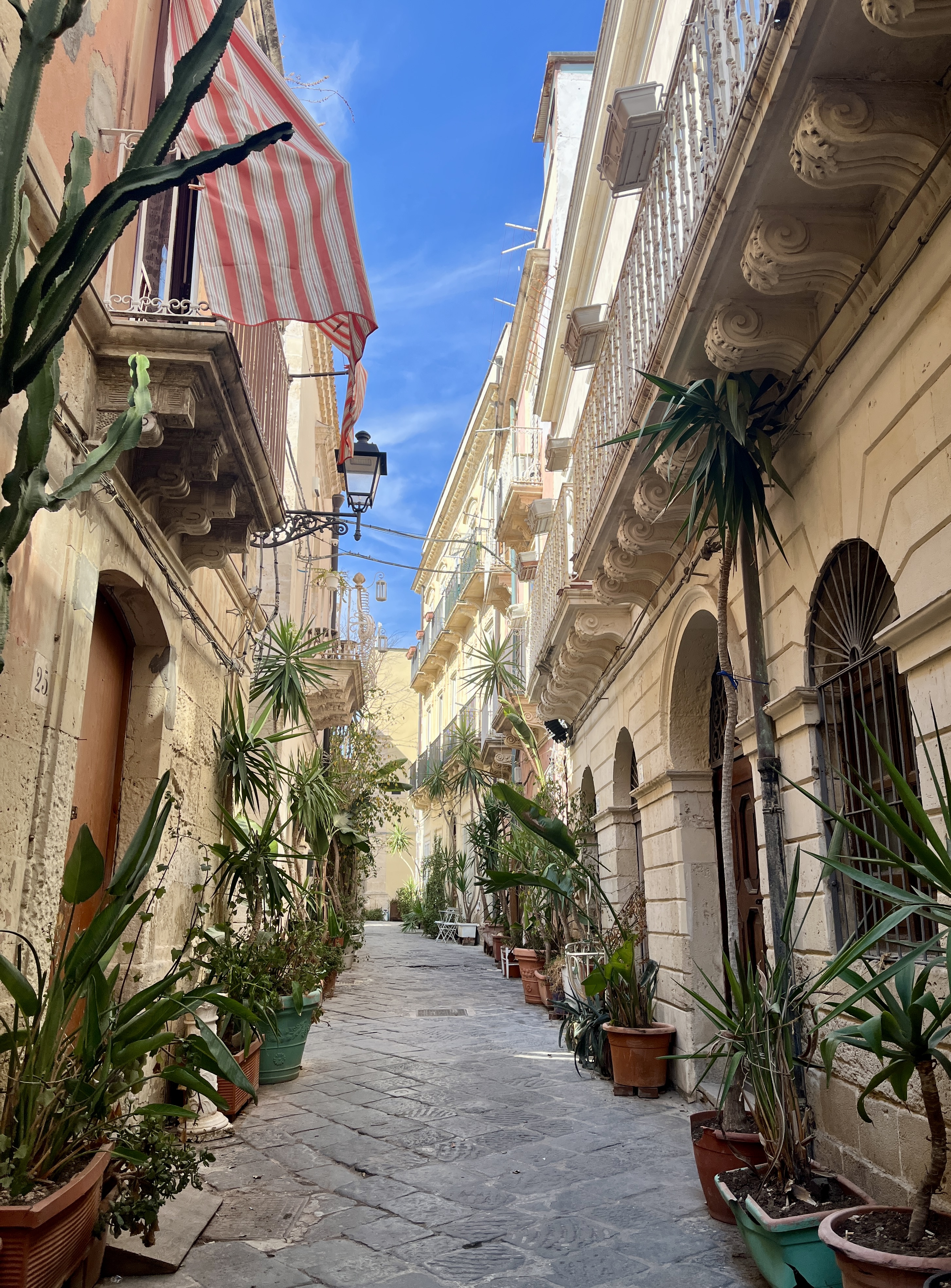
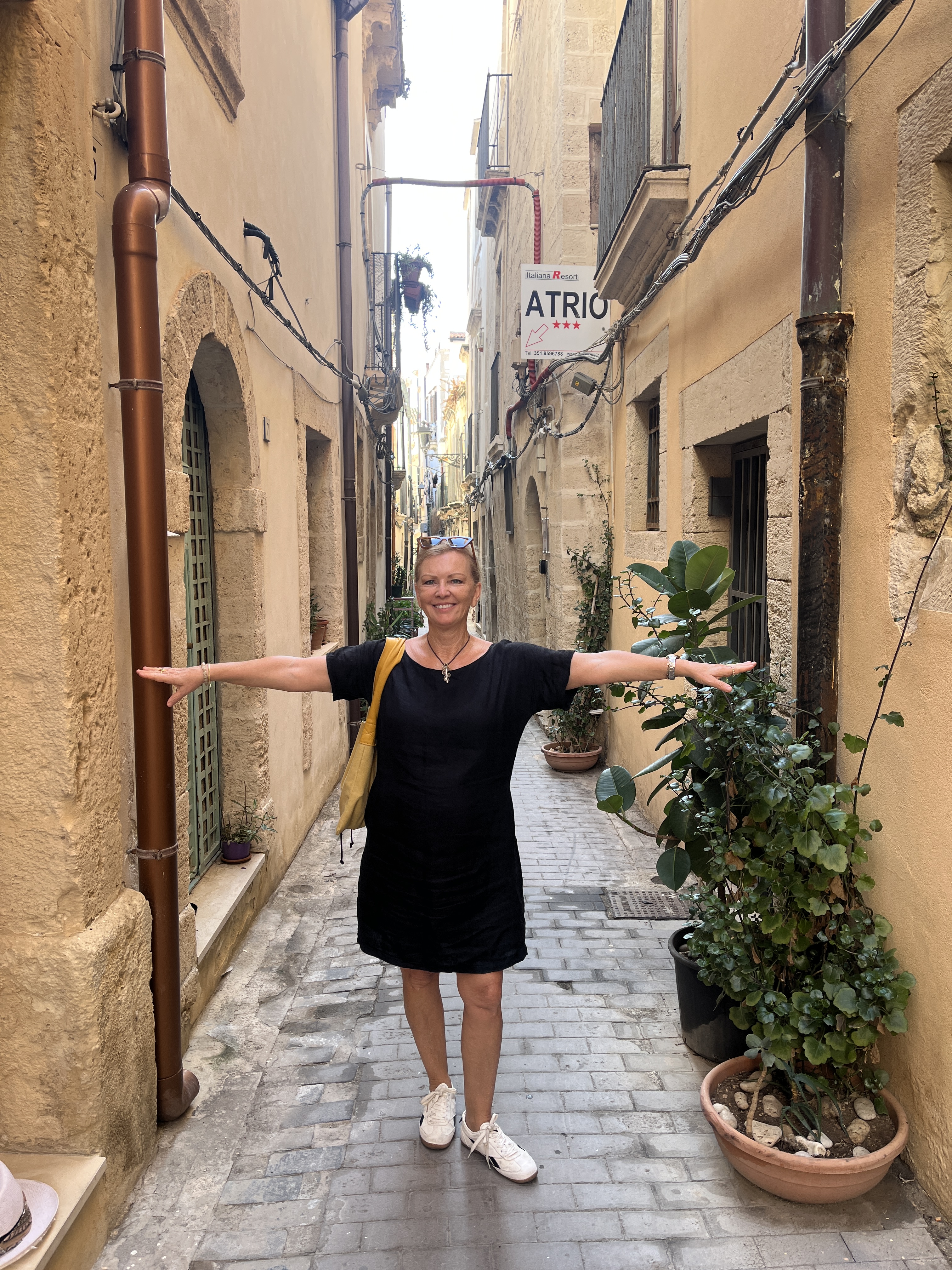
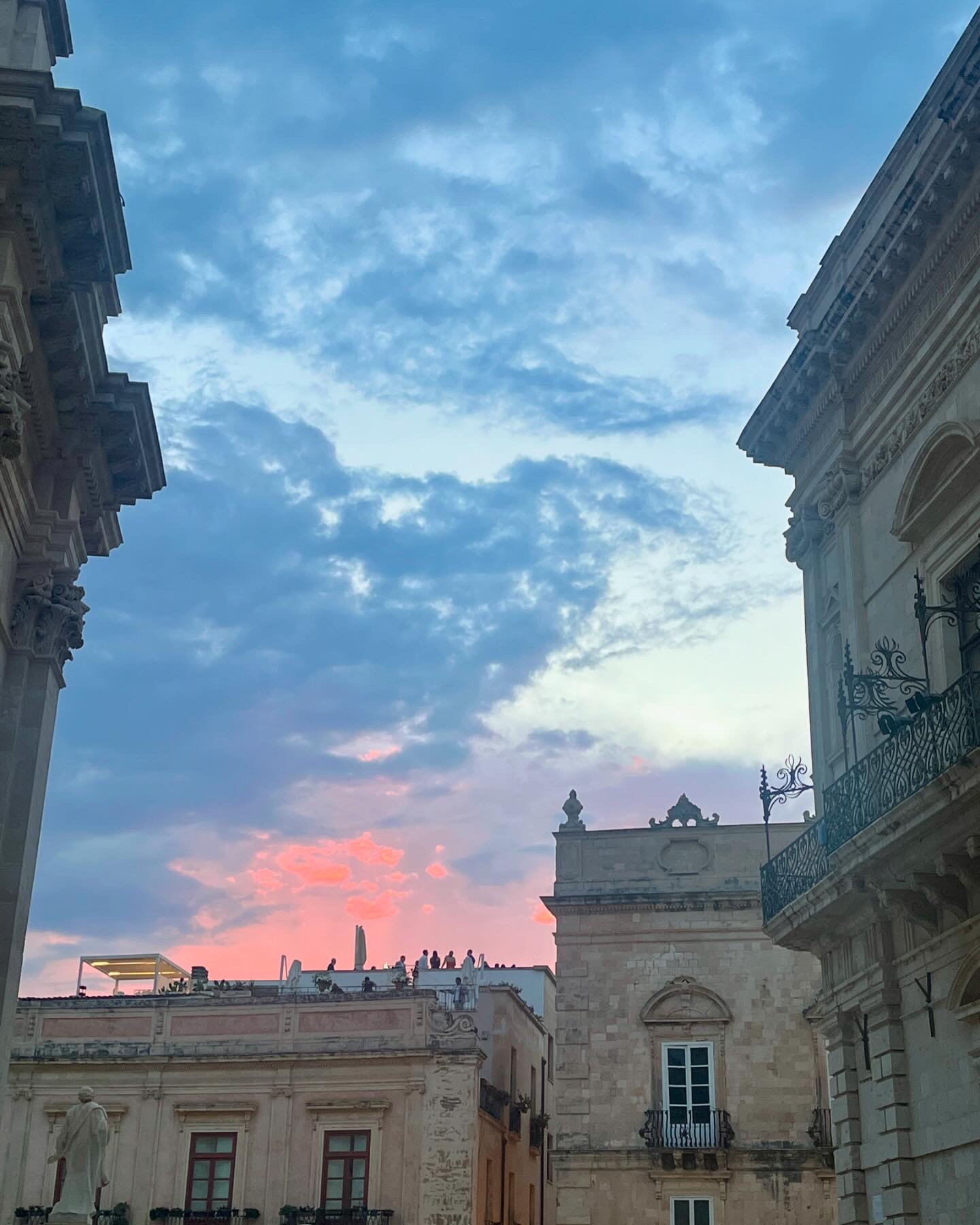
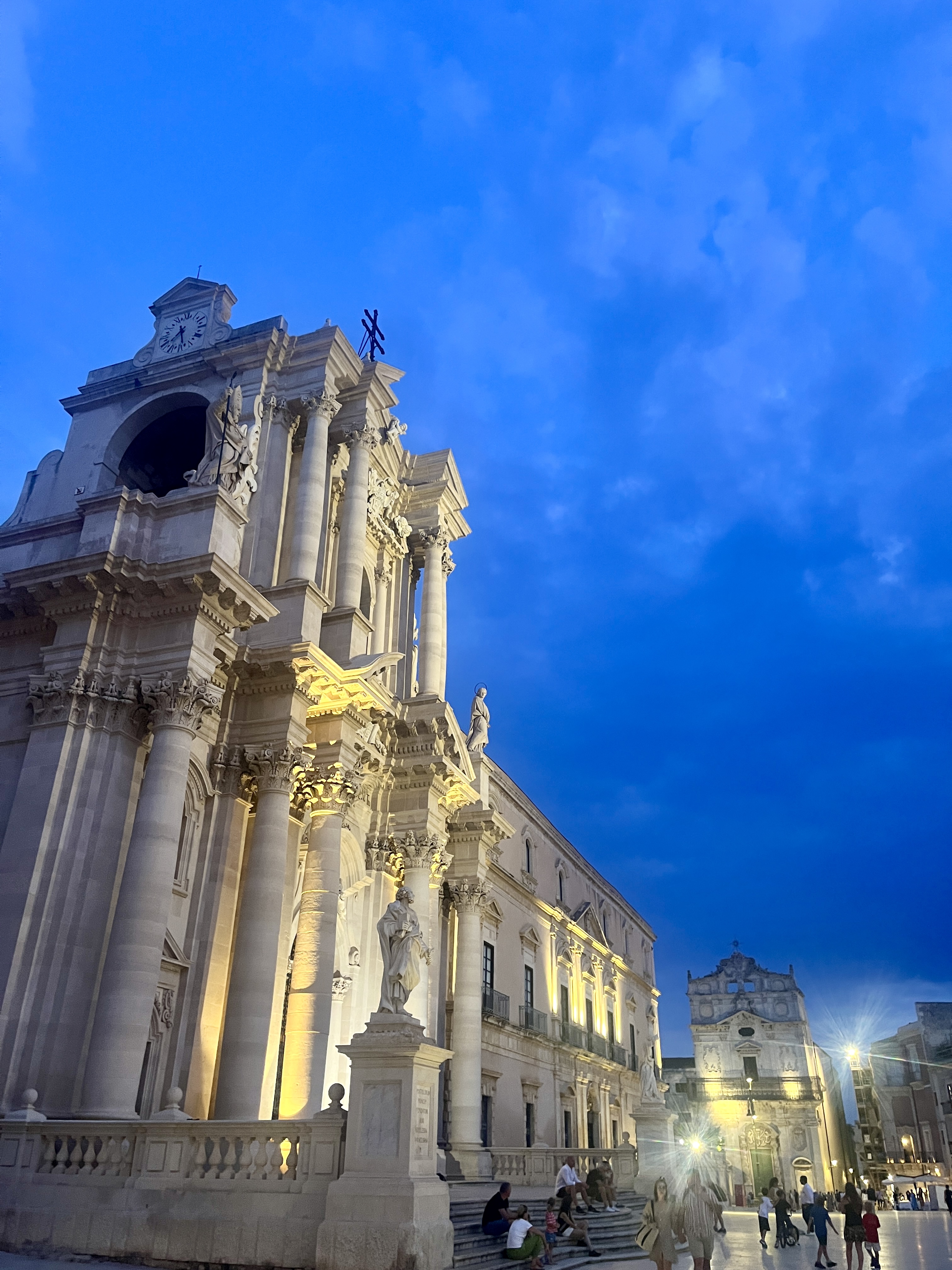
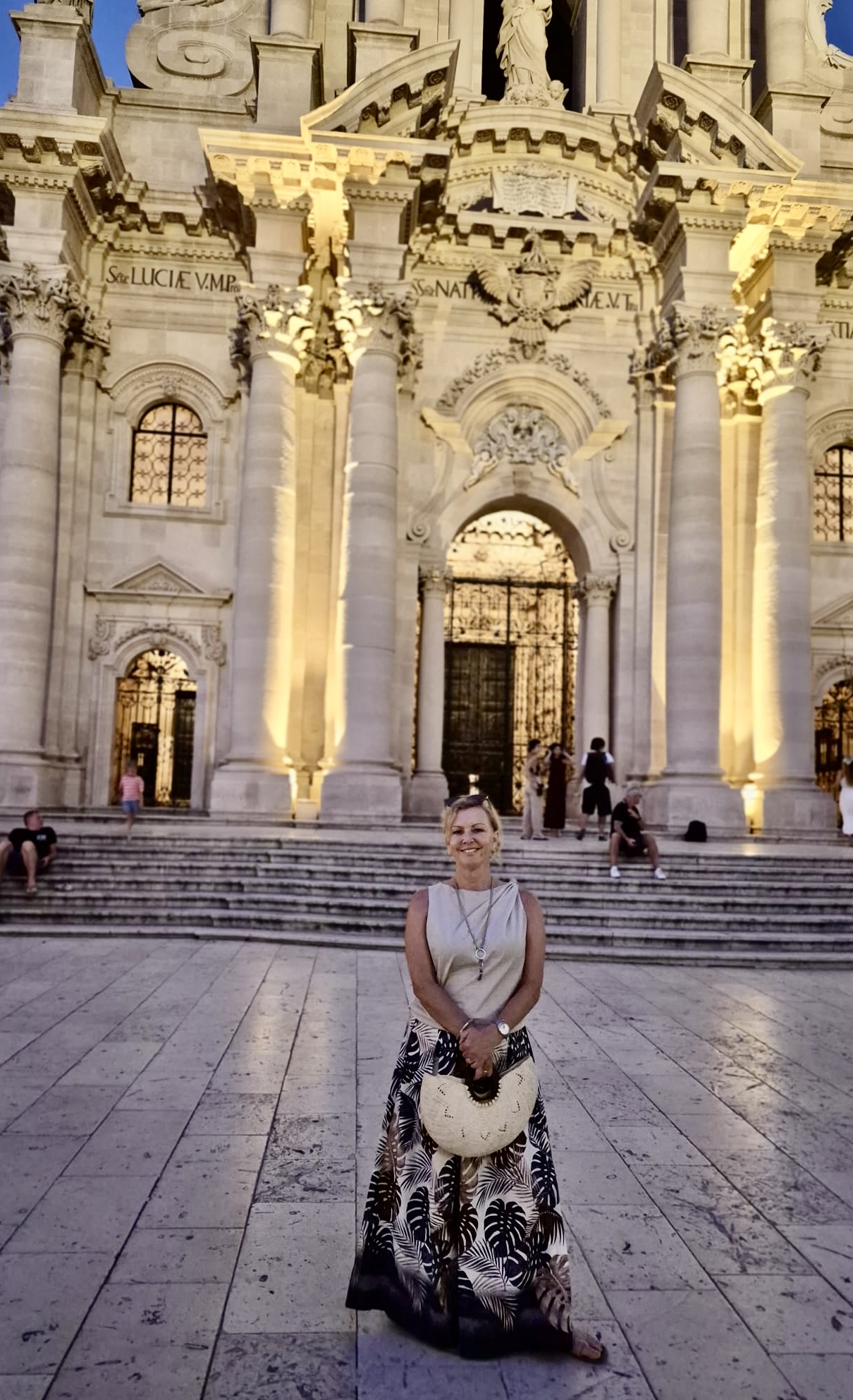
Our B&B is on a typical narrow street, barely wider than my arm’s length. Quaint balconies, potted palms, dozing neighbourhood cats and striped sun shades. Turning one way takes us to the sea, turning the other leads us through a labyrinth of antique streets, converging on the spectacular Duomo di Syracusa. Built directly over and fused into the ancient Greek Temple of Athena, it anchors the grand piazza, a resplendent emblem of the layered history, 3000 years in the making. At sunset, golden rays dance in the sky, upon the limestone, filling my traveller’s soul… Sicily continues to astound me.
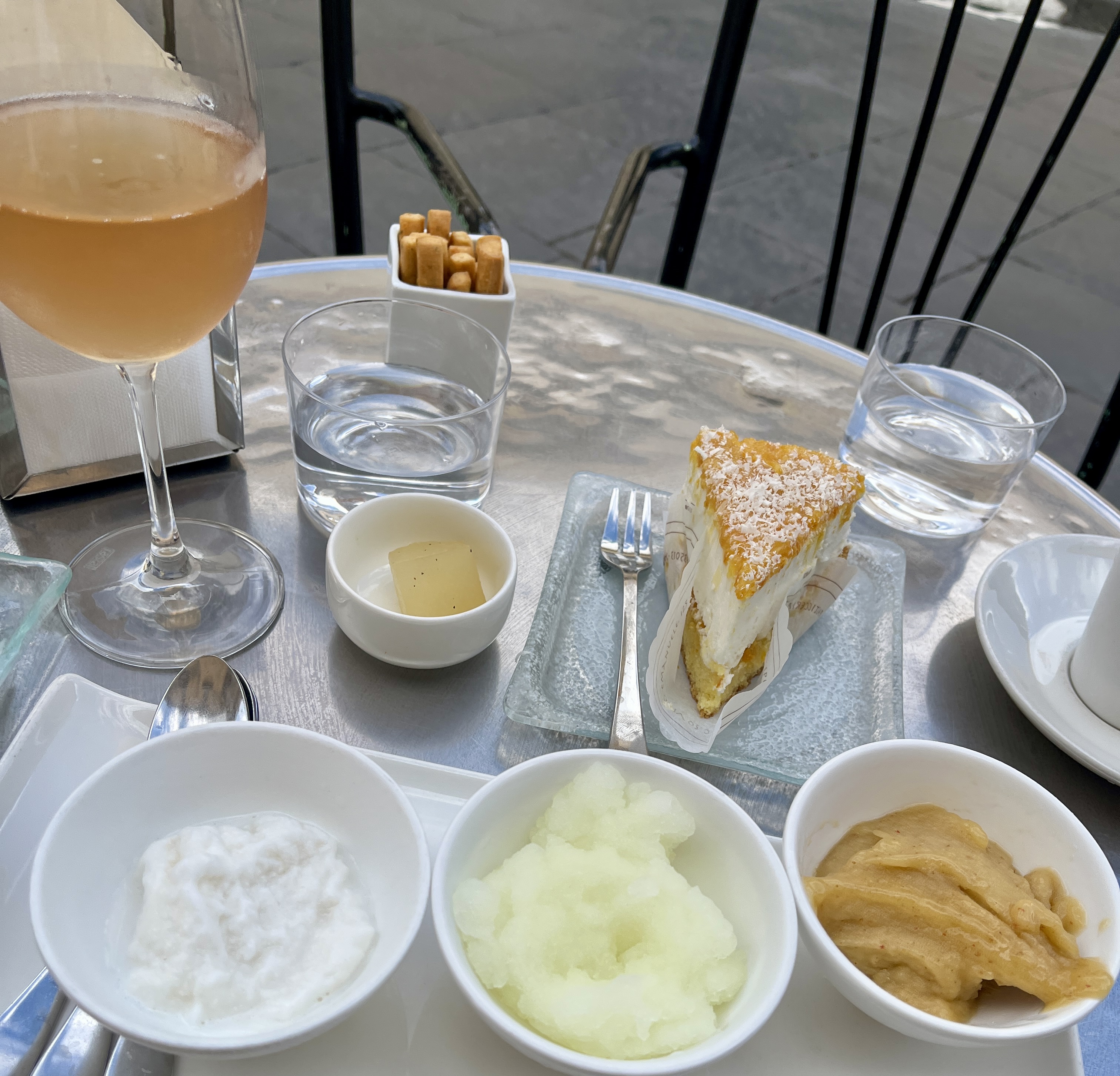
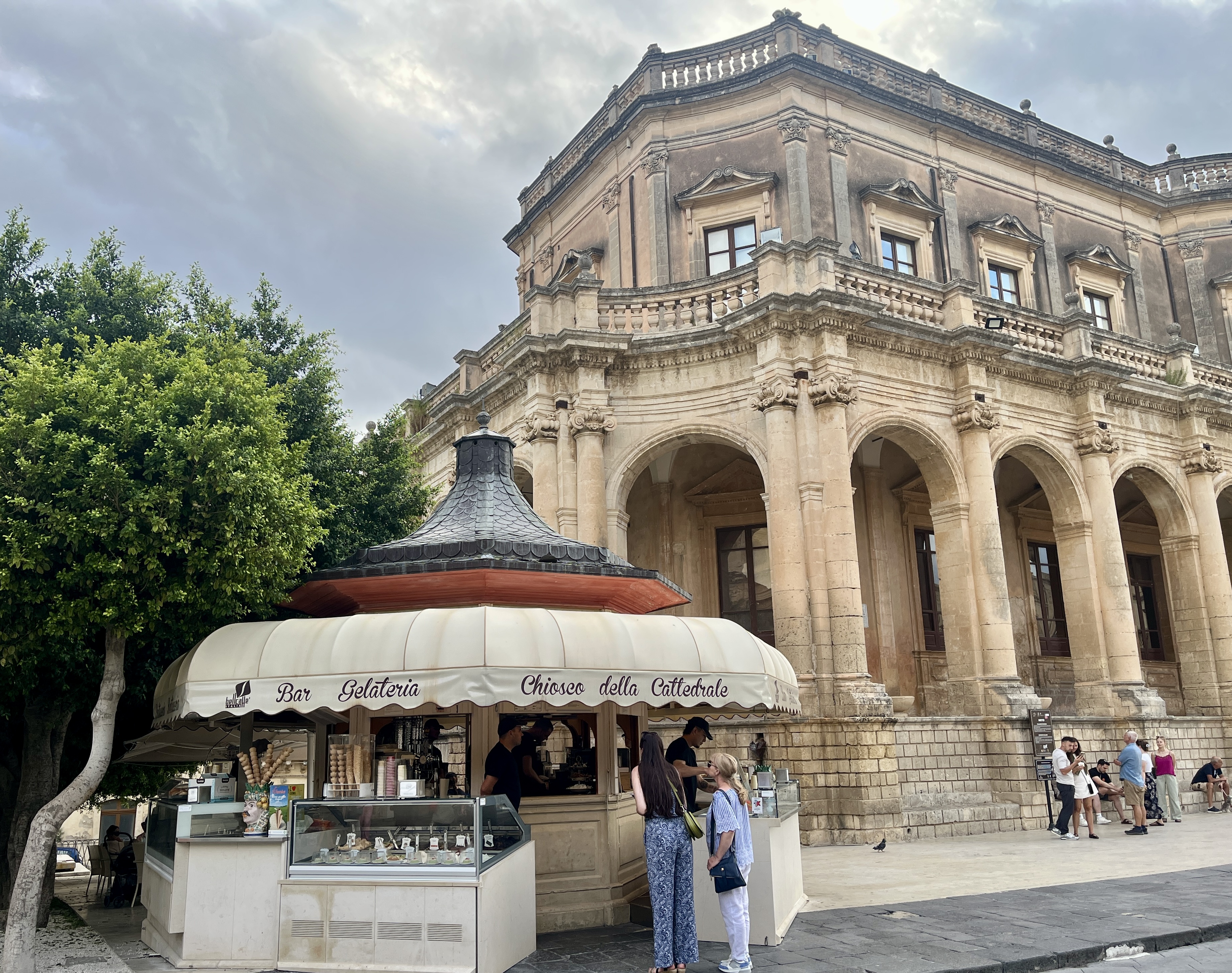
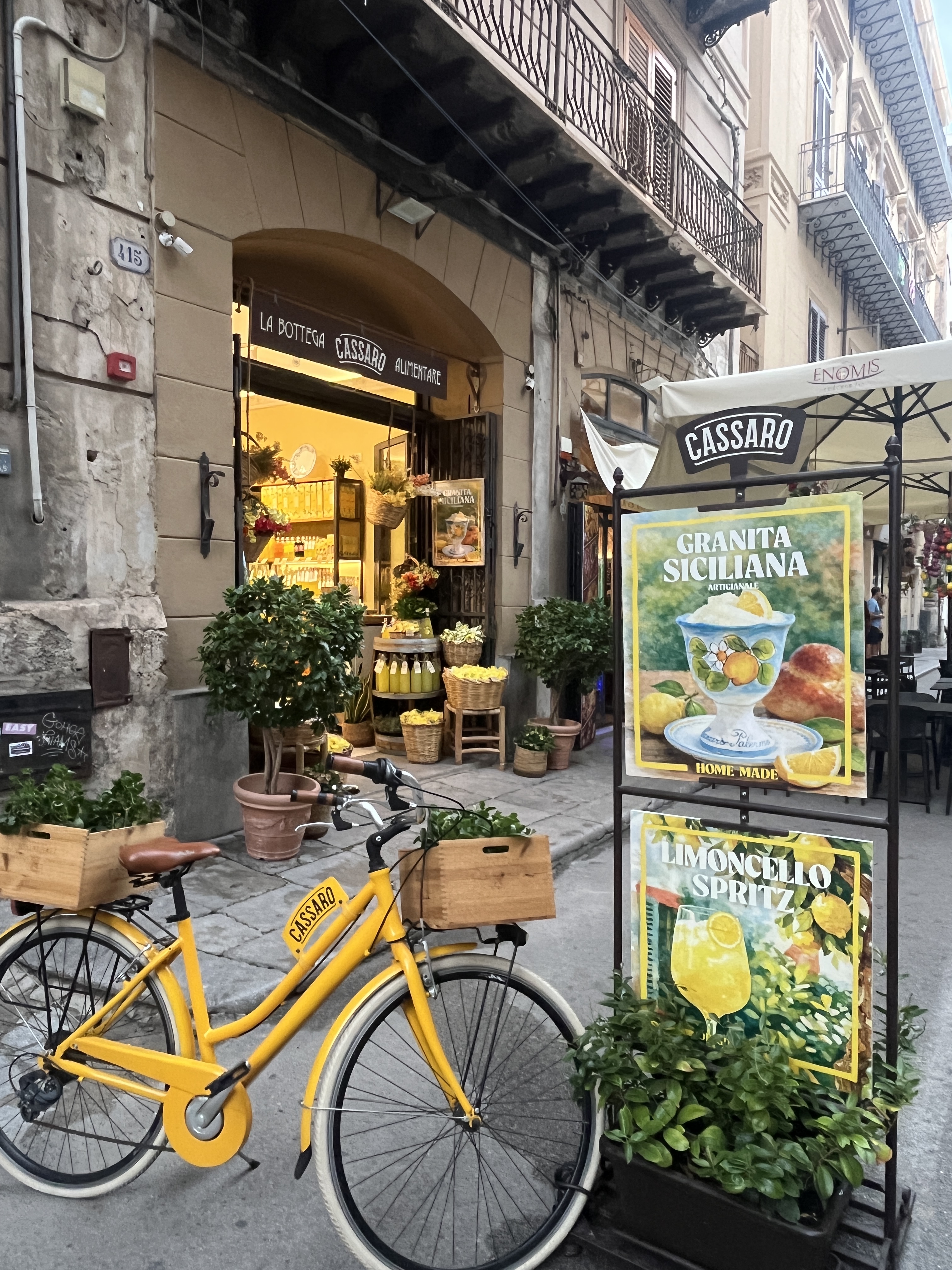
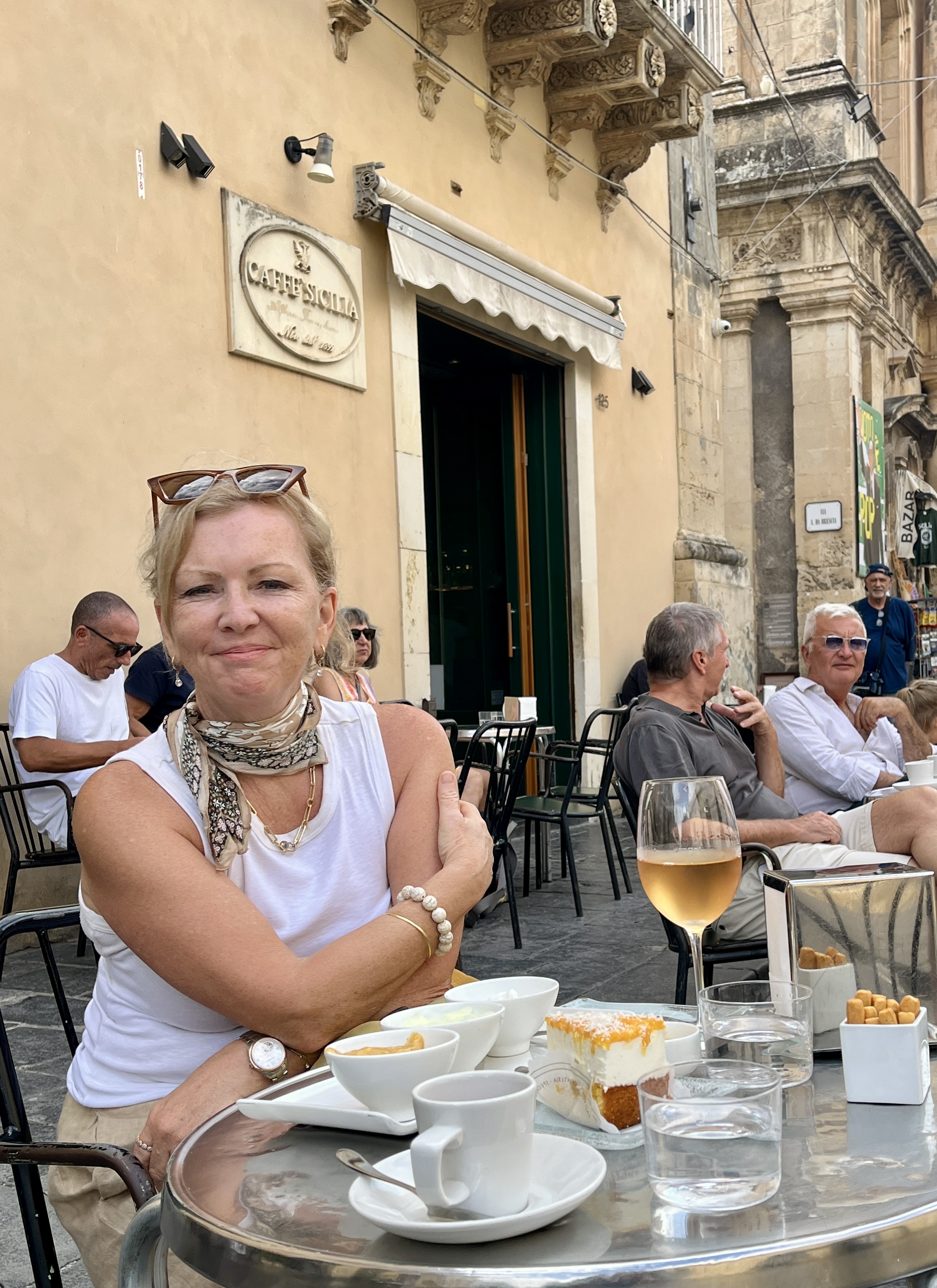
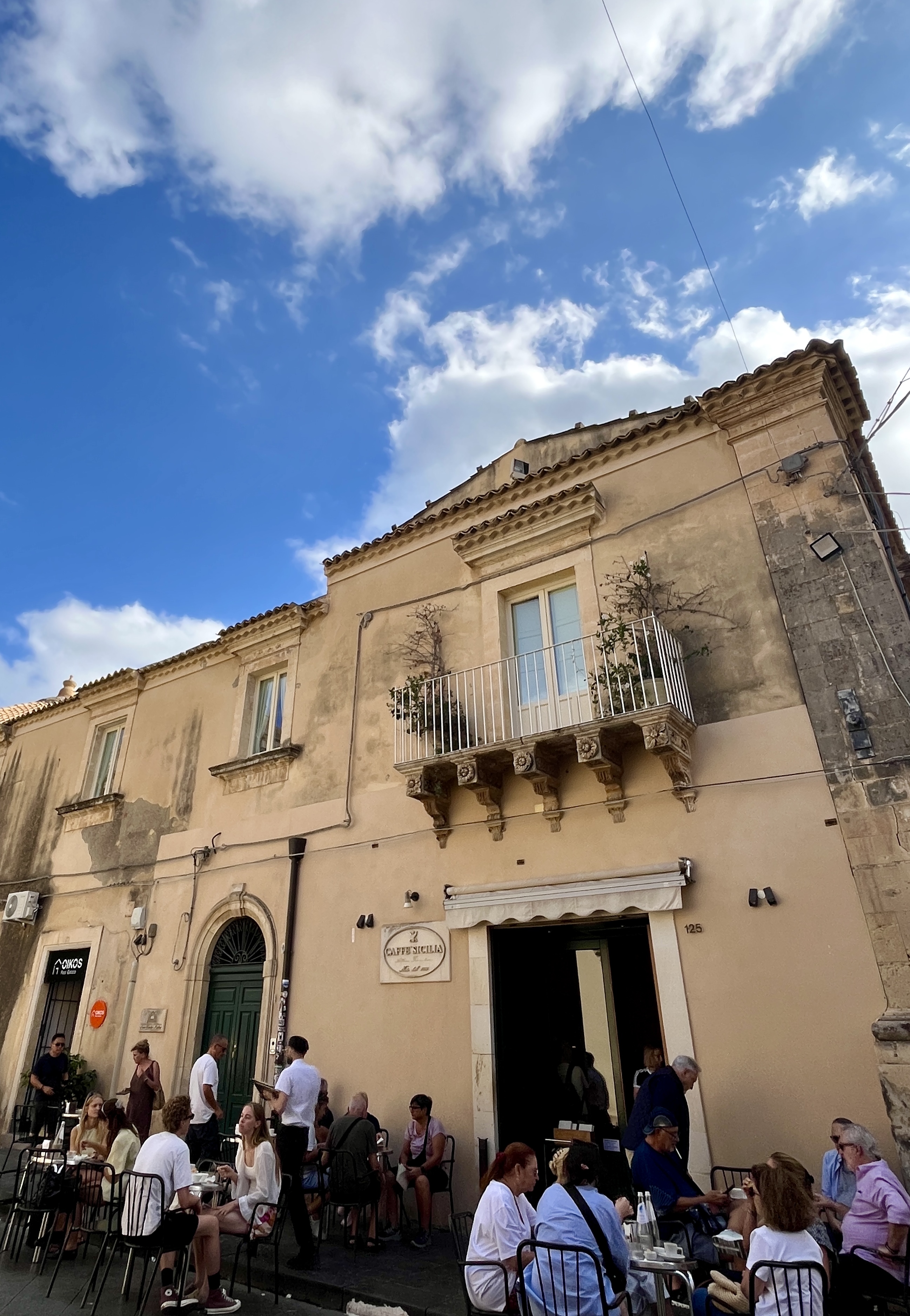
A day trip to Noto is a must from Sryracusa – a mere 30 minutes by train – and a good excuse to sample the renowned granita at the esteemed Cafe Sicilia. This historic cafe was featured on Netflix’s Chef’s Table. Unfortunately, the signature speciality granita di mandorla – almond granita – isn’t available so we sample other flavours; fig and chili is the winner. Granita is a refreshing Sicilian desert, somewhere between sorbet and ice cream and one of the island’s many specialties.

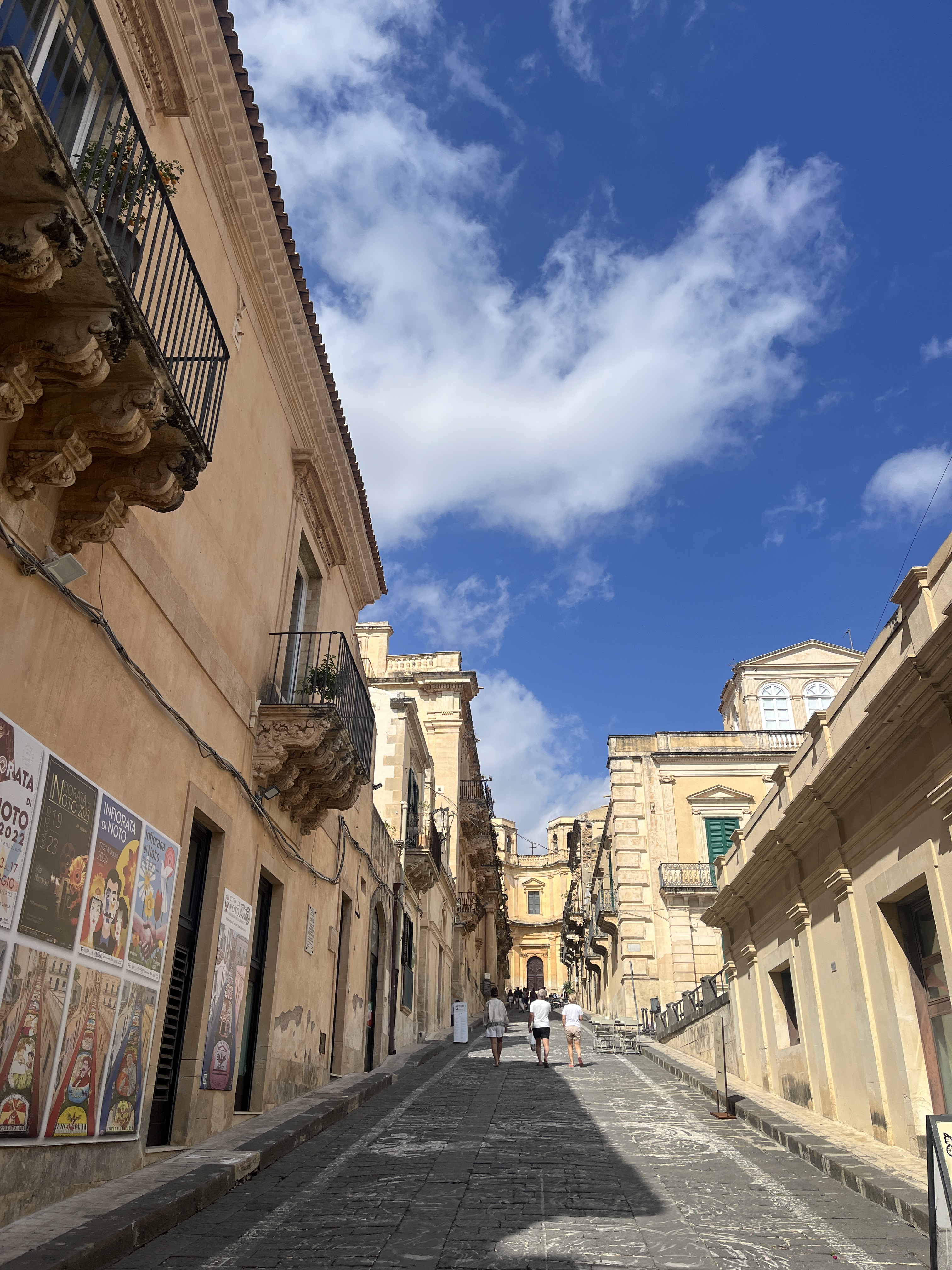
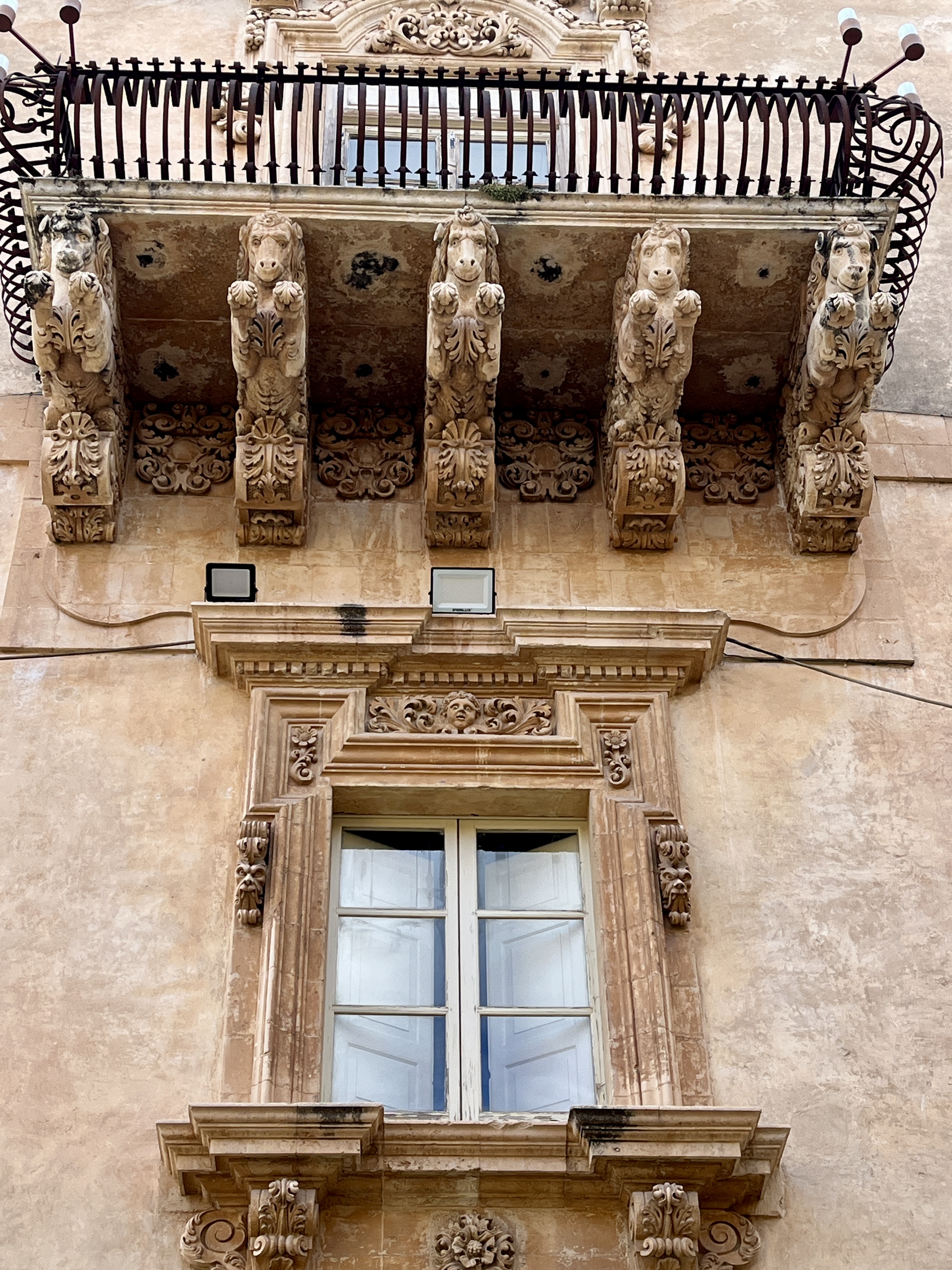
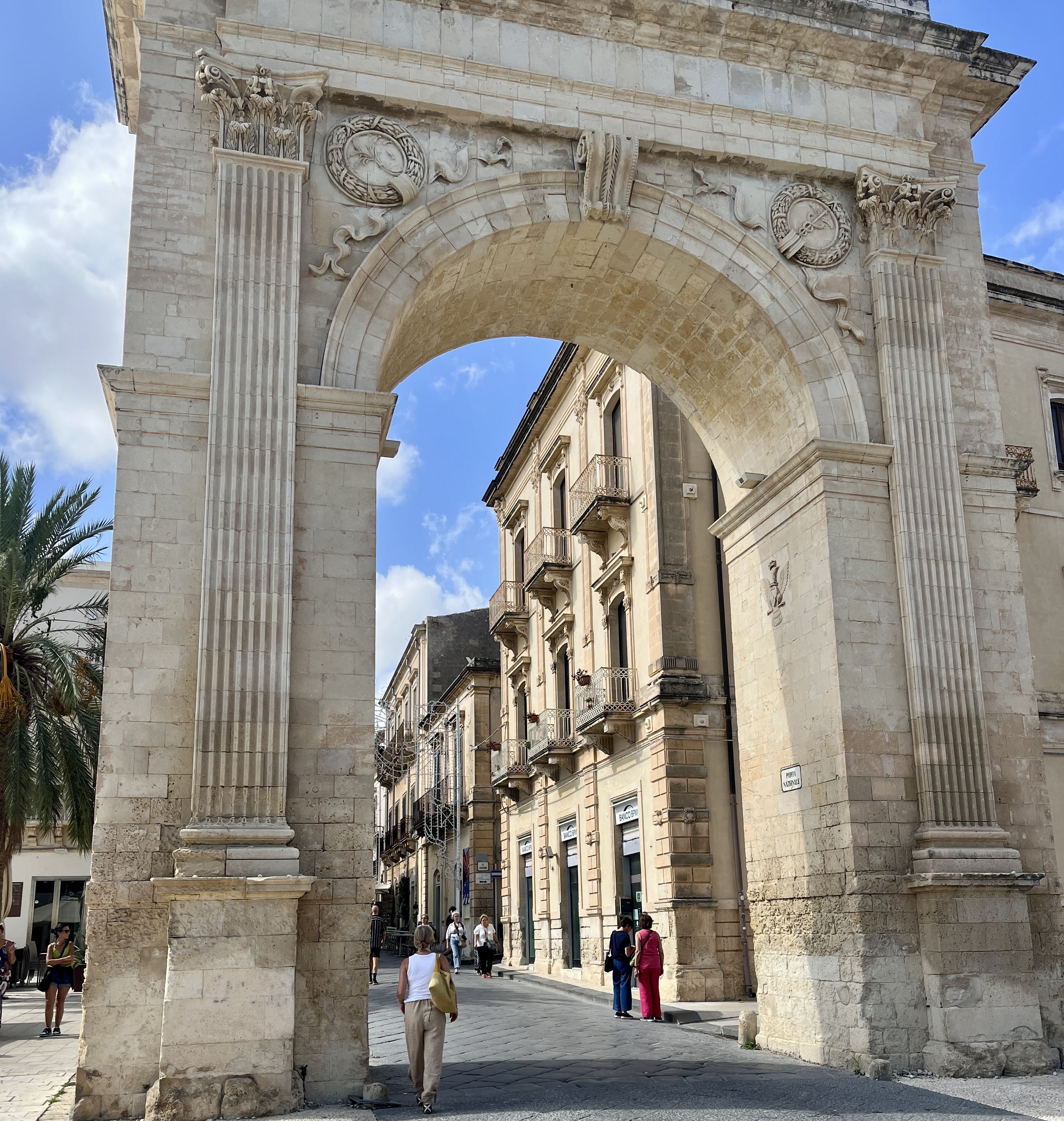
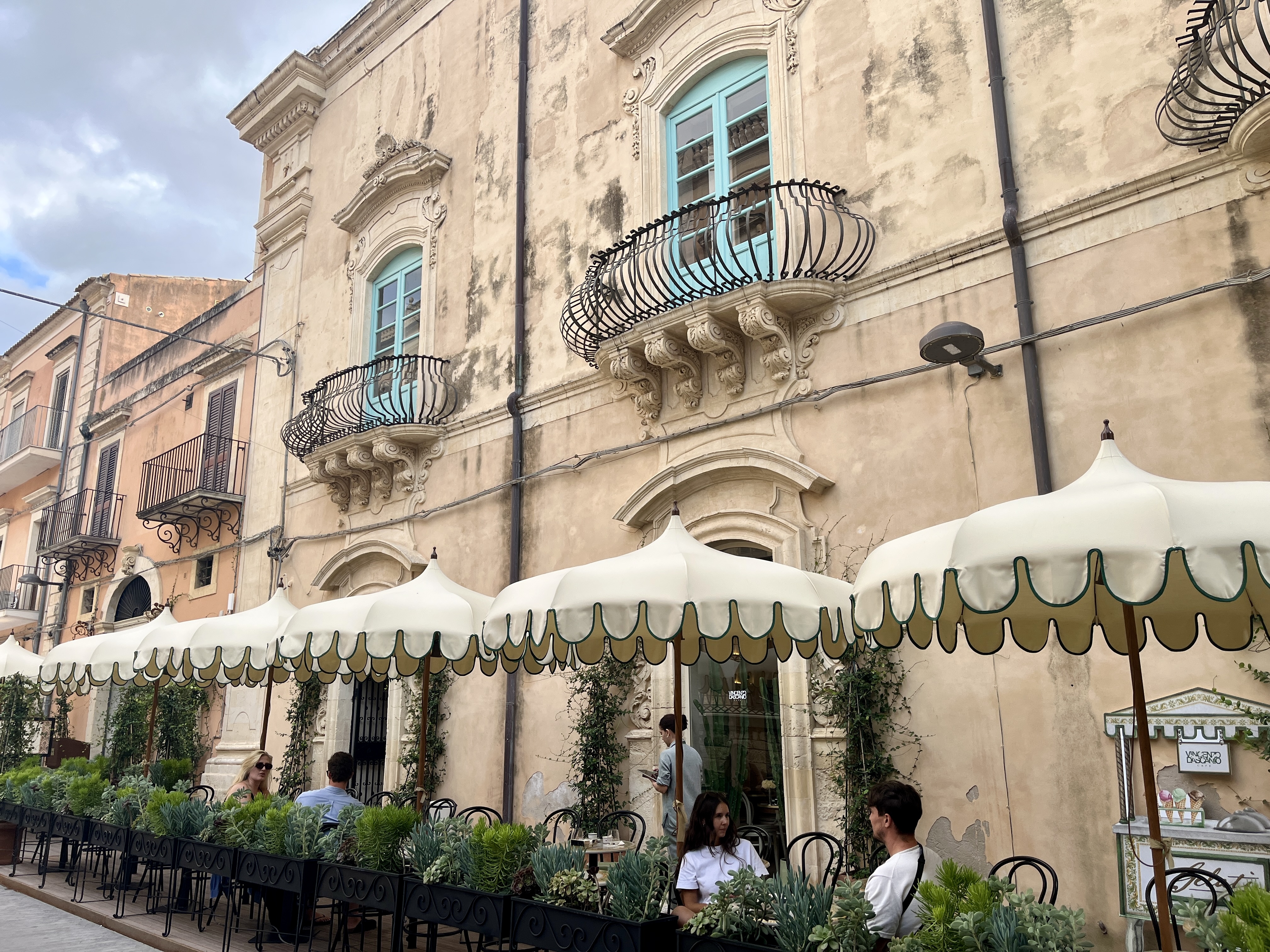
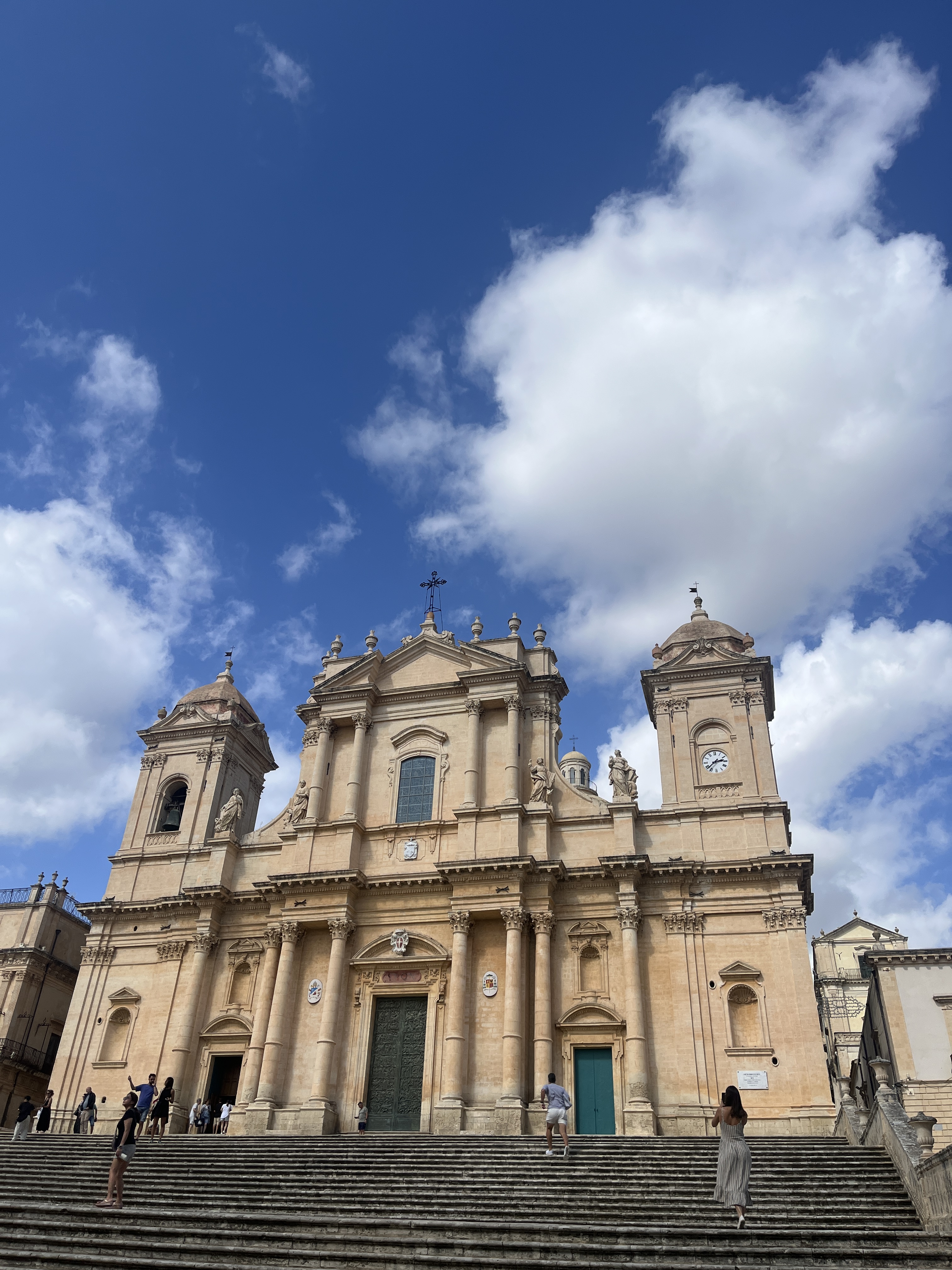
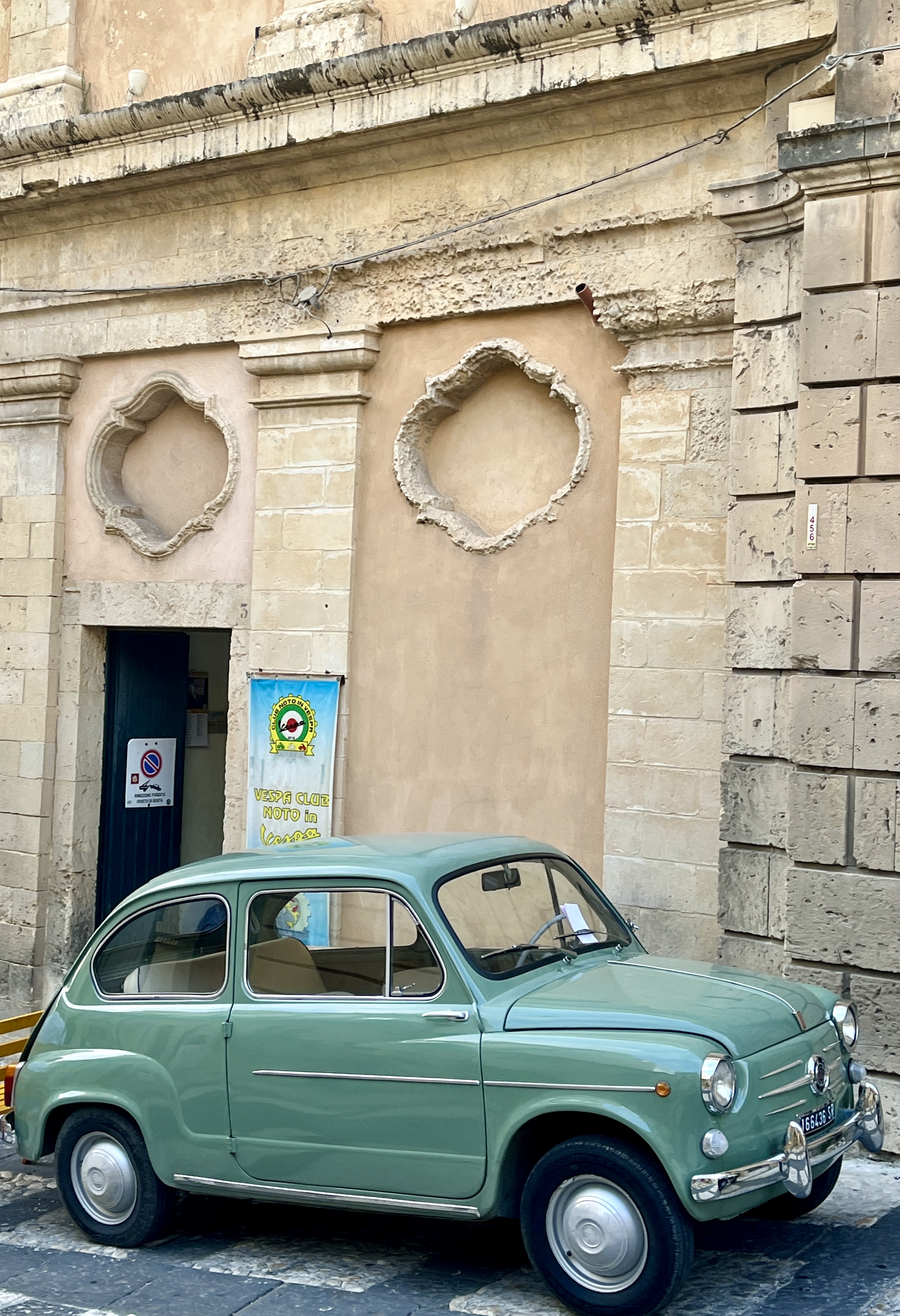
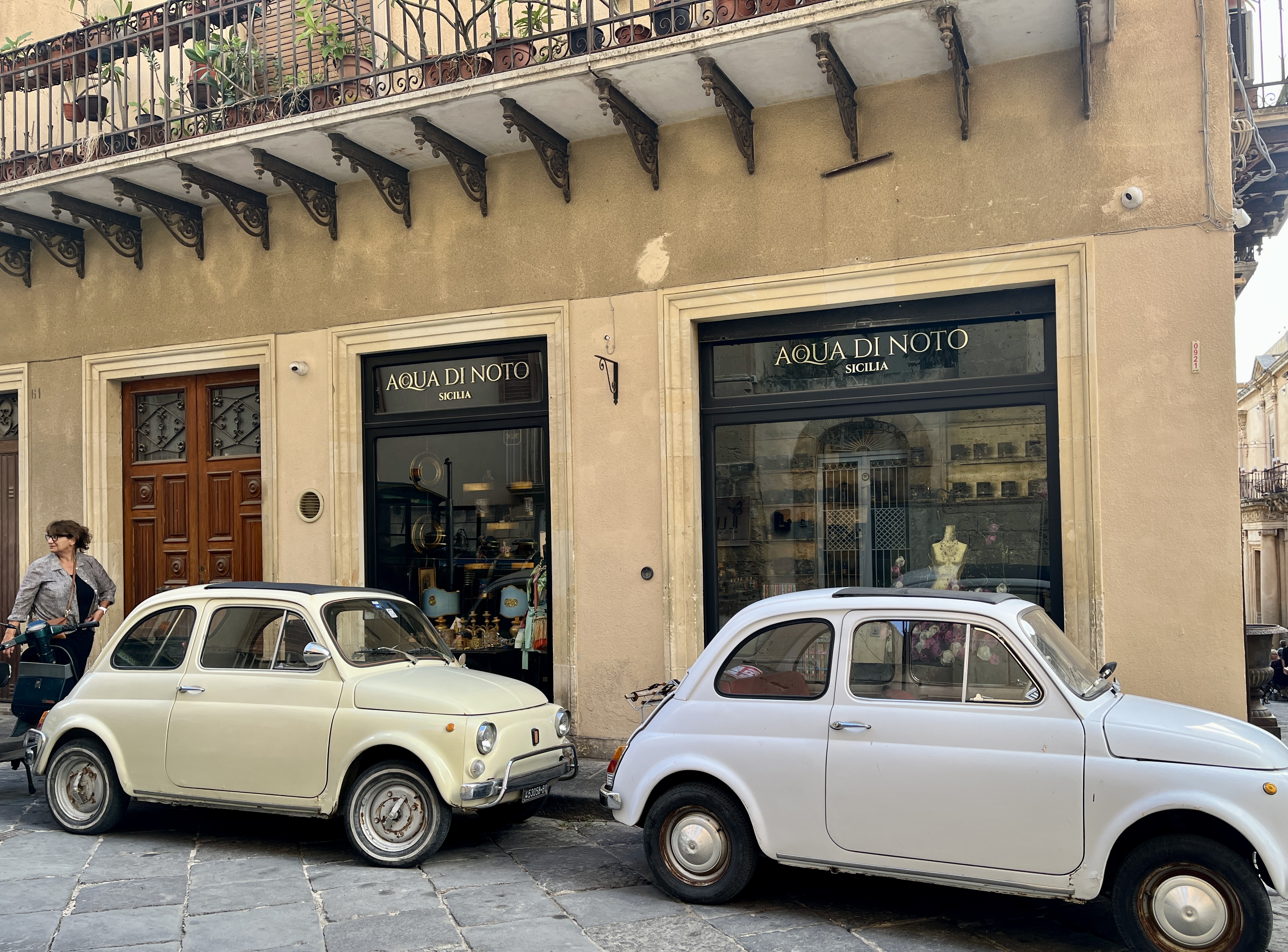
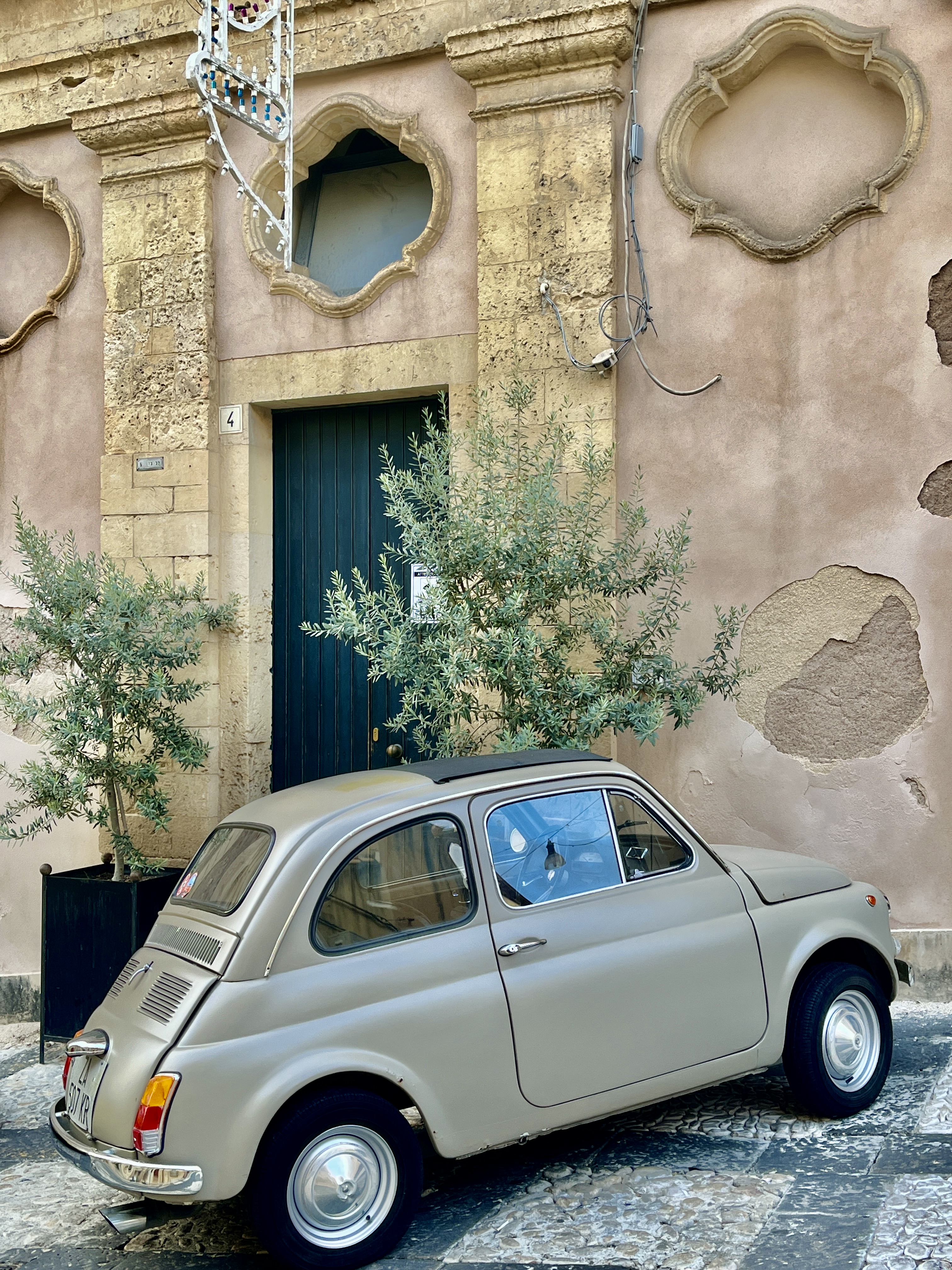
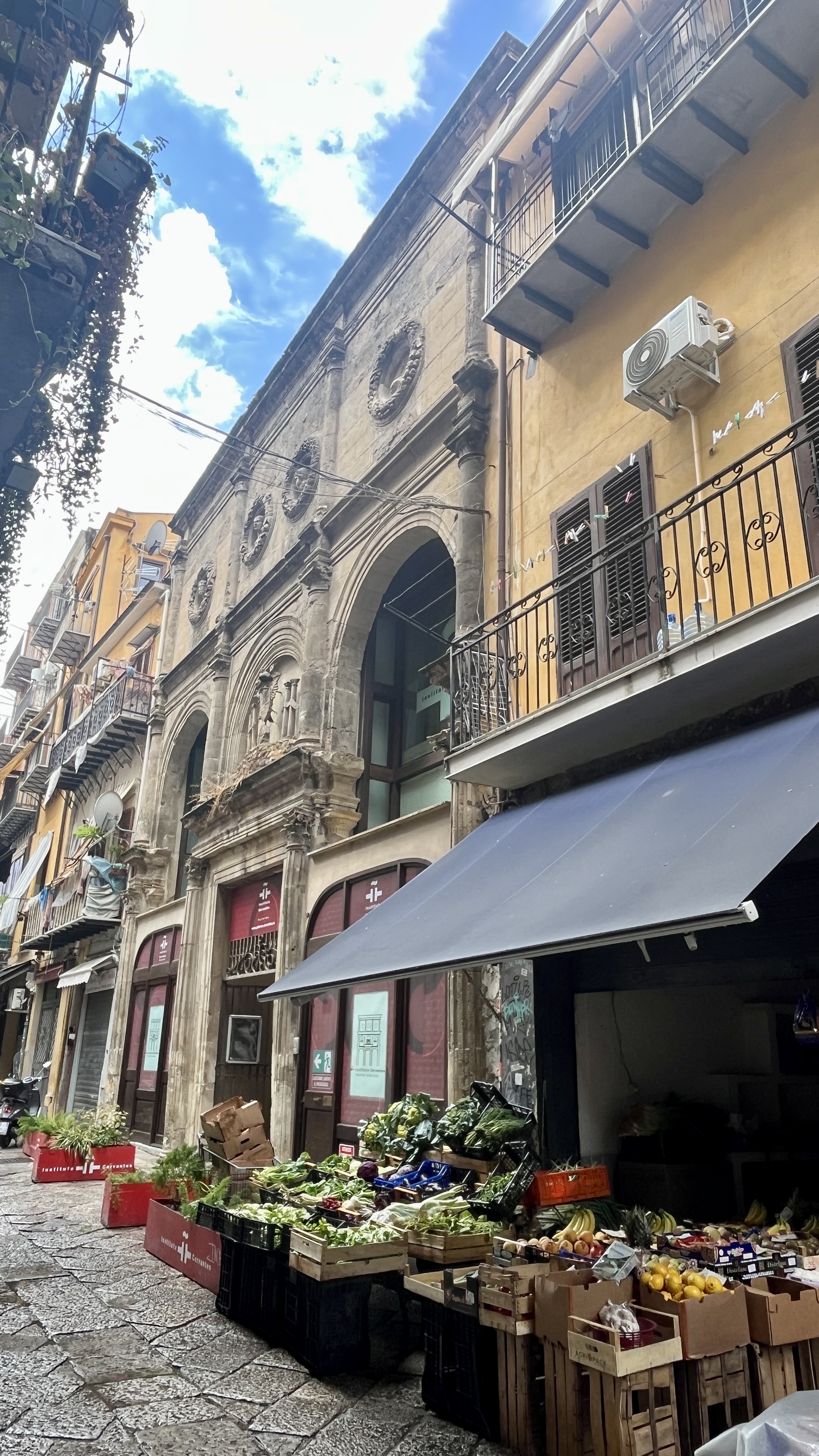
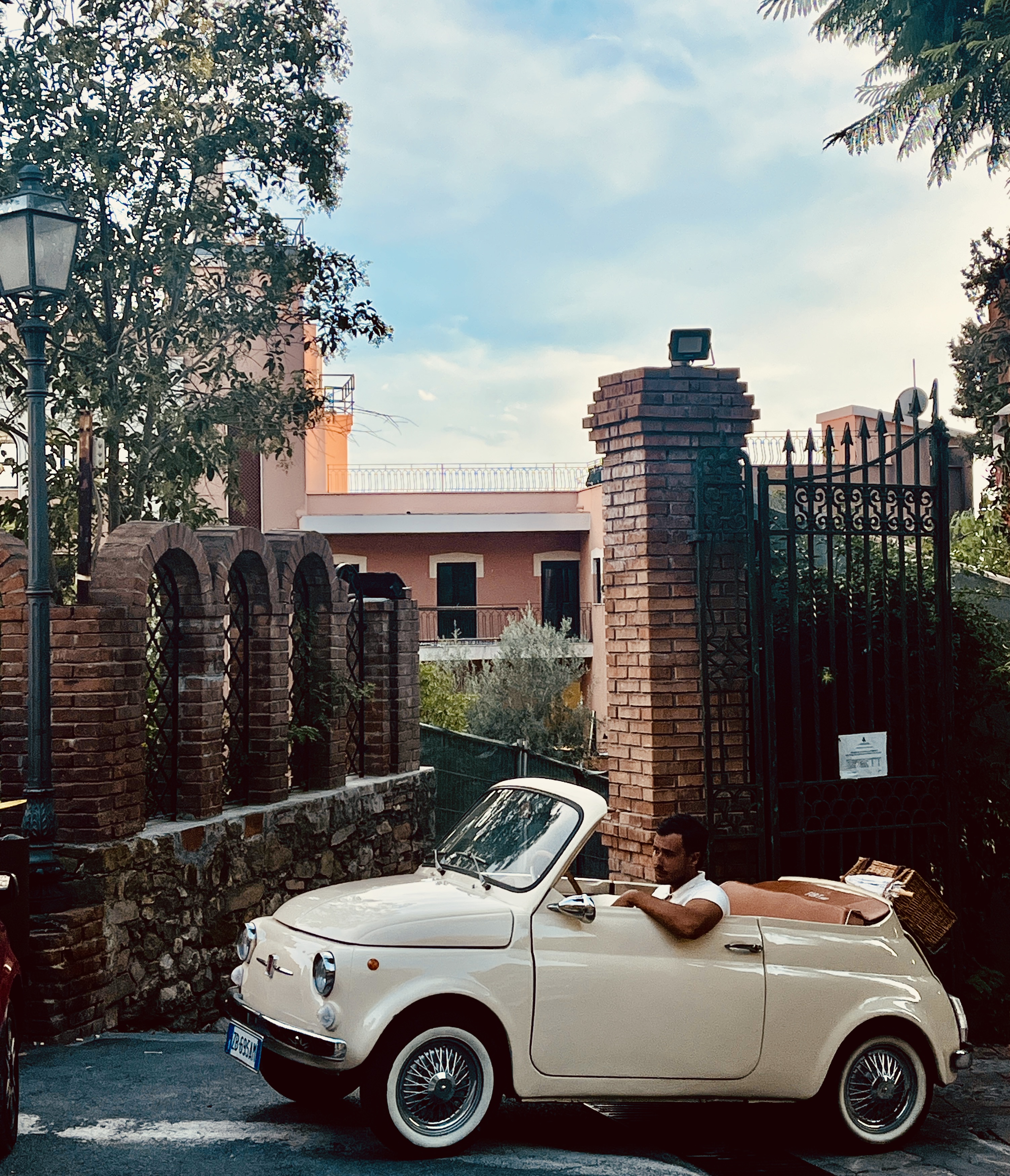
In Noto, the impressive Baroque buildings and ornate balconies gracing grandiose palazzos are its true speciality. After a devastating earthquake in 1693 destroyed the old town, Noto was rebuilt using golden-hued limestone. The elaborate, wrought-iron balconies supported by carved figures are impressive and widespread. I also can’t help but notice the plethora of vintage Fiats. I’m besotted with these lightweight iconic city cars built between 1936 to 1955. Could I pack one up and ship it back to Canada? And there is the question, how will I ever go back home? Allora, there’s still more time… Palermo and Cefalu are next on the itinerary.
Palermo ~ Cefalu

The train journey across Sicily from Syracusa to Palermo unveils the unique Sicilian countryside. As the landscape slips past our window, dry, sandy, hues give way to verdant fields of grain, citrus, almond and olive trees. Colonies of prickly-pear cacti show off their flowery fruit against the deadly spikes. Once-loved farm villas are testament to the honest, timeless endeavour of farmers who have long tilled this fertile soil. As we near the northern coast of Sicily, we see a countryside that is incredibly fertile and a proliferation of modern farm estates. The rhythm of the train and the undulating flow of the land are peaceful and evocative. Ahead, the vibrant capital of Palermo awaits.

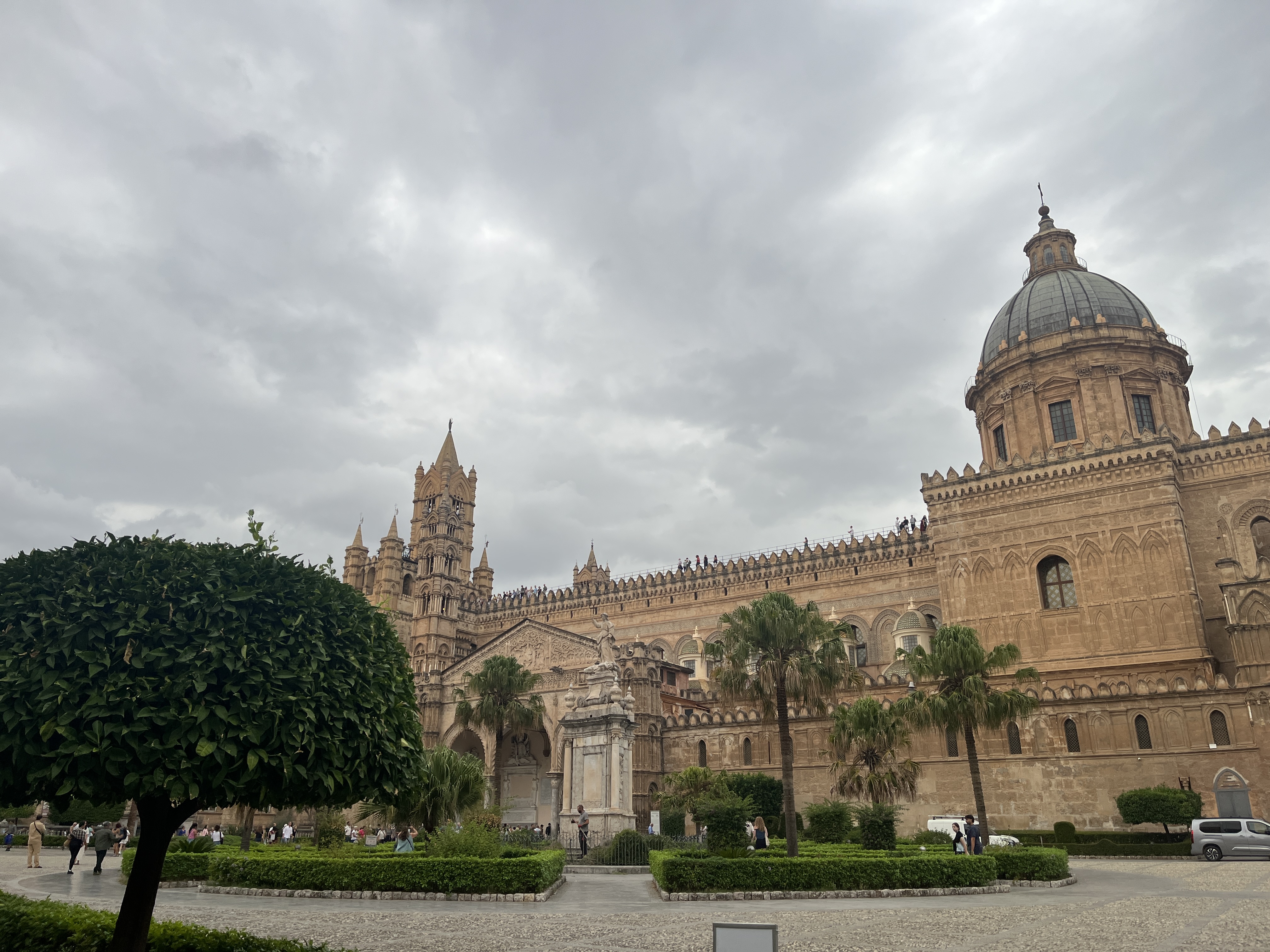
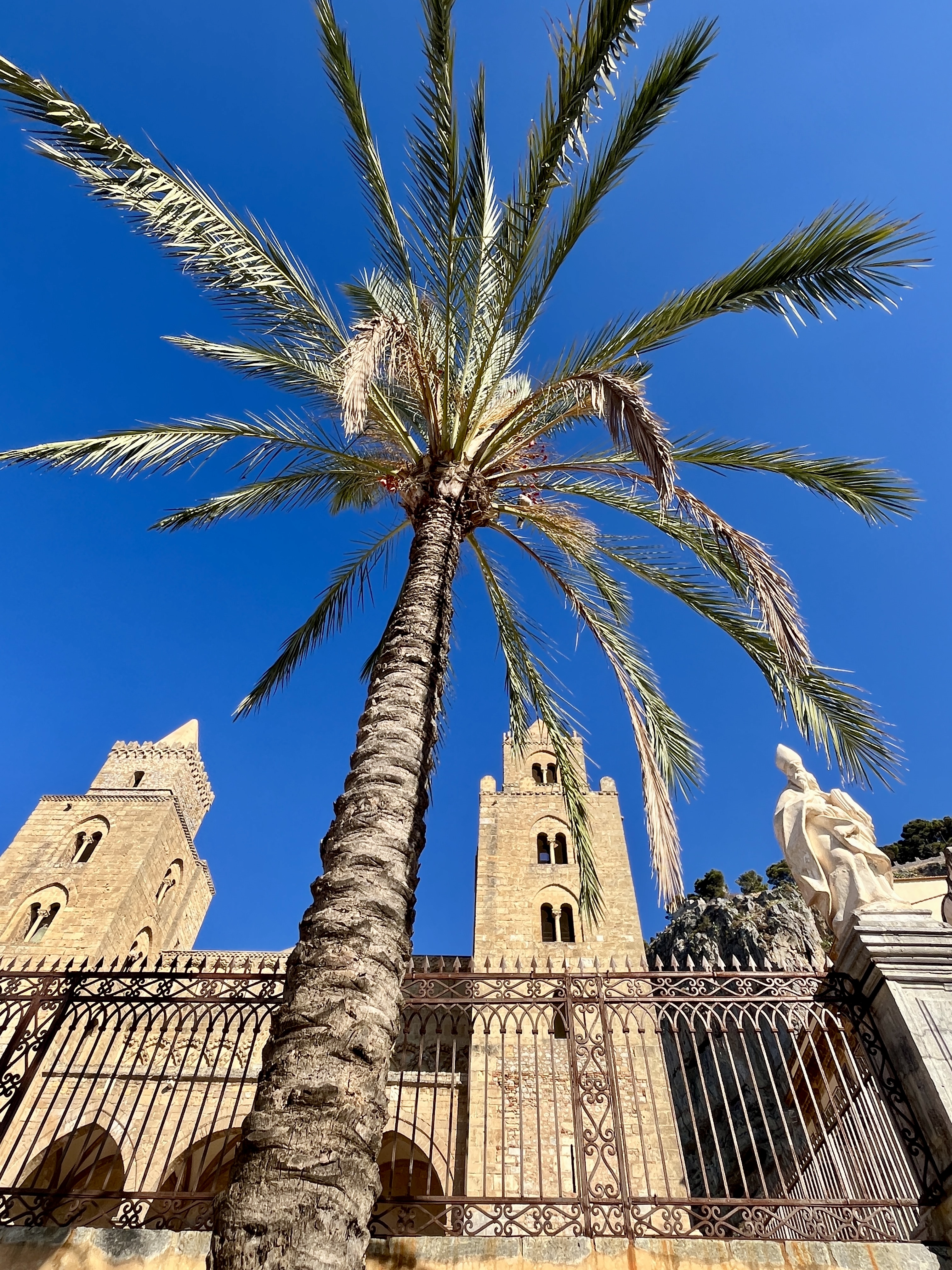
Only about 2700 years old and facing north toward the Tyrrhenian Sea, Palermo is everything all at once. True faded glory and rapturous grandeur. The past is unpolished, raw and honest. First impressions hit me all at once – busy, vibrant, a little grimy, and as always with palm trees, the tall lanky palms capture my heart..

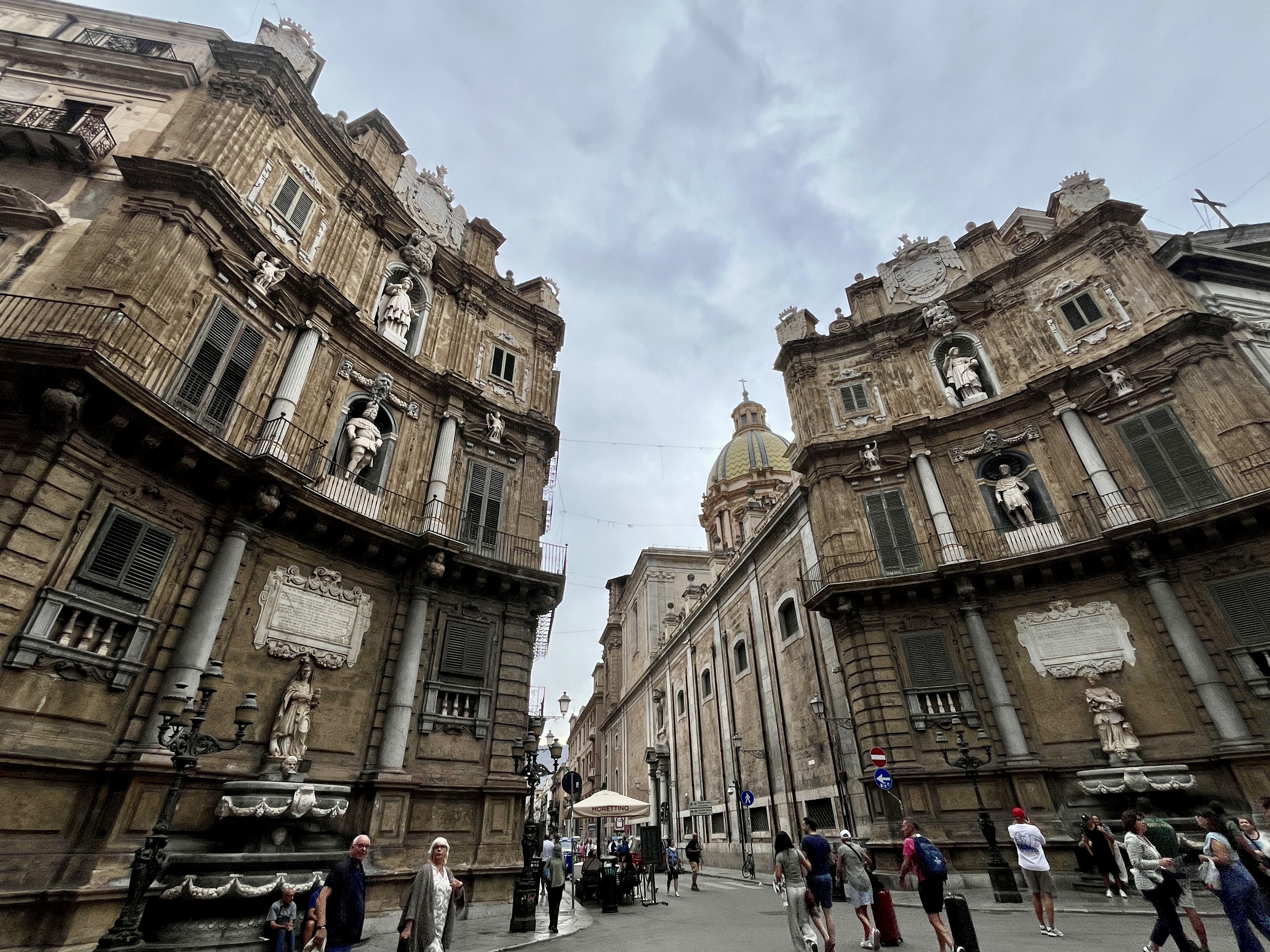
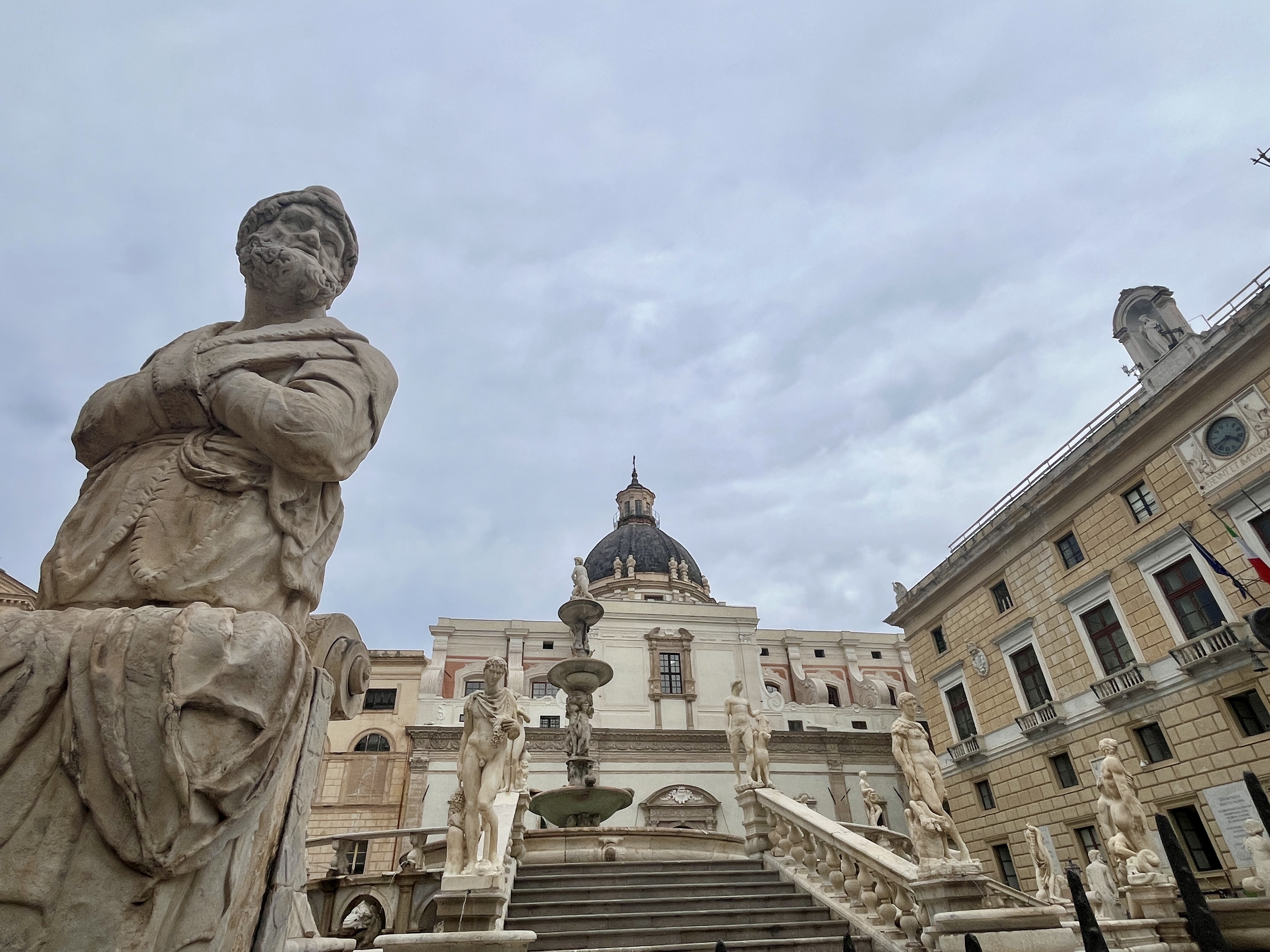
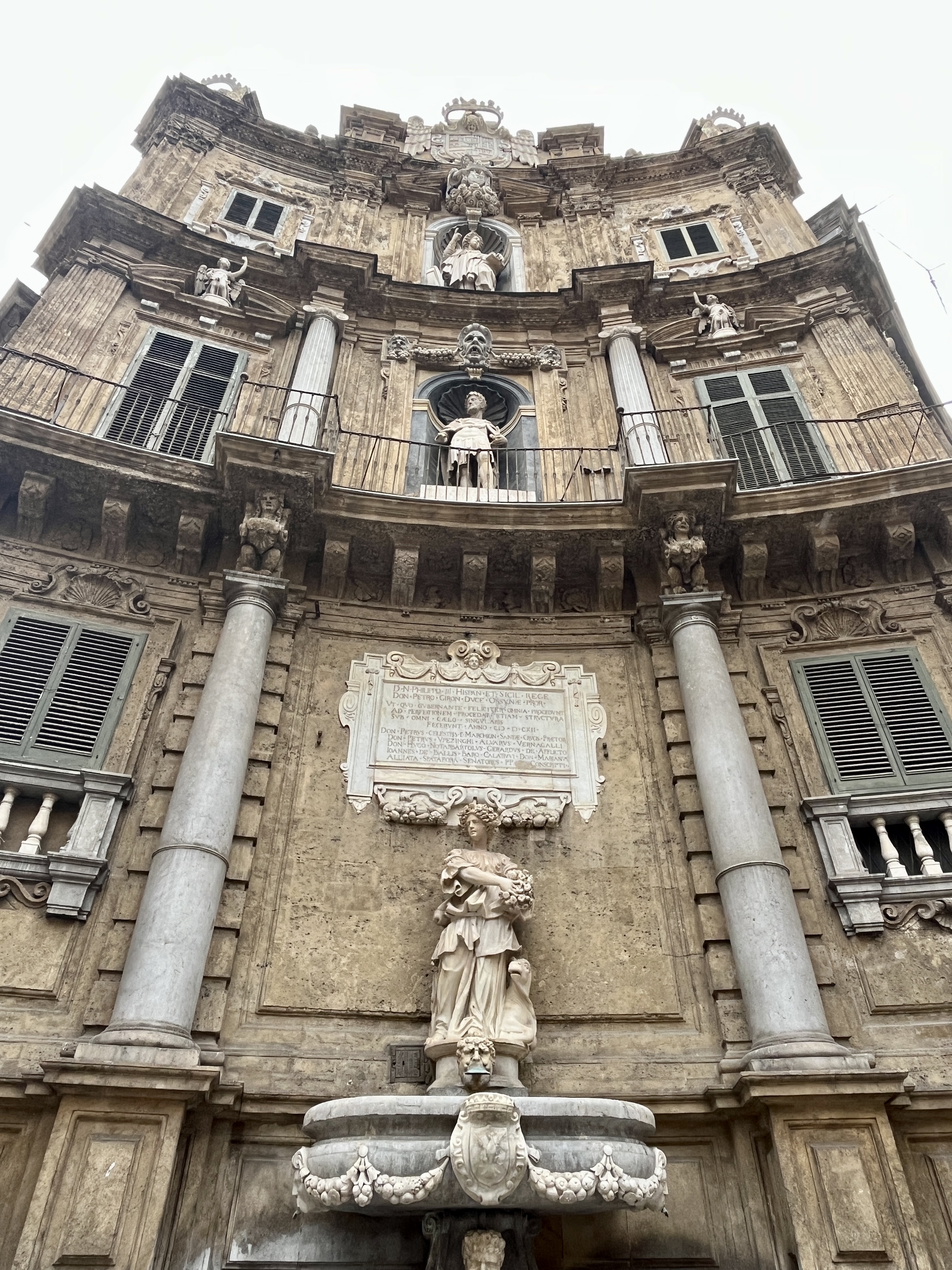
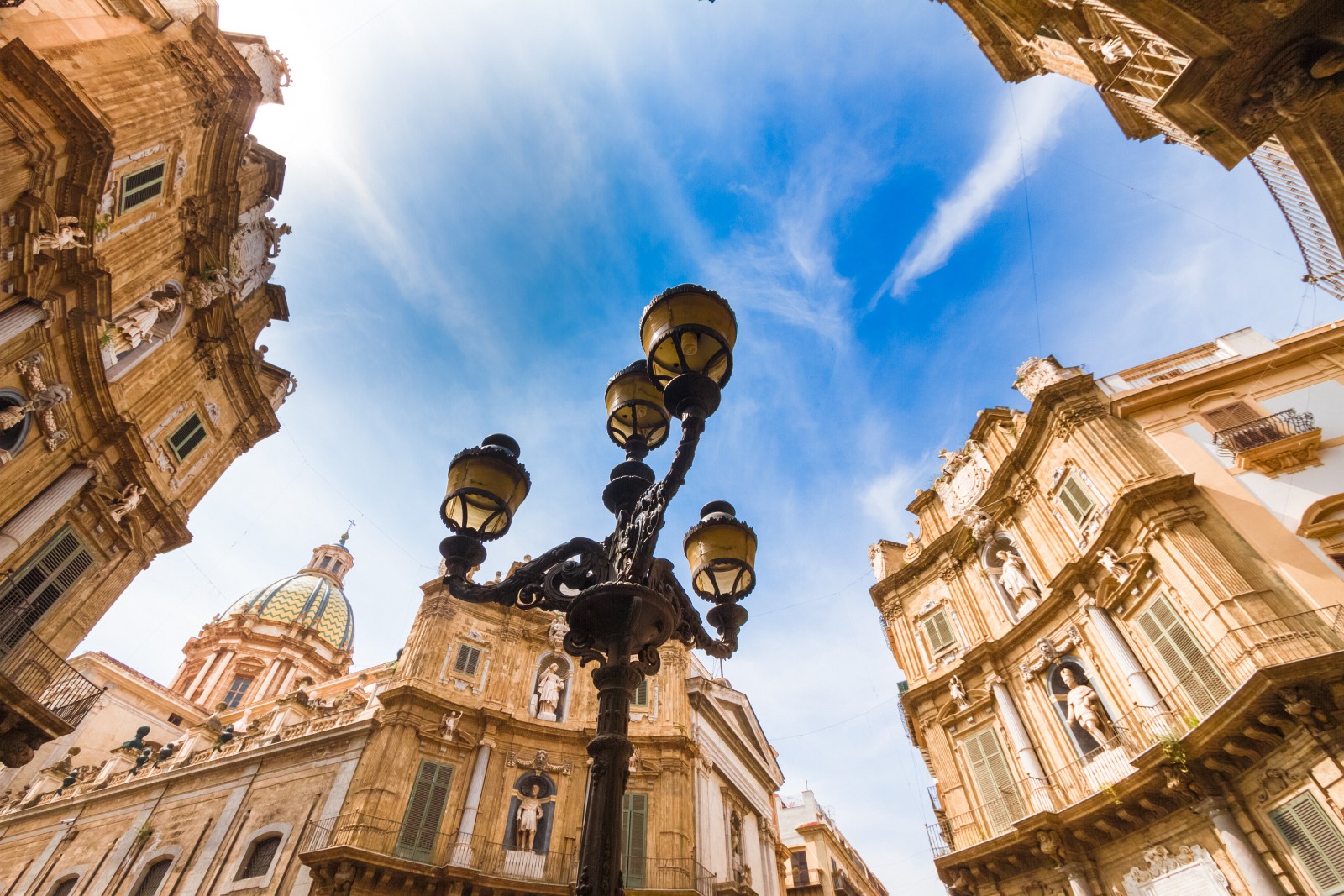
I stand in the middle of Quattro Canti, four roads grandly intersecting, and I soak it all in. This crossroads at the historic centre radiates out to the ancient four quarters of the city. Also called the Theatre of the Sun, at least two corners are always bathed in sunlight. Construction, by order of the Spanish Viceroys, commenced in the early 1600’s. The four Baroque concave and symmetrical facades, are a history lesson unto themselves. Statues of the Spanish rulers of Sicily, Charles V, Phillip II, III, IV, occupy the second tier. Look high up and beautifully carved female patron saints are honoured… Christina, Ninfa, Olivia, Agata. Back down at ground level, the four seasons are represented in intricate fountains.

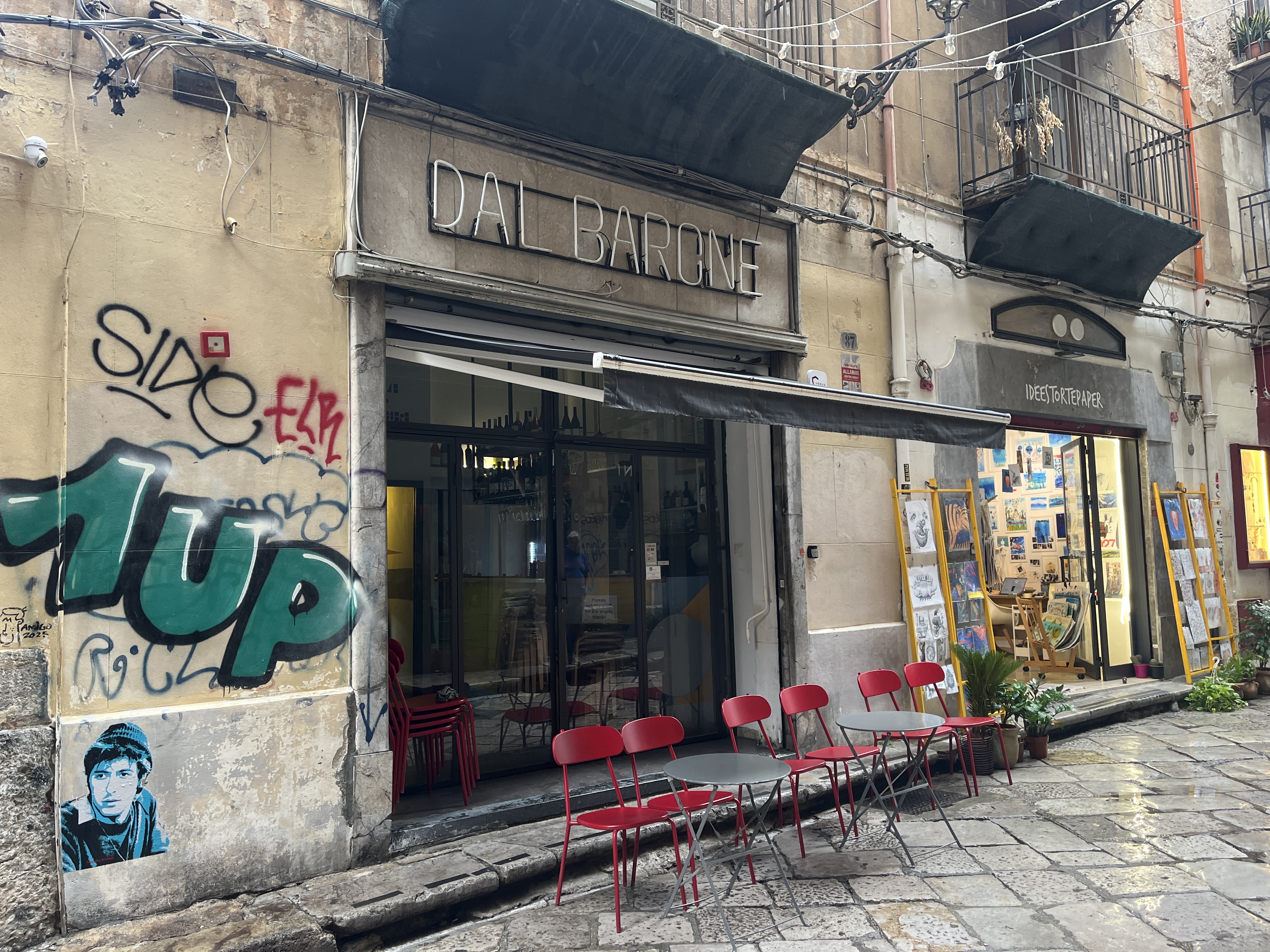
I imagine the time when the newly installed landmarks and piazza were the cutting-edge in urban planning. I see the nobility in fine carriages, the swirl of a ladies fine silk crinoline, a Capuchin friar in sombre brown rushing past to the nearby church. The weight of history embodied here clashes somewhat with the present day. Tourist golf carts vie for tourists alongside more traditional horse and carriage rides. Street hawkers with an eye on the weather forecast offer umbrellas alongside long-established bazaars. Ancient stone streets now littered with far too many cigarette butts and local graffiti adorns many city walls. Palermo is a little gritty along with the grand and historic.
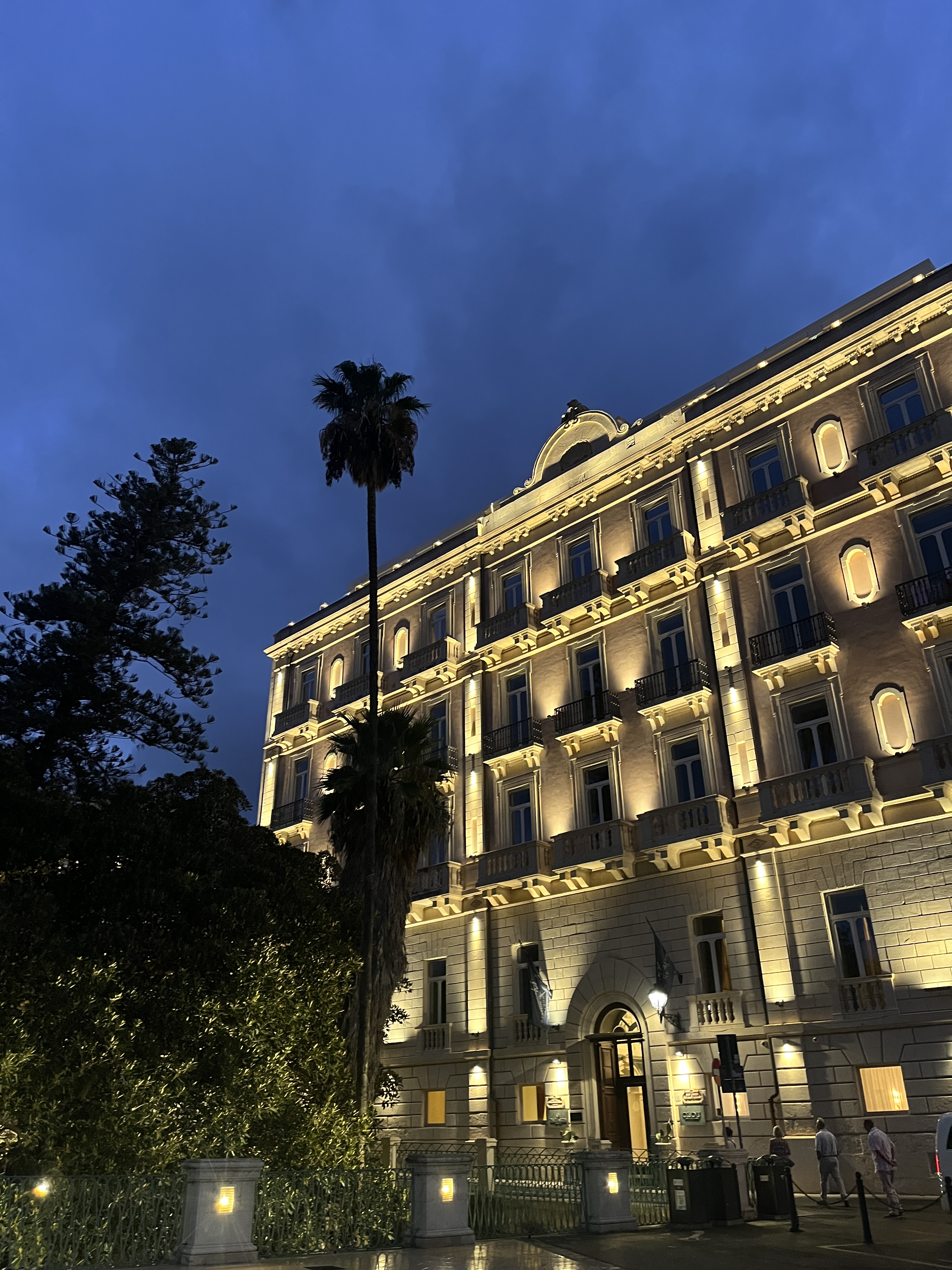
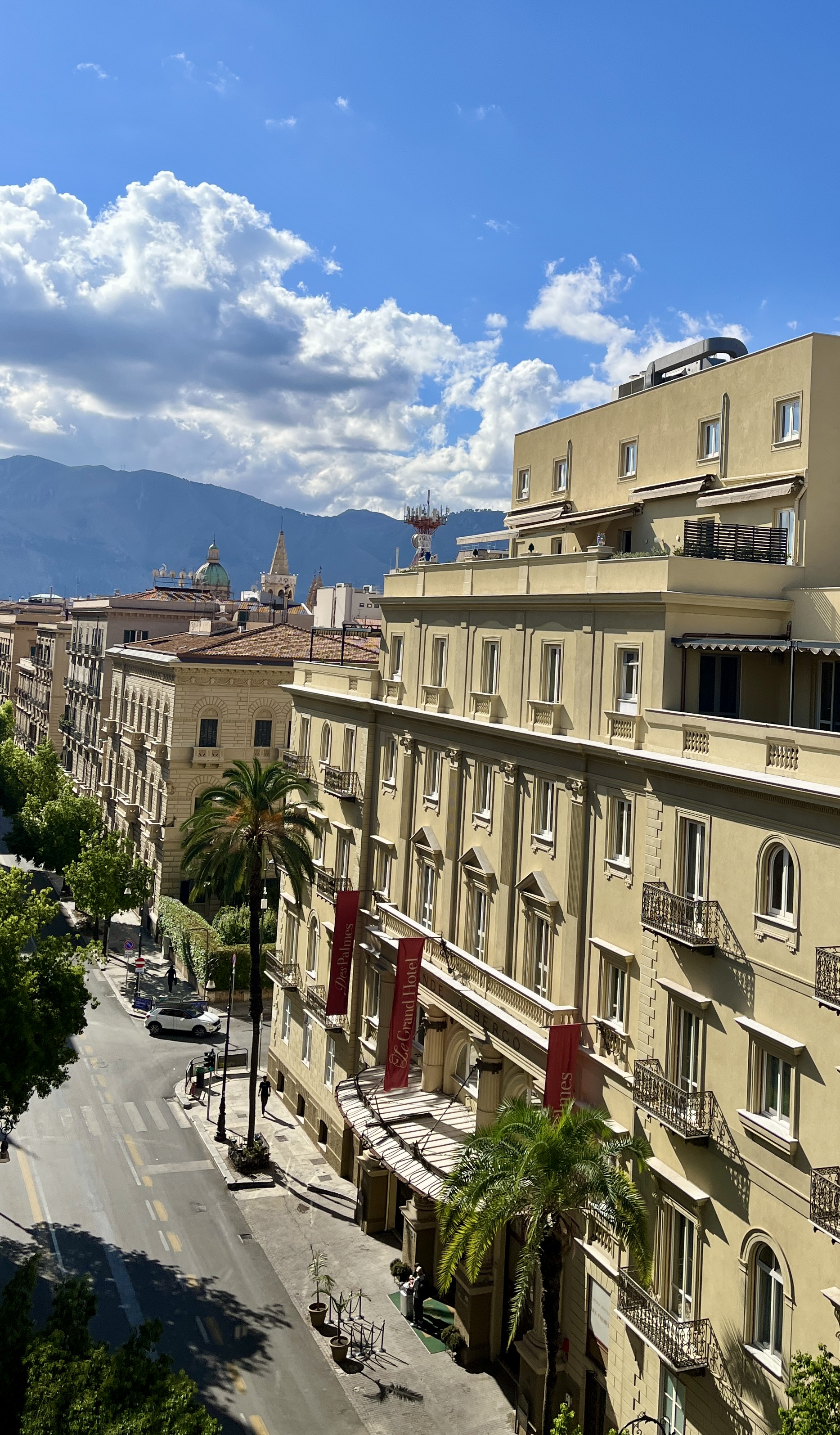
Unfortunately, we come down with a virus and have to take it a little easier than usual. Still, I muster the energy to treat myself to a pricey glass of wine at the Grand Hotel Et Des Palmes. Sitting on the outdoor terrace overlooking rooftops, one appreciates how embraced Palermo is by the surrounding mountains such as Mount Pellegrino. I sense that the original streets and piazzas were aligned to create sight lines to the peaks. Without a doubt Palermo is essential to see, to stitch together the full, incredible layered story of Sicily.

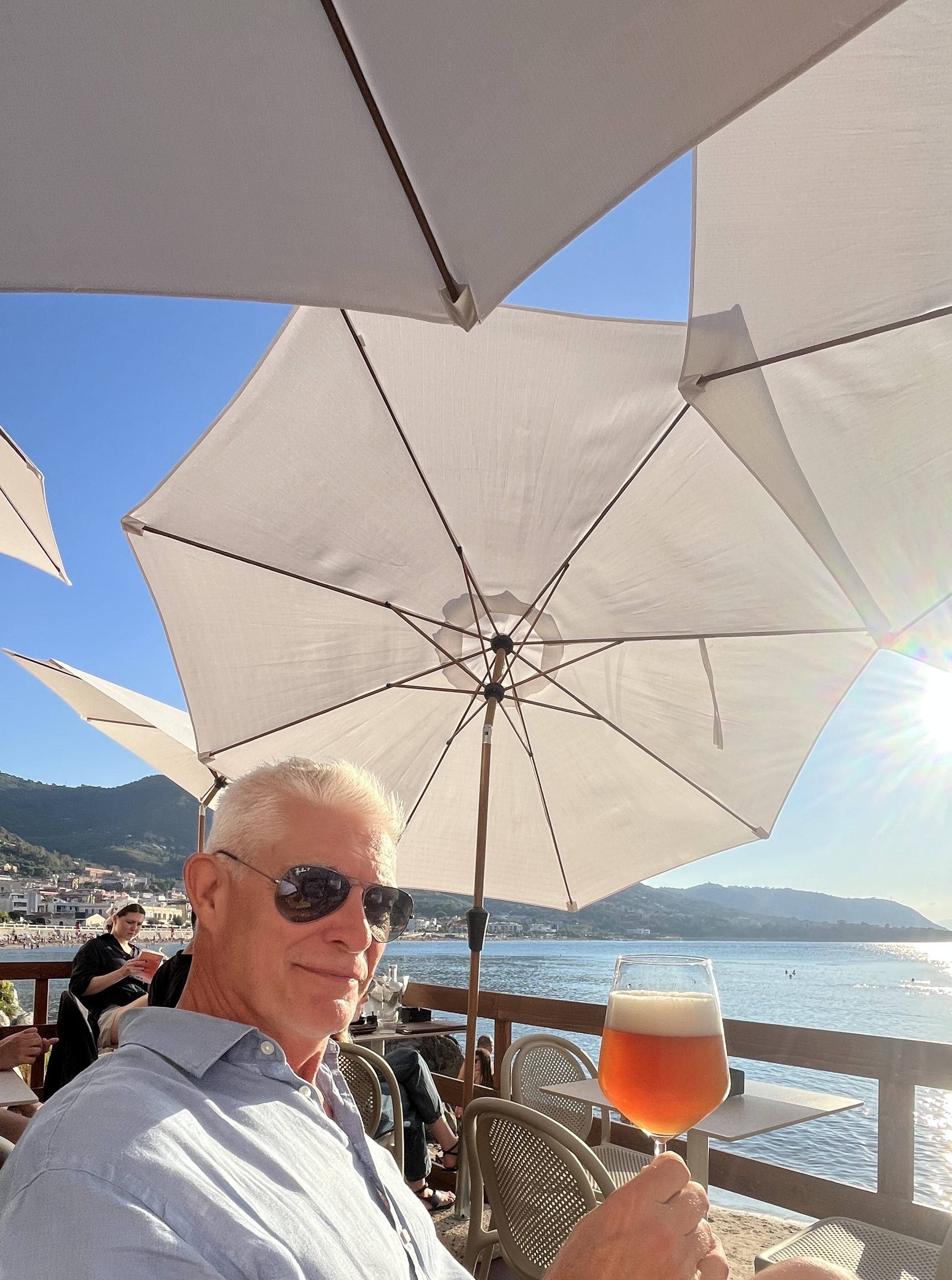
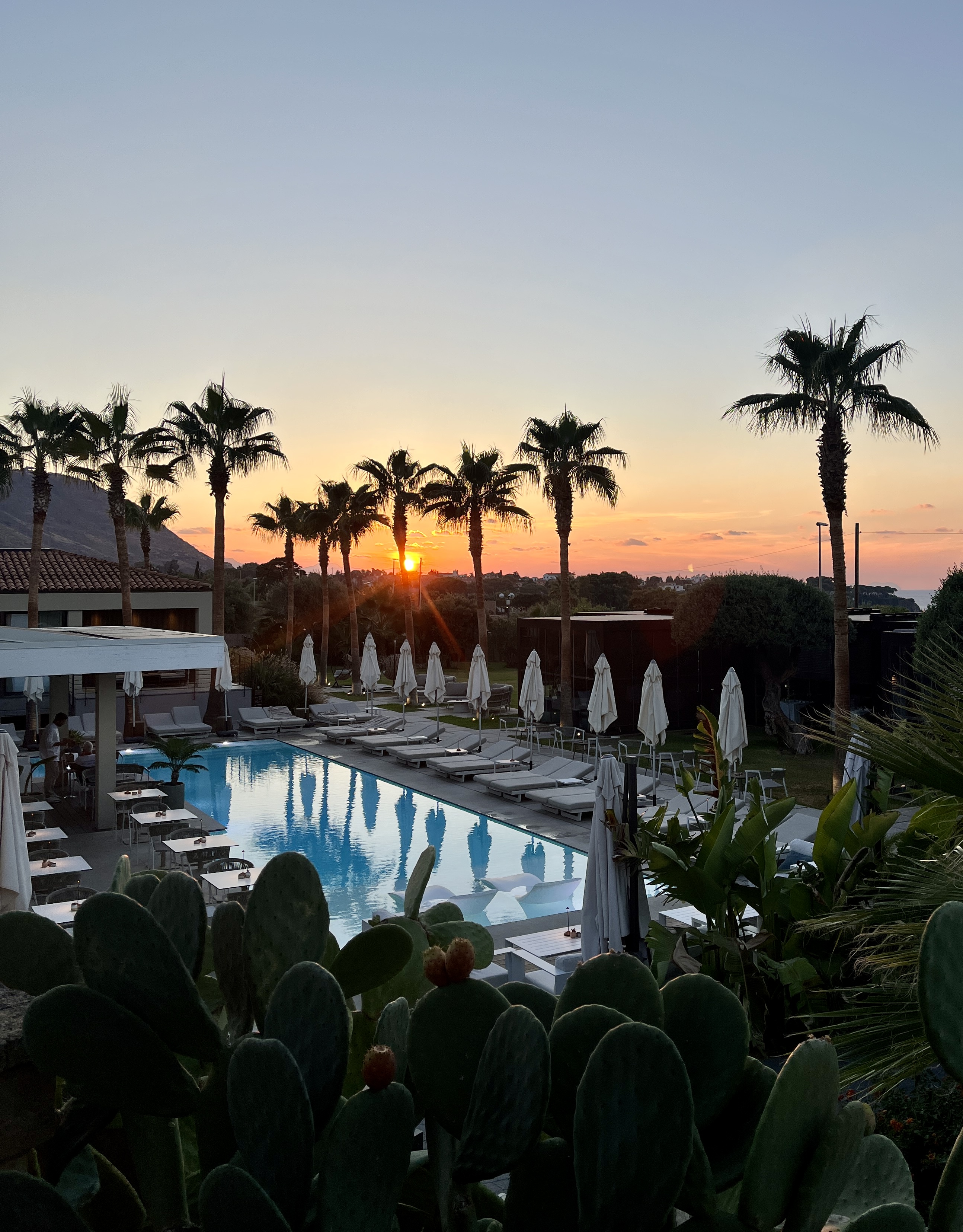
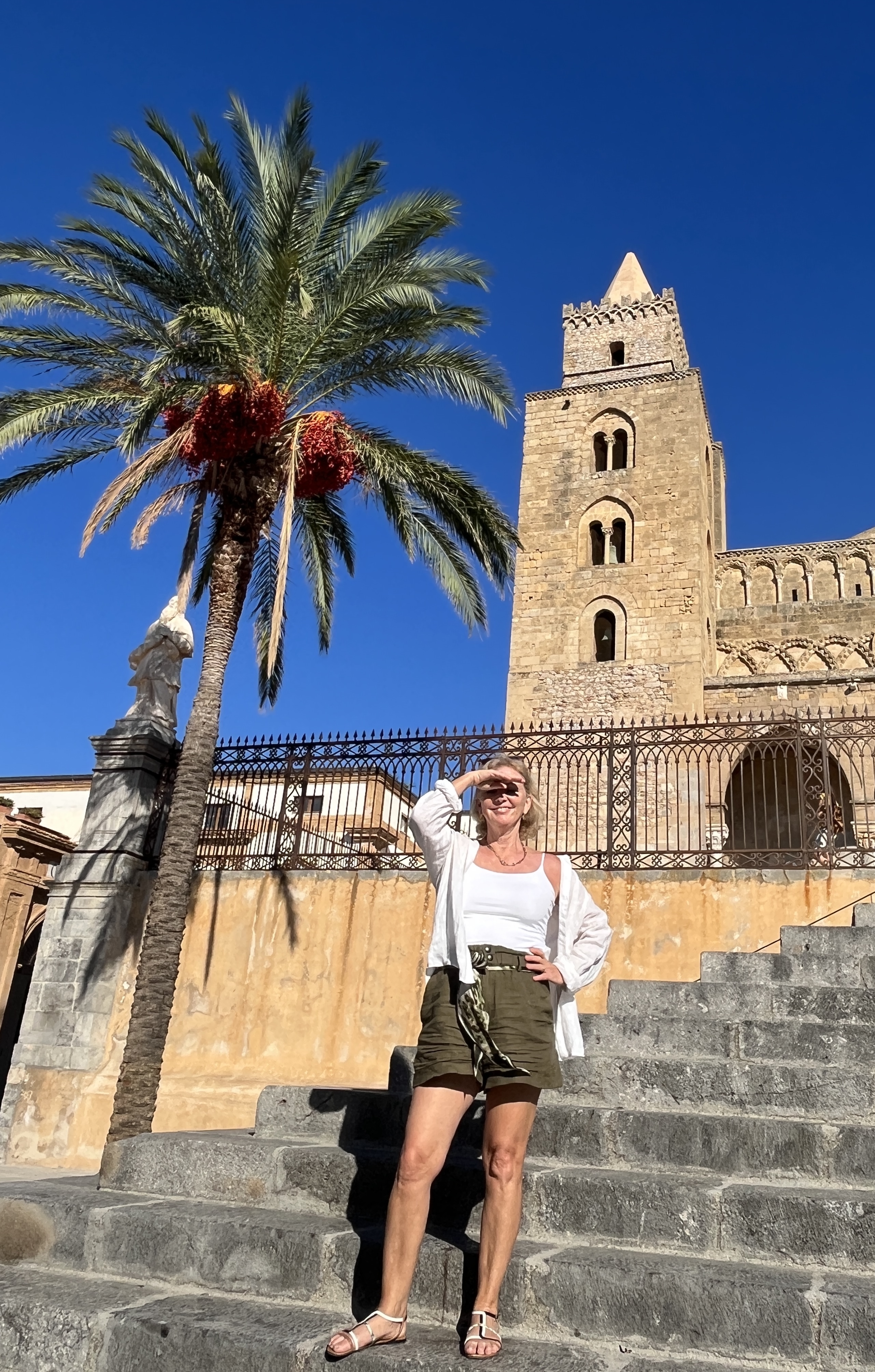
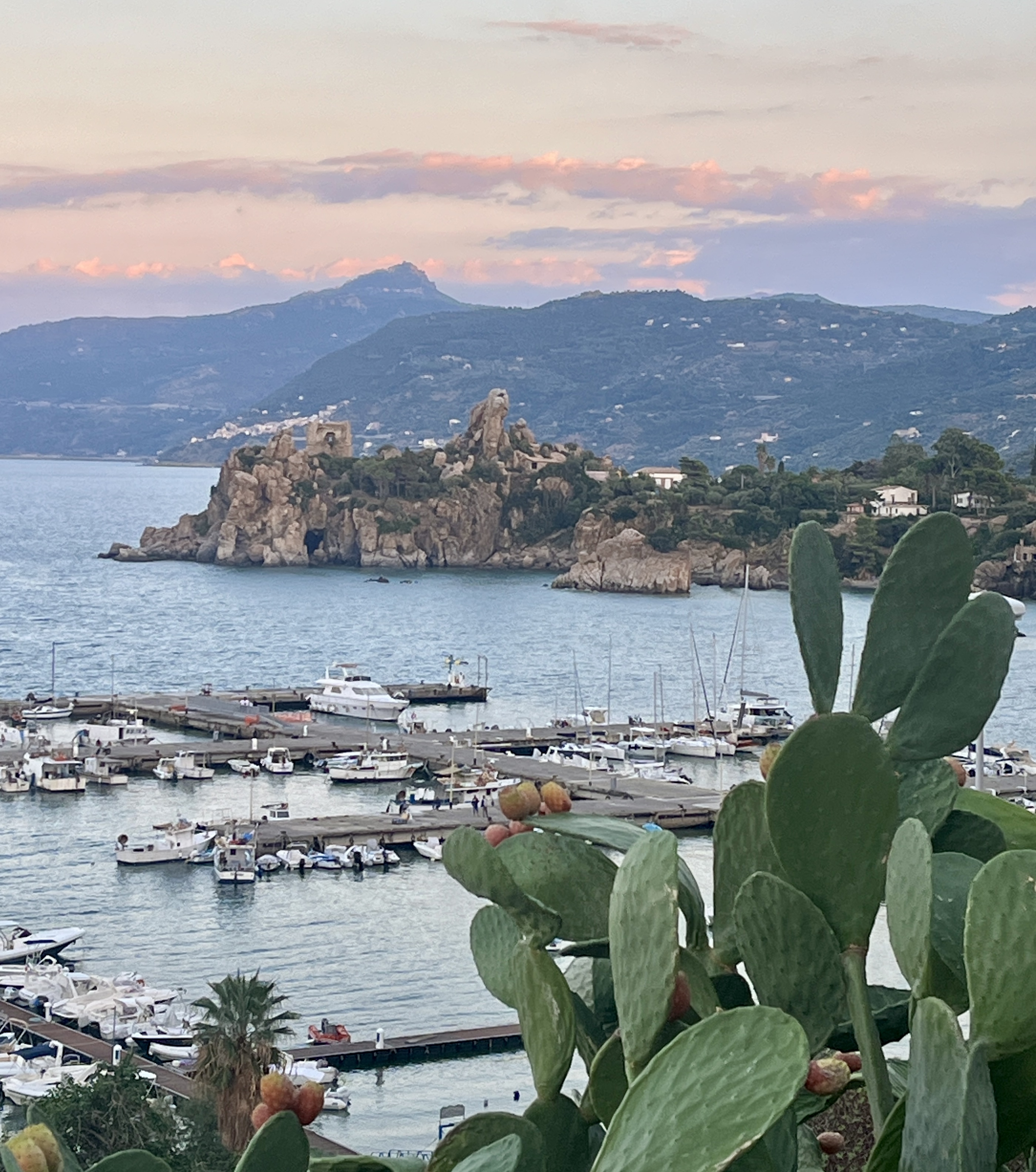
We complete this sojourn with a relaxing stay in Cefalu to the east. It’s precisely what we need to recover and our stay at the Insulae Resort is fabulous. We finally relax, read and write. We wander into the town for a slow stroll and a sunset drink overlooking the sea. A feeling of gratitude washes over me. Sicily has always been on my wish list and I’ve fallen for its ancient land and cities, the warm, friendly people, the excellent food and wine. I say a silent grazie millie as we board the flight from Palermo to Venice… Sicilia, I hope to return.
Lovely, Charming Lucca… Meet Me In The Piazza!

Standard

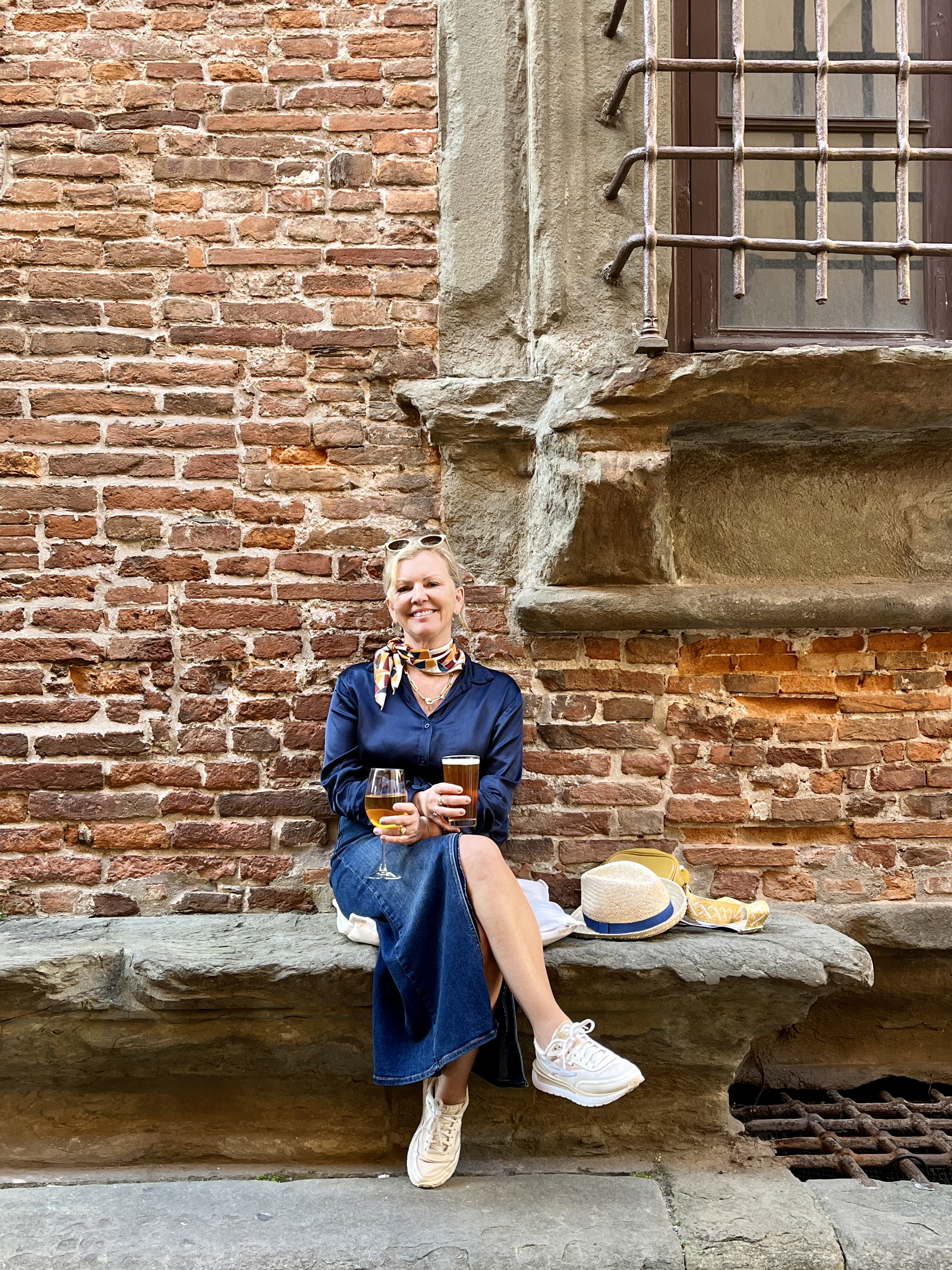
Our two week sojourn in this charming city comes to an end on a gorgeous, sun-filled evening… just the serendipitous way it was meant to. After strolling the city walls one last time, Bruce urges me to climb the Guinigi Tower with him, that one historic icon of the city we’ve left unexplored. But I’m exhausted. My legs have carried me along myriad streets over the past three weeks, up endless stairs and hills – Rome, the Amalfi Coast, Pompeii, Perugia, Lucca – and I simply can’t move another step. “You go ahead, I’ll perch myself right here,” motioning to a stone bench set into the walls of the Palazzo Guinigi. As was often the case in the grand palazzi of the 13th and 14th century, benches lined one side of the expansive home, a place for visitors to wait or for the common folk to linger. I eye the bar across the narrow Via Sant’ Andrea – seeing others happily enjoying a cocktail. “I’ll be right here on my ancient ‘bar seat’ with a glass of wine. Enjoy the view up there!”

As the hour passes, I count my blessings for the unexpected treasure that is Lucca. I had twice been here but only briefly, and choosing Lucca (and later Cortona) for the first of our leisurely two-week stints has been a wonderful revelation. Lucca’s compact inner city, inhabited for over two-thousand years and still fully embraced by impressive ancient walls, is rich in culture, history and beauty. With its original Roman street layout, this once silk producing capital of Europe beguiles visitors with intriguing scenes around every corner… countless piazzas, ninety-nine churches and vibrant cafes.

The intact Medieval wall encircles the city. Topped by a broad pathway flanked by elderly trees, it offers four kilometres of cycling or walking and the views are superb. When we arrived two weeks ago, the soaring Sycamores were readying to unfurl their canopies. Now, spring is announced by their baby-green leaves, the heavenly scent of wisteria and the already lush rhododendrons blooming along the stone walls.

Bruce is back down from the quaintly tree-topped Guinigi Tower and orders a beer. “Quite the view in every direction, I could even see the marble mountains near Carara.” The Guinigi family clearly had the best view in town, as would have been expected of one of the most prominent families in Lucca. From the 1200’s onwards, noble and wealthy families in Tuscany built impressive urban tower houses, part palazzo and part stronghold… signs of power and economic prosperity. From these palatial perches, they were able to play a greater part in running the ‘commune’ of Lucca, one of the prominent city states of Tuscany. Only nine towers remain in Lucca today, yet as many as 250 defensive tower houses once framed the skyline. With narrow via and narrower still vicoli, and at times hemmed in by towers and four-storied buildings, Lucca can feel a little closed in at times. Yet there is always sunshine to be found in the piazzas!

I fall head over heels with the multitude of piazzas, piazzales and piazzettas – from grand squares, to not quite square-shaped squares to little postage-stamp corners that might be no more than the broadening of a street, marked by a tree or an ornate fountain. Let me take you to a few that became dear to me, for it’s here that the stories of lovely Lucca tend to reveal themselves.

Piazza San Michele

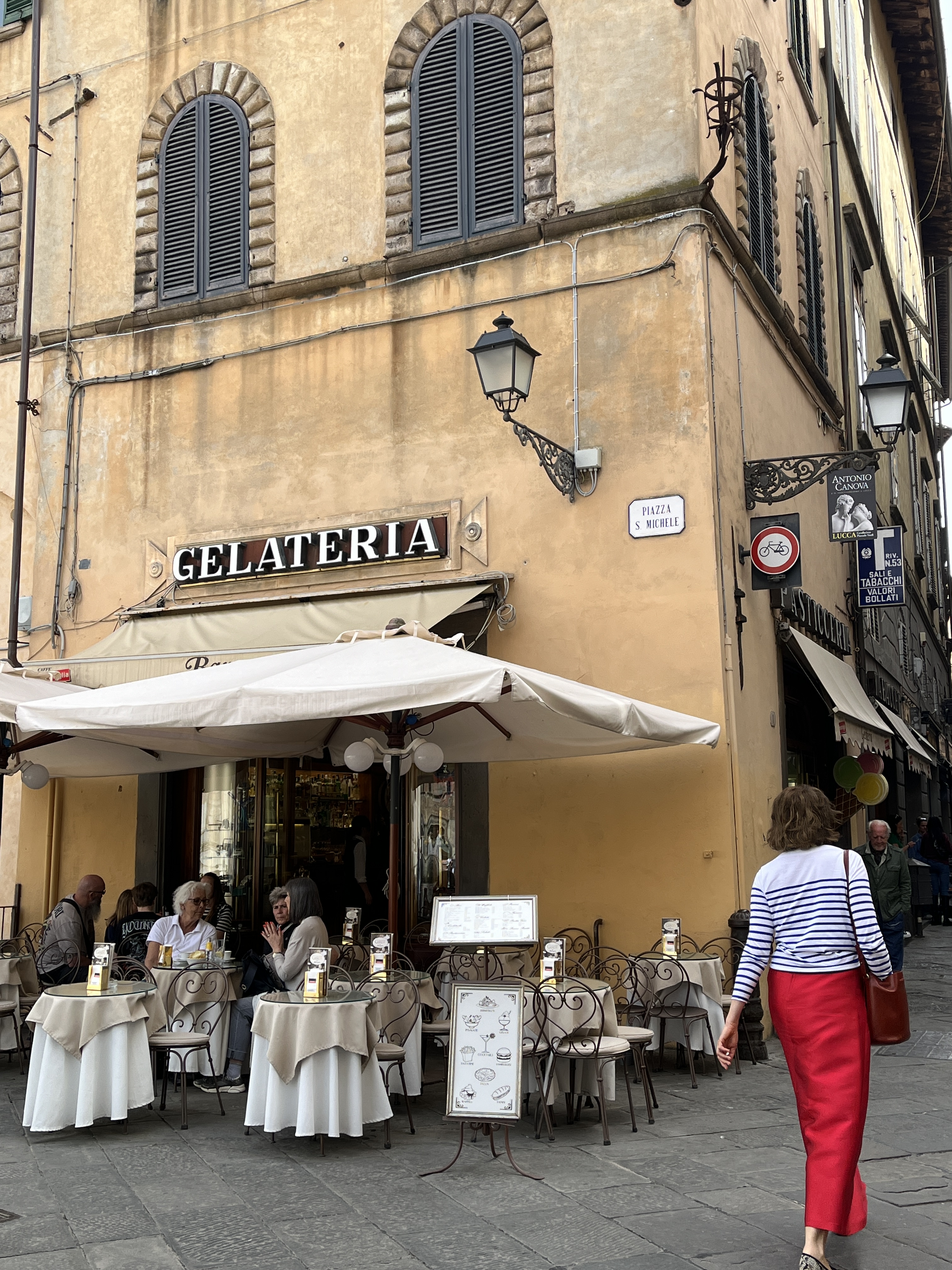
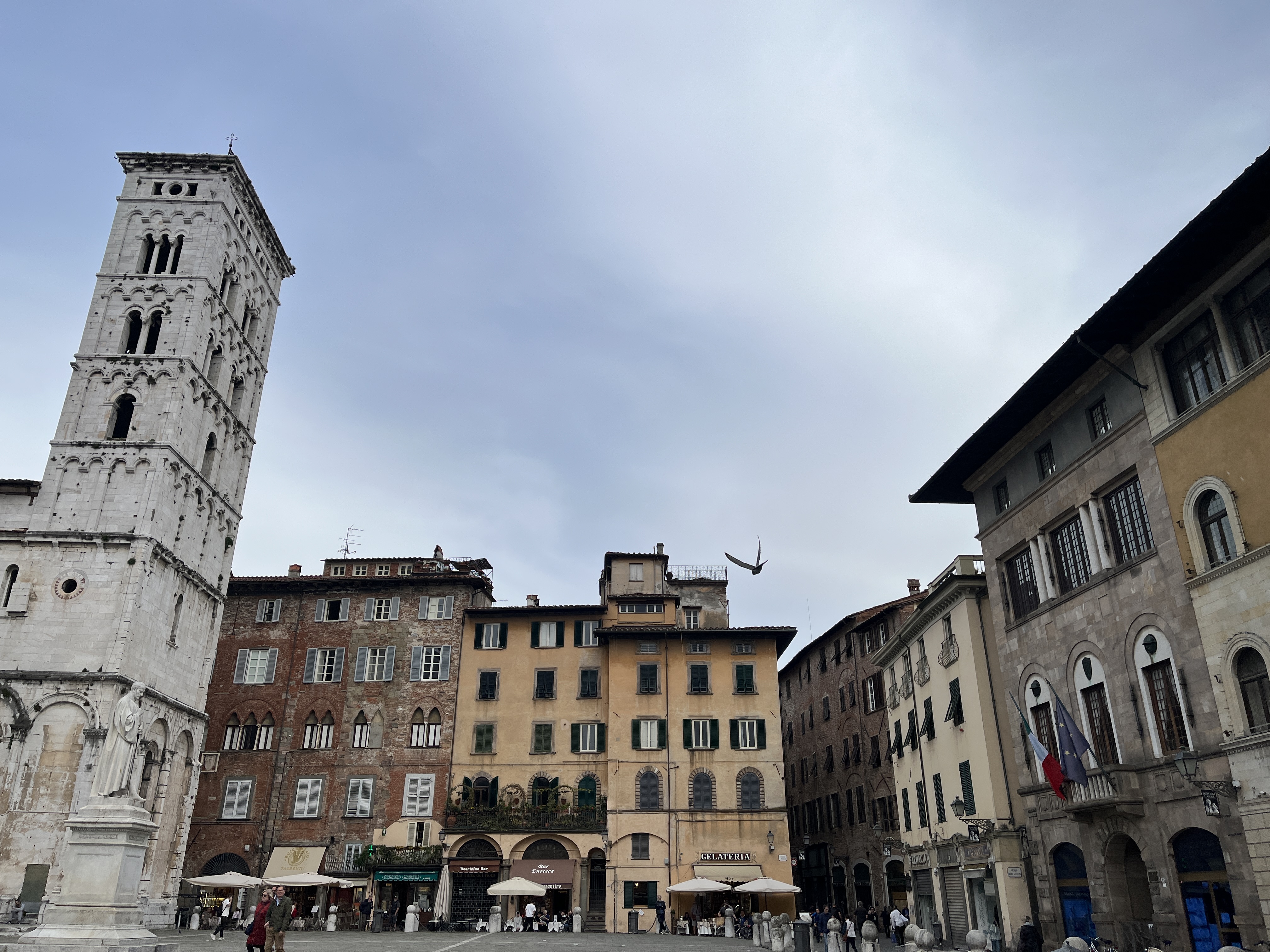
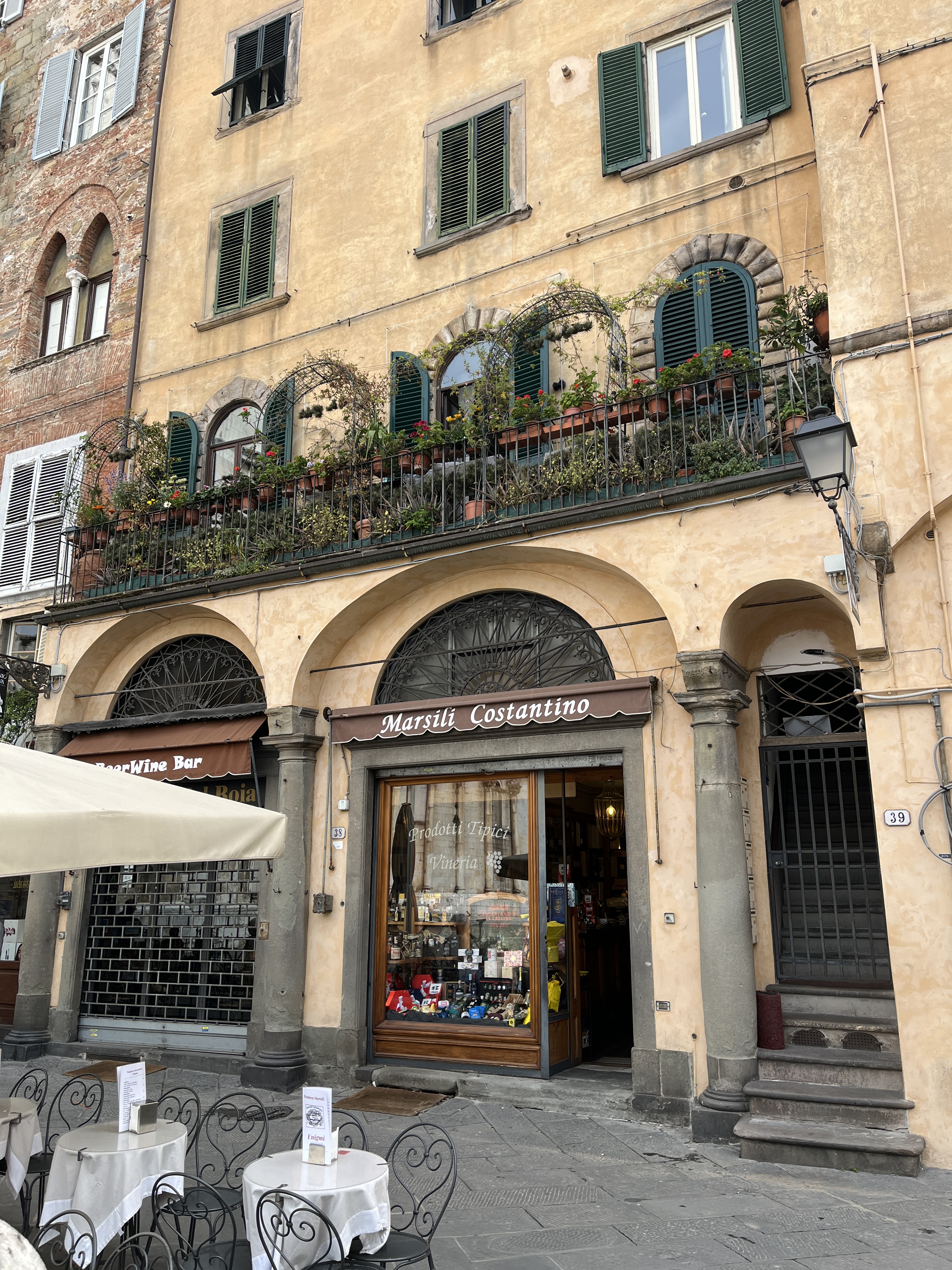
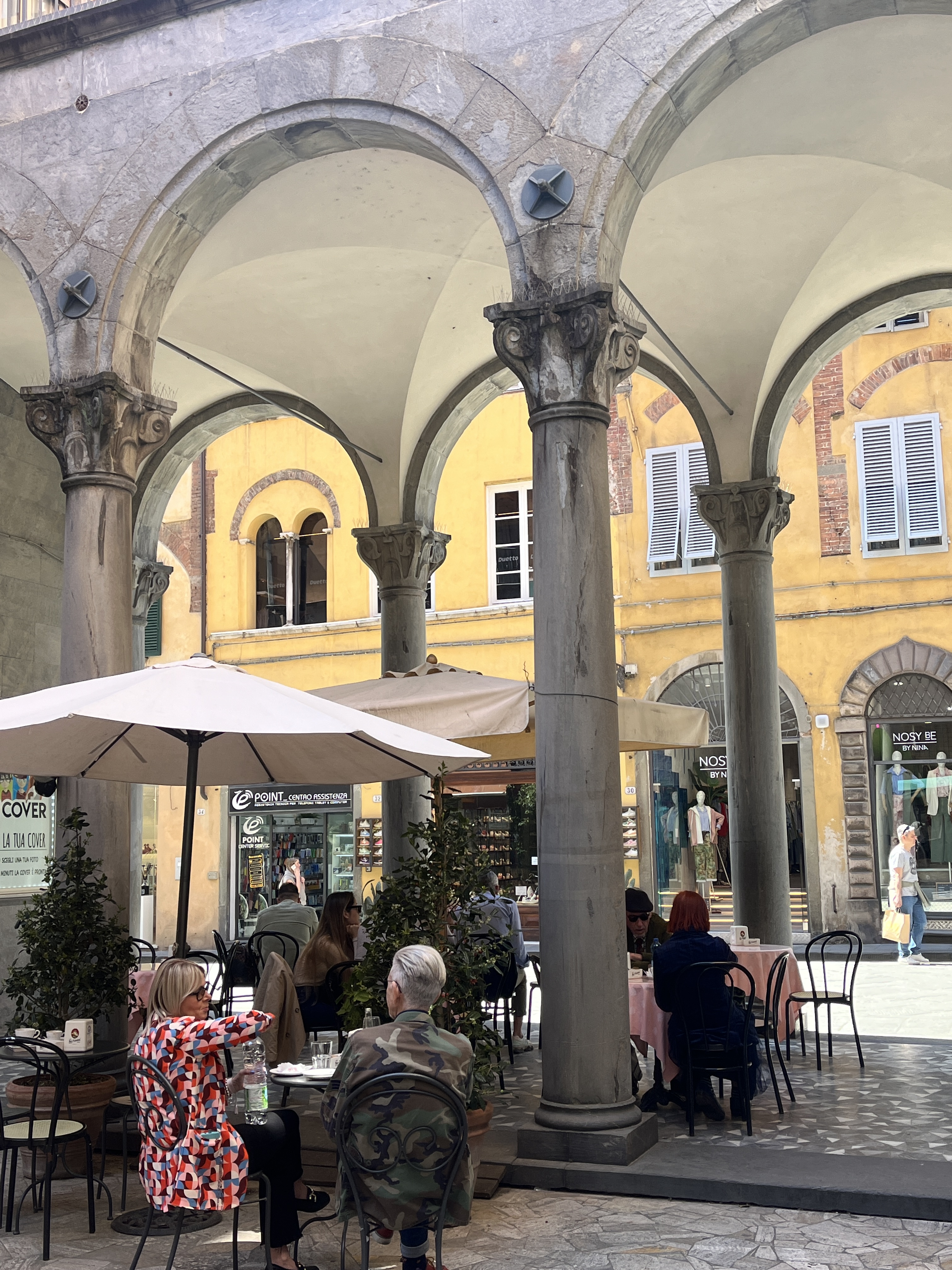
This is the beating heart and the crossroads of the city, where life swirls around you at any time of day. I have the feeling that writers over the centuries have claimed their favourite spot at one of the corner cafes on this massive square, for me it’s Caffe Casoli. Dal 1880 is indicated on its frontage – it’s been here awhile – but might still be considered a young upstart in this ancient town. From my usual perch, a wrought iron chair at the tiny round linen-decked table, I jot notes and observe. The square surrounds the Church of Saint Michele before me. Children kick a football, others play tag, parents chat and people of all ages settle themselves against the massive wall to savour their gelatos. Like many, I gaze up in admiration.

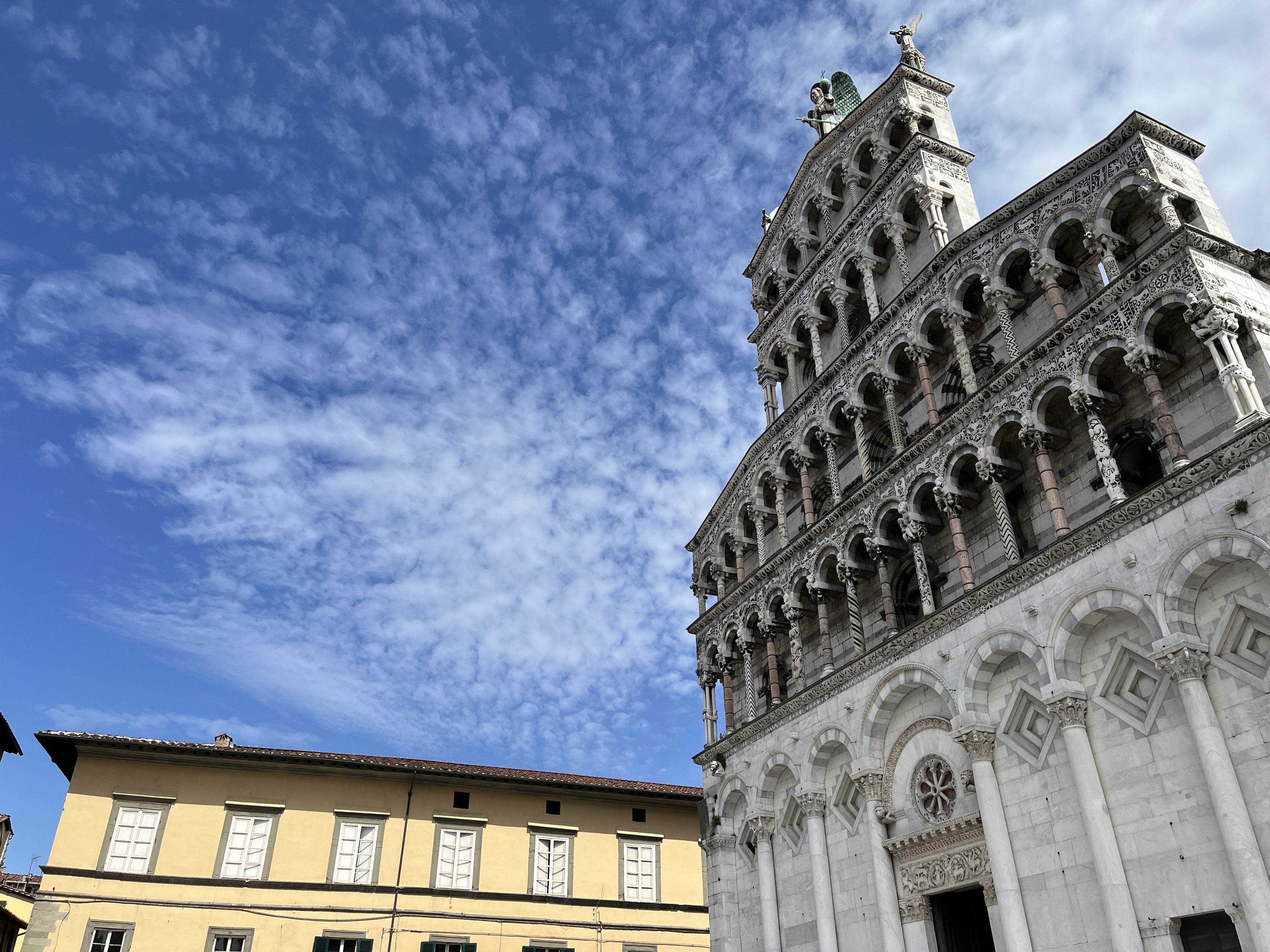
The great Church of Saint Michele was built over the ancient Roman forum – the Etruscans were here before that – with the church first mentioned in 795. In the middle ages it was a place of pilgrimage with a hospital nearby to care for pilgrims passing through on the Via Francigena. This ancient road ran from Canterbury in England, through France, Spain, Switzerland, and onward to Rome. Or if you were making the ultimate Christian pilgrimage, further yet to Apulia where ports of embarkation sailed you off to the Holy Land. Lucca was on this pilgrimage trail, just before Siena and Rome, yet the pilgrim road wasn’t only about the destination. The route facilitated an exchange of ideas, goods and trade in the 12 and 1300’s.

In the Middle Ages, rivalry between neighbouring towns was intense with churches being bragging pieces. From my vantage point, the facade of San Michele is a spectacular projection of power and a fine example of Tuscan architecture. I marvel at the 12 ft high statue of the Archangel Michael watching over his city, angels by his side trumpeting victory over sin. I love the horizontal stripes of muted whites, grey and green marble that define this and most of the churches in Lucca.

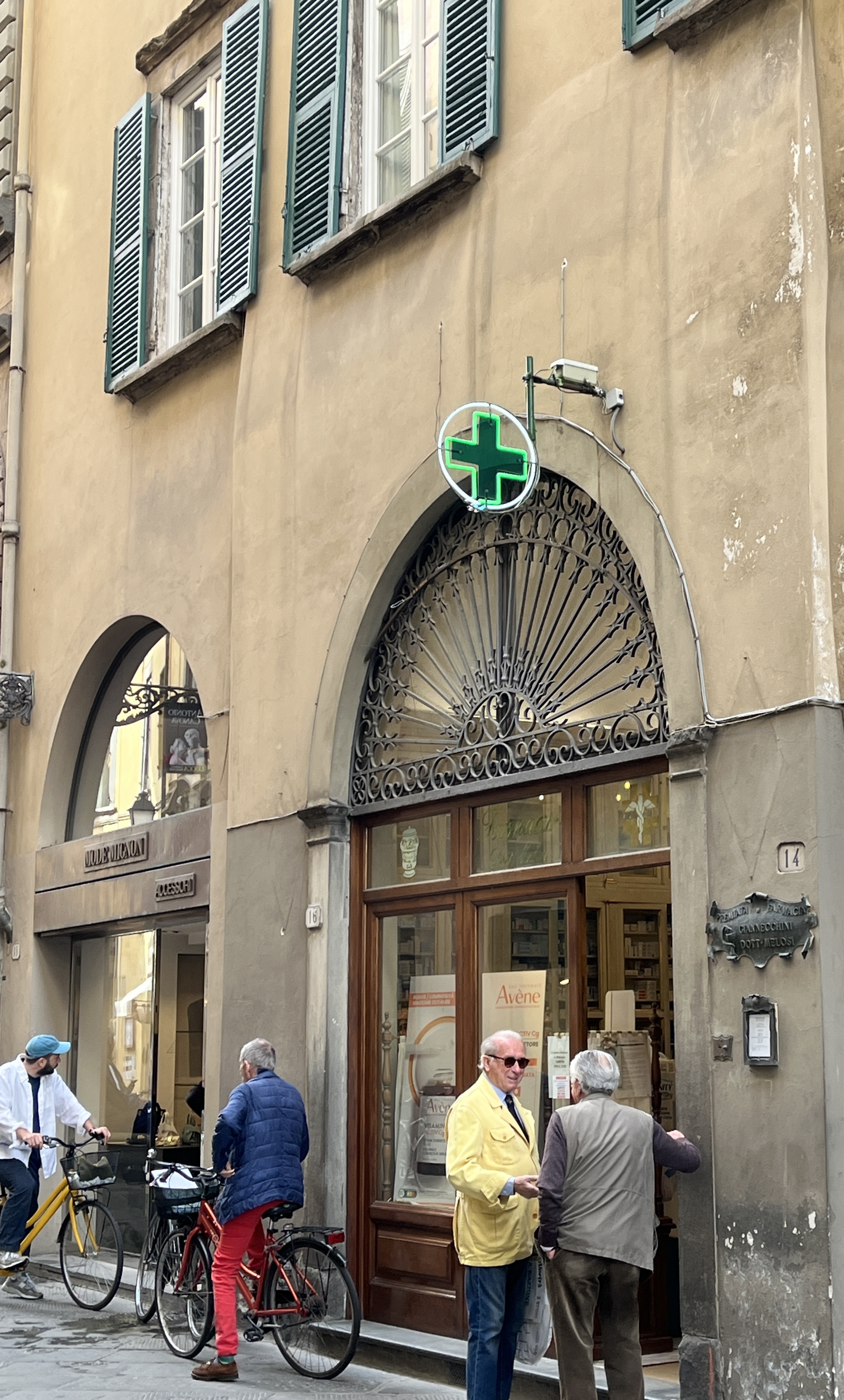
On the left side of the square, the elegant old family palaces – palazzi – still add grandeur to the setting. And to my left at the corner of Via Roma and Via Beccheria, is the intersection I never tire of. The Lucchese are in constant motion – bike riders, dog walkers, shoppers coming from the Farmacia, the Enoteca. Going about their day with so many visitors to contend with, at times I sense the occasional annoyance with the crowds, yet as always there is a certain style and grace as they live their daily life. And they never seem too busy to slow down and catch up with their friends along the street. Lucchese know the art of mingling and good conversation!

Piazza Cittadella

I‘m sitting at Madama Butterfly Caffe for a leisurely lunch as groups of tourists wander along and pose with the stately bronze statue of Giacomo Puccini. Once home to the celebrated composer, the cozy square is infused with hues of lemony yellows and ochres, white and faded green shutters and cafes aptly named after Puccini’s famous operas. After visiting the Puccini museum in the once family home, I understand Lucca’s pride in this dynasty of five generations of composers. The last, Giacomo, and his celebrated works that include Madame Butterfly, Tosca, La Boheme and Turandot, are interwoven into Lucca’s identity. From cafes and souvenirs, to impromptu recitals and evening operatic performances, Puccini is part of the experience of the city. Puccini, who passed away in 1924, would undoubtedly be thrilled to know that on evening after evening, people from around the world revel in the heavenly operatic performances of his masterful works… fantastic, assolutamente fantastico!

Piazza San Martino

“When’s the last time you came across a postcard cart?” I muse to Bruce as we wander into Piazza San Martino. “How terrific, it reminds me of my first time in Italy!”

The tiny shop on wheels is wonderfully incongrous against the luminous, grand Cathedral of San Martino. Postcards and guide books line the cart, leaving just enough space for the friendly seller to climb off and on the bike buried beneath his wares. Originally from Venezuela, Arron tells me he’s been selling here for some 25 years. I meet his dog Pongo who lies patiently in the shade of the cart. Periodically his master jumps on his e-scooter and they zip through the piazza for a quick ‘walk’ between customers. After our chat, Arron calls out a ‘Ciao bella,’ to me and thereafter each time I visit the square. I feel like there should be a postcard of him, Pongo and his timeless tiny shop!

Bruce and I go back a few times to gaze up at the Cathedral. We stare in wonder ; su, su, su – up, up, up – at the imposing, almost impossible ediface and tower. The 700’s were years of growth for Lucca – surrounding buildings were torn down to make space for the church and piazza. The creativity and the intricacy of the carvings on the facade of the church are every bit as outstanding as the chapel’s interiors and priceless works of art.

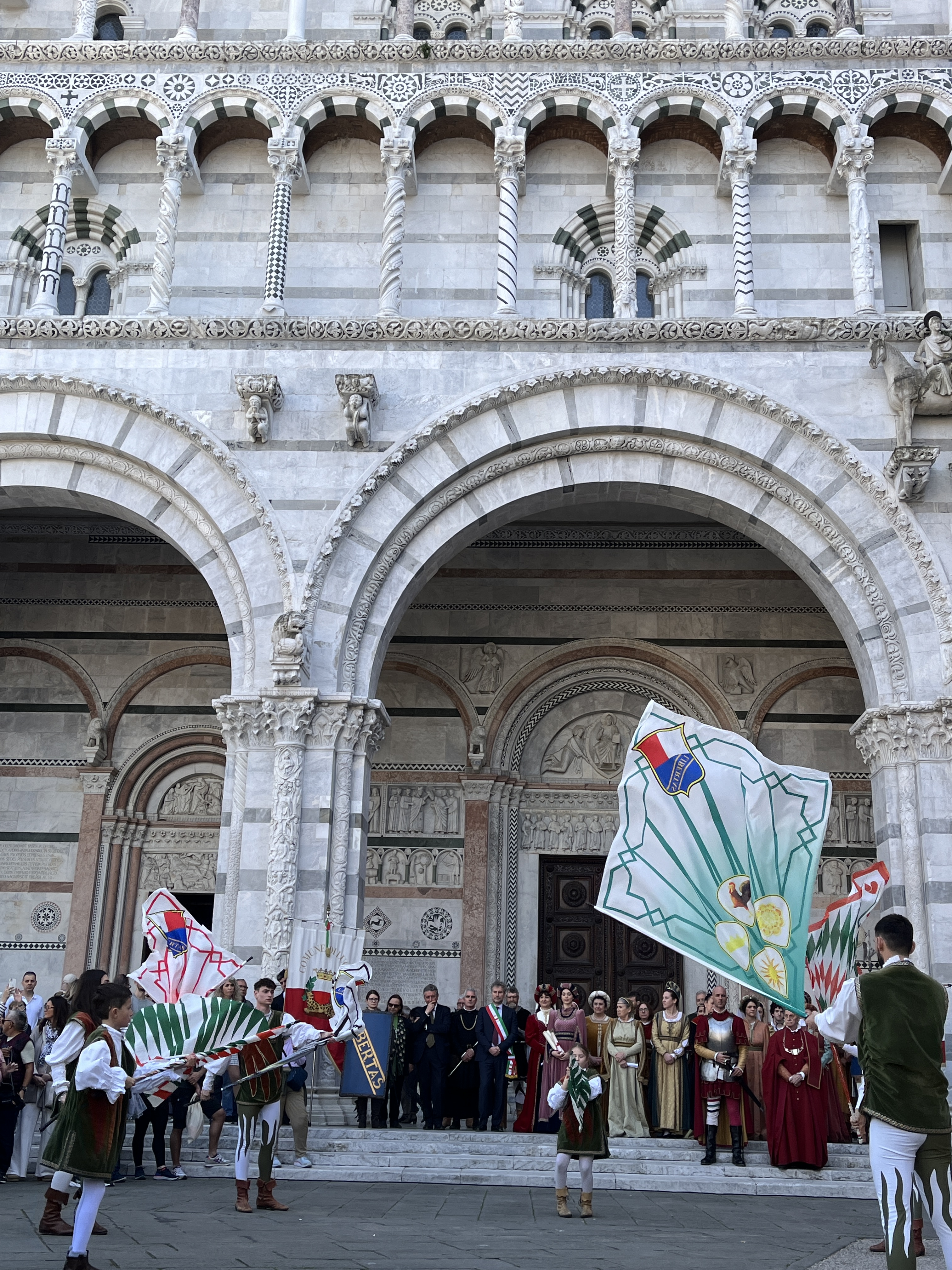
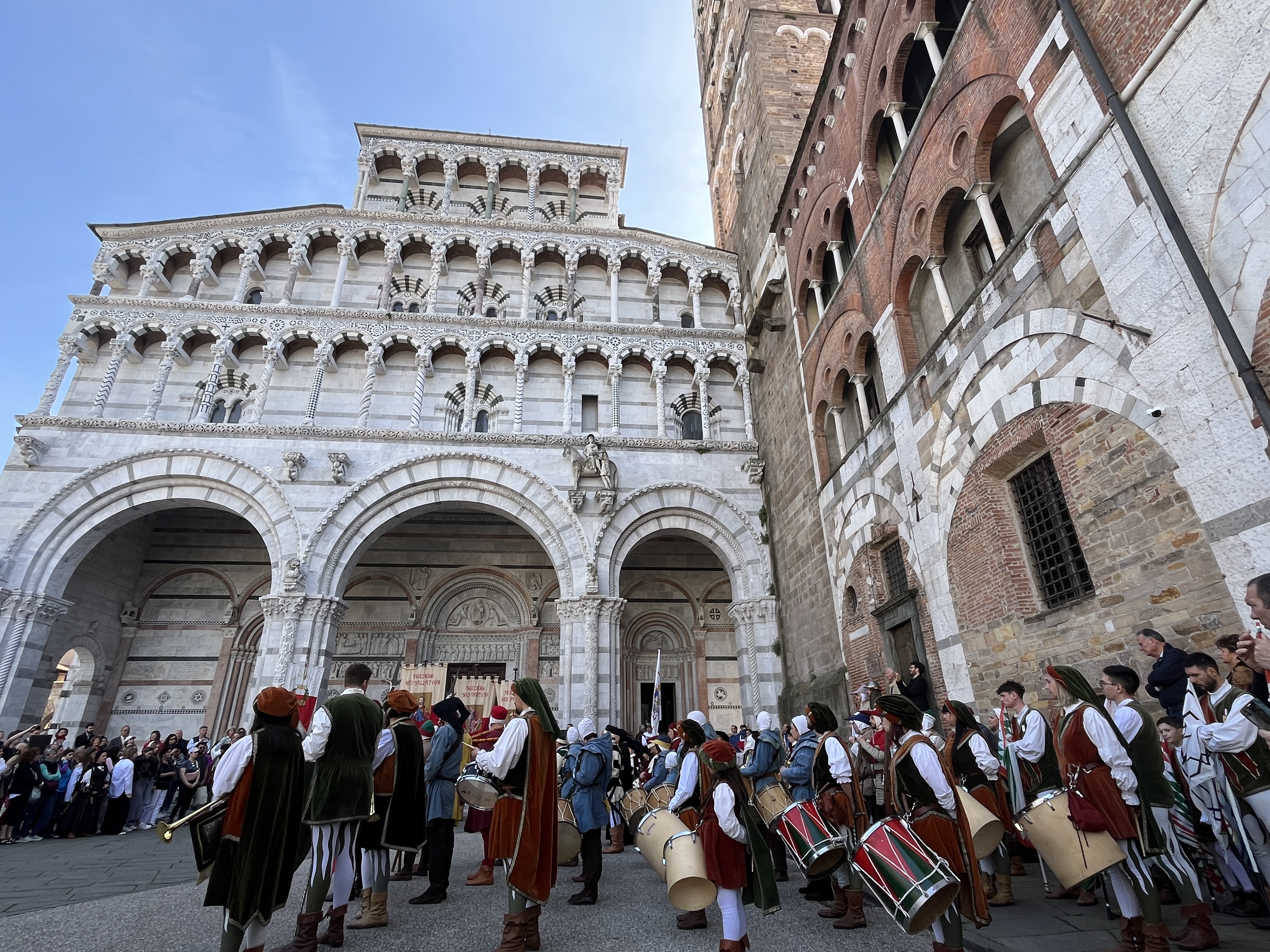
On a fine Sunday morning, the Cathedral becomes the backdrop for a celebration dear to the Lucchese. Each spring, they pay homage to their liberation from those pesky Pisans as the city honours the 1369 liberty of Emperor Charles IV exchanging Lucca to Pisa for a large sum of money… La Festa della Liberazione – Liberation Day. Lucca fought hard to maintain its continued independence from Pisa and Florence. These days Pisa is just a mere twenty minutes by train over the hills, one of my favourite Tuscan cities.

The costumes, musicians, and flag throwing is resplendent, evoking celebrations of the Middle Ages. Flags are sent spinning up into the air, are caught and tossed again. Four flags are handled at once to the huge appreciation and applause of the crowd. This craft dates back to medieval guilds in many European countries when a guild’s banner or flag was considered a symbol of purity. Best not to let it touch the ground or fall into enemy hands! As I crouch down to take video, a local asks me where I’m from, pleased that I’m witnessing the event. She wants me to know the importance of it all. I playfully ask if there’s still a rivalry between Lucca and Pisa? “Allora, maybe only in football,” she says with a wink.

Piazza San Frediano

This piazza becomes our ‘home square’. Just a stone’s throw from our apartment on Via Fillungo, there seems never to be a dull moment; whether during our strolls, cutting through the square to the nearby streets or while enjoying a glass of local Vermentino to the strains of musicians. Anchoring it all is the golden mosaic adorning the Roman Basilica of San Frediano. An Irish bishop in Lucca built a church on this spot in the early 500’s, yet the present day appearance is more an 1100’s version of Roman simplicity. It’s less grand than others, yet has a welcoming feel. I’m intrigued to hear the story of the church’s patron saint, Santa Zita.

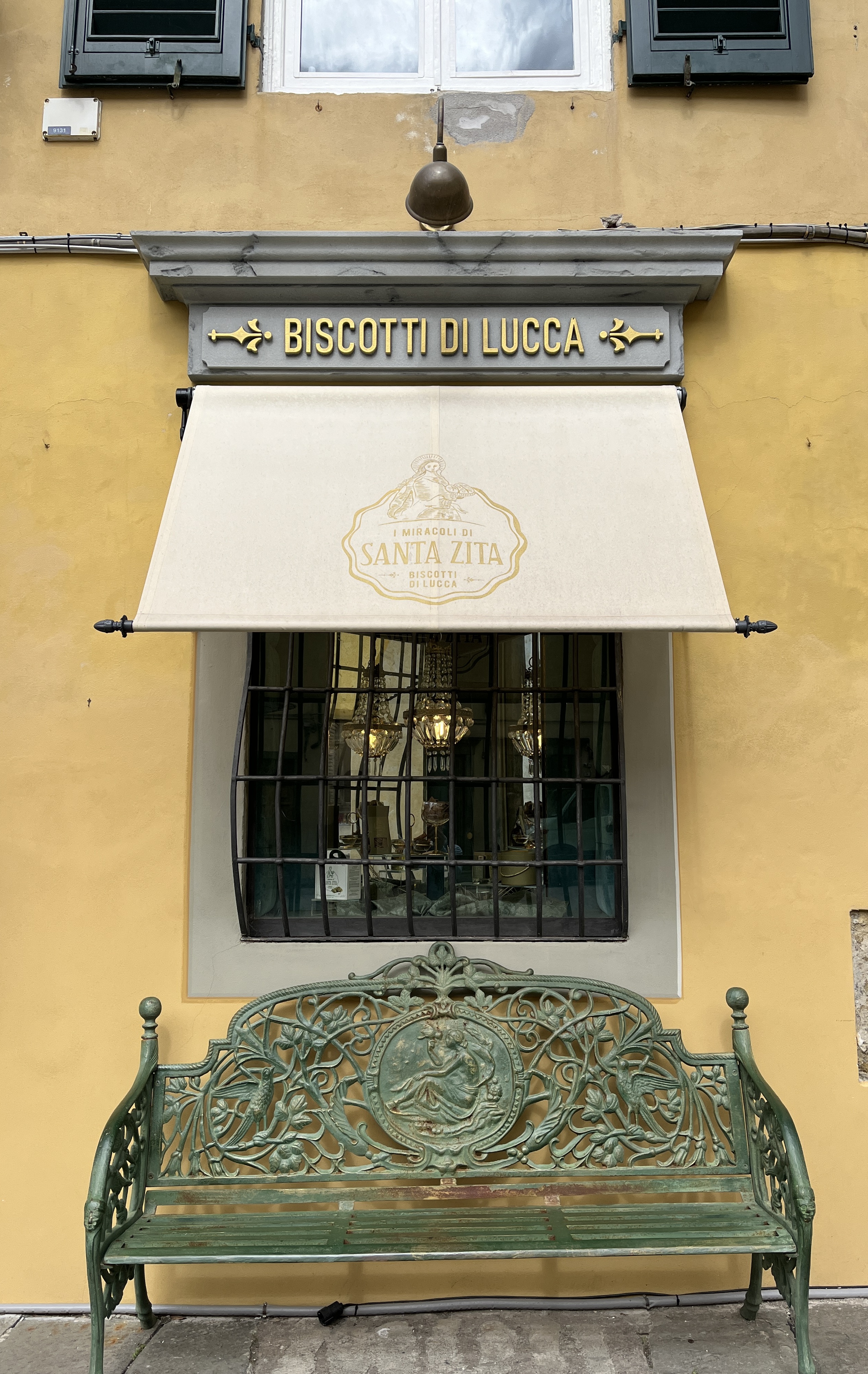
Zita entered domestic service at the age of twelve, serving a prominent silk merchant family for almost fifty years. She was known for doing ordinary things well and for her kindness and generosity to the poor. It’s said that a star appeared above the bedroom attic at the moment of her death at sixty years old. After 150 miracles had been attributed to Zita’s intercession she was recognized by the church and canonnized in 1696. Guilds were established in her honour and still today on April 27th, families bake a loaf of bread and gather in celebration of Saint Zita. I notice that she’s portrayed with a bundle of keys and is the saint to invoke if indeed you’ve lost yours. Not possible for us – the iron key to our ancient accommodation is the size of a serving spoon!

Spending time in this square feels quintessentially Lucca, especially when beautiful melodies float this way from the nearby Music Conservatory. People stroll through on passeggiata while the bells toll their pleasant sonorous melody. ‘Meet me in the piazza’ becomes the phrase I say to Bruce if I’ve gone out and we plan to meet later for appertivo. He’ll know where to find me. And so we meet, we sit, we listen, we sip… late afternoon fades into evening.

Ten Years of ‘notes’ from Italy… an ode to my travel partner

Standard

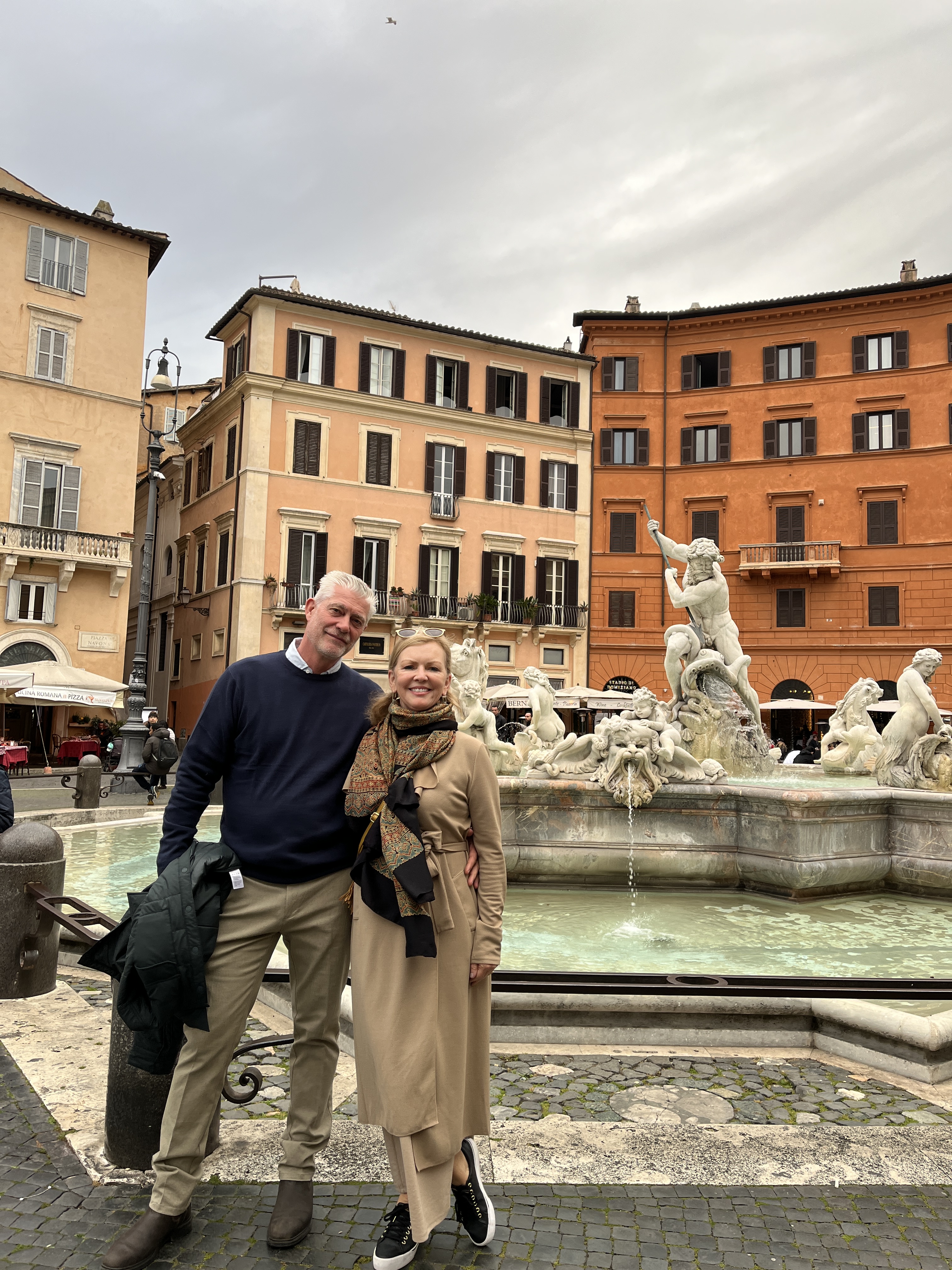
When I started ‘notes’, I wouldn’t have known that last week on the tenth anniversary of that first post, I’d be in the Eternal City of Rome. It seems almost too perfect a full circle; after all, it was here in Italy that my passion for travelling was first kindled. I’ve returned often since that first trip in the late ’80’s, yet this visit is more of a sojourn. Over these seven weeks, we’ll not only travel but situate ourselves in small Italian cities to gain a sense of actually ‘living’ here and embracing that dolce vita!
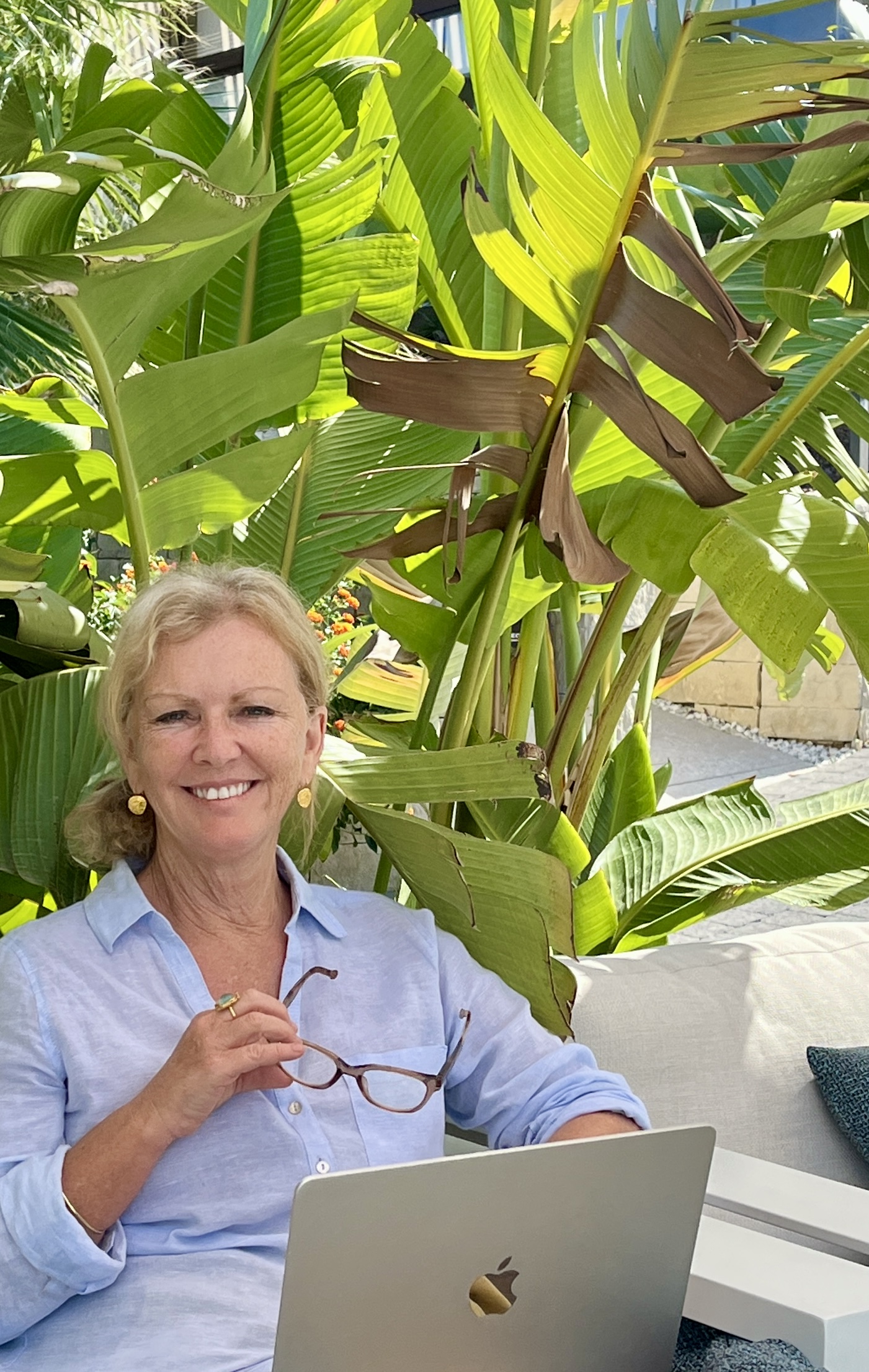
If you’ve followed along on ‘notes’ you’ll know that after thirty years of life overseas, we’ve settled in the beautiful Canadian mountain town of Kimberley in British Columbia. We have our children around us, we’re part of the community and Bruce and I are both working on projects that we love. And yet for us, travelling and journeying together is part of our ongoing story.

I opened my blog recently to a ‘Ten Year Congratulations’ message from WordPress, making me smile widely. Yes I wish I had written more often, yet I’m thankful that I’ve captured the essence of many travels and experiences. It’s also heartwarming to know that in 155 countries, people have taken the time to read my stories and I consider it an absolute honour to perhaps have made the world a smaller and more colourful place in my own little way. I’ve shared posts from Kazakhstan to Norway, from Malta to India and so many more in between. On this tenth anniversary, I’m especially thankful for my husband/travel partner for the inspiration that encourages me to research, wander, explore and then write.
Before arriving in Rome, I received a message from Bruce who was working and travelling in Scotland. “Can’t wait for our first passeggiata in Rome sweetheart!’ This seemingly simple statement sums up so much as we both anticipated that first early evening stroll along cobblestoned strade, that Italian tradition of ambling leisurely to the piazza and watching life play out against the avenues and architecture that we have come to love. And so this milestone is really an ode to my travel partner. The one who carries that extra bag for me, navigates the train schedules, figures out the best route to hotels. The one who waits patiently or joins me as I meander down yet ‘one more side street.’ That once travel boyfriend who I’ve travelled through life with hand in hand while working and raising children… and to have the great fortune to experience life in many places. And through those experiences and this continued traveling life, we’re ever thankful for this precious gift of time together.

So this post is a short missive, an ode to embracing travel and the life experiences that it encourages. And most of all it’s a heartfelt grazie mille to Bruce – my forever partner-in wandering – see you in the piazza!

I leave you with a piece I wrote on Monday Morning Emails the last time we were in Italy together…

TRAVEL

Monday Morning Musings #20 – For the love of luggage, and a certain ‘porter’

terryannewilsonEdit”Monday Morning Musings #20 – For the love of luggage, and a certain ‘porter’”

IMG_E0480

This past month, while away on a month-long trip through Italy and Slovenia, a dear friend messaged me.

“How is it that you have so many clothes with you? Following your social media pics, it seems you always have the right thing to wear,” Gillian wrote. “A friend and I have a question – do you travel with a suitcase or only a carry on? The bet is on!”

I practically laughed out loud when I read it. Oh how I wish I could stroll onto a plane with just a sleek carry-on and a handbag… if only! But no, this traveller goes prepared; a selection of shoes, a good clutch of scarves, some basics of course, but also outfits I might only wear once as was the case for the writer’s retreat, the main pretext for this trip. Naturally it was all too much and I regretted over-packing, yet again.

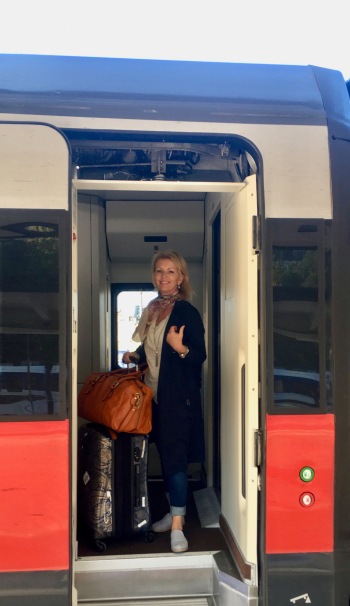
Was it because I knew that in the back of my mind my porter, aka my travel companion of thirty years, was joining me? He does often joke that the sole reason he meets me, wherever I might roam, is to help carry my bags home. And it seems, this trip was no different.

After the writer’s retreat, we agreed to rendezvous in Florence before making our way north and onwards to Slovenia. Checking into a rather stately hotel, was it not confirmed that my beloved Bruce is surely my very own personal porter?

Let me back up. After fleeing an Air B n B (a veritable ‘subterranean cavern’) that he had inadvertently booked for our reunion (accommodation is usually my department), we arrived at that lovely hotel on one of Florence’s prettiest streets.

But no, we didn’t glide into the lobby as if we belonged there. It was more a barrage of luggage, backpacks and two overheated travellers. We had rattled our way from one end of town to the other, the clatter of my luggage causing an obnoxious racket on ancient cobblestone streets. Did I imagine looks of disdain as the locals enjoyed their la passeggiata, their evening stroll?

But allora, then, we present ourselves at the hotel.

“Checking in for Wilson,” I say to the perfectly coiffed, attractive lady behind the sleek check-in desk, all the while attempting graceful dabs at my ‘glowing’ forehead. The silk scarf looped around my neck has come in handy indeed!

Bruce is standing off to the side, laden with two backpacks, my overstuffed suitcase and my shiny new leather grip-bag that I seemingly could not leave Pisa without. I glance over and smile at my travel companion, the one I’ve logged a ‘million’ miles, but the not so-romantic-image of the porters at Indian train stations suddenly pop into my mind – all he’s missing is yet another bag perched precariously on his handsome head.

“Yes, checking in… with my porter,” comes out of my mouth. It seems I’ve attempted a joke.

“But madam,” the lady replies matter of factly, “you’ve only booked for two.”

She surveys Bruce with a wry glance. Yes, she’s truly under the impression that indeed he is my porter and that apparently, my true romeo will appear at any moment. Perhaps he’s out front, parking the Maserati or the Lamborghini.

“Oh no, no, no,” I clarify. “He isn’t my porter, this is Mr. Wilson,” and hand over our passports as proof.

“Ah, va bene. Good then. Do you need help carrying the bags to your room Mr. Wilson?”

“Oh no,” my intrepid companion says with a grin, “I’ve got this!”

One last thing about that beautiful new leather bag. Surely it is part of a fervent plan. On my next trip, I will glide onto a plane with it and it alone… oh one can but dream!