Pisa Airport, named for Galileo Galilei, greets me like a fond friend. Just as it did six years ago, that very first time I arrived to attend a writer’s retreat, the long narrow concourse has a happy vibe to it. It makes perfect sense considering that it is one of the main gateways to Tuscany – to sunshine and stunning vistas, to that laid-back Tuscan way of living. I notice the abundance of sandals, summer dresses and sun-kissed smiles, both satisfied and expectant.
The Machiavelli leather shop is bustling and I remember how immediately enticing it was on my first visit; soft muted colours of the supplest leather beckoning the newly arrived. Leather is my particular weakness here – every imaginable shade and design, but this time I know to leave the browsing to the many leather shops in Pisa itself.
So, I do the Italian thing and head straight to the espresso cafe with its long, curved marble bar. For most it’s a fleeting visit – we ‘locals’ know it costs more to sit, so one stands, for maybe three minutes at most, tipping back steaming double-thimbles of espresso. Then a swift farewell and a few coins for the server – Ciao, arrividerci!
I linger a little, taking in the chatter amid the clatter of cups and saucers, breathing in the sharp wafts of rich espresso, taking in the comings and goings of locals and tourists. Exiting the airport to hail a taxi, the balmy Tuscan air and terracotta pots of soft pink oleanders greet me. I’m ebullient, I’m ‘home.’
Many people have that one cherished place they return to, that special place of relaxation, refuge and rejuvenation – for me, it’s Italy. This may be my eighth visit, but I’m no longer counting and even before I leave, I’m already plotting my return. What do I love about it? Actually, just about everything.
I love how the Tuscan sun plays on ochre stone walls and on the fortress-like Renaissance tower houses… look up, high up, and you’ll see frescoes telling their stories still, evoking a rich historical past. I’m awed by the weight of history along and under Rome’s ancient streets, the romantic waterways of Venice, the grandeur of Vienna-like Trieste in the north and its dazzling position on the Italian Riviera, the evocative Cinque Terre…


And I adore the trattorias, rustic neighbourhood restaurants with their checkered table cloths, delicious pasta and wines from local vineyards that never make it into a corked bottle; perhaps just a well-worn, wicker encased carafe. Perfect for long lunches with friends.
I’m captivated by the constant parade of shutters in every possible shade of green. I wait for the bells that peal throughout the day, giving even the smallest of towns their lyrical backdrop for everyday life. The tolling of bells has traditionally not only been for their rhythmic serenade, but also to call locals to church, to beckon town folk from slumber, to remind to return to work in the fields, even to warn of intruders or impending disasters.
In Italy, I love unhurried train journeys wending through glorious countryside, the sensuous lyrical language, terracotta pots arrayed on aged flagstone, and the gentle rhythm of Italy’s rural life.
On this visit, my month-long trip begins with the writer’s retreat where I’ll be ensconced for six days with old and new friends. But first, I have thirteen glorious hours in Pisa… a rendezvous, an opportunity to reconnect.
I stay just a long stone’s throw from that tower that leans. It is late afternoon and after a journey that was much longer than it should have been (including three static hours on the Montreal tarmac in a faulty plane), I now throw open the tall window sashes of my inn, once an old tower home, and, as if on cue, I’m greeted with ringing bells. I know they’re from the nearby campanile and as always they are music to my ears. Surely, they’re calling out a welcome for my return!

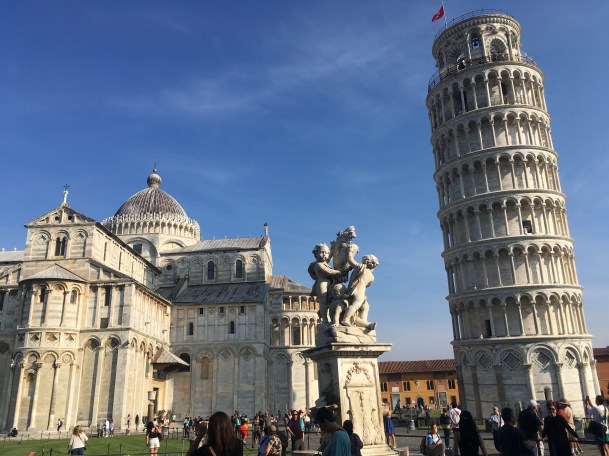
After a quick shower to wash away the jet lag, I walk barely two blocks through the tall, ivy sprawled stone gate of Pisa’s imposing old city walls. The familiar scene I know and love unfolds before me. The Piazza dei Miracoli, Square of Miracles, is considered one of the finest architectural complexes in the world; the Pisa Cathedral and Baptistry, and of course that tower that has ever such a tilt. The Leaning Tower is the campanile, the bell tower and naturally, it was never meant to lean.
In fact, due to inadequate foundation, the tower began subsiding during its 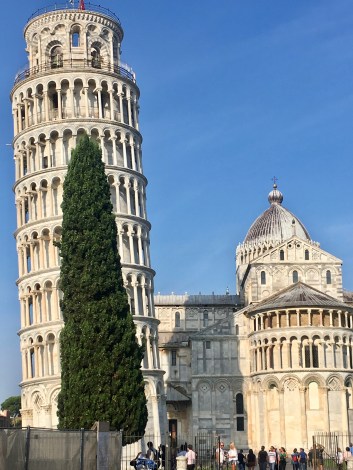 construction in the 1100’s. Building of the flawed design was halted for a century while the Republic of Pisa engaged in battles with Genoa, Florence and Lucca. The lean increased over its decades-long construction and despite many attempts to right it, the Romanesque-style tower with its seven hefty bells, still leans at an angle of almost 4 degrees.
I admire the tower along with a multitude of tourists, but it’s really the side streets of Pisa that draw me. Strolling from the Piazza along the ‘main street’ of Santa Maria, I instinctively look up. I’m less interested in the scenes on the street level where people are dining, enjoying a glass of wine or yes shopping in those fabulous stores brimming with leather. No, it’s the view above eye level that reveal their vivid tales. I wander street after street, veering away from the tourist haunts, delighting in navigating this labyrinth of history.
The tall tower houses, artistic and architectural jewels, were the homes of noble families, mostly built during the middle ages. The torre case were built inside the city walls for defensive purposes, those soaring higher marking the more affluent and influential families. It was not only Pisa where these towers inscribed the Tuscan skies, but also Florence, Sienna, Lucca, and my personal favourite, San Gimignano.
Along with the towers, grand palazzos and trattorias, I pass small long-standing businesses so essential to the Tuscan way of life. And do their names not roll off the tongue like a wonderful symphony – spaghetteria, yogurteria, pasticceria, paineria, gelateria, Liberia, and the essential vineria.


The evening sun is glinting beautifully on the Piazza Dei Cavalieri, or Knight’s Square, as I amble to this quiet landmark. I know that this was once the political center of medieval Pisa, and later the headquarters of the Knights of St. Stephen. In 1558, the square was rebuilt in Renaissance style by Vasari, the talented architect of the Grand Duke of Tuscany Cosimo I de’ Medici. Medici’s statue looks over the square, framed by two magnificent Palazzos and the charming church of Saint Sebastian.
I’m distracted by strains of music that draw me to the steps of the church. I meet two university students, Oswaldo and Alexandra, as they serenade the evening strollers. This evening ritual of passeggiata is quintessentially Italian – a gentle, languid stroll through the piazzas, the vias, in the countryside, or along the sea-front. A pastime enjoyed by all ages – some fresh air, the chance to see and be seen, perhaps a stop at the gelateria or vineria.


I perch myself on the church steps beside the two musicians savouring their Spanish love song, delighting in the fading sun dancing on fine Italian marble. I take in the strollers, the buildings and all that I love.
Allore, it was the perfect beginning to this month in Italy, and prelude to a planned visit to Slovenia. But that’s a story for a time soon…


 With a job already secured, my mom had arranged for me to live with the daughter of a friend of hers. They had curled together for some 25 years and surely we would also get along? That first image of Carol’s apartment is etched in memory. Cushions from faraway Asian on the sofa, Lonely Planet travel guides on a pretty wicker shelf, backpack stowed away in a corner. Carol was my good fortune – not only was she a traveller, she was also a jewellery and clothes importer. And her buying trips were to none other than Bangkok. Naturally, it wasn’t long before I eagerly accompanied her on one of these excursions.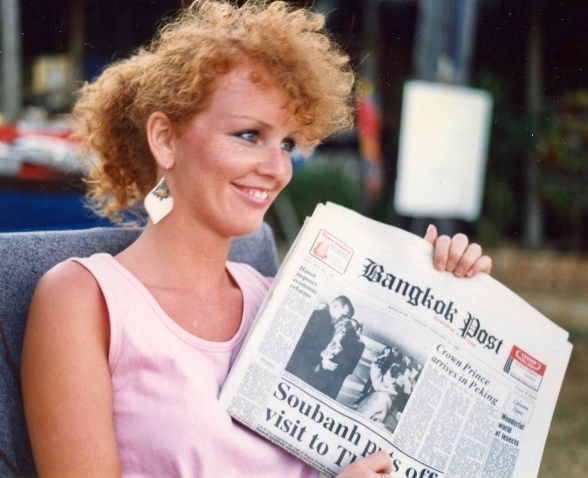




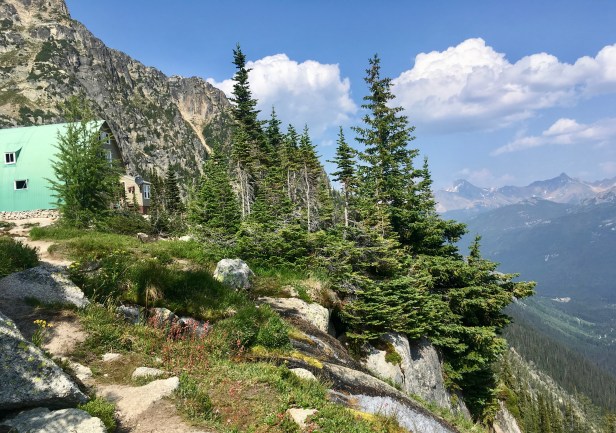
 Call it a welcome home or an initiation back to Canada, recently I was enticed into an overnight hike. Really, it was into a wonderland of chiselled granite at 2230 meters, into a rapture of beauty. It was a profound privilege, yet, it had to be earned.



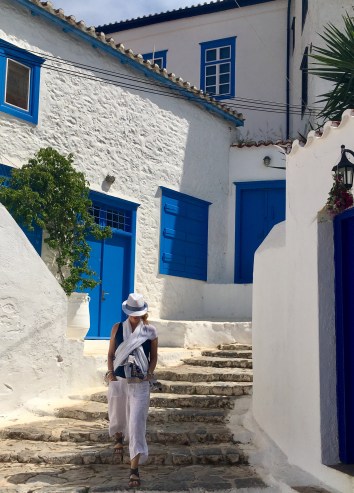


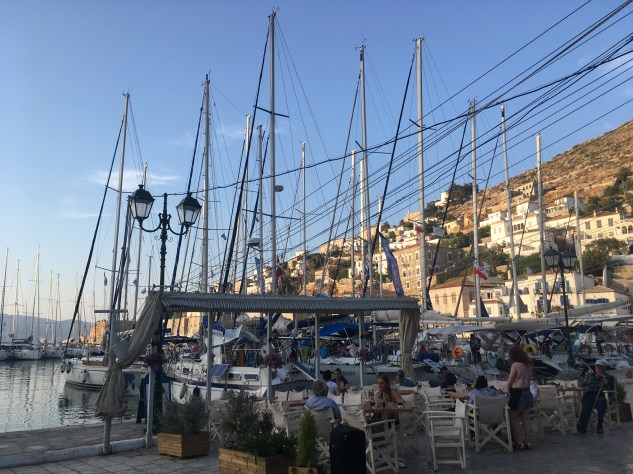


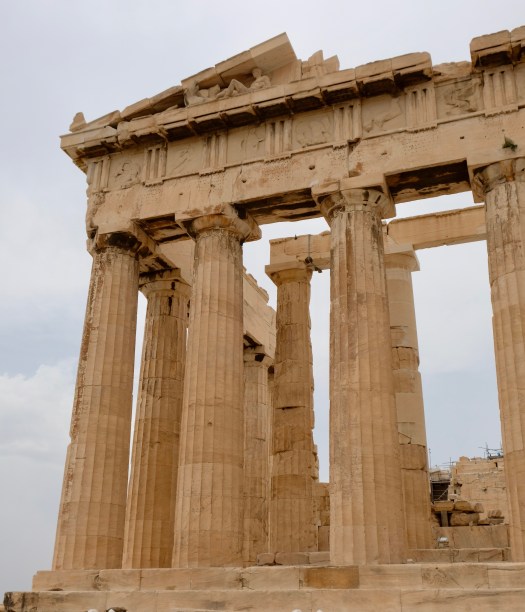


 I muse over the people I’ve met and how they all showed me something of their kind nature. The lovely mother I happened to chat with as I appreciated her daughter’s May Day laurel that her father had crafted. And the waiter at Scholarkheio who found one of my camera memory cards and tracked me down to return it. Or the shopkeeper I met as I perused modern day chitons. We connected immediately.


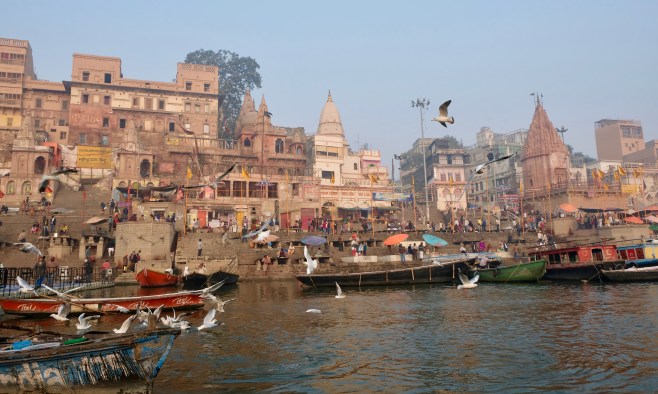


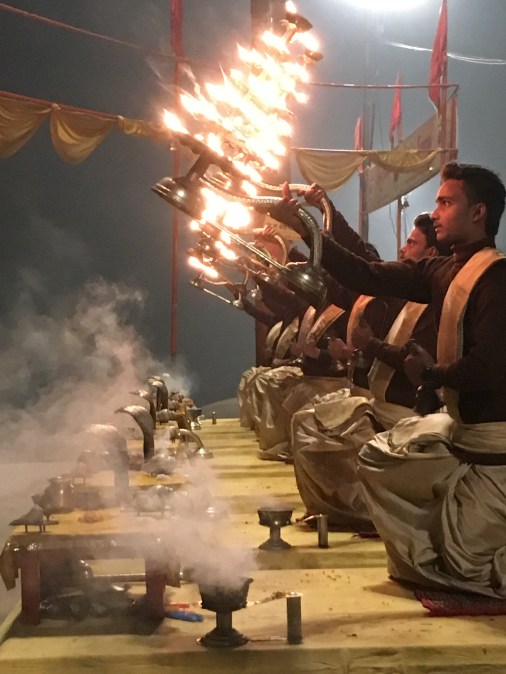


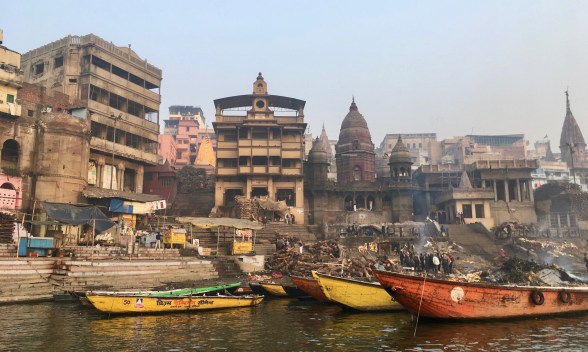
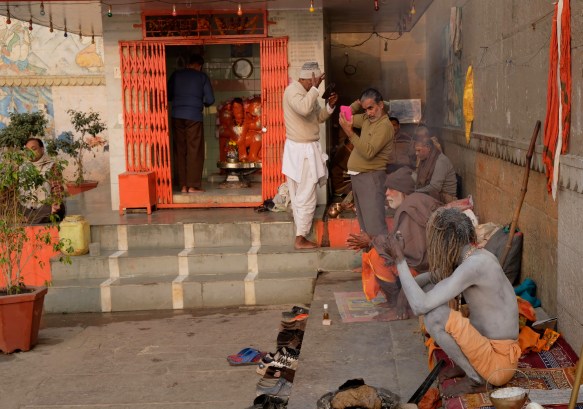
 We see few foreigners in these narrow passages despite tourism playing a significant part in today’s Varanasi. Yet I know that many come to this city to bathe in its spirituality, to elevate and open their consciousness. They follow in the steps of many prominent Indian philosophers, poets, writers and musicians who have also sought enlightenment in this holy place… some do not leave.






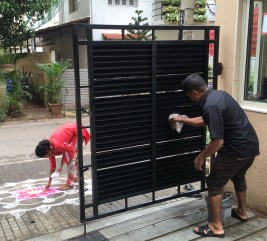 “First cleaning, then decoration,” I’m told as I venture downstairs to see the preparations firsthand. Boran is busy cleaning the gate and the doorways. By this time, Kajul and Shanti are applying colour to the rangoli at the front gate.


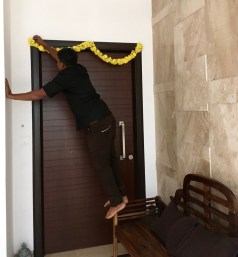 I go upstairs to refresh my coffee and see that our front door is not being forgotten. Boran is stringing a garland of marigolds then dotting each side of the door with a tilak and also blessing it with the swastika symbol. This ancient religious mark is a symbol of auspiciousness and good luck, it remains that today in India. Boran then proffers the melon and I contribute a rupee or two into its dyed, square ‘collection box’. Before long, I’ll learn its destiny.



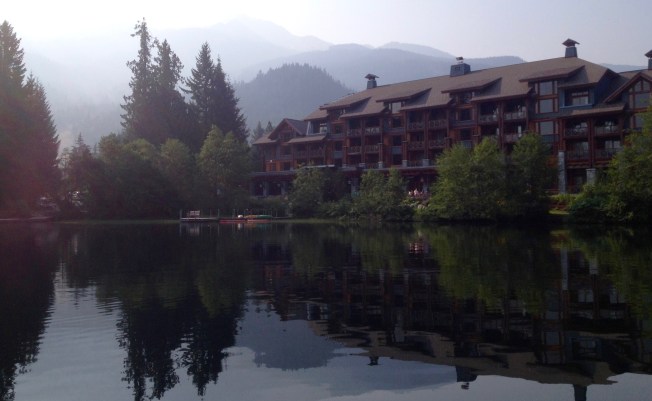


 Visitors could also hike and horseback ride, enjoy a paddle on Alta Lake, or play with Teddy, Mrs. Philips’s pet bear. Myrtle Philips was the pillar of this new community that would eventually spread to nearby Whistler.










 notesonaboardingpass