Tag Archives: Conrad Kain

Lake O’Hara, Wildfires, An Inspiring Film Maker

Standard

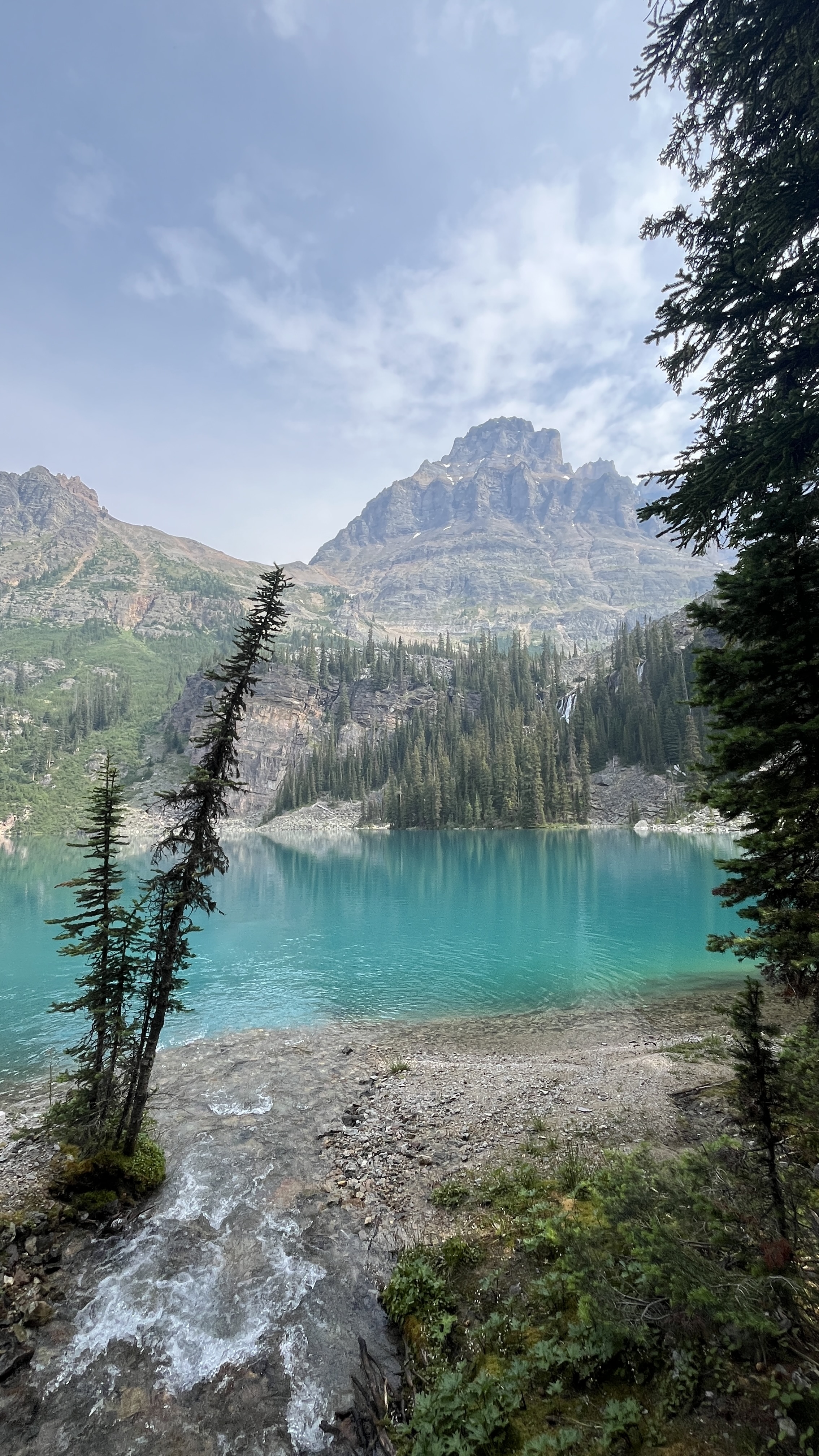
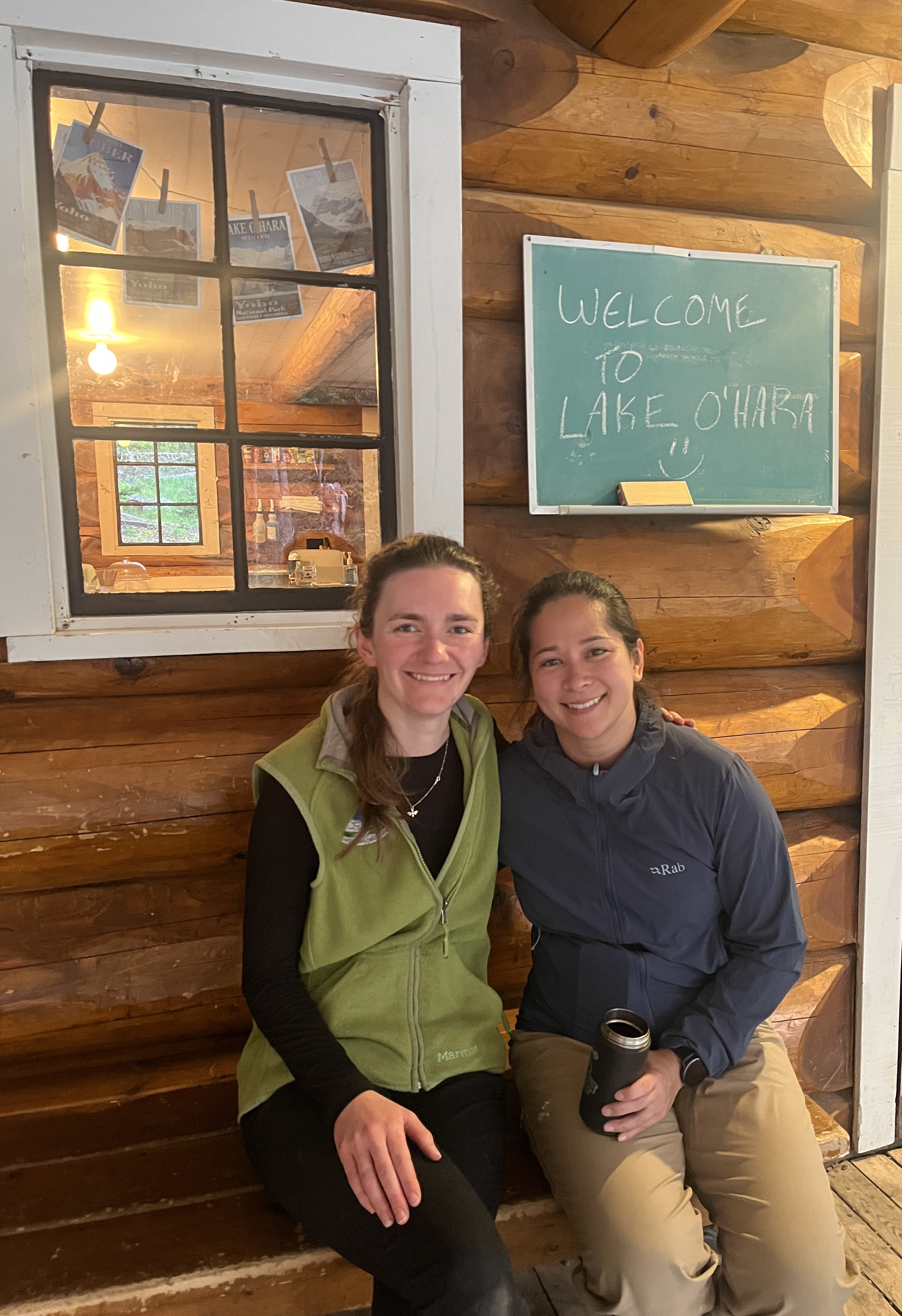
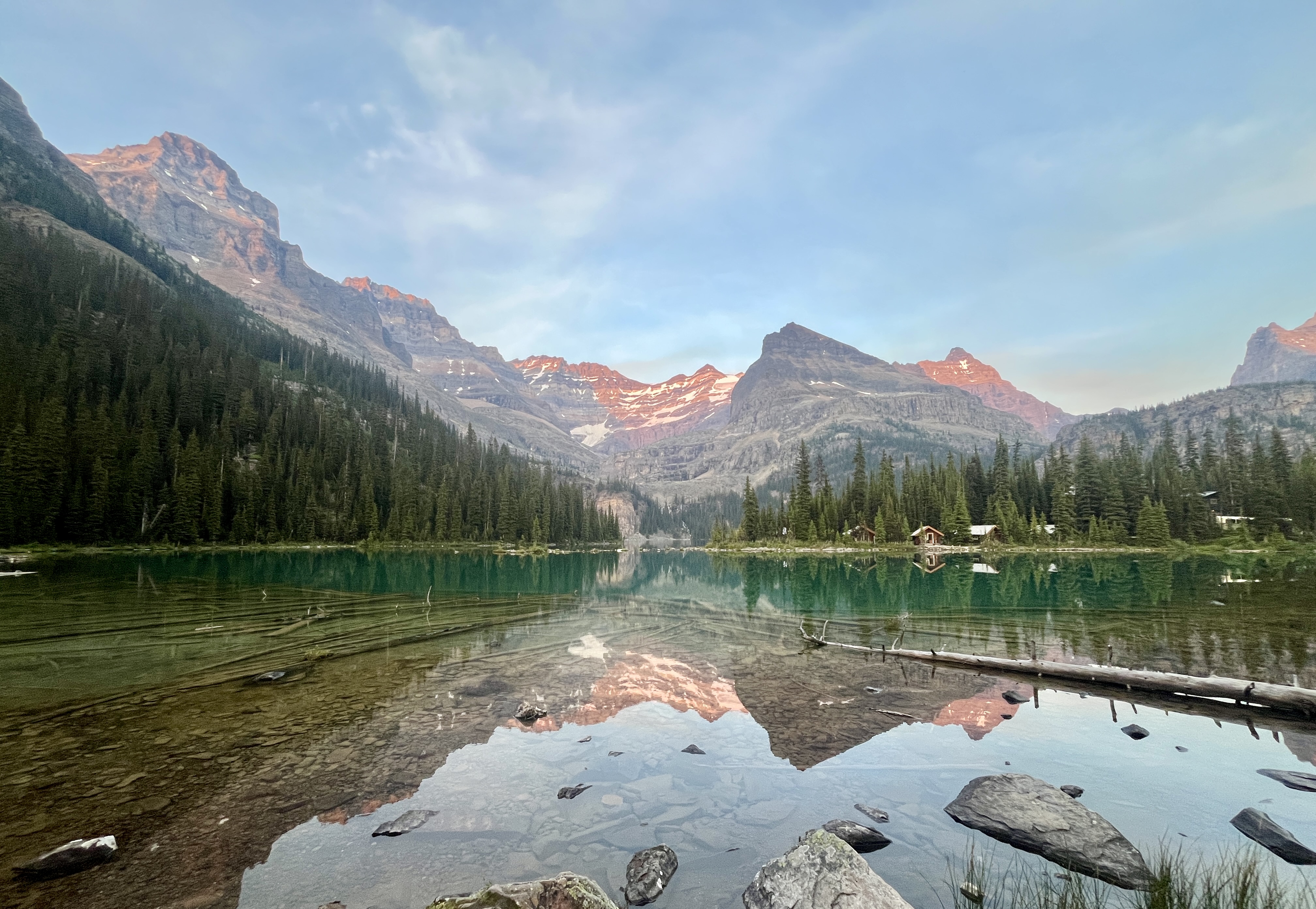
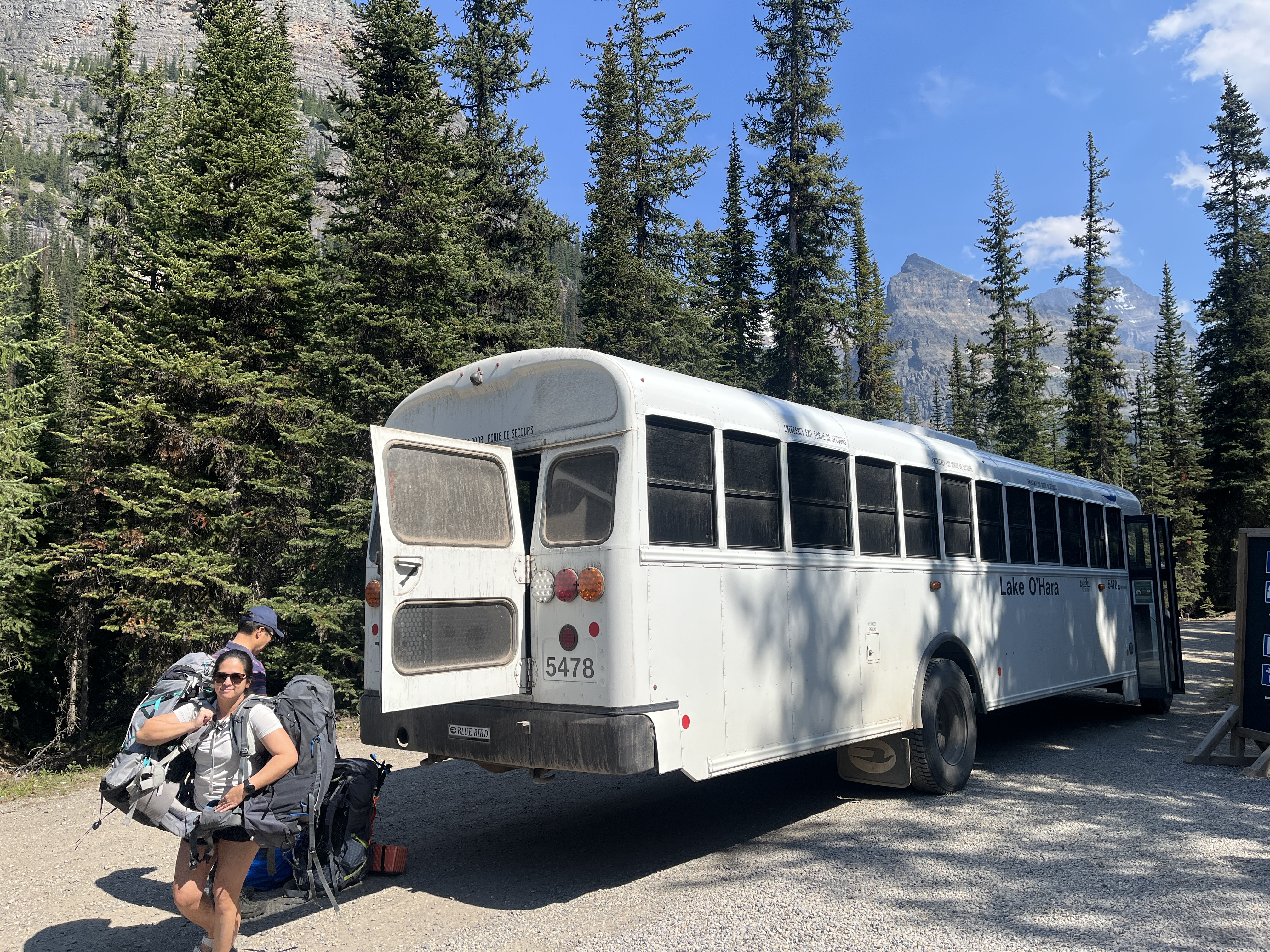
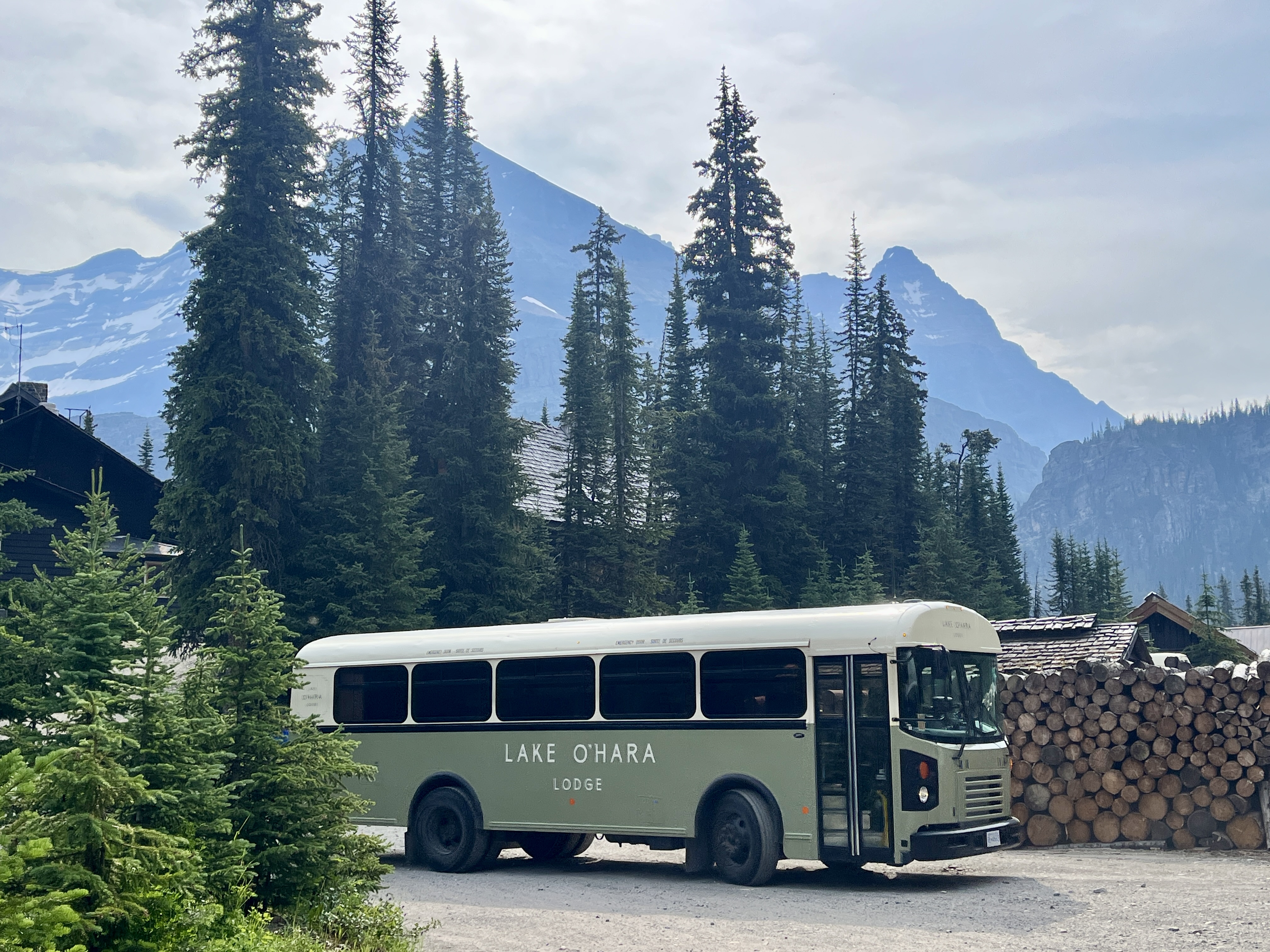
The revamped school bus shuttles us eleven kilometres up a single-track mountain road. Higher and higher into the mountains, every bump of the road takes us further and further from everyday life. We’re in Yoho National Park and we soon arrive at the esteemed Lake O’Hara. Nestled below turreted peaks, hanging valleys and ribbons of rushing waterfalls, it’s a jewel within Canadian National Parks.

Once off the bus and deposited at the cozy campsite, I am in absolute wonder. This is breathtaking, it’s spectacular! And lucky me, I’m here with my daughter-in-law Trixie Pacis, a Canadian/ Filipino film maker. A screening of one of her films, Embers is only hours away.

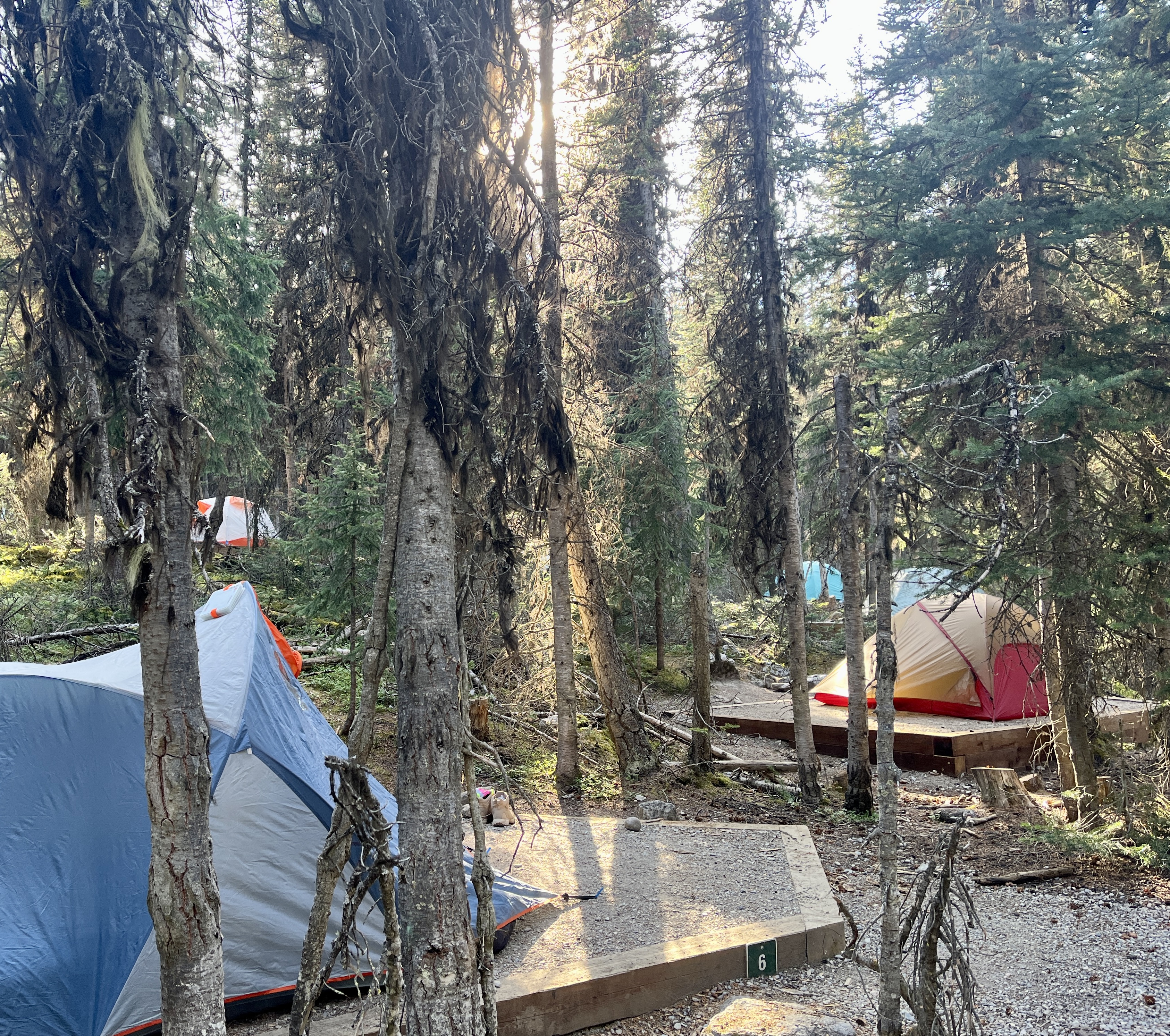
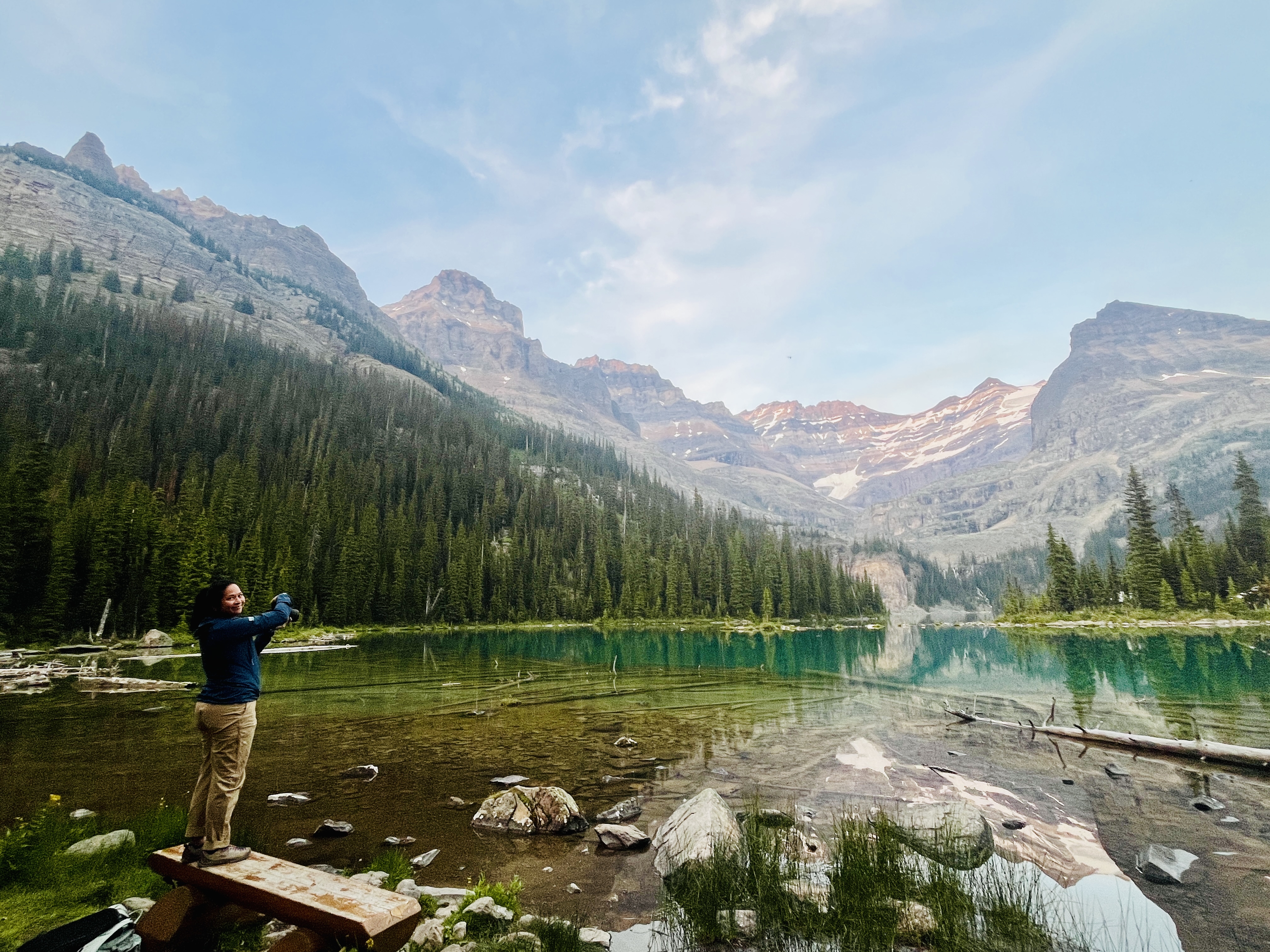
It’s been a while since I’ve stuffed a sleeping bag and sleeping mat into a backpack and slept in the great outdoors. Yet Trixie has even more embedded into her pack and out comes our accommodation for the night as well! Once the tent is pitched and our food and toiletries are safely stored into our assigned locker – a grizzly and her cubs were spotted just down the road this morning – we make our way through the campsite across the road to the famed Lake O’Hara.
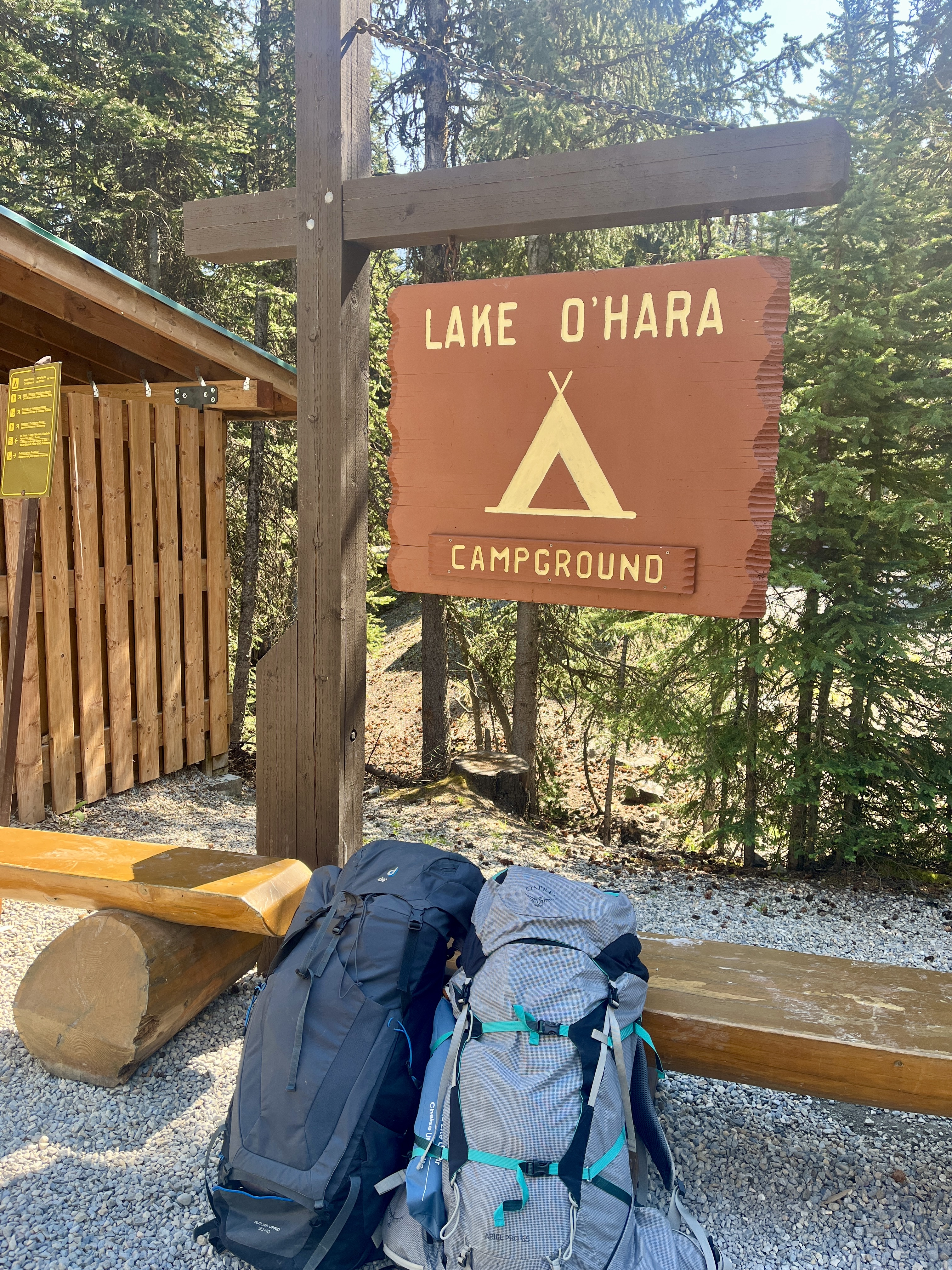
Lake O’Hara – at 2,020 metres or 6,630 feet above sea level – is in the alpine region of Yoho National Park. Nestled with Jasper, Kootenay and Banff, Yoho is the smallest of these four contiguous national parks. A trip to this area a number of years ago confirmed its grandeur, yet campsites remain elusive unless you’re lucky enough to secure one during the first few minutes they’re released each spring. Trixie’s complimentry tent site is a perk of the screening and as we meander lakeside for my first views, I appreciate how iconic and special it is to be here.

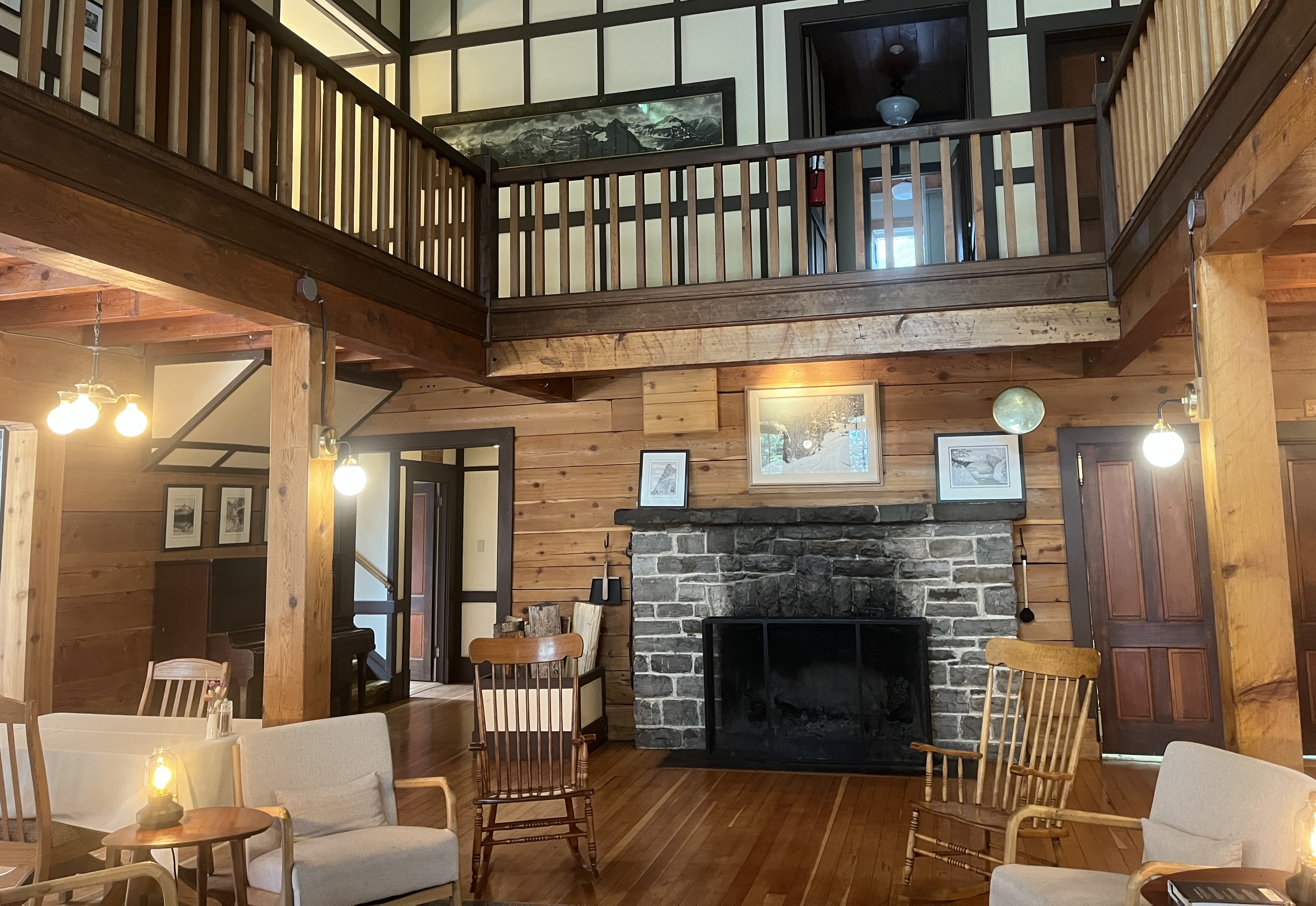
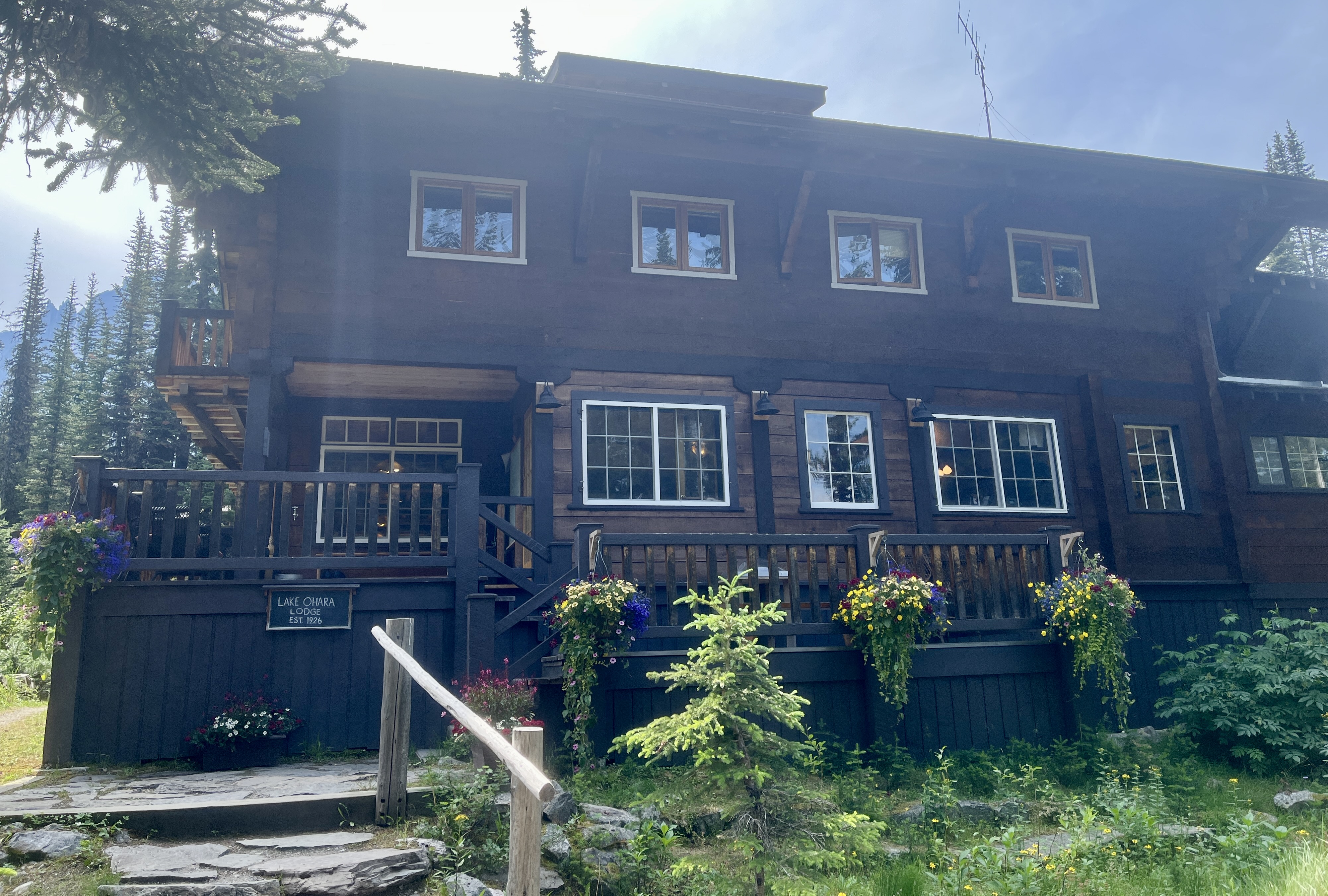
In the 1920’s the lake became the first outpost for The Skyline Hikers who wanted their own trails and camp as the first horse riders, The Trail Riders had formed. Eventually forming a site more permanent than tents, the Lodge and Cabins of Lake O’Hara became one of the darlings of alpine trail routes. The original 1920’s Lodge is undoubtably a little more comfortable than it once was and the lakeside cabins are like frontier gems along the sparkling lakeside. Intrepid climbers visited like Conrad Kain and Mary Schaeffer, portrayed in Trixie’s film Wildflowers.
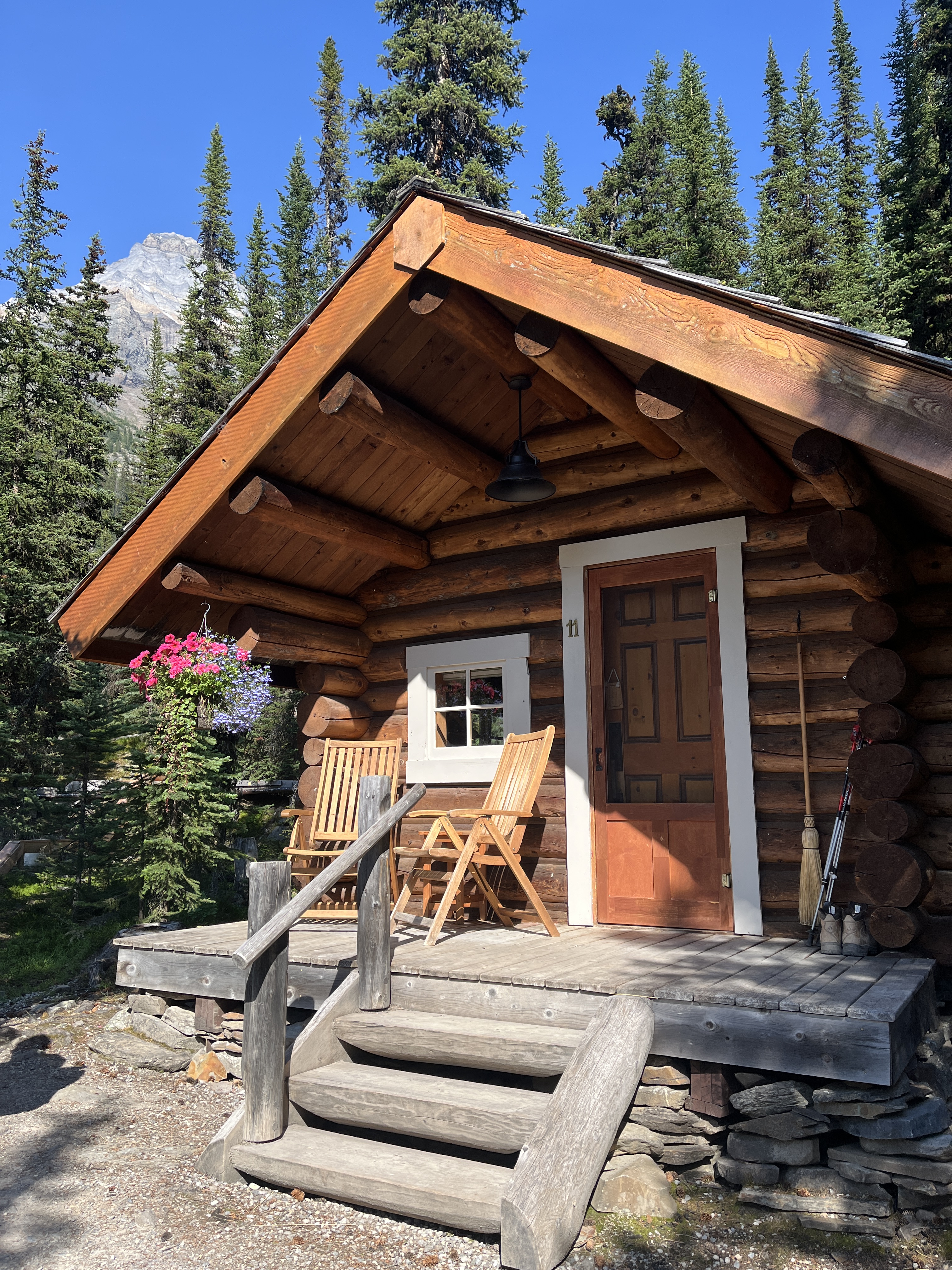
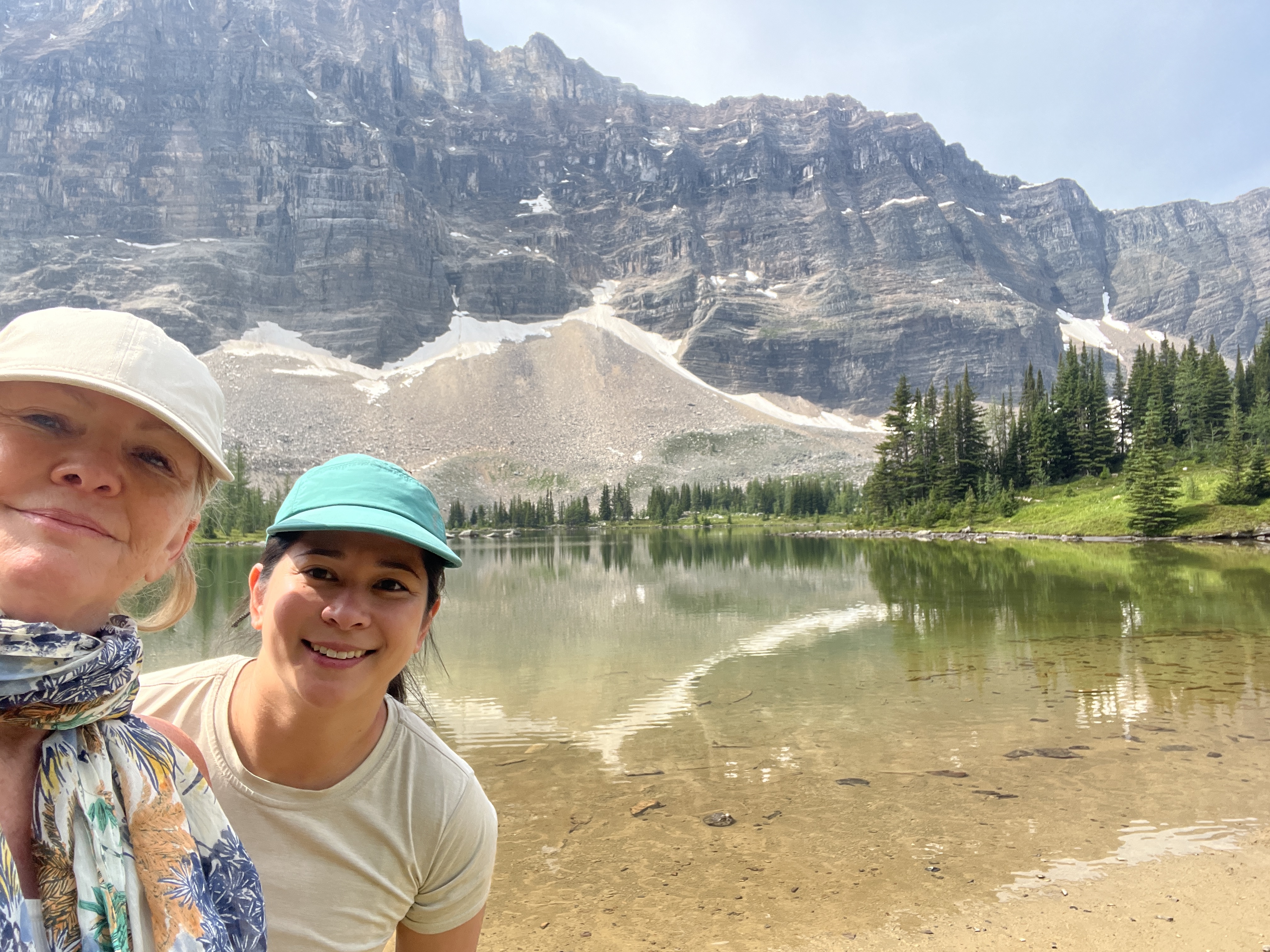
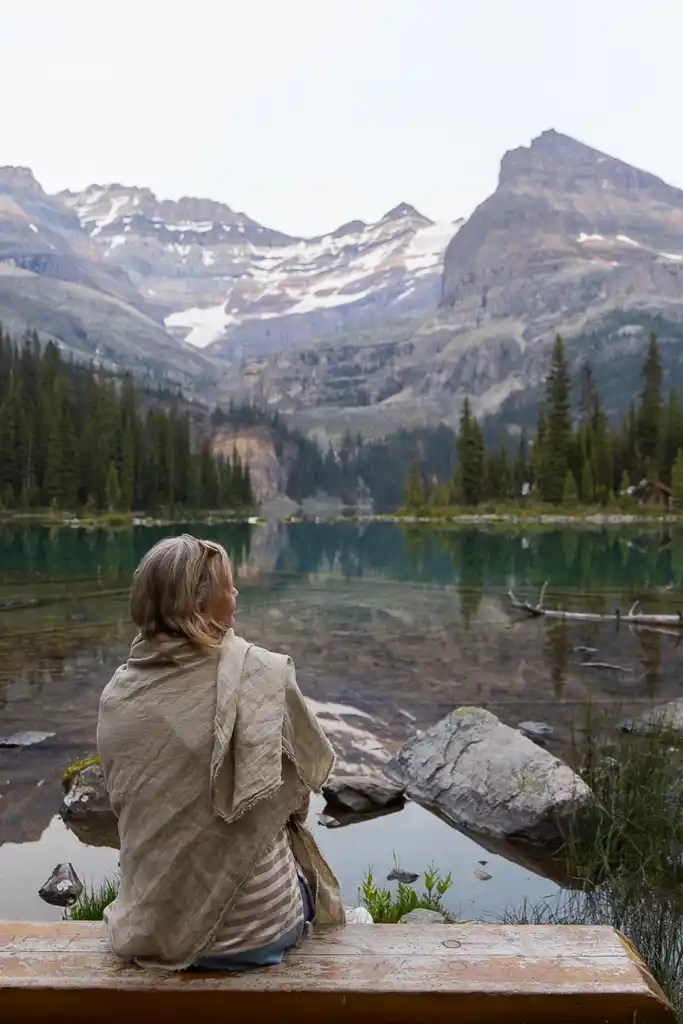
After a stroll along the shoreline, we perch ourselves on the dock and soak in the site. Yoho means ‘awe or wonder’ and it is aptly named. We meet travellers from near and far. We’re told about the famed carrot-cake delivered twice a day from the lodge to the small cafe, apparently it’s not to be missed. We hear the call of the loon from across the lake and we ponder the sheer majesty of this site, the traditional home of the Secwepemc and The Ktunaxa First Nations. Trixie mentions that it’s also a winter destination and I imagine myself around The Lodge’s fireplace, wine in hand, after a brisk snowshoe. I make a mental note to reserve as soon as I return home!

Dinnertime beckons and back at camp we claim a picnic table in the convivial site. Hikers poles lean on tables. Thermoses of every colour adorn tabletops. Camp stoves boil water for freeze-dried meals. The chat is of the myriad alpine hikes either completed or planned for tomorrow. As we savour a glass of Pinot Noir after our surprisingly delicious dinner, Trixie makes notes for her film screening at 8:30. I’ve seen Embers a number of times, but this setting is certainly the most fitting.

Trixie’s independent films have all been mountain-culture driven. As an award-winning documentary filmmaker, her four films are currently on the festival circuit; Wildflowers, Ahon, Wild Aerial and Embers. As I write, our province of British Columbia is experiencing expansive wildfires (in fact last week we ourselves were on Evacuation Alert) so the film Embers is particularly poignant. About this time two years ago, a wildfire tore through Jasper, Alberta reducing the film’s protaganist’s home- aerialist Sasha Galitzki’s – to ashes. The film connects Sasha’s loss in the wildfire and glacial recession she witnessed in her creative work to highlight the common cause, climate change.

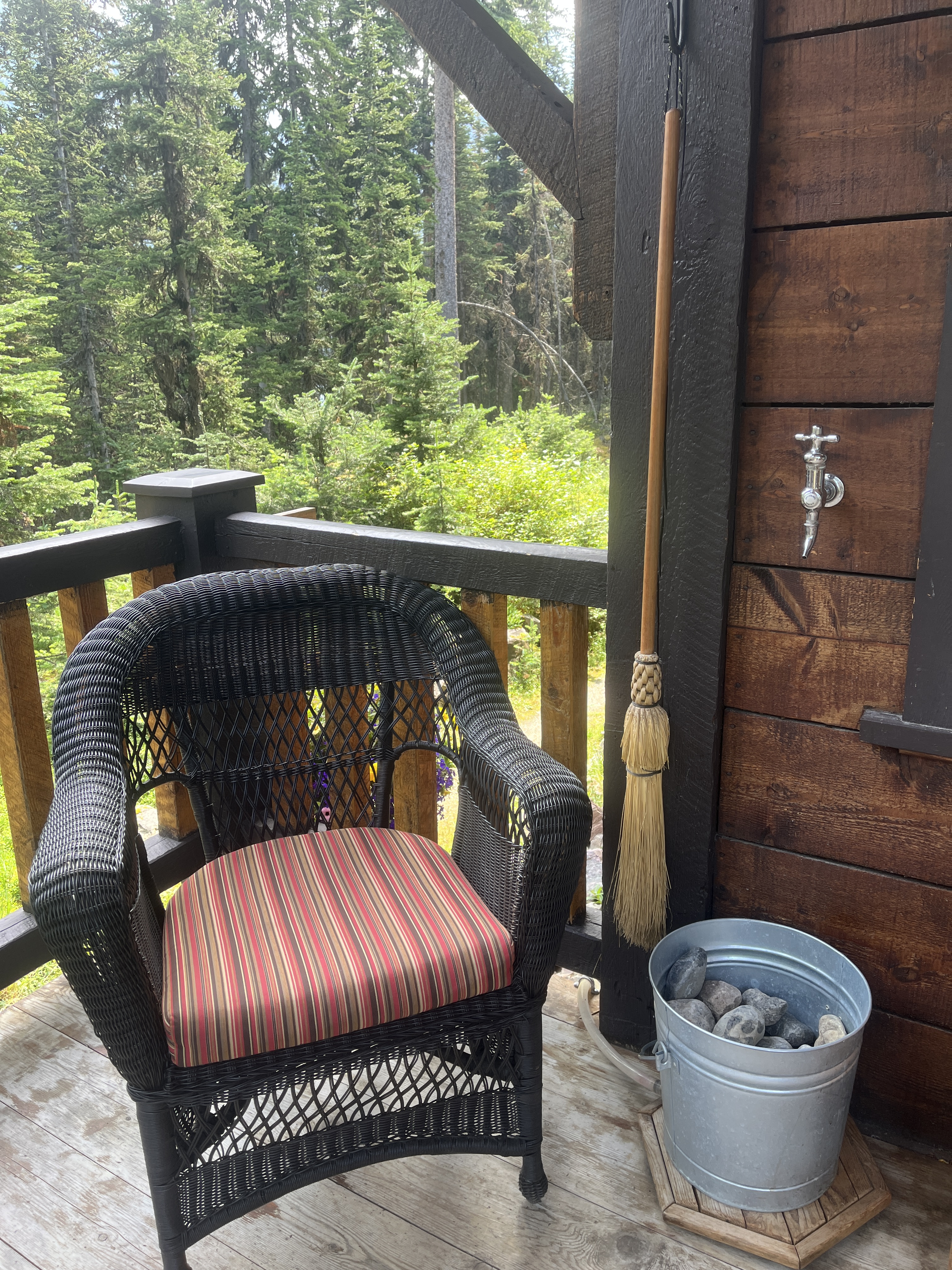
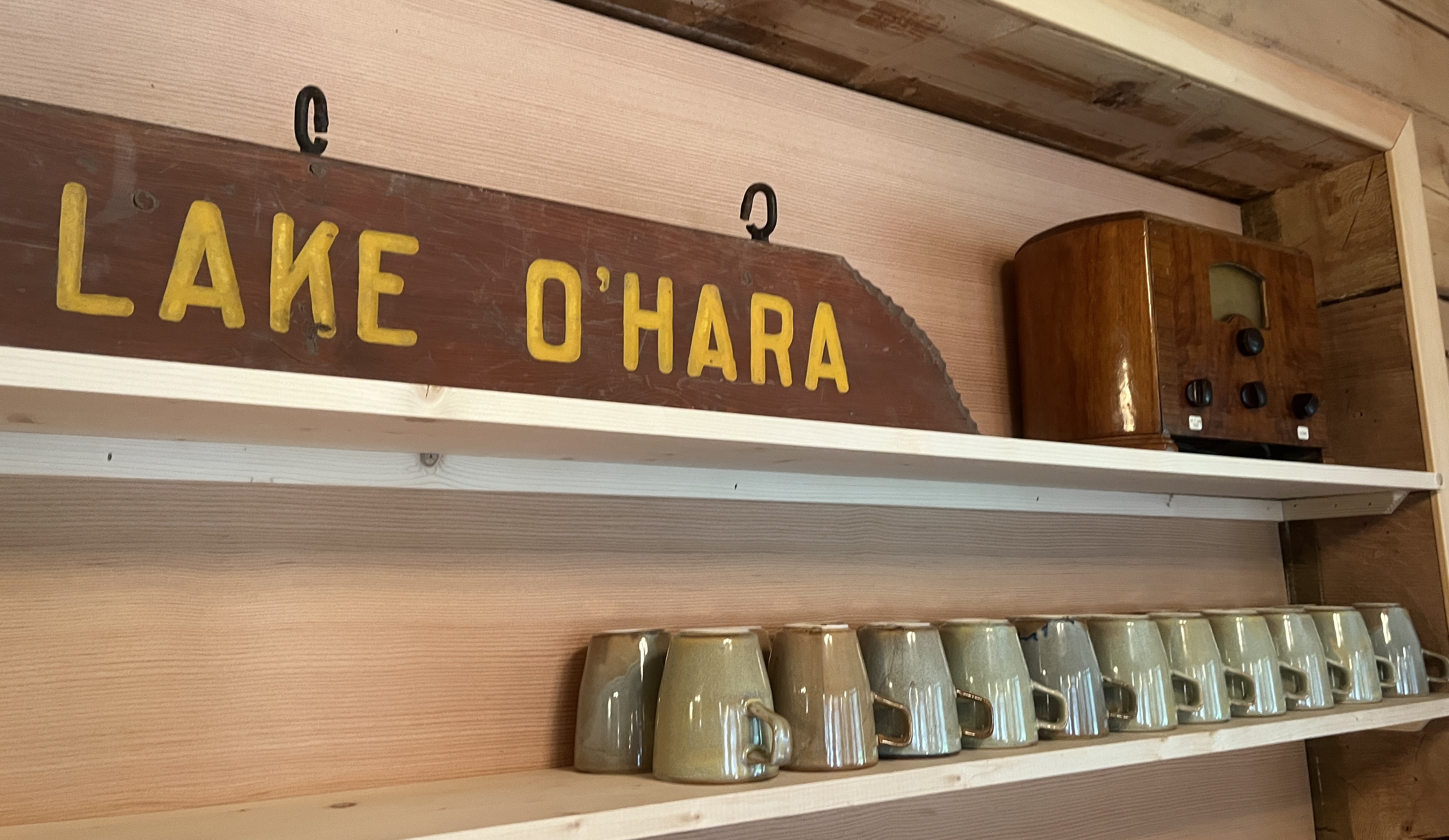
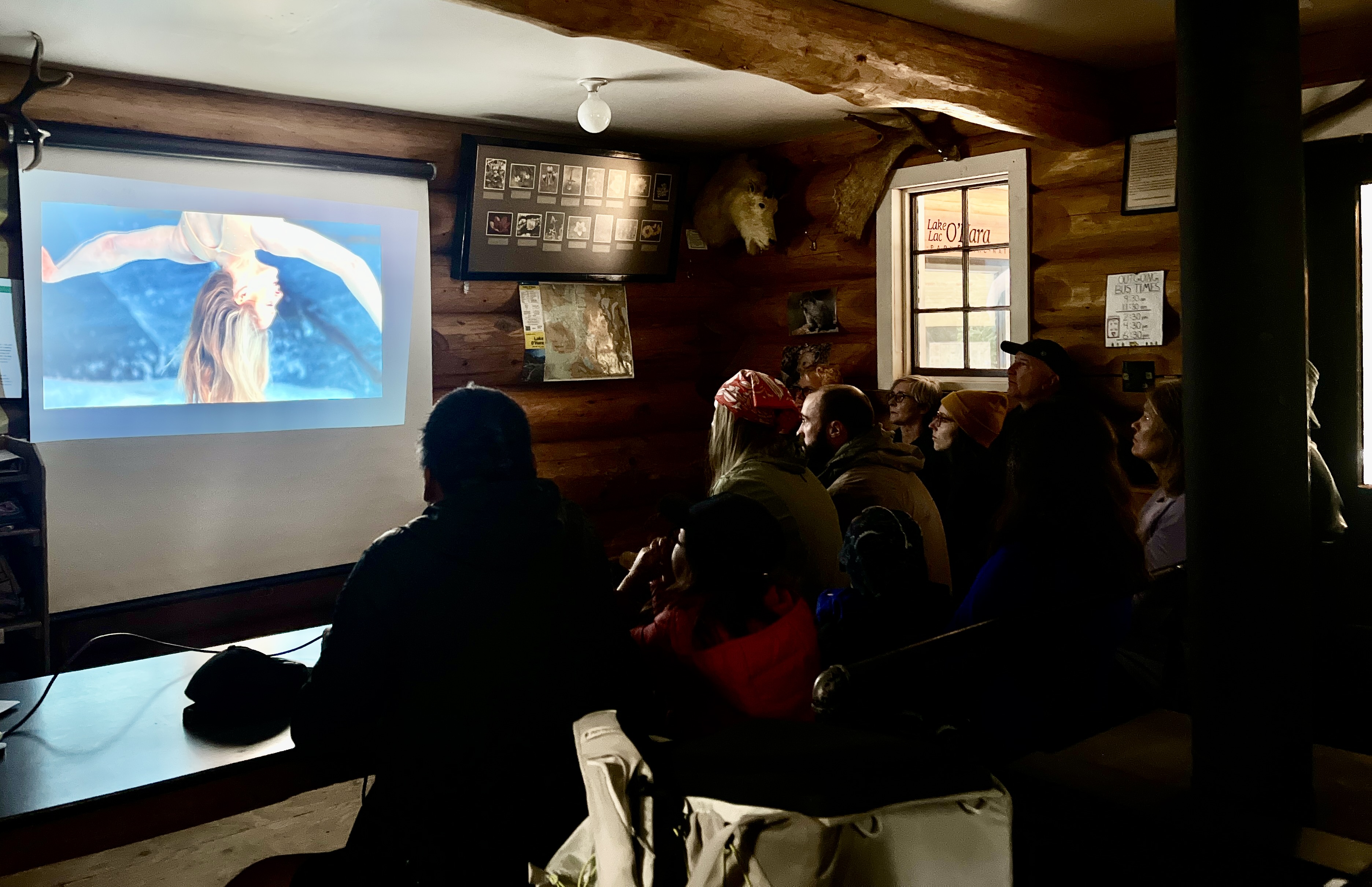
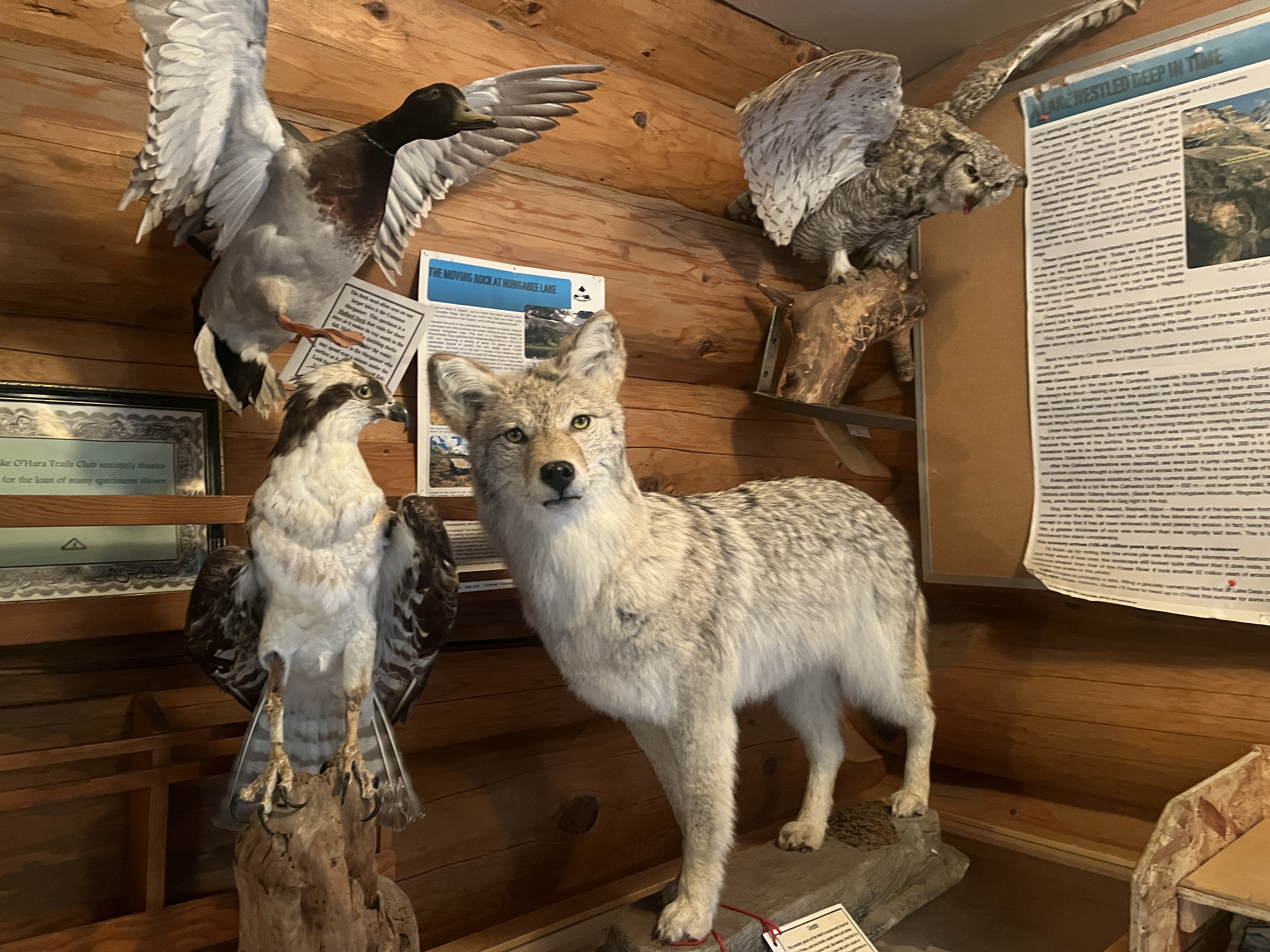
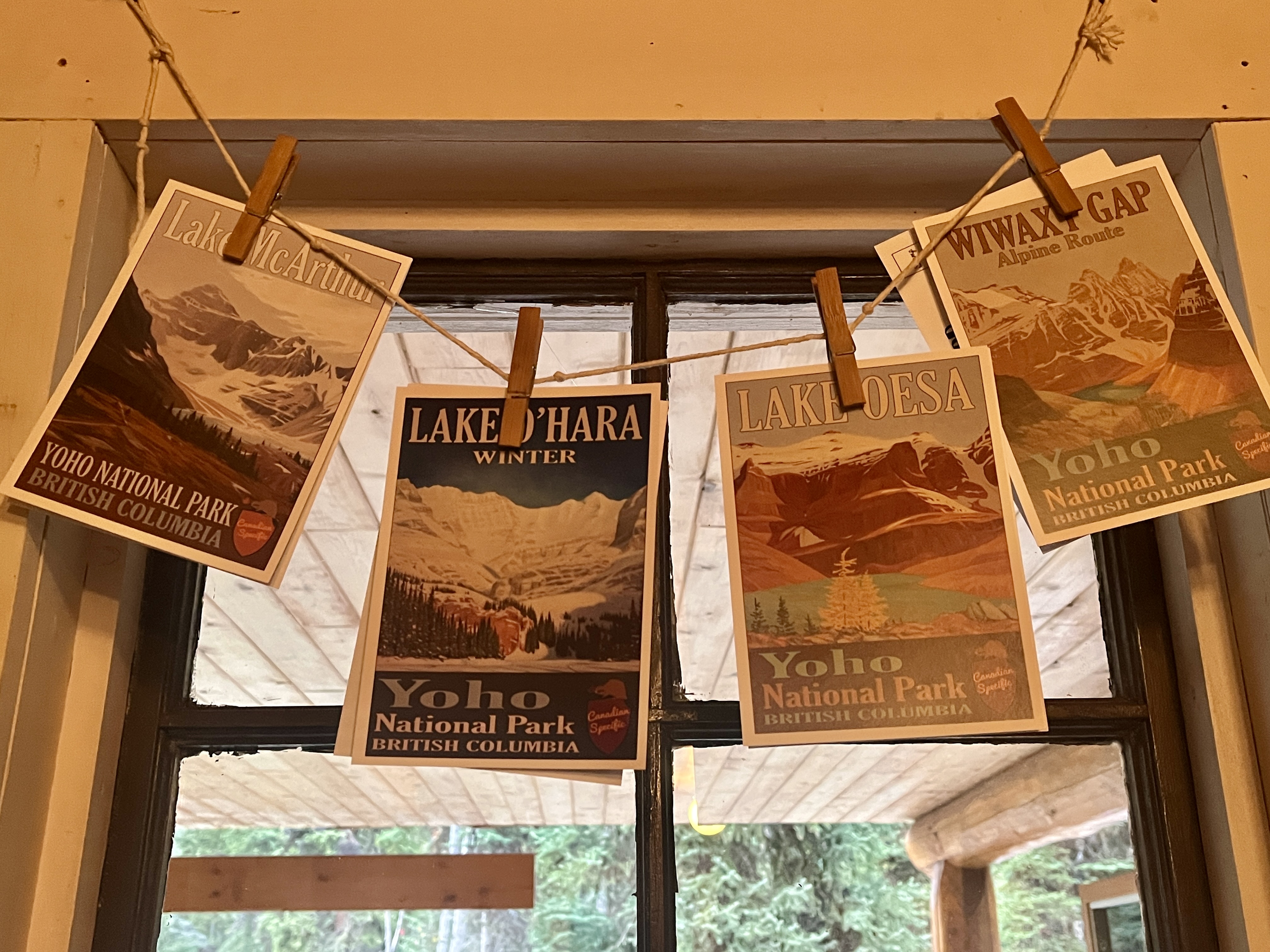
Making our way ten minutes up the road and just before the Lodge, the verandah of Le Relais is already dotted with some of the waiting audience. It’s cozy inside with a few wooden chairs, benches and stacked firewood. Taxidermy of local fauna is on display, as are postcards dangling from wooden pegs. The setting is truly Canadiana. As our host Robynne and Trixie set up for the screening, the now-full room breaks into conversation, but a hush quickly falls over the crowd as Trixie introduces the film and the dramatic opening scene fills the screen. By the end of the documentary, tears fill people’s eyes…. for Sasha’s loss, for our ever-diminishing glaciers, for the danger of wildfires throughout Canada and beyond, for the reality of climate change that is already upon us.
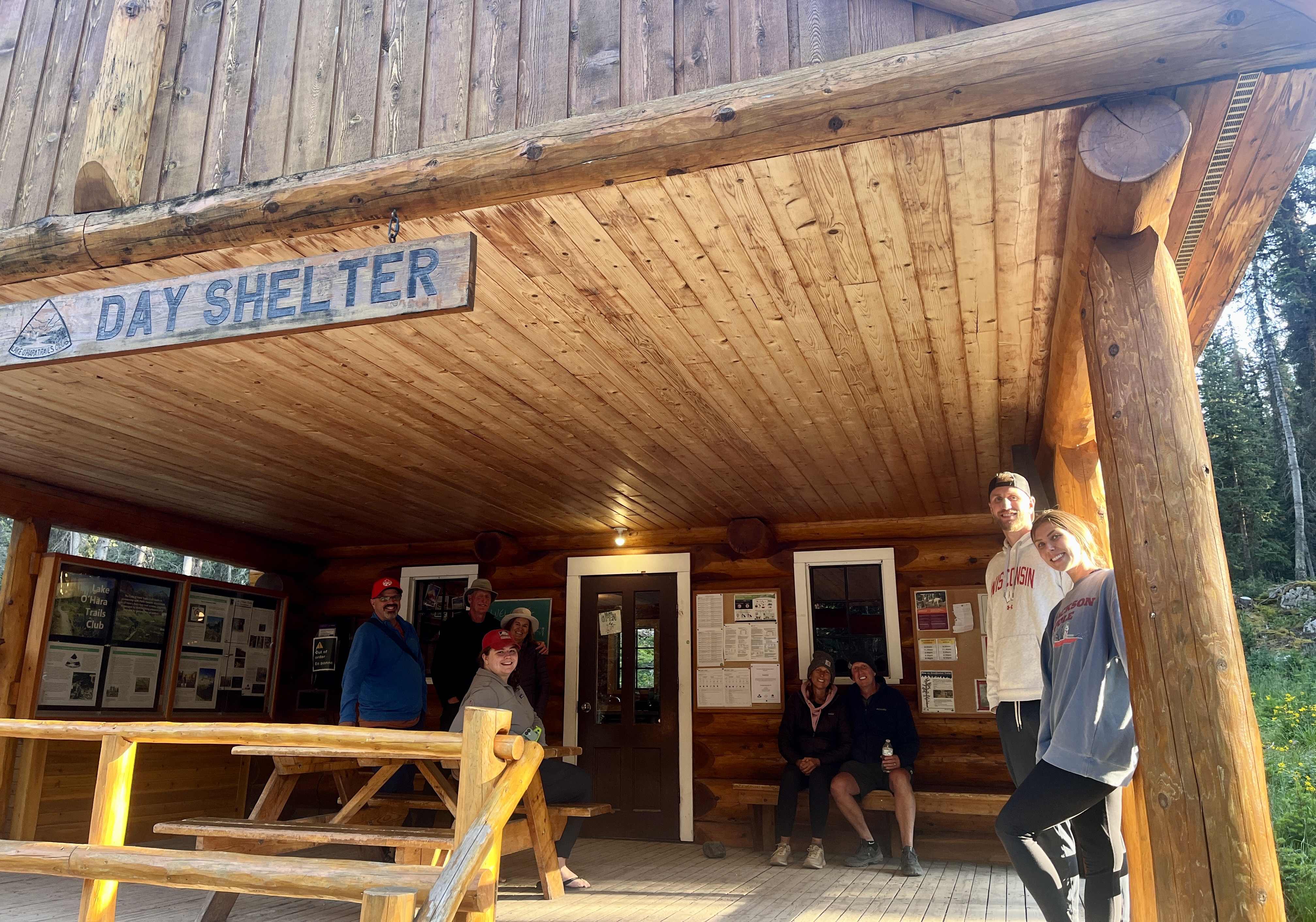
After a Q & A and farewells, we briefly catch the magical alpenglow on rose-tinged cliffs. Now, as night approaches, the haunting cry of a coyote fills the cool air and the loon calls again across the turquiose-blue lake… thankfully, no sign of the grizzly family so far.

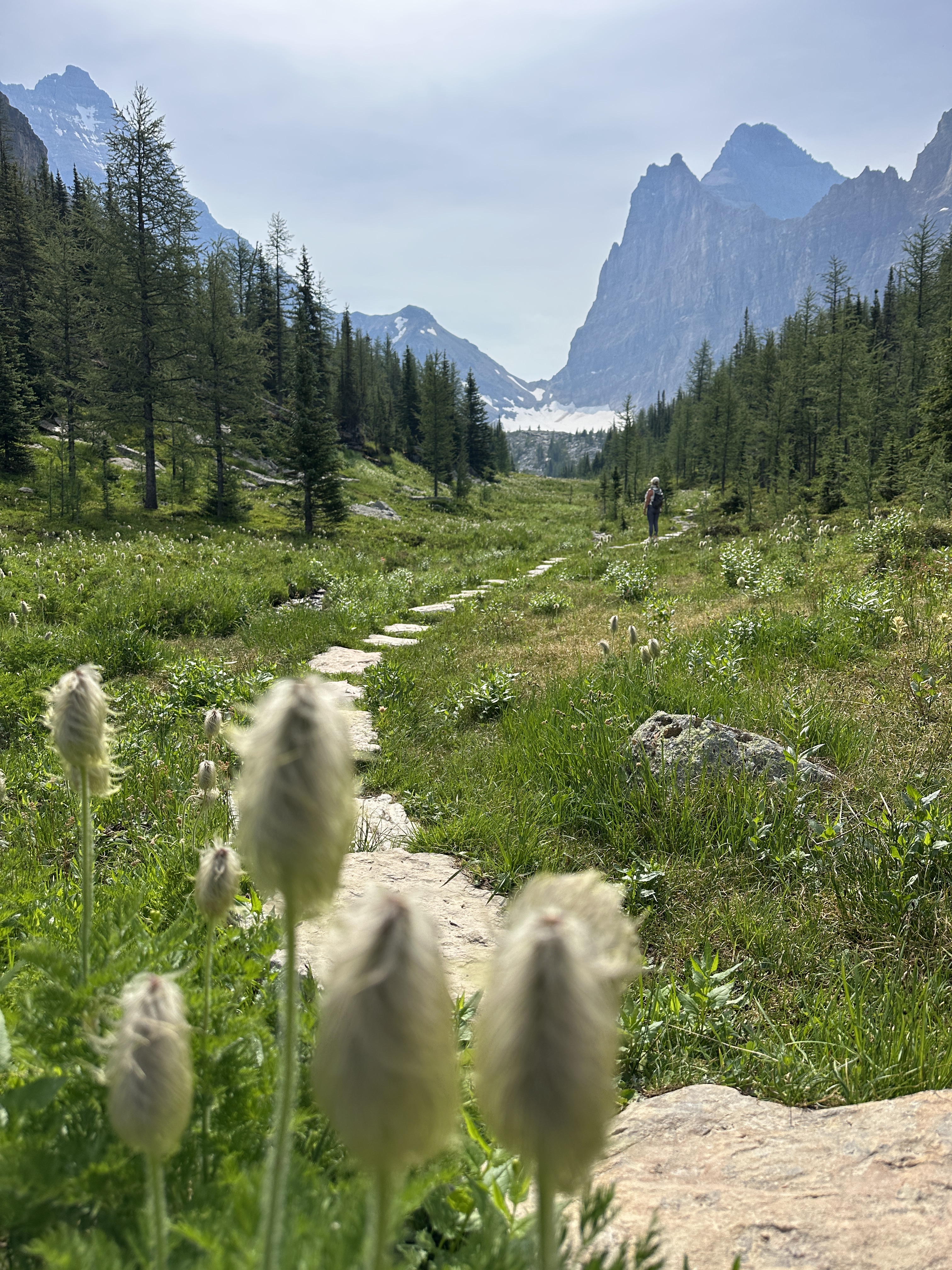
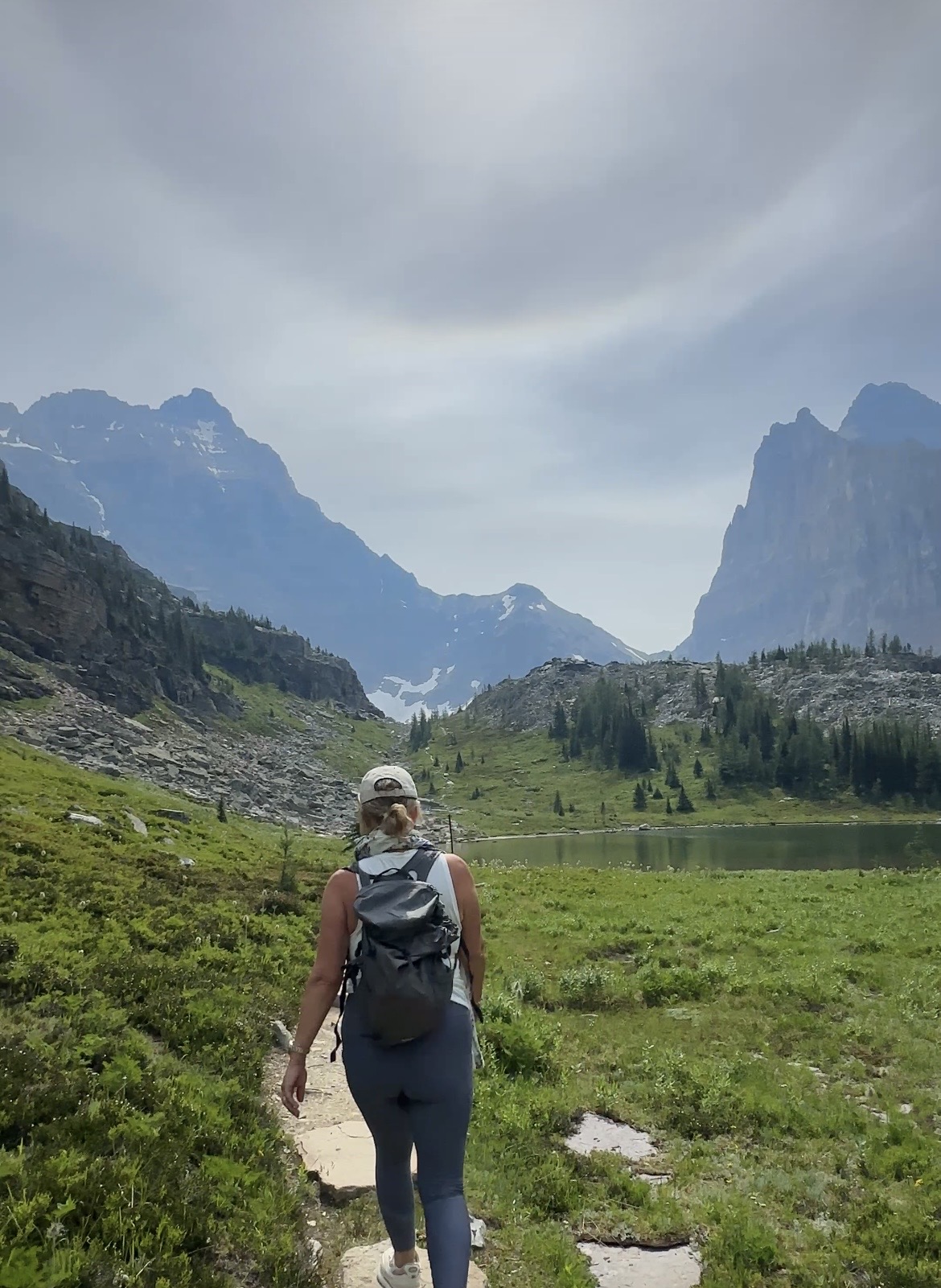
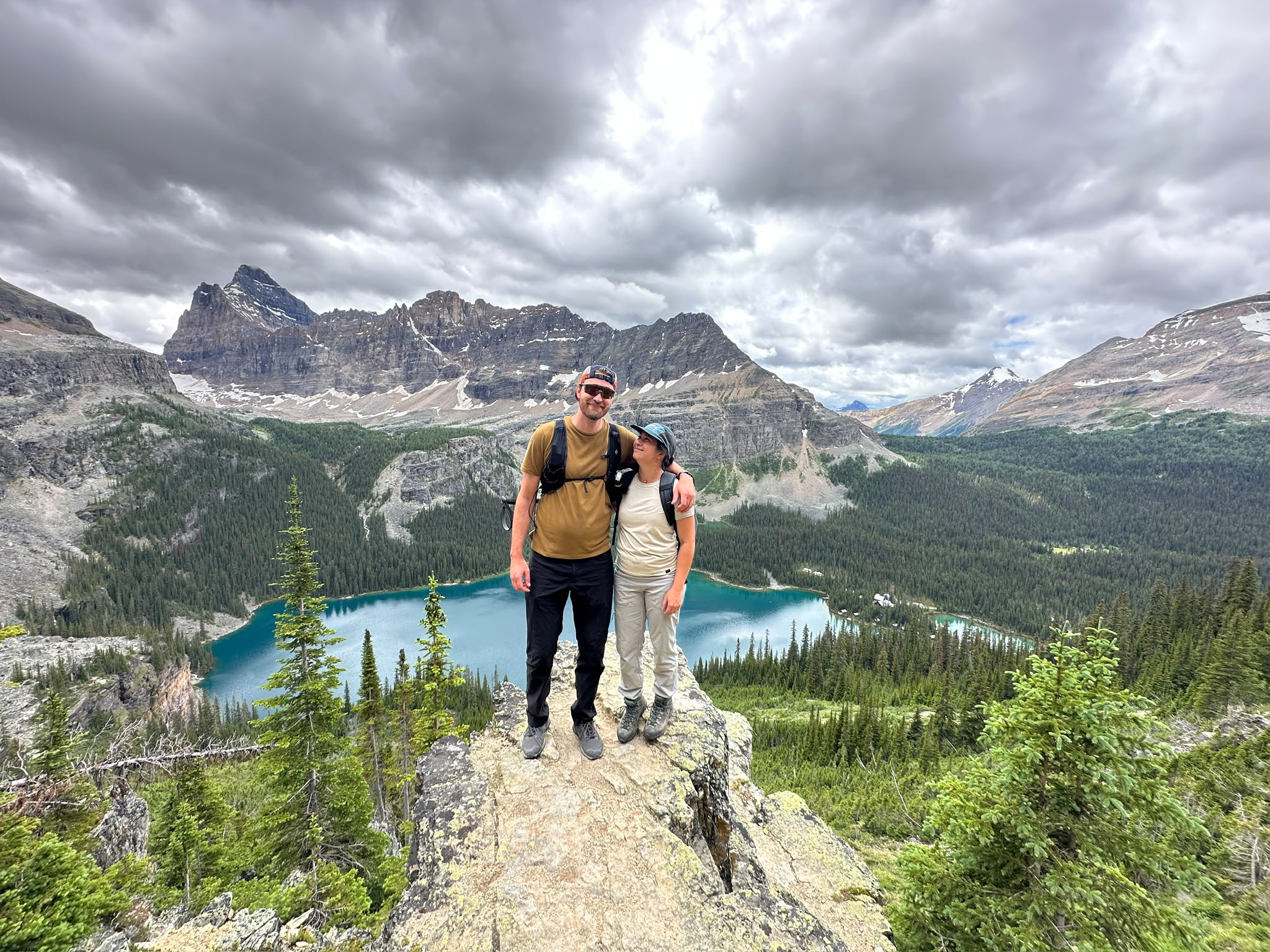
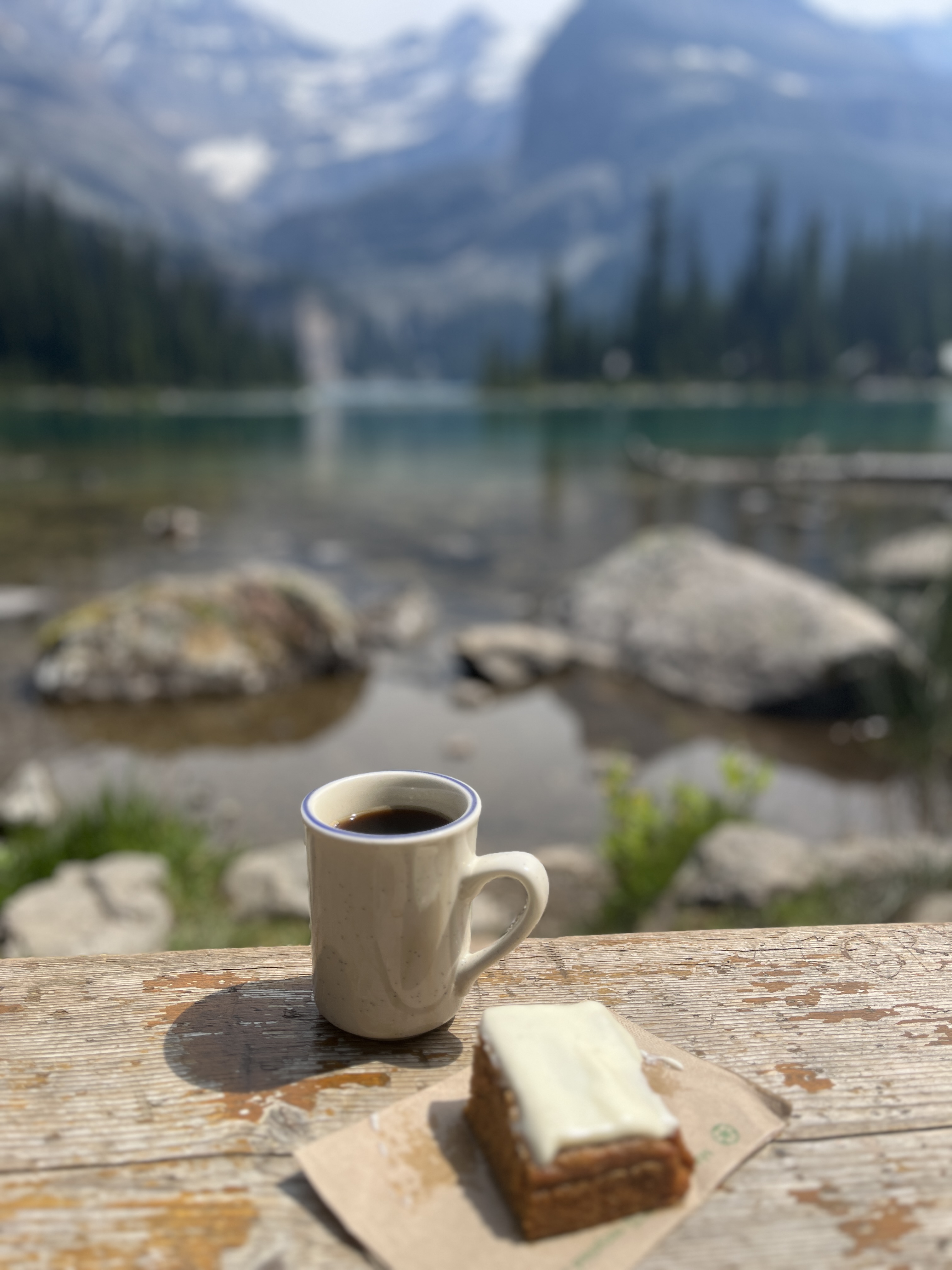
The next morning we hike up into the glorious alpine meadows. Climbing steadily along the trail, a porcupine flashes its golden quills, a marmot ducks back into the woods, golden-mantled squirrels scamper beside us and tiny pikas transport flowers and moss into the crevices of rocks. Trixie points out a blaze on a tree, the visual mark chopped onto the bark to traditionally guide hikers along a trail, trailblazing indeed! The small lake we reach is surrounded by fading glaciers and castle-like peaks; we’re both awed by the serenity of it all. Trixie and our son Luke are avid hikers and last year did the full alpine hike. It’s a little too ambitious for me, but nonetheless my reward for the 3-hour hike is none other than a piece of the celebrated carrot cake. We’re first in line for the 2:30 delivery at Le Relais!

Trixie Pacis can be contacted at trixiepacis.com and on instagram #trixie_

The breathtaking Bugaboos… a welcome home to a ‘cathedral in the sky’

Standard


I’m now in Canada, dear readers, and I apologise for my absence from these pages. Through my last blogs, you’ll know we left our Indian home of two years. We travelled through Greece, Scotland and England, then a two-month stay in The Netherlands, before finally, beautiful British Columbia greeted us. It was as if our dear mountain home sighed with relief, “Ah, you’ve finally returned.’ It had been nine months.

So, we’re home, perhaps to live (to be decided) but nonetheless, the transition of almost thirty years overseas and now having one address is ongoing. You can read more at Monday Morning Musings.

IMG_8897Call it a welcome home or an initiation back to Canada, recently I was enticed into an overnight hike. Really, it was into a wonderland of chiselled granite at 2230 meters, into a rapture of beauty. It was a profound privilege, yet, it had to be earned.

The world acclaimed Bugaboos are at our doorstep, a range within the great Purcell Mountains – the Rockies are just across the valley. We joined many others who journey from around the world to hike and take on some serious climbing. My hiking partners promised that I would manage the ascent, but as is often the case, I’m the weakest link… the little engine that ‘hopefully can’.

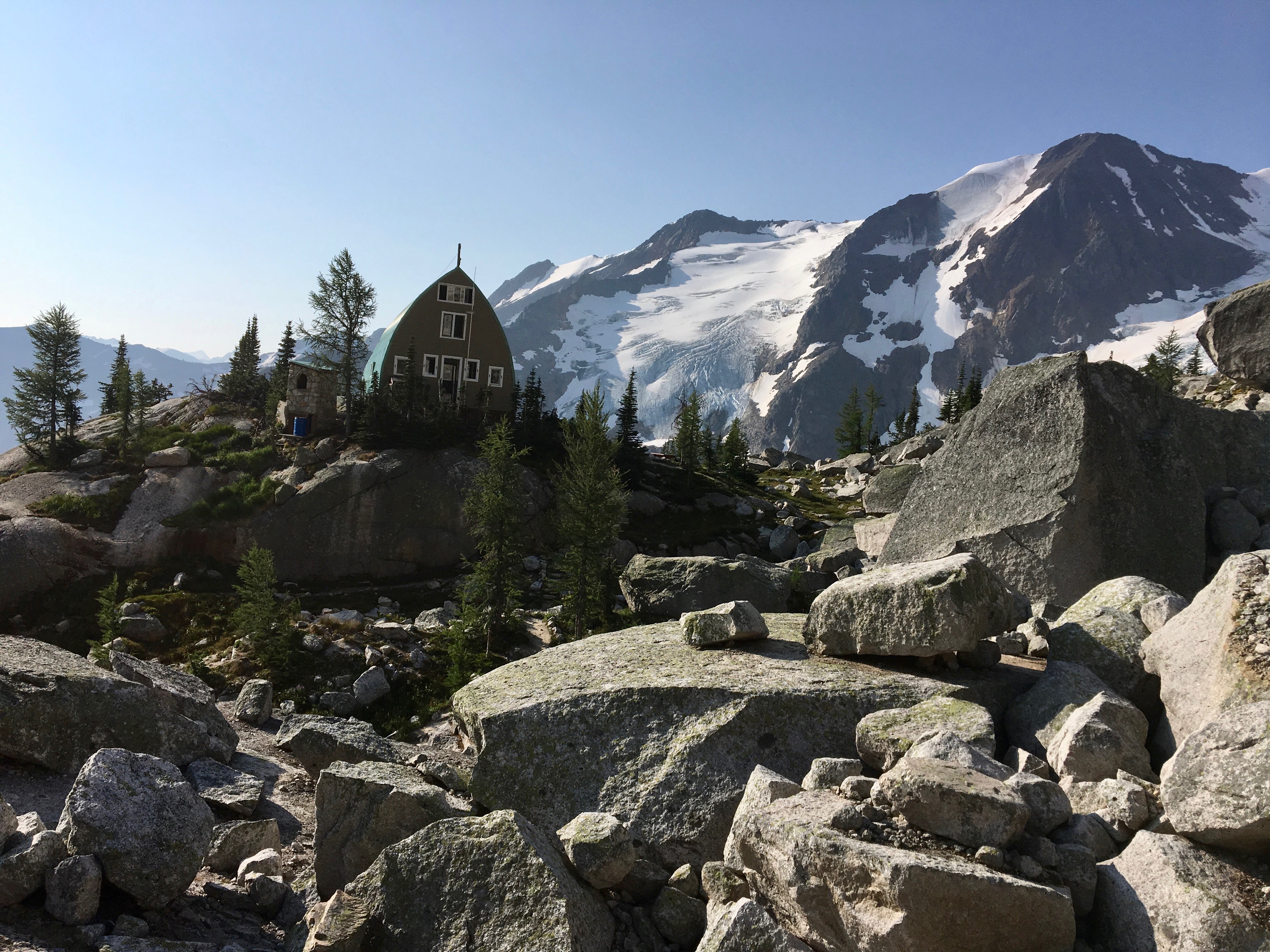
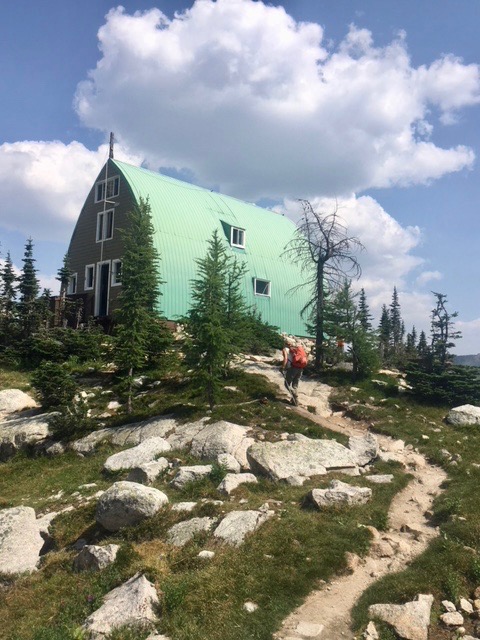
The hike’s end point was to a hut that has seemingly been dropped from the heavens onto a granite outcrop. Flanked by a glacier and granite spires piercing the clouds, the Conrad Kain hut will take us about four hours to reach. A little nervous, I comfort myself with my badge of honour; that eleven-day hike back in the day to the base camp of Annapurna in the Himalayas. There have been many hikes since, but gazing up to this ‘hut in the sky,’ it seems a little formidable.

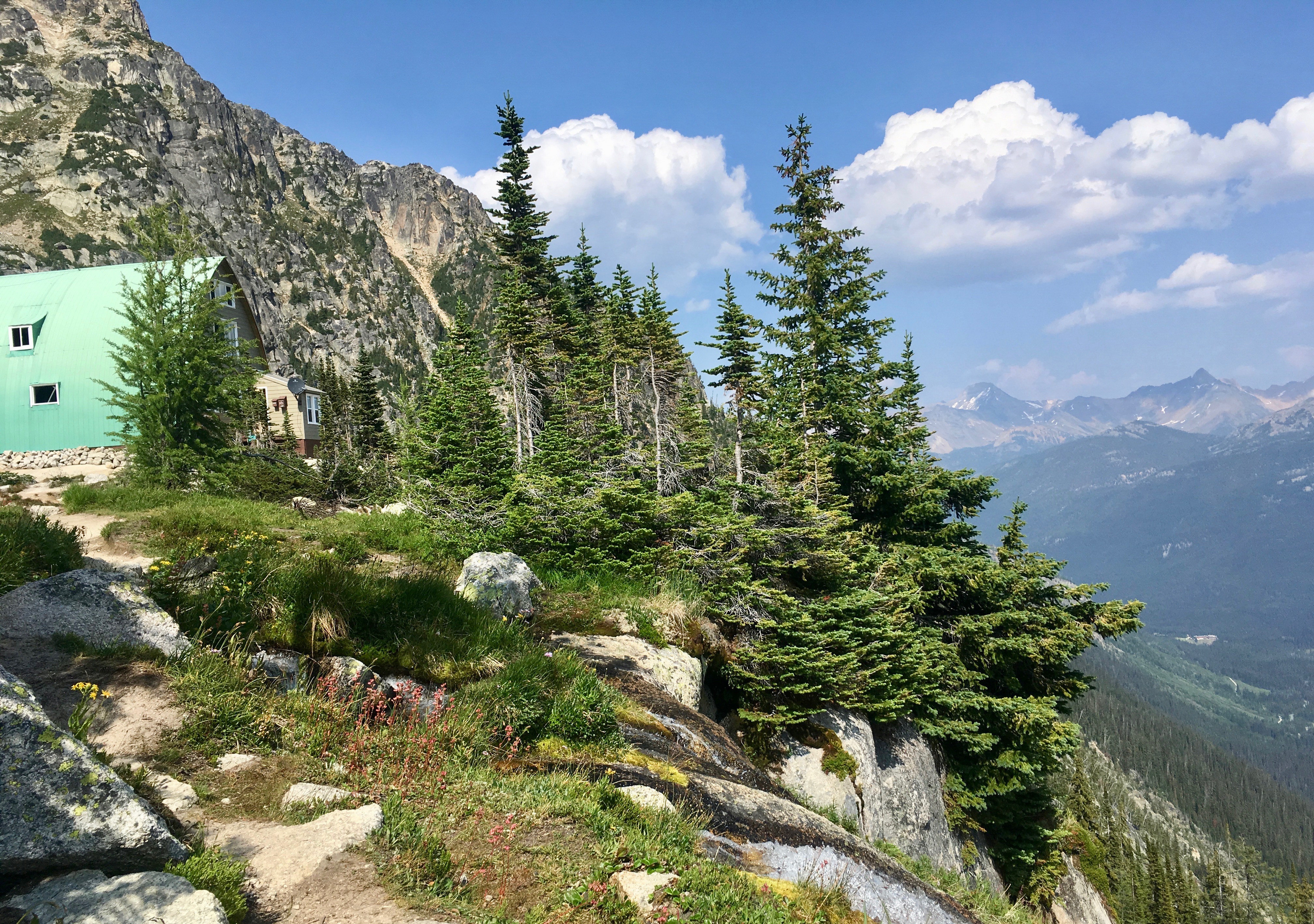
It begins easily enough, a gentle meander through aged forest and feathery ferns, past dainty wildflowers and lush meadows. That pleasant amble gives no indication of what will soon be asked of us. To tread carefully along steep granite steps and narrow edges. To grip chains for safety and ladder up a boulder. To climb higher and higher, the small green dot of the Kain hut ever-looming in the distance to encourage our progress.

We break in much needed shade for lunch, a carpet of pine needles and knobbly tree roots our bench. We chat with other hikers and guides who encourage their charges up the mountain.

Our unofficial guide is friend and neighbour, John Parker. John exudes calm encouragement, yet there is a task at hand and there isn’t time for idle dallying. But then, this was John’s work and his passion, the commitment to his lifelong career shows as he leads a steady way. “You’re doing great,” “Take small steps on the steep ascents”, he encourages me. By the fourth hour of the hike, I need all the inspiration I can muster.

IMG_1012

My legs are seizing up. My back is aching. Thankfully, my breathing isn’t as bad as I feared, but I am now w i l l i n g each step, hoping for the end. And then, as if nature senses that it’s time, one of the most glorious views reveals itself. A meadow of wild flowers opens up, a crystal-clear melt-water torrent rushes from the glacier, and we cross a simple metal bridge to the final climb to the Conrad Kain hut. Without a doubt, it is one of the most beautiful sights I’ve ever seen. Anywhere.

IMG_8908

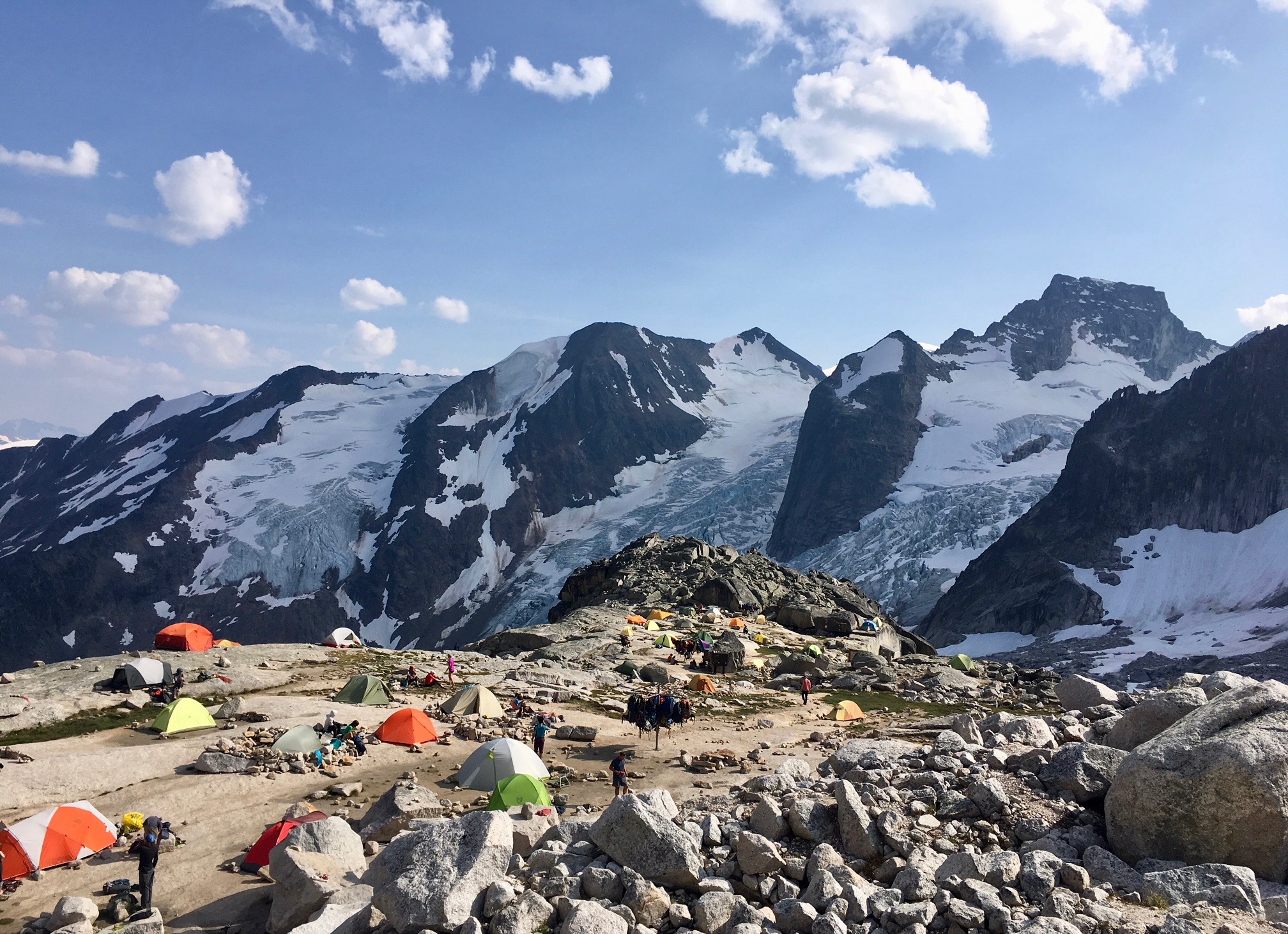
Perched on a granite prominence, the hut with its green arched roof contrasts with its backdrop of glaciers, vast fields of ice, rugged and cracked, harbouring crevasses of the deepest cobalt blue. The hut and the enveloping landscape beckons me as I trudge up the final metres. It seems to say, “You’ve made it, welcome!”

The four of us unburden ourselves of our packs, add our climbing poles to the collection already outside the hut, and hug each other. “Well done, Terry Anne. You’ve achieved this,” John congratulates me. Sonya and Bruce do as well, and I admit to feeling like a school girl who has gained some respect from her teacher. Later that evening, I’ll hear more about John’s students and his career, but first we take in the buzz of the hut.

We’ll join about thirty other people who will spend the night on mattresses lined edge to edge over two upper floors. Sleeping bags claim their spots. But it won’t be a quiet night, what with the snores of exhausted climbers or 2 am alarms set for pre-sunrise departures for distant climbs. Head lamps light the way, for many early trekkers, the hut a staging point for serious climbers. Ropes are wound, helmets wait at the ready, crampons packed, quick-draws checked and counted, ice picks hang nearby.

The communal dining room, with its million-dollar view, is a place for sharing climbing stories and discussing routes, for reading and games, and replenishing weary bodies with freeze dried food. Though wonderfully, Bruce and Sonya on cooking duty would out do themselves – our dinner and breakfast warmed in the hut’s vast kitchen was just what my weary body needed.

Happily, it’s happy-hour, Sonya and I retreat to the side of the hut, exhausted but gleeful. A tin of glacier-chilled wine is our reward… and of course, that view. Surely, Conrad Kain would approve of his eponymous mountain abode. They say that Kain brought glamour and imagination into the sport of mountaineering as few guides had before him.

For nearly thirty years, the Austrian born guide, saw peaks as the personification of  beauty, as living entities to climb – firstly in Europe, then New Zealand and Canada. With his short, stocky stature, the climber achieved more than sixty first ascents, including the Bugaboo Spire in 1916 which now presides over us and the lesser spires like a grand citadel.

IMG_8919

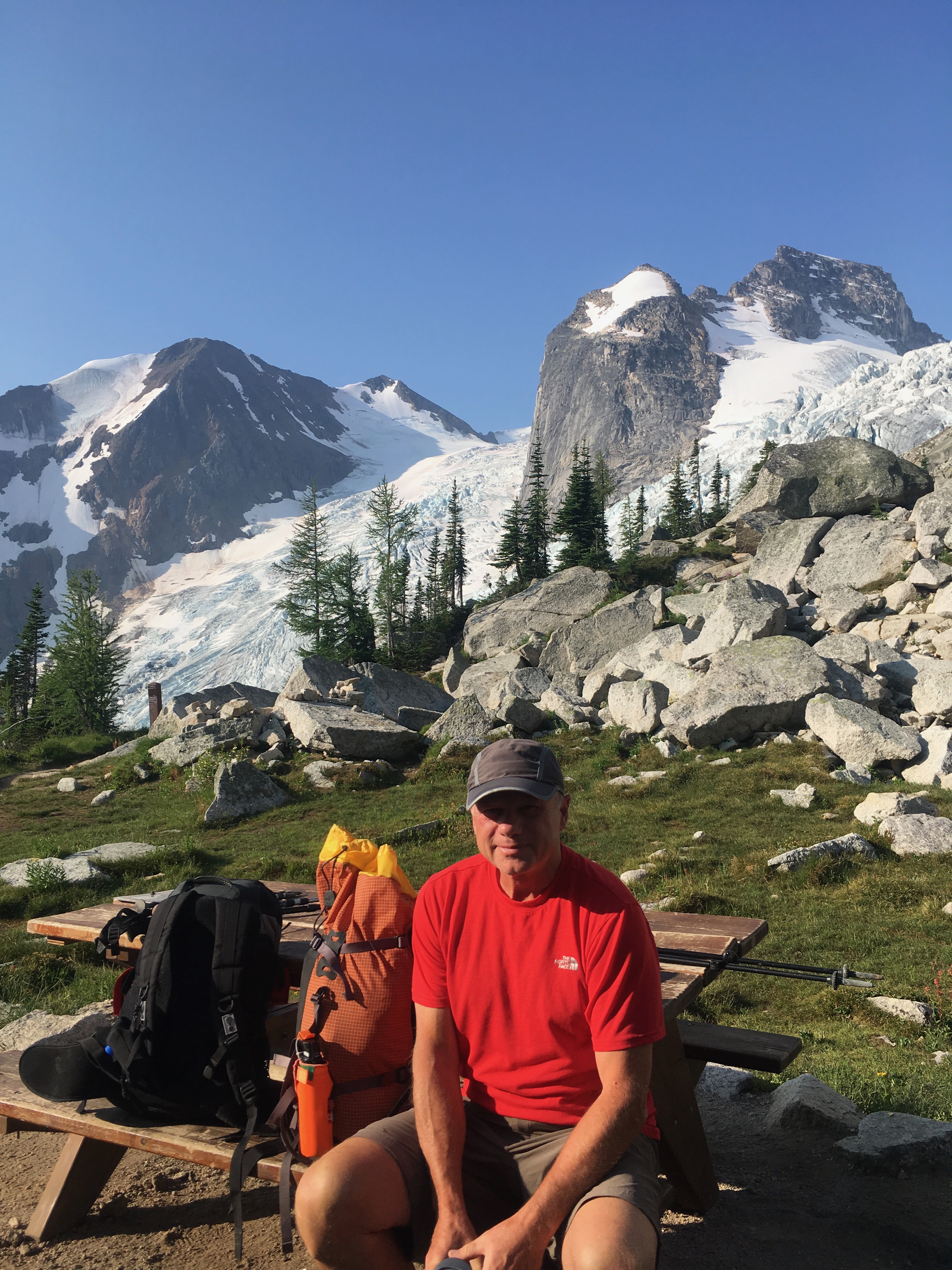
We exhilarate in this cathedral of nature, and while Bruce and John hike upwards to the Applebee camp for a closer view of the ‘citadel’, Sonya and I stay put, entranced by the view. I recall what I had read of Conrad Kain. He eventually settled nearby, largely earning his living as a trapper, a hunting guide and an outfitter. His passion for communing with nature was steadfast. Kain once wrote, “Life is so short, and I think one should make a good time of it if one can. The only thing I enjoy now is Nature, especially spring in the mountains, and letters from friends. Sometimes I think I have seen too much for a poor man.”

Apparently Kain’s principles kept him poorer than he might have been and despite his achievements he sought no fame. With a grateful look across a beautiful alpine scene, he was known to have remarked, “It occurred to me that after all I was a rich man, even if I had no money.”

IMG_8159

I feel that now. The sheer beauty of this view is truly priceless. And somehow, it’s all that much more special because of the effort invested in reaching it. As I watch climbers trek off to the campground, a rainbow of tents pitched on a natural rock plateau, and as others ready their gear, I understand this world a little more. I now appreciate why one of our sons and his girlfriend are passionate about hiking and climbing. I more easily see why, when my husband and another son came back from trekking in Nepal a number of months ago, Bruce remarked, “It’s the sheer uplift of the soul… being part of primal wilderness.”

A few hours later we linger over our well-earned dinner that we had packed up the mountain. I ask John more about his career, surely a celebration of the great outdoors, as he helped design the curriculum for Outdoor Education Ontario, in his particular school. It offered high school students the opportunity to grow, to learn self-reliance, to move out of their comfort zone through outdoor pursuits.

IMG_8192

John Parker

“It might have been rock climbing, hiking, wayfinding, canoeing, winter camping or Nordic skiing. They learned confidence and independence. But I had hoops they had to jump through to earn their place on these trips; they were real achievements.”

John relates the life-changing impact the program had on students, the passion he still feels as a retiree is clear. “Years later, I’ve had calls from former students wanting me to know that I inspired them to become teachers themselves. They’ve told me how the program turned their life around. You really bond when you’re in the wilderness, barriers drop and kids confide in you. And I made them journal their experiences for self-reflection.”

As we listen to John reflect, I can’t imagine there isn’t one of us that doesn’t wish our children had been part of an outdoor education program. Our sons were avid sportsmen and yes, we were often outdoors, but studies show there is something intrinsic and vital about the connection, the challenges, and the healing of nature.

It’s still light outside at 2200 meters and as much I’d love to stay awake to watch the moon rise over the whites of the glacier and the grand citadel, it’s difficult to keep my eyes open. It’s only 9 pm.

The door opens and in bursts a climber, “Ah you’re back,” someone at the table exclaims in a German accent.

“It was awesome, been out for 25 hours straight,” the climber says. He’s draped with ropes and his tired but satisfied smile speaks volumes.

I say goodnight to my own climbing buddies, but realize I have just one more question for John.

“Did your students call you Mr. Parker on these trips, in those outdoor classrooms?”

John answered me in his usual charming, warm tone. “No, I was usually J.P.”

“Ok, J.P, thanks for the day and leading the way… just amazing!”

I don’t yet know, that descending tomorrow will be even worse than the climb. That I’ll take a tumble and that once I’m down the mountain I’ll gaze back up at it in awe. Already missing its serene and hallowed place.

But for now, my aching legs climb the ladder to the loft and slip into the cocoon of my sleeping bag, joining the long rows of sated guests. But still no sight of the moon – only a glacier and a glorious granite spire to lull me to sleep. It takes about two minutes.

Like those students of J.P’s, I feel a sense of achievement and fulfilment. Even though I had stepped out of my comfort zone, through this hike I have re-discovered what it means to be… home.

IMG_8978

*Where The Clouds Can Go, by Conrad Kain, first published in 1935, is meant to be a very good read.