Tag Archives: Canadian National Parks

Lake O’Hara, Wildfires, An Inspiring Film Maker

Standard

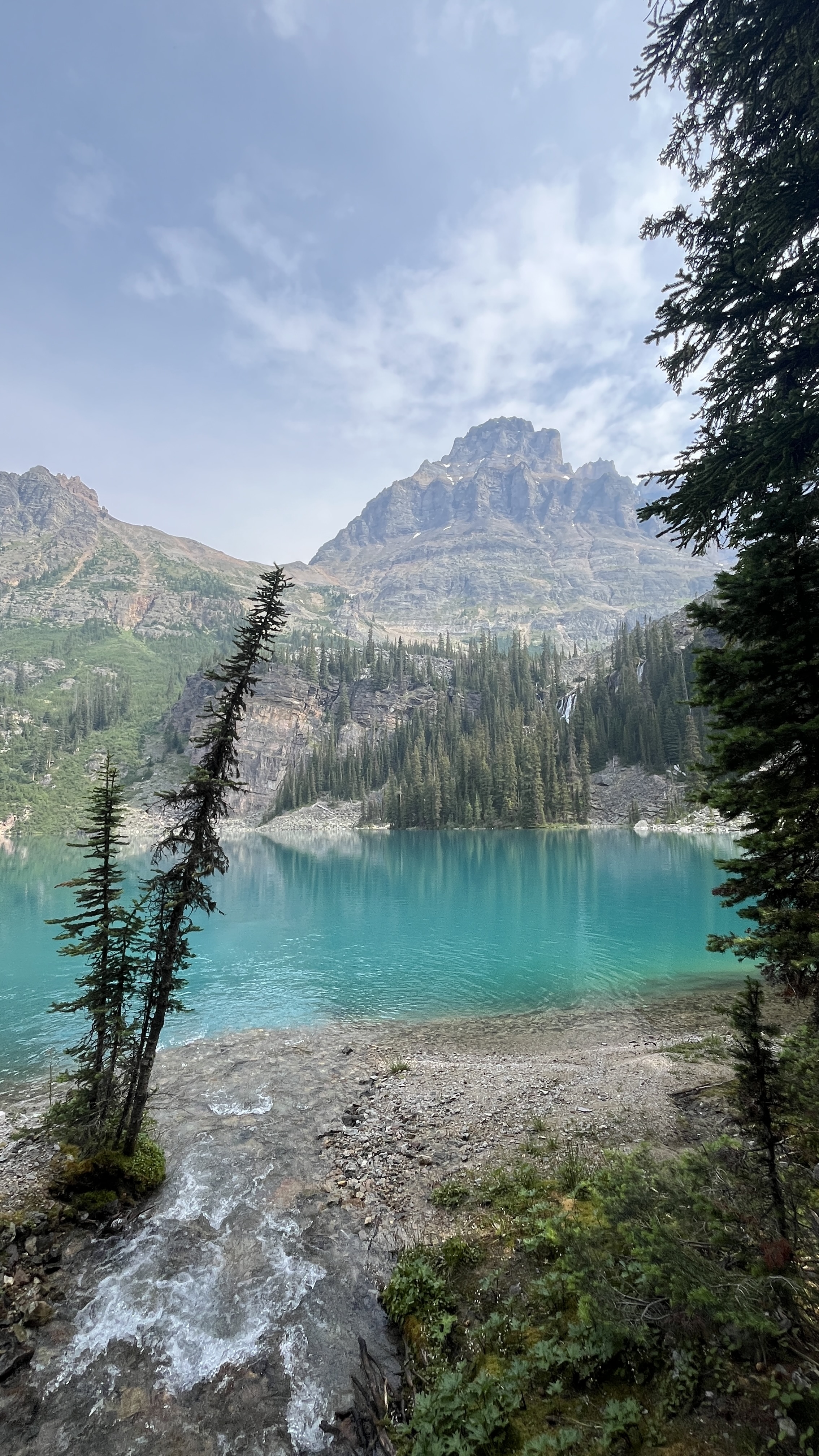
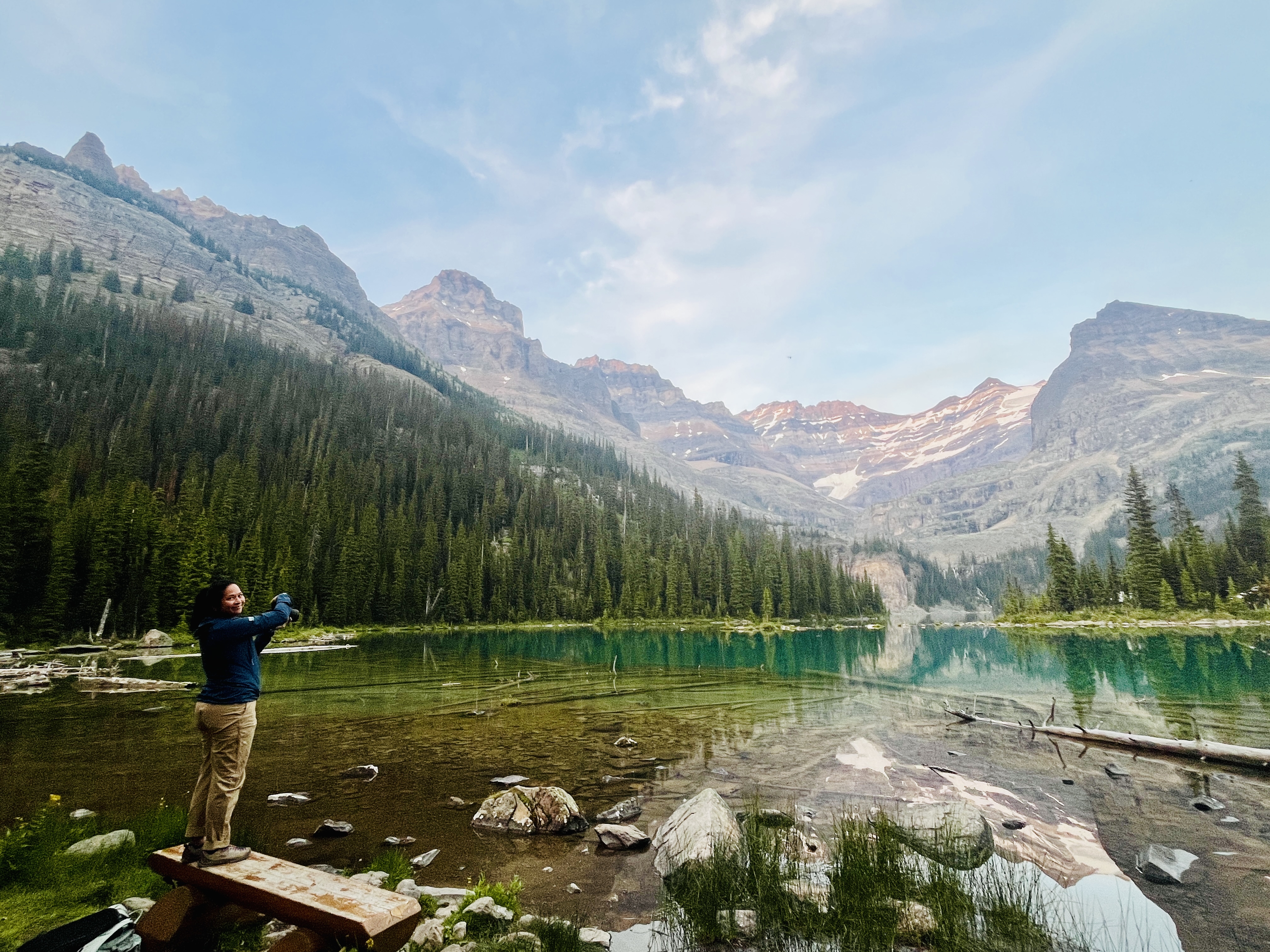
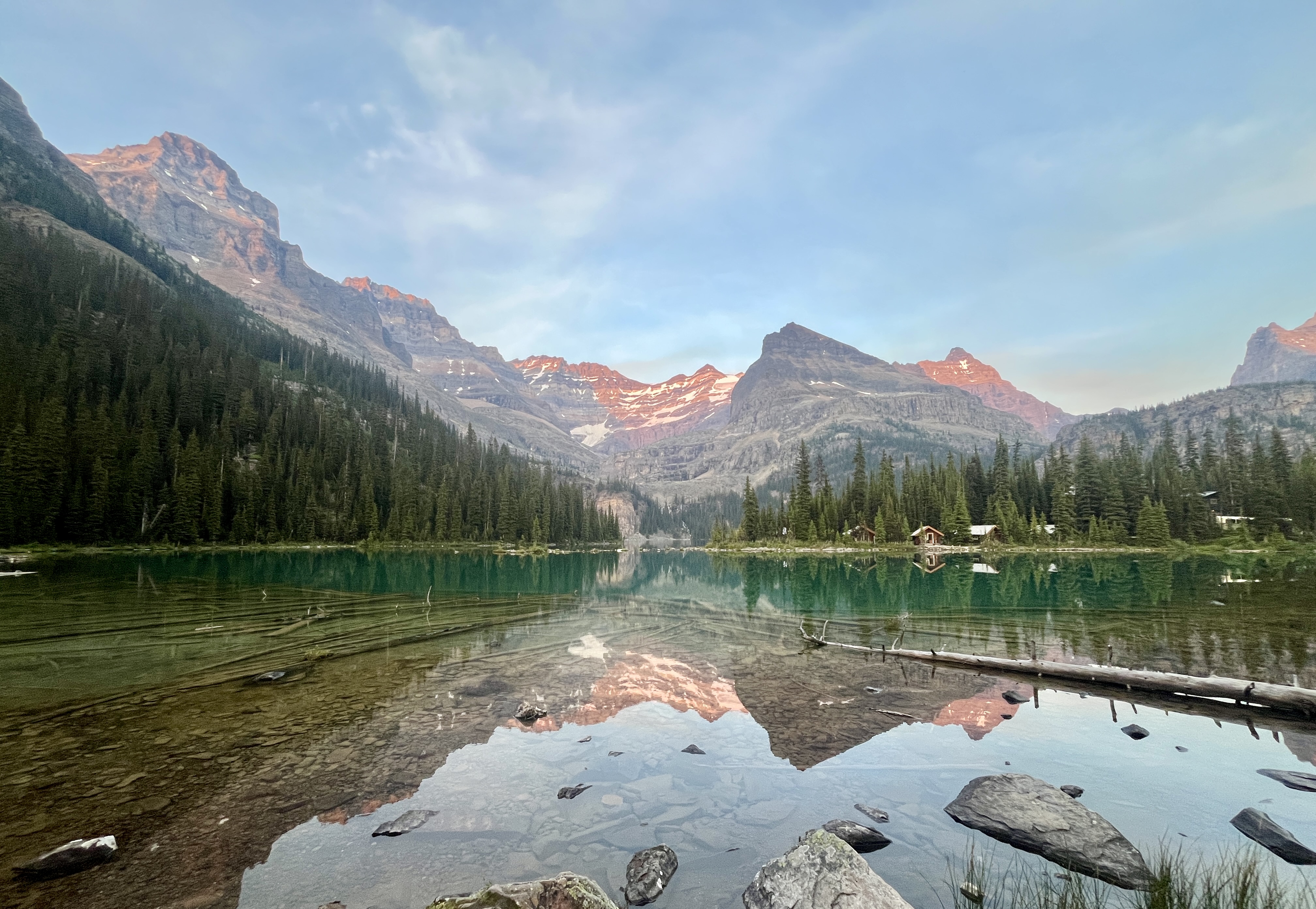
The revamped school bus shuttles us eleven kilometres up a single-track mountain road. Higher and higher into the mountains, every bump of the road takes us further and further from everyday life. We’re in Yoho National Park and we soon arrive at the esteemed Lake O’Hara. Nestled below turreted peaks, hanging valleys and ribbons of rushing waterfalls, it’s a jewel within Canadian National Parks.

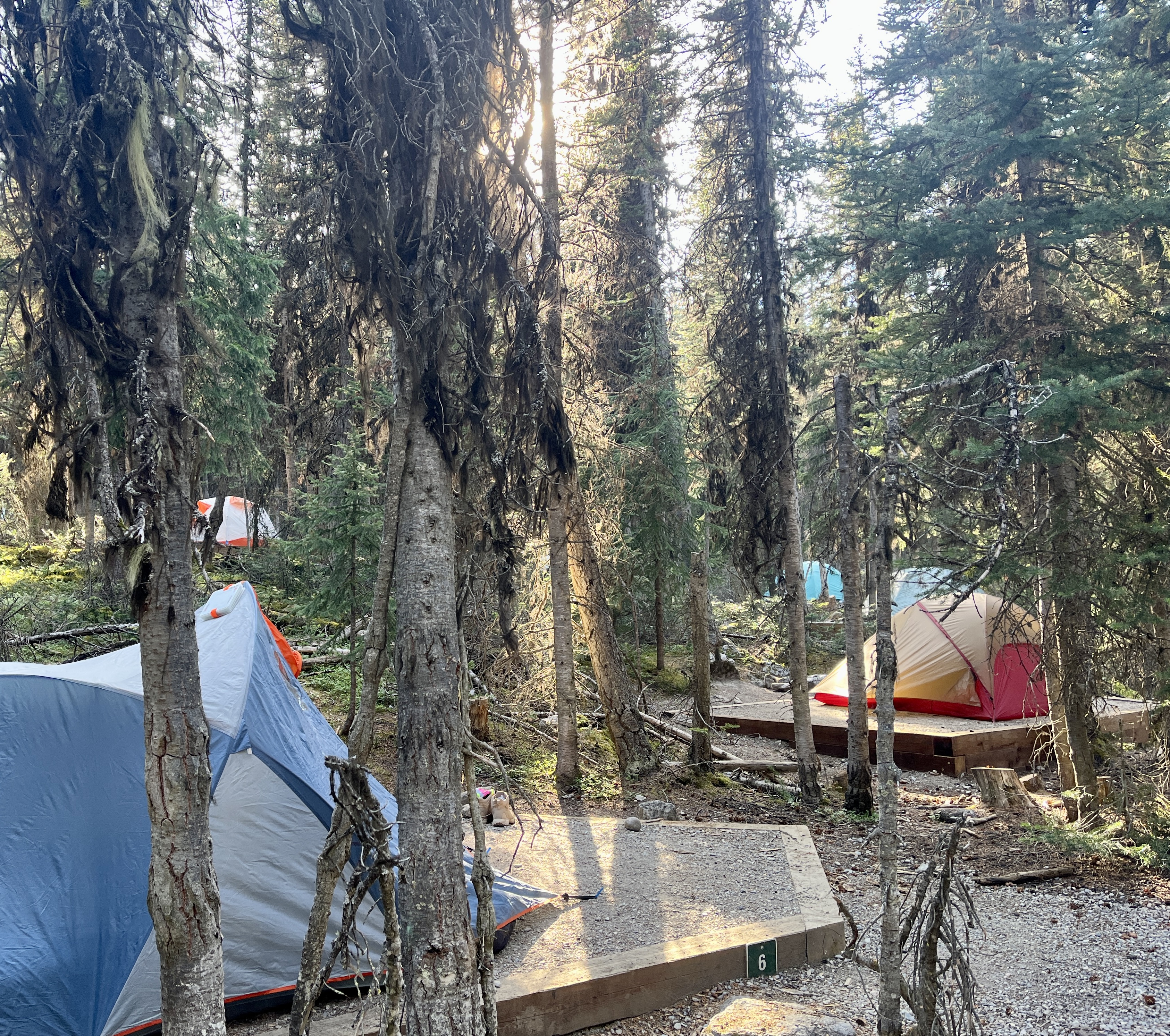
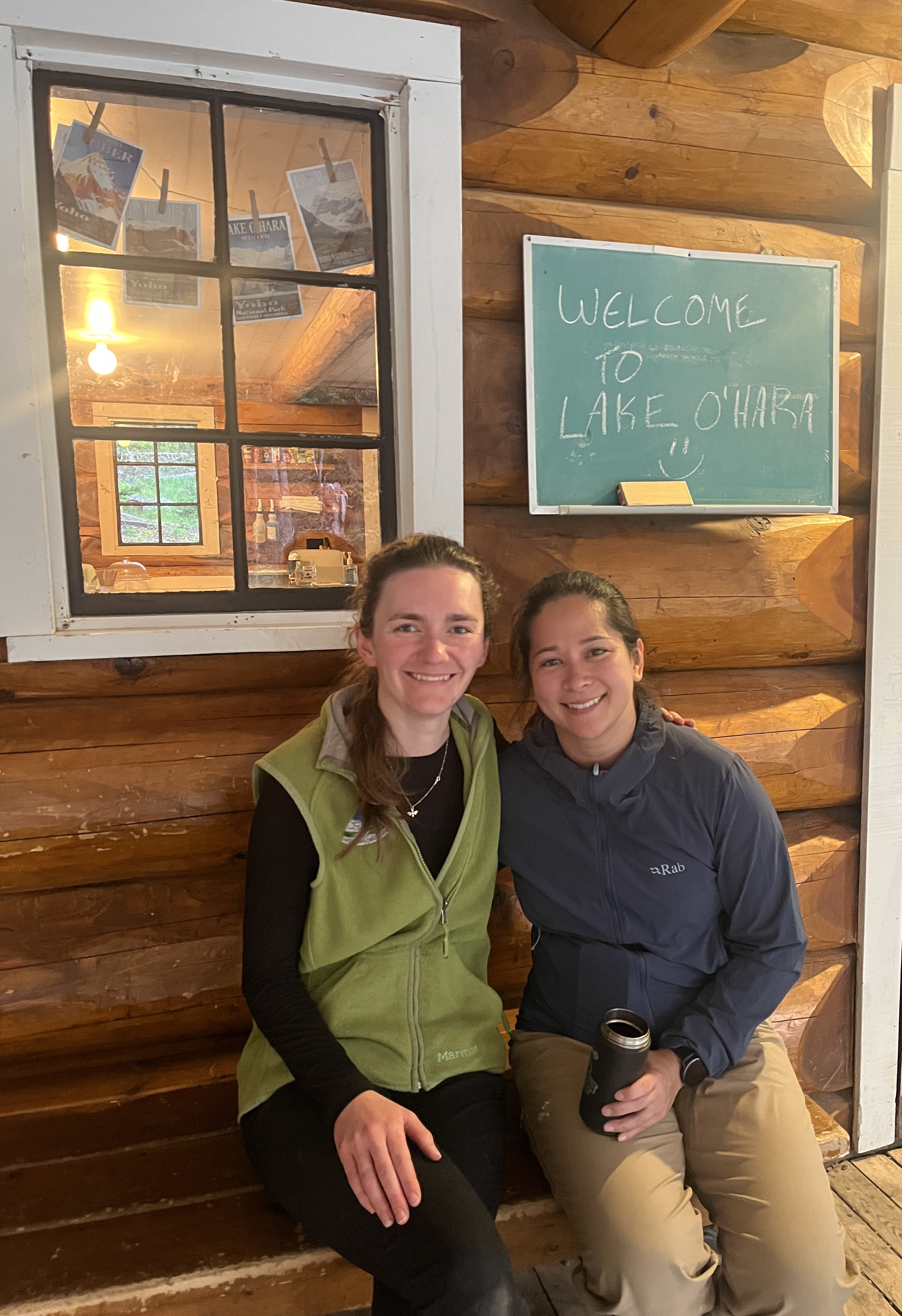
Once off the bus and deposited at the cozy campsite, I am in absolute wonder. This is breathtaking, it’s spectacular! And lucky me, I’m here with my daughter-in-law Trixie Pacis, a Canadian/ Filipino film maker. A screening of one of her films, Embers is only hours away.

It’s been a while since I’ve stuffed a sleeping bag and sleeping mat into a backpack and slept in the great outdoors. Yet Trixie has even more embedded into her pack and out comes our accommodation for the night as well! Once the tent is pitched and our food and toiletries are safely stored into our assigned locker – a grizzly and her cubs were spotted just down the road this morning – we make our way through the campsite across the road to the famed Lake O’Hara.
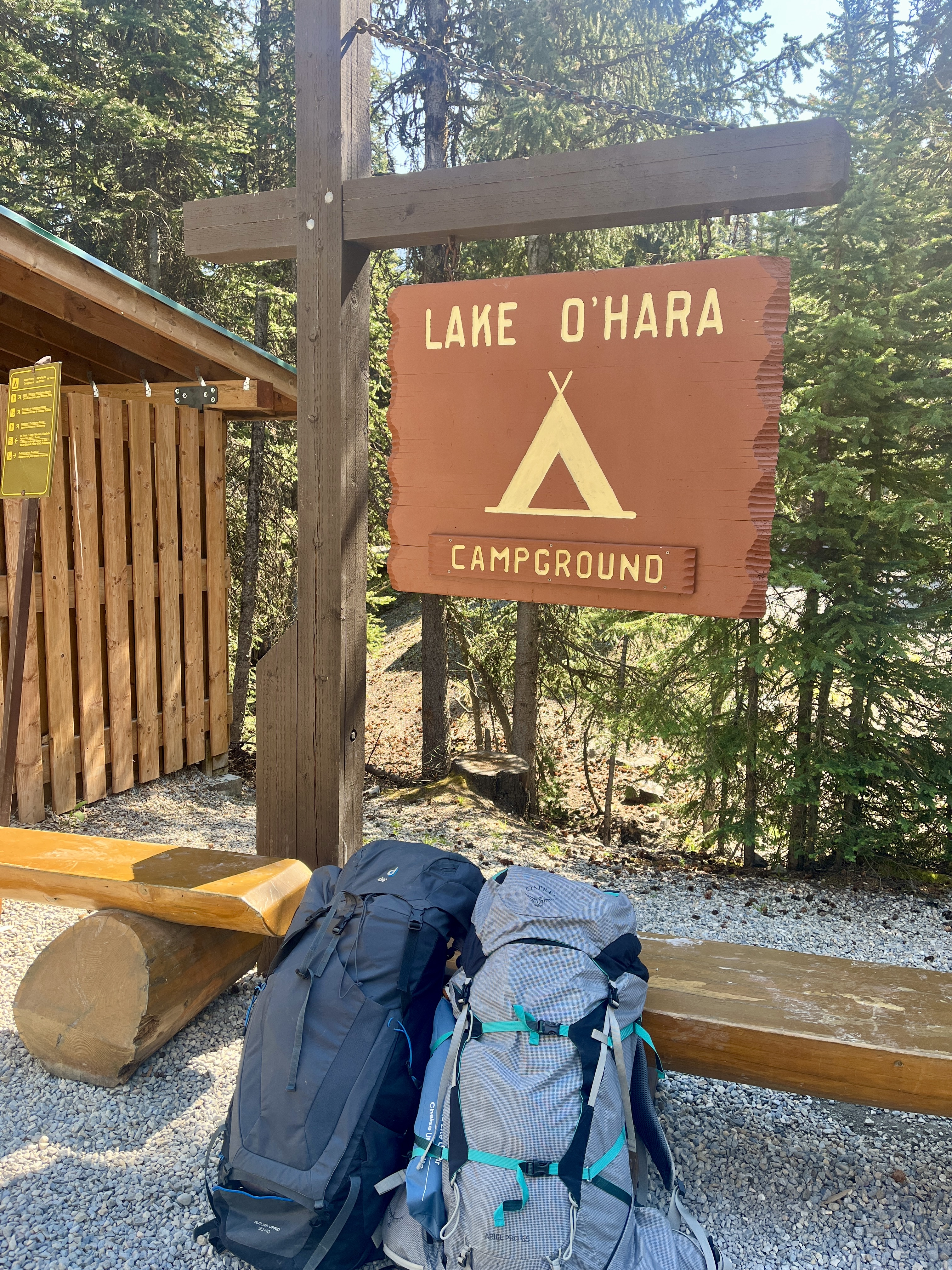
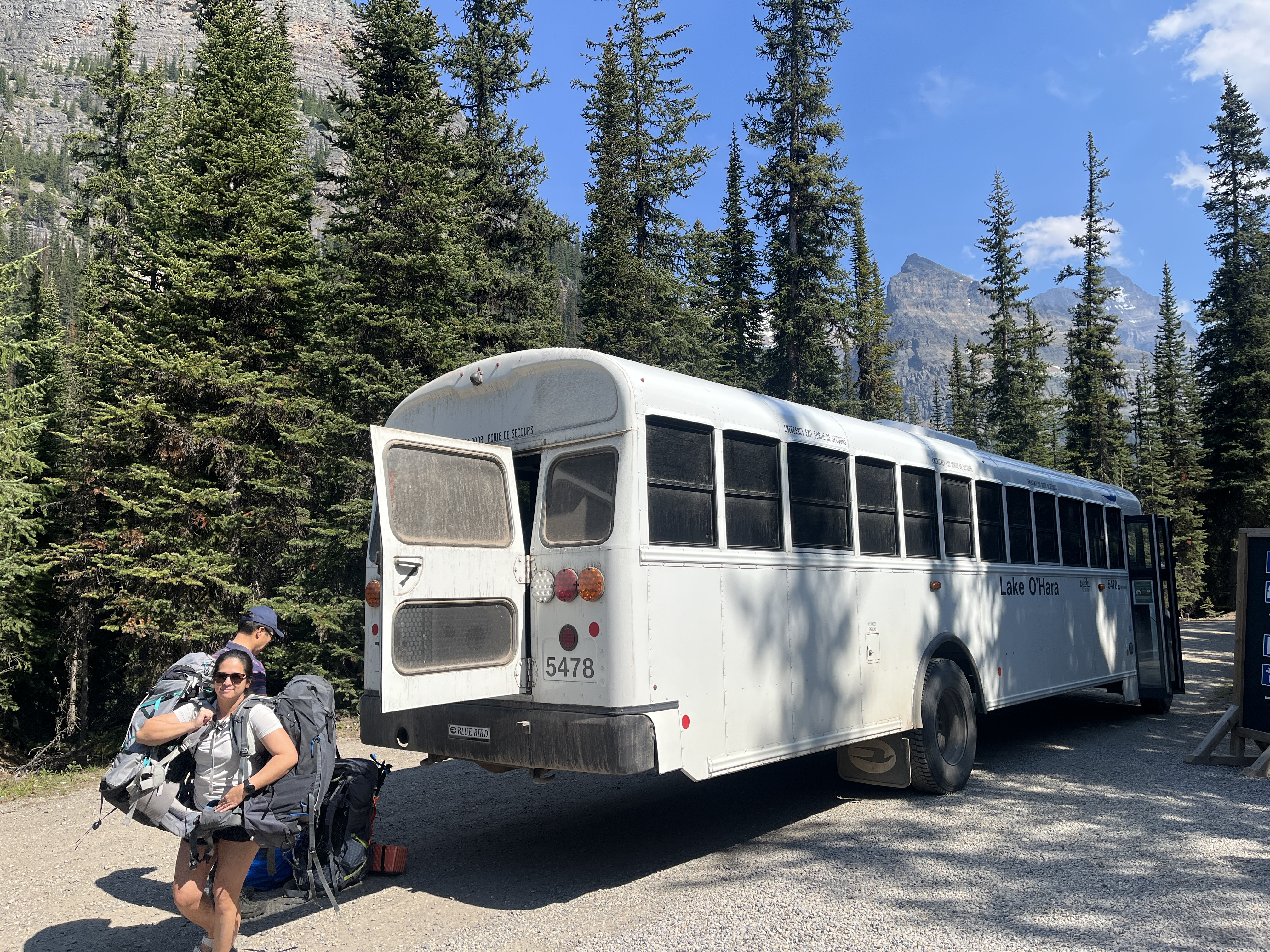
Lake O’Hara – at 2,020 metres or 6,630 feet above sea level – is in the alpine region of Yoho National Park. Nestled with Jasper, Kootenay and Banff, Yoho is the smallest of these four contiguous national parks. A trip to this area a number of years ago confirmed its grandeur, yet campsites remain elusive unless you’re lucky enough to secure one during the first few minutes they’re released each spring. Trixie’s complimentry tent site is a perk of the screening and as we meander lakeside for my first views, I appreciate how iconic and special it is to be here.

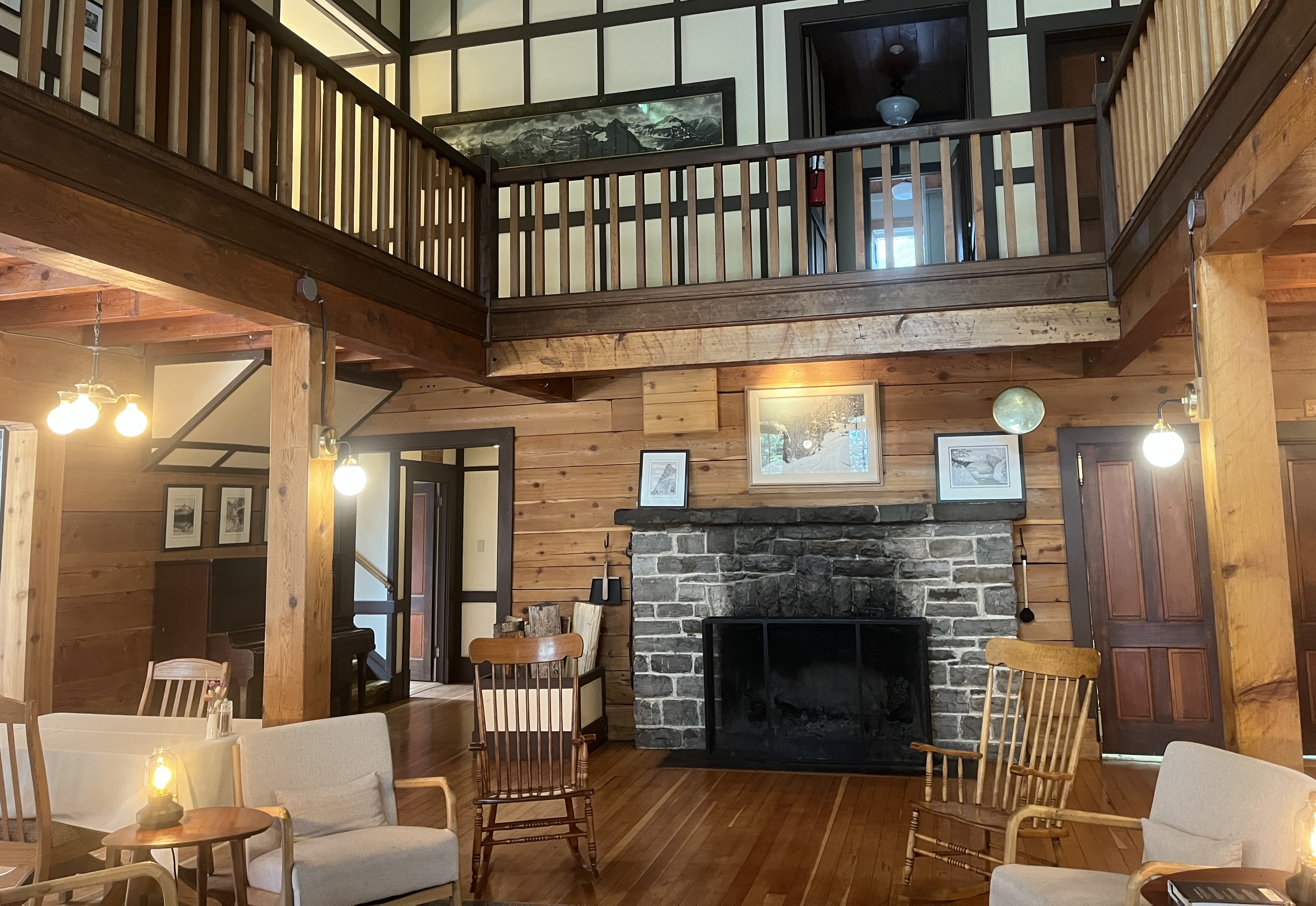
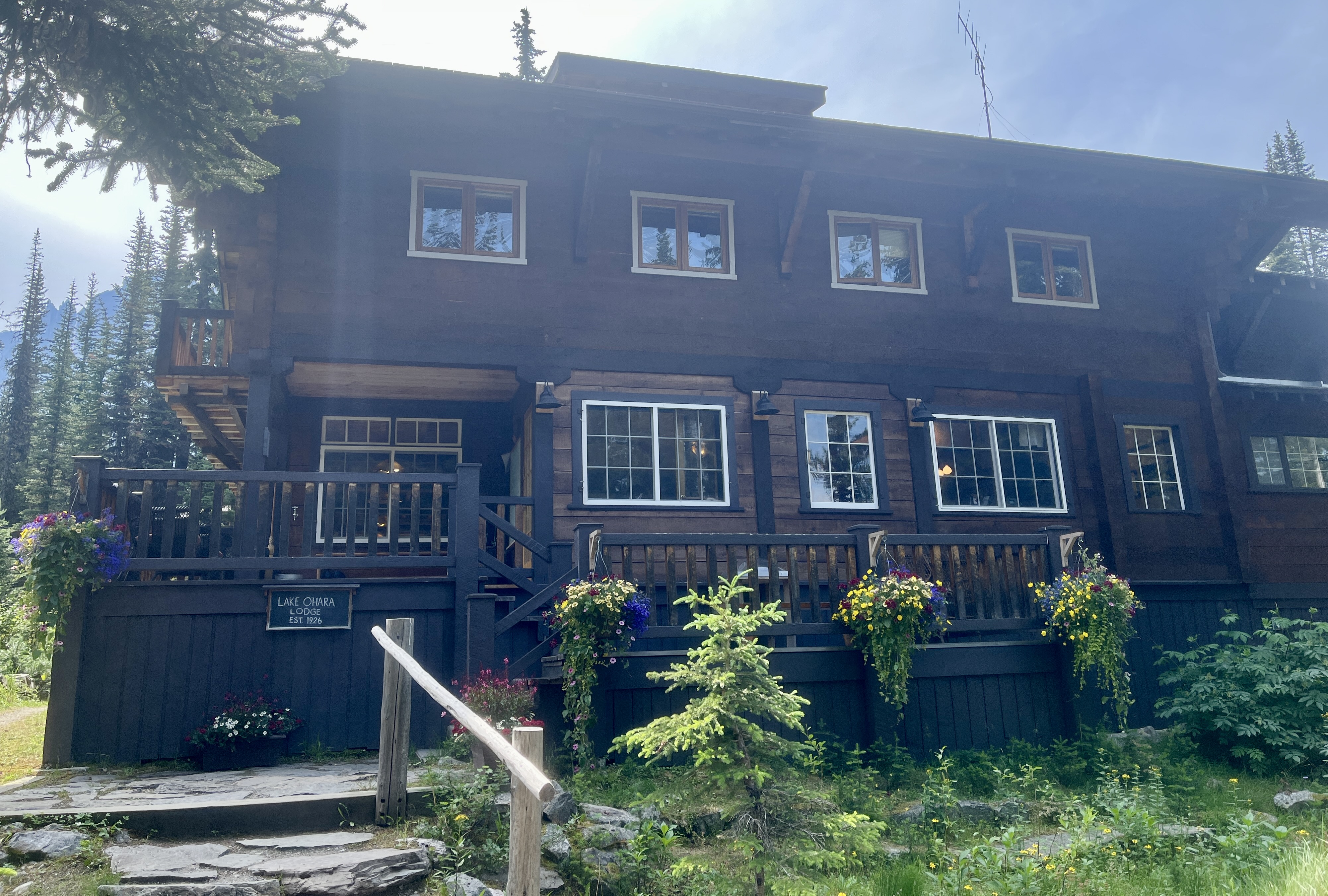
In the 1920’s the lake became the first outpost for The Skyline Hikers who wanted their own trails and camp as the first horse riders, The Trail Riders had formed. Eventually forming a site more permanent than tents, the Lodge and Cabins of Lake O’Hara became one of the darlings of alpine trail routes. The original 1920’s Lodge is undoubtably a little more comfortable than it once was and the lakeside cabins are like frontier gems along the sparkling lakeside. Intrepid climbers visited like Conrad Kain and Mary Schaeffer, portrayed in Trixie’s film Wildflowers.
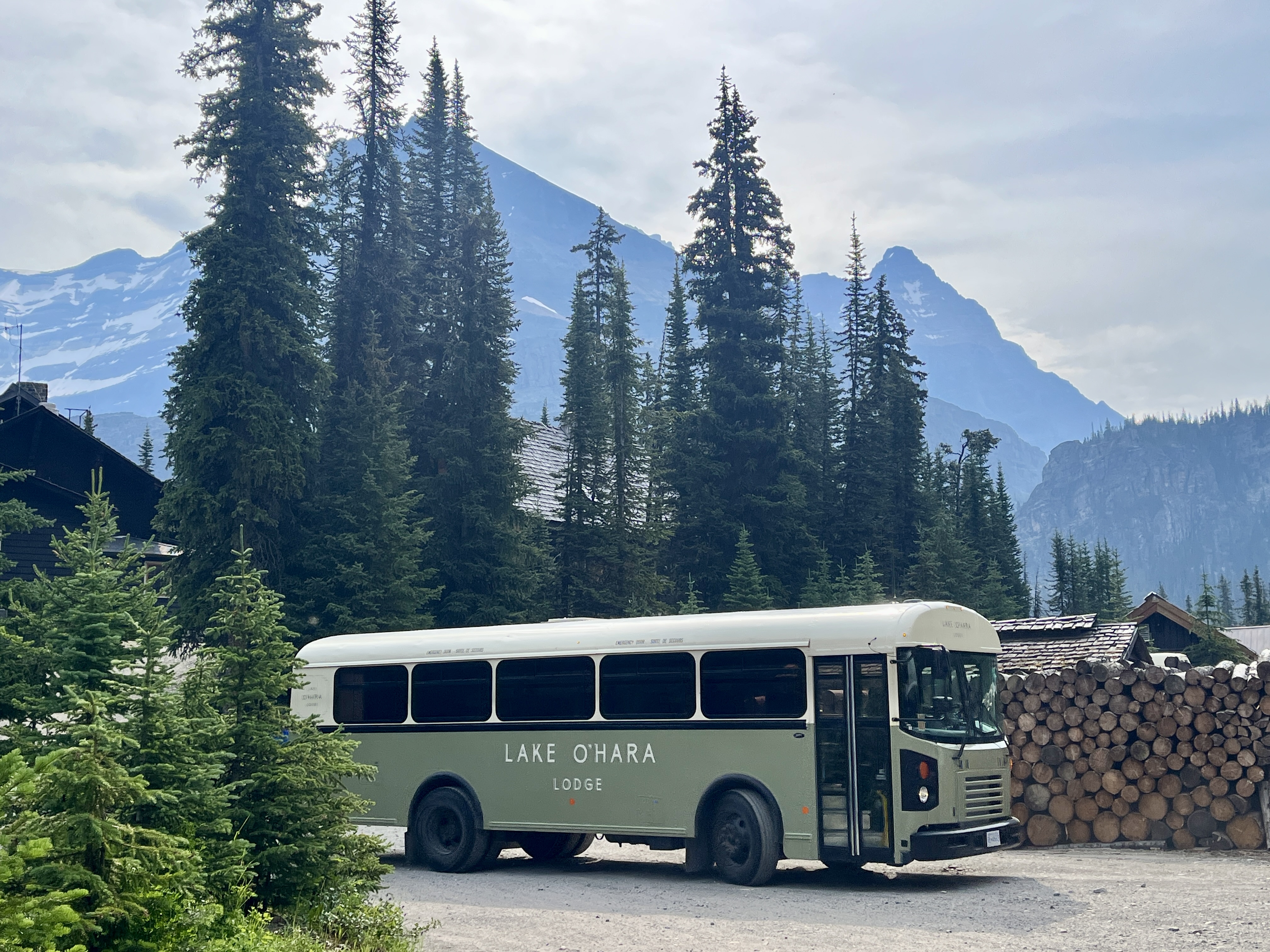
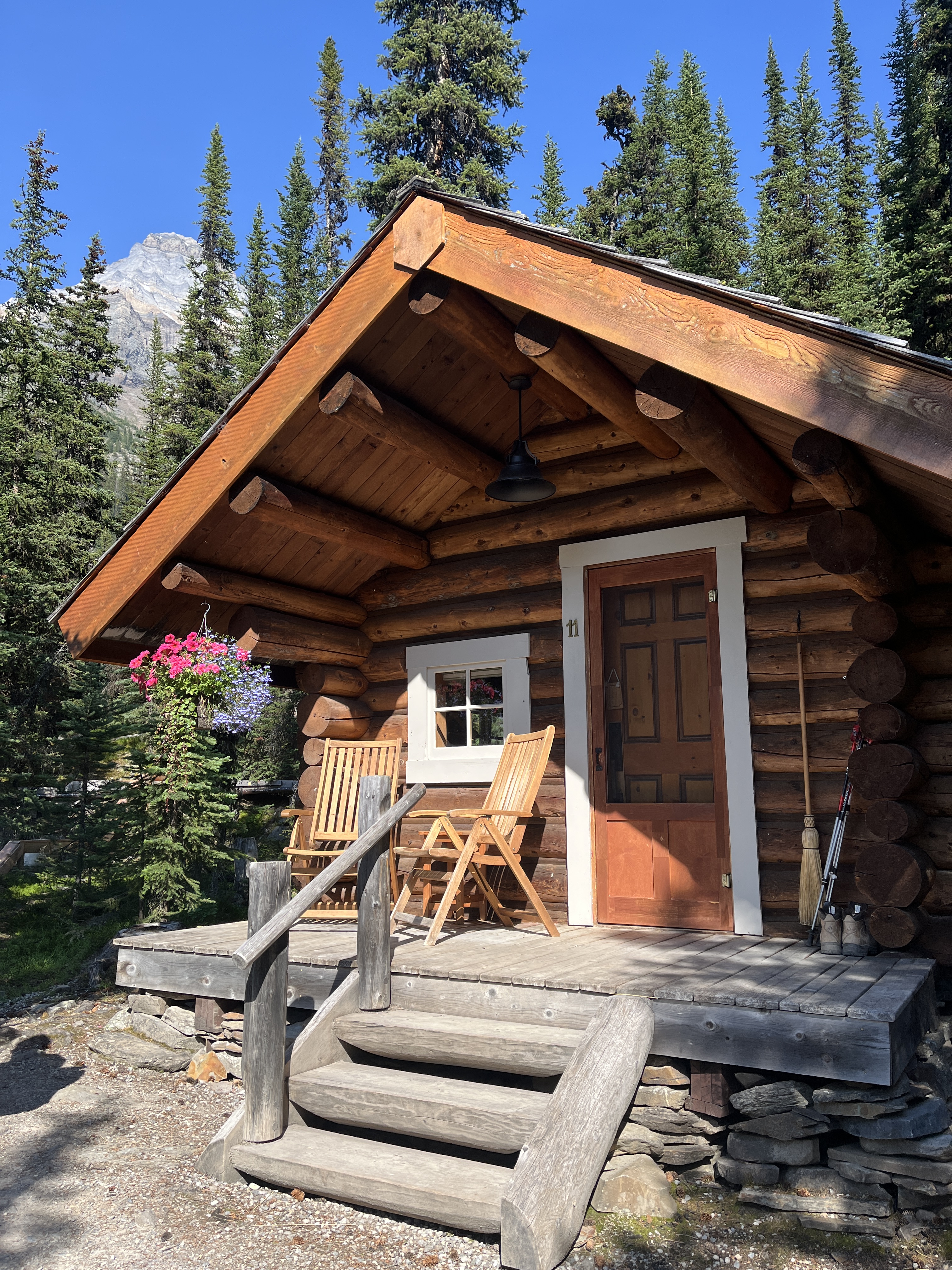
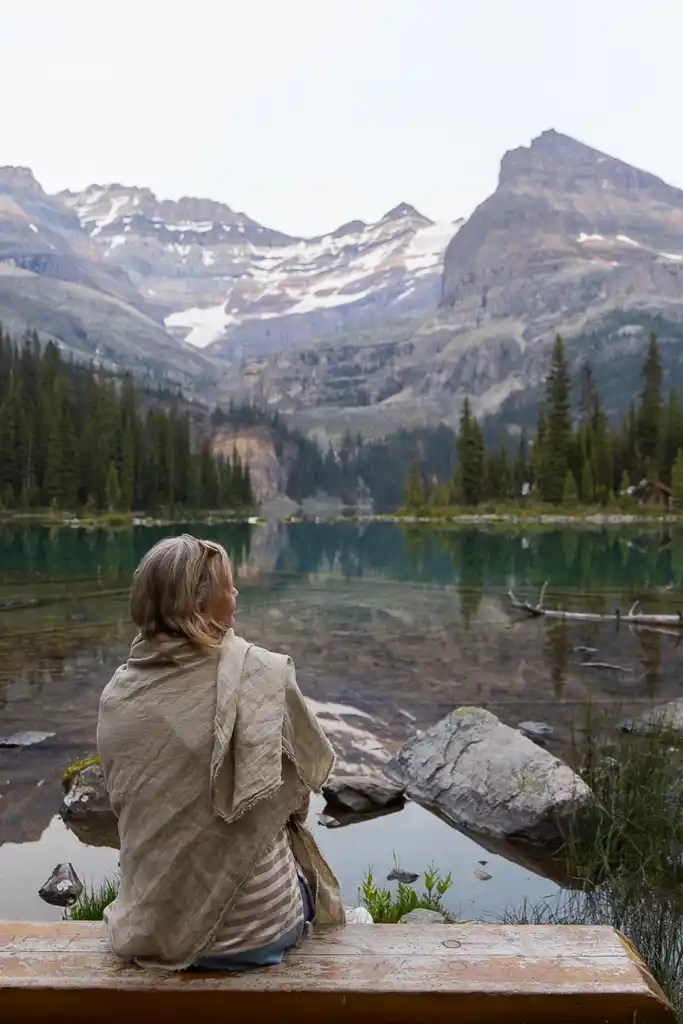
After a stroll along the shoreline, we perch ourselves on the dock and soak in the site. Yoho means ‘awe or wonder’ and it is aptly named. We meet travellers from near and far. We’re told about the famed carrot-cake delivered twice a day from the lodge to the small cafe, apparently it’s not to be missed. We hear the call of the loon from across the lake and we ponder the sheer majesty of this site, the traditional home of the Secwepemc and The Ktunaxa First Nations. Trixie mentions that it’s also a winter destination and I imagine myself around The Lodge’s fireplace, wine in hand, after a brisk snowshoe. I make a mental note to reserve as soon as I return home!

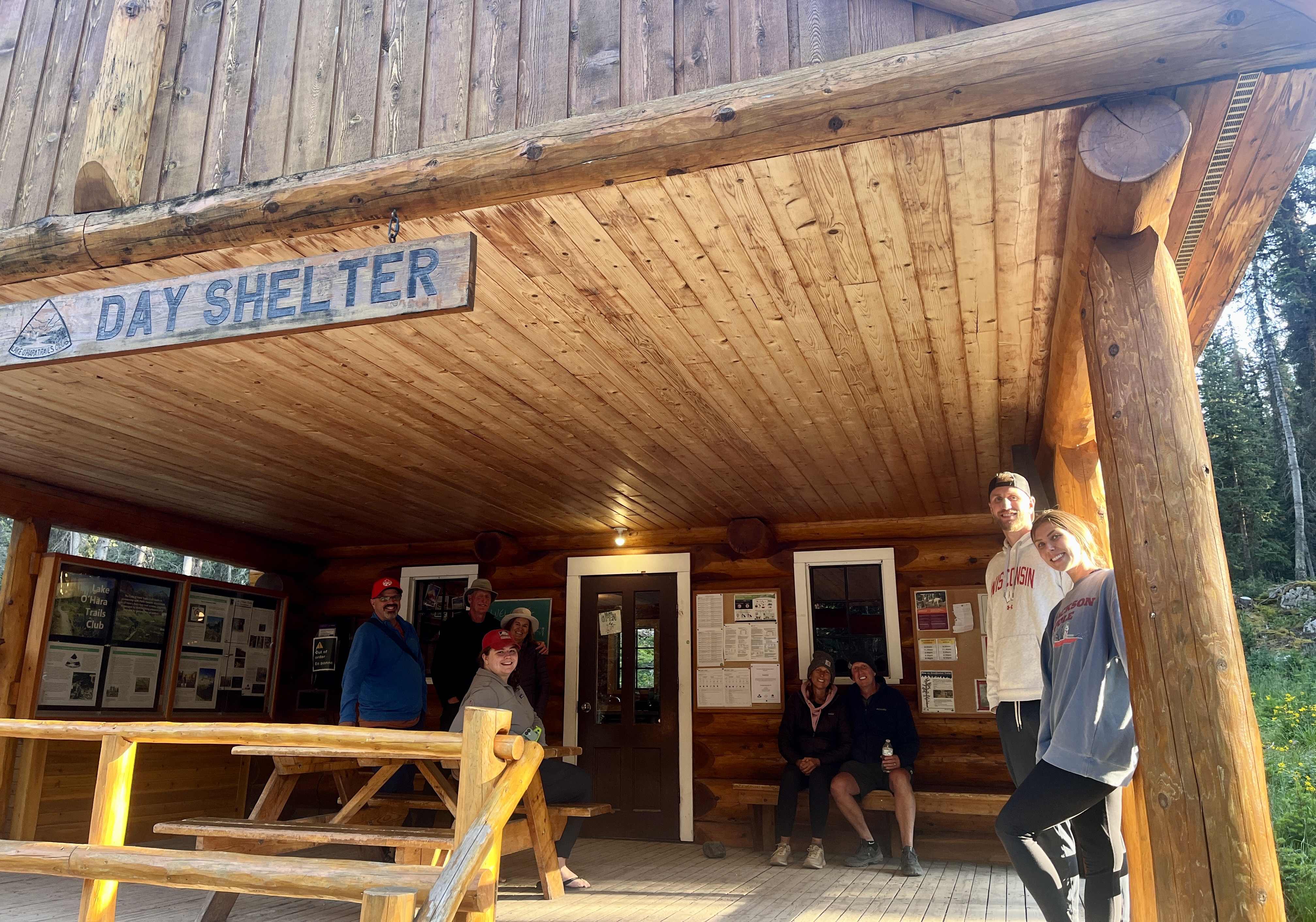
Dinnertime beckons and back at camp we claim a picnic table in the convivial site. Hikers poles lean on tables. Thermoses of every colour adorn tabletops. Camp stoves boil water for freeze-dried meals. The chat is of the myriad alpine hikes either completed or planned for tomorrow. As we savour a glass of Pinot Noir after our surprisingly delicious dinner, Trixie makes notes for her film screening at 8:30. I’ve seen Embers a number of times, but this setting is certainly the most fitting.

Trixie’s independent films have all been mountain-culture driven. As an award-winning documentary filmmaker, her four films are currently on the festival circuit; Wildflowers, Ahon, Wild Aerial and Embers. As I write, our province of British Columbia is experiencing expansive wildfires (in fact last week we ourselves were on Evacuation Alert) so the film Embers is particularly poignant. About this time two years ago, a wildfire tore through Jasper, Alberta reducing the film’s protaganist’s home- aerialist Sasha Galitzki’s – to ashes. The film connects Sasha’s loss in the wildfire and glacial recession she witnessed in her creative work to highlight the common cause, climate change.

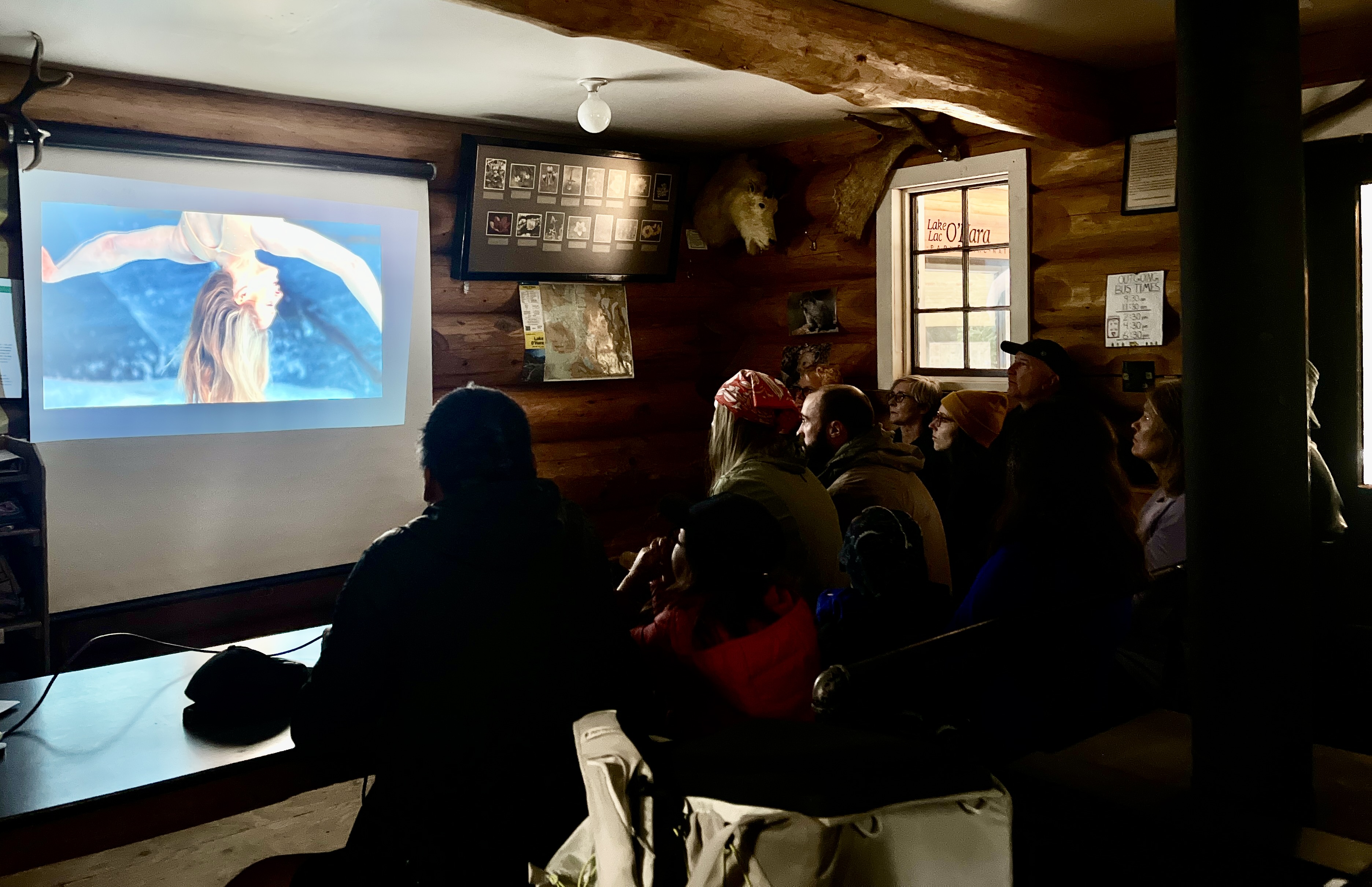
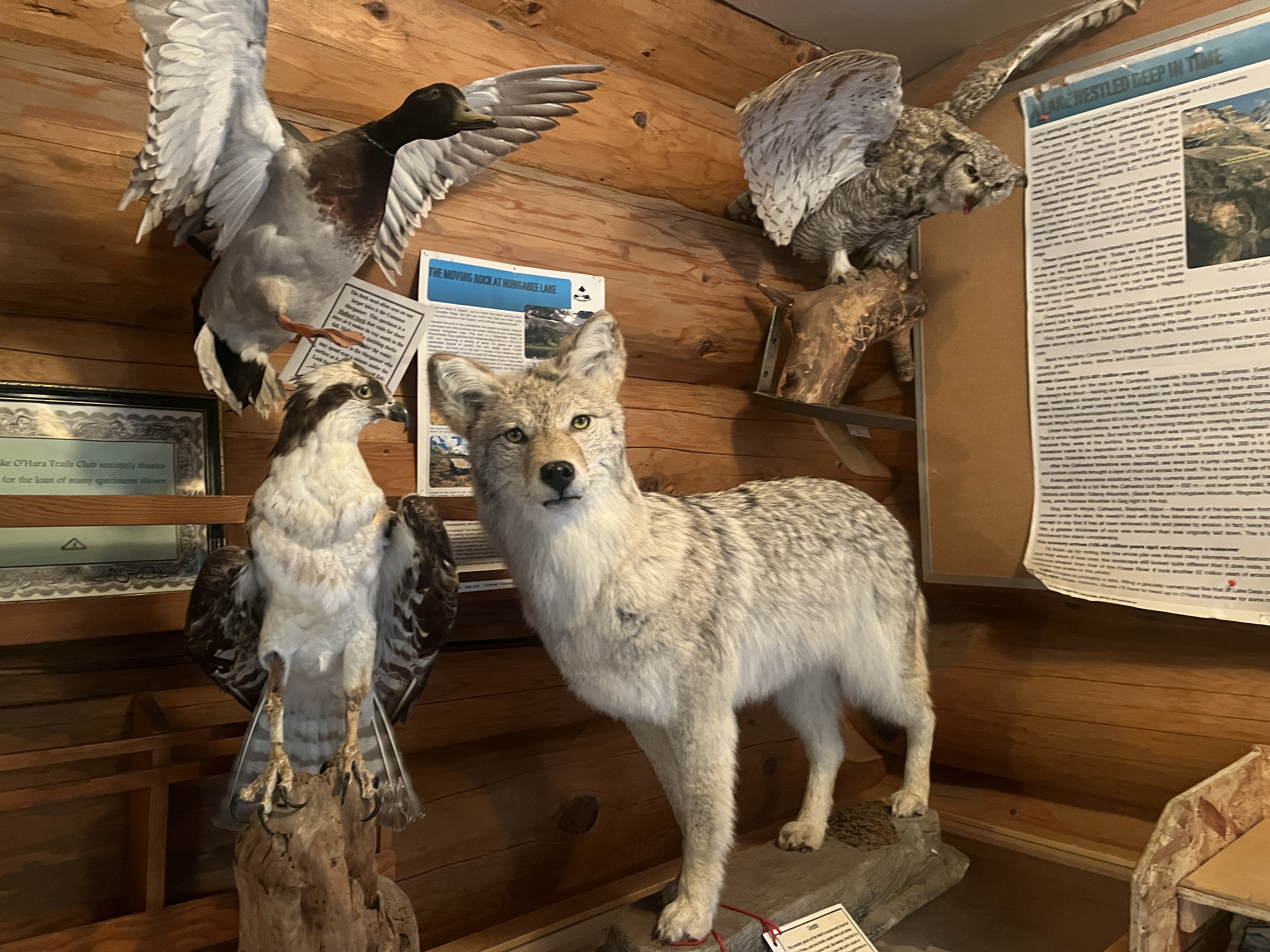
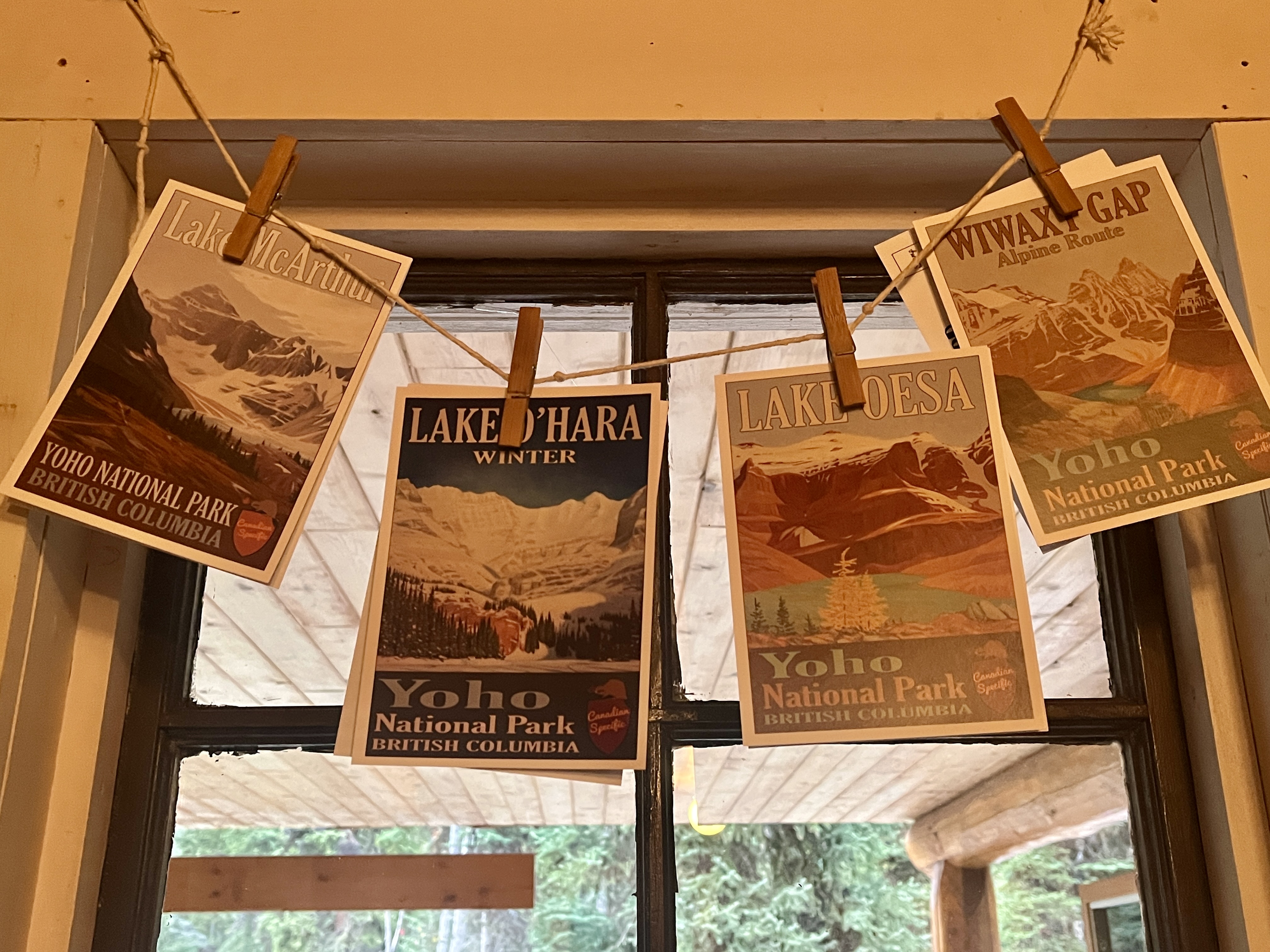
Making our way ten minutes up the road and just before the Lodge, the verandah of Le Relais is already dotted with some of the waiting audience. It’s cozy inside with a few wooden chairs, benches and stacked firewood. Taxidermy of local fauna is on display, as are postcards dangling from wooden pegs. The setting is truly Canadiana. As our host Robynne and Trixie set up for the screening, the now-full room breaks into conversation, but a hush quickly falls over the crowd as Trixie introduces the film and the dramatic opening scene fills the screen. By the end of the documentary, tears fill people’s eyes…. for Sasha’s loss, for our ever-diminishing glaciers, for the danger of wildfires throughout Canada and beyond, for the reality of climate change that is already upon us.
After a Q & A and farewells, we briefly catch the magical alpenglow on rose-tinged cliffs. Now, as night approaches, the haunting cry of a coyote fills the cool air and the loon calls again across the turquiose-blue lake… thankfully, no sign of the grizzly family so far.

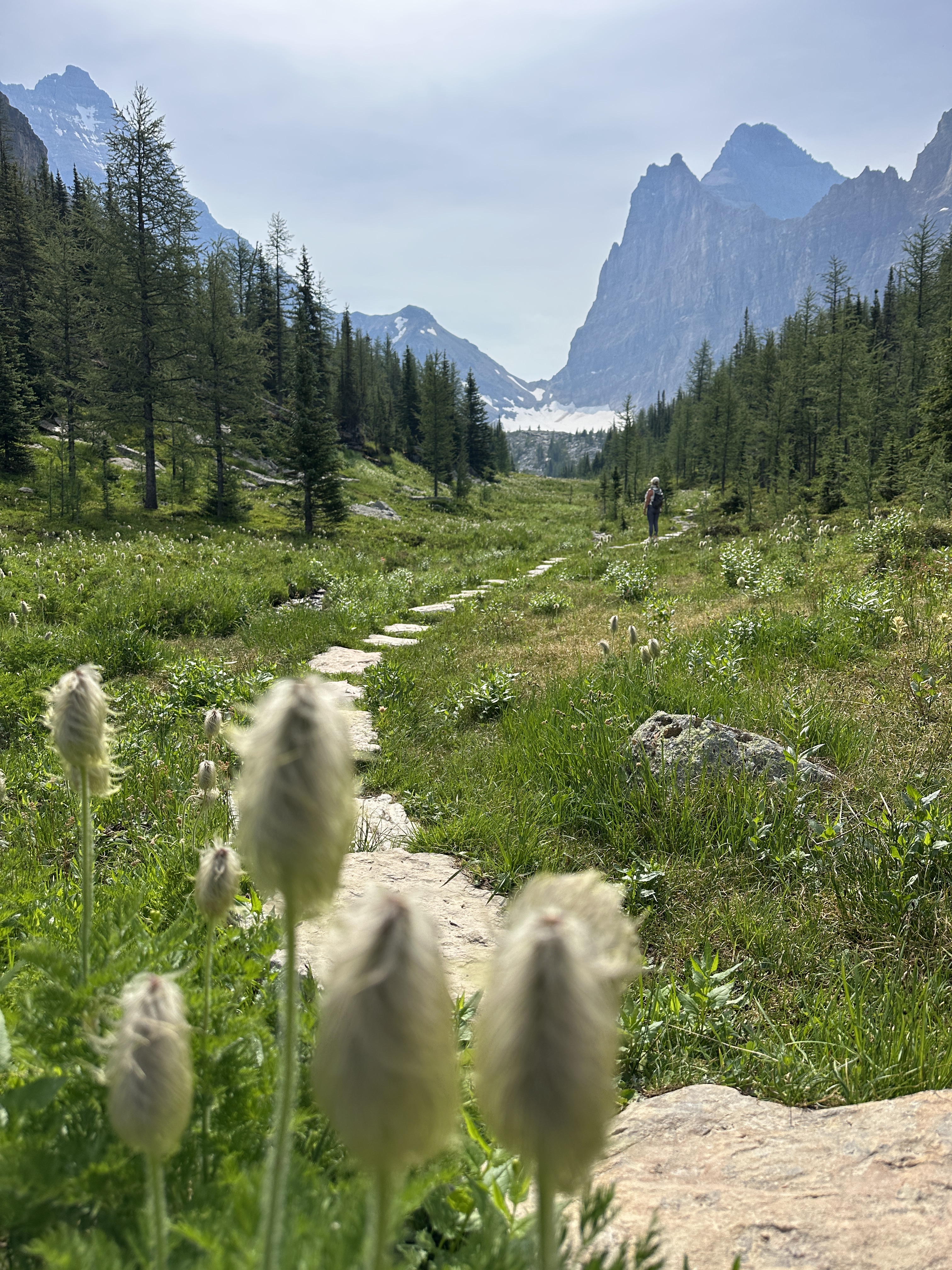
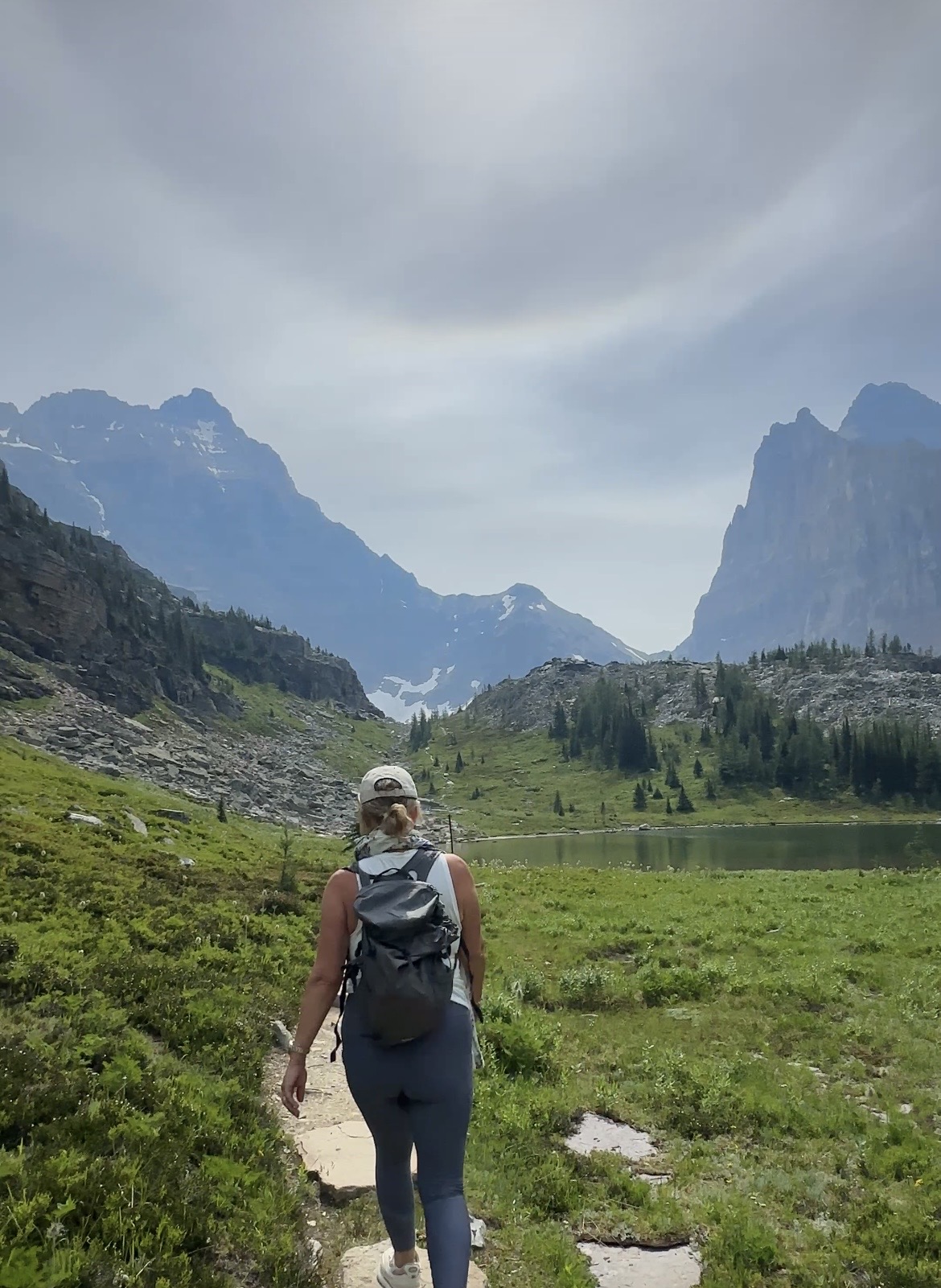
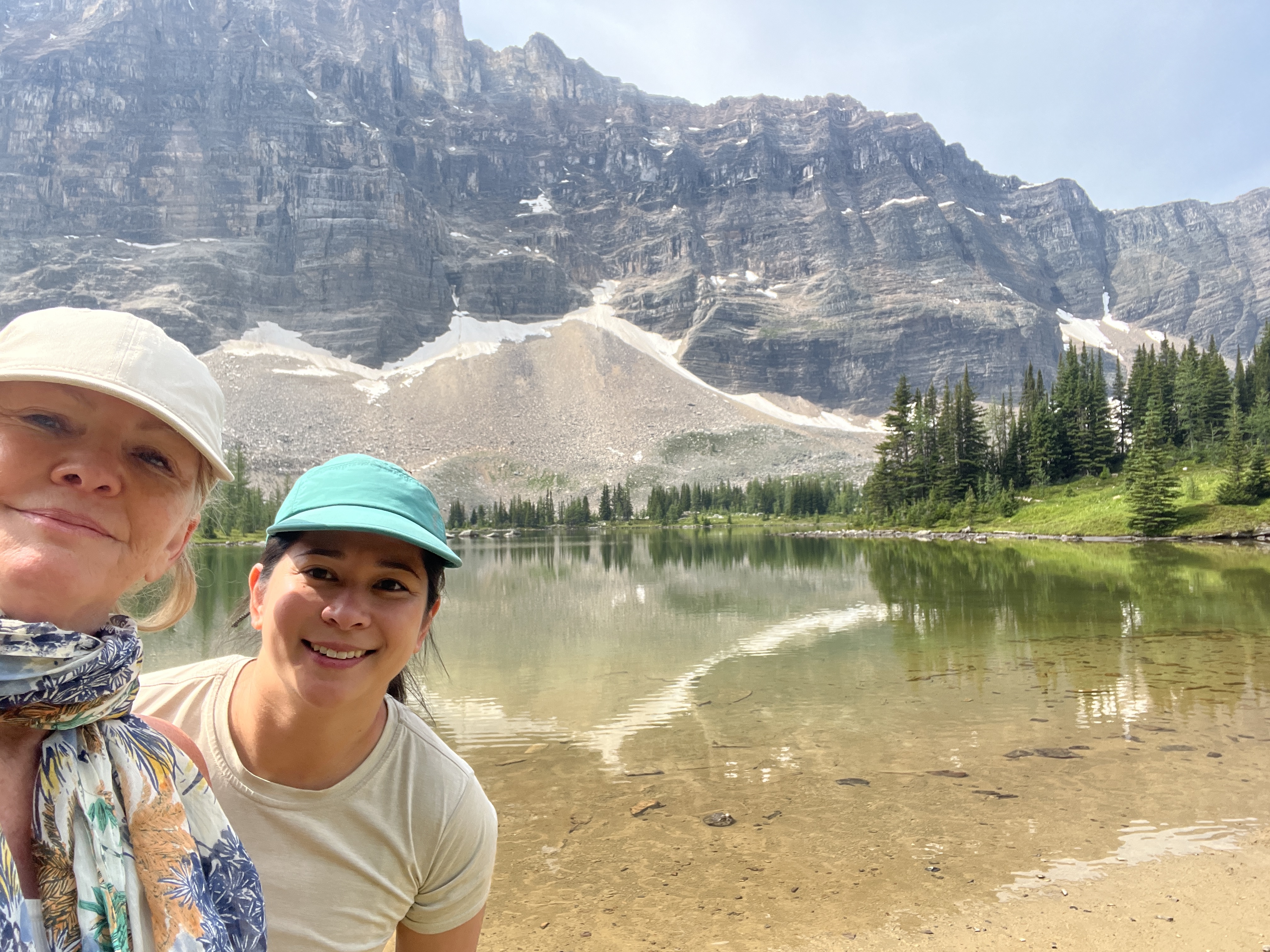
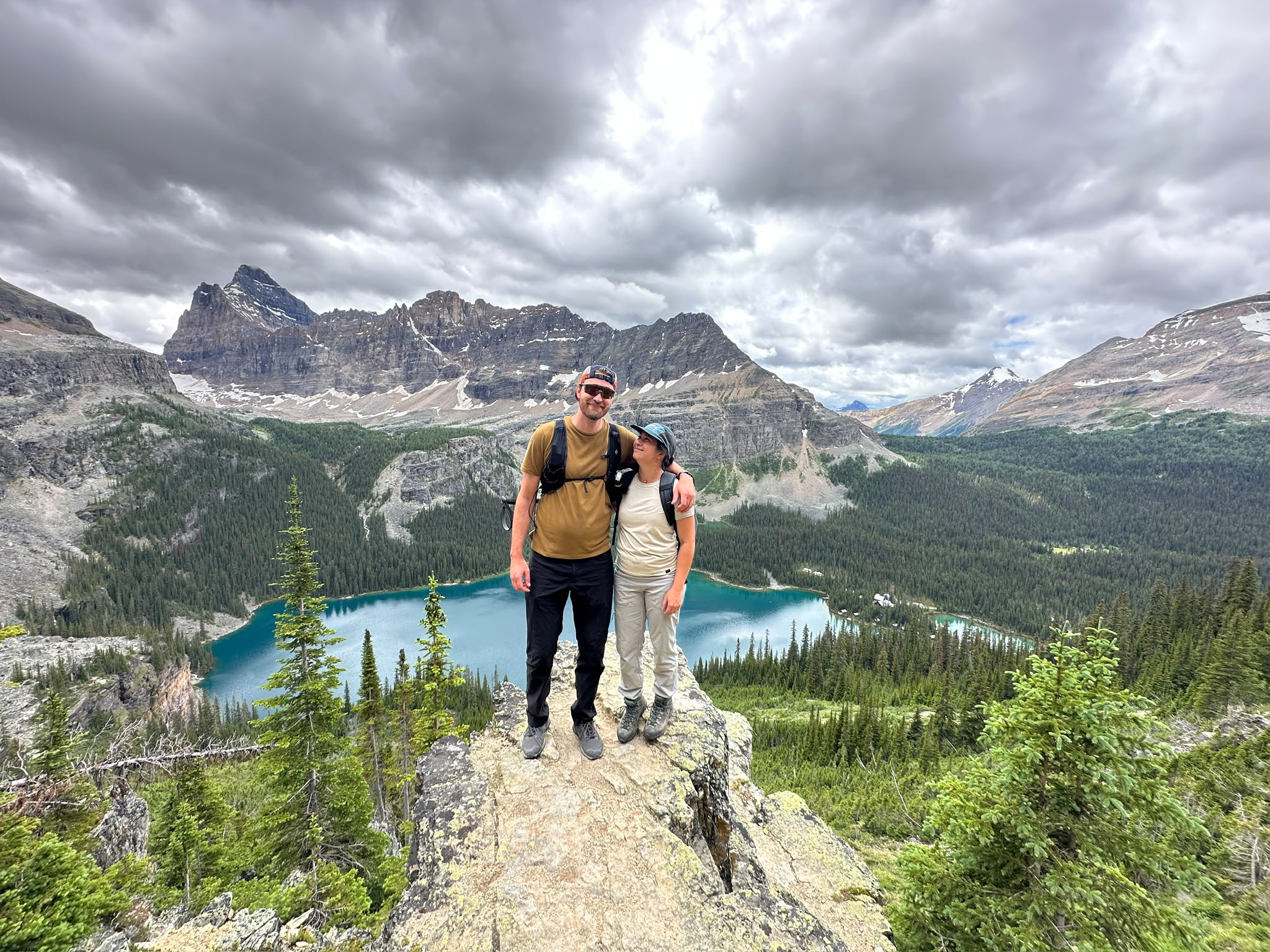
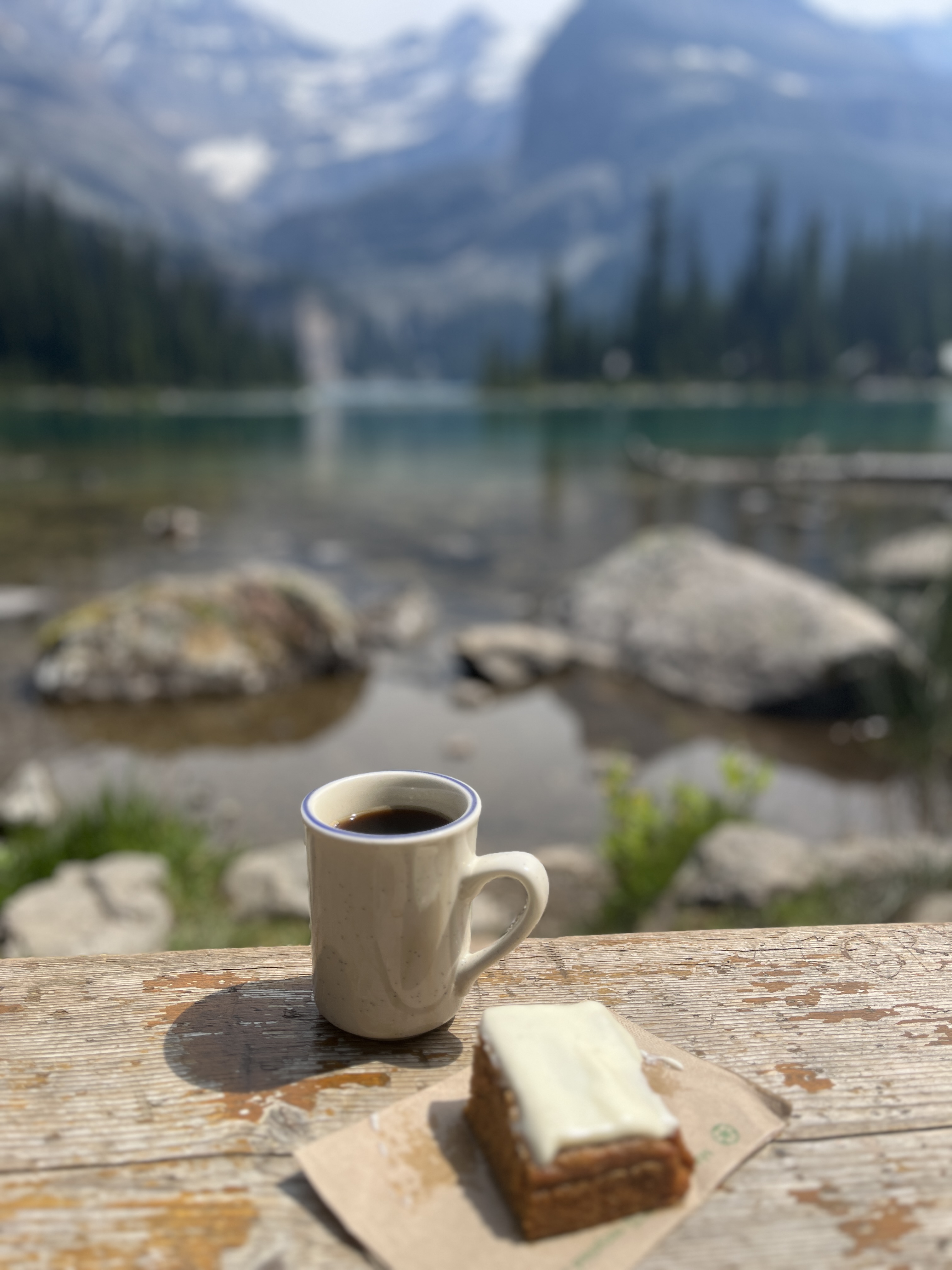
The next morning we hike up into the glorious alpine meadows. Climbing steadily along the trail, a porcupine flashes its golden quills, a marmot ducks back into the woods, golden-mantled squirrels scamper beside us and tiny pikas transport flowers and moss into the crevices of rocks. Trixie points out a blaze on a tree, the visual mark chopped onto the bark to traditionally guide hikers along a trail, trailblazing indeed! The small lake we reach is surrounded by fading glaciers and castle-like peaks; we’re both awed by the serenity of it all. Trixie and our son Luke are avid hikers and last year did the full alpine hike. It’s a little too ambitious for me, but nonetheless my reward for the 3-hour hike is none other than a piece of the celebrated carrot cake. We’re first in line for the 2:30 delivery at Le Relais!

Trixie Pacis can be contacted at trixiepacis.com and on instagram #trixie_

Autumn meanders… National Parks and Swiss Mountain Guides

Standard

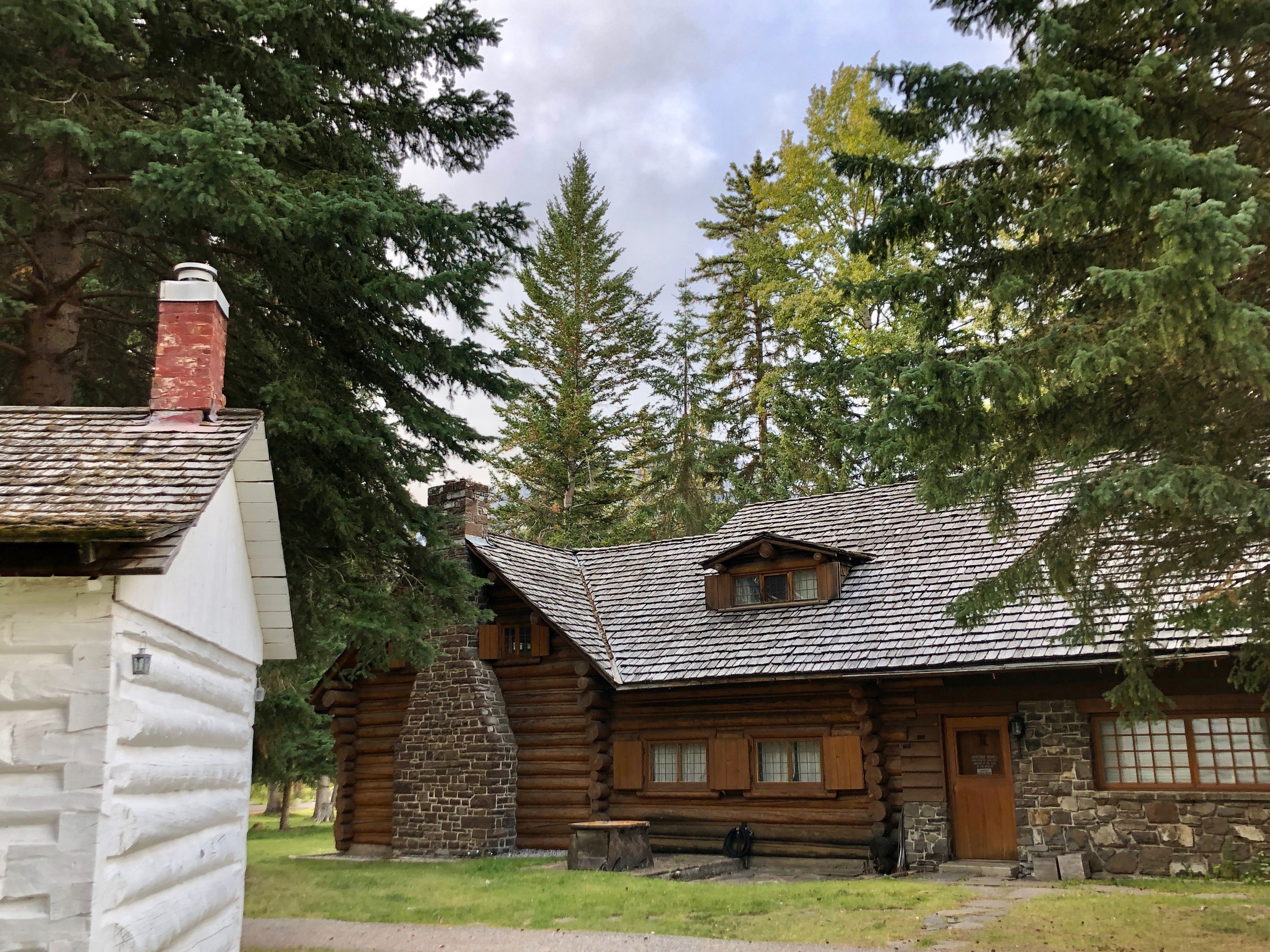
Urged on by intimations of winter’s early arrival (but hey, it’s alway early here) we set off on one last meander. We’ve put away our glamping tent for the year, made reservations at a hotel and a lodge, and with the canoe strapped on the car, we journey from our mountain town through Kootenay National Park and, some three hours later, arrive in Alberta’s famed Banff National Park. I wrote of Banff a few years ago and never take it for granted that this international destination is in our own backyard.

Banff National Park holds the distinction of not only being Canada’s oldest National Park, but the fourth oldest in the world after The Bogd Khan Uul in Mongolia – 1783, Yellowstone National Park USA – 1872, and the Royal National Park in Australia – 1879.

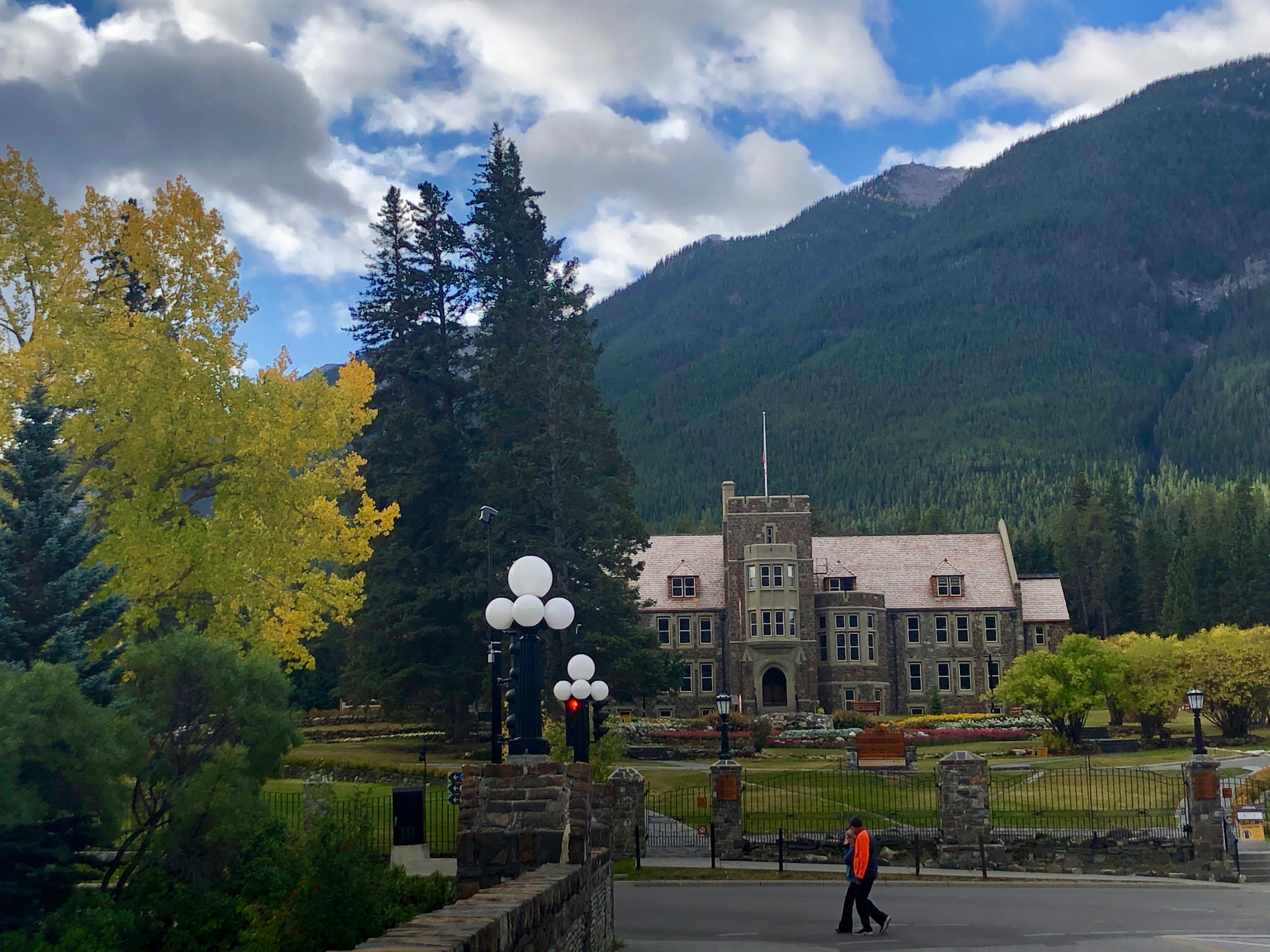
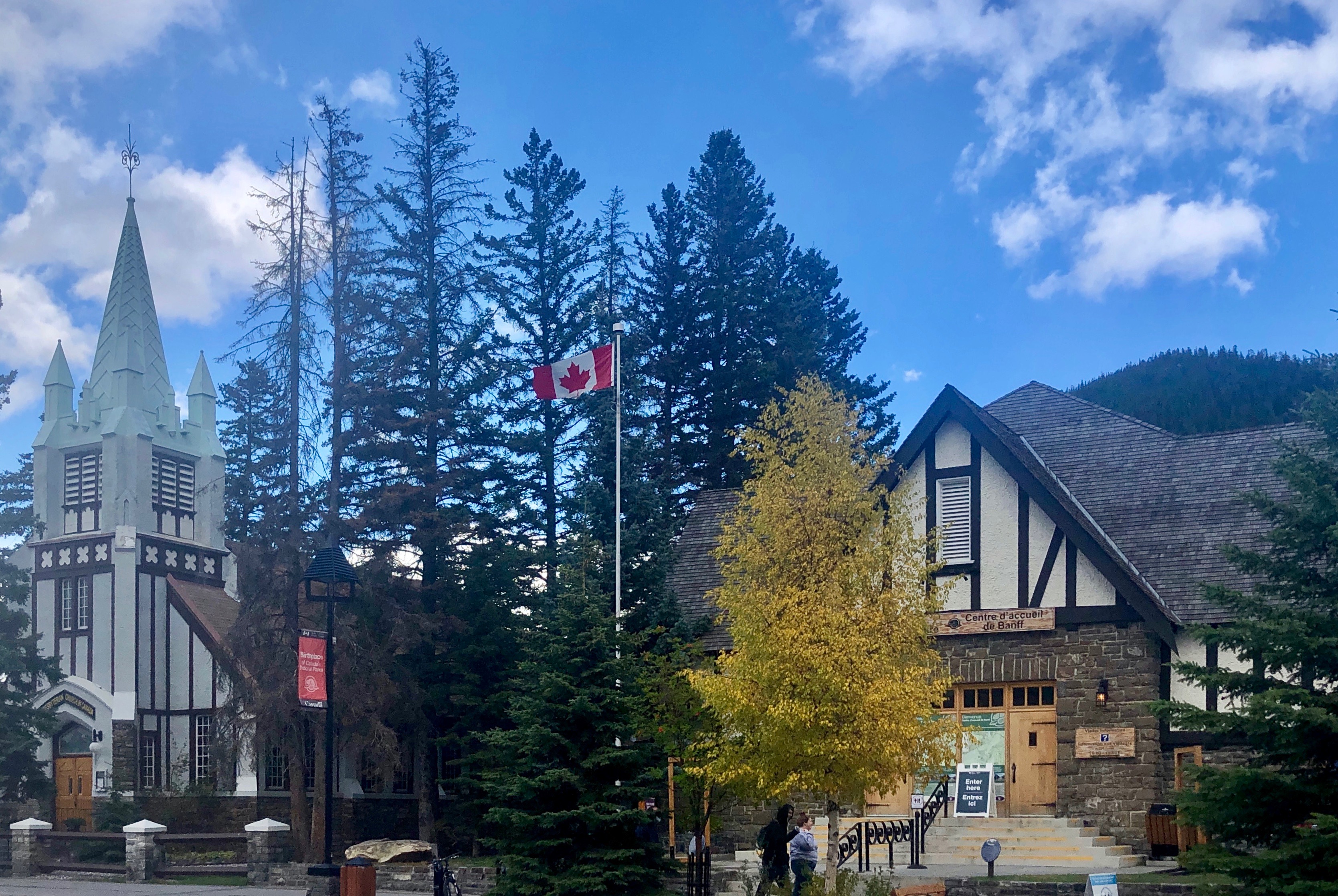
In 1885 Prime Minister John A. MacDonald set aside a small tract of land (while, sadly, removing the people of Stoney Nakoda First Nation between the years of 1890 to 1920’s) to establish the park. It soon attracted residents, tourists and sportsmen alike, in time becoming a playground for wealthy Europeans and American tourists. Today, the vibe along Banff Avenue, in the hotels, on the hiking, biking, skiing trails is a blend of nature and small town life… the highest town in Canada at just over 1300 metres.

We check into the Rimrock Hotel and it strikes us how strange it is to be in a hotel again, wonderful, but mildly disorienting during the ongoing pandemic. We welcome that masks are mandatory, inside and outside, and even as people socially distance, Banff bustles as always.

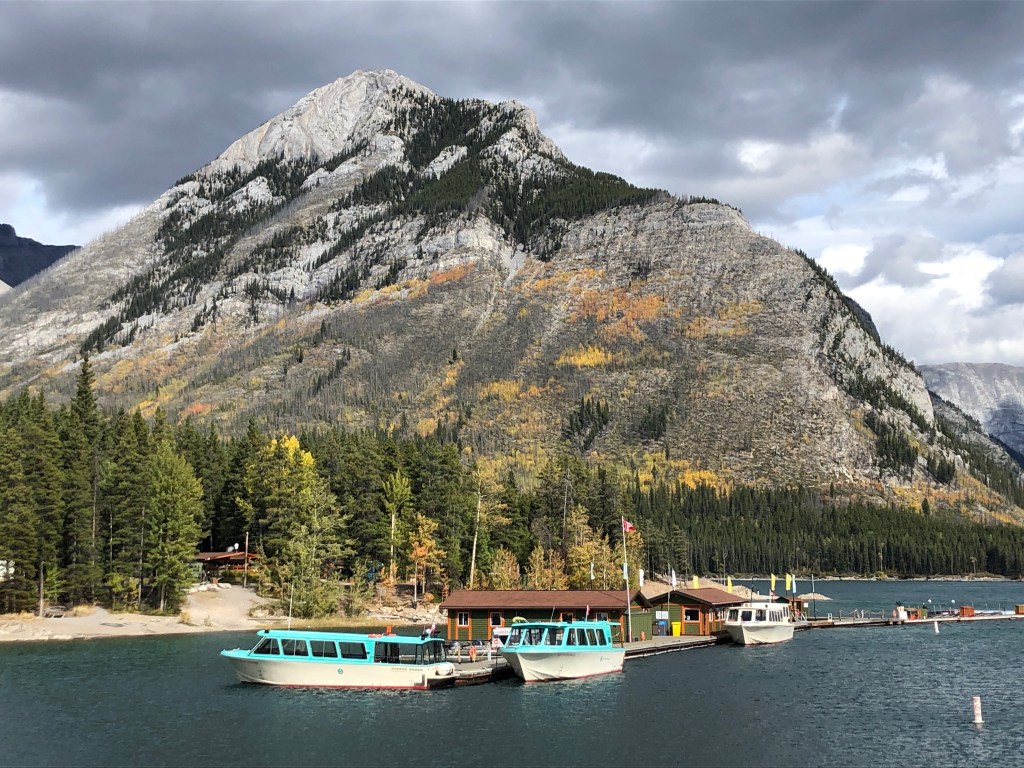
We hike a little, not far from the townsite, where Lake Minnewanka and its environs proclaim the wonder of autumn… russets, oranges and golds in a resplendent canvas. For more than one-hundred centuries, the First Nations hunted and camped along these shores of Mine-waki or Lake of the Spirits, both fearing and respecting its resident spirits. There are few remains of the summer village later established here in 1911, but then as now, boat cruises afforded the most spectacular views.

We choose to hike instead of taking to the water, conscious of and hoping not to encounter grizzly bears. This is the time of year when mamas and their cubs forage buffalo berries before hibernation…. the beauty surrounding us takes my mind (mostly) off their undoubted presence. The scenery is breathtaking and I’m reminded of our great fortune to have these National Parks; they are a gift to the people, to the earth.

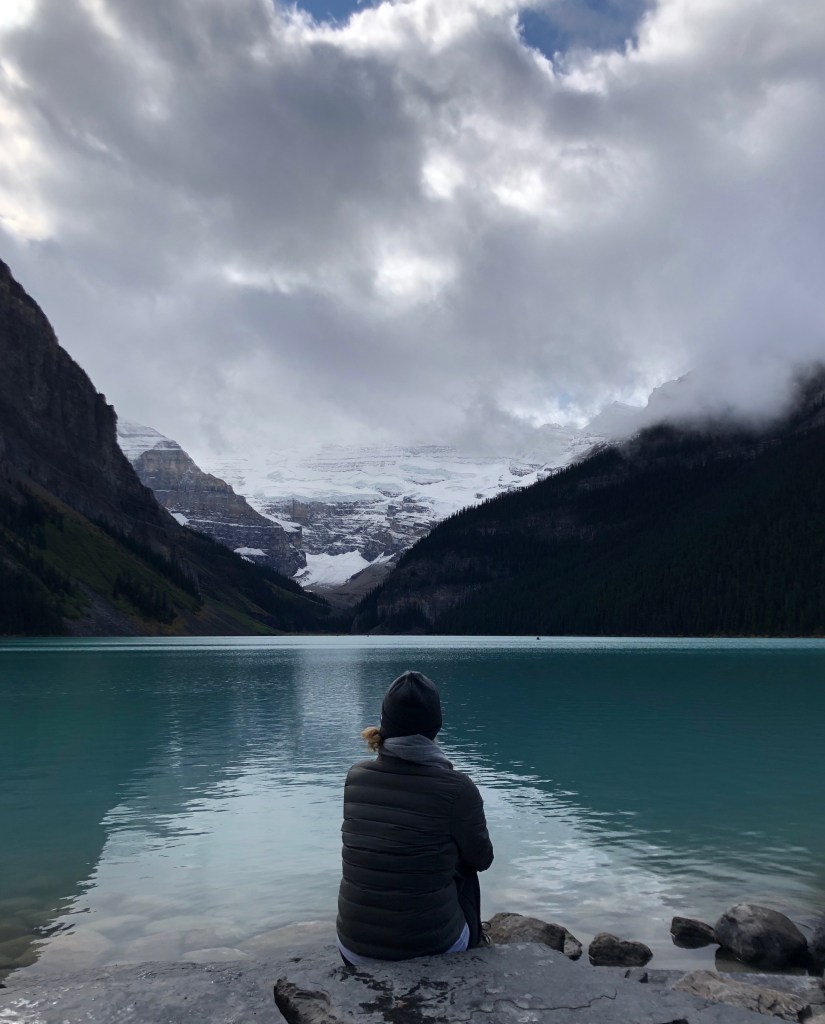
Leaving Banff, we drive north through the hamlet of Lake Louise stopping at the glacial lake itself. Tourists pose briefly for photos but I take a while, gazing out towards Mount Leroy, Mount Victoria, Mount Whyte. They are already snowy-wrapped as they anchor the striking emerald lake and the renowned Fairmont Chateau Lake Louise.

Gazing out to Lake Louise

Onward to our next destination, to another emerald-hued lake, aptly named Emerald Lake, which lies in Canada’s second oldest park. Yoho National Park in British Columbia was established in 1886 and in the local Cree language, yoho is an exclamation of awe, of wonder. It applies perfectly to the park’s expansive glaciers, impressive waterfalls, soaring peaks and ancient forests.

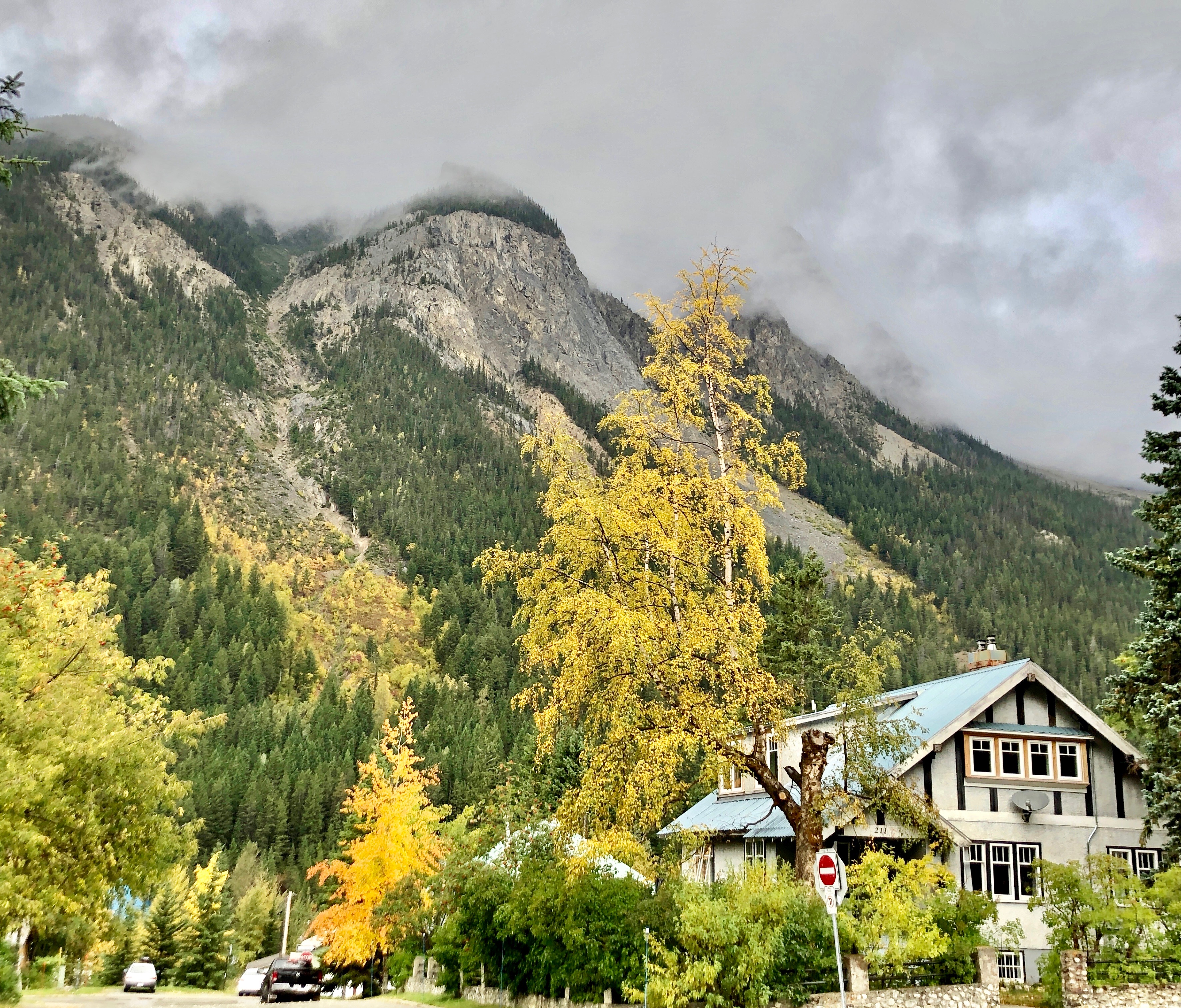
A few kilometres before the Emerald Lake turnoff, we pull into the small town of Field. Nestled at the foot of Mount Stephen, it is a gem, a gathering of history where mining preceded the settlement necessary for the advancement of the railway over the Kicking Horse Pass in 1883. A smattering of tents and timber shacks housed construction workers for the Canadian Pacific Railway; then eventually a name change to Field in the hope of wooing a would-be, but ultimately unrequited, American investor.

It’s a cold, misty afternoon as we enter the town. The deep rumbling of a CPR train echoes through the valley as it slowly grinds to a halt, stopping precisely in front of the old Telegraph building. The train seems like ‘a mile long’ but unlike the past, groups of tourists do not hasten off the train to dash-off a quick telegraph during their 20 minute stop.

Imagine it’s the late 1880’s. As in Banff and Lake Louise, the CPR has built yet another hotel to attract tourists and capitalise on the stunning scenery. Yet this smaller hotel in Field is initially designed as a simple meal stop between Banff and Golden – the steep grade of the ‘Big Hill’ at Kicking Horse Pass rendered dining cars too heavy to haul. By 1902 and with a major expansion, Mount Stephen House is as lavish as the outdoors is wild. Wealthy visitors ride the rails, soon stopping for the health, recreation and sheer pleasure of the mountains.

As I read about the Mount Stephen Hotel, I come across this fond endorsement:

“No intimation was given to me, that I should find Field a charming place and it has been a pleasant surprise to discover in the heart of the Rockies, as delightful a nook as any person may desire.” Edward Whymper 1901, First mountaineer to climb the Matterhorn.

His quote leads me deeper into the fascinating history of Swiss guides in the Canadian Rockies. It starts partly in Banff, in Golden, in Field, where to stimulate tourism, and to radiate confidence, experienced Swiss guides were brought in to escort amateur mountaineers. After a climbing accident of an American climber in 1896, the CPR realised the value of these seasoned experts and indeed when Englishman Edward Whymper, renowned for ascending the Matterhorn, promoted the Canadian Rockies as “50 Switzerlands in One“, the Rocky Mountains entered the world stage… waiting to be scaled and explored.

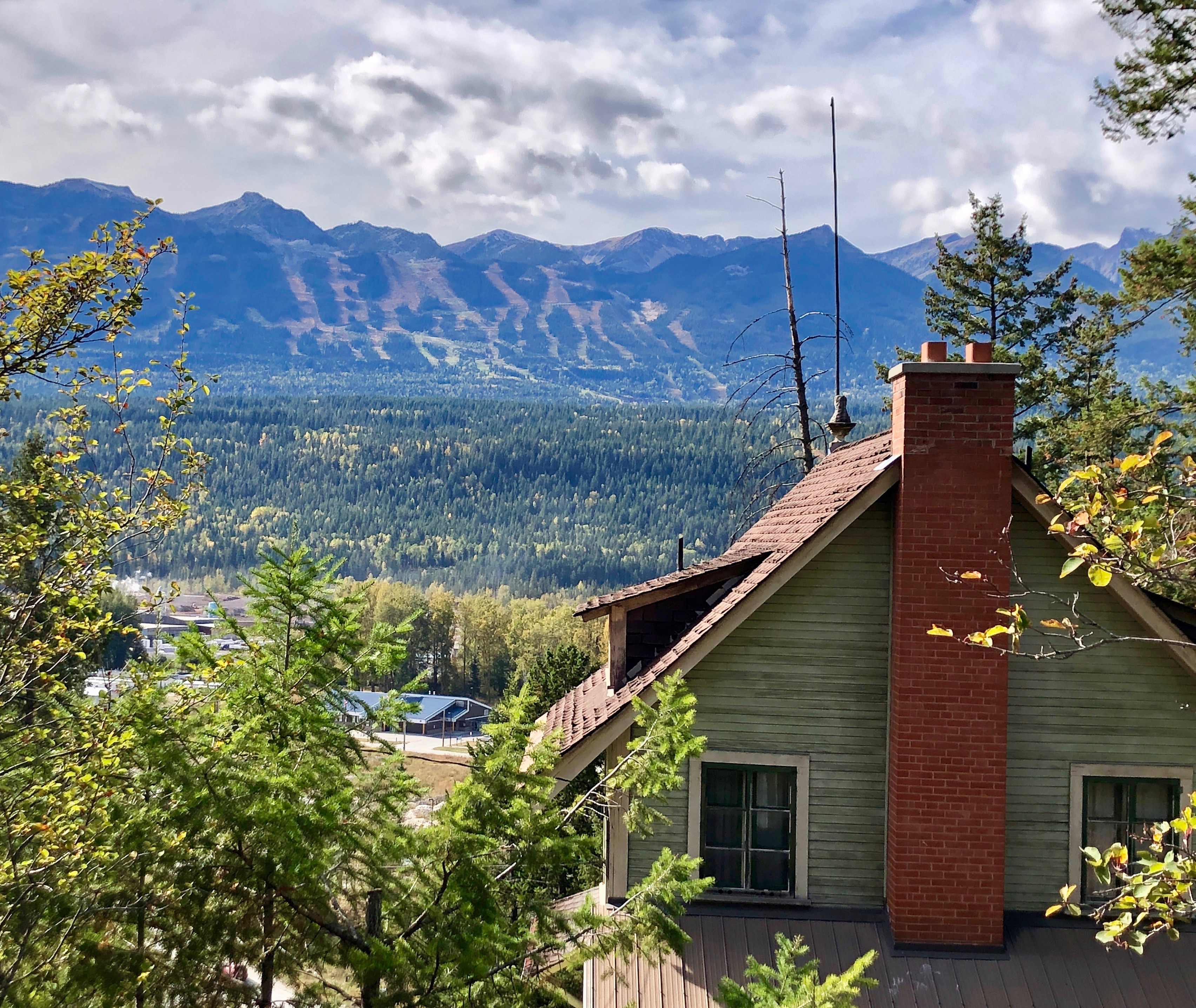
Swiss mountaineers were employed during the summers, returning home to Switzerland over the winter, though a number over-wintered working as caretakers for the seasonal CPR hotels. Of the fifty-six first ascents of mountains over 3000 metres prior to 1911, not less than 50 first ascents were made under the steady hand and sure foot of these experienced men. By 1925, CPR’s 35 Swiss Guides had led more than 250 first ascents in the mountains of western Canada. With no fatalities in their care, and perhaps basking in their reputation as gentlemen and colourful characters, many would bring their families to make Canada their home – especially in Golden at the purpose-built Edelweiss Village. A few striking houses still remain, high above the town on the eastern flank of the Rockies.

Today, Swiss guides are credited with laying the foundation for the birth of skiing and perhaps even shaping winter sports as a pastime in Canada. Their legacy also remains in the names of our mountains, our ‘Swiss chalets’ at ski hills, not to mention our propensity for Swiss fondues after a day on the slopes!

Swiss Guides and their namesake mountains

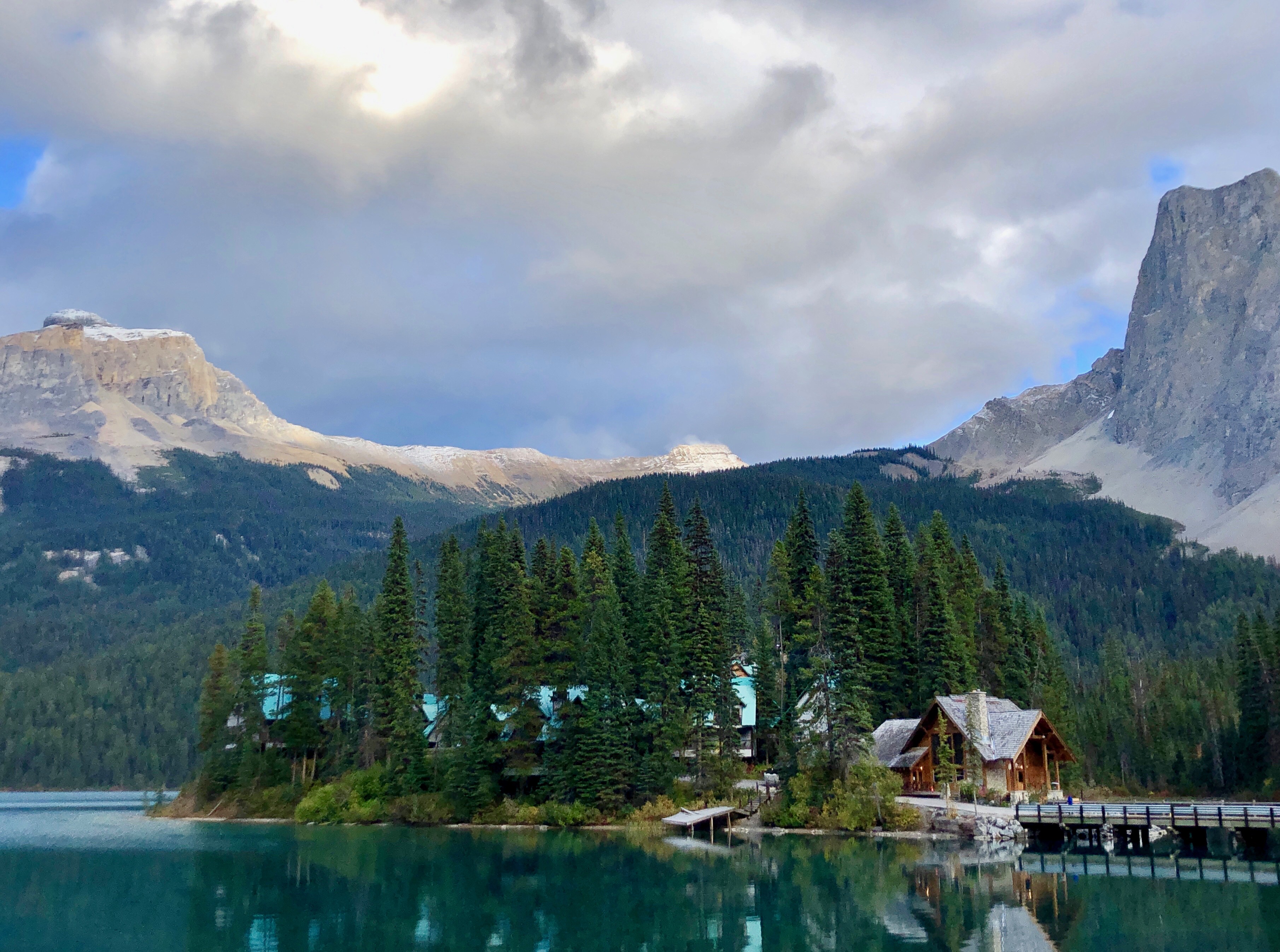
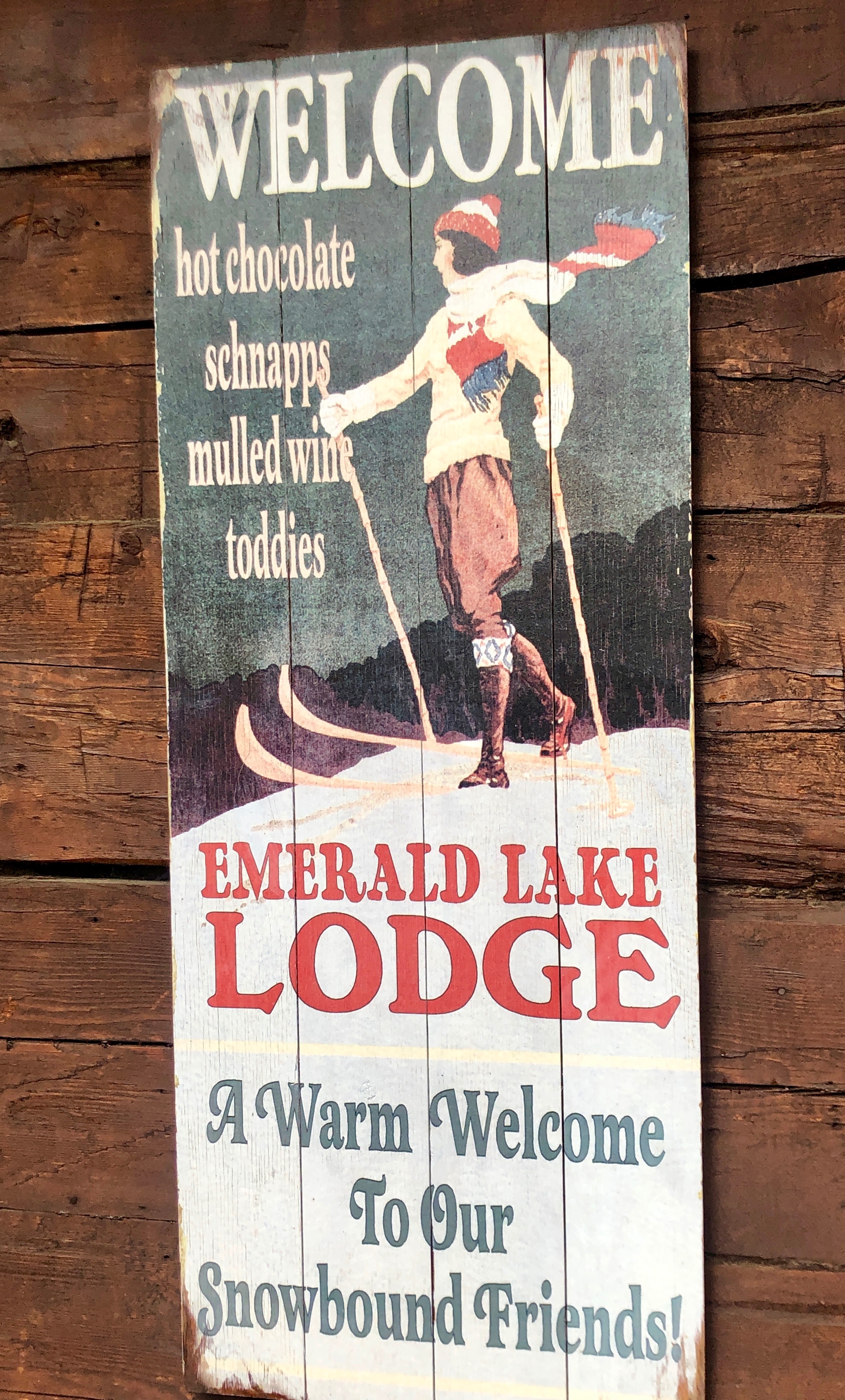
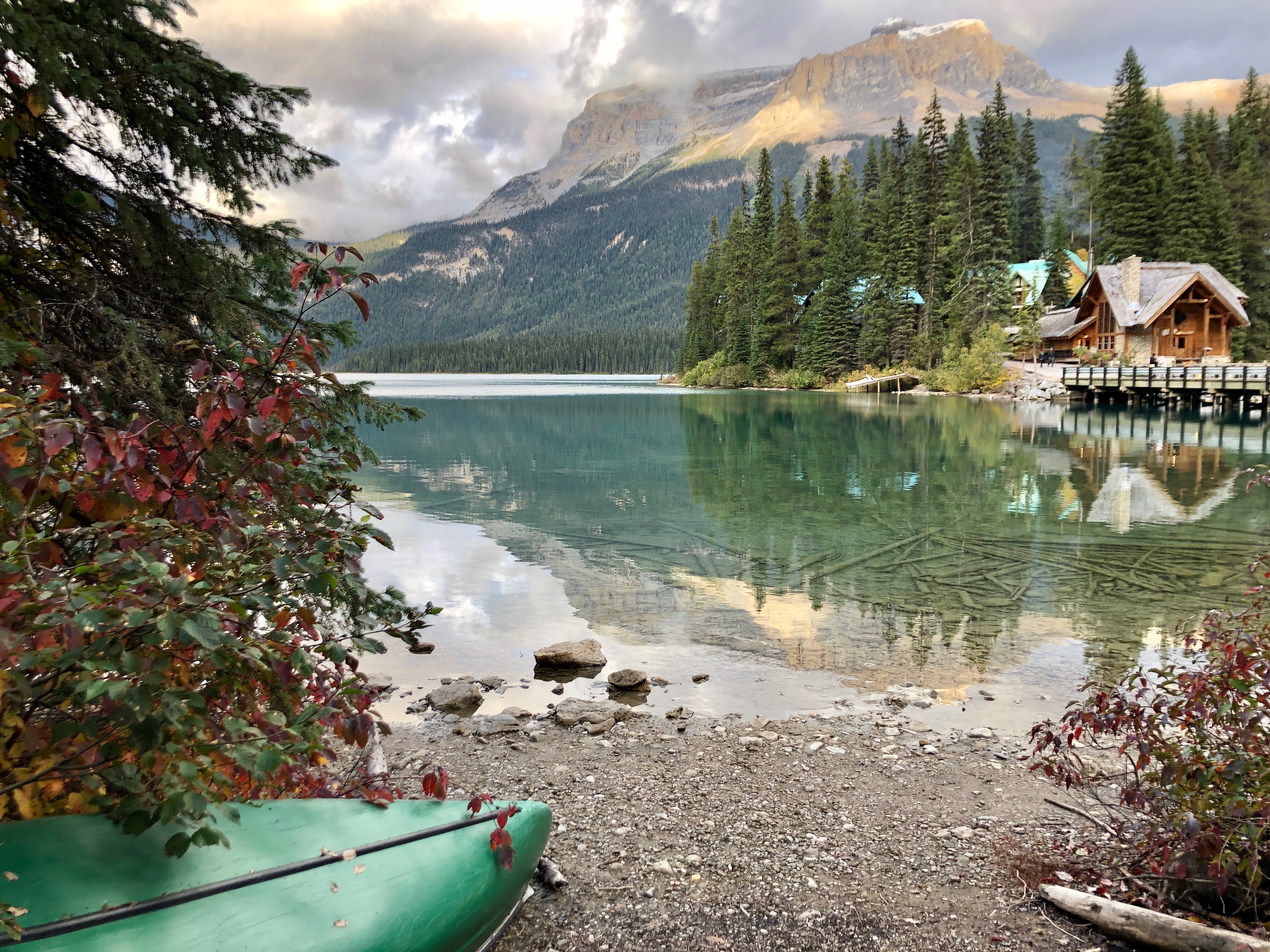
We meander onward from Field to our final destination, Emerald Lake, the darling of Yoho National Park. Although it’s our first time here, the lake’s image is iconic Canadian… and is as stunning in person as it is in photos. The lake derives its vivid colour from powdered limestone and nestles under Mount Burgess of the famed ‘Burgess Shale’ – the fortunate preservation of middle Cambrian (508 million years old) fossil beds, yielding species never before seen. The basin traps epic storms, and moisture, nurturing forests of western cedar and yew, hemlock and white pine.

We walk the five kilometre route around the lake, marvelling at the old growth, savouring the birdsong, glimpsing the shimmering lake through the thick forest. We stay in the Emerald Lake Lodge, remembering the first tourists and the Swiss guides. We chat with the staff, gathered from other parts of the world who are having their own unique experience in the Canadian Rockies.

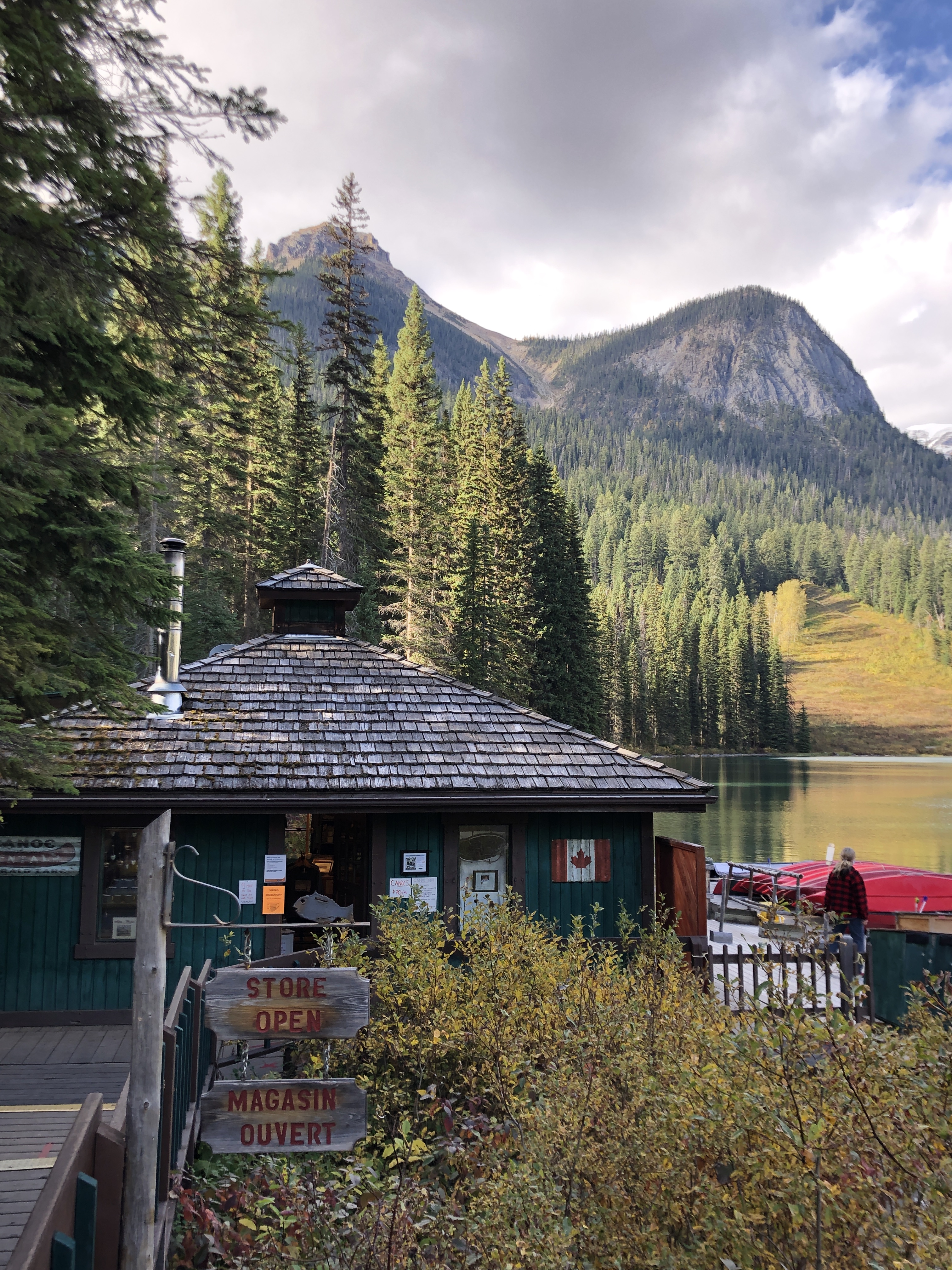
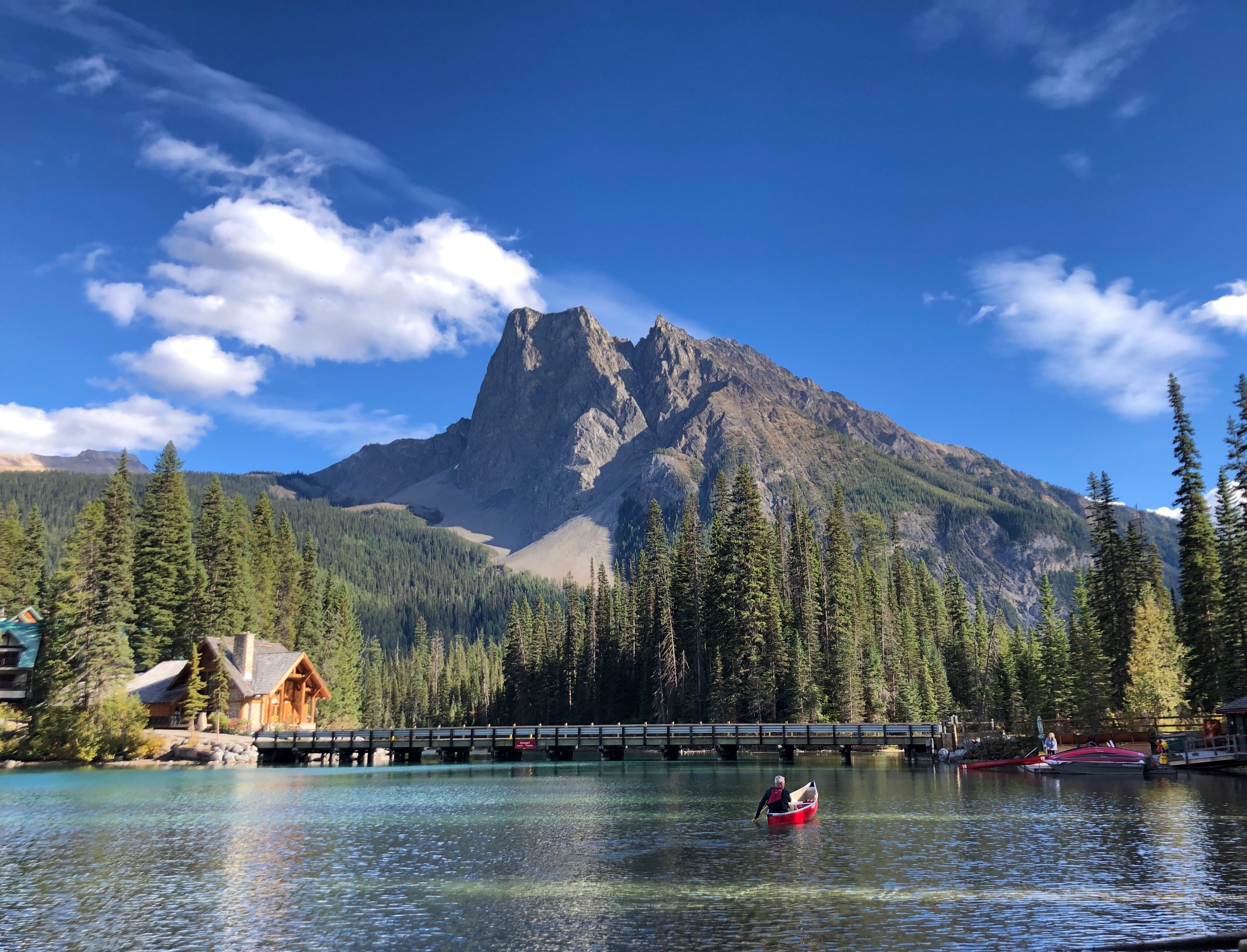
And finally, we heave that red canoe off the car. It’s a cool but sunny, clear afternoon and we spend hours on the serene lake. It is simply spectacular in a way that can defy description – and so, abandoning my search for new descriptive adjectives, let’s simply call it ‘Canadian-National-Park-iconic’. In the middle of these emerald waters I spread my arms wide and yell –”Yoho!”

Throughout the long paddle, we gaze into the turquoise water, up to the looming mountains, and over to each other and agree… this is the perfect ending to the season.