Category Archives: Travel

Street Art in Penang…tri-shaws and Chinese lanterns

Standard

IMG_0855If you’ve ever doubted the positive influence of art, you might wish to reconsider. I’m in Penang, Malaysia, where street art has helped revitalize and create a cool vibe for travellers and locals alike.

I’ll be honest, I wasn’t immediately taken with Penang; the street art was bridging a gap until I started peeling away the layers of history that make this island so fascinating. It’s a living testament to its multi-cultural heritage and unique architecture.

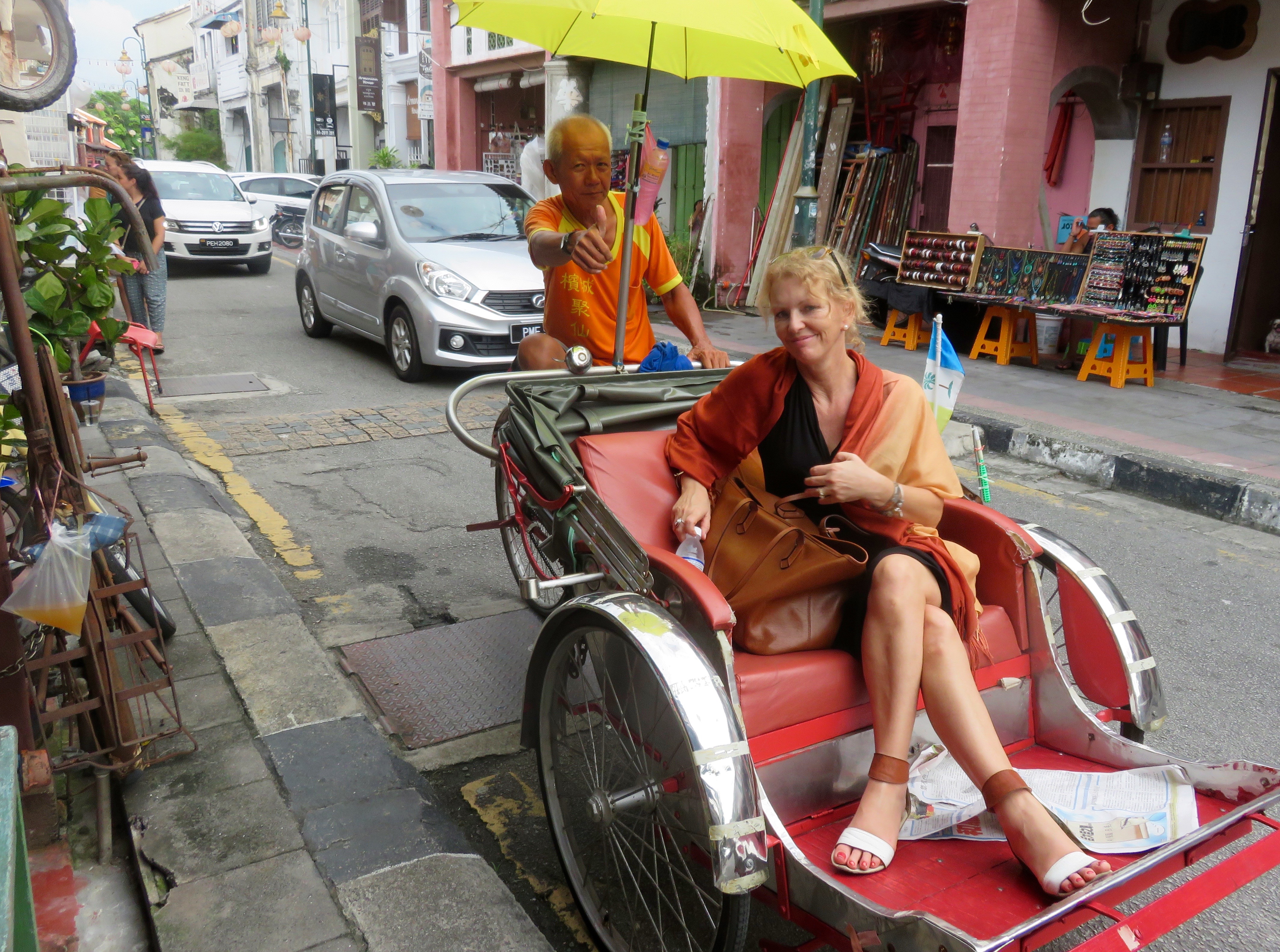
Wanting first impressions of Georgetown, the inner city of Penang, I sought out a tri-shaw. Considering the vast number of these well-traveled, three-wheeled contraptions, it felt like the natural way to orientate myself.

“See street art?” the tri-shaw peddler asked as I sunk into his passenger seat, a welcome respite from the long day of travel.

“Sure, one hour please,” uncertain as to how long it would take to see IMG_0724the murals. The vast array of them was a complete surprise. And I couldn’t have known how delightful and engaging they’d be.

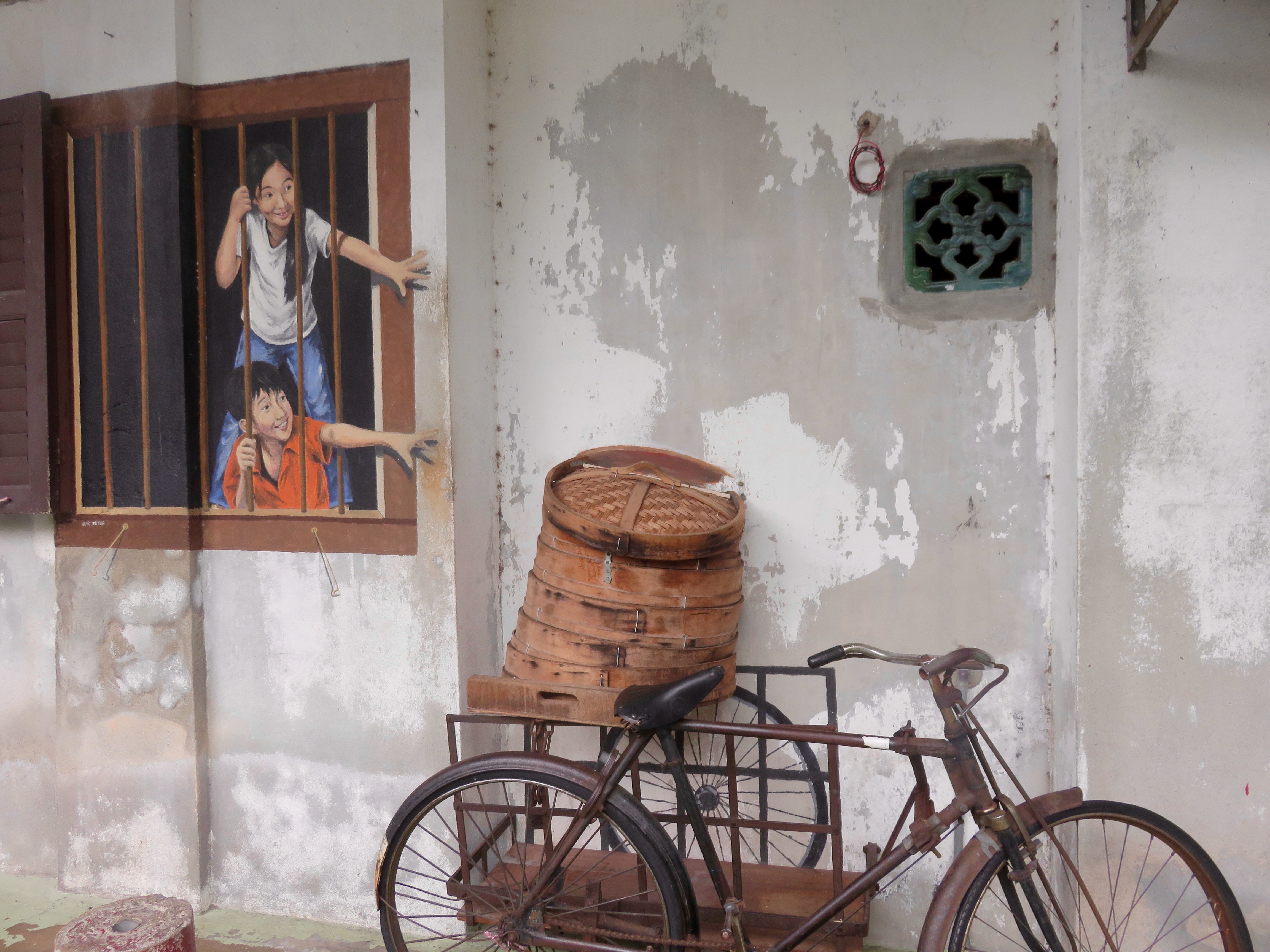
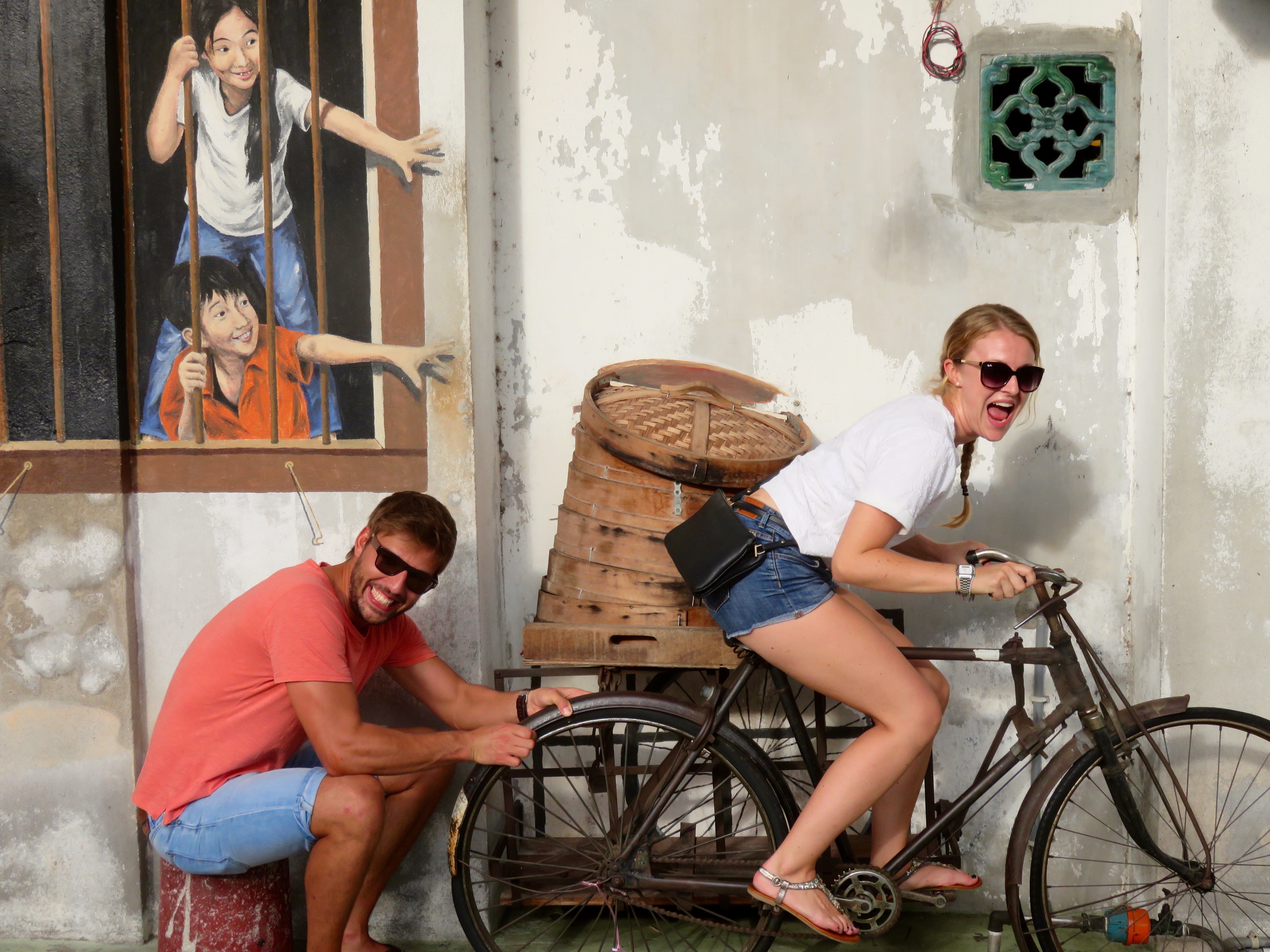
The images depict scenes of everyday Malaysian life, with local people and heritage as the inspiration. They’re honest and often fun, a combination of paint and installation; a strategically planted bike, swing, or motorbike, completing the painted scene. Wonderfully, the pieces encourage participation as people pose with the images, creating their own interpretation.

My tri-shaw chauffeur, Mr. Goh, often encouraged me to hop off his ‘chariot’ to take photos and pose. He expertly manoeuvered his three-wheeler through the hectic narrow streets and threaded it in and out of alleyways to find some of the more hidden away murals. Unfortunately, his limited English prevented conversation, but he pointed out each mural with a smile in eager anticipation for my reaction.

IMG_0723We stopped at a popular mural where people waited patiently to pose on the bike while a young couple created their own ‘masterpiece’. They became the star attraction as we all took their photo and chatted amongst ourselves. It’s clear that street art encourages interaction.

Mural after mural was revealed as we made our way IMG_0715through this Unesco World Heritage Site. Named after George III, Penang was ceded to the British East India Company in 1786 by the Sultan of Kedah, in exchange for military protection from Siamese and Burmese armies. The golden age of Penang was soon ushered in with tin, rubber and shipping industries. Other Europeans followed the British, as well as Arabs, Armenians, Burmese, Thai, Japanese and Indians to name a few. The most prominent group were the Chinese and still today, Georgetown reflects the rich layers of culture that they and the other settling pioneers brought with them.

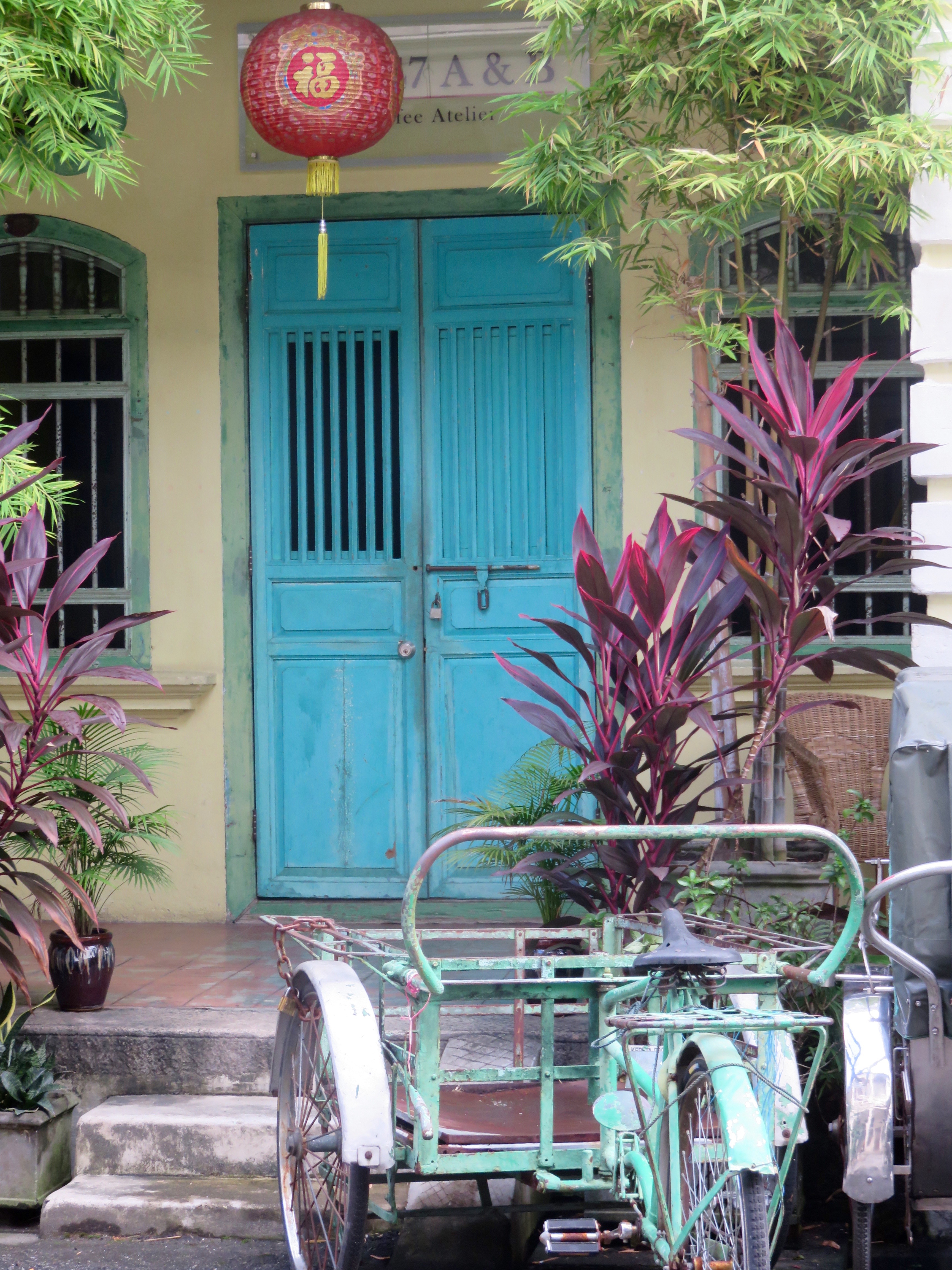
As Mr. Goh navigated through the narrow streets, I soaked in the street scenes of Chinese mansions and shophouses, many having been restored since the Unesco World Site designation. Chinese lanterns decorate most entrances, often intricate, always colourful and steeped in meaning. I peeked inside long, IMG_0714narrow go-downs (warehouses), marvelled at colourful Chinese temples and admired statuesque Colonial-style buildings. Diverse peoples have given Georgetown its fascinating mix of culture and architecture. The street art is a modern extension.

I learned that a young painter, Ernest Zacharevic from Lithuania is credited for many of the installations, but I find out a little more when I have lunch with some new friends today.

Of course some of the conversation touches on Penang and I mention the street art.

IMG_0728
“Yes,” says Geokling, “it’s a good story. And it’s done so much to bring life back to Georgetown, but it wasn’t entirely planned.”

I had been told that Geokling has the inside story of just about everything one needs to know here. Her enthusiasm is evident as she relates the tale.

“This young backpacker comes to IMG_0860 (1)Penang and decides to stay awhile. He does some busking and asks if he can paint something on one of the walls.”

I could understand his mindset as many of the buildings are a little ‘worn’ with faded layers of plaster and paint hinting at years gone by. That first mural drew attention but has since faded. Ernest returned the following year which happened to coincide with the
upcoming Georgetown Festival in 2012 and was commissioned to create more installations. They triggered an overwhelmingly positive response from the locals. The artist said he “was thrilled to unleash the creativity tucked away in the streets.”

IMG_0758“Ernest is a celebrated muralist these days,” Geokling tells me as she scrolls on her phone to show me his latest installation in a Singaporean hotel.

We both agree it’s wonderful to hear a story where a simple passion creates IMG_0871opportunity, when a little luck changes a life. And for the local people and those who visit Penang, the street art is an endearing, welcome addition to the rich culture of Georgetown.

After lunch, I’m given a ride along the waterfront by one of the young fellows who had been in the lunch group. As we pass back along Beach Street, I happen to see my favourite tri-shaw peddler on the corner, just where I had found him.

“Gosh there’s Mr. Goh,” I say out loud, “I’d love to take another tour.”

“Should I let you out here?” Frank asks.

“No, I really shouldn’t, I have a blog to write. Would you mind dropping me off at China House please IMG_0846.”

IMG_0699And so I find myself in the trendy, impossibly long China House that I had been told I must visit. It comprises three heritage buildings linked by an open courtyard that houses a cafe, restaurant, wine bar, galleries and a stage. The atmosphere is indicative of a new direction in this centuries old trading settlement that cherishes the past, but knows it must also embrace change.

“Young people are coming back to Georgetown to hang out,” Geokling had told me. That’s evident this late afternoon as candles are lit and animated chatter floats my way.

This is the kind of place in which I love to write; embraced in the whispers of the past but alive in the exuberance of today.

I look forward to returning next year and peeling back more layers of this treasure that is Penang.

IMG_0749

Notes from a Thai Island…singing birds in bamboo cages

Standard

IMG_0285 (1)We packed our pens and notebooks for a grown-up field trip. With our hats donned and cameras poised, the destination was Koh Panyee, in the inlet of Thailand. I had been here before with my family. This time however, a writing assignment was on my mind.

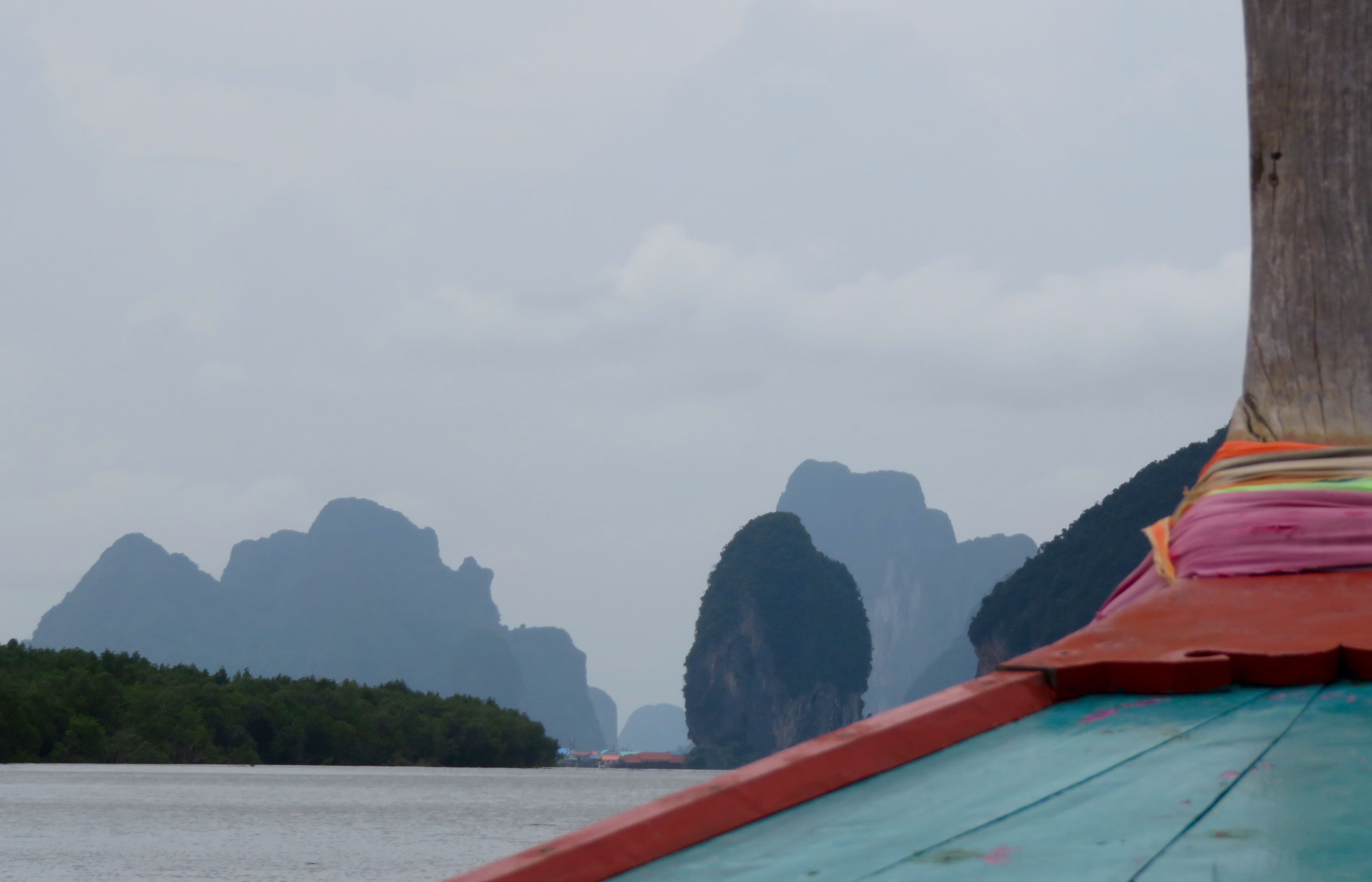
The village of Koh Panyee is surrounded by shadowy, fingerlike mountains. Reaching up from calm waters, they are serene, yet evocative and mysterious as they entice visitors into their enclave.

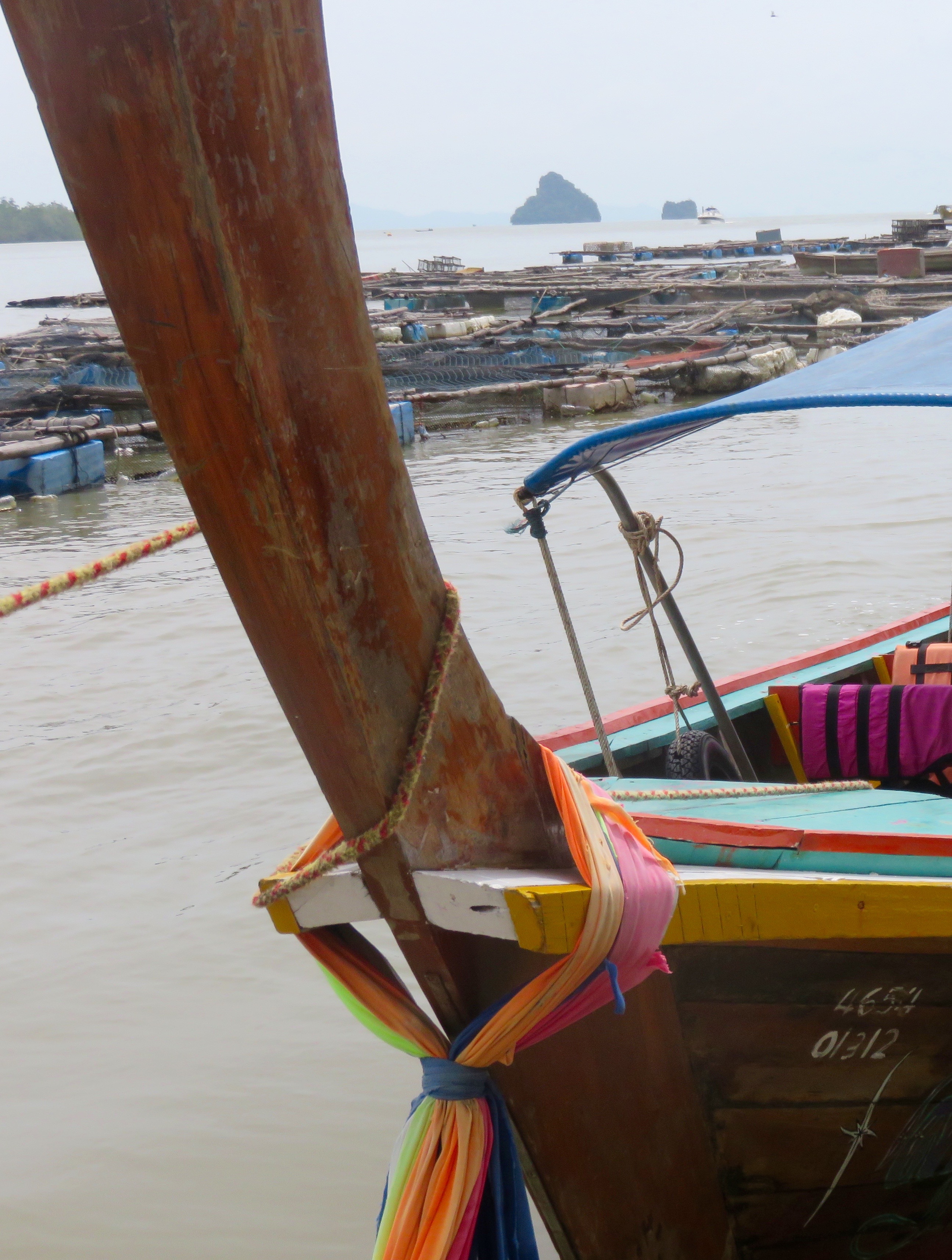
As our longboat glides into the harbour, we circumvent fish lines and crab traps, and groups of traditional longboats. This is how one arrives in Koh Panyee…for it’s a village that resides on bamboo stilts.

IMG_0305Sturdy longboats have long been the desired mode of transport in these waters. A solid column rises from their prow like an IMG_0426upturned tail. Adorned with vibrant tassels of cloth, I’m told they protect the safety and spirit of the vessel.

Thai people believe that each mode of transport possesses a spirit, so best to honour and respect it. The swishes of cloth compliment the often brightly painted vessels and provide a grip for fishermen to drag their boats home into shallow waters.

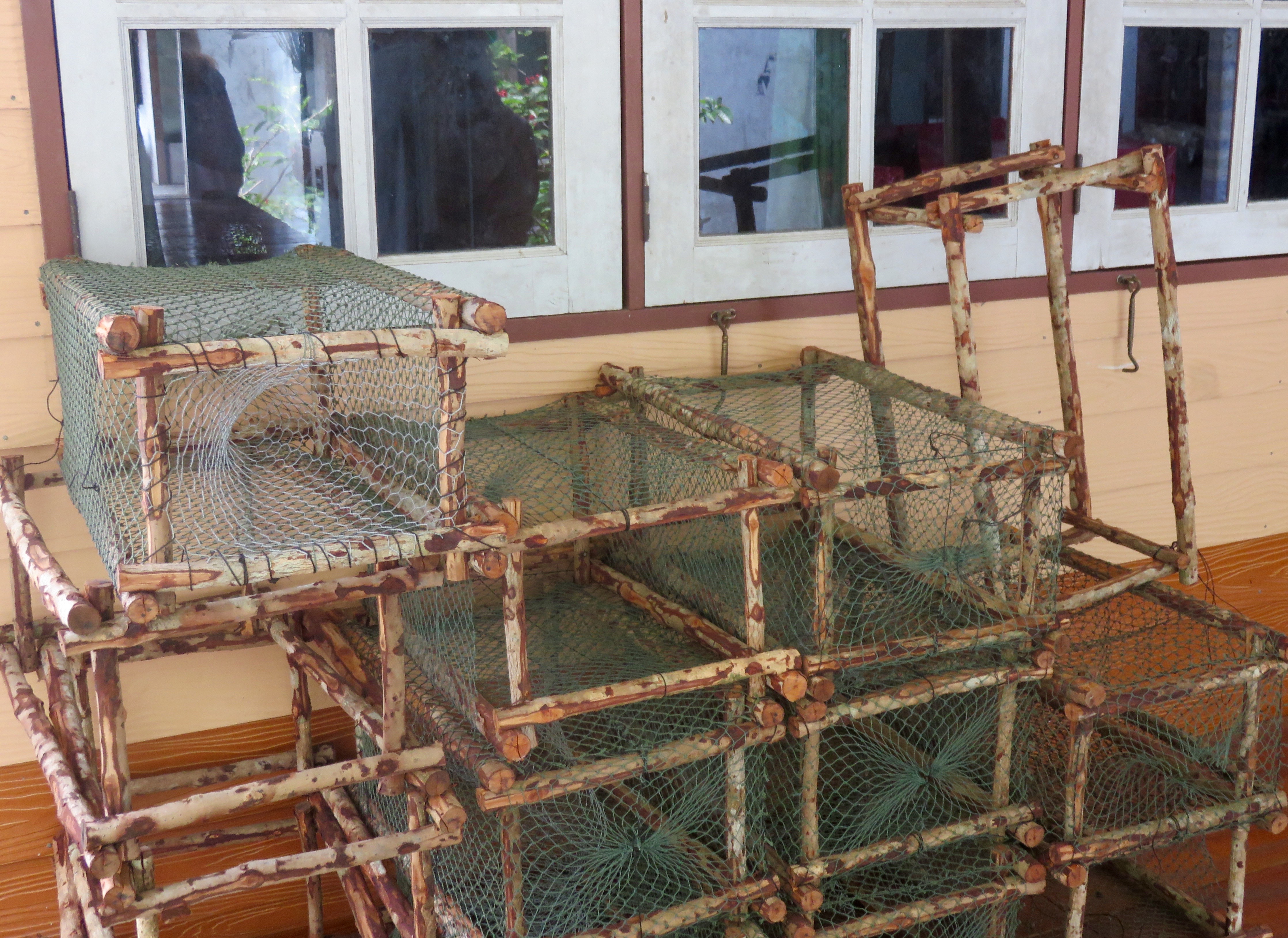
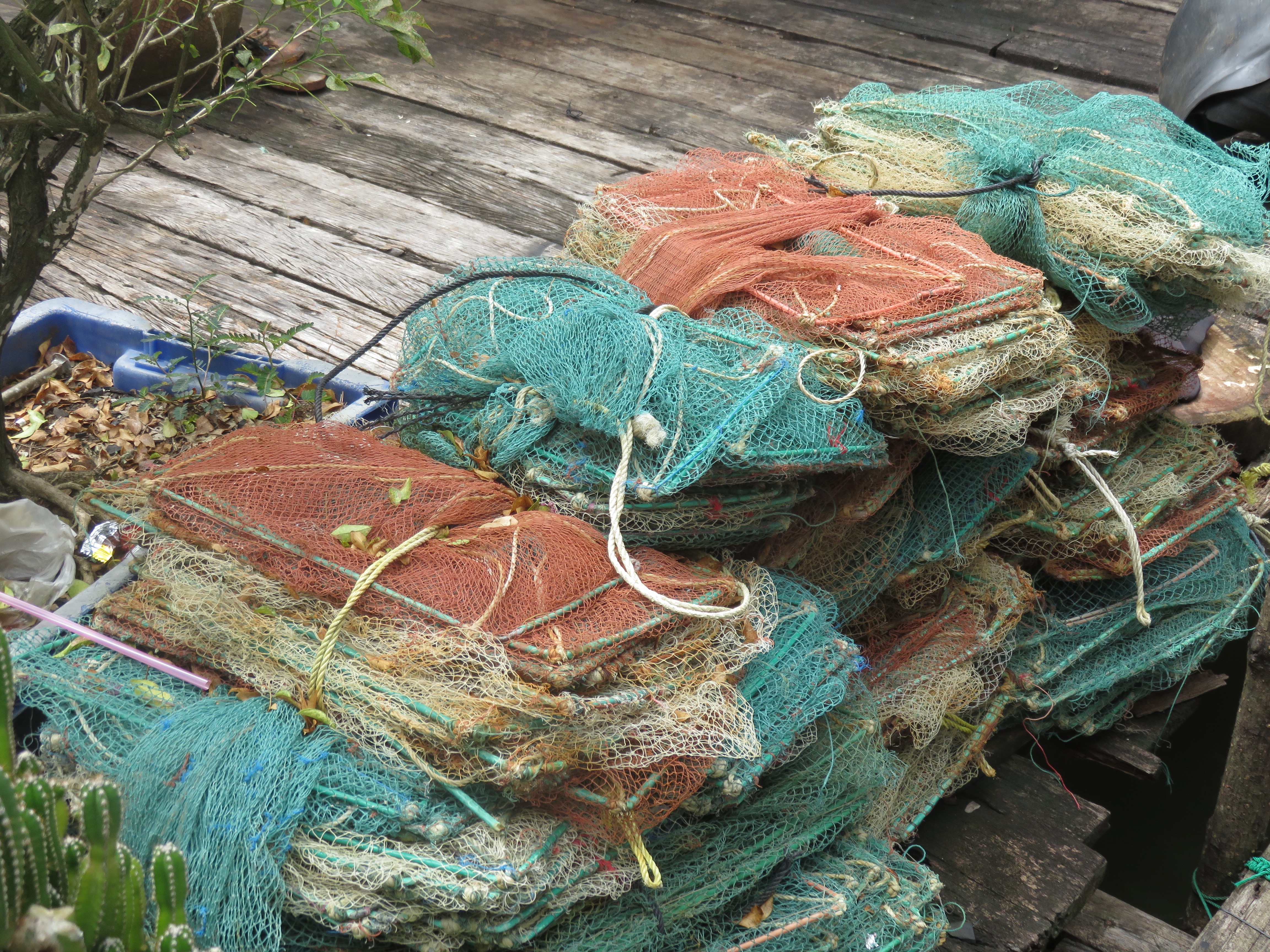
Koh Panyee’s population is descended from just two seafaring Muslim families. Settling here at the end of the 18th century, the fishing trade that they established is still evident as we disembark on the simple dock. Bamboo fish traps rest on knotted planks, tangles of nets cluster on poles and colourful netted piles lay at the ready.

A puzzle of spartan homes and shop fronts greet visitors to Koh Panyee. This once secluded island has welcomed tourism. ‘James Bond Island’ is nearby which attracts  sightseers and snorkelers alike.

IMG_0310After disembarking, we wander the humid labyrinth that offers the usual array of elephant printed skirts, frocks, sarongs and slouchy bags. By day five in Thailand, we’re a little more discerning and hope for something unique.

And we soon find it. Fresh water pearls are here in abundance with their milky shades of cream, lemon and white, on offer for a pittance.

A vast array of sea shells is also displayed, much of it having been fashioned into jewellery, key chains and tinkling chimes. It crosses your mind…does it eventually all get sold?Perhaps stuffed into suitcases and carried off to other lands where it’s appreciated…or sadly, perhaps not?

And then there is the abundant coconut merchandise, carved into spoons, bowls and combs or left in its organic form of IMG_0306cooling coconut juice. Hollowed coconut shells appear stuffed with orchids, hanging here and there, thriving in the sultry air.

I notice slivers of bamboo that have been coaxed into welcome mats, baskets, water buckets, paddy-bins and rice vessels.

Rice is vital to daily life; what with carrying, threshing, winnowing and measuring of its vital staple. Pliable cane is also abundant and forms the basis of many kitchen essentials.

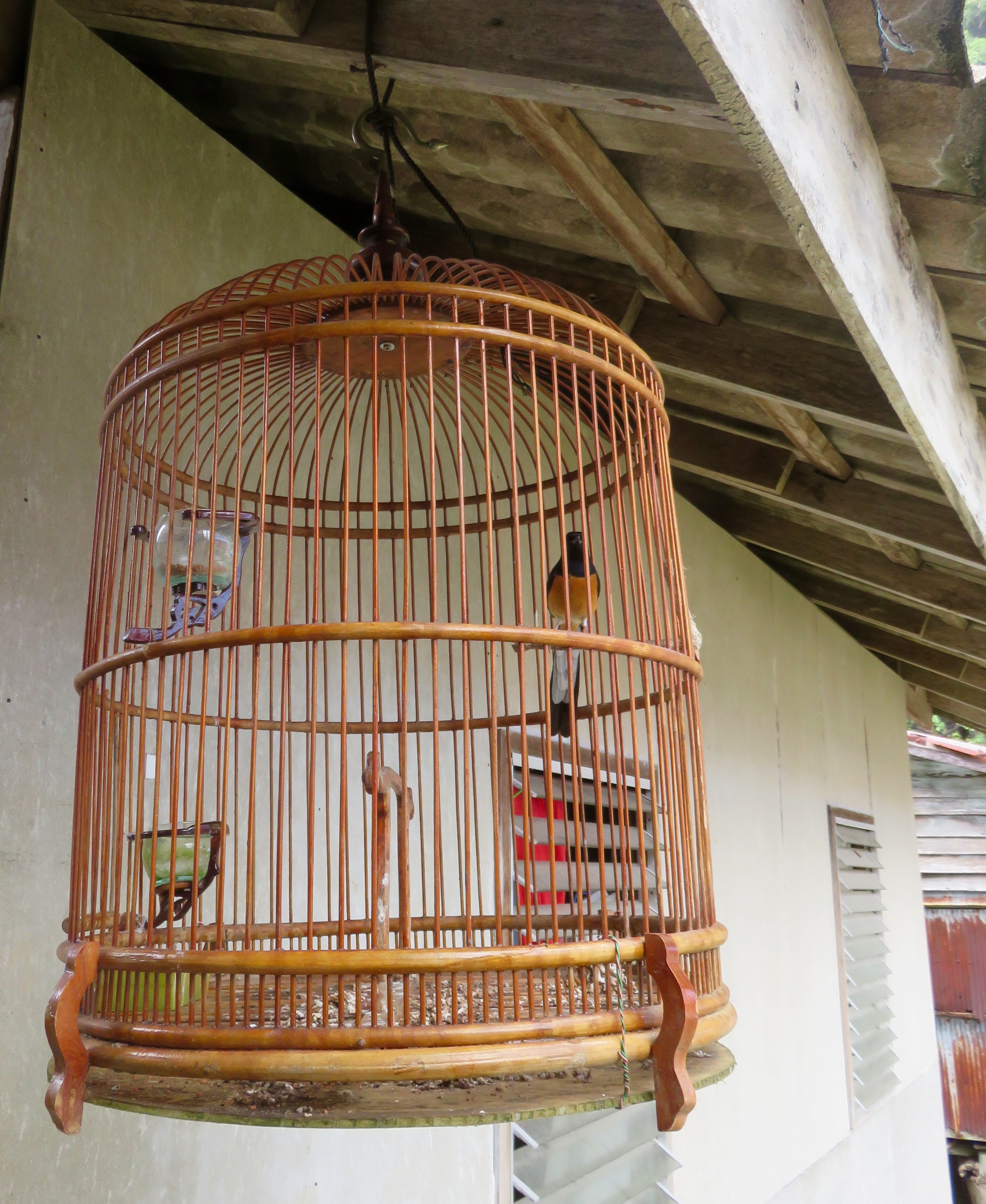
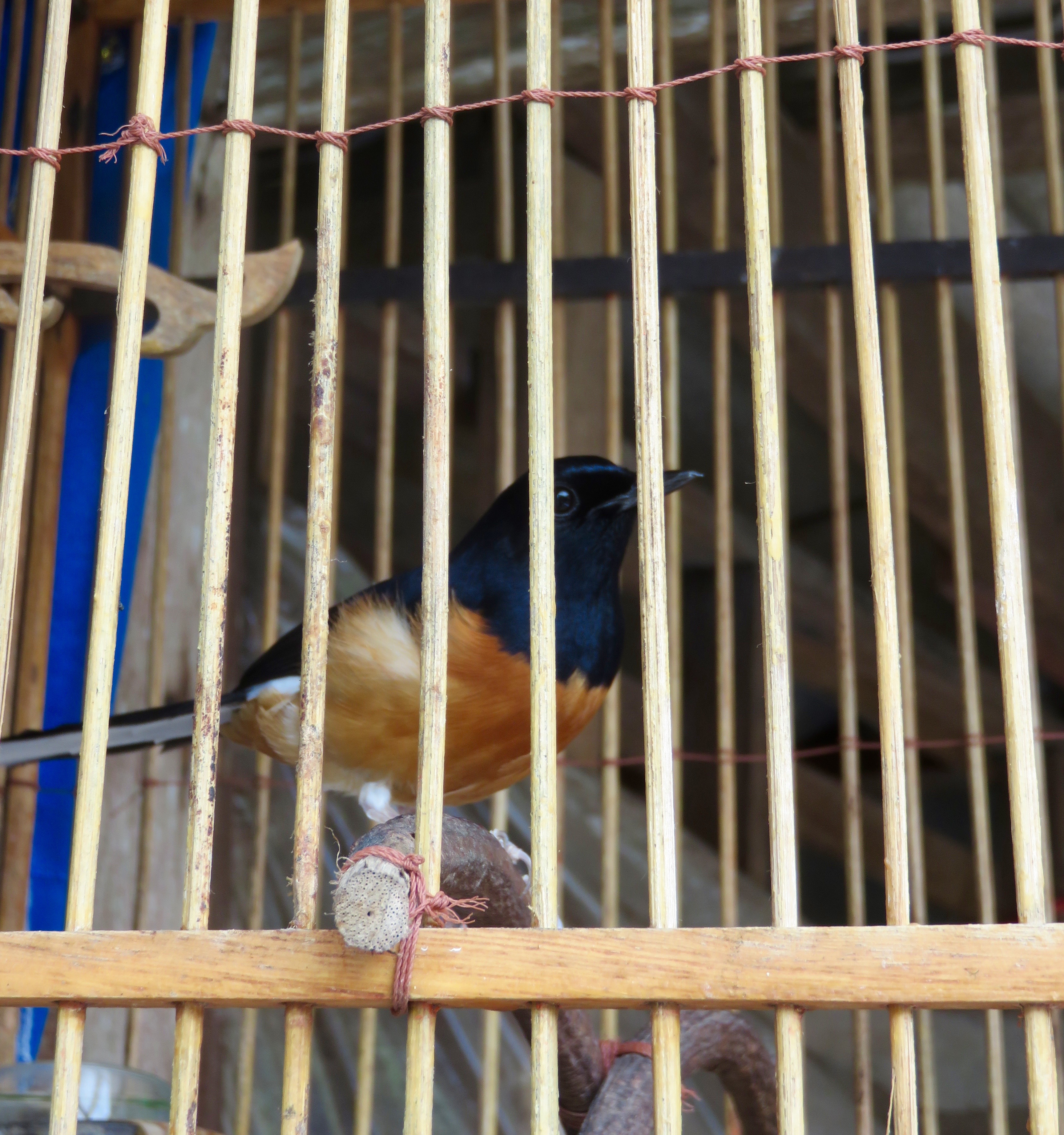
IMG_0325Most of all the bird cages speak to me. Intricate strips of bamboo have been crafted into round, square or hexagonal enclosures. They’re not gilded, but somehow the earthy material seems less restrictive for the ruffled birds that inhabit them. Cages hang in most store fronts, between narrow strips of buildings and in shady corners of simple homes.

The lyrical chirps and serenades seem to lighten the lanes and distract from the still, suffocating air. I ask about the cages as I approach a shop.

Sawadee-kaa,” a man greets me as he comes forward from the shadows of his home to his shop front. His batik sarong is knotted at his lean waist and he seems open to conversation.

“Bird competitions very important in Southern Thailand,”he tells me with a knowing smile.

“High status to have winning bird. Which bird can sing best, longest, maybe happiest.” TheIMG_0387 affection for his feathered friends radiates from his eyes.

“What kind of birds do you have,” I ask, noticing multiple cages in his home.

“Red-whiskered Bulbul,” he says proudly, “the best, sing better, ka?  Must have tropical fruit first, no sing without sunshine.”
“Hmm, I didn’t know,” I admit, and it dawns on me that I’m surrounded by more than just pet birds. They’re performers, competitors, even prize winners. And they’re discerning.

“Rainy day very bad,” the shop keeper assures me, motioning to the patter of rain on the tin awning above us.

IMG_0321I discover that competitions are cancelled if there’s rain, for seemingly the birds are only willingly to serenade when the sun shines. Competitions are held in open fields with the location only revealed to those who enter, and maybe to those who want to bet a bhat or two. And perhaps not surprisingly the earthly competitors are men…it seems it’s a man’s pastime.

I linger at the cages, watching the birds flutter and flit. It’s easy to adore these delicate aviary homes and appreciate the valuable species inside them. I check the latches of their tiny doors; and yes, they’re most certainly locked.

We make our way out of the covered market street, desperate for a breath ofIMG_0356 air. The chatter of school children greet us as they slide into their shoes that await outside the classroom doors. The open-air school transports me back to schools that my sons attended in Qatar and Oman with their hallways open to the elements. As here, I find it creates a joyous, uninhibited atmosphere as children go about their studies and play. Happy memories of my children’s early school days flood back to me and I am transported by the familiar scene.

IMG_0363This island school is awash with colours of pink, baby blue and sea green; uniforms for both girls and boys alike IMG_0351are a soft pink. The youngsters play tag, giggle for photos and gather for after-school band practice. It’s difficult to pull myself away from their carefree presence.

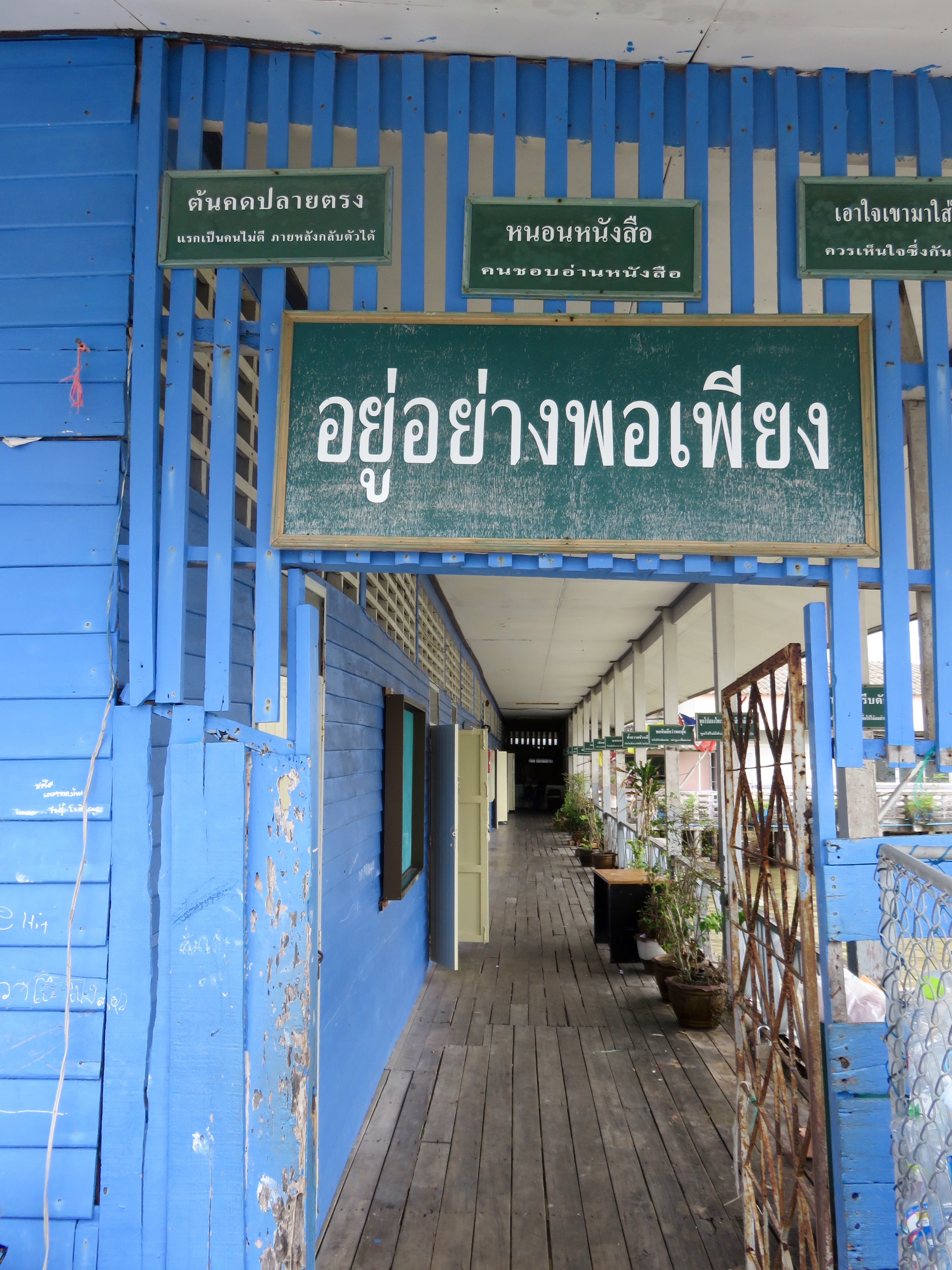
But the moment is soon lost as yet more tourists pace through the school yard. I peek down a side hallway for quiet. I delight in a scribbled note on a chalkboard in both English and Thai. I gaze out to the calm of the scenery that encloses Koh Panyee. Yet more boats crammed with eager tourists are edging their way towards the stilted settlement, eager to see the sights – part of me is dismayed with our intrusion.

IMG_0367I imagine there is a serenity that returns to this community at nightfall, when the tourists retreat and the waters are silent from boat engines. Around 1700 souls live here and I’ve been welcomed into their unique way of life. For the villager’s sake, I hope their culture is preserved despite the continuous curiousity of tourists.

Today, I was yet another of those tourists. I took away some strands of pearls and appreciated the ‘little things’…like intricate bamboo bird cages, smiling children absorbed in their school day and the camaraderie of fellow writers on a field trip that we Phuket Paradise Writer’s, happily found ourselves on.

IMG_0360

A bicycle built for two and a Dutch fiets…exploring on two wheels

Standard
IMG_7577

Bikes and canals in Amsterdam

I’m the proud, new owner of a tandem bike, a bicycle built for two. It’s old, a classic Canadian made CCM and I can assure you that it’s rather cumbersome to ride. Yet somehow it evokes the romance of cycling experiences enjoyed around the world. Bikes have been our conveyance of choice in many places, affording glimpses into varied, everyday cultures that could not have been replicated by car, train, or even on foot.

IMG_7533

Options for transporting on a Dutch bike

We’re in Canada for a number of months awaiting our next overseas posting and I’m sure we’ll master the tandem. Yet in our mountain city of Kimberley, BC, most townspeople either own a mountain or road bike. Cycling is a way of life here and like most locals, I took to biking on the wooded trails this summer. I enjoyed it, yet admit that my active imagination was preoccupied with the thought of bears, moose or deer crossing my path. Admittedly, part of me is more at home cycling in urban settings. I love the vibe of a bustling city; even better if you can discover it on a bike.

IMG_1723

Artful in Denmark

On a recent trip to Amsterdam I wanted to get to the root of cycling; how does a society embrace it so completely as a mode of transportation? It’s common knowledge that bikes have evolved into the daily fabric of Dutch life. The Netherlands has one of the most efficient cycling infrastructures in the world. Many cities enjoy similar accommodations for cyclists; Copenhagen, Stockholm and Montreal for example, but the Dutch have truly mastered it. Almost 70 % of all journeys are made on a bike, or as we say in Dutch, a fiets.

I fondly remember taking to my fiets daily when we lived in Holland. Through the cobbled streets of Oudewater I cycled, my first-born strapped into a seat slung from my handle bars. A wicker basket attached at the back, ready to carry home the daily shopping. No helmet, even on my little guy, and yes the thought of it now alarms me. It seems I became complacent to the obvious perils or simply, I adopted the Dutch culture.

Bike stories from previous generations in Holland abound in my family. During war time, my grandparents improvised using garden hoses as tires when none were available. My mother and grandmother had a narrow escape when mercifully they hesitated to lean their bikes at a neighbour’s farmyard, then saw from a distance the building destroyed by a bomb a short time later. But there are also fond memories; three generations of us cycling across the border to Germany, evenings out in Amsterdam then cycling back to family along moon-lit canals, absorbed into the pulse of the city.

“Build paths and they’ll be used”

I visited the Amsterdam Museum and discovered that the bike culture is not simply happenstance. Of course the flat landscape has long been ideal for biking, but by the 1960’s new found wealth and progress came in the form of increased car ownership which marginalized cyclists. Quaint town squares were transformed into parking lots. Historic buildings were demolished to widen roads for the burgeoning car culture. Deaths from car accident deaths increased alarming; thousands in 1971 alone, tragically 400 of them were children. This along with the 1973 oil embargo prompted the ever-pragmatic Dutch to protest, ‘stop the slaughter of our children and end the car culture.’

The Government responded and promoted cycling as a mode of transportation; bike paths, junction lights and bike parks were built.

“Build paths,” said one official, “and they’ll be used.” As the Dutch rationalize, “Is biking not the fastest, cheapest, healthiest way to get around? Why would one not take to two wheels when given the opportunity?”

A 'child carrier' in Copenhagen

A type of child carrier in Christiania, Denmark

In fact today, there are more bikes than people in Amsterdam. About 800,000 of them, and as 84% of people have more than one bike, it’s fair to say the city is a ‘sea of bikes’. I still bemoan the loss of my beloved Dutch fiets that transported me along many charming streets. It had been stored in Amsterdam in my great-aunt’s shed but was eventually given away. How I wish it was in my garage today, at home with our seemingly endless array of bikes; if only for posterity.

On my fiets with a great-aunt in Amsterdam

On my fiets with my great-aunt in Amsterdam

Those solid Dutch bikes are ‘people-movers’ as they’re pedalled with one, two, three, even four children at a time. Riding in any Dutch city during rush hour is a sensory experience. It’s terrifically busy, a constant flow of solo commuters as well as parents transporting their youngsters as they chat about their day. Sitting on the bike or in a cargo box (a bakfiets) the weather is of little consequenceAfter all, there are rain/cold weather covers which help during inclement weather. Especially when the family dog, the daily groceries or a case of Heineken is stuffed along-side the kids!

Additions such as bakfiets are extremely functional but would have been unimaginable when two-wheeled machines first emerged in 1817. The invention is credited to Baron Karl von Drais from Germany. Drais invented the ‘running machine’, called a draisine. It was human-propelled and with no pedals, it was more walked than ridden. Hence it’s nickname of hobby-horse.

IMG_3093

A typical sight in Sweden

1027

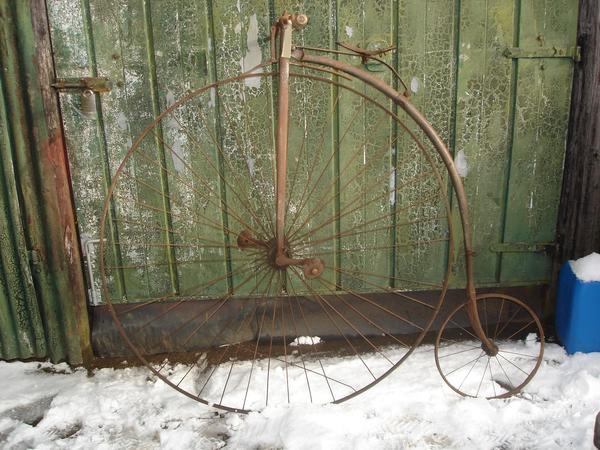
A vintage penny-farthing

Eventually came the bone shaker, then the oddly shaped penny-farthing with a large front wheel and much smaller rear wheel. Rubber tires replaced steel-lined wood and in the 1890’s the safety bike evolved. It was the first machine to be called a bicycle; similar to the design we’re familiar with now.

Many variants of the bicycle have evolved; to road and touring, mountain bikes, unicycles, rickshaws and back to fixed-gear bikes. ‘Fixes’ are single speed and use back brakes, stripped back down to the basics. The zest for simplicity has created a new subculture of riding ‘fixies’ in urban settings.

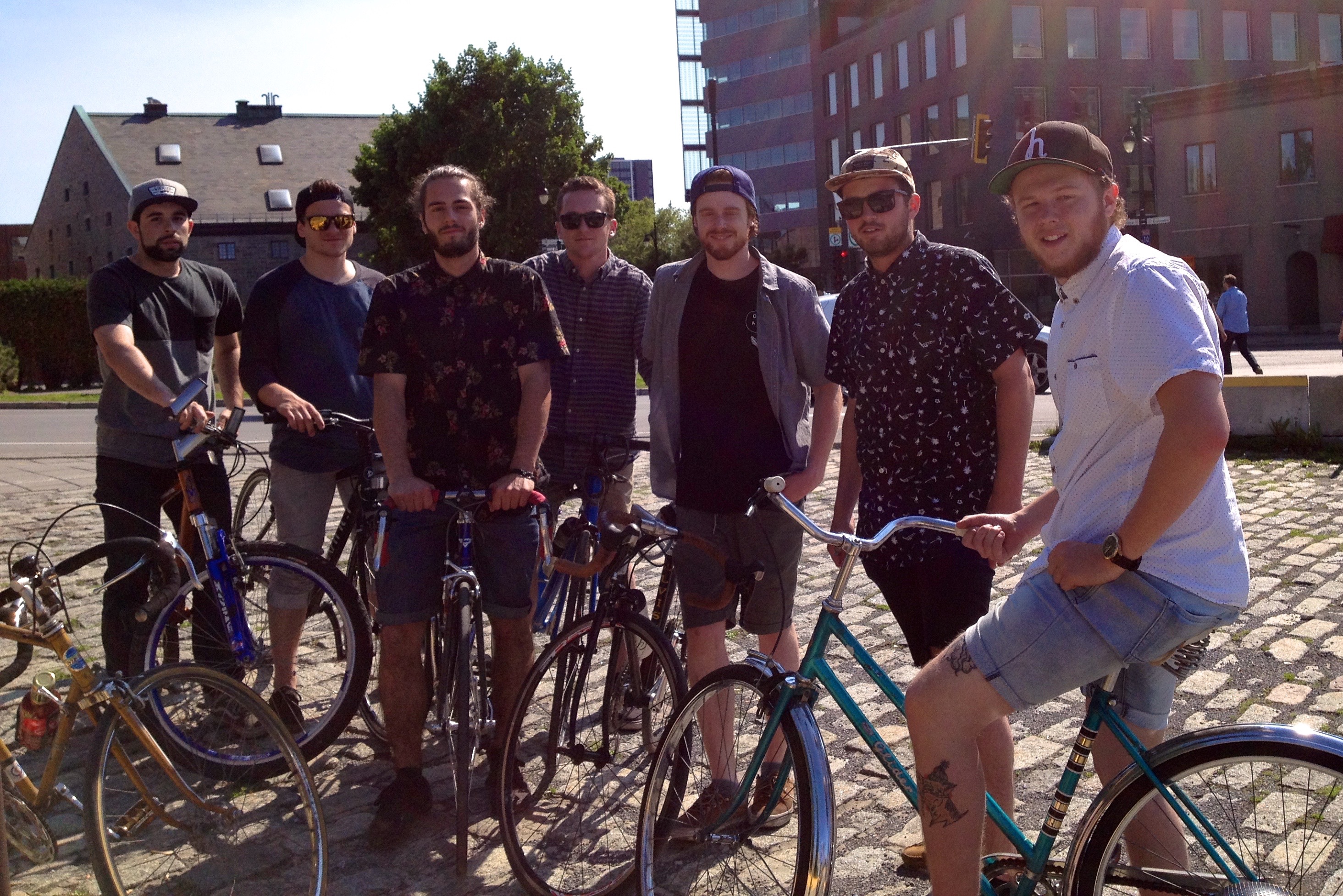
I came across such a group in Montreal, long a city of cyclists. They posed willingly for my camera but it wasn’t until later that I discovered they were sporting ‘fixies’. Chatting with a young man at a cafe in Calgary, he told me that he was studying in Montreal. I mentioned my blog and showed him my photos. “Ah, they’ll be on ‘fixies’ for sure,” He explained the new subculture that these riders have created with this retro trend; the old will be made new again it seems.

'Fixies' in Montreal

‘Fixies’ in Montreal

For many of us who grew up in Canada, our bike experiences started with a trike, graduating to a set of rattly training-wheels, then onto a ‘banana seat’, and finally the thrill (in my day) of a 10-speed. We cycled endlessly. We got ourselves to school, around town and to our friend’s homes on our bikes. Whose front lawns didn’t have bikes splayed on them when friends came over?  We would also jump on our 10-speeds after dinner, eager to see what was ‘going on’. “Be home by dark,” our mothers would holler as we sped off.

Once you become a parent yourself, teaching your child to ride a bike is a rite of passage for you, every bit as it is for them. I recall the joy as my children balanced their bikes for the first time as I reluctantly let go. Running nervously behind them and anticipating the fall I’d exclaim, “You’ve done it! Don’t forget your brakes!”

IMG_2955

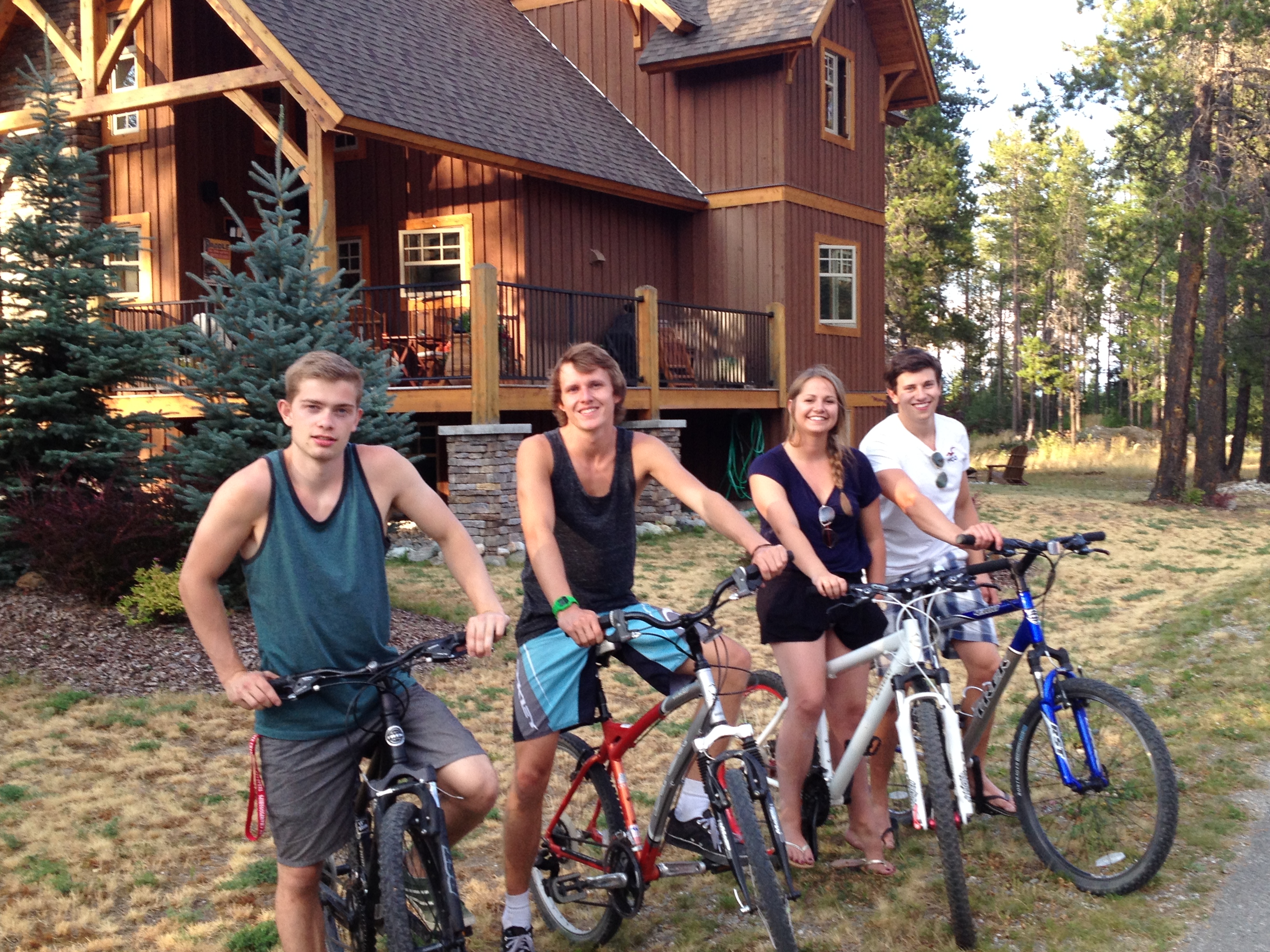
Our youngest, left, and friends out for a pedal

Even today when my grown ‘kids’ hop on a bike, I find it heart-warming. Perhaps it evokes memories of those carefree childhood years, yet I believe there’s more to it than that.

Riding a bike allows us an elemental, exhilarating connection with the world. No hard shell around us, no peering through a window, we are at one with our surroundings; and what surroundings we’ve been fortunate to have explored.

I leaf through my journal from our six month backpacking trip in ’89. I find enticing cycling entries.

IMG_8660

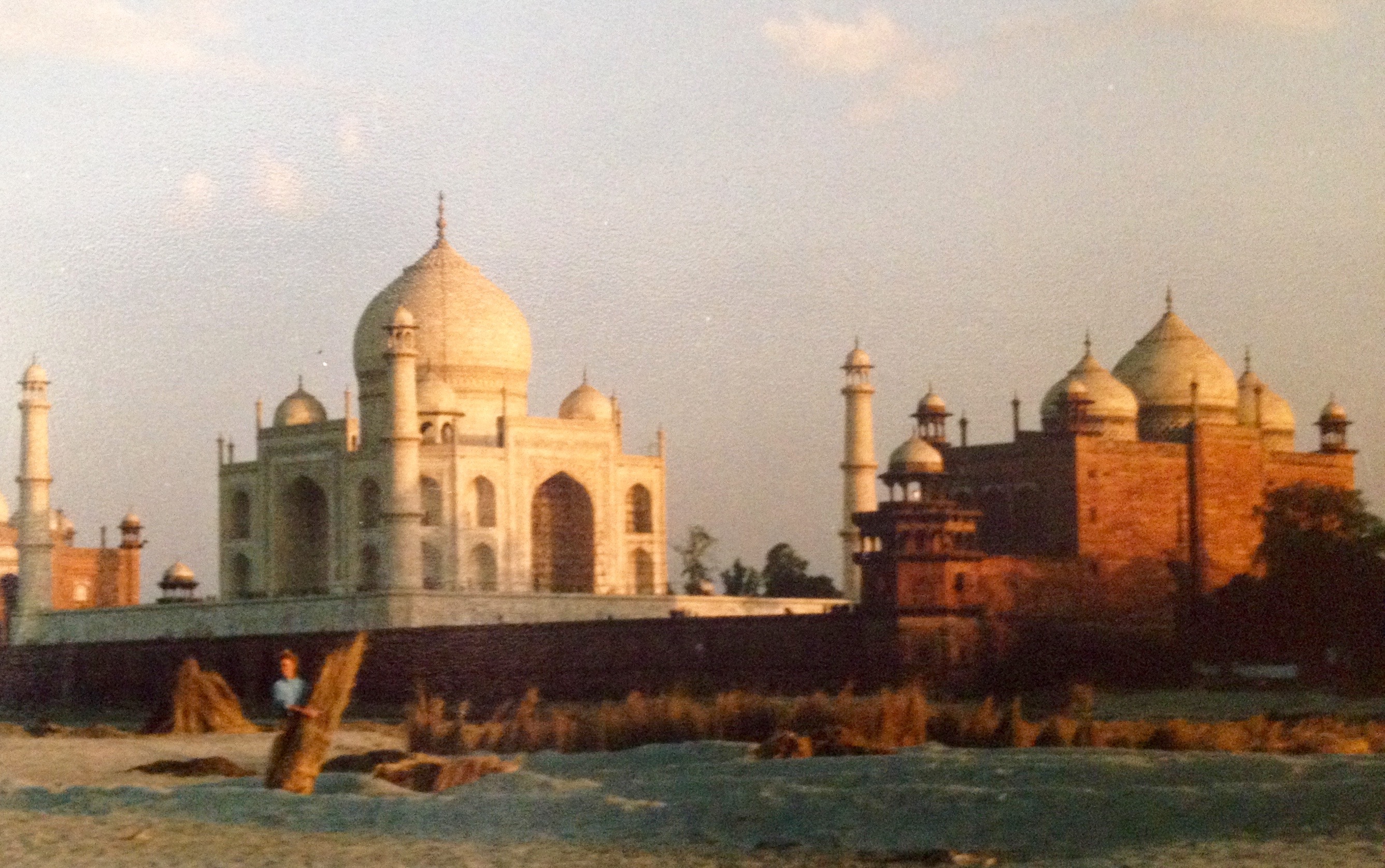
We cycled to the non-tourist view

Agra, India, February…We chose the non-tourist view of the Taj Mahal today. With rented bikes we cycled through a small village along a train track to the nearly dried Yamuna River. There we beheld the most wondrous sight, the Taj Mahal to the south, the Agra Fort to the west. We were transfixed, not able to pull ourselves away from the view. At twilight the moon rose creating an ethereal mistiness that mingled with the Taj; regal and impossibly beautiful. We finally had to pry ourselves away to return our bikes, pedalling home with the moon guiding our way.


Kathmandu, Nepal, April…We managed to find bikes to rent and cycled from Kathmandu to Bhaktapur. The Nepalese greeted us as we passed, children ran behind us with mischievous smiles and antics. The friendliness continued as we rolled into the medieval city of Bhaktapur and got swept up into the improbable spectacle of the ‘Biscuit Festival’. An immense, brightly painted wooden pagoda was hauled through the street with much excitement. But the side streets we later cycled were the highlight for me with stunning intricate carvings of Nepalese architecture.

IMG_8634

Offering a ride in Yangshuo, China

IMG_8654

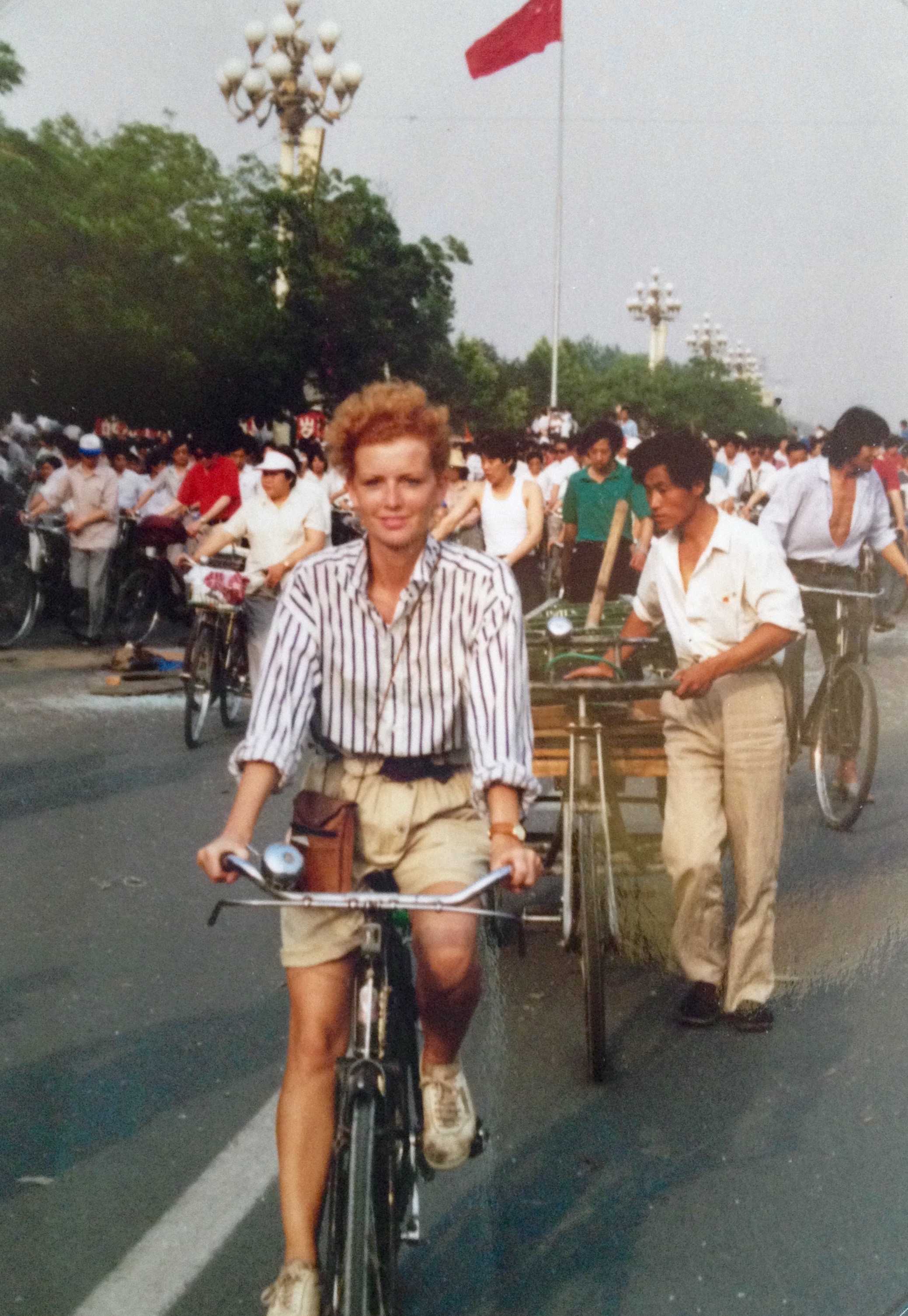
The evening of the Tiananmen Square massacre

Beijing, China, June…Last week the experience of Bruce offering a ride to a rice farmer cut through culture and language. Against the emerald green rice paddies in Yangshuo, with water buffalos ploughing the fields, we cycled in bewilderment. It was as if we had been dropped into a National Geographic article.

Contrast to today, we tackled ‘bicycle kingdom’ as it’s called. There are 4 million bicycles in Beijing! We dodged and weaved. We passed locals going home from the market with upside down chickens tied to handle bars; their squawking adding to the cacophony of tinging bike bells and incomprehensible Cantonese. I can’t believe we found our bikes after we had stopped for lunch, for there must have been thousands of them alongside each other.

Our cycling experience in China would become far more dramatic as shortly after that diary entry, we were trapped in Beijing during the Tiananmen Square Massacre. Our bikes played an integral role in planning our escape; that however is a story for another time.

Cycling the Islands of Norway

Cycling the Islands of Norway

We gladly embarked on an overnight cycling trip while we lived in Norway, only bikes and ferries on that adventure. Along the shores and through the islands we meandered, only sheep impeding our progress. The Norwegian cycling infrastructure is also superb; paths routed along lush green fields and colourful fishing villages nestled tidily beside icy fjords.

But unlike the Dutch, appropriate gear and helmets are the norm, one does not casually jump on their bike without paying heed to their attire. And I’ll give the Norwegians credit, there isn’t such a thing as bad weather, only inadequate clothing.

By the time we had left Norway, I had acquired the requisite rain pants, jackets, boots, reflectors, even a ‘rain cover’ for my backpack. It all makes good sense when your bike becomes your chosen mode of transport.

wbr_fbcover4

World Bicycle Relief

As I wrote this blog, I was conscious of the millions of people that don’t have the privilege of owning a bike, despite the vast improvement it would bring to their life. I came across World Bicycle Relief. This organization believes that a bicycle in the hands of an African student can change many things, and it does.

Bicycles for Educational Empowerment Program provides bikes to students, teachers and healthcare workers in rural Africa. 70% of the students this program donates cycles to are girls.

education_photos

Students with a WBR bike

In places such as Botswana, Kenya, Rwanda, South Africa, Tanzania and Zimbabwe, to name a few, students using bikes mean covering greater distances, arriving safely at school on time, less fatigued and ready to learn. Grades and attendance improve for those students that have received bicycles.

I listened to the story of Ethel, a vibrant fifteen year-old. Before owning a bike, Ethel walked more than two hours each way across hilly terrain to attend school. Now on two wheels, she is able to dramatically reduce her commute time, allowing more time to pursue her dream of becoming a nurse. Ethel also helps others in the community by offering rides when possible.

I’ve decided to donate to World Bicycle Relief, to give someone like Ethel the opportunity to improve their life. I think of it as paying homage; to all the cycling experiences that have enlivened, coloured and enriched my life. I wish the same for them.

Our tandem, bicycle for two

The tandem, a bicycle for two

Postcards from Malta… a Mediterranean Treasure

Standard

 Valletta, the heart of Malta


images-1

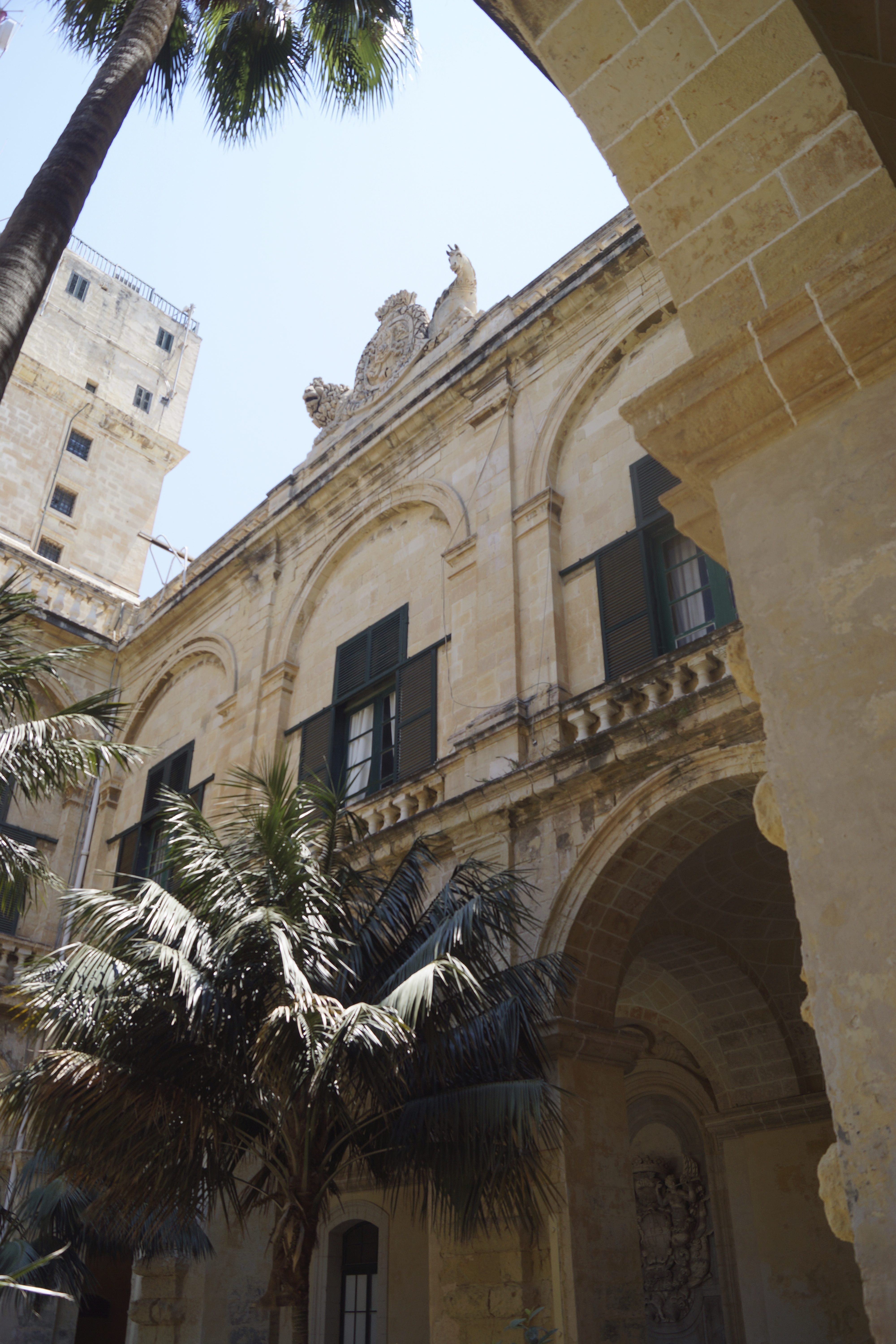
I’ll be honest, it hadn’t been my first choice to spend a special anniversary on this isolated island in the Mediterranean. We arrived late on a humid evening and awoke to a stunning view from our balcony; the fortress city of Valletta before us. The morning sun danced on the water, radiated off the honeyed hues of limestone that dress the city. I was instantly captivated. Valletta, a city of bells, bastions, harbours and limestone, has a story to tell.

Valletta is the heart of this tiny island nation and the most southerly capital city in Europe. A four hour sail from Sicily, Malta is a country rich in architecture and long in history. My husband had promised I’d fall in love with it, and without a doubt, I consider Valletta the equal of many European cities.

DSC07074 That splendid view offered more church domes than I’ve seen in any one vista. Bells chimed constantly from nearby steeples, at times melodious, at others dissident. Although the Maltese language is an ancient fusion of Arabic and Romantic languages, the country is staunchly and passionately Catholic. Faith plays a part in everyday life with churches at the center of each parish; 360 of them serving a population of little more than 400,000.

And then there’s the mention of geography. The Maltese islands (Malta, Gozo & Comino) are a mere 316 square km. yet they’ve assumed a significance far exceeding their meagre landmass. Coveted as a strategic port and defensive position, in the 16th Century, the Pope handed the islands to the Knights of St. John who had lost the island of Rhodes to Ottoman invaders.

DSC07111 Also known as the ‘Knights Hospitallers’, the Knights of St John followed their religious calling. Caring for the sick and sheltering the poor, their origins date back to the early Christian pilgrimages. They controlled the islands from 1530 to 1798 and in that time constructed massive fortifications, lavish churches, cathedrals, and beautiful urban architecture.

I find it intriguing that The Knights were chosen from noble and wealthy families, taking vows of chastity, obedience and poverty, often giving their own property to the order. Though originally not allowed to shed blood, a new class of warrior knight was formed to circumvent this. Thus, the Knights not only preached and healed, but were also formidable soldiers.

Valletta is a baroque city of piazzas, palaces, churches and gardens, said to be a city built ‘by gentlemen, for gentlemen’… those accomplished Knights. In 1566, Jean Parisot de Valette, directed his Knights to fortify the Christian stronghold against Ottomans invaders. The Knights and Maltese became legendary after successfully repelling the Turks in the Great Siege. Funds flowed in from European rulers to further transform the city. De Valette’s imposing bastion walls still enclose this UNESCO World Heritage Site.

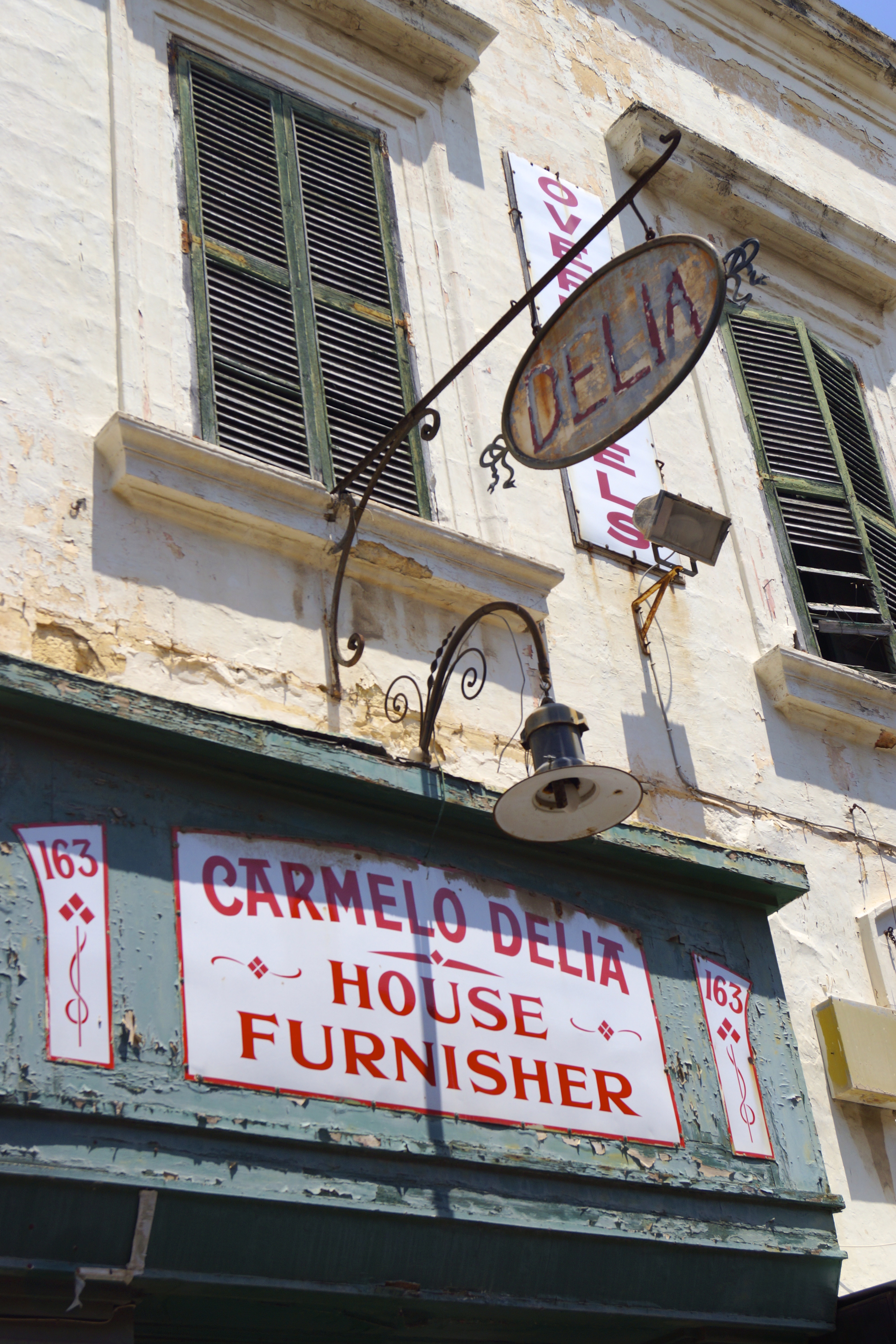
It may seem curious, but in Malta one drives on the left hand side of the road, and you might also pass red British post boxes. These British remnants are reminders of when the UK was invited to assume control of Malta. After a fleeting occupation by the French, the British were offered control of the Island in 1800. Other vestiges of their presence endure in statues, architectural embellishments, English as the second official language and most charmingly, the abundance of archaic signs. It is all enchanting, yet somehow down to earth in its faded elegance.

IMG_7968


Vestiges from a bygone era


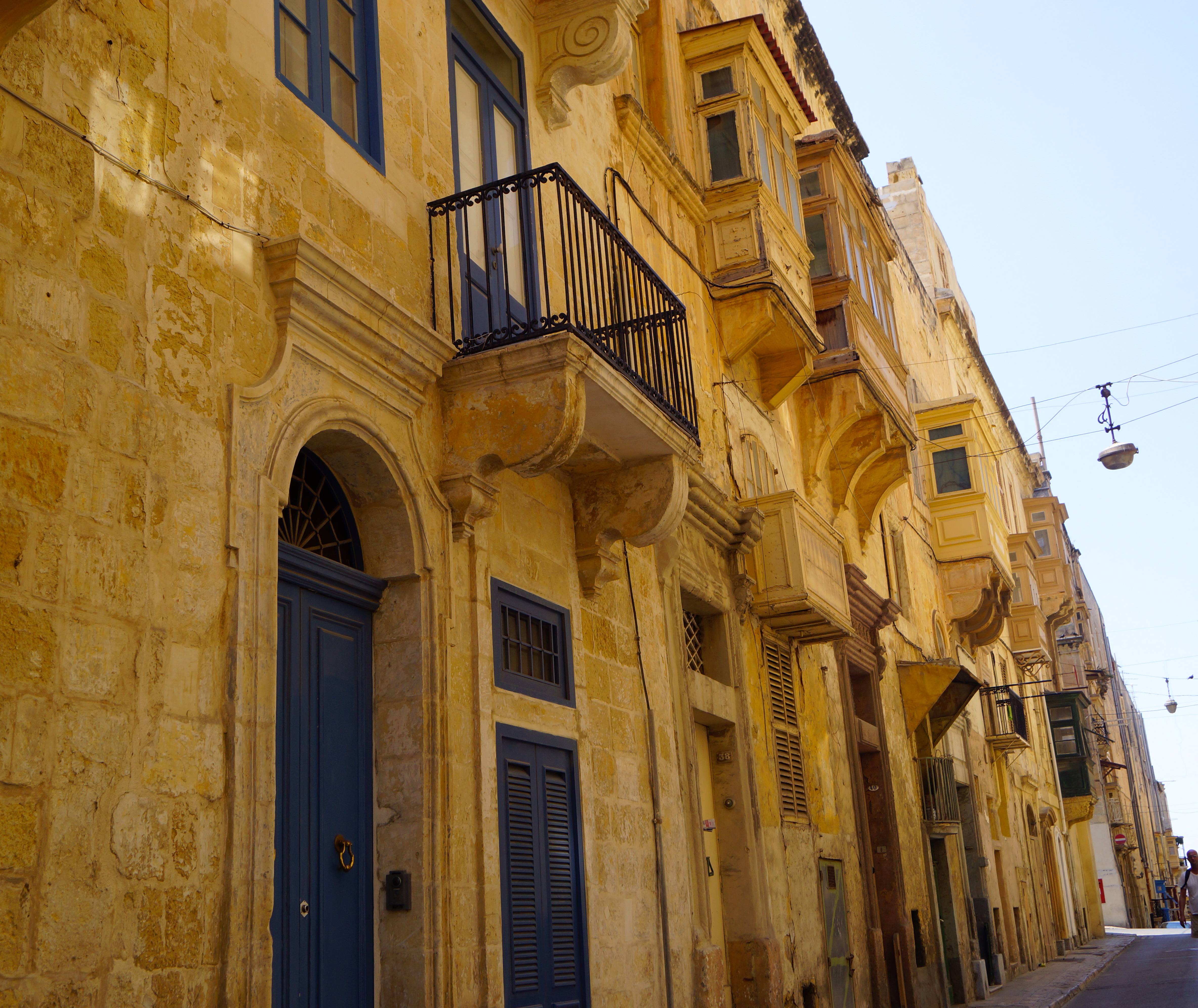
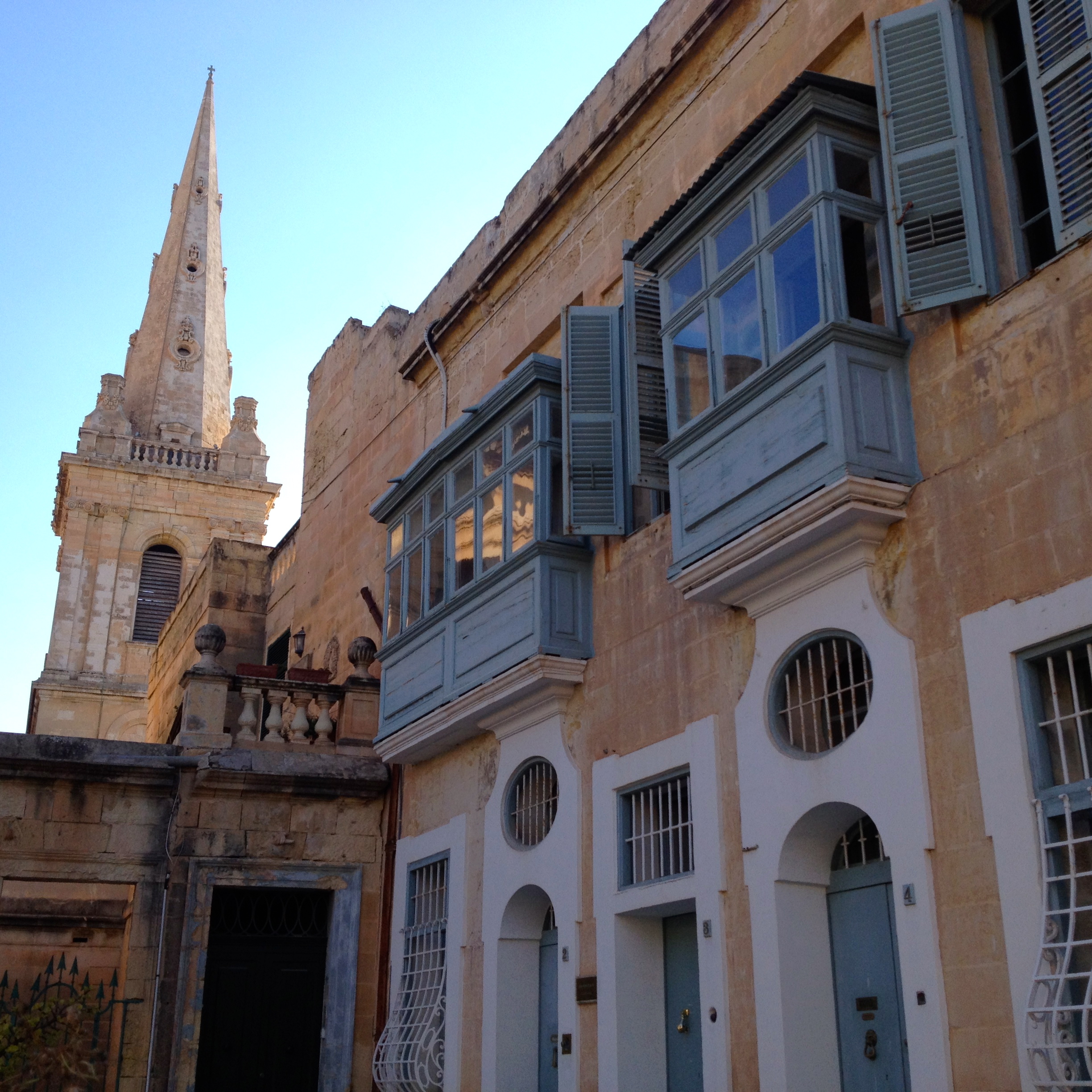
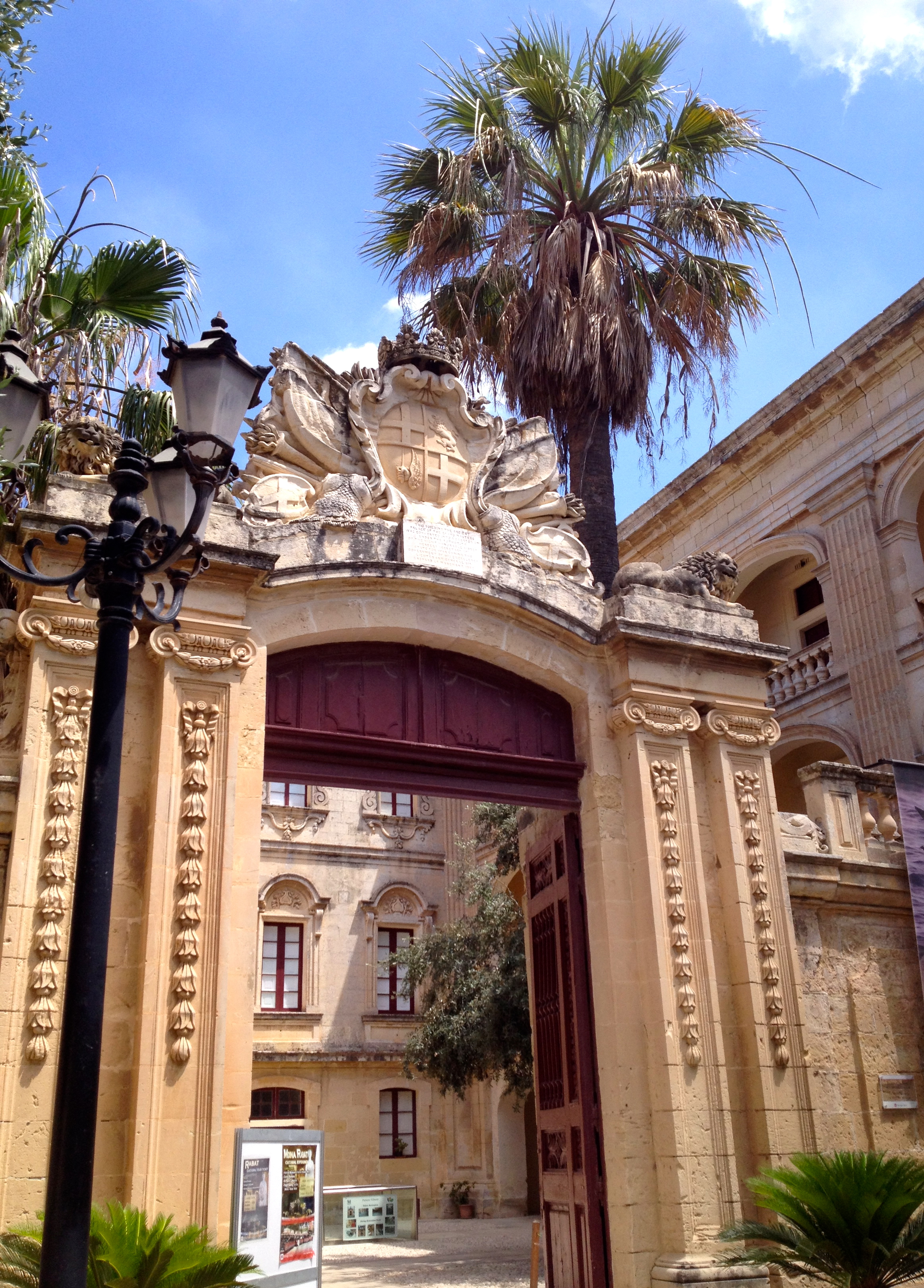
Limestone has been the predominant building material in Malta; 16th Century Churches, villas and auberges, the once stately dwellings of the Knights, are all chiseled from this malleable stone. I marvelled too at the tall, four-storied apartments. They are narrow and deep, made distinctive by the Maltese version of the Italian logia, the gallarija.

Even today they afford residents an ornate perch from which to peer down onto the narrow cobbled streets. I watched neighbours chatting through the narrow side windows, though many gallarija mostly seemed to double as laundry rooms… t rare breeze drifting over tidy rows of clothes.

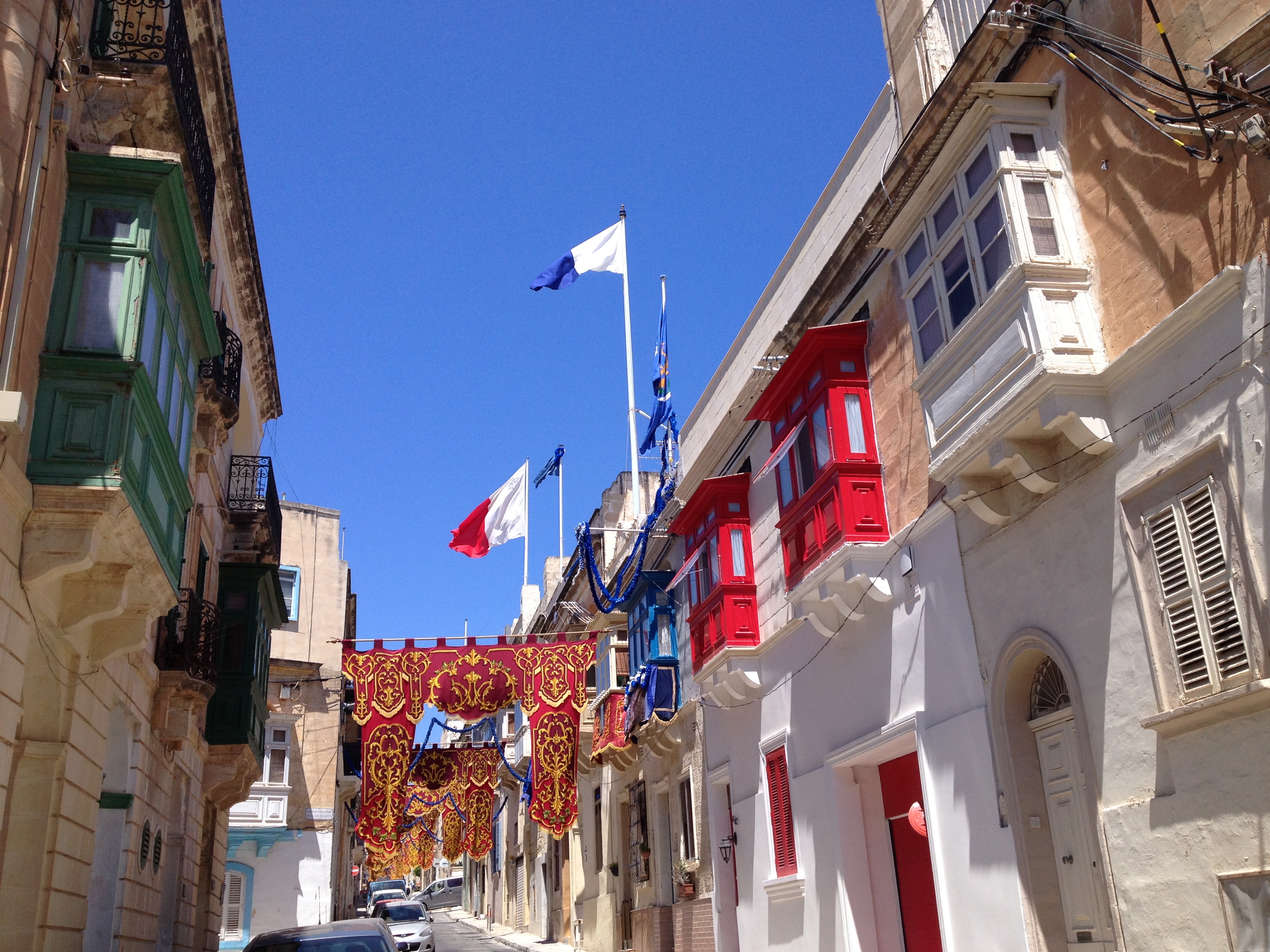
IMG_7977Wonderfully, many of these wooden enclosures are brightly painted. Those untouched and neglected are also interesting; layers of peeling paint hinting at their former glory. When wandering the streets of a Maltese town, your eyes are drawn instinctively upwards. You’ll also be distracted and delighted by the many archaic signs that still announce stores and services, many of which have long ceased trading. Even boarded-up shops recall close knit communities and family ventures.

DSC07049

One can easily envision the scene as people strolled from shop to shop as carriages rattled past. Or the evening scene of horses in slumber in their ground-level stalls in the tall homes – the large wooden doors now housing vehicles. Valletta’s hilly streets must have been burdensome with the strain of hauling goods to and fro, to the merchants from the wharves below.

IMG_8154

Evocative street names reveal a vibrant past: Old Bakery Street, Merchant Street and Old Theatre Street. These narrow ways are much quieter these days, most tourists prefer the chance to promenade on bustling Republic Street.

We came upon a small square with beautifully refurbished apartments and, through a chance encounter, were graciously allowed to peek inside a law office. Our host, Hugh, unbolted the heavy wooden doors that separated his powder blue gallarija from the interior of the offices. We gazed out to the nearby steeple and to the busy harbour opposite.

I admired the beautiful centuries-old Maltese tiling at my feet and the frescoes adorning the high ceilings. Imagining the countless treasures hidden inside the buildings of Valletta, Hugh assured us that many of these once-grand buildings are being restored, perhaps prompted by the declaration that Valletta will be Europe’s Capital of Culture for 2018.


The Waterfront


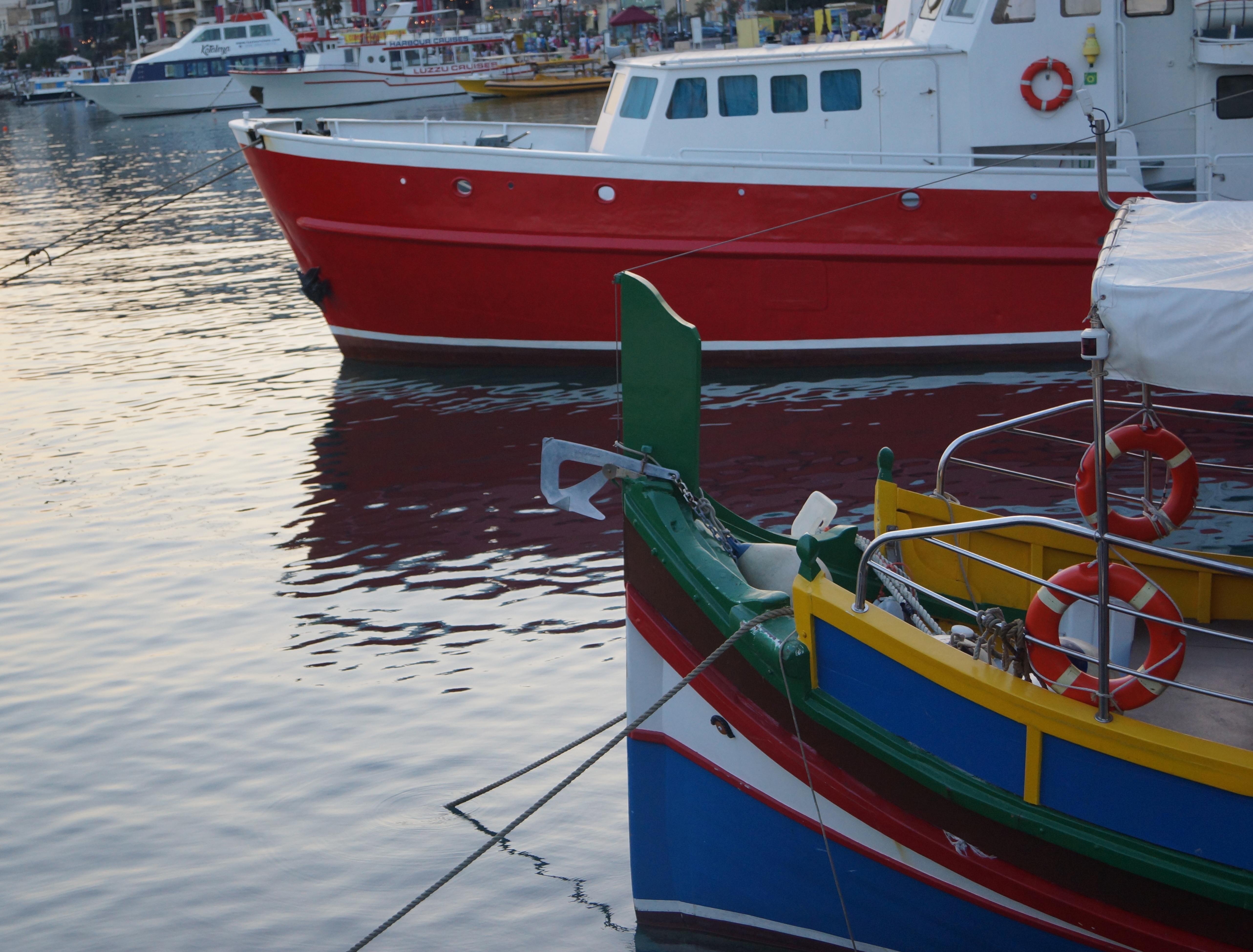
IMG_8109If you live in an archipelago, boats are a daily part of life… ferries, harbour craft, sailboats, cruise ships and traditional Maltese boats in constant motion. DSC07230The luzzu is a traditional fishing boat with the ‘eye of Osiris’ painted on each prow, Phoenician style to ward off evil and bring good luck. They bob prettily in the harbours and troll the blue seas for lampuki, the national fish.

DSC07203

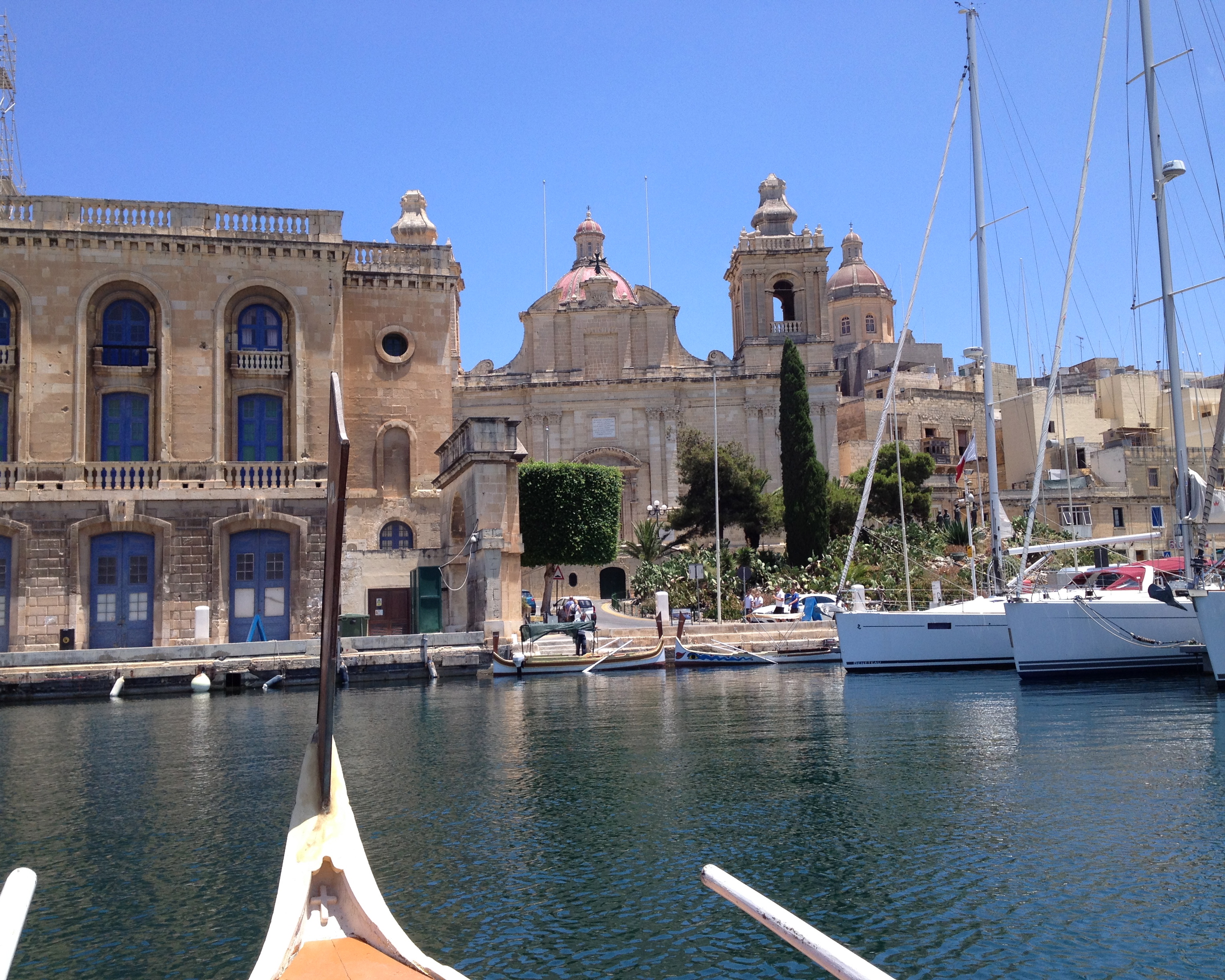
We hitched a ride on a venetian style dghajsa in the Grand Harbour. Disappointingly our Sicilian ferryman fired up his outboard, waving off our romantic notion of being rowed across. Enrico delighted in telling us that a celebrity couple had sat in his small boat just a few days earlier. He pointed out their stately yacht, still anchored against the imposing backdrop of the St. Angelo bastion.

It seems there’s yet another movie being filmed in Malta; previous ones include Monte Cristo, Gladiator and Popeye. In fact, the next afternoon we stumbled upon a car chase scene, turning to see machine-gun toting renegades coming our way. We were hastily ushered off ‘set’ and reluctantly meandered away from the action. No ‘star’ sightings I’m afraid!


A full moon, formidable forts, Caravaggio’s daring escape


IMG_8124

We crossed the waters daily from Sliema. At the foot of the massive fortifications were ranks of warehouses, resplendent in vividly painted doors and windows. They say this tradition of colour coding was for illiterate sailors, making it easier for them to identify the correct store house. Malta straddles the east-west Mediterranean seaway, plied for centuries by one civilization after another. Time and again its strategic importance has been proven.

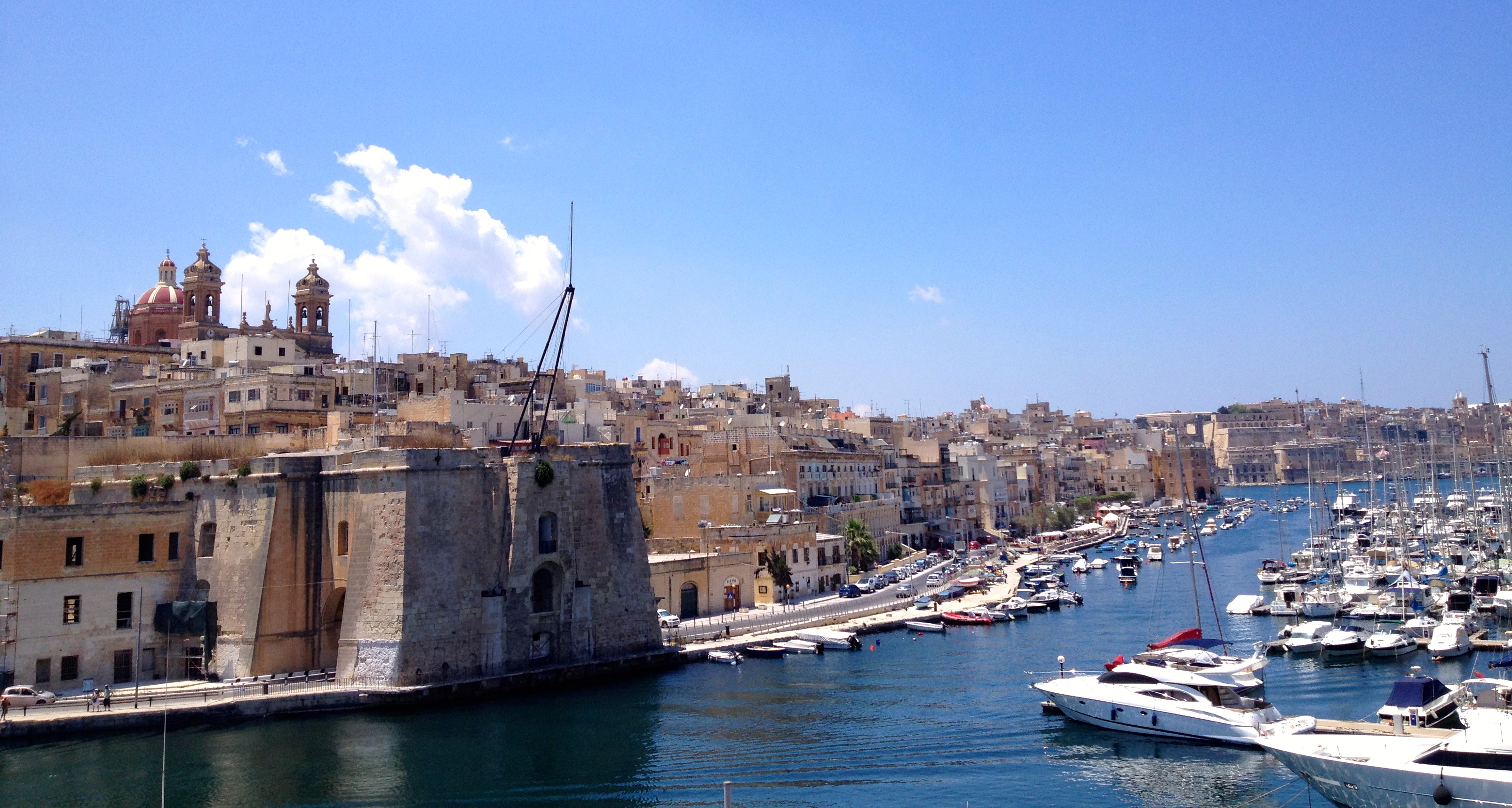
One evening with a brilliant full moon overhead, we cruised the harbour of Valletta and the neighbouring Three Cities. One of them is Birgu, where the Knights built their second capital, the precursor to Valletta. The three towns were enclosed around 17th century ramparts along with Fort Angelo. We heard tales of battles and heroes, and of a daring escape by the famed and volatile painter, Caravaggio.

DSC07275Despite not being of noble birth nor of good character, the Italian Caravaggio was nonetheless admitted to the Knights of St. John in 1608. Not long after, the talented painter tangled with a high ranking knight in a brawl who was seriously wounded.

Caravaggio was hasitly imprisoned in Fort St. Angelo. Thankfully his beautiful paintings already graced the Palace of the Grand Master and St. John’s Co-Cathedral. The supposedly formidable walls of one of Malta’s strongest forts were soon the scene of Caravaggio’s daring escape. He was bundled off in a boat back to Italy; it occurs to me that this would indeed be a story line for a thrilling Maltese movie!


Counting bells and Festa


DSC07113

From that first sitting on our balcony at The Palace Hotel, I continued to count bells. There seemed to be a melodic ‘ting’ to announce the quarter of the hours… then a tinny ‘tong’ to announce the hour. Yet, just when I thought I had detected a pattern, the bells would cut short or ring incessantly, my theory left in tatters. But it’s festa this time of year, which plays an integral part of Maltese culture and perhaps the bells are more relentless, more sporadic than usual.

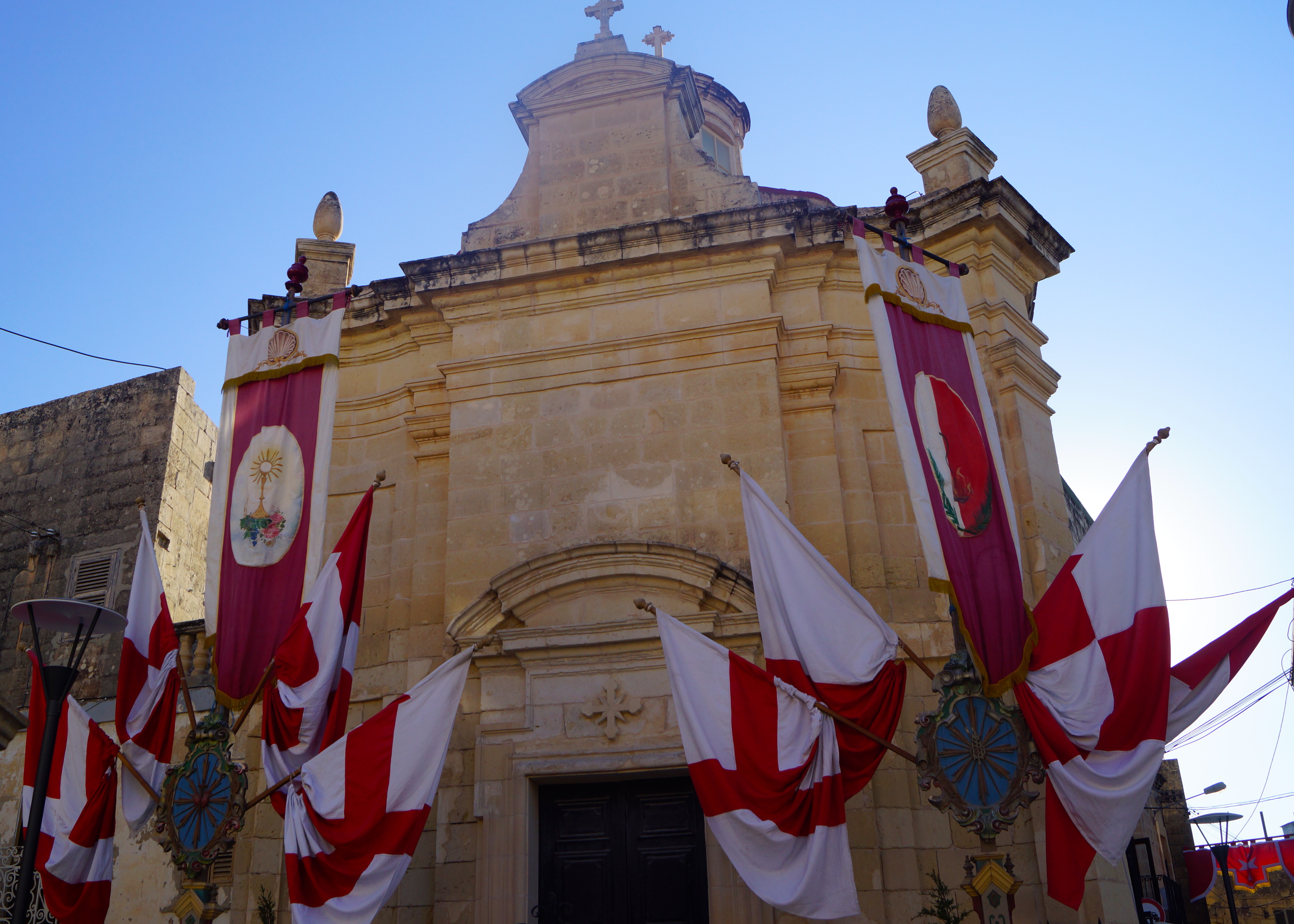
IMG_7993Every summer each parish celebrates festa, a religious festival, and preparations in our neighbourhood were underway. Lavish banners were hung the width of the narrow streets. Lights were strung, churches outlined and decorated with an impressive, though somewhat gaudy array of lights. Life size statues of saints positioned on pedestals oversaw the festivitie

Firework displays coloured the night skies, each parish vying to out-dazzle the other. We followed a marching band on our return one evening, tell-tale signs of the upcoming festa. Copious amounts of confetti already littered the lively streets. Just one solitary sweeper was tasked with the clean up as the rest of the parish strolled behind the marching band, sing-song meeting the rhythm of drums and horns. Music is vital to the festa.

Mdina, the ‘silent city’


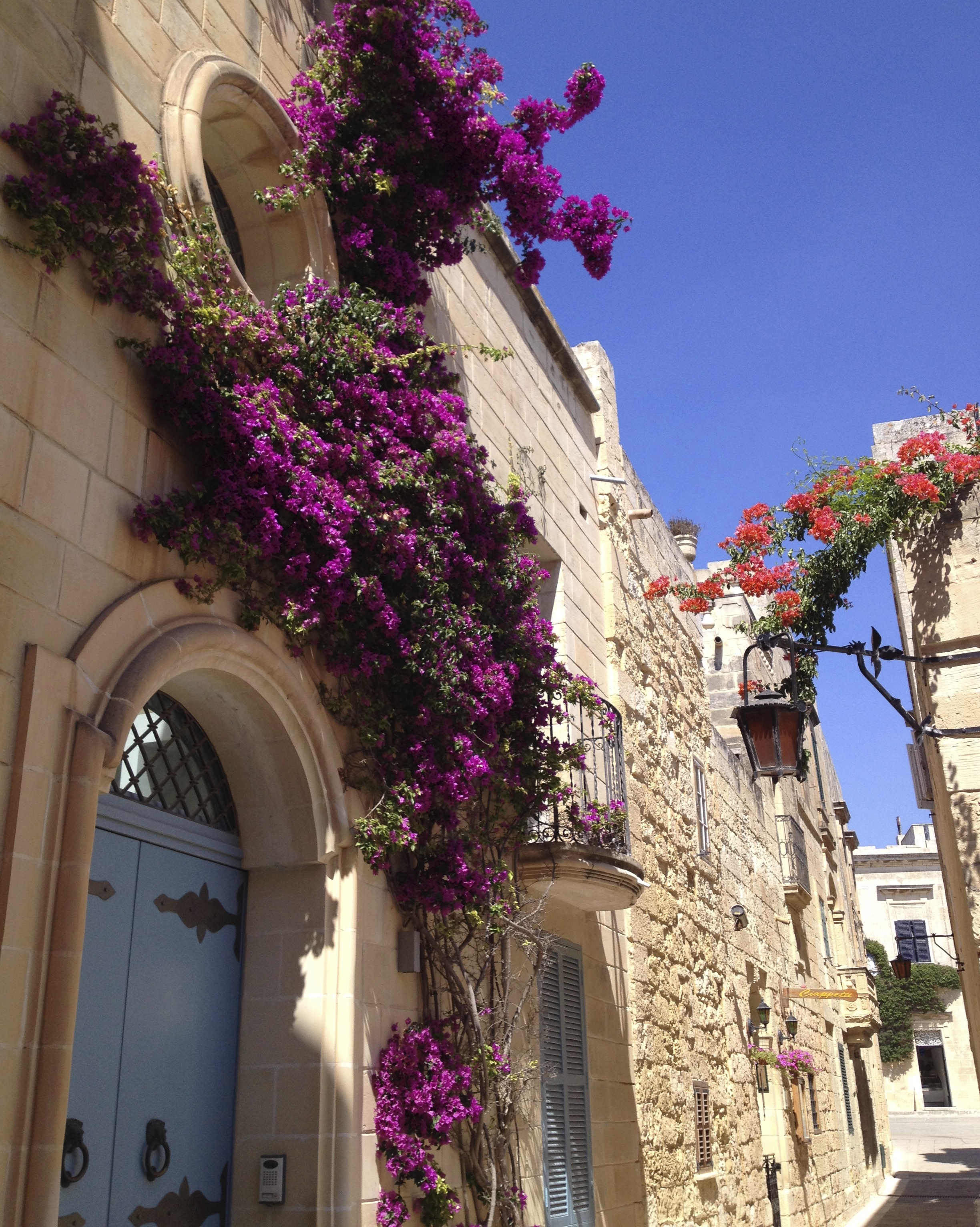
IMG_8042We sought a more quiet side of Malta the next day and hopped on a local bus to Mdina. Settled by the Romans, who had built on even more ancient settlements, Mdina was the island’s capital until 1530. Positioned on the edge of a plateau with verdant vineyards below, the fortified walls are entered through imposing stone gates. Once inside, a mix of baroque and Norman architecture grace the narrow streets in palazzi, grand old houses, and religious buildings.

Tall walls shelter Benedictine nuns in convents – they commit for life – and stunning  cathedrals and chapels. Most have been restored to their original brilliance after the looting of Napoleon’s troops in 1798. When the soldiers returned once again, the local folk rebelled and eventually put an end to France’s short rule.

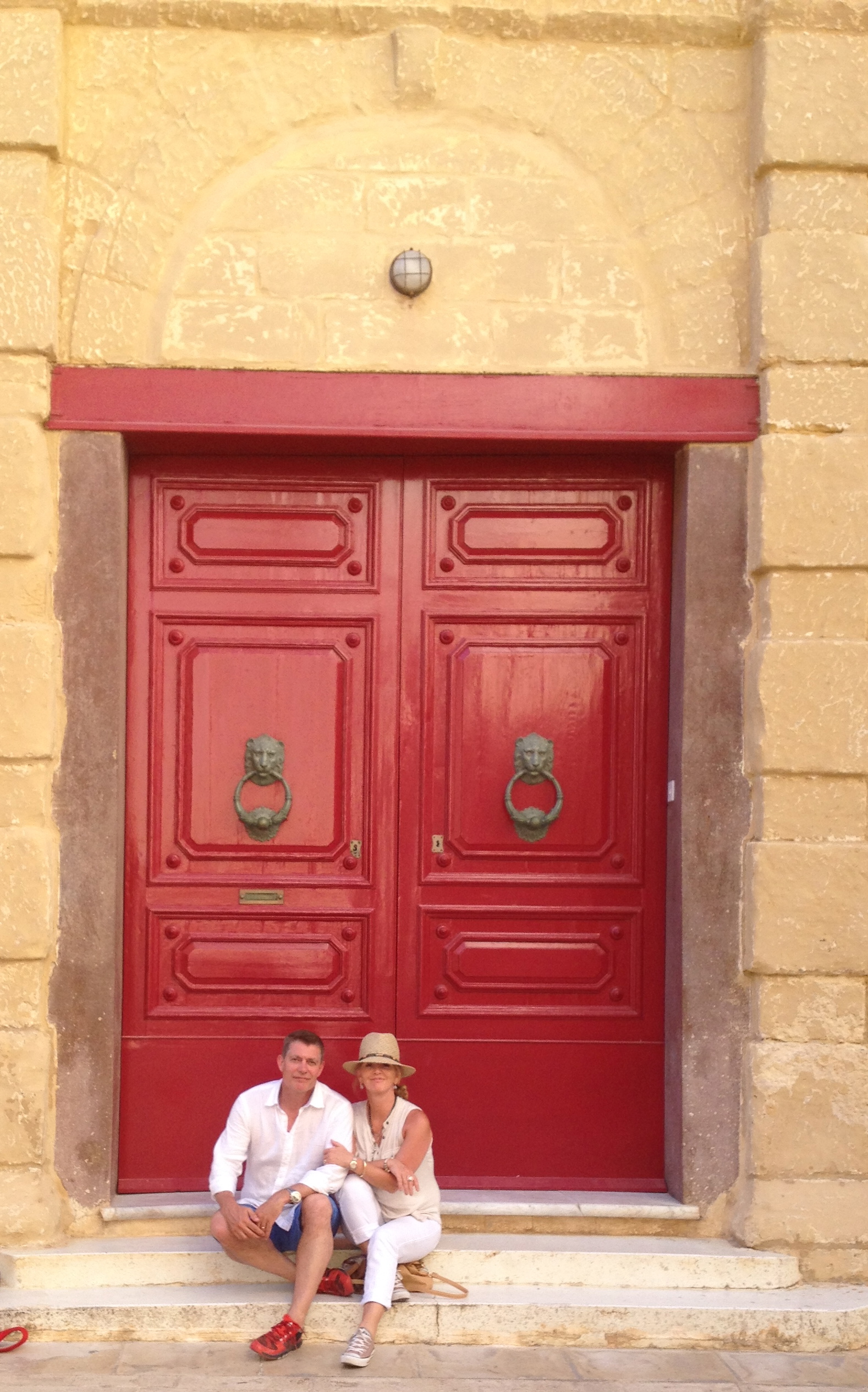
These days, the Maltese aristocracy mostly live in Mdina and with fewer than five hundred residents, its tranquility is part of the allure. We wandered, then treated ourselves to a horse and carriage ride, trotting through the only complete medieval gate in Malta, the Greek’s Gate.

IMG_8066

We ventured across a main road to Rabat, a suburb of Mdina where Saint Agatha is IMG_8009the patron saint. A statue of her presides in the church and parades through the streets during festa. This village was also in full preparation for the upcoming festival; banners, bunting and flags coloured the townscape. We soaked up the atmosphere, foregoing the Roman and Byzantine attraction of catacombs and tombs; uneasy that these labyrinths as well as bomb shelters lay beneath our feet.

Bombs rained down on the Island for 142 days and nights during the second World War. As the most bombed city in Europe, the entire population would go underground into a warren of shelters. King George the Sixth awarded Malta the George Cross for ‘their heroism, bravery and devotion.’ We encountered memorials and plaques that pay tribute to the Maltese still today; they are justifiably proud people.
DSC07187

We found ourselves back in Mdina on the bastion patio at Fontanella’s. With the view rolling out to the sea beyond the vineyards, we indulged in our favourite local ftjira and chilled Maltese wine for a long lunch. The languor of a hot July day and the perfect view kept us rooted to this idyllic spot.

And it seemed church bells had followed us from the city.

“The bells are crazy,” our waiter tells us. “One hour yesterday, gave me a big headache.”

The so-called ‘silent city’ was very much alive that afternoon. If Valletta is the beating heart of Malta, then surely Mdina embodies the soul of this land.


Nights in a Palazzo

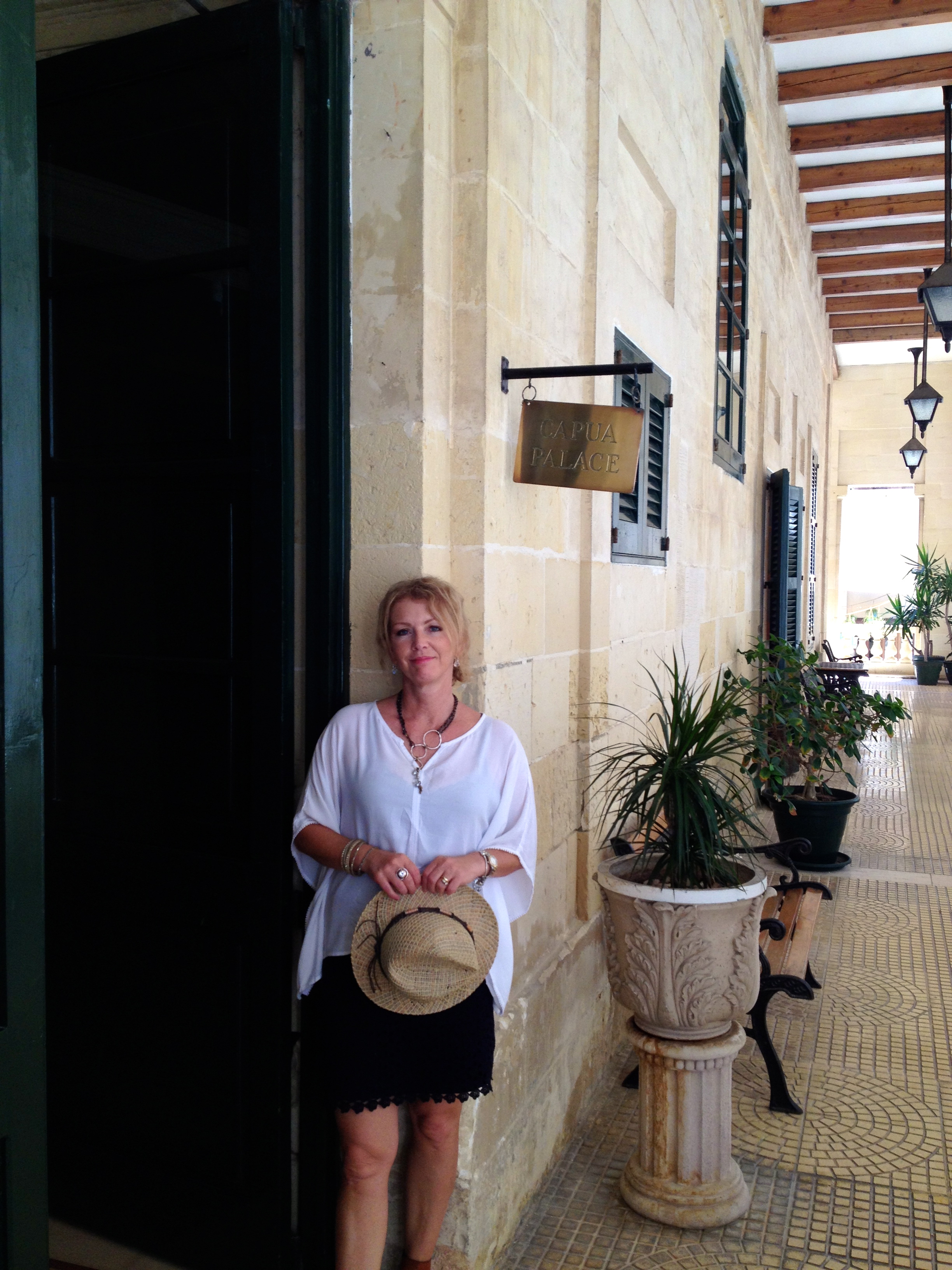
IMG_8243Somehow it seemed fitting, by good fortune rather than design, we found ourselves in a suite in the Palazzo Cupua, a treasured annex of the Palace Hotel. Perhaps it was a nod to our anniversary from Thomas, our obliging concierge whom we had befriended.

As I had taken such interest in the architecture on this trip, it was a thrill to see the interior grandeur of these once stately homes. Carved limestone staircases led to polished marble hallways, delicate IMG_8207painted frescoes graced the ceilings and once again intricate patterned tiles covered the floor. Perhaps it isn’t surprising that my only souvenir of the trip was a small print that depicts tiles in a lavish villa; it seemed perfect.

Tall shuttered windows looked out to the colonnaded verandah, naturally, it was all sublime. This Palazzo was referred to by Thomas MacGill’s in his book, Handbook for Strangers. He visited Malta in 1839.

“It is a fine colonnaded palace built by a Russian banker and the only building worth noting in the village of Sliema.”

We concurred, though the real pleasure was that it spoke to us of a time long past, when it stood mostly solitary on a hill DSC07255overlooking the same timeless view that beguiles travellers still today.

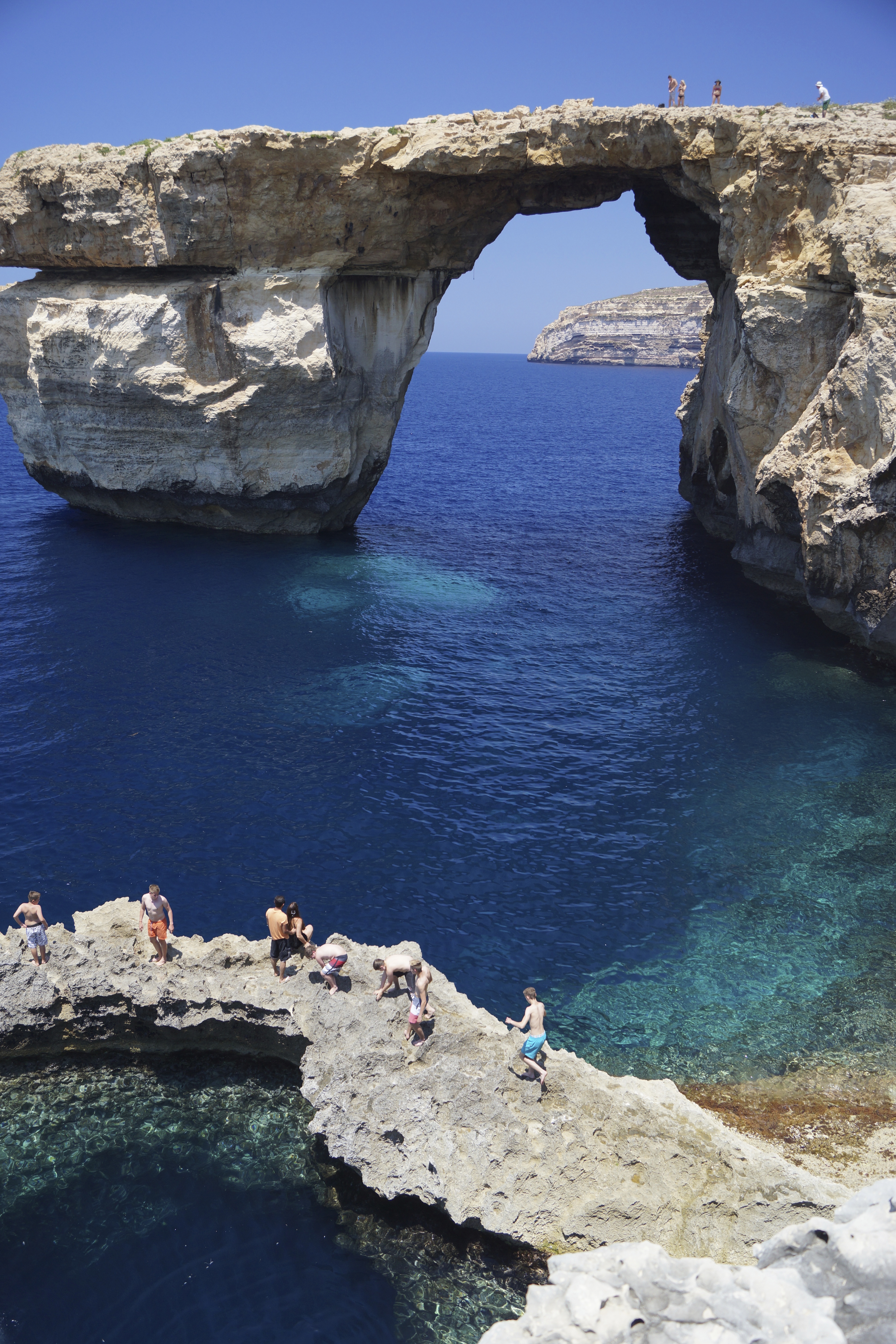
We flew away from the tiny island in the morning sun; over the ramparts, the cathedrals and smooth limestone. Over the waters that we had sailed on and snorkelled in, the impossibly azure Blue Lagoon calling back to us, as did the cobalt blue waters of the Azure Window. The Hypogeum also beckoned, those Neolithic temples and carvings older than the pyramids themselves. Sadly, we hadn’t found time to visit.

It seems we’ll just have to return to this fascinating treasure in the Mediterranean. Not to mention, there’s still the puzzle of the bells to solve!

Smitten by Spain… of tapas and new shoes on the esplanade

Standard
IMG_7141

In Alicante

“Your cortada, señora,” the waiter says, placing the tiny coffee before me. Soaking up the atmosphere in a small Spanish plaza, it strikes me how lovely it is to be called señora. Far more exotic sounding than Ma’am or Mevrouw.

Having visited three countries in a two week period, it’s been hectic. I have half-written blogs on the delights of Quebec City, Canada’s gem, and picture-perfect Netherlands. But for now… I’m smitten by Spain.

An unexpected trip with my mother and Dutch relatives has found us in the Alicante area, on the Mediterranean coast. Overlooking the Costa Blanca, we’re happily ensconced in a family villa. The terrace wraps around the long bungalow, leading to a pool with a tremendous view. We sunbathe and float, our gaze lingering on the sailboats and the fishing vessels beyond. The azure sea melds into the endless blue sky; I now understand why people adore Spain.

IMG_7119

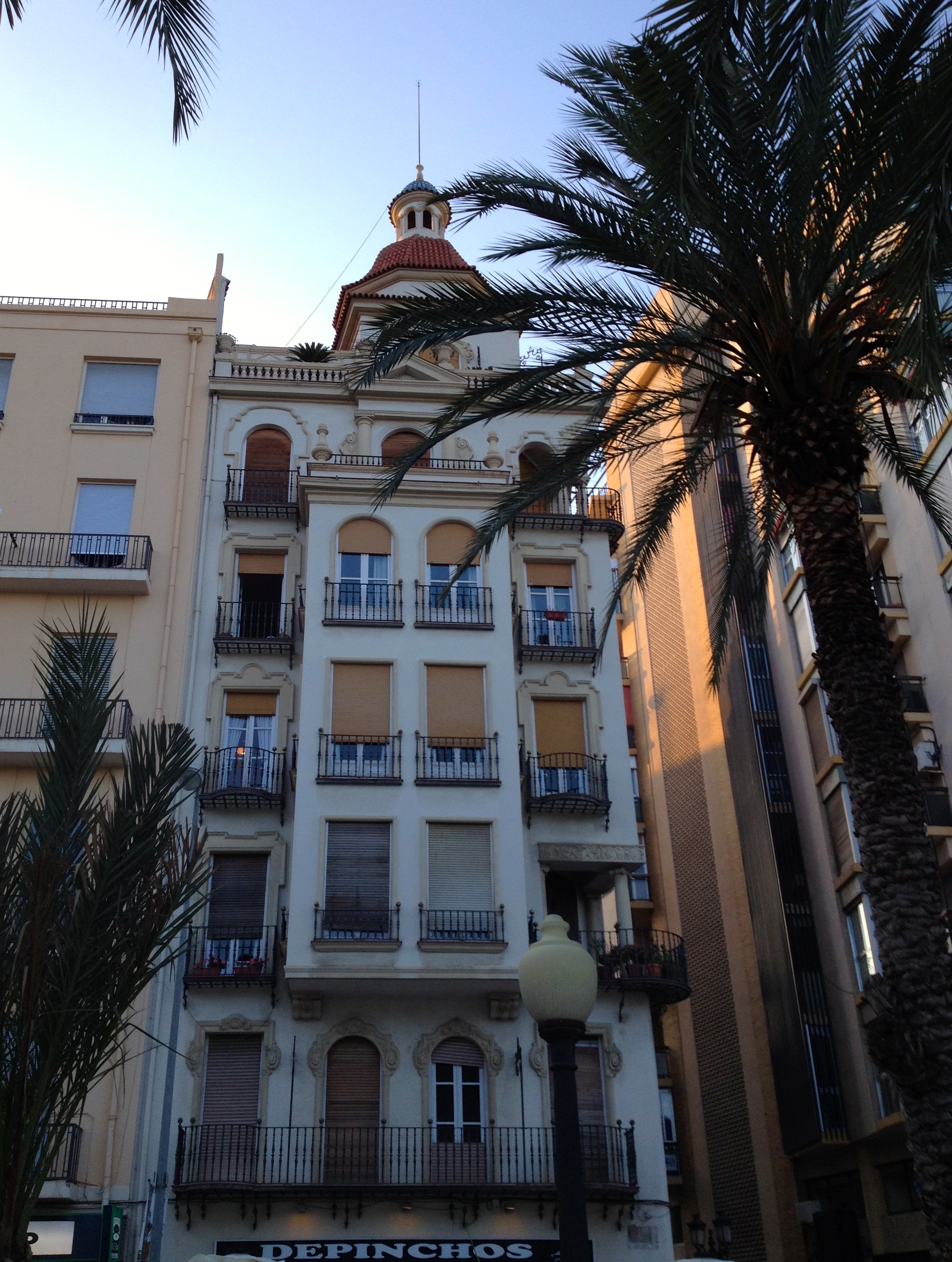
Architecture and ‘siesta blinds’ in Alicante

Indeed, this is the good life on the Mediterranean. We indulge ourselves with moonlit swims and champagne lunches by the poolside, happy to drip-dry in our swimming suits and wraps. Our hosts, my second cousins Alda and Margienus, don’t permit us the luxury of afternoon siestas however. There’s too much to see, as Alda knows well.

Her father acquired the villa some forty years ago. “I was about fifteen when we first came here for holidays. I feel some of my roots are here at Casalmar,” Alda had told us as we feasted our eyes on the spectacular view for the first time. We soon appreciated why one would chose to vacation or live here.

Villas crowd the coastline, bouganvila of fuscia, deep purple and crimson spilling over stone walls. Palm trees, cacti and giant aloe vera spring from the dry earth. Tiny corner stores and family run eateries seem to welcome on every street. Local markets sell the essentials for Spanish cuisine such as oranges, pimentos, chorizo, olives and rice. Fun, seaside attire entices us and we all come away with something; flouncy blouses, flowing pantaloons and billowy kaftans. But best of all, the sea is never far away.

IMG_7211

‘pool with a view’

Our neighbourhood of El Campello is tranquil, yet comes to life on the promenade. Large intricate sandcastles guard the beach, children dig with bright spades and pile fine sand into plastic buckets. Bars welcome us with vistas of the waves lapping against the shoreline. Naturally, a 16th century watchtower catches my attention.

The Alicante region wasn’t just a magnet for traders and settlers over the centuries, but also for the dreaded Barbary pirates or Ottoman Corsairs as they were also called. They plied the coast capturing local population, building their slave trade on Spanish captives. Some twenty defence towers still perch on prominent cliff tops; as if still watchful for the North African invaders.

“a handful of pencil crayons’

Some invaders came to stay and their legacy remains. The Moors over-ran southern Spain but brought enlightenment in the form of medical knowledge, irrigation and education. The coast also became a major Mediterranean trading station; rice, palms, olive oil, wool, wine and oranges. Valencia is further north and I can attest that the oranges are the tastiest you’ll ever try. And the wine? We sampled much of that as well; a delicious Spanish white costs no more than 2 Euros. It really is la dolce vita. Or should we say…la buena vida!

IMG_7287

The boulevard at Villa Joiosa

One afternoon sees us enjoying a bottle of white in the picturesque town of Villa Joiosa. A short trip along the coast, its name means ‘jewelled town’. The vibrant colours are intended to guide local fishermen home from the sea. Narrow, centuries-old houses lean against each other, each distinctly hued. Shades of powder blues, reds, pale lavenders, yellows and seaside greens. Imagine selecting a handful of your favourite pencil crayons and living amongst them…it’s fanciful and alive, jewels every one of them.

IMG_7240

Lavender and terracotta pots

As we while away the late afternoon at the small Placa Castelar, the town awakens from its siesta slumber. Locals emerge from the warren of streets that radiate from the cobbled square. Church bells peal laconically, shop doors unlock, dogs stroll with their humans and hats tip to neighbours.

We hear the the swish of blinds and shutters roll up. These outdoor coverings for doors and balconies are drawn down during siesta. It’s 5:30 now, time to come to life for the evening. I notice a few señoras trickling water into terracotta pots on tiny balconies. ‘Hola’, they venture.

I mention to Alda that we might peek into some shops back along the harbour. “I think you’ll want to wait for tomorrow,” she says and I remember what I’d read about Spanish shoes in Alicante.

IMG_7142

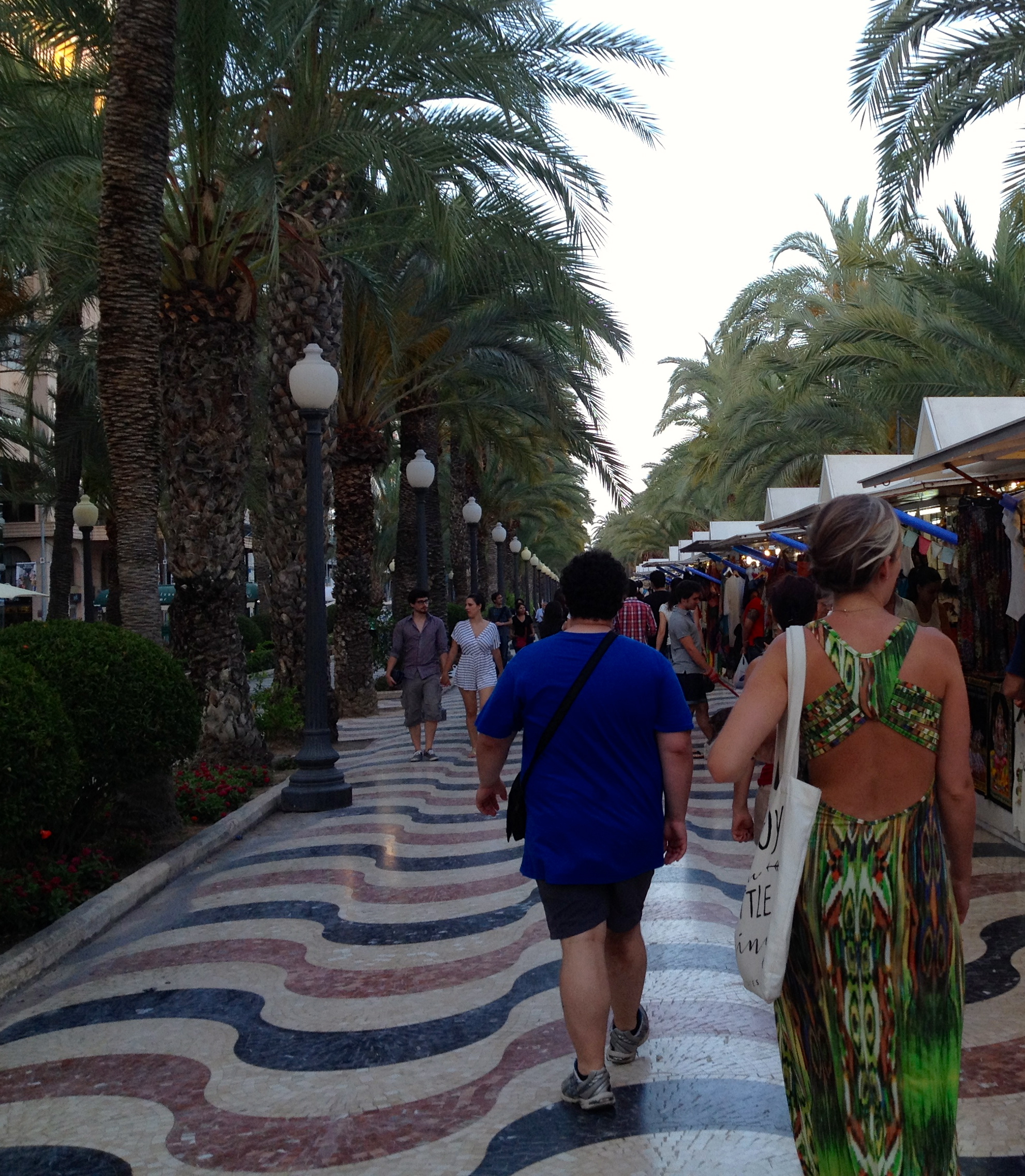
Waves of marble on the esplanade

We begin our outing the next day (after a stop for the promised pair of Pikolinos) with a stroll along the heart and soul of the city, the Esplanada de España. This grand boulevard stretches around the Alicante marina, all 6.6 million tiles of it; red, black and cream.

Created in 1867, it offers the place for a perfect paseo, a romantic evening stroll. The dramatic marble tiles depict the waves of the Mediterranean and rows of palm trees offer shade. Well-dressed couples stroll hand in hand, people peruse the kiosks, others sip coffee.

At a nearby bustling square we enjoy a cocktail and I befriend two charming waitresses, Maria and Katrina. We chat and pose for photographs, their natural friendliness epitomizes the hospitality of Spain.

After a first tapas at a nearby outdoor bar, we encounter them once again. Maria is standing in the elegant entrance of Le Turronena and I stop to ask the name of the imposing tree that shades the square.

New shoes on the esplanade

New shoes on the esplanade

“It’s a dragon tree, there’s another famous one in Tenerife,” she informs me, then asks if we’ve come back to dine.

“No,” I say a little apologetically, “we’re on the search for our next tapas bar.”

“Well then come with me, I’ll take you to where you’re going next.” And with that Maria marches us down the street, shouts Hola to fellow shop workers as we pass, then turns a corner. We’re suddenly upon a crowd gathered outside a small tapas bar.

As custom dictates, many of the locals are outside socializing in the warm June evening, tapas in hand. Maria informs one of the staff that she has a group of six and voila… we’re lucky enough to be seated at the bar. We know immediately that Maria is an angel in disguise.

IMG_7136

Katrina and Maria, our ‘angel’

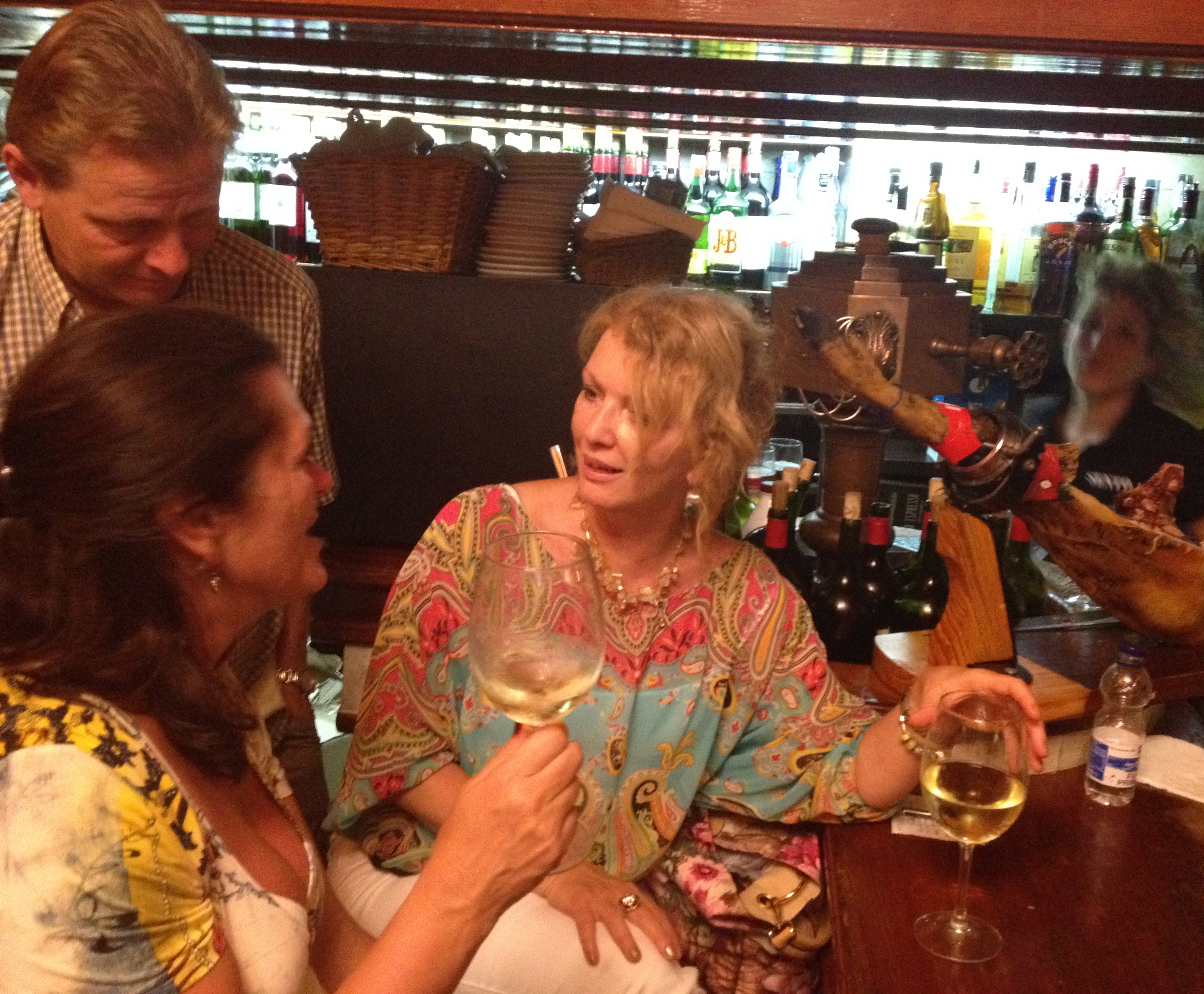
Alda had promised that we wouldn’t leave without an authentic tapas experience and this was it. The small bar is like a beehive; busy, exuberant and productive. Cured ham strung against mustard walls, tapas orders shouted out over the laughter and chat, staff weave in and out like a choreographed salsa dance. Each time their hospitality is rewarded with a tip, a loud clang erupts from a voluptuous bell behind the bar. “Fantastico!” one of the guys would sing-song and we in the bar would loudly echo it back. The ebullient Sara tells me it also means…”Our new friends are leaving and we hope they’ll come back.” I like that.

As the wine flowed and sumptuous dishes are presented to us, it’s understandable that tapas has evolved into a sophisticated cuisine. Perhaps eight to twelve different dishes are savoured one by one, designed to encourage conversation. We sampled tuna, chorizo alvino, calamares and dishes in between. But the art of tapas has far more humble beginnings.

It’s believed that since one would stand while eating a tapa in traditional Spanish bars, you’d need to place your plate on top of the drink to eat, making it a top. Others maintain the name originated sometime around the 16th century when tavern owners realized that the strong taste and smell of mature cheese disguised that of bad wine, so offered free cheese.

IMG_7161

Fantastico!

Another theory is that King Alfonso X of Castile recovered from an illness by drinking wine with small dishes between meals. After regaining his health, the king mandated that taverns shouldn’t be allowed to serve wine to customers unless accompanied by a small snack or “tapa”, the meaning of the word.

Then again, it’s said the same King once ordered a cup of wine on a windy beach. The waiter covered the glass with a slice of cured ham before offering it to the king, thus protecting the wine from sand. “I’ll have another, with the cover!” the king is said to have bellowed. He was onto something… in our opinion, wine and tapas go hand in hand.

IMG_7159

Sara and Roben

At one point in the evening, I ask Alda about her time spent here over the years. She fondly recalls shopping for a long gown, so she could stroll the esplanade as a teenager.

“Everyone dressed up then for the paseo, it was a special time,” she says and feels privileged to have experienced that era. Alda relates that Spain became her father’s home and in fact chose to be buried here, rather than back in the Netherlands. “He contributed a lot to improve our village, it became a tight knit community with pockets of Dutch and English.”

IMG_7180

“a new dress for paseo”

That had been evident over the days as I heard Dutch and distinct English accents throughout the area. Yet while living a true Spanish experience in the tapas bar, Cervecería Sento, one’s home country is miles away. It’s difficult to imagine yourself anywhere else at that moment in time.

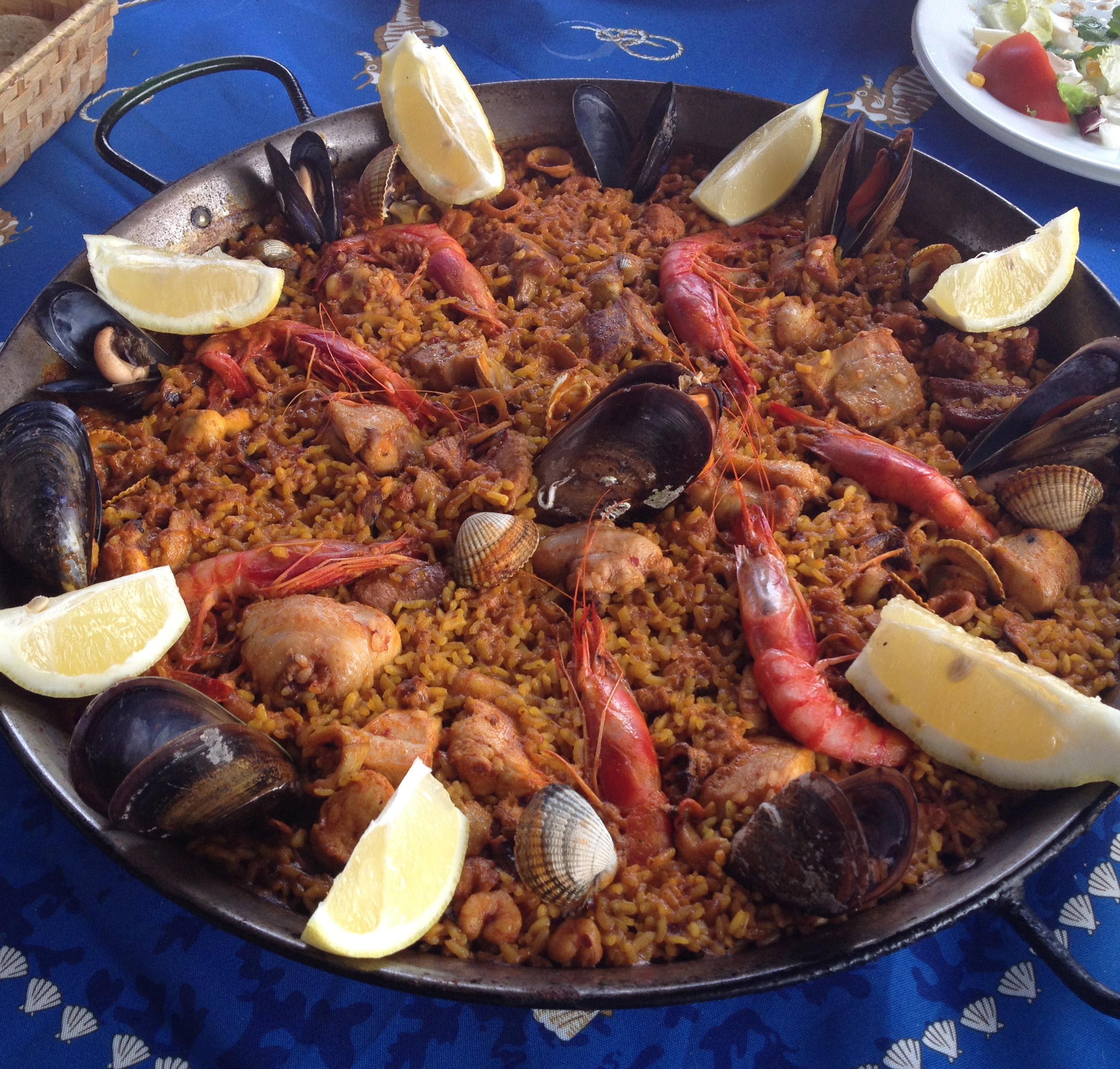
My story might leave you in our favourite tapas bar, yet I must share one last vignette. Our last day finds us back in the village for a traditional Sunday lunch. To complete our culinary experience, Margienus insists we have traditional paella, the Spanish rice dish that originated in the Valencia area.

We climb up a rocky hill where the restaurant sits, open to the breezy afternoon. Beach goers and picnics enjoy the sand below us, the day feels pleasant and timeless.

IMG_7344

At Casalmar before Sunday lunch, in our ‘flouncy blouses, flowing pantaloons and billowy kaftans’

No, it isn’t a fancy place, but the food and the family atmosphere is the attraction. Children play on the hillside and occasionally make their way to their parents who are enjoying yet another course and likely another bottle of wine. People wander up to the bar in bikinis or sit smartly dressed… and yes, the Spanish do craft beautiful shoes!

We’re offered a small plate of a national dish from a generous local at the table next to us. We feel welcome and at home. Yet, I long to hear some Spanish music, you know how I am about these things.

I ask one of the Thomas family members if they could indulge me. Generations of the family have welcomed the neighbourhood into their restaurant over the past forty years. On cue, a flamenco tune fills the restaurant. Now the experience is complete.

The Spanish melody drifts past us, out towards the Costa Blanca. Really and truly, every Sunday afternoon should be like this.

IMG_7382

Generations at the Casa Thomas

By the way, how was the paella? Like everything…it was Fantastico!

IMG_7375

Paella, bright with saffron

A ‘trailing spouse’… an accompanying partner with ‘a fine set of luggage’

Standard

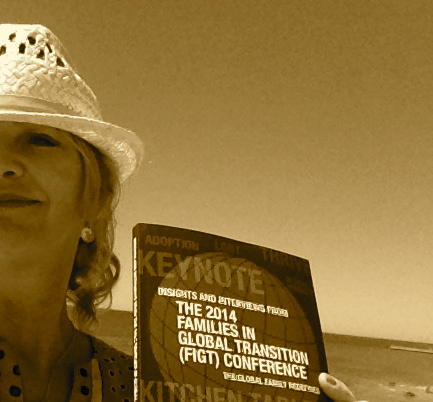
IMG_1086I unwrapped it expectantly. It had been awaiting my return to Canada, top of the mail pile. I’ve had magazine articles published before, but this is the first time to have articles in a book, Insights and Interviews from the 2014 Families in Global Transition, (FIGT).

In fact my first blog post, written about a year ago, was penned after returning from that conference in Washington. I had been one of the eight writers, tasked with documenting the insightful lectures and talks. Many long hours of writing and editing later, I submitted my work, only now seeing the finished compilation. Of course, it’s a grand feeling.

And it’s timely, as next month we come to the end of our posting in Kazakhstan. This is exactly what FIGT concerns itself with; transitions, culture shock, ‘third culture kids’ (TCK’s), identity loss, and the many issues that families face as we relocate worldwide or even within one’s own country. I feel the usual trepidation, yet excitement as the next move looms. In just over a month or so, I will live in another country, likely a different continent. I will pick up and follow my husband… I am a ‘trailing spouse’.

And yet ‘trailing spouse’ is a term I don’t embrace. It suggests a lack of purpose, identity, lack of choice, which are all true to some extent. This post is dedicated to those of you who, like us, live an international lifestyle or for those contemplating setting off across the seas to explore. For those of you who don’t live the expatriate life, I beg your indulgence to take a little glimpse ‘under the hood’ of the whole thrilling enterprise, yet also into the more mundane and sometimes alarming aspects of this life we hold dear.
sc000855f5

Bitten early by the travel bug

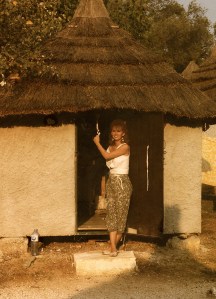
I was bitten early by the travel bug; trips to Europe and then to Thailand confirmed my love of exotic places and an urge to wander. I met a Scottish guy who shared my passion. He rolled into Calgary just before the ’88 Winter Olympics. Our first date was to a travel show about Africa and a year later we were backpacking through Thailand, India, Nepal and China before settling in Japan, and why not? It was a magical time.

We taught English and reveled in the young western ‘Gaijin’ crowd that occupied Osaka and Kyoto. We embraced this lifestyle with open arms just as we embraced each other, got married and started a family…and ventured onto an unknown path.

Our first home was in The Netherlands and we kept going from there; mostly, it’s been an exciting adventure, a privilege all these countries later. Yet the seemingly effortless mechanism that allows us to glide between borders has on many occasions been exposed to reveal a trying and more complex reality. And then you add raising kids to the equation.

This expat life is a lifestyle choice that only works well if it’s a partnership, if the spouse that ‘trails’ is happy, or at least content. An acquaintance of mine asks me. Does hubby know where he’s going yet? Well it really isn’t just hubby (who works for an energy company), it’s both of us that will once again adjust to a new life.

True, it doesn’t seem as complicated these days. No need to arrange schooling in the next country, worry whether the move coincides with junior or senior high. No need to feel guilty for taking the kids away from friends, yet again. Won’t have to say goodbye to countless families that we camped and boated with, traveled to hockey tournaments with, dined and danced with at villa parties until the wee hours of the morning. These friends became family because we were all without our own, raising our young children and teens together. Oh those were glorious years.
UnknownYet with that phase behind us, the pending location still impacts our life and even those of our now adult children. Will it be somewhere we can see them more often and other family as well? Is it a place they could come visit, Kazakhstan wasn’t exactly an easy location to welcome visitors! I’m fortunate that I jump on flights and make it home for family occasions despite living here, yet the long haul flights are wearying with jet lag at either end. No, I’m not complaining about the excursions I enjoy along the way, I know I’m lucky. So perhaps in that sense, I’m not a ‘trailing spouse’. Am I not that travel companion I always was, from the beginning?

And even the relative ease of this upcoming move seems too good to be true, at least in the physical sense, almost like back in those carefree days of backpacking. I arrived with luggage, ‘only luggage’ stuffed with as many books as possible. The usual relocation of furniture and household effects didn’t pertain to this posting. No this time there’s only memories and a few other ‘intangibles’ to pack away.

So what’s the problem then? Well, we do have a say in where we choose to relocate next, but the final decision isn’t ours, so to speak. And as any expat will admit to you, while you’re waiting to hear your ‘fate’ you tend to get a little nervous. And even though you’ve done this umpteen times before, half of you wants to fly home and lock up your passport.

Our young expat family

Our young expat family

And so I ponder the options…yes in a few of the locations I already have friends there, true some countries are closer to home than others, indeed the climates and cultures vary drastically… literally options around the world. And that’s when the other half of me gets excited.

Back to that problem? Will it be somewhere that I can inhabit happily; a true ‘home away’ from home. This short posting was anything but that and yet I believe I made the most it. But I now have a list of what I’d also like in country X; a writer’s community, an inspiring place to write and to host more writing workshops and hopefully a treasured circle of friends.

But the real clincher… please let me I’ll feel like I’m not wasting these precious years by living in a place that doesn’t gel, just doesn’t work. If you’ve committed to a 3 or 4 year assignment and it doesn’t work, well that’s when I’ve seen women fly home, kids in tow and not return. That’s when depression can set in, when marriages might fail, when one despairs. What on earth have we done!

Thankfully in retrospect, all of our locations ultimately succeeded, often beyond our expectations. But It was our move to Houston that brought me back down to earth; perhaps the first crack in my ‘idyllic expat wife veneer’. For the previous seven years, I had happily taught ESL whilst living in the Middle East. It was part-time and ideal in many ways as I still had time with our sons. I started the ESL program at the British School in Oman and taught children from around the world. I tutored a young prince from the Qatari Royal Family who loved to bring his prized falcon to class. I taught adults who were delightful and showed their appreciation with gifts of incense and silver. I adored it.

And then the axe fell, so to speak, with that move to Texas. A threatening stamp in my passport reminded me that I was not allowed to work. The irony of it all; there I was back in North America after 14 years abroad and I couldn’t work. Despite being busy with three children and yes, many wonderful times, an identity crisis crept in.

images-1At the aforementioned FIGT Conference, one of our writers in Insights and Interviews, Cristina Bertarelli, interviewed Evelyn Simpson and Louise Wiles. They’ve created a company that focuses on, ‘Decide to Thrive’, which supports accompanying partners with the ultimate goal of ‘Discovering Global You and Empowering Global You’.

Simpson and Wiles discovered that there is a clear connection between an active working partner and a successful family relocation. A survey revealed “that despite 78% of participants saying they wanted to work whilst they were living abroad, only 44% were doing so and of those only 16% were working full time. Our findings also showed that higher percentages of people who were working reported high levels of life satisfaction and fulfilment versus those who were not working.”

Yet Simpson and Wiles also remind us that many expat wives are happy to have a career break and focus on families. However, the survey concurred with the situation that I soon experienced myself in Houston. A long term quest to find something that was going to sustain me going forward. During those six years, I now realize that I truly felt like a ‘trailing spouse’ and often bemoaned my fate. It wasn’t just me. Off the top of my head, I think of my friends around the world who sacrificed their careers to follow their partner. They are doctors, psychologists, nurses, engineers, accountants and teachers.

Some of these friends lament that their qualification doesn’t apply to their present country or after a break, it’s a challenge to return to their IMG_1088profession. And often that’s accepted as we happily live life, raising families and supporting husbands. In many cases we may have homes to take care of in different countries with endless flights to book, schedules to organize. We require flexibility to travel at any time for a family event or an illness. It all gets incredibly busy and then one day you realize your path has meandered down a side trail and albeit a very interesting, colourful road that you’re pleased you traveled along. But that original path is gone, now what will you do? Especially if you find yourself in a country you had no intention of living in, as I did with Kazakhstan.
In our book, Insights and Interviews, another of our writers, Justine Ickes, interviews Linda Jansen, author of The Emotionally Resilient Expat. Linda sums it up concisely.

“We undertake momentous transitions as we cross culture. It is those transitions and change which bring opportunities, struggles, enriching gifts, difficult losses, but above all they bring growth. It’s up to us whether to choose to embrace this growth as positive or negative.”

Agreed, and indeed we are often more resilient and resourceful than we give ourselves credit for. We volunteer, serve on school boards, organize and coach sports teams or teach other pastimes, study, gain languages and learn new skills. I became a tour guide in Norway and studied Viking history. I now can also add kayaking and cross-country skiing to my list of new pastimes from our years there. The salsa lessons didn’t work out that well for me! In short, I along with many of my friends, embraced Norwegian life. It made all the difference.

But back to that arrival in Houston, if only to remind us that there are times when we all face difficult challenges, wherever we may be. To encourage us that we can make our way out of that dark ‘tunnel’, it just might take time.

I recall arriving at my children’s new school for the first time. I looked out to an auditorium of strangers. I remember feeling dread, despair. Not one person did I know, not a familiar face, never mind a friend. I’ve got to start all over again! Every day for those first months I wanted to flee, back on a flight to Oman which had been our home in every sense.
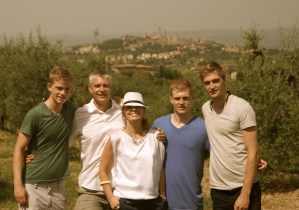
One of those 'breathless holidays'

One of those magical holidays

When we relocate, the husbands (or wives as there are also male accompanying partners) continue with work in the new location, the children start school and then it is up to those of us who accompany to find a way to adjust. If it’s a new country, we figure out where to shop, perhaps get a new driver’s license and maybe learn how to drive on the other side of the road. We decorate yet another home, find new babysitters for our kids, and very importantly, hope to forge new friends.

Four months after we moved to Houston, I went to a ‘Yay! The Kids Are Back In School’ coffee morning. A Scottish lady with a stylish hair cut was introduced to me. “How long have you been here? Where were you before this?” The usual questions we expat wives invariably begin first conversations with.

It seems we were best friends waiting to find each other. And we now had, in each other, someone that understood our transition woes. After years in Indonesia, Gillian was also struggling with culture shock. The two of us walked and talked our way through those first years in Houston; you always feel you can go forward with at least one good friend.

Part of me also knew I had to integrate and feel useful. A month or so after the move, I found myself on a baseball field on a humid evening. I had signed up to coach my youngest son’s baseball team. After all I had set up a league in Oman and coached for years. Yet I had almost backed out. We had been at a welcoming neighbour barbecue and I had mentioned that I would be coaching the upcoming season. There was almost stunned silence.

“Y’all know how serious these Texan fathers take their baseball, haven’t seen a woman coach before.”

I’m pleased I went through with it. Halfway through that first practice, I walked over to address the parents. I shan’t forget her, Penny was her name. She looked out to me and spoke on behalf of the parents, “Ms. Terry, we’re all just sittin’ here praisin’ your name!”

In true Texan fashion, I was welcomed with open arms. Maybe it was going to be just fine after all.
vintage-luggage_ggiul_01 Relocating is a challenge and often demands all of our resources. But whether it’s through volunteering, working or studying we integrate, re-define or even re-invent ourselves. For those who embrace change, there are many varied and colourful moments as an expat; days when you pinch yourself, life is just so great. But the peaks of emotion can be steep and the lows incredibly deep without family close at hand, with language and cultural barriers, with continuous farewells to friends. And when they jet off to the next location, you don’t want to be left behind; the proverbial ‘itchy feet’ syndrome sets in.

In one of my articles in Insights and Interviews, I write, “The trials and difficulties we experience as expats are often not discussed or fully appreciated by non-expats. My mother has often defended my ‘privileged’ life by asking people how they would cope with finding new schools, homes, doctors and friends every four years or so. More often than not, the response is that they had never really considered any of that.”

As time passed, I found ways to compensate for the fact that I couldn’t work. I mentored high school students who were in distress and know that I made a difference in their lives; an opportunity I wouldn’t have missed. I took a few evening courses and yet time was ticking. I would question, what do you want to do with the rest of your life?

After six years in Houston, we relocated to Norway which eventually would be a catalyst for the images‘good place’ I feel I’m in today. Jo Parfitt sums it up in a book she co-authors, the very useful and successful, A Career in your Suitcase.
A portable career is work that you can take with you wherever you go. It is based on your unique set of skills, values, passion and vision and is not based in a physical location.”

As if she were speaking to me directly, Jo summed up my situation. My time in Norway is when I was finally able to meld my passions and talents, finally culminate them into the start of a new direction; a readjustment. But it isn’t just us accompanying partners that must continually adjust, it’s also our children, those TCK’s.

Our writer, Dounia Bertuccelli, addressed this when she covered a session at FIGT. She knows the trials of being a TCK, having lived and studied in 7 countries herself.

“By the time they are 18, most TCK’s have said goodbye to many people and places. Sometimes they were leaving, other times they watched friends move away. At International Schools students must regularly cope with the emotional upheavals of leaving…”

I shall never forget the sorrow of my 17 year-old in Norway as he arrived home after saying goodbye to his first love. We were moving, they had no choice in the matter. As a parent, all one can do is hold them…and be thankful that time heals. Yet does it completely?
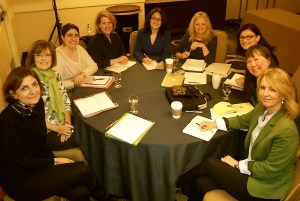
The writers at the 2014 Families in Global Transition Conference

The writers at the 2014 Families in Global Transition Conference with our leader, Jo Parfitt

Our well rounded, seemingly adjusted son would handle the transition from Norway to his home country of Canada far worse than we anticipated. He had visited every summer and Christmas, but had never lived there.

Sue Mannering, one of our writers currently living in Singapore, covered a FIGT session led by Danau Tanu, a TCK that has written a thesis regarding the topic of “Where are you from?”

Sue wrote, “How do you answer ‘Where are you from?’ The answer might be how much time do you have?”

I remember waking up one morning at our cabin a month or so before my son was to start University. He had come across a blog that a young TCK had written about not knowing where to call home. My son had forwarded it to me with the title…This is me Mom, where do I call home??

He was reaching out as he tried to cope, figuring out how to go forward… distressed. Seemingly those experiences and friends that he missed from a life abroad, now had to be tucked away from his identity. As expat parents we are continuously questioning our decisions in this lifestyle…should we have moved sooner so they could have had a home town, what if their academic skills don’t translate, do they feel like they have roots, how will we forgive ourselves if they come to us one day and suggest we ruined their life for ‘dragging’ them around the world?
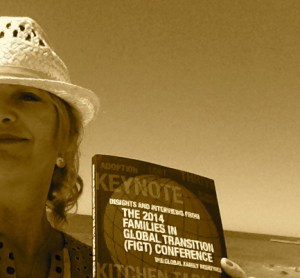
IMG_6336

New horizons and our FIGT compilation

You remind them of those magical holidays, the experience of people and cultures, the opportunity to play in sport tournaments throughout Europe, etc, etc. I have heard it time and time again from parents. We want to believe we’ve given them a good life, yet seem to also second guess this privileged life of travel and private schools. We want to believe they’ll just plunk themselves home when the time comes and all will be well.

As partners, our emotional well-being can often end up taking a backseat as we help our children transition. And yes, this can go on into the University phase as was the case in our family. That morning after reading my son’s email, I hastily made my way back to the city. He needed counselling and three hours later, he understood that he needed to embrace all of his life experiences and proudly acknowledge his international past.

And that is essentially the key. Whether it be our children or as an accompanying partner, we must endeavour to… well, one of my lovely Texan friends gave me a handcrafted tile before I left. It summed it up beautifully, Bloom where you’re planted.

So thrive and grow, some days it’s far easier than others. Those difficult days have to be accepted and put away. Our TCK’s need to be re-assured that they will find their path and like us, a small piece of their heart always be waiting for them in the countries that they’ve lived…and with friends that they’ve loved. Thankfully there are now many resources available to us for support, such as FIGT and their links; even our newly published book that we are all proud of.

So I shall soon know where I’ll next be ‘planted’. And one more requirement now that I think about it, is to live somewhere that I can easily get to the 2016 FIGT Conference, next March in AmsterdamAnd I encourage expats to consider being there. You will be enlightened, inspired and make new friends, as I was, and most certainly did.

Jo Parfitt summed it up in the forward of Insights and Interviews, Here are the people who know the answers. The experts, the gurus, the leaders. This is where people ‘get me.’ It has often been said of the event that it is a place where ‘best friends meet for the first time.'” Then again, you can be sure I’ll be there, no matter where I am in the world.

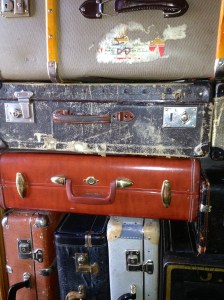
UnknownAs I checked into the Calgary Airport for the trip back to Kazakhstan this past visit, the Air Canada agent noticed my luggage as I heaved it onto the belt. I myself had my eye on the scale, hoping it wouldn’t be overweight yet again.

“That’s a fine set of luggage you have there, Ms. Wilson.” I chuckled a thank you.

But what I was really thinking was…Yes and there’s more packed in there than you’ll ever know. My ‘wee career’, my resilience, my wanderlust, my friendships, a photo of those precious sons with that traveling partner that I’m more than willing to accompany….wherever it may be in this big, frabjous world. And no, I wouldn’t have it any other way.


Insights and Interviews from The 2014 FIGT Conference and The Emotionally Resilient Expat are available at summertime publishing

Completing our group of writers are Alice Wu, Becky Matchullis and Nikki Kazimova.

They’ll be home… where the garden is, where memories live

Standard
IMG_6015

The pond, for fishing and skating

Our evening stroll offered swooping owls, waddling ducks and darting dogs. The sun sunk low into a newly planted field that borders the acreage, we call it home…’the farm.’ I’ve made my way back to Canada to surprise my parents for their 40th Anniversary, returning to a plot of land that embodies nature’s bounty, a lifetime of work and more memories than can be captured on film. But there’s no need; the images are imprinted on our hearts, embedded into our collective family memory.

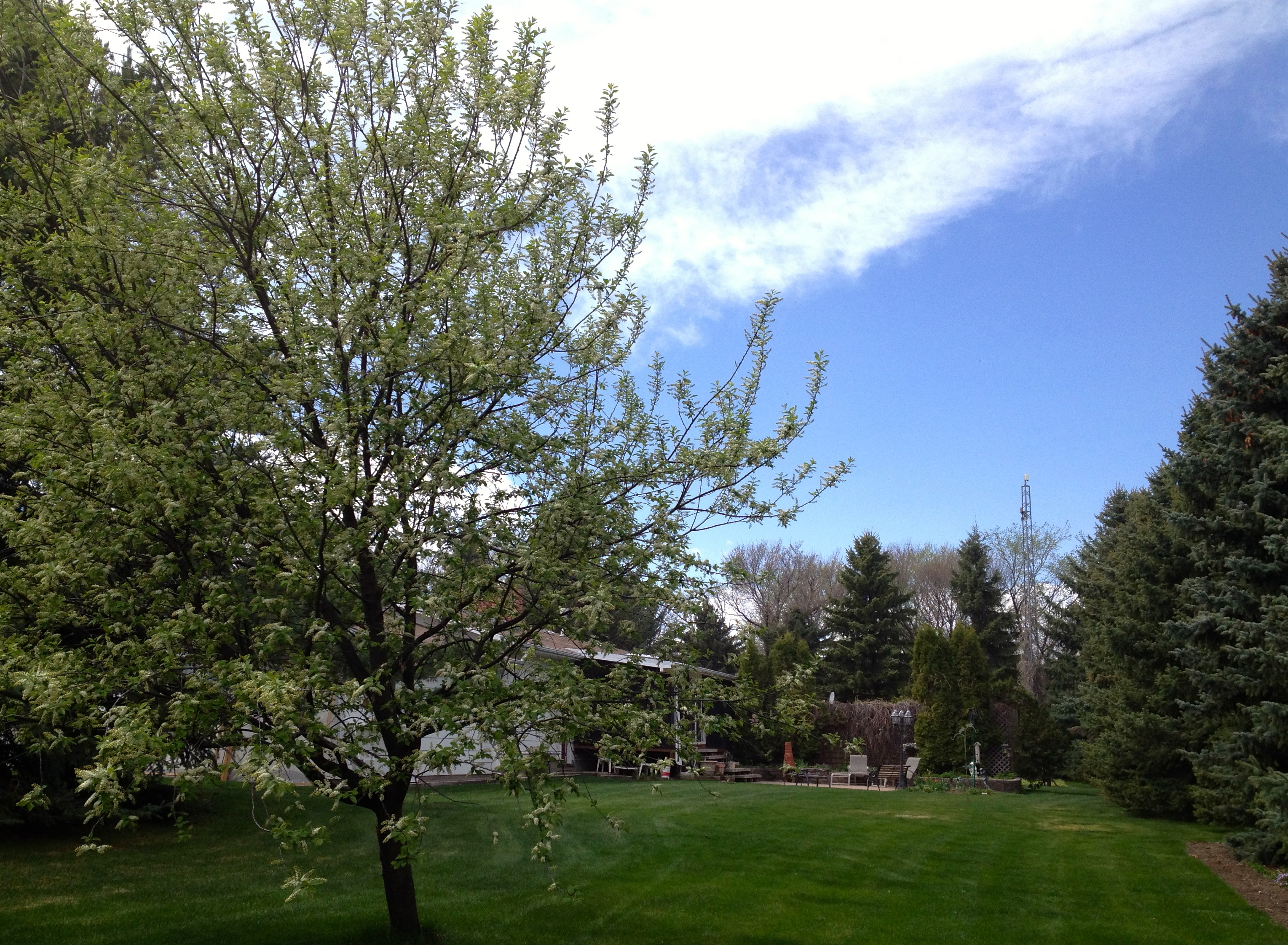
This land, a grain field forty years ago, is now an oasis with towering blue and white spruce, and ponderosa pine that shelter from howling north winds. The grass is verdant this spring, its rich emerald hue a backdrop for flowers in bloom, golden spurge and delicate May Day trees.

IMG_6069

At the garden shed

These are the prairies of Western Canada where settlers have arrived for the past few hundred years; enticed by fertile farm land, hopeful for idyllic homesteads and new beginnings.

From their European homelands they ventured by ship, uncertain of what the future held. They journeyed onward by train, along the newly laid Canadian Pacific Railway, disembarking at communities across this vast country.

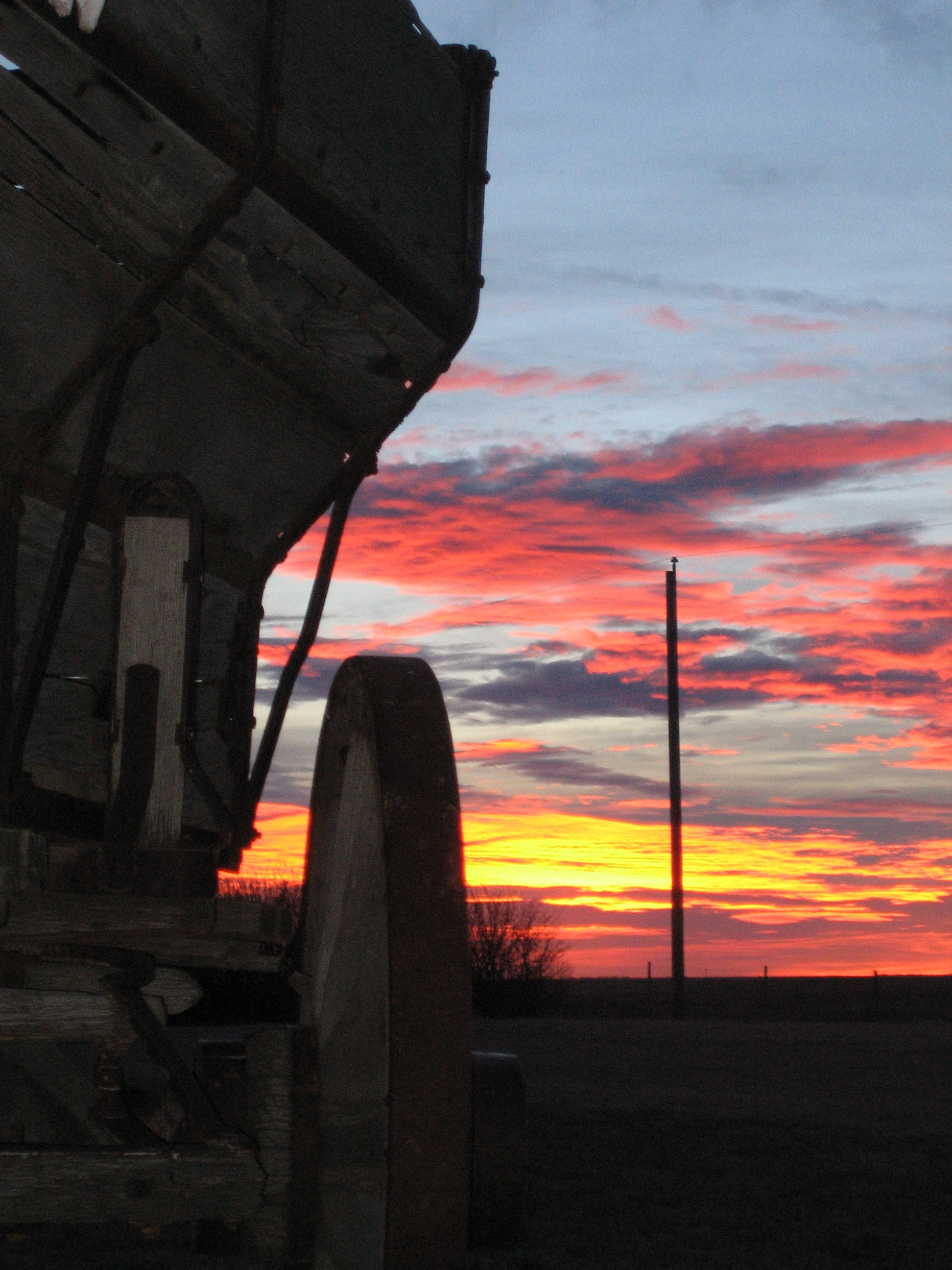
As with my mother’s family in the ’50’s, many arrived from the Netherlands, risking all for a new life; hard work and toil yielded success. Proud, new citizens in a welcoming land. Some settlers trekked from the east or the U.S. in caravans of wagons, stacked high with furniture and family. The wagon parked on the acreage from my father’s family, is a proud reminder of their storied journey. Now a backdrop for a yellow rose bush, it was once a means of transport. A working wagon for hauling hay, feed, grain to elevators.

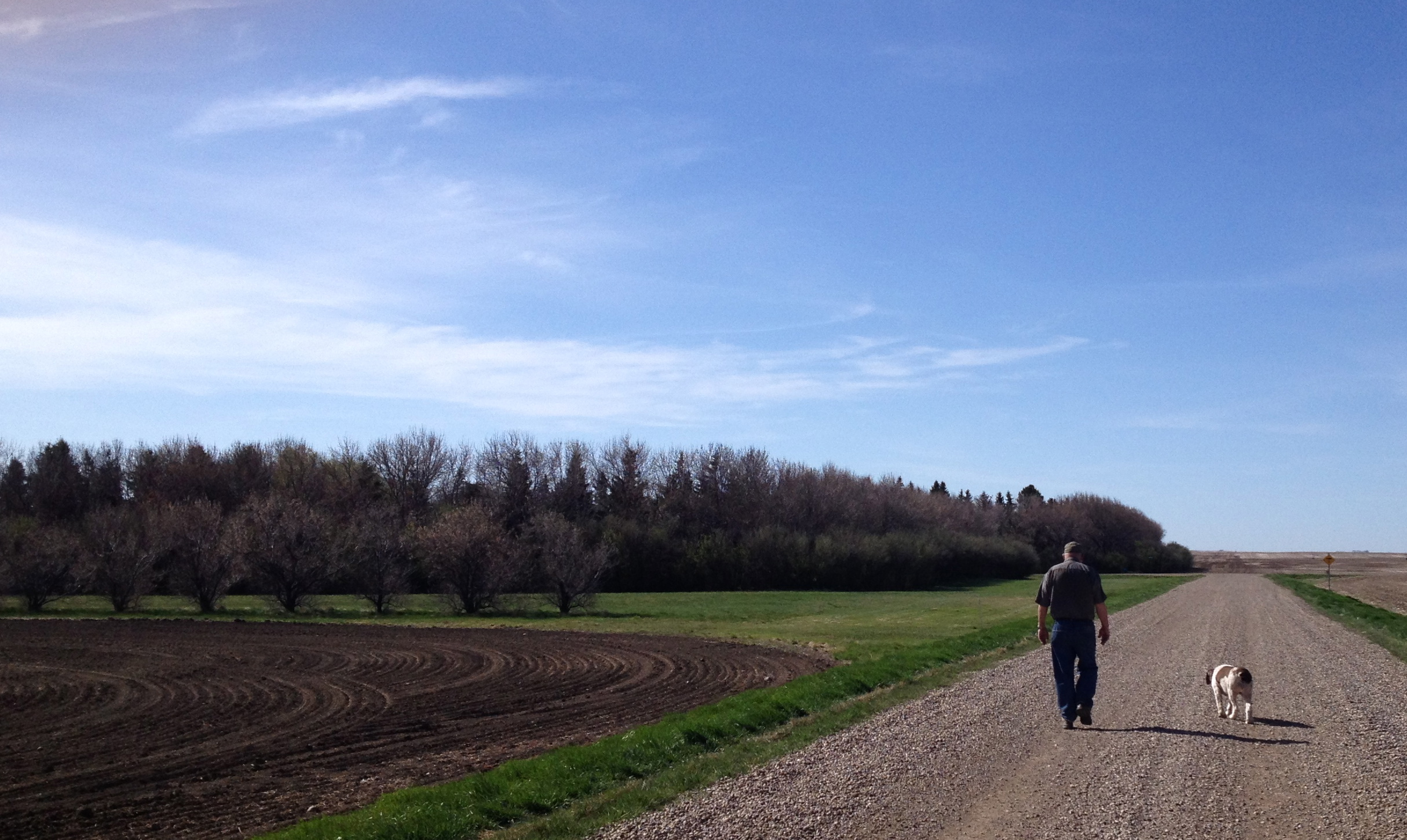
Quiet country roads

Quiet country roads

In my family, you garden, work in the yard, grow things, landscape and stroll the land; just as our ancestors have done. Is it in your blood, this need to commune with the land, I feel it is. I felt it wouldn’t be spring for me until I could dig a little, plant, walk the dogs along scented lilacs and quiet country roads.

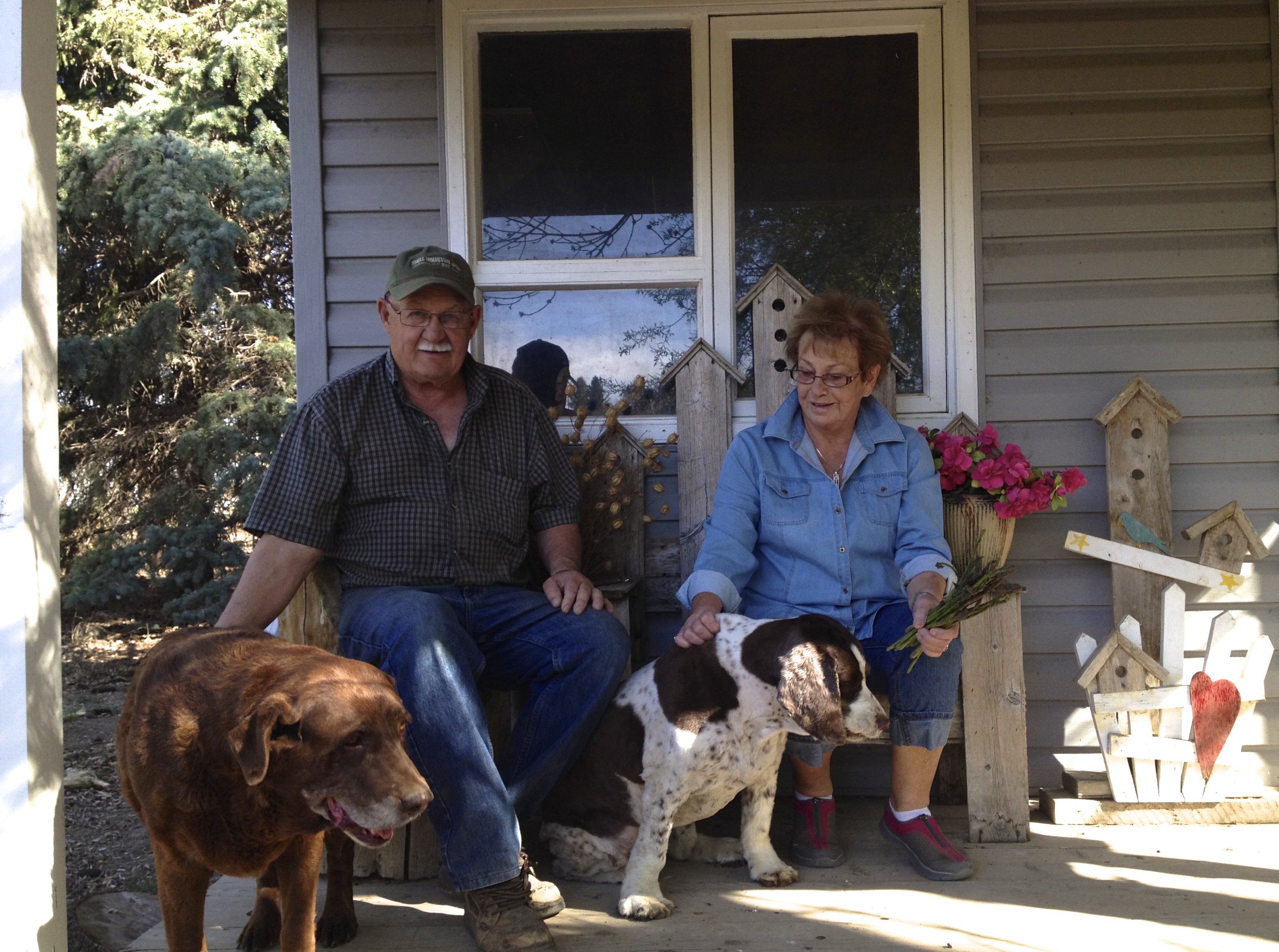
And so, I’ve come home to my parents and I find them where they should be… where I’m delighted to be.

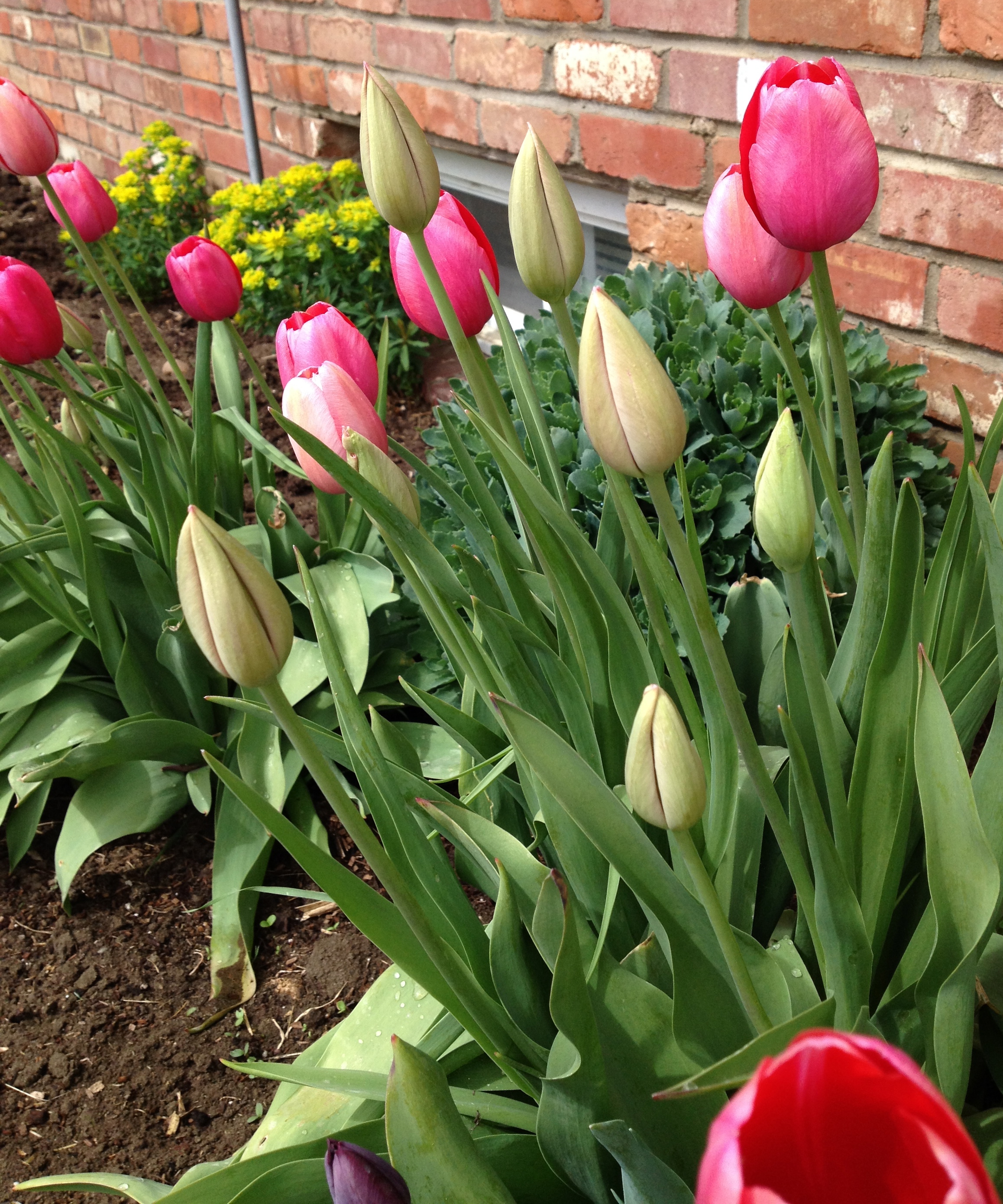
They’re ambling below dreamy blue skies, dogs nudging at their sides and geese gliding over sky. I’ve found them plucking asparagus, planting gladiolas and poking hollyhock seeds into tilled earth. It’s time to cut first grass, take the ‘storm plastic’ off and let the deck breath, prepare the planters and the ‘beds’. Soon the kitchen table will display their bounty; bouquets of lupins, tulips, dahlias, peonies, lilacs and glads.

IMG_6097

Tulips in bloom

My parents awaken, work and stroll to a symphony of cooing, cawing; a melody of birds. Plump robins, doves, meadowlarks and elusive owls. Partridges, pheasants, hawks and cowbirds chirp and squawk. Butterflies flutter and bees flit past, en route to blossoms and buds.

Where grandchildren played and played

Where grandchildren played and great- grandchildren now play

Under billowy clouds, skunks duck into warrens and gophers tunnel, deer prance through fields past gangly hares. The dogs wait patiently on a weathered deck as we have a ‘wee dram’ at dear, long time neighbours. Storm clouds brew, awakening our senses as we rush home through the shelter belt of trees.

These glorious days of spring find us reminiscing of grandchildren that grew up in this haven of outdoor activity. My children who were raised on different continents, came here…to be home.

Towering elms

Towering elms

Here, with cousins, they learned how to skate on a frozen pond and ‘hold on tight’ for tractor-drawn sleigh rides. How to build snow forts and duck snowballs. Summers passed in perpetual movement, running barefoot over green lawns, soaked and squealing. ‘Secret missions’ played out through trees and fields. Golf carts, bikes and trikes circled the yard, eager for an adventure.

It’s here they played ball, built campfires and gazed at a million stars. Where Grandpa taught them how to fish, to golf, to ‘drive a standard’ in a rusty, green pickup truck. Where Grandma ensured they knew how to play ‘Texas Hold Em’, sing ‘Hollandse leidjes’ and bake waffle cookies. Yes, it’s here they came to bond with family, find their roots, to become Canadian.

This oasis has been a constant in our lives, a refuge on the beloved flatlands of the prairies. I find my parents offering the same inviting hospitality that has always been for my family, since the day I was married here, on this land. The elms and pines are taller now, the wagon more weathered and the kitchen table a little scuffed from hearty meals and lively gatherings.

IMG_0503

Grandfather’s wagon

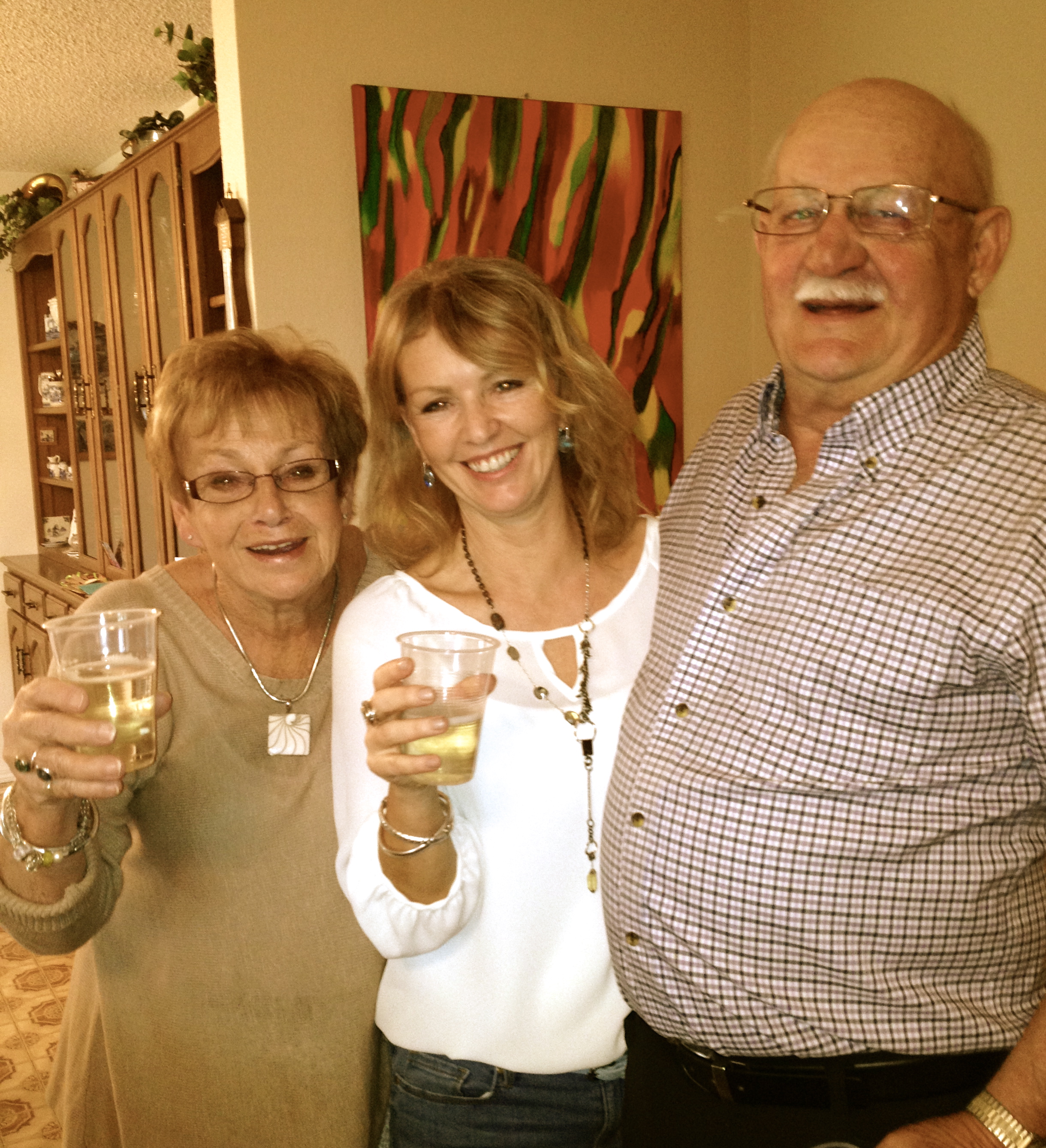
And as it was recently when I crept into their home from halfway around the world, it was as always, gezillig…that Dutch word for cozy. The surprise was genuine; as were the friends and family here to celebrate these two special people. I know we’re fortunate to live and travel the world. Yet, we have a haven to come home to…it’s just east of Barnwell*, Alberta, Canada. And my parents, I’ll find them here, home.

IMG_5951 2

An Anniversary surprise

IMG_6027

The colour of beehives

*Barnwell is not named after a barn and a well, but after William Barnwell who immigrated from England. His family dates back to the Baron de Barnwell who came from Normandy with William the Conqueror in 1066

IMG_6248

An early spring bouquet

IMG_6113

The neighbour’s barn

Every market tells a story…

Standard
DSC04609

Tomatoes with a story

You’ll remember when I wrote my first dispatch from Kazakhstan I hoped for… “a labyrinth of streets and souks that come to life; exotic scenes, smells and intrigues.” I’m pleased to report that such markets are here in Aktau. They are lively, authentic and represent certain aspects of Eurasian culture and hospitality. Is a market not a place that tells stories and allows glimpses into cultures? I believe that to be true and so I give you….
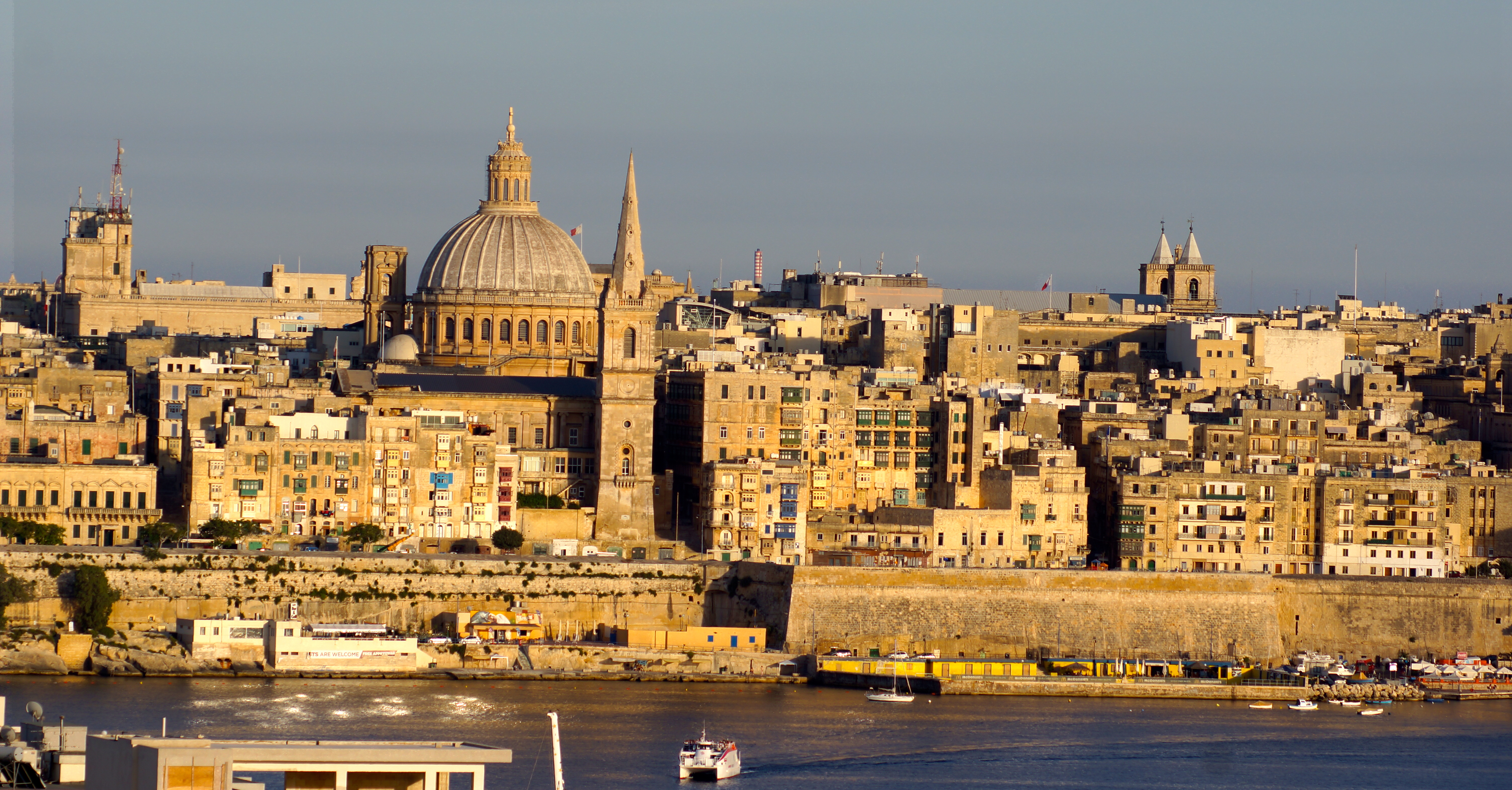
Three markets known for their meat, fruit, vegetables, spices, plastic goods, cheap clothes and more.

Markets, where many of the vendors are from other lands. Home is Azerbaijan, Uzbekistan, Kyrgyzstan, Tajikistan; all those new Republics that were suddenly cut adrift from the Soviet Union, encountering unprecedented challenges in the years since. Some people have struggled, the next generation has found it easier.

“Many poor people,” Samira, my Azeri friend tells me.

DSC04658

A simple market display

We are at the small Volna Market, stalls and stores just off a busy, main street. When the vendors discover that Samira is from Azerbaijan, she is surrounded.

“Please send greetings back home,” they say wistfully… they seem ever so homesick. A lady with striking red lipstick and tidy blond hair wraps smoked fish, then puts her hand to her heart.

“I’m from Sakhalin, Russia,” she says, seeming lonely despite the bustle around her. Perhaps like many, she was sent here as a dissident, never managing to find her way back home.

DSC06688

The friendly vendor from Azerbaijan

Eager for our attention, the vendor across the way gestures to her pyramid of eggs. I gladly buy some; she is ecstatic to have her photo taken, to have chatted with Samira in her native language. She pecks me on the cheek bidding farewell, pressing her jolly self against me for a friendly hug. Of course, being at the market with a ‘local’ is a different experience. Even our taxi driver has refused to leave us, now willingly laden with our purchases. He chuckles alongside the humourous Samira.

DSC04604

Warm smiles

On other days at two of the larger markets, my husband and I are mostly made to feel welcome. Tea and dumplings are offered, photos taken, stilted but eager conversation. Always we’re asked, ‘Which country are you from?’

“Ah, Canada good, Ottawa?” Our capital they know. Yet on one occasion, we are thought to be suspicious and we’re followed, told brusquely to put the camera away. I comply until I’ve turned the corner.

We buy produce that journeyed across the country by train from the fertile region of Kazakhstan, bringing staples such as apples from Almaty. This mountainous area in the Southern part of the country is the ancestral home of the apple… of all apples on earth, geneticists have recently confirmed.

IMG_4236

‘Azerbaijani pomegranates’ and Almaty apples

Many of the ‘greens’ arrive from across the Caspian, grown by the Azeris and the Georgians. The vegetables are plentiful but one day I’m refused service. I’m too choosy about the tomatoes I’m selecting. The vendor shoos me away with a scowl, a holler and a flick of her hand. I’m offended until I ponder, Perhaps her family has memories of the ‘hunger winters?‘ Those that starved, the fate of half of the Kazakh population in the winters of 1931-33, did so because of Stalin’s forced collectivisation.

I regret being picky about which tomatoes I’m piling into my basket. Perhaps everyone should take some over-ripe and some firm, just thankful that there is food.


IMG_3859

The essential sheep’s head

Meat is ample and readily available as Kazakh culture dictates.

Here, they opine that chicken is merely a vegetable; sheep, beef and horse reign. Vital to any celebration, or dastarkhan, a sheep’s head is displayed and served first to the honoured guest. It is then carved bit by bit; a piece of ear given to children, to be careful, to listen well. A smidgen of tongue to become more expressive. The eyes are delicacies, to seek wisdom. The brain, the best bit of all.

The dastarkhan still heeds the ancient ritual of showing respect to guests, to the elderly and relations. Ideally this is accompanied by shots of vodka, with plentiful toasting, usually every five minutes or so. The most senior starts it off and it goes from there. I have experienced this custom often… a toast, a shot (I forego the vodka), a toast, a shot… the third toast always salutes the ladies. I shall miss this tradition, as it poignantly imbues festivities with meaning and respect. Between the vodka, ample food, speeches and dancing if possible, a Kazakh celebration is not to be missed. But more of the ever present meat…

IMG_3861

Bit by bit…

Besbarmak is boiled meat served in large hunks. Shashlik is marinated meat on a stick, often eaten at roadside cafes. Ulpershek is a dish made from the heart, aorta, and fat of a horse. Prepared in a kettle, it’s often shared between sisters-in-law as a sign of unity. Kazy is a sausage eaten in the spring when a cow has a new calf, sometimes served with rice. Mypalau is a dish made from sheep’s brain. Put the brain in a wooden bowl, add marrow, pieces of meat, salted fat in broth and garlic. On and on, go the meat recipes.

DSC04655

‘Fresh Meat’

Kazakh culture dictates that bread is never wasted. Furthermore, Kazakh hospitality demands that one must not leave a house without ‘at least having eaten a crumb.’

IMG_4105

The ‘Naan’ baker

One doesn’t actually see much bread at these markets, but we peek into a naan bakery. The scent of fresh baking from the tandoor enticing us to enter. The baker poses proudly while I openly covet his old, weighty scale.

In our market visits, I had been intrigued by white, stone-like pieces that are displayed amongst spices, pulses and grains. Imprinted with knuckle-marks, they have a haunting story to tell.

In the desolate and remote Kazakh hinterland, once stood the gulag, the network of Soviet era concentration camps. The harsh weather and the impossible distances made escape futile. One such gulag, Alzhir, was solely for women and children. Their only ‘crime’; being, a wife, mother, or child of a man convicted of ‘betrayal of the motherland.’

Local villagers, risking their own lives, secretly tried to ease the prisoners’ hunger by throwing ‘stones’ at them. The guards delighted in this… ‘even your own kind throw stones at you!’ But the ‘rocks’ were actually hand formed, dessicated pieces of cheese curd, kurt. To this day, they are reminders of the repugnant man-made hells and of thousands of lost, innocent lives.

DSC04661

Kurt on display

When I see kurt in the markets, I’m reminded of my Dutch grandmother’s own wartime experiences. She would tell us sternly, yet lovingly, that ‘alles moet op’ – you must eat everything on your plate.

DSC05555

Knitted socks…from women prisoners

On a chilly day a few months ago, it wasn’t food that I bought at the market, but something to warm me. Two things in fact, both reminding of my stoic grandmother. First, a cozy pair of knitted socks, crafted by women prisoners out of dog hair. I remember my grandmother often knitting or crocheting. Through her life she also embodied resourcefulness; drawing from her frugal upbringing, from raising children during the Second World War, to the harsh realities of being new immigrants in Canada.

Across the alley, a welcoming lady nods to her wares; she has crocheted slippers. They are just as my grandmother had made for me. I remember choosing the colour of Phentex I wanted; they are long since frayed and worn.

DSC05522

‘My grandmother’s slippers’


I take my time deciding on a pair, thinking of Margje, knowing she’d be amused at finding ‘her slippers’ in such a faraway place. And the story of the kurt would have resonated with her, having suffered through her own ‘hunger winters.’ I think of her, and of all the ladies whose own trials are etched on their faces. I can’t hear all of their stories, but I can look into their eyes with sincerity and a smile, I can make contact. There is no language barrier to that.

IMG_4111

New friends from Uzbekistan, after tea and dumplings


DSC05539

A mishmash of goods

DSC04620

A rainbow of plastic


Enchanted by Baku… a caravanserai along the Silk Route

Standard

As I dragged myself out of a 16-hour jet lagged slumber last week, I didn’t take it for granted that I was back safely across the world, ‘home’ in Kazakhstan. After a trip that included Azerbaijan, Canada and Turkey, we were quite literally blown back into Aktau. A severe dust storm almost prevented the plane from landing; we passengers erupted into spontaneous applause as the plane managed to touch down, despite the impenetrable, brown ‘murk’. Reminiscent of the days when applause followed each landing, it’s still a custom when flying in this region and it was entirely deserved on this occasion.

DSC05721

Carpets in Icheri Sheher

Fine dust scratched my eyes and throat before I had even exited the airport; the serenity of two weeks on Vancouver Island already felt a million miles away. And so upon waking the next day, three weeks of travels cascaded through my mind. The usual panoply of books and pamphlets collected over the weeks reminded me… there’s so much I want to write about. Books on Totem Poles, Emily Carr, The Silk Route, Topkapi Palace and Hagia Sophia. Where to begin?

At breakfast, it seems it was decided for me. After greeting the staff and claiming my usual spot at the hotel restaurant, two ladies beside me switched from Russian to English. Noticing the depictions of palaces in the book I was reading, one of them asked if they were from sites here in Aktau. “No I wish,” said I. ” I’m afraid there really isn’t anything quite as interesting here. You’re visiting then?”

“Yes, we’re from Baku, have you been there?”

“In fact I was there about three weeks ago, what a beautiful city! I loved it,” I said excitedly.

IMG_5751

Tea in a lavish shop setting

You can be forgiven if you’re not quite sure where to find Baku on a map. It’s in Azerbaijan, a quick forty-five minute flight, west over the Caspian from Kazakhstan. In this short jaunt, one is transported to a city so brilliant in its cutting-edge architecture and spectacular lights, that it mesmerises even the most seasoned traveler. Much of the architecture suggests you’re in Europe. Wide, verdant boulevards intersect the shimmering Caspian with high-end shops in stately buildings. World class venue sites stand ready for events such as the Euro games, the Grand Prix and the Eurovision which kick-started the building trend in 2012.

DSC05728

Masterpieces of Heritage

Yet Baku is also an ancient city that enchanted as I lingered in ancient caravanserais and wandered past minarets that had stood watch for invaders such as the Mongols and Peter the Great. My friend Okkie and I ‘did’ Baku for some two and a half days before this last trip to Canada. By the third day, we still exclaimed… “Can you believe this place, we could be in Paris or Rome. Must we leave?”

At its root, however, Baku has always been about one thing; oil. The modern day splendour is funded by massive oil reserves. In fact, the liquid gold is so abundant in the region that for centuries flames have erupted spontaneously from the ground. Hence, the ultra modern Flame Towers that rise nearly 800 feet above the city, paying homage to Baku’s oil wealth.

Returning to my new friends at breakfast on the first day back, I shared some photos with my new friends, Samira and Gala. “But didn’t you like the new buildings?” they asked, noting that my images favoured UNESCO World Heritage sites such as The Maiden’s Tower, ancient city walls and palaces. “We walk past these all the time and don’t really think about them,” they confided. “Of course, but it’s really the old and the historic that I love,” I said honestly. “I found the old city fascinating.”

DSC05752

Street-side wares

Icheri Sheher, the old city, harkens to centuries past. Sights that span the centuries from the Great Silk Route to the modest Sultans, the Rulers of Shiravan. It spoke of repelled attacks, but also of lost campaigns such as against the Persians in the 1500’s. They promptly trotted off with many Azeri heritage pieces, now in museums world-wide. All the more important that parts of the old city itself are now Unesco Heritage Sites and mercifully, they aren’t going anywhere. Yet, the more recent history of this city’s transformation is particularly fascinating. By the 1860’s, Baku oil fields accounted for 90% of the world’s oil supply. The population at this time grew faster than Paris, London or New York. Along came workers from neighbouring Iran, Uzbekistan, Kazakhstan and further afield… also artists, travellers and tycoons.

“Darling, l’ve so loved Venice, lets go home and re-create it in Baku,” could easily have been a conversation between an oil tycoon and his wife during these epic days that flourished into the ’20’s. Names such as Hajinski, Rothschild and Nobel. Yes, the same Swedish Nobel family of Nobel Oil, of the Nobel Peace Award. They were in Baku building a fortune, some of the first oil tycoons. Cobbled, medieval streets are lined with their once opulent villas, inspired by their heritage or visits to Europe. Countless oil barons built villas with Italian logias, those wooden balconies that peek out over the streets. They built with lavish marble, fashioned exquisite gardens and collected priceless artifacts for their villas. Some of those treasures are now displayed at Nobel Villa Petrolea.

DSC05766

Echoes of the ancient Silk Route

DSC05769

At the heart of the caravanserai

It was a time of flux and opportunity. Baku transformed from a population of 14,000 in 1898 to over 200,00 in 1920. I hadn’t quite realized this aspect of the city’s history, but I had anticipated that I’d be visiting a medieval settlement that had been on the Silk Route. This has become a recent fascination for me and I’ve come to realize that over the years I’ve traveled to many of these storied settlements… Nara, Xian, Guangzhou, Almaty, Varanasi, Kathmandu, Jaisalmer, Muscat, Istanbul, Venice, Rome, and now Baku. At each of these grand staging points, amidst markets and trading establishments, was a caravanserai. And for the first time, at least to my knowledge, I finally stood in one of these medieval accommodations along the Great Silk Route. These trade routes developed from the 3rd century BC to the 15th century AD. They conveyed goods, knowledge and customs across vast territories, connecting diverse people. Eventually a network of caravanserais stretched from China to the Indian subcontinent, Iran, Turkey, as far as North Africa, Russia and Eastern Europe, culminating in Rome and Venice.

DSC05767

“I flowed my hand over an evocative sculpture”

As I stood in the centre of the octagonal caravanserai in the old town of Baku, centuries of worn stone beneath my feet, I could imagine the scenes that had played out on this spot. Scores of camels shuffled in, their woven camel bags bursting with silk, dried fruit and saffron, jewellery and precious stones, pottery and weapons. The weary merchants could now rest with their precious cargo safe in the confines of the stone shelters; a respite from the dangers of the road or the volatility of the sea and feared pirates. I could hear the cargo being unpacked, chatter filling the air, camels eager to be fed and watered. Once the gates were locked for the night, the caravanserai would come alive with baths, welcoming food, mingling around open fires and strumming of music. A chance to recount the journey, tell tales and rejuvenate. Often these caravans traversed the route for a year or two, trading and restocking en route.

In Baku, new goods loaded included age old exports from Azerbaijan; oil, dried fruit and salt, dyes,weapons and carpets. I flowed my hand over a simple, yet evocative sculpture. From its vantage point it would have witnessed the pulse of the caravanserai, where merchants, missionaries and travellers such as Marco Polo engaged in cultural, scientific and spiritual discourse. Yes, it seems Marco spent some time here in 1264. He, like others, wrote of ideas and innovations carried along the silk route; the stirrup, the irrigation waterwheel, paper and printing. Polo, and indeed even Ghenghis Khan, became particularly enamoured with the abundance of rich silks along the Route. Silk tents, silk-lined wagons and, as Colin Thubron mentions in Shadow of the Silk Road, Ghenghis observed the ‘silk-clad women, glittering like a red-hot fire.’ Polo wrote of ‘the whole court of Kublai Khan assembling in identical coloured silks, according to feast-day.’ With such descriptions, one can easily imagine the extravagant life that trade along the Silk Route afforded those of wealth and status.

As I stepped through the imposing stone arch, back into the street, I felt the same fascination that travel writers before me must have experienced in places of antiquity… a sense of the confluence of history. One such writer was the intrepid Freya Stark. I look up to her, one of the first women to travel alone and write about such exotic locations. Of course, I’m not a renowned writer as she was and cannot begin to compare with likes of Paul Theroux or Colin Thubron, but yet I feel acute delight to have been here and to share it in my own humble words. I found my modern day travel companion and confessed that I’d experienced a poignant moment, for me at least. I admitted to her that I had long wished to experience a tangible sense of the Silk Route and to absorb the layer upon layer of history. Perhaps sensing this, Okkie had left me alone inside the caravanserai and she now gave me a hug of understanding. We sat on a low stone wall, turned our faces to the sunshine and silently absorbed Icheri Sheher.

DSC05829

The Maiden’s Tower and a tycoon’s villa

I had met Okkie in Aktau. It was one of those friendships that forms quickly. We both have three sons, similar interests, by chance we have mutual friends dotted around the world and we’ve lived in some of the same countries. Not surprisingly, many of the same artifacts are common in our homes; furniture, pottery and carpets from time lived in the Middle East. Not surprisingly we both agreed that the Azerbaijani Carpet Museum was a must-see.

DSC05839

Treasures at the Azerbaijani Carpet Museum

Azerbaijani carpets have been proclaimed a ‘Masterpiece of Intangible Heritage’ by UNESCO. Delightfully, the museum is built in the shape of a rolled carpet. As early as the 7th century, travelers exalted the high-quality rugs. We were intrigued by the exquisite colours from natural dyes such as pomegranate, madder and elderberry for red, sorrel and juniper for green, sagebrush and saffron for yellow, onion skin for orange, indigo and blackberry for blue. We marveled at the distinct designs and themes that originate from different areas; from Shirvan, Tabriz and Sumakh. I have such clear memories of these names tumbling from shopkeepers’ lips as I painstakingly chose carpets in Dubai, Doha and Muscat. Now here I was, admiring the treasured collection at the country of source.

After fulfilling days of sightseeing, we dined in sublime restaurants poised over the Caspian. Edifices from countless centuries traced the skyline, a minaret and tower from the 12th century, hammam cupolas from the 14th century, sculptured towers from the 21st. I understood why Baku has been a desirable city for thousands of years; a city that really isn’t only about oil after all.

On our last night in Baku, Okkie and I had gone to a revolving lounge, high in the sky. A few bottles of excellent Azerbaijan white wine later, the lights that sparkle upon the Caspian and Baku had transfixed us for hours. Our gorgeous hotel revolved into view, the towers, the illuminated villas, and on and on.

“Just one more ‘go round’, we’d say. After all, the modern sights are pretty great too!

Back in Aktau a few days after our first encounter, I have tea with my new Azeri friends. I ask about the scrumptious rice dish that we had ordered at every chance whilst in Baku.

IMG_5883

Samira ‘making’ Azeri Ash

“How on earth do you make your rice dish? It’s called ‘Ash’ isn’t it?” I asked. Samira, whom serendipity saw fit to cross our paths, leaned forward in her chair. Positioning the teapot as a ‘cooking pot’ and the napkin as the ‘cotton cloth I’ll need to line the lid’, Samira demonstrated the pilaff recipe in her loveable, expressive way.

“This is the secret of our country’s dish – butter, it’s all about the butter!” Ah, just as Okkie and I had suspected.


images-1

Snapshots on the road to Tofino…

Standard
e7c0584255fa6f2981e510285a9e9e4f_L

The Amphitrite Lighthouse, Ucluelet

“Would you like to take their photo,” the dog owner asked without hesitation, already reigning in her three large pets. We had stopped to take a photo of an ageing wooden boat on the main street of Ucluelet.

“That would be nice, if you’re sure?” I replied. But the lady, who introduced herself as Janice, was already scooting her three dogs up on the bench that was positioned in front of the Evelyn May. Its once brilliant colours still brightened up the otherwise ordinary street. The fact that it had become an unintended focal point on main street in a small Canadian town, didn’t surprise me.

Scooby, Honey and Keyna

Scooby, Honey and Keyna

Vancouver Island is that kind of place, comfortable in its unpretentiousness, resplendent in its natural beauty; an incomparable delight at the continents edge. It took ten minutes or so to get the dogs positioned just right, but Janice didn’t mind. She was more than pleased to display her three adorable hounds and they just happened to be wearing colours that complimented the faded hues of the Evelyn May.

It had been like this, the last 24 hours, chance encounters with many friendly folk. We had made our way from the structured elegance of Victoria and woven along the Pacific Rim Highway towards the ocean, to the wild margins of Canada’s most westerly point.

We had purposely taken our time, stopping frequently when our curiosity was piqued. And there’s been much of that. Sites that we were pleased to have stumbled upon; people with whom we were thankful we had stopped to share a moment.

For Canadians, visiting this part of the country is on most people’s wish list. The surfing, kayaking and whale watching, the seamless marriage of ocean and rainforest, the inviting harbours and superb seafood. The island is a living picture of ethereal beauty, but also home to thriving trade and industry. In the small harbours and hidden inlets are lumber mills and mining, fisheries and canneries, fishing trawlers nestled beside gleaming white yachts.

Cowichan Bay

Cowichan Bay

We chanced upon one such place; Cowichan Bay with its long history as a fishing destination. From the early 1900s, Cowichan Bay attracted sportsmen from all over the British Empire for superb salmon fishing, earning the name of Salmon Capital of the World. It also beckoned celebrities such as Bing Cosby and John Wayne in the 50’s to fish for sport. Tales abound at the renowned local hotel of legendary fishing conquests from those days. It’s a peaceful bay where whales are said to wait patiently for the salmon run, anticipating the feast that will come their way.

The drive took us onwards to the the small city of Duncan, home to more totem poles than anywhere on earth. This is the land of the Coastal First Nations who carve their legends and lore into towering cedar logs. I am transfixed by the vivid colours and enchanting stories that inspire this unique art. It’s here that we met Robert from the Cowichan tribe, one of the ‘people of the warm land’. Robert sat on a bench surrounded by the symbolism of his ancestors, backdropped by a bright red Canadian National railcar. He lamented wryly that despite being drawn to this spot for inspiration, ironically, because of an allergy to cedar, he could never linger long.

DSC06079

The totems in Duncan

Robert told us that his great regret was never being able to give ancient stories life through wood carving. He took the time to relate his painful upbringing in a residential home, of the wayward ways of youth in his tribe and of better times now emerging in Duncan. I pointed out to him that Mr. Duncan himself was carved in the tallest totem towering nearby, a reminder of the confluence of tribal and settled lands. I asked him whether he regretted living here.

“No, I’m happy in Duncan, it helps me forget the past. I hope you like our town,” Robert said to me with an appreciative smile. “Where are you from?” Skirting the complexities of my life, I told him that I didn’t live in Canada full-time, but that I loved being here and learning about his history.

DSC06211

Colourful snapshots

“In fact,” I told Robert, “I’m from Alberta originally and hadn’t quite appreciated the vast differences between the coastal and the plains First Nations people.”

It’s true that being here on the coast causes one to appreciate this. Instead of hunting and subsisting on the buffalo as the tribes of the plains people had, the coastal people had relied on the ocean, primarily on whales. Given that the whale hunt was crucial for survival, whalers were the one of the most honoured members of the tribe. The expedition to intercept, kill and tow a whale home with a canoe in the open ocean was perilous. Not least of which was first the necessity of stitching up the mouth of the whale, so as to not take in more water and thus sink the crew and canoe. Every part of the whale was instrumental for survival. As with the plains people, I sensed there are many aspects from these former days that are keenly missed today.

On we went from Duncan to Parksville where we walked on the tidal flats of Qualicum beach – rippled sand, Brant geese on their grand migration gorging on eel grass and sea lettuce, and the moon pulling on tidal waters. At dinner our waitress asked where we were headed. “We’re on our way to Ucluelet,” we replied.

“I hope you’re staying at Black Rock,” she said. “I just stayed there on my honeymoon, it’s the only place to be.”

“Yes that’s where we’ll be, glad to hear this.” We chatted a little more and I asked where we should stop along the way. She told us the drive was beautiful and not to miss Cathedral Grove.
IMG_5852

Strolling amongst the ancient cedars

As we cut west towards the Pacific, we soon found ourselves captivated by the beauty. We ambled through old growth forest where 800 year-old Cedars and Douglas Firs tower over ferns and mossy, twisted branches. As eagles swooped over dizzying tree tops, I could appreciate the reverence for the cedar tree. Every part of it was used by the First Nations. The inner bark was woven into mats, baskets, even waterproof clothing. Branches became ropes and the rot resistant wood was fashioned into canoes, houses, totems and ceremonial masks. In fact, the regions first inhabitants simply called it the tree of life.

IMG_5860

Angelo in Port Alberni

As we arrived in Port Alberni it was very much in the clutch of a spring chill; a counterpoint to the budding cherry blossoms, the bright daffodils and lime green willows. We walked along the harbour, the pulp mill belching into the misty air, snow lingering on distant peaks. We came across Angelo, sitting on a bench with binoculars, spying across the inlet. He was keeping an eye on the logging unit he had worked with for 38 years.

DSC06119

An iconic Canadian train station

“I moved here from Italy after the Second World War, through Ontario but I eventually found work here. The pulp mill was hiring,” he told us, his handsome face belying his 80 some years. When I asked Angelo if he had any regrets that he had immigrated to Canada, he shook his head. “It’s been more than a happy life and besides, I have too many Canadian grandchildren to ever return to Italy,” he told us fondly. We talked awhile and shook hands. I sensed he was pleased that we had taken the time to chat, as were we. If I’ve learned anything at this stage in life, it’s to take the time to converse. Take that time to connect with people, hear their story, learn something new.

DSC06141

A colourful snapshot in Port Alberni

We also took the time to slowly cruise the back streets of Port Alberni, chancing upon colourful, striking everyday images. Port Alberni also retains its original train station, a design that is emblematic of most small towns in Canada. Constructed from the same blueprint, these iconic structures have welcomed people like Angelo as they arrived from afar to build a new life in Canada. Now the train tracks are less busy, with once useful cars spruced up for museum pieces or left to rust. A reminder that few things stay the same in life, but also that there is beauty in the old and abandoned, as well as the vibrant and living.

Onwards to Ucluelet where we planned to spend some time, between here and Tofino. As we checked into the Black Rock Oceanfront Resort, a welcoming young man, Mustafa opened up a local map to show us the region.

DSC06193

On the road, Vancouver Island

“The Wild Pacific Trail is right outside, if you’re lucky you’ll see whales as you hike along it,” he offered.

“Wonderful, we heard the Pacific Rim Whale Festival is on this week, hoping to see some! Are you from this area Mustafa?” I asked.

“I’m originally from the Middle East, I came to work for a summer and never left.” I looked past him to the massive windows beyond the lobby. They frame the Pacific ocean as it pounds against the craggy black rocks.

“I understand why,” I said, full with anticipation of the stay ahead. Full of new found appreciation for this special place on earth.

DSC06276

Surfers in the Pacific Ocean