A local hero and his Olympic Gold medal….

Standard

Nestled away in our mountain home for the past week, I pondered over Sunday breakfast how to capture the feeling of this picturesque ski town.  I could write about its beauty as we ski down the hills, the snow capped rocky mountains stretching before us.   One could mention the tranquility of skiing the cross country trails, winds whispering through tall pines.  Perhaps I could boast about the community spirit of the locals that proudly call Kimberley their home town, many with European roots. Where once, people came to work in the world’s then largest lead and zinc mine, young people now forego city life to raise their children here and enjoy nature’s playground.  I had no shortage of inspiration but yet that morning, a chance encounter would uplift me in a way that not even mountain vistas can compete with. I would soon be holding an Olympic gold medal and meet the skier that won it; a local ‘boy’.  I would know precisely what I wanted to write about.

Having the honour of holding Olympic Gold

Having the honour of holding Olympic Gold

Josh Dueck had returned to Kimberley this past weekend for the annual end of ski season festivities.  Not surprisingly, he had been celebrated at the ski hill for his silver and gold medal wins in Sochi. That morning  as we strolled through the town and into the charming store of Velvet and Ginjer, we had the privilege of meeting the Paralympian.   From his wheelchair, with his young wife at his side and his baby girl resting on his lap, Josh conversed with people in the store. His daughter laid peacefully on daddy’s lap and I recalled reading that a picture of her had been tucked away, close to his heart when he competed for his country.

In 2004, Dueck had gone for a front-flip off of a jump but overshot it and fell nearly one hundred vertical feet, severing his spinal cord on impact as well as breaking his neck.  The injury left him a paraplegic.  He was told he’d have to ‘rock the world’ in a sit-ski and he’s done just that.  In 2012, he received international acclaim when he became the first sit-skier to complete a backflip.  He’s also the proud, but humble winner of three Olympic medals having also won in Vancouver.

Not wanting to disturb the Olympian, I walked past and offered a polite ‘congratulations’.  Minutes later, Josh and his wife would not only chat with us but insist that we hold his gold medal.  It was heavy and shiny, and the realization of what it meant brought tears to my eyes. Simply, it was an honour.
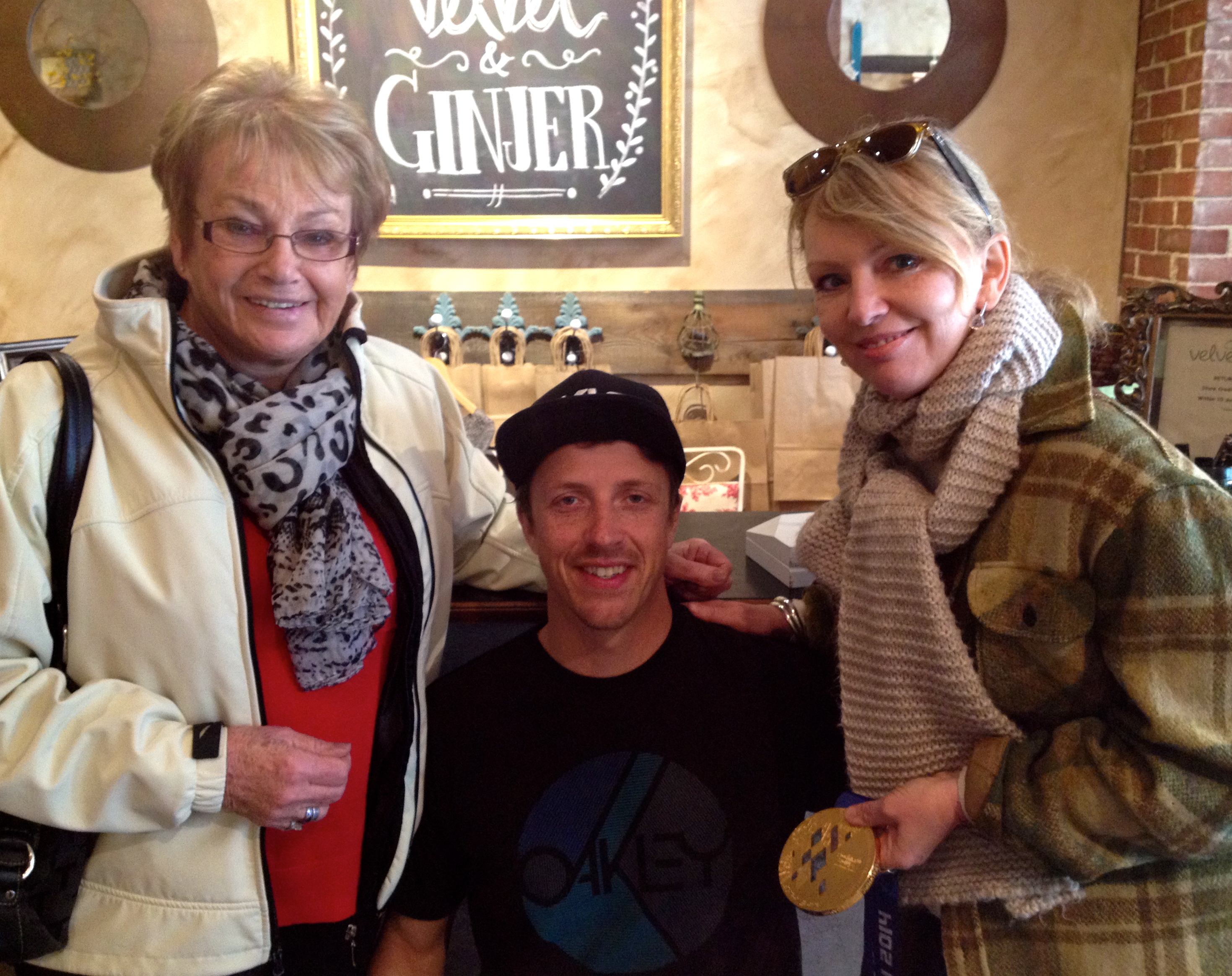
Olympian Josh Dueck  with my mother and myself

Olympian Josh Dueck with my mother and myself

Josh conveyed to us how emotional it had been to receive his medals on the podium in Sochi.  To hear the national anthem play against the backdrop of the Canadian flag.  To proudly represent his country.  His lovely wife Lacey, insisted we take numerous photographs.  Their openness  and generosity can be summed up by Lacey’s words “This medal isn’t just Josh’s or ours, it’s for everyone!”

I was reminded of another inspiring man I met recently at my gym.  As we chatted, he looked up at me from his wheelchair and said  “MS put me in this chair twenty-five years ago and a stroke made sure I’d never get out of it, but life is really good.”
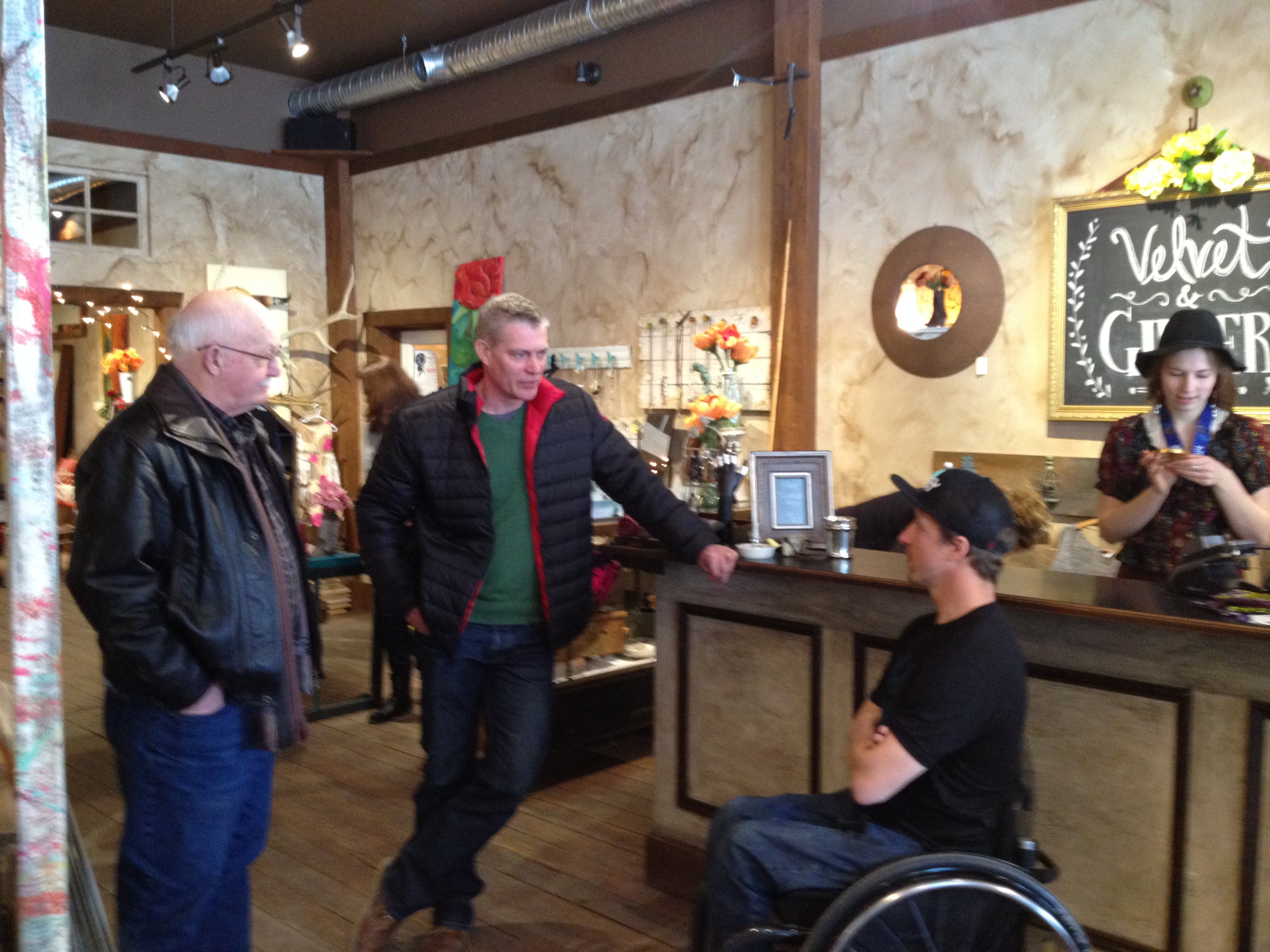
Chatting with Josh Dueck

Chatting with a local hero

To not only accept but to move forward from positions such as these is food for thought for us all.  Besides being an Olympian, Josh works with a foundation called Live it! Love it!  It provides outdoor adaptive adventure opportunities for people with disabilities, with the mission of making it accessible and affordable for all.  It’s a humble reminder to endeavour to make a difference in other people’s lives; as insignificant as each action might seem, it’s important.  It’s also a note to ourselves to appreciate life and to not take it for granted.

Meeting this typical ‘nice Canadian hometown boy’ was an unexpected pleasure for all of us that morning. Beyond the excitement and the accolades, we’re reminded that it’s all about people.  It’s always an honour to meet an exceptional individual; someone like Josh.

“What’s your next challenge?”, my husband asked Josh as we were about to leave.  Motioning over to his tiny baby, he confirmed what we had already guessed.  That little girl is now foremost on his mind. He gave his heart and soul to compete for his country, but his family is the best prize any local hero could ask for!

So You Want To Be A Writer…

Standard

I have to admit, being announced as a writer at the recent #FIGT conference was a proud moment. It had long been a dream of mine and my eventual epiphany was inspired by a borrowed book. That book would eventually lead me to a writing retreat in Tuscany, led by Jo Parfitt. At the risk of sounding over-dramatic, it changed my life.

Becoming a writer…in Tuscany

Becoming a writer…in Tuscany

I’ve always been envious of people who are diligently committed to their writing, as opposed to simply proclaiming their wish to be a writer, as I had done for years.  Having lived and travelled for twenty-three years in countries strung across the globe, I have nevertheless written every step of the way. Though up until now, those experiences have languished in my journals, begging to be released. They attest to adventures such as safari by camel in Rajasthan, truffle hunting in the Arabian desert, and trekking in Nepal.  To be fair, a few of those diary pages made it to published articles;  Fleeing Tiananmen Square was one and thankfully, on a happier note, Shopping in the Silver Souks of Oman.  The latter is definitely a lighter read!

Yet there’s still no book to speak of despite pleas from my ever patient husband and even a grandmother’s admonishment to, “Please write that book dear so I’ll know what you been up to all these years”.  Sadly, she’s no longer with us, which reminds me that time is knocking at the door.  It seems there hasn’t been that all consuming desire to lock myself away and write, that persistent need to tell my story. I could blame it on raising sons on different continents and working part time which kept me more than busy.  No excuse, countless writers produce a manuscript with far less ‘crippling’ situations than mine.  I now appreciate that perhaps we need to grow into things, to arrive at that place more experienced, more poised, and to forgive ourselves for ‘lost’ time.

While living in Norway these previous four years, I finally heeded my husband’s protestations  and “find something I was passionate about if I wasn’t going to write that darn book”.  I did cultivate my passion for history and became a tour guide.  And I did write, so to speak, with verbal narratives.  I can tell you everything you want to know about the Vikings, shipping fleets and herring exports, or why most of the wooden houses in Norway are painted white. In fact, I would tell stories for three hours at a time, weaving history and local culture into rich tapestries, but alas they’re not on paper. My stories were informative and entertaining, but ephemeral nonetheless.

And so it was through a book lent to me, written by Maggie Myklebust, that I finally became committed to writing.  Maggie had an inspiring story to tell and she was brave enough to do so in her book Fly Away Home.  It touched me on many levels, but mostly Maggie’s determination to become an author, something she could not have envisioned.  Her publisher was Jo Parfitt of Summertime Publishing, who would that autumn lead a writing retreat in Tuscany. After years of dabbling as a writer, I dug up the courage to put my proclamations to the test. And if it all failed miserably, at least I would have had a week in beguiling Tuscany.

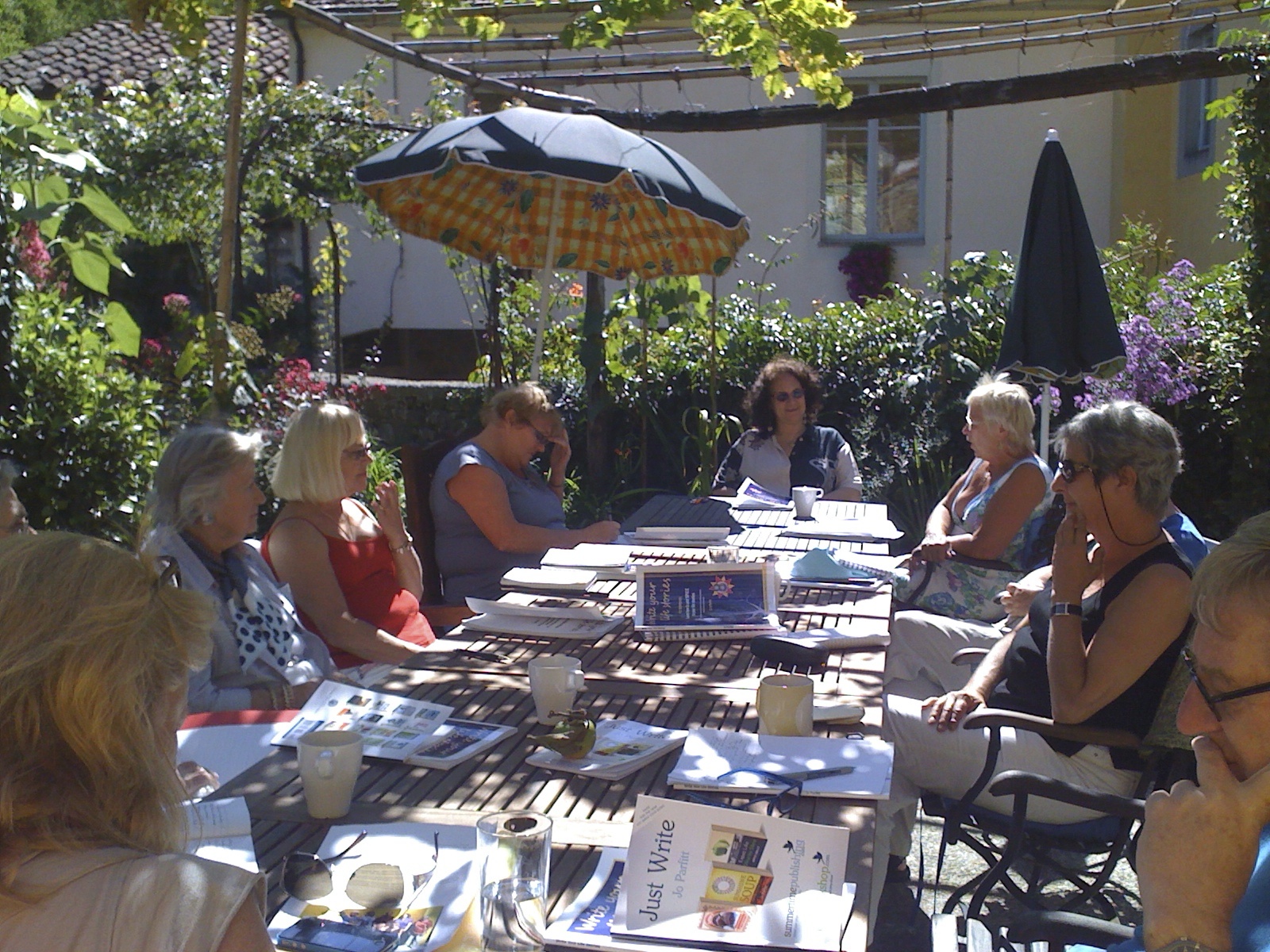
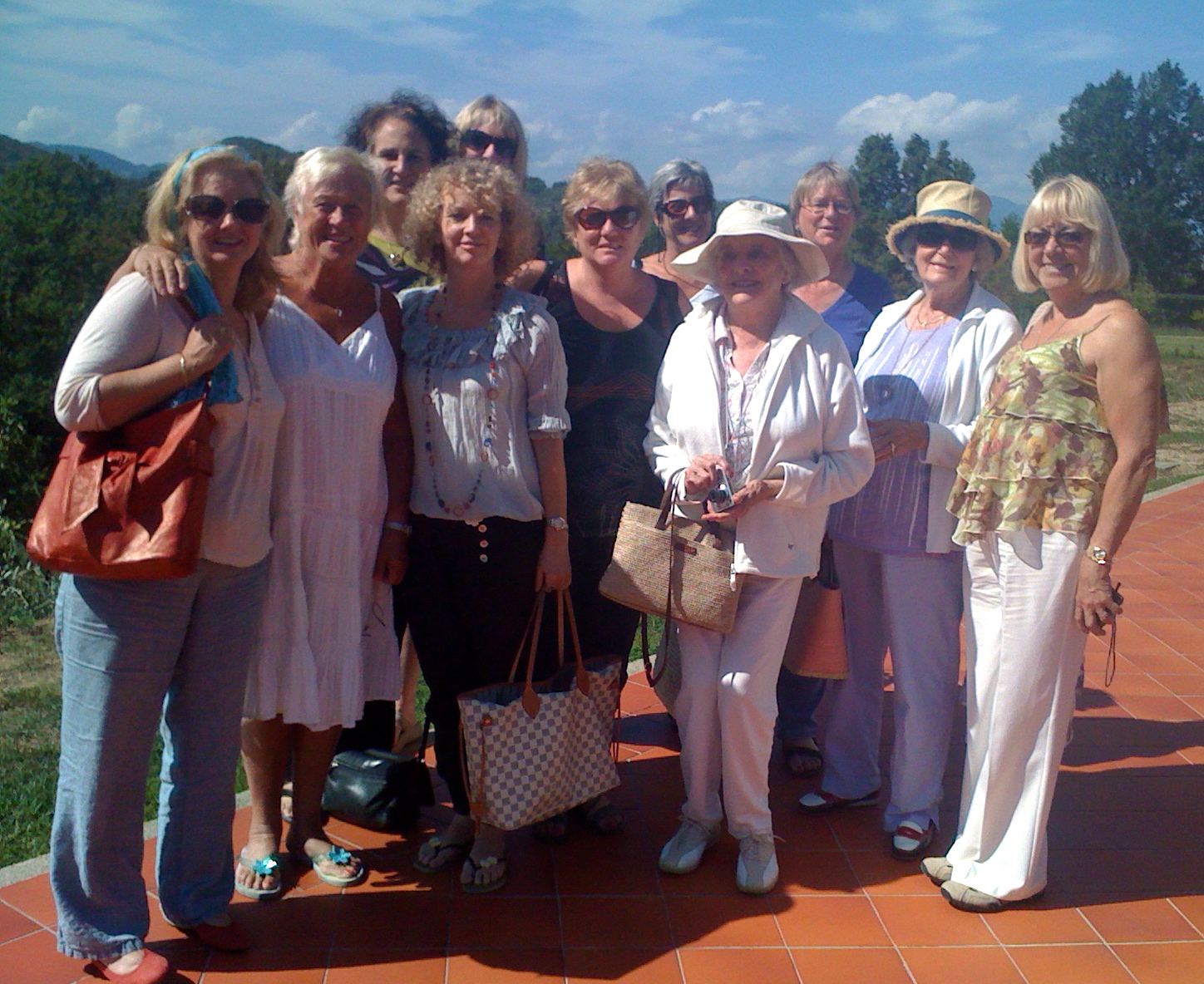
The Tuscan Writers

The Tuscan Writers

Eleven strangers had chosen to be thrown together. Eleven strangers who shared a love of words, poetry and story telling, but could we write?   We all had doubts as to why we had taken this plunge; frightened, yet excited with the possibilities of what the week would bring.

Writing at the Vine Terrace

Writing at the Vine Terrace

The group was mostly British including eighty- four year olds, Pamela Mary and Peeta.  These lovely ladies arrived together, their sun hats set firmly atop their silvery coiffures. They had  been raised by nannies and servants in Her Majesty’s far flung colonies while their fathers served the British Empire.   Both were eager to record their stories from a bygone era for family and posterity. They only wrote with pen and paper, no lap tops, and their penmanship was beautiful, of course.  We were inspired that they had the courage to begin the journey of writing their memoir, confirmation that it is never too late to fulfill a dream.

The Watermill at Posara was the ideal setting for a writing retreat. The Tuscan sunshine, superb hospitality and gorgeous surroundings welcomed us with open arms.  With the back drop of a cobblestoned courtyard and terracotta pots stuffed with bouganvilla, we embarked on six days of lessons and inspired writing. Most of our work took place under the Vine Terrace. Shaded by a mass of grape vines, their plump grapes poking through the trellises, the terrace welcomed us into its safety.  It is here our writing would evoke emotions of sorrow, joy, disappointment and laughter, along with tears.

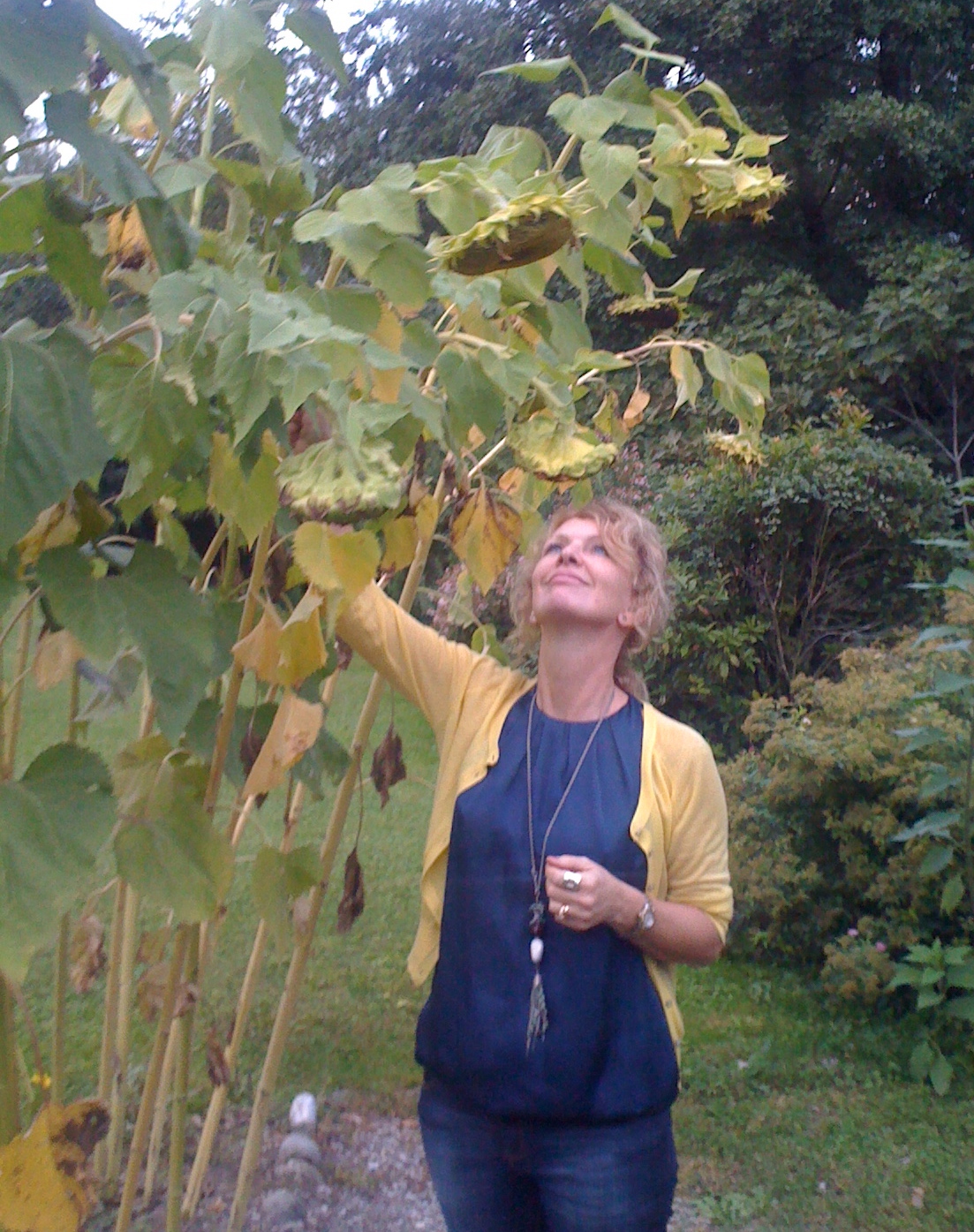
Our mandate was to learn and observe, to write, to polish, to present by 5 p.m. This did not vary. Every day, bar one, we knew at this time we must present a piece of work to be read aloud for all to hear, to ponder and to comment upon. As the sunflowers nodded in the late afternoon sun and the nearby bells of Posara chimed, we ruminated with our words and reached into our souls.

Frightening and challenging yes…

Instructive and inspiring, yes again..

Life Changing, absolutely.

At precisely 6:30 each evening, we were reminded that it was Apertivo time as the tiled table was promptly set with a fruit laden decanter of Aperol and carafes of Chianti.  It was a welcome reward for our writing toil, and balm for our souls that we had bared to each other.  After a delicious meal, our day would conclude in the comfort of the drawing room. Sinking into deep sofas, we engaged in lively conversation while sipping on chilled, locally made Limoncello.

The only male in our group was a famous British screenwriter (who shall remain anonymous) and we wondered why he was there, though pleased that he was.  He would read from his poignant memoir, recently begun but already captivating.  He would also regale us with stories of his Hollywood exploits, just as intriguing, I can assure you!  We all contributed with tales of jungle treks, of living on a houseboat, of lovers, of simpler times, of loss.  Each evening, was more entertaining than the previous. Each evening, eleven ‘strangers’ with different pasts became closer, breaking down barriers that would enable us to bare our souls just a little more in our writing the next day.  With the window sashes thrown open allowing the moonlight to peek into our lively gatherings, we would comment that another day had indeed been well lived at The Watermill!

The most integral member of that group and the reason we were all there, was Jo Parfitt.  We blossomed under her nurturing guidance, her magnanimous manner and her colourful scarves that greeted us each day. Because of her, we became writers… we became a writing family.

The nodding sunflowers

The nodding sunflowers

I had arrived in Tuscany with my sandals, sundresses and my favoured Uni-ball pens firmly packed.  I left……a writer.


P.S.  I’m finally writing that darn book!


It Takes A Village…

Standard

It occurred to me at the #FIGT conference, that I had never referred to my three sons as TCK’s or third culture kids.* Listening to the varied educators, authors and specialists at the conference, I came to understand why I hadn’t done this. I wanted them to be ‘normal’.

So despite having lived in seven countries, having had different experiences AND losing their friends every three, four or six years, they were supposed to be like any other child. What I realized throughout the conference is that excellent support and care exists for expat families who live overseas. There is often a need for this. I’m thankful that for the most part, my three coped fairly well. However partly what FIGT is concerned with and facilitates, is that for many children and their parents, this global life can be challenging, confusing and leave kids without a sense of belonging to any country.

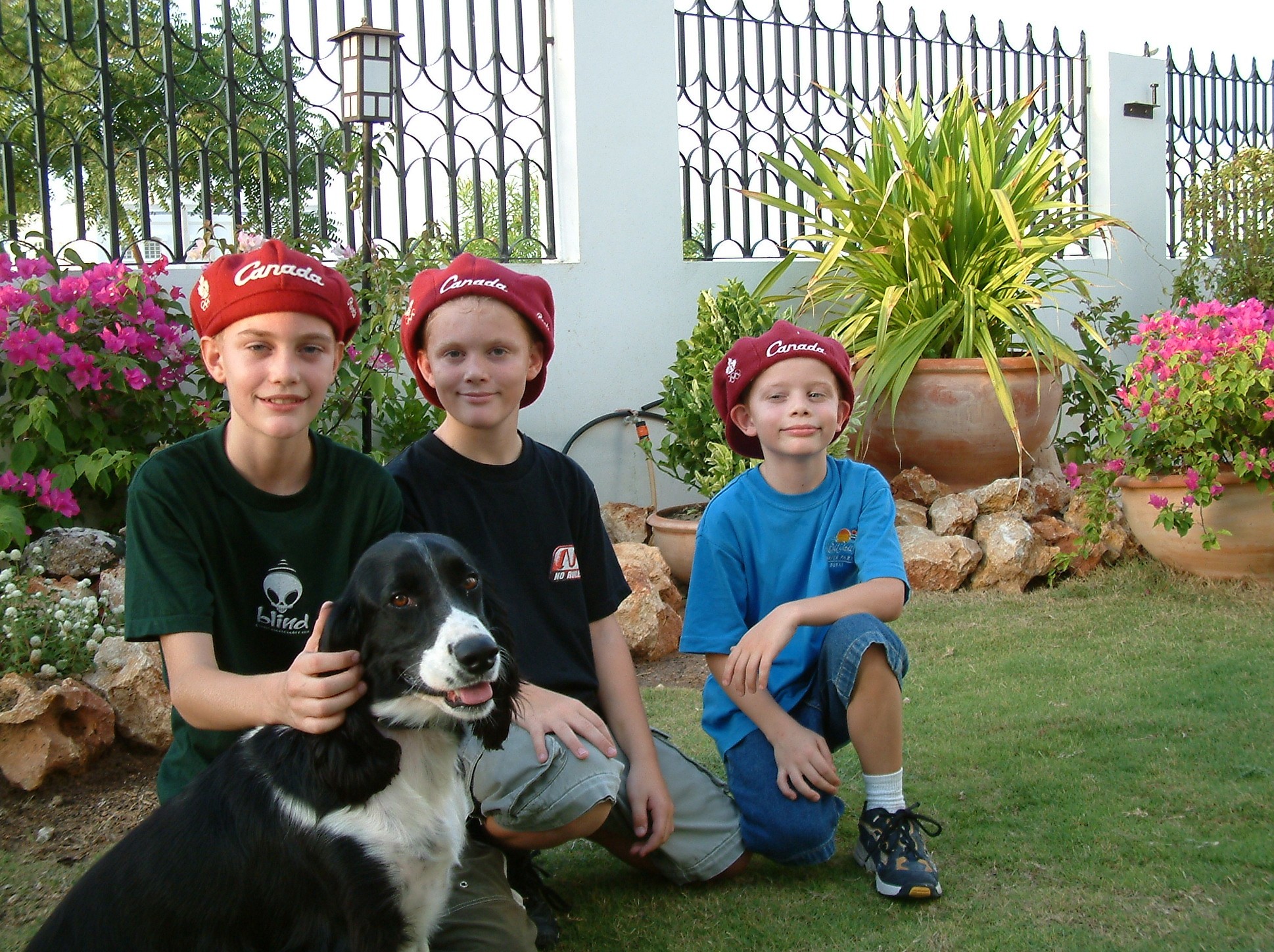
Three children raised by a global village

As parents we feel guilty that they may not have a home town to call their own. We worry that they only see extended family during holidays. We fret that they don’t have ownership to any one place, even their home country feels alien at times.

And yet as the esteemed Dr. Fanta Aw reminded us during her keynote speech at FGIT...it takes a village to raise a child. And this is precisely what we do as global parents. We pull out all the resources to ensure that our kids have a sense of home in which ever country they’re living in; parents, teachers, coaches and volunteers all contribute to raising expat children. We all become their village.

My husband and I created a sense of normality (from a Canadian’s viewpoint) by starting and coaching a baseball league in Oman. I wasn’t pleased that my boys may not grow up playing baseball and so with the help of passionate coaches and parents, I started a baseball league. We soon had over one-hundred kids from all over the world playing. Some of these families also helped with the hockey team, also a first to be formed in the stifling heat of Muscat. Our coach, Teppo Virta, will always be a hero in the eyes of my boys.

I was overwhelmed years later when one of my sons depicted me as a ‘hero’ for facilitating their desire to play a sport that wouldn’t have been possible. I had only done what many of us do for our children in foreign lands; form and nurture clubs and organizations of every description. For we know that when children grow up globally, it’s even more important that they belong to something that represents their home culture and identity.

As Dr. Aw, reminded us, “It’s an intersection of experiences, relationships and friendships that become family.  It’s the people that claimed you in good and bad.” And that is what a village does. Be it physical or not, as in the case of many global families, our extended family has helped raise our cherished children. We ask so much of these resilient kids; arriving, living and leaving so many countries. And yet if we all do our part to help raise them, the ‘village’ is a pretty good place to be.

I recently asked one of my sons if he would change anything from his overseas childhood. “No mom, look at the experiences and opportunities that I’ve had. Not to mention the friends I have all over the world.”

Yes, all part of that village that we’re fortunate indeed to be a part of.

*Note, a TCK is defined as a person who has spent a significant part of his/her development years outside their parents’ culture.  As summarized in Linda A. Janssen’s informative book, The Emotionally Resilient Expat published by Summertime Publishing