Tag Archives: Spain

Sensational Seville… Solo travel Spanish style

Standard

As I check into the gorgeous Tayko Hotel, one of the friendly staff orientates me with the city. Miquel explains that there’s a fun saying in Seville. “There’s more tapas bars than people,” he quips as he jots down a few of his favourites on the city map. He explains that here in Andalusia, they love humour and exaggeration. Over the next four days, not only will I find my own favourite tapas bar, I’ll notice that the locals absolutely have a certain joy and exuberance for life, a love of music and dance… and then there’s the flamenco!

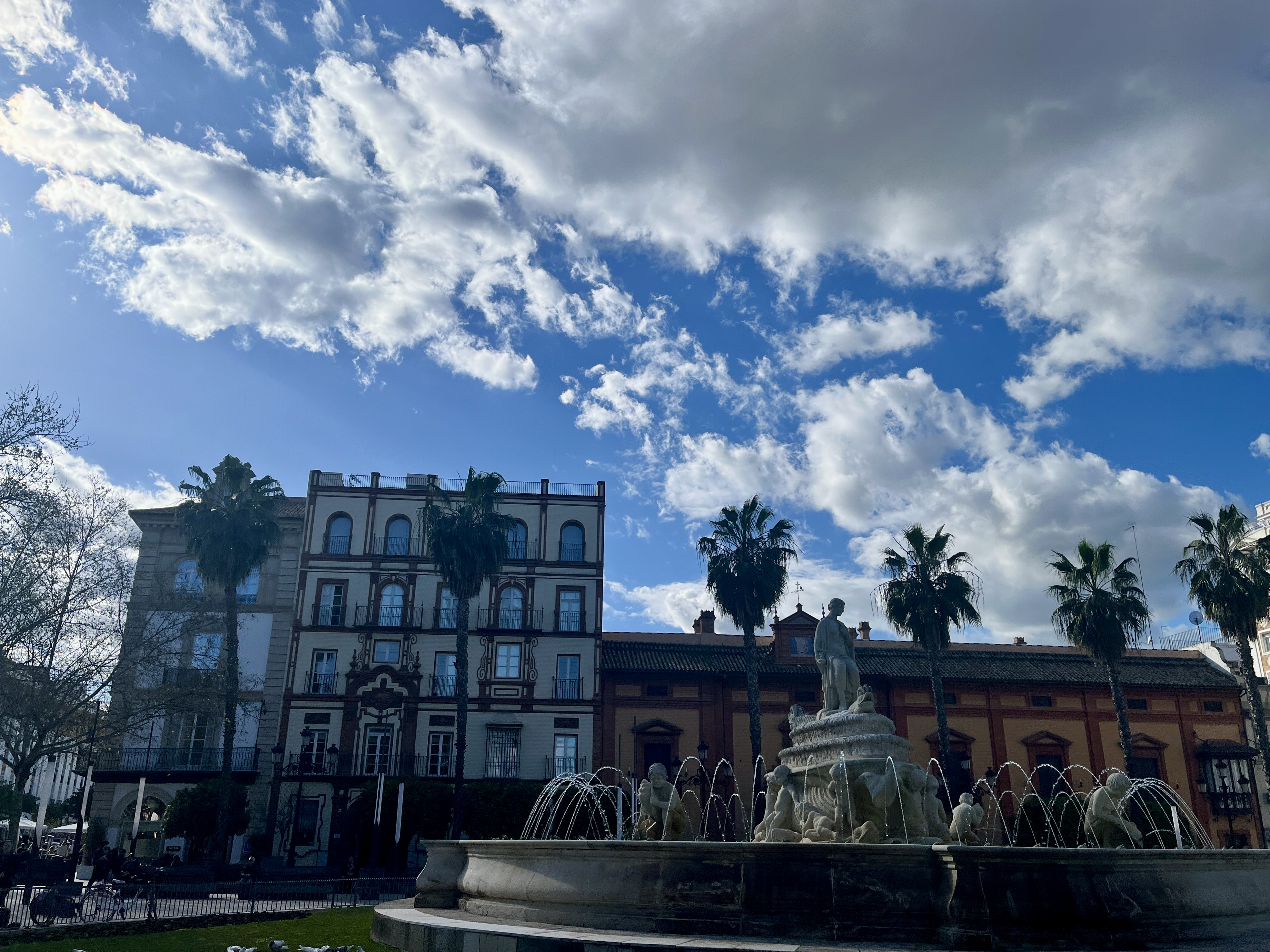
Seville (seh-VEE-yah) is flamboyant, beautiful, stately yet inviting. ‘A vibrant sangria of civilization,’ to borrow Rick Steve’s apt description. Also, I find it to be a veritable city garden, where luscious oranges and lemons really do dangle from tree-lined bouvelards. The City of Oranges, as it’s known, is also blessed with the tallest of palm trees, vivid bird-of-paradise, parakeets and white doves in abundance, gorgeous white bougainvillea against crinkly cacti, and the jasmine blooms are just beginning to perfume the late March air. Colourful mosaics adorn walls, musicians take their turns on street corners, and the layering of the past… Roman, Moorish and Spanish is an intoxicating palimpset of history.

I‘m delighted to have some warm weather as this trip started in rainy Barcelona. I use ‘I’m’ as this is mostly a trip of solo travel. Other than a lovely two day visit with a friend in Valencia and a writing retreat still to come with friends after Seville, I’m on my own. At breakfast this morning, another solo traveller from the Netherlands and I were discussing the advantages of meandering single. We celebrated the challenge and thrill of navigating and scheduling – thankfully the Spanish train system is efficient – and the satisfaction of arriving where you’d hope to be. Call me old school, yet I prefer a physical map to google – maps of Barcelona, Valencia and Seville are already tatty, marked and ‘souvenirs’.

Solo travel allows for serendipitous encounters, both with other travellers and locals. The Spanish are welcoming with a fascinating, proud culture. As a travel writer, being on my own allows me to observe and explore thoroughly, to fully embrace the history and nuances of a place. I admit by sunset, sitting alone at an outdoor cafe in a plaza thrumming with life can feel a little lonely and yet that’s how I’ve already met so many interesting people on this trip. Taking a local tour is also essential when you’re travelling alone. In Barcelona, I did a paella making course, fantastic and delicious! Here I tour twice in one day, the old town, then the Jewish area which finishes with a group tapas date… insightful, lively and lovely company for an evening.

Speaking of exploring, we know that explorers Amerigo Vespucci and Ferdinand Magellan sailed from this river harbour, discovering new trade routes and abundant sources of cocoa, tobacco, gold and silver. When Spain boomed as a gateway to the New World in the 1500’s, Sevilla also transformed. Yet another great explorer had sailed from nearby even earlier. In 1492, the Italian Christopher Columbus had persuaded the Spanish Monarchs to finance his bold scheme to trade with the East by sailing West.

Yet that’s really more ‘recent’ history. Seville was founded as the Roman city of Hispalis, one of the most important cities in the empire. Nearby Italica was founded in perhaps 200 BC, Trajan and Hadrian called it their hometown. Move forward to 711 AD, and it became Ishbiliyah during the Islamic conquest, then part of the Arab kingdom Taifa of Seville, eventually incorporated to the Crown of Castile in 1248.

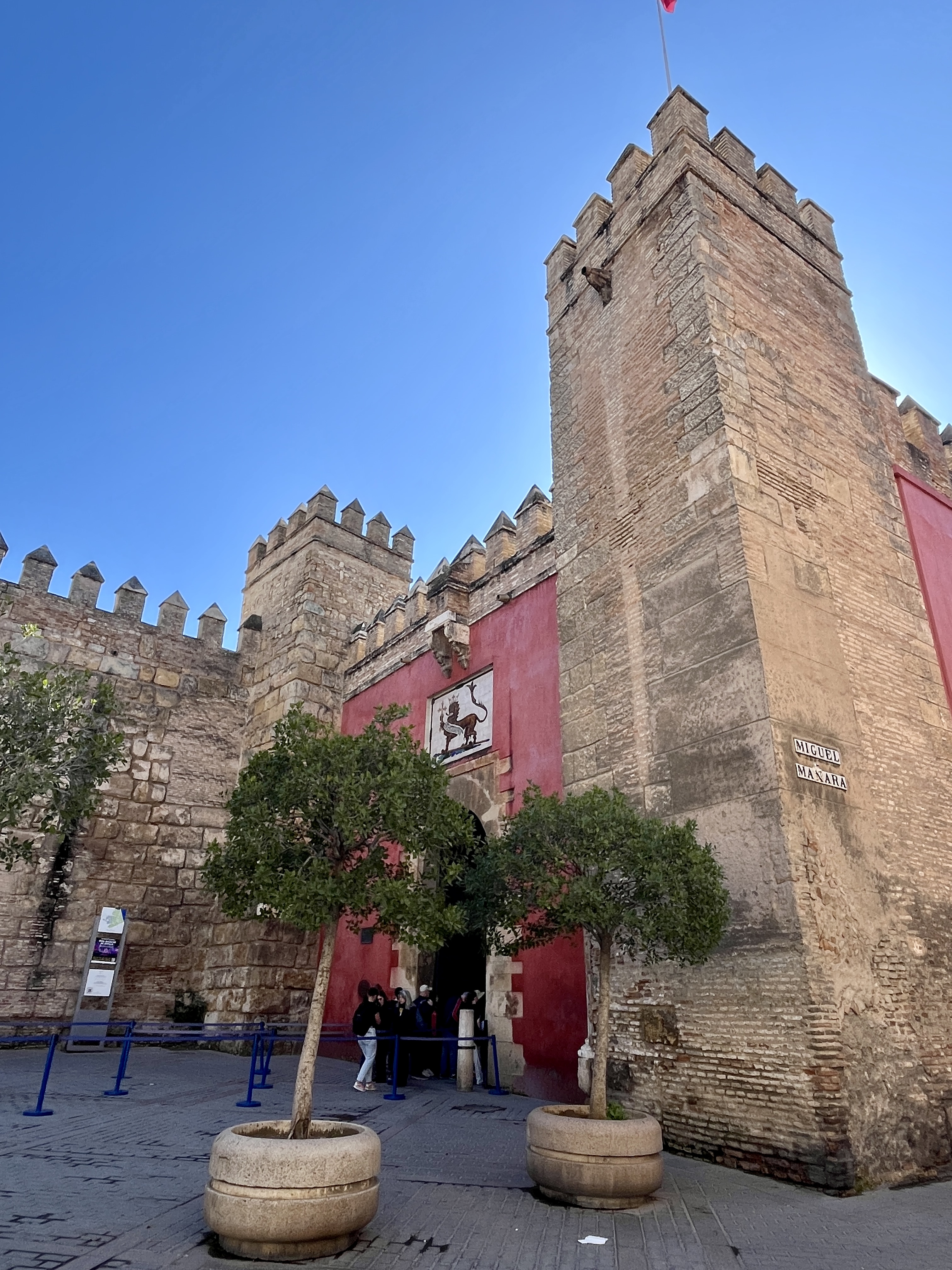
Today this rich history is now a UNESCO World Heritage Site known as the old town… the Alcazar palace, the largest Gothic cathedral in the world – once a mosque – and the General Archive of the Indies as its anchors.

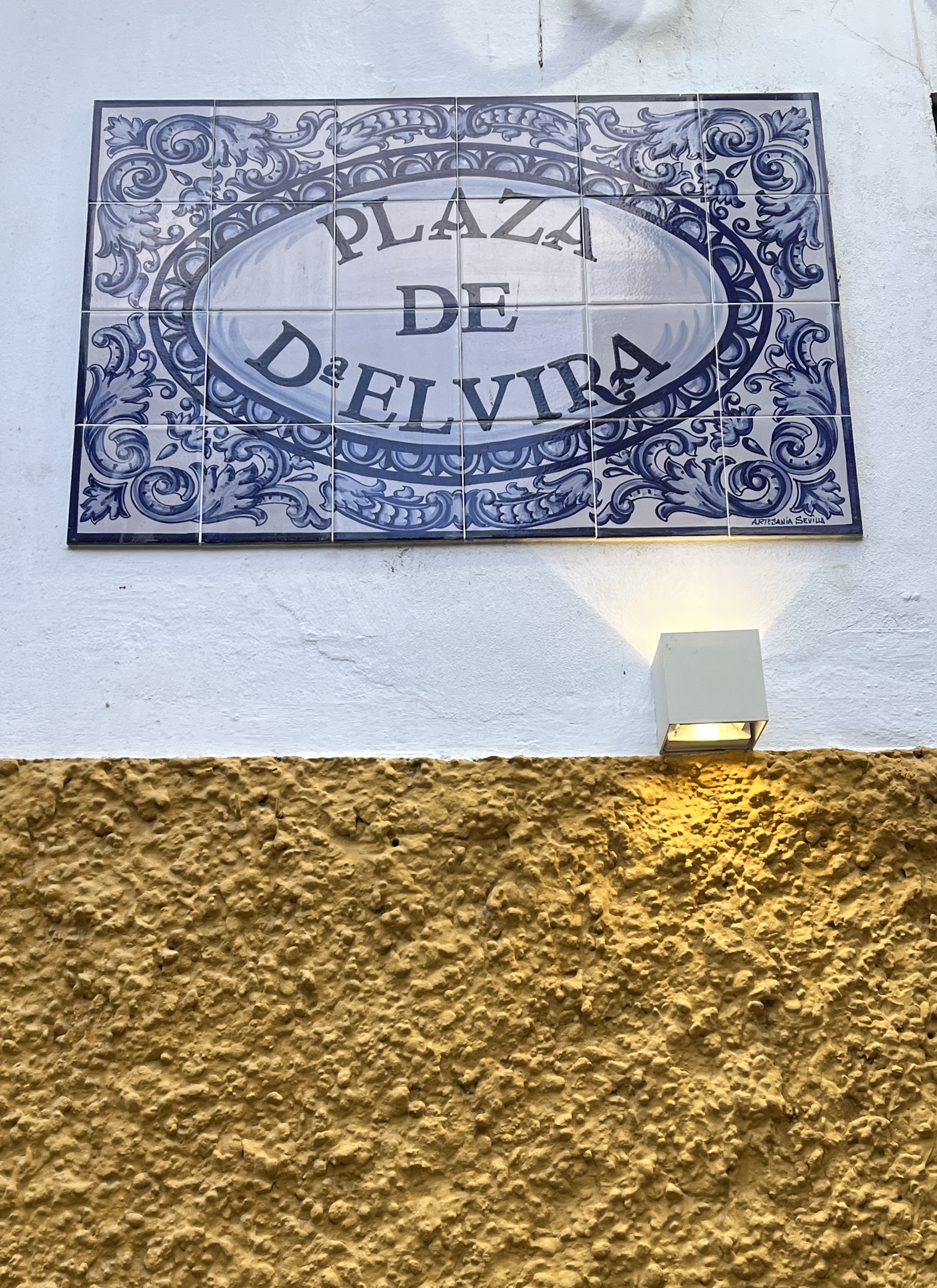
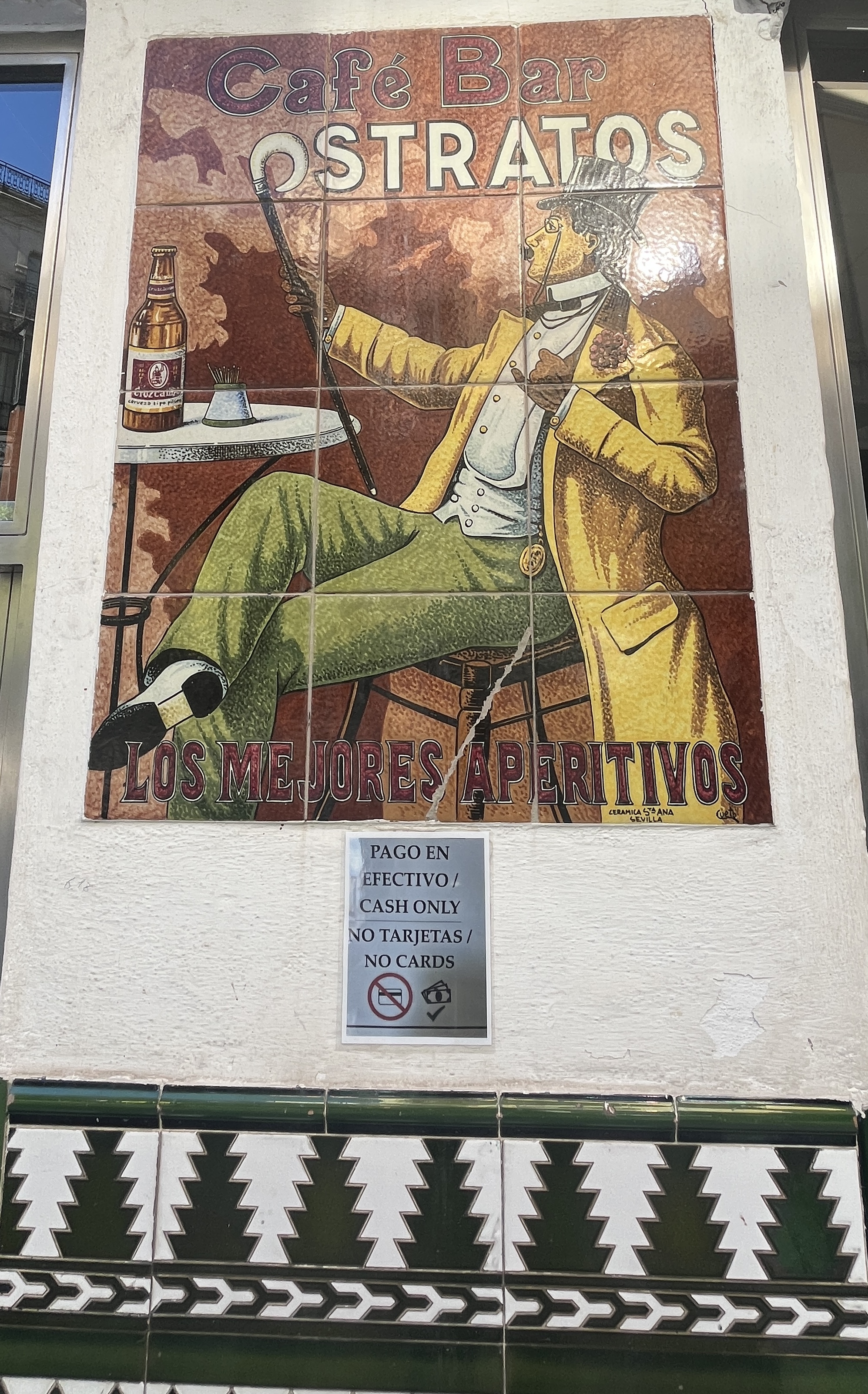
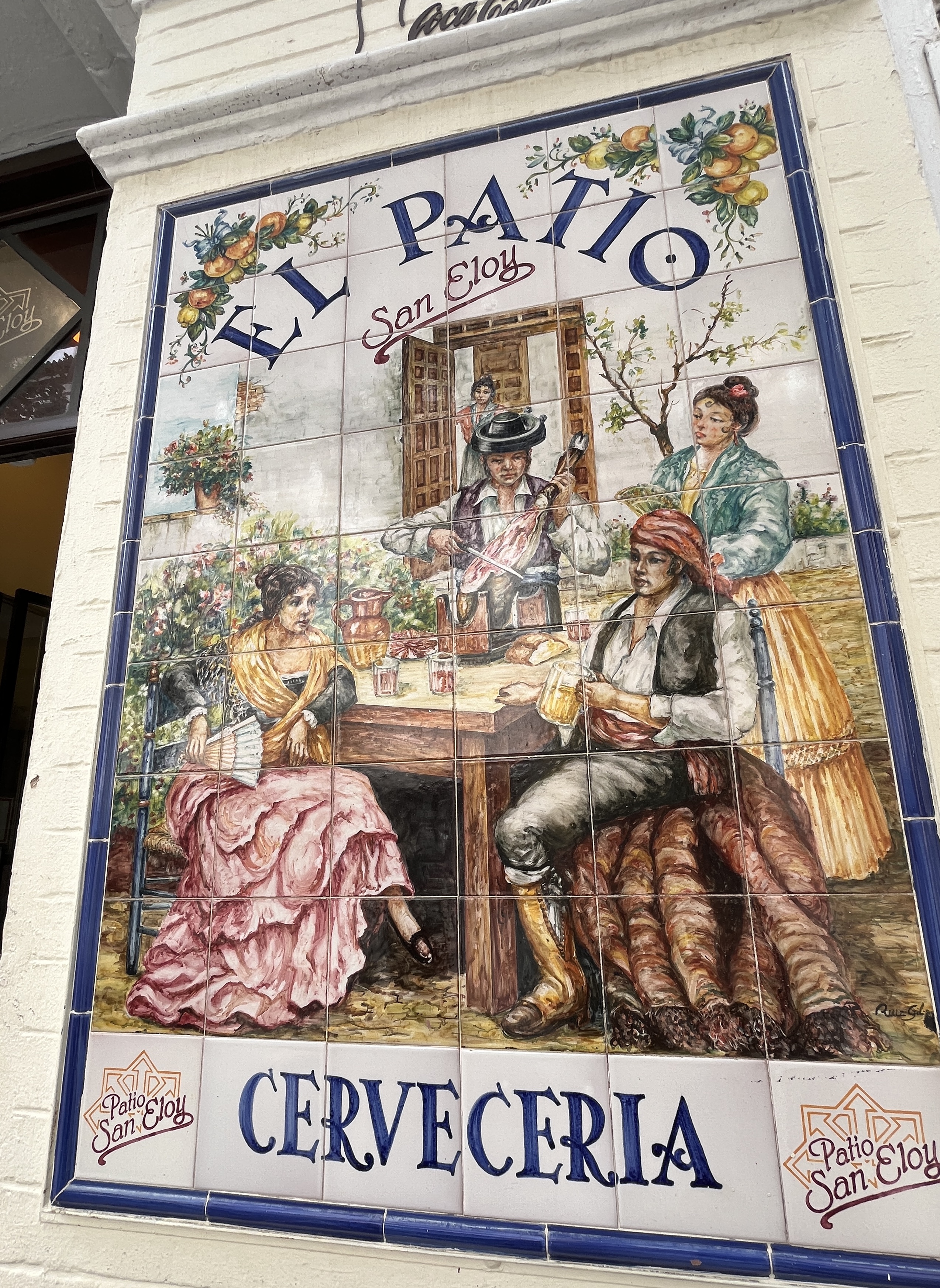
I tour the old town which finishes at the grand Plaza de Espana, a Renaissance/neo-Moorish monstrosity, built as a centerpiece for the Ibero-American Exhibition in 1929. Along with the multitude of pavilions and a canal for rowing, 48 alcoves and benches pay tribute to Spain’s provinces. Ensconced in Maria Luisa park, this masterpiece is also a showcase of azulejos, small tiles. Azulejos have been produced in Spain since the 14th century. Later, the bourgeoisie began embellishing their residences to identify their houses and portray their importance and wealth. Today they might also announce a town plaza or place of business; the Cerveceria, the Carnisseria, the Cocina, the Panaderia, the Taberna.

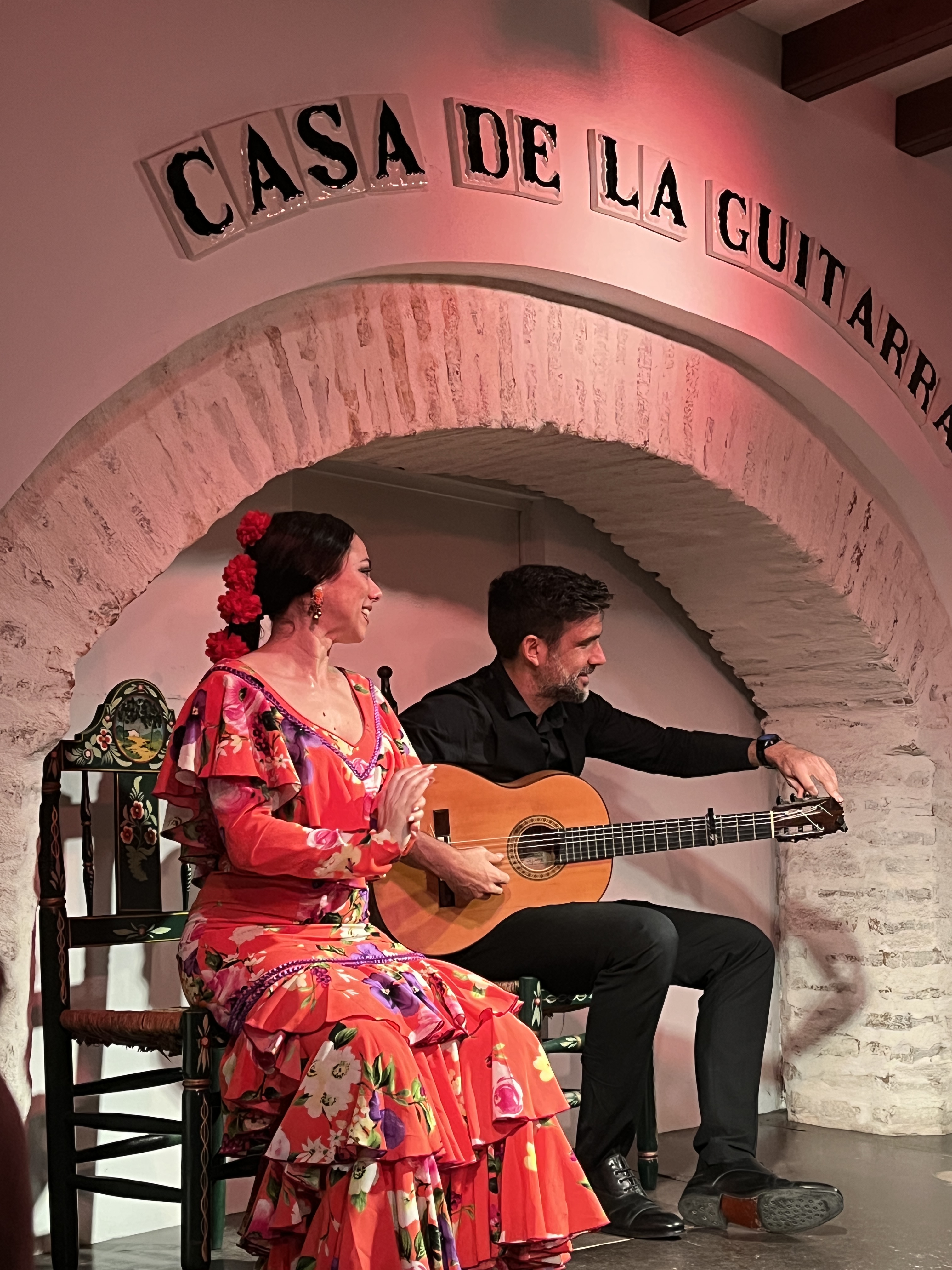
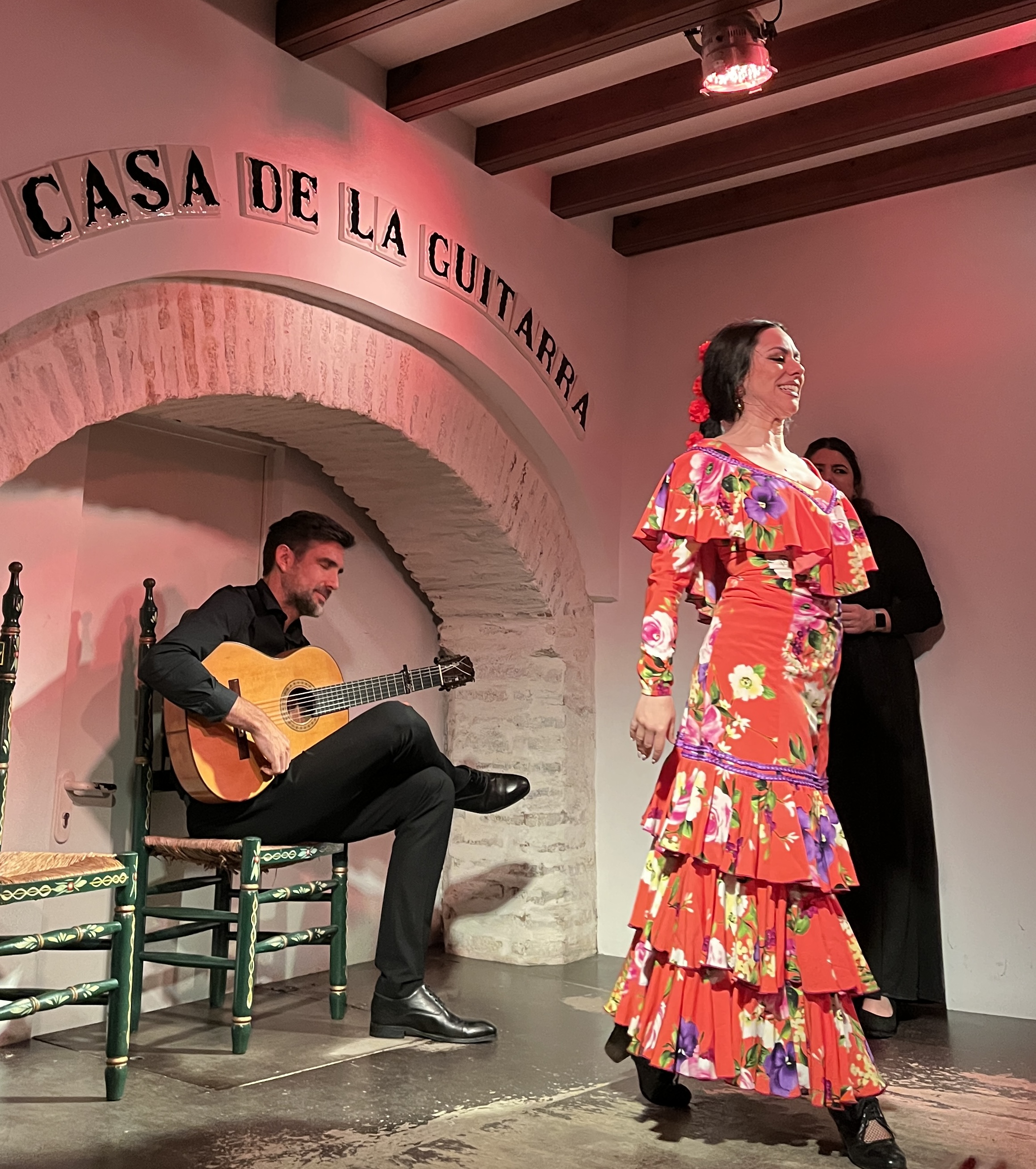
Cultural heritages are still relevant and part of everyday life in Seville and I immerse myself in two of them. One evening I attend my first-ever Flamenco performance at the intimate Casa De La Guitarra. This art form is based on folkloric music from this area, traditionally with performers of both Spanish and gitano heritage. Flamenco music dates back to 1774 and is a UNESCO declared Masterpiece of the Oral and Intangible Heritage of Humanity. The hour long performance is one of the most poignant you could experience.

The small audience waits in anticipation and soon our senses are filled with the evocative, the soulful, the sensual from the guitarist, the singer (cantaora) and the dancer. With fingers flying over his Spanish guitar, the guitarist leads the performance. The cantaora sings and claps the palmas, essential in flamenco music to punctuate and accentuate the song and dance, then carries the mournful, then exuberant tune with the occasional ole to cheer on and praise the dance performance. And of the dancer’s performance, I can hardly do it justice by describing her deep range of emotion, the raw magnetic energy, the machine gun-fire foot work, the grace, the soulful interpretation of the music. The audience is in awe of the three performers and their creation. Indeed, I now understand the poignancy in something I had read, ‘Seville is a place where little girls still dream of becoming a flamenco dancer.’

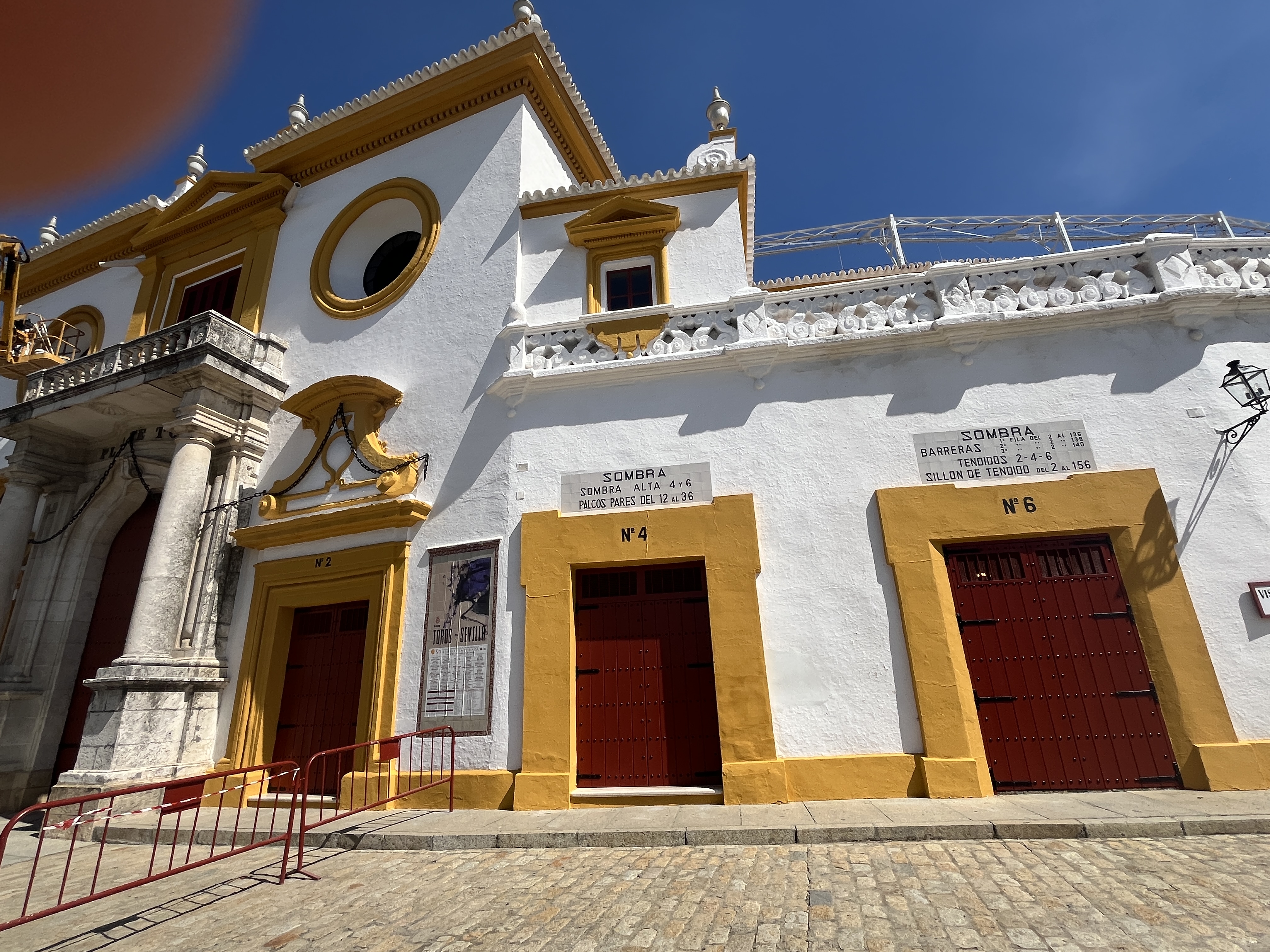
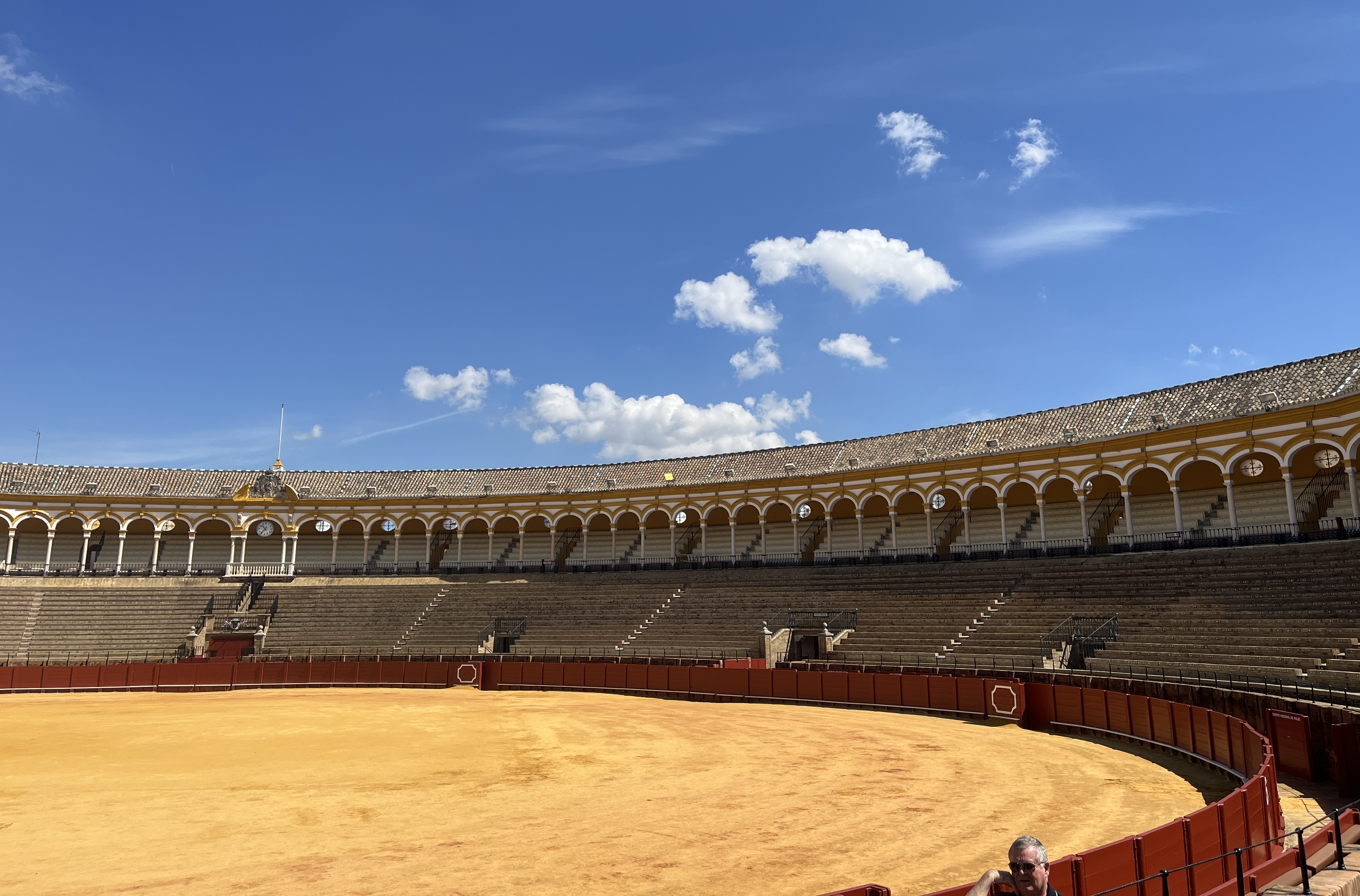
And of that other deep-rooted cultural tradition, of bullfighting? It’s not yet quite the season here in Seville and I wouldn’t have attended, yet as Miquel had told me back at the hotel, “Half of the population still revere it as a cultural practice, the other not.” And indeed, while some consider it a blood sport, many in Spain define bullfighting as an art form. Seville’s La Maestranze is the oldest bullring in Spain.

Situated within the heart of the city, I pay a small fee to visit apparently one of the world’s most challenging bullrings. For bullfighting aficionados, the history, memorabilia and grandeur of this bullring speaks volumes and is considered an essential visit when in Seville. Construction of the circular ring began in 1749 and has seen many evolutions, today’s seating capacity is 12,000. I wander through the museum, marvelling at the matador’s costumes, the awards and the posters that are works of art unto themselves. When I venture out into the stands, the vast ring before me, I get a small sense of what La Maestranze must be like during the season… this same sensation as standing in the Roman Colosseum and imagining the roar of the crowds, the excitement, and the misery.

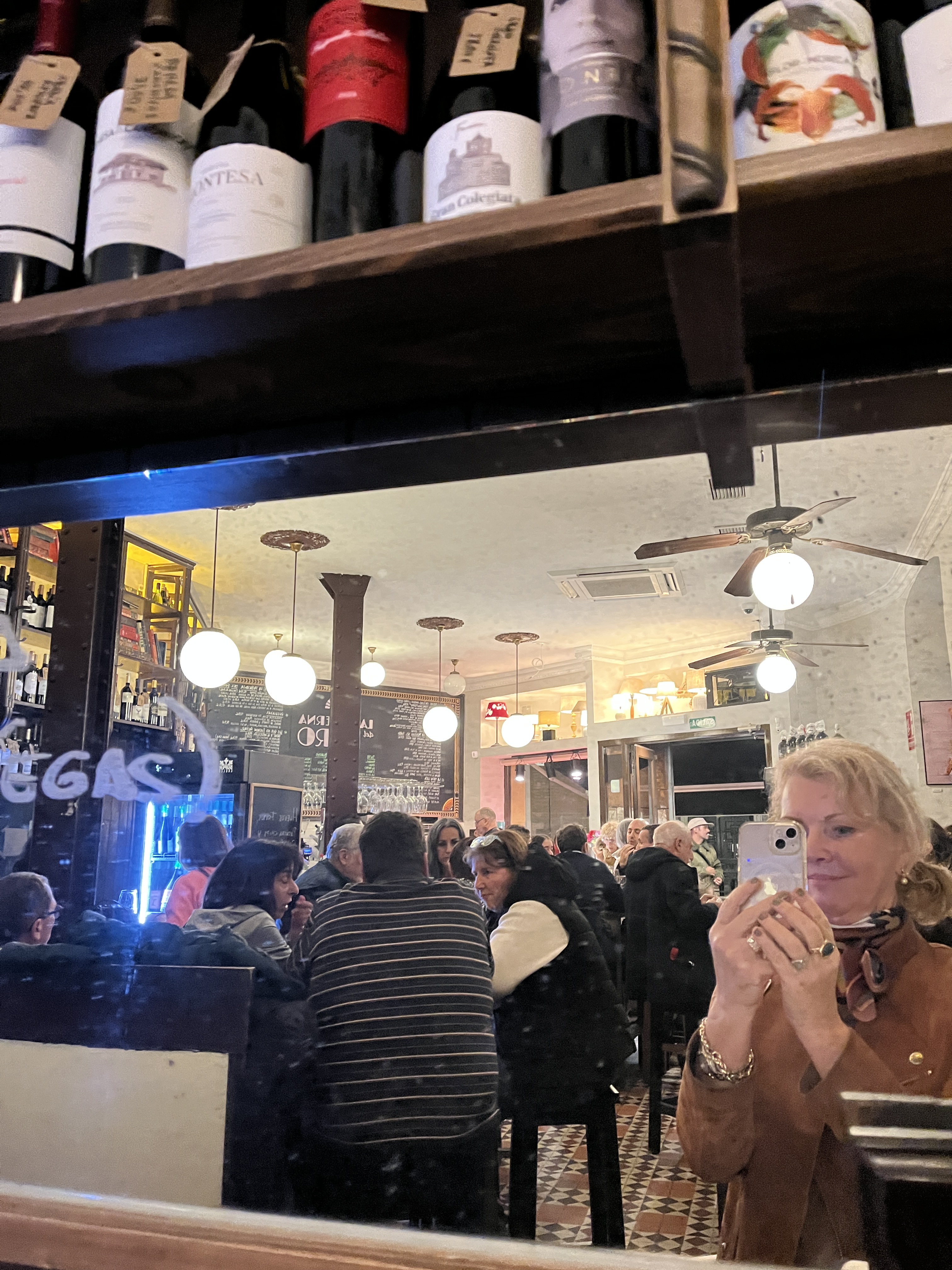
By chance, my go-to bar pays homage to bullfighting with iconic, aged posters and the many regal heads of bulls on display throughout the cozy, historic bar. My new friend, Maria, explains the plaques under each majestic head; the bull’s name, to which matador it lost its life, where and when. They are noble even in death and there’s some relief in knowing they are preserved for posterity.

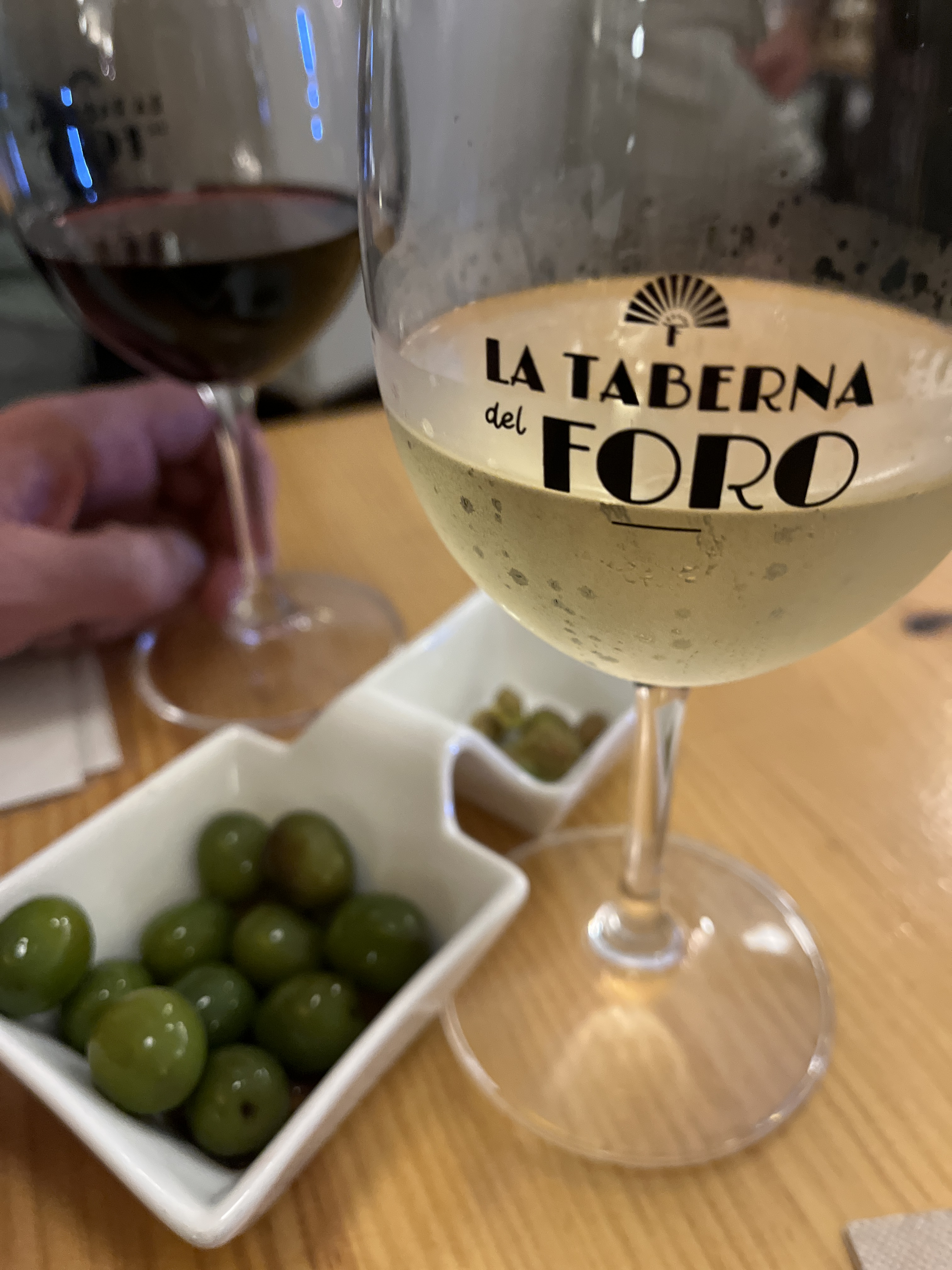
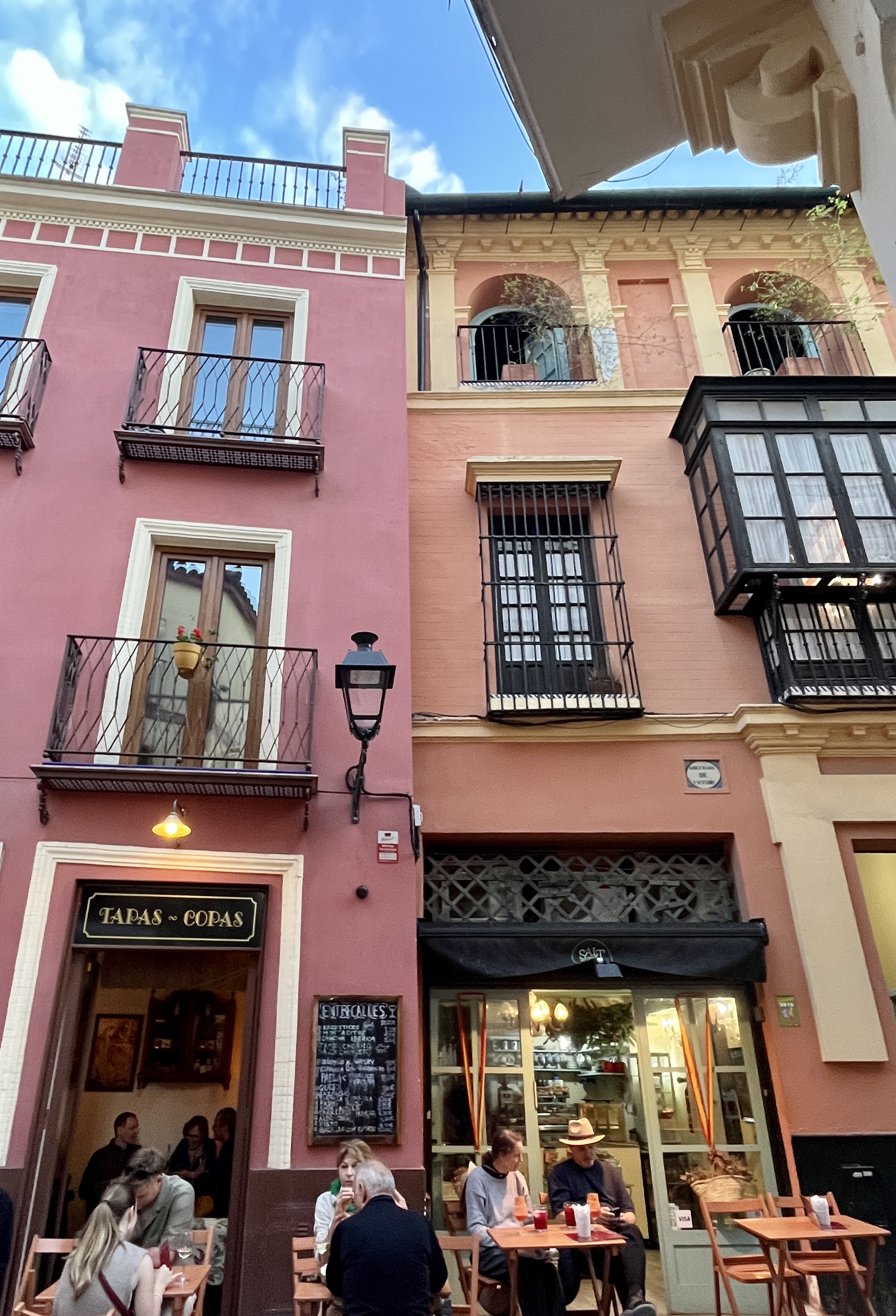
Located on the gastronomic haven of Mateos Gago Street, just along from the Cathedral, Cerveceria Catedral Bar becomes my once-daily pause for tapas, a glass of white redjo, and just to watch the world go by after a day of discovery. As a solo traveller, don’t be afraid to return to a place where you feel comfortable and welcomed.

“Hola la senora?” Maria says cheerily, “Same, a Verdejo?

I nod, “Si, por favor,” find a seat and plot which delectable tapas I’ll have this fine, late afternoon…

Smitten by Spain… of tapas and new shoes on the esplanade

Standard

IMG_7141

In Alicante

“Your cortada, señora,” the waiter says, placing the tiny coffee before me. Soaking up the atmosphere in a small Spanish plaza, it strikes me how lovely it is to be called señora. Far more exotic sounding than Ma’am or Mevrouw.

Having visited three countries in a two week period, it’s been hectic. I have half-written blogs on the delights of Quebec City, Canada’s gem, and picture-perfect Netherlands. But for now… I’m smitten by Spain.

An unexpected trip with my mother and Dutch relatives has found us in the Alicante area, on the Mediterranean coast. Overlooking the Costa Blanca, we’re happily ensconced in a family villa. The terrace wraps around the long bungalow, leading to a pool with a tremendous view. We sunbathe and float, our gaze lingering on the sailboats and the fishing vessels beyond. The azure sea melds into the endless blue sky; I now understand why people adore Spain.

IMG_7119

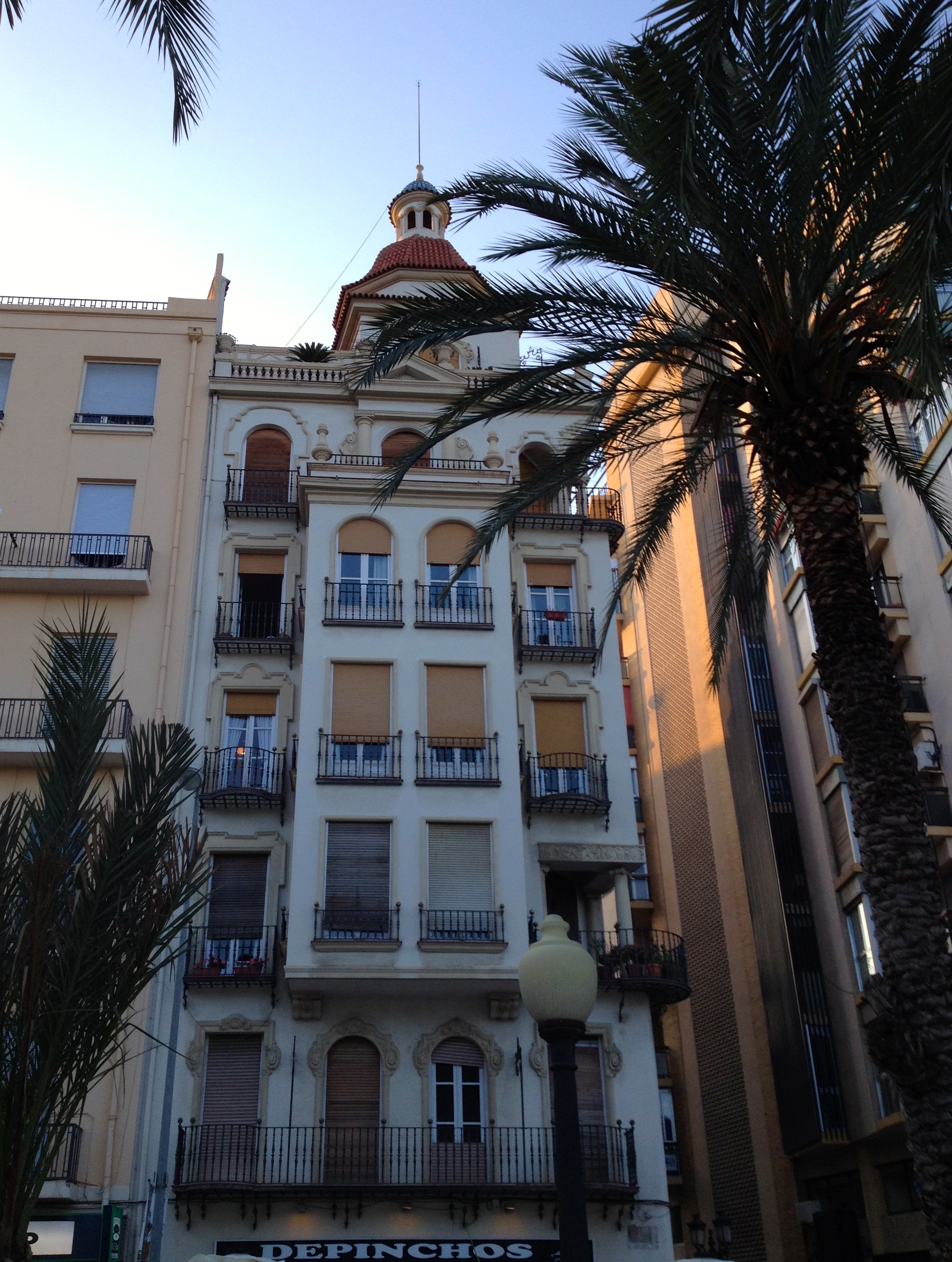
Architecture and ‘siesta blinds’ in Alicante

Indeed, this is the good life on the Mediterranean. We indulge ourselves with moonlit swims and champagne lunches by the poolside, happy to drip-dry in our swimming suits and wraps. Our hosts, my second cousins Alda and Margienus, don’t permit us the luxury of afternoon siestas however. There’s too much to see, as Alda knows well.

Her father acquired the villa some forty years ago. “I was about fifteen when we first came here for holidays. I feel some of my roots are here at Casalmar,” Alda had told us as we feasted our eyes on the spectacular view for the first time. We soon appreciated why one would chose to vacation or live here.

Villas crowd the coastline, bouganvila of fuscia, deep purple and crimson spilling over stone walls. Palm trees, cacti and giant aloe vera spring from the dry earth. Tiny corner stores and family run eateries seem to welcome on every street. Local markets sell the essentials for Spanish cuisine such as oranges, pimentos, chorizo, olives and rice. Fun, seaside attire entices us and we all come away with something; flouncy blouses, flowing pantaloons and billowy kaftans. But best of all, the sea is never far away.

IMG_7211

‘pool with a view’

Our neighbourhood of El Campello is tranquil, yet comes to life on the promenade. Large intricate sandcastles guard the beach, children dig with bright spades and pile fine sand into plastic buckets. Bars welcome us with vistas of the waves lapping against the shoreline. Naturally, a 16th century watchtower catches my attention.

The Alicante region wasn’t just a magnet for traders and settlers over the centuries, but also for the dreaded Barbary pirates or Ottoman Corsairs as they were also called. They plied the coast capturing local population, building their slave trade on Spanish captives. Some twenty defence towers still perch on prominent cliff tops; as if still watchful for the North African invaders.

“a handful of pencil crayons’

Some invaders came to stay and their legacy remains. The Moors over-ran southern Spain but brought enlightenment in the form of medical knowledge, irrigation and education. The coast also became a major Mediterranean trading station; rice, palms, olive oil, wool, wine and oranges. Valencia is further north and I can attest that the oranges are the tastiest you’ll ever try. And the wine? We sampled much of that as well; a delicious Spanish white costs no more than 2 Euros. It really is la dolce vita. Or should we say…la buena vida!

IMG_7287

The boulevard at Villa Joiosa

One afternoon sees us enjoying a bottle of white in the picturesque town of Villa Joiosa. A short trip along the coast, its name means ‘jewelled town’. The vibrant colours are intended to guide local fishermen home from the sea. Narrow, centuries-old houses lean against each other, each distinctly hued. Shades of powder blues, reds, pale lavenders, yellows and seaside greens. Imagine selecting a handful of your favourite pencil crayons and living amongst them…it’s fanciful and alive, jewels every one of them.

IMG_7240

Lavender and terracotta pots

As we while away the late afternoon at the small Placa Castelar, the town awakens from its siesta slumber. Locals emerge from the warren of streets that radiate from the cobbled square. Church bells peal laconically, shop doors unlock, dogs stroll with their humans and hats tip to neighbours.

We hear the the swish of blinds and shutters roll up. These outdoor coverings for doors and balconies are drawn down during siesta. It’s 5:30 now, time to come to life for the evening. I notice a few señoras trickling water into terracotta pots on tiny balconies. ‘Hola’, they venture.

I mention to Alda that we might peek into some shops back along the harbour. “I think you’ll want to wait for tomorrow,” she says and I remember what I’d read about Spanish shoes in Alicante.

IMG_7142

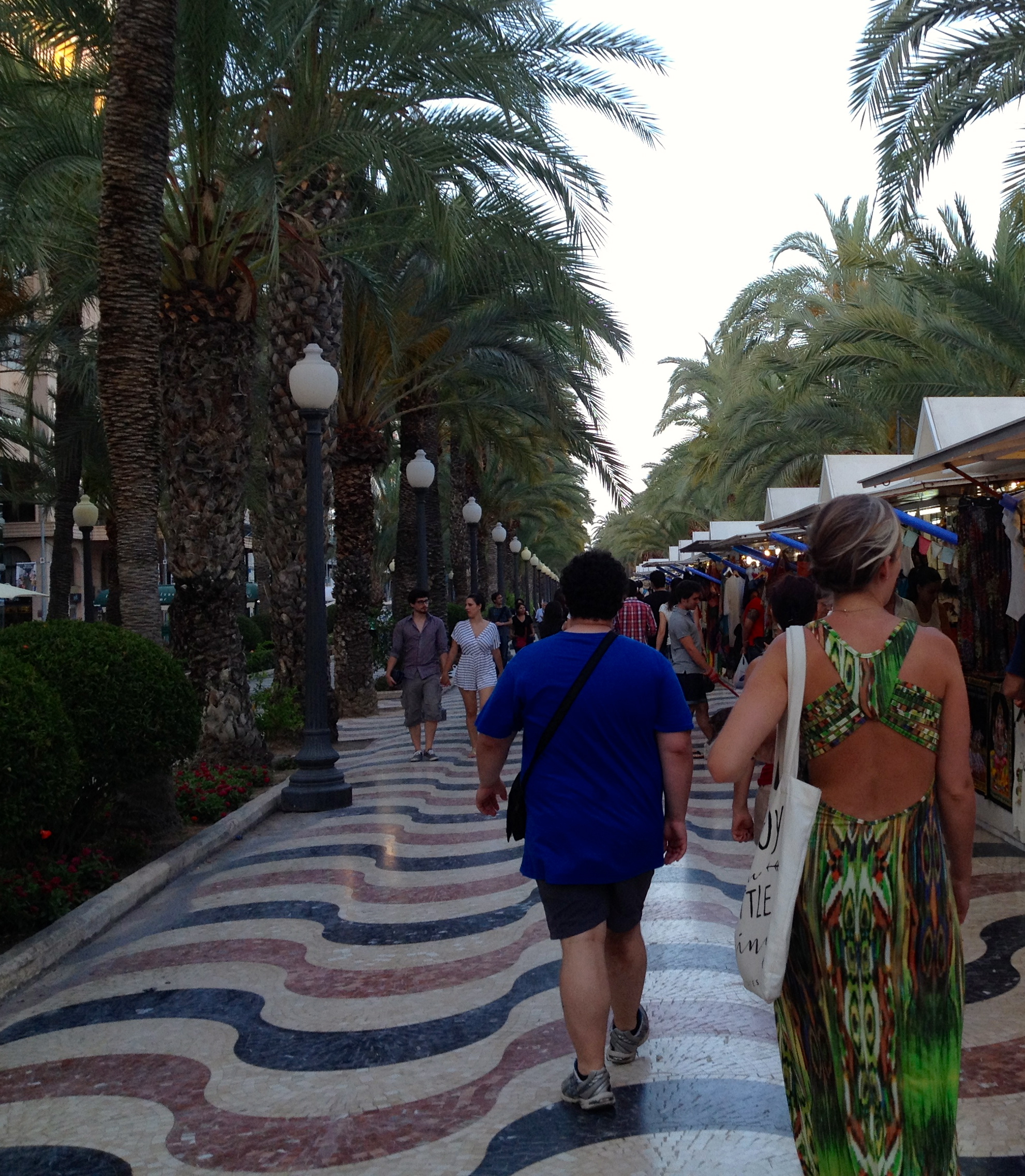
Waves of marble on the esplanade

We begin our outing the next day (after a stop for the promised pair of Pikolinos) with a stroll along the heart and soul of the city, the Esplanada de España. This grand boulevard stretches around the Alicante marina, all 6.6 million tiles of it; red, black and cream.

Created in 1867, it offers the place for a perfect paseo, a romantic evening stroll. The dramatic marble tiles depict the waves of the Mediterranean and rows of palm trees offer shade. Well-dressed couples stroll hand in hand, people peruse the kiosks, others sip coffee.

At a nearby bustling square we enjoy a cocktail and I befriend two charming waitresses, Maria and Katrina. We chat and pose for photographs, their natural friendliness epitomizes the hospitality of Spain.

After a first tapas at a nearby outdoor bar, we encounter them once again. Maria is standing in the elegant entrance of Le Turronena and I stop to ask the name of the imposing tree that shades the square.

New shoes on the esplanade

New shoes on the esplanade

“It’s a dragon tree, there’s another famous one in Tenerife,” she informs me, then asks if we’ve come back to dine.

“No,” I say a little apologetically, “we’re on the search for our next tapas bar.”

“Well then come with me, I’ll take you to where you’re going next.” And with that Maria marches us down the street, shouts Hola to fellow shop workers as we pass, then turns a corner. We’re suddenly upon a crowd gathered outside a small tapas bar.

As custom dictates, many of the locals are outside socializing in the warm June evening, tapas in hand. Maria informs one of the staff that she has a group of six and voila… we’re lucky enough to be seated at the bar. We know immediately that Maria is an angel in disguise.

IMG_7136

Katrina and Maria, our ‘angel’

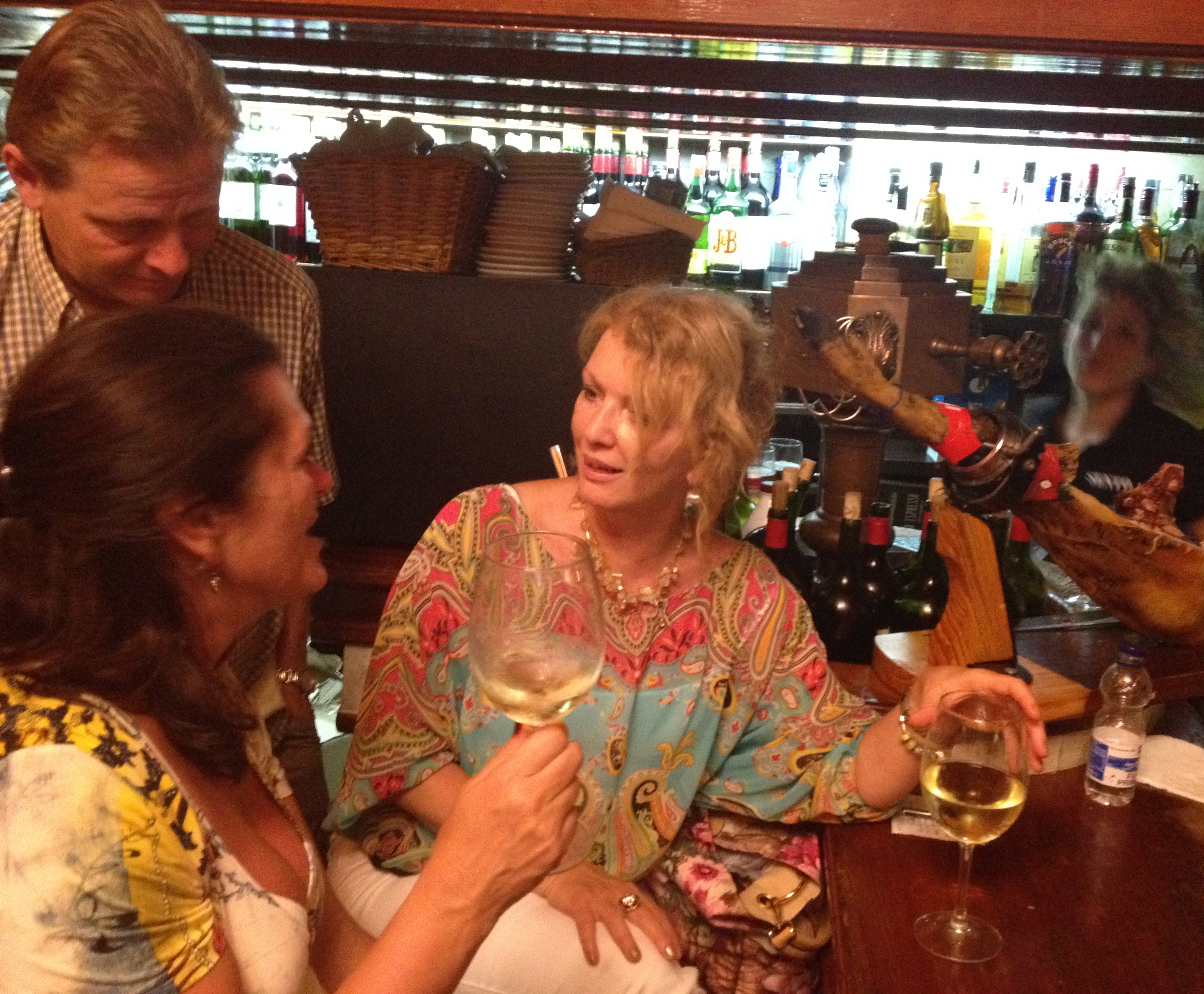
Alda had promised that we wouldn’t leave without an authentic tapas experience and this was it. The small bar is like a beehive; busy, exuberant and productive. Cured ham strung against mustard walls, tapas orders shouted out over the laughter and chat, staff weave in and out like a choreographed salsa dance. Each time their hospitality is rewarded with a tip, a loud clang erupts from a voluptuous bell behind the bar. “Fantastico!” one of the guys would sing-song and we in the bar would loudly echo it back. The ebullient Sara tells me it also means…”Our new friends are leaving and we hope they’ll come back.” I like that.

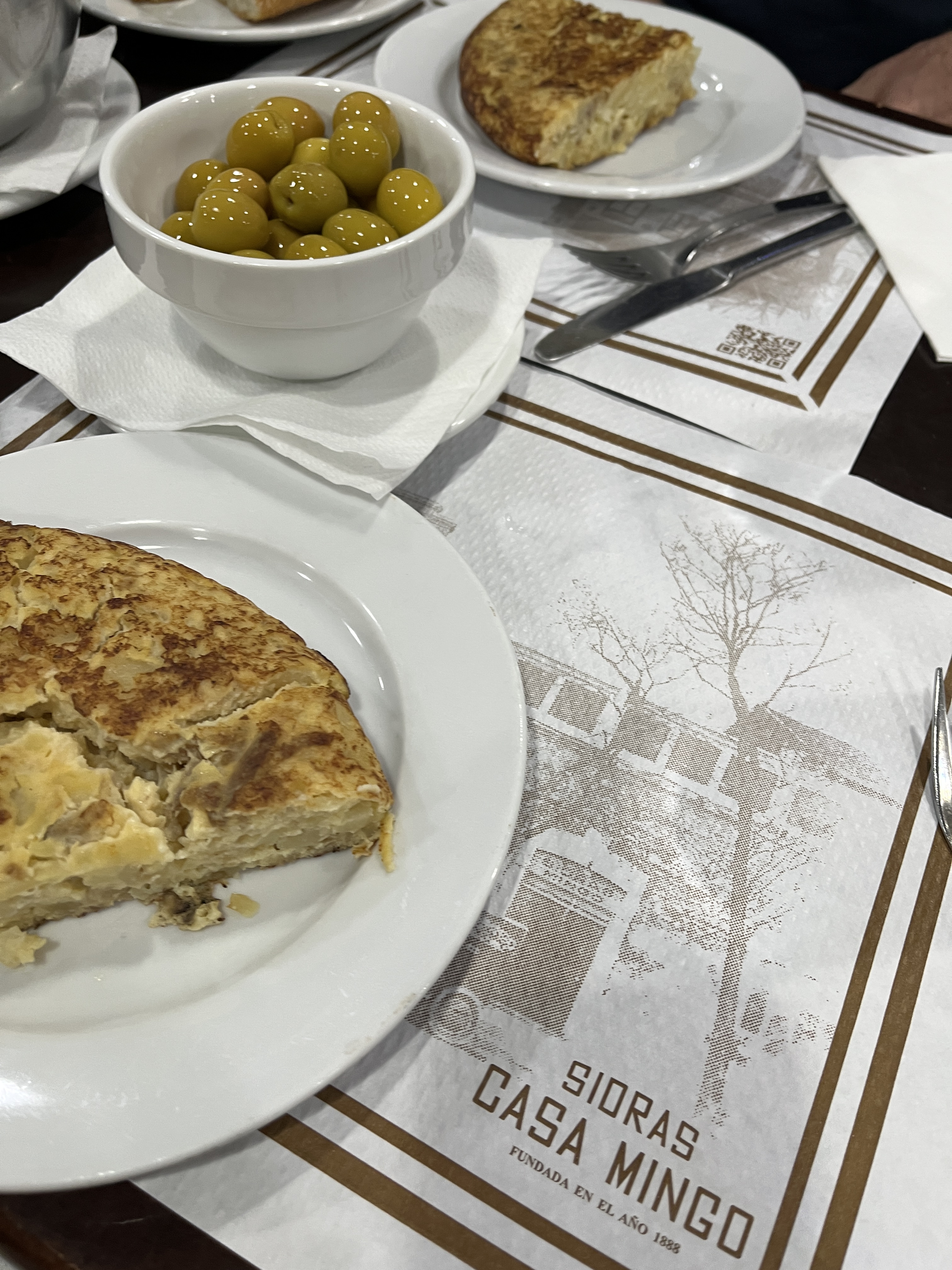
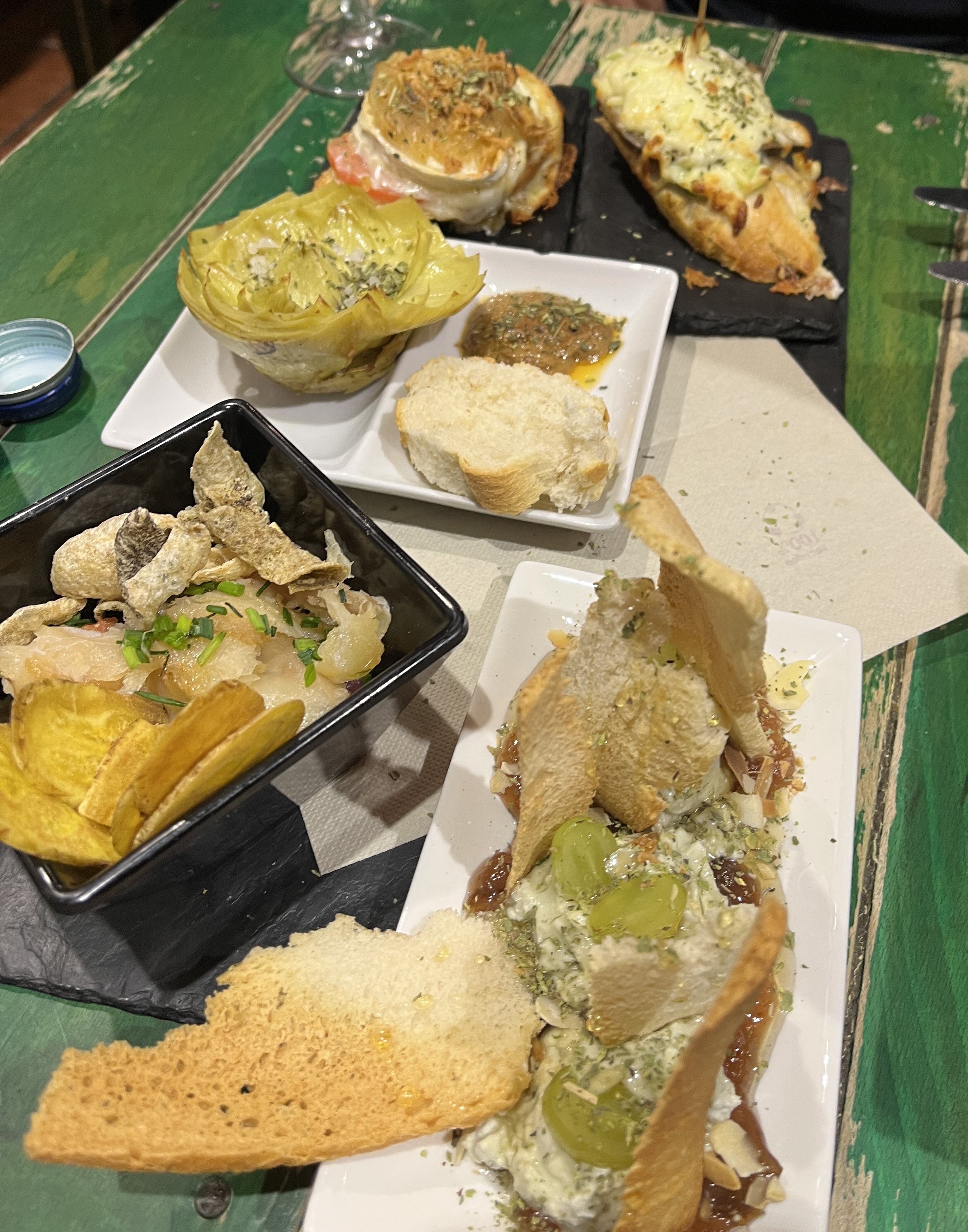
As the wine flowed and sumptuous dishes are presented to us, it’s understandable that tapas has evolved into a sophisticated cuisine. Perhaps eight to twelve different dishes are savoured one by one, designed to encourage conversation. We sampled tuna, chorizo alvino, calamares and dishes in between. But the art of tapas has far more humble beginnings.

It’s believed that since one would stand while eating a tapa in traditional Spanish bars, you’d need to place your plate on top of the drink to eat, making it a top. Others maintain the name originated sometime around the 16th century when tavern owners realized that the strong taste and smell of mature cheese disguised that of bad wine, so offered free cheese.

IMG_7161

Fantastico!

Another theory is that King Alfonso X of Castile recovered from an illness by drinking wine with small dishes between meals. After regaining his health, the king mandated that taverns shouldn’t be allowed to serve wine to customers unless accompanied by a small snack or “tapa”, the meaning of the word.

Then again, it’s said the same King once ordered a cup of wine on a windy beach. The waiter covered the glass with a slice of cured ham before offering it to the king, thus protecting the wine from sand. “I’ll have another, with the cover!” the king is said to have bellowed. He was onto something… in our opinion, wine and tapas go hand in hand.

IMG_7159

Sara and Roben

At one point in the evening, I ask Alda about her time spent here over the years. She fondly recalls shopping for a long gown, so she could stroll the esplanade as a teenager.

“Everyone dressed up then for the paseo, it was a special time,” she says and feels privileged to have experienced that era. Alda relates that Spain became her father’s home and in fact chose to be buried here, rather than back in the Netherlands. “He contributed a lot to improve our village, it became a tight knit community with pockets of Dutch and English.”

IMG_7180

“a new dress for paseo”

That had been evident over the days as I heard Dutch and distinct English accents throughout the area. Yet while living a true Spanish experience in the tapas bar, Cervecería Sento, one’s home country is miles away. It’s difficult to imagine yourself anywhere else at that moment in time.

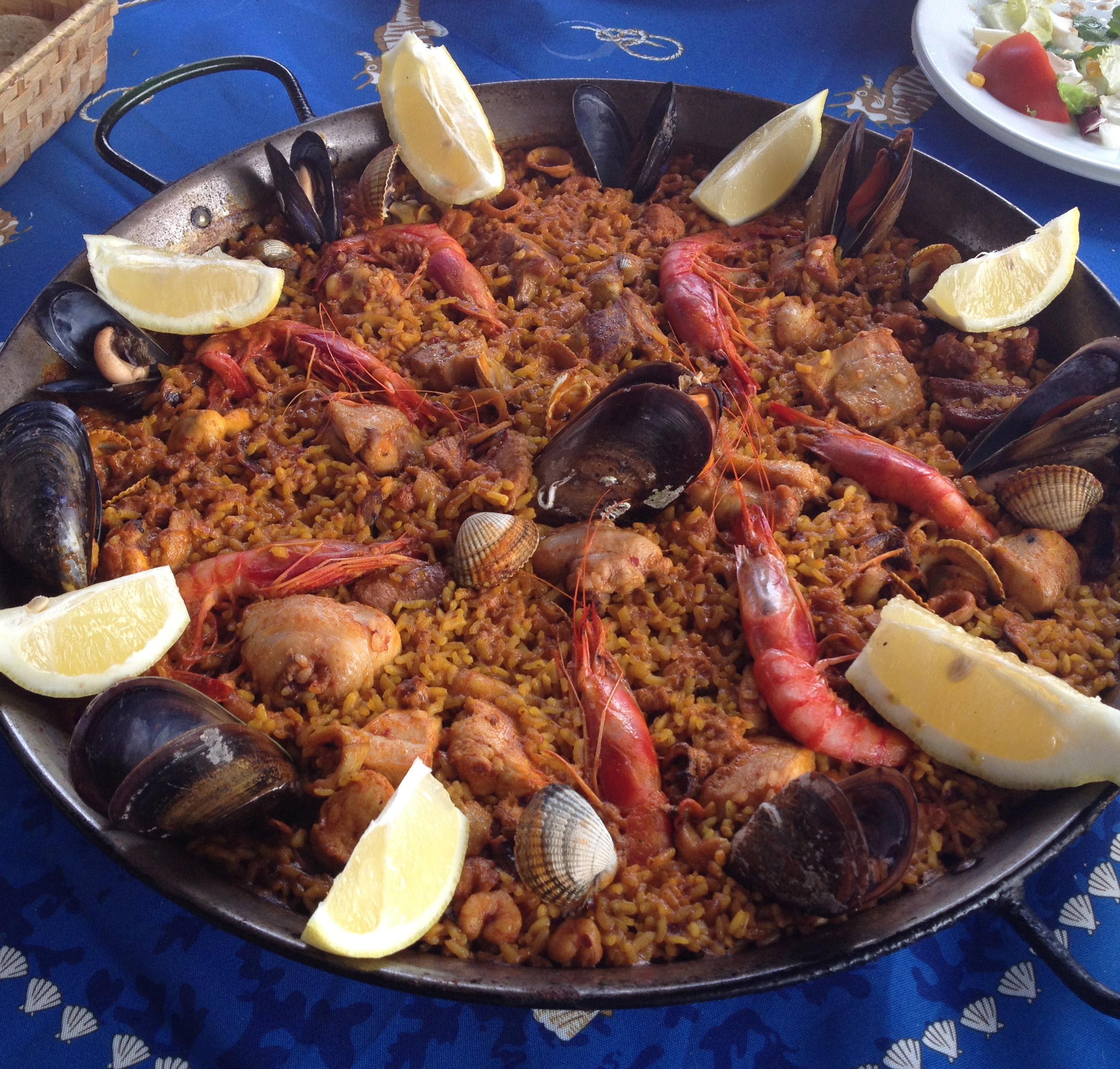
My story might leave you in our favourite tapas bar, yet I must share one last vignette. Our last day finds us back in the village for a traditional Sunday lunch. To complete our culinary experience, Margienus insists we have traditional paella, the Spanish rice dish that originated in the Valencia area.

We climb up a rocky hill where the restaurant sits, open to the breezy afternoon. Beach goers and picnics enjoy the sand below us, the day feels pleasant and timeless.

IMG_7344

At Casalmar before Sunday lunch, in our ‘flouncy blouses, flowing pantaloons and billowy kaftans’

No, it isn’t a fancy place, but the food and the family atmosphere is the attraction. Children play on the hillside and occasionally make their way to their parents who are enjoying yet another course and likely another bottle of wine. People wander up to the bar in bikinis or sit smartly dressed… and yes, the Spanish do craft beautiful shoes!

We’re offered a small plate of a national dish from a generous local at the table next to us. We feel welcome and at home. Yet, I long to hear some Spanish music, you know how I am about these things.

I ask one of the Thomas family members if they could indulge me. Generations of the family have welcomed the neighbourhood into their restaurant over the past forty years. On cue, a flamenco tune fills the restaurant. Now the experience is complete.

The Spanish melody drifts past us, out towards the Costa Blanca. Really and truly, every Sunday afternoon should be like this.

IMG_7382

Generations at the Casa Thomas

By the way, how was the paella? Like everything…it was Fantastico!

IMG_7375

Paella, bright with saffron