Tag Archives: travel in Spain

72 Hours in Madrid and Toledo…

Standard

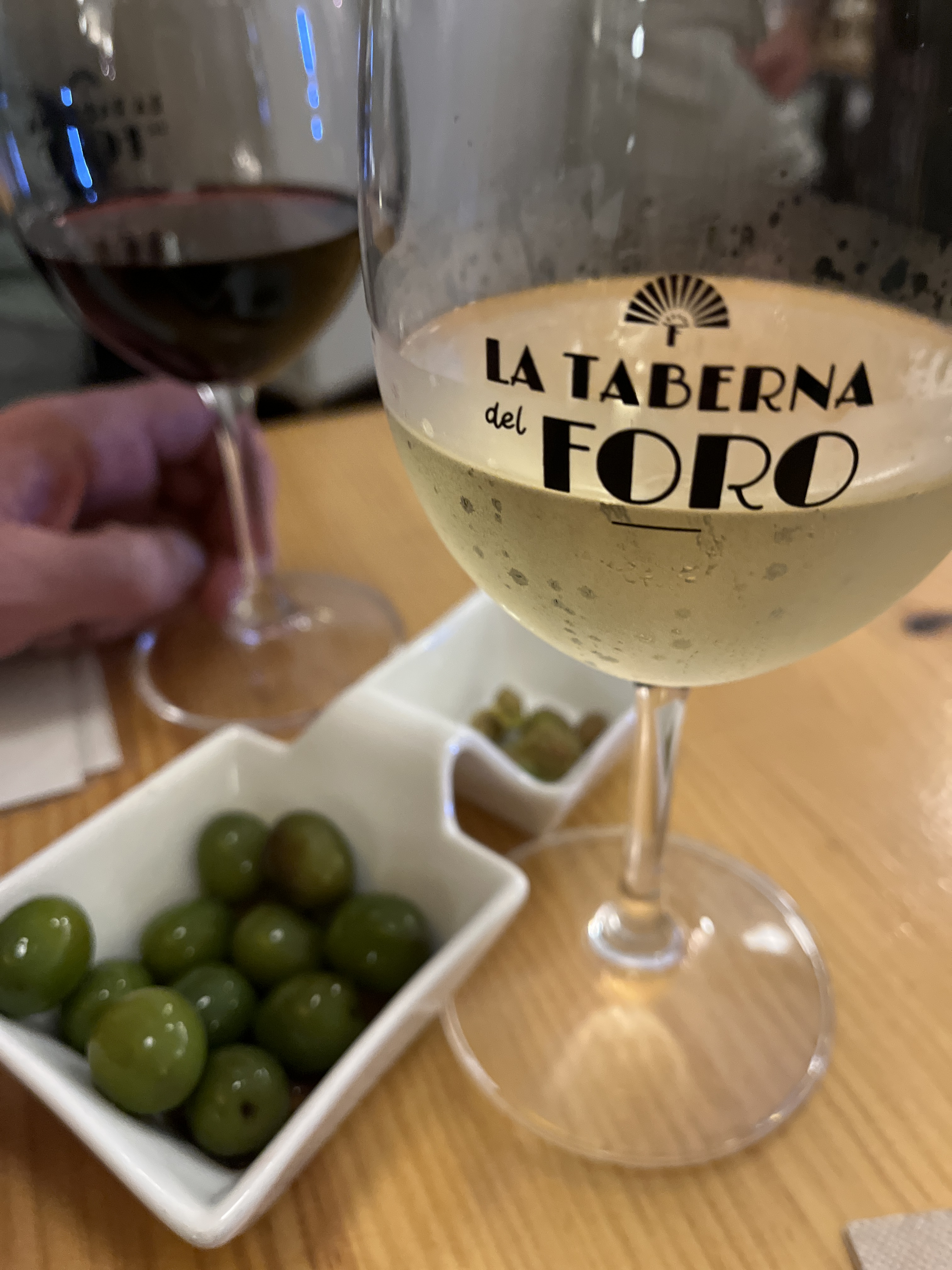
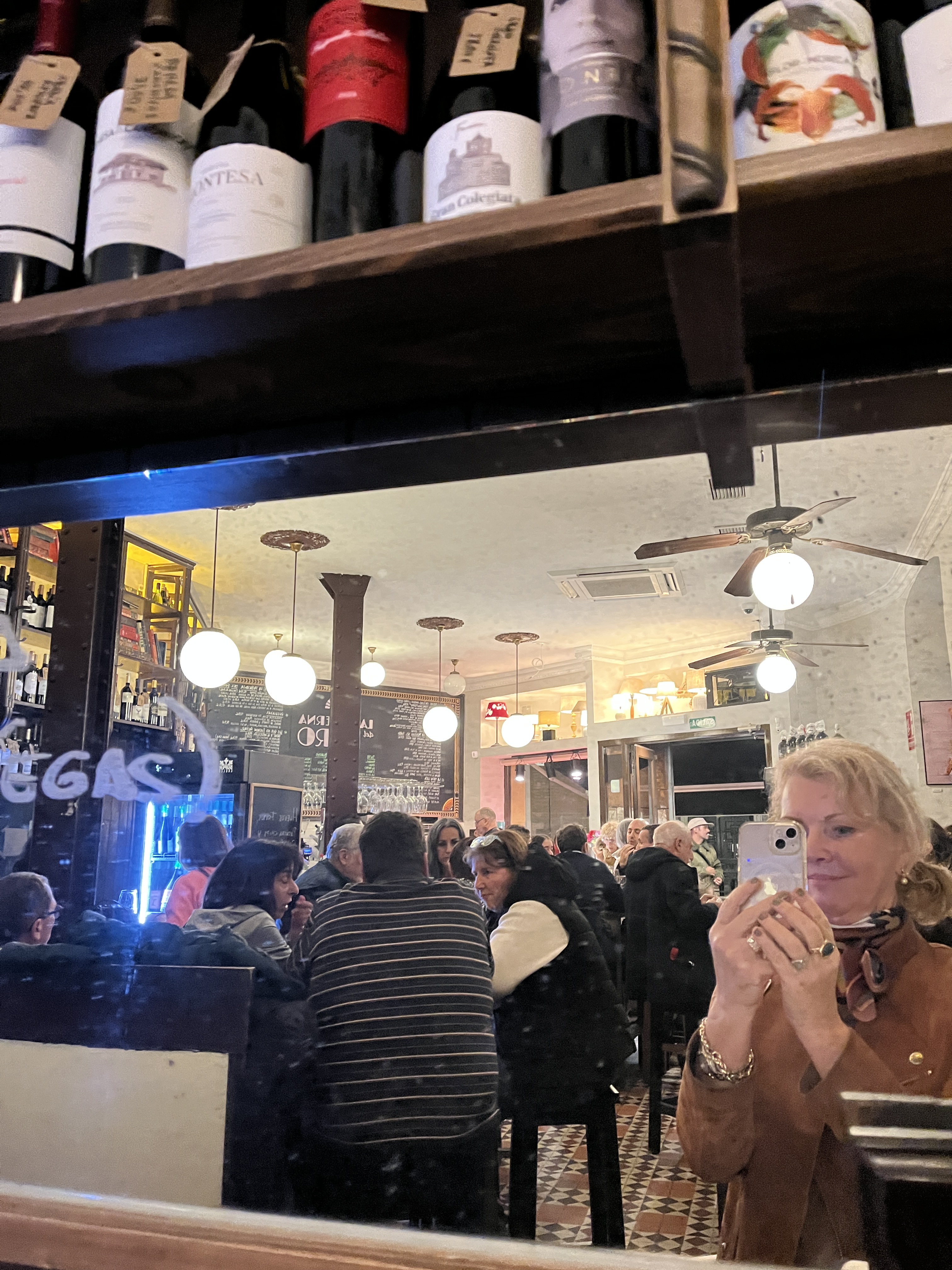
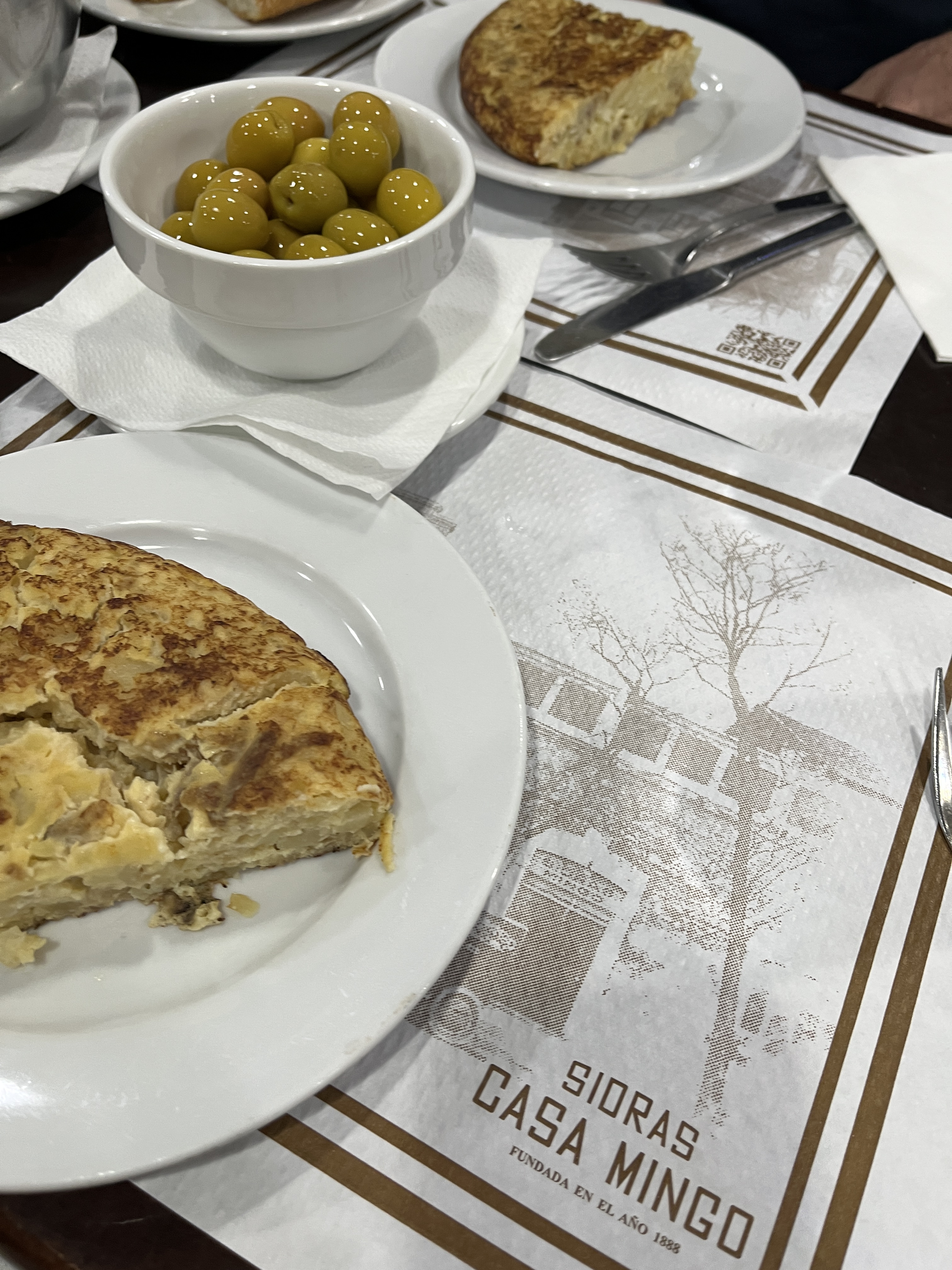
The Le Taberna del Foro is lively and crowded. It’s Friday evening in Madrid and a three-hour flight from Edinburgh lands us in time for drinks and tapas. We slide into a tiny table for two near the pie-shaped bar, lined adoringly with as many books as wine bottles. I order a glass of secco blanco, Bruce decides on a vino tinto and we expectantly unfold the pristine map of Madrid… the promise of a colourful canvas of streets and architecture, of life out to all four corners, a new city for us both!

After having checked into out hotel near Madrid Atocha, the main train station, we haven’t wandered too far into the surrounding charming neighbourhood. I admit to having felt a little overwhelmed by the thought of this capital city, conveniently situated in the middle of Spain, yet at once it feels familiar in its obvious elegant grandeur. We pour over the map noting the iconic sites – those must visits in any city – yet for us it’s more about the outlaying neighbourhoods, the barrios which give all Spanish cities their unique character.

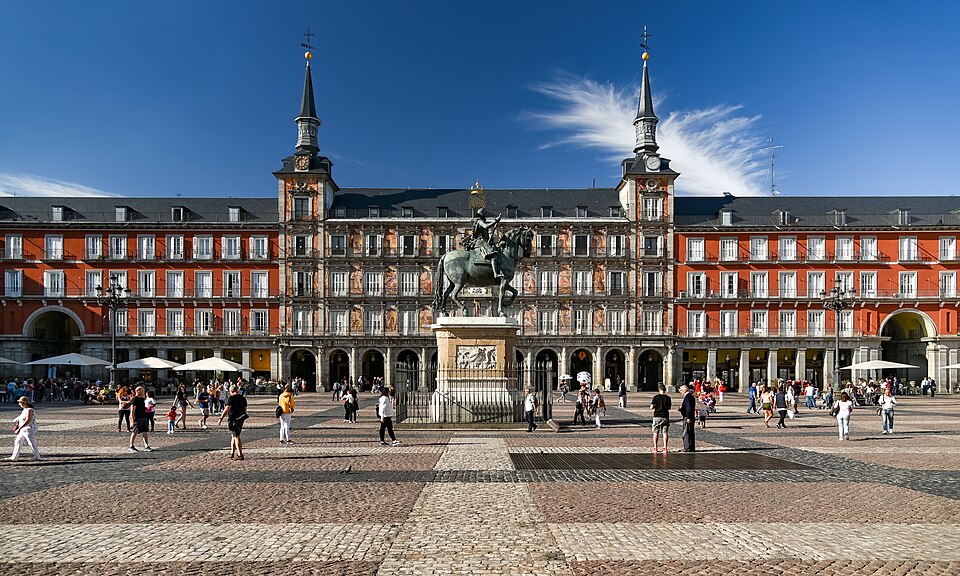
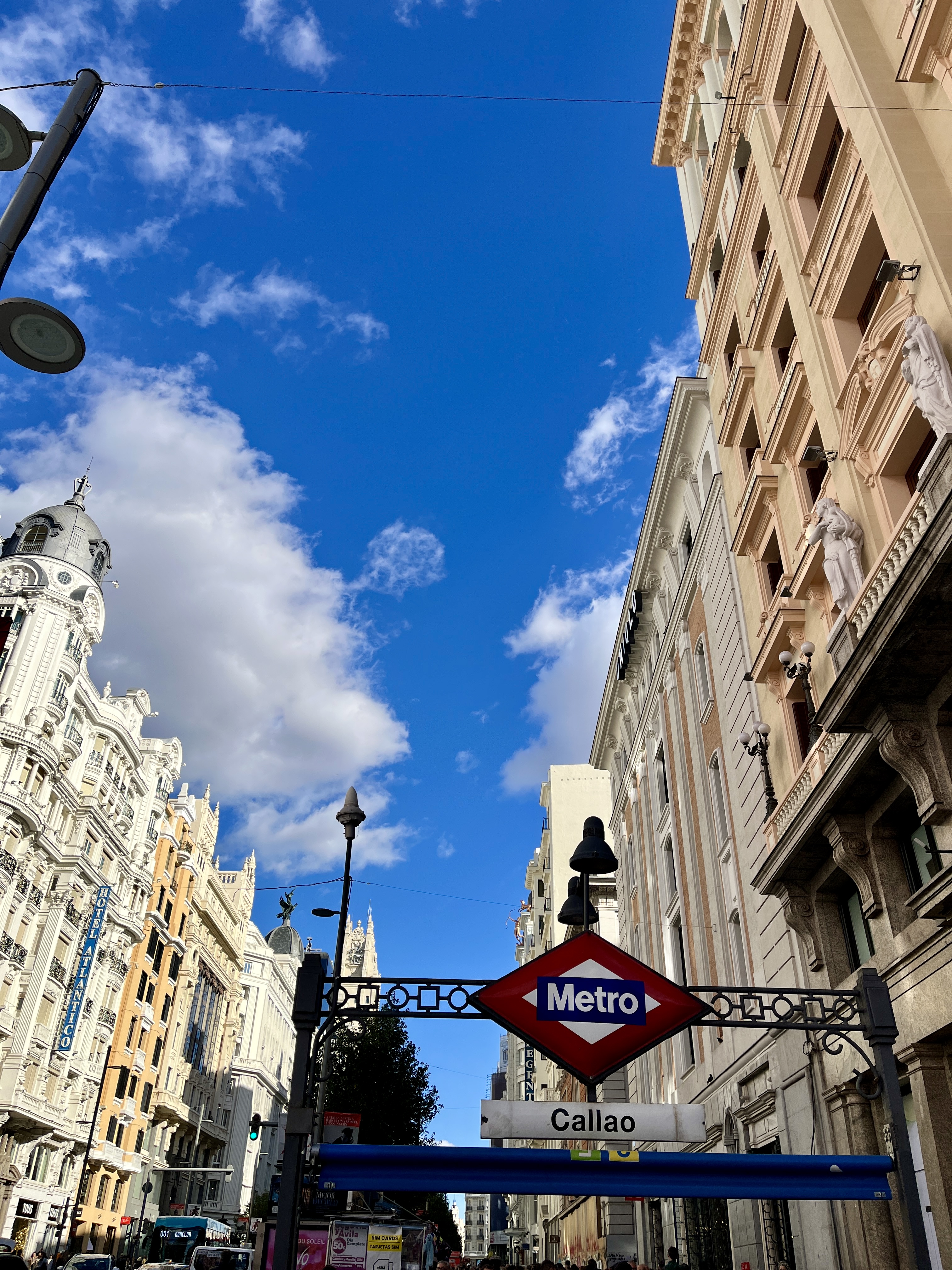
Saturday morning beams sunshine and warm temperatures for mid-November. The crowds are tremendous with locals, Spanish day trippers, tourists alike, and not surprisingly! This is the political, economic and cultural centre of the country with the second-largest GDP in the EU. Madrid is an iconic city and of course we beeline up the Grand Via to visit the landmarks – The Royal Palace and Almudena Catheral, Plaza Mayor, Puerto del Sol. The grand central square is an enduring symbol of the city and resplendent in century-layered architecture. Originally a bustling market, the plaza has also hosted bull fights, royal ceremonies and tragically, trials during the Spanish Inquisition. King Philip III sits atop a bronze equestrian statue paying homage to the reach of Spain in the late 1500’s… Kings of Portugal, of Naples, of Sicily, even Lord of the Seventeen Provinces of the Netherlands. The Philippines, a former Spanish colony, is named after Philip’s father, the II, also known as Philip the Prudent.

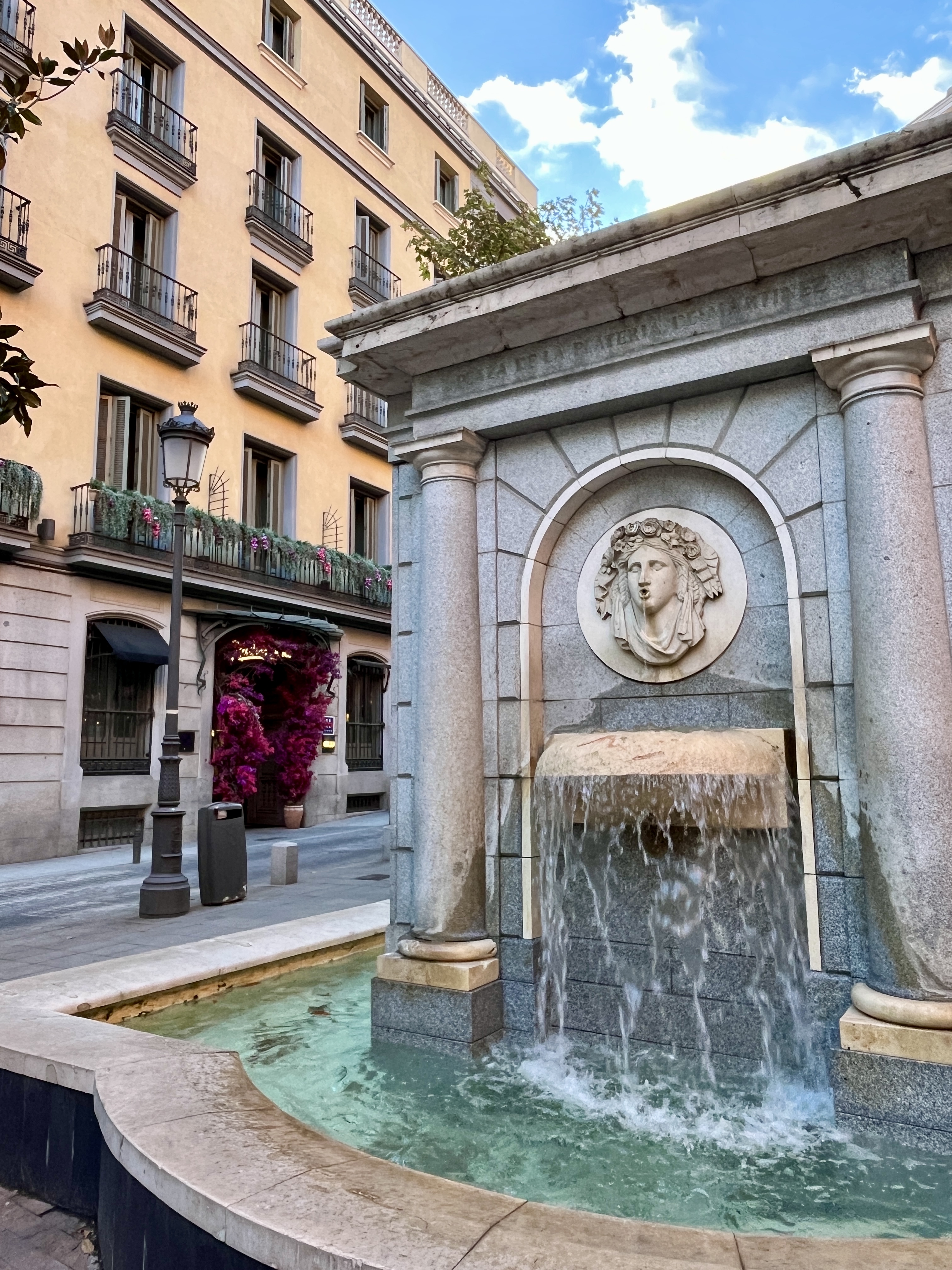
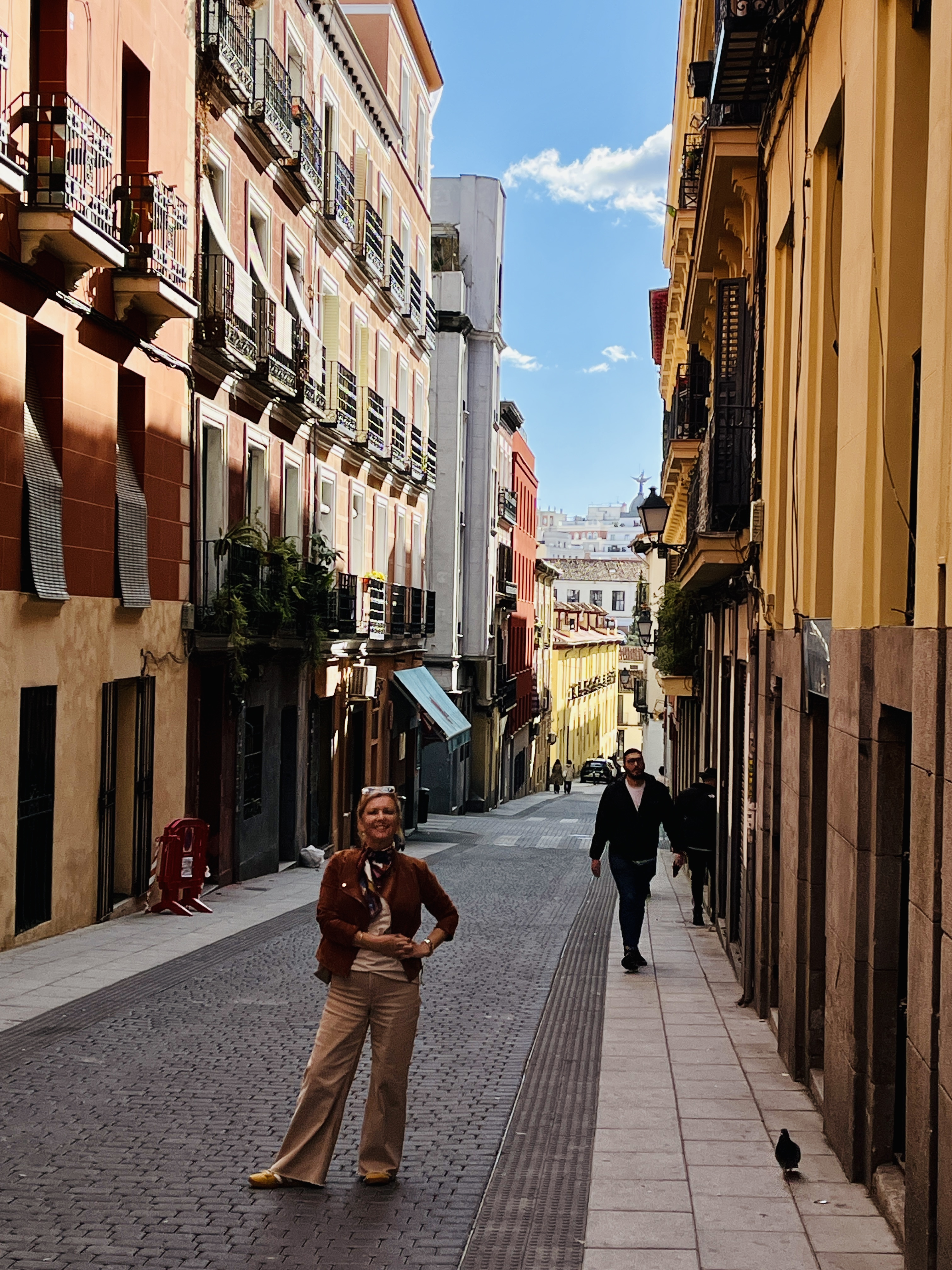
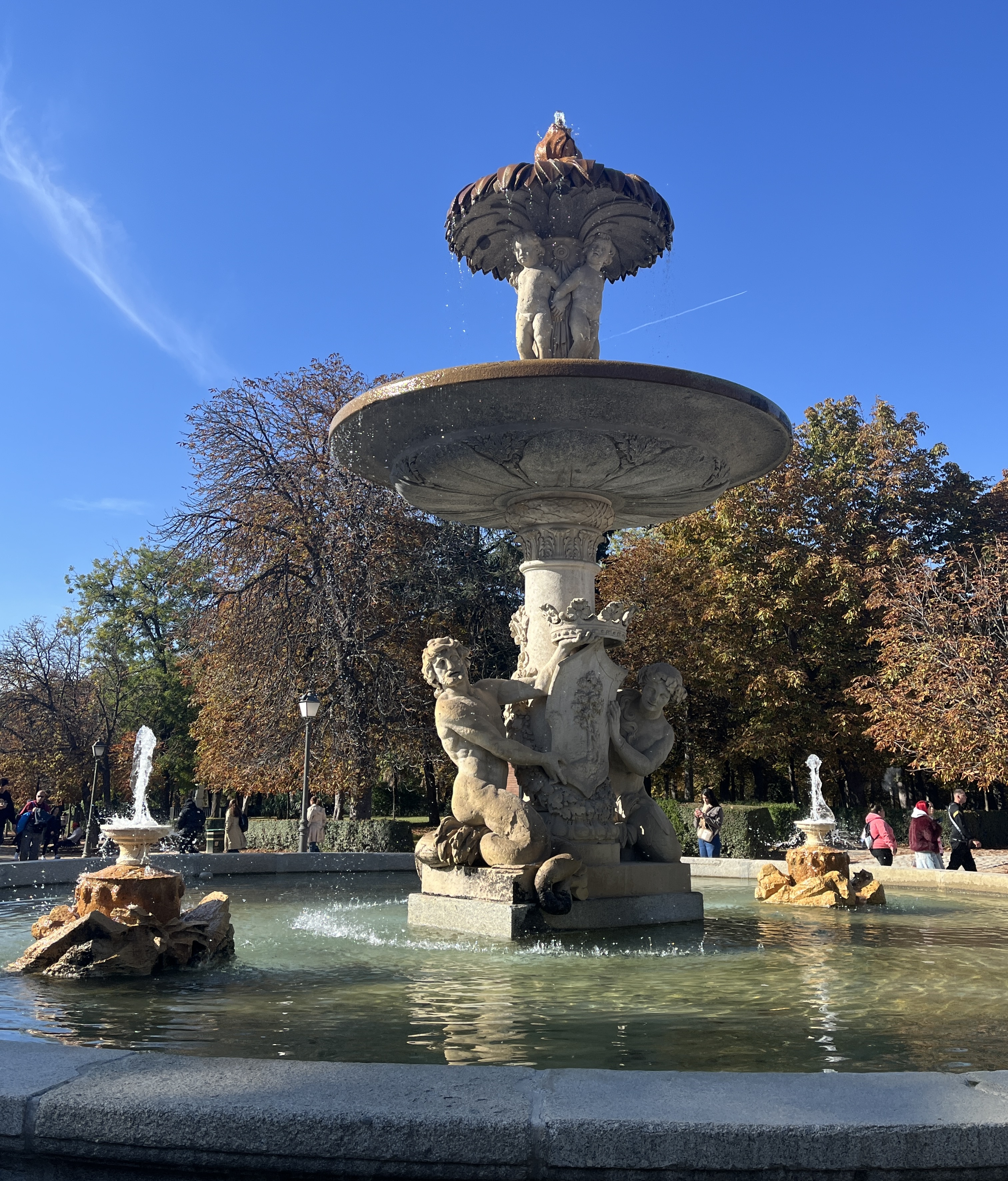
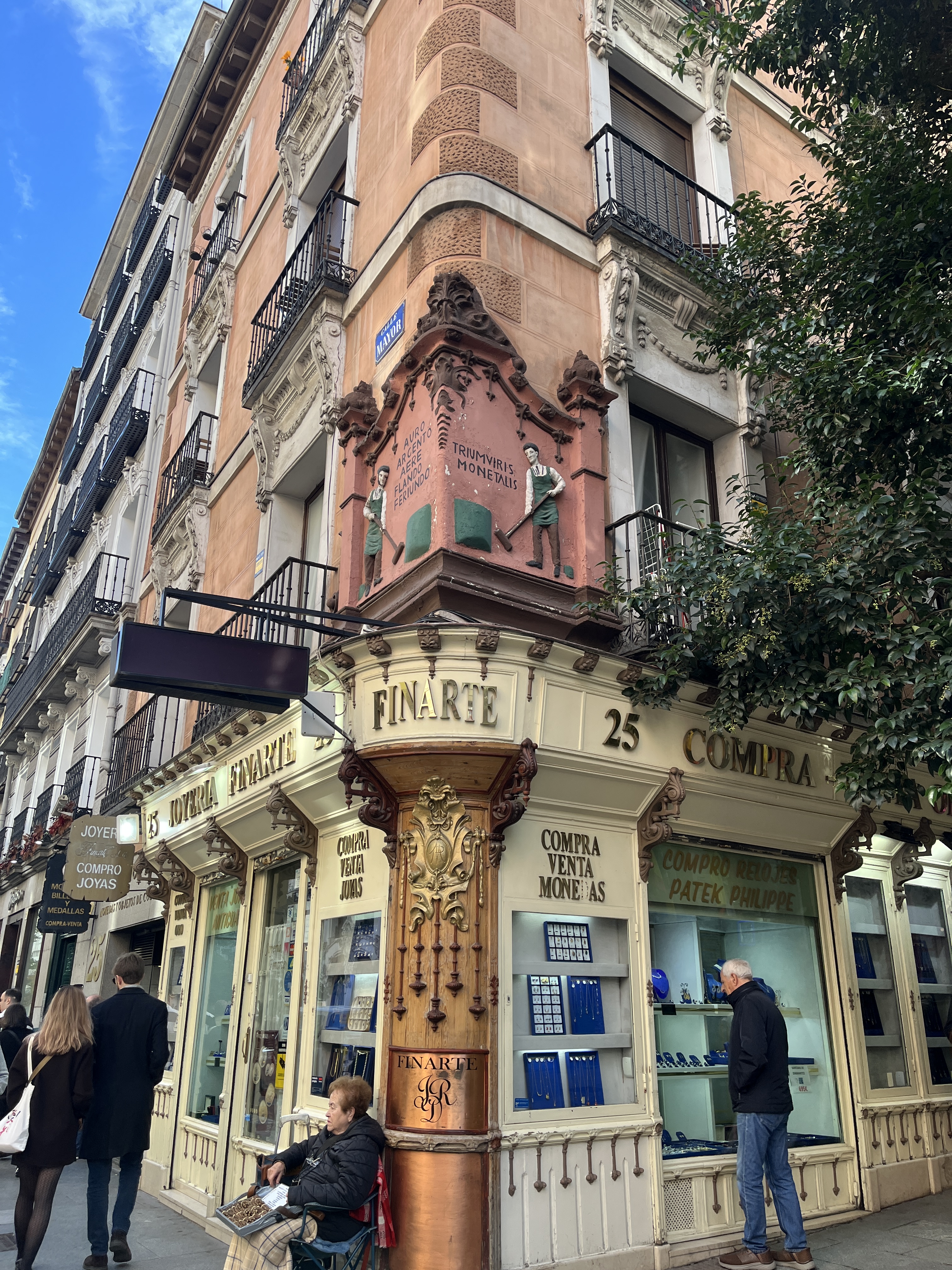
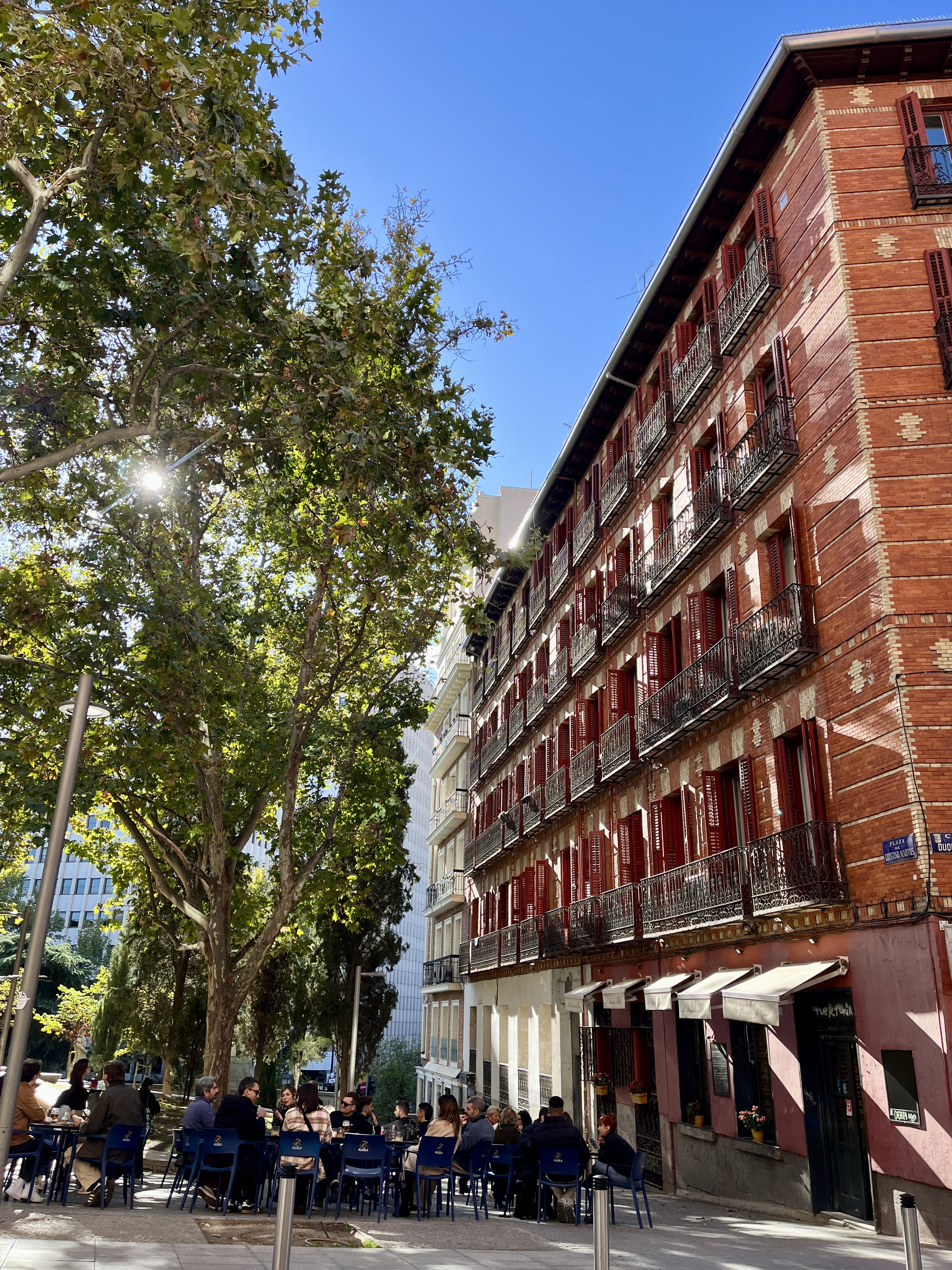
With the main sites orientating us, we stroll. Like the Italians, the Spanish love to perambulate their calles; always well dressed, well perfumed and with animated conversation. We meander, seemingly traversing the entire city that day. We leave the busy Gran Via for the intimate neighbourhoods of Salamanca, Lavapies, La Latina and more. The narrow streets are flourished with petite intricate wrought iron balconies, muted pastels and cozy tree-dappled plazas dotted with neighbourhood tapas bars. We chance upon a rose garden still abloom, quiet calles of towering cyress trees, pigeons frolicking in marble fountains, local gossip mingling with strains of classical guitars… all touchstones of life in this grand, yet surprisingly intimate city.
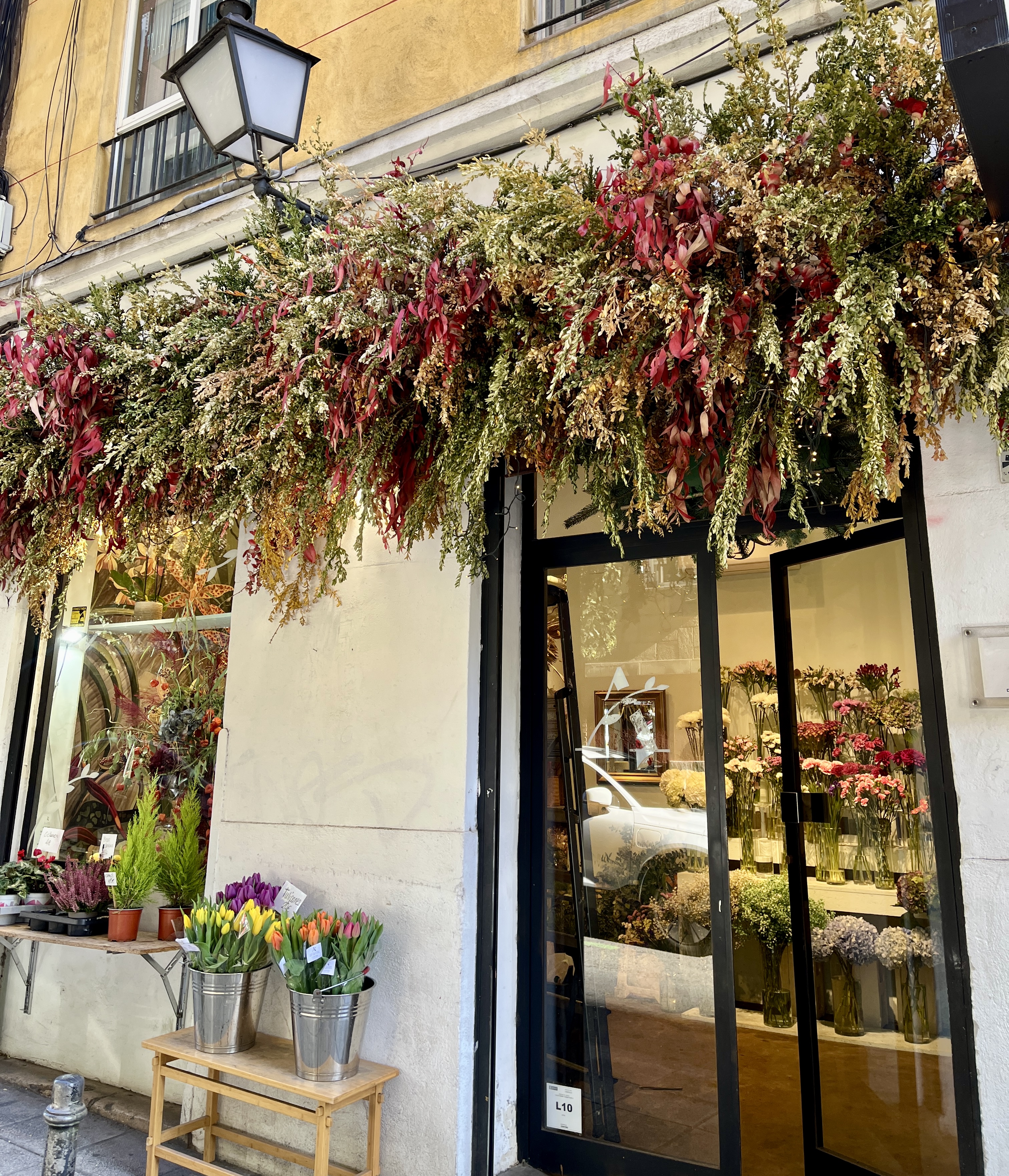
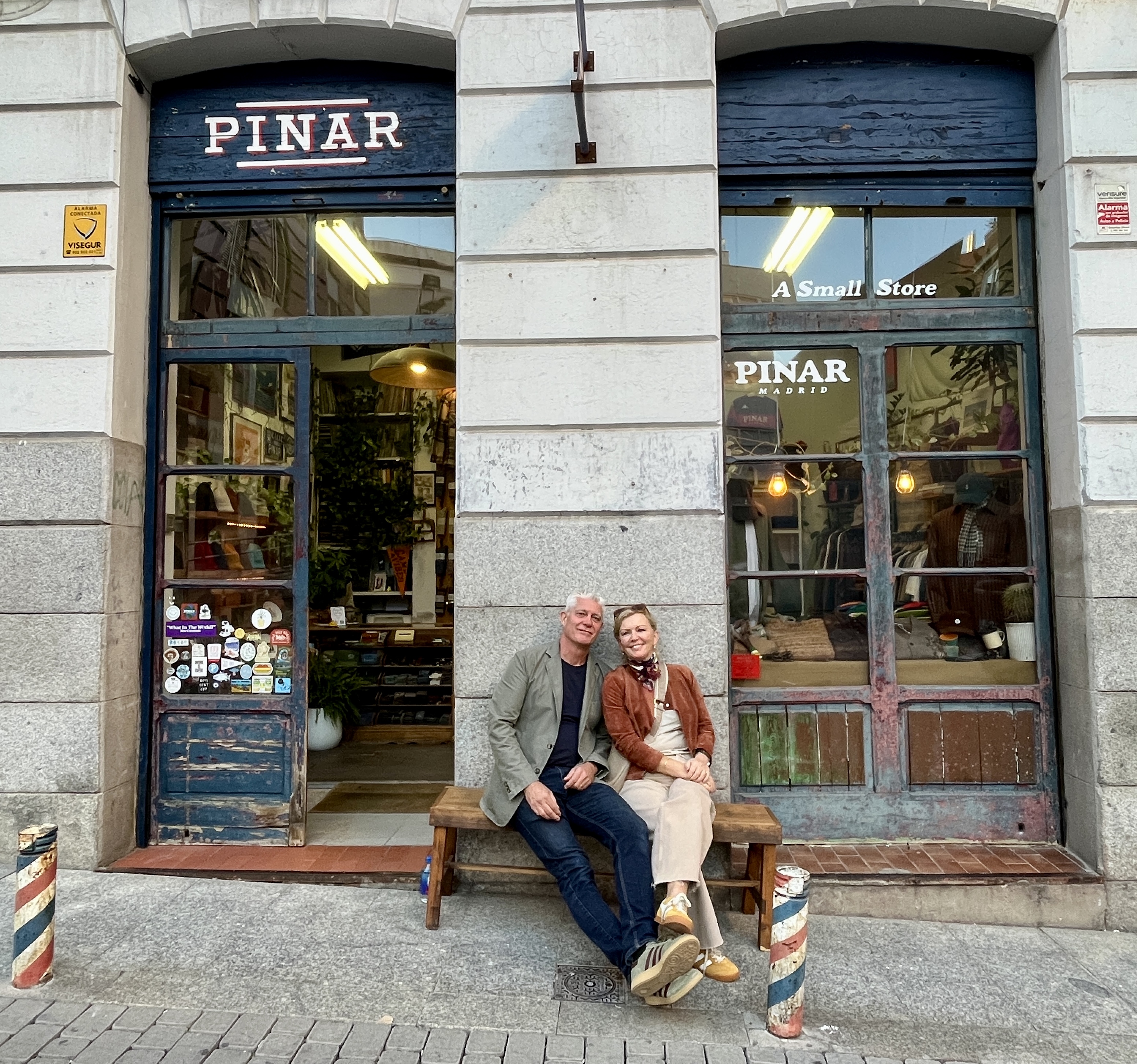
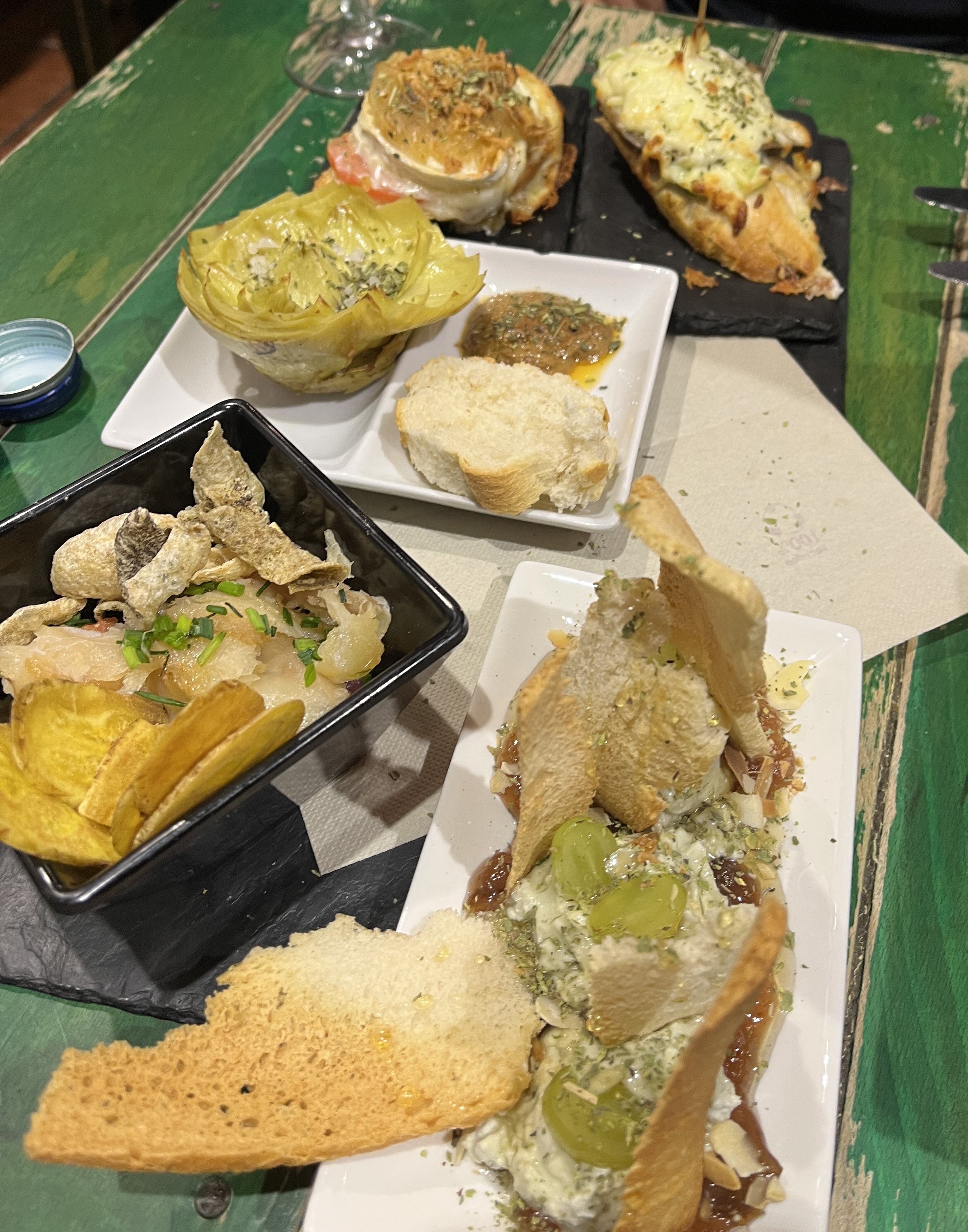
By 7 pm, we chance upon the smallest of bars with rickety vivid-green tables and a tapas menu that I’ll dream about for years. Alas, the kitchen doesn’t open until 8 so we have no choice but to order a bottle of roja and relive the day. Seventeen kilometres of bliss, excellent local food here and there, and admittedly because of the beautiful weather we hadn’t been enticed to join any inside tours. Just a spectacular day of soaking up the essence of Madrid.

“If Seville is a gentle Spainsh guitar tune, Madrid is a full-on flamenco dance,” I muse to Bruce. I fell in love with Seville on a previous trip and ideally one should visit both. If crowds and distances are difficult for you, Seville will give you all the flavour you need, yet the transportation system in Madrid is efficient and accessible. My feet are worn out so we plot tomorrow’s endeavours with a slightly slower pace, which we both agree must include The Prado Museum!
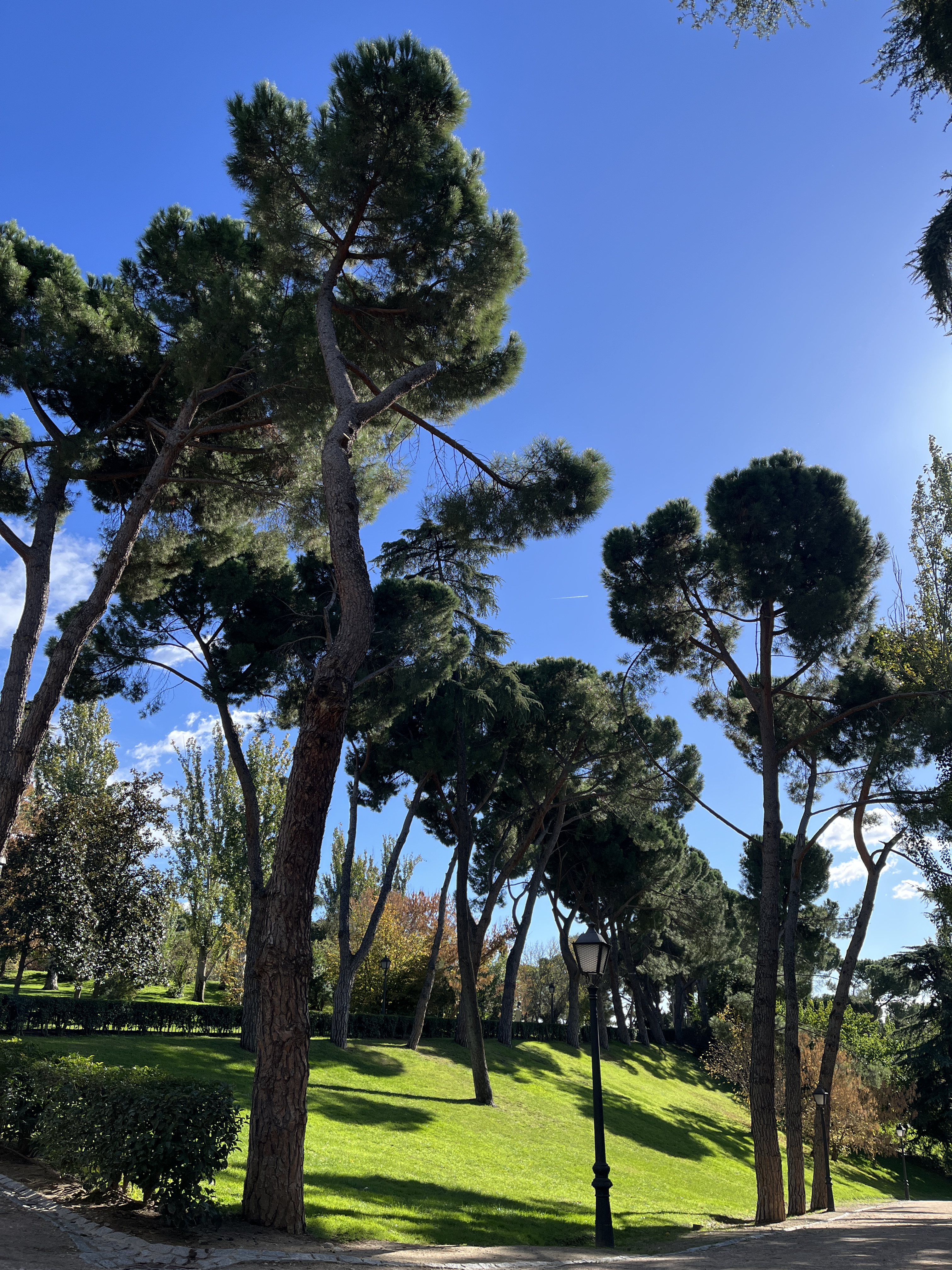
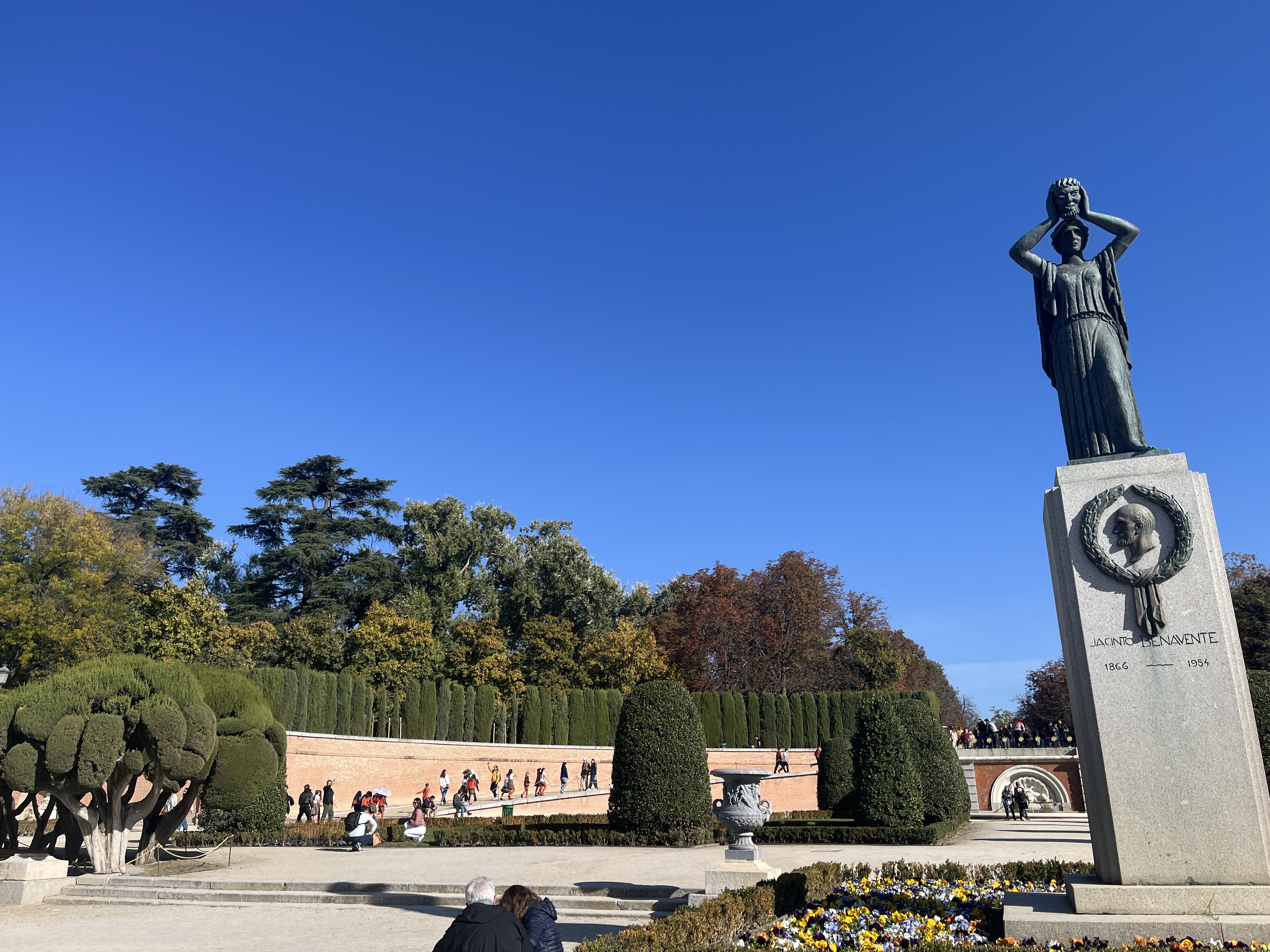
The Prado Museum is what the Louvre is to Paris, the British Museum to London, the Uffizi to Florence. Before losing yourself in the Prado, first wander its environs as the museum is nestled on the edge of the grand El Retiro Park. And the Retiro is to Madrid what Central Park is to New York City, what Hyde Park is to London, or Stanley Park to Vancouver… parks that are the breathing lungs and oases of calm. El Retiro is just that, a sprawling Unesco World Heritage Site, a former royal park with 19,000 trees, art galleries and a lake. Opened to the public in 1868, one can stroll, row, pedal, play tennis, or enjoy a picnic in the grounds.
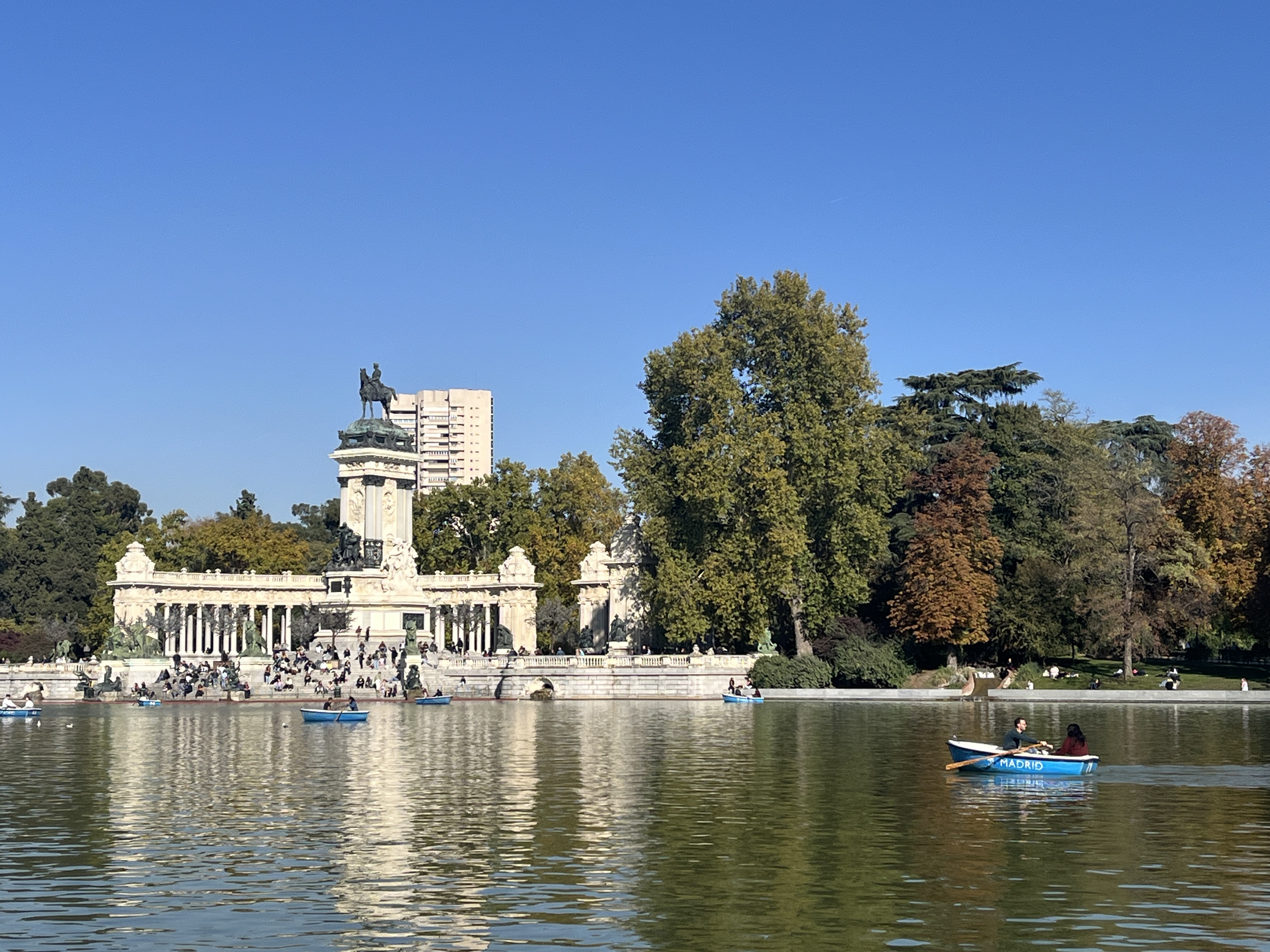
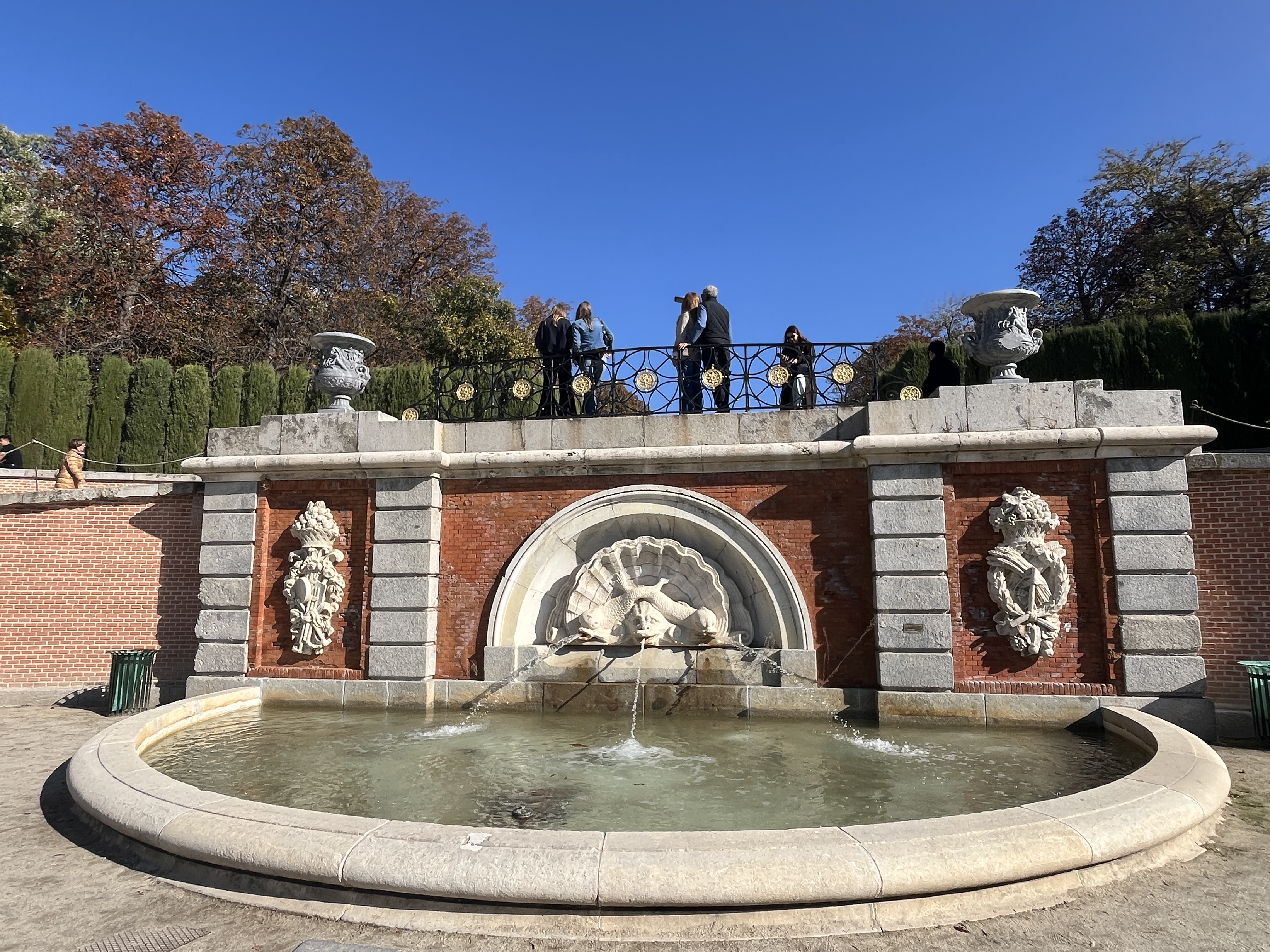
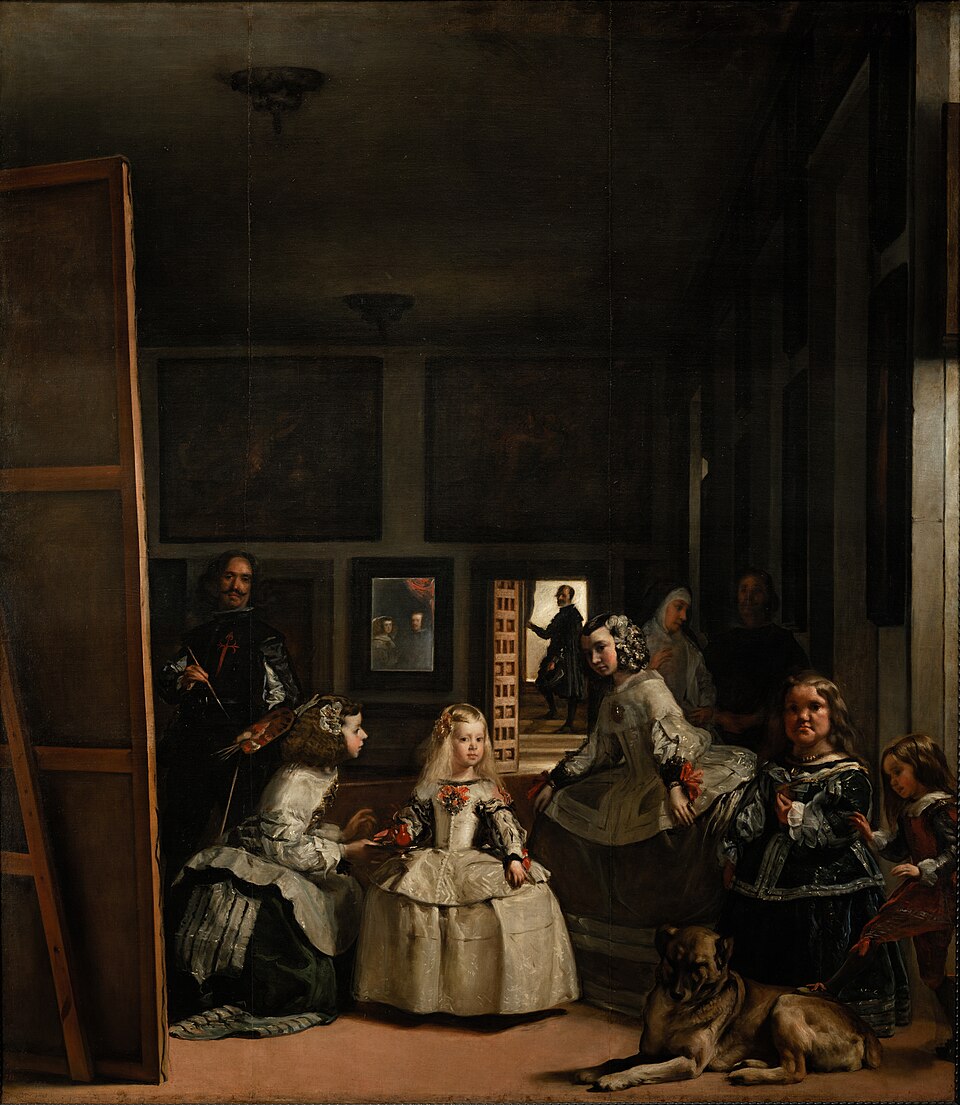
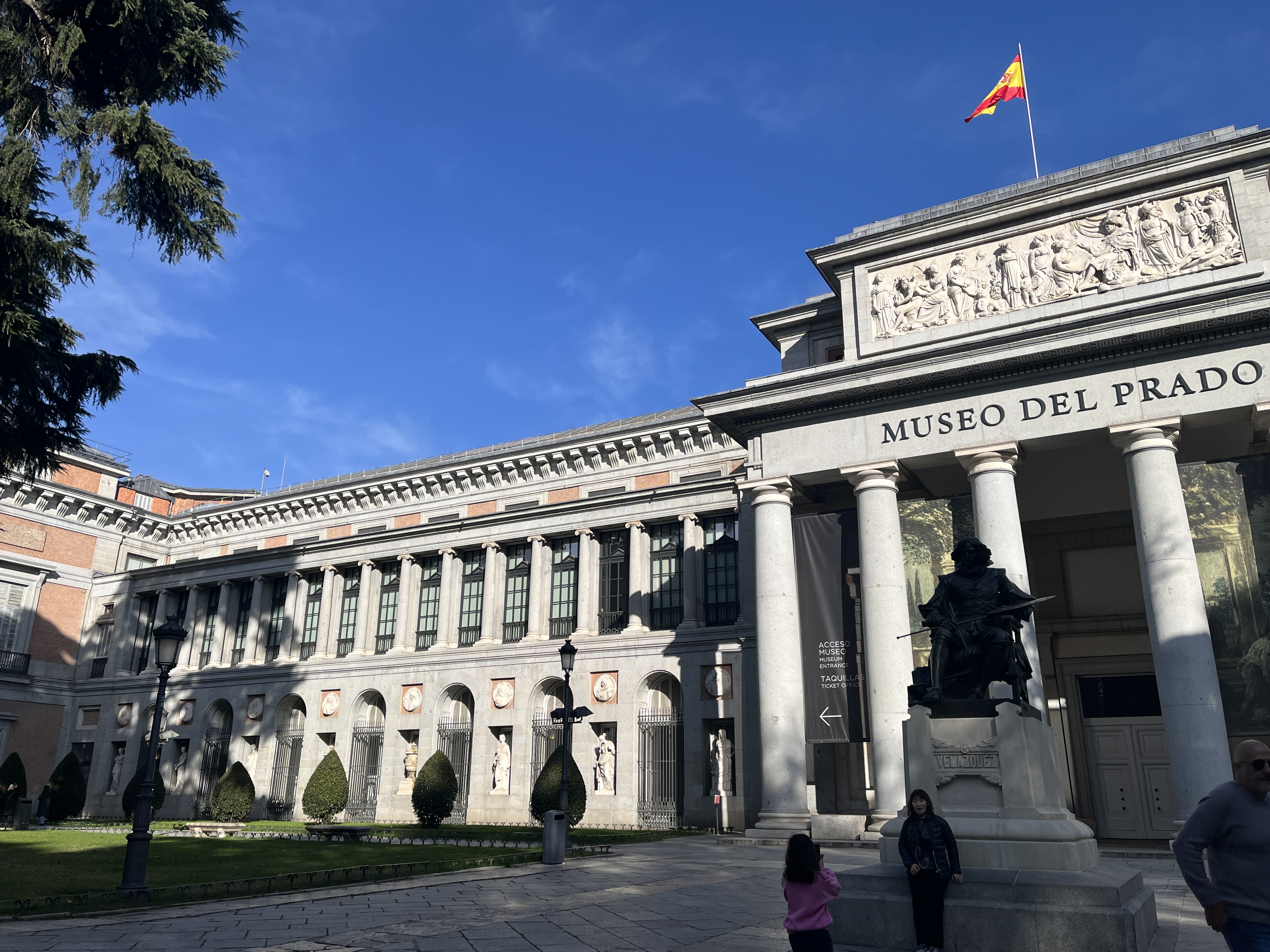
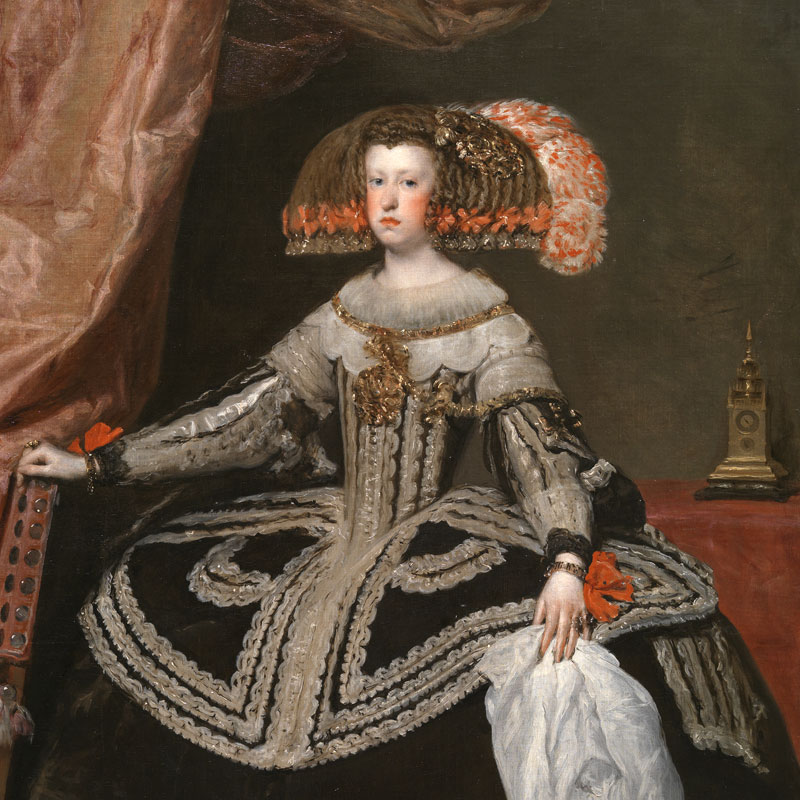
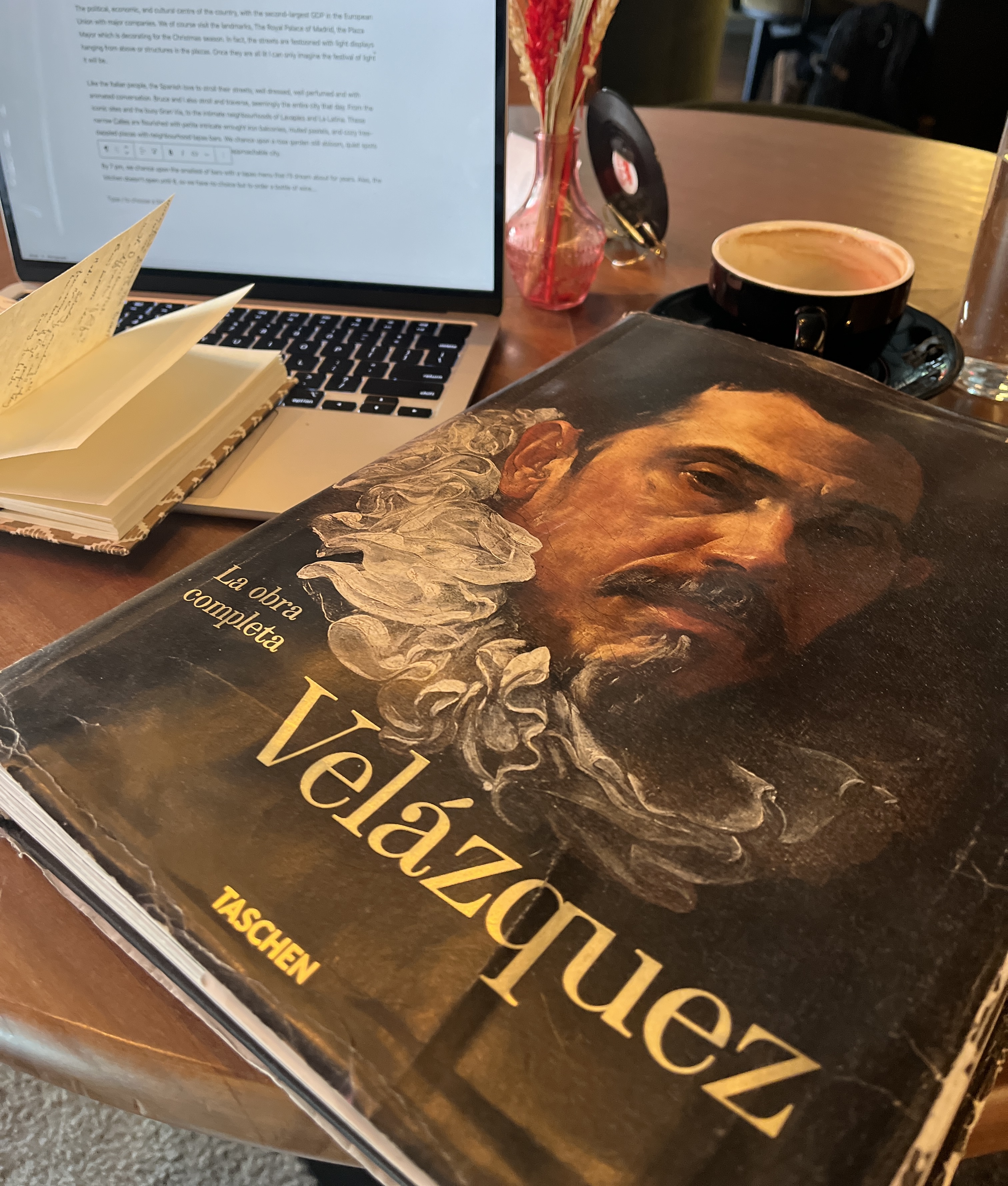
I absolutely adore museums of all kinds and like markets in a city, museums are also the touchstone of its citizens… the guardians of art and history, of a people’s story. The building that today houses the Museo Nacional del Prado is a splendid work of art in itself. Designed in 1785, it is sprawling, stately and the custodian of some 2300 paintings. The predominate mood is that of Tenebrism – dark, gloomy, mysterious – common of Baroque paintings and Diego Velazquez did this exceptionally well. A leading artist in the court of King Philip IV, the museum holds a vast collection of Velazquez’s celebrated paintings with Spain’s dramatic history coming alive on the evocative canvases. Masterpieces from Titian, Goya, Raphael and El Greco also regal the walls, testament that The Prado has certainly evolved since it opened in 1819 as a Natural History Museum.

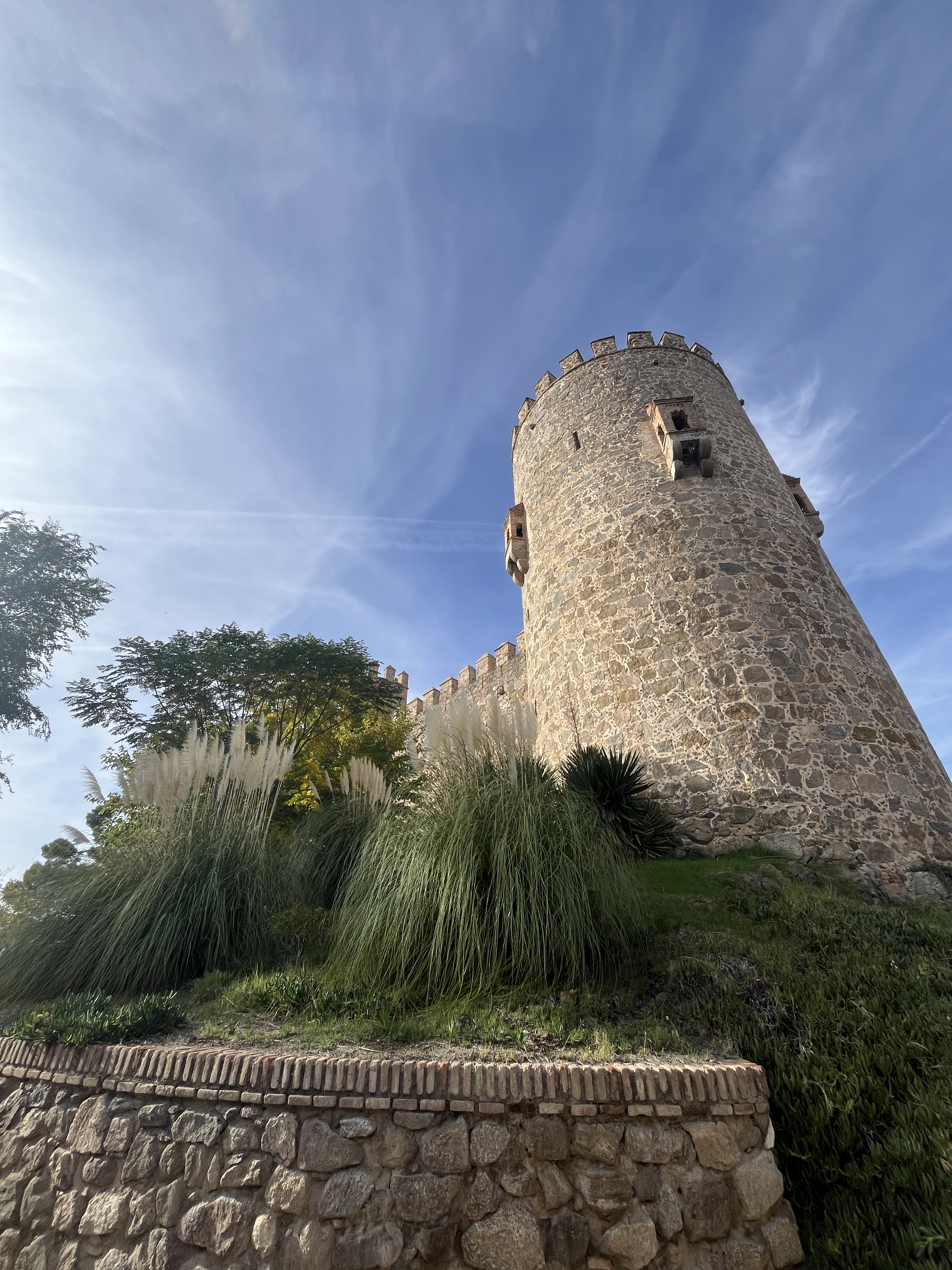
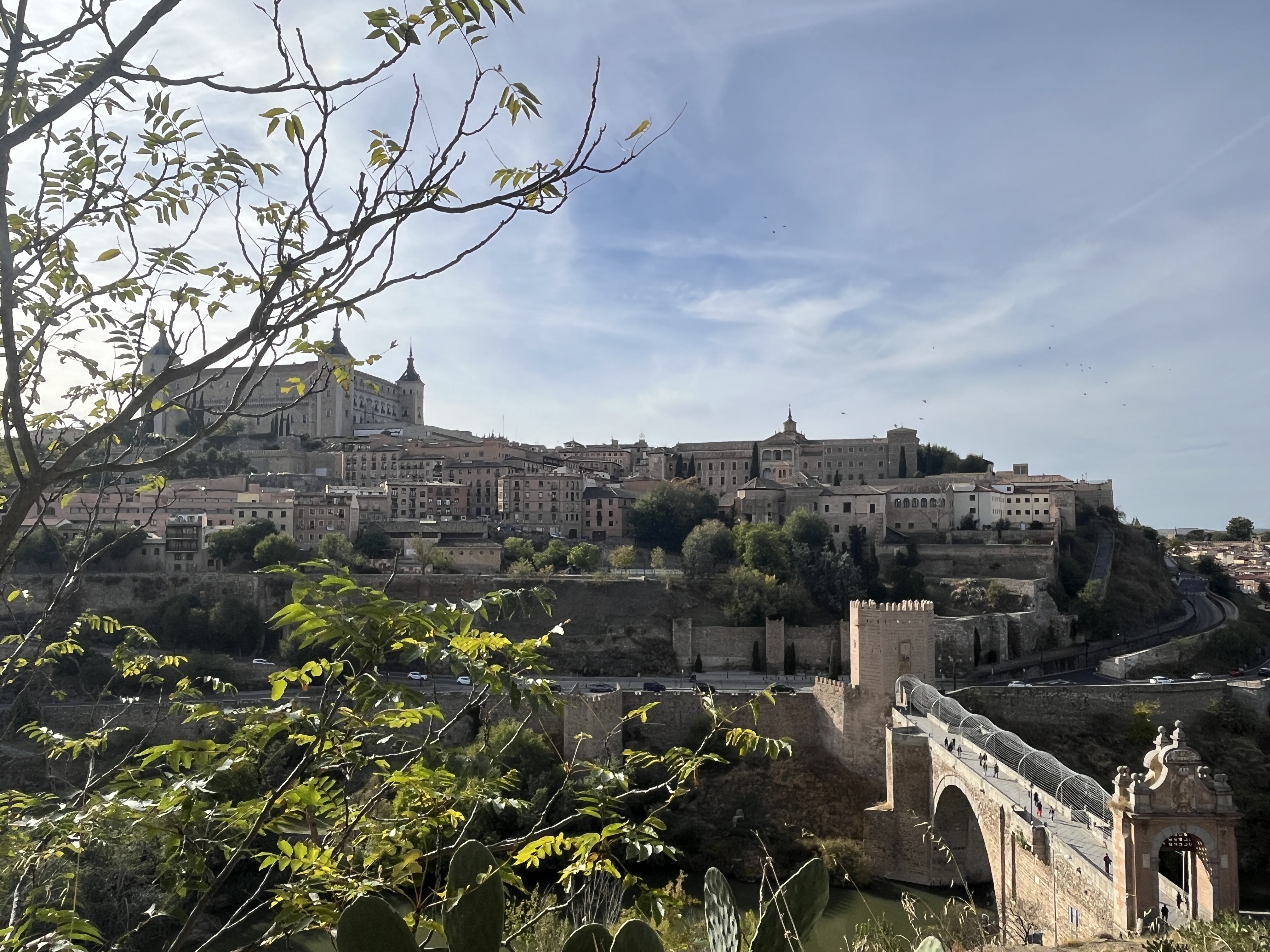
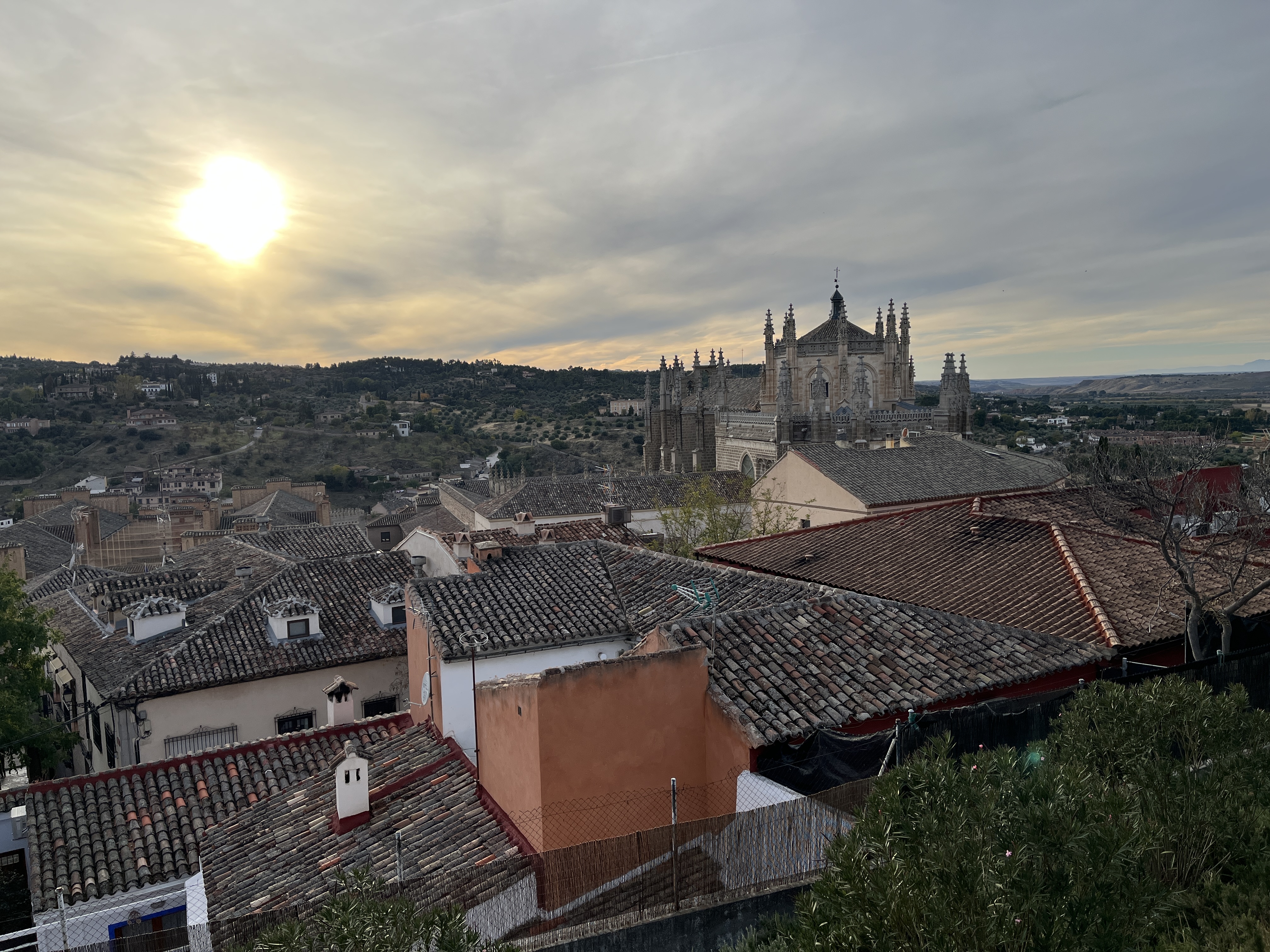
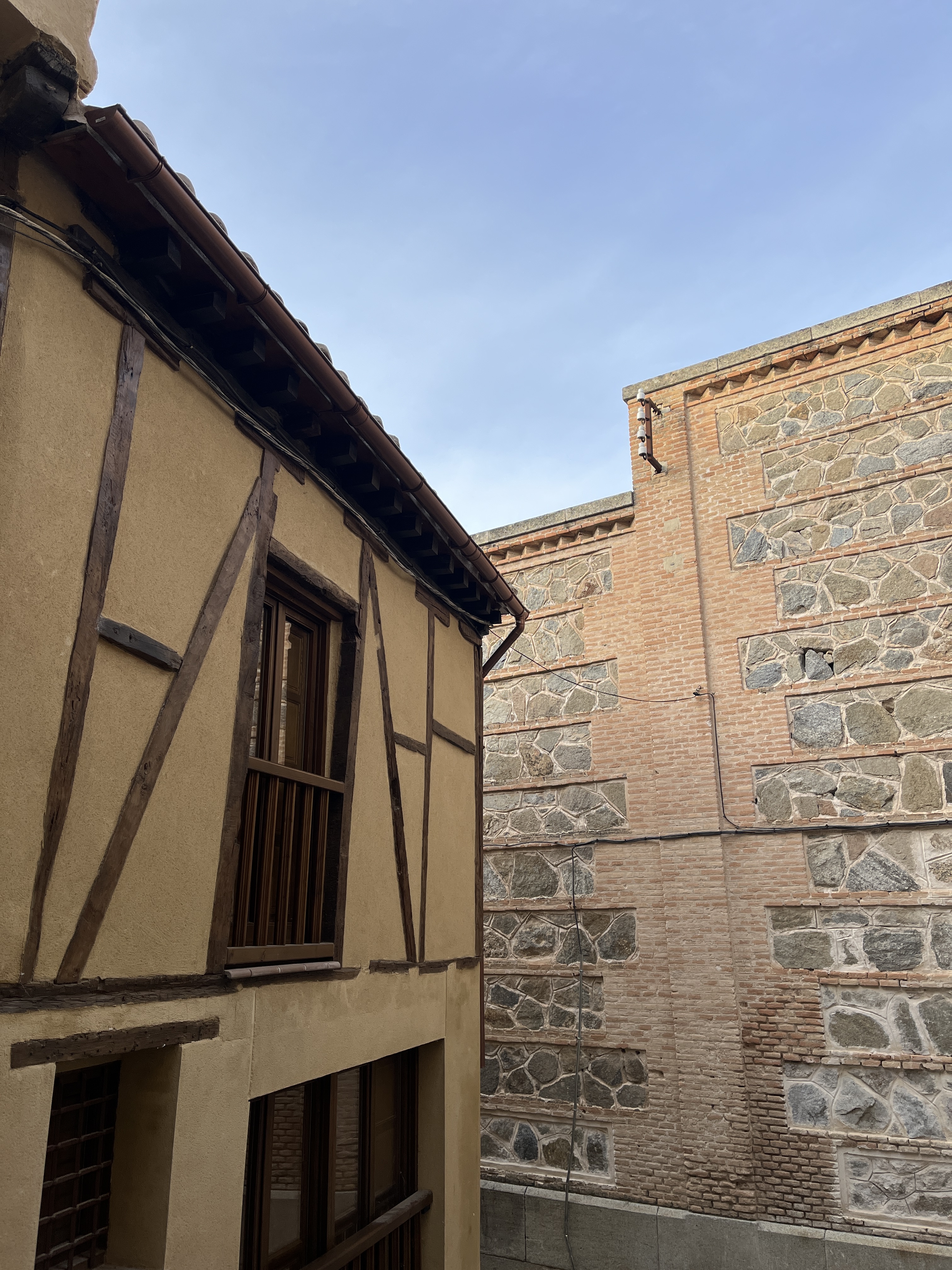
Late the next morning we hop on a Renfe train to Toledo, barely an hour’s journey south-west. A short walk from the train station reveals the ancient city nestled along the Tagus River. This World Heritage Site by UNESCO is immediately dramatic. Perched imposingly on a hilltop for defense purposes, it calls itself the ‘city of three cultures’ – Muslim, Christian and Jewish. All of their architectures still a mosaic of hues, cobblestones and ancient wooden doors. The Archways of the Alcazar welcome you in.
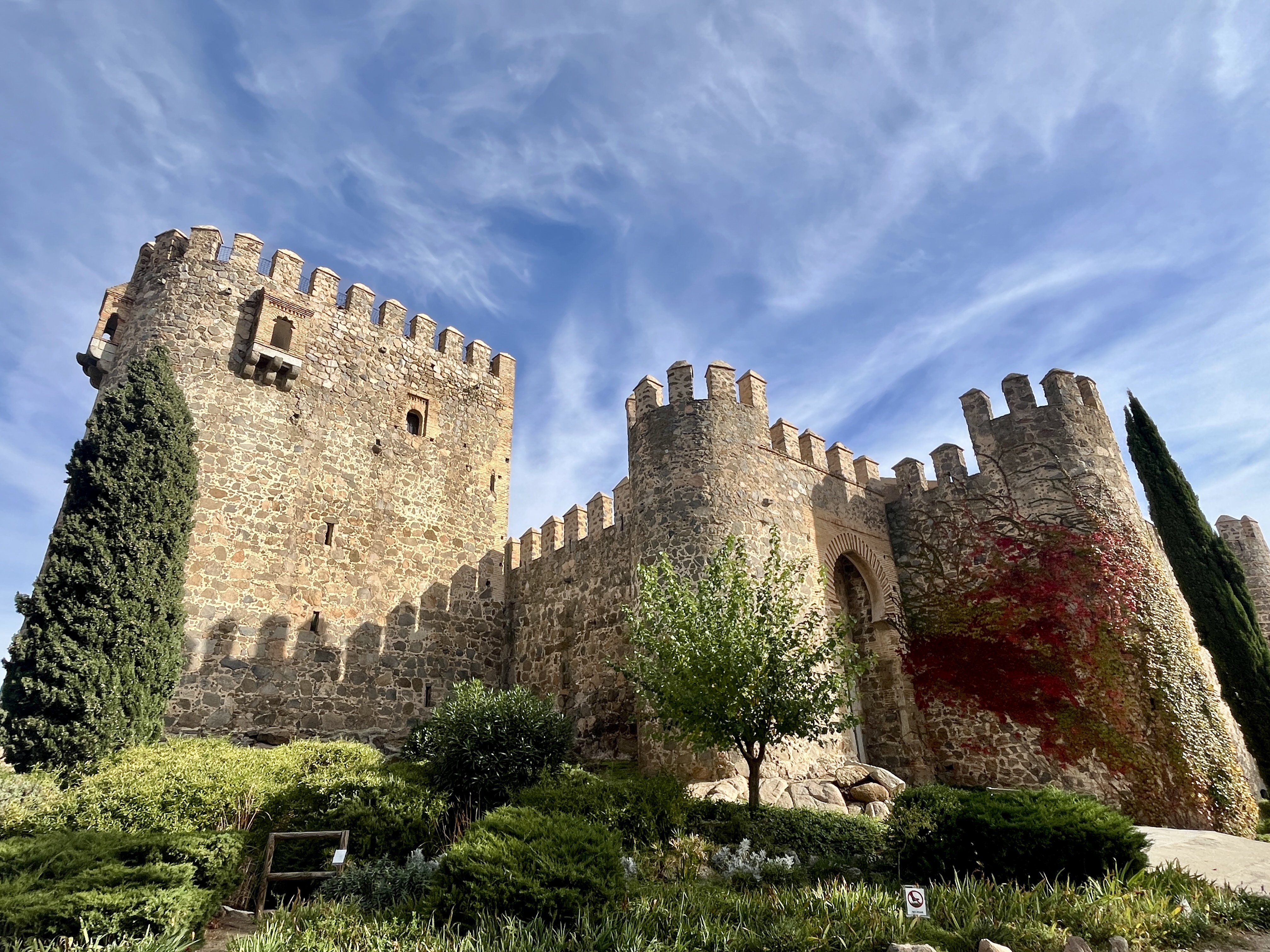
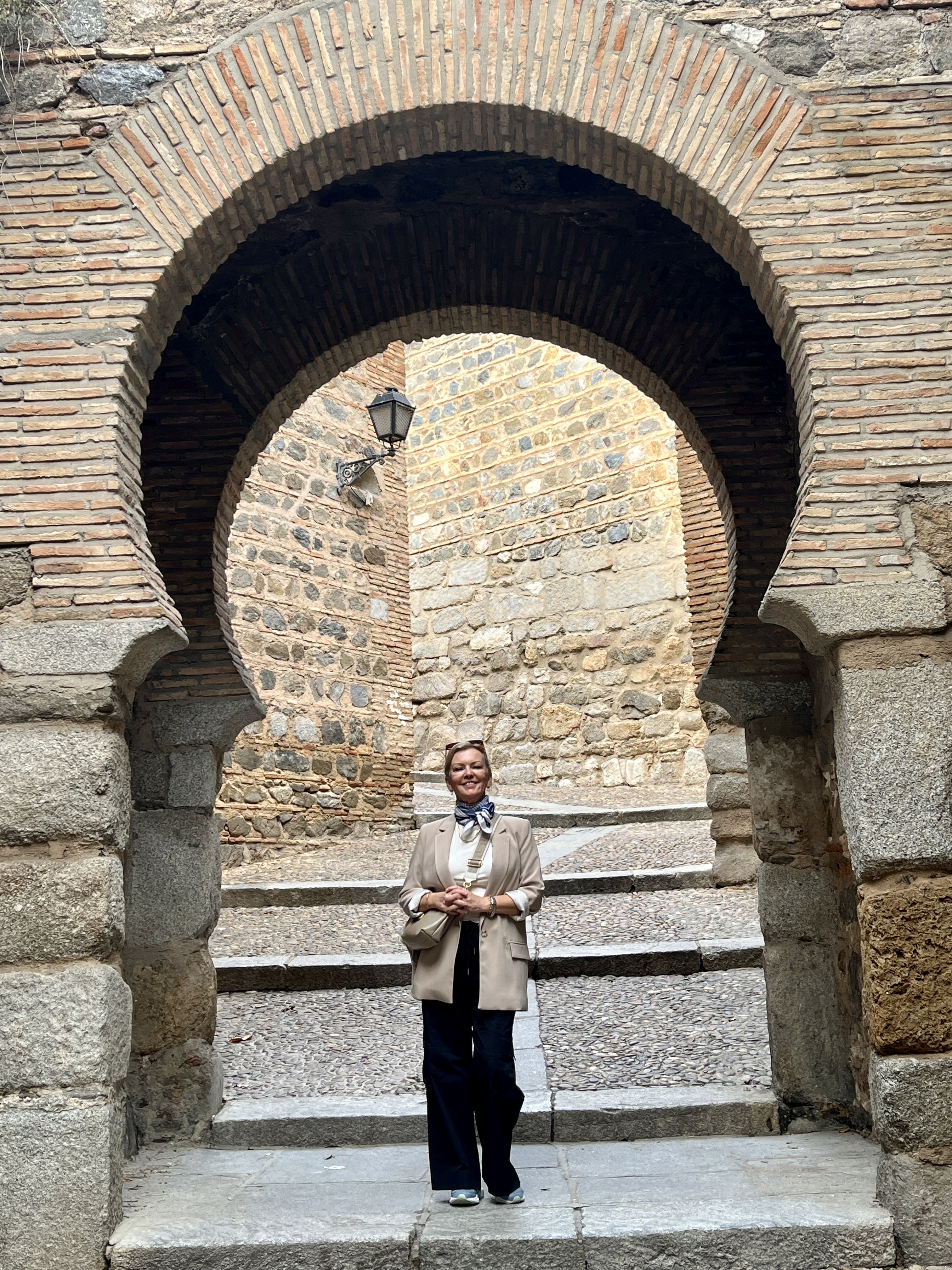
The Romans called this Toletum, incorporating it into their empire after a battle with Celtic tribes in 193 BC. This town of non-citizens is where one could obtain Roman citizenship in exchange for public service, and build they did! The Roman circus – an open-air venue for chariot races – along with an amphitheatre was one of the largest in Hispania, once the name for the Iberian Peninsula and now part of Spain. The circuses teemed with public entertainment to keep the population content and to prevent unrest. Many of the new citizens would have also helped build splendid villas for wealthy elites in the 3rd and 4th centuries as the city became a literary and ecclesiastic centre well into the the mid 700’s.

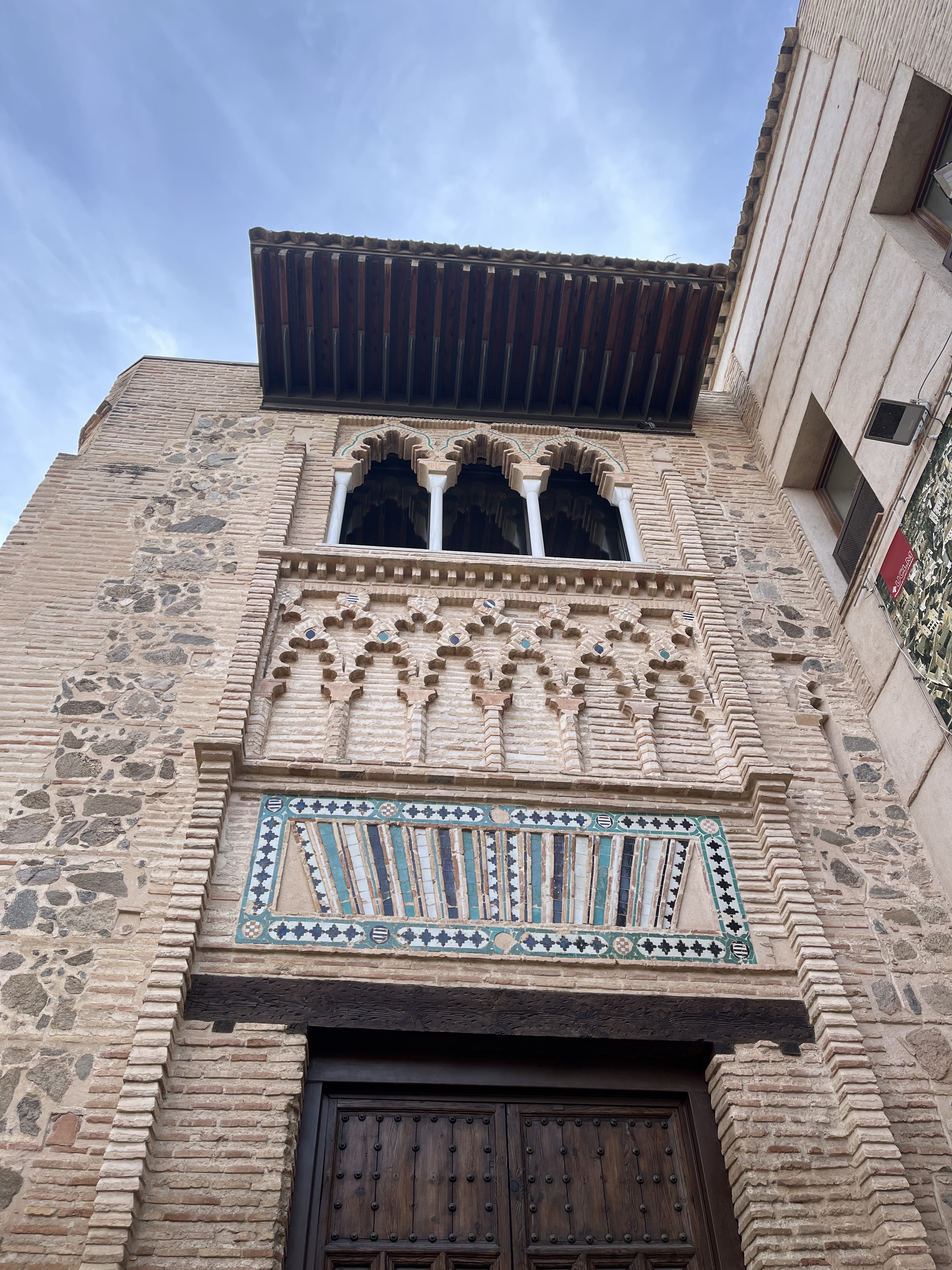
Toledo also became a major cultural centre promoting productive cultural exchanges between the Islamic world and Latin Christendom. Its long history of bladed weapons production and glass manufacturing is still evident as you wander the quiet streets into the old quarter. Winding cobblestoned lanes harken to a celebration of cultures and religions, each giving the city a rich architectural and artistic heritage. Today the city celebrates the harmonious living between Muslims, Jews and Christians alike.

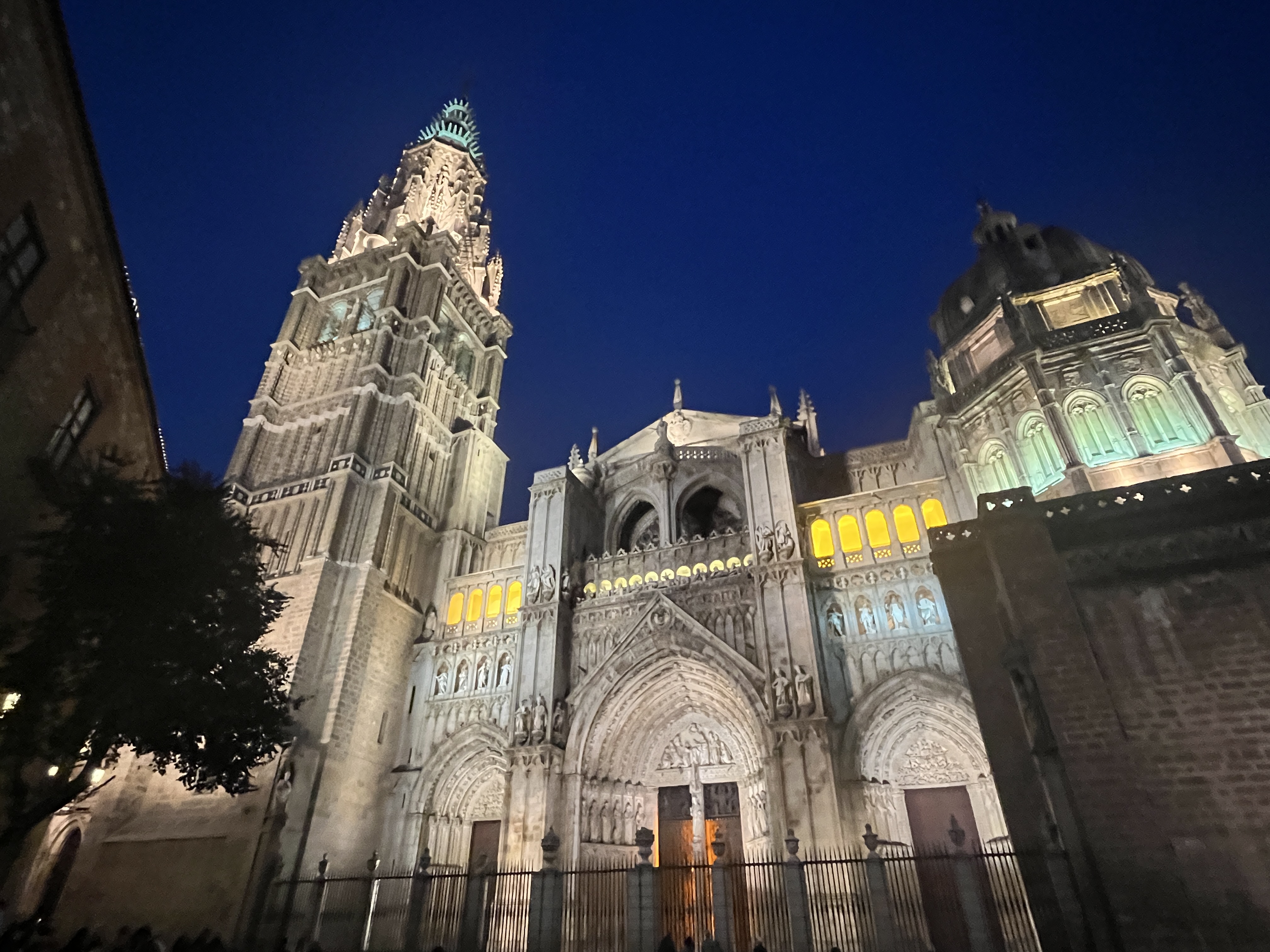
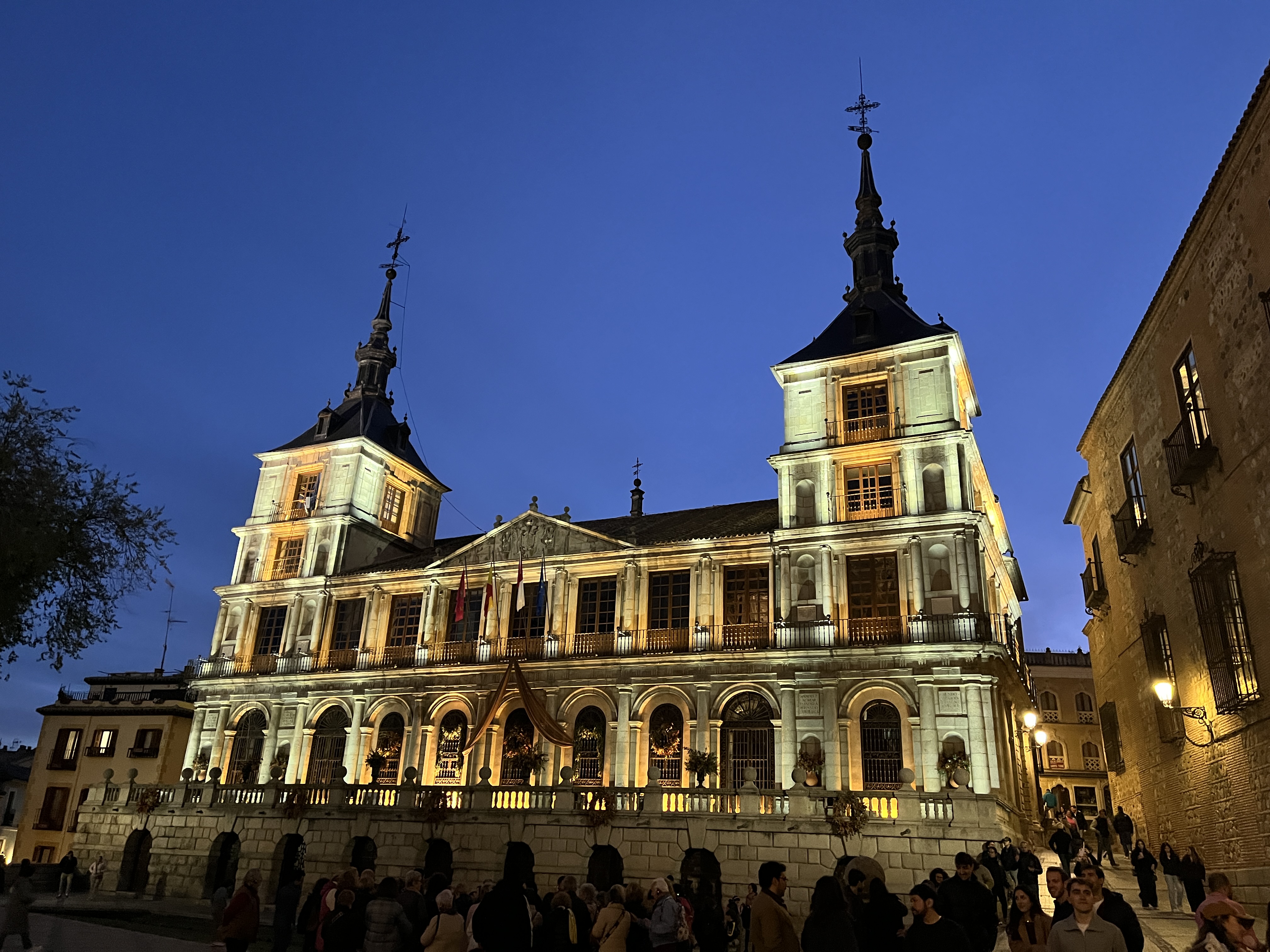
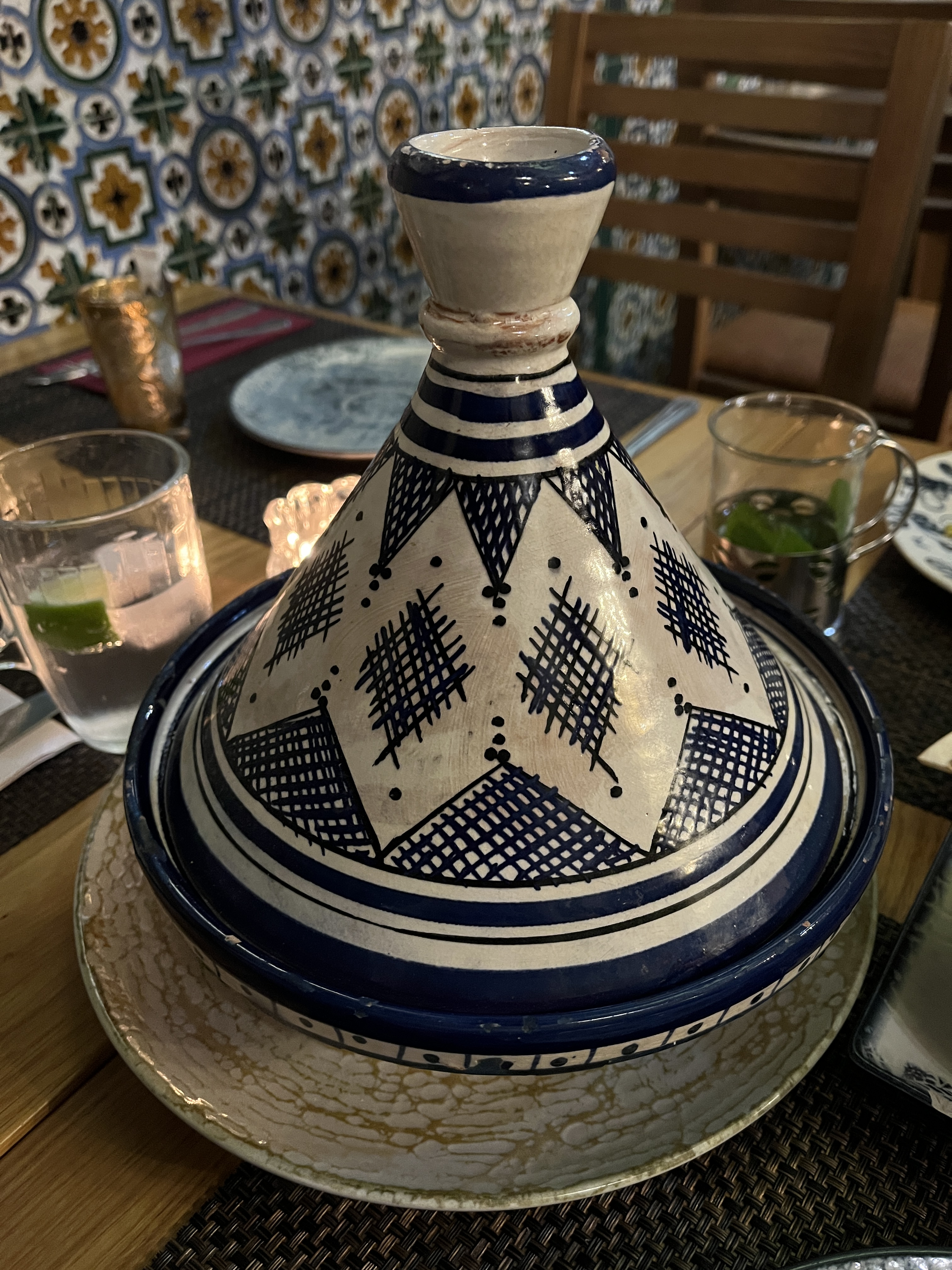
We happily dine in an Arabic restaurant, we savour the evening dusk and then the illumination of Toledo’s architectural wonders. It’s now eight in the evening, the streets and plazas begin to fill for evening strolls. For us, it’s time to catch the train back to Madrid. Time to savour the joys of jumping on a train. Time to plot tomorrow’s adventure!
Sensational Seville… Solo travel Spanish style

Standard

As I check into the gorgeous Tayko Hotel, one of the friendly staff orientates me with the city. Miquel explains that there’s a fun saying in Seville. “There’s more tapas bars than people,” he quips as he jots down a few of his favourites on the city map. He explains that here in Andalusia, they love humour and exaggeration. Over the next four days, not only will I find my own favourite tapas bar, I’ll notice that the locals absolutely have a certain joy and exuberance for life, a love of music and dance… and then there’s the flamenco!

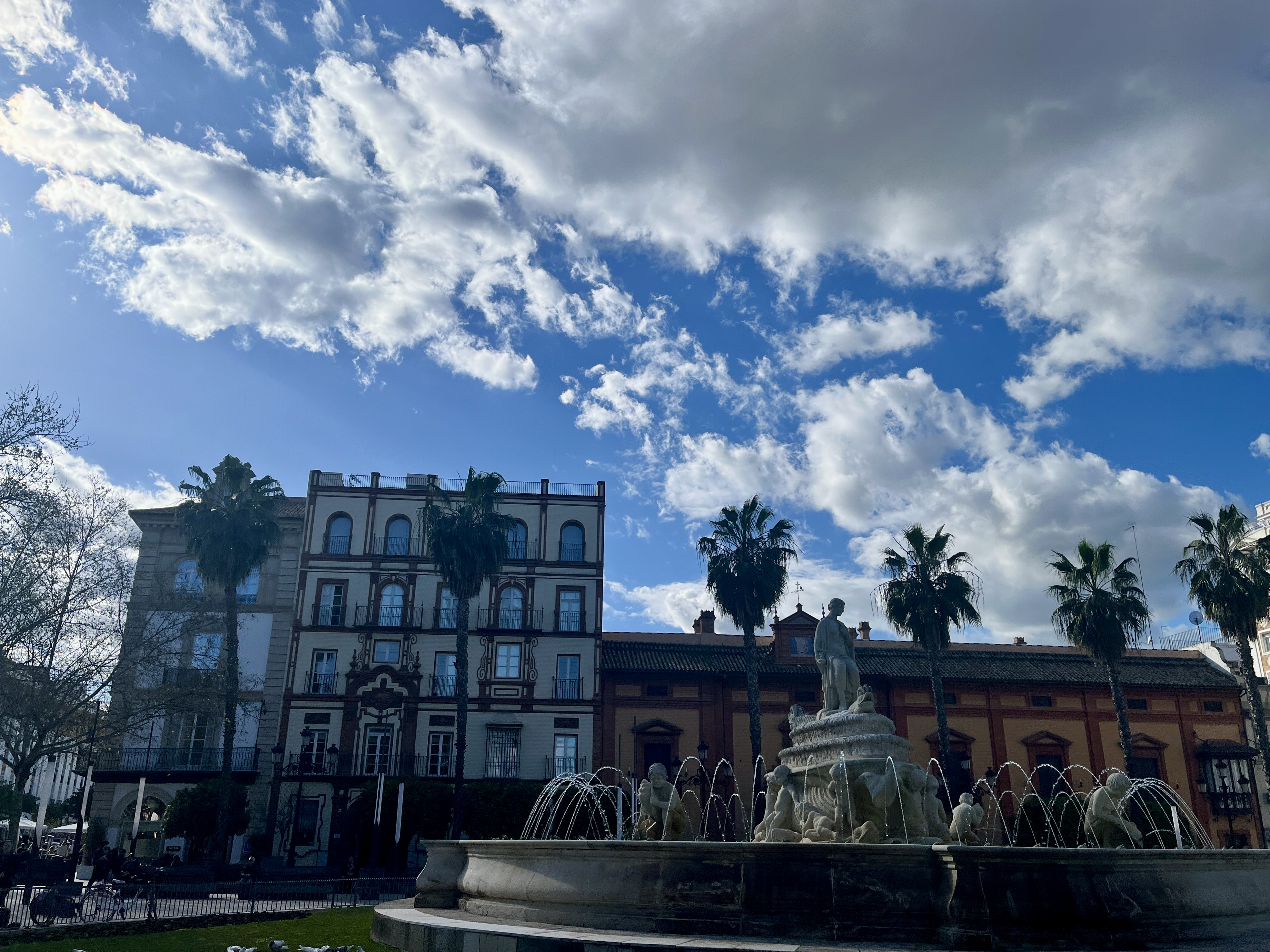
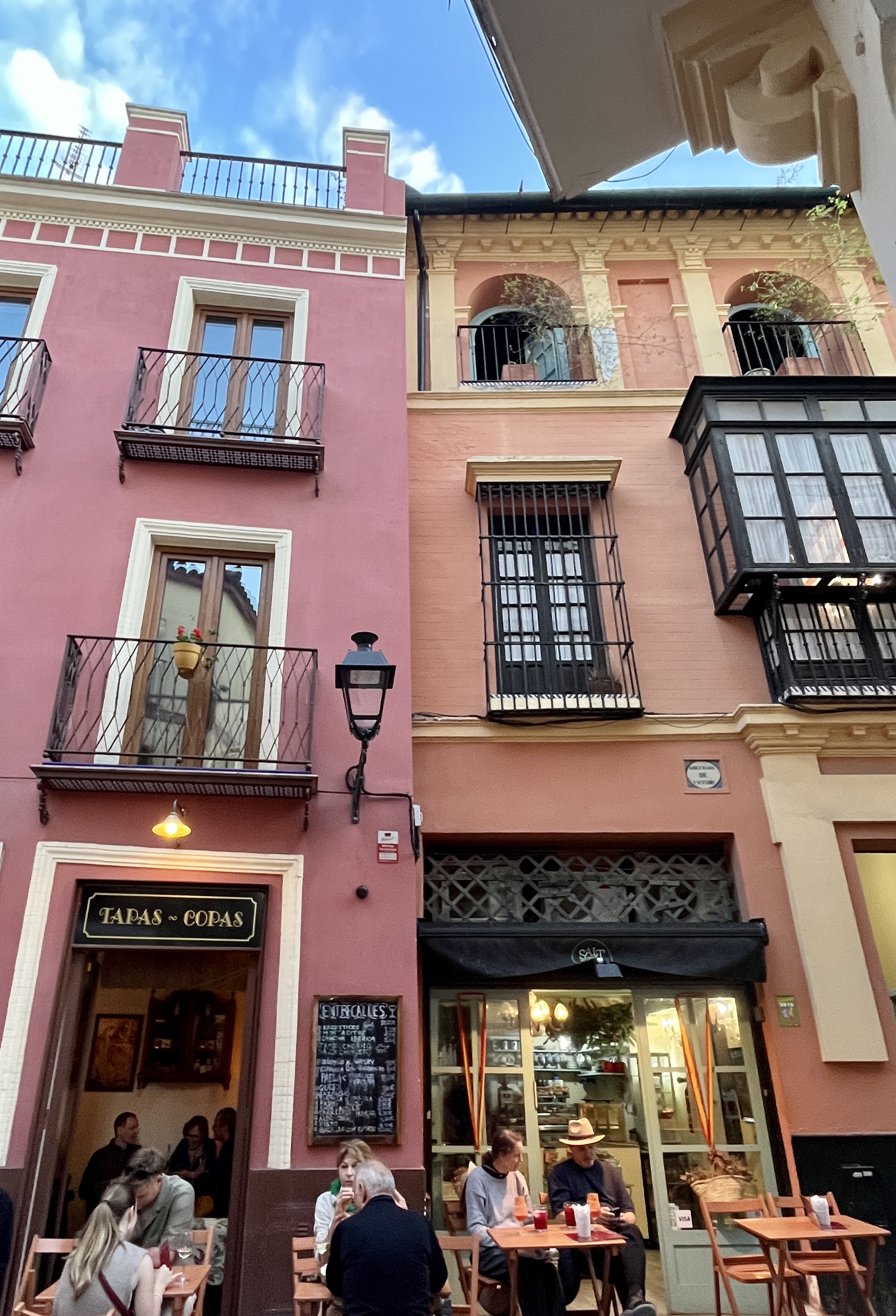
Seville (seh-VEE-yah) is flamboyant, beautiful, stately yet inviting. ‘A vibrant sangria of civilization,’ to borrow Rick Steve’s apt description. Also, I find it to be a veritable city garden, where luscious oranges and lemons really do dangle from tree-lined bouvelards. The City of Oranges, as it’s known, is also blessed with the tallest of palm trees, vivid bird-of-paradise, parakeets and white doves in abundance, gorgeous white bougainvillea against crinkly cacti, and the jasmine blooms are just beginning to perfume the late March air. Colourful mosaics adorn walls, musicians take their turns on street corners, and the layering of the past… Roman, Moorish and Spanish is an intoxicating palimpset of history.

I‘m delighted to have some warm weather as this trip started in rainy Barcelona. I use ‘I’m’ as this is mostly a trip of solo travel. Other than a lovely two day visit with a friend in Valencia and a writing retreat still to come with friends after Seville, I’m on my own. At breakfast this morning, another solo traveller from the Netherlands and I were discussing the advantages of meandering single. We celebrated the challenge and thrill of navigating and scheduling – thankfully the Spanish train system is efficient – and the satisfaction of arriving where you’d hope to be. Call me old school, yet I prefer a physical map to google – maps of Barcelona, Valencia and Seville are already tatty, marked and ‘souvenirs’.

Solo travel allows for serendipitous encounters, both with other travellers and locals. The Spanish are welcoming with a fascinating, proud culture. As a travel writer, being on my own allows me to observe and explore thoroughly, to fully embrace the history and nuances of a place. I admit by sunset, sitting alone at an outdoor cafe in a plaza thrumming with life can feel a little lonely and yet that’s how I’ve already met so many interesting people on this trip. Taking a local tour is also essential when you’re travelling alone. In Barcelona, I did a paella making course, fantastic and delicious! Here I tour twice in one day, the old town, then the Jewish area which finishes with a group tapas date… insightful, lively and lovely company for an evening.

Speaking of exploring, we know that explorers Amerigo Vespucci and Ferdinand Magellan sailed from this river harbour, discovering new trade routes and abundant sources of cocoa, tobacco, gold and silver. When Spain boomed as a gateway to the New World in the 1500’s, Sevilla also transformed. Yet another great explorer had sailed from nearby even earlier. In 1492, the Italian Christopher Columbus had persuaded the Spanish Monarchs to finance his bold scheme to trade with the East by sailing West.

Yet that’s really more ‘recent’ history. Seville was founded as the Roman city of Hispalis, one of the most important cities in the empire. Nearby Italica was founded in perhaps 200 BC, Trajan and Hadrian called it their hometown. Move forward to 711 AD, and it became Ishbiliyah during the Islamic conquest, then part of the Arab kingdom Taifa of Seville, eventually incorporated to the Crown of Castile in 1248.

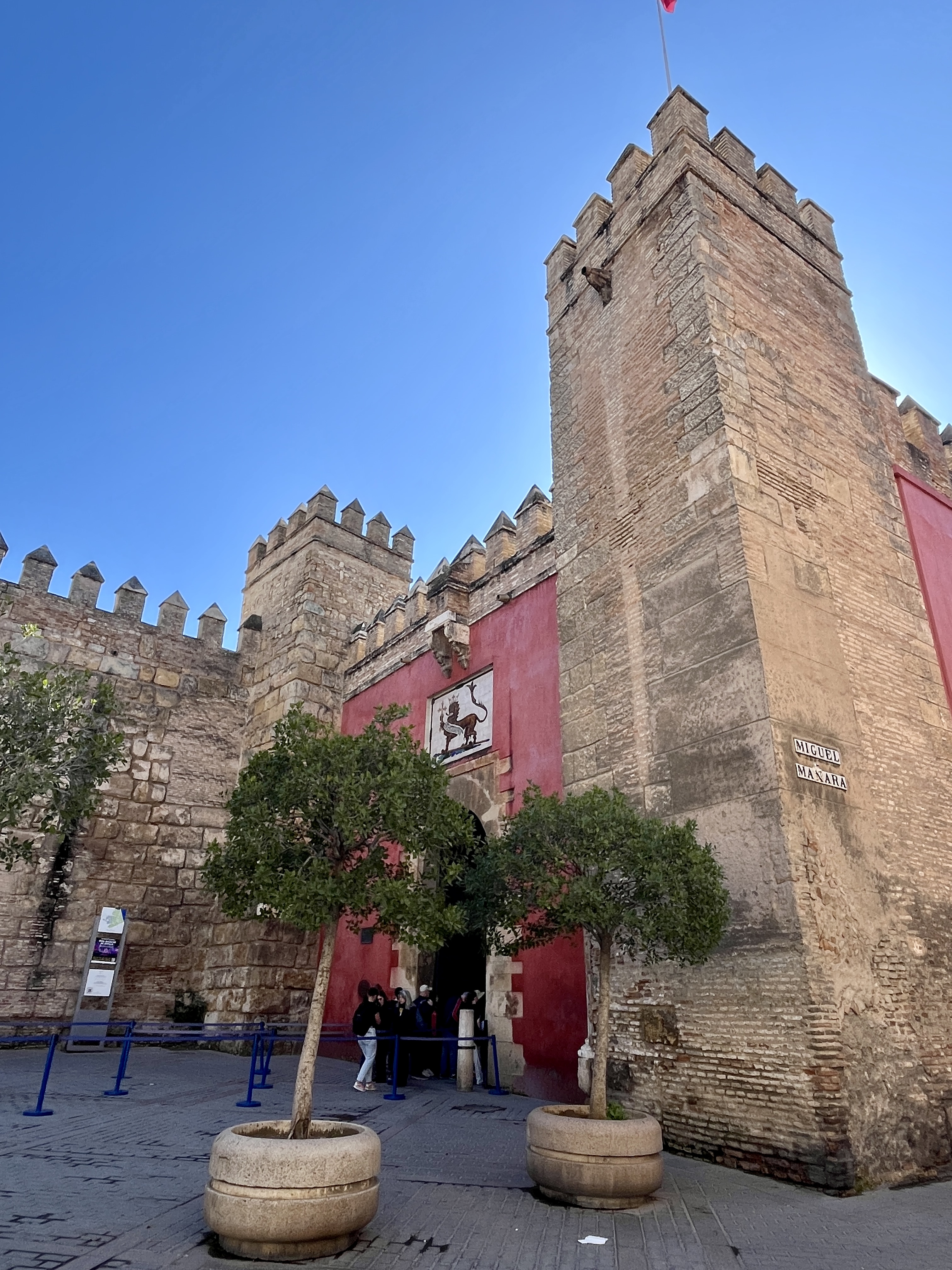
Today this rich history is now a UNESCO World Heritage Site known as the old town… the Alcazar palace, the largest Gothic cathedral in the world – once a mosque – and the General Archive of the Indies as its anchors.

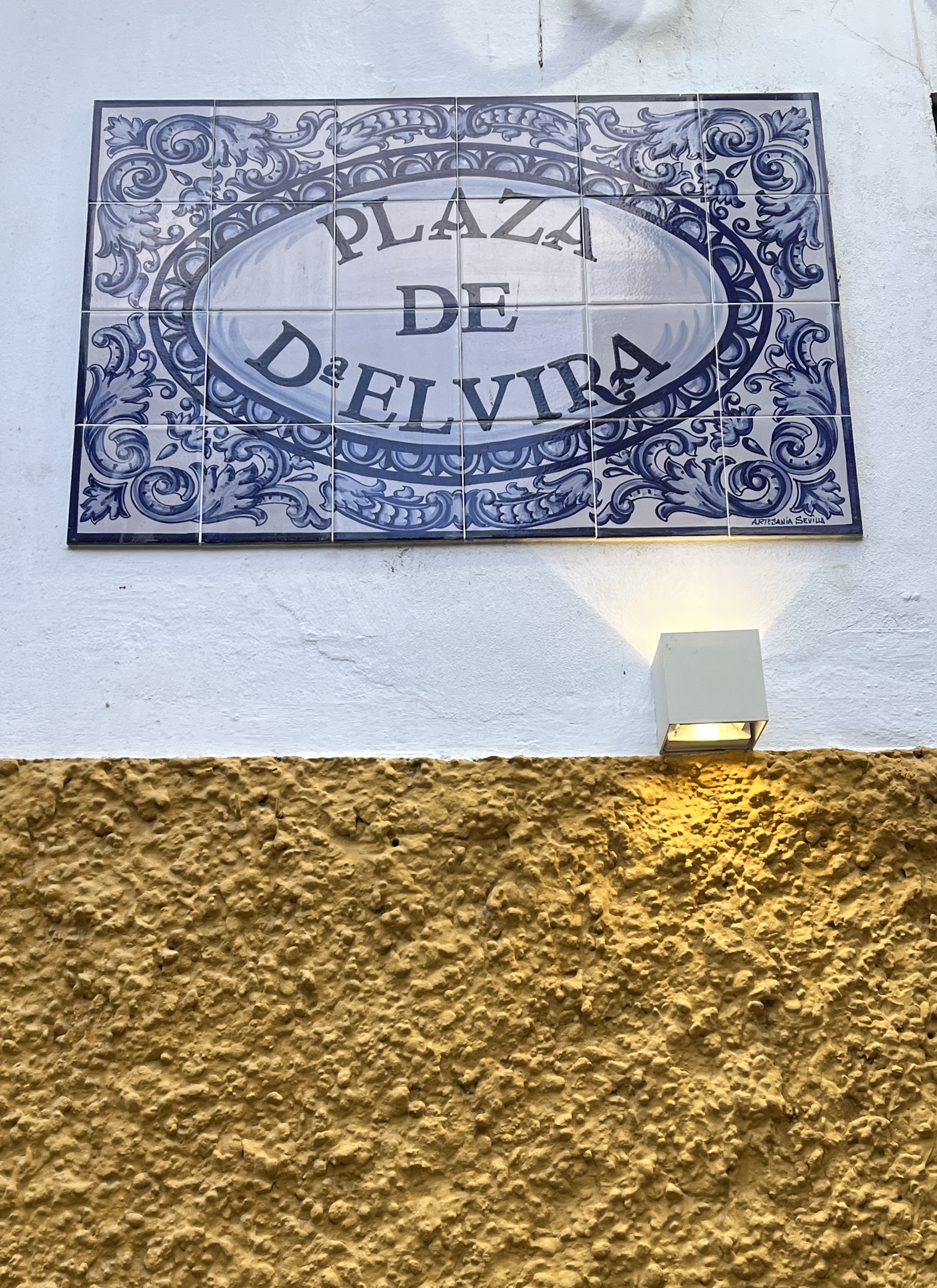
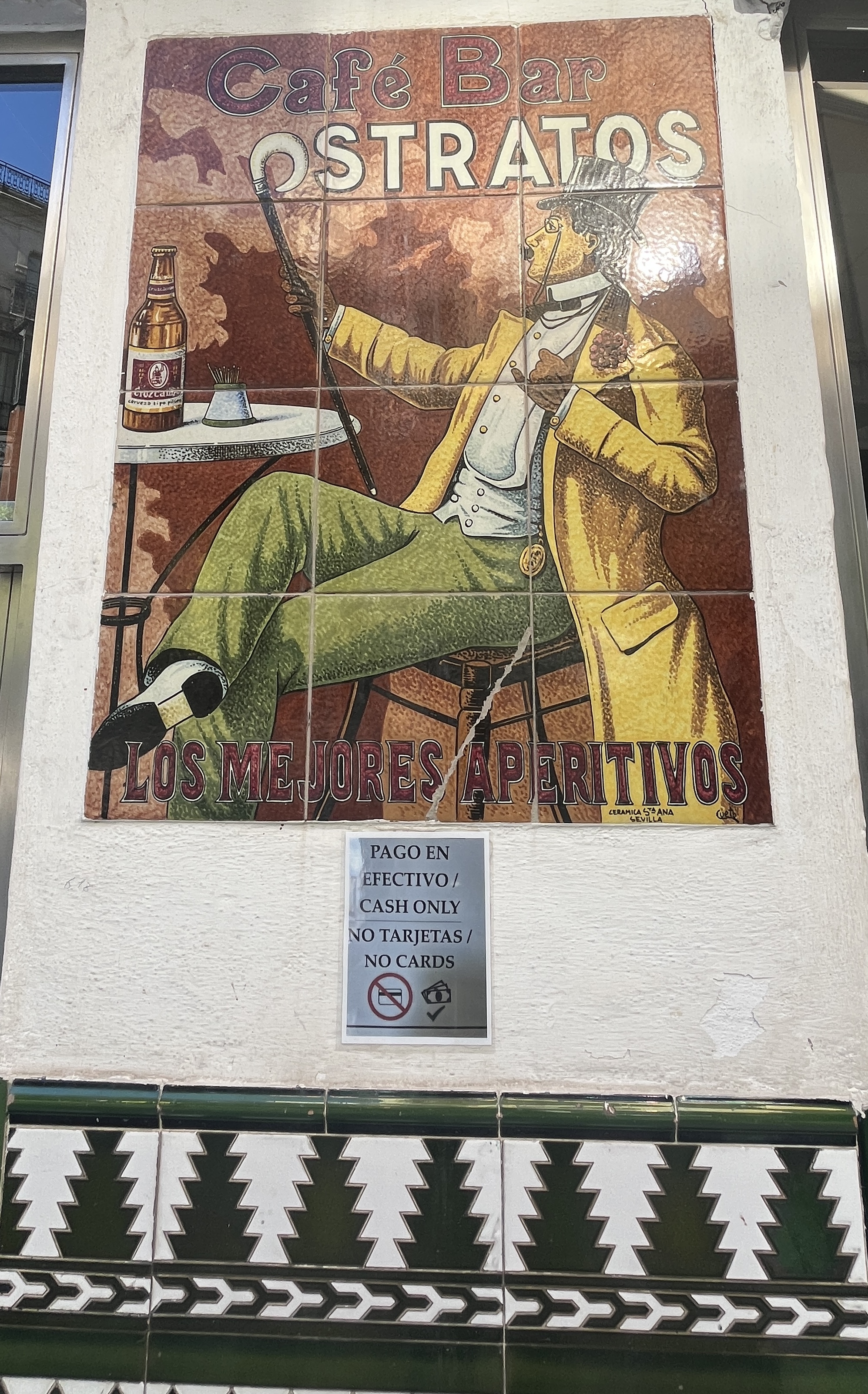
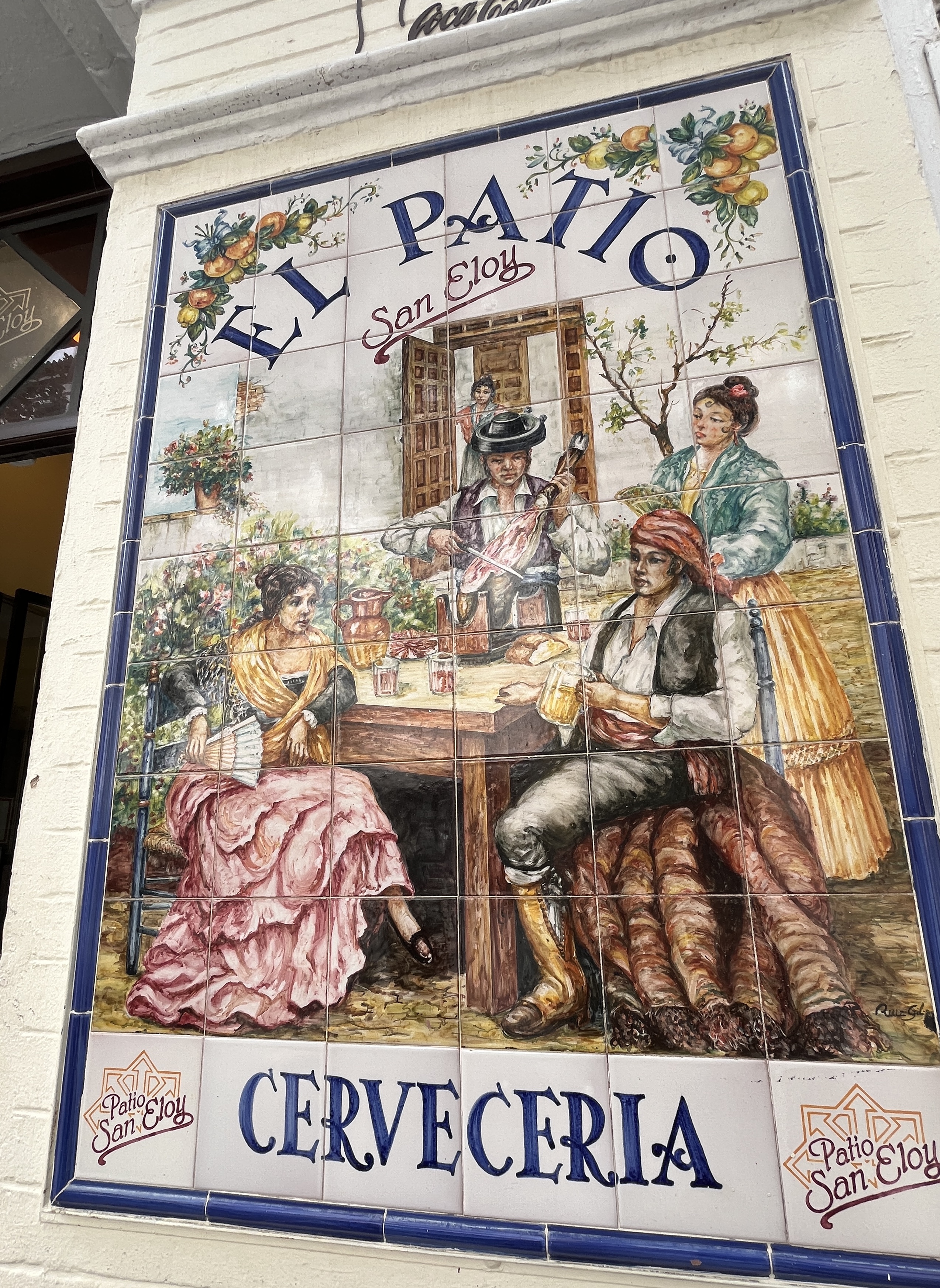
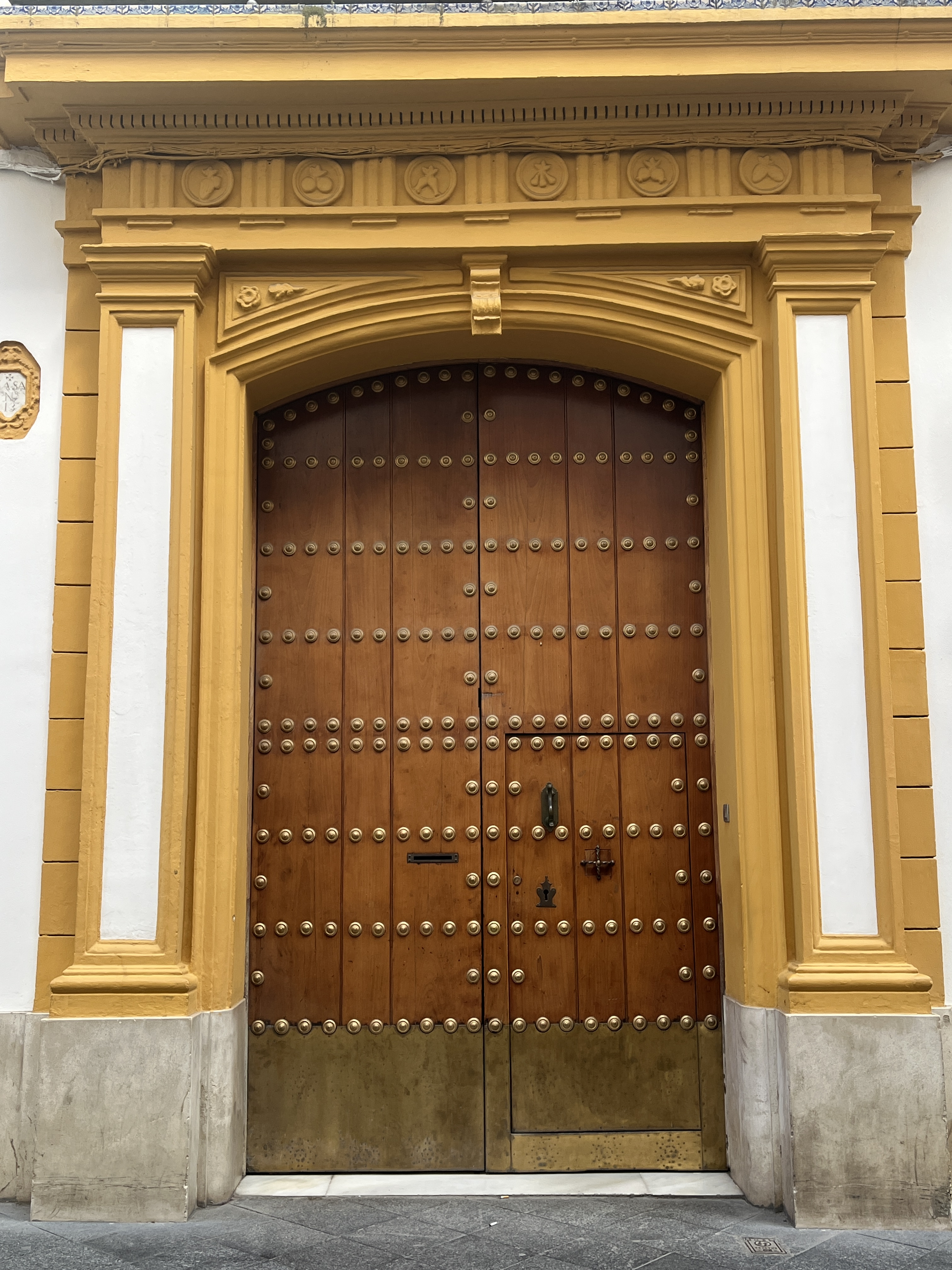
I tour the old town which finishes at the grand Plaza de Espana, a Renaissance/neo-Moorish monstrosity, built as a centerpiece for the Ibero-American Exhibition in 1929. Along with the multitude of pavilions and a canal for rowing, 48 alcoves and benches pay tribute to Spain’s provinces. Ensconced in Maria Luisa park, this masterpiece is also a showcase of azulejos, small tiles. Azulejos have been produced in Spain since the 14th century. Later, the bourgeoisie began embellishing their residences to identify their houses and portray their importance and wealth. Today they might also announce a town plaza or place of business; the Cerveceria, the Carnisseria, the Cocina, the Panaderia, the Taberna.

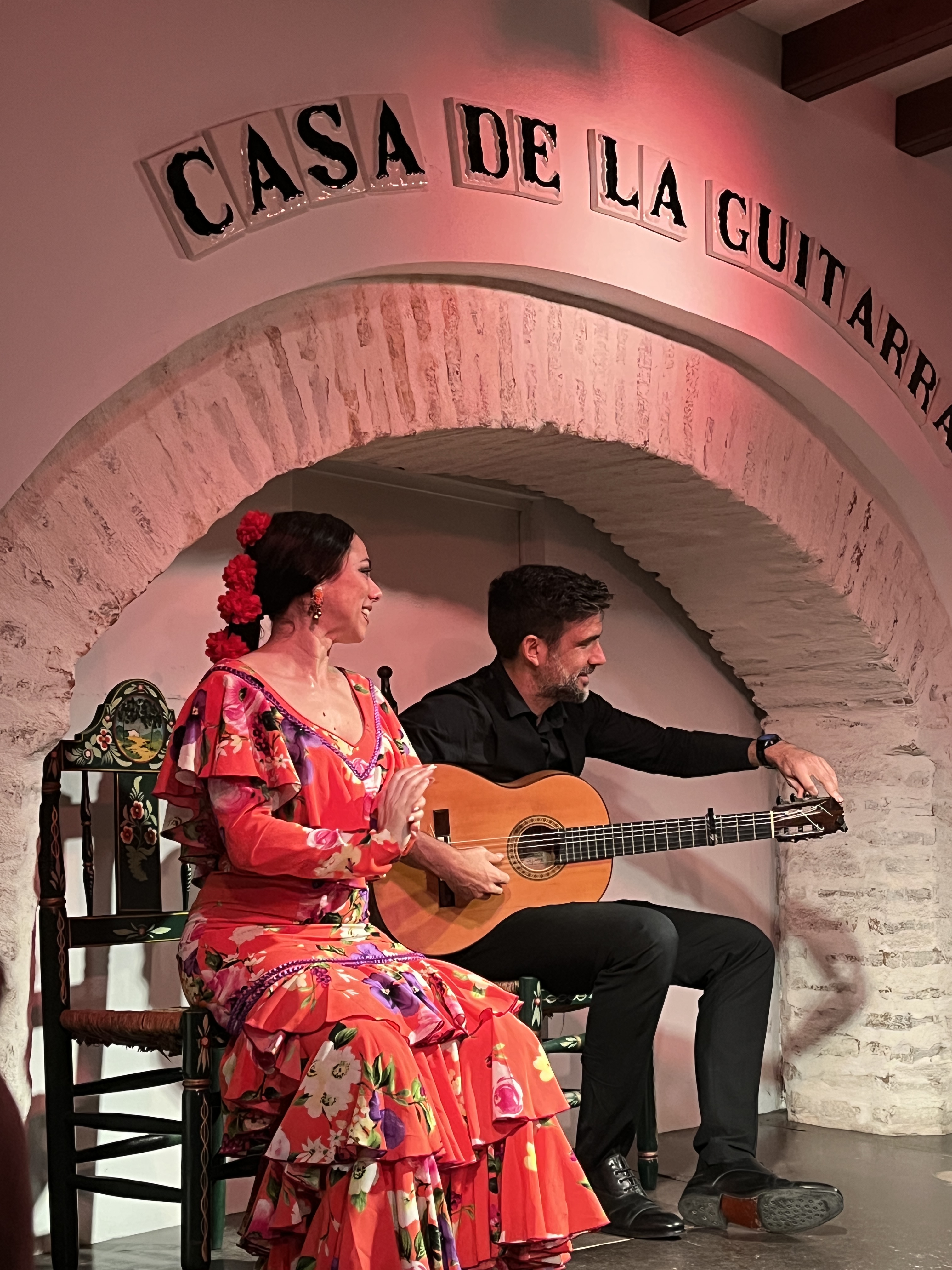
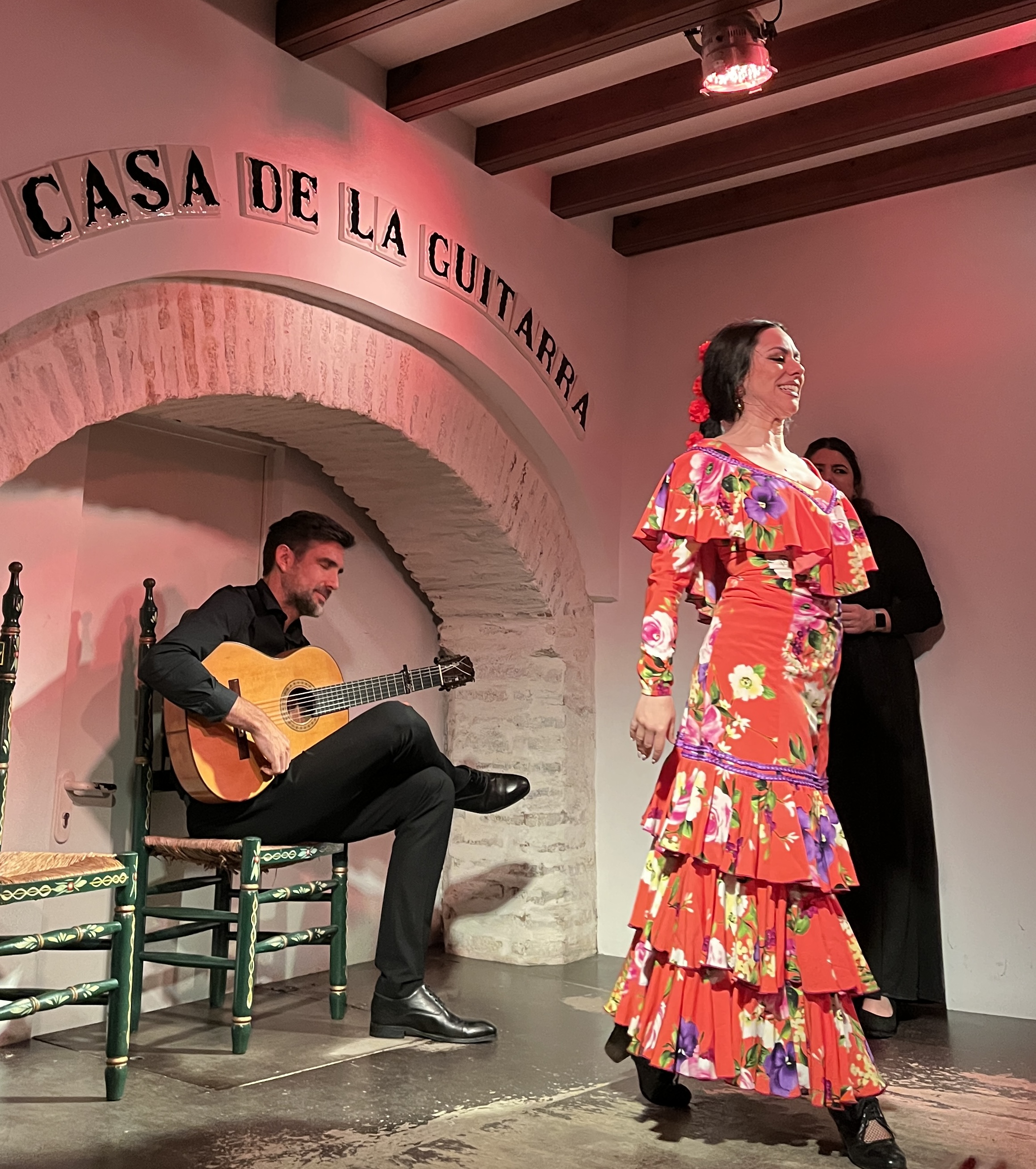
Cultural heritages are still relevant and part of everyday life in Seville and I immerse myself in two of them. One evening I attend my first-ever Flamenco performance at the intimate Casa De La Guitarra. This art form is based on folkloric music from this area, traditionally with performers of both Spanish and gitano heritage. Flamenco music dates back to 1774 and is a UNESCO declared Masterpiece of the Oral and Intangible Heritage of Humanity. The hour long performance is one of the most poignant you could experience.

The small audience waits in anticipation and soon our senses are filled with the evocative, the soulful, the sensual from the guitarist, the singer (cantaora) and the dancer. With fingers flying over his Spanish guitar, the guitarist leads the performance. The cantaora sings and claps the palmas, essential in flamenco music to punctuate and accentuate the song and dance, then carries the mournful, then exuberant tune with the occasional ole to cheer on and praise the dance performance. And of the dancer’s performance, I can hardly do it justice by describing her deep range of emotion, the raw magnetic energy, the machine gun-fire foot work, the grace, the soulful interpretation of the music. The audience is in awe of the three performers and their creation. Indeed, I now understand the poignancy in something I had read, ‘Seville is a place where little girls still dream of becoming a flamenco dancer.’

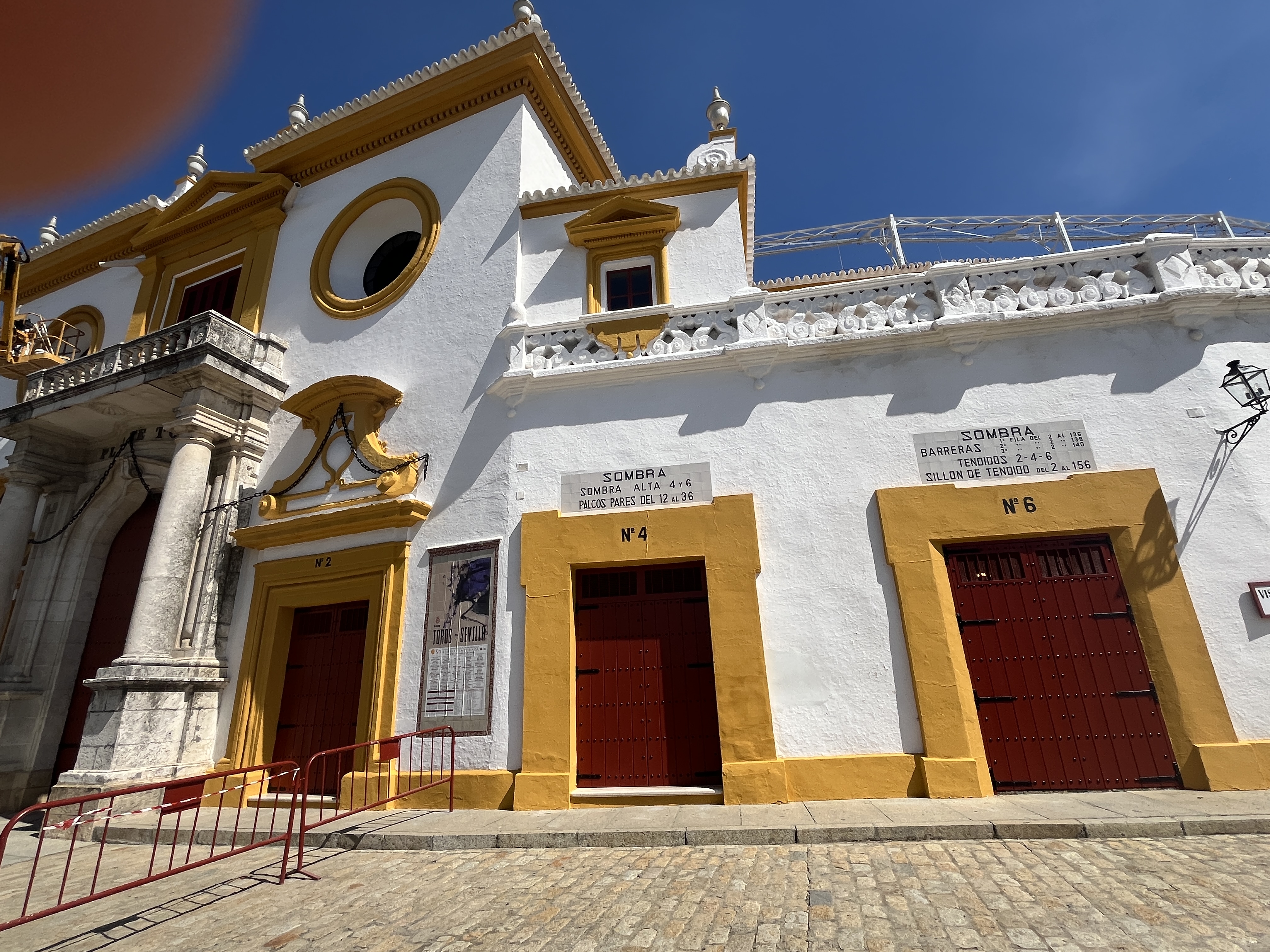
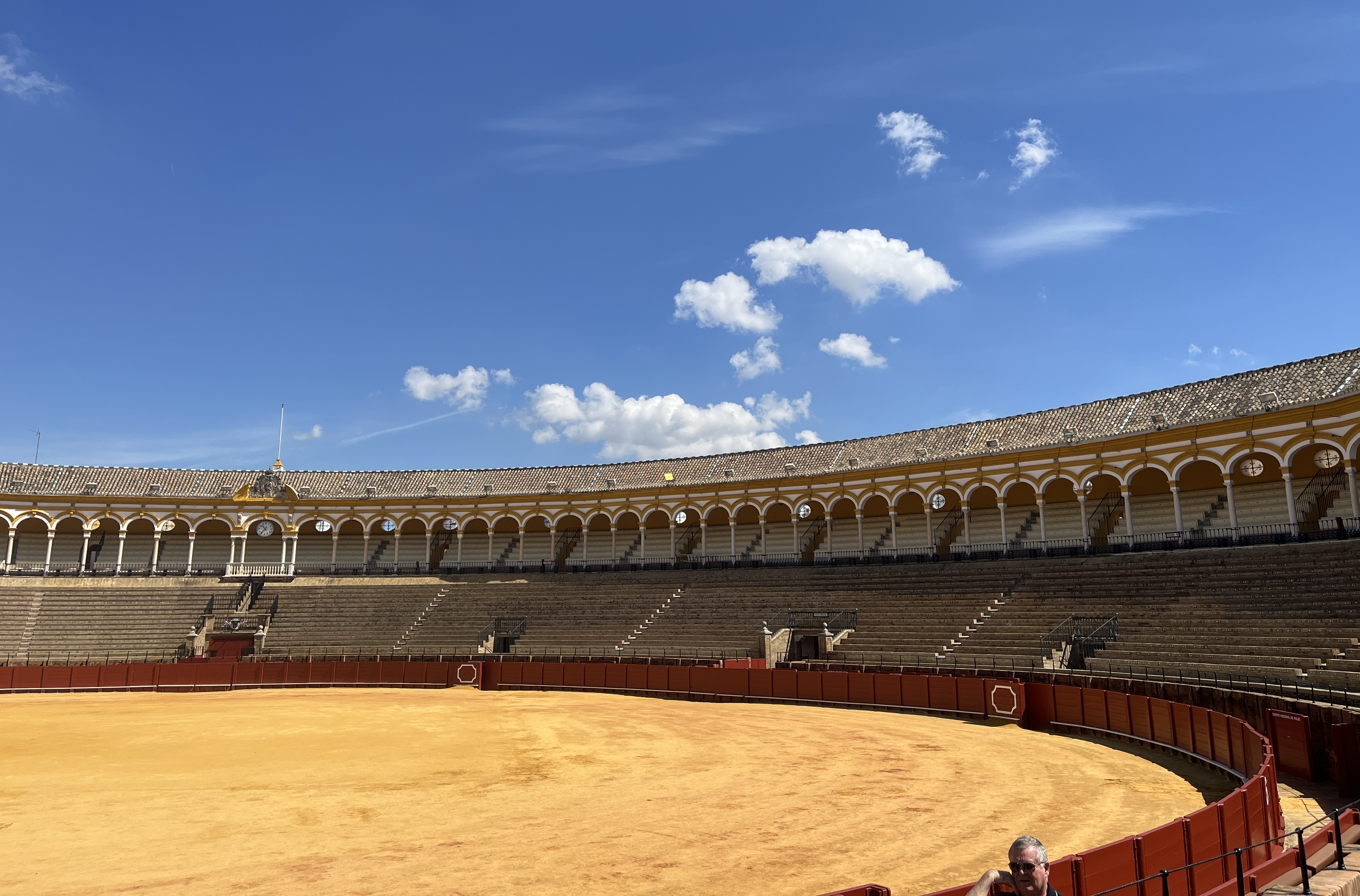
And of that other deep-rooted cultural tradition, of bullfighting? It’s not yet quite the season here in Seville and I wouldn’t have attended, yet as Miquel had told me back at the hotel, “Half of the population still revere it as a cultural practice, the other not.” And indeed, while some consider it a blood sport, many in Spain define bullfighting as an art form. Seville’s La Maestranze is the oldest bullring in Spain.

Situated within the heart of the city, I pay a small fee to visit apparently one of the world’s most challenging bullrings. For bullfighting aficionados, the history, memorabilia and grandeur of this bullring speaks volumes and is considered an essential visit when in Seville. Construction of the circular ring began in 1749 and has seen many evolutions, today’s seating capacity is 12,000. I wander through the museum, marvelling at the matador’s costumes, the awards and the posters that are works of art unto themselves. When I venture out into the stands, the vast ring before me, I get a small sense of what La Maestranze must be like during the season… this same sensation as standing in the Roman Colosseum and imagining the roar of the crowds, the excitement, and the misery.

By chance, my go-to bar pays homage to bullfighting with iconic, aged posters and the many regal heads of bulls on display throughout the cozy, historic bar. My new friend, Maria, explains the plaques under each majestic head; the bull’s name, to which matador it lost its life, where and when. They are noble even in death and there’s some relief in knowing they are preserved for posterity.

Located on the gastronomic haven of Mateos Gago Street, just along from the Cathedral, Cerveceria Catedral Bar becomes my once-daily pause for tapas, a glass of white redjo, and just to watch the world go by after a day of discovery. As a solo traveller, don’t be afraid to return to a place where you feel comfortable and welcomed.

“Hola la senora?” Maria says cheerily, “Same, a Verdejo?

I nod, “Si, por favor,” find a seat and plot which delectable tapas I’ll have this fine, late afternoon…