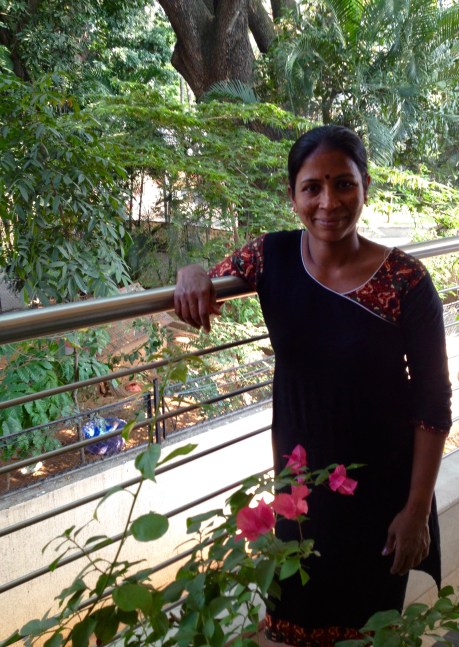
 Priya’s story has inspired me to write. To write of her courage of overcoming a difficult past and of capturing the lives of all the hard-working people in our neighbourhood. Allow me first to paint a picture…
It has been busy these past few months; trips to Brunei, Singapore, Bangkok and a road trip in India. Our comings and goings every other week bewilder the staff of our five-family apartment building; a gardener, two security guards, a manager and Priya, our housekeeper. They are very much a part of our everyday life.
“Madam, where going now?” Boran our gardener typically asks when he sees me with luggage in the porticoed entrance. When I tell him my destination, he looks at me quizzically, “Airplane?”
“Yes by airplane Boran, back in seven days. Sir is back in four.” ‘Sir’ is my husband, in deference our names are never used. Not only is the country which I’m traveling to a complete unknown, so is the fact that often my husband and I leave together, yet return at different times. Or I travel alone, leaving Sir to ‘fend for himself’.
“But who will cook his food?” it seems half of the street initially pondered. This question was reconciled as they saw Sir on the street buying his produce from Raj, our vegetable wallah. When my husband revealed that he could cook his own food, there were looks and mutterings of bemusement. “Sir cook himself?” This is something new…
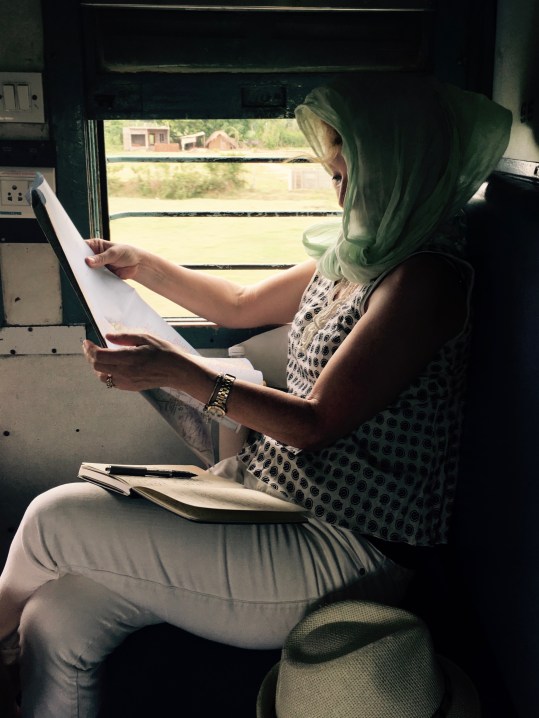
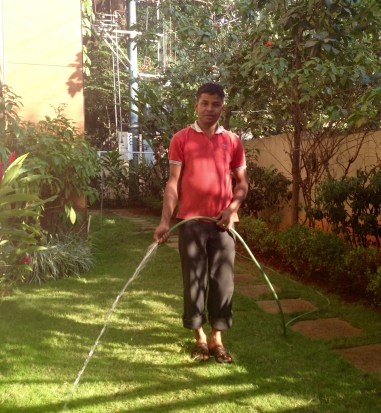 Boran is thirty-two and like many men who work in Bangalore as gardeners or security guards, he is from the north of India. They are a three-day train journey from home, usually taken only once a year. Working from afar, their families remain in the villages, reliant on monthly remittances.
As Boran watered the plants on a recent afternoon, he was eager to share some news. “Madam, I get married.”
“Boran are you getting married, congratulations! Is it arranged?” I already know the answer to this question; it would be unheard of for him to not have an arranged marriage.
“Yes Madam,” he says, scrolling through photos on his phone to present his bride-to-be. She has a kind, cheerful face and I’m relieved to see she is not underaged, often the reality in India. “She twenty-six Madam, very good. Come to wedding Dec. 26?” Boran asks with his boyish smile. When I explain that we’ll be home in Canada at the time, he’s not too concerned and mentions that our day-time security guard Kajul will return soon with some news. “Maybe he married now,” Boran says with a sly grin.
 Kajul has replaced our first guard Rajesh Kumar who, a little tipsy one night, took a topple from his bike. A month in his village to heal broken bones was prescribed, but no sign of him yet – the ‘grapevine’ hasn’t provided any answers.
Where Rajesh Kumar was reliable yet often mystifying to communicate with, Kajul is unfailingly good at his job and speaks enough English should an emergency arise.
He is also ever the gentleman. Meeting me half-way down the street if I’m carrying more than one bag. Telephoning as the cry of a wallah heralds a vendor’s arrival,”Good Morning Madam, today vegetables?” Insisting on standing at my open door should a repair or delivery man be present. “Safety Madam,” he says. I’ve missed Kajul while he’s been on leave for his sister’s marriage.
About the same age as Boran and as the head of his household, it was Kajul’s duty to provide the dowry money for his sister. “Maybe Madam, when I come back I married too. But sister first,” he told me before he left. He wasn’t sure if finances would stretch to allow his matrimony, though his mother had someone in mind. We shall know in a matter of days when he returns.
Kajul has worked in the Middle East, a desired location I learn from some of the security guards who man almost every apartment building, stores of any repute, schools, clubs, etc. The job is monotonous with twelve hour shifts of sitting and waiting…perhaps a visitor, a delivery, a vehicle to open the gate for.
The guards are a club unto themselves and nothing escapes their attention. When Sir recently had to climb down a ladder from our balcony to get to work at 6:30 a.m. (the lock had jammed), he was updated on the state of affairs as he turned onto our road at 5 p.m. The gaggle of guards in front of the jewellery store chuckled knowingly. “Sir, climbing down this morning? Locksmith here, all fixed now!”
On our street of three villas, three businesses, two apartments buildings and a private school, there are never fewer than a dozen guards at any time of the day. We know most of them and are greeted with a wave, a Namaskara, or a chat. “Madam going for lunch?” “Where is Sir now?’ “Sir, have not seen Madam for two days?”
And we learn of their lives. George Fernandez worked for years overseas, “Happy home now Madam, how is it in India?” he asks, peering through smudged glasses. He springs his roly-polly figure up from his chair each time I walk past. He tells me about his children, “some in university now”, the satisfaction radiating from his proud face…years of working away from his family now just a memory.
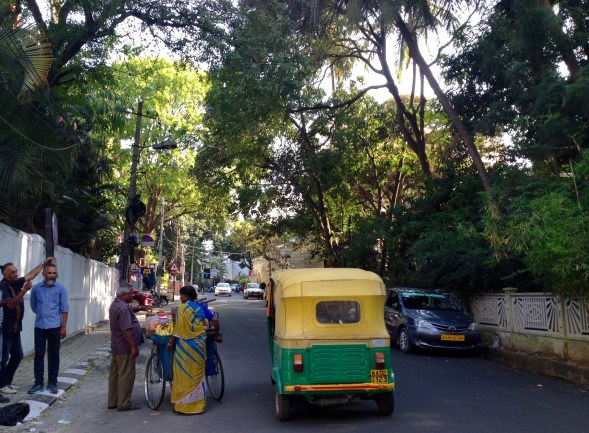
Another ‘on-duty’ sits under the welcome shade of a large banyan tree. Vijay Kumar is a tall man with the countenance of a doctor or a lawyer. He also courteously rises from his chair with a greeting. “Good morning Madam, where going?” he asks on a recent morning. I tell Mr. Kumar I’m on my way to the doctor and a look of alarm crosses his face. Reassuring him it’s nothing serious, I ask about his grandson. “Oh fine, fine,” he replies, pulling out a wallet-sized photo, “And now a name is there Ma’am.”
Mr. Kumar announced last month that he had become a grandfather and also informed us that the baby hadn’t yet been named. Following a Hindu tradition called Namakarama, on the fortieth day a baby is blessed, sprinkled with holy water and given its name at a local temple. It was a proud moment when Mr. Kumar could share his grandson’s name with the neighbourhood and distribute the requisite sweets.
Bidding farewell, my direction is the local doctor about three blocks away. It’s a beautiful spring morning; the trees are erupting with blooms, the bougainvillea bursting with lively shades, jack fruit and coconut are plumping up melon-big…I cross the road to avoid an imagined concussion. Mango trees are starting to bear their coveted fruit.
 ‘My’ mango tree which I see from my window will be harvested in July. A barefooted climber will scuttle up its massive branches and shake the mangos loose, dropping them onto a sheet, hoisted up at each corner. One after another the mangos will tumble down.
I had been promised last week by Anu, my neighbour across the way, that I must taste some this year. We hadn’t chatted for a few months and finally caught up Sunday morning  around Mangalora’s fruit cart. After hugs from both of the ladies, and an admonishment that I am never here, Anu asked if I’m home now. “I leave later this week again Ma’am, I’m a speaker at a conference and will go home to see family.”
While we chose our apples and papayas, Anu asked what I’ll be speaking of and reveals that she had once been a teacher. The congenial Sunday morning chat ended with a “Safe travels and blessings to your family.” I resolved to make a point of getting to know Anu better, hopefully over some delicious mangos.
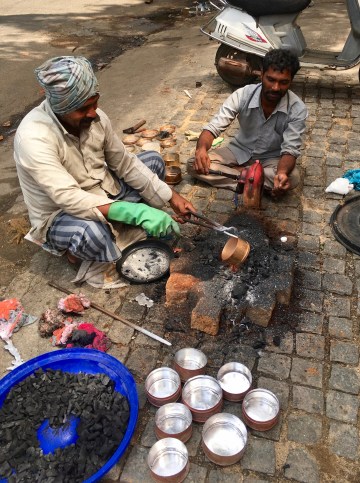 On this morning I turn the corner onto Lavelle Road, mindful of bikes, rickshaws and laden vegetable carts. A pony-pulled cart surprisingly trots past. Another unexpected sight greets me in front of Sodabottleopenerwallah, a restaurant we’re fond of. A brass polisher has set up in front to polish the tiffin boxes. The waft of red-hot charcoal infuses the air as the wallah heats, scrubs and buffs the small pots used for curries and rices. The sidewalk serves as the wallah’s work bench, ideal for this vital itinerant service.
The charm of our neighbourhood is just this; the traditional with the modern, the unexpected with the reliable.
As I make my way onto the busy main road, nestled in the shade is the usual chai wallah. His customers are gathered around for a morning tea break. He delights in his photo being taken, but the nearby newspaper wallahs don’t have time for such nonsense. They’re gathering their deliveries from stacks piled on the ground…The Times of India, The Deccan Herald, the Bangalore Times. Once strapped onto the back of their bicycles, they’ll be delivered in time for morning coffee.
When I reach the small hospital another block away, I am the only foreigner and curious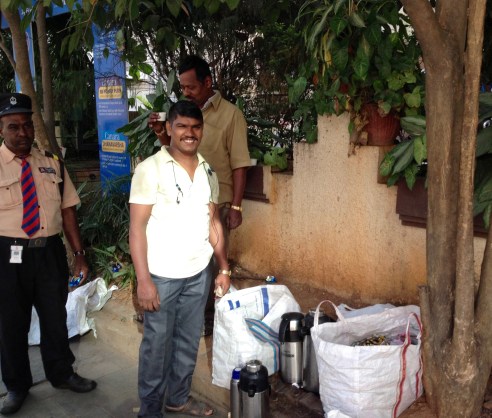 stares greet me as I pay the 500 rupees (10 dollars) for my consultation. The doctor’s professionalism belies his simple surroundings and when he hears that I write, our conversation meanders to authors and history, to the once sleepy and peaceful Bangalore. “This was once the ideal city, so green with a temperate climate,” the doctor says ruefully, reflecting on his more than two decades in the city.
I leave and walk to my corner-store, Asha’s. I don’t know if it has served the community for twenty years, but I imagine so. About as big as an over-sized garden shed, two people cannot pass through its narrow space at the same time, yet the well-stocked shelves never seem to let me down.
“Namaste Madam, what today?” Rafik asks, then pulls the items off the shelves as I call them out. He informs me that he finally has some cheese in stock, I’m pleased with this news but it seems I don’t have enough money with me. “Madam, tomorrow is there,” he says tearing a small recipt from its pad. Each item has been handwritten and it seems I’m 639 rupees short. “Thank you Rafik, I’ll come back tomorrow.” I smile to myself as I leave, knowing that my credit is good in the neighbourhood…truly a local now it seems.

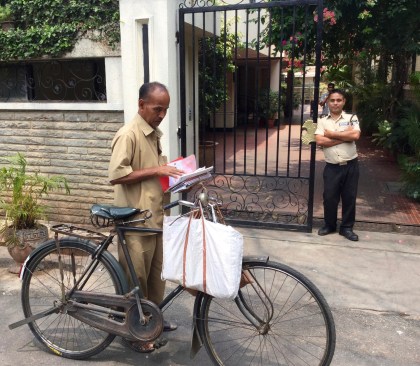
As I arrive back at my street, a busy scene greets me. Raj’s vegetable cart is positioned half-way down, Arun is cycling up with a bag of laundry in need of pressing and the postman is delivering today’s mail. I don’t get a chance to speak with him, but I engage Arun and Raj.
“How long have you been in business Raj,” I ask admiring the decorative touches on his trusty blue cart. It is well- laden, down to its inner compartment stuffed with greens –spinach, coriander, mint and curry leaves. It requires strength and concentration to maneuver this movable shop along the city’s busy streets.
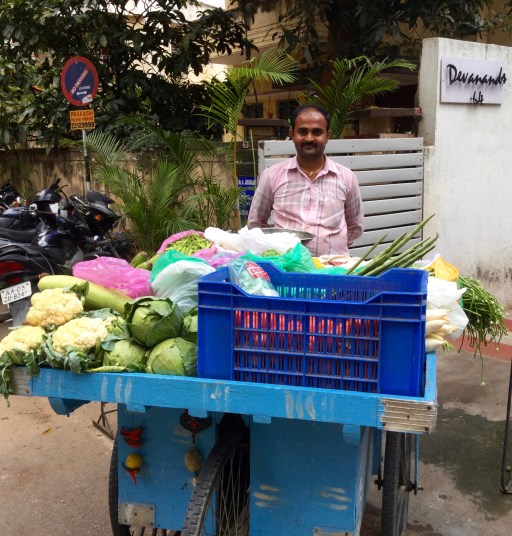 “Nineteen years Madam, but the cart is new, 2004. Cost 32,000 rupees.”
“That’s a lot Raj,” I confirm, knowing it’s a substantial investment. “Yes,” he agrees and pats the handle of his cart,”and only one driver!”
We both laugh and Raj hands me the handwritten slip of my purchase. He clicks his tongue and shakes his head when I tell him I must go inside to get some money, “Tomorrow is there Madam.”
Arun unlatches a bag of laundry from his bicycle, just collected from a neighbourhood customer. He and his partner Laurence are iron wallahs and set up most days under the shade of ‘my’ mango tree. This bag of clean garments, along with many others awaiting their turn, will be pressed, wrapped in newspaper and delivered by dusk. Arun’s sturdy Atlas bicycle will roll back down the street with the deliveries.
“It’s a good bike Arun,” I offer, noting the brand.
“Yes Madam, Indian made and old.”


I ask how long he’s been in business and Arun seems chuffed to tell me. “First my uncle for 37 years, then dead. Now mine for 7 years.” I suggest to him that his Uncle would be proud and he smiles quietly.
Arun, as with all the wallahs and guards, no longer appear surprised that we choose to interact with them; perhaps they’re pleased to have some interaction as they work through another long day. The word wallah is Sanskrit for keeper and Hindi for doer, it describes these hard-working entrepreneurs well.


I realize that this is the day I truly feel at ease with my life in India. We’ve just celebrated our one year anniversary in the neighbourhood; it’s home.
 Just then Priya walks up to start her three hour shift. “Madam, just home? Where were you?” she wants to know as she takes one of the shopping bags.
We walk up the wide steps, to my apartment where a wooden bench from the Middle East sits against my marbled entrance wall. It has welcomed me home in five different countries. We plunk the shopping down on it as we remove our shoes.
I fill Priya in on my morning, “I was at Asha’s and seemed to speak to everyone in the neighbourhood this morning, Mr. Kumar’s baby now has a name Priya. And I had to go to the doctor before I leave at the end of the week.”
“But Madam,” Priya says, her usual vibrant tone turning melancholy. “So long, over one month away?” she says remembering I’ll be gone longer than usual.
As she ties on her apron once inside, Priya asks ,”Madam, still cold in Europe and Canada?”
“Yes still cold, I must pack warm clothes this time.” With this she smiles mischievously then raises her voice in laughter, “Well Madam, enough clothes are there,” Priya says referencing my closets. This I can’t deny, nor that Priya always manages to brighten my day.
Thankfully, her days are brighter now than they once were….Priya’s story will be continued


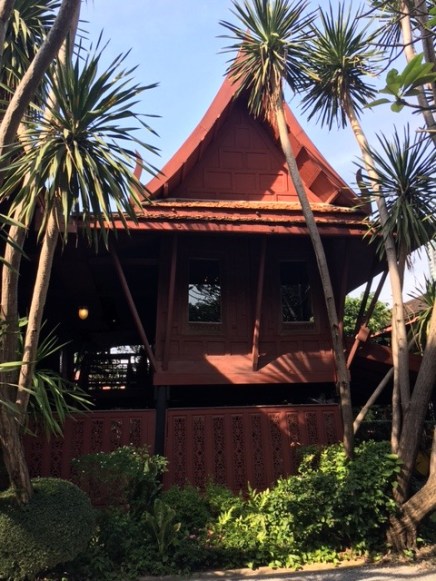 It was more soulful and quiet then. Without tour guides and with only occasional travellers, one had time to savour; the objects d’art, the finely carved doors, the priceless collections of Chinese blue and white, the delicate bencharong, five coloured porcelain.


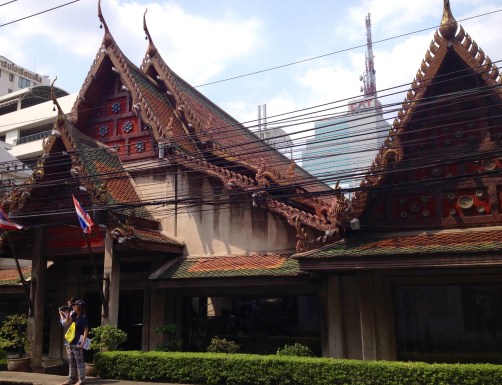
 First and perhaps the most widely accepted is that Thompson innocently set out for a jungle walk from the Moonlight Bungalow where he was staying with friends in the


 I had been to the mansion earlier in the year, gathering information for the book project. Along with writers from the region, I had the good fortune to be invited to a candle-lit dinner in Indigo, the mansion’s elegant restaurant. Serendipity saw my place-card positioned across from Laurence Loh, the man who brought the mansion back to life; rescuing it from its dilapidated state and likely from demolition.


 I find myself on ‘hallowed’ ground…that is, if one is both a lover of shoes and familiar with Jimmy Choo. His story began in Penang, a local boy who shared his roots with the very man I’m speaking with, Mr. Wong Heng Mun.


 Back in the workshop, I notice the nonya shoe that is in the works. Its delicate glass beads have been painstakingly stitched into a pattern onto fabric, and is now being crafted into a sandal or perhaps a slipper.


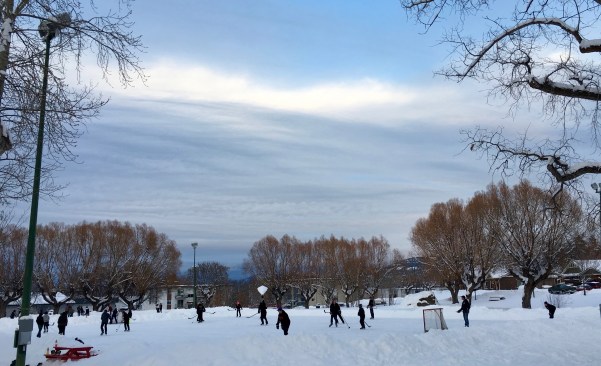
 The brothers grew up in Saskatchewan where a weighty stack of wood got you through the biting cold winters.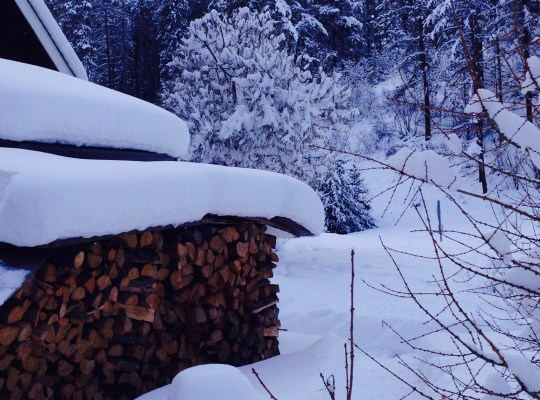
 Upright and solid pile: the same could be said of the man.




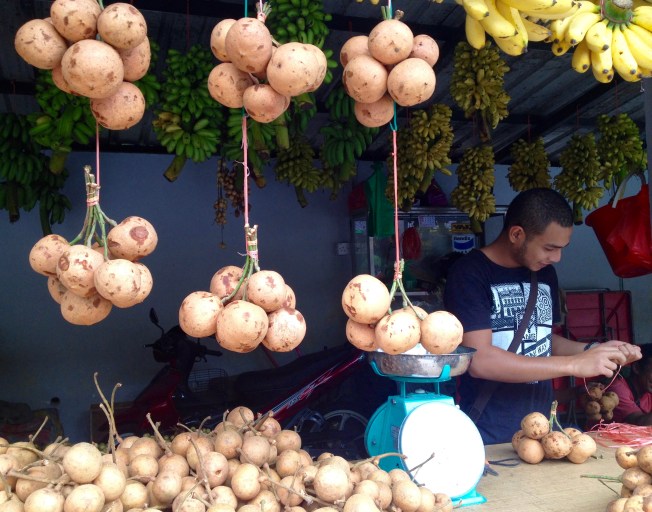
 Risking tiger attacks as they scour the jungle undergrowth, durian pickers rush to bring the costly commodity to market. The putrid aroma of durian belies its creamy, sweet taste. Or so I’m told…I can’t bring myself to try the noxious fruit. In hotels and public transportation throughout S.E Asia, signs strictly forbid durian on their premises.


 We arrive late afternoon at one of the former colonial hotels, The Lakehouse. Upon retirement Colonel Stanley Foster opened it in 1966; relatively late as guesthouses and bungalows sprung up here from the 1930’s onwards. The Lakehouse is how I envisioned.


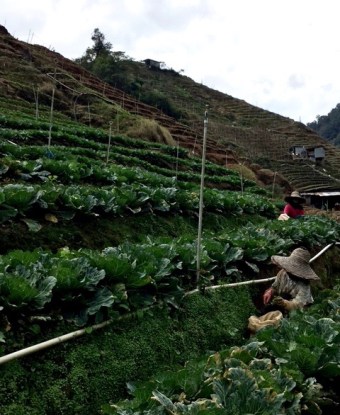


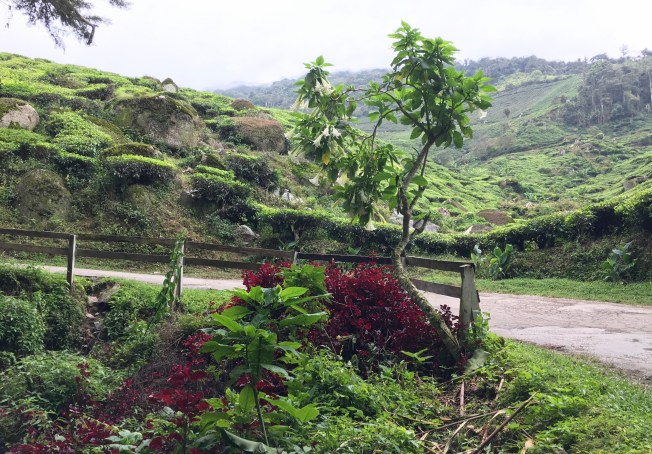
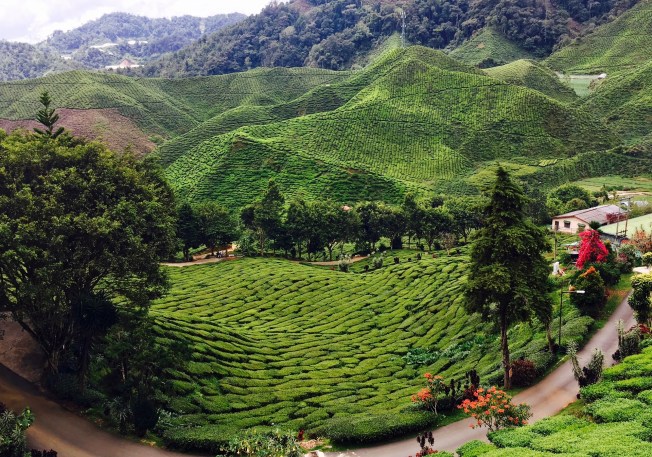
 We pass barrack-like cabins where the pluckers live and we take the liberty of skirting the road, treading on water channels that double as steps and define the vast fields of the Camellia Sinensis.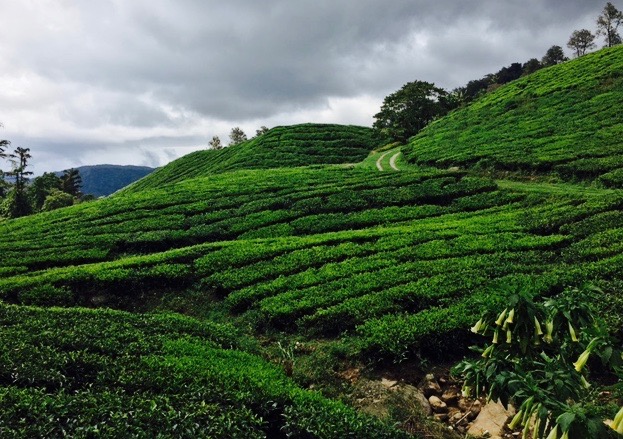



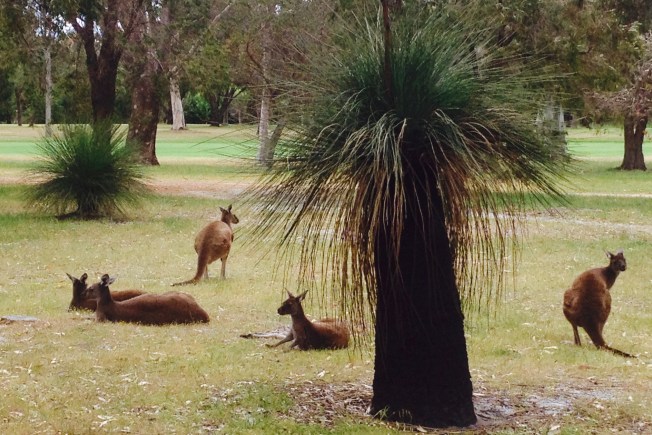
 The first hint of the iconic hoppers – they can travel at an impressive 40 km. an hour – are the road signs. In place of signs cautioning of caribou in Canada, of sheep in Scotland, or perhaps camels in Kazakhstan, the highways in Australia warn drivers of the kangaroo. The gangly marsupials outnumber the population by almost 3 to 1. Said to be particularly prolific in the ‘outback’ with some standing over 6 feet tall, it’s best to drive though that territory with a substantial 4WD, big bull-bars and spotlights…just in case you meet a ‘big red.’
 The fear of sharks alone, more present than ever these days, would give most people pause. The many warning signs positioned prominently along the beach tell it like it is…rips, waves, cliffs and sharks. The surfer emerges from the water and I catch up with him in the parking lot and ask if he gets scared out there.




 We wend our way towards town, detouring out of curiosity to see the extensive Leeuwin Estate. The grounds are long closed and the sun is lowering in the sky. Suddenly my husband slams on the brakes, “There’s one,” he says motioning to the field,”there, between that row.” I leap out of the car and creep to the fence. No it’s gone, just hopped away…maybe I saw a tail?


 Time with family and friends recently in Canada was wonderful – home in the true sense. However my other life in India called.
 Mysore’s streets and broad tree-line boulevards, are lively but less urgent than Bangalore’s. Stately buildings exude charm and a sense of place and history. All reminiscent of our India of old – a fondly re-discovered treasure.
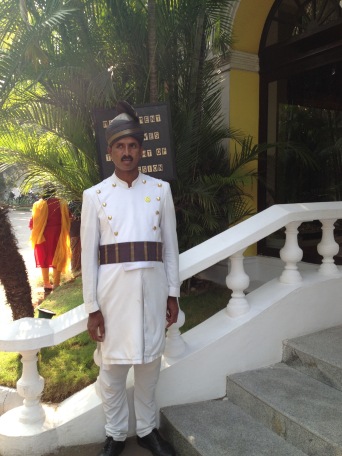 Our guest from the 1920’s makes her way down the spiral staircase to the porticoed entrance. She dons a sun hat and the doorman, splendidly attired in the Mysore fashion of the day, bids her ‘Good afternoon’. He summons a carriage and the visitor is conveyed to the Maharaja’s Palace. As the palace draws into view, she is instantly captivated.


 The next morning a ‘carriage’ of a different kind awaits us. The environs of Mysore beg to be explored and we jump into a classic ’66 Mahindra Jeep. It’s rugged and basic, it’s a beauty.


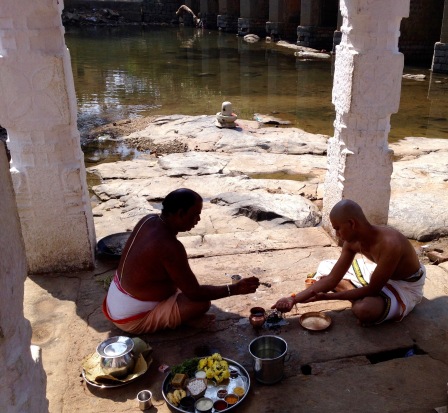 On the side of the stepped ghat, under an ancient stone pavilion, a ceremony unfolds. A young man, bereaved of his father, is in the midst of a solemn ritual. Guided by a brahmin priest, he recites prayers as water is rhythmically dabbed on his wrist. His head is shaved as tradition demands. We listen to the priest’s intonation, a soothing, flowing mantra. We offer condolences to the women witnessing the ceremony, sensing that we have intruded on their grief. Yet they acknowledge us with a gentle nod as we quietly take our leave. On the upper ghat, another Brahmin priest invites us into his vividly painted temple to witness the ritual about to commence. Inside, the centuries-old place of worship is cool and somber. We sit cross-legged on the stone floor opposite the priest flanked by two men, one an assistant, the other the supplicant.
 The priest leads them in prayer for the well-being of the family. The father takes his cues from the Brahmin as his adult son and wife look on. Sanskrit mantras mix with wafts of camphor in the still air. Rice and turmeric are sprinkled, offerings in a timeless ritual.


 South India lives up to its reputation of friendliness, of mystic sights and ancient traditions. This is why, I remind myself. Why this peripatetic life with its farewells and re-attachments, its solitudes and contemplative transition, is more than worth it. These are the moments to treasure.


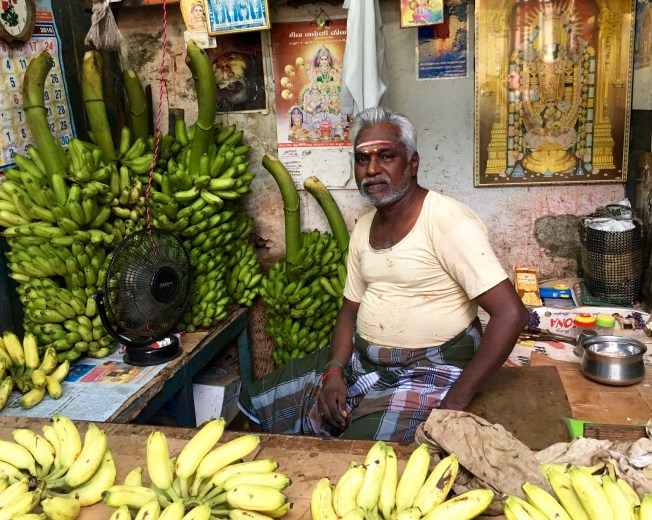
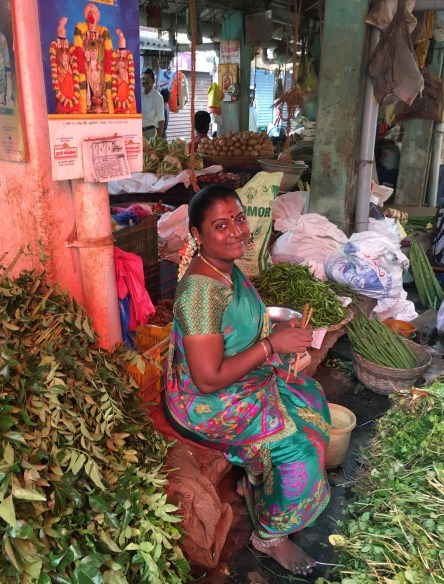 and orange for carrots and mangos.


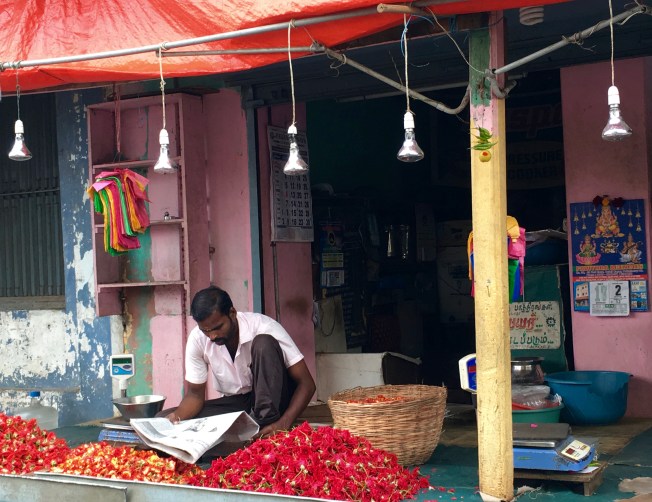
 They are offered for worship, draped around doorways at a housewarming, a new motorbike or auto rickshaw may be blessed with a garland, a bride and groom exchange them three times during a wedding. They are also woven into a lady’s plaited hair, especially here in Southern India.


 Barely ten minutes out of Pondicherry a time capsule awaits. As the clatter of the wheels settle to a rhythmic, soothing pattern, the city gives way to a beautiful patchwork; palms, rice, vegetables and flowers. From these fields come the produce, the bounty found in Pondicherry’s Grand Bazaar.