We rang in 2026 at our Canadian mountain home, cozy in the snow after a calm and picturesque Christmas. After an early family celebration, we were just three for the holidays – perfect for reading in front of the fireplace, playing games, watching home movies, and failing miserably at an intricate floral puzzle!
On that last day of 2025, I gazed at the twinkling Christmas tree lights, morning coffee in hand, reflecting with gratitude on an eventful year. Thankful for my small design business endeavours with my partner at Studio 1220, for our sparkling home renovation, for the two trips to Europe and for a beautiful summer wedding shared with family and friends from far and wide. I’ve also just closed a five-year chapter as the social media specialist for a local business… it’s finally time to concentrate on my next book project, a travel memoir.
I was privileged to travel to Spain twice last year, yet I was so thankful to return to Scotland in November. A place that was once home and the dramatic country that my husband originally hails from. Rediscovering Scotland felt different this time with more connection and a deeper appreciation for the country that is part heritage to my children. We were primarily there for Bruce’s work project, yet we took the time to wander down well trodden memory lanes and also forge new interesting pathways.
After stays in Edinburgh and Glasgow, we visited our former hometown of Banchory, a long stone’s throw from Aberdeen. Oh, how lovely it was to see our bonniewee home again, still nestled behind a cotoneaster draped wall and the weeping birch that we planted. Memories came flooding back of our young family, the house like a time portal. I could see the boys riding tricycles in the back garden, banging on pots and pans in the kitchen, cuddling up to me as they listened to their favourite bedtime story.
Out of the thirteen homes that we’ve lived in around the world, this one is particularly special as it was the first home of our second son. It’s where we welcomed family and friends into its tartaned wallpaper and matching carpeted embrace. And also into the gorgeous garden where the sound of bagpipes might just drift along up to us. The house became a basecamp to explore from. Perhaps to the Highlands, through lavender, heather-covered hills, to the whiskey distilleries. Their pungent bold aromas soon forgotten after a taste of fine Scotch. Perhaps a trip to Lochness in the hopes of spotting the mythical ‘Nessie’. I can still hear our son Luke’s plaintive cry as he stood at the loch’s edge, ‘Nessie I’m here, where are you?” It has always felt like an incredibly special place to have lived!
Nestled along the River Dee, Banchory is known as the Gateway to Royal Deeside. Queen Victoria and Queen Elizabeth visited their nearby Castle in Balmoral often. Between the 1940’s to 80’s, Banchory became world renowned for its lavender fields, now it’s better known for anglers hoping to catch prized salmon. Our local excursion on a chilly November afternoon wasn’t to fish, but to visit a number of castles, especially Crathes Castle, once a playground for our children. An unexpected snowfall had closed the road to the castle so we wandered through new-fallen snow through the pristine gardens and estate… catching glimpses of Highland Coos and hugging towering cedars – a counterpoint to the admirable topiary hedges of yew flanking the castle. Again in our mind’s eye, we pictured the kids running through the gardens on a summer’s day, the 16th century castle an unlikely yet stunning backdrop.
Memories, so many special memories. We stayed at the storied Banchory Lodge situated on the River Dee. Once a grand home, the reimagined boutique-style hotel is a blend of the historic and the modern. Over dinner and breakfast in front of the crackling fireplace, we took the time to relive and savour those early chapters in our life. We couldn’t have known how many more countries we’d be fortunate enough to live in – at 30 years old Scotland was already our third – and we didn’t yet have an inkling that we would gratefully welcome a third son into our family. Which circles back to the most important event of this year.
Just as Luke and Trixie’s nuptials three years ago in The Philippines were so special, Andrew and Ayla’s summer wedding closer to home was also a blessing and joyous occasion. A most perfect day. Another strong and loving daughter officially added to our family. Two families united, two celebrations between Banff and Kimberley, two events where family and friends mingled and danced the evenings away!
So with gratitude and hope for this year, I wish the same for you dear reader… calm and peacefulness that we all need more than ever.
Thank you for reading and a very Happy New Year, wherever you may be!
Post Script… 10 Things I Love About Scotland
The ‘New Scot’ – the term for new immigrants who are welcomed and encouraged to make the country their new home.
Friendly chit-chats at local pubs.
The deep, rich history that is still palpable and celebrated.
The beauty, from the architecture to the landscapes.
The proud tradition of music, you might even find yourself Scottish dancing in a pub on a Monday evening!
The beautiful heritage of tartan.
The culinary scene, from traditional to fusion to food from other lands… Dishoom Glasgow, Ivy Glasgow, Black Isle Brewery Inverness, The Chester Aberdeen, The Anchor Glasgow, Cafe Andaluz Edinburgh.
Train travel, easy and incredibly picturesque… The Caledonian Sleeper to London is a good option for flights arriving in London.
Museums, galleries and tours… informative and inspiring such as The National Museum of Scotland in Edinburgh, Aberdeen Art Gallery, Glasgow City Chambers Tour, Walking Tours Glasgow.
Hotels I’d recommend… Malmaison Aberdeen, The Address Glasgow, Banchory Lodge, Radisson Blu Edinburgh. AC Hotel by Marriott Inverness.
Early this summer, robins painstakingly formed a nest on our back deck… tiny twigs, sprigs of grass straw and plenty of pine needles weaved into the little home. Soon, three newborns awaited, their beaks endlessly agape, parents nourishing them with garden-sourced worms and unsuspecting bugs. As is nature’s way, a few teal-blue thrush eggs had sadly tumbled out of the nest, their glorious colour adding a striking accent to my garden blooms. I gathered the eggs gently, laying them next to my late father’s impossibly tall and vivacious hollyhocks.
Remembrance hollyhocks
We witnessed the fledglings take their first tentative flights. Then as they chirped away happily in our garden into the cool days of autumn, I mused that they too had a good home to return to. It seemed to reflect our journey of finally claiming our vacation home as our forever home. I find it hard to believe that its been seven years since we departed India and returned from overseas. I recall what I wrote in the late summer of 2018 in my co-authored book Monday Morning Emails, while home one summer. Still living in Bangalore, I was pondering my reluctance to return to Canada, yet always appreciated what this then-vacation home meant to us.
“I write from the deck of our home in beautiful British Columbia. I peer through tall pines out to the ski hill and watch deer munch on my parched grass. I gaze at the lines of our home’s tall timbers… just newly varnished, their knotted wood is rich and strong and stable. Perhaps they represent what this home means to us; warmth and stability. Perhaps this mountain town of Kimberley was meant to anchor our global lives and soothe our often fragile souls.”
As I write this Sunday afternoon with a view to crimson and golden trees, the ski hill beyond is dusted white with early snow. I muse with gratitude for these past twelve months, for the endeavour of re-imagining our Kimberley home to our forever-home. The renovation is complete… another nest that embraces and nurtures life.
The home is now painted a bold black, solar panels gracefully blending in, taking advantage of its south facing position. More landscaping was required as the deck was enlarged with new stairs to access my beloved mountain/covid garden. This ‘outdoor living room’ has already become a vibrant gathering and dining space – a place to savour a good book with a glass of wine, to Happy Hour with laughter and chatter, to gaze out as the robins explore and the deer and neighbours stroll past. As of a few days ago, the garden has been dug up for the season, the palms moved inside, the deck cleared in anticipation of winter… snow shovels stand at the ready!
The BeforeThe Construction & LandscapingThe After
The renovation also included substantial indoor improvements and oh my, how it has changed the way we gather with family and friends. There is more light and life in the house, and I can now fully imagine the pitter-patter one day of our grandchildren’s tiny feet. Yet there is even more to be thankful for as our youngest son married his beautiful bride in the mountain town of Banff this summer. A few days later as we welcomed friends and family to our expanded home and neighbourhood for an After Party celebration, I knew that the decision to return to Canada when we did was the right one. We have sunk our roots even deeper into this vibrant community. We have given ourselves a place that is truly home and with our immediate family also living here, our nest is rich and full.
The view from the new dining room is ever-changing today. The weather is variable.. rain, then snow, then rain again with dashes of sunshine. Another season is on its way, but of autumn? It’s about spectacular colours, about plump pumpkins backdropping family visits. It is ethereal, golden infused walks with our granddog Captain. It’s that first fireside evening with a game of Scrabble… of gratitude for the year that has already been before the anticipation of the Christmas season. However for Bruce and myself, a wee sojourn to Europe is coming up… a little work and play between Scotland and Spain. Stay posted and a warm hello in whichever season you’re reading from!
Post Script… from Bruce
I felt that Terry Anne had left something vital out of her piece on nest-building and I asked her to let me add a footnote.
I like to think that I got on nodding terms with the Robins nesting atop the speakers on our back deck. There was a certain flair to the nest’s construction, with a long sprig of grass lodged jauntily at the edge of the nest. But they are not alone in being prolific nest builders and so I thought to include a small appreciation of one of the best there is.
We have been fortunate to live and work and grow in many countries in the almost three decades of our international life. With no family close by and invariably living in rented or company-provided homes, life could feel a little devoid of that sense of home, and with that, the quality of our lives. But human nest-building instincts run deep and I look back on a life in which Terry Anne has made every space warm and welcoming, and ours in every way.
From our tiny ‘Japanese Mansion’, adorned with little treasures from the temple markets, to the elegant interior of our Dutch row house, the coziness and hygge of our Scottish and Norwegian family homes – she instinctively knew how to bring warmth, style and comfort to our dwellings. She imbued our lives with meaning and memories, anchoring us in our place, creating new roots.
In each new location Terry Anne started from scratch – new place, new schools, new friends, new home – bringing our growing inventory of furnishings and ornaments, the comforting fabric of our lives. In each, she lovingly, painstakingly created a nest, a place of safety and of familiarity. When all else felt new and strange – at times even threatening – she made a place to come home to that made everything okay.
I’ve lost count of how many homes she has created across these fabulous years together, but fifteen sounds about right. So as the glow of fall fades and the flurries of first snows swirl around us, I am ever thankful for my wife, partner in travel, and consummate nest-builder for how she has shaped our lives… one nest at a time.
I first published this in October, 2015, and now on the day of Truth and Reconciliation, it is still as important as ever. This post was part two of my interviews with members of the Ktunaxa Nation.
“My grandmother brought me to the school, it was 1957. We pulled up in a horse and buggy, my brother and sister were already here which helped a little.”
I‘m standing with Gordie at the bottom of the steps that lead to the imposing door of the St.Eugene Mission, once a Residential School. It is easy to imagine the foreboding, the instinctive fear that young Native children like Gordie felt when they entered the school for their first ten month term.
“I was frightened and remember the feeling of resentment towards my grandma. She had helped raise me. It wasn’t until later that I realized she didn’t have a choice but to let me go.”
Gordie is tall and lean, his long greying hair topped by a baseball cap. It’s the tradition of many First Nations to keep their hair long, it’s an extension of their spiritual self.
Having offered to give me a tour and talk about his time at the school, Gordie greets me warmly this cool autumn morning. He’s just finished his shift as the night-time superintendent of the St Eugene Mission Resort. As a student, Gordie lived and breathed this school, his memories are deeply etched. He now walks through it with some measure of peace and acceptance.
From 1912 to 1970, more than 5000 First Nation children were removed from their families to comply with the government assimilation program and brought to this school, one of eighty former schools across Canada. However, its perfect postcard setting in the interior of British Columbia is deceptive.
Refurbished and renewed
“I suppose I was lucky, I was dropped off by a family member. Some kids were left here by Indian Agents, whisked away before their families even knew they were gone.”
Gordie explains the cruel truth that Agents were often paid to ‘round up’ ‘Indian’ children, especially in remote areas. The children were sometimes taken when they ran to a plane that had landed, then spirited away with the promise of a ‘ride’.
“They were given a number, with no consideration of their name, then placed in a Residential School.”
Gordie will tell you that this was by no means the worst of the Residential Schools. The entrance of the former St . Eugene Mission School is now a hotel lobby. It has a welcoming and dignified atmosphere, vastly different than it once was. Solid in their longevity, the red brick walls are invisibly marred with strife and untold hurts. People like Gordie are now willing to tell their story.
“Our hair was chopped off, and from that moment the school did its best to eradicate our language and culture. This is where you waited to be taken away by the nuns to the dormitories.”
‘Indian Hall’, I believe Gordie called it as we begin a tour and conversation that lasts five hours, but felt like just a few. He points to a black and white photo near the front desk. The image shows a group of older girls gathered in front of the school, smiling proudly astride their horses.
Gordie Sebastian with a plaque that pays tribute to his role in the refurbishment of St. Eugene Mission
“Do you know anything about horses?” Gordie asks, pointing to their bridles and saddles. “Does this look like we were poor or wanting? No we had a culture, a life, it was taken away.”
I’m instinctively drawn to the collection of photos in the nearby corridor that I had been so taken with the previous day. Gordie reveals parts of his story through them, bringing the images to life with his narrative.
A seemingly typical school is portrayed; a hockey team, the school band, a choir, children in uniforms seated at their desks.
“It seems like you were involved in a lot of activities?”
“We were. Saturday was hockey, we also had a baseball field,” Gordie tells me.
“Are you in any of these?” I ask as my finger scans over children positioned in front of the school steps. Standing behind the children are a number of priests and nuns, some dressed in black habits, others in white.
“No I usually had some kind of injury when it was time for photos. One time I had a bruise on my eye from a hockey puck so couldn’t be in the photo. It might have looked like I had been hit by one of the staff…”
Gordie is referring to the now well-documented mental, physical and sexual abuse, even death, that students suffered at the hands of the priests and nuns who came from afar to work in these schools.
“I didn’t have as many issues as some. I was from one of the more respected Native families so was usually safe from the abuse of the staff and other students. My dad held some sway.”
Gordie Sebastian comes from a long line of prominent Ktunaxa who owned and bred horses. He points to a photo of a group of men, four sit on their horses. One of them wears a blanket, tucked-in at the waist.
“That’s my great-grandfather, Sabas, Joseph Sebastian. He was a medicine man.”
A medicine man was a highly respected member of an Indian tribe. They were healers or ‘shaman’ who did not believe in bloodshed.
Gordie explains that Sabas and the tribal head at the time, Chief Isadore, believed that no man had the right to erect fences on the Ktunaxa land. This held fast until European and Canadian settlers usurped their ancestral land following the signing of Treaty 7 in 1887. This treaty confined the First Nations peoples to Reserves, where many of the Ktunaxa stil live today.
Gordie gestures to the photo of St. Eugene Mission, the once cluster of tipis and houses around the church where his forebears would have gathered.
Red brick walls
He shows me a detail that had escaped me. A house stands with the top of a tipi sticking out from its roof. Like most First Nations, the Ktunaxa people didn’t adapt well to the confines of a house.
“That’s Indian Pete’s house, set his tipi up in the middle of it.”
In another photo dated 1887, a man dressed in baggy trousers and a waist coat stands in front of the St. Eugene Church. He smiles widely, beside him is a priest. They seem to know each other.
“That’s Father Coccola and Indian Pete. They paid to have the church built. In fact Indian Pete paid our way into heaven,” Gordie says with a chuckle.
Gordie is open and candid as he explains the more serious and devastating impact the Residential Schools have had on generations of First Nations people.
“But I’ve also been told by some people that these were the best of days, away from poverty and their alcoholic parents on the Reserves.” Gordie explains that many parents weren’t well adapted to parenting as they only saw their children during the two-month summer break and perhaps for a few hours once every three weeks. Also many of them had been students themselves; their own wounds ever present.
“My father was a student here, he never told me but I think he had been sexually abused. He always checked us for signs.” Gordie says quietly.
We talk about the Priests and the Nuns whose frequent indifference to their students’ humanity exacted so much pain.
“Some of the priests weren’t that bad, but the nuns were battle-axes. Some of them could teach well enough but they had little or no compassion. Through their actions we were taught hate. It was drilled into our heads that we were useless…little more than savages.”
The healing power of the tipi
Perhaps because of Gordie’s influential family, he reports having pushed the envelope a little further than other students. By the time he was a young teenager, he railed against his situation.
“One time I argued with a nun over a basic fact that she was teaching,” Gordie confided. “Now you know that St. Eugene Mission sits between two mountain ranges, the Rockies and the Purcells. Well she had the two ranges mixed up and I told her so. We argued back and forth, I wasn’t backing down. All of a sudden she hit me and I pushed back.”
Gordie was made to sit in the Priests’ office for the day as punishment. Once he told his side of the story, he wasn’t reprimanded further.
“Did she teach the correct mountain ranges after that,” I ask.
“Oh no, she kept telling us the wrong thing,” he says, making light of the story all these years later.
But not all punishment was that easy. Male students who ran away from the school were often found again by the Indian Agents and returned to the school. For the next two weeks they were forced to dress as girls. As shaming as this would have been, it pales into comparison of other punishments that Gordie leaves untold.
I‘m particularly haunted by his accounts of the tuberculosis outbreaks. Nodding to a photo of a clearly ill student, his head bandaged, he precedes to tell me of the infectious conditions that existed in the school.
“That student had TB, he shouldn’t have been with other students,” Gordie says matter-of-factly. The rate of deaths in the schools from influenza and TB far exceeded that of elsewhere in Canada.
The St. Eugene Mission Resort and Golf Course
Unlike many Residential Schools, only one death occurred here.
“This is her,” Gordie says pointing to a young girl. “She died when snow fell onto her from the roof. It’s good that her relatives have been here. Her name was Anette.”
Late in the interview, Gordie and I have coffee in the former chapel. It’s being readied for a function and we sit at a long table that will soon be set with linen and fine china. I’m told that healing occurs at St. Eugene on a regular basis. As painful as it is, many former students and their families return to confront the hurts of the past.
“The tipi outside is there for a reason. Even as the school was being re-purposed, it was provided for prayers and counselling.”
We glance out towards the tall white canvas. I learn that the poles of a tipi represent the different spiritualities of all people, yet they are bound together as one.
A painting of Elder Mary Paul
“Facing the past is difficult, but it brings peace. Just as Elder Mary Paul gave us the permission to do so.”
Gordie had pointed out the painting of Elder Paul as we entered the lobby. It is with her blessing that the re-construction of this building was undertaken.
We make our way upstairs to the ‘inner sanctuary’ of the school. Now mostly hotel rooms, Gordie points out the areas which were once dormitories, kitchens and mess halls. The rooms of the nuns and priests were close by.
My sense of this building’s history is suddenly very real. I’m shown the place where Gordie’s bed had stood. We look toward the window and beyond, where the road lies.
“At least I was able to look out of the window and see my father or grandfather pass on the road once in a while. Many kids were far, far from home.”
I’m shown where a young boy stood on a precarious ledge while attempting to run away. I see the burn marks from two arson attempts on the school. I become emotional as I contemplate the daunting stairs that girls as young as four had to negotiate in the middle of the night to go to the washroom. I feel their loneliness, the longing for their home, the yearning for a mother’s touch.
“There are 68 stairs,” Gordie tells me. “I should know, it was my job to sweep and scrub them.”
He tells me it was here that a young student was kicked down the stairs by a priest, tumbling helplessly to the bottom. Thankfully he lived.
“One of the workers saw it happen and pinned the priest up against the wall by the throat. He warned him never to hurt a student again,” Gordie recounts. “The next day we noticed that all of the straps had been removed from the classrooms.”
As the students reached their mid teens, I imagine control must have become more difficult. By the time Gordie is this age, one of the ‘Fathers’ uses government money to fund a swimming pool and provide horses for the students. Gordie takes on the role of the ‘horse guy.’
“Finally on Sunday afternoons we were allowed to leave the school premises and ride free on our land.”
I agree with Gordie how important that must have been; that sense of independence and freedom. This also evolved naturally as the older students were sent to a local school to complete their education.
“It didn’t get much better for us. We weren’t Native anymore and we weren’t ‘white’, so we didn’t fit in. We were ‘apples’…white on the inside but red on the outside.”
Gordie was eventually asked to leave his new school over an incident that he didn’t explain. When his father found out, he was also told to leave the house. He was seventeen and on his own. Gordie went north to work in the logging industry.
I don’t hear the entire story of the years between then and now. But I know a number of family members passed away due to alcohol abuse. And I know Gordie is raising the young daughter of a relative who still battles with the trauma of Residential School.
Solace and Peace
I also know that Gordie is one of the good guys. Not only is he helping to heal his own family, but also many of those who walk through the doors of St. Eugene Mission. They seek solace and peace from the past.
Despite previous visits to nearby Vancouver and Victoria, this May we happily toured the Gulf Islands for the first time. Choosing Pender and Salt Spring, the archipelago is tucked in the Salish Sea between Vancouver Island and the mainland of British Columbia. A ‘googling’ of the Gulf Islands tells you that they’re home to ‘eclectic residents with bohemian souls.’ That may be the case and you’ll meet a few of them – along with so called every-day people who desire a simpler life – yet what strikes you is the soulful beauty, the gentle living and deep sense of community. On Pender Island, the eclectic Fridge Culture was the real unexpected delight. On Salt Springs, it was the idyllic paddling to other smaller islands… so very magical with intriguing historical stories to reveal.
Pender Island
We embark on the ferry at Tsawwassen, just outside of Vancouver, and we’re instantly transported to vistas of sheltered coves and deep inlets, to craggy treelined coastlines and pristine sparkling waters. It’s breathtaking as we ripple through the waters and although we don’t happen to spot the star of the show, the mighty orca, eagles glide and soar high above beckoning us into their slice of paradise. After stops at Galiano and Mayne, our ferry docks into Otter Bay on Pender Island. The name Gulf Islands derives from the Gulf of Georgia, the original term used by Captain George Vancouver in his mapping of the islands for the British Crown. These days, the islands are accessible by small harbours operated through the Southern Gulf Islands Harbours Service. Not only are the harbours charming, they’re an important part of island life; points of access for inter-island travel, for school boats and marine ambulances, for Canada Post and utility services. Some of the ports are more care-worn than others such as the seemingly once-busy The Shed at Port Washington, contrasted with the local hangout of HUB Restaurant and Hope Bay Store at the Hope Bay Harbour. Whichever distinct character each harbour may take on, all are monitored by a wharfinger… the all-important keeper of the wharf.
Away from the harbours and coves, the inland vibe of Pender Island doesn’t take long to reveal itself. It’s picturesque, and hilly. Roads line with ancient cedars, ferns and mustard-yellow broom cascade all around. And just when you’re feeling hemmed in by the trees, open farmland and fields emerge where you just might find pigs nestled in mud and tractors tilling the land. Vibrant blooms infuse the still-chilly springtime air as we happily meander. In no time at all, you will have traversed both North and South Pender. We come across the island’s handy Car Stops, an alternative to hitch hiking, where a chair or bench is placed for your comfort as you wait for a ride from an accommodating islander. We’re told it’s not only a veritable link of transport, but also a conduit for gossip in these parts!
Pender Island – rich in hunting, fishing and gathering – has been inhabited by the Coast Salish people for thousands of years and still today is home to members of the Tsawout and Tseycum First Nations. The Spanish arrived in 1791, charting the islands and bestowing them with names like Saturna, Valdez, and Galiano. Daniel Pender, aboard the HMS Plumper, surveyed the coast from the end of the 1850’s through to the 1870’s. Permanent colony settlers arrived about that time from the British Isles, The US, Hawaii and Japan…. the sub-Mediterranean climate was certainly part of the appeal.
We don’t stay at the busy tourist and wedding venue hot-spot, Poets Cove, but somewhere a little more authentic and close to the heart of the island’s main town square, the Driftwood Center. The Driftwood is a busy hive of palm trees sprouting in terracotta pots, picnic tables hosting conversations and the whafting of good coffee. Just down the road and perched on a hill overlooking the pristine bay at Port Browning Harbour is Nosy Point B & B, our home away from home for a few nights. After having been relocated from the city years ago, this is the Victorian-style home’s new location. Left to neglect, then rescued and refurbished, the ‘grand old dame’ was slowly brought back to life. We meet its owner and B & B host Stephen on the first evening. We’ve returned from the nearby Browning Pub just as he’s pruning flowers and a dogwood tree that needs some special attention. We hear about the ‘grand dame’ and how it acquired its name – literally a once nosy neighbour – and our conversation happily meanders to all things on Pender, before settling on our mutual travels in India. I’m again reminded of why I love staying in smaller, more intimate places.
As I settle into an Adirondack chair for a glass of wine, the evening sun illuminates the boats nestled on the bay of marine blues and misty greys. The cedars are towering and resplendent as their willowy branches embrace the space, like tendrils between the past and the present – a reminder of the Salish peoples here for thousands of years. I hear the plaintive calls of seagulls over the bay. I jot missives in my notebook. I smile as I gaze out at Bruce, away in the distance for an evening paddle… it’s a smile of a good, good day on Pender.
The next morning I wake up to the chitchat of Bruce, Stephen and another guest in the breakfast room. It’s early, yet I curl up in a dusty pink armchair in the corner of our Admiral Room. Plank wood floors, soft-grey shiplap walls, a variegated fig plant and a model ship decorate the room. It’s cozy and as the cedars sway outside, I muse on a conversation at the pub the previous night.
Gillian had served us, a transplant from Edmonton, a food & beverage enthusiast and sommelier, a lovely young lady whose dreams with her partner have come true on Pender. With pride and delight, Gillian informed us of the ‘must do’s’ and so I plot our course of discovery for the day… Amy’s Bread Shed, The Fridge of Wonders, The Cheesecake Fridge, The PeaShoot Fridge. And why not throw in Happy Hour at Poet’s Cove while you’re down that way!
And so we do as the locals suggest. Pull up to the roadside fridge or shed, select what we’d like, leave cash in the kitty on the honour system, enjoy produce and wondrous creations. Fresh bread and croissants from Amy’s were nibbled on throughout the day. Jars of delicious Turmeric Ginger Sauerkraut from the Fridge of Wonders was a success as gifts from the Islands. Unfortunately, the Cheesecake Fridge was bare when we arrived, but did we visit the Pea Shoot Fridge twice? Absolutely!
Salt Spring Island
On day three we ferry to Long Harbour on Salt Spring, the largest most populous of the Gulf Islands. Its name is a nod to the island’s salt springs, yet our first stop is a wander through the quaint town of Ganges. There’s an artsy vibe with ample galleries and coffee shops serving the local Salt Spring Coffee brew. The plethora of artisans on the island is long-standing, the popular Saturday market the vibrant showcase for the hundreds of vendors who either, ‘Make it, bake it, or grow it.’
And as on Pender, there’s an emphasis on homegrown ‘farm to table’ or ‘Farm Stand Foraging’ the local tourism office tells us. As promised, leisurely driving or cycling around the island is a veritable shopping experience unto its own. Open air stands offer everything from eggs and flowers, to wood kindling and candles, to cheese and pottery. Also stop in at the wineries, Salt Spring Kitchen Co., or sample apple cider at one of the cider companies. Yes absolutely, the island is bursting with apples!
With some 450 varieties of apples grown on Salt Spring, traditionally they’ve been an important agricultural product. The island’s farming roots were integral to the settlers who arrived here on what was the homeland of the Salish people. During the Hudson Bay Company’s fur trading days, hundreds of Hawaiians worked for them as labourers, often choosing to settle once their contracts finished. The tropical paradise – relative to many other colder parts of the country – was an enticement, as was pre-emption. Up until the 1880’s, this process allowed settlers to acquire land if they cleared and improved the plot before purchasing it for the grand sum of $1. per acre. As settlers took advantage of pre-emption, Salt Spring quickly became a diverse community where farming was often supplemented with fishing and logging. African Americans also settled here, escaping discrimination at home and hoping for a better life. Today with a population of about 12,000, the rich and varied heritage of long-standing families blends with the newly settled – either permanently or those with vacation homes.
Admittedly, our main endeavour on Salt Spring is to paddle and it’s while we’re on the water that we savour the sheer beauty of our surroundings. From the kayak and on SUP’s, the shorelines take on their magical vistas – sprawling stands of shore pine, statuesque Douglas fir and crooked arbutus trees against backdrops of gentle hills. On the water we gaze into the curious eyes of otters as they glide past. In the piercing blue sky we follow the soar of eagles, and the constant paths of floatplanes. Coming into shore, we gaze down into forests of kelp beds, then beach comb ancient shell middens. On our second day of paddling, we venture to tiny Russell Island south of Fulford Harbour. It’s here that we become acquainted with one of those early island settlers, Maria Mahoi of Hawaiian and Indigenous descent.
As we glide into the small bay at Russell Island, now part of the Gulf Islands National Park Reserve, Maria’s home reveals itself almost immediately. Our ‘docked’ water vessels are practically on her front yard, a sandy beach where seafood barbeques and Hawaiian luaus once filled the evening air. Apparently the home hasn’t changed much since it was built in 1906, except now it seems to vie for attention amongst the remnants of orchards and untamed gardens. A lone chair occupies the front verandah, a carved wooden sculpture draped in seashells pays homage to Maria’s Hawaiian roots, and unfortunately it isn’t apple season or we’d be welcome to pluck on or two from the orchard.
In 1901, Maria Mahoi was identified as the sole heir of Russell Island in the will of William Haumea, also of Hawaiian descent. Haumea had never built on Russel but cleared fields, establishing an orchard and a strawberry field. In 1902, Maria moved to the Island with her second husband, where not only more were children added to the growing family, but also sheep, cows and chickens. Today, descendants of Maria speak of her love of the island, her prowess as a sailor and the love of the water, her enormous strength in character and resilience. And perhaps most of all, a woman of mixed race who though at the time found herself outside of the boundaries of colonial acceptability, built a rich and proud life for her thirteen children. Maria – who refused to take a husband’s last name – is just one of many stories of our intrepid women settlers in British Columbia. Somehow standing in Maria’s garden is like a comforting, soulful whisper which stays with you as you traverse the Haumea Trail which offers beautiful views outwards. If you visit during the summer months, a volunteer host in collaboration with Maria Mahoi’s descendants, will be present share family stories that bring Maria back to life. We happily spend far more time than we anticipate and as we paddle away, I know we’ve experienced a truly special place.
Back on the big island, just across the bay where Maria often rowed to church, St. Paul’s Catholic Church reveals more of the island’s stories. After all, as the author Jean Barman in her interesting book Maria Mahoi of the Islands muses, “Maia’s story argues that, yes, our stories do matter. Her life, like everyone’s is usefully conceived as a pebble. Once thrown in the water, its waves spread out to family and community. The ripples from the pebble that was Maria continue to expand outward.”
Delicate dahlias mingle with cherry tomatoes and leafy kale. Golden marigolds shine alongside lillies, zinnia and fragrant vintage. Budding morsels of cauliflower and broccoli nestle in their frilly leaves… well I admit, the gophers did enjoy nibbling the cauliflower! My mountain gardens are gloriously abloom and verdant, and I’m surprised to find that I haven’t yet written of my cherished patch of vegetables and flowers. They’ve been an oasis during these unsettling times.
The outdoor garden sprung to life last spring, a reaction to the pandemic, like a lifeline during these unprecedented times. From building the enclosure – to protect from deer – to constructing the beds and a delightfully Japanese-inspired gate, to seeding and planting, the garden was a family project we all took pride and delight in. Then, we were embraced in our covid-bubble of seven and the garden was a solace. Now, I can’t imagine our home without it.
Admittedly it yielded very little the first year, but this second summer not only is it much more profuse, it’s a haven of calm and colour. I’ve always had ample flowers in pots and planters wherever we happened to be living, but this actual garden has ‘home’ stamped and embedded in it, deep down to its roots. We’re now in Canada for much of the year, not travelling afar, and the joy of gardening has become a marker of being settled… and that’s more than alright. The show stopper this year might well have been a single lupine; but oh what a beauty she was! And now as the tomatoes ripen and the carrots are still too dainty to pick, gorgeous white Murilea lilies have burst forth – simple, elegant late bloomers. It’s been such a joy to stroll to the garden and pluck blooms for bouquets and small posies for the guest room.
Alongside the garden we’ve embarked on more landscaping… pines, maples, lupines, wildflowers and peonies. The peonies, I might add, stubbornly refused to bloom again this second year. Each morning it’s a walk of discovery to inspect what the deer might or might not have munched through during the night. Our mountain property is supposedly full of ‘deer resistant’ plants as is the norm here, yet a recently transplanted hollyhock from my parent’s garden was eagerly gobbled up just as it was about to burst forth. It’s an ongoing balance as we share this environment with the local fauna. Just a few months ago, the new-born dappled fawns tentatively browsed the grounds, making sure not to wander too far from their mamas. Now they amble through with confidence, hoping for something new to interest them. Somewhat more welcome are the blue jays, hummingbirds, bees and butterflies.
Thankfully there is one protected haven for my blooms. During the summertime in Canada, the deck, usually at the front of a home, becomes like another room; an outdoor living room accented with planters and furniture. As the weather turned warm in the spring, I decided to re-create my deck space, envisioning it more like the warmer places we’ve lived. I wanted palms and romantic flowers, rattan and texture, vestiges of the past, yet evoking modern calm.
And it came together beautifully. Three potted cedars not only provide privacy, but are a mountain-nod to the tall cypresses of Italy. A basket from Thailand holds an emerald-green palm, its gentle swaying in the breeze transports me back to tropical Asia. Lemony delicate straw flowers, snap dragons and mauve petunias grow happily in a planter found in an Omani souk. Antique Japanese parasols are at the ready for shading. And my beloved India is heartily represented… in lanterns and cushions, by a wooden sculpture and a chunky Indian coffee table. With the ski hill as the deck’s backdrop, there’s a peaceful harmony of those places dear to me while still embracing this mountain space.
The joy of creating this outdoor sitting room, as with the garden, has not only brought more beauty to our surroundings, it satisfies the desire we all might have now and then to create and curate; a reimagining that can nourish our soul.
Through the pandemic I have become not only more thankful, perhaps it has offered us the not-so-gentle-reminder to seek what we might want, to infuse with what brings us joy… to simply be happy in the moment. I recall years ago receiving a small handmade tile from a friend upon leaving Houston, just before our move to Norway. It read, ‘Bloom where you’re planted.’ How very apt.
And perhaps the rediscovery of the benefits of gardens – whether it be on terra ferma, on a deck or rooftop, or even just plants in your home – may be one of the few good things to have evolved from the pandemic. There is ample proof of the health benefits. And a feeling of fulfilment, of wonderment and serenity as buds turn to blooms, as seeds and bulbs peek up through the earth, as shrubs and trees mature… as the space you’ve created becomes a backdrop for life.
How wonderful to be savouring in this blooming and I hope the same for you, in whatever shape your ‘blooming’ might be.
The album is compact yet weighty, a visual archive of a Canadian history. Many of the small black and white photographs hit me like a blast of cold air, none more so than the photo of the Tashme Internment Camp. Hastily built in the interior of British Columbia, row upon row of tiny shacks stand in a bleak winter landscape. The image records a place where the freezing mountain air rendered the winters unbearable for those incarcerated – fellow Canadians of Japanese origin. I’ve come across this same photo online and of other camps, yet now I sit across from a survivor who endured the misery of Tashme. And so much more.
The petite, elegant lady has entrusted the album – and her story – to me; I consider it an honour. White calligraphy on black, the inside inscription on the album reads, “May 13th, 1947, To Yoshiko Jane Ikeda, On Her Sixth Birthday.”
The second photo I gaze upon is one of Jane herself. About two years old, she’s wearing a darling white coat and dress, stitched by her mother. Standing for the camera with her older brother, it’s a sweet photograph of siblings. Yet they – Canadian citizens imprisoned during World War Two and its aftermath for nothing more than being of Japanese descent – are far from their home in Vancouver.
It’s early Saturday morning as I pour green tea for Jane and myself. The first signs of autumn are visible from my office window… maples donning a plumage of crimson red, soft rain pattering on fading summer blooms. Jane had asked if we could meet early today. “As it’s a painful period to talk about, I’ll need to walk afterwards.” At 79, Jane, a retired teacher and lecturer, is an avid walker and skier.
During our two-hour conversation, we have moments of melancholy, of sadness, of utter disdain for this shameful period in Canadian history. Jane tells me from the outset, “There are a lot of strands, like the elm tree you wrote of in Kaslo, but there are two significant people who helped ‘graft’ me. Helped me strip away the past that stunted this fragile tree.”
Yet to fully appreciate Jane’s story and the common history of the some 23,000 people of Japanese heritage like her, we have to understand the stage in which these crimes against citizens, mostly Canadian born, was set. And it doesn’t begin on the eve of war, or later when the Japanese bombed Pearl Harbour. Tragically, it finds its origins long before that.
Despite Canada’s present day reputation as a nation that is welcoming to immigrants, overt racism against Asians can be traced to 1871 after British Columbia joined confederation, the point at which it became a province of Canada. Of a population of 50,000, white Canadian and European origin represented about 10,000, the remaining were mostly of Indigenous, Chinese, Indian and other Asian descent. Outnumbered and concerned about disenfranchisement, The Provincial Voters Act Amendment of 1895 stated, “No Chinaman, Japans, or Indian shall have his name placed on the Register of Voters for any Electoral District or be entitled to vote in any election.”
This also served the purpose of preventing these citizens from becoming professionals; doctors, lawyers, teachers, etc., as in order to work in these professions, one had to be on the voter list. Year by year, further Acts were passed disallowing Chinese or Japanese persons from working on railways, in mining, or at selected companies.
We know from the Indian (i.e. people of the First Nations) Act and its many manifestations of discrimination against Indigenous people, how the impacts of injustice still resonate. The Japanese, who began migrating to BC about 1877, initially worked successfully in fishing, farming, mining, and logging. In 1905 an Asian Exclusion League was formed, the increasing white resentment brimming over in events such as the Anti-Asian riots on Vancouver’s Powell Street.
Despite this, by the early 1930’s many Japanese Canadians – or Nikkei – excelled in fishing and the forestry industry. They were respectful, law abiding, upstanding citizens, over 60% of whom were born in this land. Many didn’t speak Japanese and had only a connection to their ancestral roots. Yet still, the Canadian government adopted progressively more stringent tactics of disenfranchisement. More than one-hundred orders from 1931 onwards, such as fishing licenses revoked for no apparent reason, being one of many ploys.
Jane’s own family story is initially one of success that mirrors many other families. Success built on hard work, intelligence, humility, love of family and of their country, Canada.
All these years later, with some research and the help of her two brothers, Jane has mostly pieced together the family history – their parents, like many others infused with a culture of forbearance, simply never spoke of their early experiences.
“The only time I remember my father referring to it was when a friend asked why he wasn’t bitter. That was the price I paid. Look at my three children, he replied proudly.”
George Yoshinori Ikeda was born in 1899, raised in Vancouver and followed in his father’s profession as a fisherman. When Jane and I notice a photo of him sitting at a desk while still a young man, Jane seems pleased that perhaps at one point he might have studied.
“He married well,” Jane reveals as we gaze at her family in a 1941 photo. Her brother is two, she, just a baby in her mother’s arm. No one could know the tragedies that would unfold later that year.
“After several suitors were presented to the Okimura family, my father was accepted to marry my mother, Itsuko. Years later, I was happy to learn that her family was from the Samurai class,” she says, referring to the hereditary nobility and warrior class of medieval and early modern Japan.
From the mid 1700s, the Okimura ancestry includes a samurai warrior. He would have commanded 10 to 15 foot soldiers and been able to read and write, even take on a surname. Historically, as with some cultures, common folk were known by their occupations. Okimura means, towards the sea, perhaps signifying that the Samurai had chosen to live close by the shore.
All those years later at the turn of the century, Mataichi Okimura emigrated to Canada where his daughter would marry George, a man who also felt at home on the sea.
“My mother had been born here, but was sent back to Japan to care for her grandmother. Her English was always poor,” Jane confides, “even though she returned to Canada at sixteen and helped start a family business as a seamstress. She married my father and, as was common at the time, she was taught to self-sacrifice, to obey her husband and her sons. Everything she did was for us. And reflection was not in her lexicon.”
“My parents were a good team,” Jane continues with emotion. “At the time of my birth they owned several fishing boats, three houses and seventeen lots in Steveston outside of Vancouver. We were well-to-do. Yet later when we had absolutely nothing, we always had love.”
The Ikeda’s descent into poverty through their loss of freedom, the stripping of their liberties, and eventual incarceration, began as it did for the majority of Canadians of Japanese ancestry and for the newly arrived Japanese on the Pacific Coast. As the war entered its second year, racial discrimination, partly driven by the commercial success of the Nikkei, entered the next phase.
“It was the kind of resentment that slumbers, then awakens,” one assistant to then Prime Minister Mackenzie King admitted. King began to ‘soft-peddle’ racial policies, culminating in the use of the War Measures Act by Decree. The government of British Columbia also began a campaign to rid their province of Nikkei. When Pearl Harbour was bombed by Japanese forces on Dec. 7th1941, it appears that some commentators of the time reflected that ‘it seemed heaven-sent’. As Canadians, we would perhaps prefer to believe that the government made rash decisions as they reacted in haste, that perhaps they didn’t realize the injustice and suffering their policies would cause. Tragically, the response was planned and carried out with precision… all perfectly legal in the eyes of the law at the time.
Canada and her allies were now at war with Japan, and even as the Royal Canadian Mounted Police counselled the government that the Nikkei were peaceful and posed no threat, the expulsion campaign began. Even though 63% of the Nikkei were Canadian born, fanned by sensationalist press and widespread racism, almost 1200 fishing boats were impounded. Japanese newspapers and businesses were shuttered.
Prime Minister Mackenzie King issued his Orders-in-Council under the War Measures Act on Feb. 24, 1942, ‘to remove all persons of Japanese origin from the Pacific Coast.’ A slogan of the time, perpetrated by MP Ian Mackenzie in British Columbia, demanded ‘No Japs from the Rockies to the sea’. All Japanese Canadians were required to register. And then, the men were the first to go.
Part Two
Jane was a small baby when her father was removed from his home and business. Like many other men, George was designated to spend his captivity in hard labour. He was sent to work on a road crew, while others were packed off to farms or railways. In deplorable living conditions, George helped construct – with only hand tools – the Hope to Princeton highway, now part of Highway 3. Any man who begged to stay with his family or resisted these enforced labour conditions, was sent to a POW camp on the other side of the country – a large orange target on the back of his work clothes. “Where would we have escaped to?” quipped one survivor.
Jane’s eyes, and mine, fill with tears when she tells me that everything they owned was then appropriated by the government… the houses, boats, the plots of land. I can only imagine the anguish and uncertainty of signing the document that stated all would be returned after the war, or so they were promised; law abiding citizens still trusted their government. And yet, that was only the beginning.
Meanwhile, the BC Security Commission had prepared large exhibition buildings at Hastings Park for a temporary clearing site. With many given only twenty-four hours to pack, Itsuko was also given the order to take only what she could carry, a pair of suitcases, her two children, and join the thousands being herded into Hastings. Indeed, it had been a cattle and horse barn; the stench and filth still fresh in survivors memories all these years later. Lack of water or proper washroom facilities, poor food, the spread of disease, families separated… for any mother, the thought of young children in that environment is unimaginable. Without knowing their fate, confinement lasted for months. On top of this, they carried the burden of not knowing the conditions their husbands were facing, or even knowing whether they were alive. This was known as the First Uprooting.
By September of 1942, the peak of those simultaneously interned at Hastings is almost 4000, though 8000 were processed in total. Meanwhile, the federal and provincial governments had deemed all Nikkei a national security threat and conjured an idea for all of those abandoned mining ghost towns in the Kootenay region of BC. Soon trains trundled the detainees to mountain towns like Kaslo, Slocan, Lemon Creek, New Denver, Greenwood, Sandon. Others were offered the option of back-breaking working on sugar beet farms in Alberta and Manitoba where they were permitted to keep their family intact.
Itsuko and her two children were forcibly removed to a prison camp outside of Hope, BC. Many women and children initially lived in tents while the shacks were hastily built – each 14 by 28 ft which two families shared. With her husband already exiled to a road camp, the young mother would find a way to survive the so-called Tashme camp. “The conditions were brutal,” Jane’s brother Edward is quoted as saying. He is the older brother in the photo and recalls his mother receiving a jar at regular intervals, filled with the paltry wages his father earned for building BC’s Highway 3.
It is at this point in our conversation that I find myself truly at a loss for words and struggling to comprehend. I learn that with their bank accounts frozen by the government, the captive Nikkei were forced to pay for their own food, blankets, clothing and even for building supplies to make some semblance of comfort out of the shacks they had been forced to live in.
“Even hardened criminals don’t have to pay for their own imprisonment,” I will read time and time again from camp survivors.
Like Itsuko, Nikkei women had no choice but to become the mainstay of their families. If they were fortunate, their meagre diet was supplemented by food items gleaned from other sources. “My mother never complained,” Edward is quoted as saying. “She was a capable woman. She sewed my pants, shirts, and knitted.” Itsuko, Jane and Edward were eventually moved from Tashme to the New Denver camp.
I visited the New Denver camp where the Nikkei Internment Memorial Centre pays homage to the internees. Nestled in the soaring, soulful Selkirk mountains, the concentration camp comprised some three-hundred wooden shacks built and occupied by the internees from 1942 to 1949. Having stood almost reverently in one of the family-shared shacks, I could envision only too well the harsh conditions and the years of suffering. There had been a school, a temple, sport teams, a Japanese garden, and an ofuro – a communal bathhouse. Yet the artefacts are haunting and telling. On display are items from home and of their life of freedom, mixed amongst the more practical and prosaic. As with other places of hardship I’ve visited, I am reminded of the deep resources a woman draws upon for the survival of her family.
I ask Jane if she has visited the Nikkei Centre, or the Japanese Canadian Museum at the former Langham Hotel in Kaslo, another poignant site dedicated to ensuring that this episode of Canadian history is not forgotten. Approximately eleven-hundred Canadians were imprisoned in the village of Kaslo of whom the museum points out that they ‘turned frustration and sorrow into new and honourable lives.’
“I won’t go,” she says emphatically. “I’m not introspective. I never look backwards.”
This is in fact the strength of the Nikkei, to move forward with dignity and resolve. Even as the government breached its promise by permanently appropriating property and subsequently selling it at rock-bottom prices, they persevered and found a way forward.
In 1945 Jane’s family was reunited, then displaced to Picture Butte, Alberta. Although the war had ended, unlike the US government, neither property, nor rights (including the right to return to the Pacific coast) were restored to Japanese Canadians.
The Canadian government now gave the internees two options. Move east, at least 100 miles inland from the coastline of BC, or ‘repatriate’ to Japan. Many of course had never been to Japan, didn’t speak the language, nor had any desire to go to a land they didn’t consider to be their own. And so, compounding the tragedy of the past four years, with many now destitute having lost their businesses and homes, the Nikkei now scattered themselves across Canada to start again. Some four-thousand took the government’s offer and boarded a ship to a faraway, war-torn land called Japan. Of those who took that option, many found themselves in the limbo of being shunned first in one place and then in another.
Jane shows me a photo of the shack the Ikeda the family lived in once they moved to the prairies of Alberta. “More like a kind of chicken-coop,” she says. Then about five, Jane has some recollections of this time. “It’s not pleasant and I remember how everything froze-up in the outhouse, everything…”
There are some seemingly carefree images from this time. Jane and friends in summer dresses squinting into the sunshine, and bundled up in snowsuits in the winter. Other family members also move to the small farming community where Jane’s father and an uncle become builders. It is here that another brother is born.
In April of 1949, all restrictions on Japanese Canadians are finally revoked. In 1951, the Ikeda family returns to Vancouver, to no properties or jobs, to start again. The family takes temporary lodging at a hotel, then a boarding house until they can afford to buy a house on Killarney Street. Photos of it boast profuse cherry and apple trees, smiling faces as life moves on.
Yet I’m saddened to hear Jane tell me, “It was a little shack of a house. A lean-to was built on the side for me, damp and covered with black mold.” I ask how her mother coped, whether they spoke of the hardships. “Never, not once,” she tells me. It’s here that Jane reminds me, ‘we were poor, but wealthy with love.”
George Yoshinori Ikeda, initially provided for his family as a handyman and gardener, then as a janitor at the less than salubrious Niagara Hotel. He retired at the age of 83.
Itsuko returned to dress making, working in a shop on Alma Street, often stitching into the evenings at her own kitchen table.
“She stitched beautiful wedding gowns, but I don’t think she was paid well enough. Even now, I can see the elegant white fabrics against the humble background. We never ate at the kitchen table, it was always draped in white.”
Itsuko Okimura Ikeda, resourceful, brave and proud as any Samurai warrior, died at the age of 96.
As I pour the last of the tea, Jane tells me that besides the love of her parents, she has had two ‘graftings’ that have helped her become who she is today. “I stripped away things that hurt me, I created a cocoon that stunted my fragile tree… forever stunted, but over-reaching.”
“The first graft was encouraged by Ms. Elliott, my high school councillor. She told me that I had the intellect to go to university and helped arrange scholarships. Even as I slept in a moldy lean-to and was poor, I knew I could solve it with my mind.”
It was while completing a degree at UBC that Jane came upon the deeds to the Ikeda family properties.
“And still I trusted the government and wrote a letter with the deeds enclosed, there were no photo copies. I sent them off feeling my family was owed some compensation.”
No reply or compensation ever came. In fact it wouldn’t be until 1988 that the Canadian Government formally apologized and a redress payment was made. Some 1800 internees had died from diseases and many had passed away, the 13,000 remaining survivors were each paid $21,000. Additional funds were paid to a community fund.
Jane earned her degree in 1964, then taught in Trail BC.
“I moved to Alberta to learn how to ski. I met Mike while both teaching at Western Central High School in Calgary. We married in 1972. Mike became a Commanding Officer, eventually we moved here to Kimberley where we’ve bought and sold many homes. We live a good, active life.”
“And this is where my second graft comes in,” Jane continues. “A friend of mine could see beyond the cocoon to my fragile self. She saw there was massive pain at the heart of my dwarfing… that I’ve been so busy obliterating my past.”
As we browse again through the photo album and finish the conversation, Jane admits that she’s never paid much attention to it.
“My Uncle Arthur gave it to me. It’s his artistic handwriting; he never married and took time to pay attention to his nieces and nephews.”
I tell Jane what a tangible poignant gift it is and ask about the photograph of the lush tree in bloom.
“It was a Queen Anne cherry. I never liked it much since I preferred Bing cherries, sweeter and more prized as you had to buy them. I guess even then when you’re dirt poor, you put monetary value on things.”
“Are you more at peace?” I ask Jane.
“Oh sure,” she admits, yet something she mentioned earlier lingers.
“I’ve heard it said that certain races such as the Japanese and the Jewish carry around pain. When you carry pain, you live through your ego. To live in the now, you must accept and acknowledge your past, appreciate the present as it is.”
As Jane leaves the comfort of my office for her walk in the moody September morning, it’s my fervent wish that her family’s story and the painful history of those other fellow Canadians be told and shared widely so that we never forget.
One last photo speaks to me as I begin to write that afternoon. It’s of a school room in Southern Alberta in 1949, the year in which their rights as Canadian citizens were reinstated. Jane is sitting behind three other girls in the first row, smiling with her classmates. The other children of Japanese heritage were likely also from families sent to work in the sugar beet fields. What strikes me is how normal this scene is, as well it ought to be, and perhaps how oblivious the other children were to what their classmates had endured. A reminder that we must know and teach each generation the past.
I close the photo album of Yoshiko Jane Ikeda – a strong, contemplative woman with a complex identity, now able to claim her past. As she bravely confided, “I’m ready to put a face to my story…”
Glamping Site Three and Four, Kaslo, British Columbia
N49 Degrees, W116 Degrees, Altitude 591 Metres
Every small town has its story, its treasures, perhaps its aching past. With its serene beauty nestled along Kootenay Lake, we chose Kaslo for our next glamping spot for all of those reasons.
I couldn’t have anticipated that we’d be sheltered under the grandeur of one of the town’s treasures – a magnificent more-than-century-old elm tree – at Kaslo’s Municipal Campground.
Situated at the end of Front Street, Kaslo’s main street, only a narrow road separates the campground from the indigo waters of Kootenay Lake. The narrow fjord-like lake divides the Selkirk and Purcell mountain ranges. As one of the largest in BC, the lake is a traditional waterway to the Sinixt and Ktunaxa peoples. Once part of their seasonal migration and trading route, Kootenay Lake is now more likely to be arrayed with kayaks, canoes, paddle boards and sailboats than traditional birch bark canoes.
We were fortunate to be offered the elm site, its outspread branches like an expansive umbrella protecting her, and us, from the intense but glorious summer heat. As with previous campsites our canvas tent, named Lupin, only just squeezed under the tree’s majestic leafy canopy.
Lupin and the elm quickly became the darling of the campsite. “What’s it like inside? How long does it take to set up? Looks like a movie set, especially with that tree.”
And a comment that really intrigued me. “Have you heard the history behind the elm?”
We noticed what looked like a graft on the tree, as if two trees had merged into one. I was even more curious when our campground hostess revealed that Lupin was pitched under a Camperdown Elm, a name has nothing at all to do with camping. In fact, the ulmus glabra camperdownii’s history is firmly rooted in Scotland.
Around 1840, in the grounds of Camperdown House near Dundee, a young forester made a discovery. David Taylor worked for the Earl of Camperdown and on a jaunt in the woods discovered a young contorted elm tree. Taylor speculatively grafted it onto a larger Wych Elm in the Earl’s estate garden. As the years passed, the twisted yet elegant branches formed into a vast, lush canopy. The tree and those that derived from it became a status symbol, satisfying a mid-Victorian passion for curiosities in ‘Gardenesque’ style gardens. Eventually they graced the gardens of stately American universities and it seems Kaslo’s camperdown elm made its way to Canada from across the border.
Arriving in town in 1893 with Mr. C.W. McAnn, Kaslo’s first solicitor, the tree was just a two-foot high treasure and planted at his residence on 5th and Avenue B. In 1910, Charles F. Caldwell moved the elm to his home in Upper Kaslo, only for it to be dug up thirty years later by A.F. McPhee. McPhee envisioned it as a shelter at the fish hatchery and it there it remained, even as the hatchery evolved to become part of Vimy Park that eventually surrounded the campground.
The elm as it stood at the hatchery, circa 1950’s
In Kaslo, the presence of the elm is said to reflect the perseverance and strength of the community. And, as we strolled the charming streets, I was reminded that this was a place where resilience came very much into play – the serene mountains and majestic views belying darker episodes in its history. Yet Kaslo is also a town of welcoming verandahs and profuse gardens, of tinkling wind chimes and wide rambling streets; fondly proclaimed as the Lucerne of the Kootenays.
The town’s roots harken back to 1889, first a sawmill site, then rapid expansion due to a silver boom. When, in the early 1890’s, a 120 ton galena boulder was discovered nearby, the massive lode of silver and lead beckoned prospectors and speculators. Many arrived flat broke – some left as newly minted millionaires in only a matter of years.
Dozens of silver mines traverse this area and by 1893 Kaslo was a boomtown with a population of 3000, the fifth largest settlement in British Columbia. As with many mining towns, along with the more dignified settlers and ladies in finery, a more salacious wild atmosphere prevailed that catered to miners – gambling, saloons and brothels. Much of that new money flowed south to Spokane, Washington where mansions of the silver barons stand still today.
The unbelievable wealth came to a crashing halt as the price of silver plummeted. Businesses shuttered, banks foundered, and depression ensued. The final blow came in 1894 when a ravaging flood, then a devastating fire brought the town to its knees. Yet despite a large decrease in the population, the town didn’t fade away. The great number of ghost towns in British Columbia attest to the many that did.
Kaslo holds onto this past in the form of elegant buildings, spired churches, frontier-like storefronts, perhaps best embodied in the oldest intact passenger steam vessel of its type in the world. The S.S. Moyie carried passengers on Kootenay Lake for fifty-seven years. Now dry-docked, refurbished and an impressive tourist site, fondly referred to as the ‘sweetheart of the lake’, she pays homage to the vital role that sternwheelers played in mountain regions.
‘She pulled in and blew her whistle like a trusted old friend – there weren’t yet roads to these mountain communities,’ is one quote I read. The S.S. Moyie carried everything from fruit to sheep, from locomotives piece by piece, to automobiles and passengers; some of very little means and those few who could indulge in the refinement of a state room.
I’ve also heard Kaslo referred to as ‘one of the prettiest towns in British Columbia’… quiet charm in soulful surroundings. For me its sublime and soulful setting on the shore of Kootenay Lake is heightened by knowledge of the towns profound history as one of numerous sites where Japanese Canadians were interned during World War Two. The story of how these Canadian citizens were grievously wronged deserves to be told, it is a story of pain and loss and yet also of resilience and triumph of the human spirit. Of this I will devote a full blog soon.
We canoe and paddle board, and even have the good fortune, by happenstance, to sail the waters with friends. In such moments I gaze out towards the layered mountain ranges and hope that this serene view offered solace for those who had been interned and cut off from previous lives, for those whose tribal lands had been sequestered in the expansion of Canada, for those who arrived in Canada from afar – and perhaps even a fleeting thought for those who hadn’t realized their fortune in the ephemeral silver boom.
Early each morning we enjoy our coffee, lakeside. The rising sun glints on the carpets of green pines, the peaks with already-snowy-wraps, the gentle rippling of the waters. I hear the great cawing and flapping of the resident crows and the odd splashing of trout. I feel glacial-deposited pebbles on bare feet. I savour the moment.
I muse on how edifying and giving these glamping experiences have been. How they’ve helped define our summer, enabled us to explore in our own backyard and spend more meaningful time together.
Ambling along the shoreline, pebbles in autumnal arrays seem to hint at the approaching change of seasons. And in all of us, perhaps an overwhelming feeling of gratitude, especially during this pandemic… a reminder to savour the simple moments.
As I return to the campsite, the morning shadows are dancing beautifully on Lupin…
Last summer, on the island of Hvar Croatia, I swooned for lavender. As the sun lowered in the late afternoon sky, rich orange hues danced on field upon field of profuse purple stems. As far as the eye could gaze, we were entranced by the island’s signature crop in bloom – the view, the scent, was simply intoxicating, a moment etched on my traveller’s heart.
On a fine summer day this past week, once again I wonderfully found myself surrounded by heavenly lavandula, but this time it would be a hands-on experience. We had been invited to help harvest, so ‘the girls’ and I drove west from Kimberley, through the old mining town of Moyie, past the quaint stop at Yakh where you might just glimpse those roof-top goats grazing improbably above the Yakh Soap and Candle Co. Then onwards toward the Creston Valley, a veritable cornucopia of farmland, orchards and vineyards.
We started with an ‘obligatory’ wine tasting at the Baillie-Grohman Estate Winery, named for the Anglo-Austrian aristocrat who made his way to the valley in 1882. While on a hunting expedition with the future United States president, Teddy Roosevelt, the explorer saw the possibilities of the region. Granted a ten-year lease of almost 50,000 acres from the government, William Adolf Baillie-Grohman settled in the valley, creating a dyke system to reclaim fertile land from the Kootenay River, operating a steamboat to facilitate the passage of goods and settlers to the area, and he also found time to serve as Justice of the Peace for the Kootenay district.
More European settlers arrived to the area from the mid 1880’s and a general store, sawmill, clearing and planting of orchards soon followed. Today, the hillsides around the picturesque town of Creston are credited as the first to capitalise on the area’s potential for fruit bearing trees and, as we sample wine at the Baillie-Grohman Vineyard, there’s no doubt it’s the ideal first stop in the valley. Capturing the essence of the Creston valley, the row on row of grape vines cradled on the slopes of gentle mountains evoke serenity amidst the quiet productivity of the valley.
But we’re here for another delightful crop, lavender, and so we wend our way a little further north of Creston to Wynndel. Once dubbed the ‘strawberry capital of the world’, Wynndel now flourishes with livestock, dairy and hay farming. When we reach our destination for the afternoon, Sanctuary Lavender Farm, immediately we see that we are in a place of sanctuary, a haven of serenity, as if drawn into a canvas by Monet. I’m instantly transported back to Croatia, even to France, then at once I’m full of gratitude that this is in our own ‘backyard.’
We’re welcomed by Jade, the resident long-haired Siberian Forest cat, and her owners Kevin and Alanna. I had already read an article about the two lavender farmers. I was curious to learn why they had sold a successful business in a popular mountain town near Vancouver to take over a lavender farm. I was interested in the harvesting process and the products that they create. And, naturally, we were eager to start harvesting, and strangely excited to wield a scythe.
Alanna had sent a message after we had settled on the day and warned us that there might be mosquitos as we worked in the fields. And she added, “So before you say yes, I want you to know about that… but this is offset of course by the aroma and the peace, and the buzzing of our friendly bees.”
Her description of the lavender farm she and Kevin bought almost three years ago summed it up succinctly. Yet until you’re standing amongst the rows and rows of lavender in bloom, the peace and serenity is difficult to convey. The plump bumble bees only compliment the living palette as they continuously buzz and busy on the lavender – part of nature’s cycle that we soon feel in tune with. With scythes handed to each of us, Kevin demonstrates how to take a small handful of lavender stems, cut carefully, repeat until a bunch is formed, secure with a band. As the bunches slowly grow and rest on the harvested lavender beds, bees buzz languorously, Jade slinks and suns herself, billowy clouds drift above, we savour deep breaths of lavender-lush air.
There are close to seven hundred lavender plants on the Sanctuary Farm; today we’re harvesting French lavender. An ancient flowering plant of the Lamiaceae, or mint family, the name lavender comes from the Latin word lavare meaning to wash given that it was commonly used by the Romans and in medieval Europe to scent water for washing clothes and for bathing. In Tuscany, it was used to ward of the evil eye. In ancient Egypt, lavender essential oil was one of many herbal oils used to preserve bodies for mummification; inexpensive, readily available, valued for its antibacterial properties.
Many of us well know the stress-relieving, calming properties of lavender, something I imagine Kevin and Alanna benefit from daily as they breathe in the atmosphere and soak in their tranquil setting.
“I still can’t believe I live here,” Alanna muses as we take a moment to gaze over the rows of lavender, and beyond. Rays of sunshine are dappling the late afternoon vista – tidy, diminutive knolls of purple against imposing emerald peaks.
As we’ve chatted, alongside one another, or scythed in silent harmony, an entire row has been harvested. It’s been over an hour and feels like a quarter of that. Countless bunches now await their placement into Kevin’s wagon where they’ll be trundled to the small drying shed. The French lavender will remain hanging, ‘bloom-side down’, for two weeks of drying. They’ll then be lovingly fashioned into Sanctuary’s retail products; candles and soaps, lavender wands and neck pillows, wreaths and sachets, or in their delightful elemental bunches. The products now grace local markets and stores in the Kootenay region and have become a go-to choice for gifts for many of us.
Laying down our tools, we gather on the shady terrace for a coffee and some lavender infused biscotti. The conversation meanders to Kevin and Alanna’s journey, of their transition to a slower-paced family life – their son Shem is with extended family this weekend.
“If you want to fly, you have to give up the ground you’re standing on,” Kevin says with the wisdom of a sage.
Even as their flower/event business in Squamish flourished, the couple reflect on their desire for more privacy and family time; they dreamt of making a change.
“We put our intention out to the universe, we wanted to be grounded with the senses,” the two explain.
“I had been perusing the real estate listings one evening.” Alanna continues, “we might have had Nelson in mind. Just as I was about to close my laptop, an ad for this property popped up. My heart started racing. I got tingles. The house and position on the slope of a hill was what we had aspired to. Oh, and then there was the lavender…”
There was still a business and a house to sell, their family split between two locations for a time as they transitioned. In time, it transpired into a home, a community and a lavender business they adore, Sanctuary Lavender Farm.
Kevin, originally from Sydney, Australia, chuckles that he’s gone from a flower shop to a lavender farm. As I take a photo of the two of them, Alanna wonders if her hair is alright. “You’re beautiful, just beautiful,” he says to his partner in life and business.
When Alana talks about their journey, she mentions that they both grew up with single moms.
“We drove a battered car and worked three jobs to open our flower shop.”
The couple radiate an intrinsic joy and calm spirt that seems to invite those around them to celebrate life. I hear one of them mention that the farm is like a botanical garden and can easily imagine the panoply of colours that play out as the seasons change.
As we finish our second session amongst the lavender, it’s difficult to pull ourselves away. Alanna shows me the lower beds. Ayla, Trixie and Jade pose for photos. Kevin has taken our precious bundles to be hung.
Alanna I discuss a future collaboration, maybe a writing workshop amongst the blooms? She motions to the girls who are engaging Jade to pose for a photograph.
“How lucky are you to have those two lovely young ladies in your life… and they you,” she says. Of course I agree wholeheartedly.
It’s been a fabulous day spent together. How did Kevin put it earlier?
The decision to glamp began as a discussion on how to spend a milestone anniversary, something that blossomed into a way broader conversation. “How can we replace traveling for the time being?” “What if we take the basics of camping and spice it up a bit?” And from me, ever the amateur designer, “Oh exciting, I could have so much fun with this!”
Already, the rewards are ample.
We camped often when I was a child – rather a rite of passage in Canada – and we camped with our own children wherever we were living. We’ve slept in Arabian tents in Qatar and Oman – images of camels shuffling slowly past as the sun slips over the bronzed desert dunes. We’ve camped in the high country of West Texas – chancing upon ghost towns, sun-dried horns, fist-sized tarantulas and otherwordly cacti. We pitched a tent in the deeply etched valleys of Mangistau in Kazakstan – pinnacles rising like citadels, a landscape unique and ethereal.
And it was through camping that we introduced Canada to our boys, happily armed with kayaks and canoes as our ‘toys’ – encountering the odd foraging bear, the loon’ s lyrical calls at sunset, the evocative drift of campfire smoke as stars twinkled above.
Glamping Site One* ‘The Farm’ in Southern Alberta
N 49.78, W 112.15 degrees, Altitude 815 metres
With the decision to glamp agreed upon and the tent acquired, the first ‘glampsite’ to host Lupin – the name given to our Sibley 500 tent on account of the way she gathers droplets of water like the leaves of a Lupin – was at my parent’s acreage, their once farm where we had been married all those years ago. Nestled beside a statuesque May Day tree and framed by mature pines, we immediately fell in love with the spacious, graceful lines of the tent, with the connection to nature while cocooned under the protection of canvas. A heart-warming anniversary celebration, time with family, and even a reshoot of one of our wedding photos – knee-deep in a canola field – we had come full circle to where it had all started.
For this first glamp, a world theme mostly developed in our new abode. Bed linens from India stamped with my beloved traveller’s palms paid homage to the last overseas country we had called home. The world vibe continued with lanterns illuminating Persian carpets, with delicate wicker weaves from Asia, with excellent UMAMU wine from a friend’s vineyard in Australia to mark the occasion.
And poignantly perfuming it all were lush, frilly peonies from my mother’s garden… a final and symbolic touch, almost as if my wedding bouquet was mirrored in these showy intoxicating blooms. Like my parent’s garden and homestead, they represented the grounding of home, hearth, and family.
In the early mornings, shadows played on Lupin’s walls as birdsong serenaded us awake. In the evenings, candlelight danced in evocative shadows as the hooting of owls called to us from nearby trees. One magical evening, we were treated to a brilliant symphony of light and sound as a thunderstorm rolled across the vast prairie sky. The boom and barrage of thunder, great flashes and streaks of lightening, and the rain – from the gentle pitter-patter of whispering raindrops to deep washes rollicking down Lupin’s sides.
Then the wind. The rattling of the door’s hefty zipper, the agitated sway of hanging lights, the plaintive rush of air through pines. Even under the protection of the canvas it felt like an open window to the outdoors, all senses awakened, nature’s forces rich and elemental.
With wine poured, books illuminated and wooly wraps to warm, I glanced towards my trusty fedora and knew that glamping was a gift. I doubt it is something we would have considered had we the liberty of still being able to travel at this time. Dare I say that it’s been another silver lining of Covid, almost an entreaty to embrace home and reach back to elemental simplicity, to feeling more rooted.
So it seems it all awaits. The lakes and woods, the bike trails and highways, the experiences and encounters, yet on this special occasion we were where we were meant to have been all along.
Glamping Site Two* Larchwood Lake, British Columbia,
N 49.57, W 115.48 degrees, Altitude 882 metres
A few weeks later, our first mountain glamp was indeed at one of those lakes we had scouted out on those joyous day trips. Larchwood Lake is just under an hour from home, and yet the feeling of being ‘away’ is complete. With a long stone’s throw to the lake, we find a spot nestled by lodgepole pines and a baby and mama pine tree that seem to guide our eye to the small, milky-blue lake beyond. At once, we’re conscious of Lupin’s substantial size. She barely squeezes into the camping spot, but with set-up complete (an hour and a half later) the picnic table and fire-pit become the perfect extension of our small enclave.
This trip, it’s mostly about Canadiana and pieces that will be the basis of Lupin’s ‘retinue’, so to say. Over the past month or so, I’ve delighted in curating ‘glampanalia’ that are preferably a little vintage, reused, repurposed and definitely not plastic. So, plates and bowls of pressed bamboo, milk and water bottles of glass, enamelled basins of a certain age, cloth napkins and naturally the reliable old family axe. Wood and canvas chairs that can easily be moved inside or out were purchased new, but, for the most part, everything else has a story.
I started with a small foldable wicker table, reclaimed from my mother’s home it was the perfect option for a fireside table. A label fixed to the underside reminds us that we had used it camping back when we lived in Oman. Oh how that brings me joy!
And I was fortunate to glean a number of collectibles from my parents. You’ll often find that people are only too happy to know that something, unused for years, will once again be cherished. A cast-iron frying pan, once my grandmother’s, was happily reconditioned by our youngest son and had its inaugural use this trip – the food couldn’t have tasted more delicious.
Procured from my father are his vintage binoculars purchased in Hong Kong while on a late ’60’s cruise to the Far East, and the warmest of Mexican blankets from a trip in 1965. I consider it a privilege that they’ll once again be used, treasured for years, and eventually passed on once again. And the lambskin? Years ago, a dear family friend gifted it to me, pleased that I would use it in my new mountain home. Sadly, Carol passed away recently, but I’d like to think she’d be thrilled that her lambskin is part of our glamping essentials.
I’ve also come across some items that are true Canadiana. When I spotted the wicker hamper in our local collectable boutique – Old Crow Emporium – I knew it was ideal for a storage chest. And oh how I wish it could tell me its storied past! With thick rope handles and stitching of animal sinew, its worn-smooth wicker speaks to a settler’s journey.
It’s also at Old Crow that I discovered the weathered wooden paddle and the well-used fishing basket, a creel. The creel now serves as a repository for old maps of the local area.
And I’m particularly pleased with the Beacon lanterns gifted to me by those astute kids of ours. Beacons were primarily used for signalling on the railways, produced from 1927 onwards by General Steel Wares. The Canadian company graced their lanterns with names such as Cold Blast, Dashboard, Searchlight and the Planet Hot Blast, each proudly marked ‘Guaranteed Wind Proof.’ I picture them swinging from a station master’s hand or perched in a caboose, signalling and lighting the way in the dark of the night. Now, far less flammable with strings of battery-powered lights, even still they emit a warmth and historic bonhomie.
We’re welcomed at Larchwood Lake by campground hosts Jim and Lynne who clearly love their summer retirement job.
“This is our third year with Recreation Sites and Trails. How fortunate are we that we get to live onsite for four months!” the couple tell us as they welcome.
Donning green vests, broom at the ready, after dinner each evening the couple make their rounds, checking on the campers and welcoming newcomers. Jim and Lynne are friendly faces with an easy manner bringing a gentle order to each camper’s experience. As they collect our fee, I admit I’m rather pleased to receive my first ‘glamping receipt’ for a Recreation Site Permit – $28 for two evenings. We hear how much the campground has improved over the last few years, chat about the local flora and fauna and aren’t too surprised when we’re told that there hasn’t been a tent set-up like this before!
“Be sure to use the blue canoe over by the dock. Anytime at all,” they entreat us. But the next day we’re happily out on the lake with our paddle boards. We’ve long been kayakers, but there’s a special pleasure in communing with water and wildlife on a paddle board.
We glide slowly along the water, surveying and revelling in the local habitat. Western Painted Turtles sun themselves on driftwood, then, startled, they dart under profuse pondweed. Wild flowers sprout along the sandy shore, rainbow trout are spotted, along with the odd garter snake. As we glide through reeds, straight and slender, dragonflies as blue as a Bombay Saphire Gin bottle dance around us. As their brilliance contrasts against the emerald reeds, I’m enthralled with what an idyllic platform for observation paddle boards are. That day, we go out twice!
We finish the second paddle session with, naturally, Bombay gin and tonics. With drinks poured, the cheese-board laid and wild flowers plucked, I jot down a few GlampingMoments. As trifling as they may seem, my glamping is all about enjoying the simple, yet slightly elegant pleasures, the natural beauty and the serene moments. Here’s Just a few…
finding the last ice in the deep recesses of the cooler for those G & T’s
butterflies flitting through camp
just gazing out to the lake
a chipped porcelain cup brimming with soft shades of whites, creams and yellow wildflowers – this site’s bespoke flower bouquet
the exuberance of kids playing on the lake
the delight of dogs launching themselves gleefully into the water
the rustle of the wind, shadows playing on Lupin
the great crackling of fire that just happens to help ward off the mosquitoes
campfire food, campfire Scrabble, campfire with my sweetheart
With a special occasion at the end of June, we decided to invest in a tent and go glamping to celebrate… searching for the perfect camping spot was underway. Our plan had been to be in Europe for this milestone anniversary, yet the silver lining of Covid 19 has been the opportunity to discover and appreciate our own backyard. For many people, travel restrictions within their own region, province or state has created virtues from that unprecedented necessity. For us, it means a summer where home is our playground.
After months of isolation, we cruised the open roads in search of the perfect glamping spot. We are spoiled for choice. From our home in Kimberley, the East Kootenay region in the southeastern corner of British Columbia is graced with countless lakes. We steeped ourselves anew in the beauty of this region where jagged mountain peaks of the Rockies rise in parallel with those of the Purcells, Selkirks and Monashee ranges, valleys giving way to crystal clear rivers and lakes. Places where wooden docks host fishing, suntanning, boating and starting points for kayaking and standup paddle boarding. Where adirondack chairs sit poised for the long, hot days of summer.
While searching for the lake of our choice, we meandered down well-travelled roads and bounced along dusty back-country tracks. Narrow roads where cattle graze under serrated, snow-capped mountain peaks, where an unexpected turn might lead to cascading waterfalls, abandoned gold rush towns or meadows overbrimming with wildflowers.
As we cruised the mountain roads that day in search of ‘our spot’, we took the time to stop and appreciate those sites we always promise to, but rarely take the time to do so. Perhaps a chance to marvel at the iconic bridge over the Kootenay River or that outdated, yet charmingly retro campground sign at Skookumchuck that has always caught my eye. Skookumchuck is an Indigenous word that means ‘strong waters’. In local parlance, if something is skookum, it’s strong, impressive, or cool.
And finally, after years of driving past a wooden statue of a local Indigenous Chief, we stopped to ponder the past. Following the retreat of ice age glaciers ten thousand years ago, the Kootenay area of British Columbia was inhabited by the Kutenai or the Ktunaxa [Tun-ah-ha] people. I was fortunate to meet with Ktunaxa elders a number of years ago. I heard their legends and stories, their hopes for the future, of how they had endured the insult and outrage of the colonial residential school system. The arrival of the colonials forever changed the course of the Ktunaxa people and that past is particularly on display in this area. St. Euguene’s Mission, a residential school opened in 1890, still occupies their ancestral land. But today, St. Eugene’s is not only a hotel, casino and golf course, it stands proudly as a meeting place of reconciliation and healing.
In the early 1800’s, David Thompson, an explorer for the Hudson’s Bay Company, journeyed through this basin on his exploration of the Kootenay and Columbia Rivers. Thompson soon established trade with the Ktunaxa who were hunters, fishermen, gatherers… stewards of these beautiful lands. In the late 1860’s, the Galbraith family secured land in the basin, not from the Ktunaxa but from the nascent Provincial government, ranching and setting up the settlement of Galbraith’s Ferry to capitalize on the burgeoning gold rush trade. Fur traders, missionaries and settlers followed in their footsteps.
The Ktunaxa soon witnessed the appropriation of their homeland. Eventually, the stalwart protector Chief Isadore would protest “that all grazing land should remain free for all people to use, that no man had the right to erect fences.” As vast tracts of the Ktunaxa’s land disappeared to the railway, to the government and the colonists, it was clear there would be no return. Chief Isadore petitioned that the land allocated to his people was “unfair and unequitable“. In 1888 Colonel Sam Steele, stationed at Galbraith’s Landing (later renamed Fort Steele), played a role in mediating, convincing, and undoubtedly placating Isadore to accept the de-facto property rights of the Ktunaxa Nation’s very own ancestral homeland.
Of Chief Isadore, in his memoir ‘Forty Years in Canada’, Steele writes, “Isadore was the most influential chief I have known. Crowfoot, the Blackfoot chief, or Red Crow, dare not, in the height of their power, have exercised the discipline that Isadore did.” But, despite his disciplined and principled stance, Chief Isadore could not turn back the tide of change.
While writing this piece, we happen to cycle the Chief Isadore Trail. It follows portions of the once Crowsnest Railway Line, through the lost small station at Mayook, and onto Cranbrook which partly serviced Kimberley’s North Star and Sullivan lead and zinc mines. The trail roams through grasslands, ponderosa pine forests and saltgrass prairies. The lofty Rockies stand majestically over us.
We pass by ample serviceberries or saskatoon berries, once so essential to the Ktunaxa. They were eaten fresh, as flavour for fish and meat, or dried for trading in the winter months. The bark of the shrub was used as an eyewash to treat snow blindness. The hard straight stems to make arrows, tipi pegs, pipes and spears. I can almost feel the presence of the impressive and dignified Chief (standing centre in bottom photo) as he surveyed the land, lamenting its loss, attempting to reconcile his people to the future.
Chief Isadore would eventually withdraw to a piece of land on the Kootenay River, allocated to him by the Provincial authorities. Devoting his last years to improving his farm, influenza attacked his people during the winter of 1893-94. Many of the elderly succumbed. Chief Isadore was among them.
As the Ktunaxa land was eagerly purchased by Canadian and European newcomers the settlement of the valley gained momentum. Notable was Colonel James Baker who named the town Cranbrook, after his family estate in England. Baker was closely allied with the Canadian Pacific Railway (CPR), who in 1898, successfully convinced them to establish the Crowsnest Railway line through Cranbrook rather than Fort Steele. Baker would go on to play a prominent role in the politics of the region. Cranbrook was incorporated as a city in 1905. Baker had returned home to England in 1900, leaving his townsite business to his son.
My brief relating of this history should be a gentle reminder of what the Ktunaxa have lost and of their suffering. Their vision today is one of a strong, healthy community that proclaims and celebrates their heritage. As a self-governing, thriving Nation working to revitalise their language and culture, they take a leading role in the stewardship of their land. And, as I look across the broad valley of the Rocky Mountain trench, my understanding of what has gone before helps me treasure all the more, the privilege of sharing this land.
Framed by the Rockies and vast blue skies, the city of Cranbrook’s colonial roots are very much on display. Edwardian architecture of brick and sandstone speak to the city’s development throughout the early 1900’s. Original surviving buildings of the CPR, now the Canadian Museum of Rail Travel, pay homage to ‘how the west was built.’ Striking heritage homes in the Baker Hill area, nestle close to where Baker himself settled on the hilled area to the south and east of downtown.
What we noticed most on that late spring day in June, were the lilacs – so many beautiful lilacs! Profuse in colour and in their intoxicating scent, lilacs often flank the entrance or front gardens of earlier buildings in Canada. Whether in towns or on homesteads, lilacs seem to represent home, stability, and have coloured the landscape for generations.
Originally known as philadelphus, supposedly after an Egyptian King, they’ve been interpreted in many ways throughout history. The Celts saw lilacs as magical because of their sweet scent. During the Victorian age, lilacs were a symbol of an old love—widows often wore lilacs during this time. In Russia, holding a sprig of lilac over a newborn baby was thought to bring wisdom. I like to think that that they are markers of the complexity of Canadian heritage and history – embodying the hopes and dreams of the settlers and homeowners who planted them.
But I am meandering in much the same way that we had roamed on our mission of finding the ideal lake for camping. In going out into the land we had taken the proverbial time to ‘stop and smell the lilacs’, time to become better acquainted with and to embrace the local history that surrounds us.
Indeed, the silver lining of Covid these past months was the licence to be near, to better know our own neighbourhood without venturing far, and in the end we would choose none of the lakes we came upon. We decided that our first glamping experience should be where it was meant to be all along… at my parents acreage where our own history is firmly rooted. There, it wasn’t lilacs in bloom, but gorgeous peonys to perfume and help christen our inaugural glamping experience. To be continued…
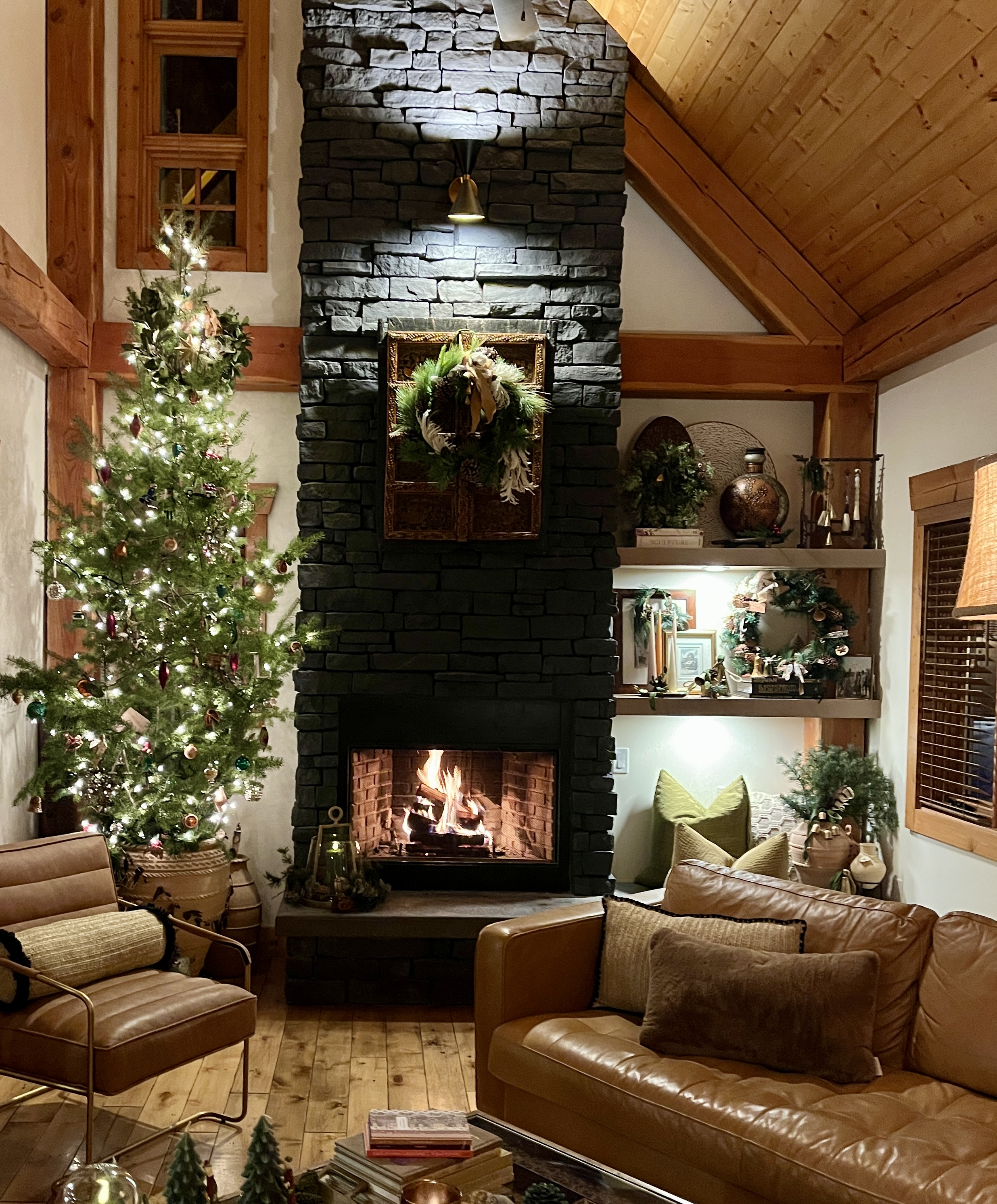
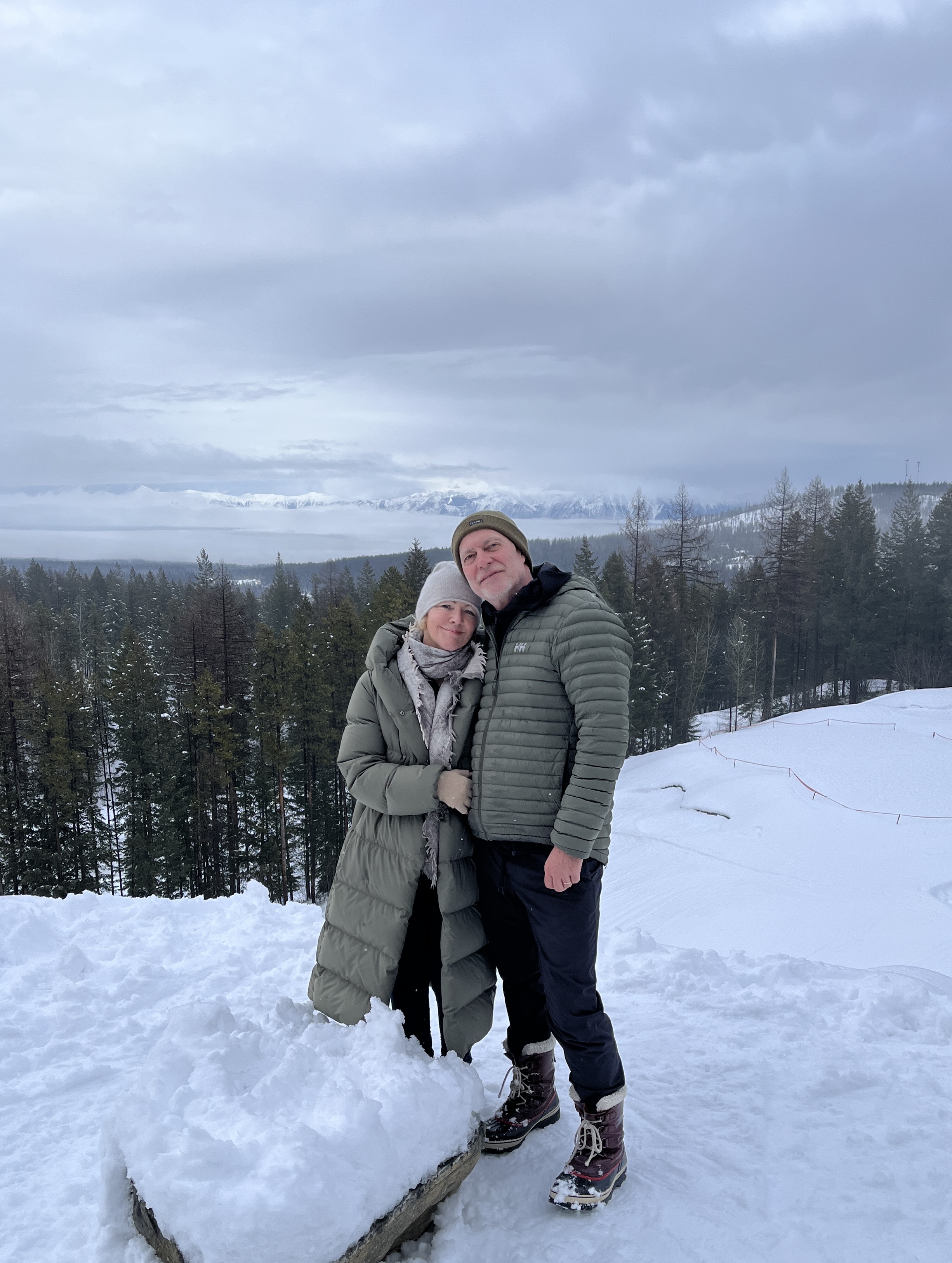
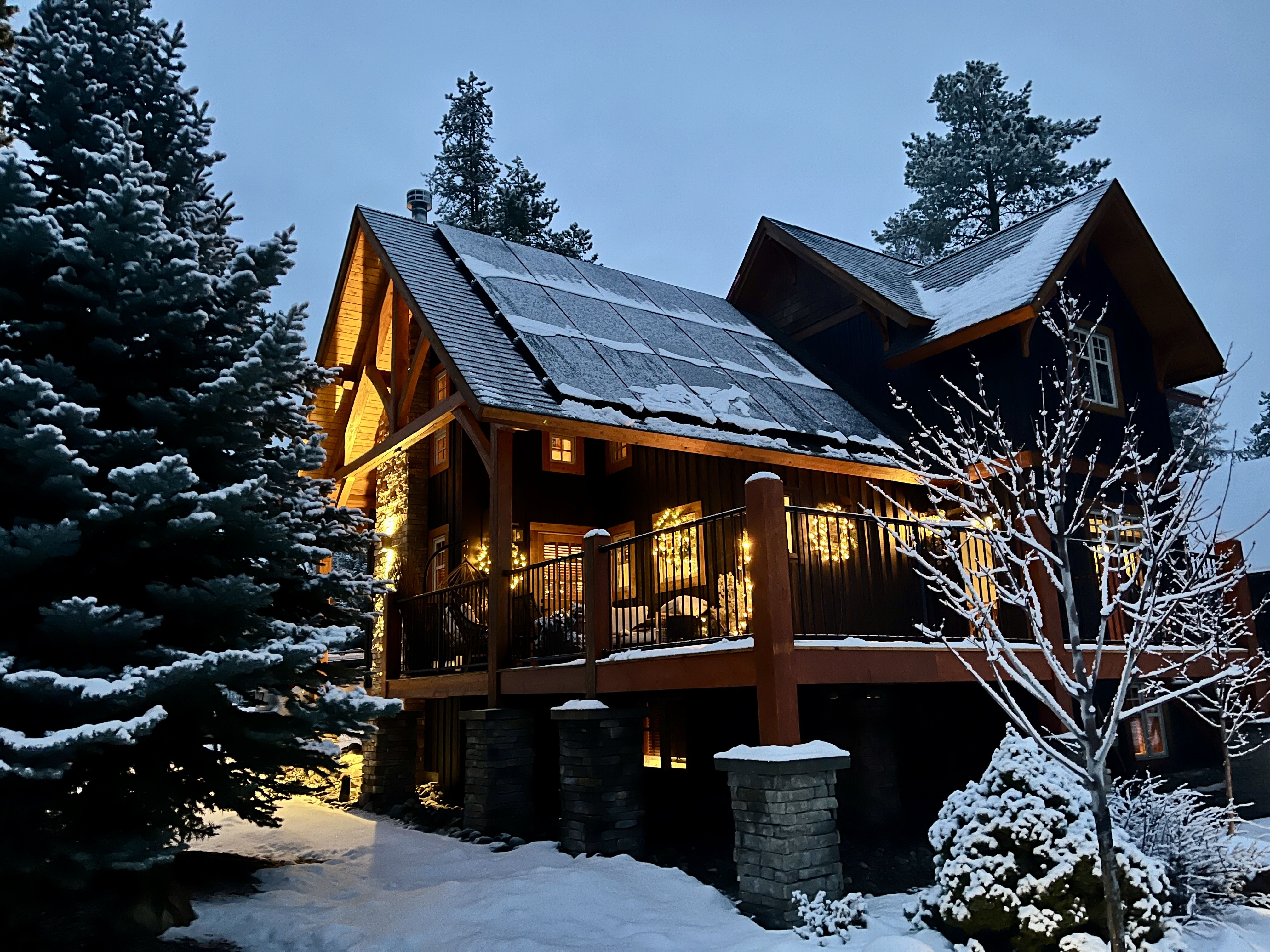
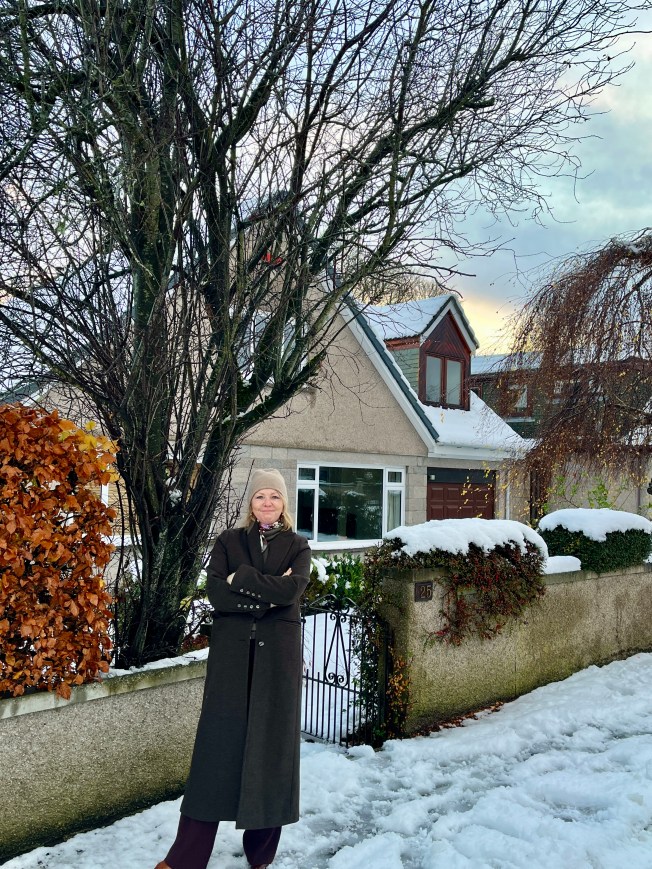
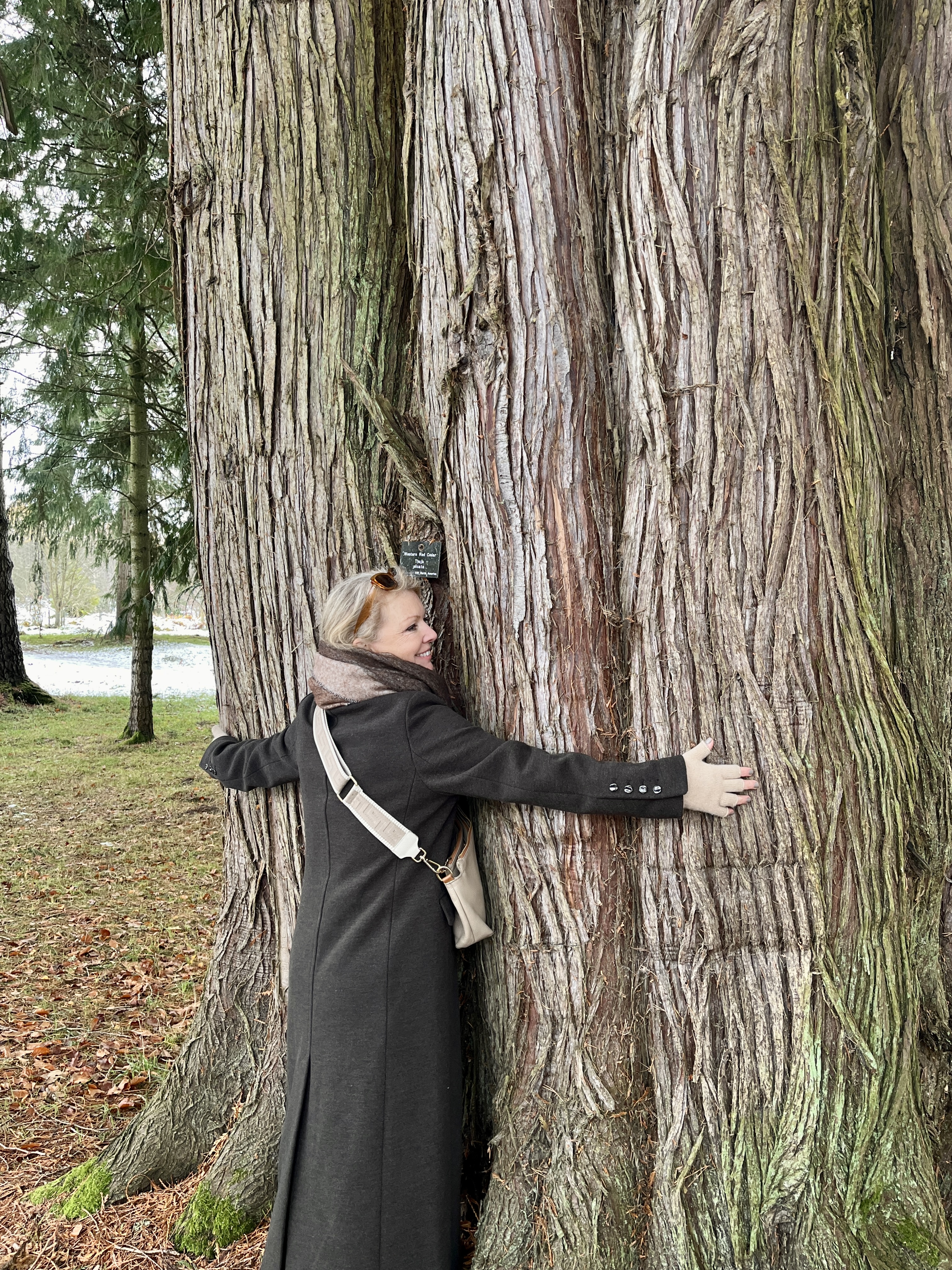
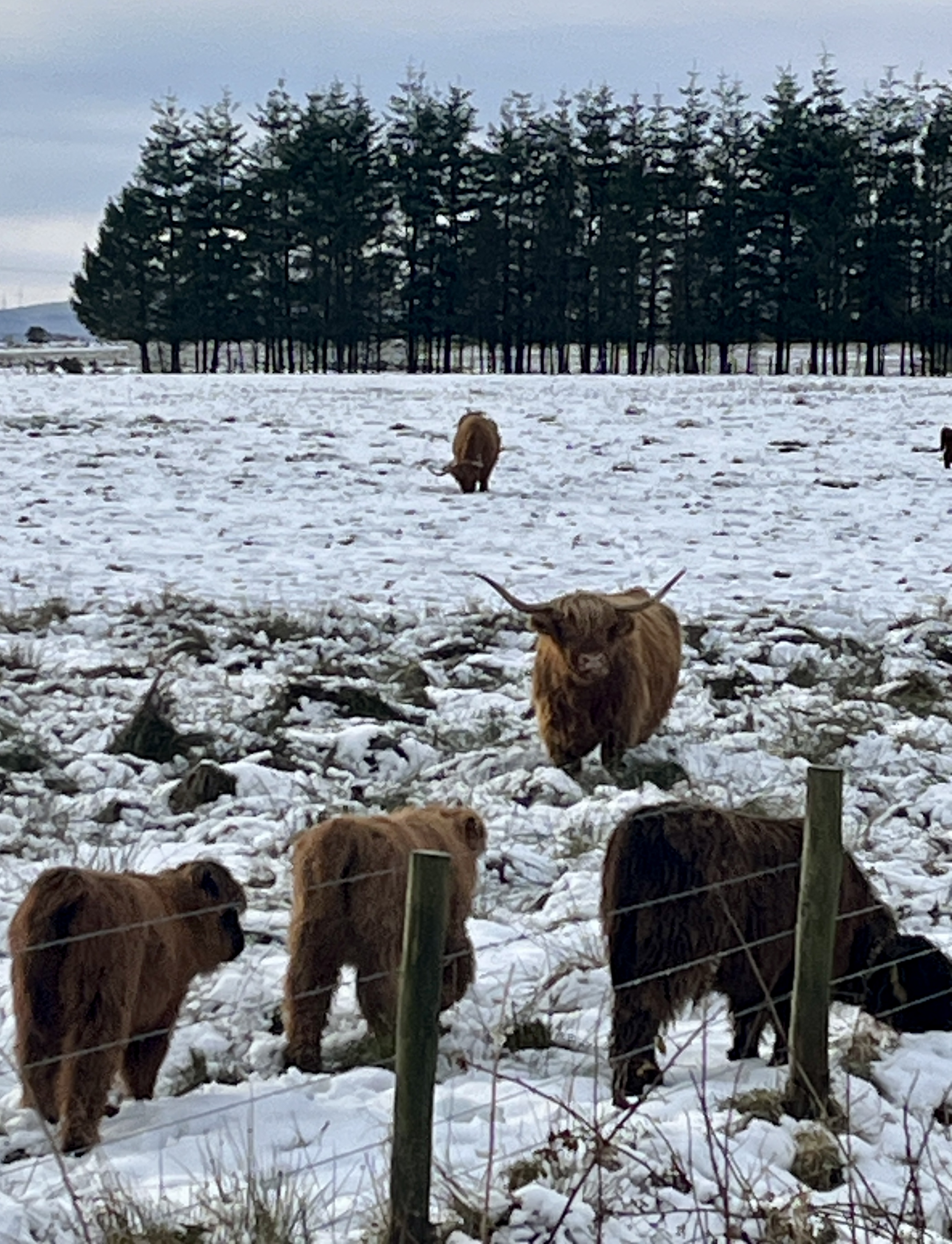
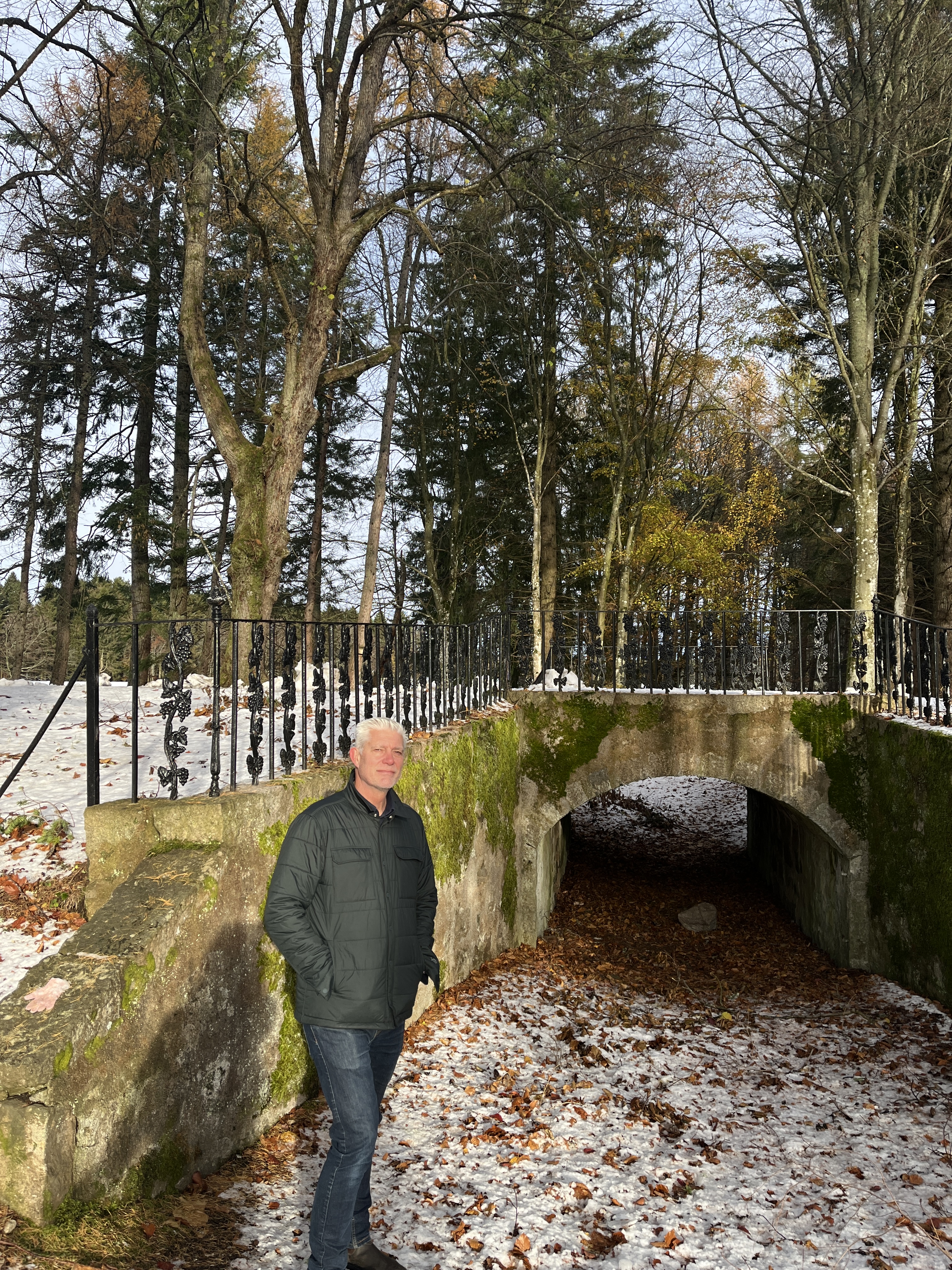
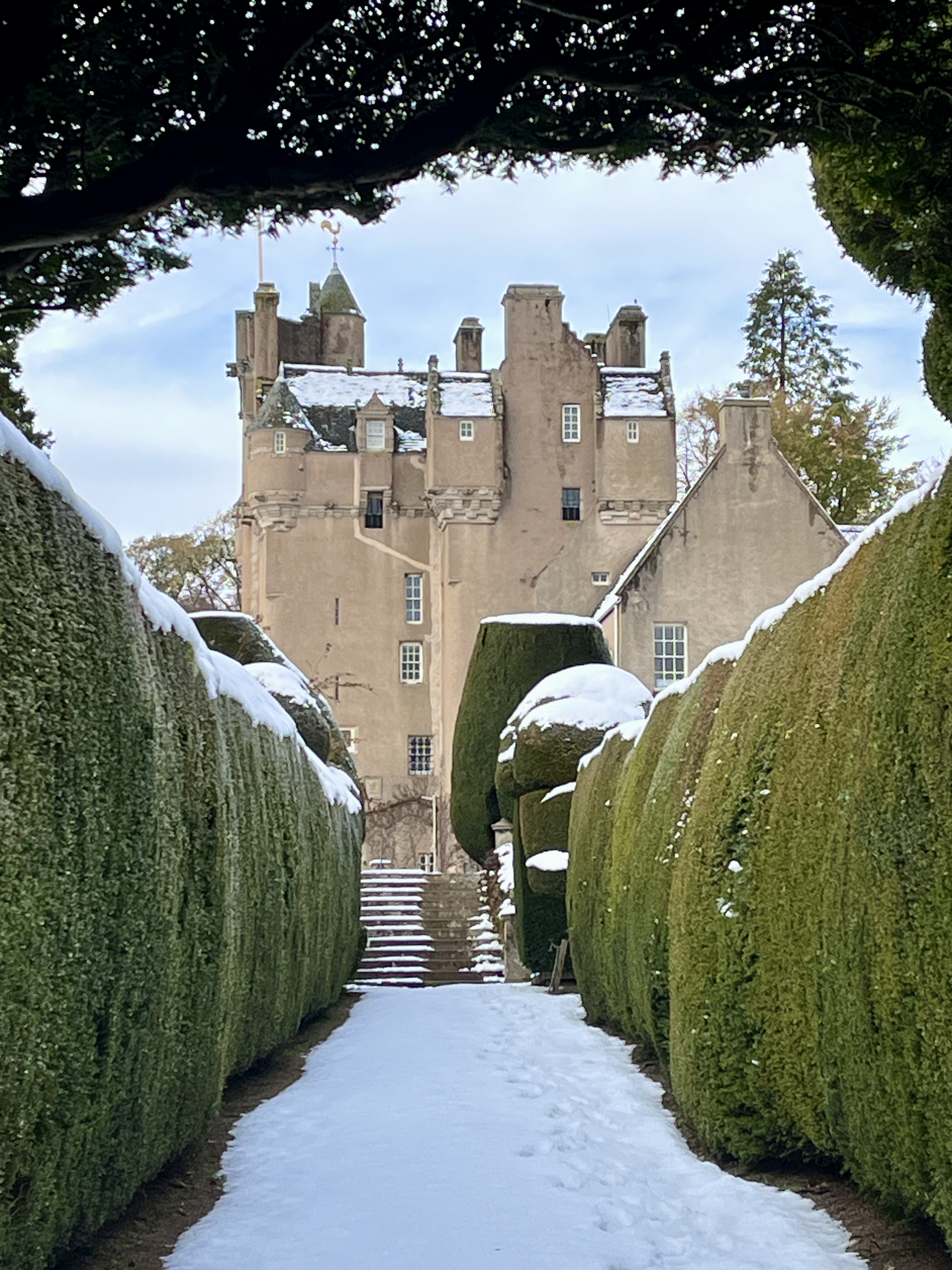
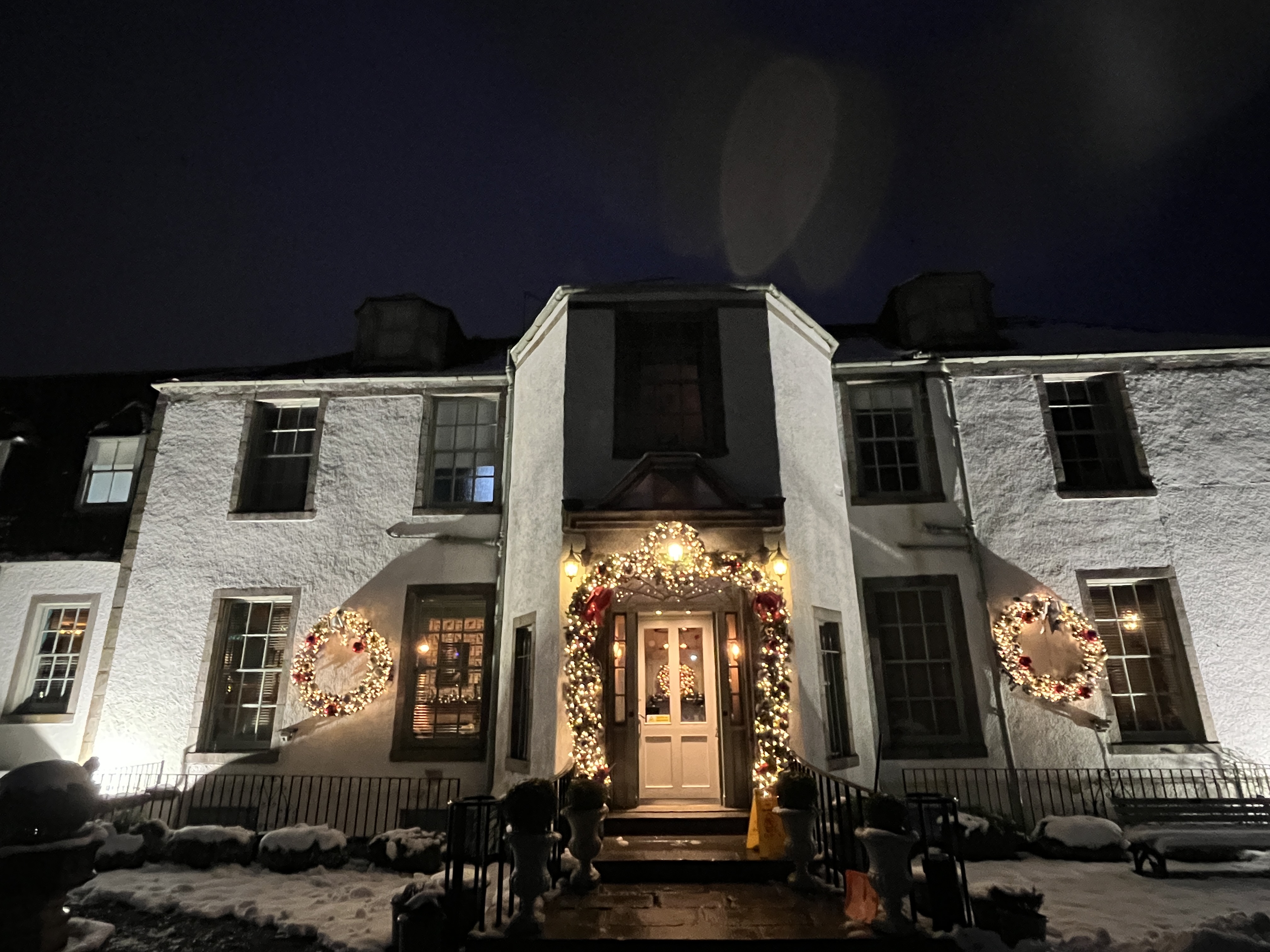
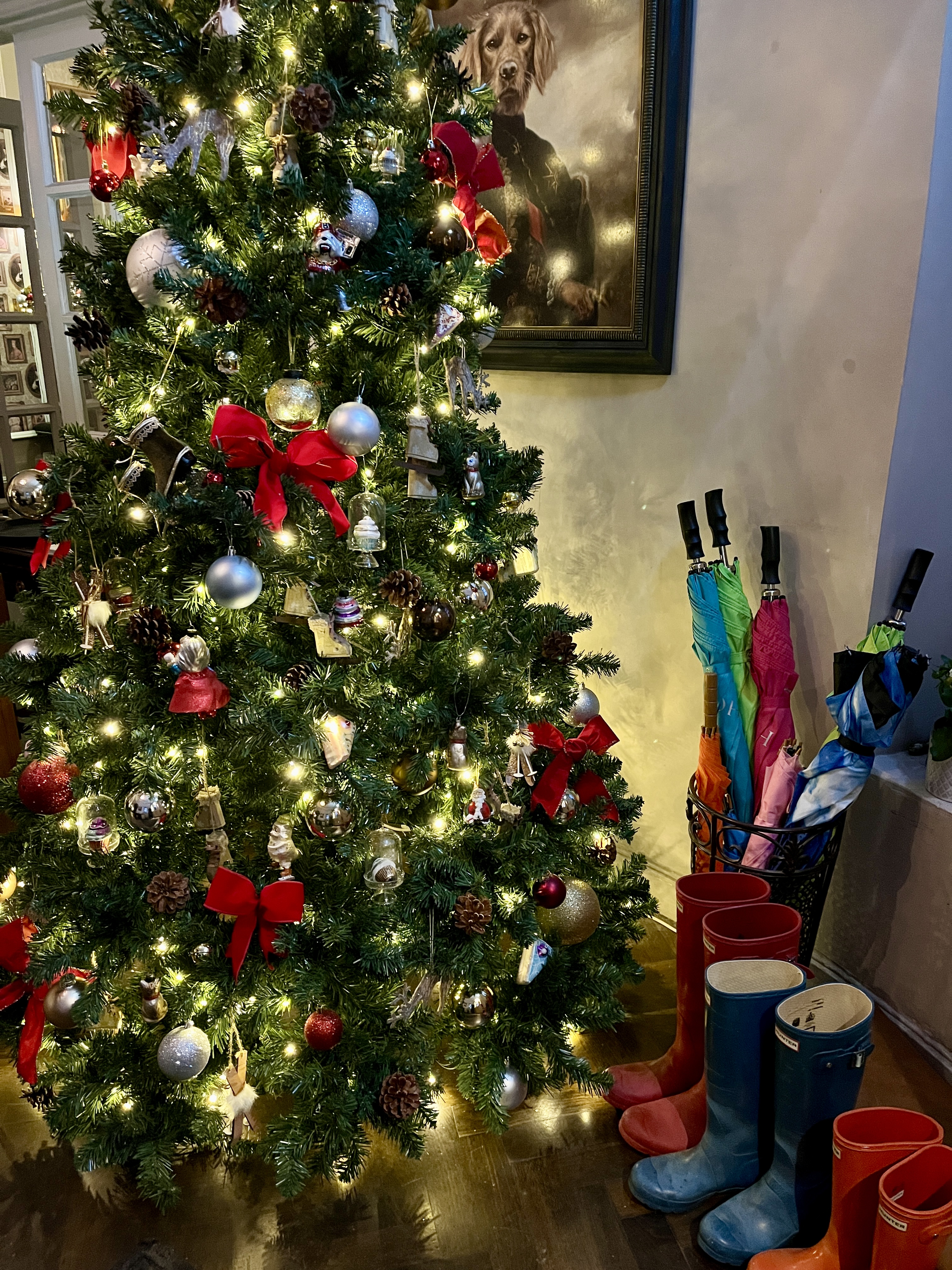
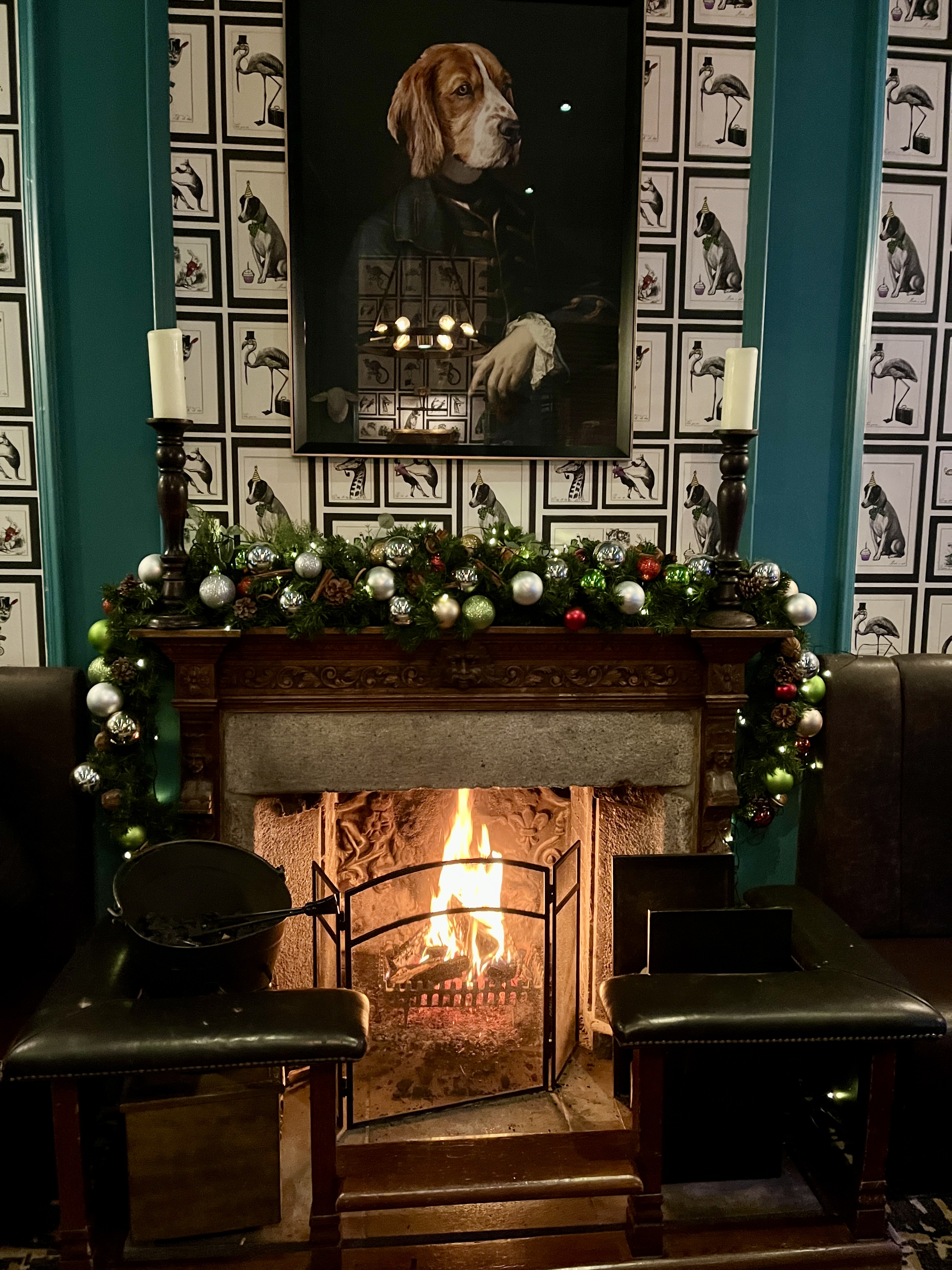
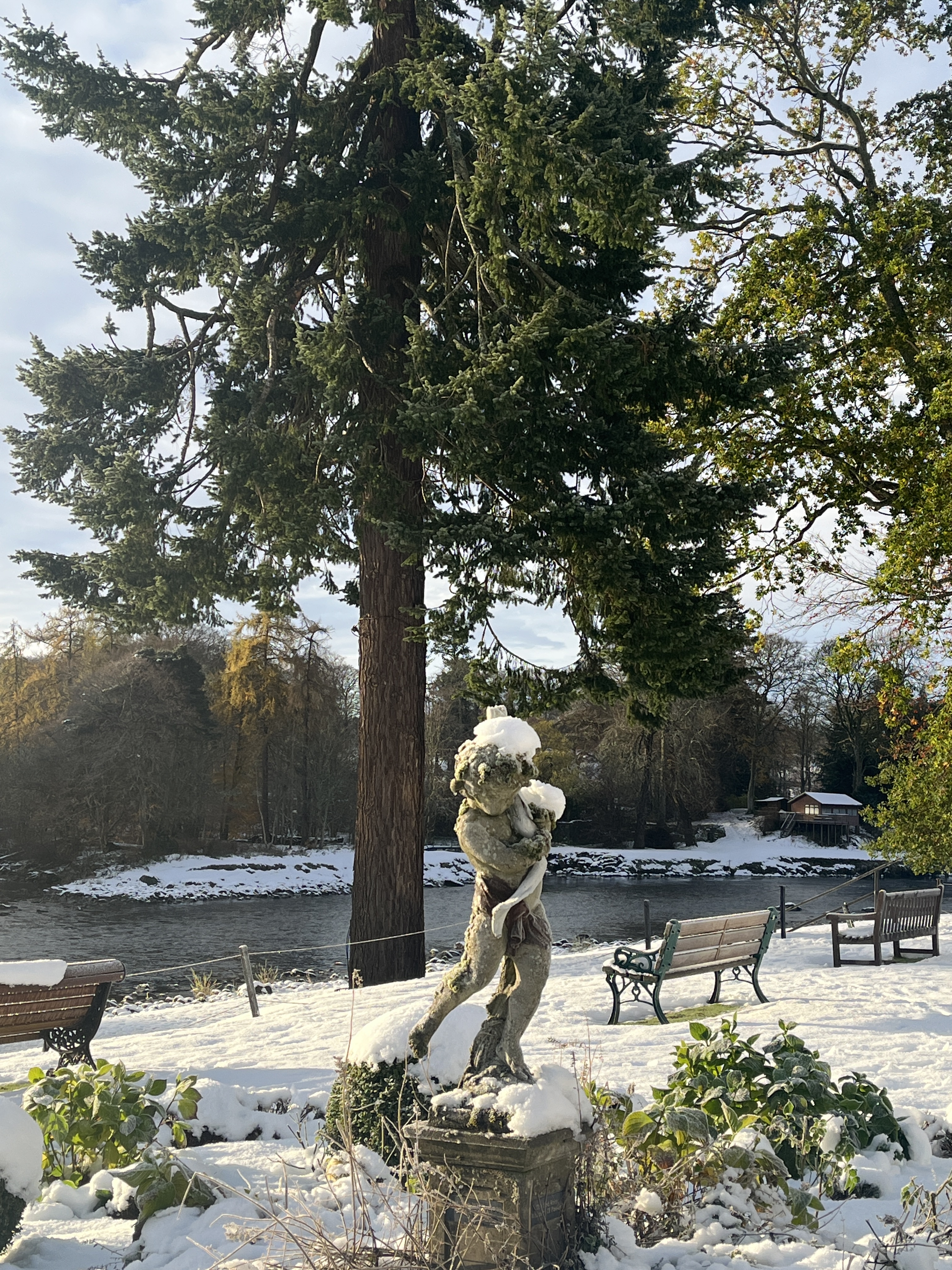
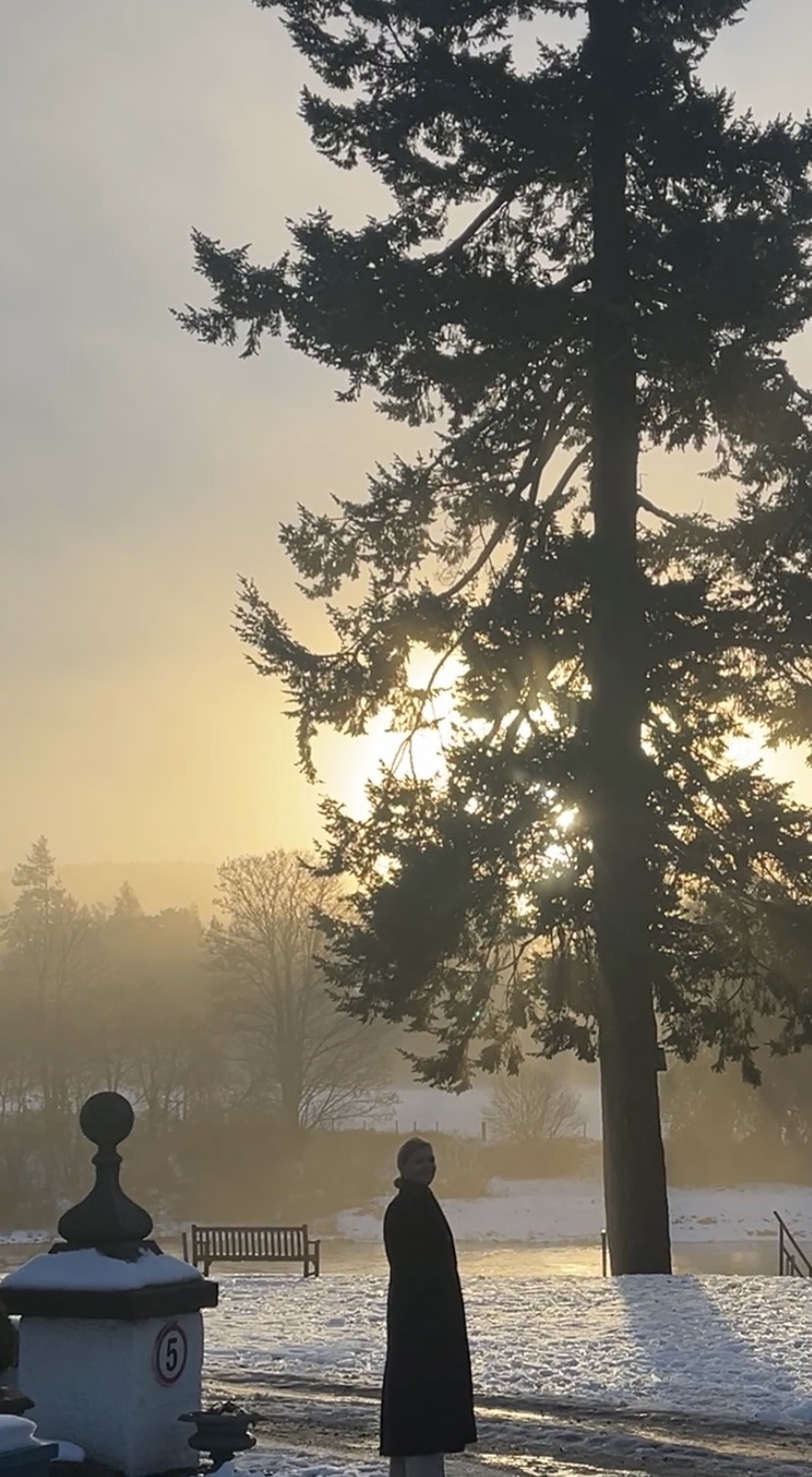
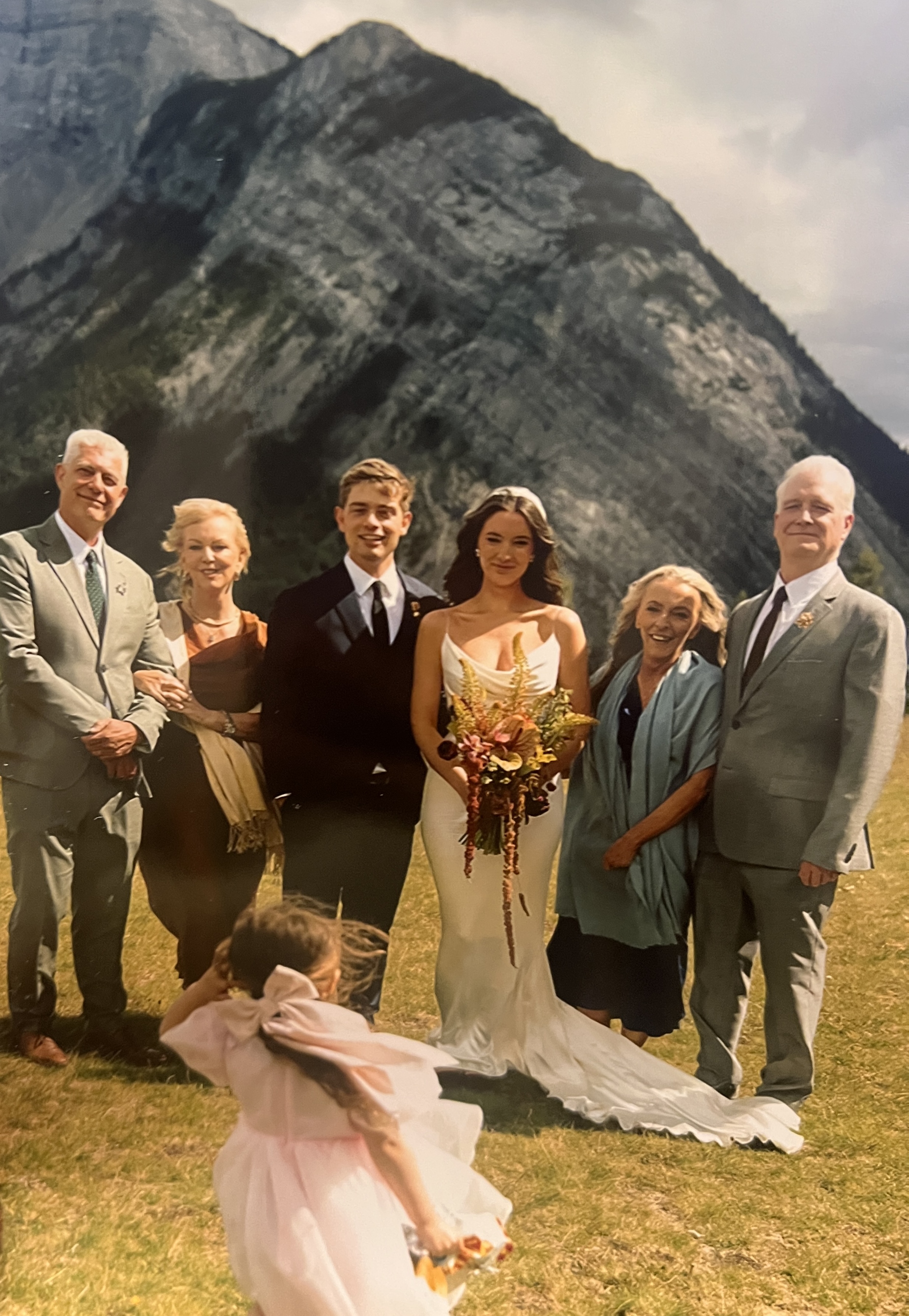

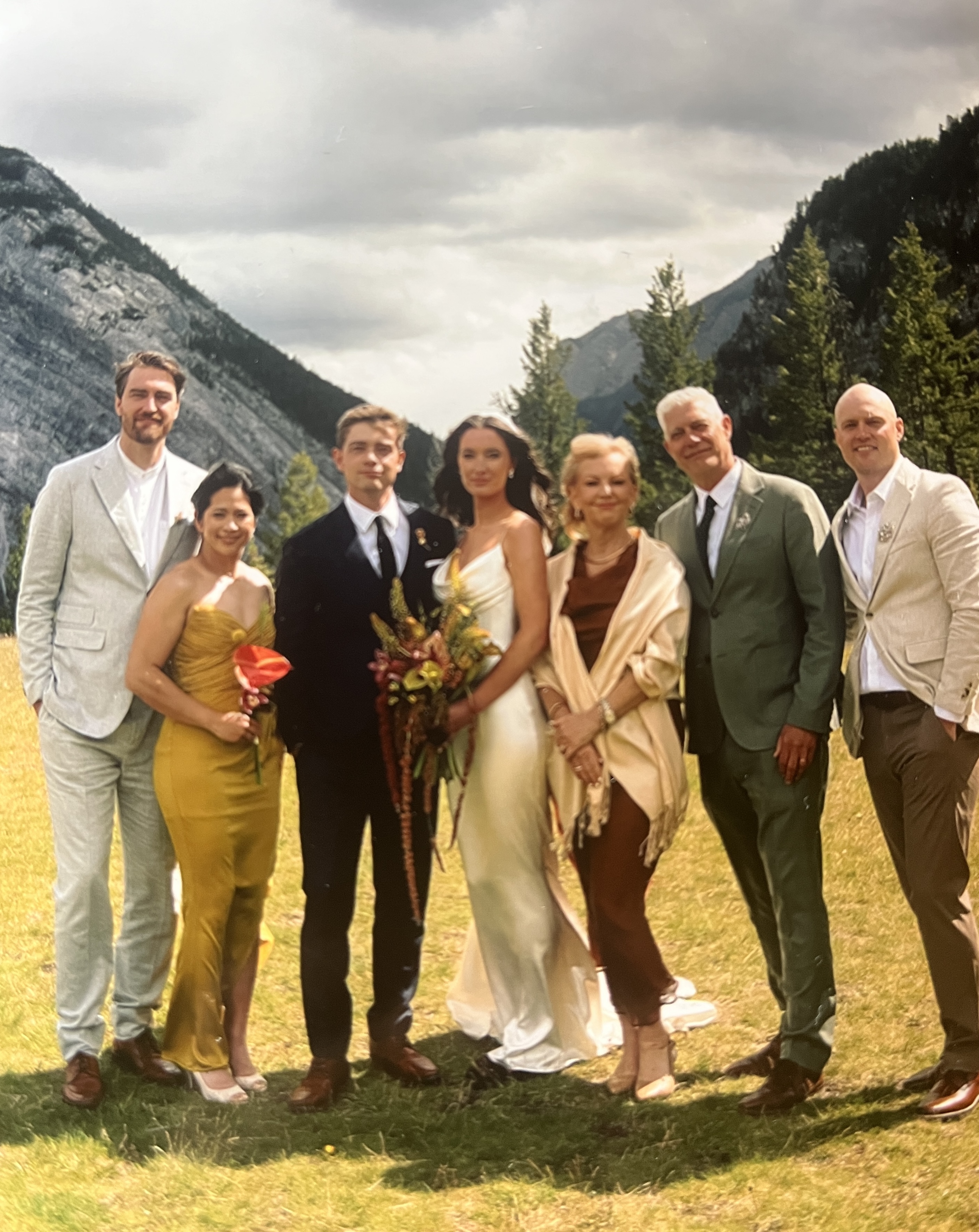
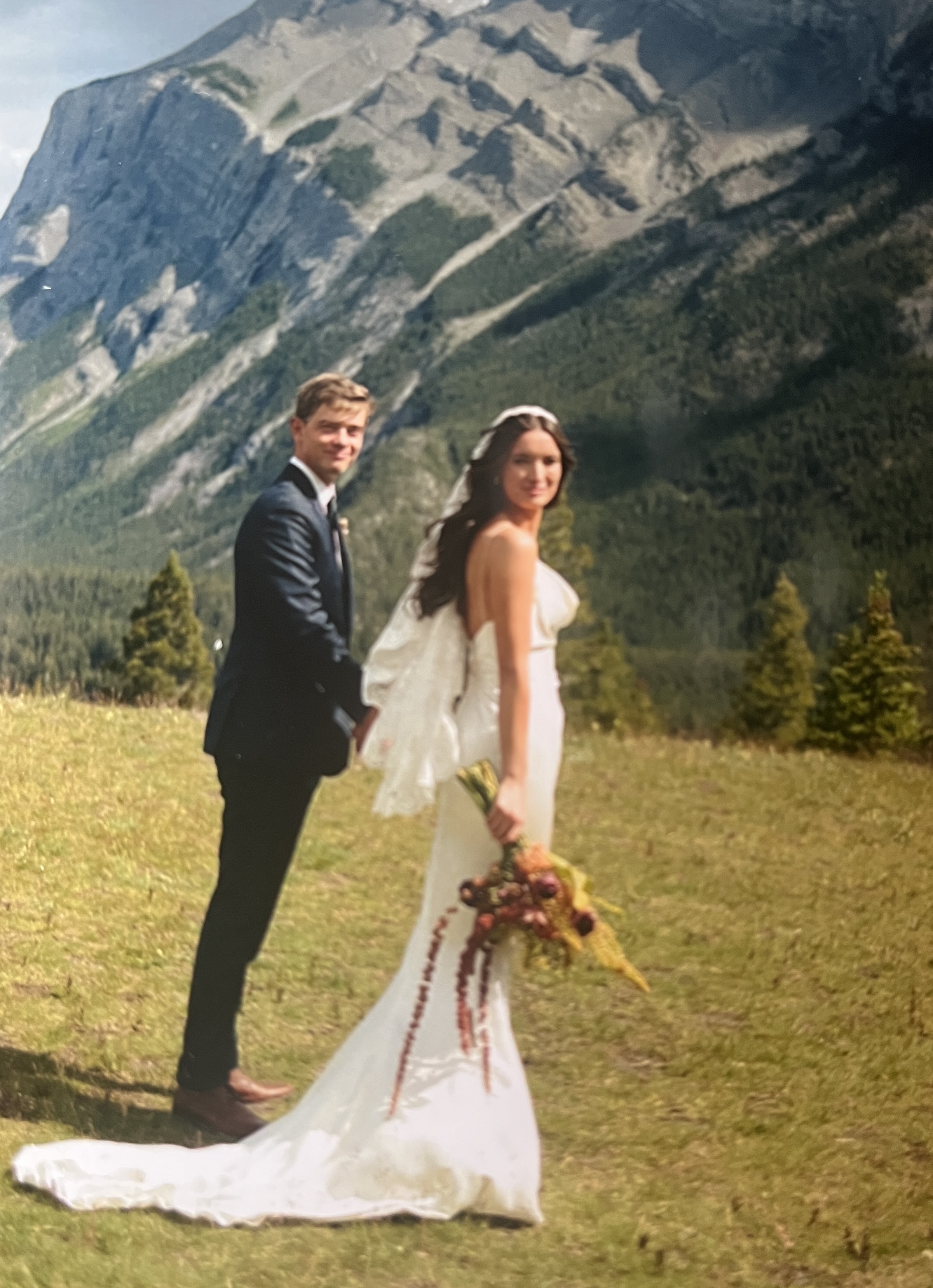
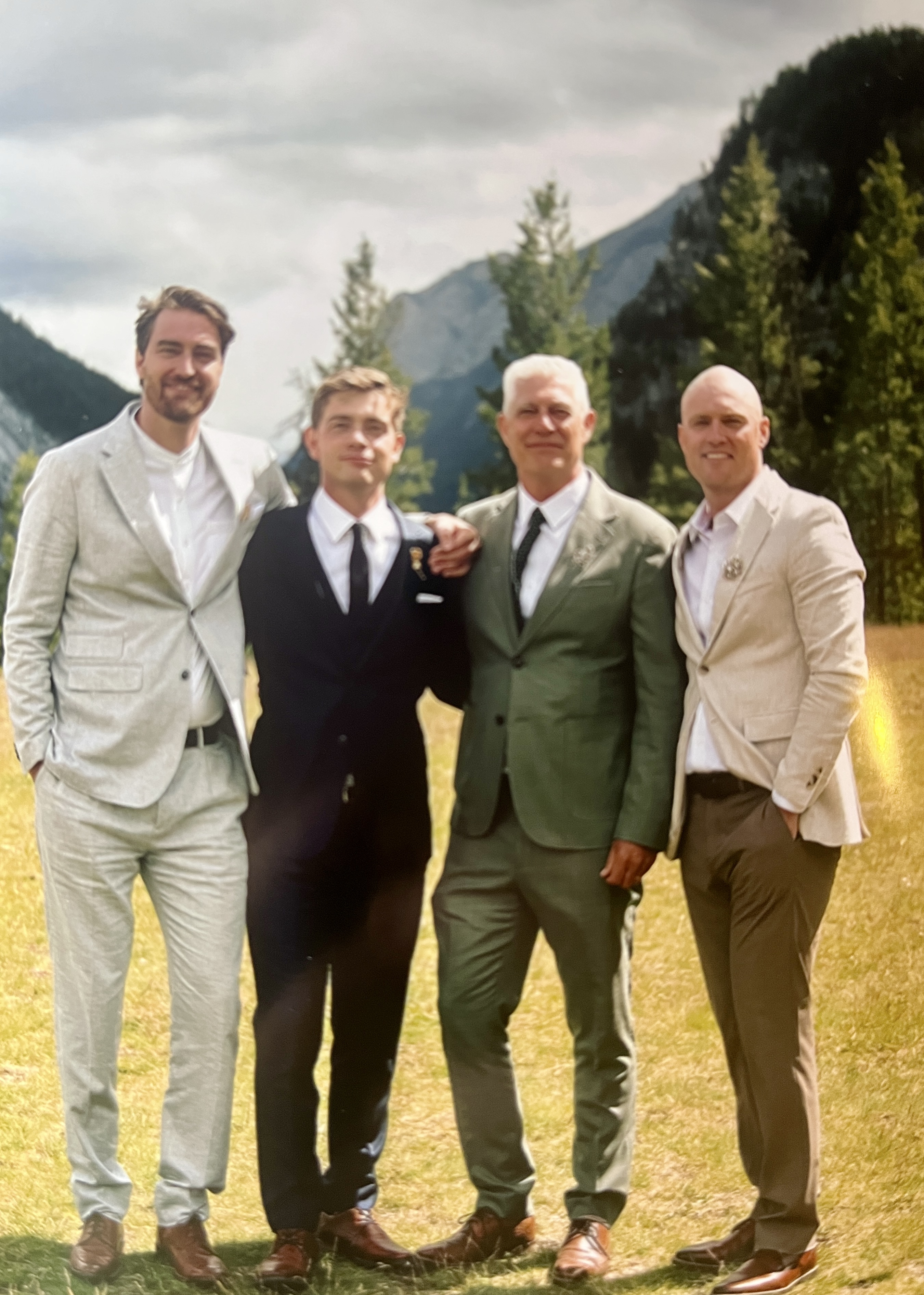

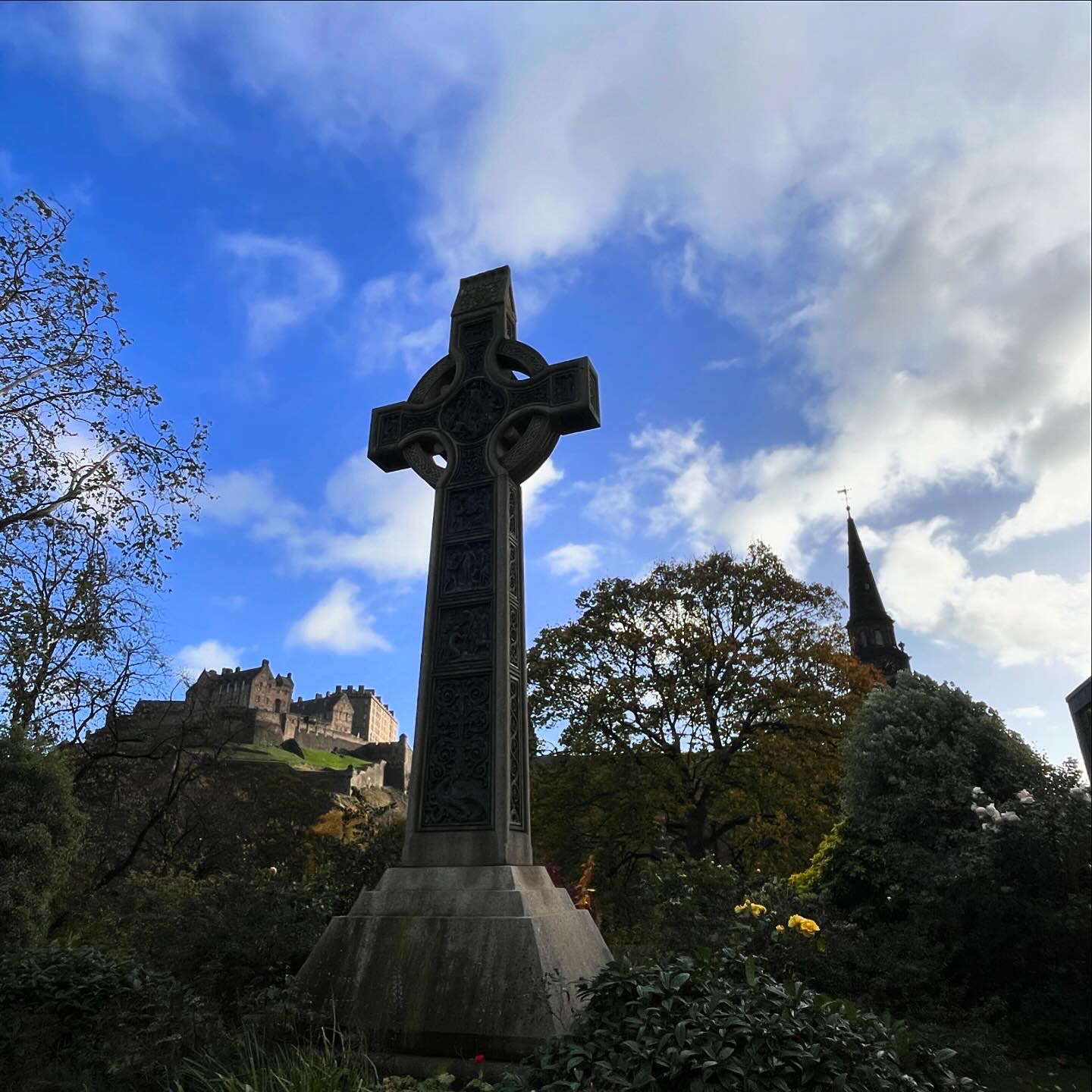
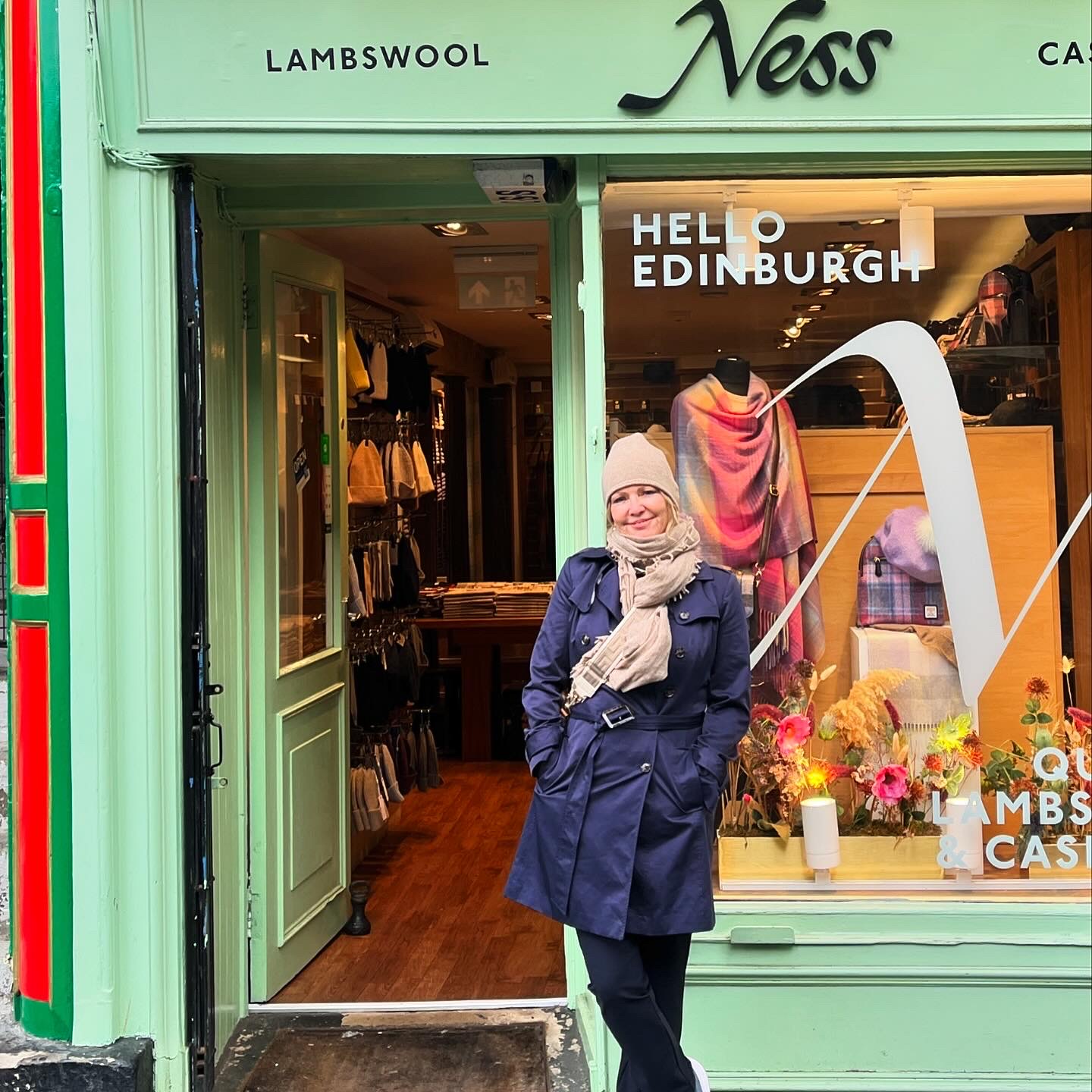
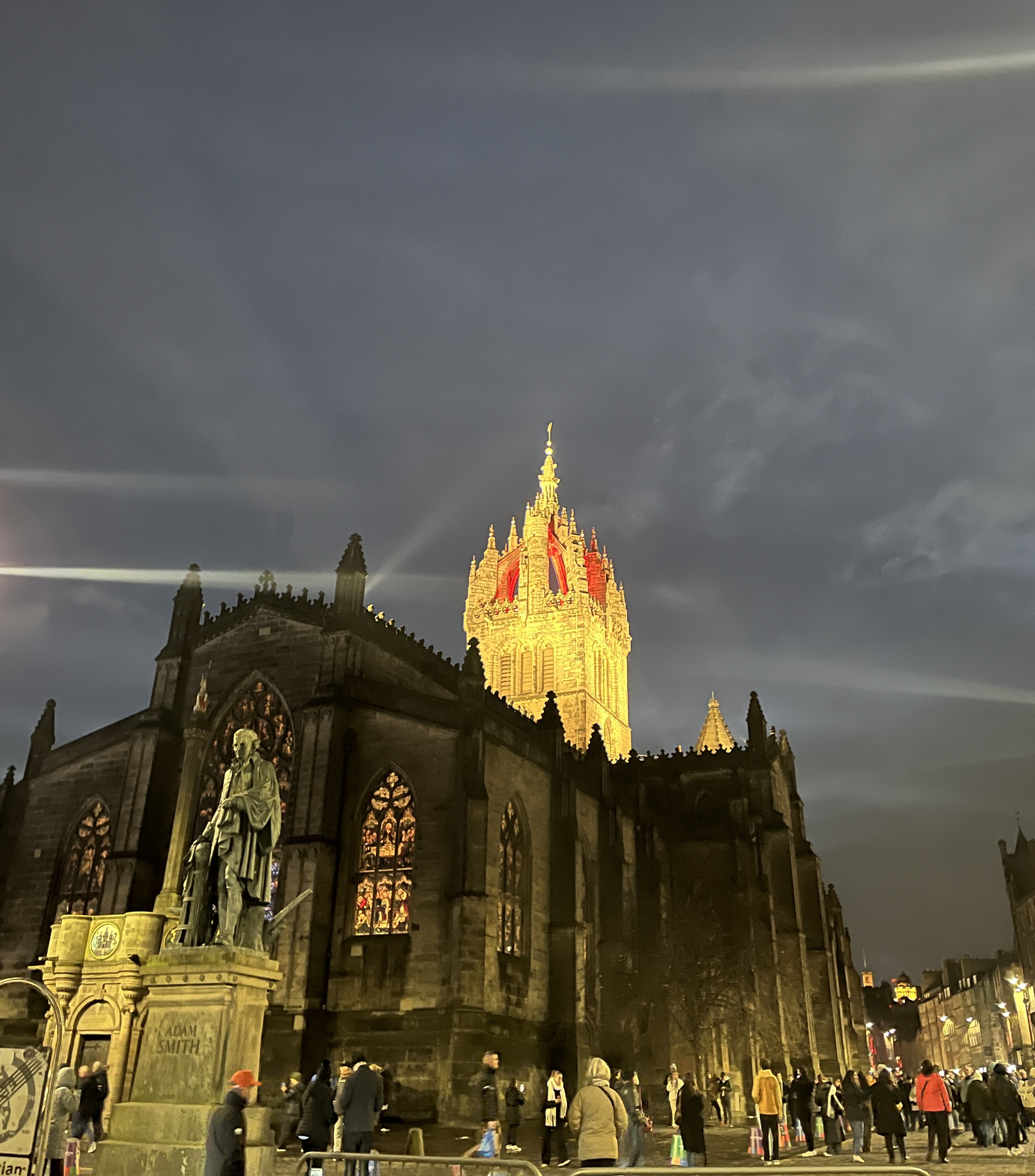


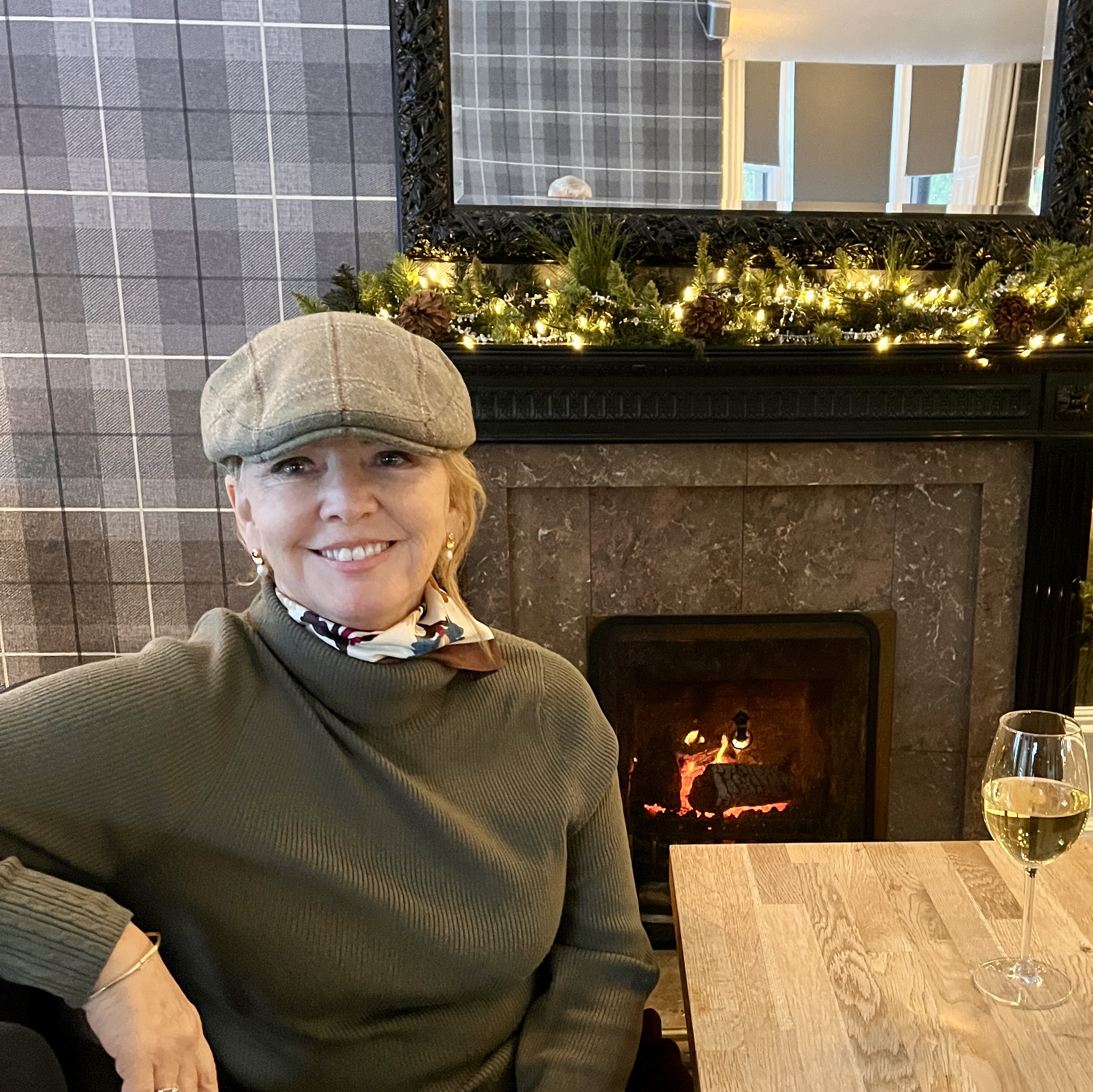
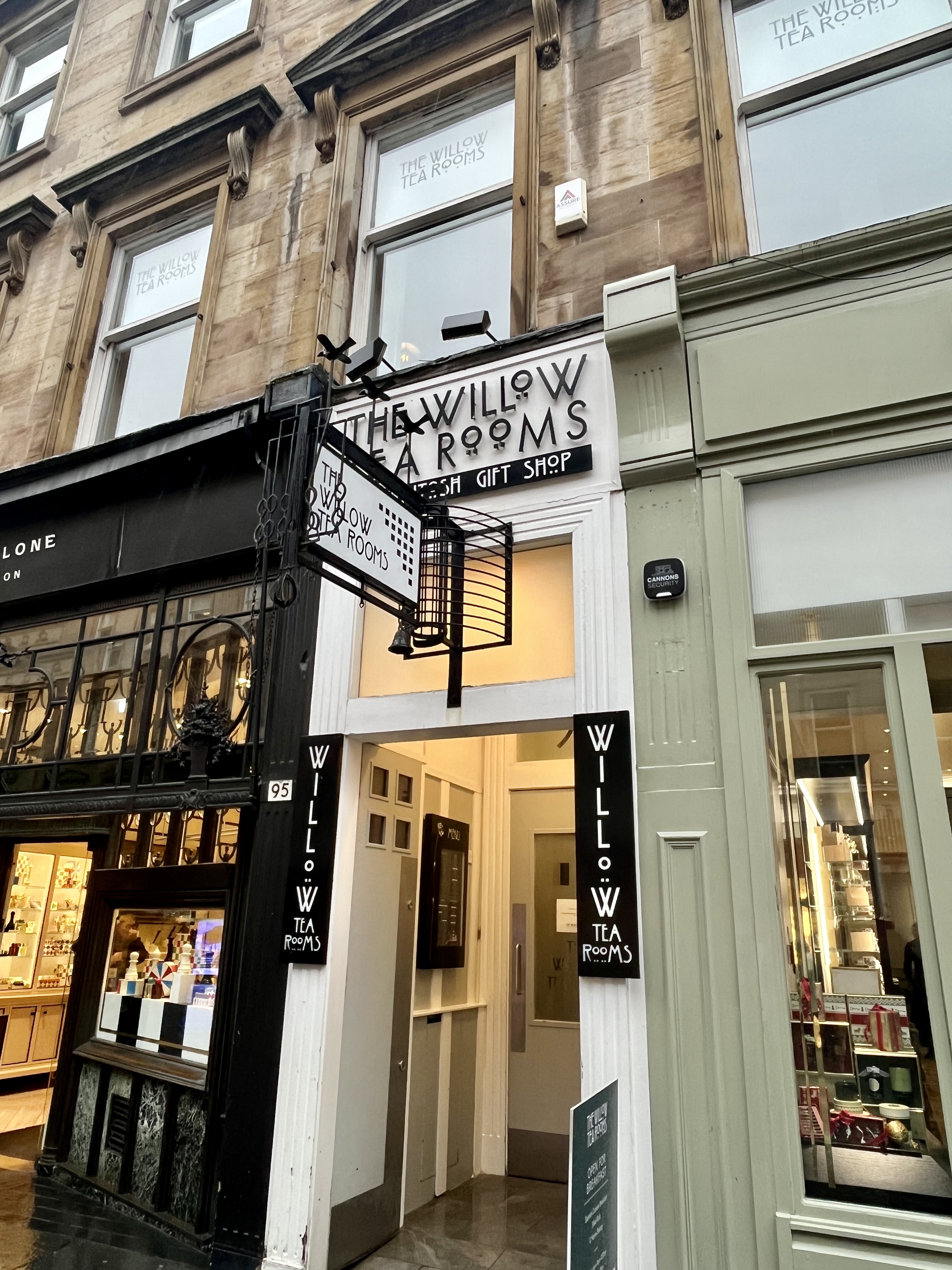
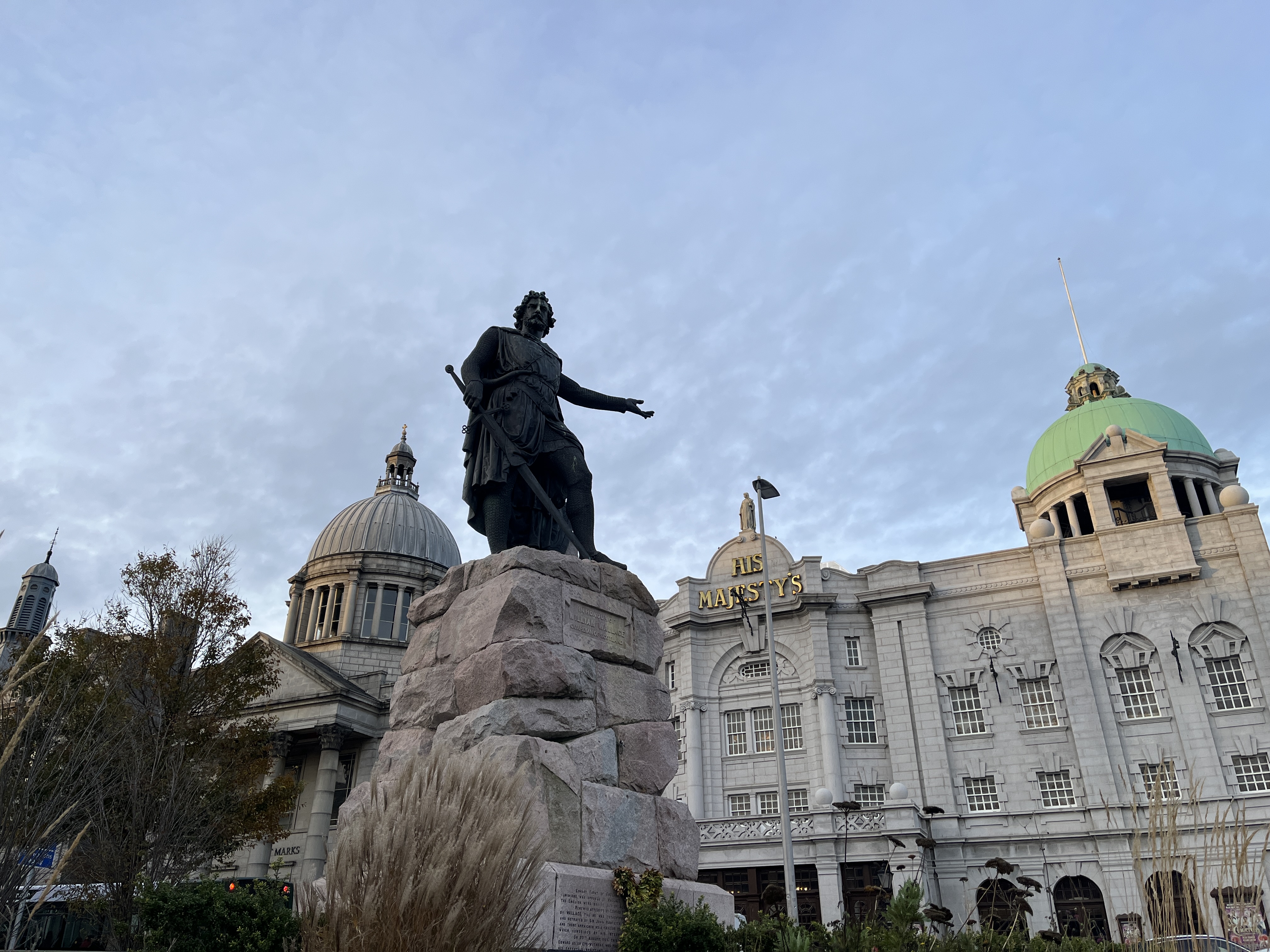
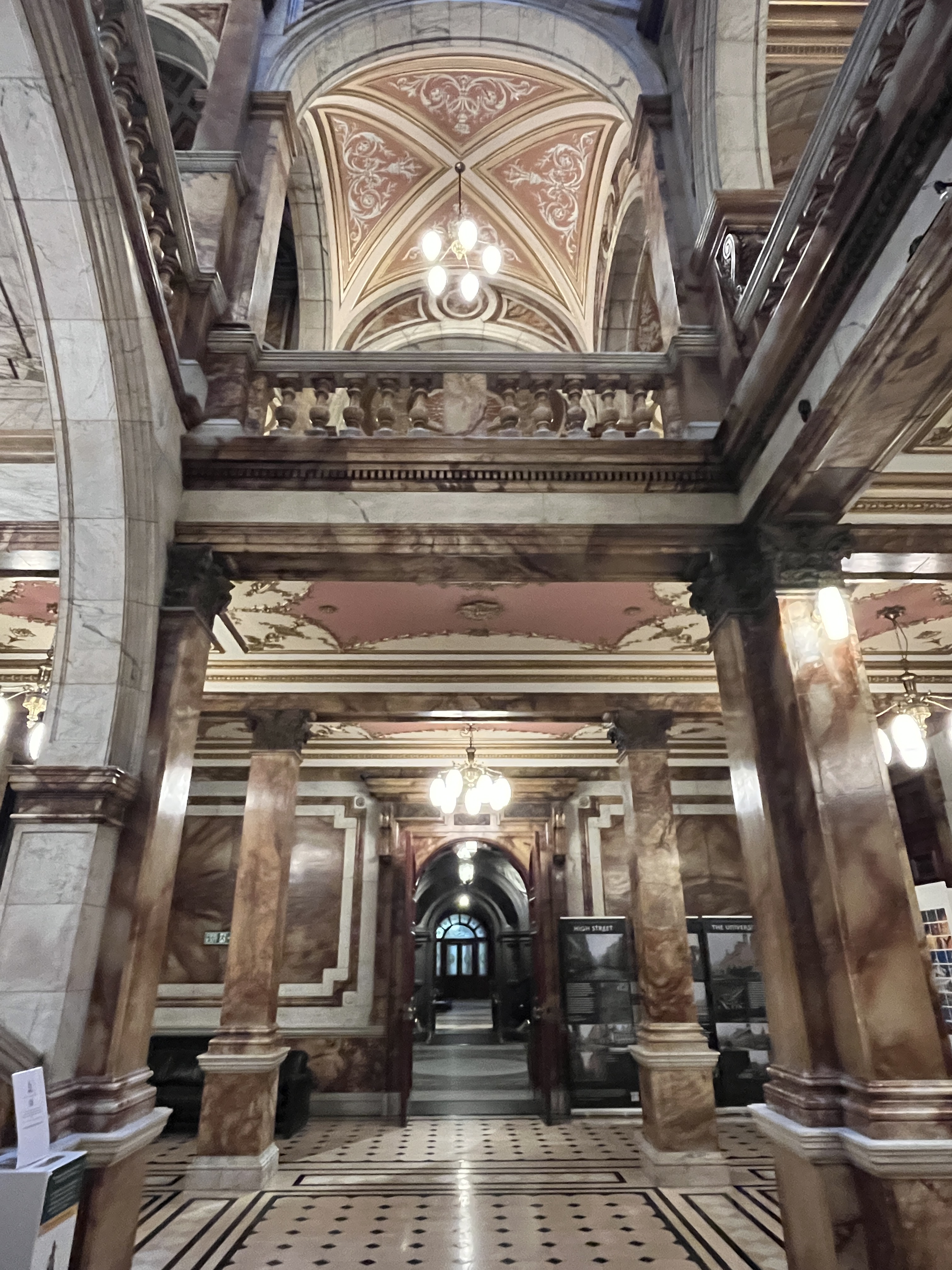
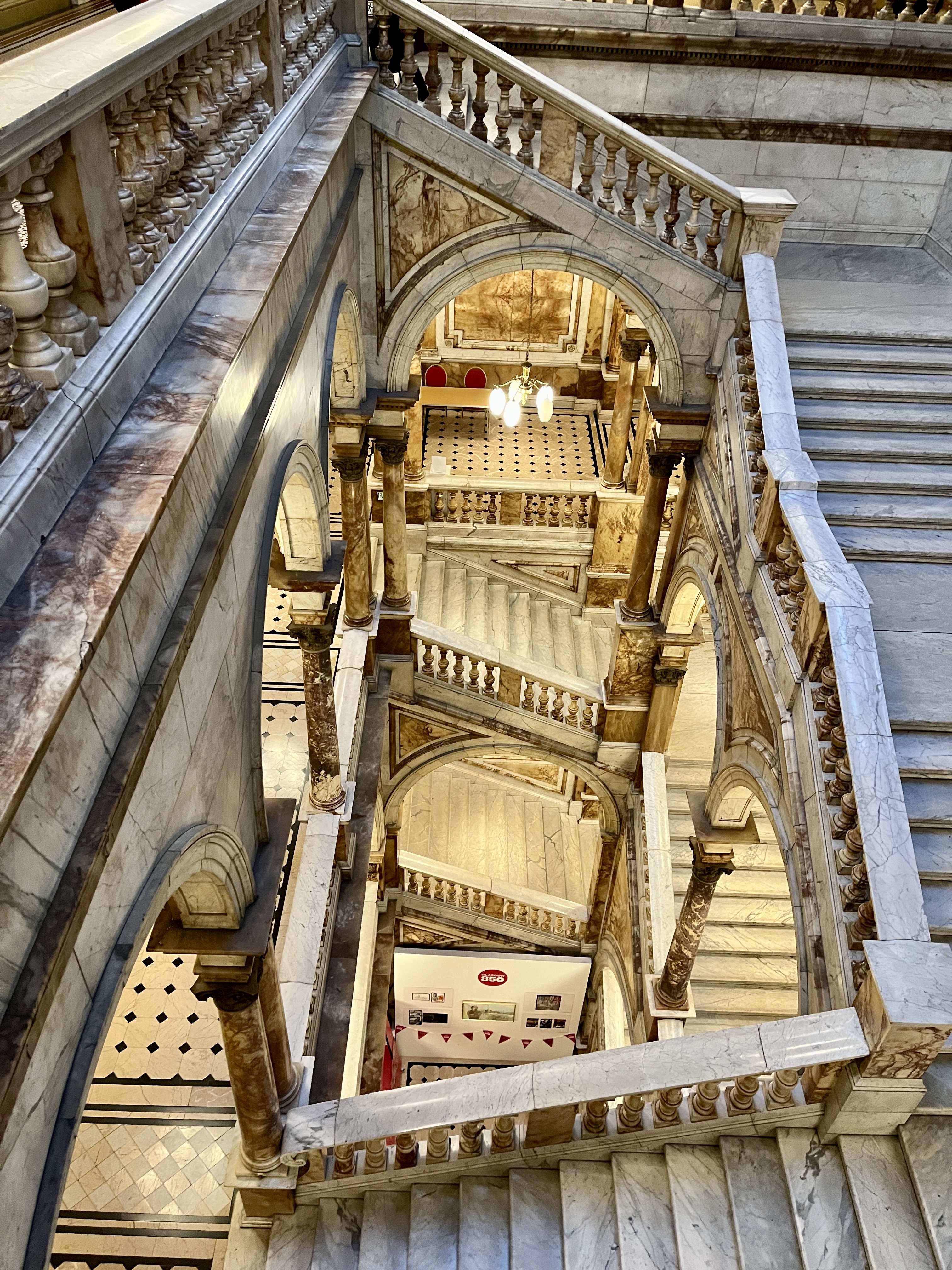
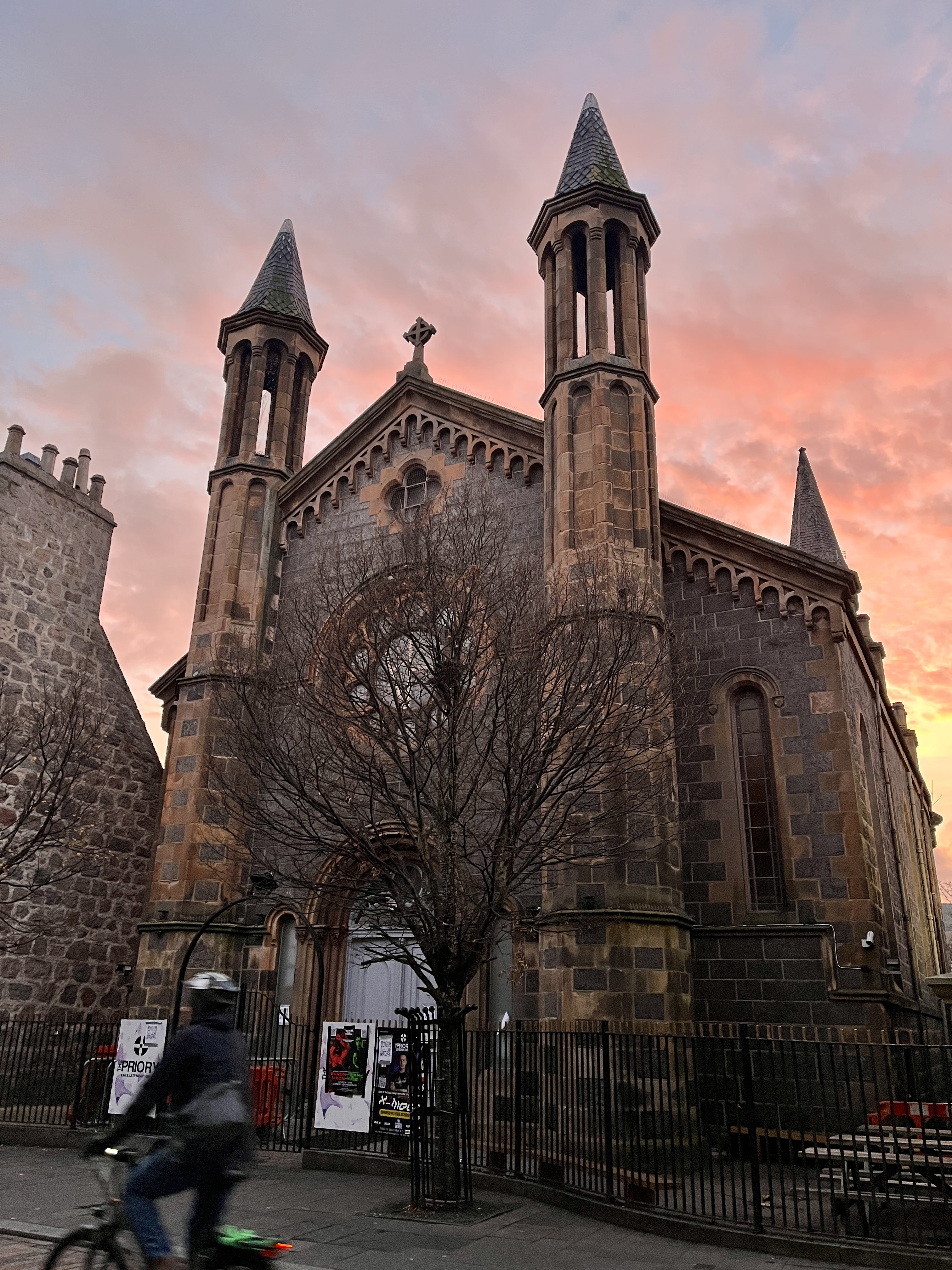
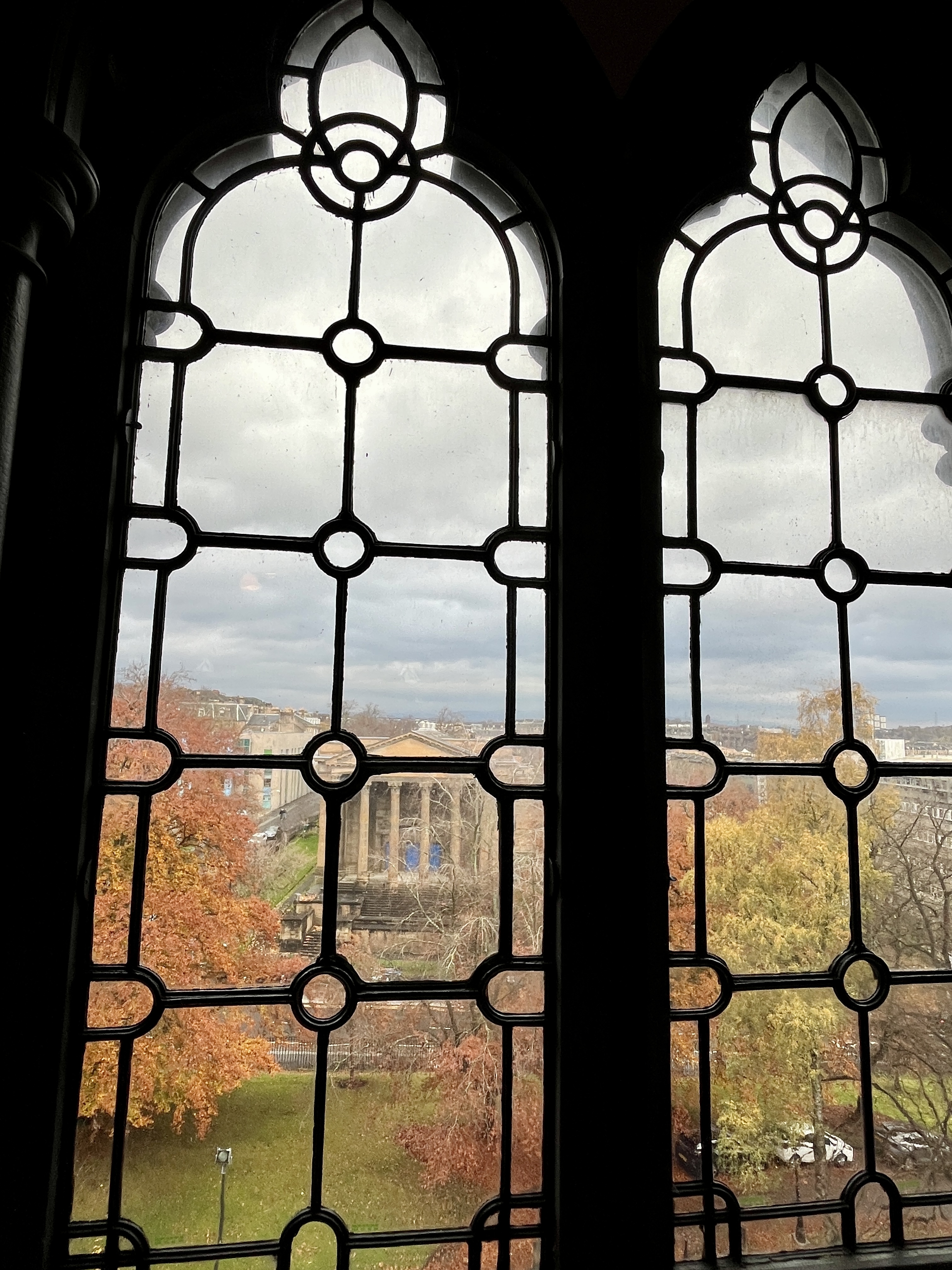
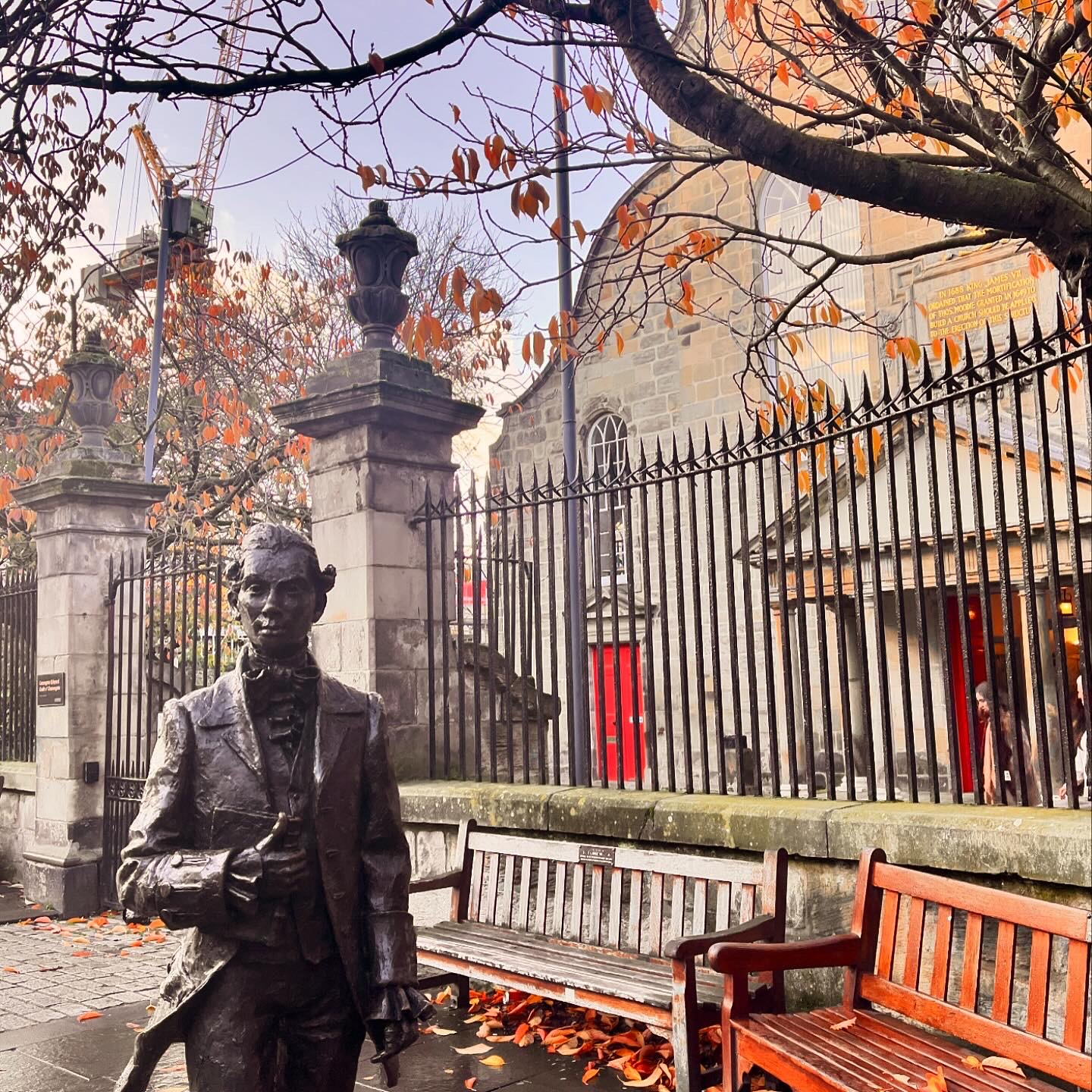
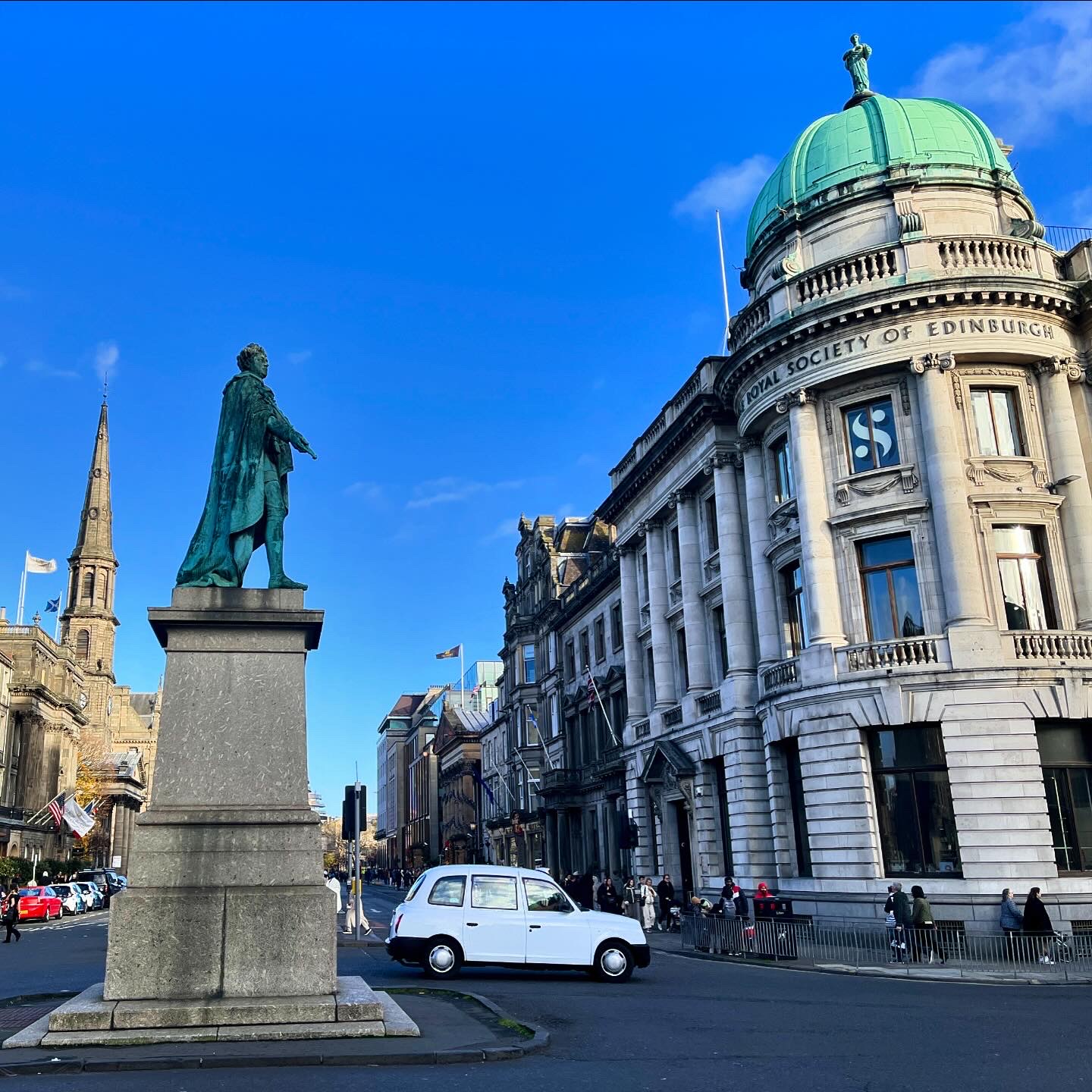
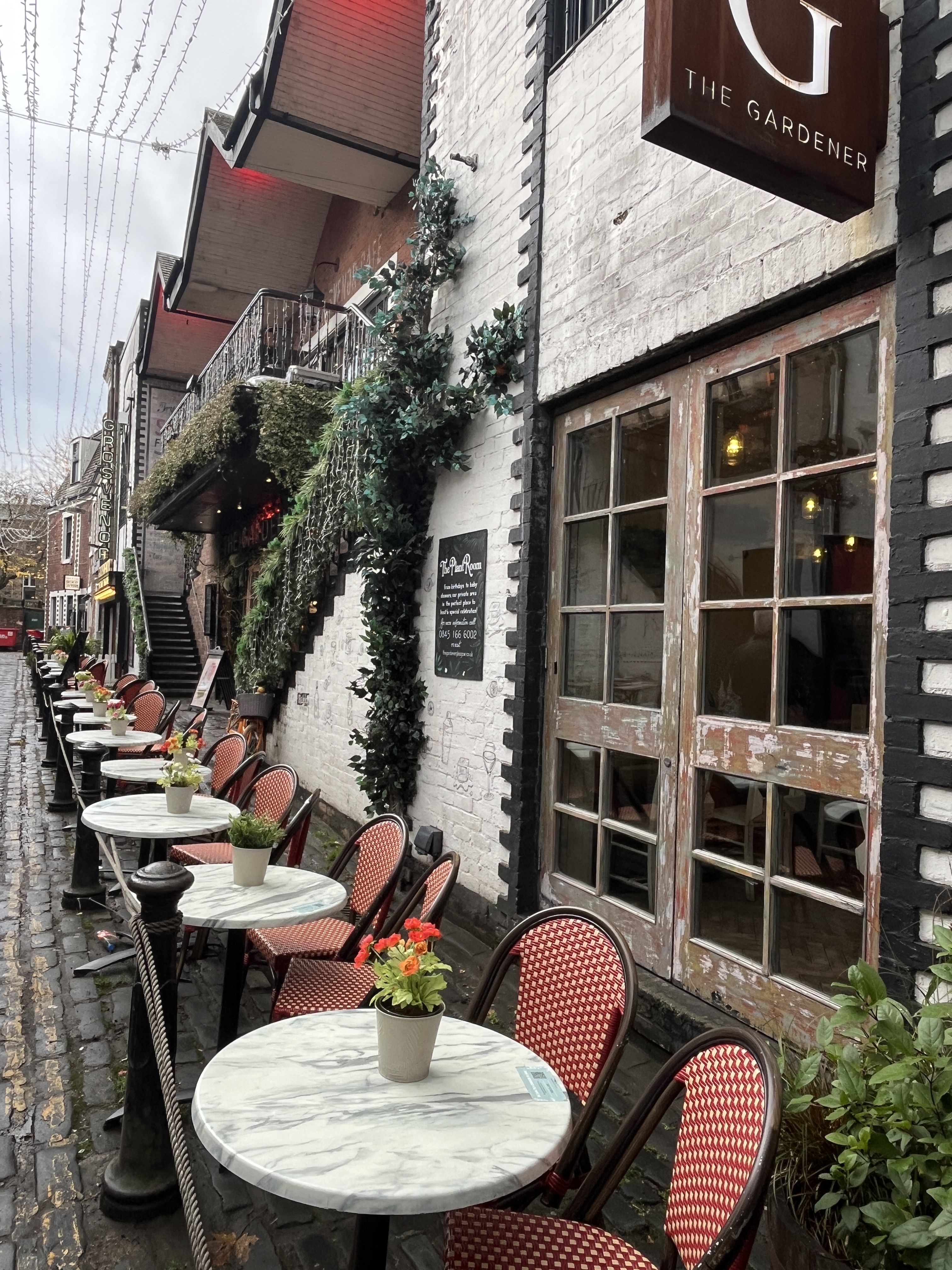
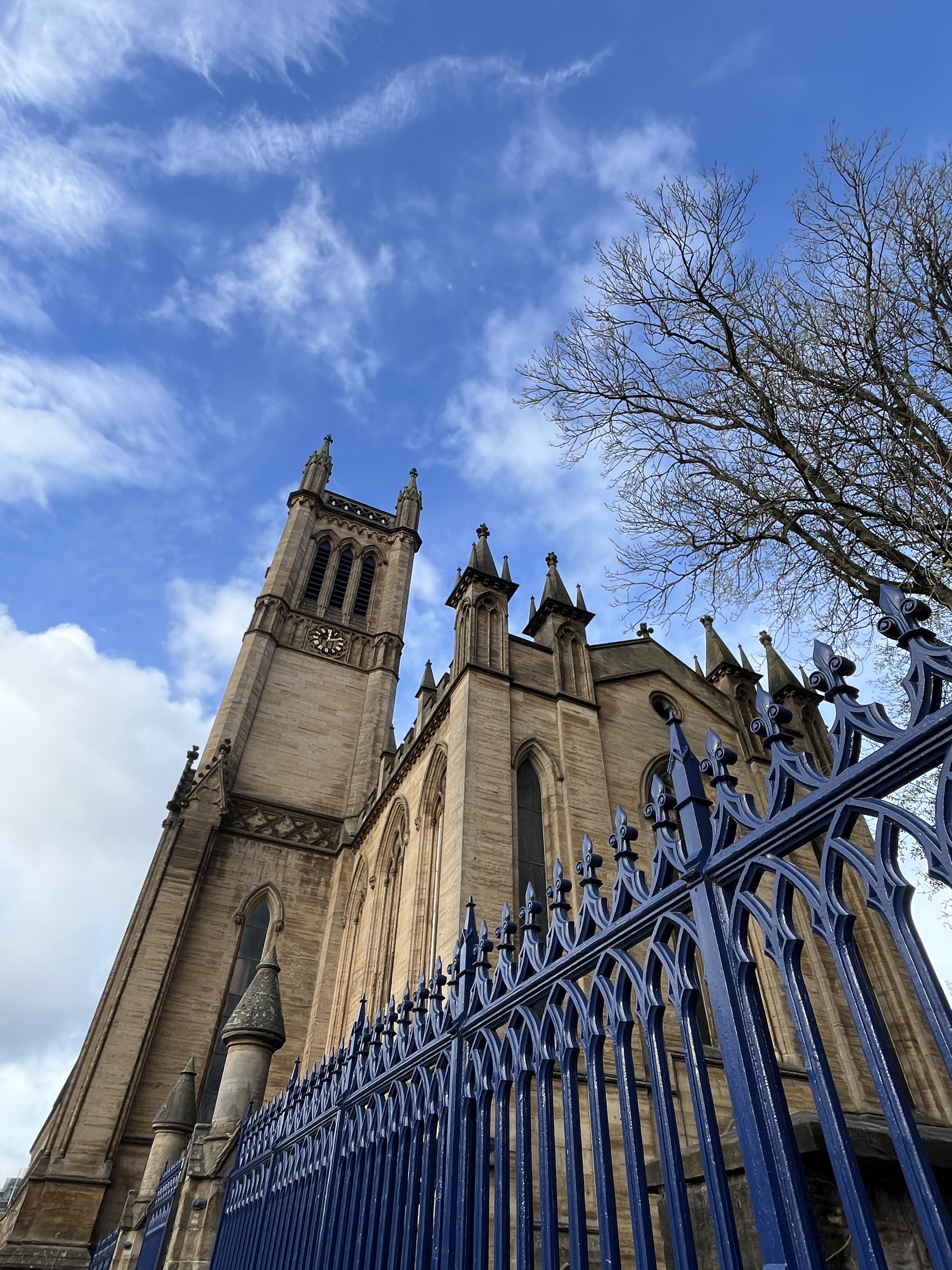
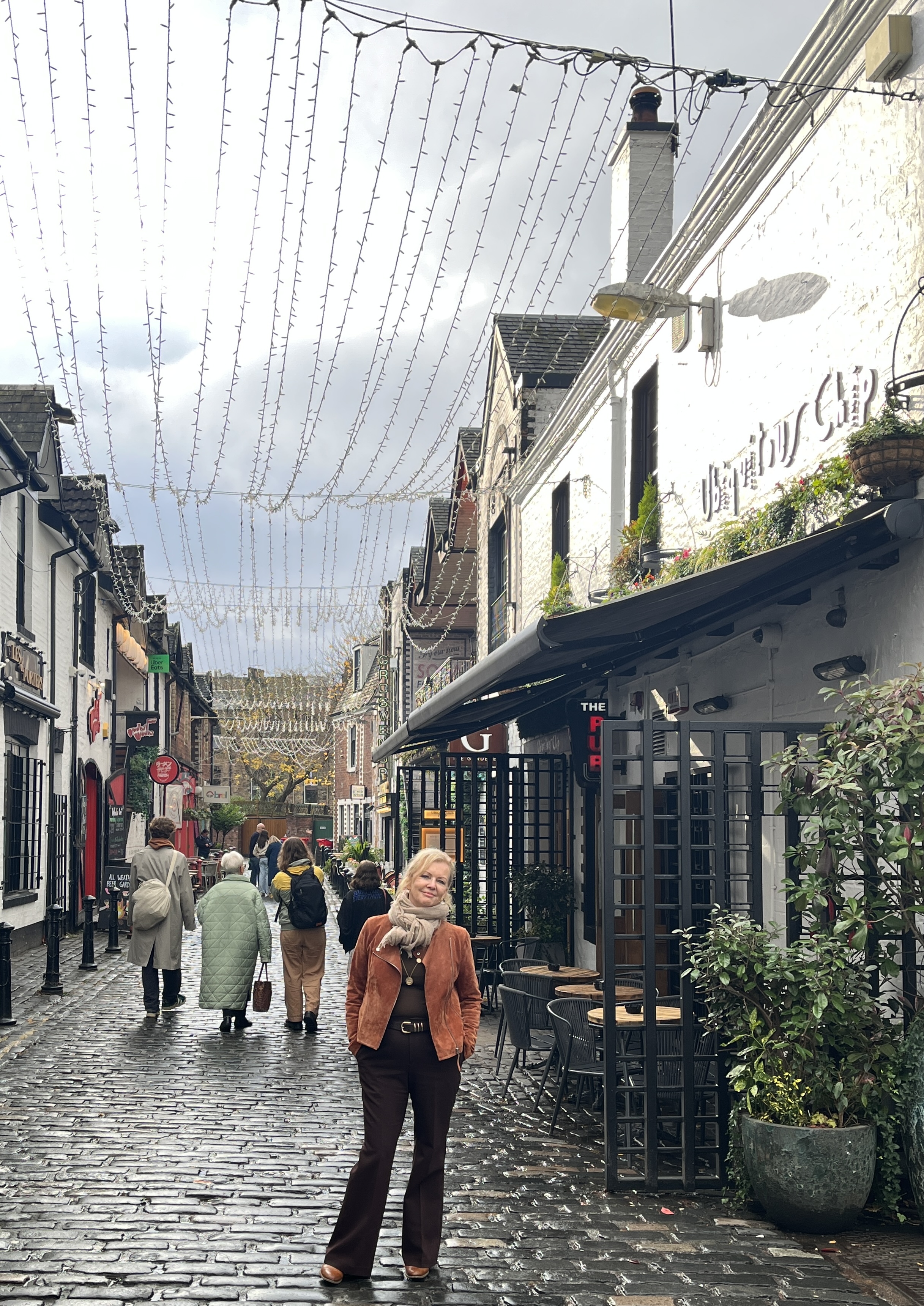

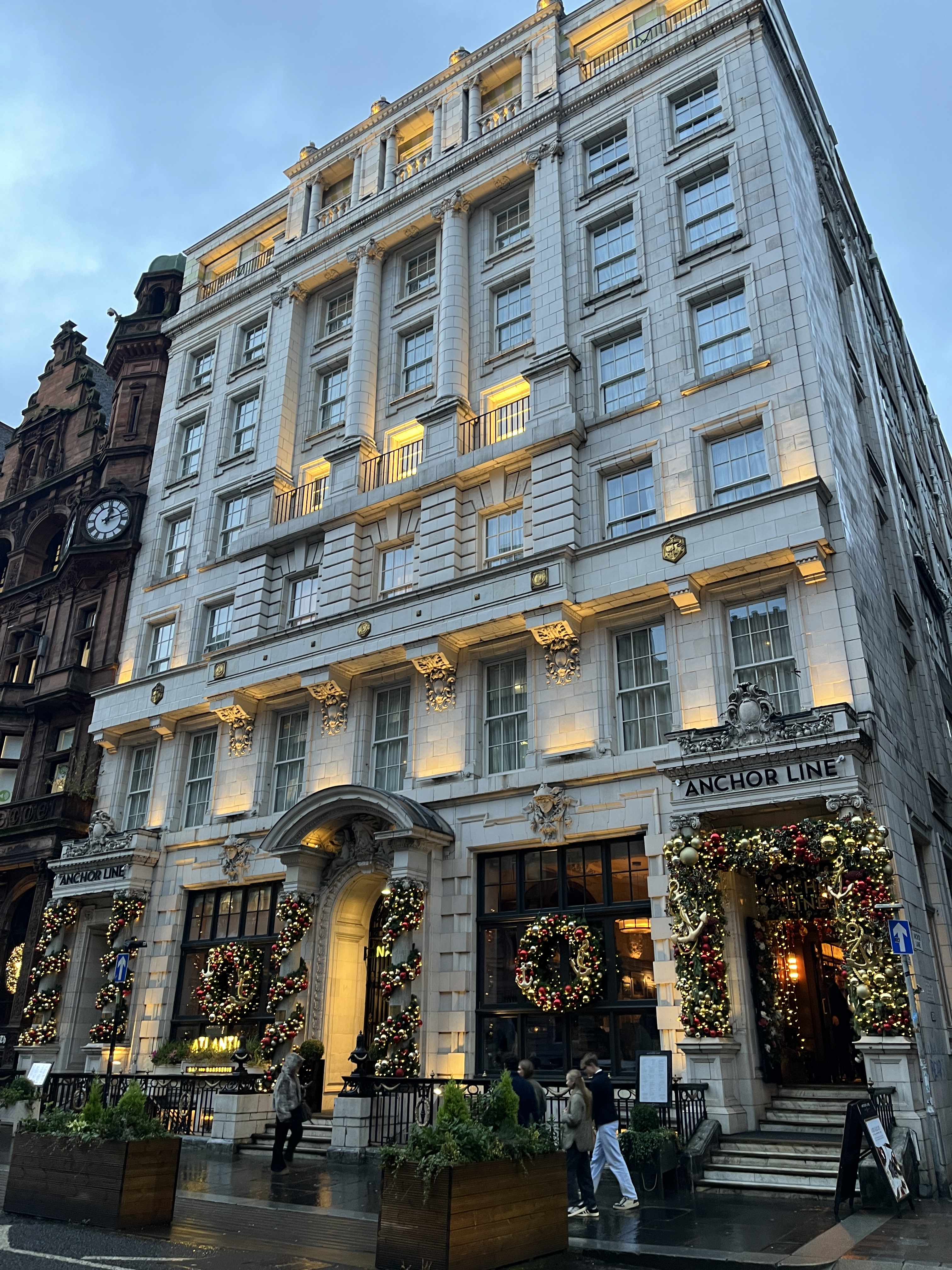
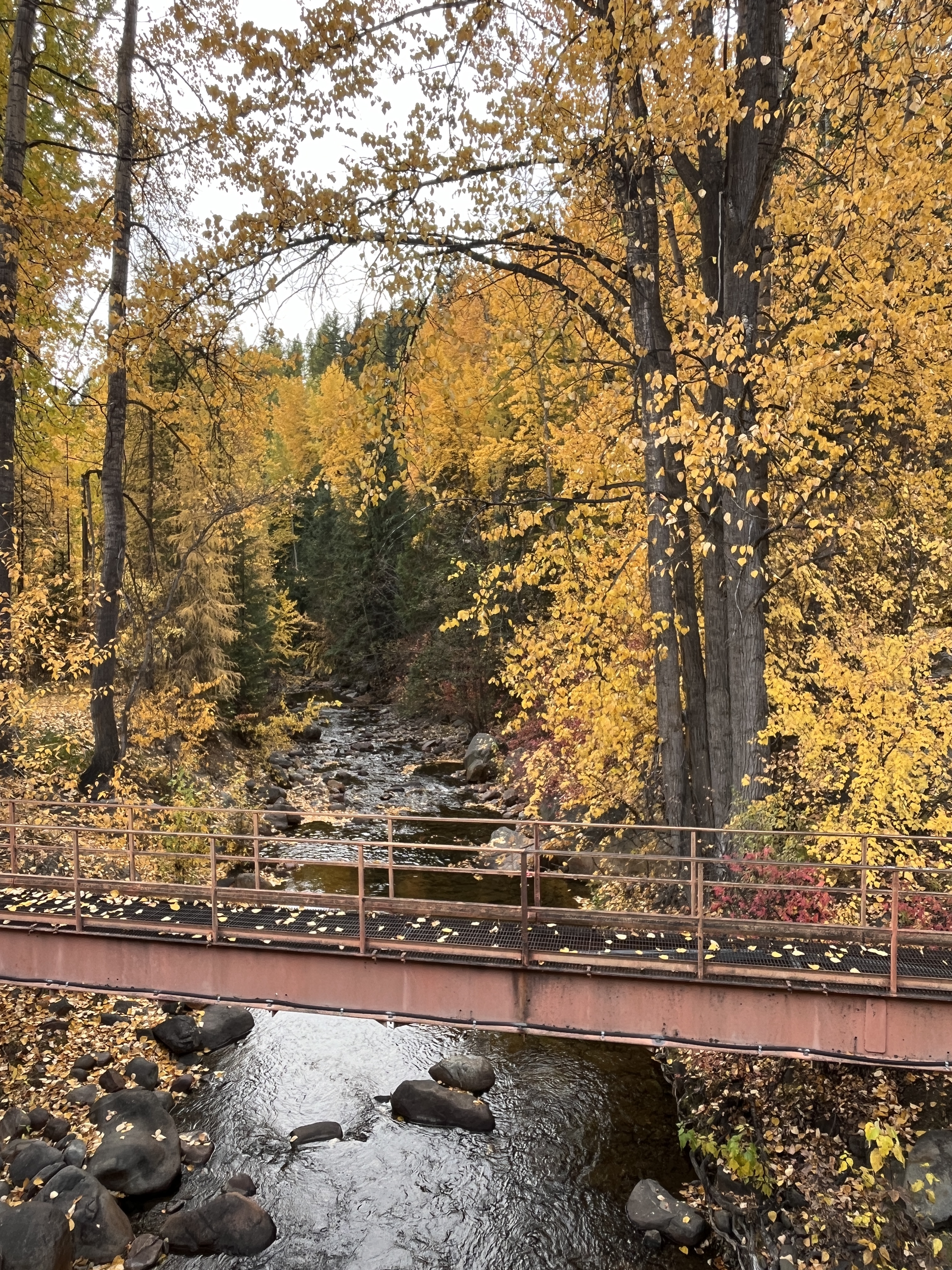


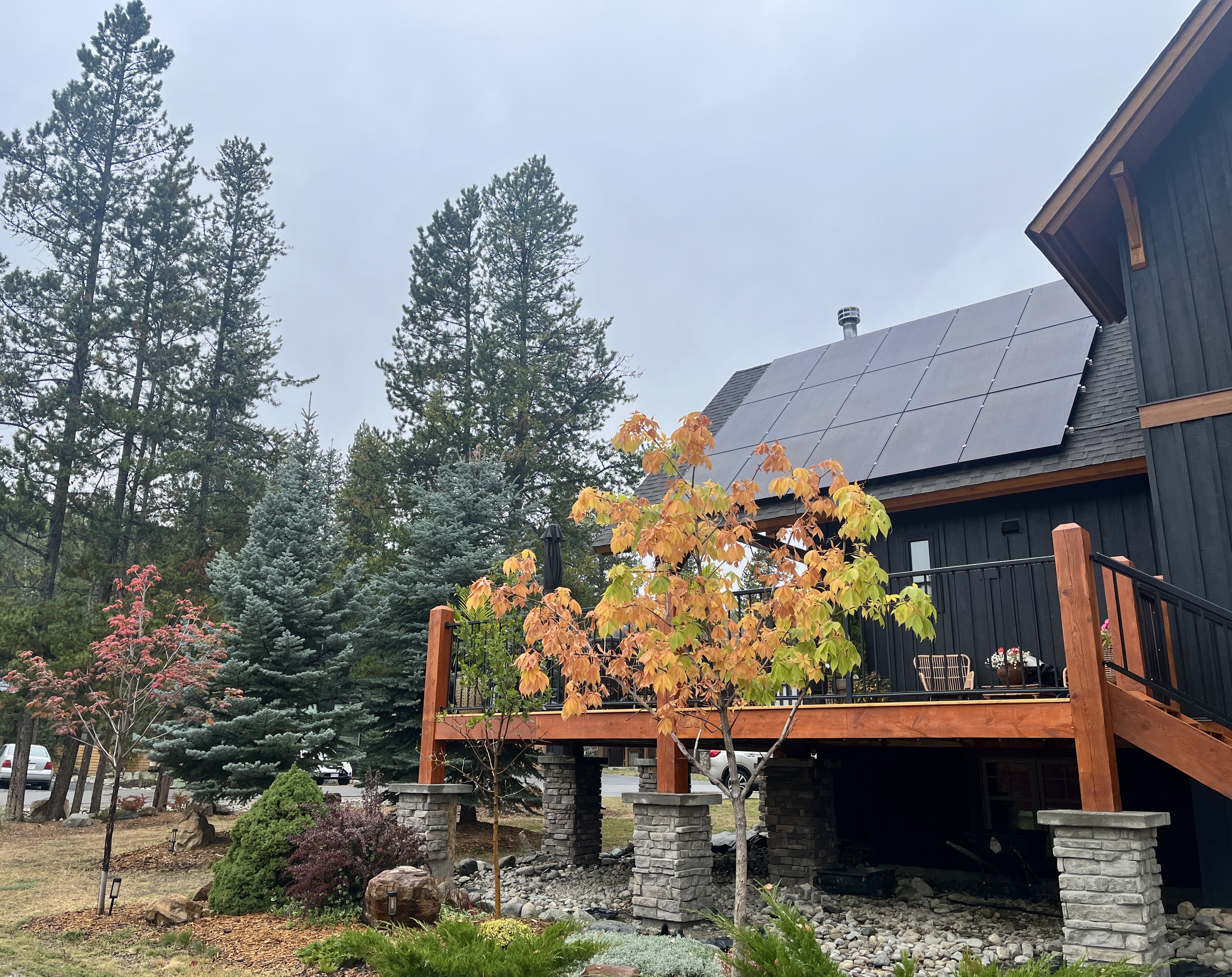
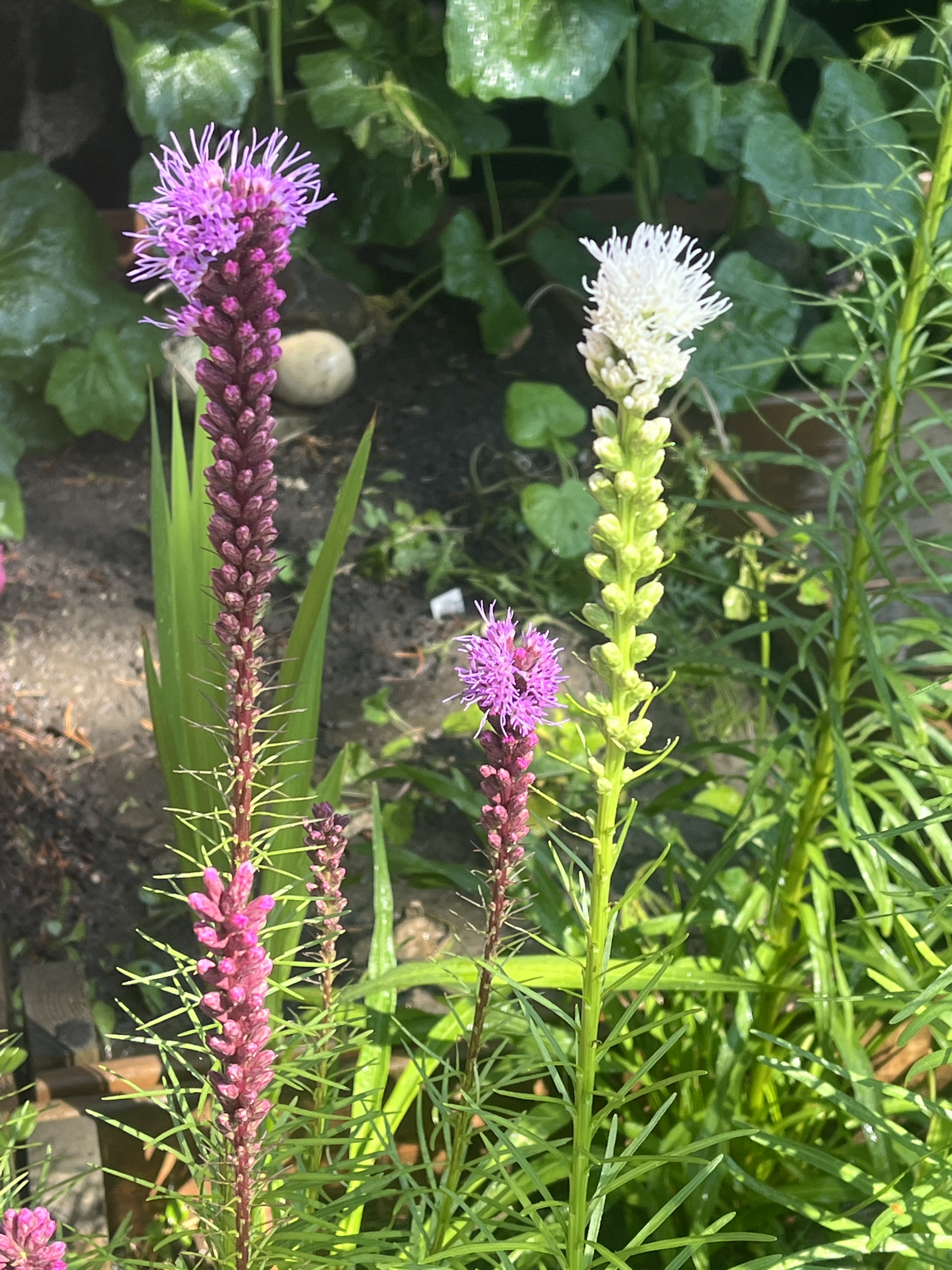

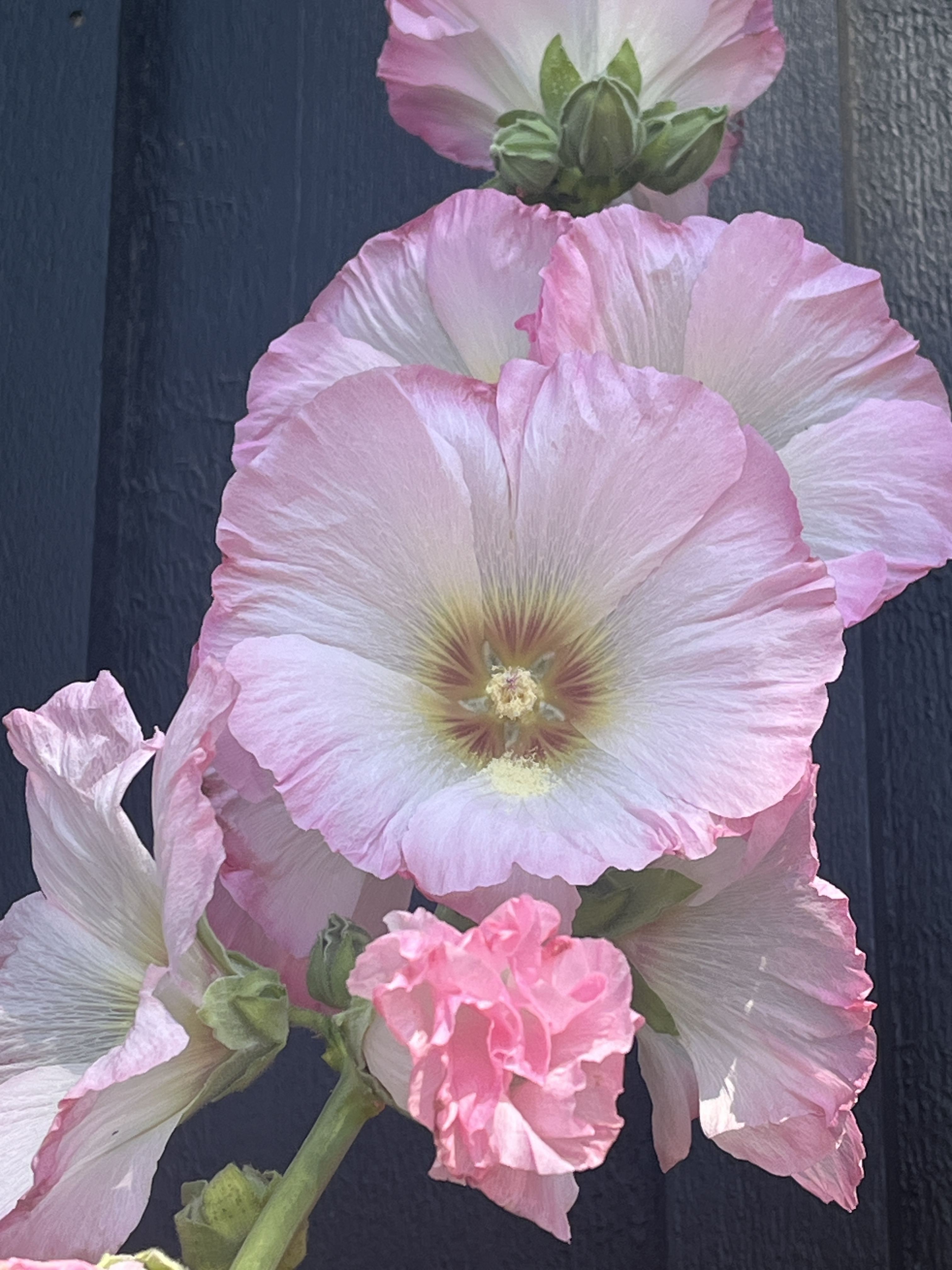


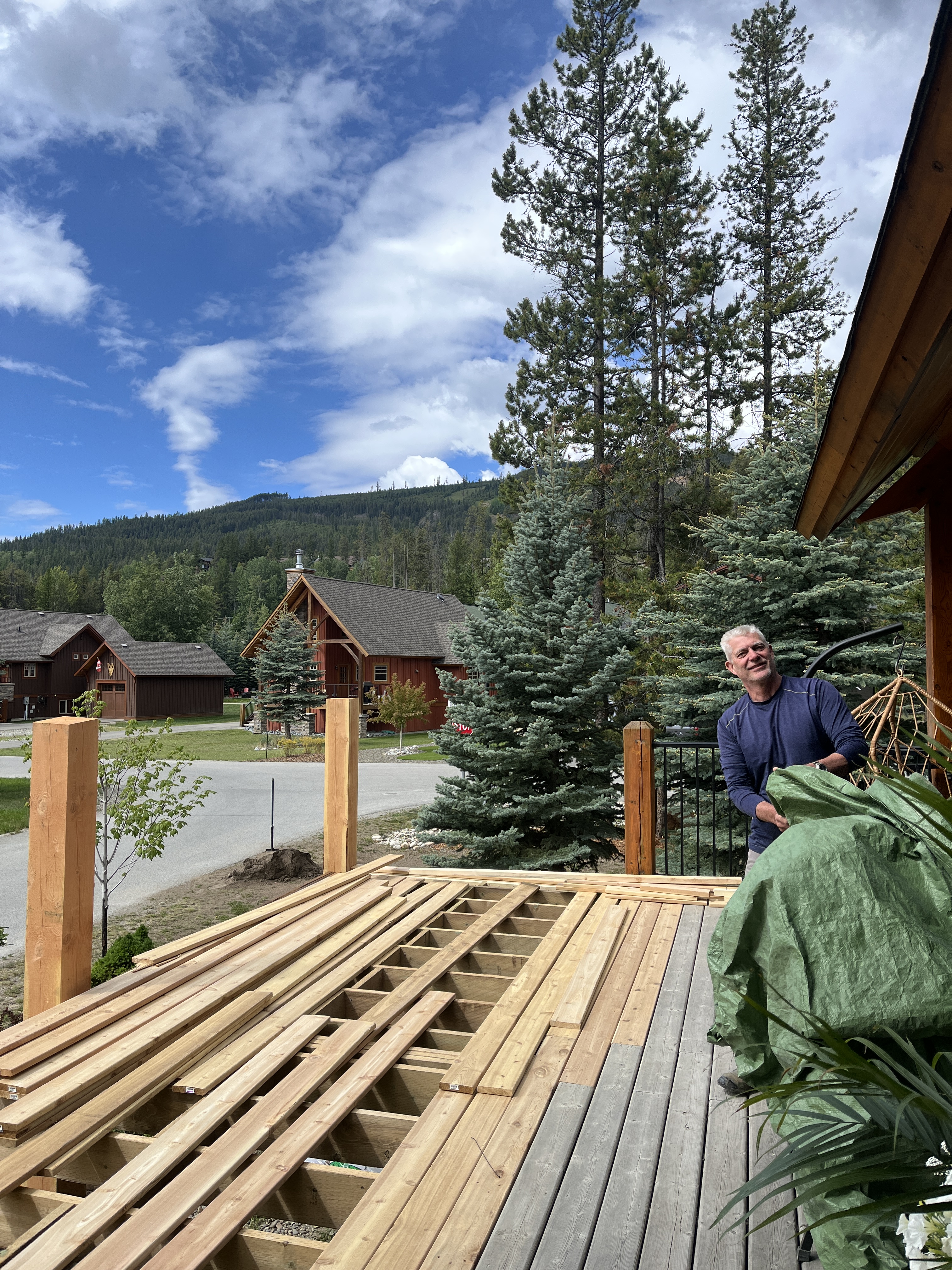
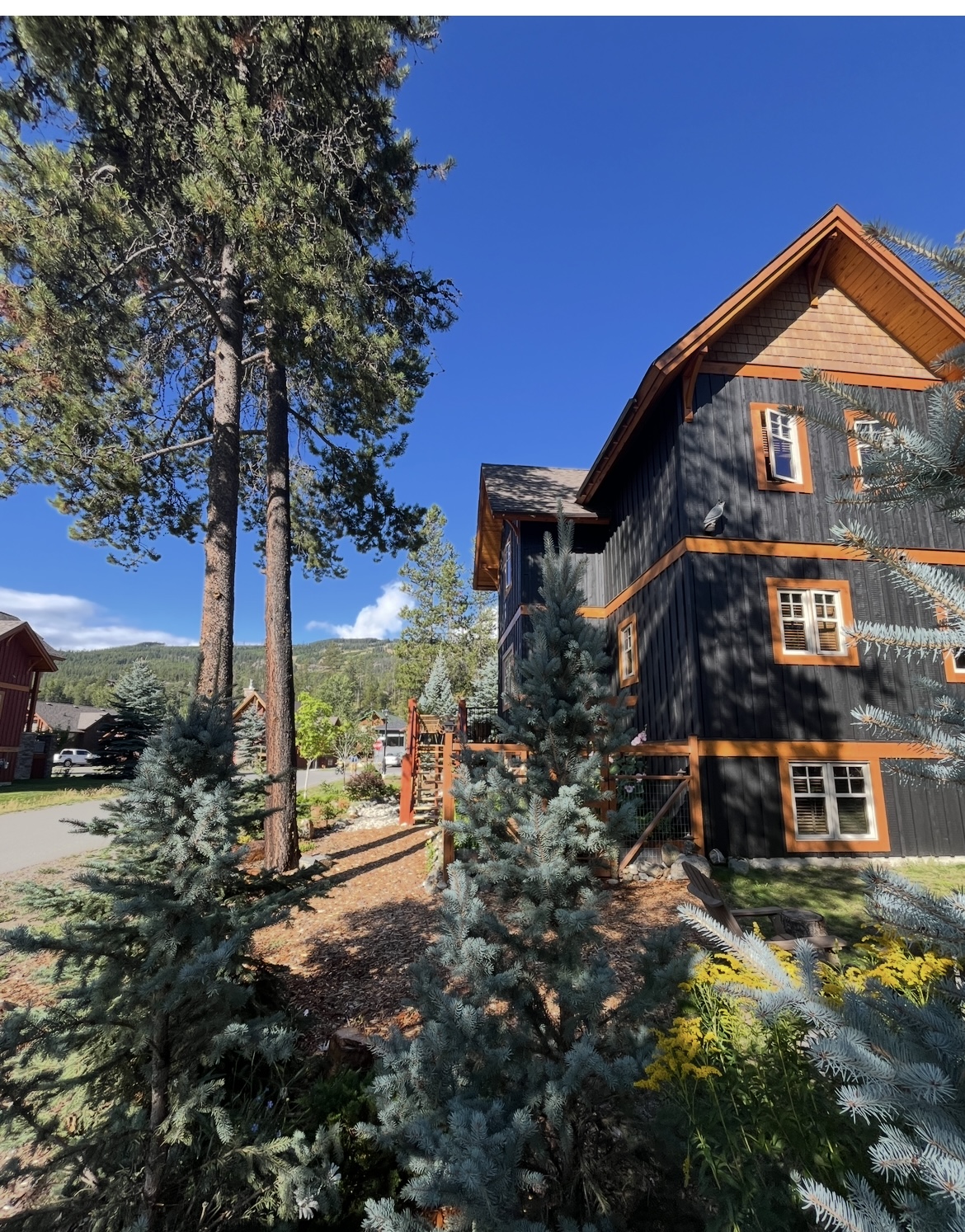


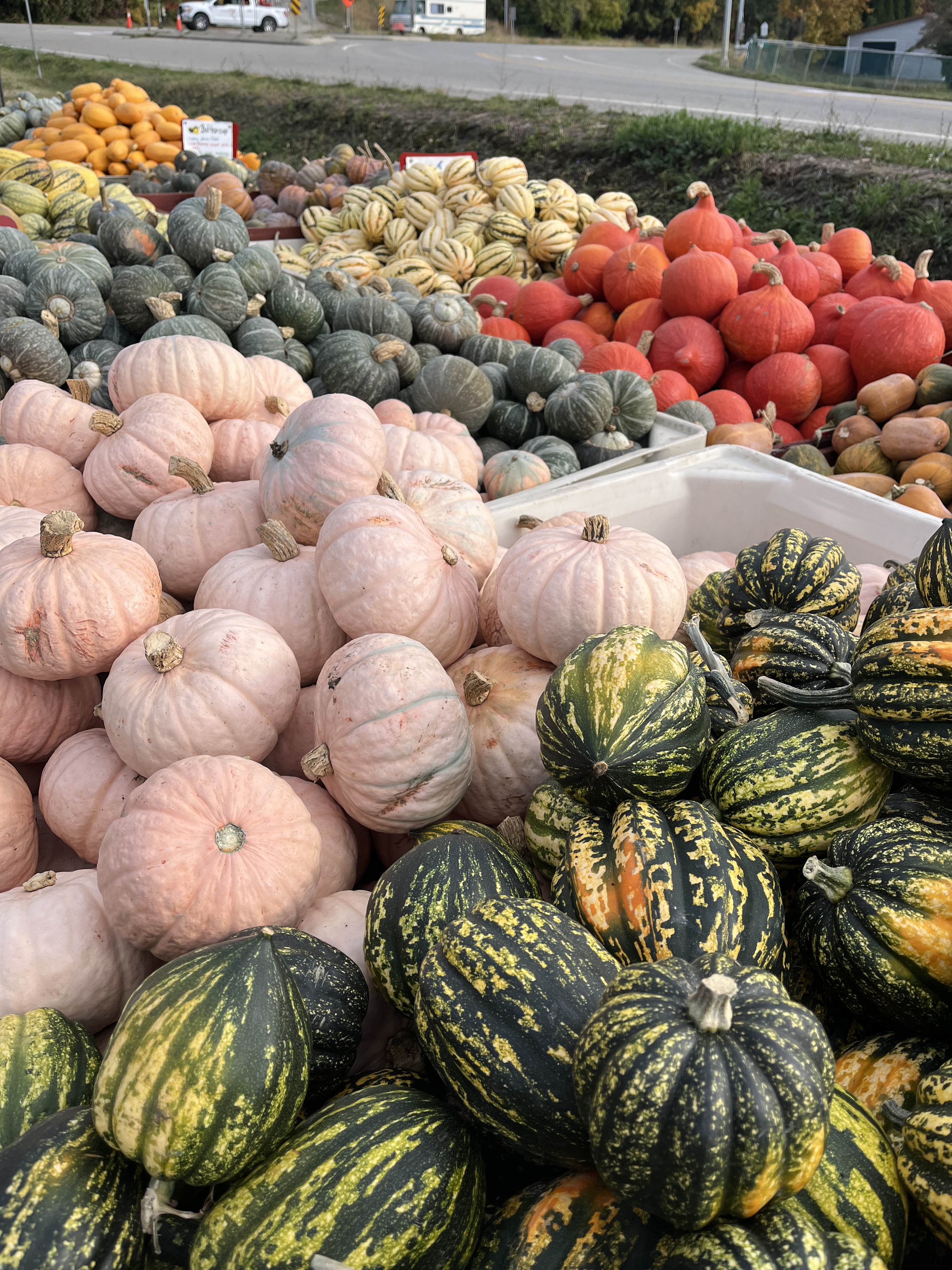

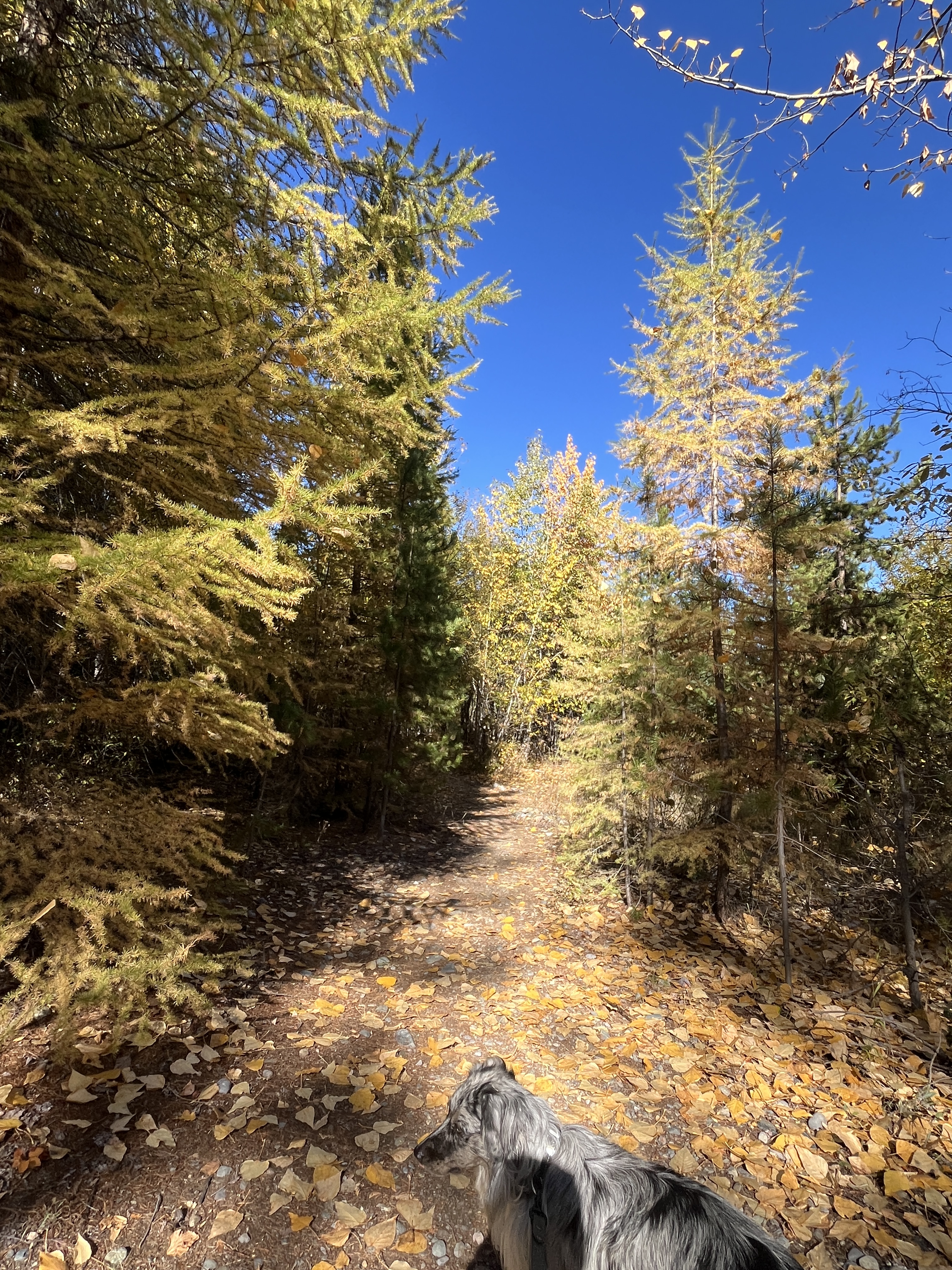
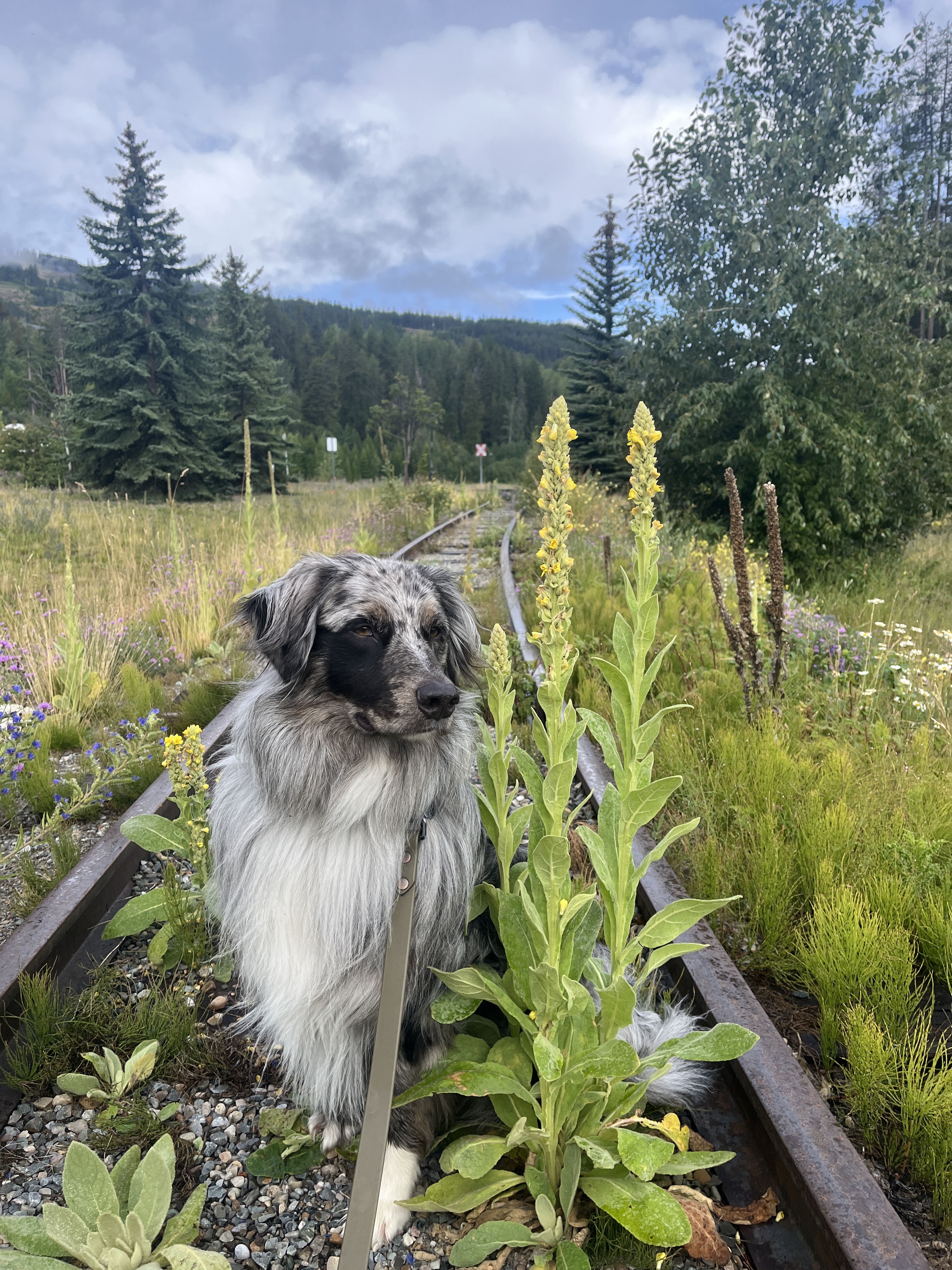
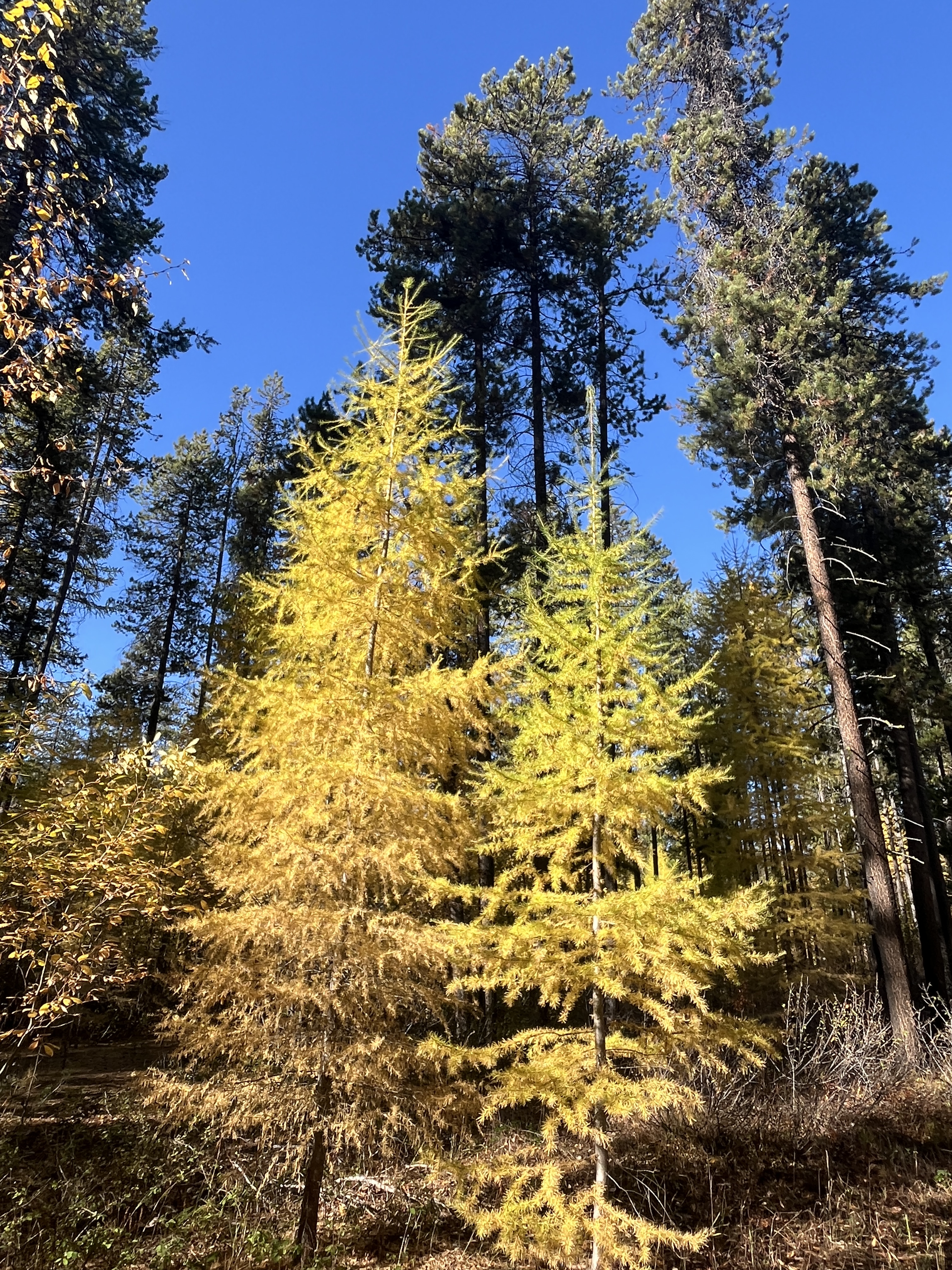

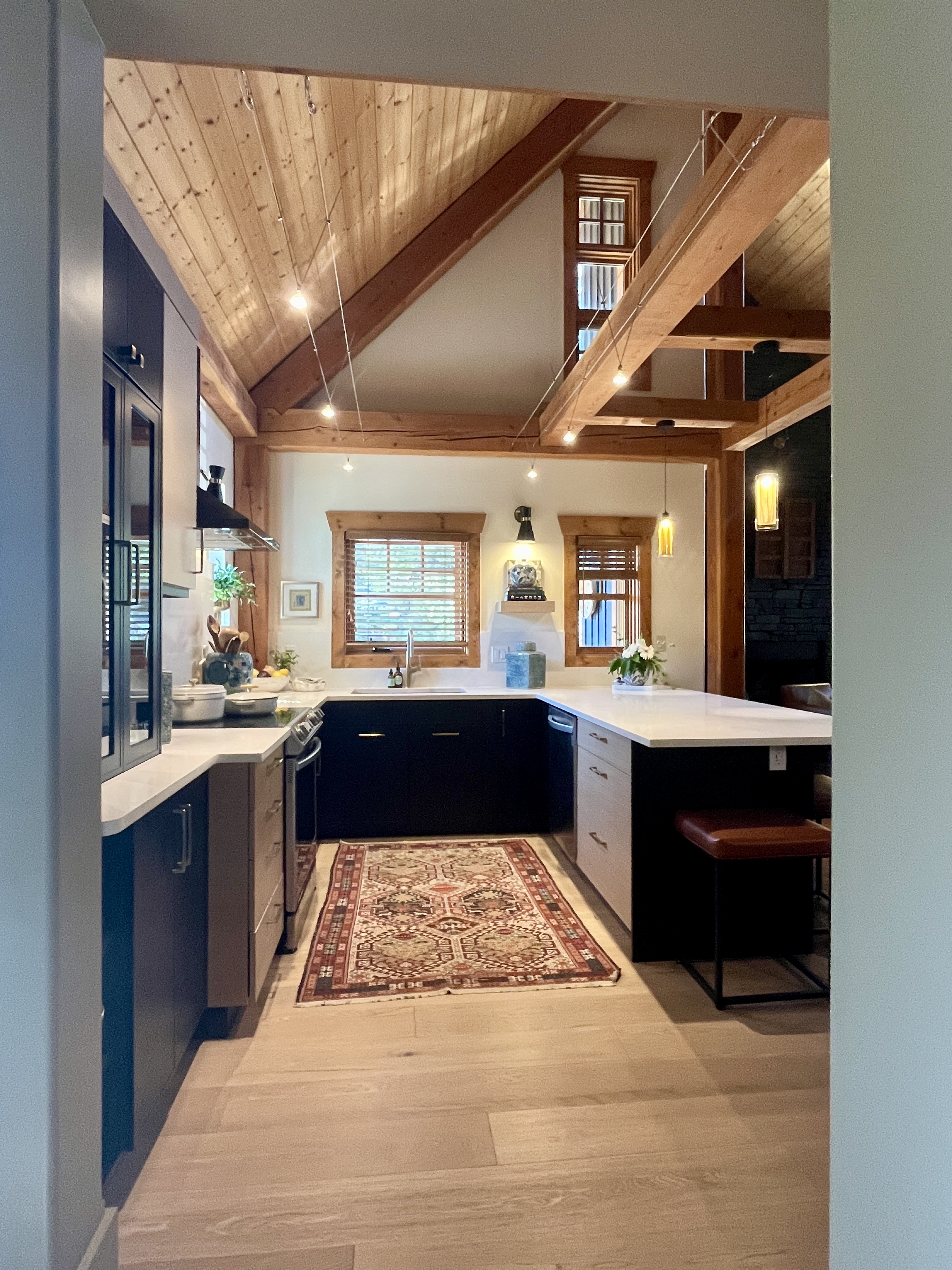
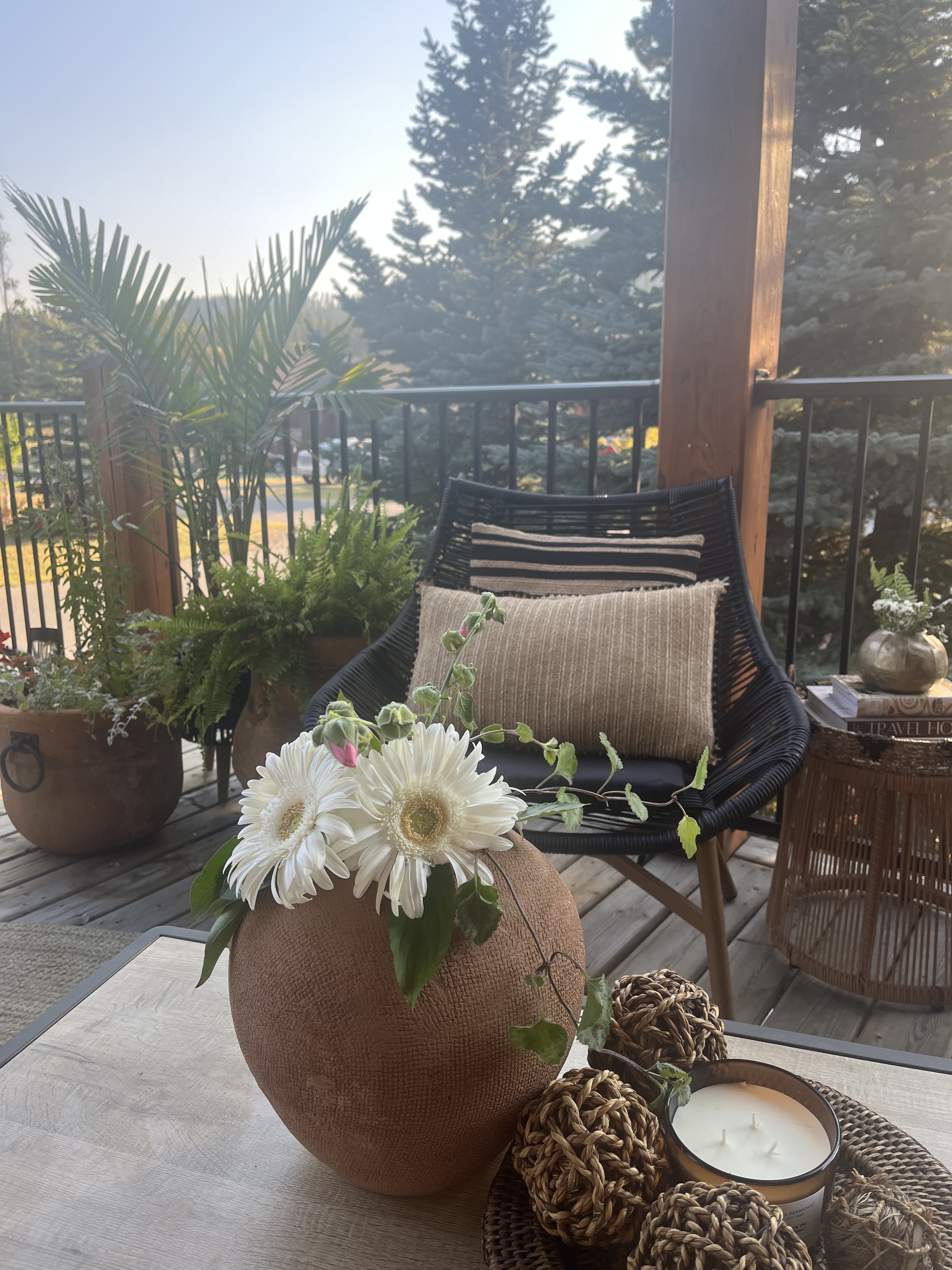

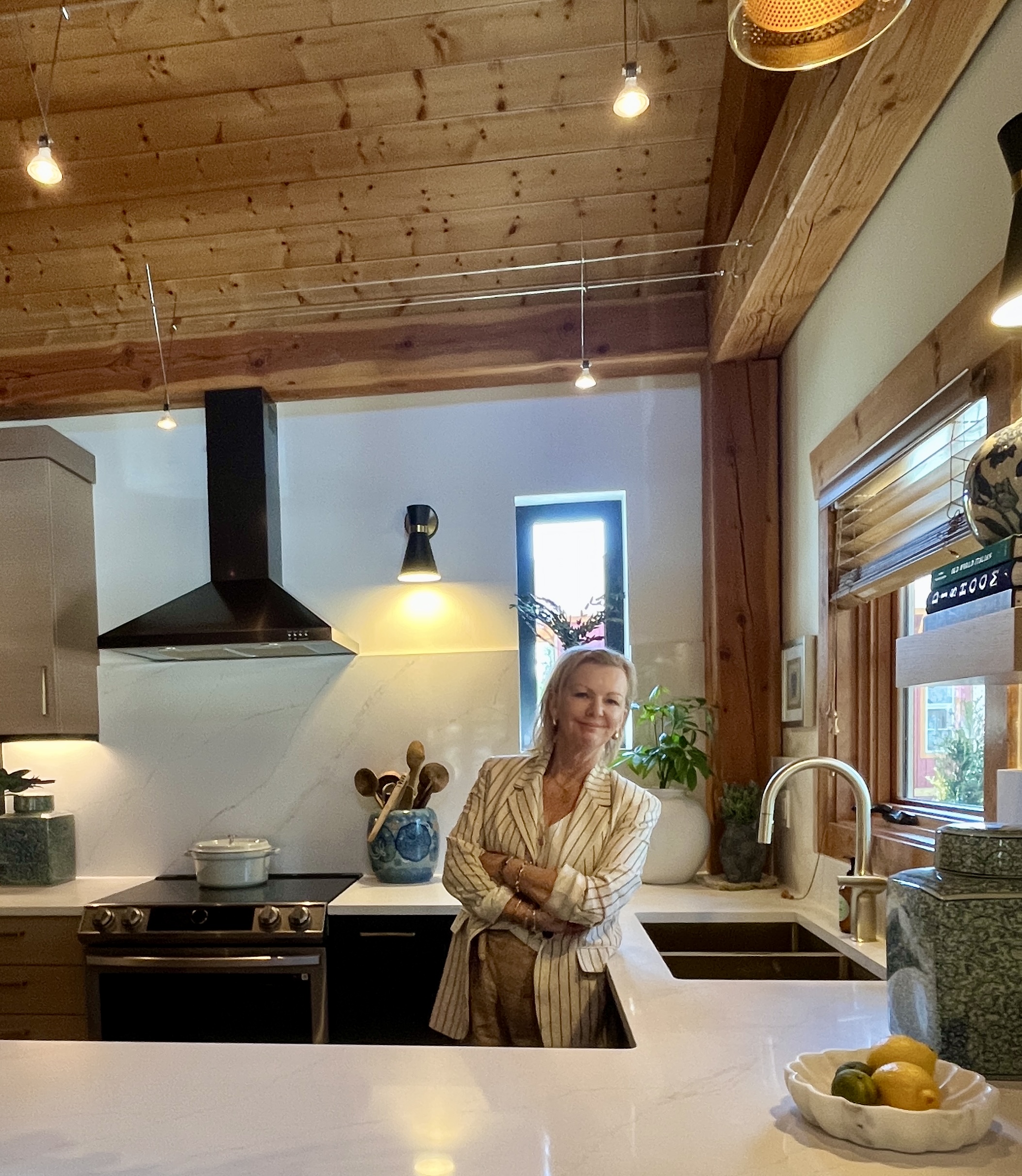
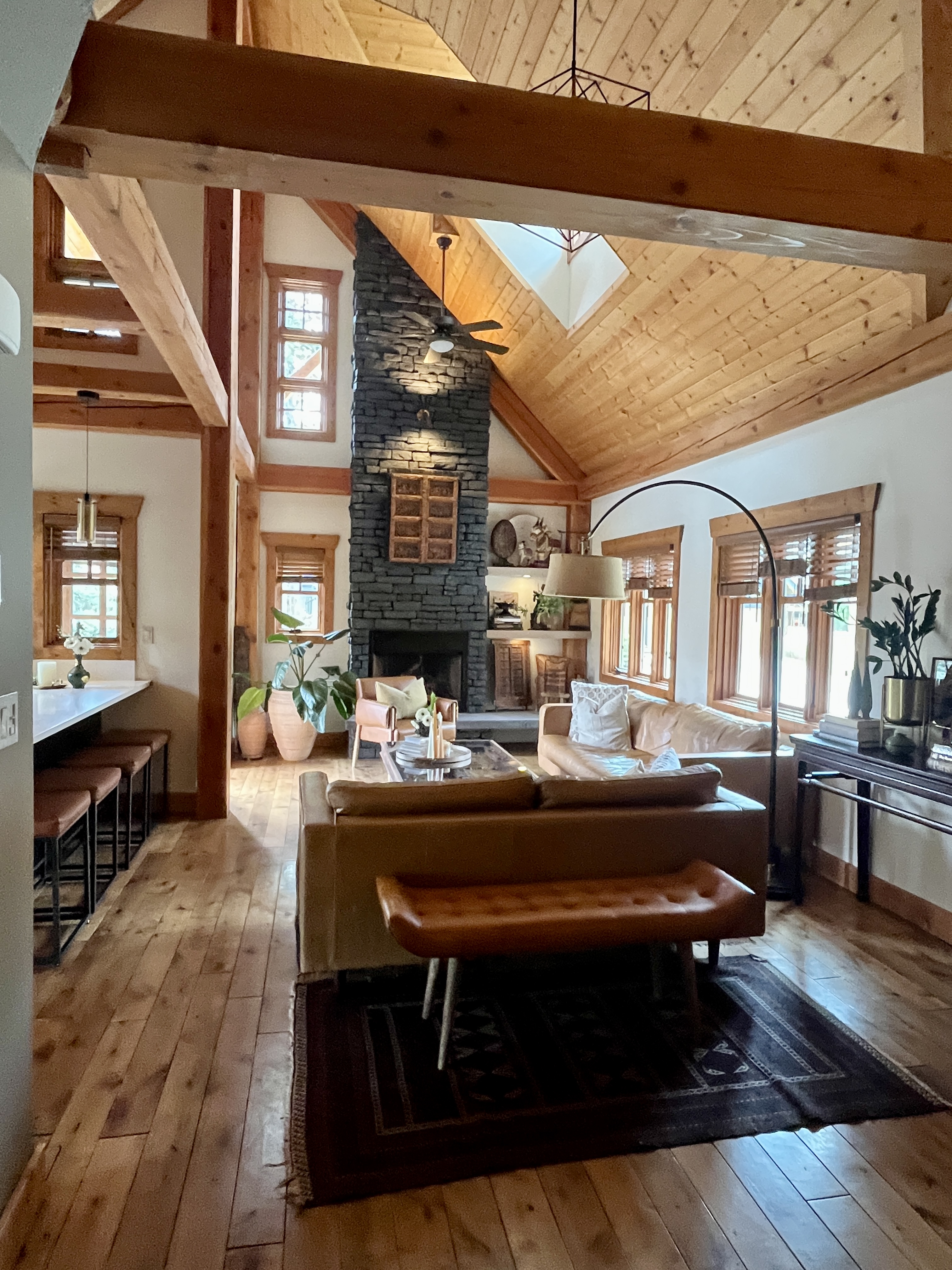
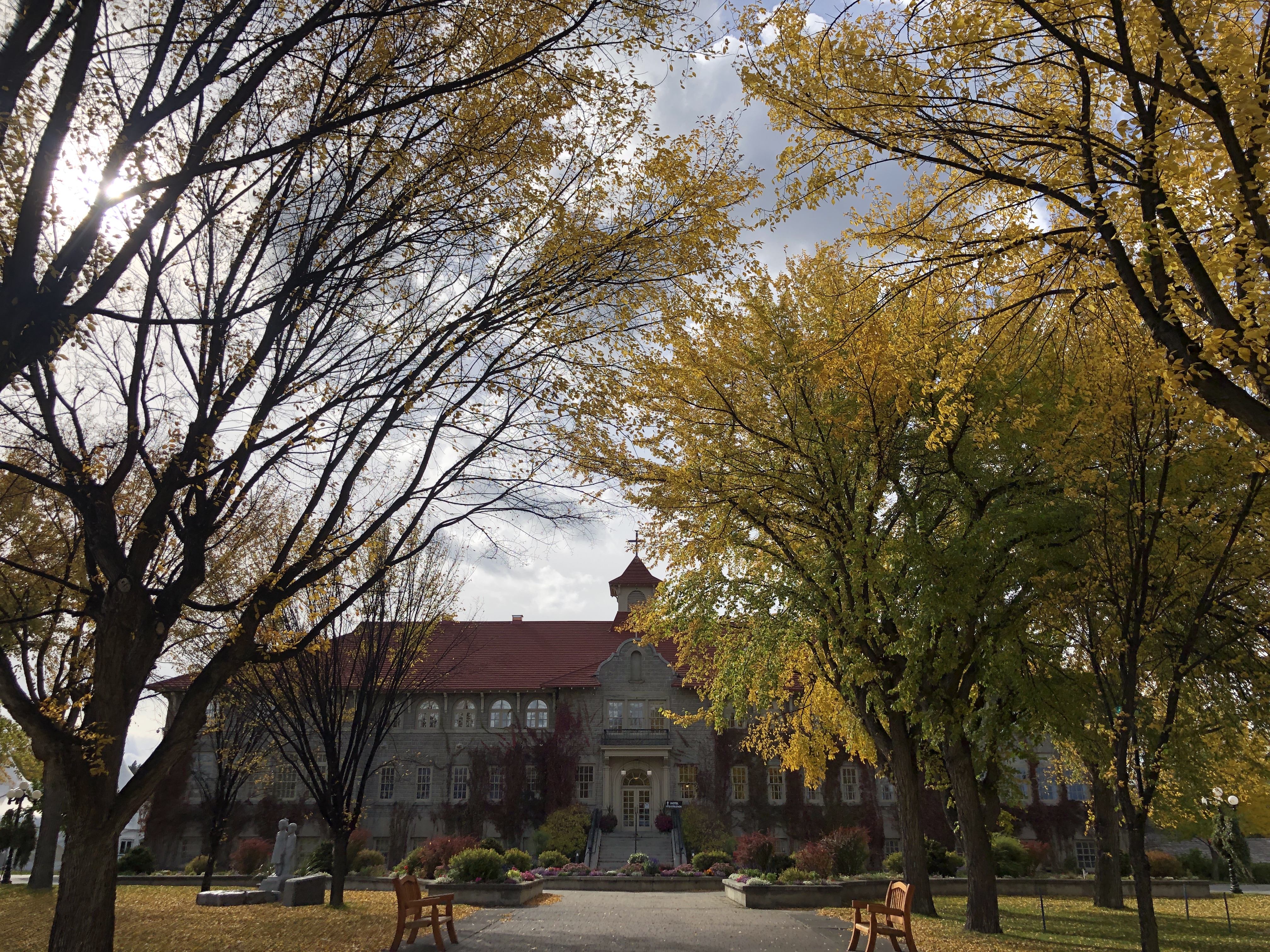
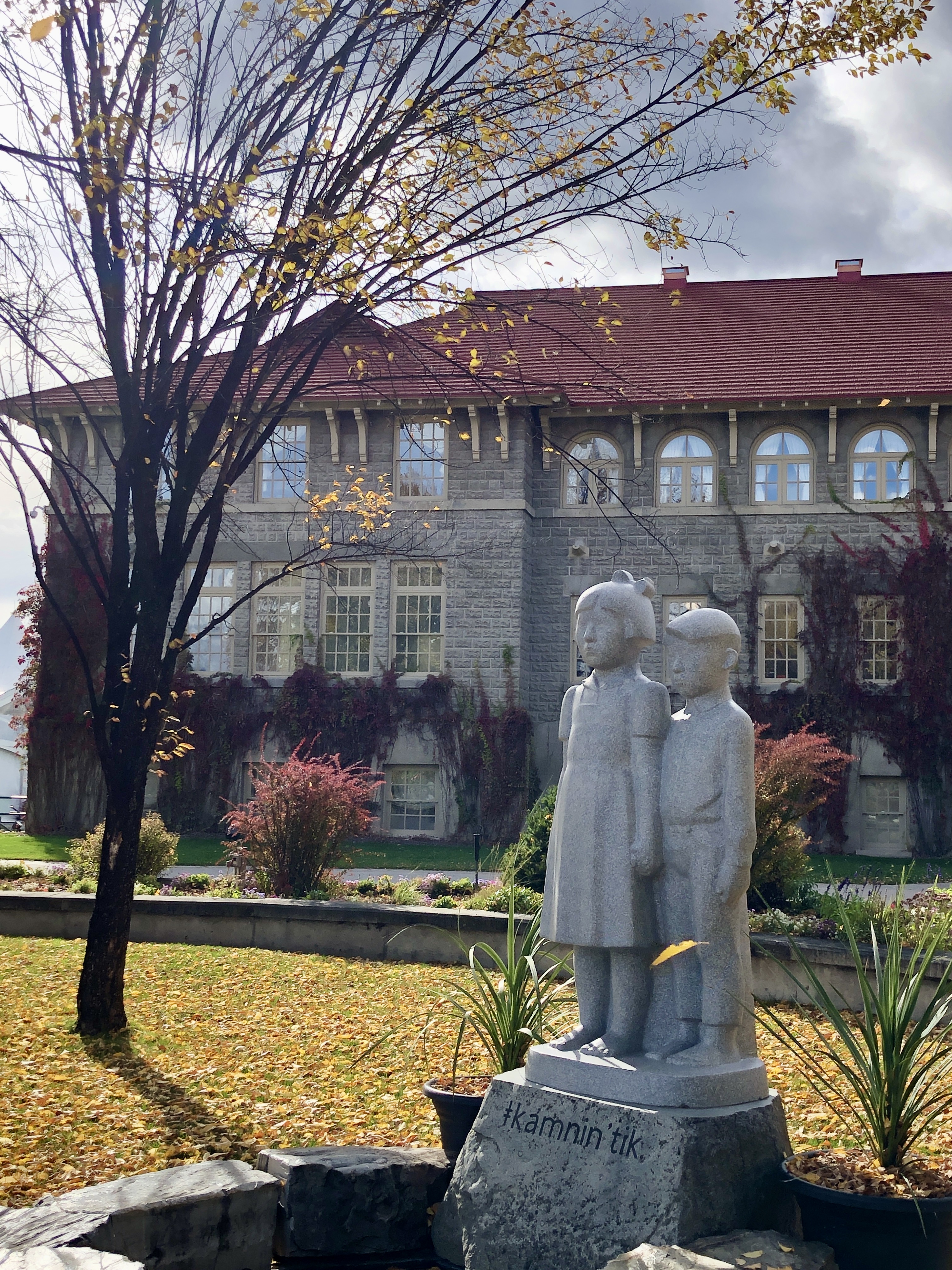
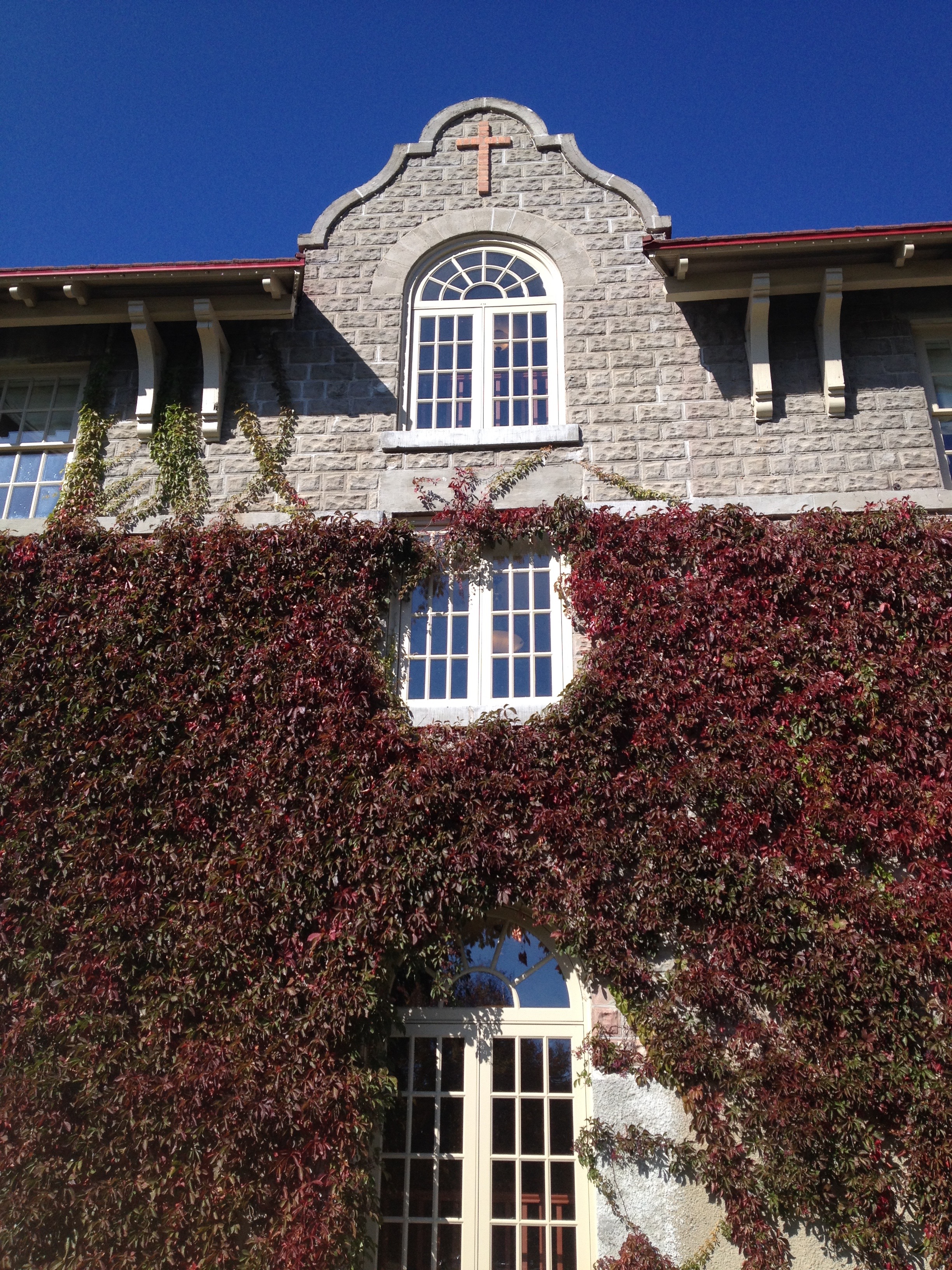
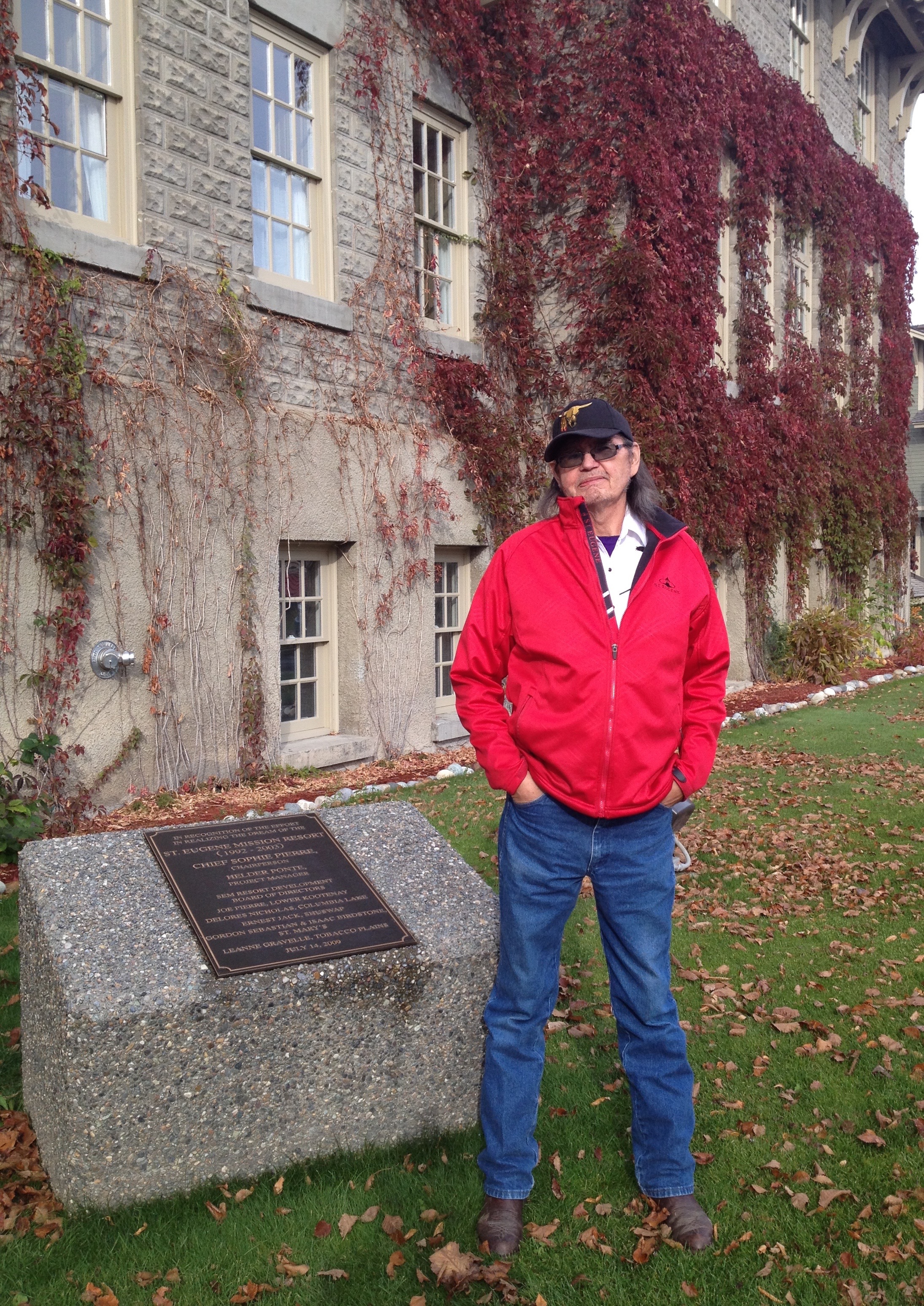




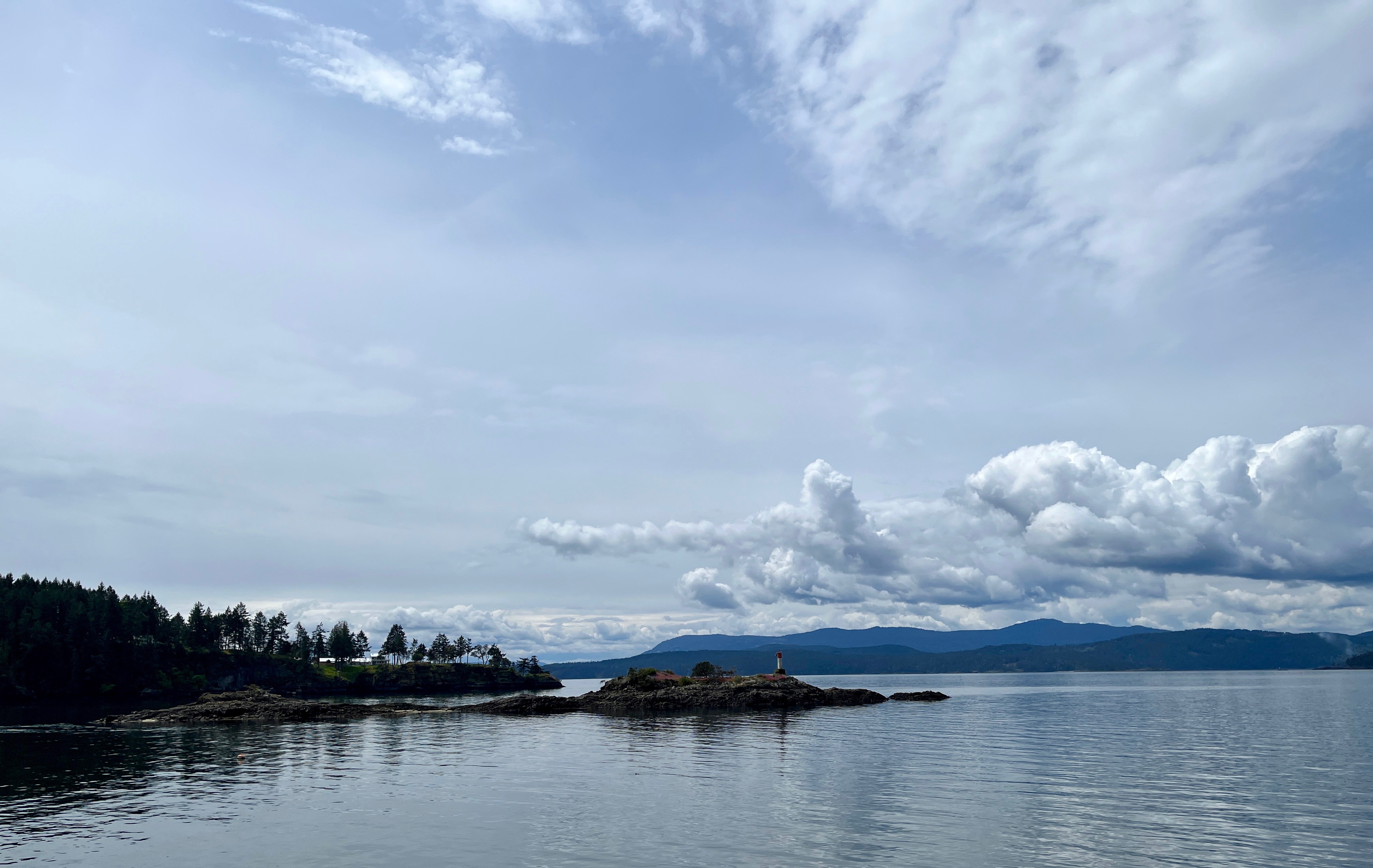


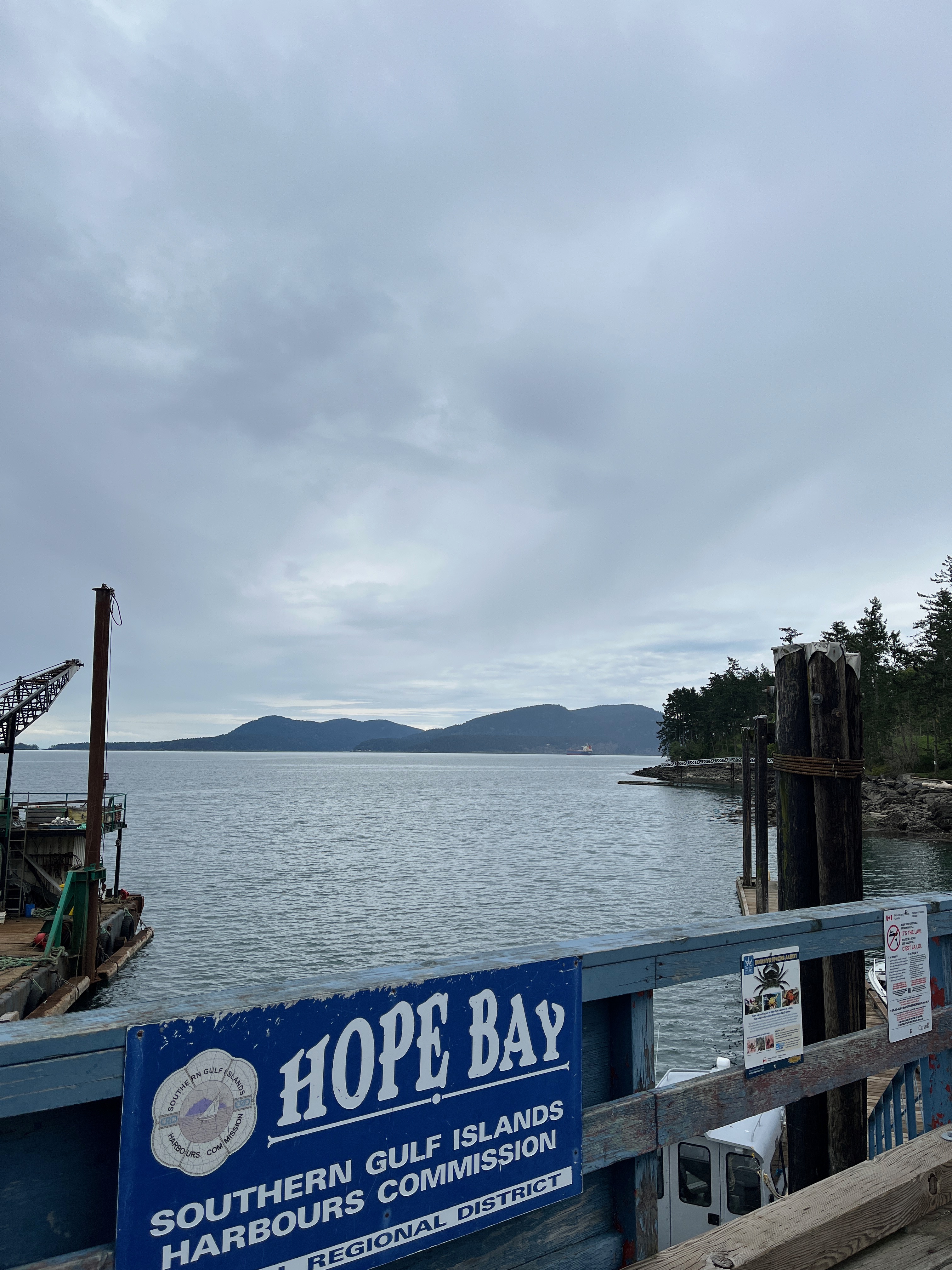
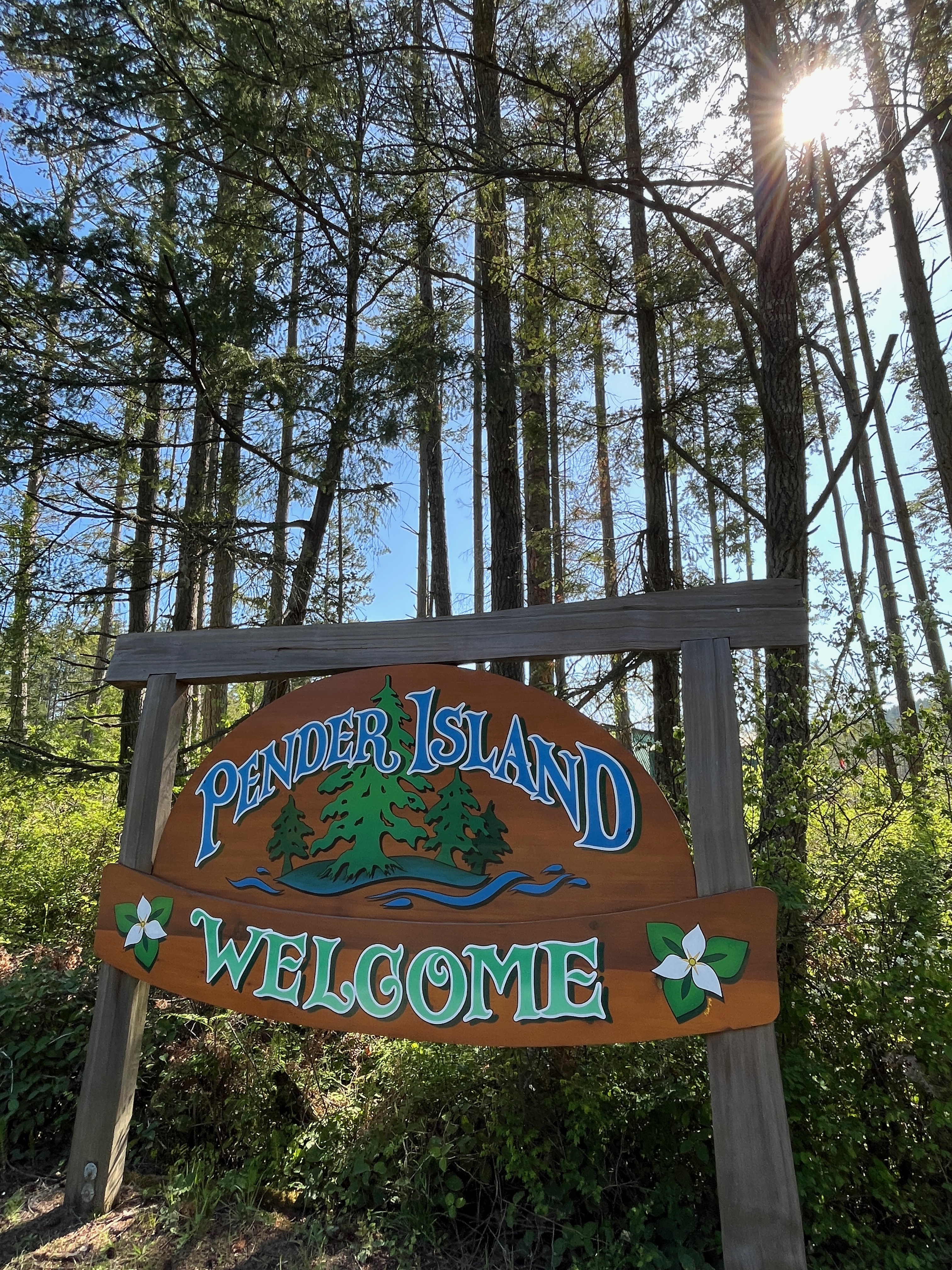

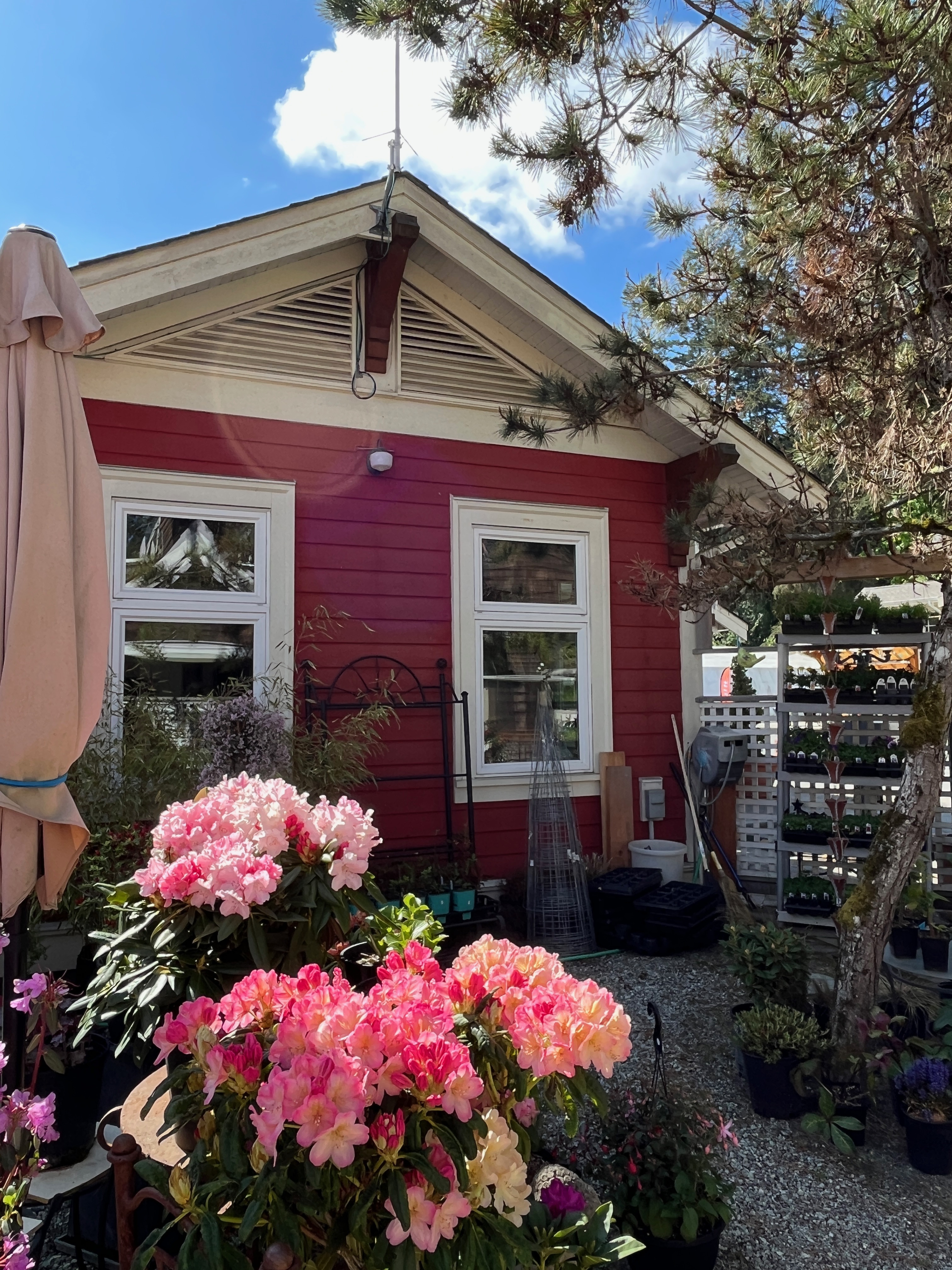


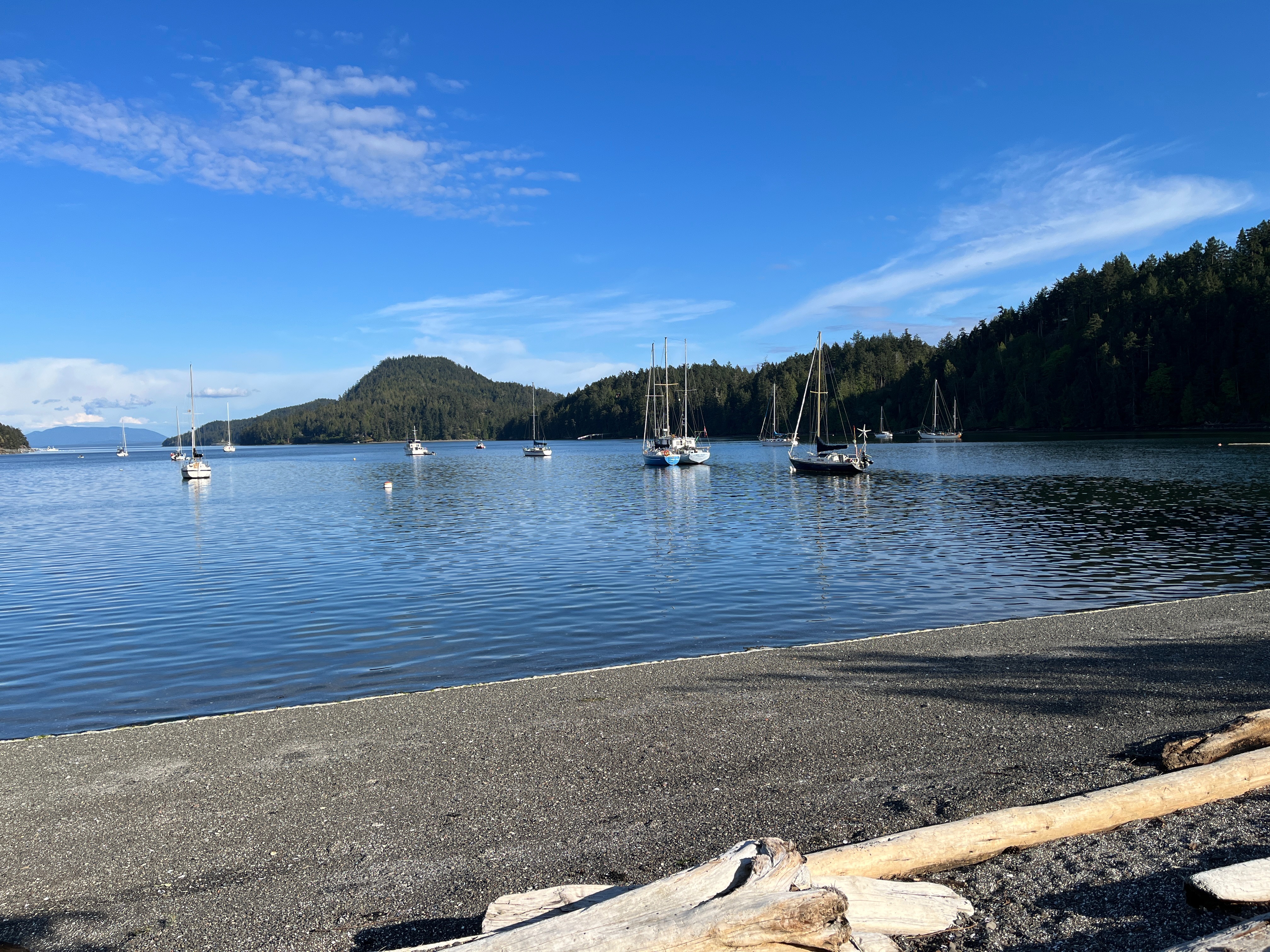
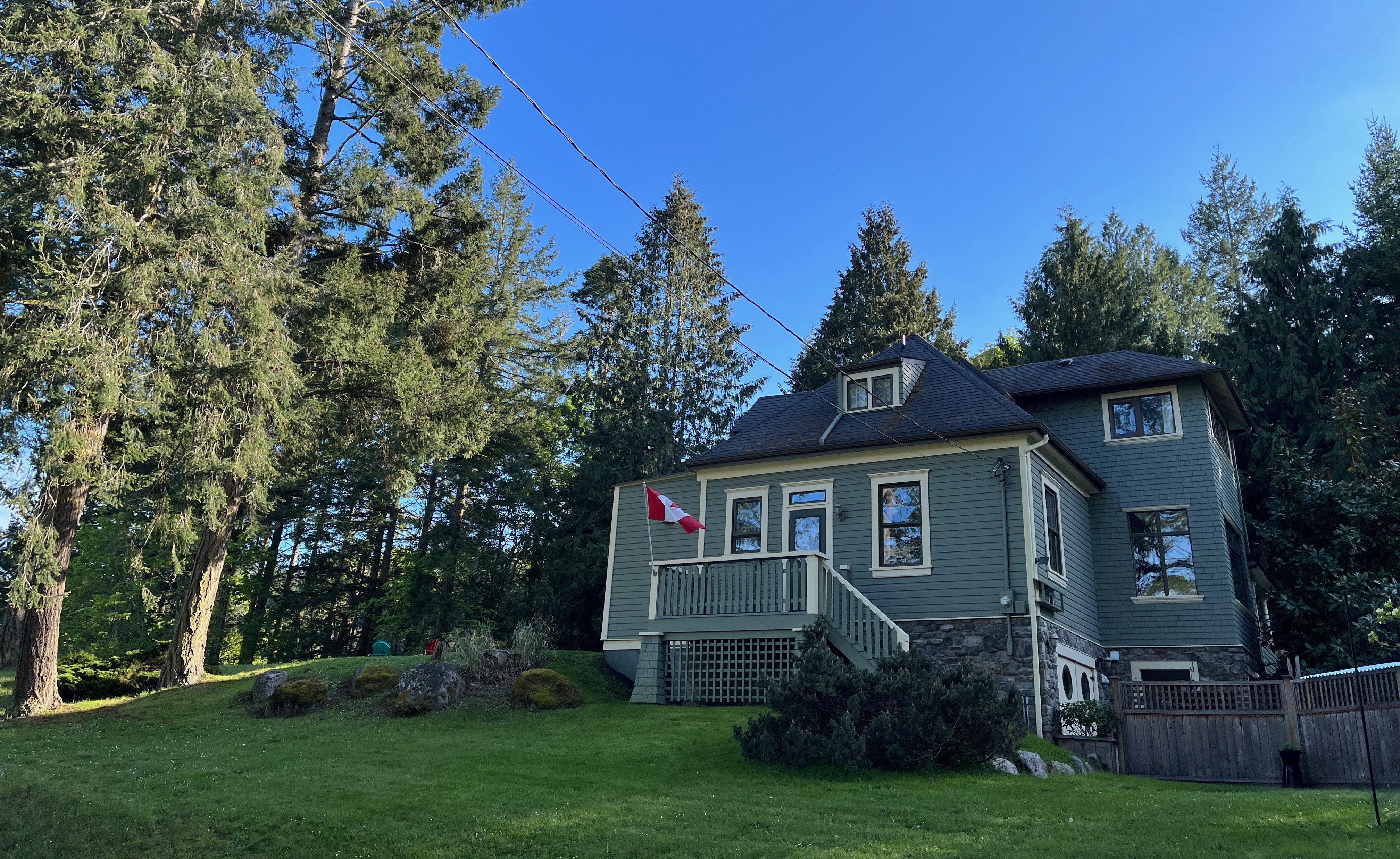


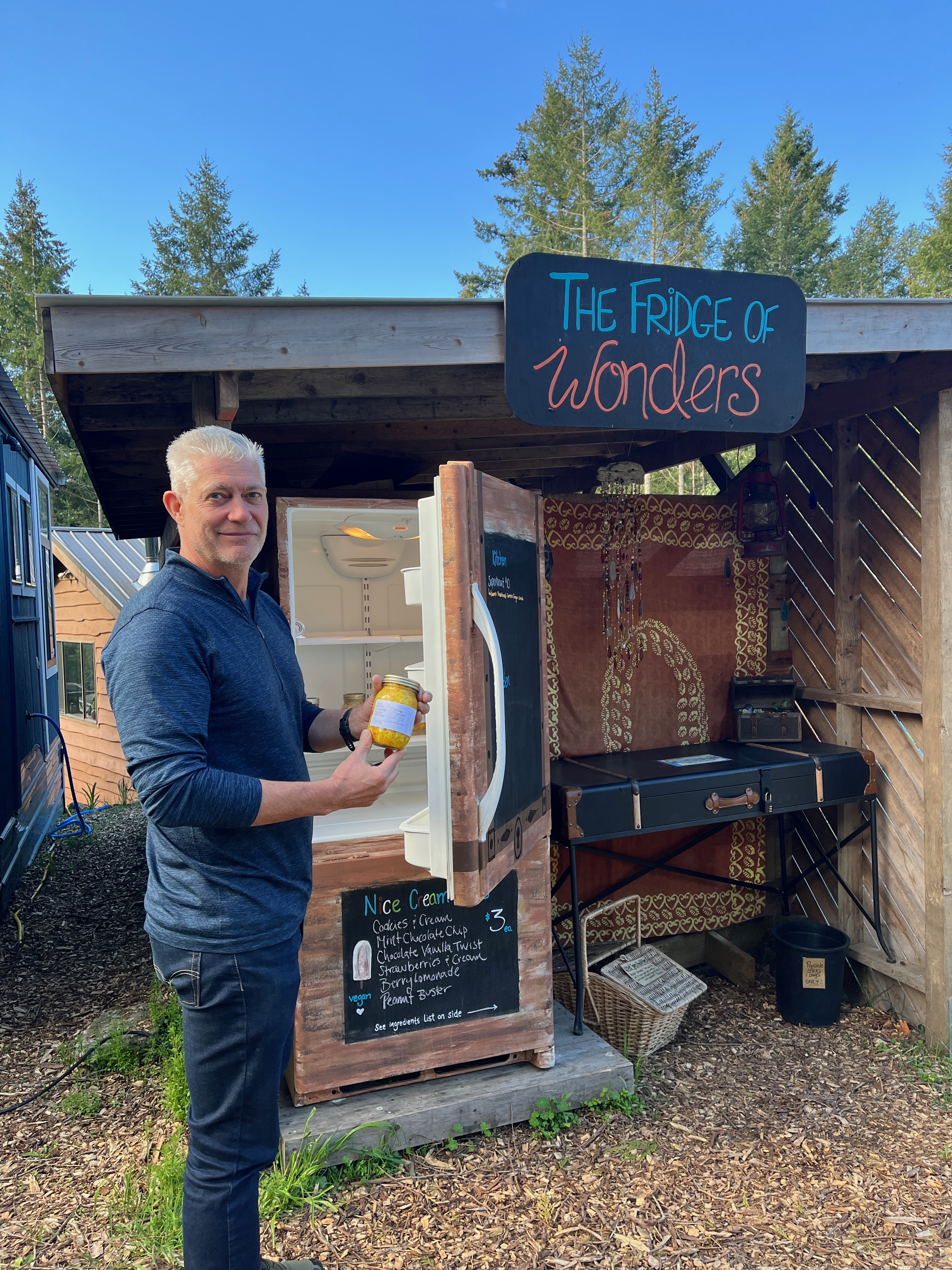


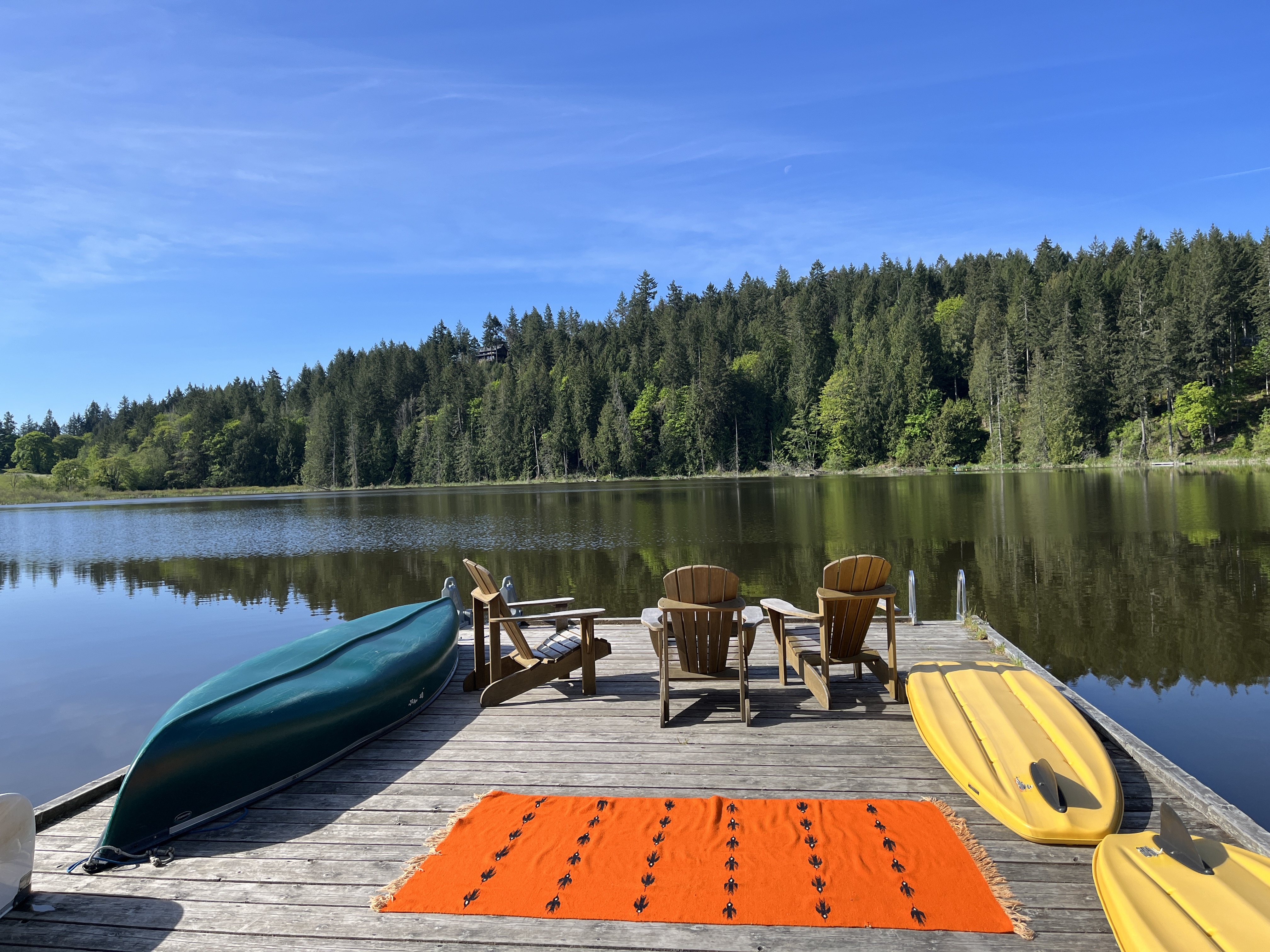


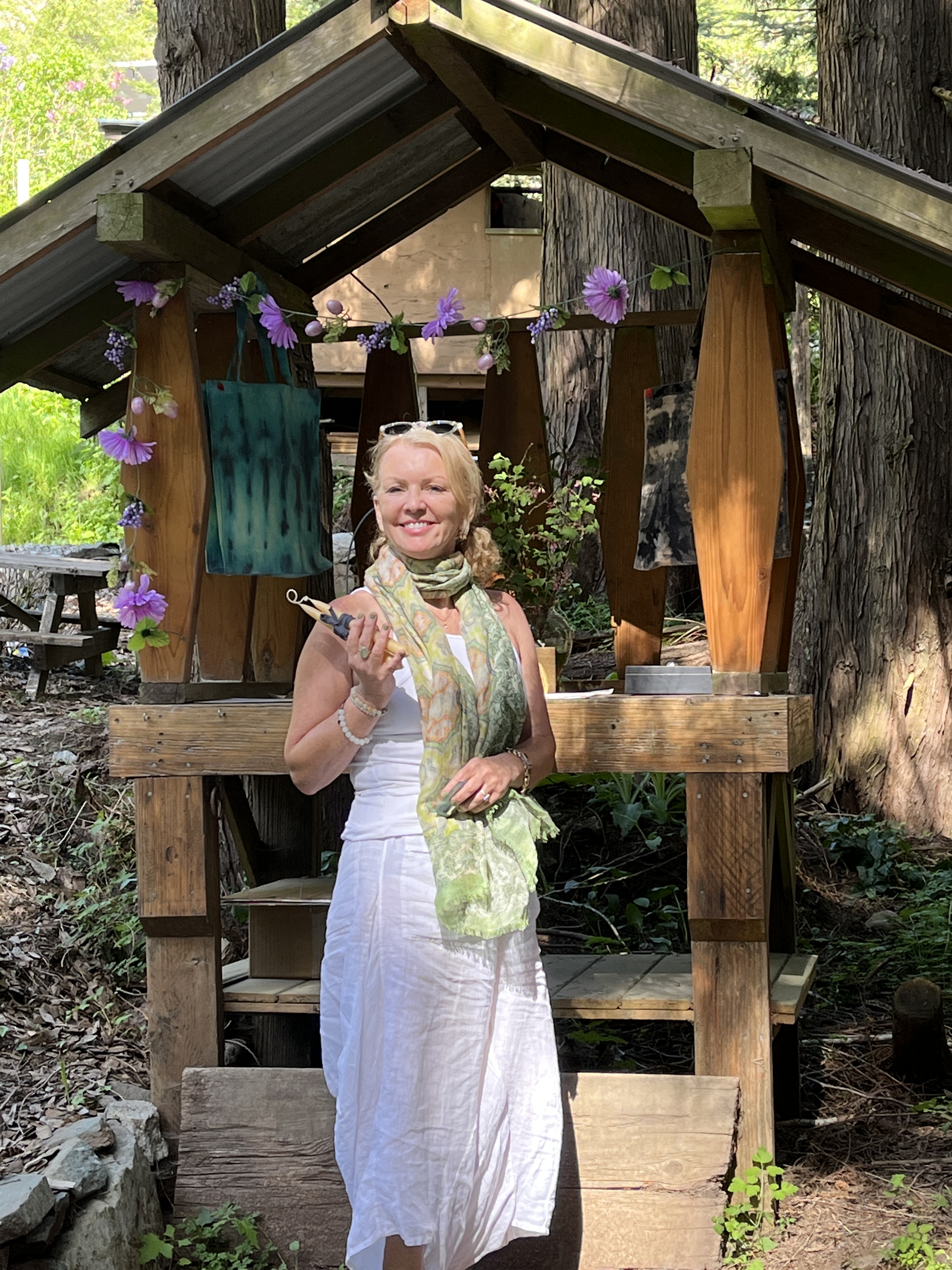


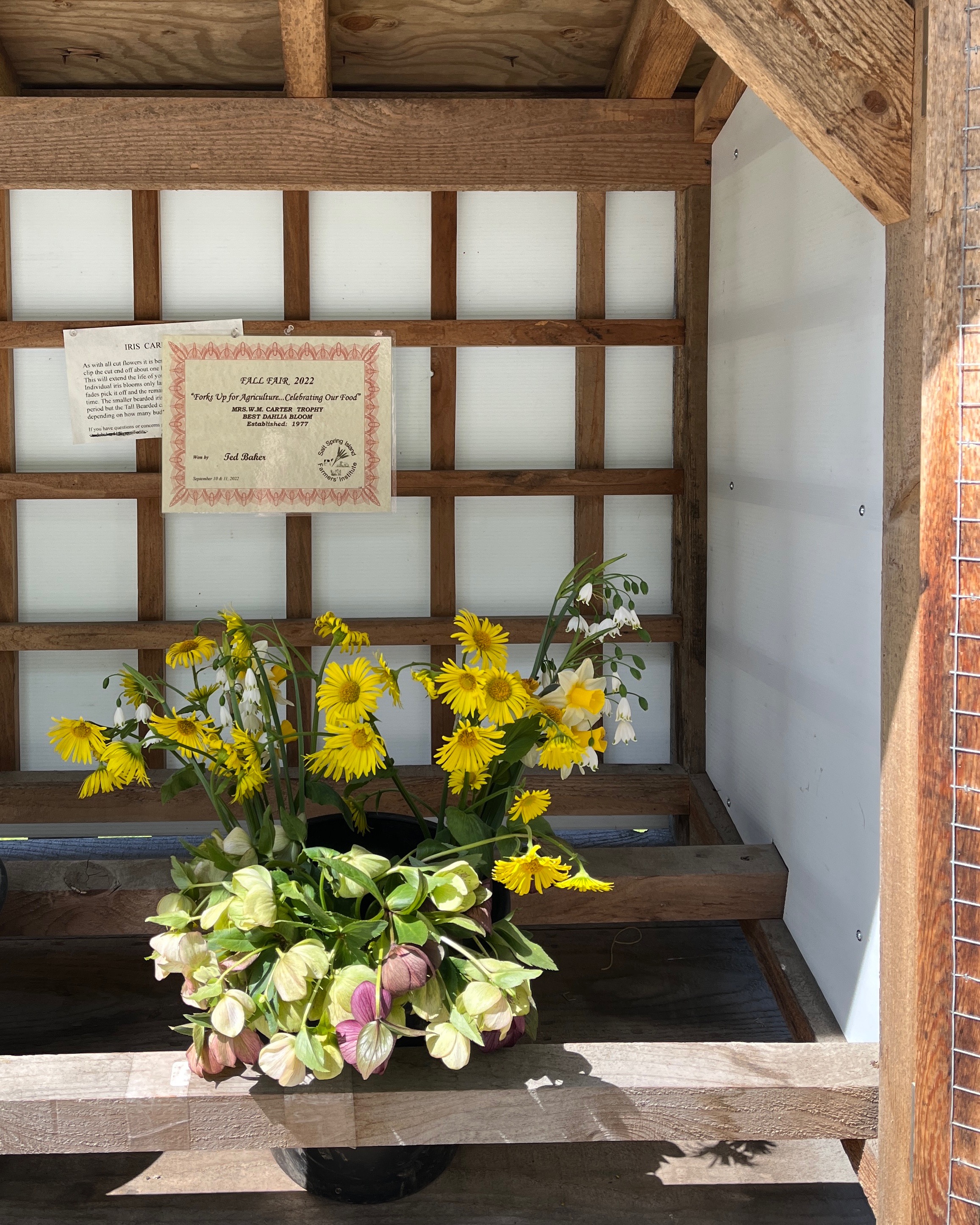
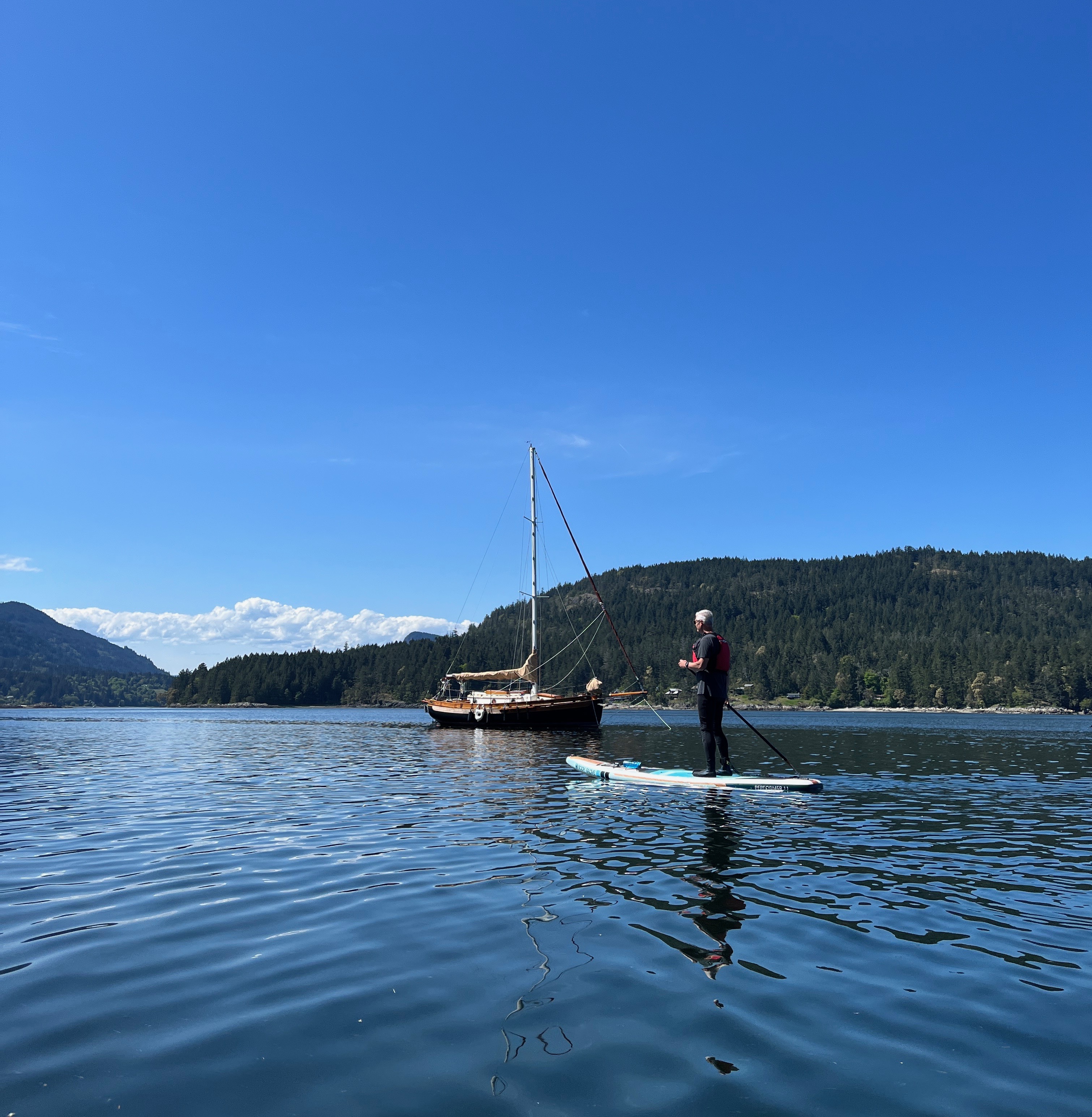
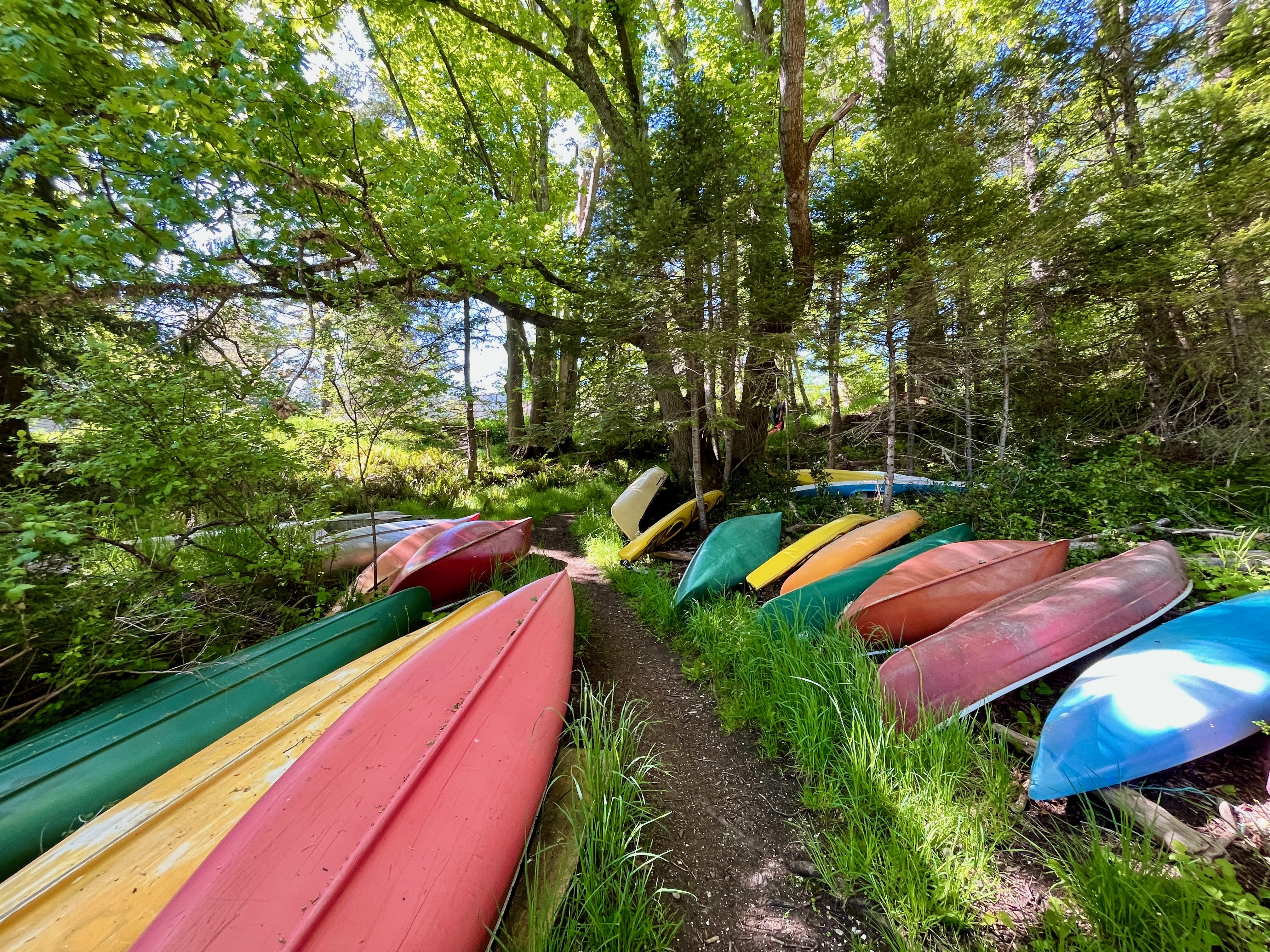
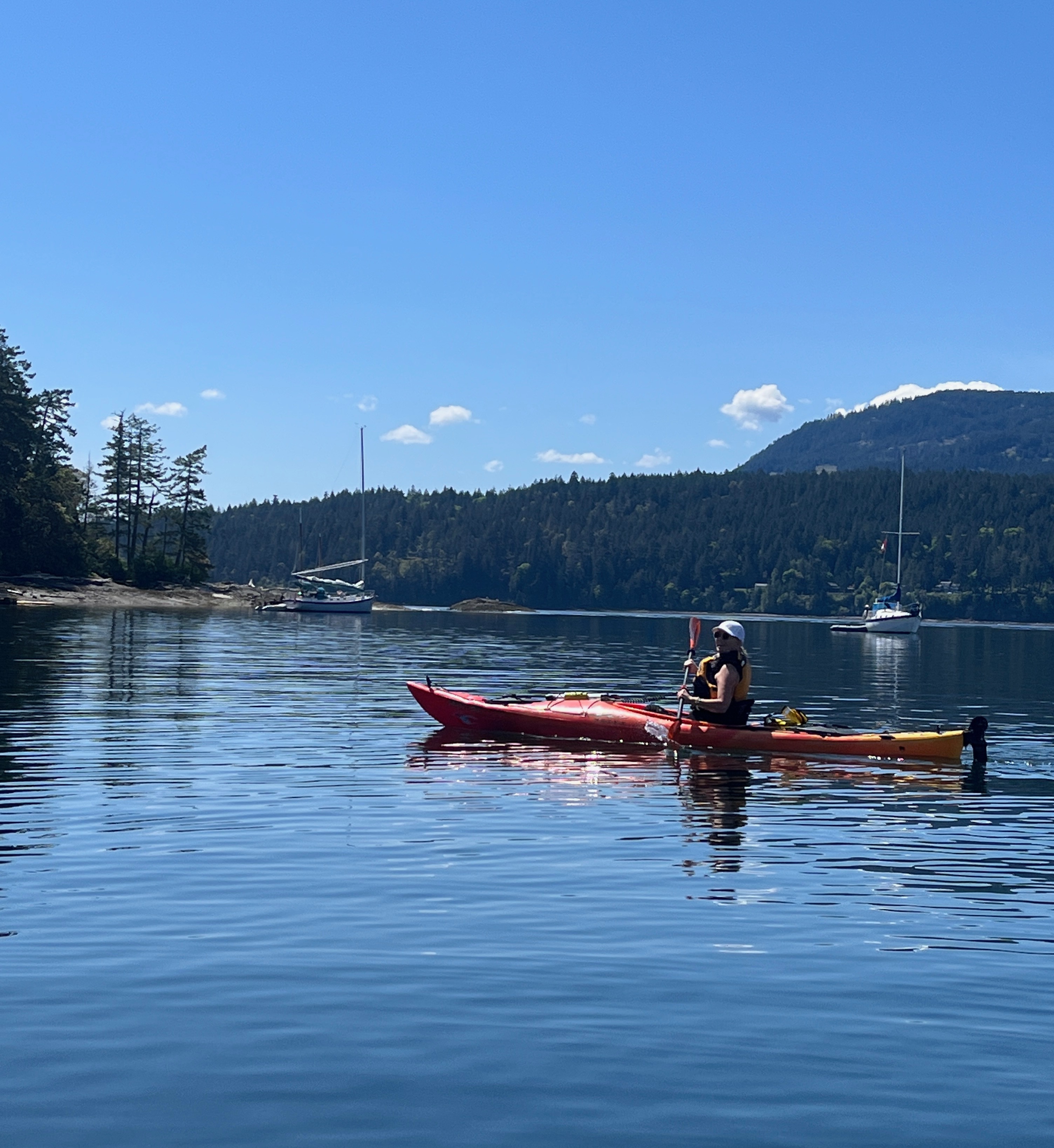

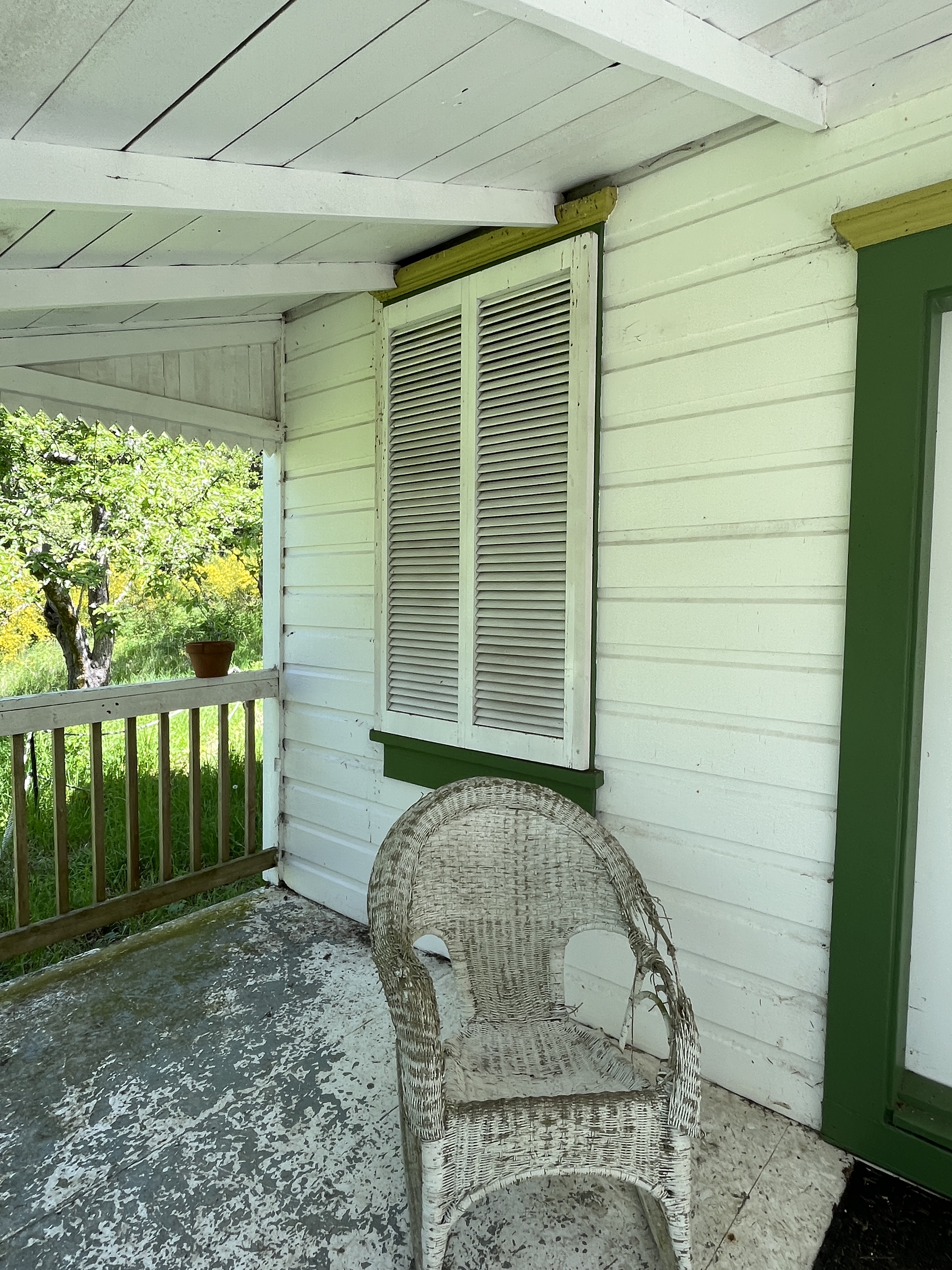


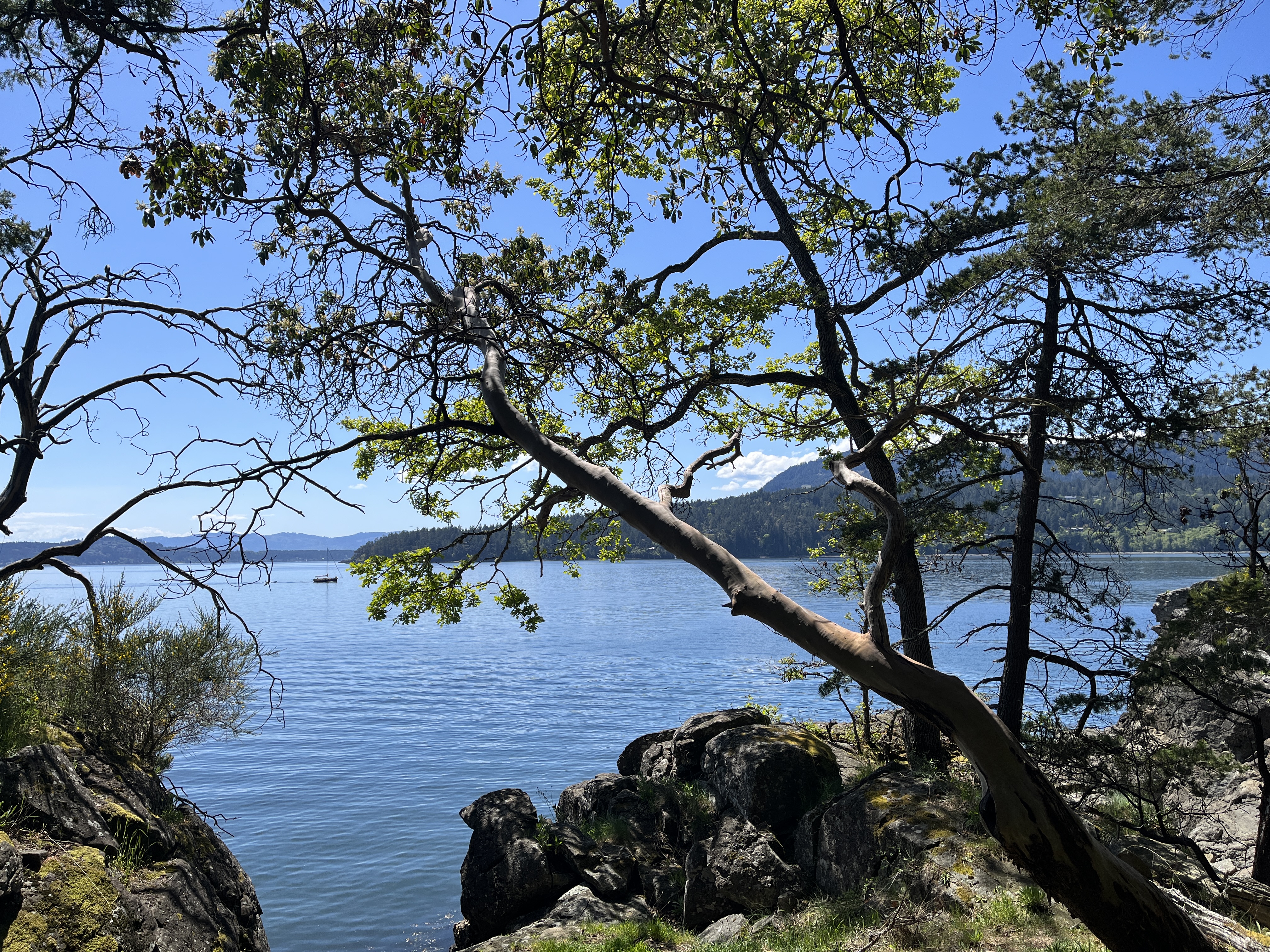
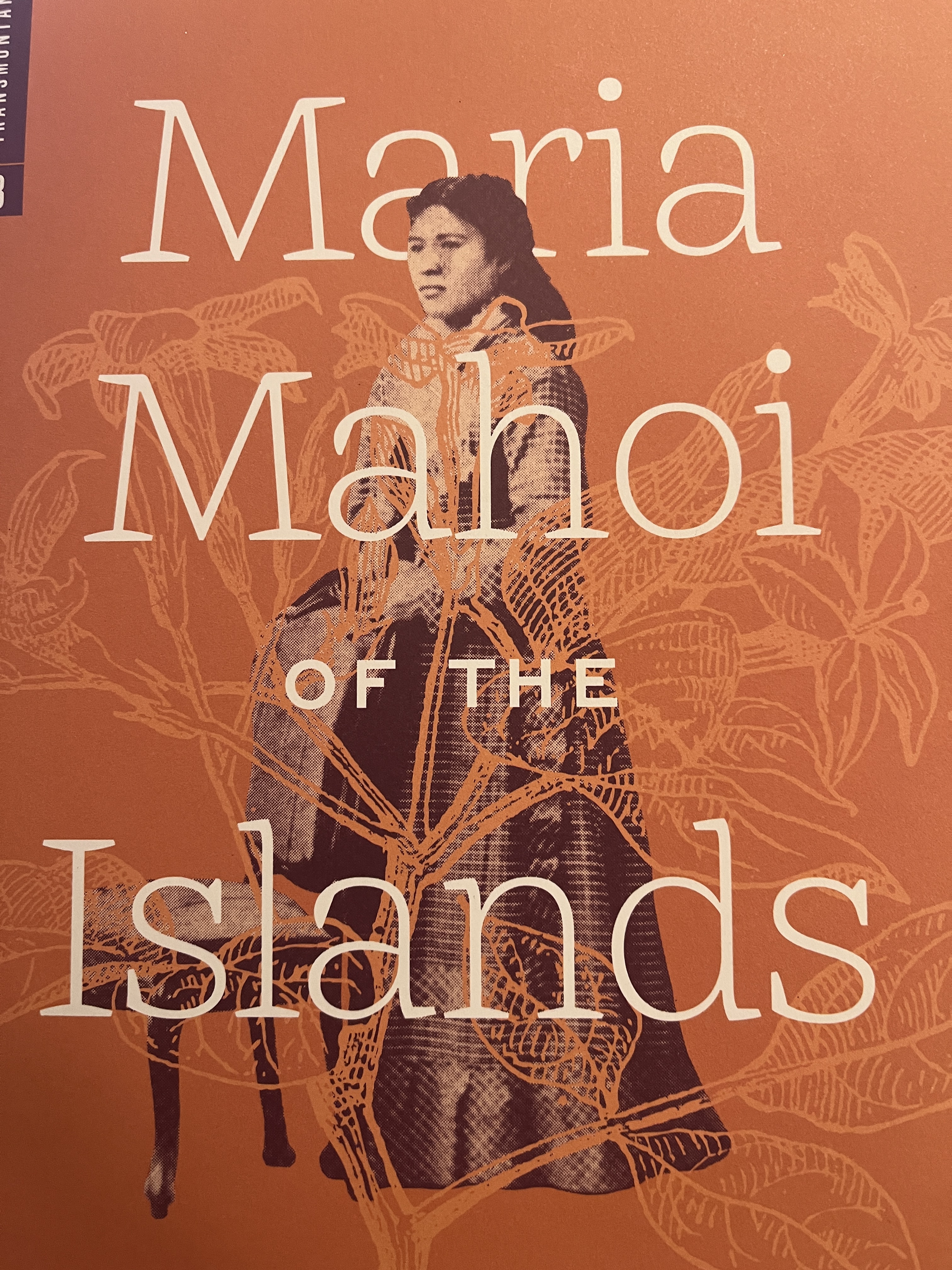
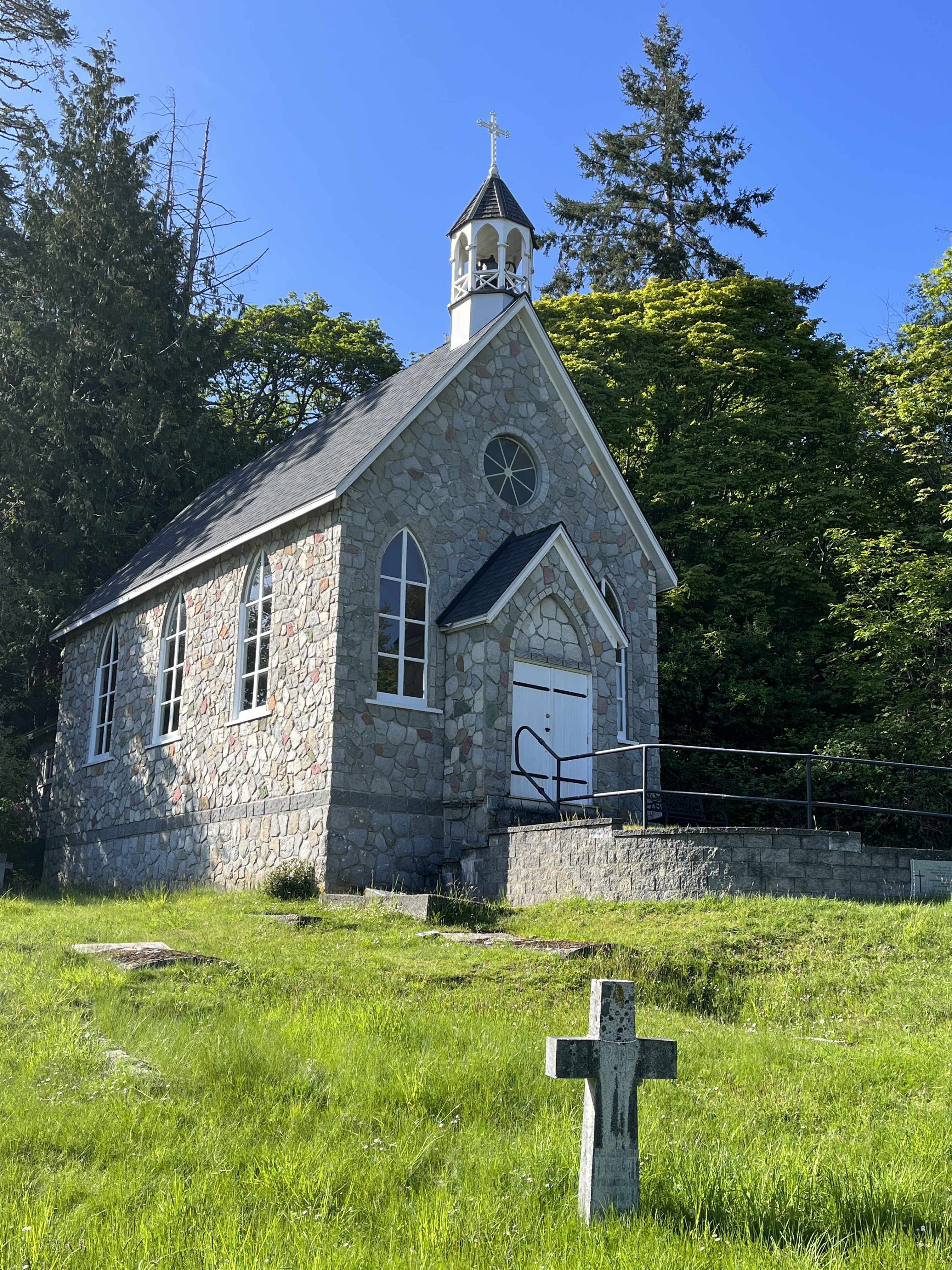

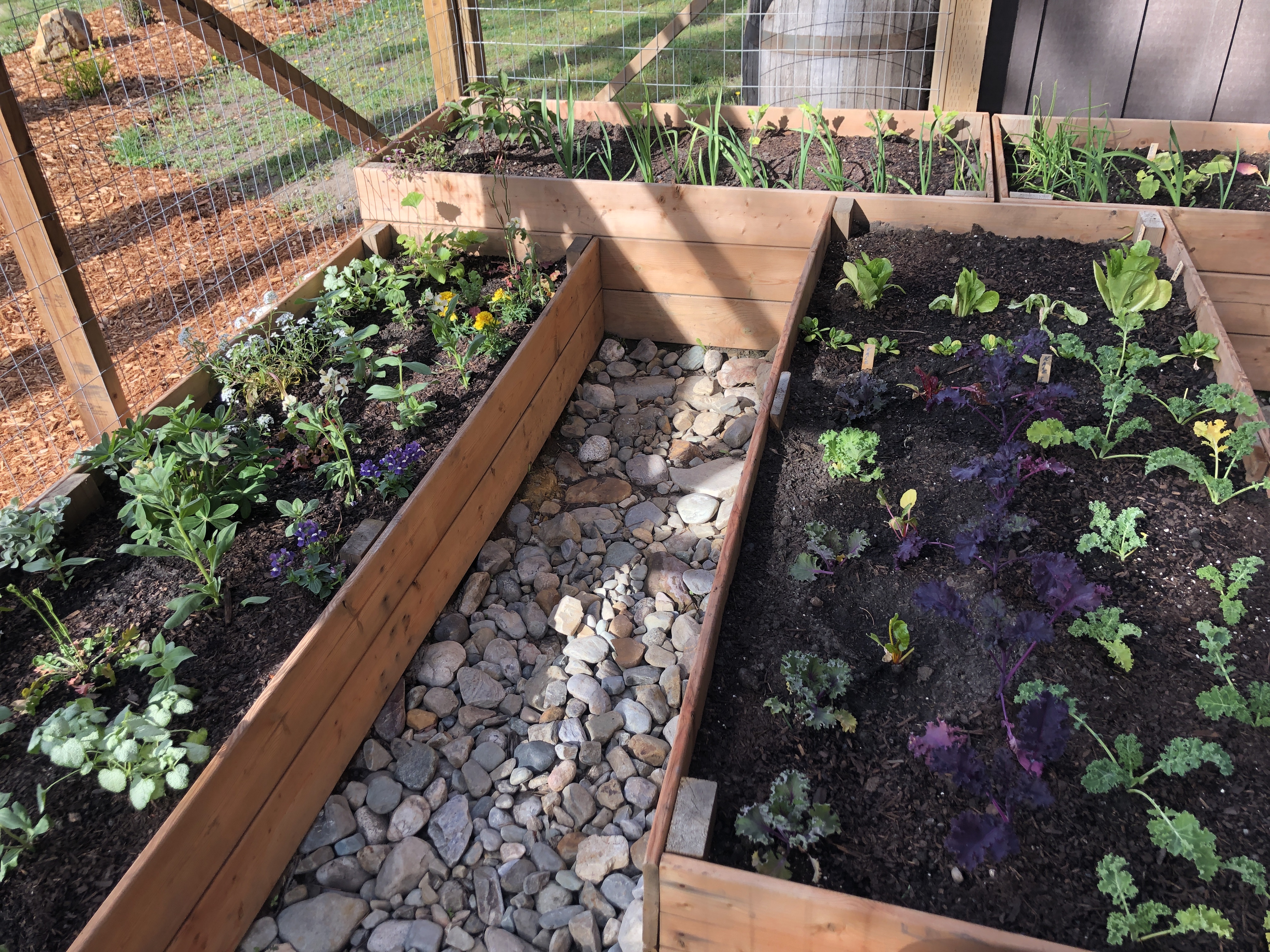


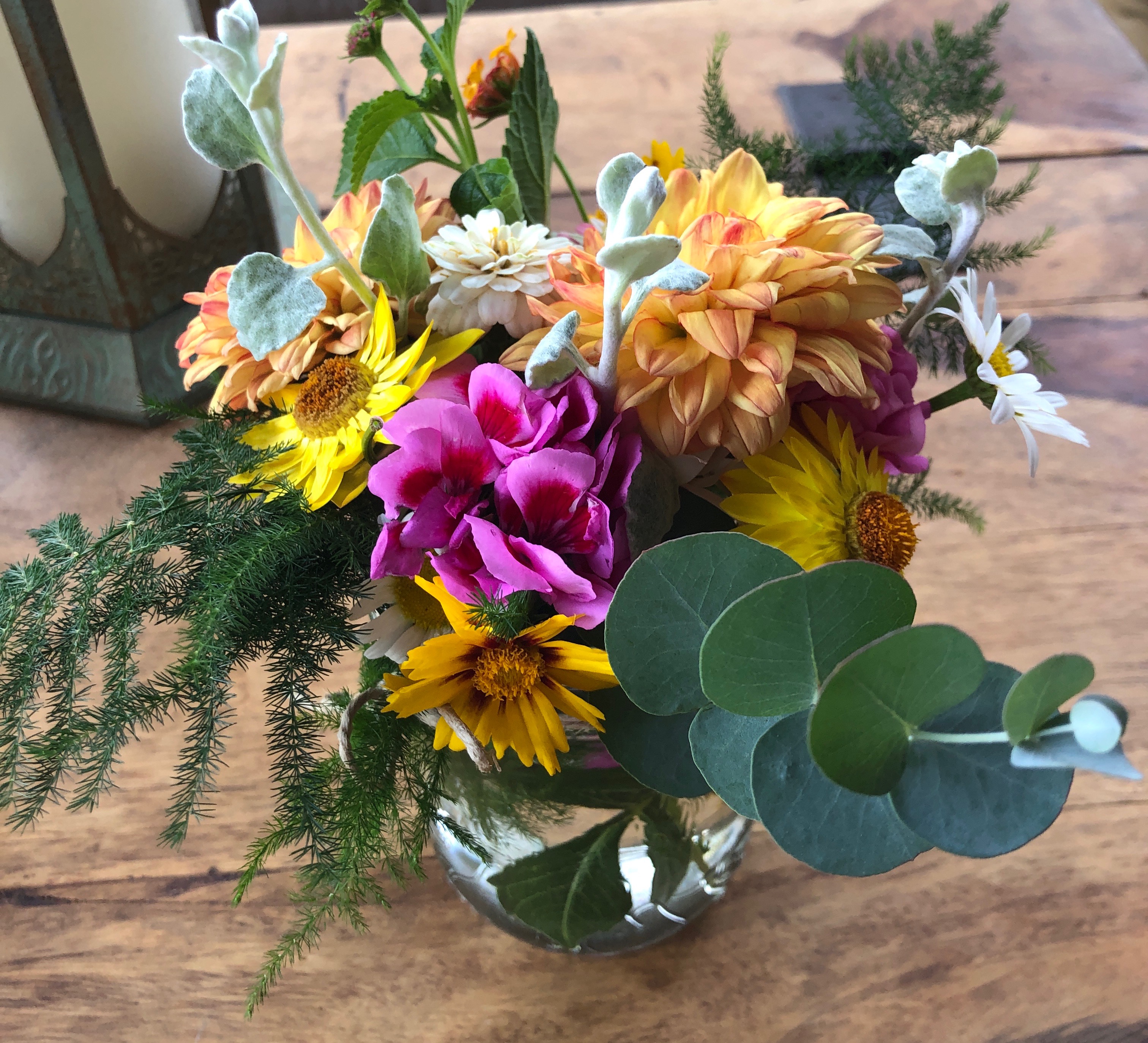
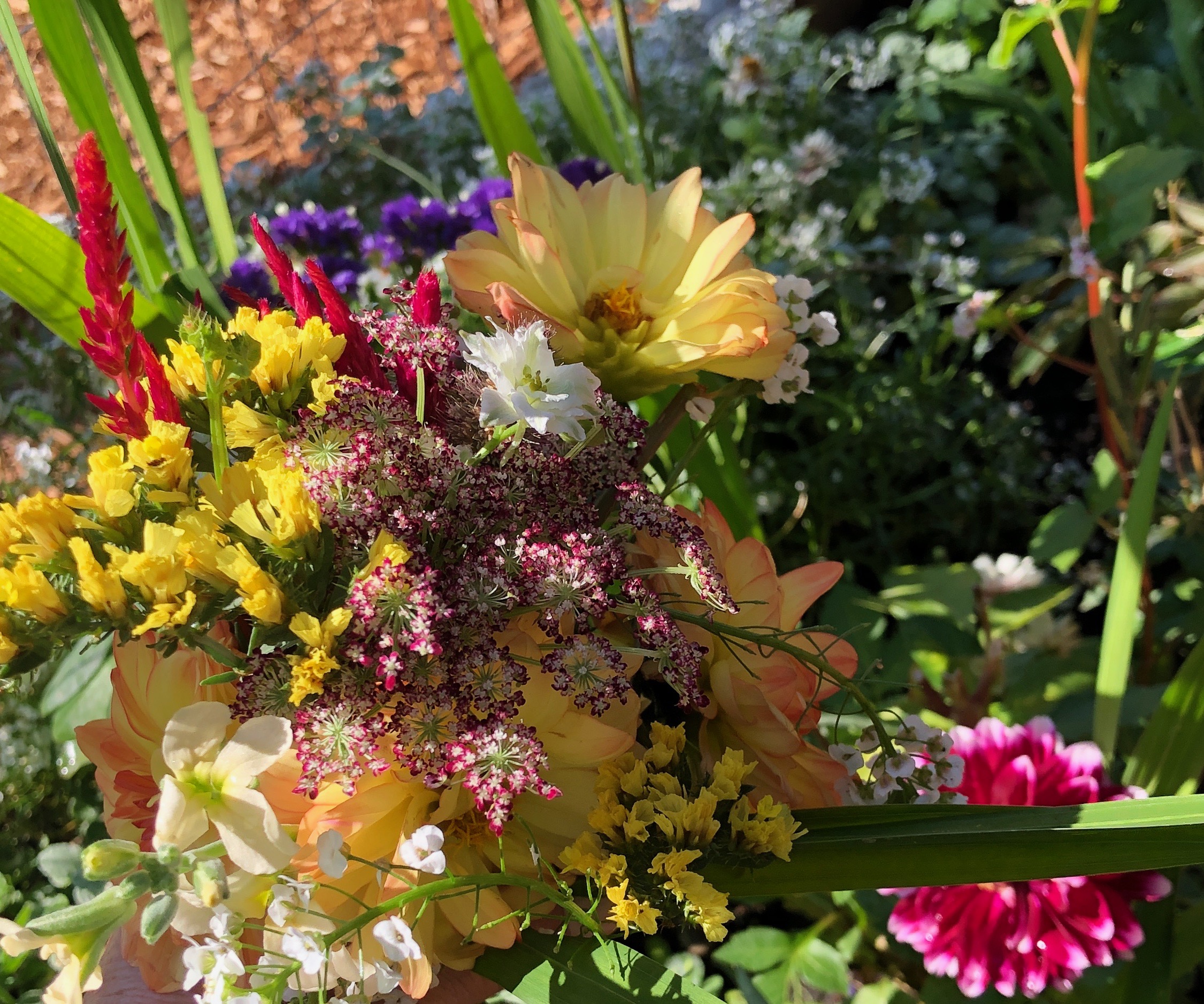

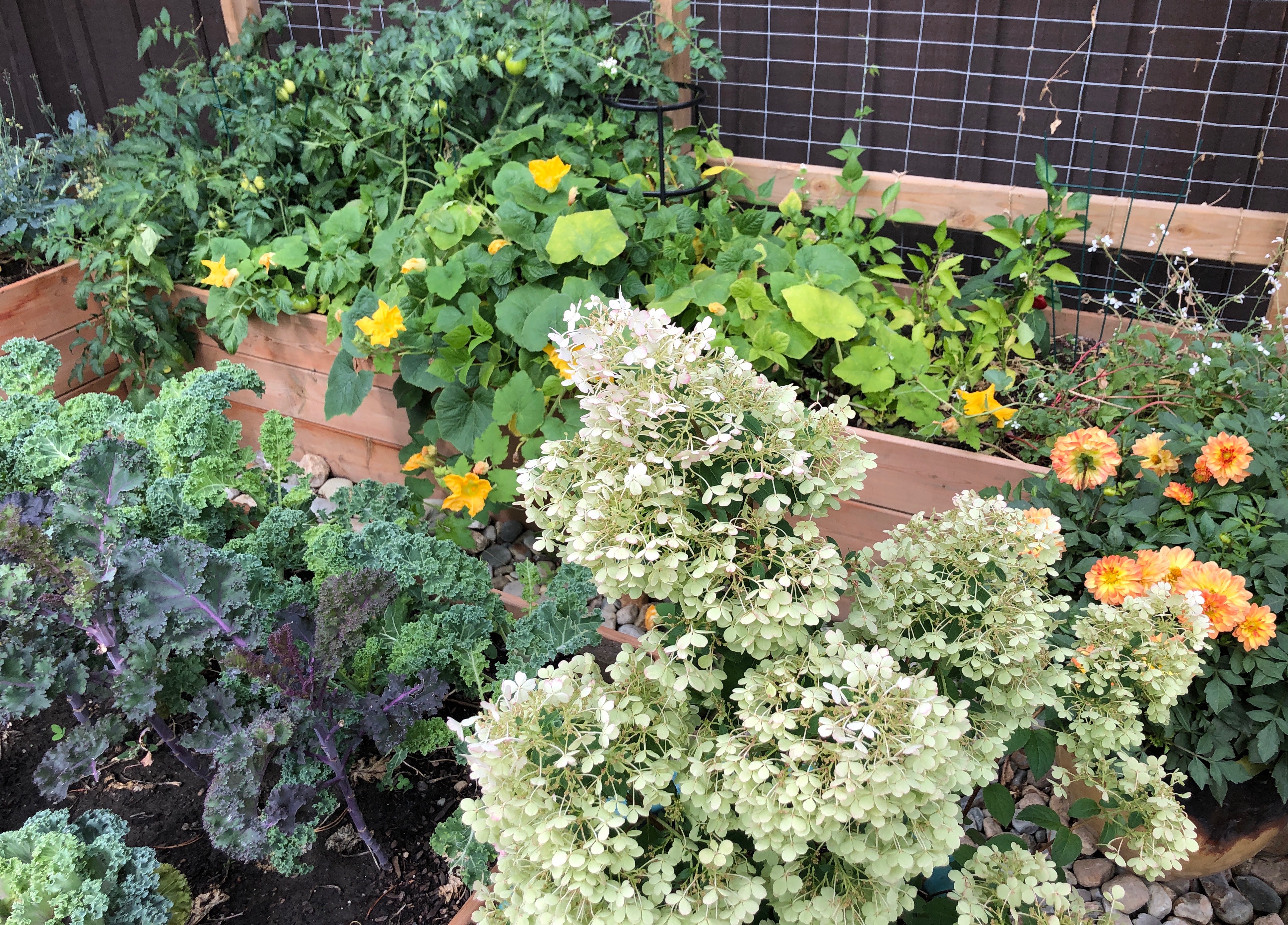
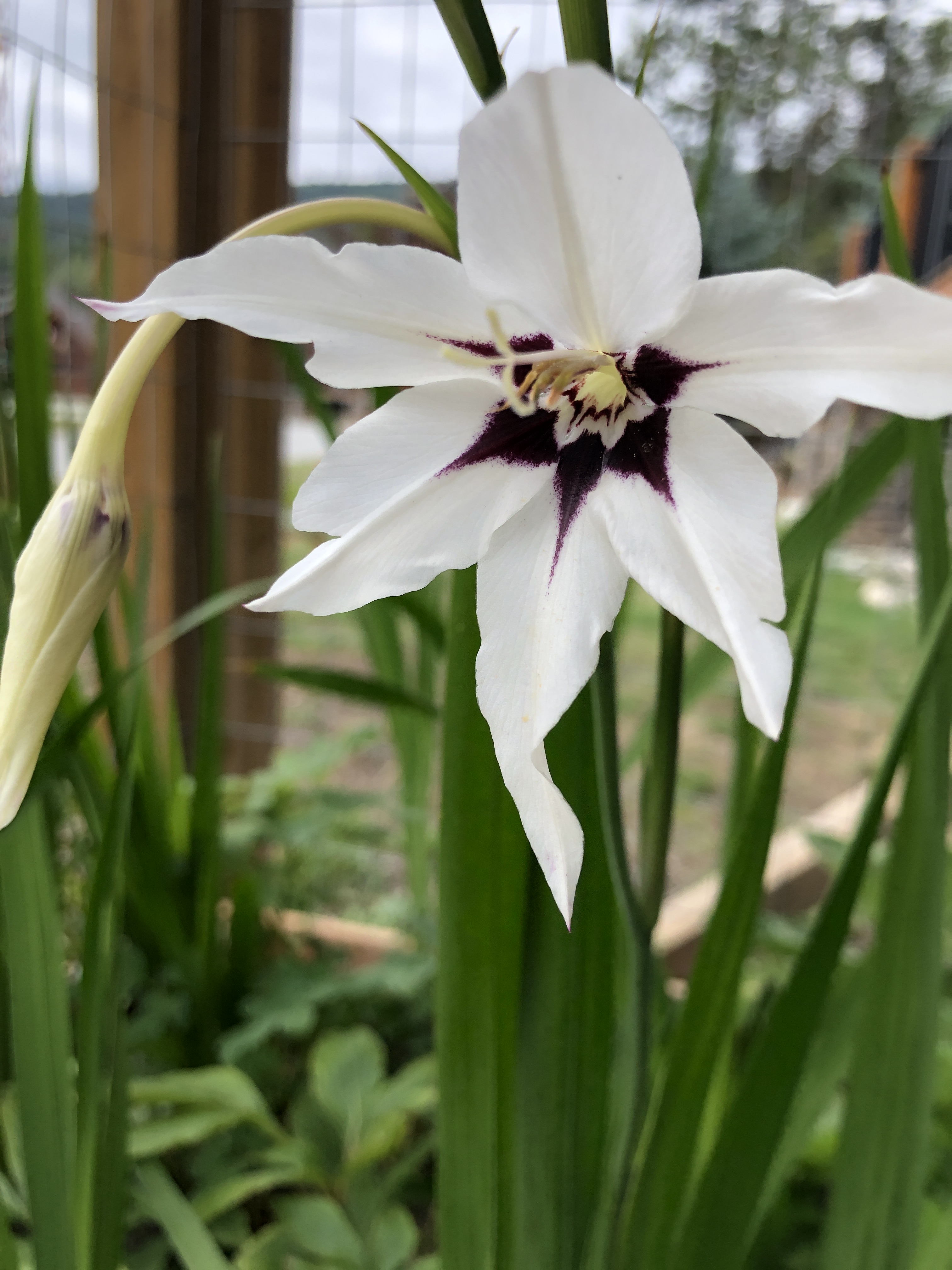
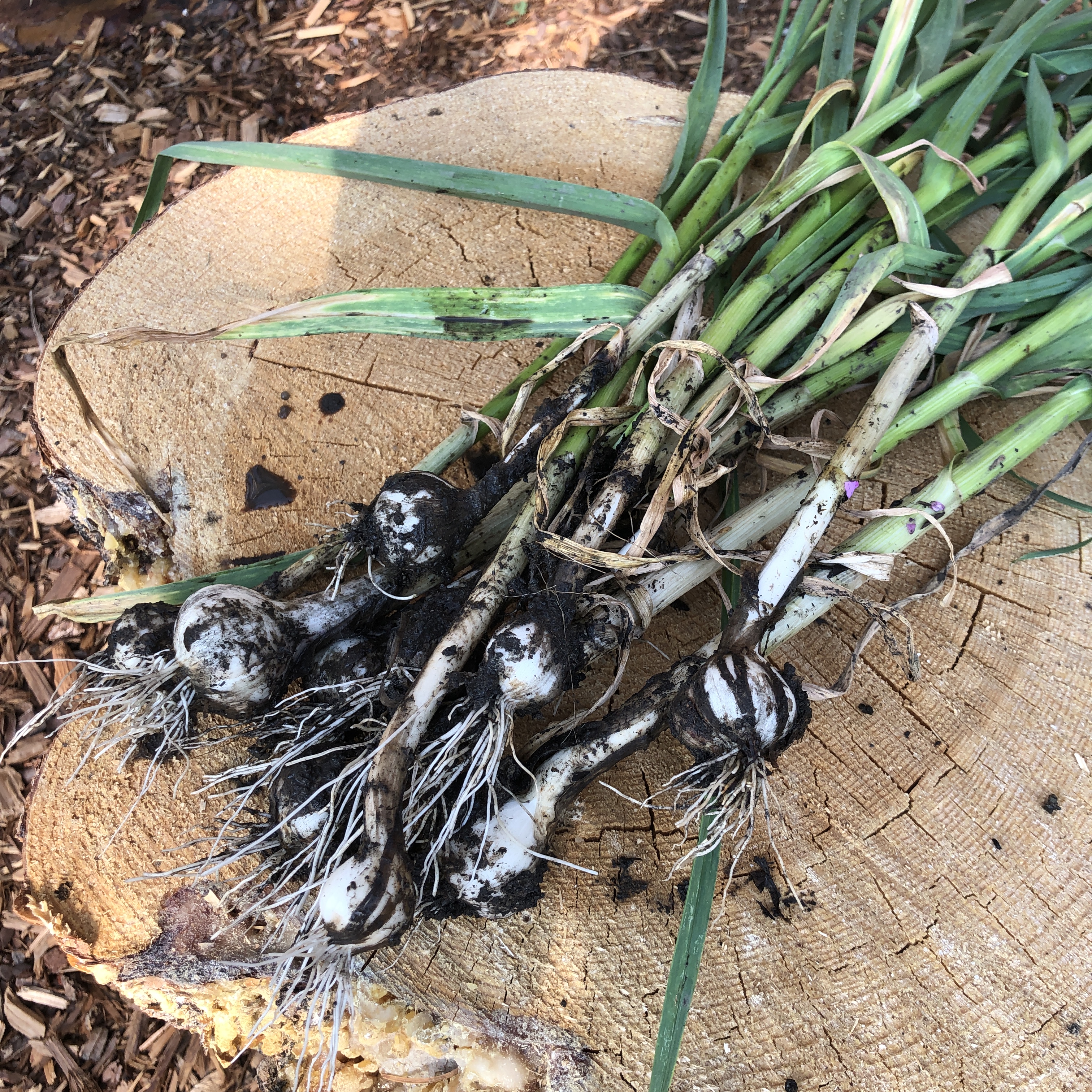


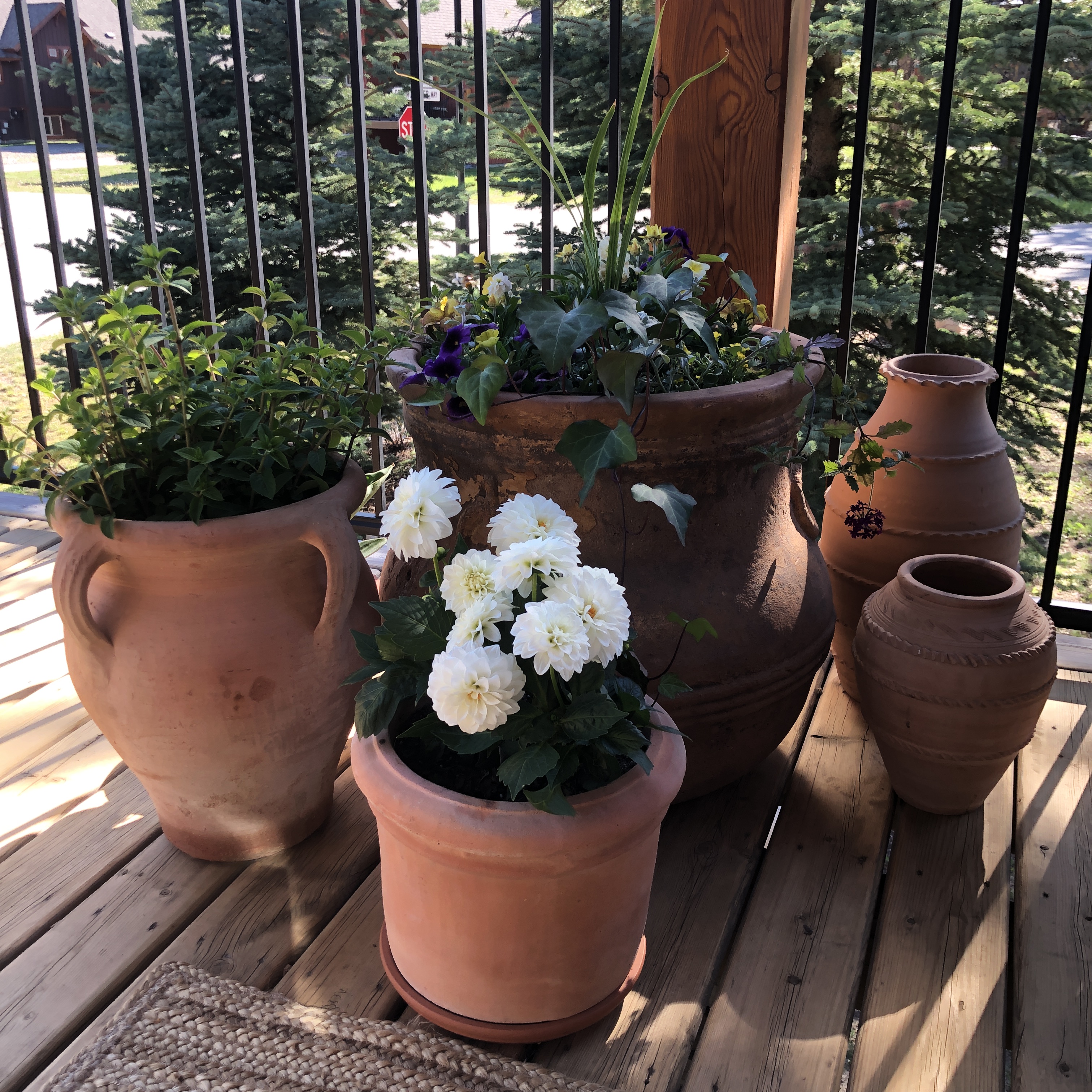


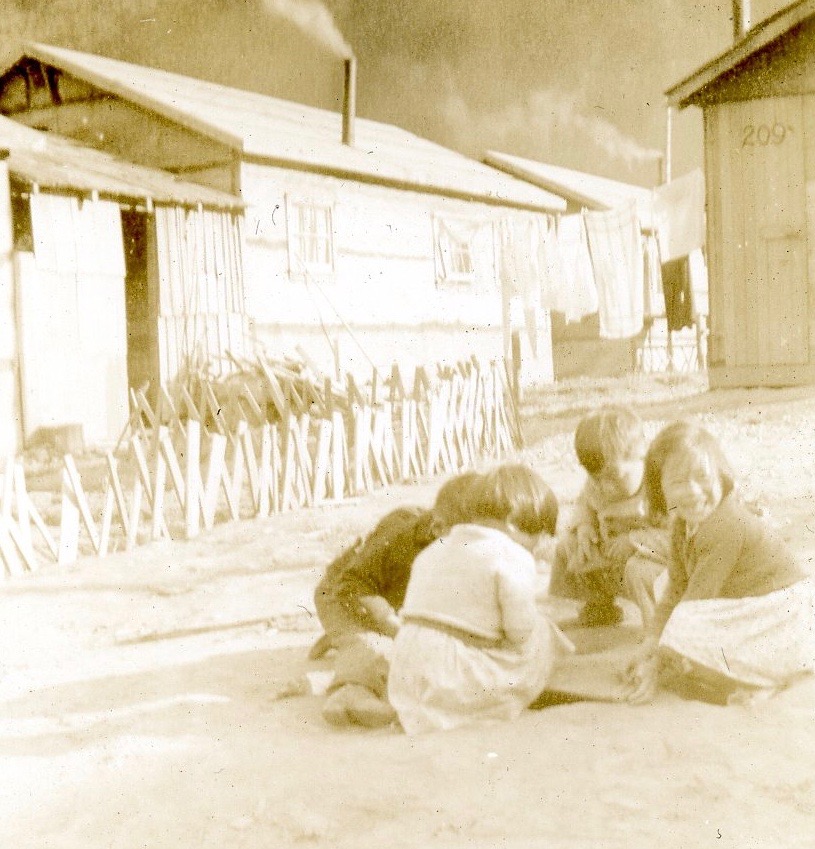


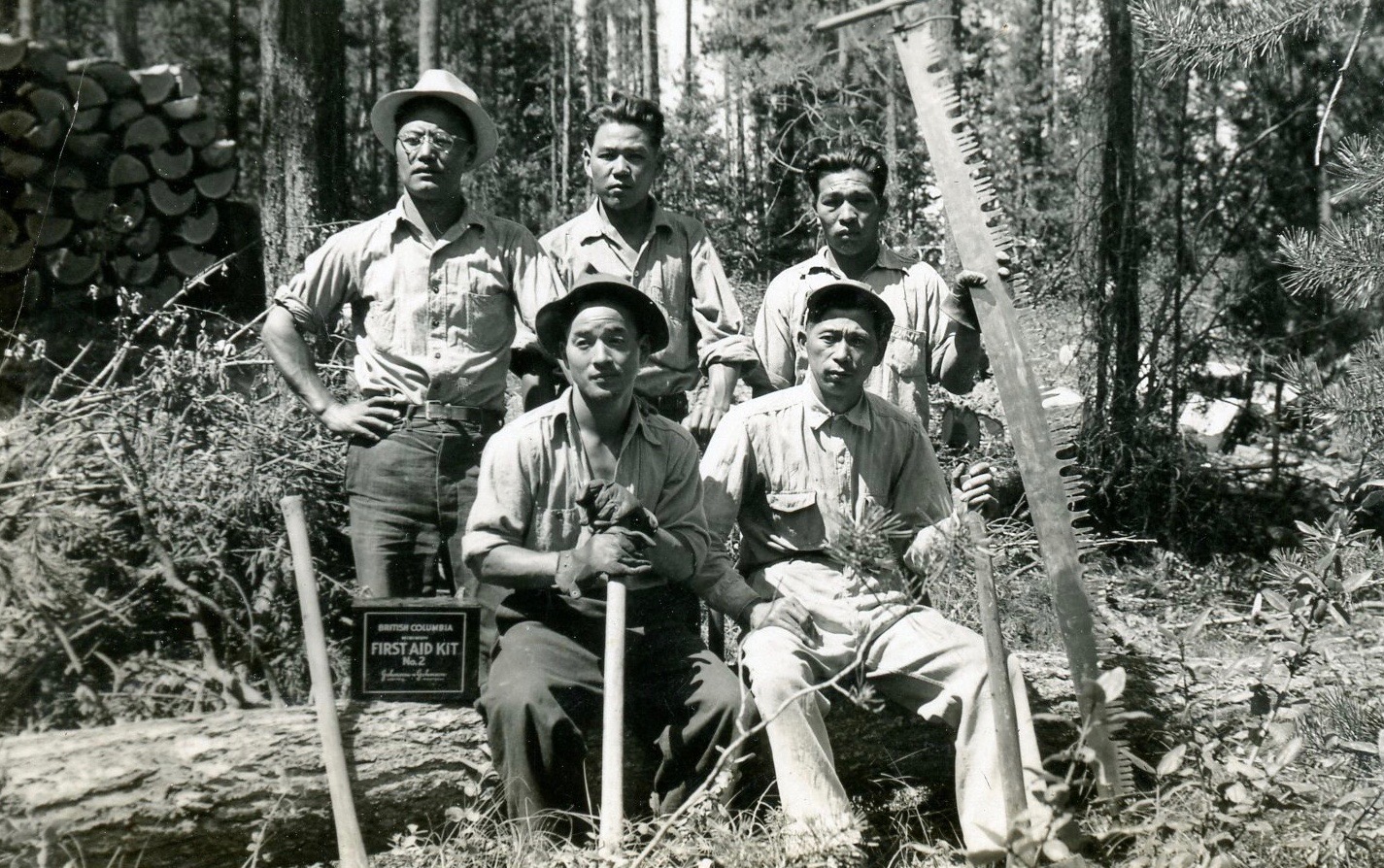
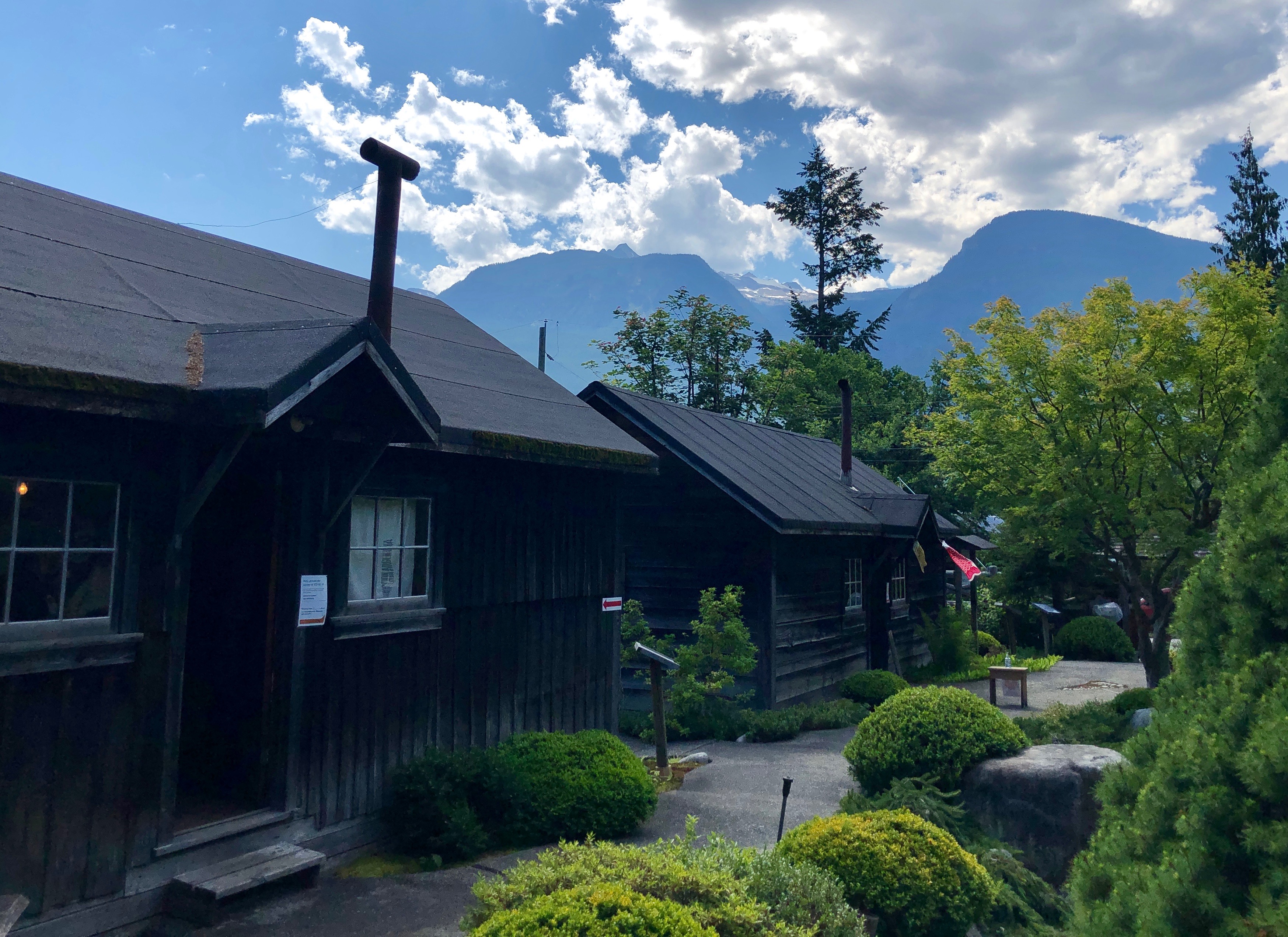
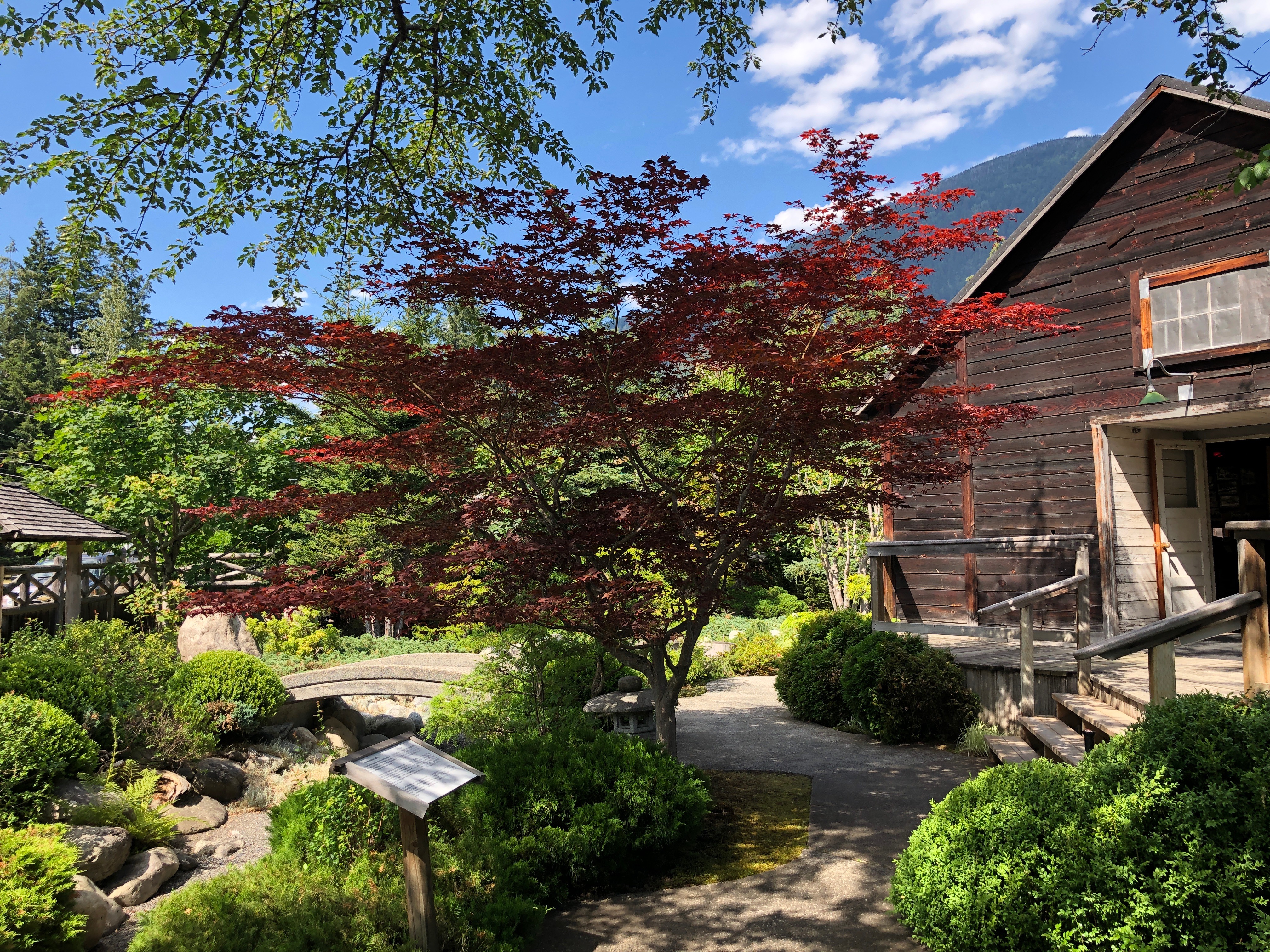
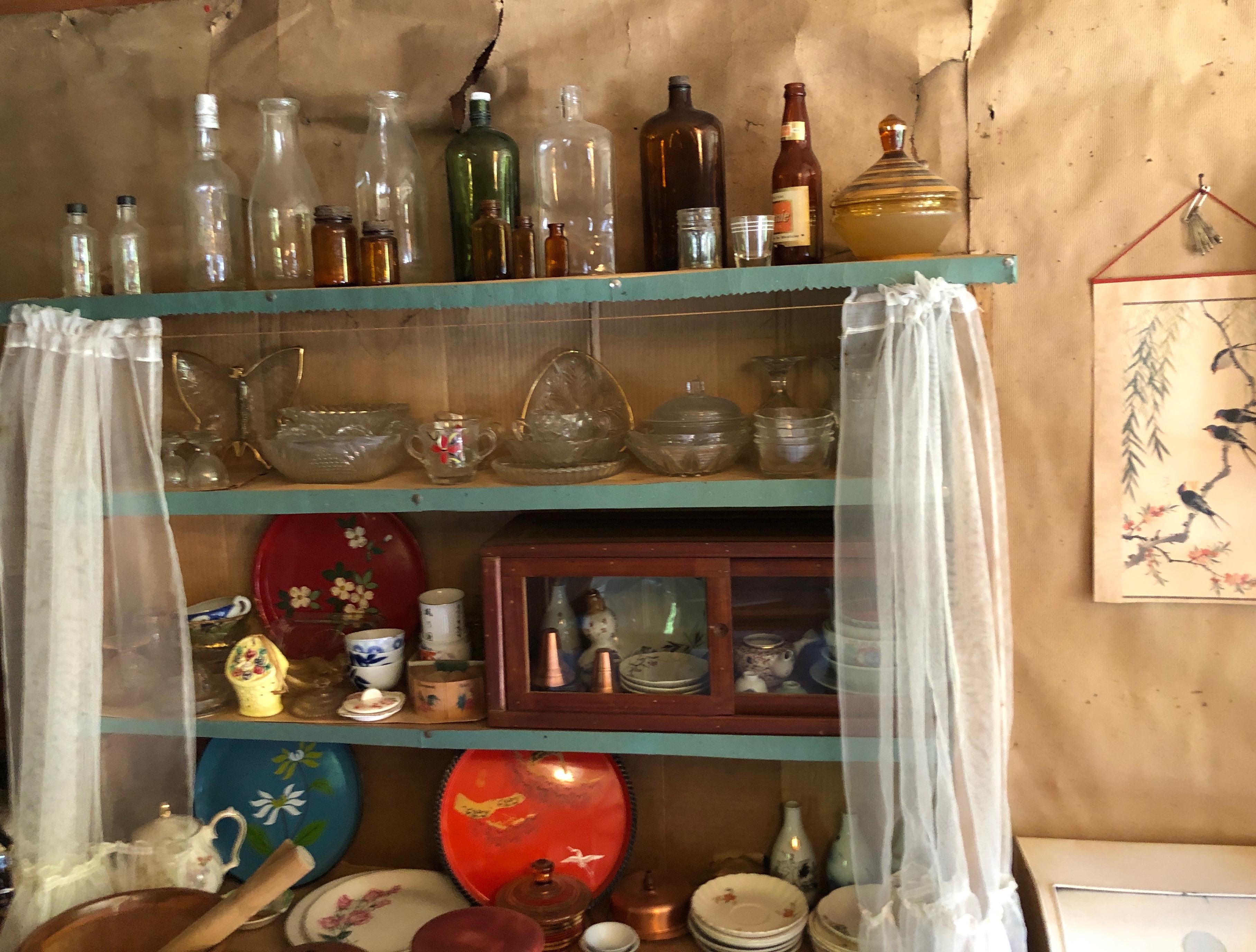


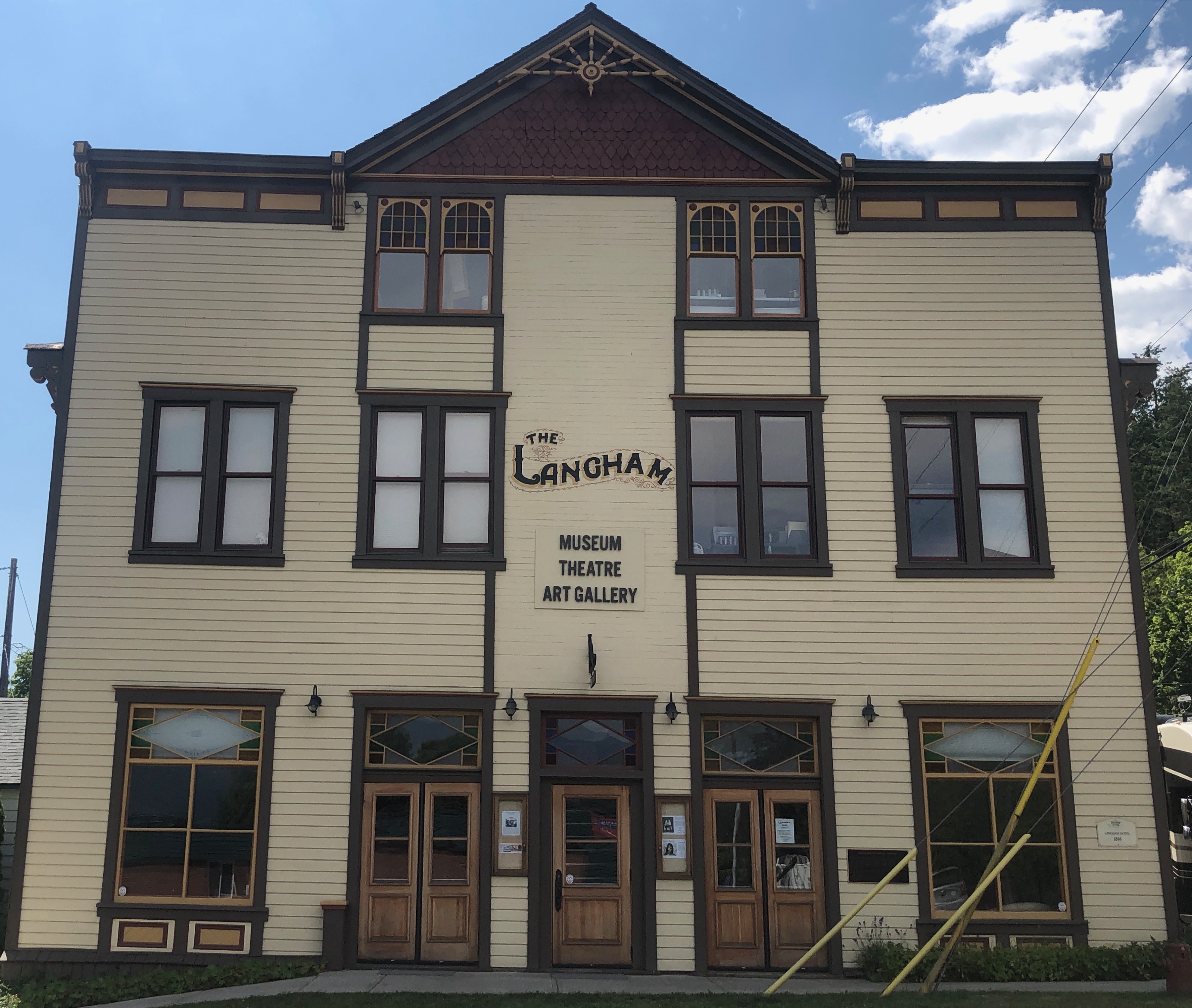
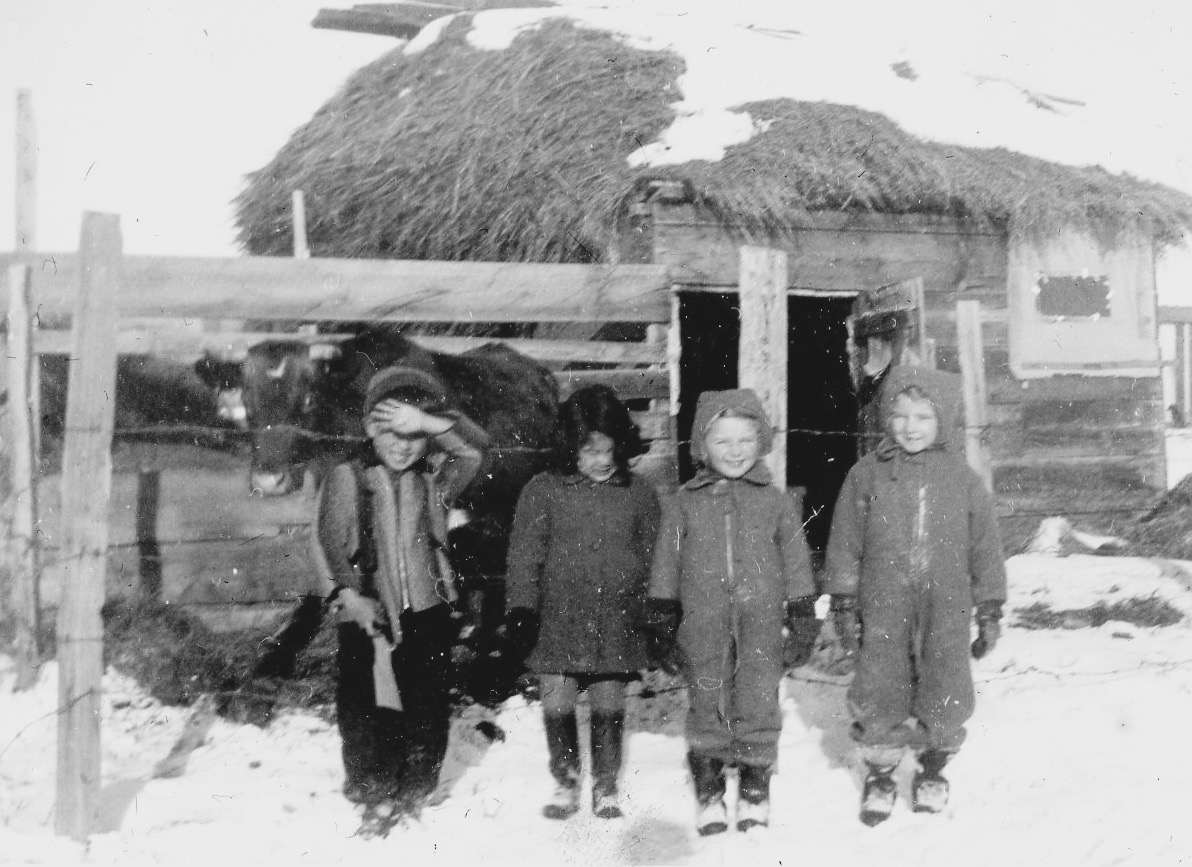
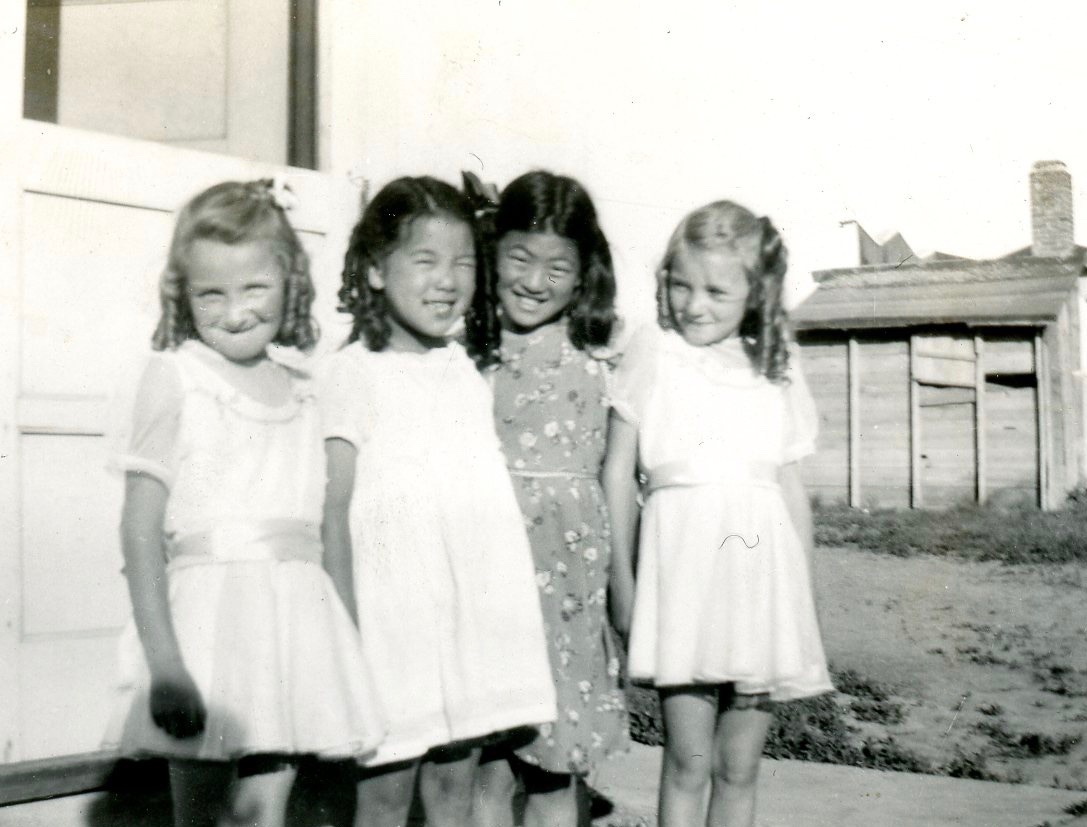
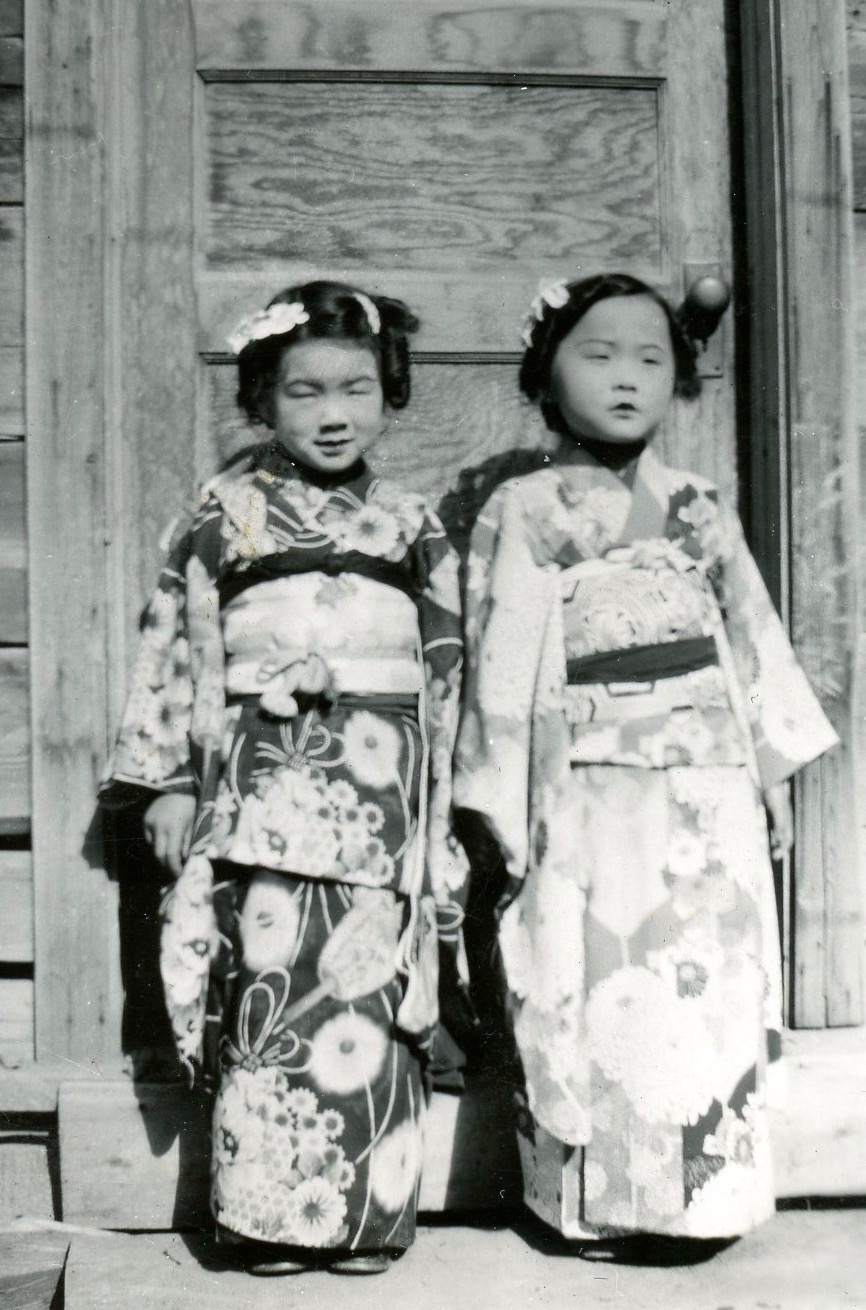
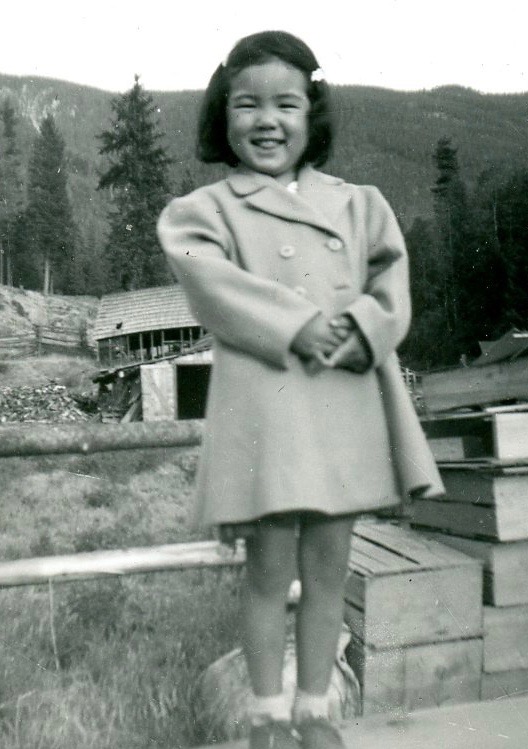
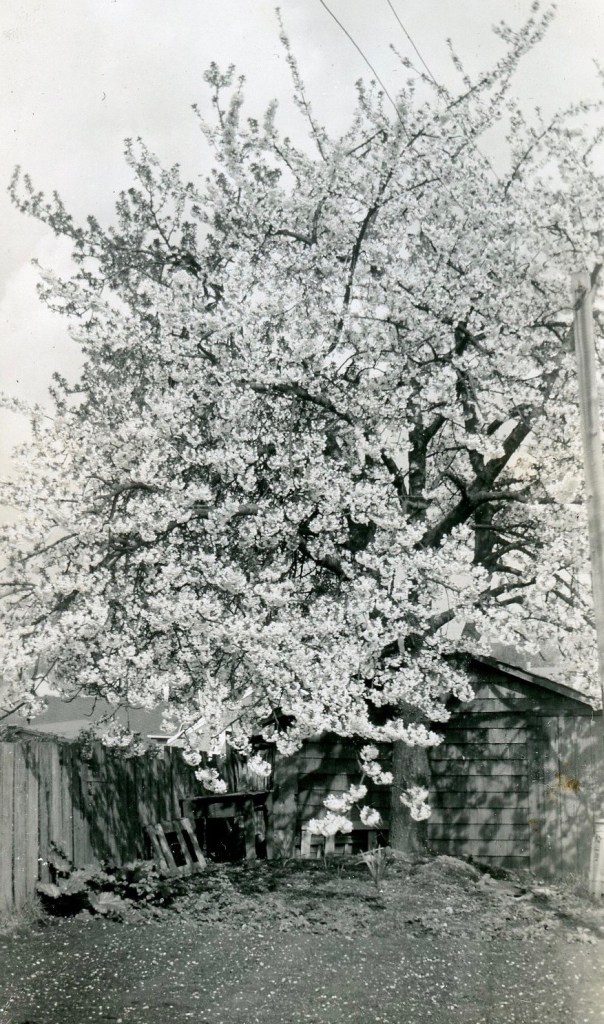

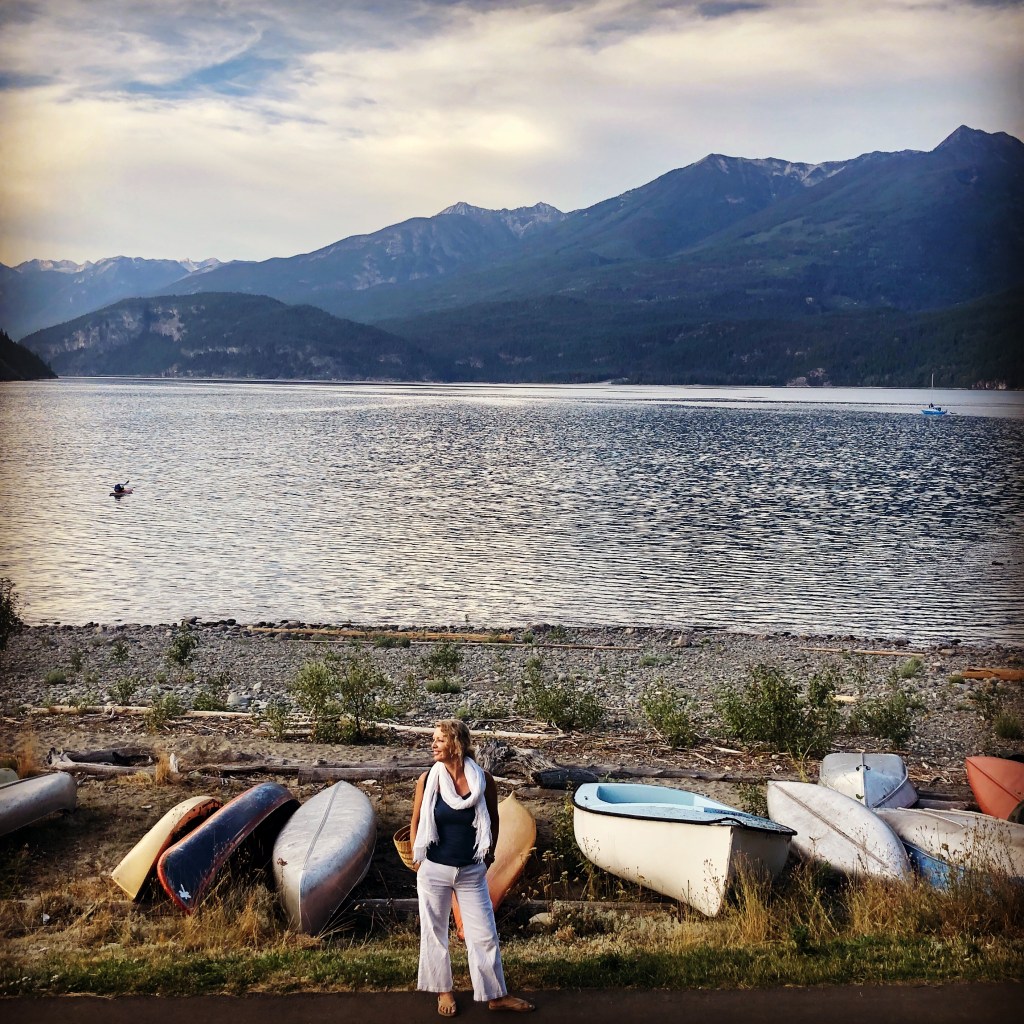
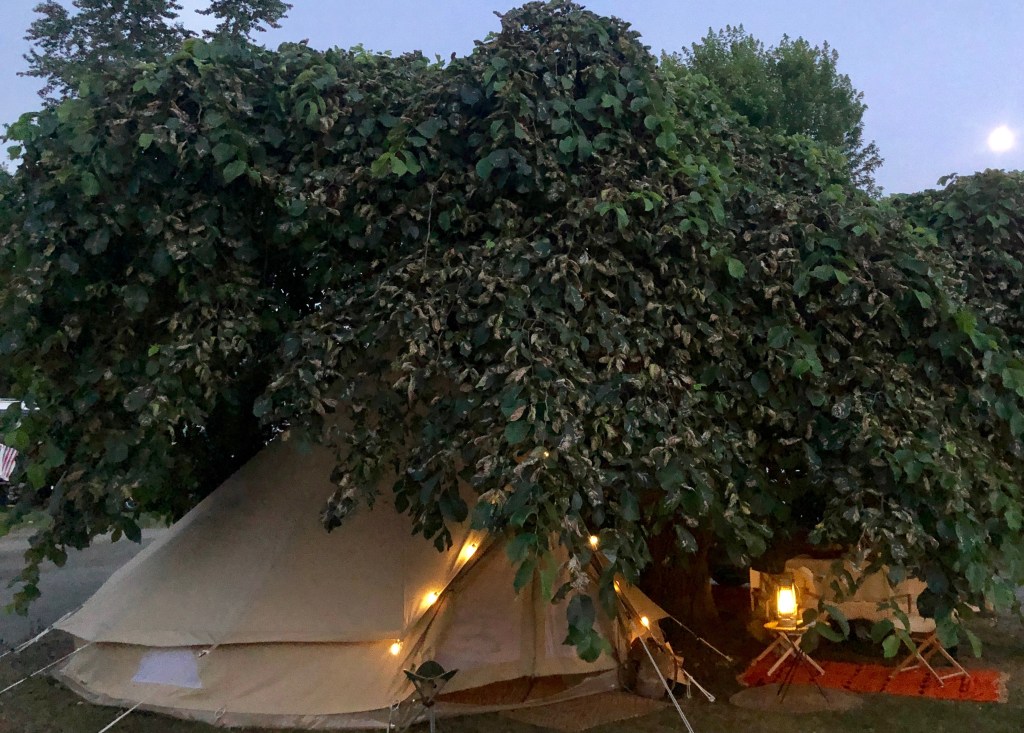

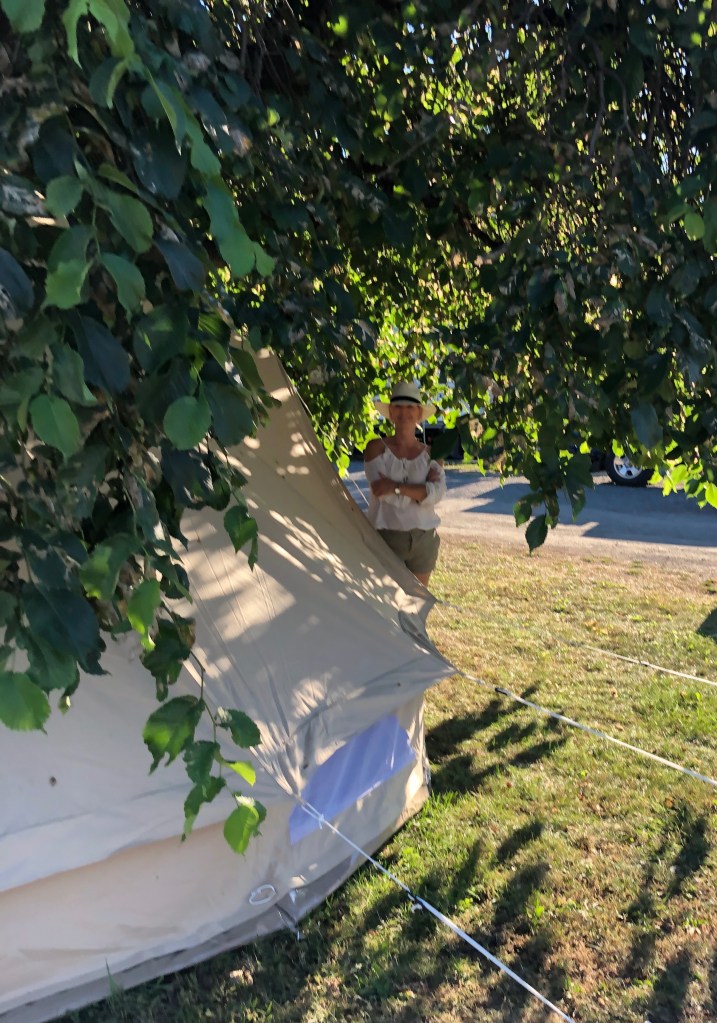


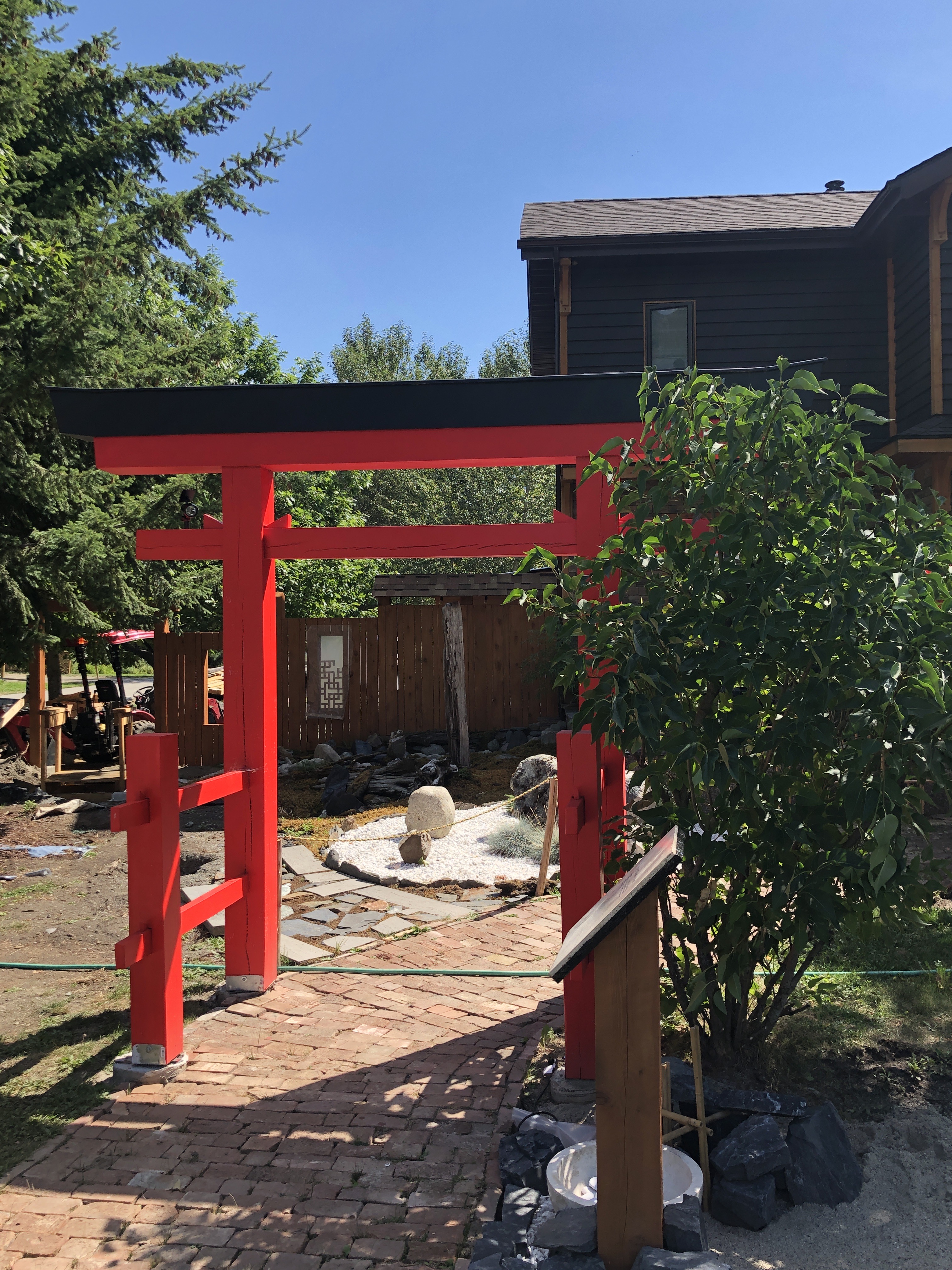

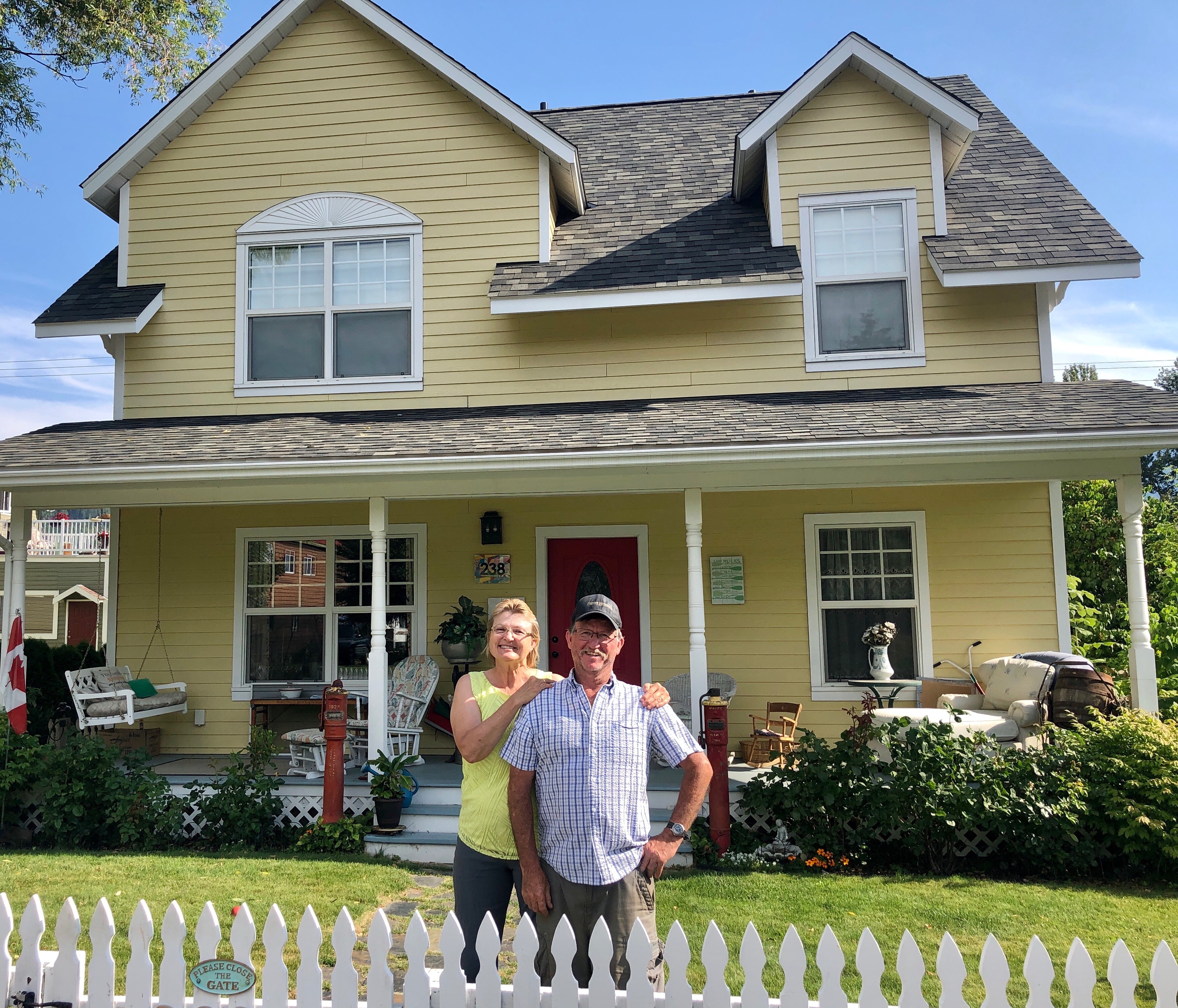

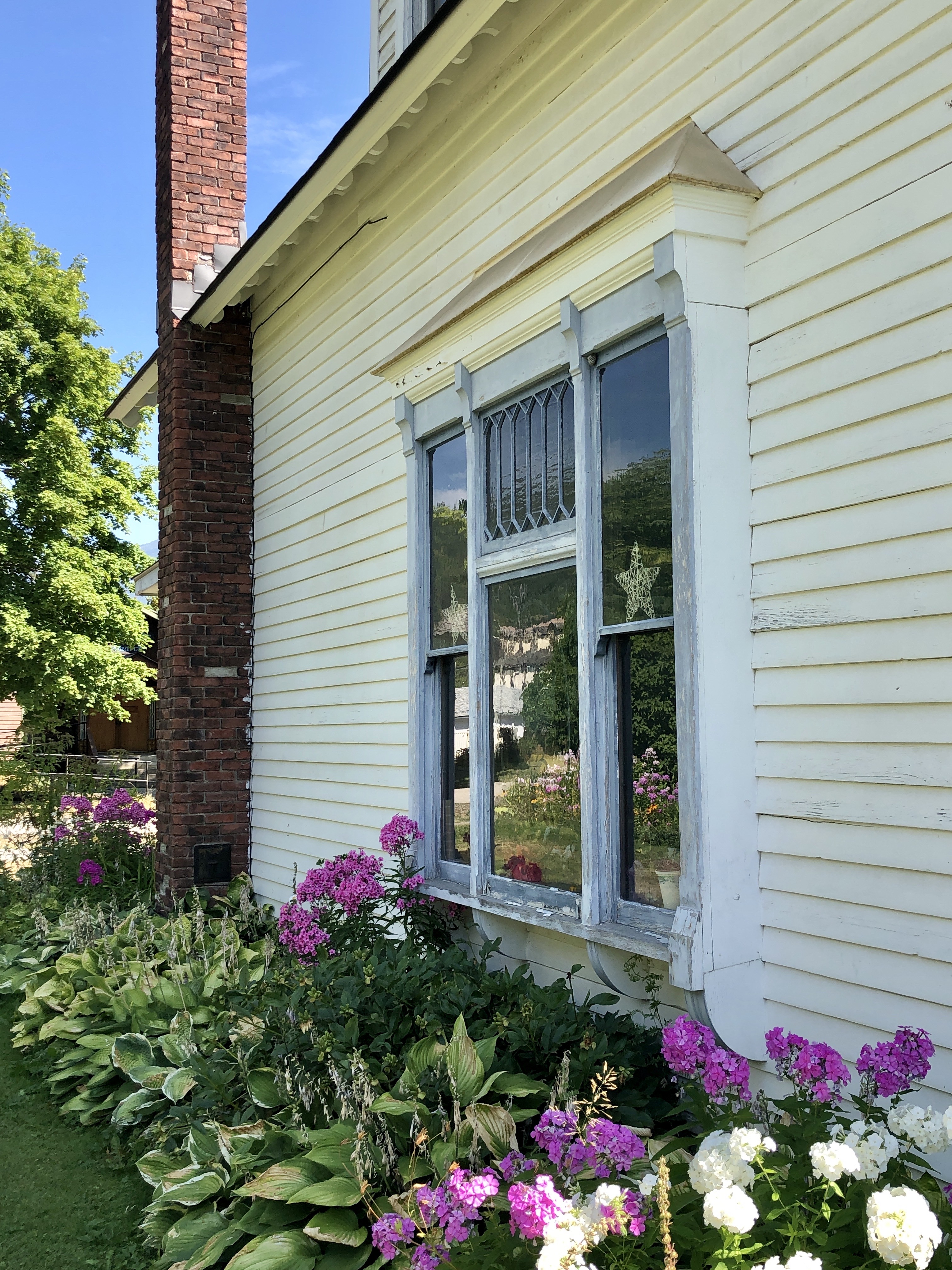
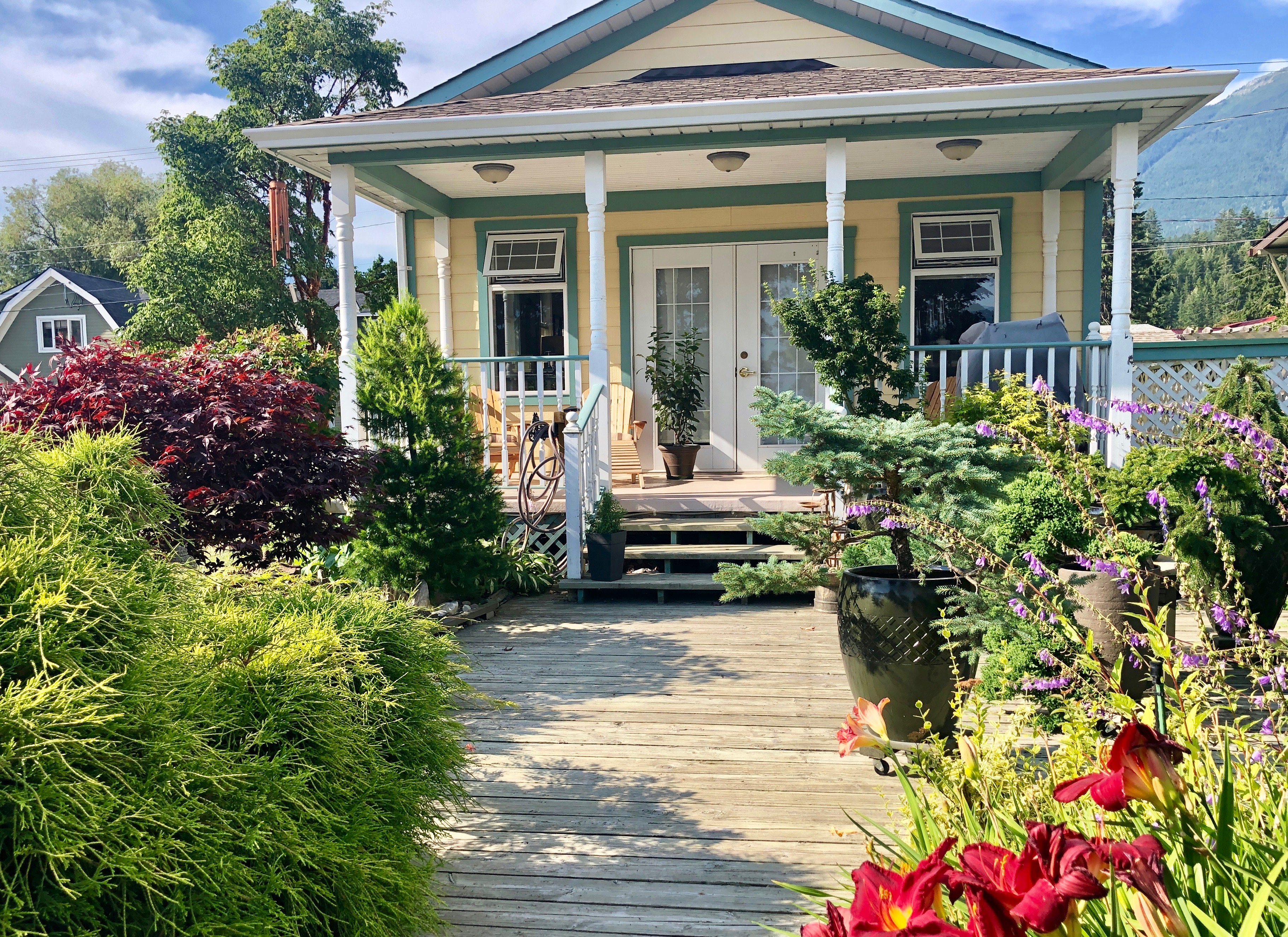

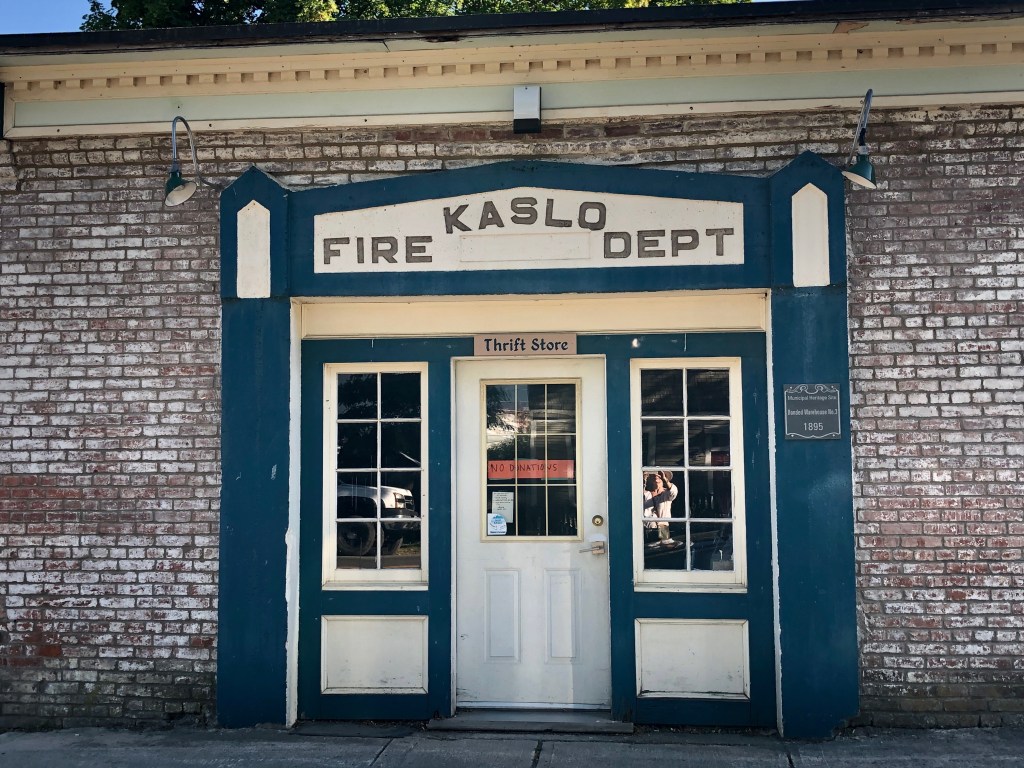


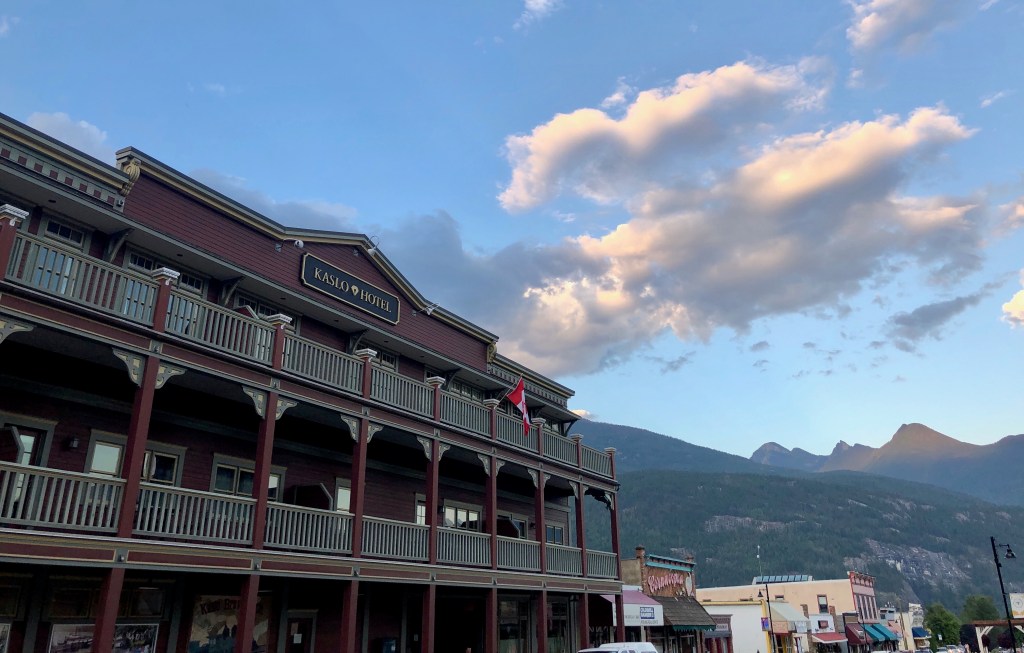


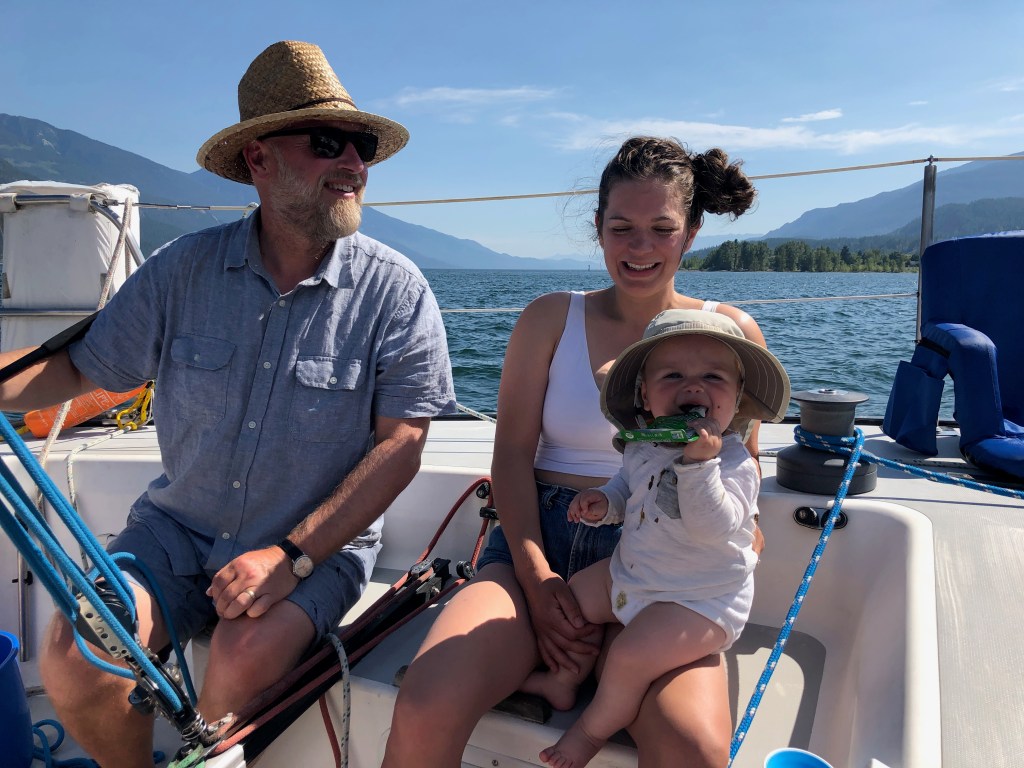
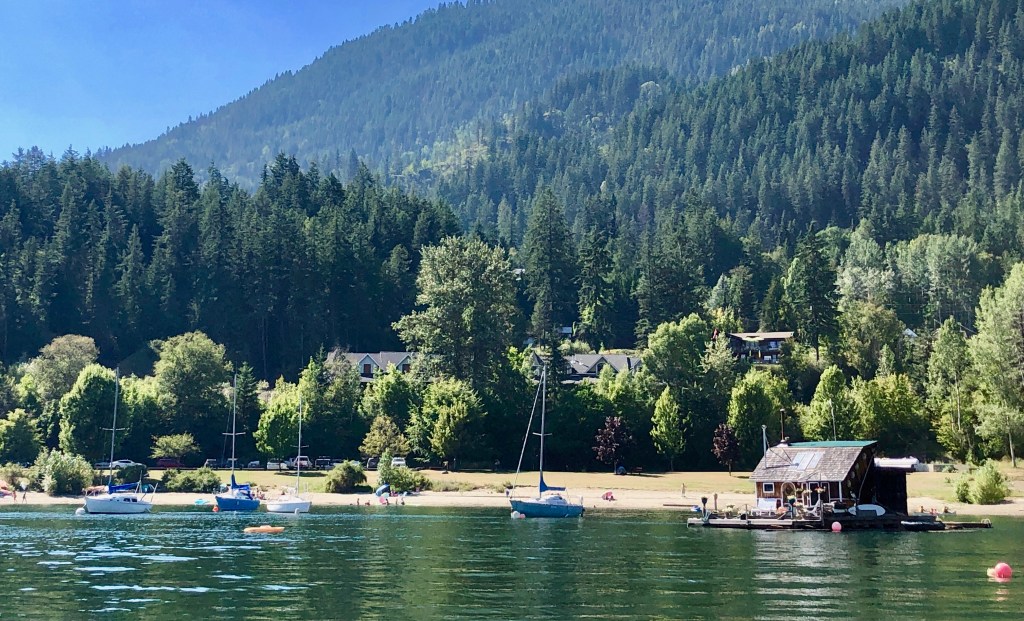

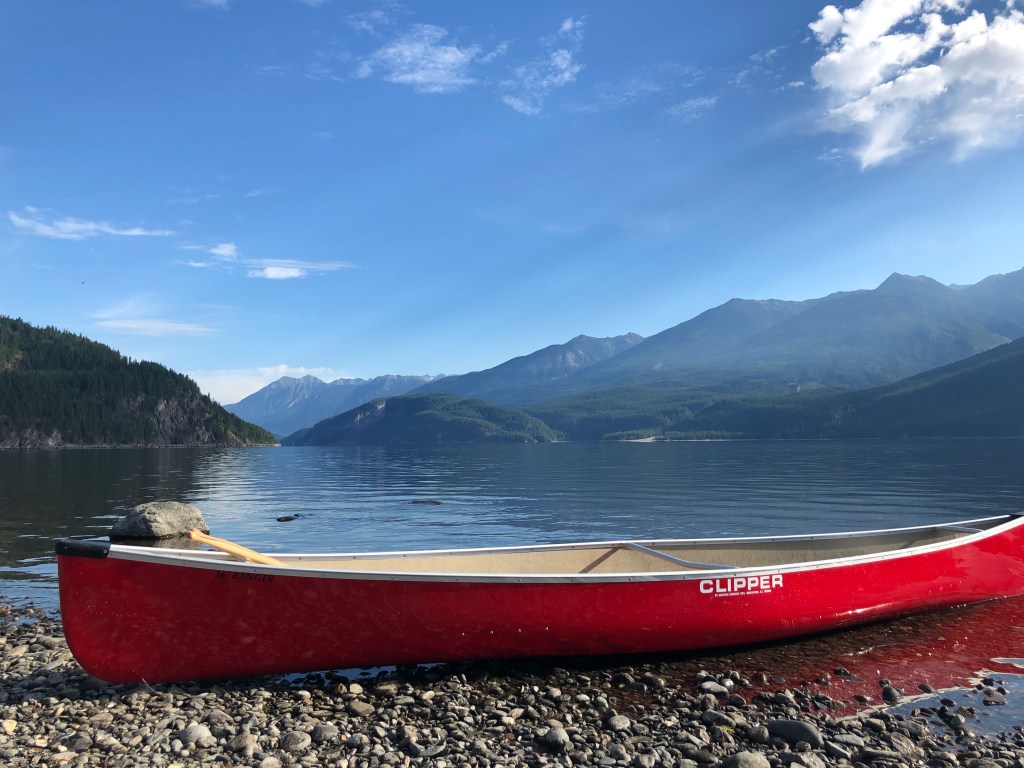
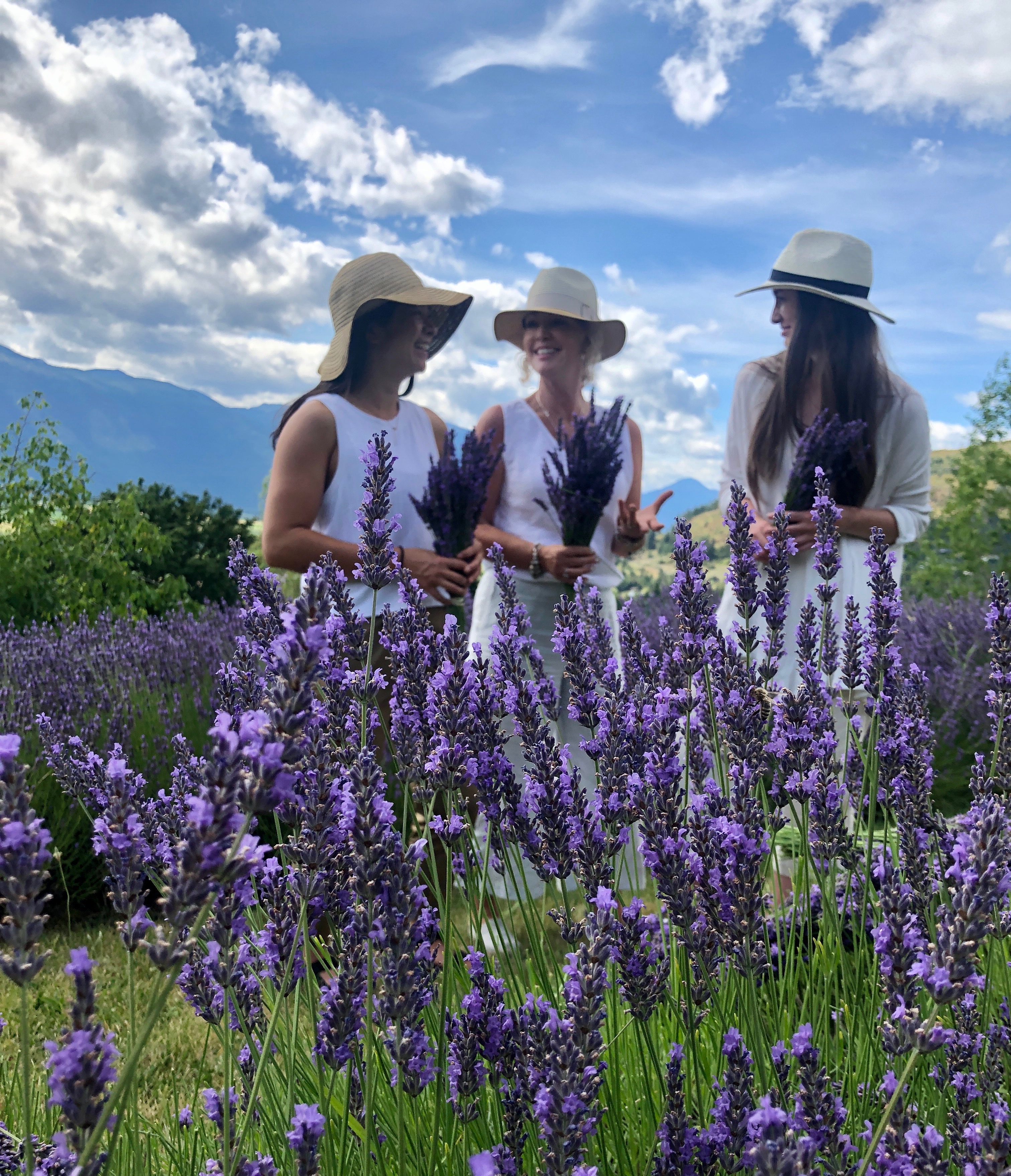


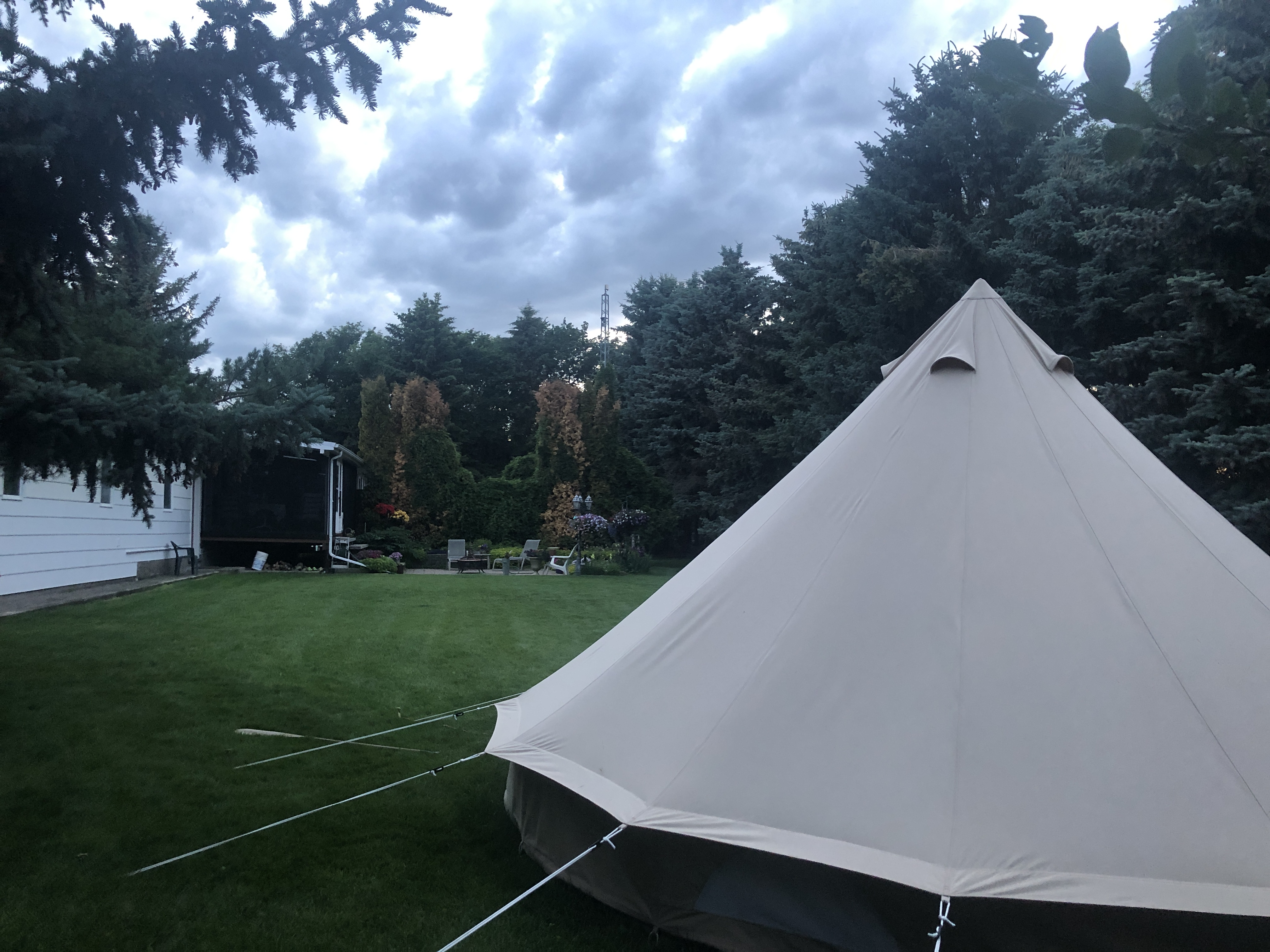


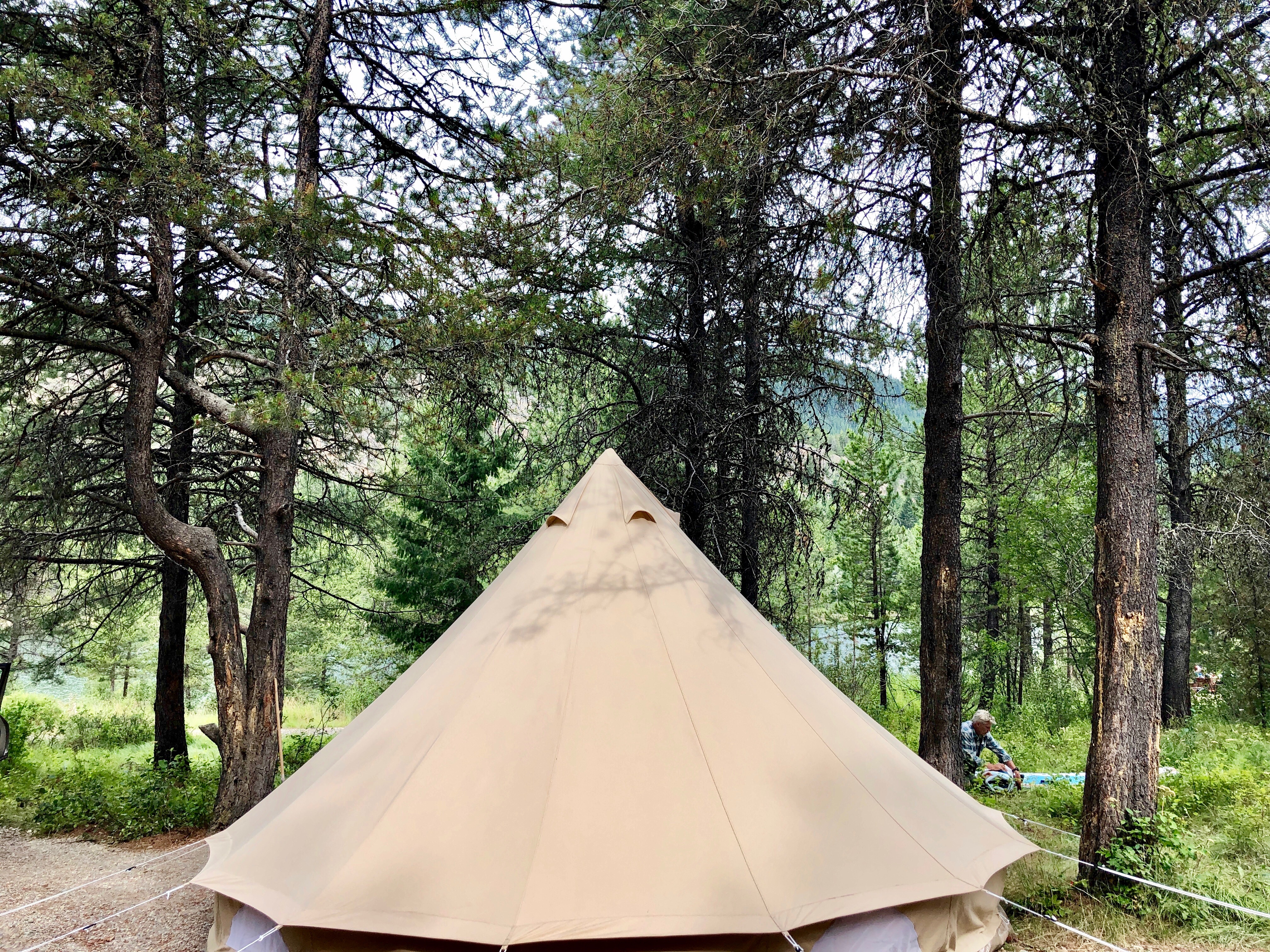
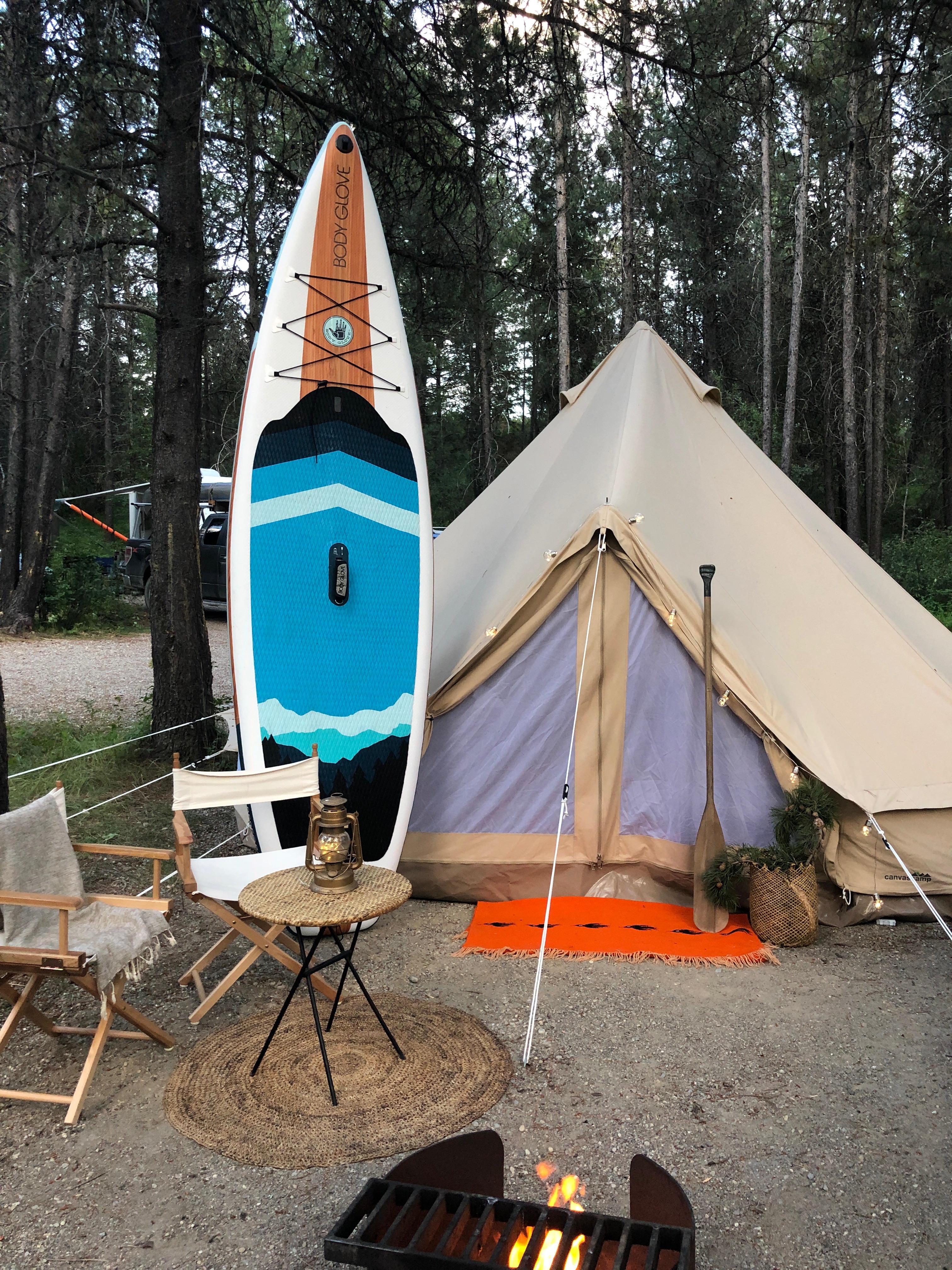


 It’s also at Old Crow that I discovered the weathered wooden paddle and the well-used fishing basket, a creel. The creel now serves as a repository for old maps of the local area.
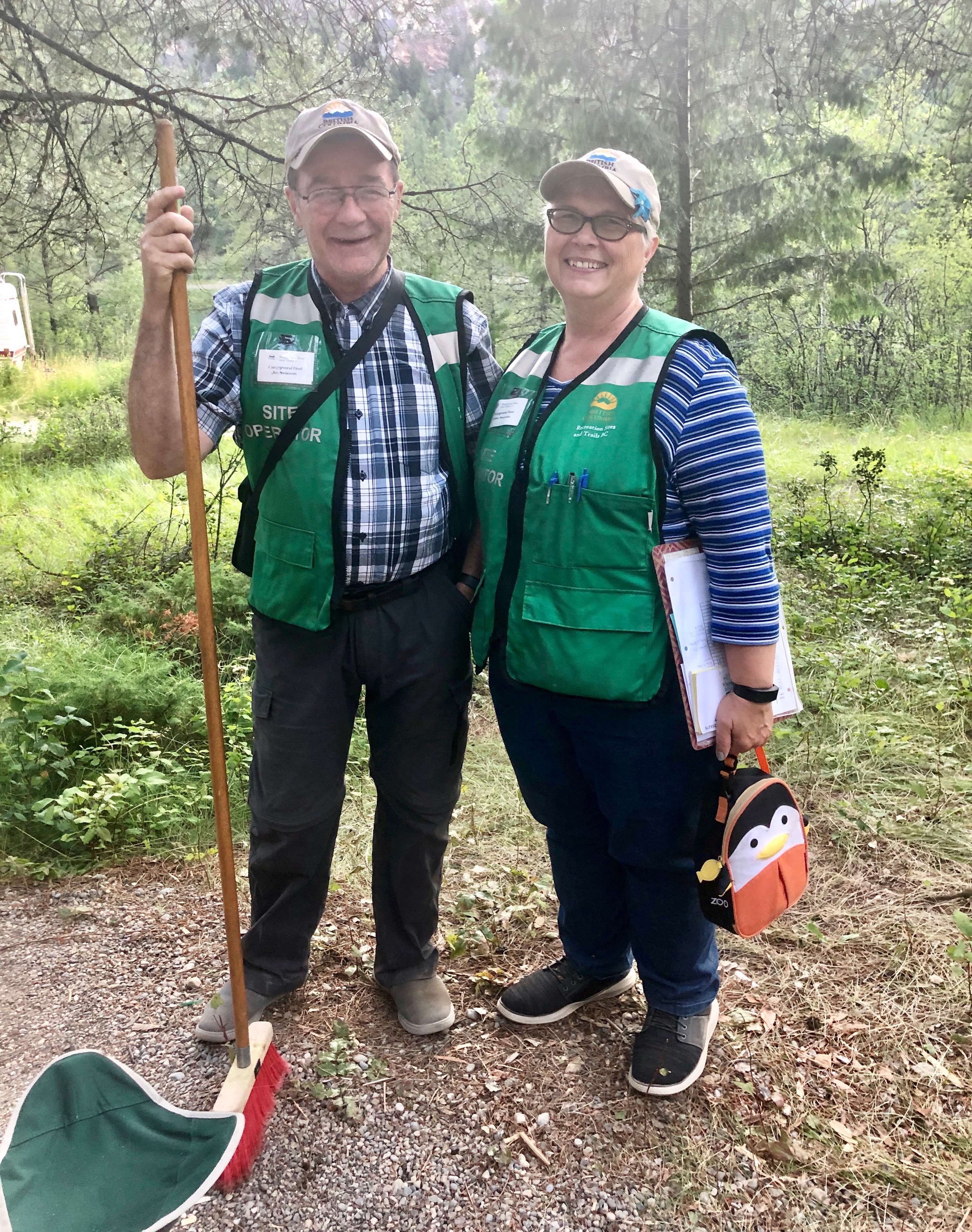 We’re welcomed at Larchwood Lake by campground hosts Jim and Lynne who clearly love their summer retirement job.


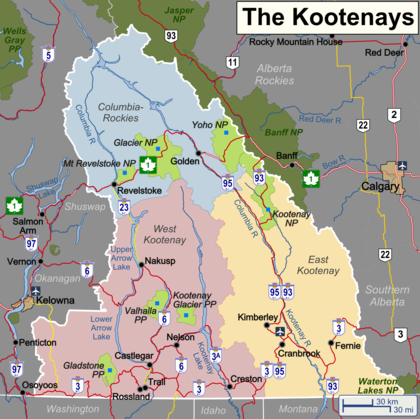
 notesonaboardingpass