Category Archives: Spain

A Writer’s Retreat in Spain… kindred spirits & hometowns

Standard

The waiter places a dish of bacalao – confit of codfish – before me at Casa Grau Bistro. The Valencian creation is dappled with capers, pine nuts, slivered almonds and Javea’s legacy, raisins. “Like a painting,” he says with a wry smile.

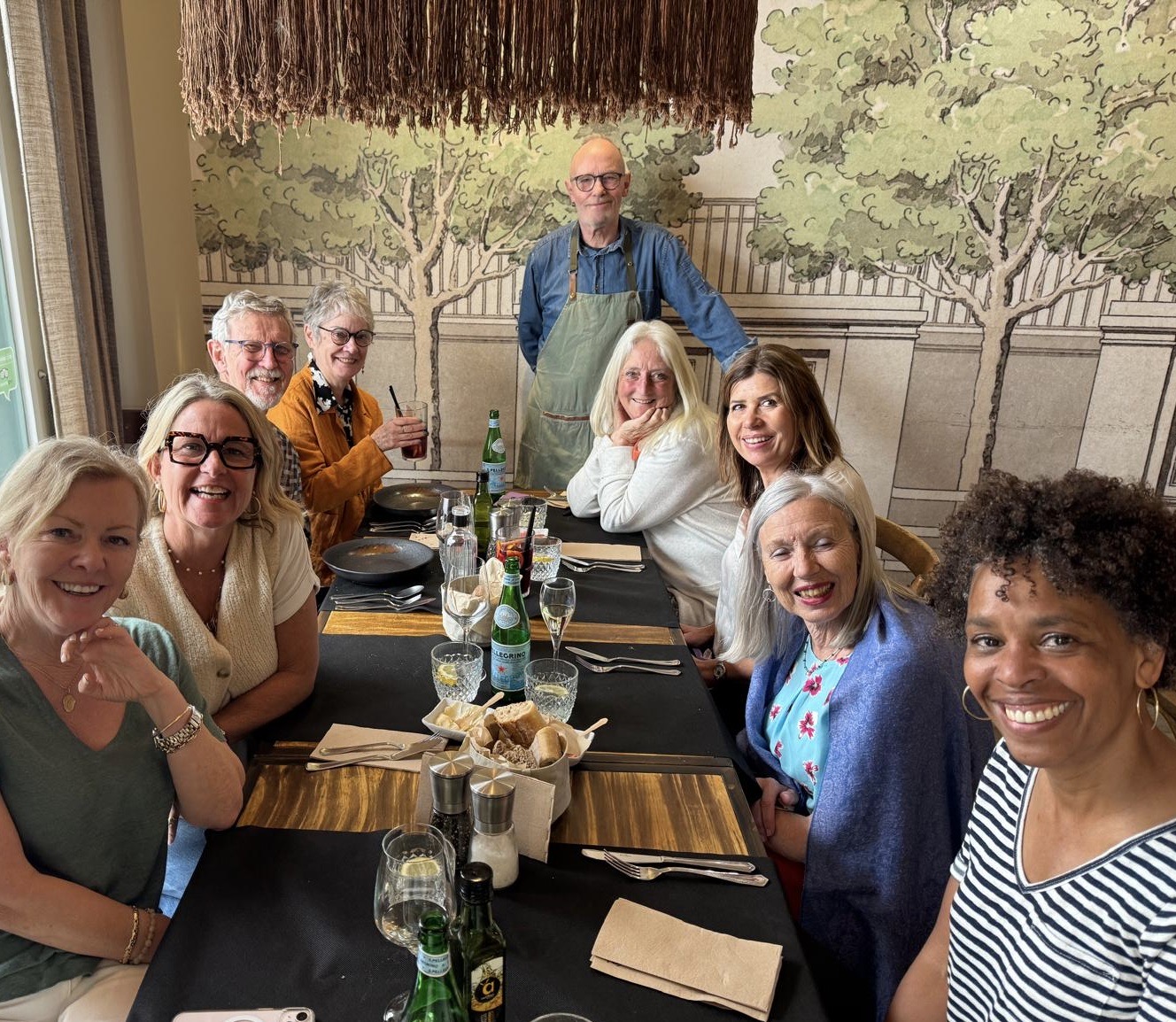
As Javea was once an international exporter of raisins, I thought it was fitting to sample some and oh my, what a sublime blend of flavours. The long, leisurely luncheon is made even more enjoyable by Jacob, the Dutch transplant who’s made Javea his hometown for the past thirty-four years. He’s charming and witty, fitting right in with the our group gathered from around the world… The Netherlands, The UK, Canada, Australia and Spain itself.

“There’s just something special here and I could never go back home,” Jacob confides. The lunch has been a lovely ending to the excursion of the old town and as we leave, Jacob reverts to his Dutch culture and gifts me with a ‘three-kiss goodbye.’ “I’ll tell my mother that I’ve met someone from her home province in The Netherlands,” I promise.

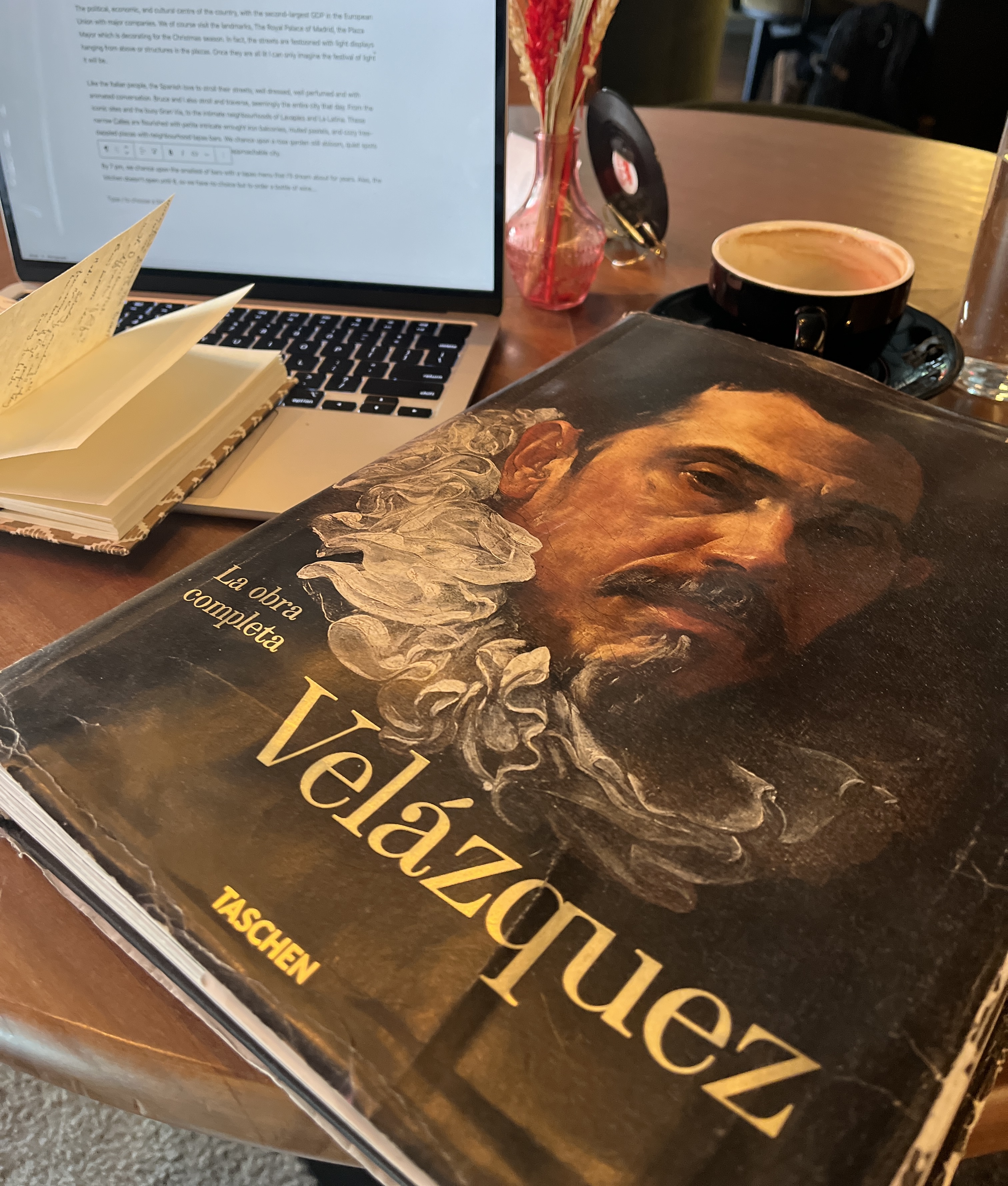
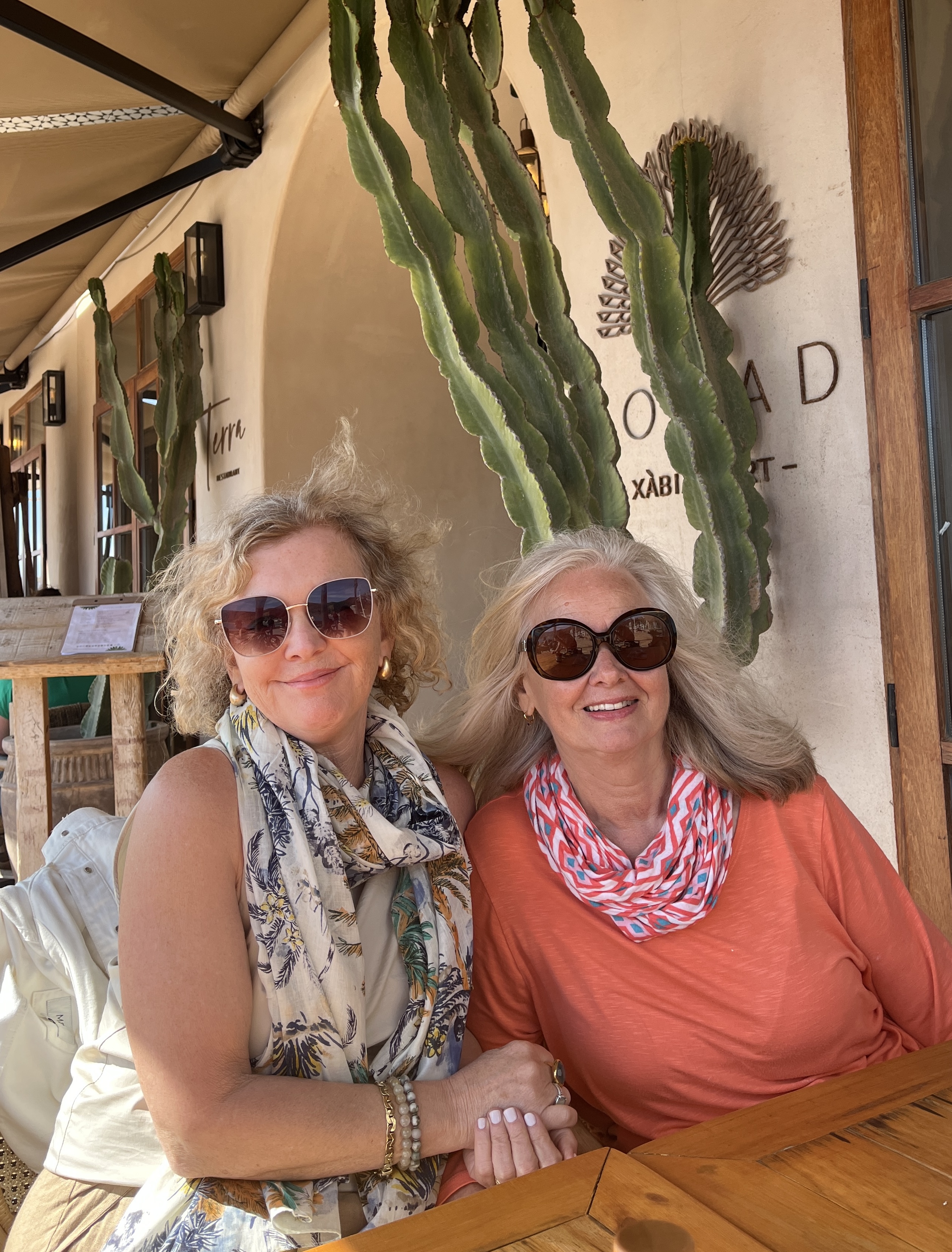
Led by my dear friend, Jo Parfitt, publisher, mentor and co-author of Monday Morning Emails, the writing retreat includes these leisurely lunches, dinners and tapas moments… an opportunity to connect with fellow writers. They’re also a chance to sample the local life style in what is said to be one of the prettiest towns along the Costa Blanca. I’ve been to nearby Alicante, yet Javea is known to have a special luminousity of colour and light, a richness of life. My good friend Nikki – author of The Soul’s Compass – and I made the commitment ages ago to attend the retreat; a good excuse to meet again, to be inspired in our writing, and why not, it’s Spain!


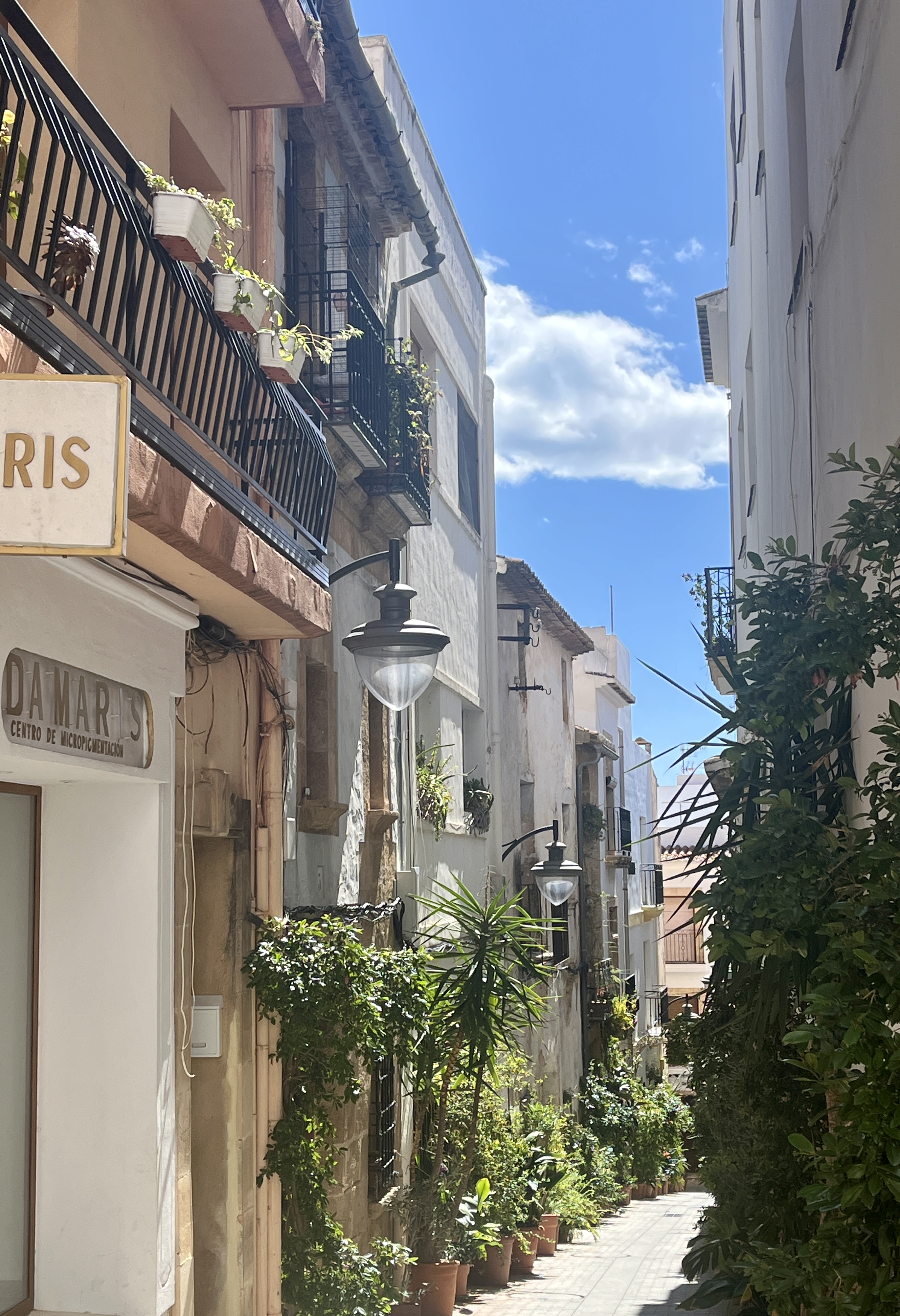
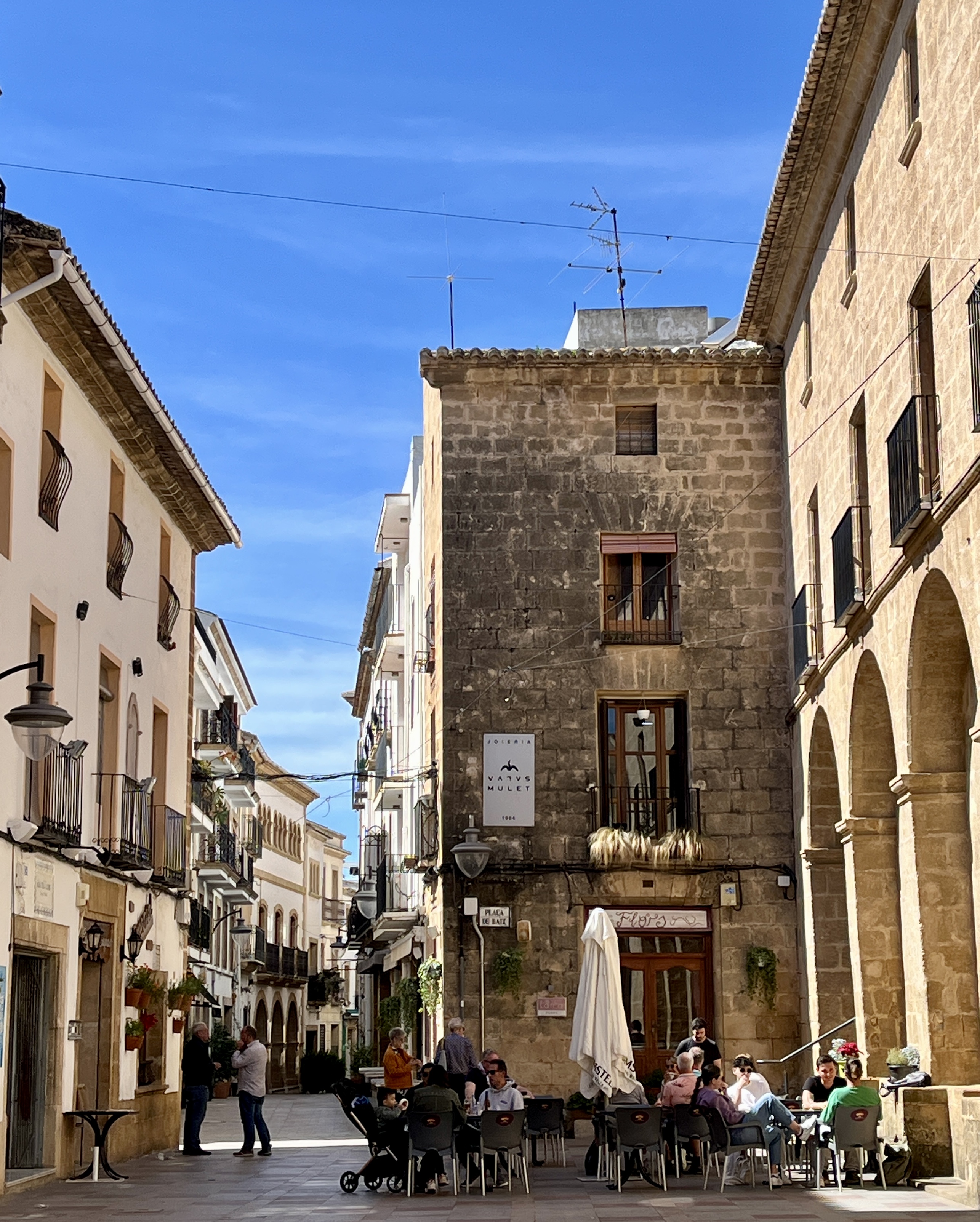
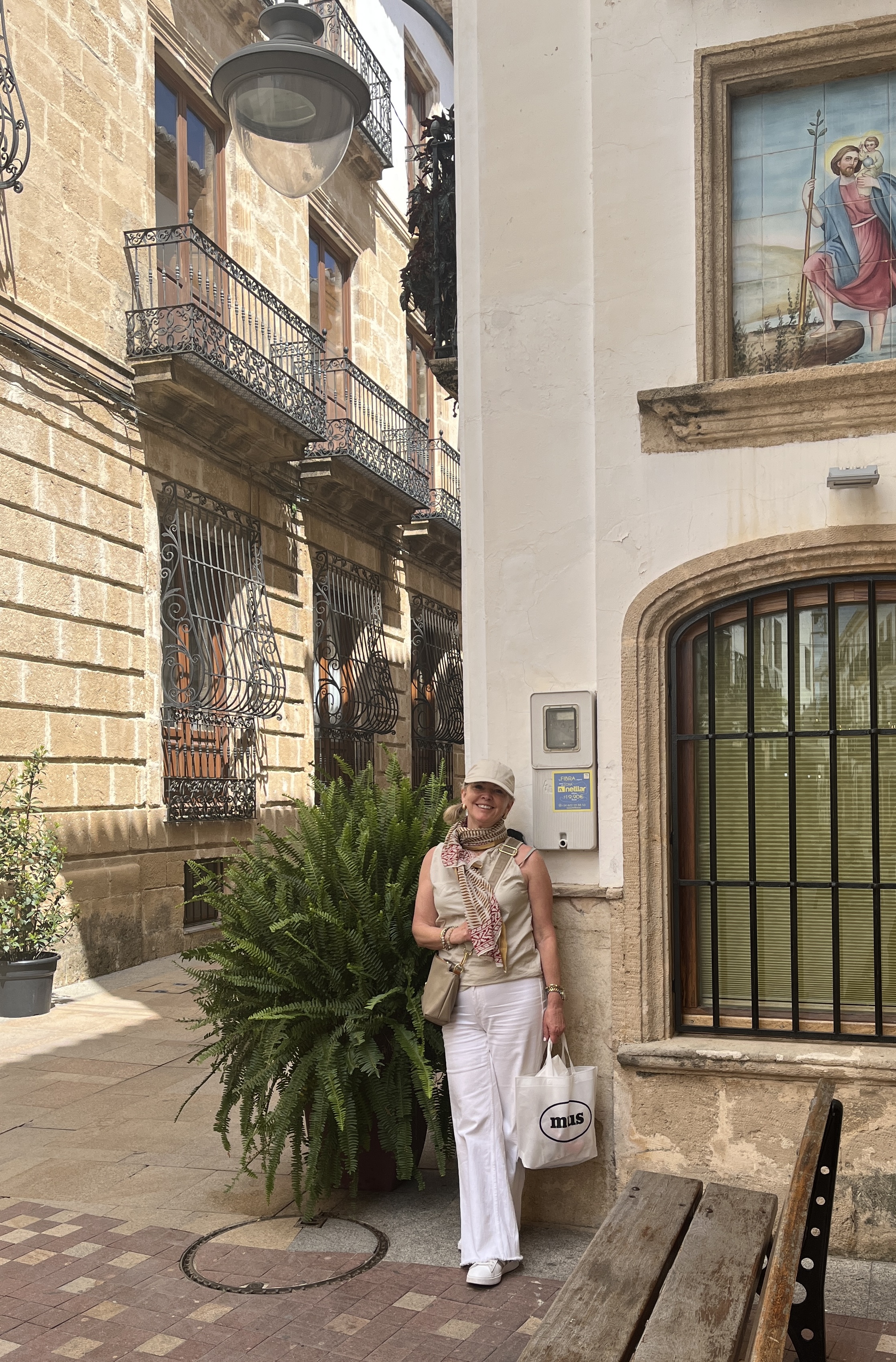
Today, our group has meandered from the seaside and sheltered lower bay of Javea, up a gentle inclined road to the historic old town; a labyrinth of historic cobbled streets, pretty tiles on white washed homes and quaint plazas ideal for tapas stops. We are at once delighted by the richness and history of the town.

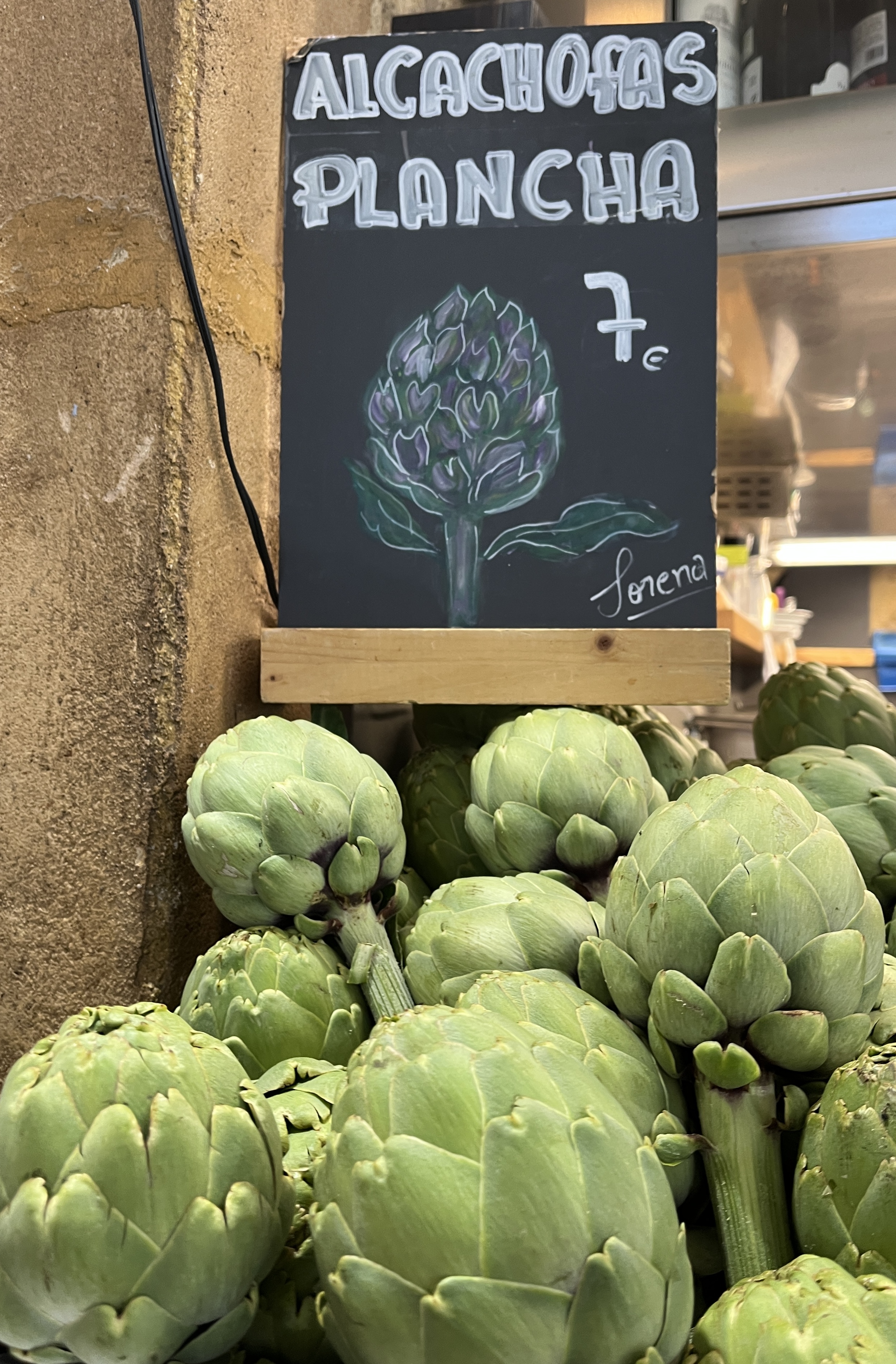
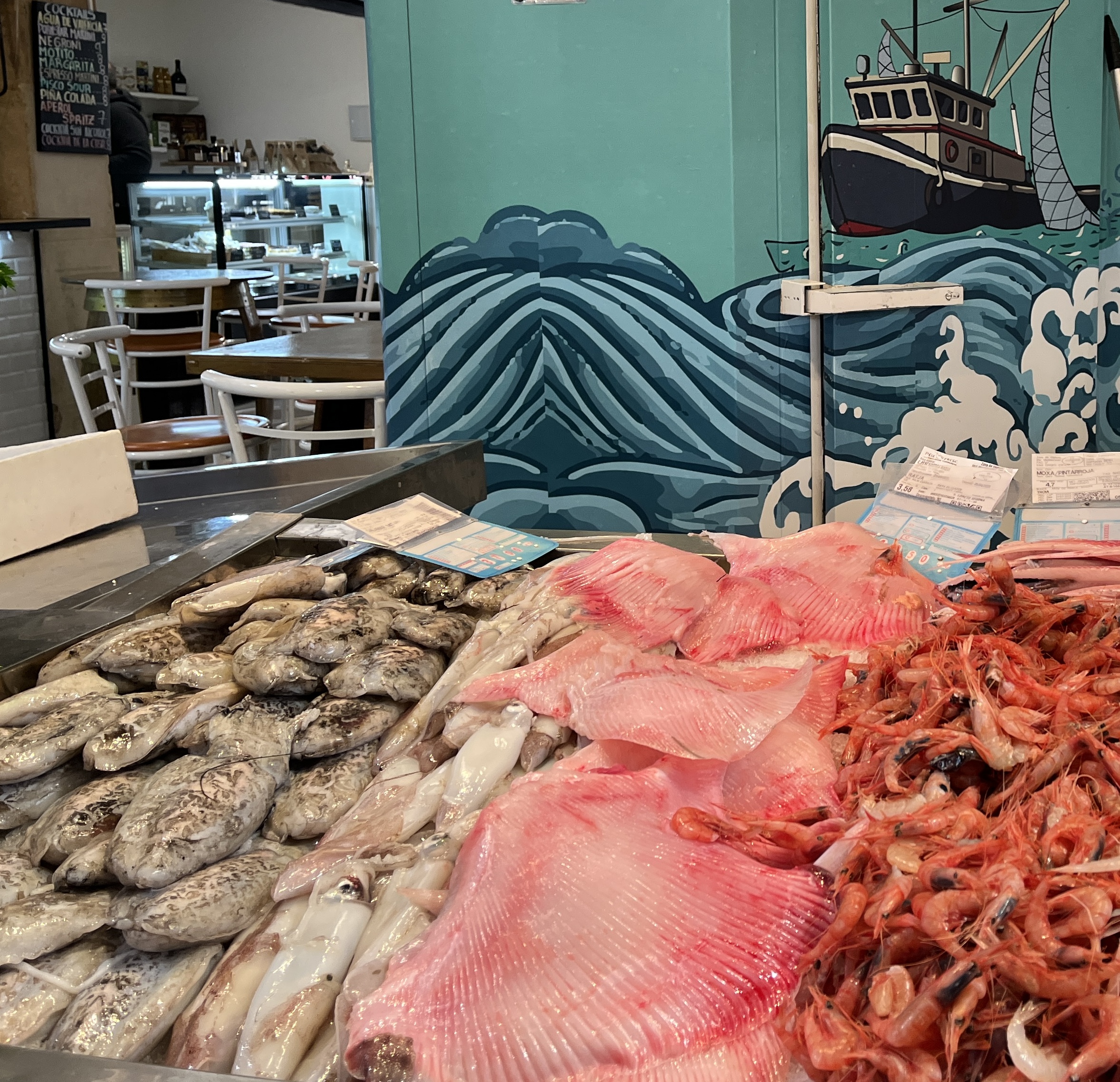
We meet Josh, our tour guide and Jo’s son, at the Mercato. The bustling indoor market is filled with a local’s favourite Cocteleria, Cocina, Panaderia and all those stalls bursting with earth-hued olives, mossy-green artichokes, cured Iberian ham, oil-bathed pimentos, seafood of every type, and sangria for inspiration! Like Jacob at the bistro, Josh has also settled here and is eager to reveal the history and secrets of his now-hometown.

As we exit the Mercato, across the way is the prominent Church of San Bartolome. Standing since 1304, it’s had time to expand to the fort-like edifice that once protected the locals from marauding Barbary pirates. As the tour begins, the bell tower which once doubled as a watchtower, makes itself known with a deep, rich cascade of bells. Charmingly, the carillon has individual identities too – Victoria, Sebastiana, Bertomeua – and are revered by the locals.

Making our way along narrow streets, Josh points out the many niches embedded high up on building walls. Behind the glass are carved wooden statues of San Sebastian, Javea’s Patron Saint. It was his duty to protect the town against the deadly plague in the middle ages and still today, each street may have its own niche, for prayer, for protection.

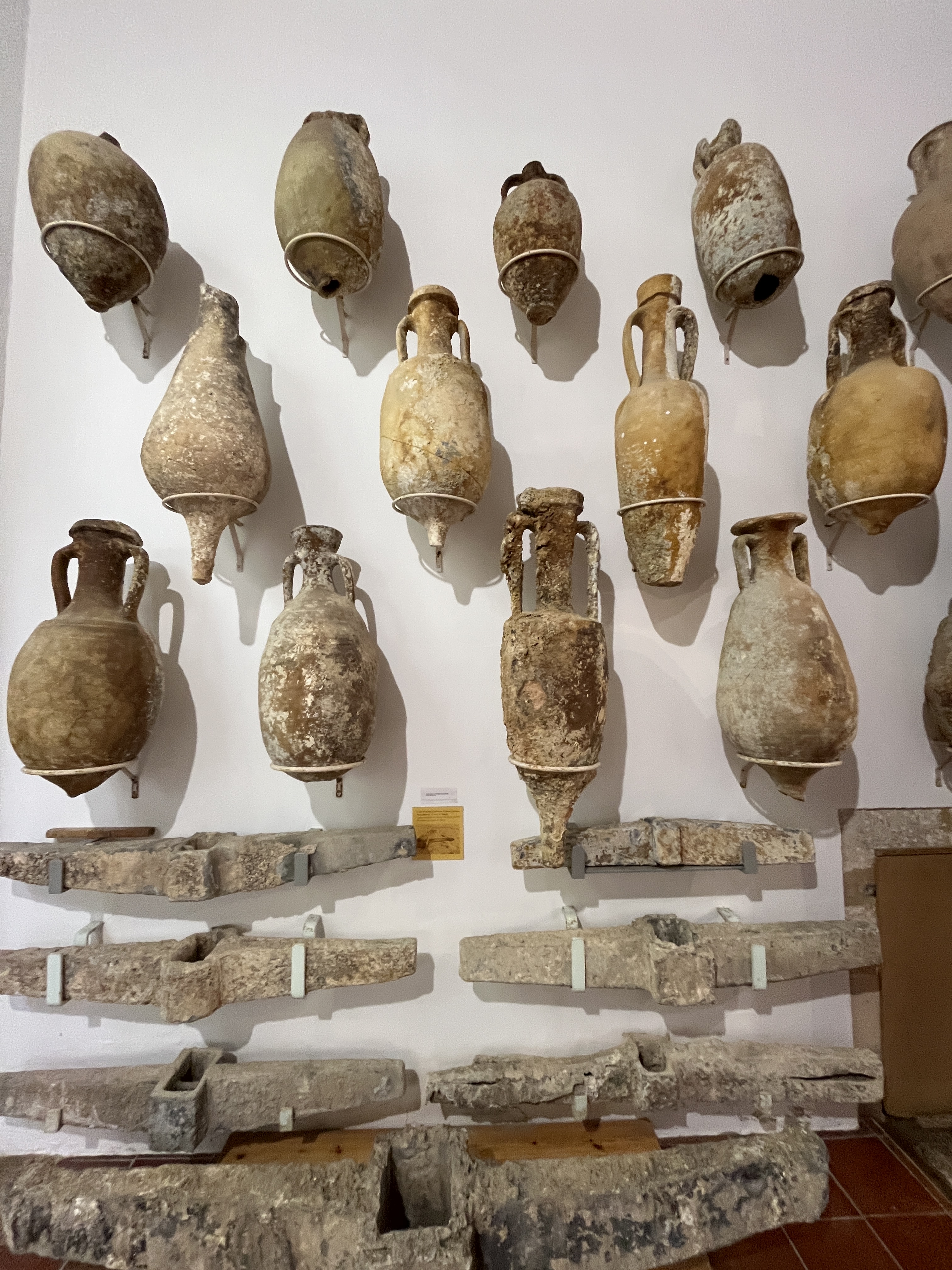
We also peek into the Soler Blasco Museum, housed in a magnificent rough stone facade. Built in the mid-1600’s by Antoni Banyuls, once a butler to King Felipe III, my eye is drawn to the Roman amphorea languishing in the lush courtyard. An amphora is a two-handled storage jar that held olive oil, wine, milk or grain; their pointed base allowed them to sit upright in soft ground or sand. I ponder their ages of use as the Romans, Visigoths, the Moors, and now the Spanish have all lived centuries of life on these shores. “Javea is a mongrel casserole, a melting pot, a rich and colourful fusion of history,” Josh tells us. We wander happily, delight in more local history, and I ask him how he had come to live here.

Like Jacob at the restaurant who had shared that he visited here on holiday and never really left, Josh tells me that this was never the place he planned or imagined moving to.

“I was posted here as a journalist to cover the Costa Blanca in English. I’d never even heard of it until I arrived in 2019. Discovering its history, culture and hidden secrets were a by-product of me covering it as a news writer and later as a content writer for local businesses. When I was furloughed during the Covid lockdown, I nearly went back to London to further my journalism career. But then realised, almost by accident, small-town Javea had become a place where I could walk down any street and probably bump into a familiar face. As someone who moved between 5-6 countries as a child, that was the kind of thing I always felt I had missed out on.”

I nod knowingly, so very knowingly. It echoes how my own children felt after being raised globally, moving from one continent to another. In fact, Jo’s and my account of this very specific way of life as expat mothers is the basis for our book, Monday Morning Emails. Like Josh, my three sons had a rich and varied childhood in various countries and cultures, yet they too didn’t have a hometown to call their own.

“Sure Javea is amazing – always a top 10 place in Spain to live.” Josh says. “But for me, it’s a place where I feel part of the community, that’s what has made me stay.”

It’s late afternoon as we stroll back to the seaside and I ponder how life has unfolded for Jo and myself since our book launch in 2018 at her lovely home in The Hague. I was living in India when we began writing emails back and forth, realizing we had so much to share about living a global life. Though time has passed, we’ve been fortunate to see each other in various places since… and now in this lovely spot.

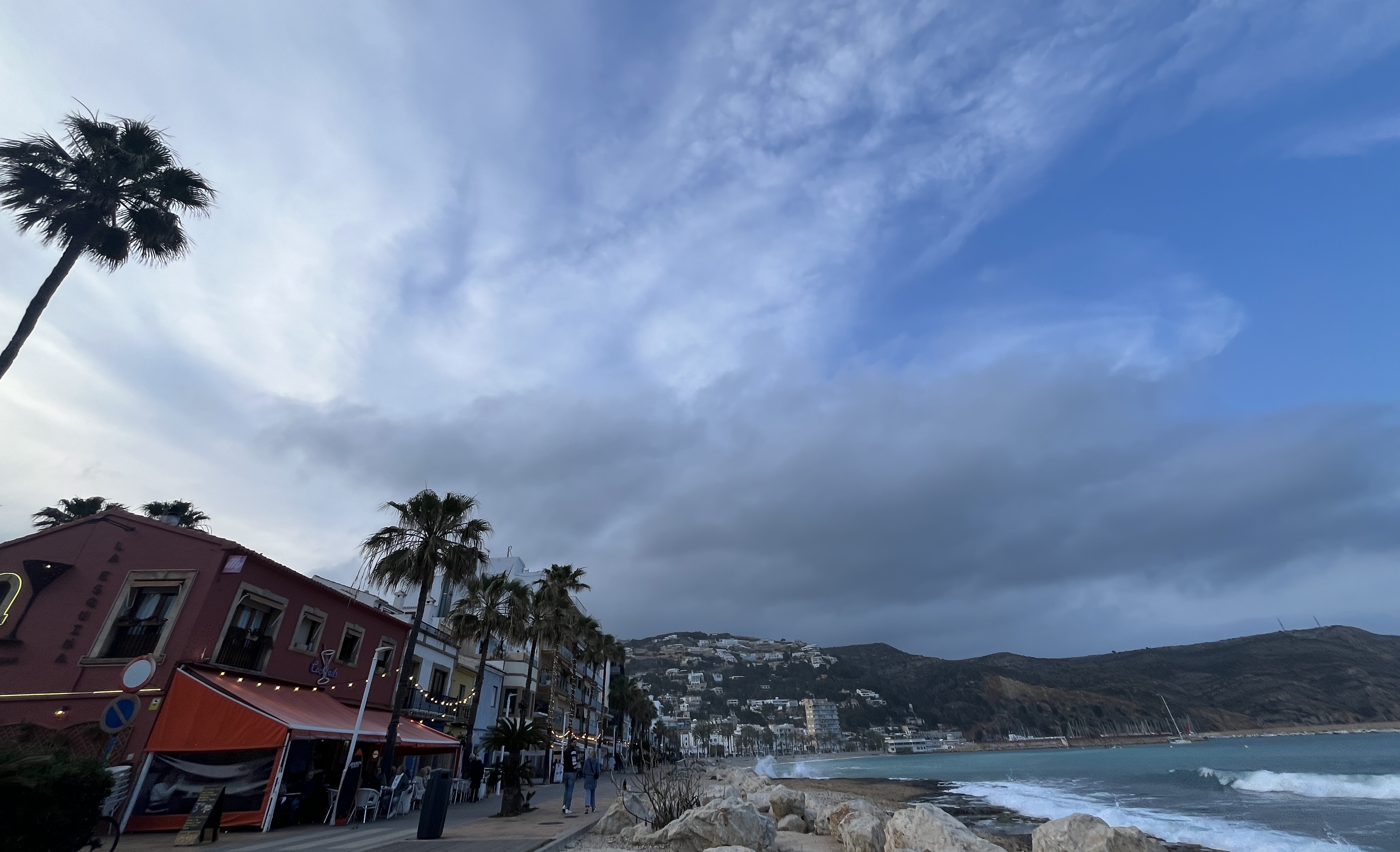
A place where just beyond are shoulders of hills dotted with palm trees and neatly lined grapevines. Where white-washed and mustard-yellow villas of the once merchant families, now contrast with gleaming white and glass of expansive villas nestled in the hillside. Here, where the extraordinary play of light on the sea against the ginger cliffs has long rendered Javea as inspiring… indeed, quite the ideal spot for a writer’s retreat.

Over four days and three evenings, we writers take guidance from Jo and inspiration from each other. We ponder, muse, conjure words and stories. We delight in early morning walks along the seafront, we wine & dine, and share our work. We make new friends and rejoice in simply being with kindred spirits, all the while thankful for being cocooned from life’s daily commitments. Jo has inspired many writers and authors along the way, and as I know myself from my own writing workshops, the real reward is motivating fellow writers to put words to paper.

A quote from one of my participants from a workshop in Slovenia has always stuck with me. “Thank you so much for opening this new door for me. I’ve always known I can write, however, I never imagined that you could turn almost anything into a story. A child’s laugh… a van ride in the Cambodian countryside… my morning coffee… my feelings towards my grandma. You showed me that anything is possible. Can’t wait to create more! ”

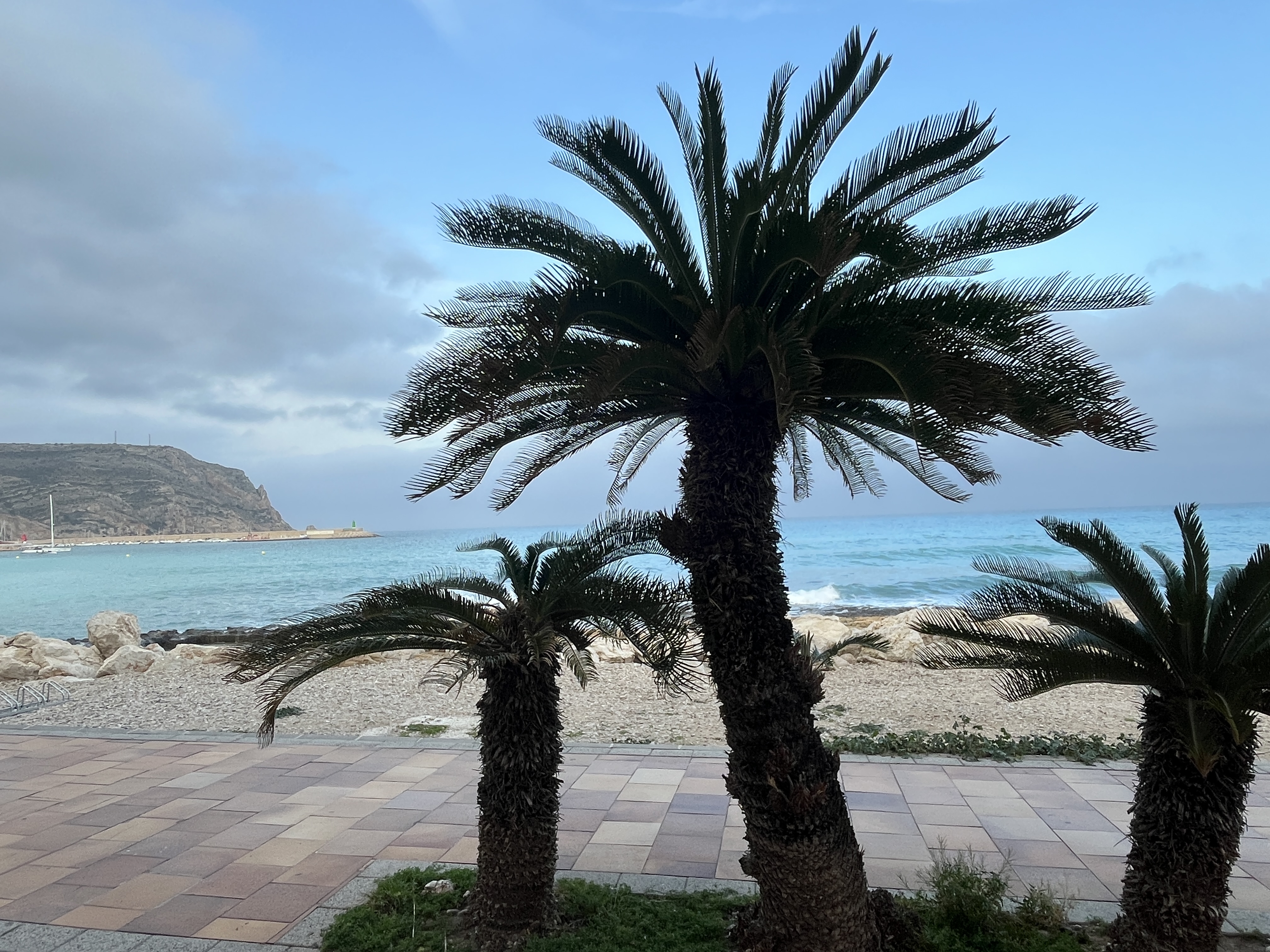
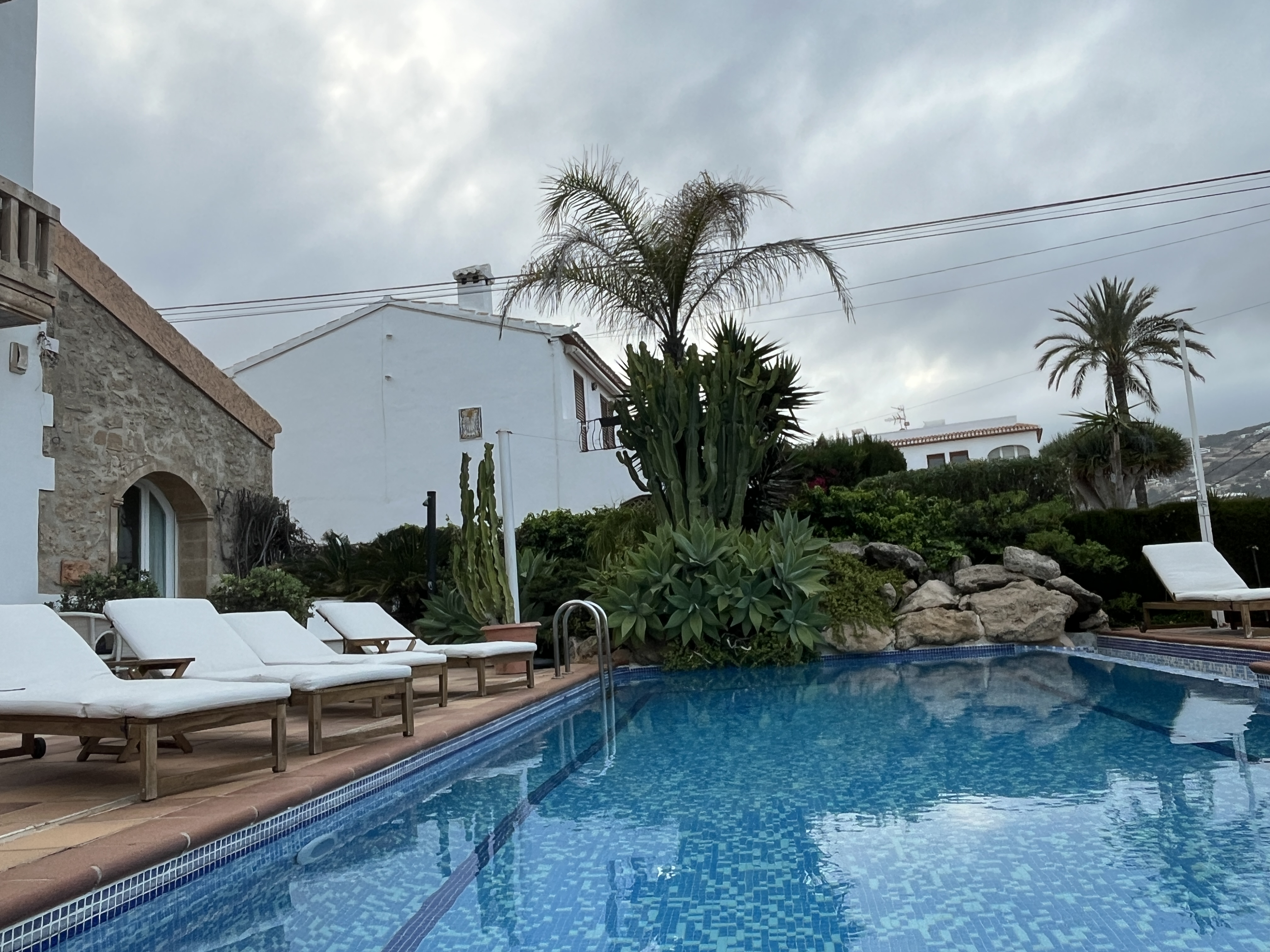
And so, we writers also depart with a new zest for storytelling and renewed writing commitments. After the farewells, I decide to remain a few more days instead of going back to Barcelona to finish this Spanish sojourn. I move to the lovely Botanico Boutique Hotel, my balcony open wide to the sea-salt air and the hues of blue sky and sea seemingly melding into one glorious painting. I dip my toes in the cool Mediterranean Sea. I savour and soak up my beloved palm trees. I write some more. I stroll back up to the old town and like magic there’s Jacob. Savouring a repose at the door of Casa Grau, he greets me with three kisses, “Meisje, hoe gaat het?”

As Jo and I have one last chat at my favourite coffee stop overlooking the sea, the conversation meanders to our children. “It’s been so nice to see Josh again,” I tell her, “and how lovely you get to come here to visit!”

She comments on how special it must be for me to have our three children in one place. “It really is,” I agree. “It’s something Bruce and I couldn’t have imagined after so many years overseas. And like your kids Jo, they finally have their hometown, they’ve bloomed where they’ve planted themselves. Luke works virtually as a Communications Expert, Matt works locally in the Trades, and Andrew has a prominent position with our city’s Chamber of Commerce. And then there’s our two special daughters-in-law, even a grand-puppy!”

“So very blessed,” Jo agrees. “Sam is doing well in London and Josh is happy and settled here as you see.” After writing our book, Jo and I were often asked how our kids were, especially by readers who also lived a peripatetic life and could relate to the challenges. We’ve always been thankful that our collective five sons were gracious enough to allow us to share their journeys.

We also have gratitude for a friendship that began at a writing retreat in Tuscany. We reminisce that we once lived as neighbours, side by side for a month in The Hague. We speak fondly of the book project we worked on together in Penang, Malaysia and we share updates of mutual friends from both Families In Global Transition and writing retreats… the blessing of kindred spirits indeed!

With a final hug and a fond farewell, Jo and I part for now. The taxi arrives and I begin the long journey back to Canada… through Alicante, Barcelona, Paris, to Calgary. It’s been a fantastic trip, yet I feel the anticipation of being back in my hometown too.

Post Script

Josh can be found at https://townsquareseo.com/

Nikki Cornfields book, The Soul’s Compass and Monday Morning Emails can be ordered on amazon

Jo Parfitt can be found at https://www.joparfitt.com/

Sensational Seville… Solo travel Spanish style

Standard

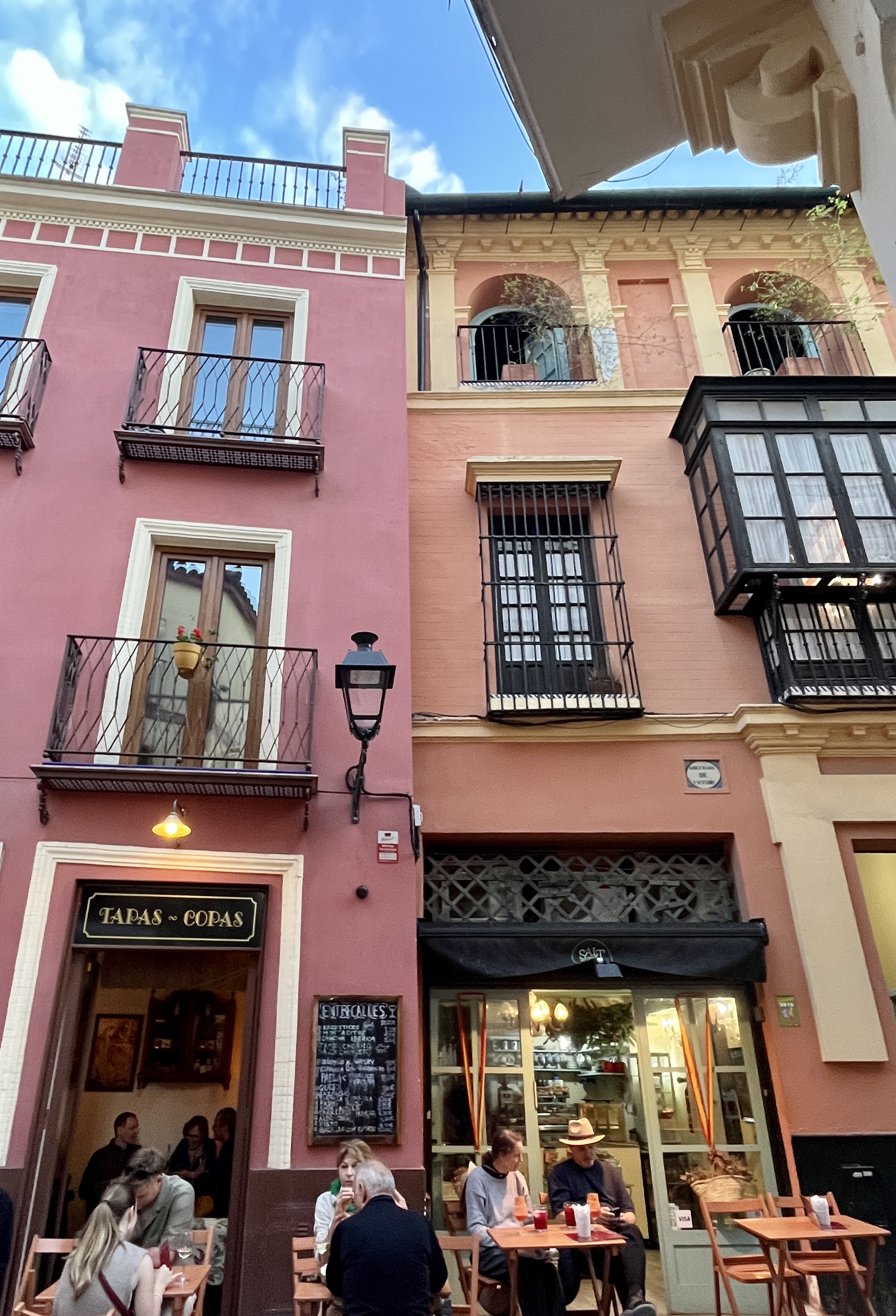
As I check into the gorgeous Tayko Hotel, one of the friendly staff orientates me with the city. Miquel explains that there’s a fun saying in Seville. “There’s more tapas bars than people,” he quips as he jots down a few of his favourites on the city map. He explains that here in Andalusia, they love humour and exaggeration. Over the next four days, not only will I find my own favourite tapas bar, I’ll notice that the locals absolutely have a certain joy and exuberance for life, a love of music and dance… and then there’s the flamenco!

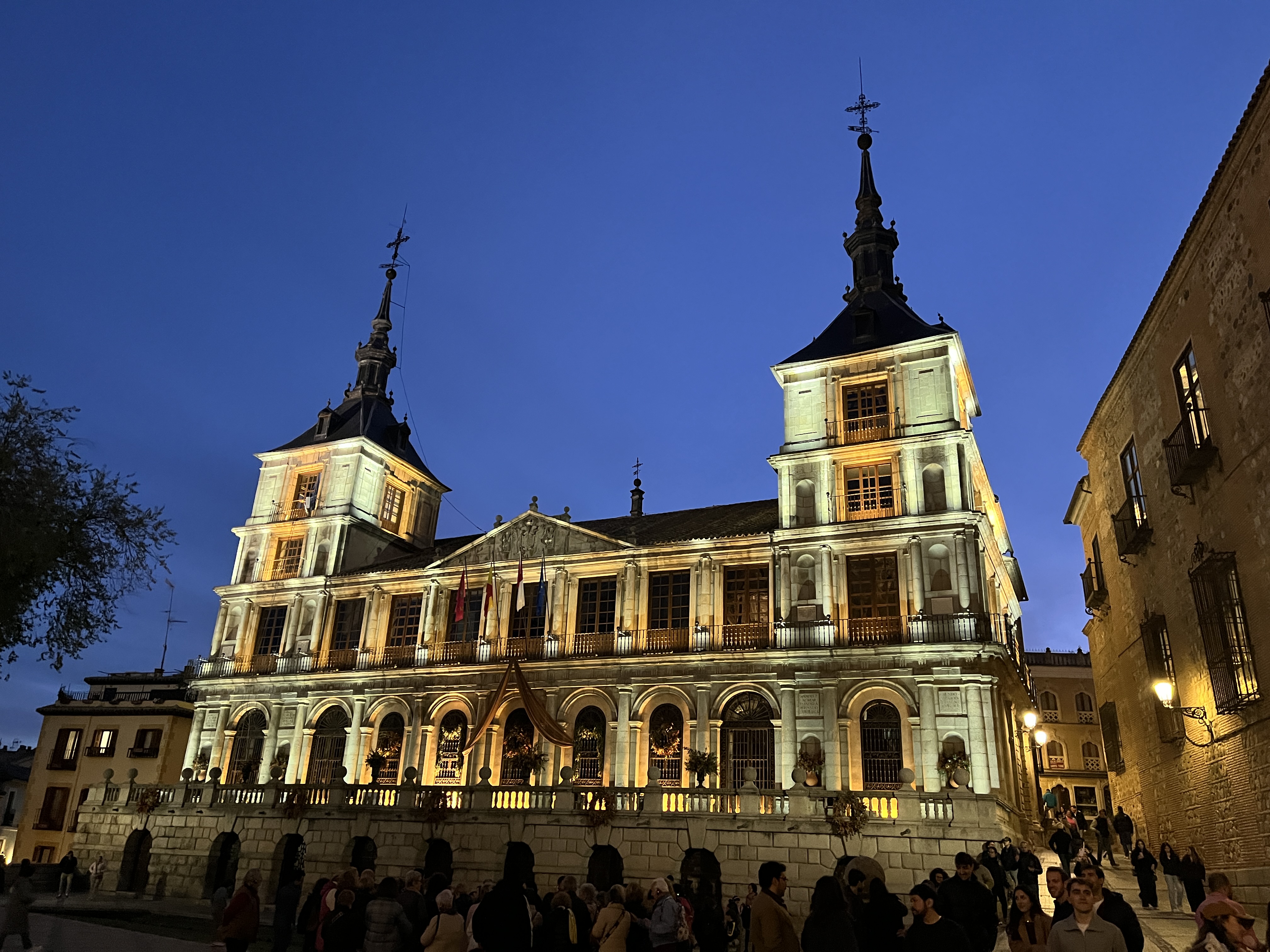
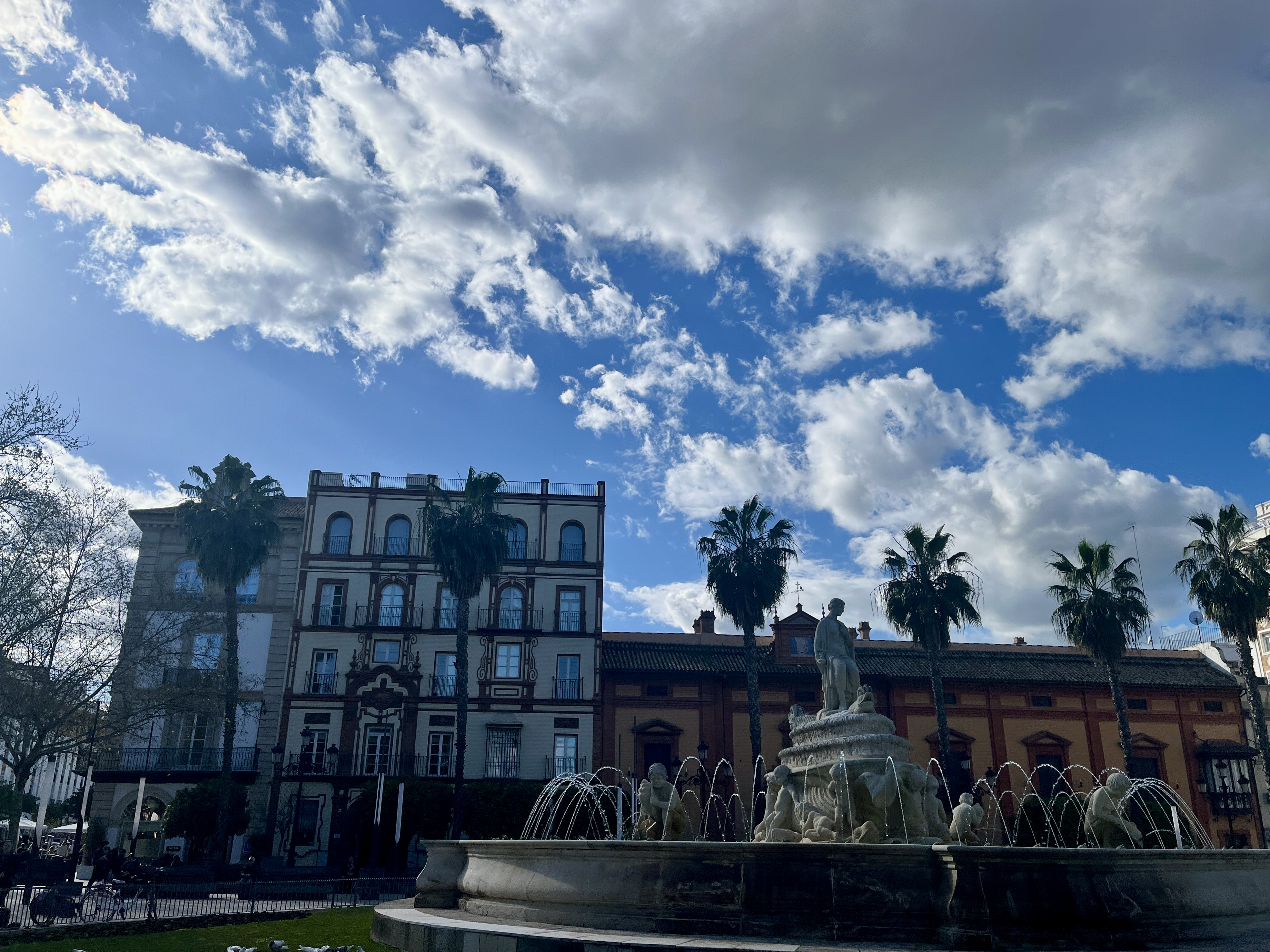
Seville (seh-VEE-yah) is flamboyant, beautiful, stately yet inviting. ‘A vibrant sangria of civilization,’ to borrow Rick Steve’s apt description. Also, I find it to be a veritable city garden, where luscious oranges and lemons really do dangle from tree-lined bouvelards. The City of Oranges, as it’s known, is also blessed with the tallest of palm trees, vivid bird-of-paradise, parakeets and white doves in abundance, gorgeous white bougainvillea against crinkly cacti, and the jasmine blooms are just beginning to perfume the late March air. Colourful mosaics adorn walls, musicians take their turns on street corners, and the layering of the past… Roman, Moorish and Spanish is an intoxicating palimpset of history.

I‘m delighted to have some warm weather as this trip started in rainy Barcelona. I use ‘I’m’ as this is mostly a trip of solo travel. Other than a lovely two day visit with a friend in Valencia and a writing retreat still to come with friends after Seville, I’m on my own. At breakfast this morning, another solo traveller from the Netherlands and I were discussing the advantages of meandering single. We celebrated the challenge and thrill of navigating and scheduling – thankfully the Spanish train system is efficient – and the satisfaction of arriving where you’d hope to be. Call me old school, yet I prefer a physical map to google – maps of Barcelona, Valencia and Seville are already tatty, marked and ‘souvenirs’.

Solo travel allows for serendipitous encounters, both with other travellers and locals. The Spanish are welcoming with a fascinating, proud culture. As a travel writer, being on my own allows me to observe and explore thoroughly, to fully embrace the history and nuances of a place. I admit by sunset, sitting alone at an outdoor cafe in a plaza thrumming with life can feel a little lonely and yet that’s how I’ve already met so many interesting people on this trip. Taking a local tour is also essential when you’re travelling alone. In Barcelona, I did a paella making course, fantastic and delicious! Here I tour twice in one day, the old town, then the Jewish area which finishes with a group tapas date… insightful, lively and lovely company for an evening.

Speaking of exploring, we know that explorers Amerigo Vespucci and Ferdinand Magellan sailed from this river harbour, discovering new trade routes and abundant sources of cocoa, tobacco, gold and silver. When Spain boomed as a gateway to the New World in the 1500’s, Sevilla also transformed. Yet another great explorer had sailed from nearby even earlier. In 1492, the Italian Christopher Columbus had persuaded the Spanish Monarchs to finance his bold scheme to trade with the East by sailing West.

Yet that’s really more ‘recent’ history. Seville was founded as the Roman city of Hispalis, one of the most important cities in the empire. Nearby Italica was founded in perhaps 200 BC, Trajan and Hadrian called it their hometown. Move forward to 711 AD, and it became Ishbiliyah during the Islamic conquest, then part of the Arab kingdom Taifa of Seville, eventually incorporated to the Crown of Castile in 1248.

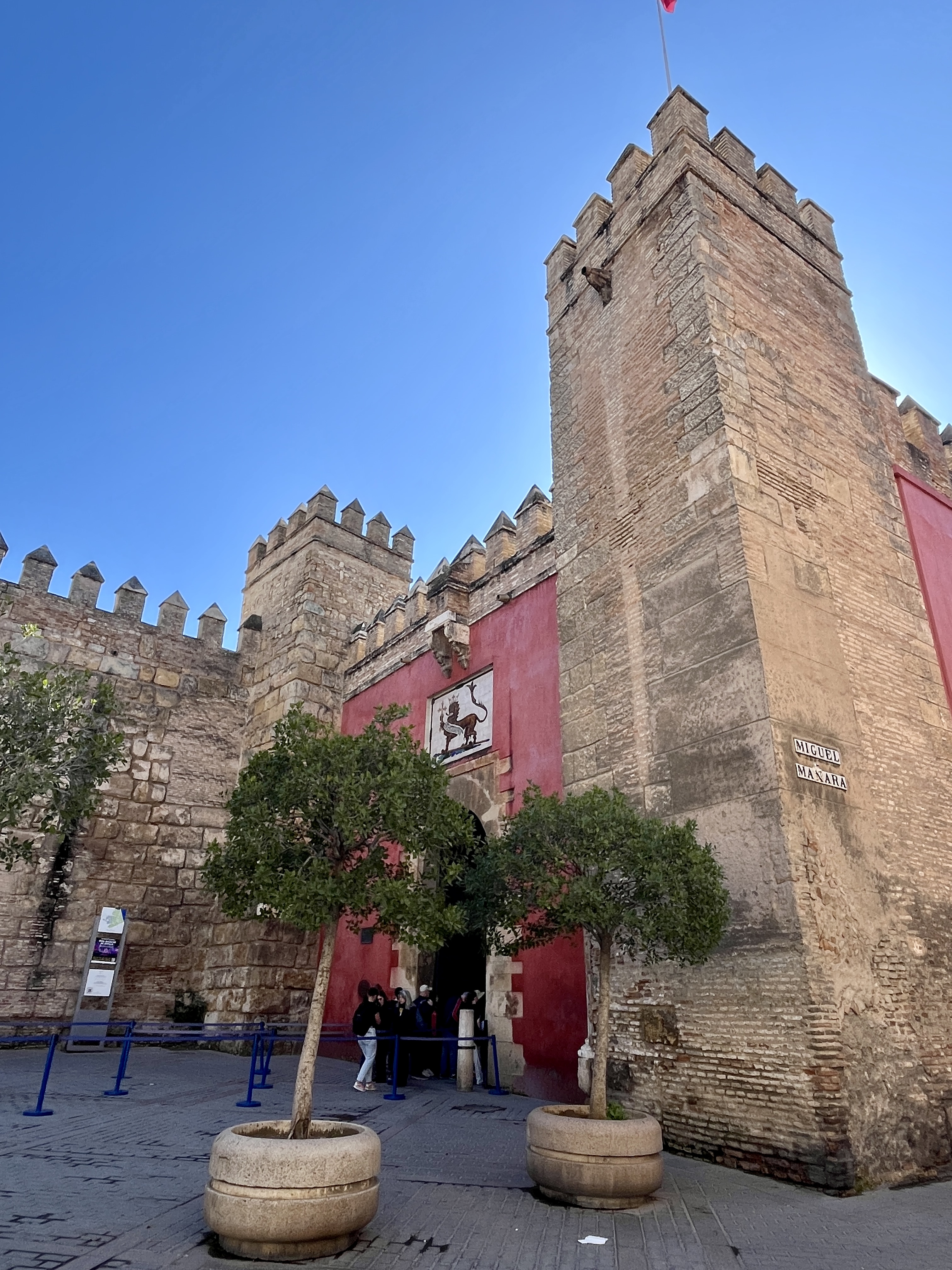
Today this rich history is now a UNESCO World Heritage Site known as the old town… the Alcazar palace, the largest Gothic cathedral in the world – once a mosque – and the General Archive of the Indies as its anchors.

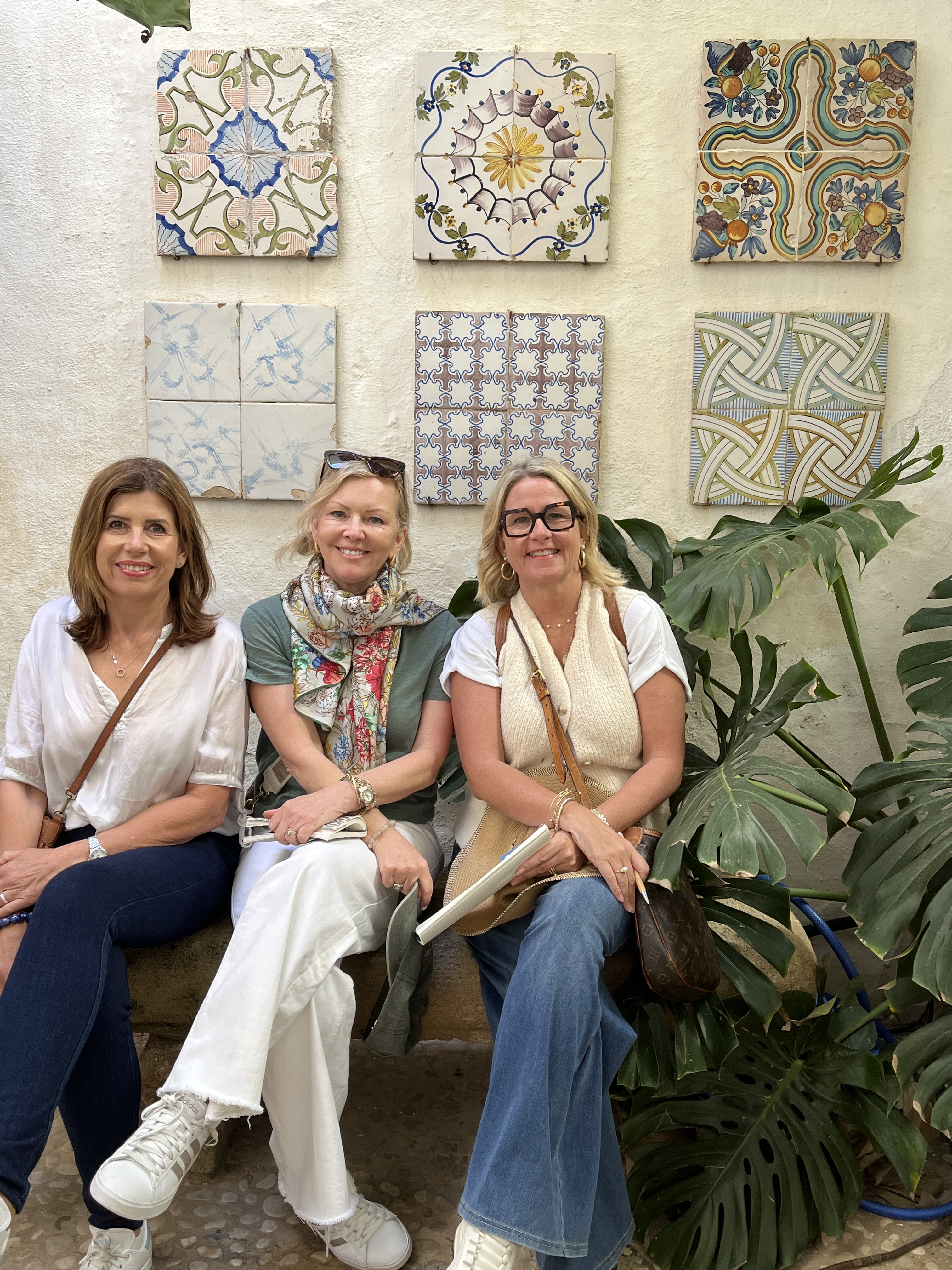
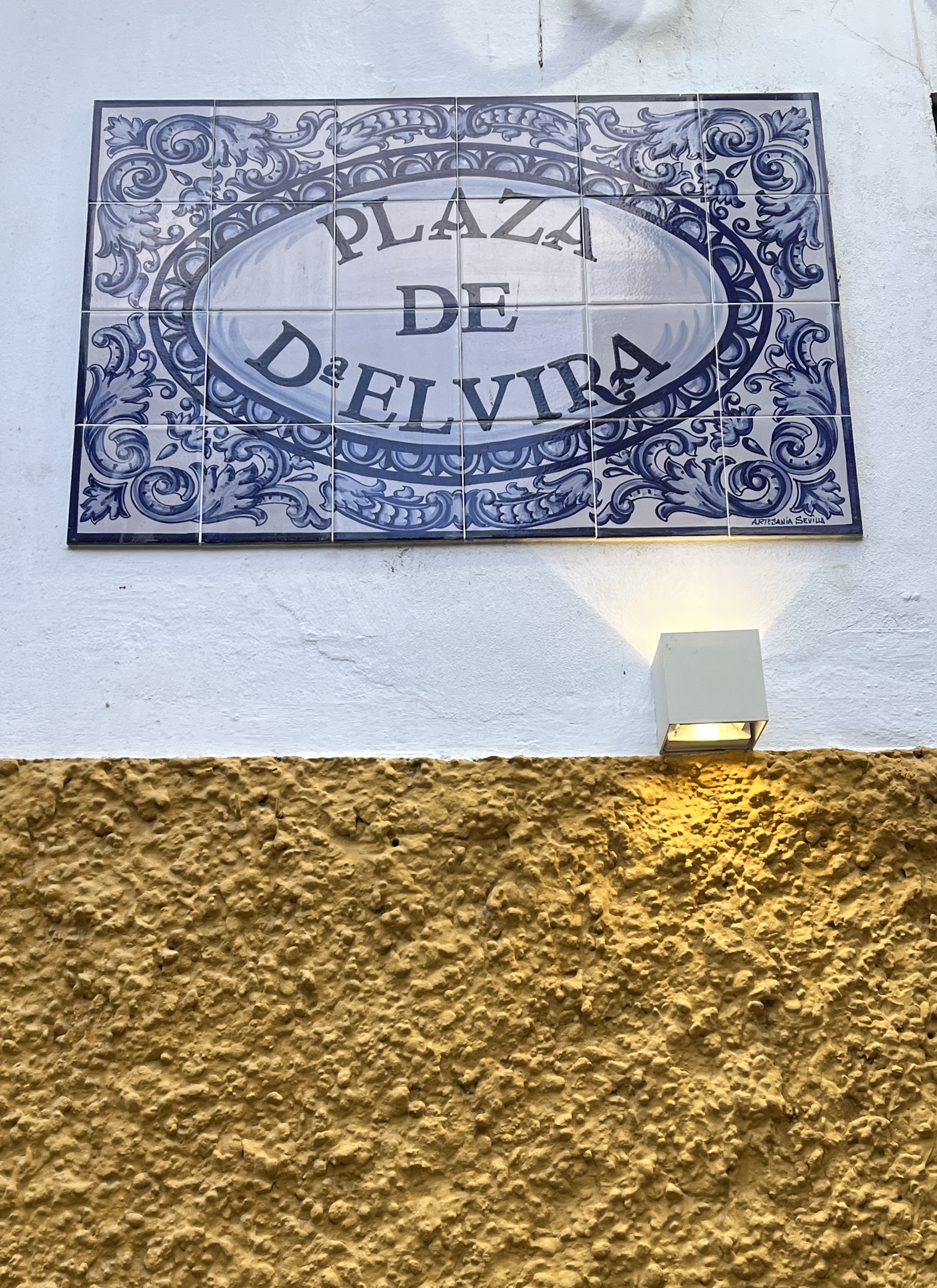
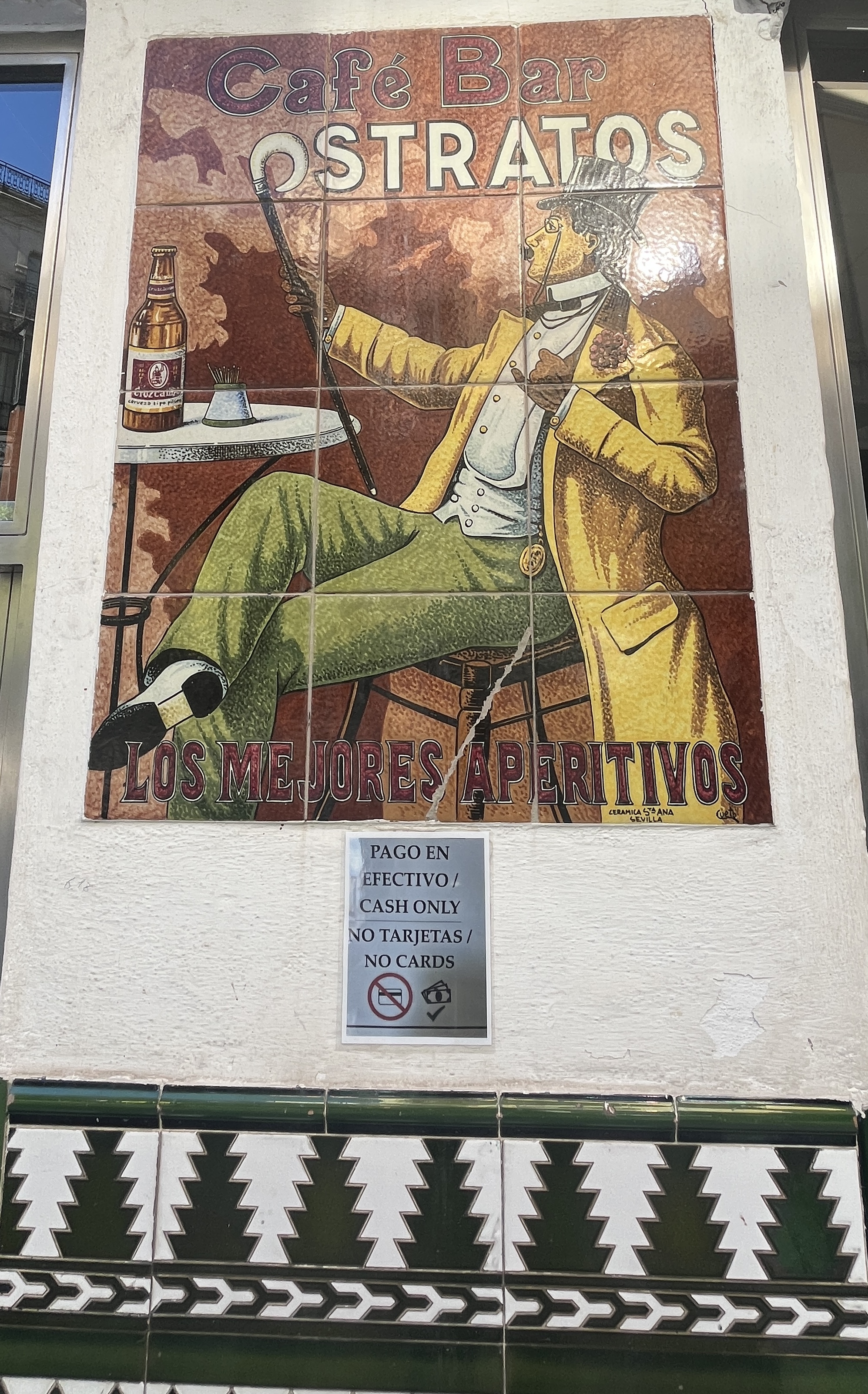
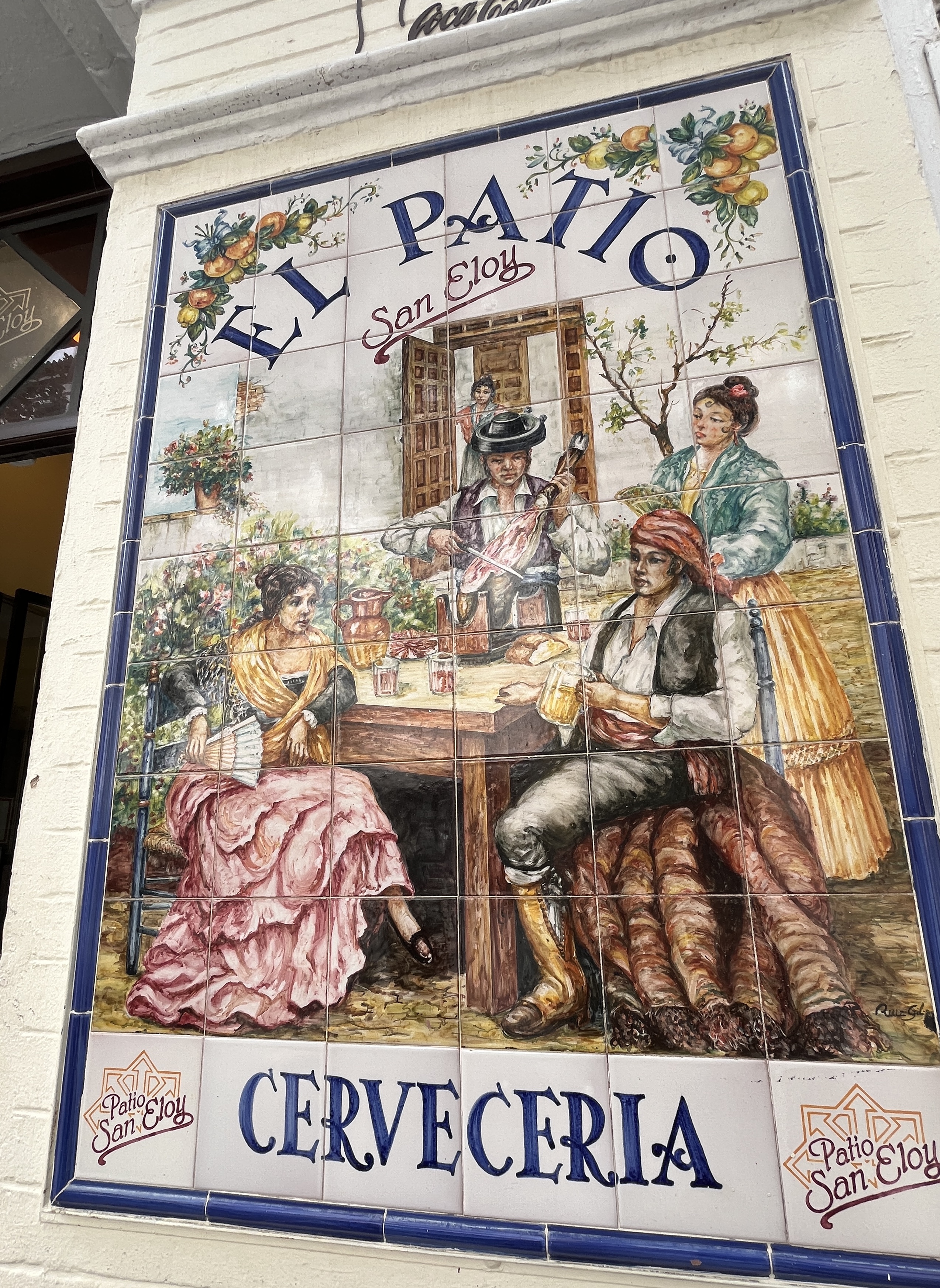
I tour the old town which finishes at the grand Plaza de Espana, a Renaissance/neo-Moorish monstrosity, built as a centerpiece for the Ibero-American Exhibition in 1929. Along with the multitude of pavilions and a canal for rowing, 48 alcoves and benches pay tribute to Spain’s provinces. Ensconced in Maria Luisa park, this masterpiece is also a showcase of azulejos, small tiles. Azulejos have been produced in Spain since the 14th century. Later, the bourgeoisie began embellishing their residences to identify their houses and portray their importance and wealth. Today they might also announce a town plaza or place of business; the Cerveceria, the Carnisseria, the Cocina, the Panaderia, the Taberna.

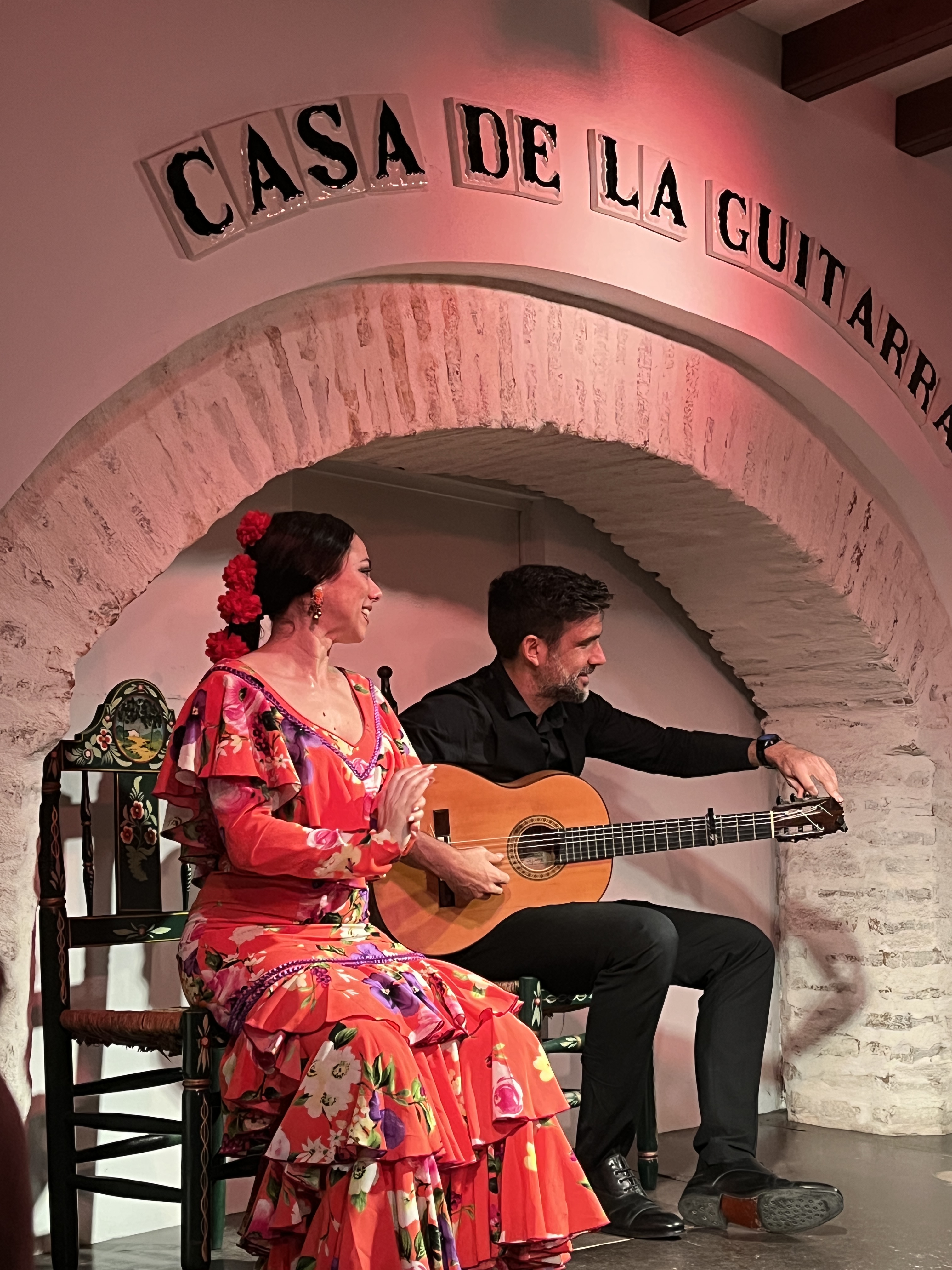
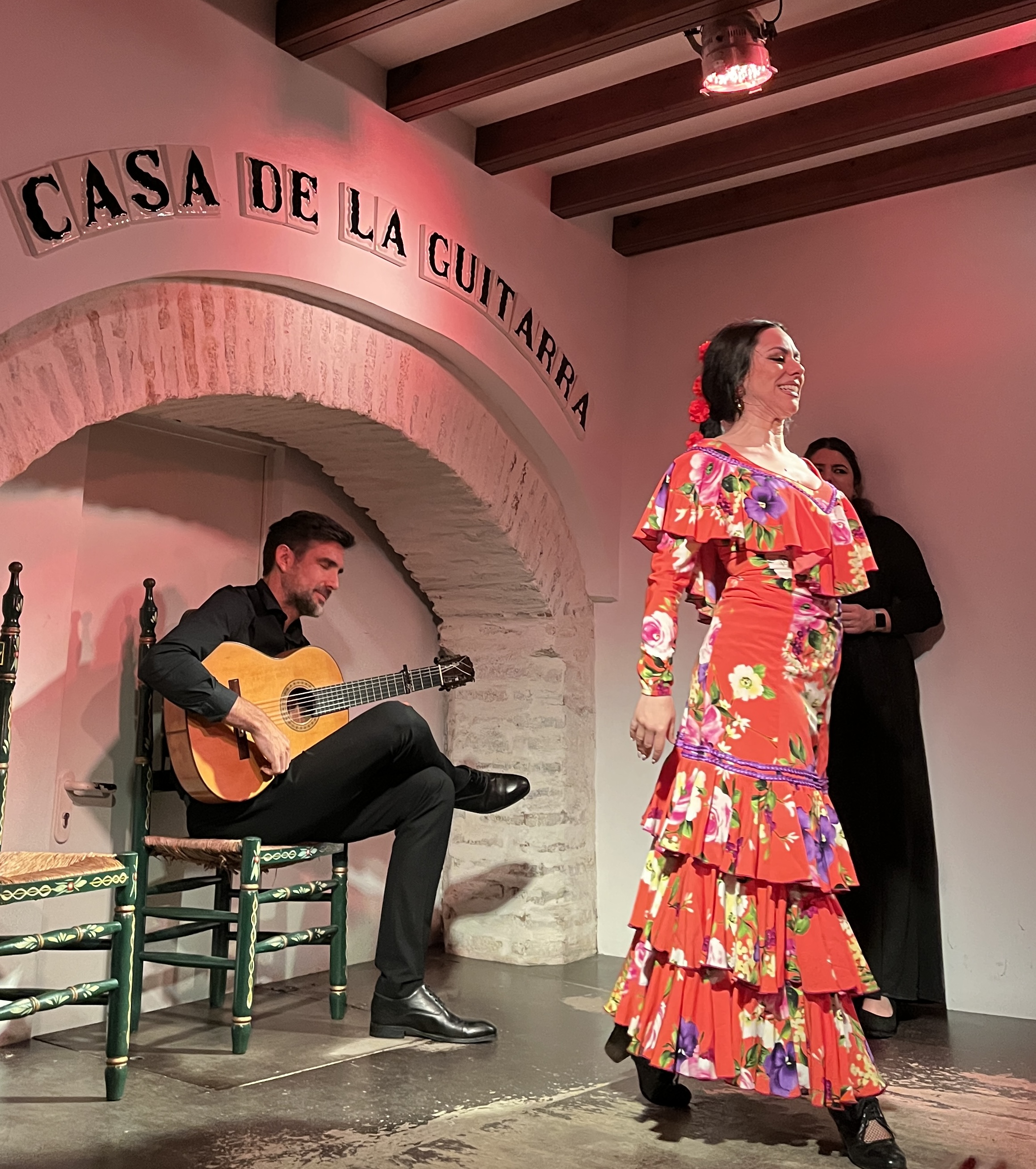
Cultural heritages are still relevant and part of everyday life in Seville and I immerse myself in two of them. One evening I attend my first-ever Flamenco performance at the intimate Casa De La Guitarra. This art form is based on folkloric music from this area, traditionally with performers of both Spanish and gitano heritage. Flamenco music dates back to 1774 and is a UNESCO declared Masterpiece of the Oral and Intangible Heritage of Humanity. The hour long performance is one of the most poignant you could experience.

The small audience waits in anticipation and soon our senses are filled with the evocative, the soulful, the sensual from the guitarist, the singer (cantaora) and the dancer. With fingers flying over his Spanish guitar, the guitarist leads the performance. The cantaora sings and claps the palmas, essential in flamenco music to punctuate and accentuate the song and dance, then carries the mournful, then exuberant tune with the occasional ole to cheer on and praise the dance performance. And of the dancer’s performance, I can hardly do it justice by describing her deep range of emotion, the raw magnetic energy, the machine gun-fire foot work, the grace, the soulful interpretation of the music. The audience is in awe of the three performers and their creation. Indeed, I now understand the poignancy in something I had read, ‘Seville is a place where little girls still dream of becoming a flamenco dancer.’

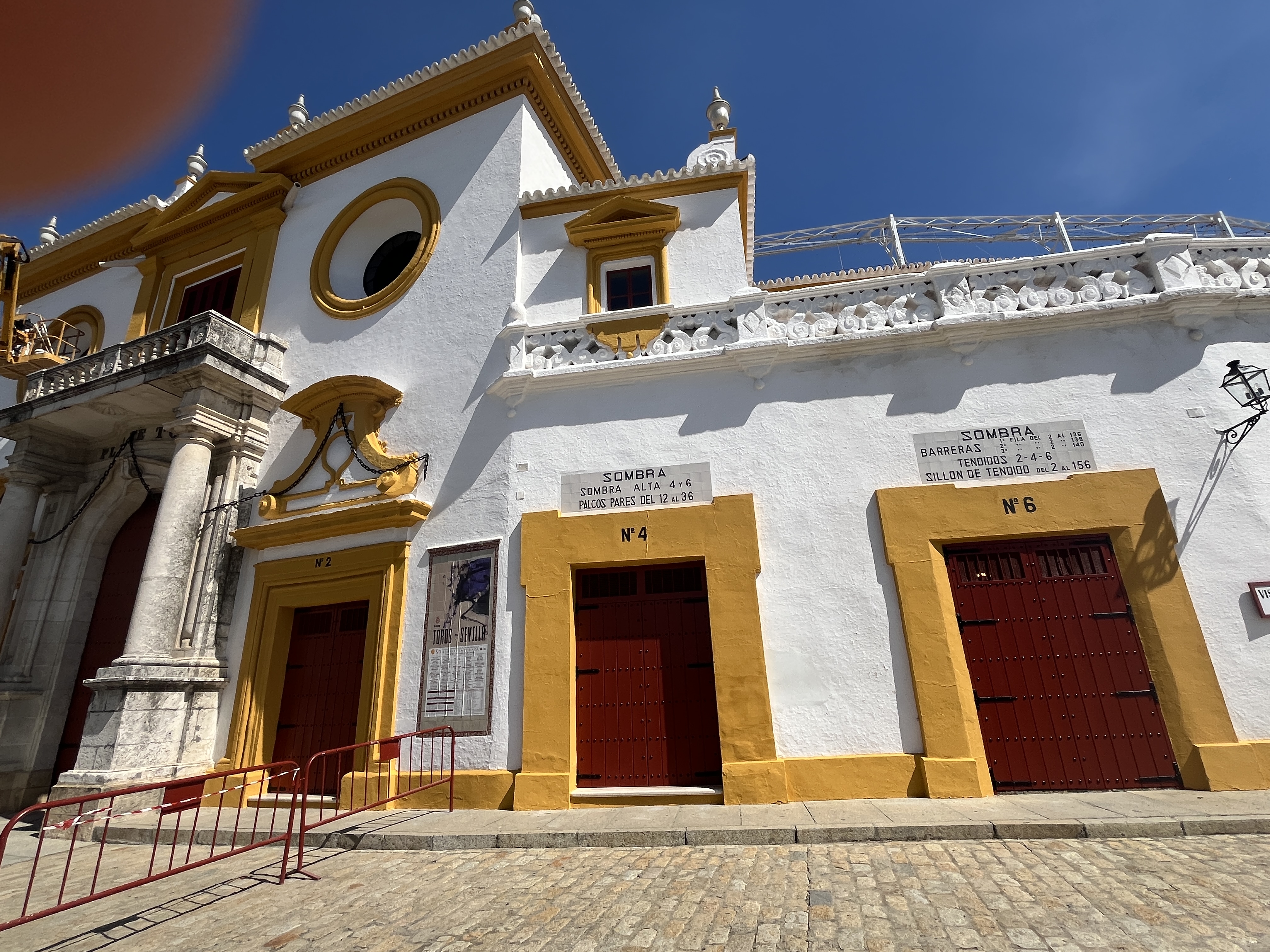
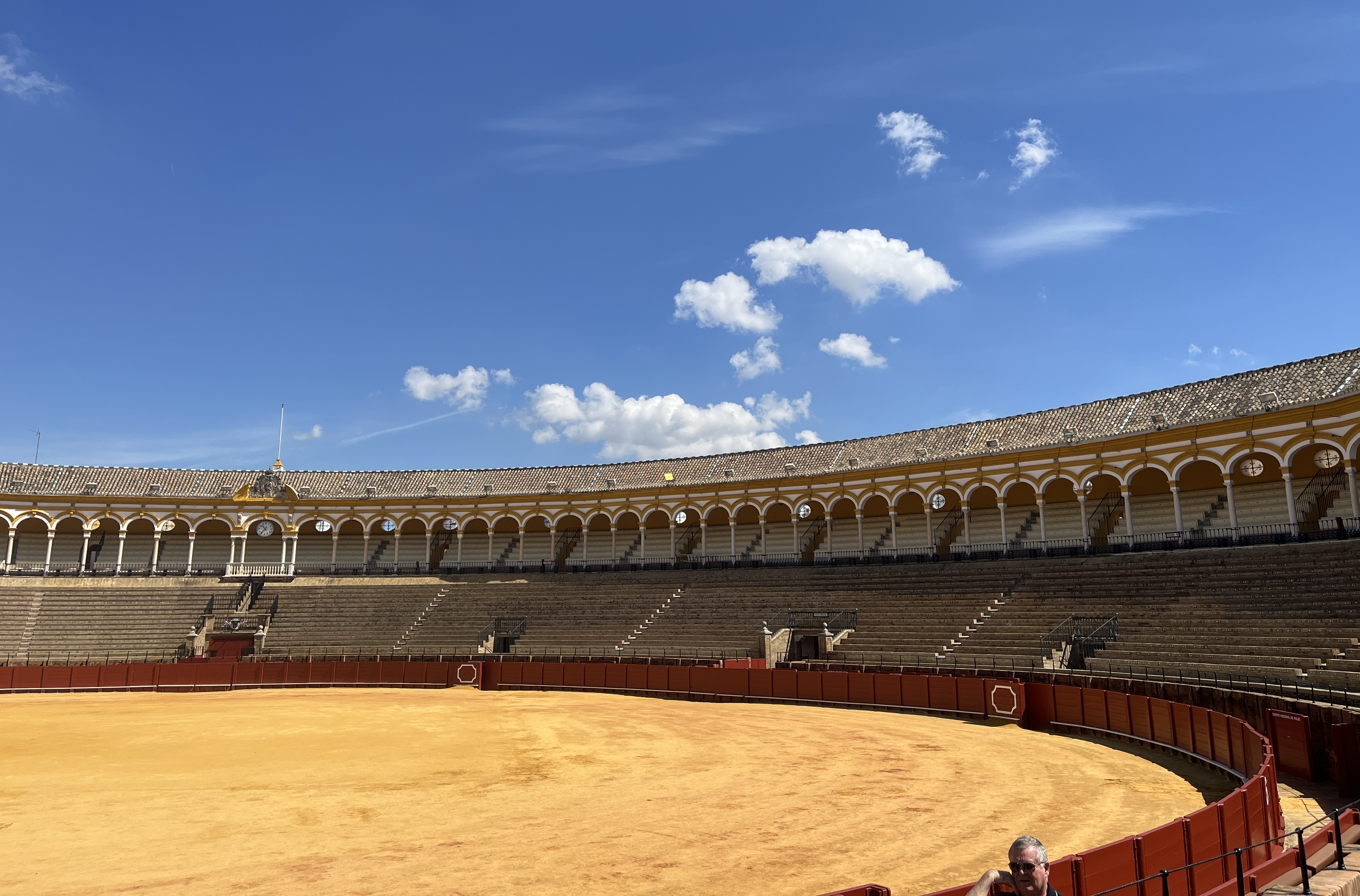
And of that other deep-rooted cultural tradition, of bullfighting? It’s not yet quite the season here in Seville and I wouldn’t have attended, yet as Miquel had told me back at the hotel, “Half of the population still revere it as a cultural practice, the other not.” And indeed, while some consider it a blood sport, many in Spain define bullfighting as an art form. Seville’s La Maestranze is the oldest bullring in Spain.

Situated within the heart of the city, I pay a small fee to visit apparently one of the world’s most challenging bullrings. For bullfighting aficionados, the history, memorabilia and grandeur of this bullring speaks volumes and is considered an essential visit when in Seville. Construction of the circular ring began in 1749 and has seen many evolutions, today’s seating capacity is 12,000. I wander through the museum, marvelling at the matador’s costumes, the awards and the posters that are works of art unto themselves. When I venture out into the stands, the vast ring before me, I get a small sense of what La Maestranze must be like during the season… this same sensation as standing in the Roman Colosseum and imagining the roar of the crowds, the excitement, and the misery.

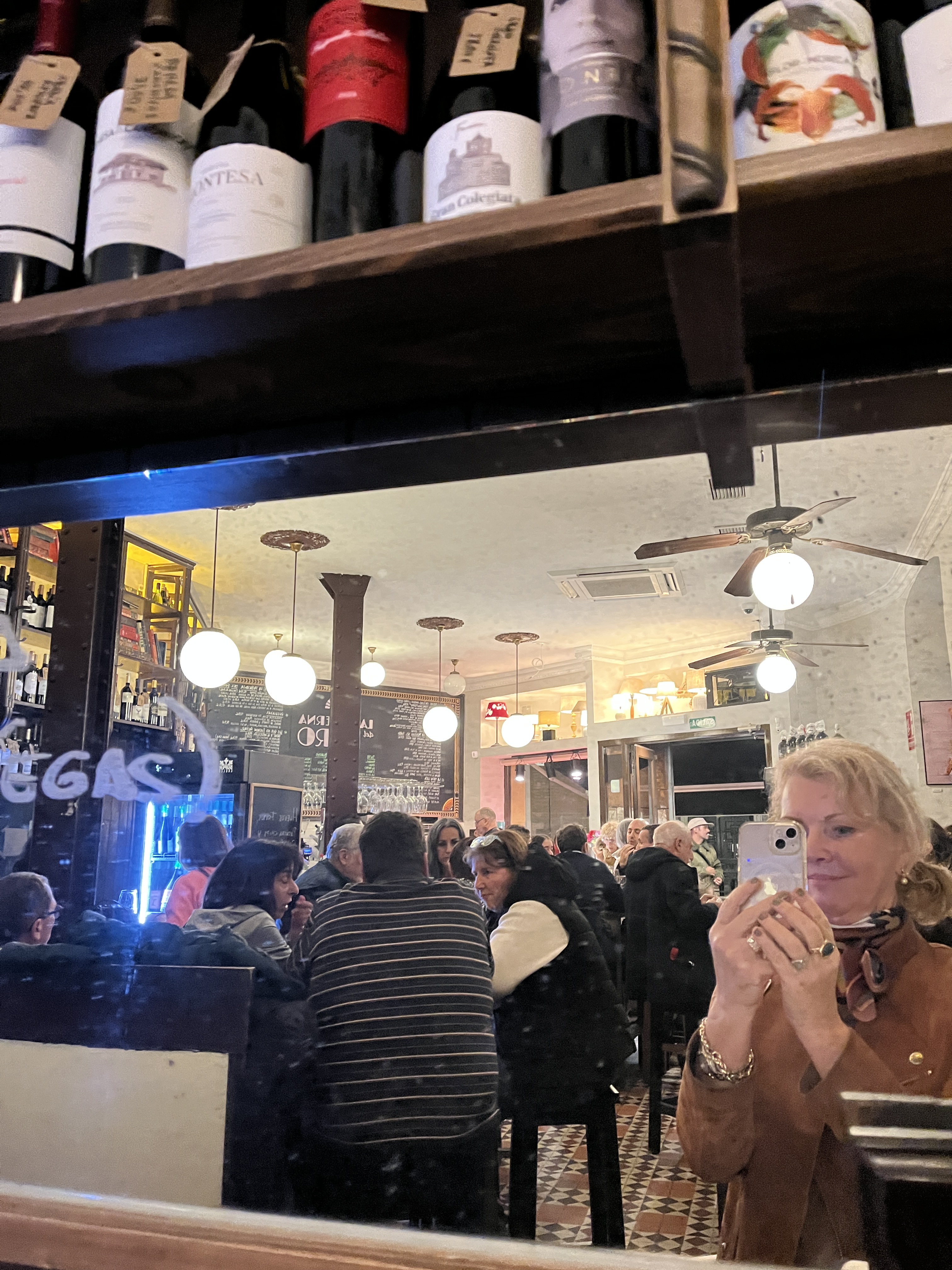
By chance, my go-to bar pays homage to bullfighting with iconic, aged posters and the many regal heads of bulls on display throughout the cozy, historic bar. My new friend, Maria, explains the plaques under each majestic head; the bull’s name, to which matador it lost its life, where and when. They are noble even in death and there’s some relief in knowing they are preserved for posterity.

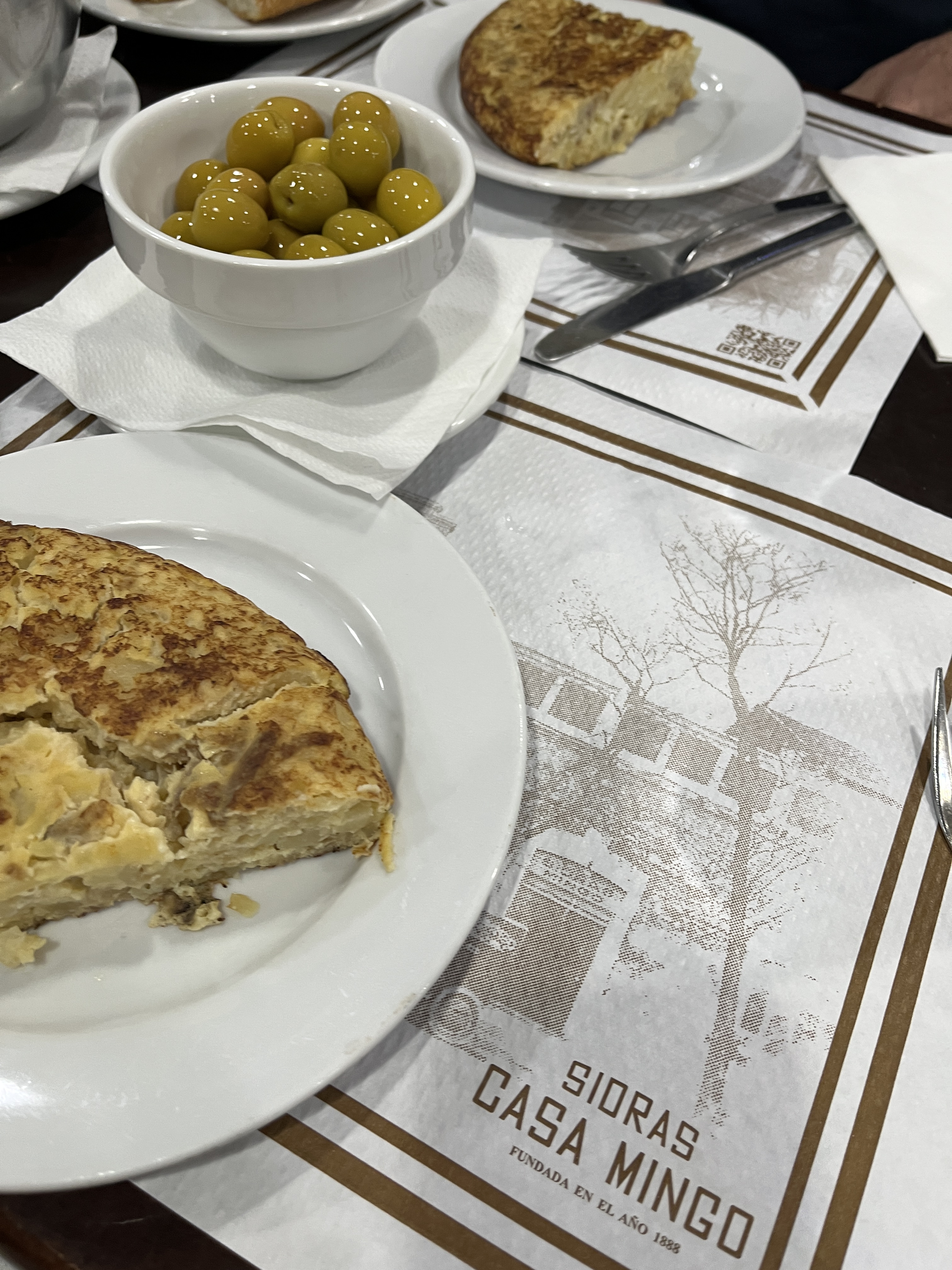
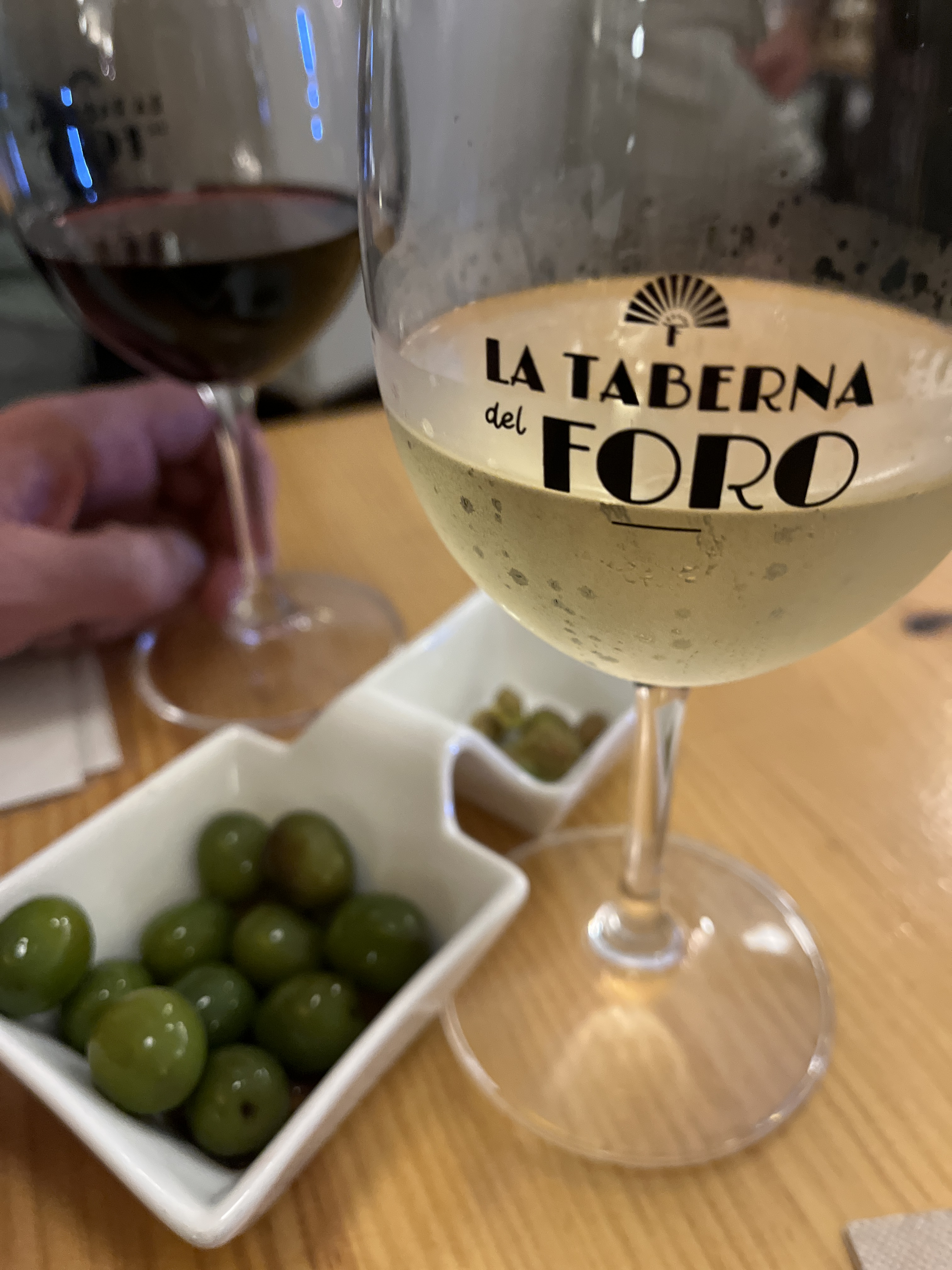
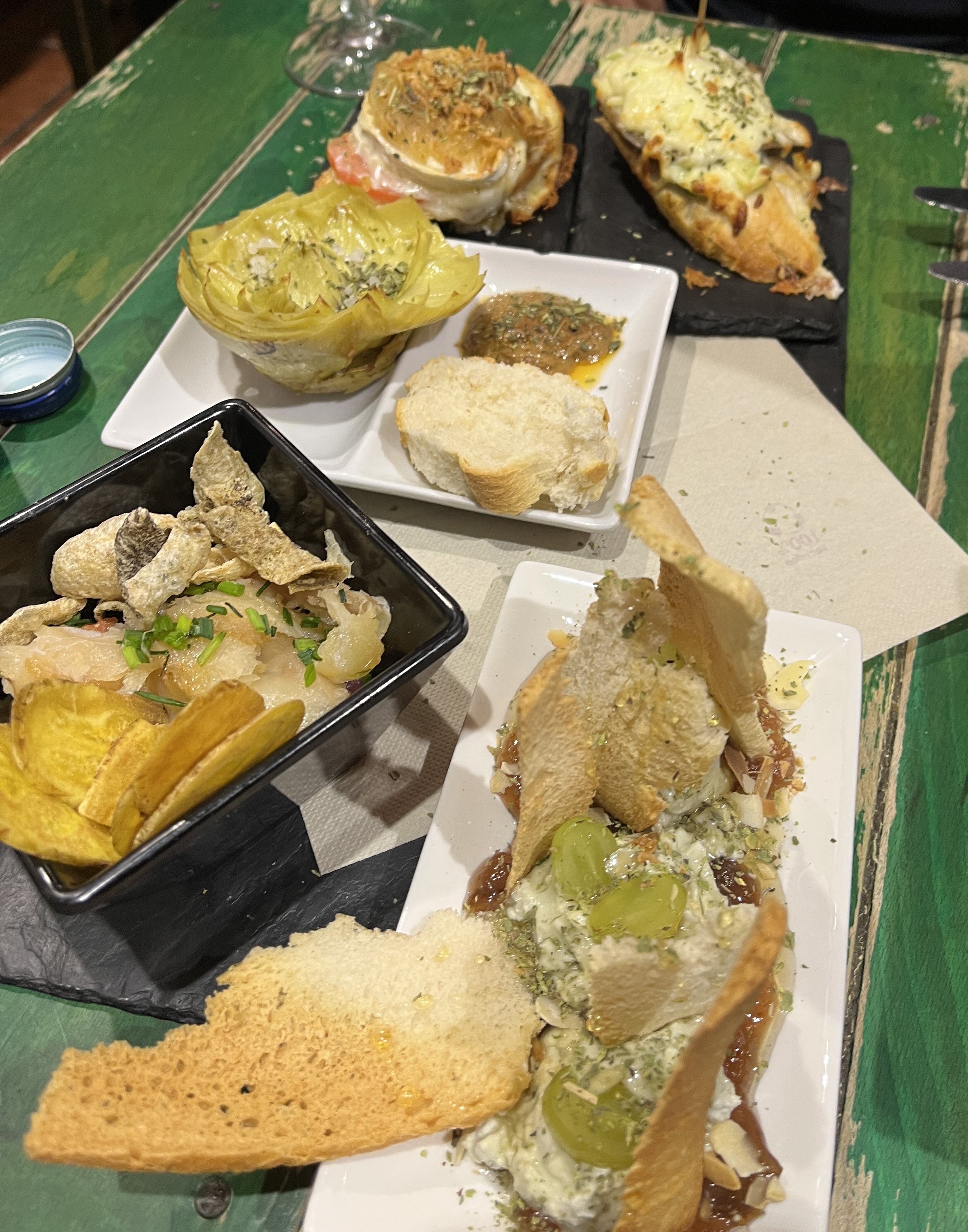
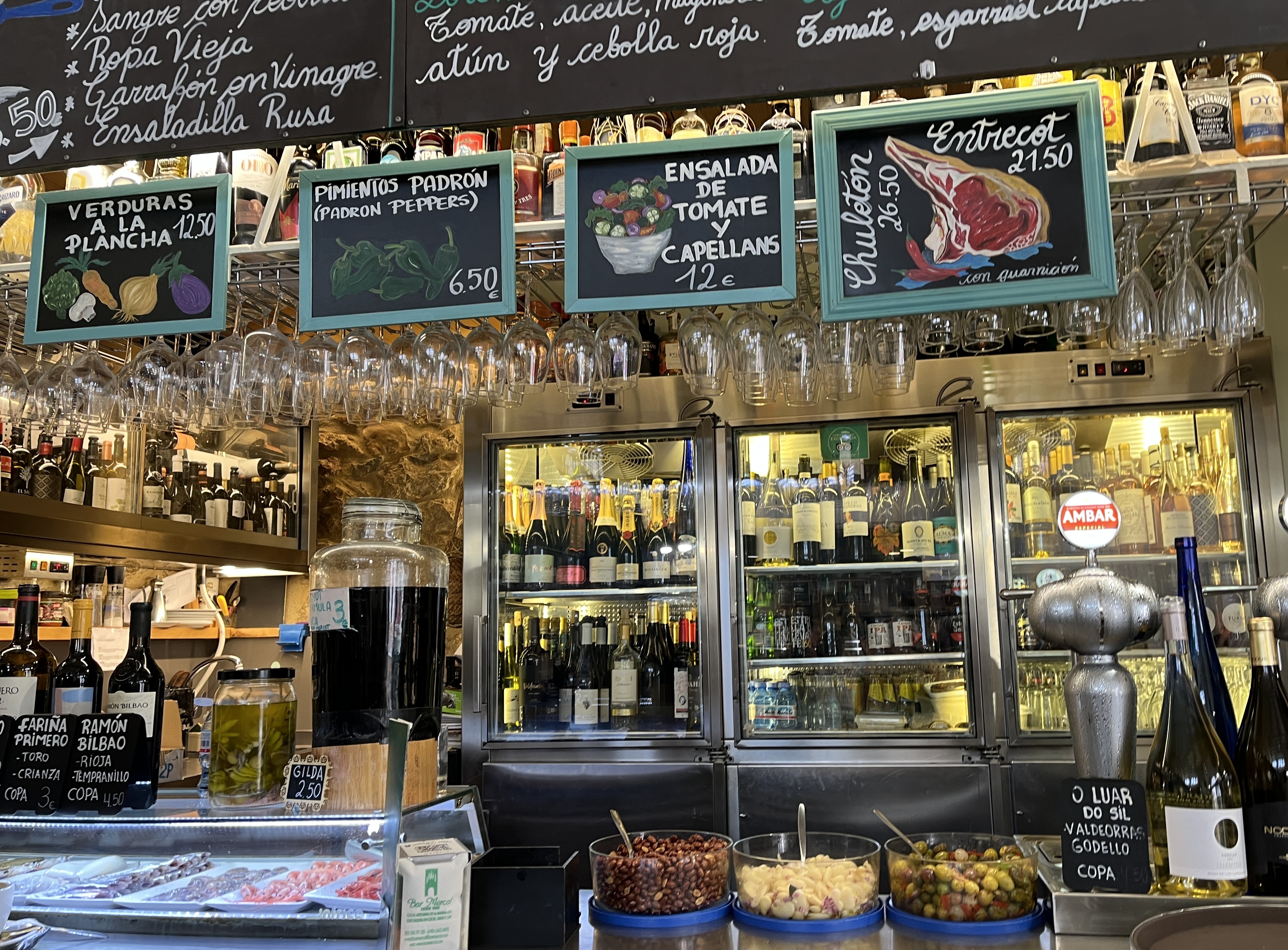
Located on the gastronomic haven of Mateos Gago Street, just along from the Cathedral, Cerveceria Catedral Bar becomes my once-daily pause for tapas, a glass of white redjo, and just to watch the world go by after a day of discovery. As a solo traveller, don’t be afraid to return to a place where you feel comfortable and welcomed.

“Hola la senora?” Maria says cheerily, “Same, a Verdejo?

I nod, “Si, por favor,” find a seat and plot which delectable tapas I’ll have this fine, late afternoon…

Seeking colours in unlikely places… from urban landscapes to an ink-maker’s palette

Standard

IMG_3490

We often talk about putting colour in our lives, enjoying colourful characters, revelling in the vibrancy of autumn colours… so it’s little surprise that the absence of colour can leave us searching.

For the first time in more than twenty years I spent a full winter in Canada and in the process, it seemed almost like a re-learning of what it was to yearn for colour. Beyond the whites and blues that dominated my vistas – and yes the rosy hues of the alpenglow on the mountain peaks are always spectacular – I longed for splashes of primary colours. Oh give me greens, blues and yellows, pops of red, maybe even a dash of ‘bird of paradise’ orange!

After experiencing five months of continuous snow and sub-zero temperatures, I’ve concluded, I’m not a true winter-connoisseur. As the days fused into a continuum of meagre chromatic tones, I found my mind wandering endlessly back to India. At this time last year, our posting in Bangalore was coming to an end and I knew that I could never replace the vivid colours of my daily life there – the vibrant sarees, the exotic fruit piled high on vegetable carts, the canopy of lush greens that was the backdrop for our apartment. And so through those long winter months I felt bereft of colour, almost starved, as if it were nourishment for my soul.

Impatient for the promise of an early spring to deliver me, I began in earnest to seek out colour. On a bright sunny afternoon we visited Fort Steele, a heritage village nestled against the Rocky Mountains. The aged wooden buildings seemed to be making a grand entrance to the new season, the still snow-draped mountains  providing the perfect framing for their subtle colours. At this time of year, Fort Steele is still absent of its summer crowds, the silence seeming only to enhance the simple washes of colour, the nuances of gentle palettes.


A week later, a trip to Vancouver confirmed that, at least on the coast, spring had most definitely sprung… budding crocuses and darling daffodils announced the re-birth of colour. On Granville Island, I soaked in bursts of peony pink, carrot orange, and radish red. There were vivid blues and yellows. I found shadows on walls and textures on lights. Even the sky swirled its own evocative design with soft, billowy clouds. I gratefully extracted sustenance and delight from every play of warmth.


Then this past weekend, perhaps it wasn’t surprising that I found myself in Calgary attending a lecture/conversation where colour was very much the topic.

Jason Logan is a modern day urban forager, with a very specific cause. An individual with a unique perspective on the hidden bounties of the city. His purpose, quite simply, is to make ink. His book, MAKE INK, A Foragers Guide to Natural Ink Making, chronicles his surprising and delightful endeavours.

Jason’s bespoke palettes of ink practically burst off the pages and I can only imagine how vibrant they must be in real life. Their names more than hint at their origins… evocative concoctions like Hawaiian turmeric, sap green, carbon black, black walnut, wild grape purple and acorn cap silver.

“It all started with a black walnut tree,” Jason told the audience at Calgary’s stately Memorial Park Library. Years ago, he had quickly used up a purchased bottle of ‘black walnut ink’ while working as an illustrator in New York. He loved the texture, the depth of the colour and rapidly filled up an entire sketchbook with the mahogany-black hue. But when Jason tried to replenish his supply, he found the ink maker had stopped producing black walnut ink.

Seven years later and now back in Toronto with a young family, Jason’s daily cycle to work took him past a beautiful aged tree. Discovering it to be a black walnut tree, he waited not so patiently as the tree’s bounty of nuts slowly matured into green hulls. When they shed in late September, Jason soon had them boiling into a rich brown ink in his kitchen. After repeated tweaking of the recipe, he was hooked.

His passion has translated into the Toronto Ink Company, and he now takes plants, roots, berries, metal, gypsum, weeds, in fact whatever he may find in a specific city, to create inks evocative of a specific area.

The day after his lecture, I noticed on Instagram that Jason had foraged in Calgary as well. ‘Paint chips of Calgary: pried off of a cement block in the Paliser Parkade, the CN bridge downtown, a rusty pipe near the Bow and Elbow rivers, an old Toronto Sun newspaper box in the East Village and the underside of a bridge.’ The colours were luscious and will no doubt reveal themselves as they’re transformed into a bottle of ‘Calgary Ink’.

One of Jason’s clients and confidantes is Canadian author Michael Ondaatje, author of The English Patient. In MAKE INK, the two creatives discuss shellac, the necessary binder for ink.

Jason comments, “The shellac that I buy comes from these little beetles from a bush in the high mountains in India. Almost everything I make, I make from the streets of Toronto, except the shellac. I would at least like to meet those little beetles.”

“The first creature I remember very vividly is called the golden beetle in Sri Lanka. It was sacred,” Michael Ondaatje replies. The ink maker confirms that, “Beetles strangely play a really important role in pigment and ink.”

Their conversation meanders to beetles that live on prickly pear cactus feasting on the purple magenta syrup, to the ‘witchy relationship’ the English have with herbs and the dyeing of wool, to making ink from ancient lichen, rust, bone, wood, land and quinine all of which pay homage to the Franklin Expedition, the doomed British Arctic endeavour of 1845.

I find it original and fascinating; Jason’s mantra, ‘Colour is Everywhere’, rings true. During the presentation, there is an earthy, visceral, almost elemental, passion that comes through as he speaks. He tells us that his inks are fugitive; they’re alive, they change, even in their fading there is poignancy.

And he’s asked, Why ink?”

“They’re an intensification of colour that can be used in communication. It’s democratic, anyone can play. Maybe a fine line of a pen. And with a brush, it loses its mind!”

Post Script

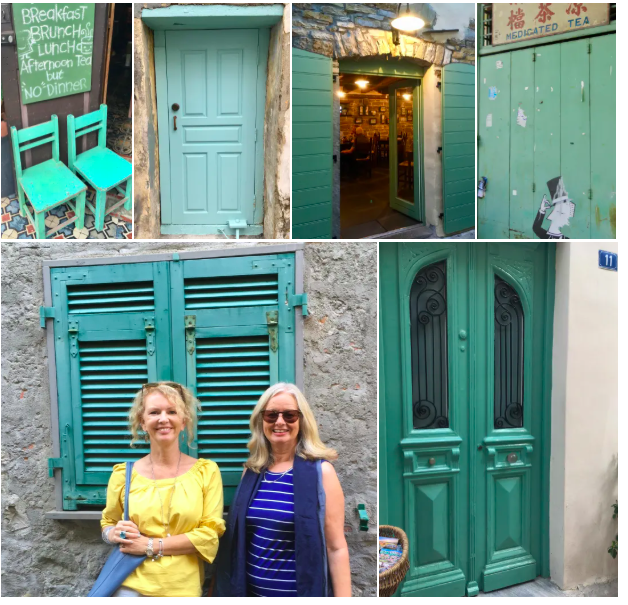
As I publish this post, I find myself in Spain. We’ve begun some months of traveling and yesterday I was reminded of how wonderfully a town can ‘lose its mind’. On the Costa Blanca lies a delightful town, like a colourful box of pencil crayons… La Vila Joiosa

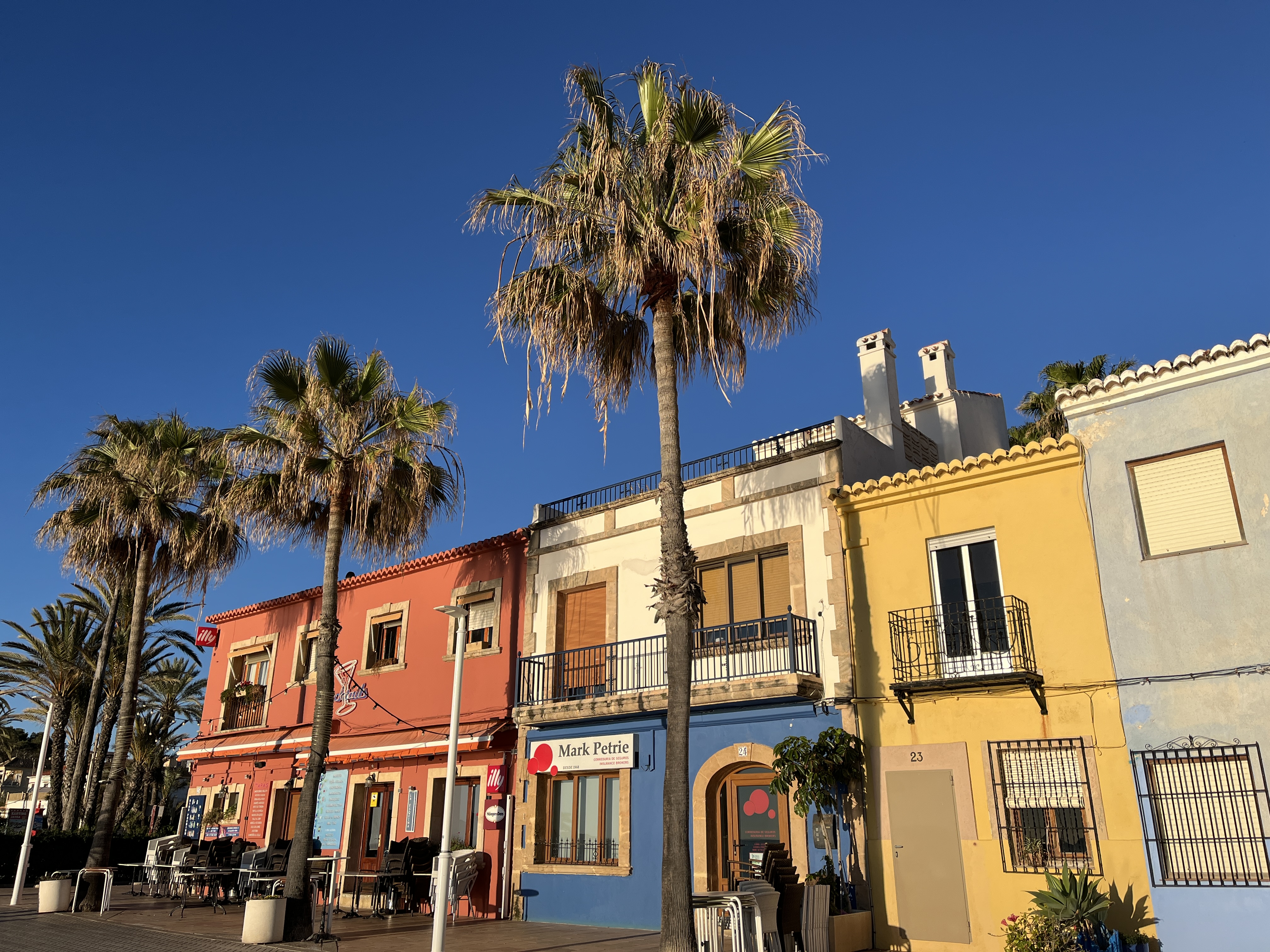
This once small fishing village is awash with colour, across the full spectrum of the rainbow. Its name means ‘jewelled town’ and the vibrant colours were traditionally intended to guide local fishermen home from the sea. Narrow, centuries-old houses lean against each other, each distinctly hued. Shades of powder and cobalt blues, reds, pale lavenders, ochres and mustard yellows and seaside greens. Imagine selecting a handful of your favourite pencil crayons and living amongst them… it’s fanciful and alive.

I was here a number of years ago, and it’s just as beguiling and nourishing as I remember it. My yearning for colour has absolutely been fulfilled!


Smitten by Spain… of tapas and new shoes on the esplanade

Standard

IMG_7141

In Alicante

“Your cortada, señora,” the waiter says, placing the tiny coffee before me. Soaking up the atmosphere in a small Spanish plaza, it strikes me how lovely it is to be called señora. Far more exotic sounding than Ma’am or Mevrouw.

Having visited three countries in a two week period, it’s been hectic. I have half-written blogs on the delights of Quebec City, Canada’s gem, and picture-perfect Netherlands. But for now… I’m smitten by Spain.

An unexpected trip with my mother and Dutch relatives has found us in the Alicante area, on the Mediterranean coast. Overlooking the Costa Blanca, we’re happily ensconced in a family villa. The terrace wraps around the long bungalow, leading to a pool with a tremendous view. We sunbathe and float, our gaze lingering on the sailboats and the fishing vessels beyond. The azure sea melds into the endless blue sky; I now understand why people adore Spain.

IMG_7119

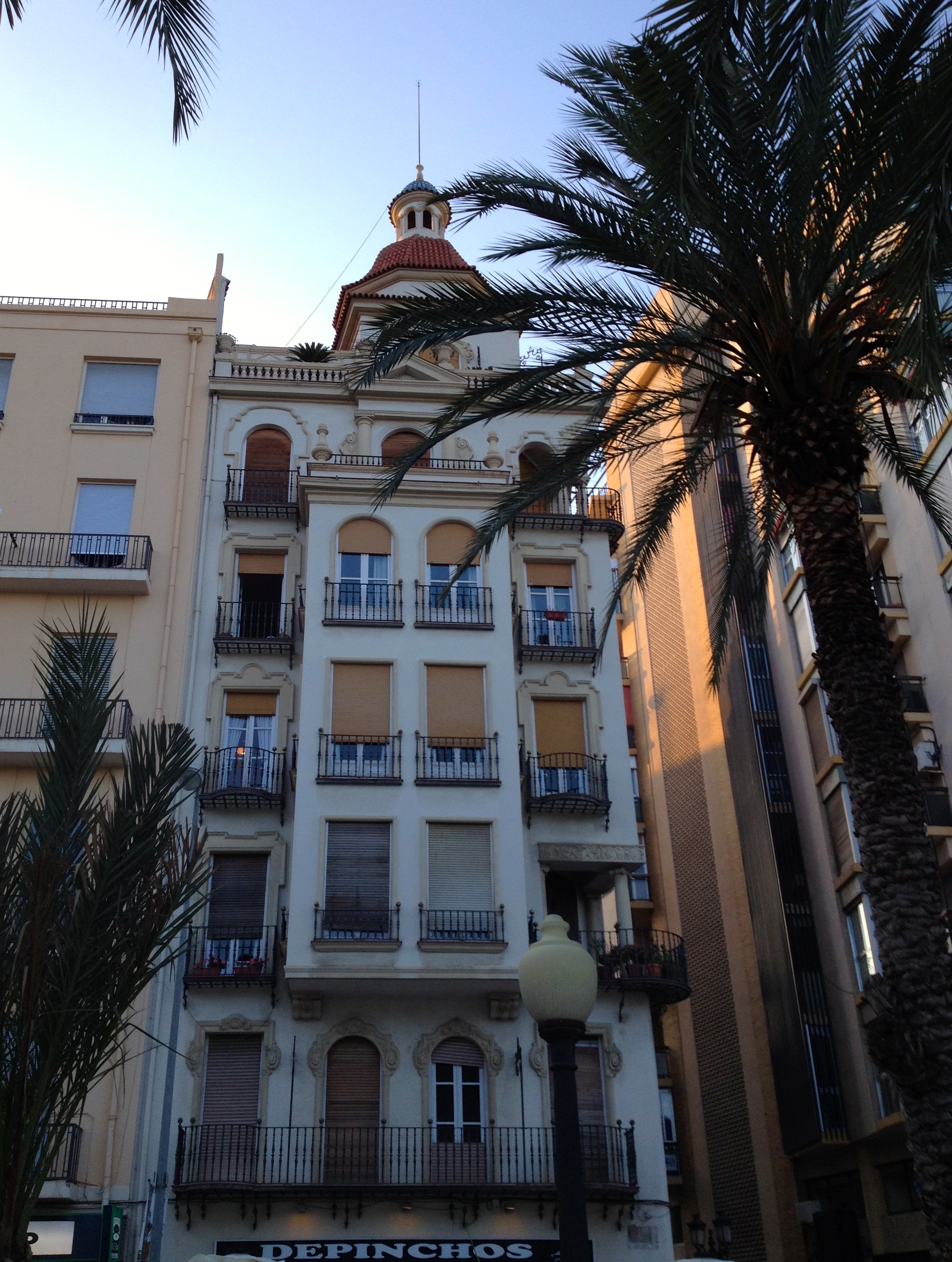
Architecture and ‘siesta blinds’ in Alicante

Indeed, this is the good life on the Mediterranean. We indulge ourselves with moonlit swims and champagne lunches by the poolside, happy to drip-dry in our swimming suits and wraps. Our hosts, my second cousins Alda and Margienus, don’t permit us the luxury of afternoon siestas however. There’s too much to see, as Alda knows well.

Her father acquired the villa some forty years ago. “I was about fifteen when we first came here for holidays. I feel some of my roots are here at Casalmar,” Alda had told us as we feasted our eyes on the spectacular view for the first time. We soon appreciated why one would chose to vacation or live here.

Villas crowd the coastline, bouganvila of fuscia, deep purple and crimson spilling over stone walls. Palm trees, cacti and giant aloe vera spring from the dry earth. Tiny corner stores and family run eateries seem to welcome on every street. Local markets sell the essentials for Spanish cuisine such as oranges, pimentos, chorizo, olives and rice. Fun, seaside attire entices us and we all come away with something; flouncy blouses, flowing pantaloons and billowy kaftans. But best of all, the sea is never far away.

IMG_7211

‘pool with a view’

Our neighbourhood of El Campello is tranquil, yet comes to life on the promenade. Large intricate sandcastles guard the beach, children dig with bright spades and pile fine sand into plastic buckets. Bars welcome us with vistas of the waves lapping against the shoreline. Naturally, a 16th century watchtower catches my attention.

The Alicante region wasn’t just a magnet for traders and settlers over the centuries, but also for the dreaded Barbary pirates or Ottoman Corsairs as they were also called. They plied the coast capturing local population, building their slave trade on Spanish captives. Some twenty defence towers still perch on prominent cliff tops; as if still watchful for the North African invaders.

“a handful of pencil crayons’

Some invaders came to stay and their legacy remains. The Moors over-ran southern Spain but brought enlightenment in the form of medical knowledge, irrigation and education. The coast also became a major Mediterranean trading station; rice, palms, olive oil, wool, wine and oranges. Valencia is further north and I can attest that the oranges are the tastiest you’ll ever try. And the wine? We sampled much of that as well; a delicious Spanish white costs no more than 2 Euros. It really is la dolce vita. Or should we say…la buena vida!

IMG_7287

The boulevard at Villa Joiosa

One afternoon sees us enjoying a bottle of white in the picturesque town of Villa Joiosa. A short trip along the coast, its name means ‘jewelled town’. The vibrant colours are intended to guide local fishermen home from the sea. Narrow, centuries-old houses lean against each other, each distinctly hued. Shades of powder blues, reds, pale lavenders, yellows and seaside greens. Imagine selecting a handful of your favourite pencil crayons and living amongst them…it’s fanciful and alive, jewels every one of them.

IMG_7240

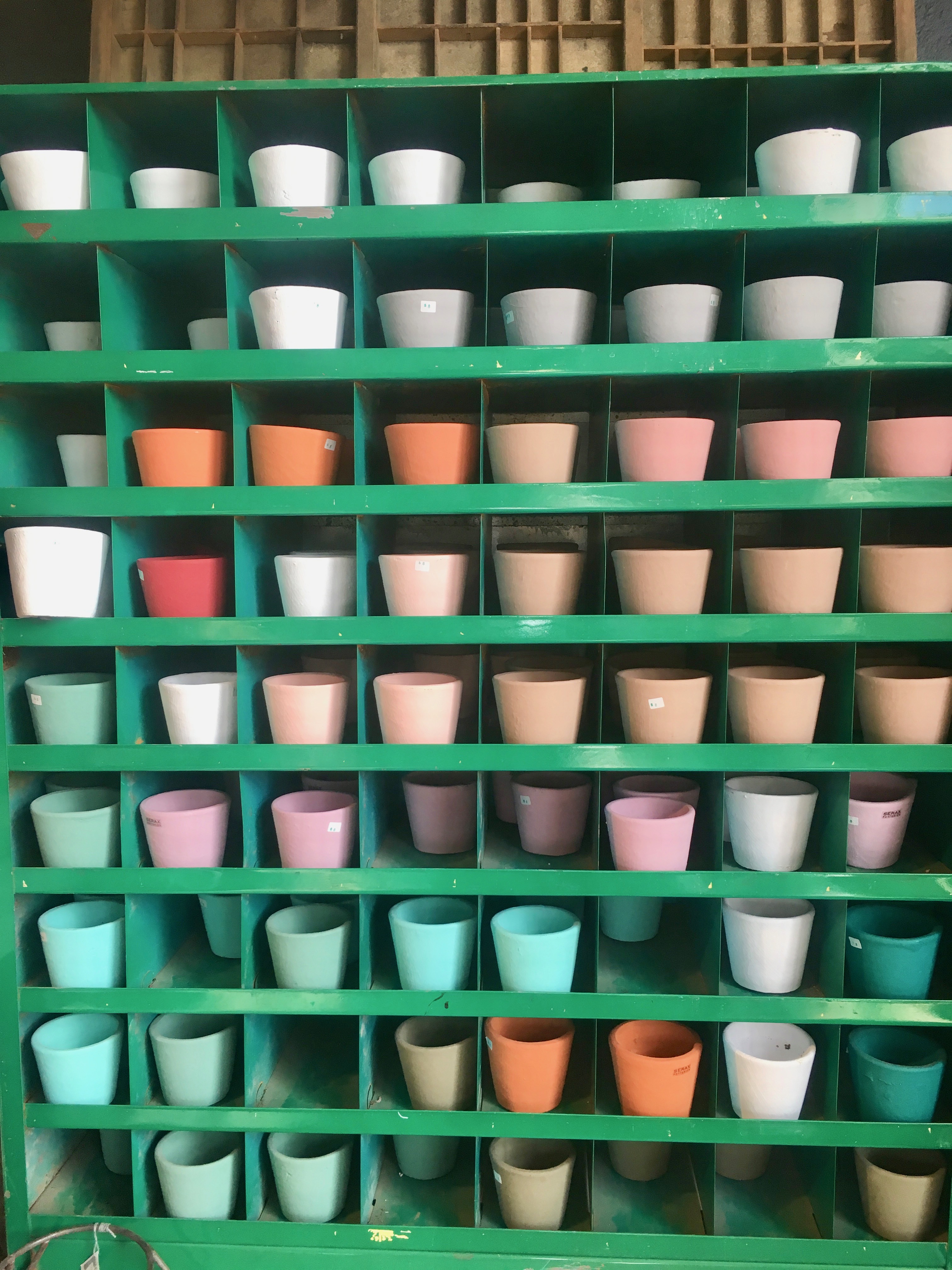
Lavender and terracotta pots

As we while away the late afternoon at the small Placa Castelar, the town awakens from its siesta slumber. Locals emerge from the warren of streets that radiate from the cobbled square. Church bells peal laconically, shop doors unlock, dogs stroll with their humans and hats tip to neighbours.

We hear the the swish of blinds and shutters roll up. These outdoor coverings for doors and balconies are drawn down during siesta. It’s 5:30 now, time to come to life for the evening. I notice a few señoras trickling water into terracotta pots on tiny balconies. ‘Hola’, they venture.

I mention to Alda that we might peek into some shops back along the harbour. “I think you’ll want to wait for tomorrow,” she says and I remember what I’d read about Spanish shoes in Alicante.

IMG_7142

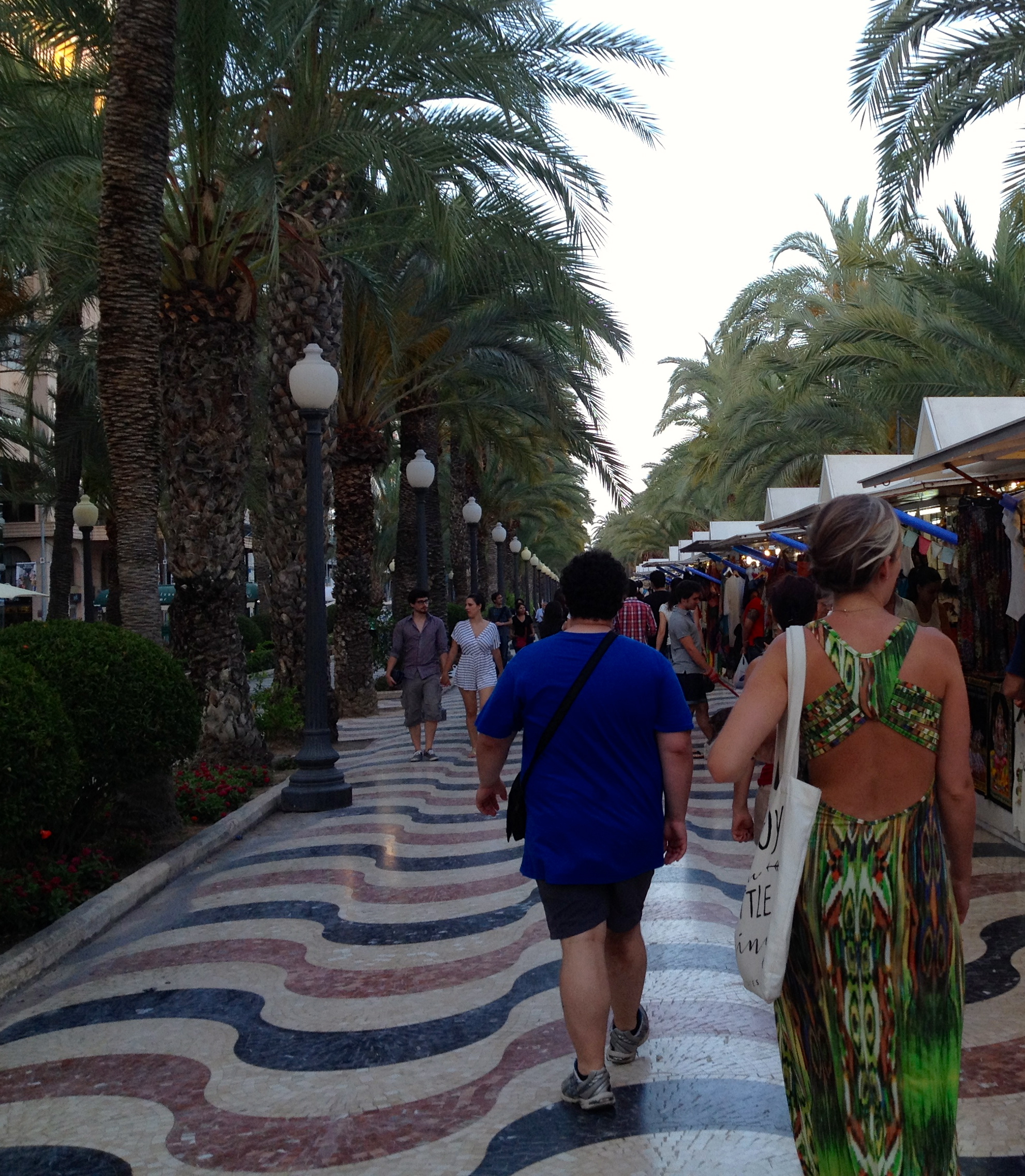
Waves of marble on the esplanade

We begin our outing the next day (after a stop for the promised pair of Pikolinos) with a stroll along the heart and soul of the city, the Esplanada de España. This grand boulevard stretches around the Alicante marina, all 6.6 million tiles of it; red, black and cream.

Created in 1867, it offers the place for a perfect paseo, a romantic evening stroll. The dramatic marble tiles depict the waves of the Mediterranean and rows of palm trees offer shade. Well-dressed couples stroll hand in hand, people peruse the kiosks, others sip coffee.

At a nearby bustling square we enjoy a cocktail and I befriend two charming waitresses, Maria and Katrina. We chat and pose for photographs, their natural friendliness epitomizes the hospitality of Spain.

After a first tapas at a nearby outdoor bar, we encounter them once again. Maria is standing in the elegant entrance of Le Turronena and I stop to ask the name of the imposing tree that shades the square.

New shoes on the esplanade

New shoes on the esplanade

“It’s a dragon tree, there’s another famous one in Tenerife,” she informs me, then asks if we’ve come back to dine.

“No,” I say a little apologetically, “we’re on the search for our next tapas bar.”

“Well then come with me, I’ll take you to where you’re going next.” And with that Maria marches us down the street, shouts Hola to fellow shop workers as we pass, then turns a corner. We’re suddenly upon a crowd gathered outside a small tapas bar.

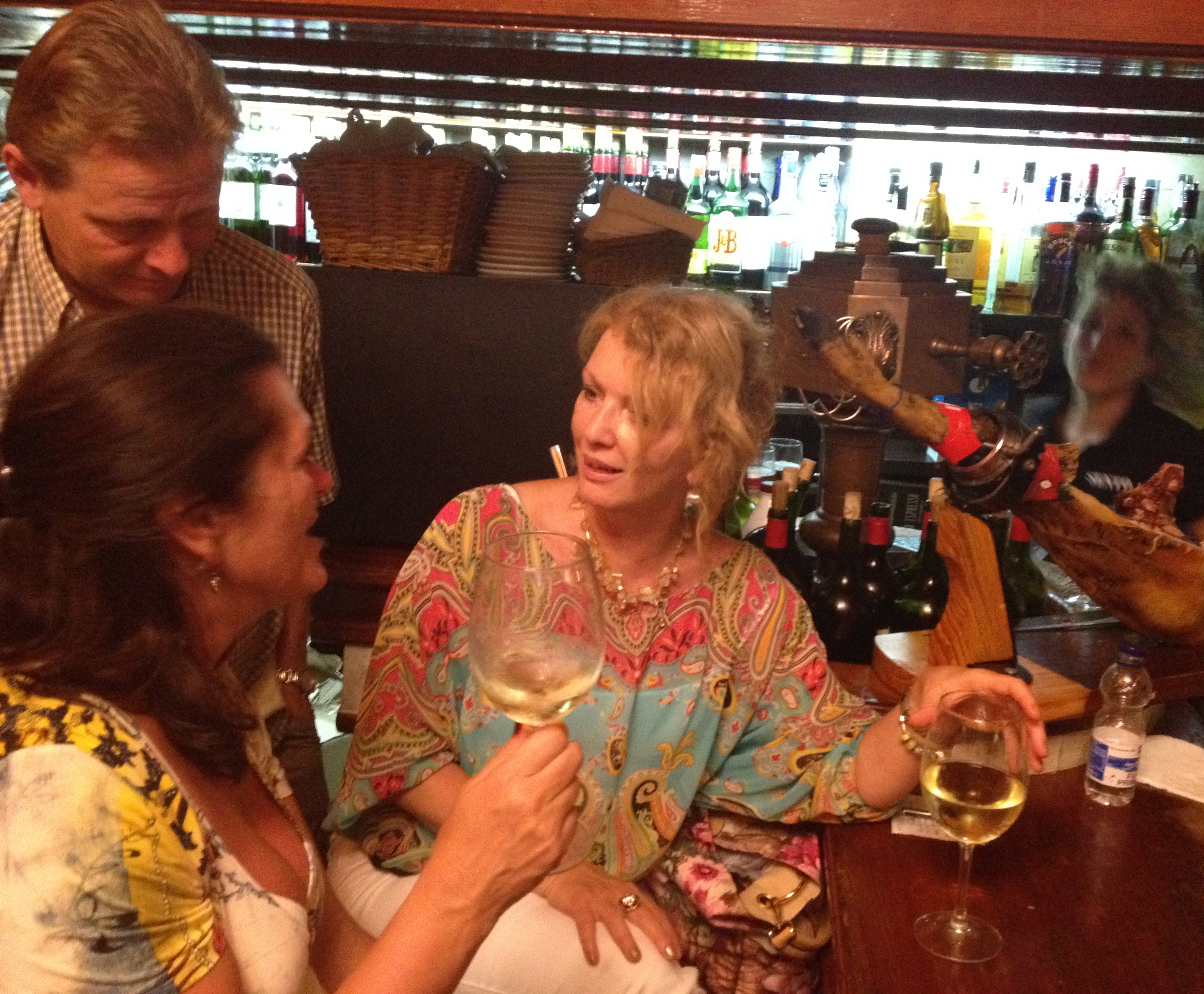
As custom dictates, many of the locals are outside socializing in the warm June evening, tapas in hand. Maria informs one of the staff that she has a group of six and voila… we’re lucky enough to be seated at the bar. We know immediately that Maria is an angel in disguise.

IMG_7136

Katrina and Maria, our ‘angel’

Alda had promised that we wouldn’t leave without an authentic tapas experience and this was it. The small bar is like a beehive; busy, exuberant and productive. Cured ham strung against mustard walls, tapas orders shouted out over the laughter and chat, staff weave in and out like a choreographed salsa dance. Each time their hospitality is rewarded with a tip, a loud clang erupts from a voluptuous bell behind the bar. “Fantastico!” one of the guys would sing-song and we in the bar would loudly echo it back. The ebullient Sara tells me it also means…”Our new friends are leaving and we hope they’ll come back.” I like that.

As the wine flowed and sumptuous dishes are presented to us, it’s understandable that tapas has evolved into a sophisticated cuisine. Perhaps eight to twelve different dishes are savoured one by one, designed to encourage conversation. We sampled tuna, chorizo alvino, calamares and dishes in between. But the art of tapas has far more humble beginnings.

It’s believed that since one would stand while eating a tapa in traditional Spanish bars, you’d need to place your plate on top of the drink to eat, making it a top. Others maintain the name originated sometime around the 16th century when tavern owners realized that the strong taste and smell of mature cheese disguised that of bad wine, so offered free cheese.

IMG_7161

Fantastico!

Another theory is that King Alfonso X of Castile recovered from an illness by drinking wine with small dishes between meals. After regaining his health, the king mandated that taverns shouldn’t be allowed to serve wine to customers unless accompanied by a small snack or “tapa”, the meaning of the word.

Then again, it’s said the same King once ordered a cup of wine on a windy beach. The waiter covered the glass with a slice of cured ham before offering it to the king, thus protecting the wine from sand. “I’ll have another, with the cover!” the king is said to have bellowed. He was onto something… in our opinion, wine and tapas go hand in hand.

IMG_7159

Sara and Roben

At one point in the evening, I ask Alda about her time spent here over the years. She fondly recalls shopping for a long gown, so she could stroll the esplanade as a teenager.

“Everyone dressed up then for the paseo, it was a special time,” she says and feels privileged to have experienced that era. Alda relates that Spain became her father’s home and in fact chose to be buried here, rather than back in the Netherlands. “He contributed a lot to improve our village, it became a tight knit community with pockets of Dutch and English.”

IMG_7180

“a new dress for paseo”

That had been evident over the days as I heard Dutch and distinct English accents throughout the area. Yet while living a true Spanish experience in the tapas bar, Cervecería Sento, one’s home country is miles away. It’s difficult to imagine yourself anywhere else at that moment in time.

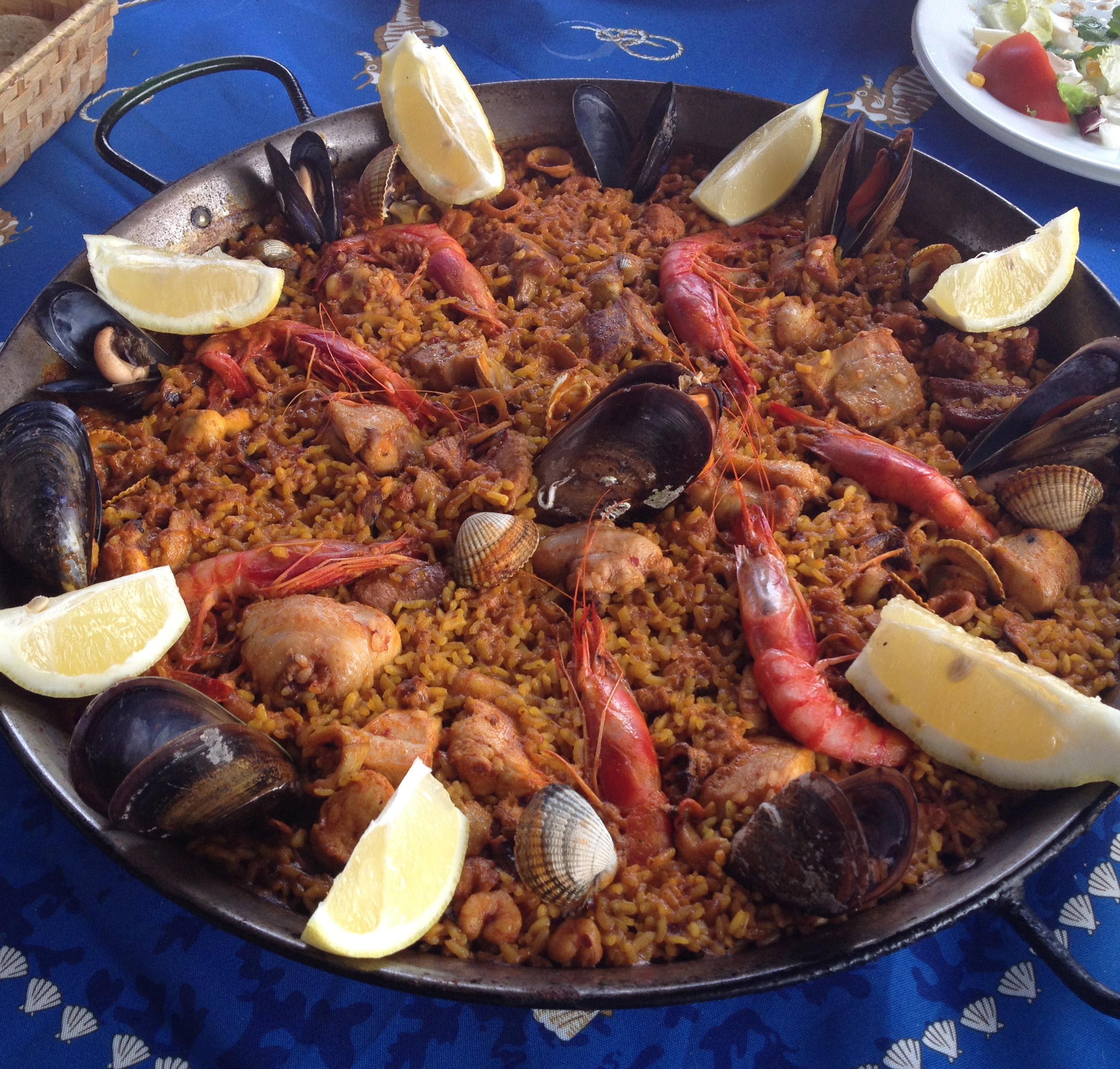
My story might leave you in our favourite tapas bar, yet I must share one last vignette. Our last day finds us back in the village for a traditional Sunday lunch. To complete our culinary experience, Margienus insists we have traditional paella, the Spanish rice dish that originated in the Valencia area.

We climb up a rocky hill where the restaurant sits, open to the breezy afternoon. Beach goers and picnics enjoy the sand below us, the day feels pleasant and timeless.

IMG_7344

At Casalmar before Sunday lunch, in our ‘flouncy blouses, flowing pantaloons and billowy kaftans’

No, it isn’t a fancy place, but the food and the family atmosphere is the attraction. Children play on the hillside and occasionally make their way to their parents who are enjoying yet another course and likely another bottle of wine. People wander up to the bar in bikinis or sit smartly dressed… and yes, the Spanish do craft beautiful shoes!

We’re offered a small plate of a national dish from a generous local at the table next to us. We feel welcome and at home. Yet, I long to hear some Spanish music, you know how I am about these things.

I ask one of the Thomas family members if they could indulge me. Generations of the family have welcomed the neighbourhood into their restaurant over the past forty years. On cue, a flamenco tune fills the restaurant. Now the experience is complete.

The Spanish melody drifts past us, out towards the Costa Blanca. Really and truly, every Sunday afternoon should be like this.

IMG_7382

Generations at the Casa Thomas

By the way, how was the paella? Like everything…it was Fantastico!

IMG_7375

Paella, bright with saffron