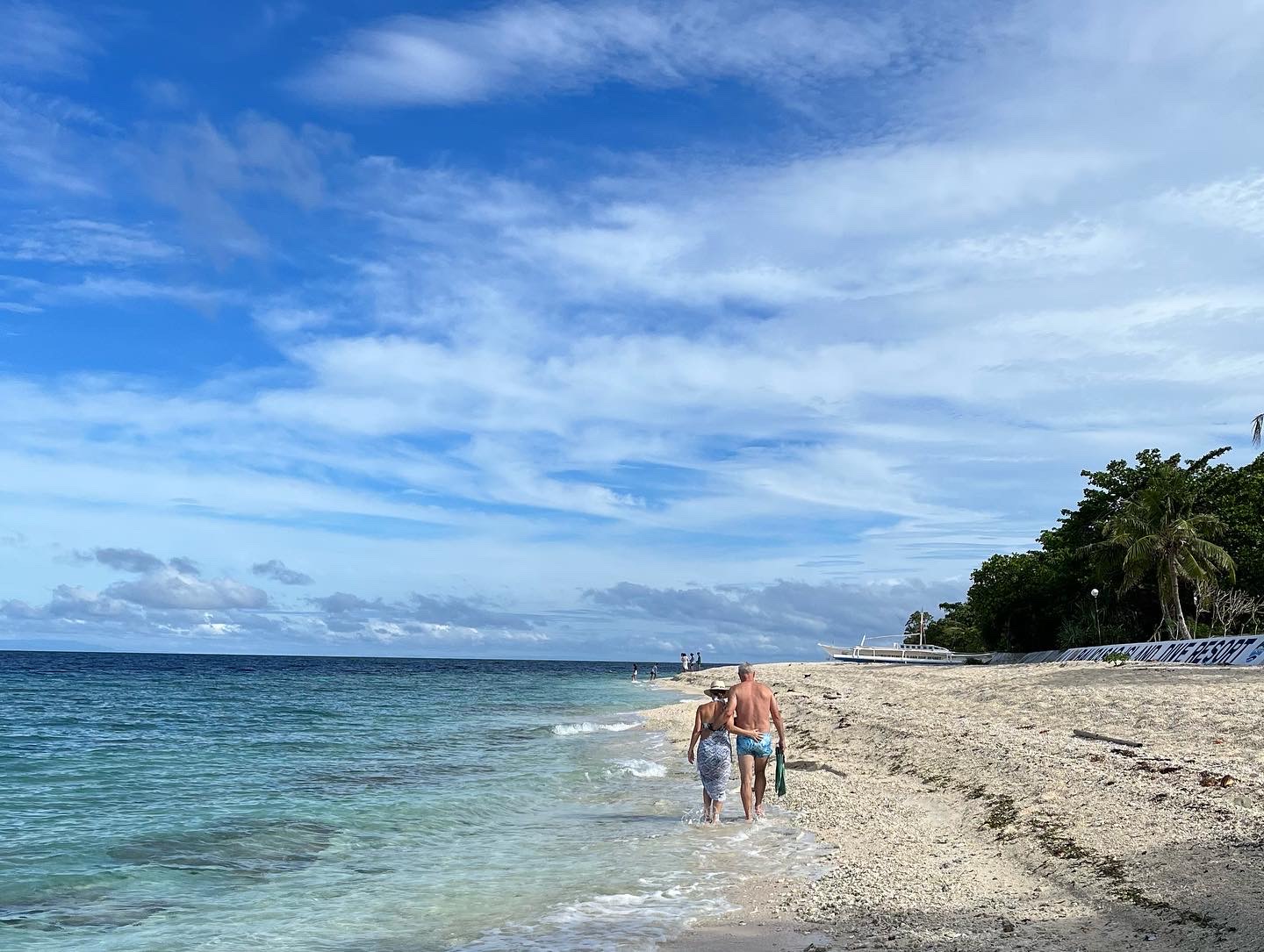
Postcards from the Gulf Islands… Pender & Salt Spring revealed

Standard

Despite previous visits to nearby Vancouver and Victoria, this May we happily toured the Gulf Islands for the first time. Choosing Pender and Salt Spring, the archipelago is tucked in the Salish Sea between Vancouver Island and the mainland of British Columbia. A ‘googling’ of the Gulf Islands tells you that they’re home to ‘eclectic residents with bohemian souls.’ That may be the case and you’ll meet a few of them – along with so called every-day people who desire a simpler life – yet what strikes you is the soulful beauty, the gentle living and deep sense of community. On Pender Island, the eclectic Fridge Culture was the real unexpected delight. On Salt Springs, it was the idyllic paddling to other smaller islands… so very magical with intriguing historical stories to reveal.

Pender Island

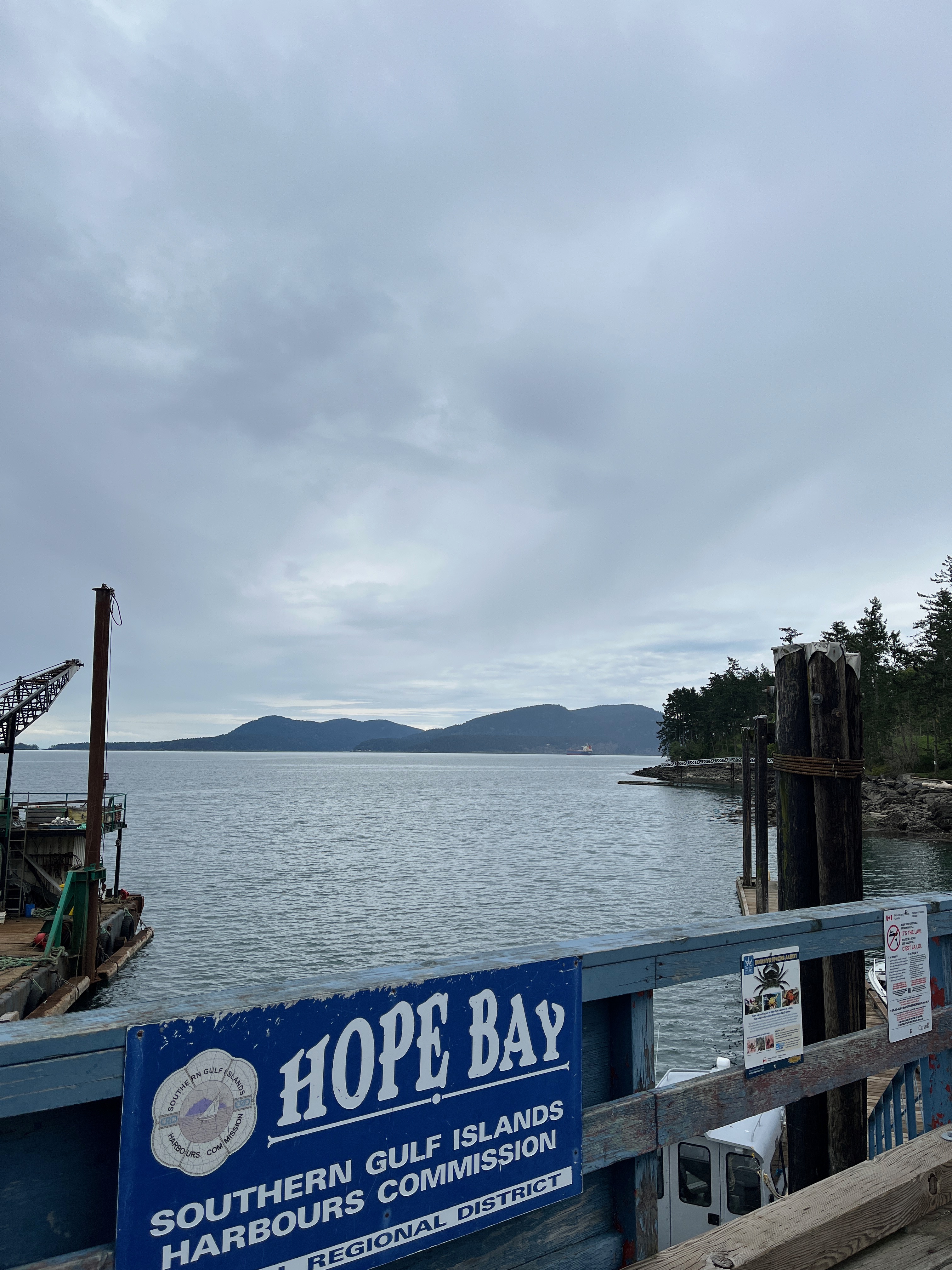
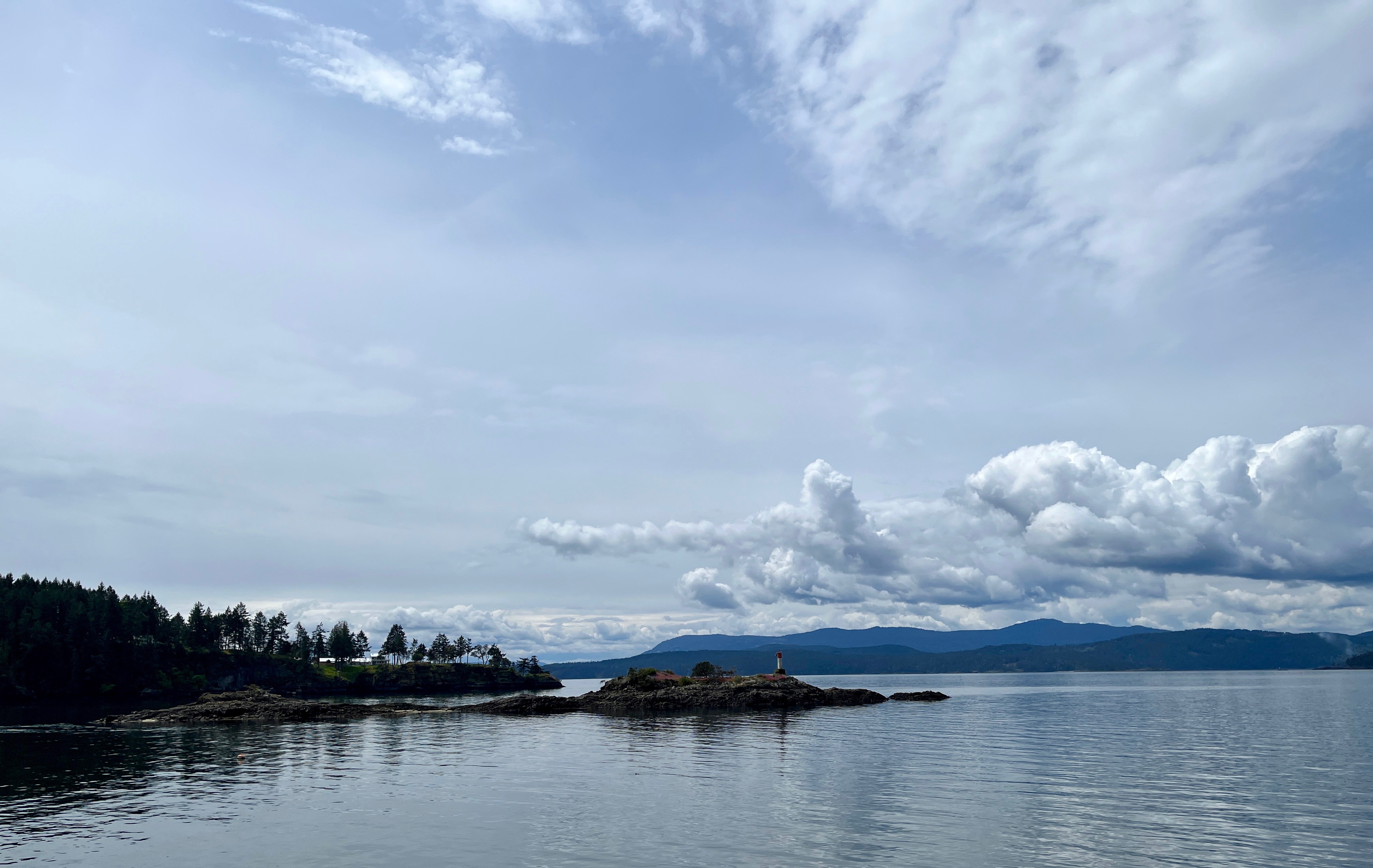
We embark on the ferry at Tsawwassen, just outside of Vancouver, and we’re instantly transported to vistas of sheltered coves and deep inlets, to craggy treelined coastlines and pristine sparkling waters. It’s breathtaking as we ripple through the waters and although we don’t happen to spot the star of the show, the mighty orca, eagles glide and soar high above beckoning us into their slice of paradise. After stops at Galiano and Mayne, our ferry docks into Otter Bay on Pender Island. The name Gulf Islands derives from the Gulf of Georgia, the original term used by Captain George Vancouver in his mapping of the islands for the British Crown. These days, the islands are accessible by small harbours operated through the Southern Gulf Islands Harbours Service. Not only are the harbours charming, they’re an important part of island life; points of access for inter-island travel, for school boats and marine ambulances, for Canada Post and utility services. Some of the ports are more care-worn than others such as the seemingly once-busy The Shed at Port Washington, contrasted with the local hangout of HUB Restaurant and Hope Bay Store at the Hope Bay Harbour. Whichever distinct character each harbour may take on, all are monitored by a wharfinger… the all-important keeper of the wharf.

Away from the harbours and coves, the inland vibe of Pender Island doesn’t take long to reveal itself. It’s picturesque, and hilly. Roads line with ancient cedars, ferns and mustard-yellow broom cascade all around. And just when you’re feeling hemmed in by the trees, open farmland and fields emerge where you just might find pigs nestled in mud and tractors tilling the land. Vibrant blooms infuse the still-chilly springtime air as we happily meander. In no time at all, you will have traversed both North and South Pender. We come across the island’s handy Car Stops, an alternative to hitch hiking, where a chair or bench is placed for your comfort as you wait for a ride from an accommodating islander. We’re told it’s not only a veritable link of transport, but also a conduit for gossip in these parts!
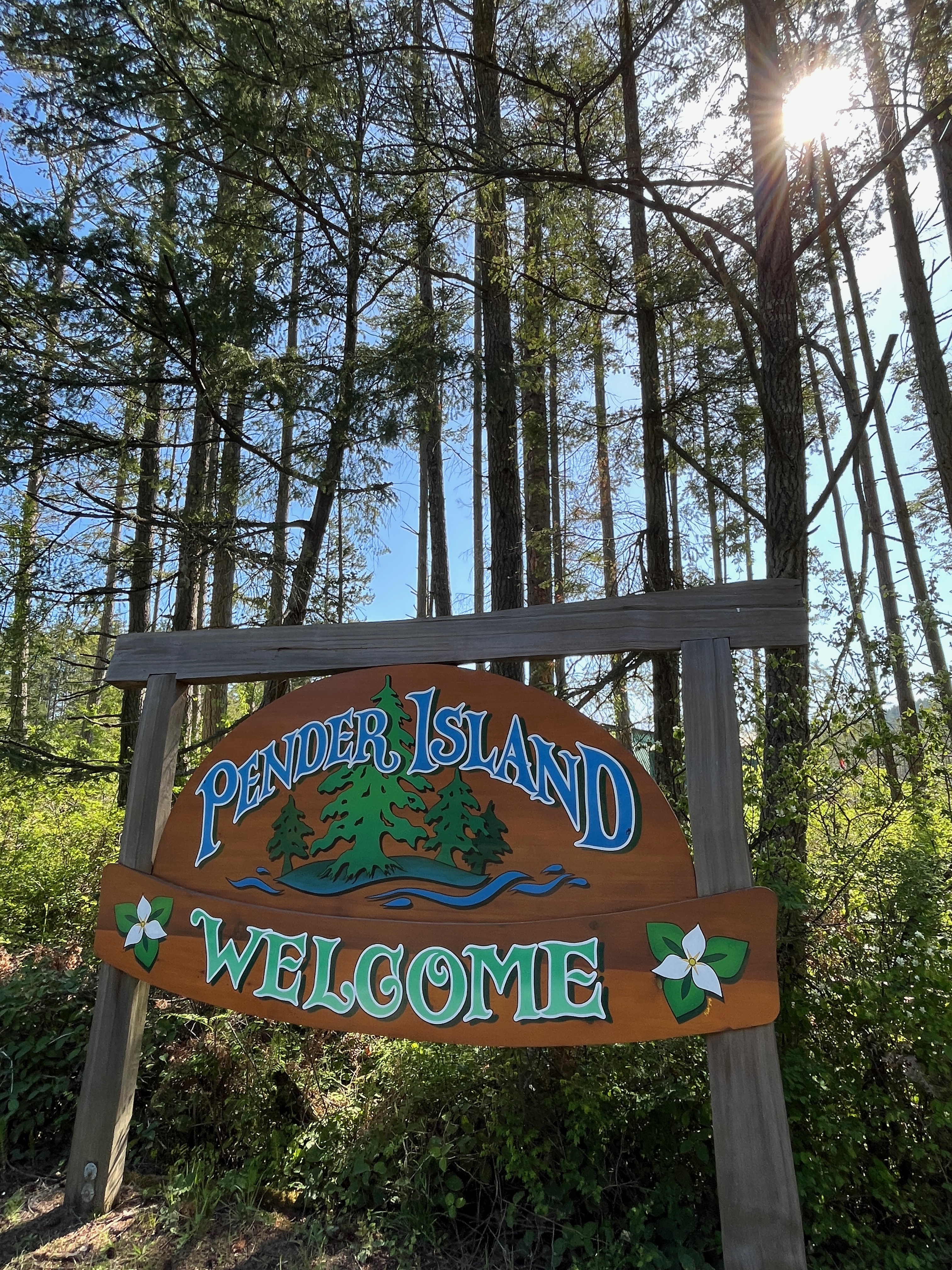
Pender Island – rich in hunting, fishing and gathering – has been inhabited by the Coast Salish people for thousands of years and still today is home to members of the Tsawout and Tseycum First Nations. The Spanish arrived in 1791, charting the islands and bestowing them with names like Saturna, Valdez, and Galiano. Daniel Pender, aboard the HMS Plumper, surveyed the coast from the end of the 1850’s through to the 1870’s. Permanent colony settlers arrived about that time from the British Isles, The US, Hawaii and Japan…. the sub-Mediterranean climate was certainly part of the appeal.
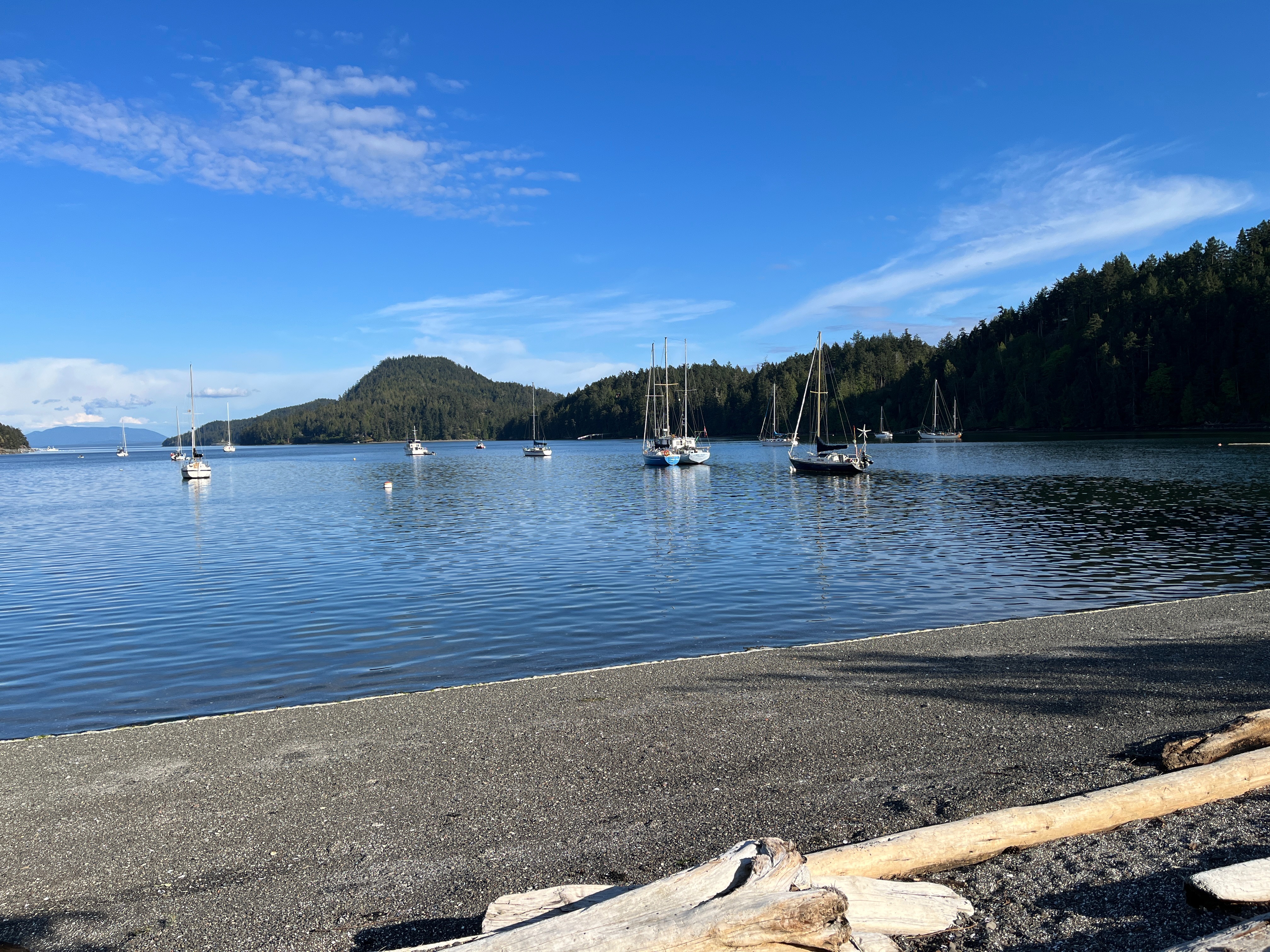
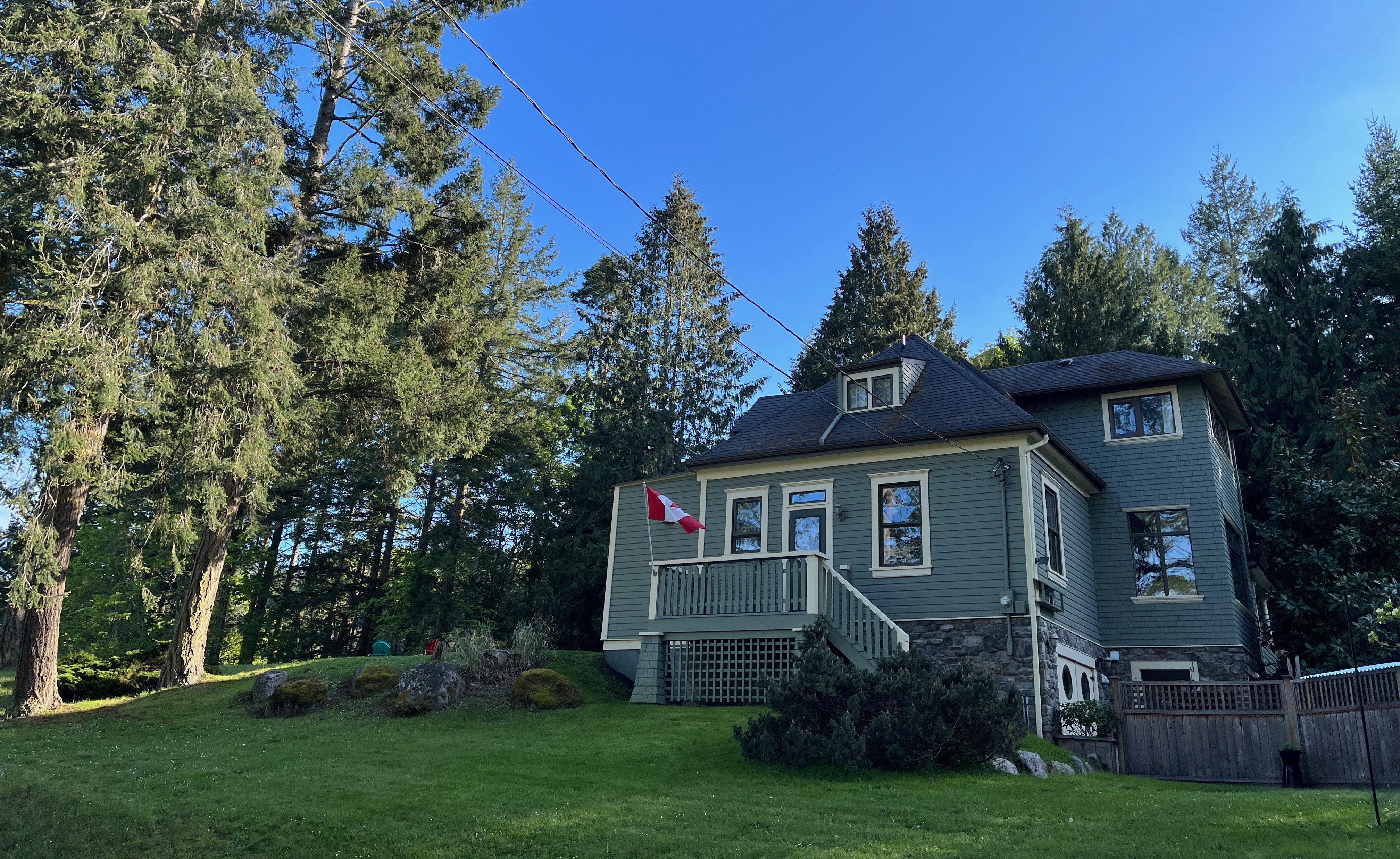
We don’t stay at the busy tourist and wedding venue hot-spot, Poets Cove, but somewhere a little more authentic and close to the heart of the island’s main town square, the Driftwood Center. The Driftwood is a busy hive of palm trees sprouting in terracotta pots, picnic tables hosting conversations and the whafting of good coffee. Just down the road and perched on a hill overlooking the pristine bay at Port Browning Harbour is Nosy Point B & B, our home away from home for a few nights. After having been relocated from the city years ago, this is the Victorian-style home’s new location. Left to neglect, then rescued and refurbished, the ‘grand old dame’ was slowly brought back to life. We meet its owner and B & B host Stephen on the first evening. We’ve returned from the nearby Browning Pub just as he’s pruning flowers and a dogwood tree that needs some special attention. We hear about the ‘grand dame’ and how it acquired its name – literally a once nosy neighbour – and our conversation happily meanders to all things on Pender, before settling on our mutual travels in India. I’m again reminded of why I love staying in smaller, more intimate places.
As I settle into an Adirondack chair for a glass of wine, the evening sun illuminates the boats nestled on the bay of marine blues and misty greys. The cedars are towering and resplendent as their willowy branches embrace the space, like tendrils between the past and the present – a reminder of the Salish peoples here for thousands of years. I hear the plaintive calls of seagulls over the bay. I jot missives in my notebook. I smile as I gaze out at Bruce, away in the distance for an evening paddle… it’s a smile of a good, good day on Pender.

The next morning I wake up to the chitchat of Bruce, Stephen and another guest in the breakfast room. It’s early, yet I curl up in a dusty pink armchair in the corner of our Admiral Room. Plank wood floors, soft-grey shiplap walls, a variegated fig plant and a model ship decorate the room. It’s cozy and as the cedars sway outside, I muse on a conversation at the pub the previous night.

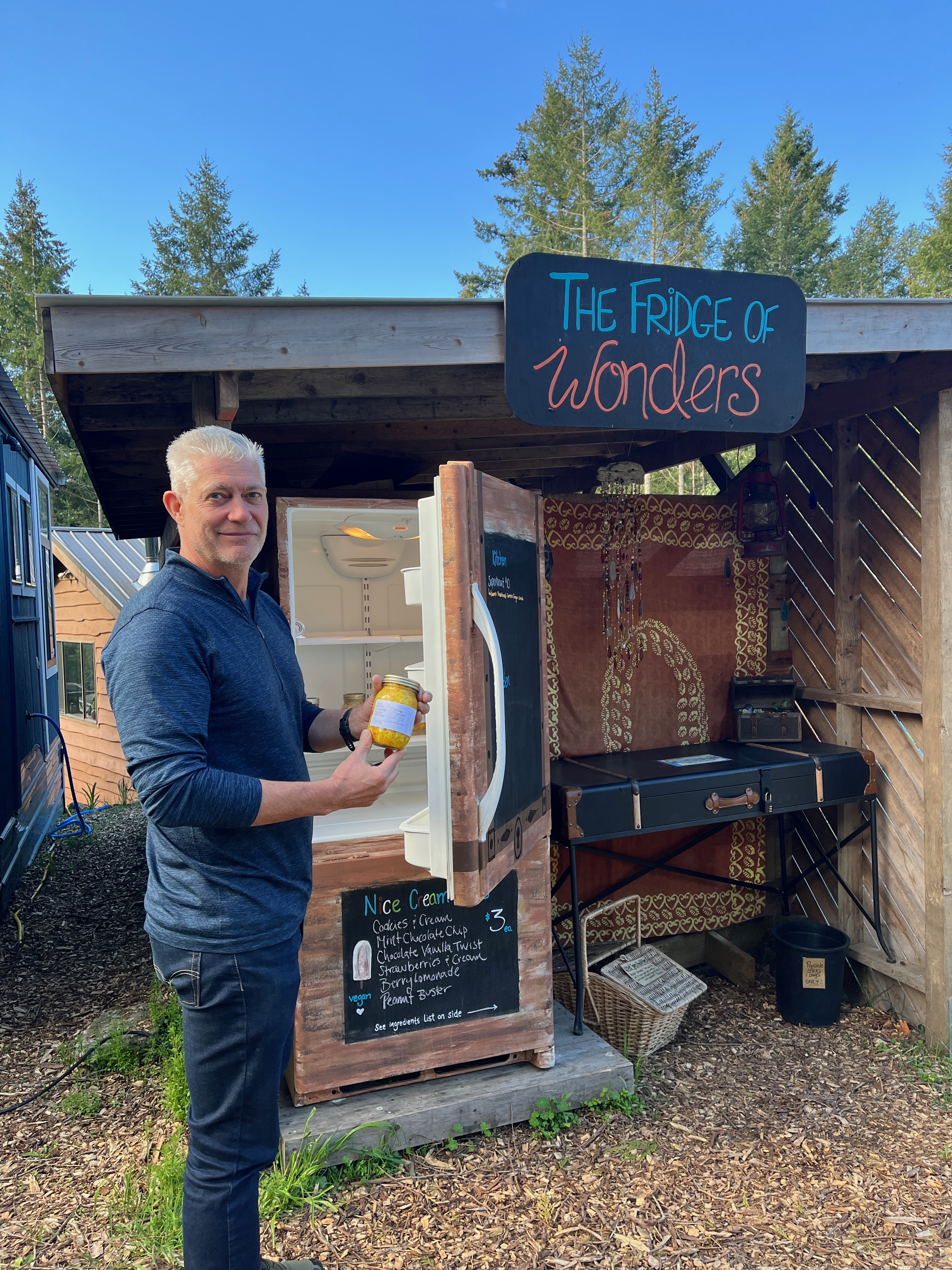
Gillian had served us, a transplant from Edmonton, a food & beverage enthusiast and sommelier, a lovely young lady whose dreams with her partner have come true on Pender. With pride and delight, Gillian informed us of the ‘must do’s’ and so I plot our course of discovery for the day… Amy’s Bread Shed, The Fridge of Wonders, The Cheesecake Fridge, The PeaShoot Fridge. And why not throw in Happy Hour at Poet’s Cove while you’re down that way!

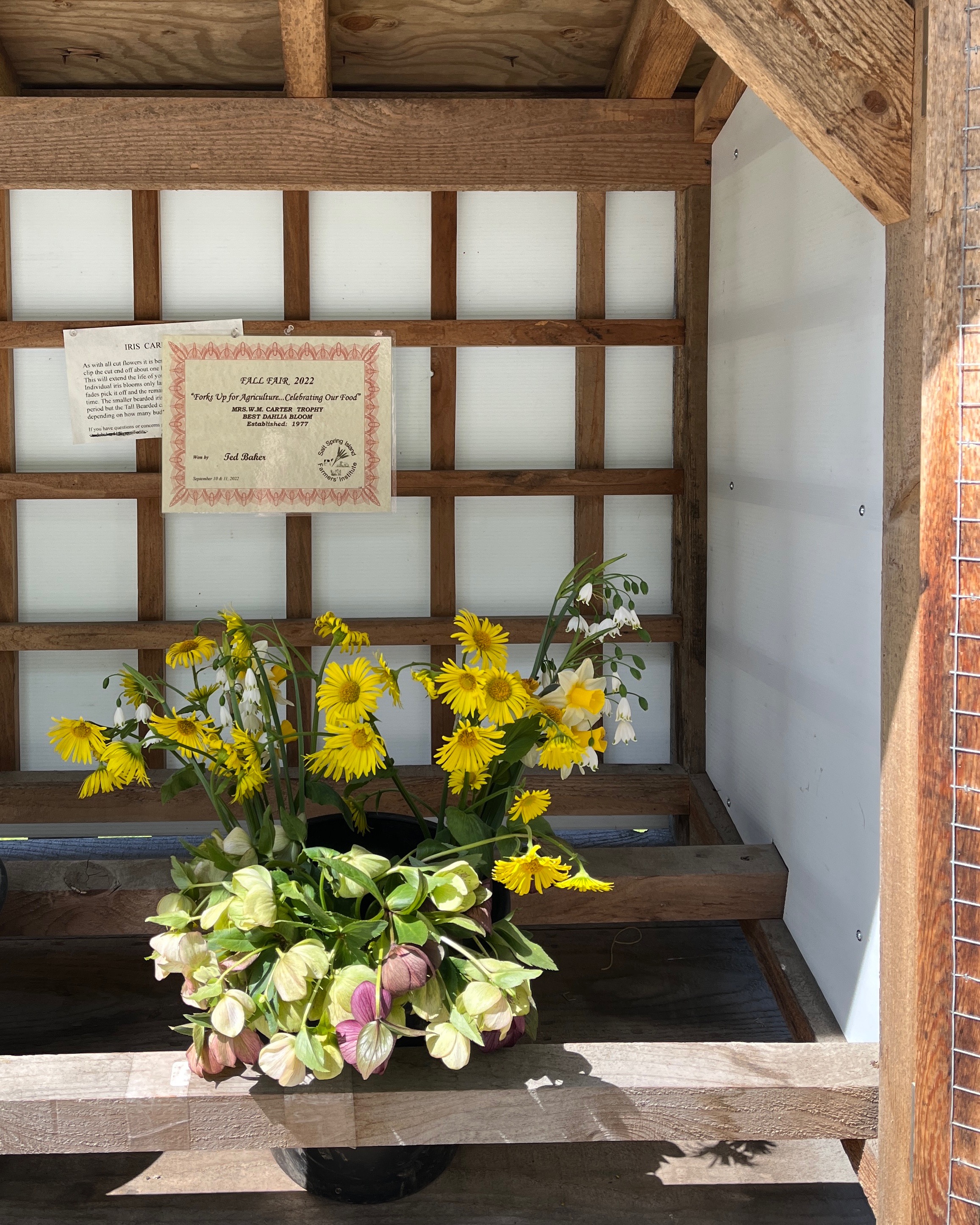
And so we do as the locals suggest. Pull up to the roadside fridge or shed, select what we’d like, leave cash in the kitty on the honour system, enjoy produce and wondrous creations. Fresh bread and croissants from Amy’s were nibbled on throughout the day. Jars of delicious Turmeric Ginger Sauerkraut from the Fridge of Wonders was a success as gifts from the Islands. Unfortunately, the Cheesecake Fridge was bare when we arrived, but did we visit the Pea Shoot Fridge twice? Absolutely!

Salt Spring Island

On day three we ferry to Long Harbour on Salt Spring, the largest most populous of the Gulf Islands. Its name is a nod to the island’s salt springs, yet our first stop is a wander through the quaint town of Ganges. There’s an artsy vibe with ample galleries and coffee shops serving the local Salt Spring Coffee brew. The plethora of artisans on the island is long-standing, the popular Saturday market the vibrant showcase for the hundreds of vendors who either, ‘Make it, bake it, or grow it.’

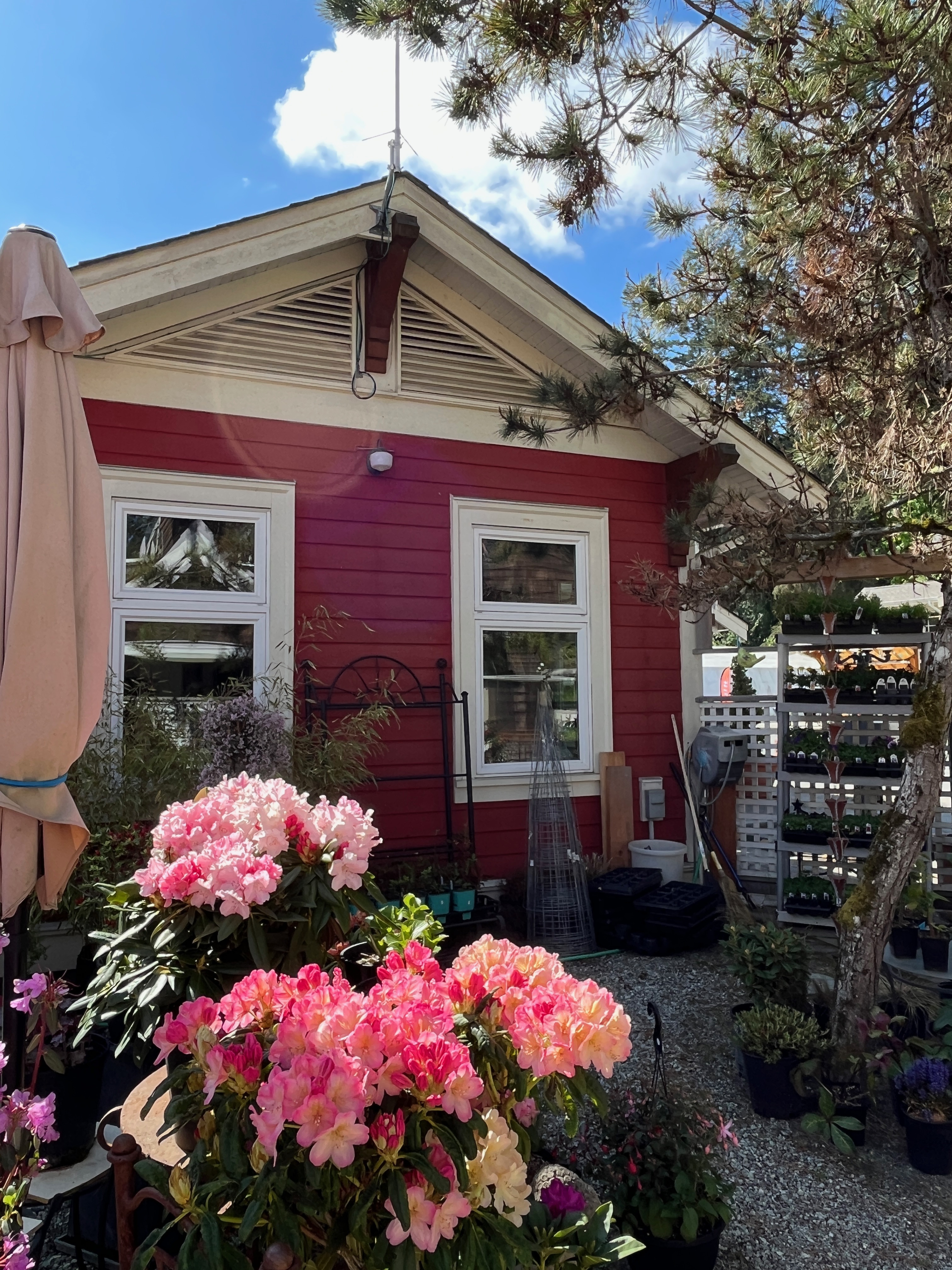
And as on Pender, there’s an emphasis on homegrown ‘farm to table’ or ‘Farm Stand Foraging’ the local tourism office tells us. As promised, leisurely driving or cycling around the island is a veritable shopping experience unto its own. Open air stands offer everything from eggs and flowers, to wood kindling and candles, to cheese and pottery. Also stop in at the wineries, Salt Spring Kitchen Co., or sample apple cider at one of the cider companies. Yes absolutely, the island is bursting with apples!

With some 450 varieties of apples grown on Salt Spring, traditionally they’ve been an important agricultural product. The island’s farming roots were integral to the settlers who arrived here on what was the homeland of the Salish people. During the Hudson Bay Company’s fur trading days, hundreds of Hawaiians worked for them as labourers, often choosing to settle once their contracts finished. The tropical paradise – relative to many other colder parts of the country – was an enticement, as was pre-emption. Up until the 1880’s, this process allowed settlers to acquire land if they cleared and improved the plot before purchasing it for the grand sum of $1. per acre. As settlers took advantage of pre-emption, Salt Spring quickly became a diverse community where farming was often supplemented with fishing and logging. African Americans also settled here, escaping discrimination at home and hoping for a better life. Today with a population of about 12,000, the rich and varied heritage of long-standing families blends with the newly settled – either permanently or those with vacation homes.

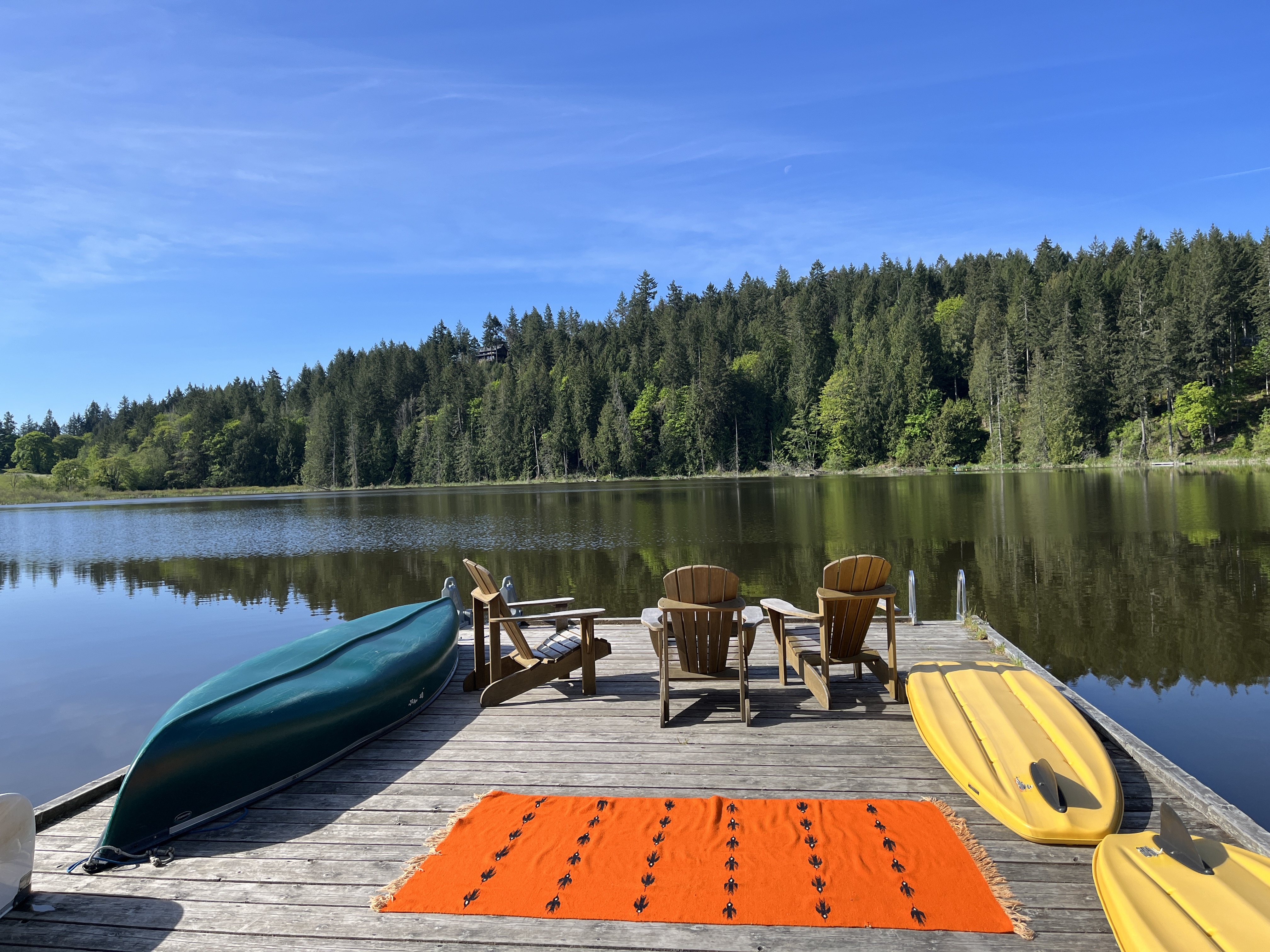
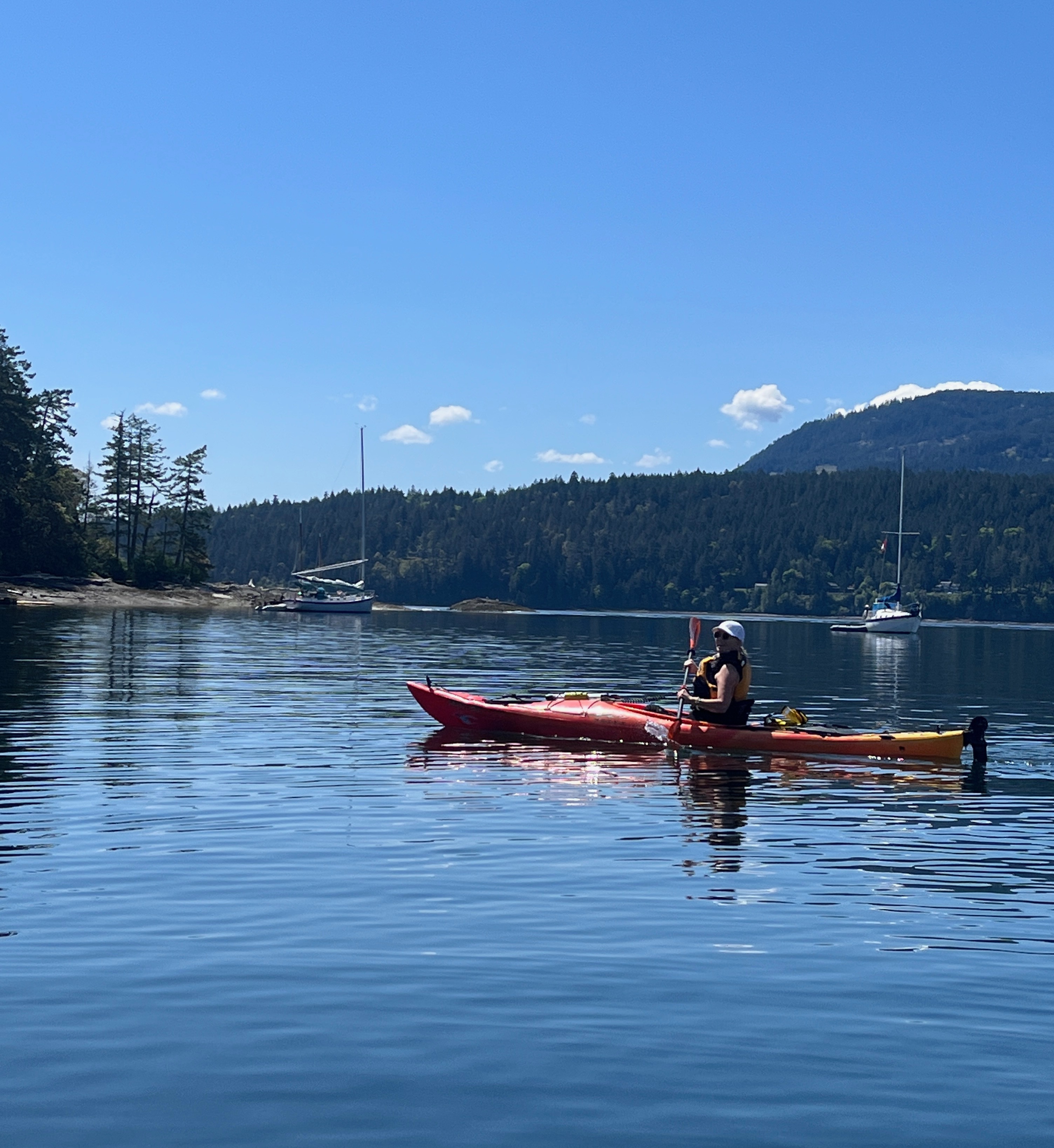
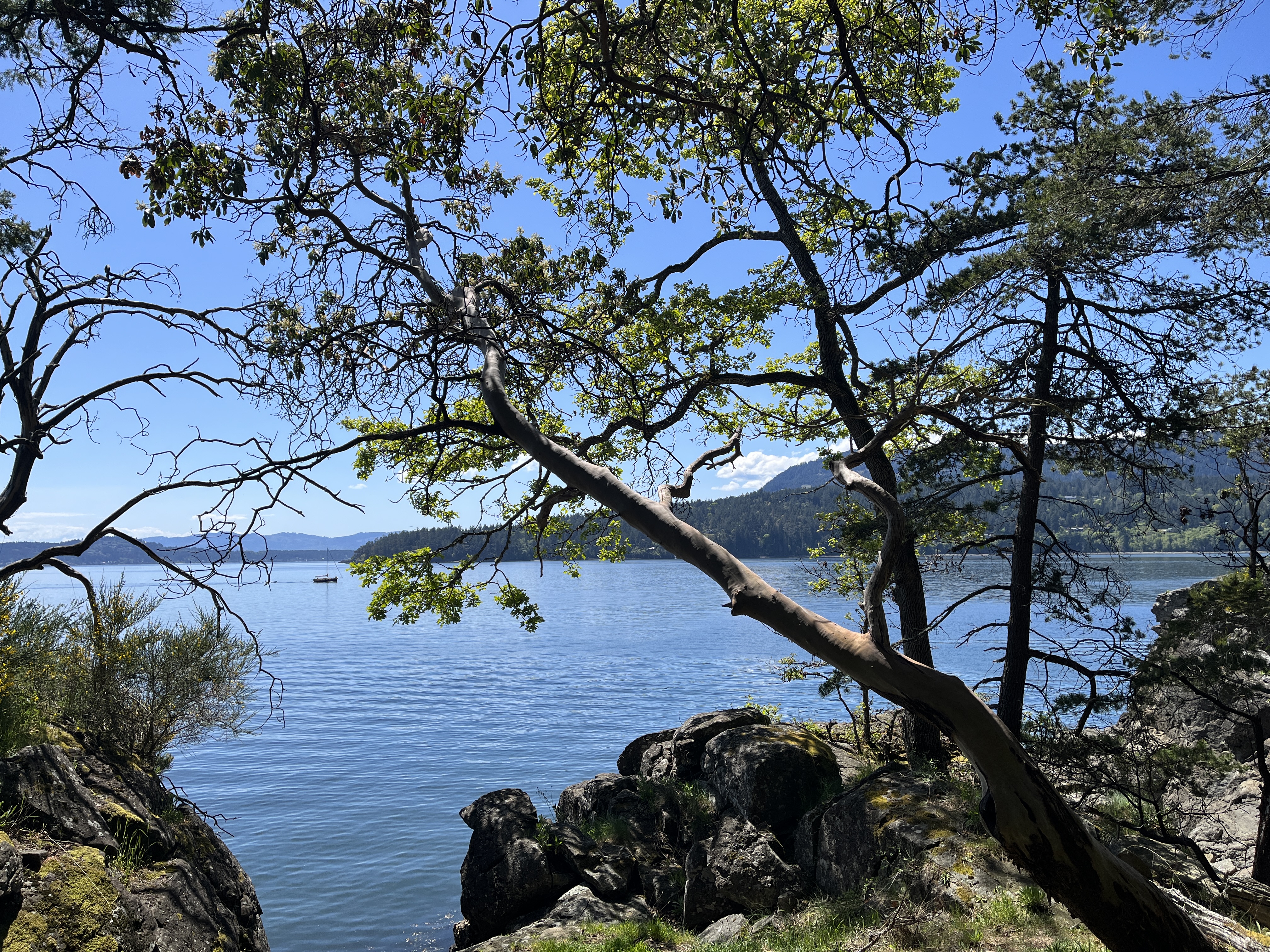
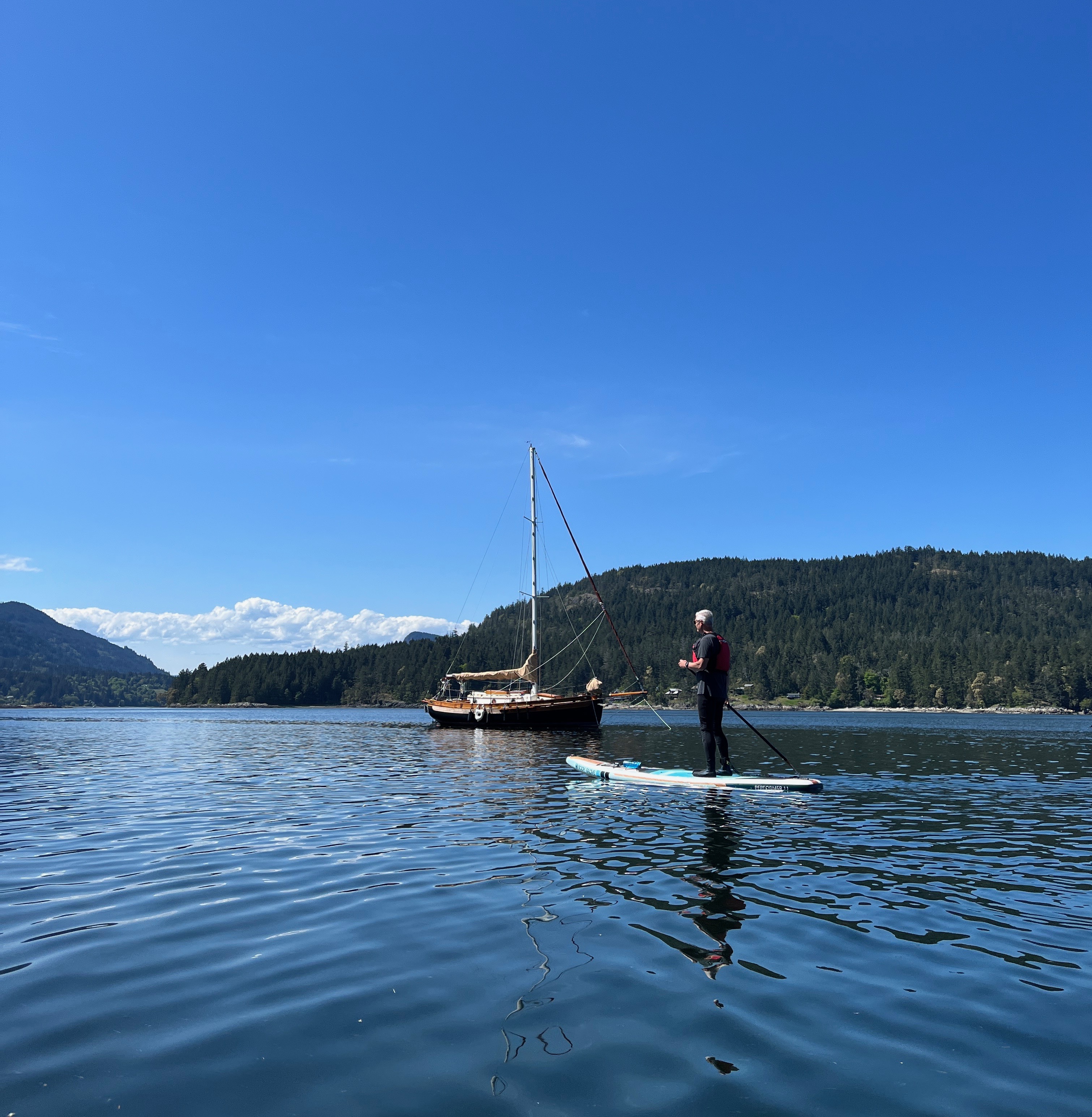
Admittedly, our main endeavour on Salt Spring is to paddle and it’s while we’re on the water that we savour the sheer beauty of our surroundings. From the kayak and on SUP’s, the shorelines take on their magical vistas – sprawling stands of shore pine, statuesque Douglas fir and crooked arbutus trees against backdrops of gentle hills. On the water we gaze into the curious eyes of otters as they glide past. In the piercing blue sky we follow the soar of eagles, and the constant paths of floatplanes. Coming into shore, we gaze down into forests of kelp beds, then beach comb ancient shell middens. On our second day of paddling, we venture to tiny Russell Island south of Fulford Harbour. It’s here that we become acquainted with one of those early island settlers, Maria Mahoi of Hawaiian and Indigenous descent.
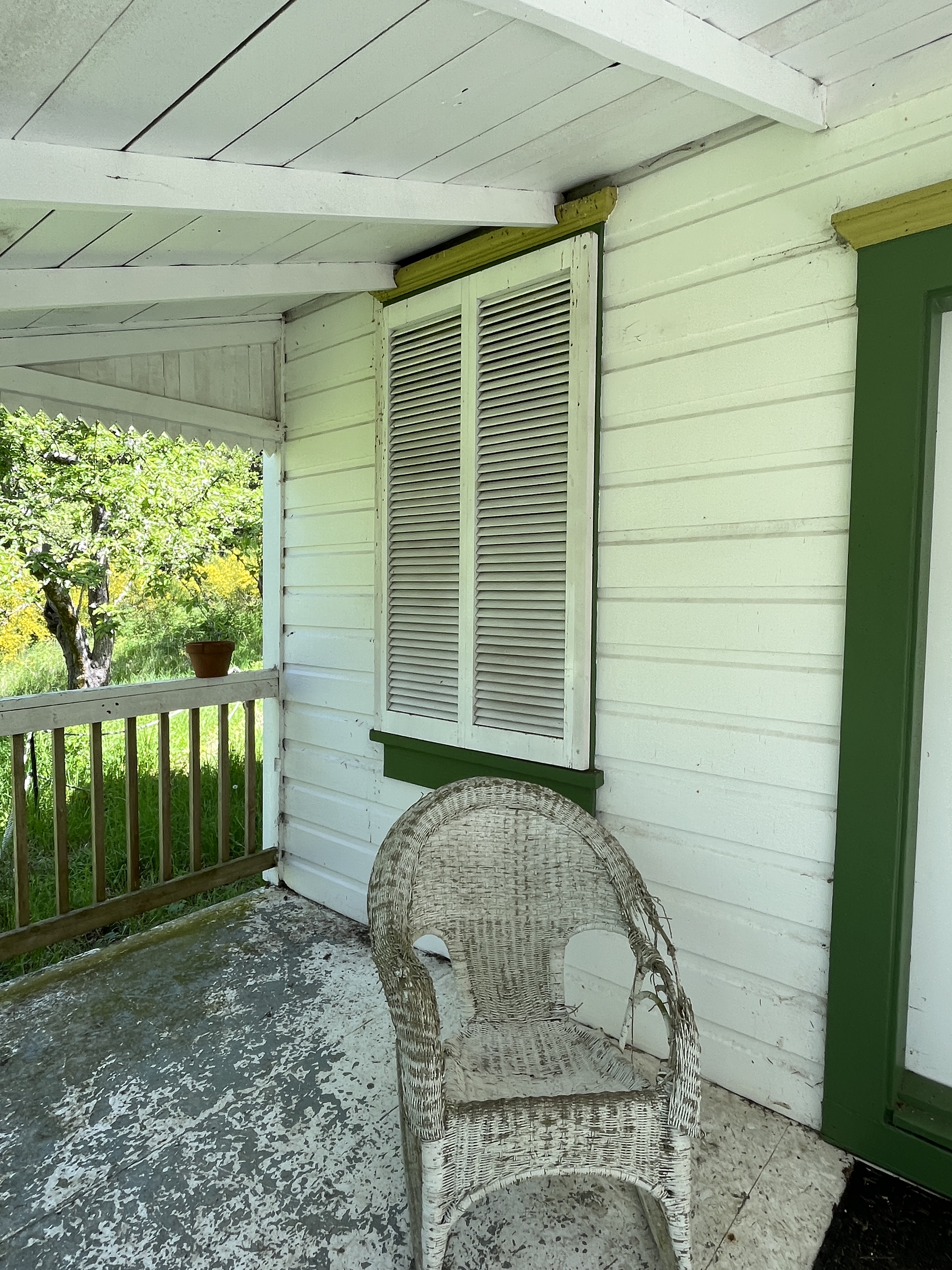
As we glide into the small bay at Russell Island, now part of the Gulf Islands National Park Reserve, Maria’s home reveals itself almost immediately. Our ‘docked’ water vessels are practically on her front yard, a sandy beach where seafood barbeques and Hawaiian luaus once filled the evening air. Apparently the home hasn’t changed much since it was built in 1906, except now it seems to vie for attention amongst the remnants of orchards and untamed gardens. A lone chair occupies the front verandah, a carved wooden sculpture draped in seashells pays homage to Maria’s Hawaiian roots, and unfortunately it isn’t apple season or we’d be welcome to pluck on or two from the orchard.

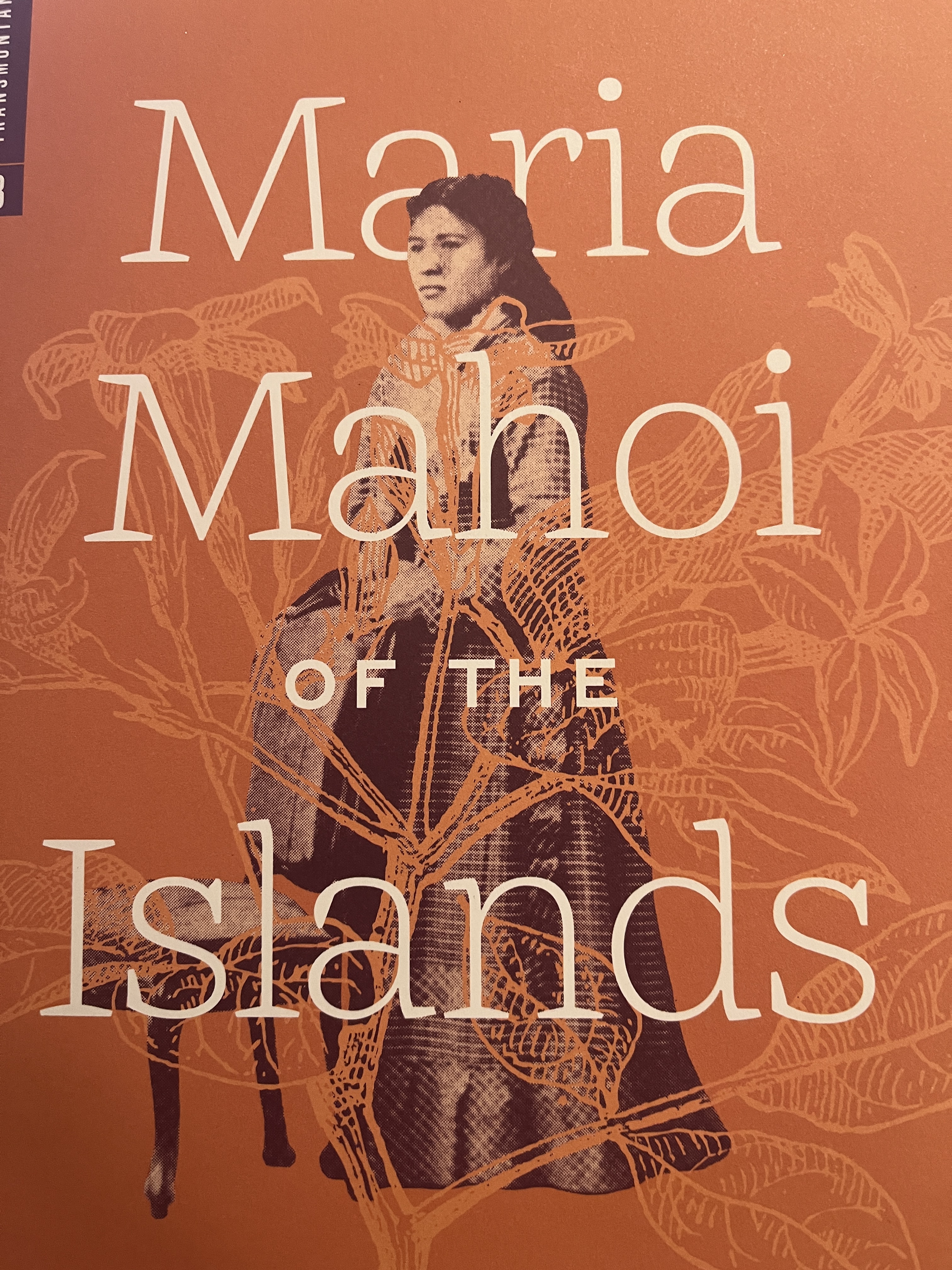
In 1901, Maria Mahoi was identified as the sole heir of Russell Island in the will of William Haumea, also of Hawaiian descent. Haumea had never built on Russel but cleared fields, establishing an orchard and a strawberry field. In 1902, Maria moved to the Island with her second husband, where not only more were children added to the growing family, but also sheep, cows and chickens. Today, descendants of Maria speak of her love of the island, her prowess as a sailor and the love of the water, her enormous strength in character and resilience. And perhaps most of all, a woman of mixed race who though at the time found herself outside of the boundaries of colonial acceptability, built a rich and proud life for her thirteen children. Maria – who refused to take a husband’s last name – is just one of many stories of our intrepid women settlers in British Columbia. Somehow standing in Maria’s garden is like a comforting, soulful whisper which stays with you as you traverse the Haumea Trail which offers beautiful views outwards. If you visit during the summer months, a volunteer host in collaboration with Maria Mahoi’s descendants, will be present share family stories that bring Maria back to life. We happily spend far more time than we anticipate and as we paddle away, I know we’ve experienced a truly special place.

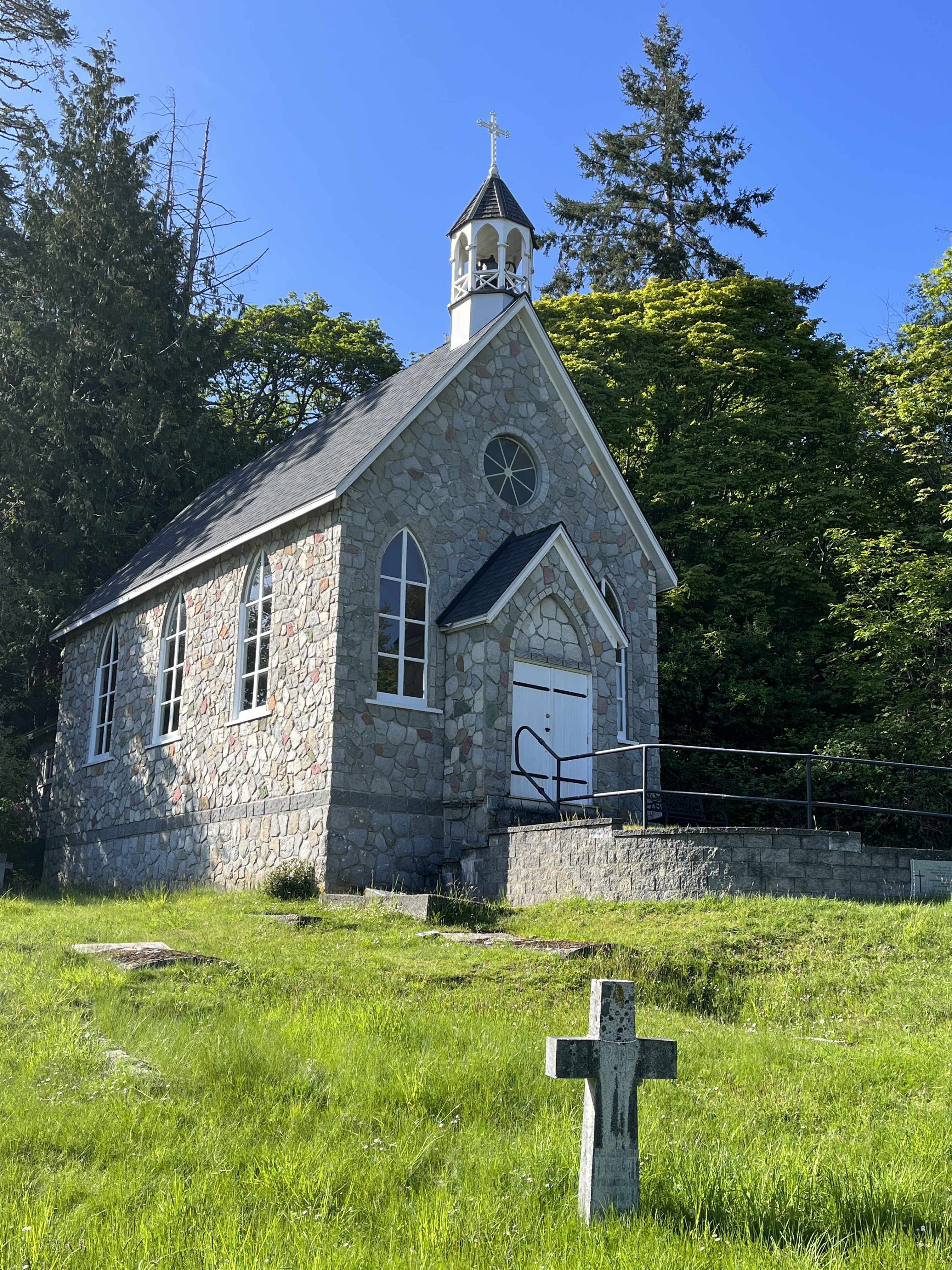
Back on the big island, just across the bay where Maria often rowed to church, St. Paul’s Catholic Church reveals more of the island’s stories. After all, as the author Jean Barman in her interesting book Maria Mahoi of the Islands muses, “Maia’s story argues that, yes, our stories do matter. Her life, like everyone’s is usefully conceived as a pebble. Once thrown in the water, its waves spread out to family and community. The ripples from the pebble that was Maria continue to expand outward.”
The Philippines, part two… The Islands, A Magical Tropical Wedding

Standard

The Island of Bohol

As I write this second Philippines post, I’m so pleased that part one made you feel as if you were along with us on this journey. As for this long read and the copious photos, well, there’s just so much to share! In fact it was always the intention that this ‘destination wedding’ wasn’t only about the wedding, but also an adventure shared by two families… and it so very much was.

Before we rendezvous with the Pacis gang, the Wilsons celebrate New Years; a new ‘best exotic family revelry’ to add to the previous one in India. That New Year’s Eve, our train from Agra had been eight hours late and we rolled into our Delhi hotel just in time to get the party started. Now, we’ll ring in 2023 on the island of Bohol. A flight from Manila to Cebu, a fast ferry and we’re deposited on the country’s tenth largest island. Seventy smaller islands comprise Bohol province but we need only to cross a causeway from the main island to our destination, Panglao, with the Bohol Sea our playground.

The name Bohol derives from a tree that was once abundant on theses islands and today it is still rich in flora and fauna, and especially marine biodiversity. It’s also home to a range of curious uplifted limestone cones, the Chocolate Hills and to the world’s smallest primate, the tarsier monkey. Sadly we don’t see either, but instead stay fairly close to the resort and Panglao town. It’s rainy and still a little cool, yet thankfully the weather cooperates for a guided boat tour which includes snorkelling.

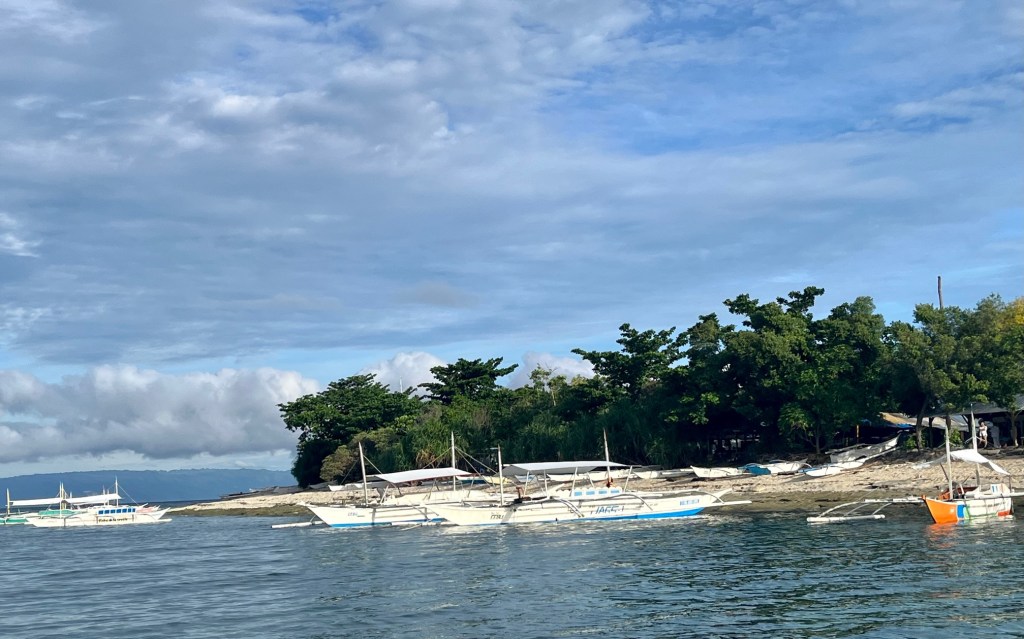
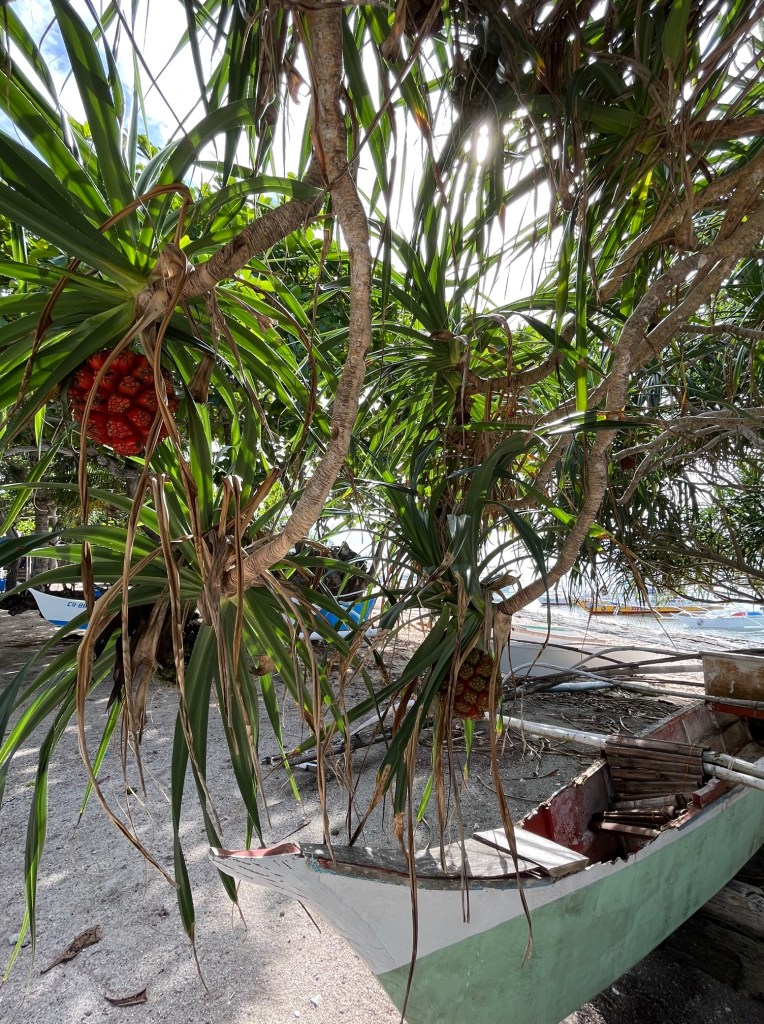
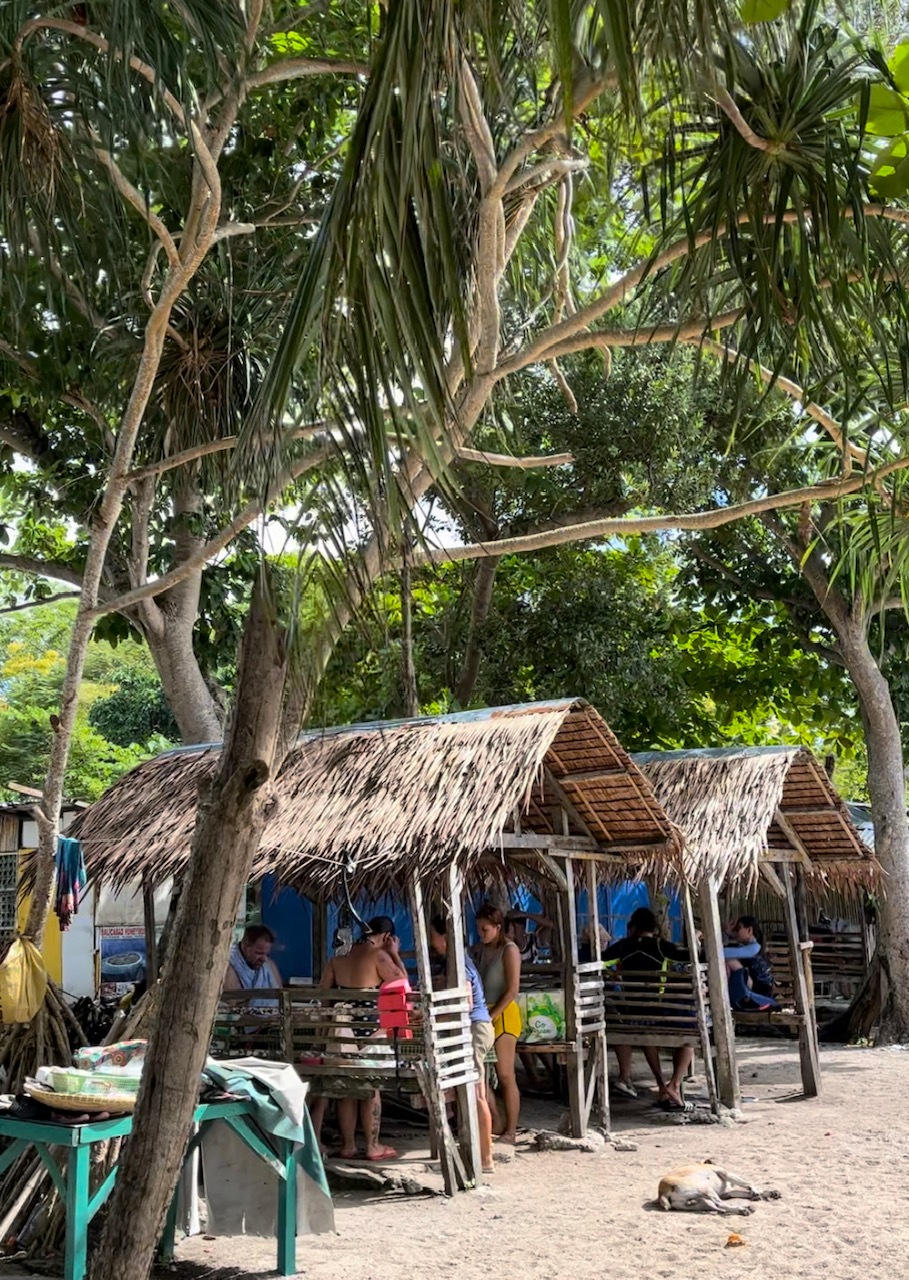
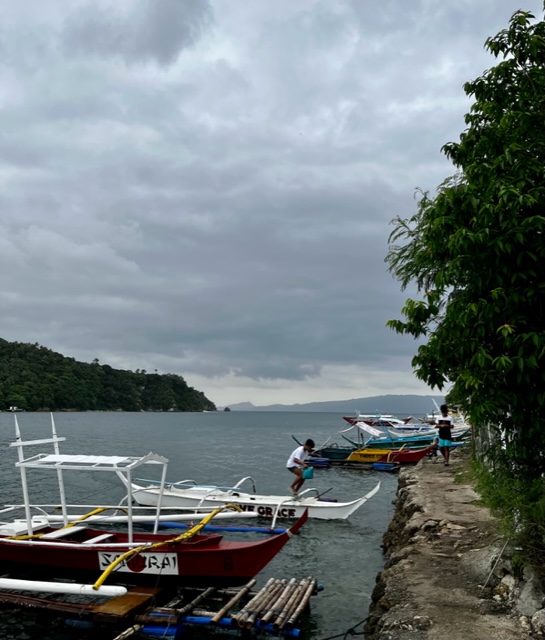
As we approach a small inlet, bangkas jostle for a parking spot as their green and blue hulls sparkle against the dreamy turquoise water. And praise-be, the sun is finally brilliant! The beach is lined with simple family owned establishments – cafes and rentals of snorkelling gear offered all in one. There’s no shortage of dogs lazing about and bangka crews chatting over morning coffee. Our bangka-captain has directed us towards a particular business, it’s seemingly an all family-affair, making the tourism-based economy go around. After coffee and with snorkelling gear chosen, we meander to a cove that we enjoy to ourselves. We’ve loved snorkelling since our days living in the Middle East and the marine life here is as spectacular as anywhere… vibrant coral, clownfish, lion fish and starfish in rainbow hues. As the sun sparkles on the water, I feel rapturously happy; privileged to be a part of this wondrous underwater world.

The Philippines is considered to be in the top eight countries in the world to snorkel with substantial coral reefs and more than 3000 species of fish. And of course it’s also a premier archipelago for diving. Between here and our next island destination, most of the gang dives and they return exuberant with tales of a seabed festooned with coral; fan-shaped, brain-shaped and everything in between, creating exotic habitats for turtles and fish of every stripe and hue.

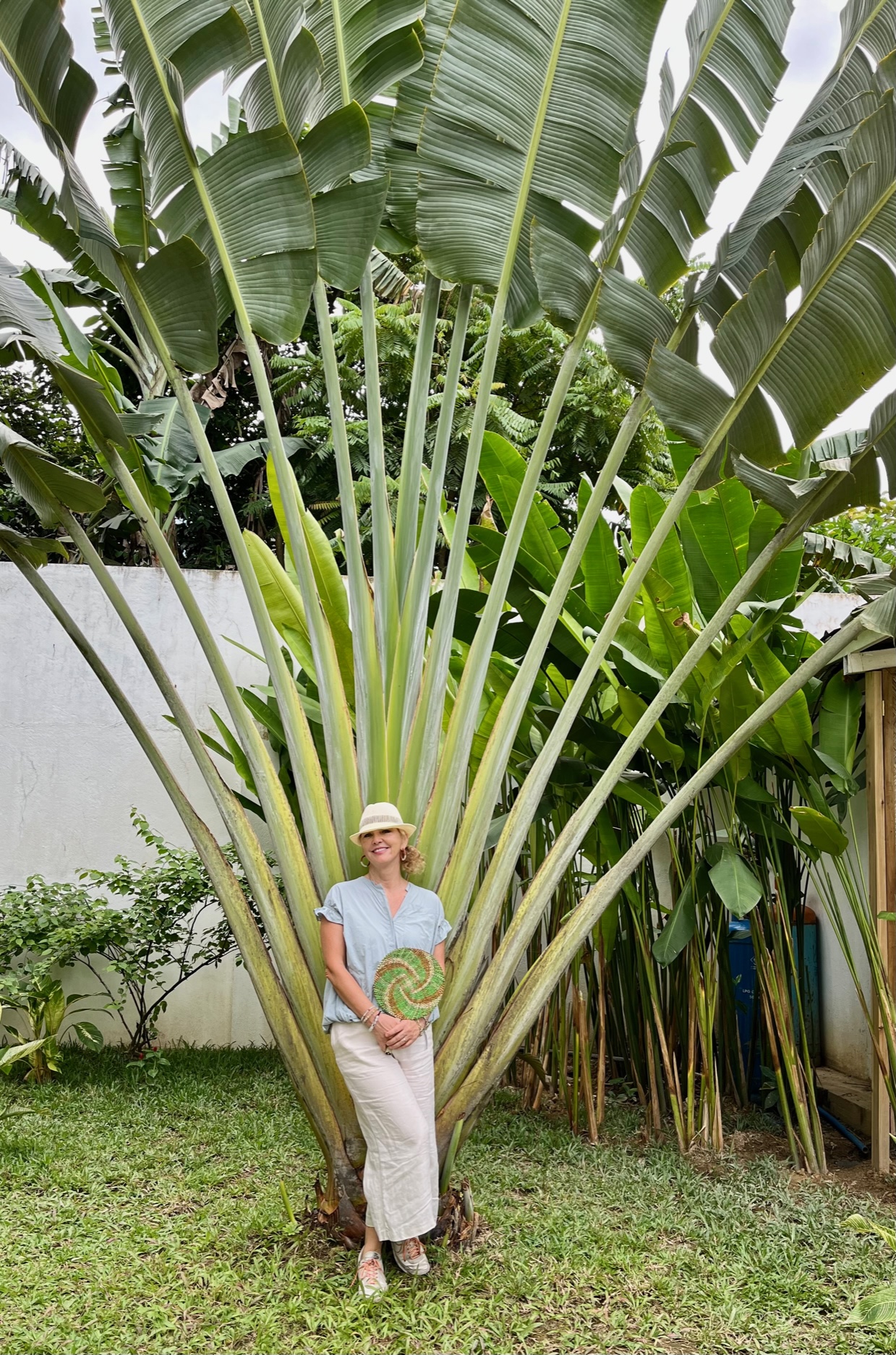
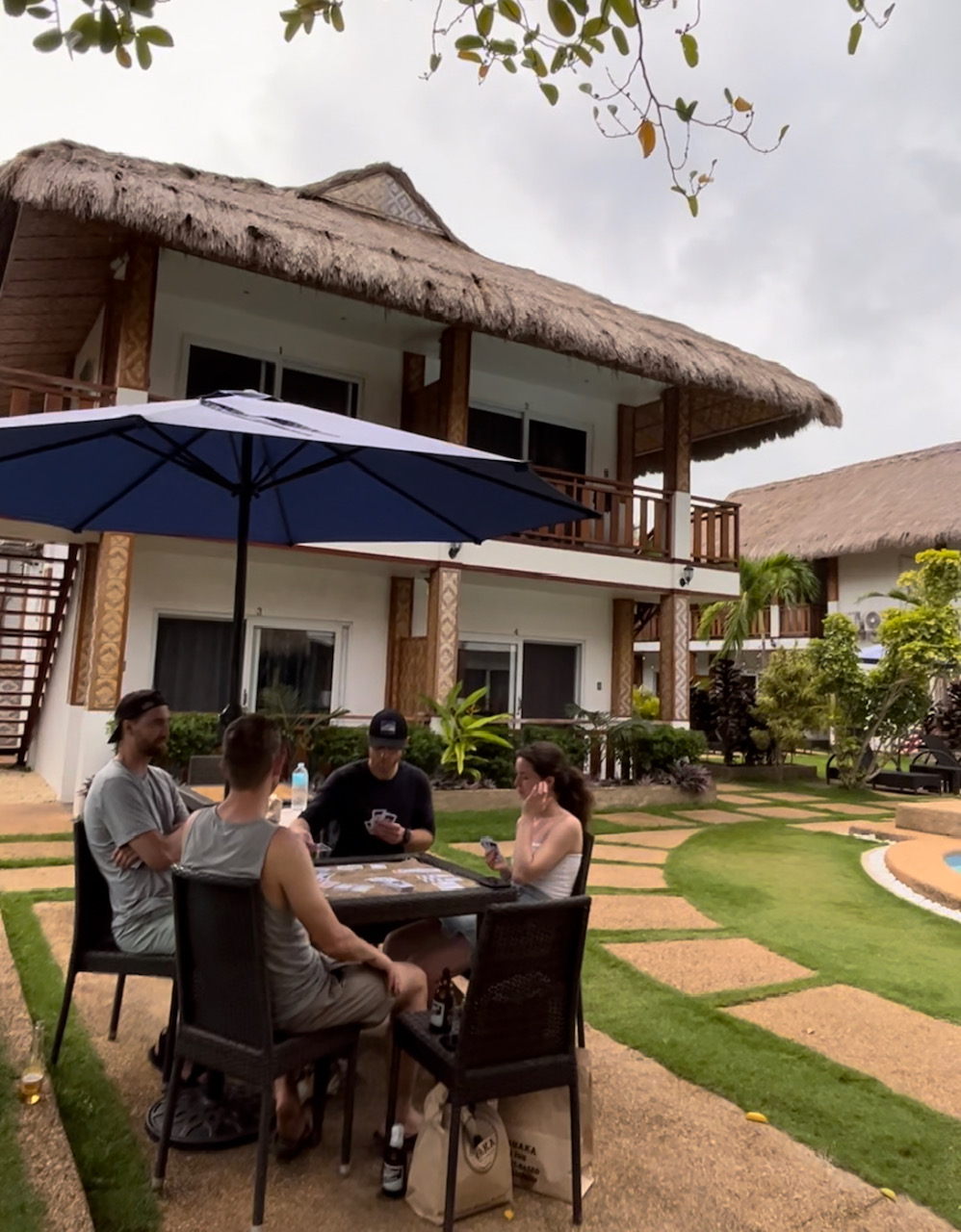
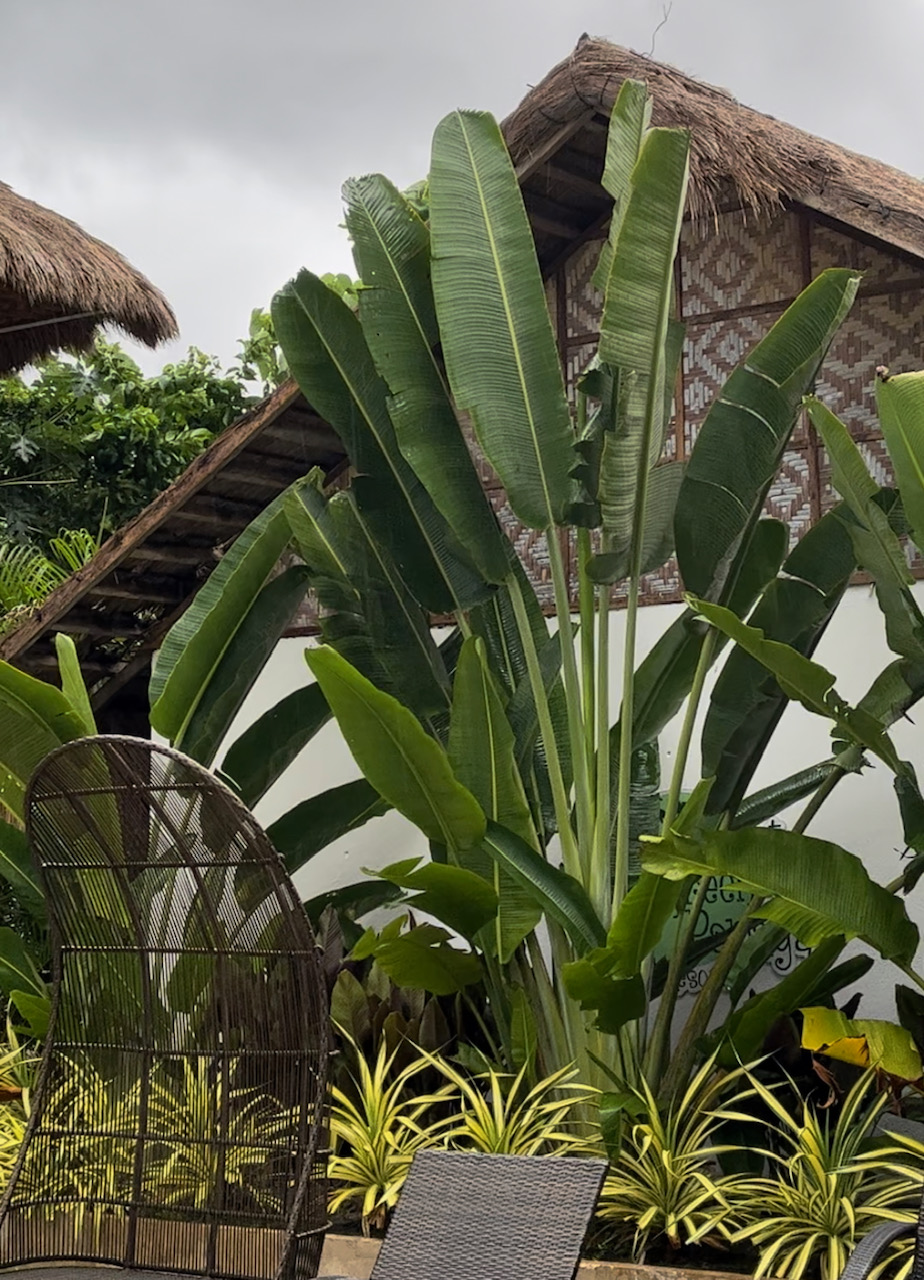
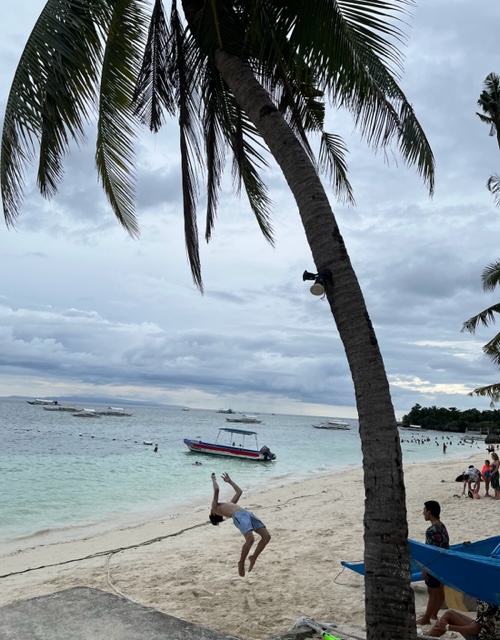
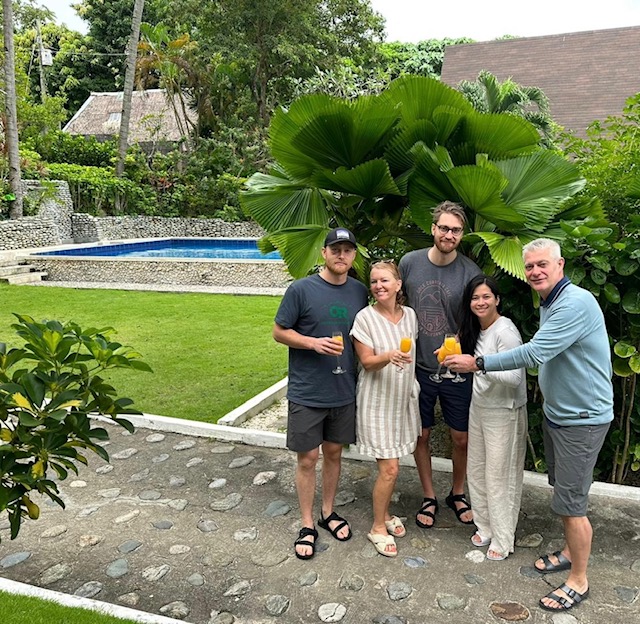
Our resort on this island is along a few back streets from the main street of Panglao. It’s pleasant, though we regret that it isn’t situated along the beach itself. Alona Beach is a lively stretch of beautiful white sand, bars, restaurants and towering palm trees… all enchanting in their either straight, crooked or leaning statures. And I’m besotted with them. Perhaps palm trees signify those tropical countries that I came to love, from the date palm groves of Oman to the ubiquitous palm-fringed villages and cities of India. If there’s one palm that I adore, it’s the travellers palm. Our resort, The Scent of The Green Papaya, happens to have a few of them anchoring and beautifying the pool area. They’re simply a perfect backdrop for our swims and poolside chats.

The traveller’s palm or traveller’s tree is iconic, impossibly uniform and tall. In reality it’s a member of the family Strelitziaceaea, plants that include the flamboyant bird-of-paradise flower… so technically not a true palm at all. Its scientific name is Ravenala, meaning ‘forest leaves’ and indeed the leaves are enormous and paddle-shaped, fanning out in perfect symmetry, each as much as 11 metres in length. There are a number of theories as to why it’s referred to as traveller’s palm. It’s said that the arc of its foliage always faces a certain direction in response to sunlight. Unfortunately in the many countries I’ve admired them, I haven’t noted their compass orientation! Perhaps the more practical answer for their name is down to the rain that’s channelled into the interlocking U-shaped leaves, collecting in the centre of the tree that might have offered water to thirsty travellers. Just as much as I adore flowers, I find myself pausing to admire and touch palms whenever I get the chance.

And so we celebrate New Years in Panglao; a wonderful dinner, then a boisterous welcome of 2023 with other revellers on a rooftop bar. There’s a crazy machine blowing foam that mimics the snow we left behind in Canada, the locals taking turns to wade in and out with delight. A DJ spins the night alive and our plans to celebrate on the beach fade with each great dance tune. We stay put and at midnight, our vantage point is brilliant as fireworks cascade out over the island to the Bohol Sea. It’s a beautiful night to round out a pleasant stay on Bohol. On reflection though, we all agree that perhaps we should have trimmed our travelling ambitions and ventured to only two islands instead of three. If you’re planing a trip, be mindful of how much time you have and consider how many travel days your itinerary requires. Of course this applies to any destination, but especially when you’re island hopping. Even so, we’re delighted to have experienced something of the central Philippines. But now we’re off to the ‘wedding island’!

The Island of Palawan

As we board the flight from Cebu to Palawan Island, Luke and Trixie’s smiles are wide with anticipation…. they’re off to get married, and in a place they know will charm us all. They happen to have been on the island previously, not long after they started dating, and they promise that the resort they’ve chosen is ‘rather sublime’. The Pacis family has already arrived in El Nido Town and this evening we’re planning a night out, followed by an early morning transfer by van, bangka and speed boat to the resort. I’ve never been so thankful to be only travelling with a carry-on. Full disclosure though, there might just be a few things stored in left luggage back at the Manila Airport!

It’s a dramatic arrival as our AirSWIFT flight descends into El Nido Airport. We skim through the clouds past a breathtaking seascape of sugarloaf islands and shadowy limestone cliffs rising precipitously from the sea. Formed 250 million years ago, they’re surreal and haunting, and oh so dramatic. The plane touches down mere metres from the beach, wheels abruptly contacting the short runway, the kind of landing that makes you want to applaud as you suspect it’s not the easiest of descents. Cradled amongst the lush tropical jungle, the small airport is charming and an acquaintance of Joey’s from a previous visit greets us. The ‘Welcome Back’ sign is a special touch from El Nido Island Tours.

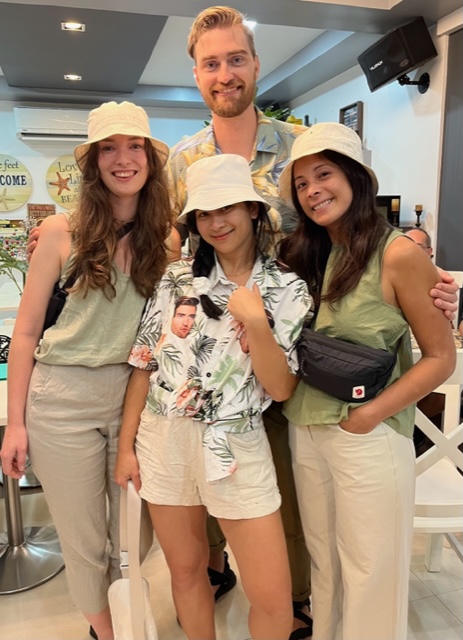
We arrive at our Inn for the evening, it’s a joyous reunion for the eleven of us. There’s immediate chatter as the guys discuss and deconstruct the dramatic plane landings. Joey and I toast with a margarita, ‘To the mothers!’ Ayla and Marga present the bride-to-be with a tropical shirt with none other than the bridegroom emblazened upon it. Very appropro with the bucket hats – the stagette look is complete!

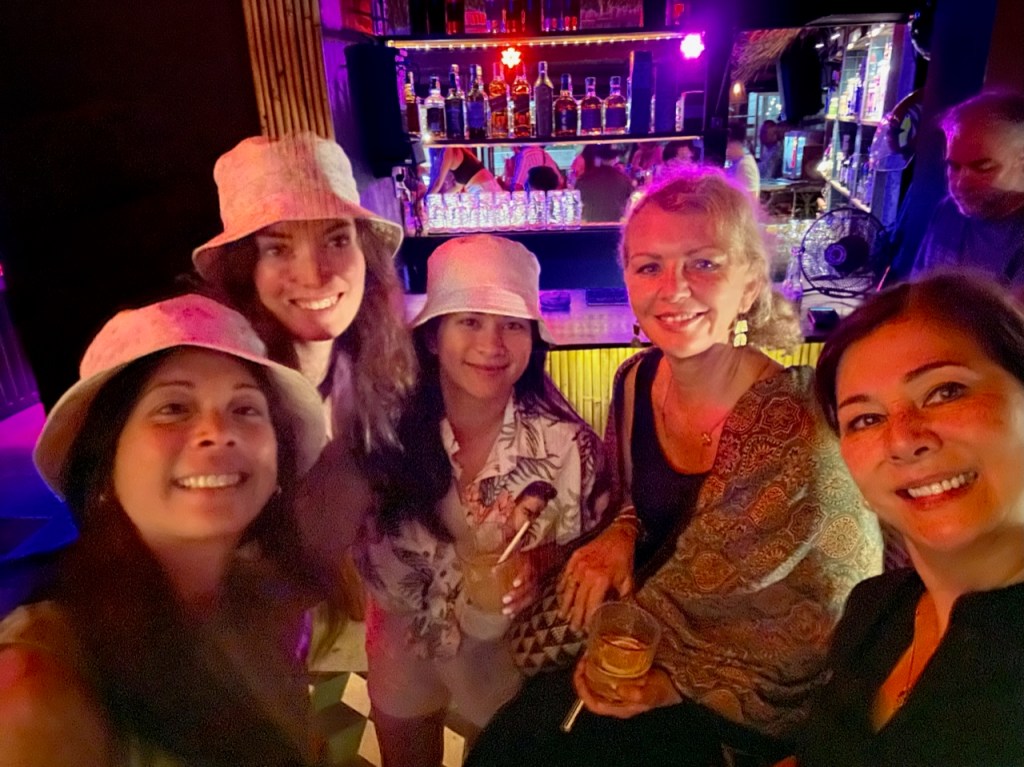
True to what we’ve encountered on other islands, Palawan has yet another unique version of the motorized tricycle. These ones seat three, so the guys head off in one direction, girls in another, and it’s a fun ‘stag evening’ two days before the wedding. Bar-hopping along El Nido’s lively streets, we meet up later in an open air bar on the beach. Laser lights play upon a boat wreck by the shore, now somewhat of a novelty, yet a sad reminder of the most recent tropical typhoon. On Dec. 17, 2021, Typhoon Rai hit Palawan causing severe damage and loss of life. As I admire the Palm trees decorating one of the walls (hey, I live in a pine forest) I’m mindful of how fortunate we are to be here and contributing just that little bit to the post-pandemic recovery. I gaze outwards the sea and notice the shimmering, beguiling moon… it’s going to be a full moon wedding!

El Nido Resort on Lagen Island

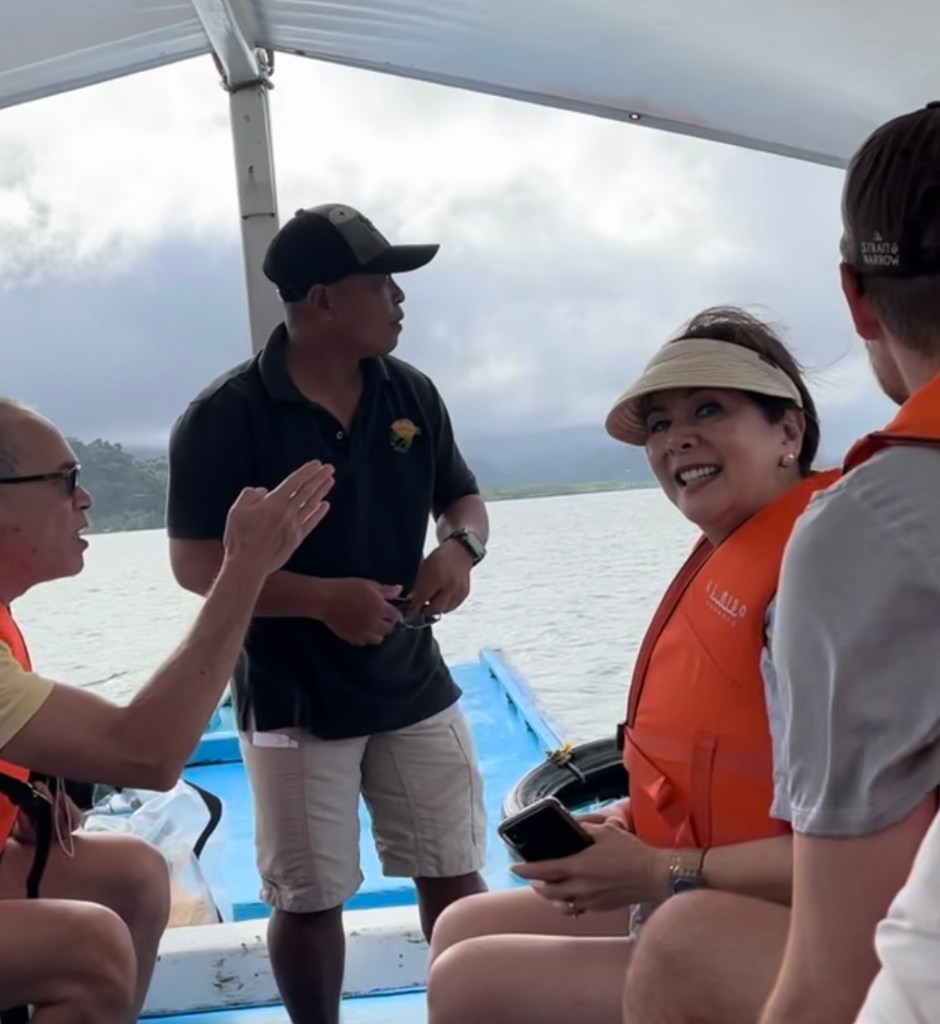
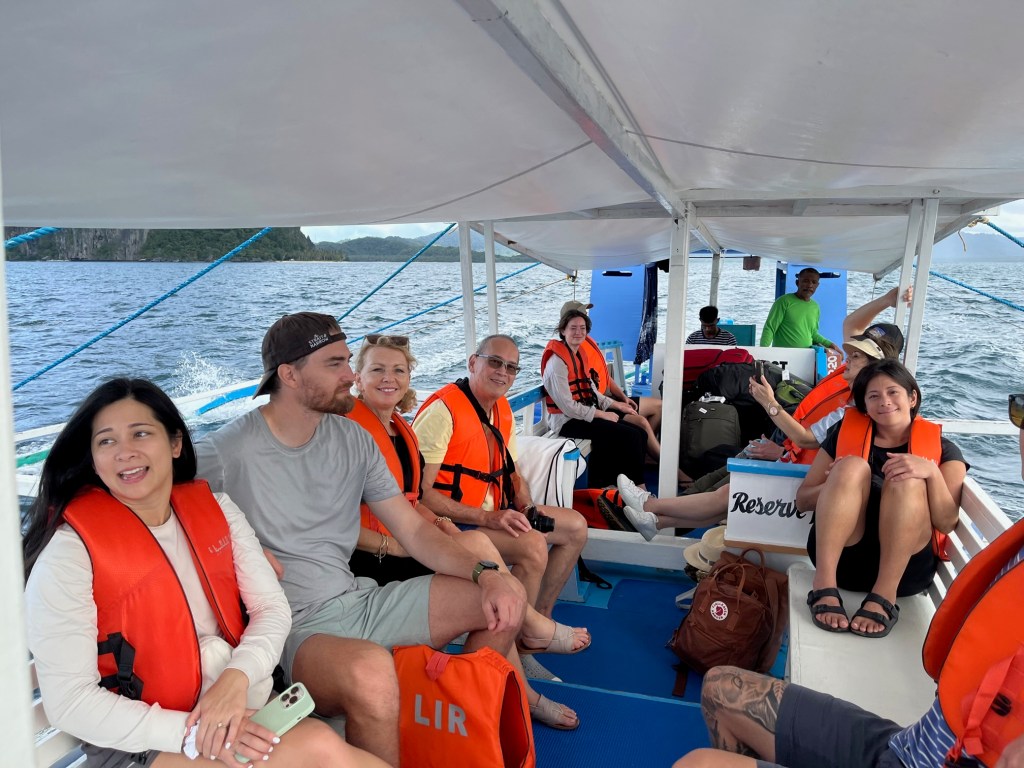
As our bangka cruises towards Lagen Island, one of four El Nido Resorts, we’re mesmerized. We’re only about 420 kilometres south-west from Manila, almost at the northernmost tip of the main island of Palawan and yet it feels almost otherworldly. Now up close, the towering limestone cliffs are majestic and the water impossibly clear and blue. We’ve travelled for a good hour or so from El Nido Town, so there’s a feeling of being entirely tucked away on a treasured place on earth. Yet we’re not quite alone as I watch swiftlets darting in and out of the cliffs. In fact El Nido, means ‘the nest’ in Spanish and as a frequent visitor to nearby Malaysia, how I know the story of swiftlets!

Chinese traders have been visiting this area since the 900’s to gather the edible-nests created by the saliva of swiftlets. Known as the ‘Caviar of the East’ Birds Nest Soup is extremely rare, coveted and expensive. Yes, the main ingredient is the nest of a swiftlet and one of the most expensive animal products consumed by humans. No, I’ve never tried it, but I may have collected a prized soup bowl or two. Yet I haven’t seen a natural swiftlet habitat this close up – the ‘swiftlet-houses’ in Penang are another story!

We’re assigned a resort ‘water butler’ now with us for the next four days, and he’s a character. Lover – yes his name, in that endearing Filipino nickname tradition – tells us about the inner caves within the cliffs, noting that ‘cultivation’ of the nests has reverted to a system of traditional ownership from some manner of centralised control. Despite this, poaching is an ongoing problem and ascending up internal crevices to collect nests is a dangerous occupation. Still about 100,000 nests are exported annually, mostly to the Chinese markets throughout southeast Asia.

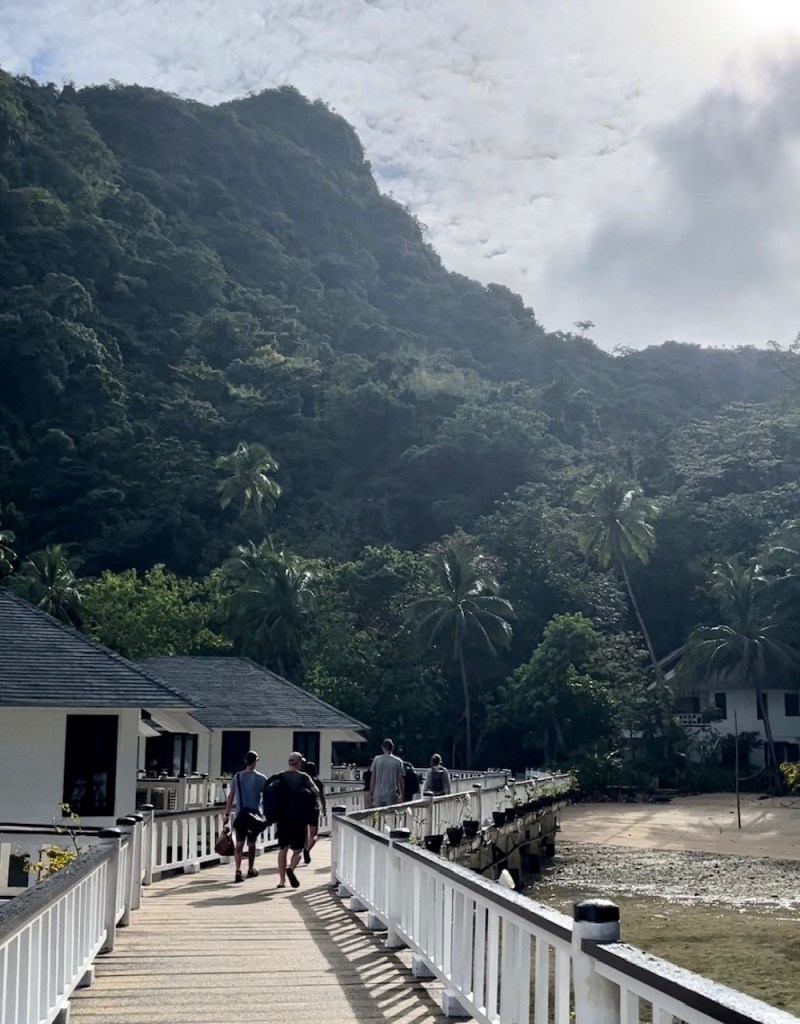
We know we’ve arrived as one of our bangka-guys, pole in hand, climbs to the prow of the boat to guide us onto the transfer boat that will take us into the lagoon. Before us, nestled amongst the cliffs are two strands of pearl-white villas perched on stilts above the water, curving around the small bay on either side of the restaurant, bar and pool area. As we make our way from the dock pavilion past a string of villas ringing the long, long pier, we hear the sound of drums, guitar and singing. A woven necklace is proffered to each as we’re greeted with a lively song… it’s a thrilling welcome and emotional first impression!

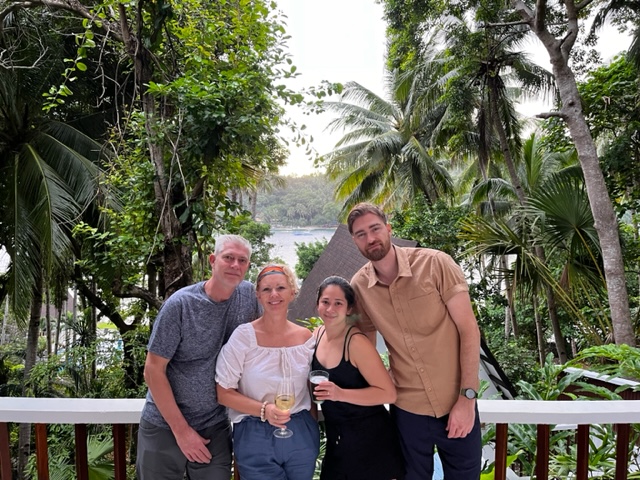
We’ve arrived two days before the wedding and it is instant bliss. All of it! Our gorgeous villas with the exquisite views, playful monkeys amongst the verdant jungle behind. Jaunts to snorkel and paddle in pristine waters, swimming through fish shoals, watching turtles go their solitary ways. And the dining is superb, three times a day we are beyond spoiled, and it transpires that here as well, we’re entertained as we dine in the evenings. Much to the delight of the other guests, Joey joins with one of the talented staff members, Mike, and as always she’s gracious with her adoring fans. These are lovely evenings wrapped in music, long dinners and seeing the ‘kids’ connect as one family.

We’re all incredibly calm as the wedding day arrives. As most everyone heads out for a morning snorkel, even the bride and groom, I stay behind and refine my dinner speech. From my perch on the dining room terrace, I watch as the hard-working resort crew load up bangkas with all that a beach wedding entails. Back and forth they ferry and they’d later proclaim, “This was the happiest wedding we’ve seen in twelve years!” And so it was!

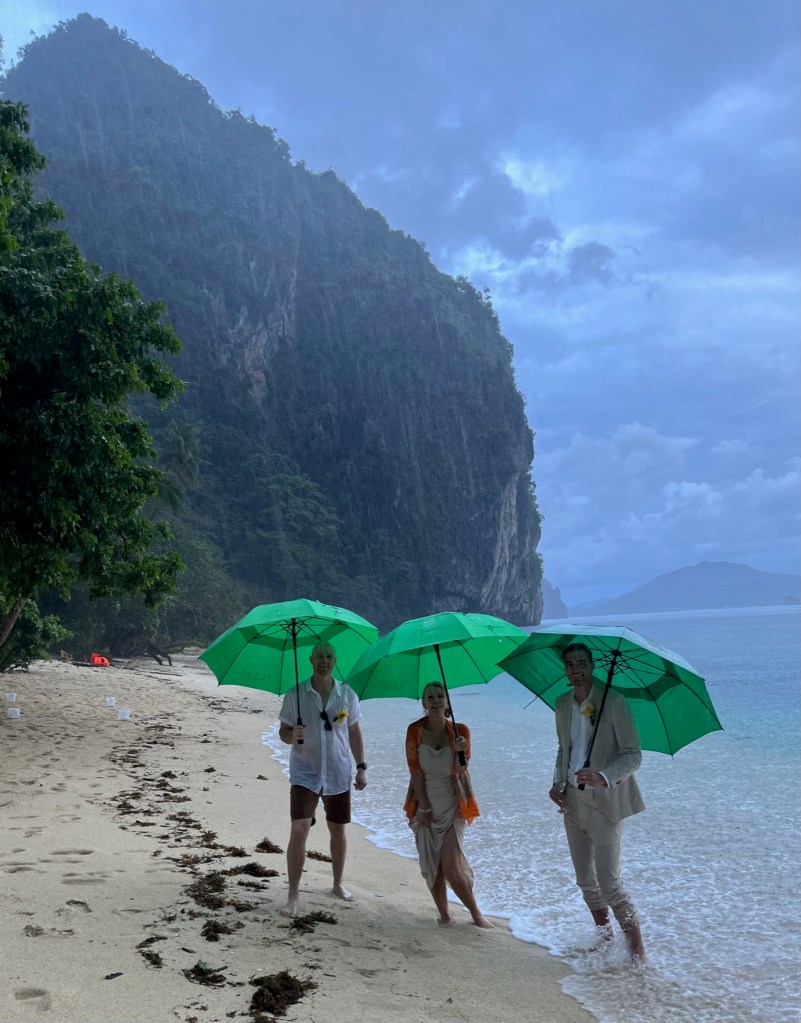
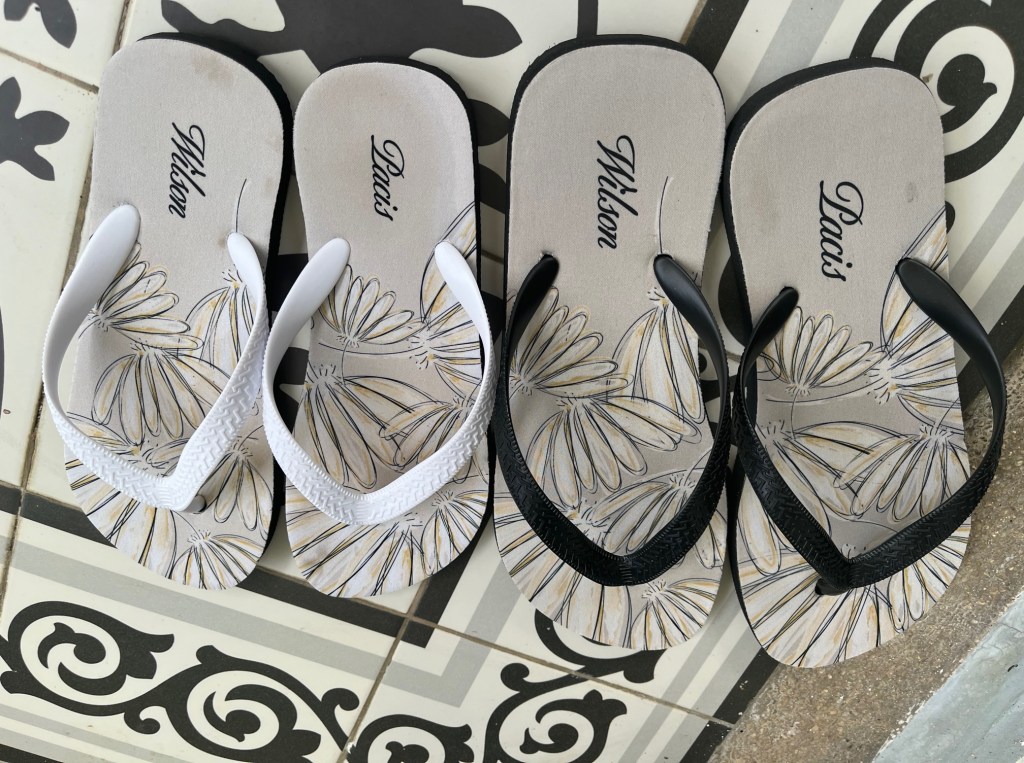
The chosen spot is just around the cliffs, at Cove 2 and after the traditional ‘first look’ at the resort we are jetted off about 4 pm. Stepping out onto the sable sands, we see the transformation of a ‘merely’ beautiful beach to a magical tropical wedding venue. The backdrop is a palm-fringed cliff, framed by sand and lapping water just a few metres away. The aisle and altar are adorned with palm leaves and burnt-orange birds of paradise, creating an al fresco chapel. The simple benches provide seating for just the eight of us, Bruce is officiating, and yet it feels like the eleven of us and this magical backdrop is all we need for the joyous union of Luke and Trixie. And it felt fitting that we’re mostly barefoot, feeling the sand between our toes, a simple connection to this place on this special day.

The bride and groom profess the most beautiful of hand written vows, and a hand-fasting ceremony seals their union. We pop champagne, we toast, hug and revel in the moment. We pose for official photos and also take photos on the beach, unable to resist feeling the water, making it our own. Lover now becomes our unofficial ‘official’ photographer, just one example of how tremendously we’re catered and cared for.

And then it begins… the heavens open and the rain comes down – showering us with its blessing, we say. We run, laughing, gathering up our things and head for cover. The beautiful dinner setting is rescued. The rain starts and stops, holding off long enough for dinner and the slideshow presentation about two kids who grew up thousands of miles apart and somehow through a near impossible stroke of karma ended up in each others lives. We then just let it rain that warm tropical rain, each of us wordlessly, agreeing to revel in the moment; extracting joy and delight from the experience of this improbable scene. Speeches ensued, a serenade or two by Joey, laughter and blessings for these two kindred souls who have built a charmed life together.

We dance, we sing, we party and then much to my absolute joy, the clouds part and that full moon graces us with its presence. And at some point, late in the evening, we just might have taken a swim in those warm tropical waters… just moon-beams, magic and love on a remote tropical island!

The Philippines, part one… Christmas, Music & Manila

Standard

Each blog I write is special to me and the next two posts are particularly poignant. Not only was this my first trip to the Philippines, it was a family adventure which culminated in our eldest son’s wedding. Trixie, the talented and beautiful bride-to-be, was five years old when her family emigrated from Manila to Vancouver and getting to know her roots and heritage was something we were all looking forward to. We would discover the nuances of a warm people who have a distinct and rich heritage. One which most certainly includes a love of music!

Just before Christmas, in the midst of a mass disruption of flights due to snowstorms, my husband, Luke and Trixie, and our middle son Matt, somehow managed to fly from Vancouver to Manila. I had just a quick jaunt from Bangkok and after a month of travelling in Malaysia and Thailand, I was overjoyed to be reunited with my gang. The Ninoy Aquino International Airport was festive. Sparkling Christmas trees, a life-sized nativity scene and a quartet welcomed us arrivals with carols and a warm Mabuhay!

As families joyously reunited, it felt like a mini Christmas ‘miracle’ that five of us had arrived within hours of each other. The services of a personal driver to navigate us out of the city was also a blessing as the first thing that strikes you about Manila is the vastness of the city. With its long stretch of modern high rises silhouetted against Manila Bay, it’s one of the most densely populated inner cities in the world. We’d see much more of it soon, but for now, our driver deftly maneuvered us through the endless flows of traffic.

We’ll be spending Christmas on a little slice of paradise. Leaving the main island of Luzon, home to Manila, we make our way southwest to the island of Mindoro… by van, ferry and bangka. The reality of traveling in the Philippines, with 7,640 islands, is the necessity of internal flights and ferries that requires planning and often ample patience. It means travelling fairly light and accepting that weather delays or cancellations might well interrupt your travel plans.

Yet such delays are also when you chat with locals and see day to day life unfold. Coffee is mostly from a packet and always pre-sweetened and milky. Noodle pots aplenty, for a few pesos… my guys were up to nine total on a three-hour journey! It’s where you learn that you don’t look for a Toilet, but for the CR, the essential Comfort Room! In ferry terminals you might also find organizations such as for blind people, who for a small donation offer shoulder massages or serenade as you wait. And it’s in those delays, you note the polite and the good-natured personalities of Filipinos.

After a four-hour drive to Batangas, then a ferry to Puerto Galera, we arrive on the seventh largest island in the country, Mindoro. Known for its dive sites and sandy white beaches, the province of Oriental Mindoro is steeped with history. Chinese and Southeast Asian traders sailed the waters long before the arrival of the Spaniards; the bay a convenient place to shelter ships, and to store, load and unload trading goods. Puerto Galera means ‘Port of the Galley’ but in 1574, it also became one of the oldest missionary settlements amongst the islands.

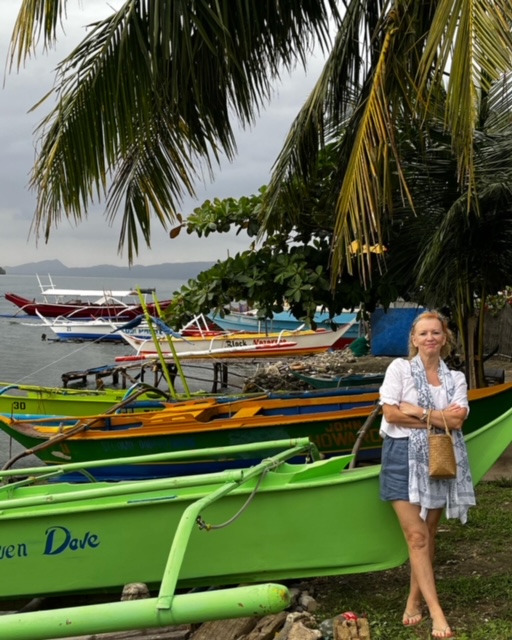
Nowadays locals and travellers ply the waters in a bangka and I’m immediately smitten with them. Varying in size, these native watercraft of the Philippines originated from single-outrigger dugout canoes. Picture them as some of the first ocean-voyaging vessels in the world from 3000 to 1500 BCE, allowing the Austronesian Expansion from China and Taiwan, to Southeast Asia and beyond. As we’re bangkaed to our resort, we catch the first glimpses of the vibrant colours and the range of the carefully chosen names each owner subscribes to his carrier. It’s also soon evident how logistically and culturally significant they are to these island communities. We jump on and off of them time and time again throughout our travels. We see them being lovingly repaired and repainted. On our boat a father is teaching his son the tricks-of-the-tides… just as one would acquire your learner’s license for a vehicle. And always, a firm hand is offered to escort you onto the pier or the beach as you step down from the bangka.

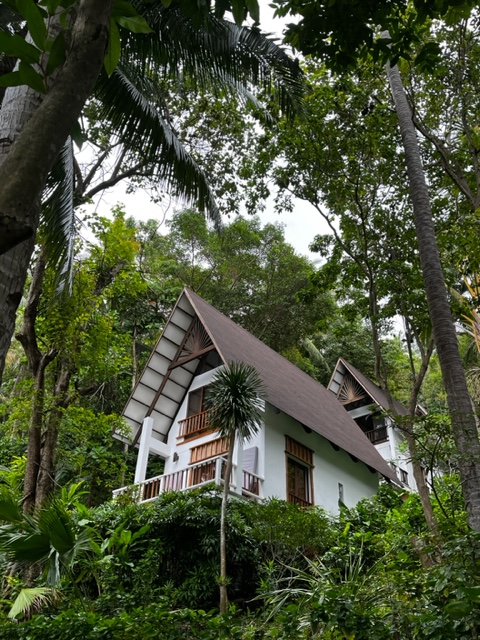
As our bangka drifts up to our Christmas resort, we’re taken by its shore-side beauty and the simple elegance of the accommodation. Perched hillside, roofs poking out amongst towering palm trees, the villas at Casalay Boutique Villas & Dive are absolutely dreamy. Throughout our four day stay, the staff is welcoming and ensure we feel very much at home. The food is familiar yet infused with Filipino novelties such as pancit and sinigang. We all agree it’s the ideal start to our three week Philippines adventure. One can only leave the resort by bangka, we’re situated between the diving hub of Sabang and the town of Puerto Galera. So we mostly relax, swim, snorkel, day trip and generally give thanks that five out of our seven have managed to arrive on schedule. Trixie feels immediately at home and slips in and out of the Philippine language, formerly known as Tagalog. Speaking the local language comes in handy at one particular ferry terminal snarl and it won’t be the only time we’re thankful to have a ‘local’ on the ground. As seasoned travellers we expect challenges, but we’ve learned to embrace them and add them fondly to our long list of traveller’s stories.

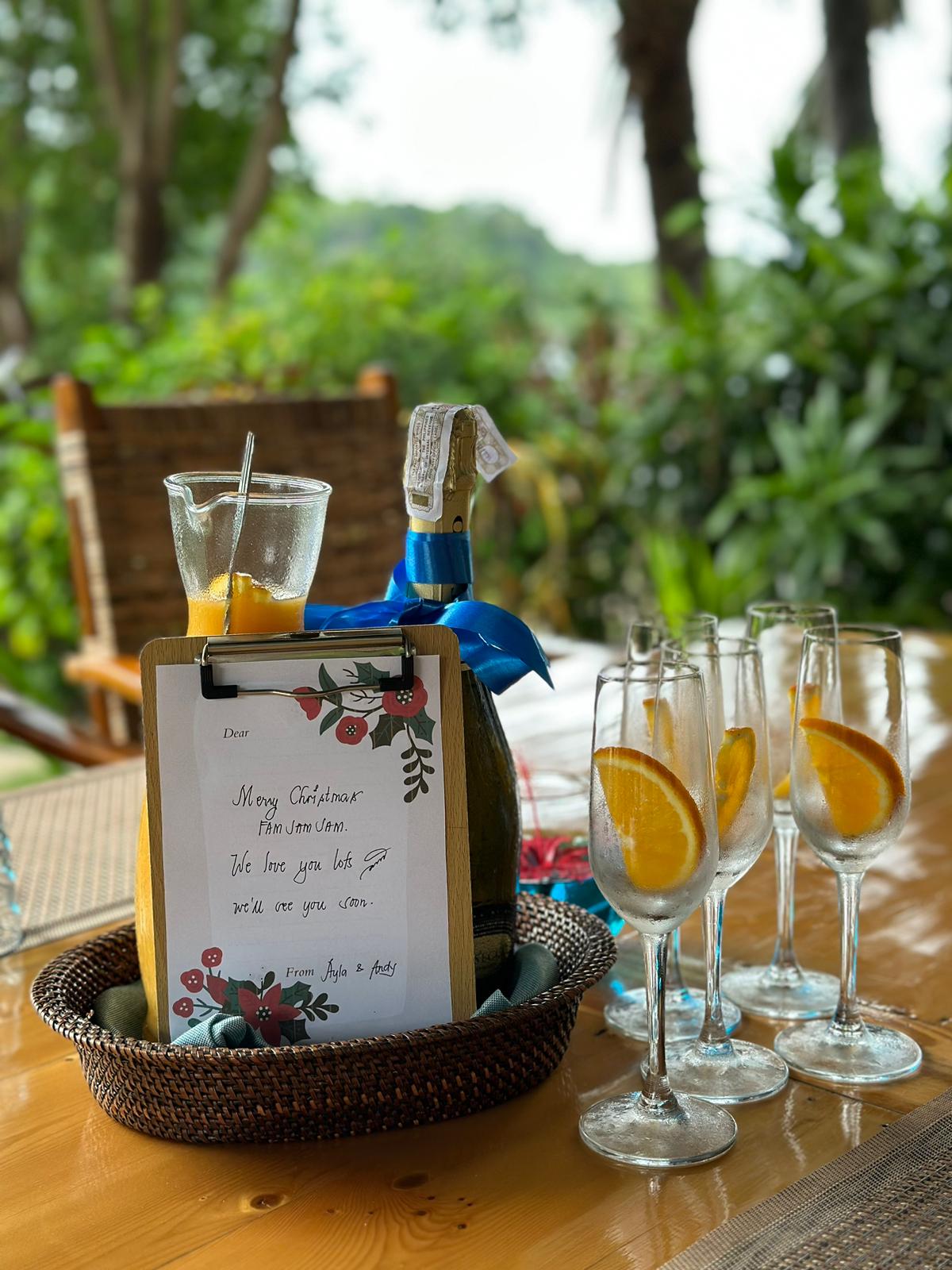
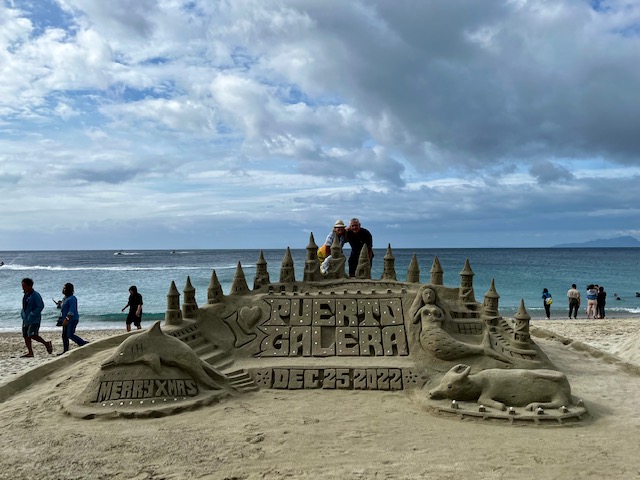
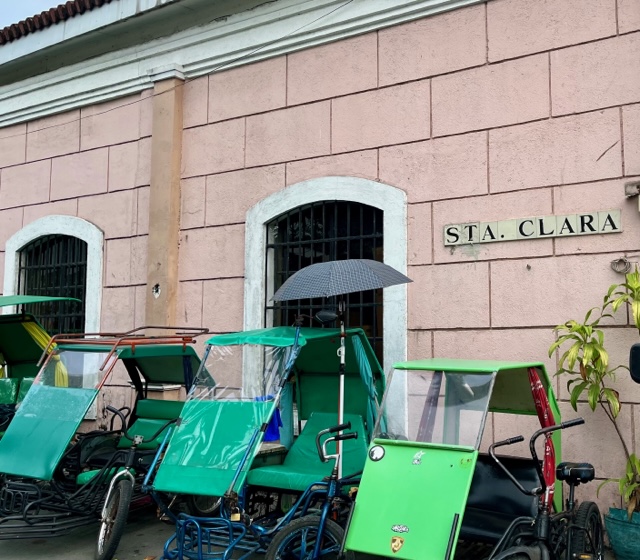
Christmas day is full of heart warming vignettes; strolling the streets of Puerto Galera, visiting a charitable school, admiring tropical plants along a jungle path to a waterfall. We brave local modes of transportation throughout the day… those iconic sturdy jeepneys and the more precarious motorized trishaws. And we get our first glimpse of what will become one the most endearing hallmarks of Filipino culture. Late afternoon, we arrive at the bustling White Beach for Happy Hour where tourists and locals are understandably soaking up the sun. The weather has been a little cloudy and chilly; it feels fitting that some warmth is bestowed upon us for Christmas day.

As we chat over a round of San Miguels, two waiters keep us entertained. Elmer and ‘Felix’ are amusing and flamboyant. In fact, they’re fabulous and proudly proclaim that they identify as bakla – a person, male at birth, who has adopted a feminine gender expression. By the second round of Migs, Trixie reveals that she’s the daughter of the iconic Joey Albert, one of the Philippines most beloved singers. Seeing the disbelief and giddy delight from these locals is thrilling and it seems that a love ballad is the only way to honour the moment! As they google lyrics to one of Joey’s most classic songs, ‘I Remember The Boy,’ Elmer, who has just regaled us with a flag rendition of his flame juggling skills, proclaims, “It’s a very special moment to meet Ma’am Joey’s daughter, it’s a wonderful day!” As the three devoted fans harmonize and improvise, Trixie now Facetimes her mom back in Vancouver. The three are suddenly serenading Joey with her own song. It’s a joyous scene, one that portends all of the wonderful music we’ll hear throughout the trip.

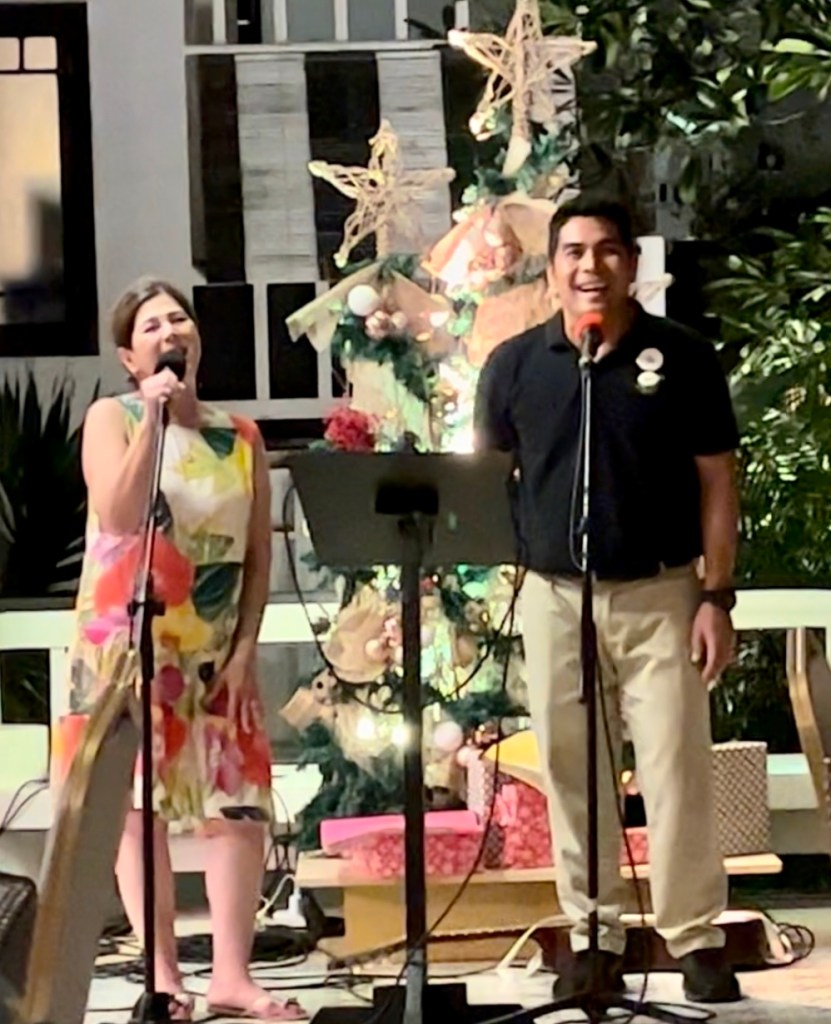
We bangka it back to the resort in time to change for Christmas dinner and we’re happy to hear that Trixie’s sister and partner are unexpectedly joining us, yes due to one of those tropical flight cancellations. Bit by bit, the Pacis/Wilson group of eleven is arriving in the country in anticipation of the wedding on January 6th. But this evening has a magic all of its own. A gentle breeze drifts through the outdoor dining area and palms gently sway under the glow of a waxing moon. The table is set beautifully as the Christmas lights shimmer throughout the resort, and to our delight, we’re serenaded by a young musical duo. The two sing and play everything from Christmas songs to Kylie Minogue, and we learn that these local celebs perform as far away as Dubai. Late into the second set, like an impromptu karaoke, they invite anyone to come up and sing. Unfortunately, none of us have the voice or the nerve it seems… no, not even the singer’s daughter! Yet one of the guests and then a staff member gladly take the stage and perform a few songs.

“Is this usual, for just anyone to get up and sing during a performance?” I ask Trixie.

“It sure is, you’ll see it everywhere. It’s just that everyone here knows how to sing!”

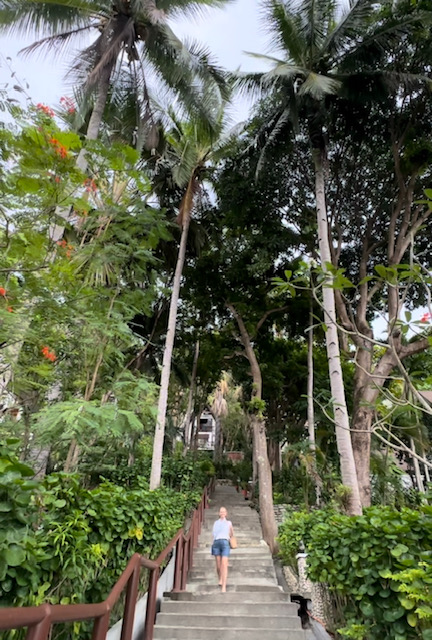
And so it seems to be the case and just as it was late afternoon, it’s another entertaining musical flourish. Yet there’s more. One of the staff members is a pole dancer in nearby Sabang and at once, a table is his makeshift stage. The guests love it, we all clap madly and I notice that for each performance there’s no judgement, just the joy of spontaneity and freedom of expression. The day seems to encapsulate the love of song and dance of the Filipino people and also the embrace of acceptance. It’s been a memorable Christmas day and we bid the staff a warm thank you and Merry Christmas. As we climb the palm-fringed steps to our villas, music and laughter drifts up towards us and off into the jungle canopy. At breakfast the next morning, the staff tells us that they had a beautiful long evening of singing and laughter; a very Merry Christmas for everyone!

A few days later, we make our way back to Manila. Ayla and Andrew will arrive, making our family of seven complete. Trixie’s parents will arrive after New Year’s where we’ll all meet in El Nido on the island of Palawan for the wedding.

Manila

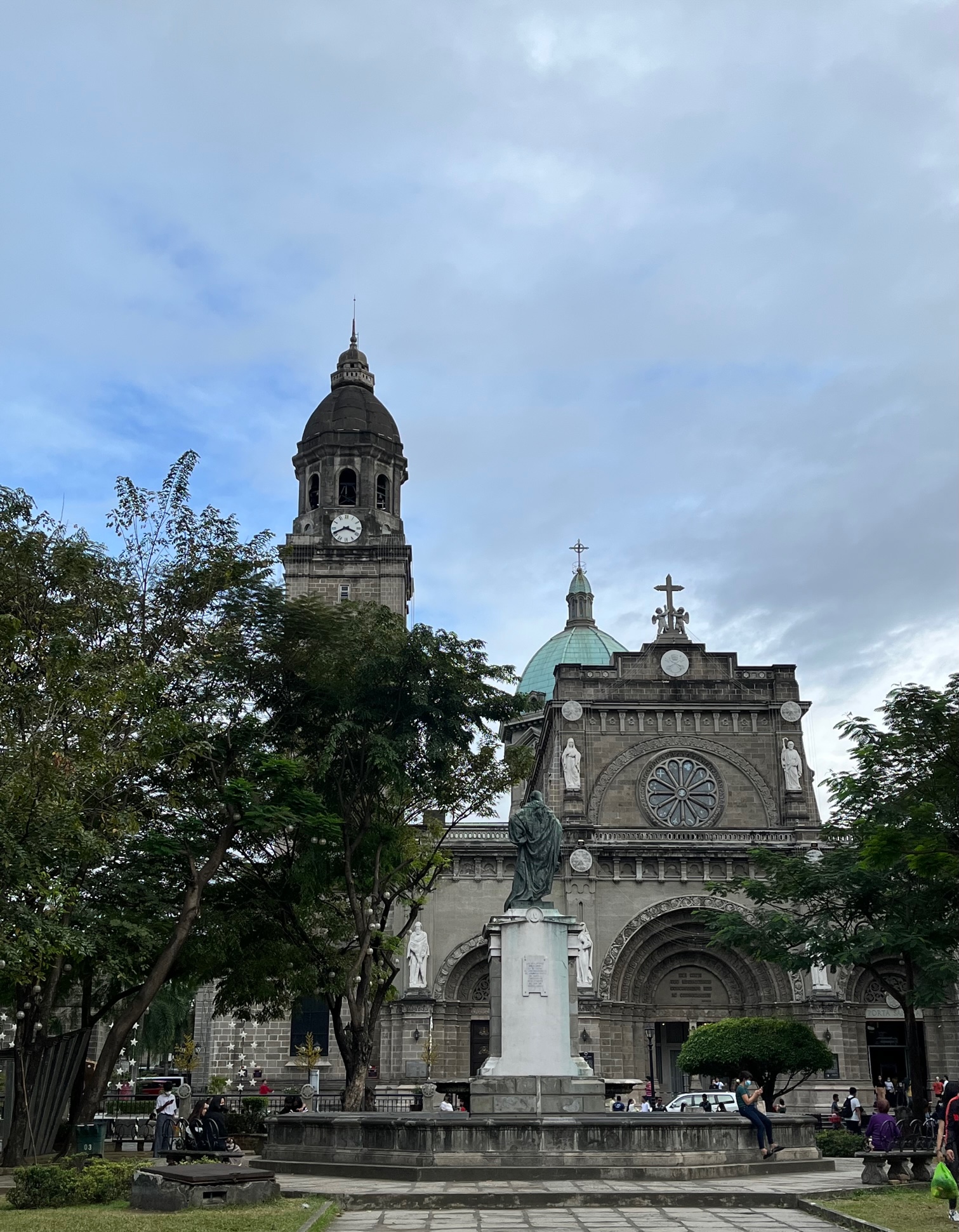
Our introduction to Manila begins where it should, amongst the historic fortress walls of Intramuros. Oral history suggests that the original Maynila (which translates to where indigo is found) was founded as a Muslim principality as early as the 1250’s with archeological findings suggesting organized human settlements dating around the 1500’s. It evolved into a trading centre with ties to the Sultanate of Brunei and to traders from China during the Ming dynasty (1368 – 1644.) In 1565, sees the arrival of Martin De Goiti leading an expedition of Spanish colonizers. The ‘Battle of Maynila’ ensued in May of 1570 and by June the next year, conquistadors established a city council and declared the islands a territory of New Spain, as Mexico was then known. The Spanish attained great wealth in their new outpost of Manila, atop the subjugation of the local population. The Acapulco galleon trade transported goods from Europe, Africa and Hispanic America across the Pacific Islands to Southeast Asia and vice versa. Silver, Chinese silk, Indian gems, Malaysian and Indonesian spices, wine and olives all passed through Manila Bay. And as any colonizers would deem necessary, the Spanish built the fortressed enclave of Intramuros. Alongside Mexico City and Madrid, it became one of the world’s original set of global cities.

As a former tour guide/historian, I know that one of the best ways to get to know a city is to treat yourself to a tour. I chose Bamboo Bicycle which couldn’t have given us a better introduction. We meet in the iconic courtyard of a former Chinese merchant’s mansion and before choosing our bikes for the three-hour journey through Intramuros, we hear how incredibly diverse the city was with people from many lands. This inevitably led to a blending of peoples, the mestizos, a people of mixed races… a true melting pot of cultural complexity and ethnic diversity.

As we cycle along the walls and in and out of the grand city gates, the cobbled streets are lively against the backdrop of lush palms, bougainvillea, busy parks and tucked away cafes. As the religious and educational center of the Spanish East Indies, Intramuros boasted the oldest university in Asia and today houses many more. We pass through the original city gates where nearby cannons and bulwarks protected it from not only foreign invaders, but also from perceived threats nearby such as the Chinese community at Binondo, believed to be the oldest Chinatown in the world.

The pleasant atmosphere belies the history of the next foreign occupier. Spain surrendered the Philippines to the United States after the Spanish-American War for a price of $20 million. As the American flag was hoisted over Fort Santiago in 1898, a new period commenced. The Manila Hotel is central to that next phase of the city’s and country’s history. Its address of One Rizal Park, reflects this; Jose Rizal was the beloved national hero who became a leader in advocating for political reforms against the Spanish Colonial occupiers. When Rizal was executed by the Spanish in 1896, he wouldn’t know that his country would be purchased just a few years later. His writings however, inspired a revolution not only against the Spanish but the incoming Americans. A mere forty years later, the hotel would then be occupied by the Japanese Army and set on fire during the Battle for Liberation of Manila, the Philippines and the US now united against the Japanese and Spanish Mercenaries. For all of the urban fighting, mass murder and deprivation that occurred, The Manila Hotel seems now to proudly signify a people that finally won its independence on July 4, 1946.


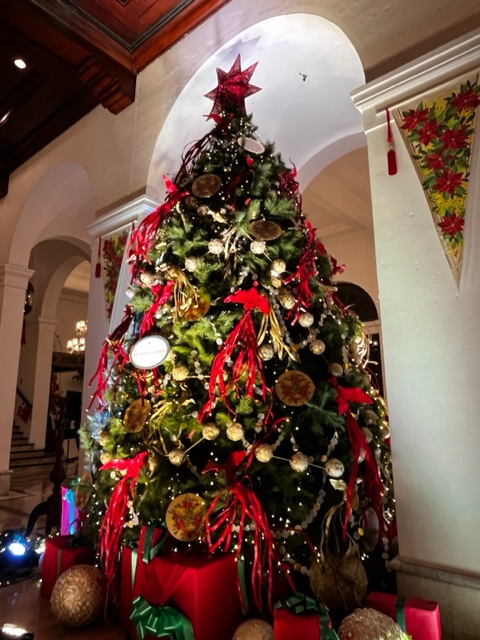
In the tradition of the ‘grand old dame’, the iconic Manila Hotel, is just a few blocks from the old city walls we explored. It prides itself on being the oldest premier hotel in the Philippines and at this time of year it’s simply splendid in its Christmas’s best. The expansive lobby is festooned for the season and is a backdrop for family gatherings and celebrations. It’s an opportunity to see locals dressed in their finery – especially the national formal shirt the barong – and to experience the warmth of family as generations gather. Filipino families are often large as they extend to titos and titas, uncles and aunts, both family or friends who are very much part of the family. As we wait in the lobby to welcome Andrew and Ayla who’ve just arrived, Kumukutikutitap, rings out, enhancing the festive tone. This is Joey Albert’s well-loved Christmas song, it’s lyrical and happy… flickering, bubbling, twinkling stars, gifts and decorations on Christmas trees, a lucky star on top. It’s a fitting song for the happy moment as Andrew and Ayla glide through the revolving doors. I couldn’t be more thankful and excited for the island adventures, and the wedding ahead and the union of our two families.

To be continued in part two…

A Return to Penang… Tranquility on the Hill

Standard

As the plane glides over emerald treetops on its approach to the island, I ponder how it could feel so natural to be landing ‘home’, on the other side of the world. A place where nothing feels foreign or unfamiliar. Not the forests of tropical palms or the lush jungle greens. Nor the heat and humidity that will soon be a balm to my soul. And certainly not the storied streets of Georgetown that I’ll wander endlessly along; known to me in intimate detail from my time here as I researched a book project. On this visit, I’ll relish a one-month sojourn between here and Thailand with various friends… the snowy, white landscape of British Columbia is suddenly so very distant as the plane touches down. It’s been a twenty-some hour journey – Vancouver, Manila, Kuala Lumpur, Penang – and euphoria isn’t too strong a word to describe how I’m feeling.

Penang Island is 293 square kilometres of verdant forest, jungle and settlement, a Malta-sized island with an equally rich and fascinating history spanning the centuries. This is especially true of Georgetown, the historic enclave claimed and built by the British East India Company in 1786, a place richly steeped in layers of cultures, religions, architecture and food. I hear that its vibrancy was much subdued during the worst of the pandemic, yet I’m thankful that the Penang I adore is alive and well.

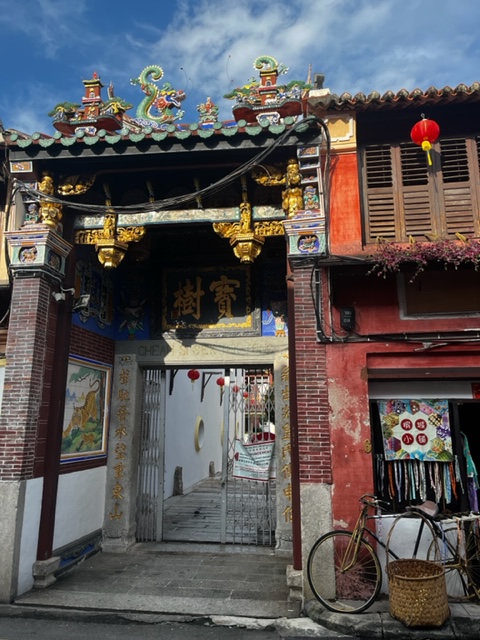
I check into my favourite boutique hotel, Campbell House where I’ve stayed often. The owners, now friends, have made each room unique, inspired by the country’s heritage, and I know that it will be the perfect start to my two-month sojourn. I spend four days in the familiar embrace of the hotel while exploring anew. I see old acquaintances and rejoice in vibrant street life. I marvel at shophouses and revel in the odd trishaw journey. I savour Penang’s enticing, iconic street food. I attend a Literature Festival, stroll through temples, seek out my favourite lanes and courtyards. But mostly I walk, walk and walk some more, finding myself coming to life as I’m immersed in the streetscapes of Georgetown.

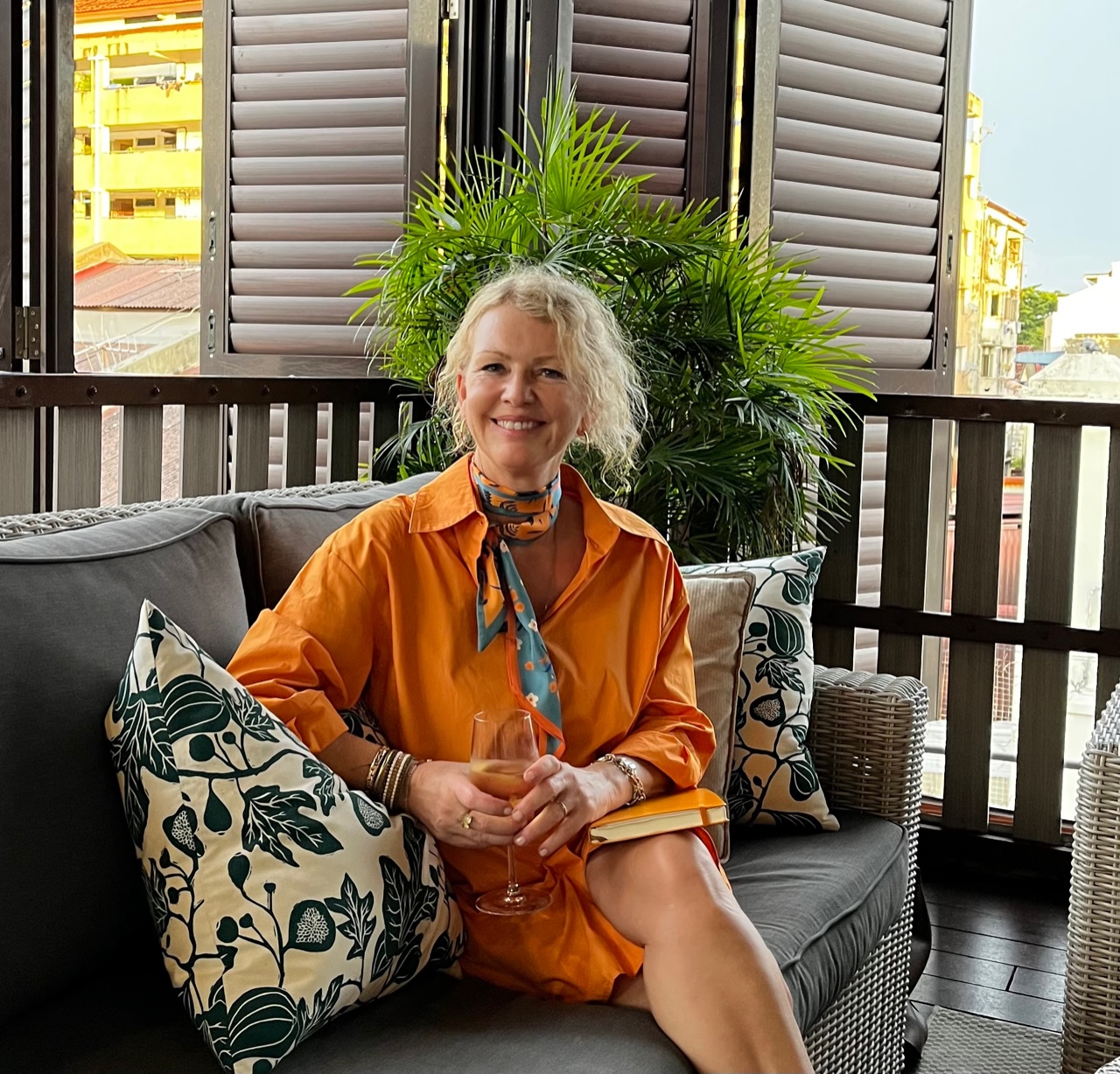
My days come to a peaceful close on the Campbell House terrace with a glass of wine. As the sun sinks gently over the iconic shophouses and temples, the town is bathed in a palette of golden hues, the evening call to prayer drifting languidly over the rooftops. It recalls so vividly the Middle Eastern countries we’ve called home, fond memories of our time in Qatar and Oman infusing my reverie. As the humidity does its usual and frizzles my hair, the heat and ever-present tropical-green restores my travellers soul. It seems I’m home on so many levels… the delight in the familiar yet the anticipation of serendipity, wrapped in the comforting recollections of the past. And, oddly, I feel no jet-lag… perhaps it’s all a little too exhilarating for such folly!

Up On Penang Hill…

It’s early afternoon as we make our way up Penang Hill. It’s a coveted spot with spectacular vistas some 820 metres above sea level. I’ve been here a handful of times and always with anticipation as we snake our way up the narrow, twisty road. It’s lined with towering trees and dense jungle growth, playful monkeys welcoming you from the roadside. Invariably, committed walkers steadily trek their way up the hill, some even daily. I’m reminded of the not too distant past when the Colonials made their way either on horseback or were carried in their sedan chairs or palanquins. Evidently, it required four to eight coolies (depending on the weight of the passenger) for the three-hour trek along a path hacked through the dense jungle. Initially it was the government staff, then the convalescing, the curious travellers, then the bungalow owners, all seeking the cool, healthy air of the Hill.

It wasn’t long after Francis Light had claimed the island for the British East India Company (EIC) that he ordered an outpost built at the top of what would be called Flagstaff Hill. In 1803-05, Bel Retiro, likely the first bungalow, became a retreat for Governors and staff. As the Hill offers views beyond to the horizon, Flagstaff became an important post for defending the British’s newest settlement – then called Prince of Wales Island – along with Fort Cornwallis along the shore. Approaching ships spotted in the distance, triggered an alert communicated by semaphore – a system of relaying messages by flag – to personnel at the fort below. Perhaps the mail ship was nearing – at the end of its six-month journey from head office in London – prompting a crisp signal flagging that the Governor was making his way down the hill to greet the mail. Or perhaps it was an unidentified ship that portended trouble? Either way, a return down from the hill to the heat, the swampy land, and to the place of ‘jungle fever’ of the new settlement gave pause.

The root cause of malaria, a mosquito-born disease, wasn’t discovered until the end of the 1800’s, hence the attribution to ‘bad air’. Good health was a major preoccupation with early settlers in places like Penang and the other EIC settlements. Death was ever present in both young and old. Out of 35 Governors and Civil Servants appointed to Penang between 1805 – 1825, at least twenty died, along with countless wives and children. Many deaths were attributed to miasma – noxious or ‘night’ air – and prompted the EIC to build Hill Stations, both in India and Malaysia. Always located in higher, cooler altitudes than the sites of EIC bases presidencies – Calcutta, Madras, Bombay, Penang – Hill Stations were seen as an integral luxury for leisure and convalescing. When Penang became a Presidency in 1805, the convalescent bungalows became well frequented. As the fame of the Hill grew and the demand for convalescent accommodation increased, those not qualified to stay at the EIC bungalows would secure coveted plots and construct their own; with the permission of the EIC and, in those Colonial times, exclusively Anglo-Saxons.

After Prince of Wales Island was declared a Presidency, company and military staff were posted in ever greater numbers. The island even gained a reputation as the ‘Montpelier of India’ not only for its perceived healthy climate, but also for its distinctive topography. This romantic notion was cultivated by Government staff mostly from Scotland and England who held that the island evoked qualities of home but in a ‘tropical picturesque’ sense. Most of the residents and visitors to the island professed that ascending the Hill was equalled only in the Scottish Highlands, or in the Alps. Even the attap roofs of the bungalows were romantically associated with the thatched roofs of cottages in Britain.

The idea of ‘picturesque’ was proposed in an essay by Edmund Burke in the 1750’s as a novel way of perceiving and describing nature. In the 1790’s other essays by William Gilpin influenced the way travellers described landscapes… adopting words like picturesque, sublime and exotic. This language soon spread through the Grand Tours of Europe, a new lexicon that helped promote travel. These romantic literary expressions prompted writers and visitors to present Penang as a tropical island of abundance and promise. Soon, the many advertisements in the 1800’s spoke to the reverence with which Penang Hill was regarded.

‘The salubrious climate at considerable elevation.’ ‘The skies of Penang are always clear and serene, a purity of atmosphere.’ ‘Beautifully situated on the hill and exhilarating for invalids who come down from the other presidencies to obtain relief – a restoration of one’s constitution.’

Sir James Brooke, The White Rajah of Sarawak made two visits. ‘Repeated attacks of the infernal fever. I have resolved to retire for three months to the quiet and cool climate of the Hill of Penang. I feel pretty sure it would completely restore my health.’ And gushing enthusiasm from James Johnson, known as the oriental voyager from 1803-6, ‘So strikingly beautiful and grand… I could not help feasting my eyes, for hours together, within undiminished delight, on the romantic scenery with nature, assisted by art, had scattered around in bountiful profusion.’

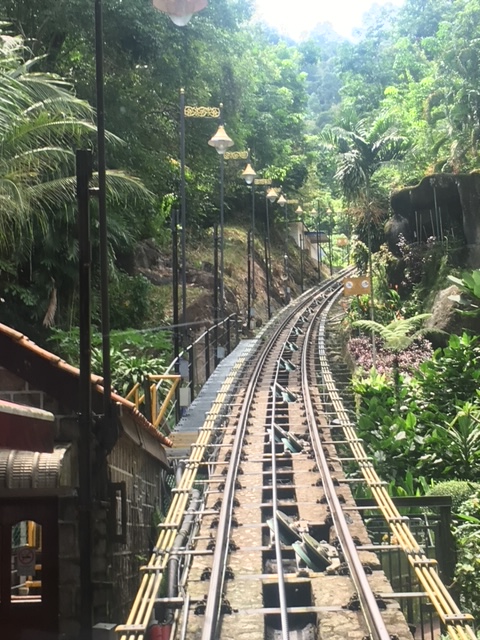
Today the scene is still one of tranquillity, sweeping vistas and mostly a tangle of untamed jungle. But there’s no need for a palanquin or a 4×4; a narrow-gauge railway now shuttles most visitors to the top. A visit to The Habitat Penang Hill is essential, a stroll past the iconic bungalows perched on hillsides is charming, or visit The Crag where many a TV series has been filmed. Do have tea at Strawberry Hill, and if you’re as lucky as I was, treat yourself to a stay.

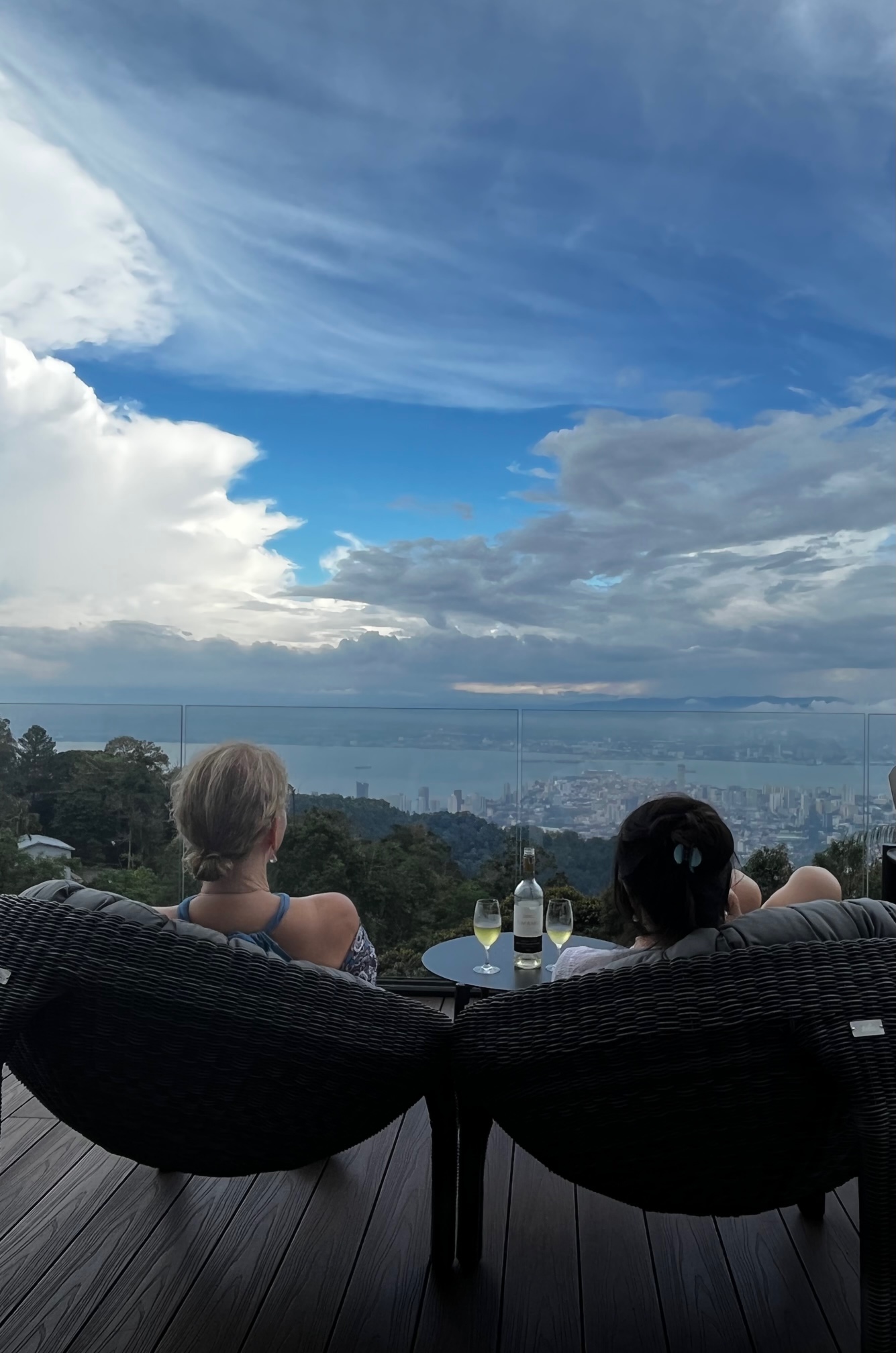
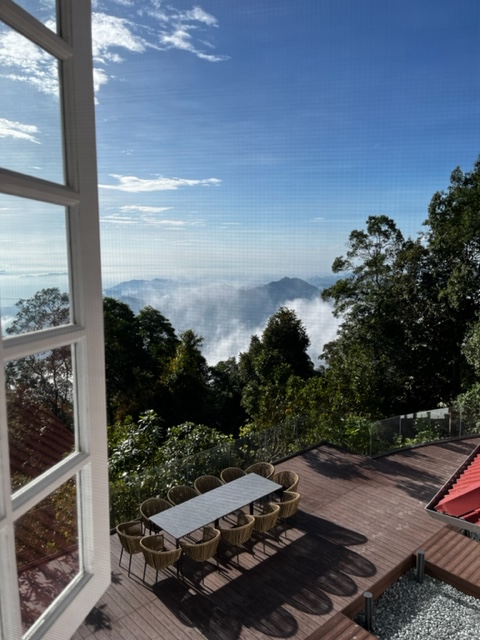
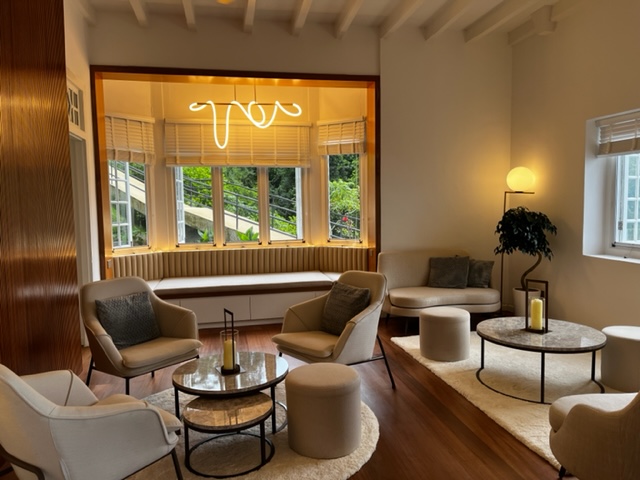
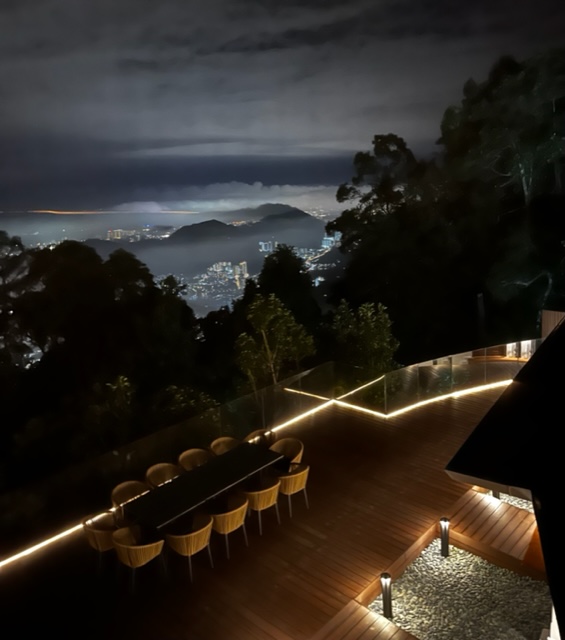
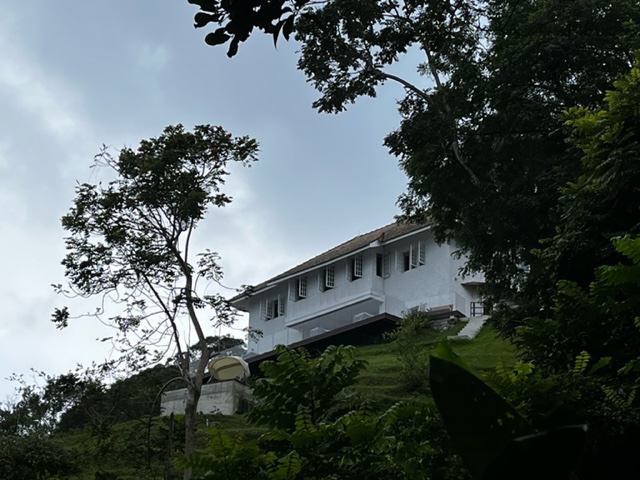
It’s late afternoon as my friend and I settle ourselves on the terrace of Eythrope her family’s grand home, now exquisitely reimagined as a boutique hotel. Built in 1929 and enjoying a prominent position near the top of the hill, it’s a simple, elegant Bauhaus influenced design with an exterior of pebbled earth inspired by the popular Arts and Craft Movement of the time. The original owner, E.H. Bulford, was issued the jewel-of-a-lot after a career in a Penang stockbroking firm. The view still, as it was then, is breathtaking. Beyond the canopy of sky-reaching trees and the labyrinth of jungle, Georgetown unfolds far below, backdropped by the soft-blue waters and distant mainland.

It’s just before sunset, a bottle of UMAMU wine is open and another is chilling in anticipation of long conversation. For hours, we’ll do nothing more than share stories, sip, dine and marvel endlessly at the changing vista before us. And sometime through the sublime evening, I pen this verse in my journal, indeed while ‘feasting my eyes’.

Ode to Penang Hill

With a dear friend, past designs made new, reimagining comfort and elegance… atop exquisite Penang Hill.

Simple lines meet lush green and tall palms, shadows against soft blue waters.

Birdsong and cricket cacophony, the twill of a horn-bill, the flit and swoop of swallows.

Now the rumble of thunder as the splash of hues – crimsons, pinks, lemon-drop yellows and dreamy whites – wash luxuriously across the sky.

Oh how I dream of these vistas. Ferns flowing over hillsides. Coconuts dropped to jungle floors. Terracotta roof tiles, russet squares on verdant green. And tropical flowers like make-believe… monkey cups, wild ginger and orchids.

The wonderment of time and a treasured space – silent yet bursting with whispers, with wisps of clouds shifting and floating across the bay.

City lights now shimmer against the growing dusk. The thrum of nocturnal jungle life now a deafening pitch. Golden orioles swoon to a bamboo perch. Trees sway and shudder as dusky leaf monkeys mingle and frolic.

A chill, as swirling mist obscures the vista. Then clearing to unfurl still more ethereal views. I feel such gratitude for this perfect evening.

The Aloha of Hawaii, part two… The iconic Duke, father of modern-day surfing

Standard
The Lifeguard Tower at Waimanalo Beach

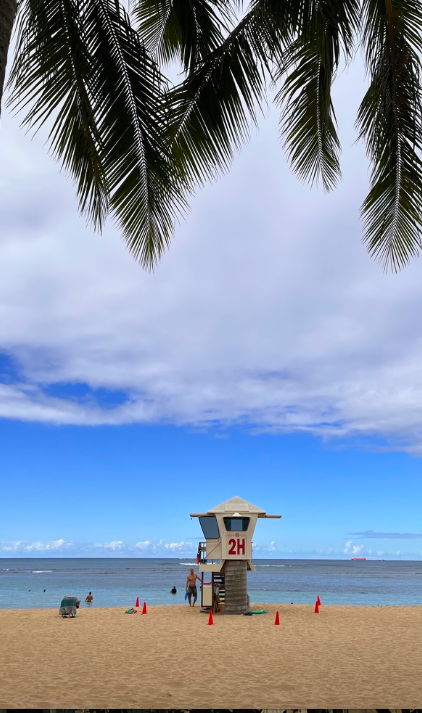
As we sample the many glorious beaches dotted around the island one can’t help but notice the ever-present lifeguard towers of O’ahu. Their distinctive character and unique surroundings add a certain charm to the stretch of ocean they serve. There are just over forty lifeguard posts on the island, each visibly numbered and equipped with jet ski, ATV, truck, and of course a retinue of trained, competent lifeguards. From the Windward and Leeward Coasts, to the famed North Shore and the string of the towers along Waikiki beach, it strikes me how vital the Ocean Safety Operations is to locals and tourists alike.

Our afternoon sojourn to the stunning Waimanalo Beach on the Windward coast is peaceful and serene, guards watching over a few body boarders playing in the surf. Tower 6A perches amongst a verdant and tenacious creeper that carpets the sand, light violet flowers adding pops of colour. The elements create a unique vignette in which the small, functional tower resembles a small house in a postage stamp garden. With 227 miles of coastline to oversee, the job of the lifeguards is to anticipate and ward off accidents, especially from those not taking the power of the waves as seriously as they should.

On another day we tour the island, reaching the renowned Waimea Bay on the North Shore. The beach has a long-standing tradition of surfing for native Hawaiians and now attracts big wave surfers from around the world, eager to ride waves that can exceed 40 plus. It’s a breezy, moody afternoon and as the waves crash wildly onto the steeply shelving beach, most of us are content to sit safely on the sand, taking in the scenery and marvelling at the power of the ocean.

An announcement blares from the tower… “hazardous conditions, people are a little too nonchalant out there, beware of the dangerous shore break which can lead to head, neck and back injuries.” The guard then implores, “You should only be out in the water if you have years of experience on this beach or with these conditions.” Only a few retreat to the shoreline.
Another lifeguard jumps on an ATV, riding to the far end of the beach where he reprimands a father for bringing his two young sons too close to the surf. Back at the tower, the guard steadies his binoculars, slowly sweeping his gaze across the outer waves. I had been told that thousands a year are rescued, that, ‘it’s a dangerous job in paradise for not a particularly great salary’.

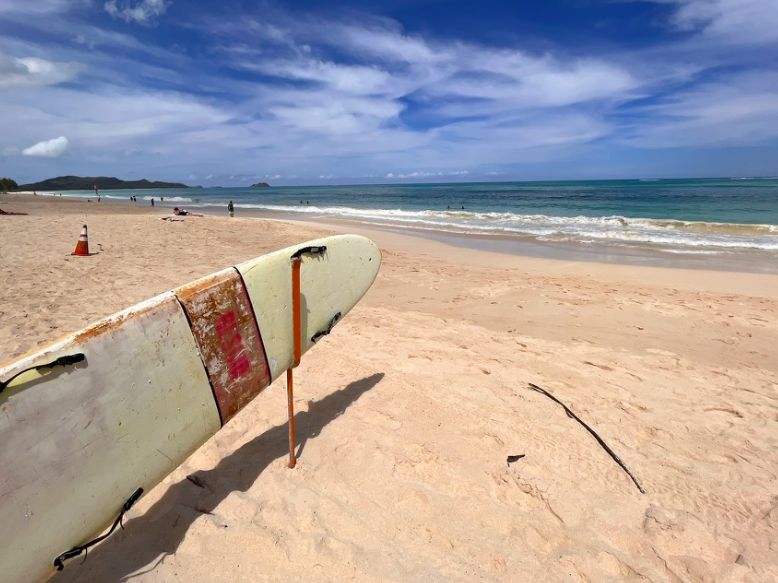
As on all beaches, a surfboard labelled ‘rescue’ in red letters is ready for action. It seems like an obvious method of rescue, yet it’s modern-day use traces back to the man who all Hawaiians revere, the father of modern-day surfing, Duke Kahanamoku.

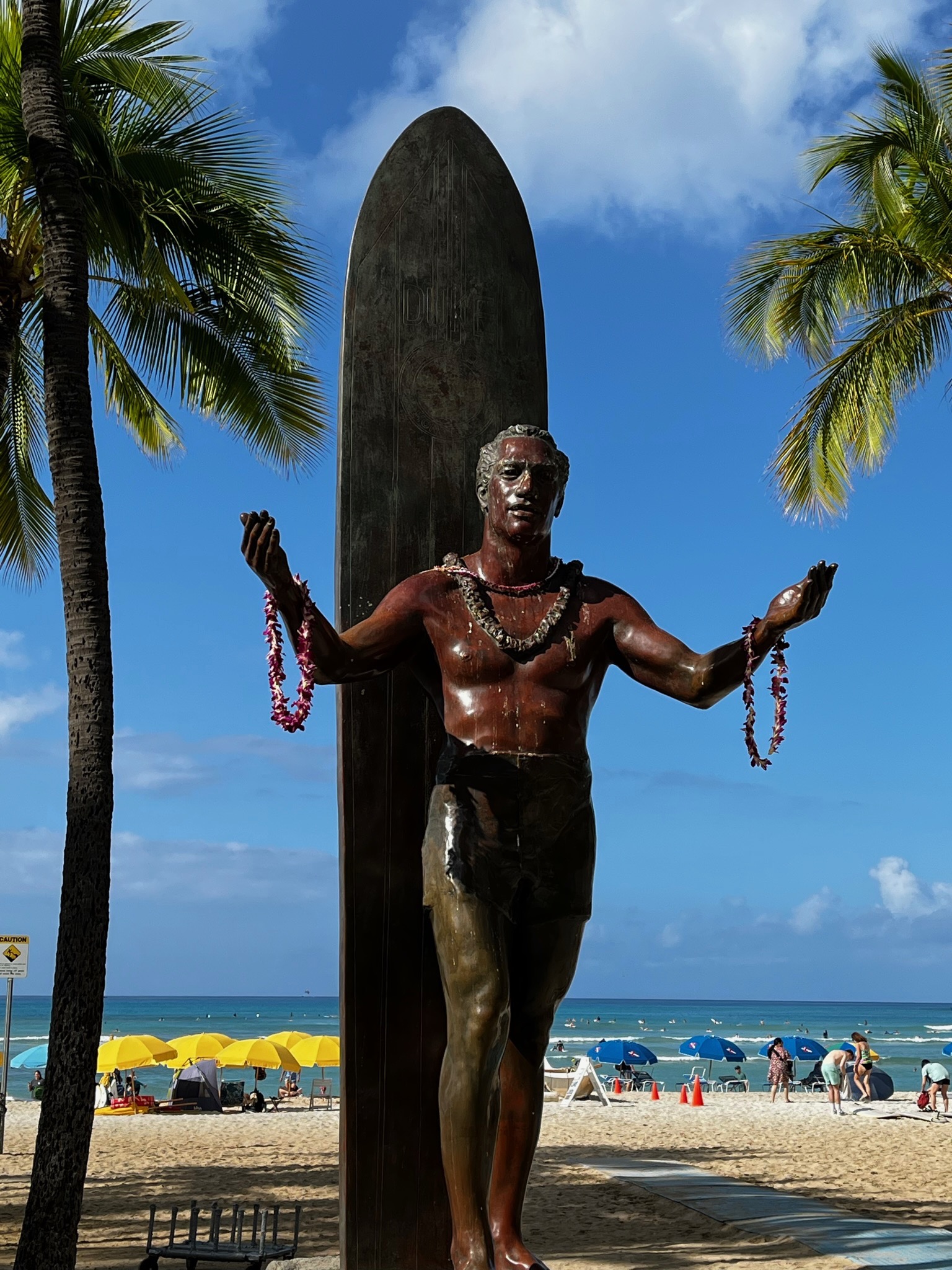
Back on the Waikiki beach that pays homage to him, fresh leis invariably adorn the arms of Duke’s Kahanamoku’s statue. As surfers ride the waves and beachgoers soak up the sun just behind him, it’s easy to speculate that without Duke’s contribution to surfing, none of us might be enjoying the delights of Waikiki today.

As the graceful tufts of palms shadowing ‘Duke’ sway in the breeze, few, perhaps, of those who pass his statue understand just how compelling the story of surfing is, from the Beach Boys, to the journey of Hawaii’s iconic waterman.

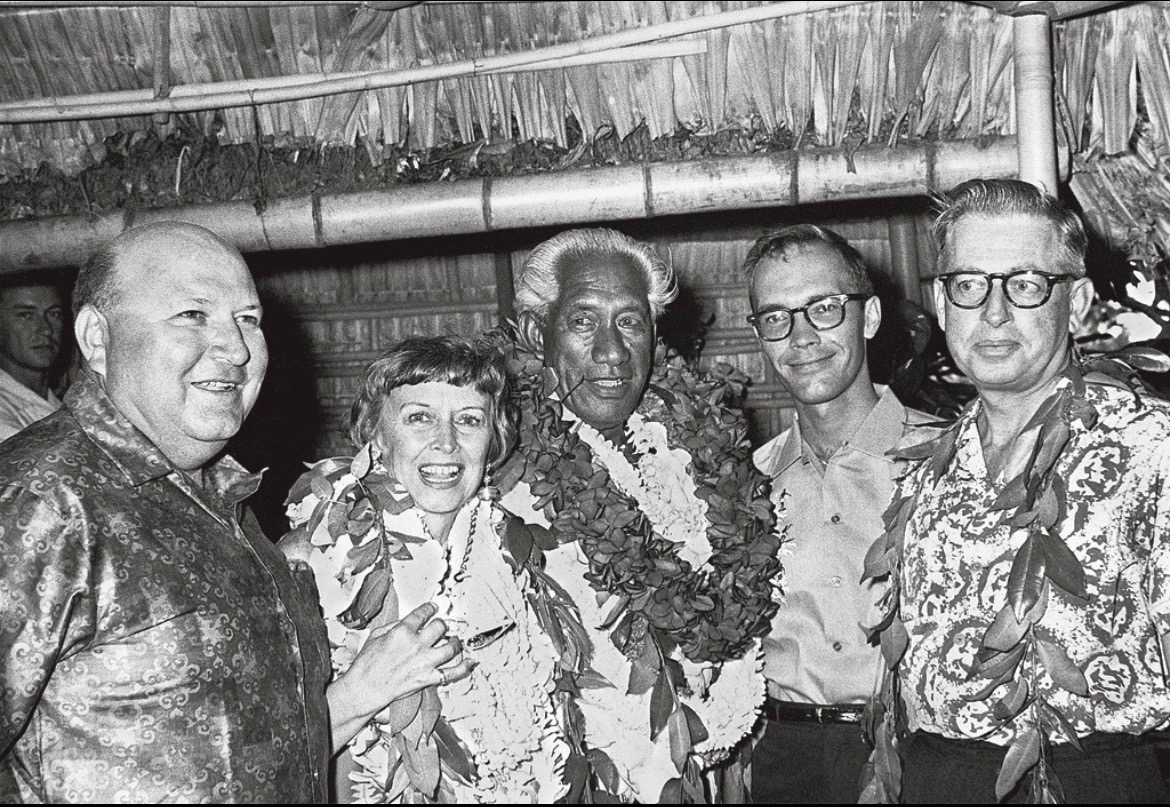
In Hawaiian culture, a waterman is an honorific, a proud distinction for someone who is fully in tune with the trade winds, the tides and the ocean. A waterman knows how to paddle, surf, sail, and swim. Not only was this title bestowed upon this beloved son, of pure Hawaiian ancestry, but Duke would become a five-time Olympic champion, the father of modern-day surfing, a Hollywood actor, a sheriff, a nightclub owner, and most of all, an esteemed lifelong ambassador of Hawaii.

Born on the island in 1890, Duke’s family moved to the Diamond Head area of Waikiki during his childhood. His mother’s family owned a plot of land amongst the rice and taro paddies. Julia was the daughter of a high chief from Kuai, and married Duke Halapu Kahanamoku from Maui. For the eight children, the Waikiki beaches were their playground.

Duke became a masterful swimmer and surfer, fashioning his own surfboards from enormous planks of Koa wood that could easily weigh 125 pounds. Lugging the boards was cross-training in itself, but this had long been a way of life for Hawaiians. In 1777, a surgeon aboard James Cook’s ship, The Resolution, journaled of native Hawaiians surfing and the ease in which they did so. By 1847, missionary H. Bingham deemed it a ‘heathen sport’ primarily as it encouraged the intermingling of the sexes, not least as they were barely clad! The missionary also opined ‘that surfing diverted Hawaiians from honest labour’ and spoke disparagingly of surfing as the ‘pastime of chattering savages.’ By 1900, with the arrival of more and more missionaries and settlers, as well as laws and social standards discouraging Hawaiian cultural practices, the noble and traditional art of surfing was in a sad decline.

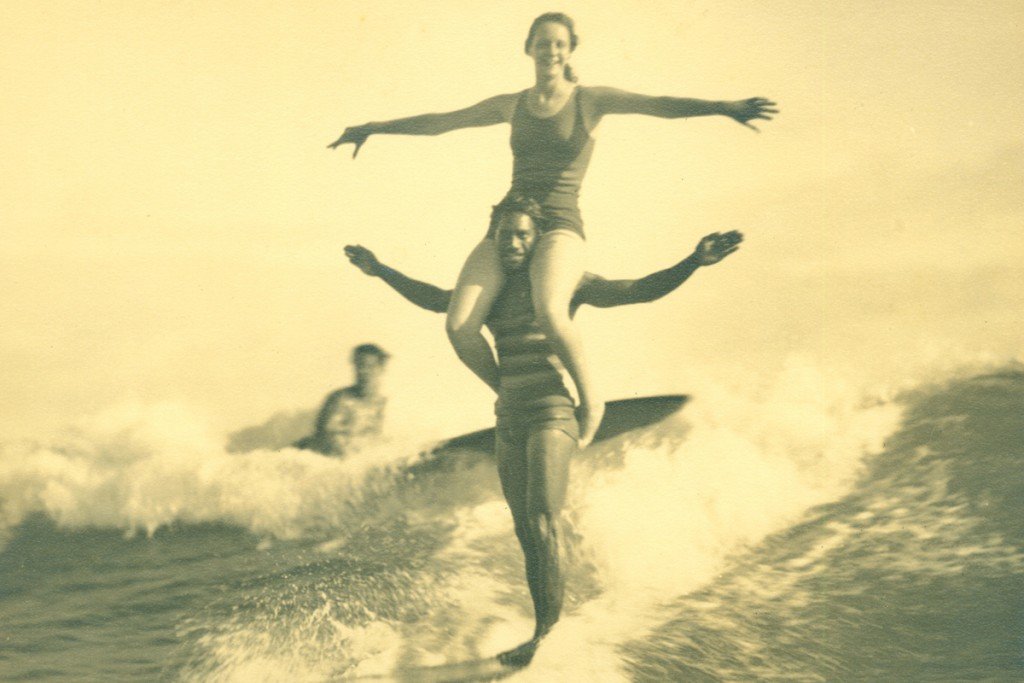
In 1900, when Duke was ten years old, Hawaii unwillingly became a colony of the United States. Eight years later in a reaction to the whites-only Outrigger Canoe Club, Duke and two others formed their own club, mostly comprised of full or partial Hawaiian-blooded locals. Ostensibly for swimming, the club evolved to include surfing, canoeing and kanikapil… the impromptu style of local music, ideally performed on the beach. The Hui Nalu (Club of the Waves) was based at the Moana Hotel and became a hotspot in Waikiki. In 1915 when some of the members started beach concession businesses, they contributed to the unlikely beginnings of the renowned Waikiki Beach Boys.

Visitors were mesmerised by the prowess and talents of the Boys on the water. By the late 1920’s, they became constant companions, tour guides and friends to the well-paying visitors. Lessons were given in swimming, surfing, canoe wave riding. Musical evenings rounded out the local experience. And even as the Beach Boys earned good money, they had the pleasure of being in the water and proudly sharing the heritage of their island. Duke Kahanamoku would go on to exemplify what Beach Boys even today emulate… the Ambassador of Aloha.

When the US Mainland held an outdoor swim meet in Hawaii in 1911, Duke easily set two World Records in the 50 and 100 meters. Yet when the results reached head office back in New York, the records were rejected… “it’s only Hawaii, so far away, no oversight,” etc, etc. Hawaiians reacted to the snub, and likely to the racism, by rallying to pay for Duke’s passage to the mainland to compete for a spot on the Olympic Team. Few people had been to Hawaii, nor could find it on the map, and Duke appeared as an anomaly… an Islander with a powerful physique and technique, bestowed with grace in the water, with humour and good sportsmanship. Duke was selected for the US Swim team and the story thereafter only burnished the legend. Gold and silver medals in Stockholm, 1912. Two golds in Antwerp, 1920. Silver in Paris, 1924; his brother Sam won the bronze!

Duke’s fame opened many doors in the US and around the world as he promoted surfing. At this time, home was California where he became an active member of the LA Athletic Club, mingled with movie stars, eventually becoming an actor himself. Signing with Paramount Pictures, Duke would have roles in some twenty movies, invariably relegated to playing ethnic parts. Teaching and spreading the art of surfing remained a constant in his life and in 1925 when a fishing boat capsized in Corona Del Mar, California, respect for the Olympian increased even more dramatically. Through 25 foot waves, Duke bravely paddled out to the drowning victims, rescuing three at a time on his surf board. That day, eight people owed their life to Duke’s bravery and when the rescue made the headlines in big city newspapers, his fame as a national hero was truly cemented. The ‘rescue’ surfboards we see on the beaches of Hawaii today, are just one of his legacies.

After failing to make the Olympic team for LA in 1932, Hawaii tugs at his heart and Duke returns to O’ahu. He still travels and is feted around the world, yet once he’s returned to his roots he questions ‘what’s next?’ In 1934 Duke is elected Sheriff of Honolulu which he serves for twenty-six years and while doing so, the world discovers tropical paradise on the islands and the ‘famous sheriff of Honolulu’ finds the time to play host and entertain the rich and famous. Meeting Duke was a must!

In 1940 Duke married the love of his life, Cleveland born Nadine Alexander. The ballroom dance instructor had noticed the Hawaiian legend in magazines and once established on the island and teaching dance at The Royal Hawaiian Hotel, she reported that her first meeting with Duke was love at first sight!

I can only imagine the delight when at age 71, Duke starts yet another career as owner of Duke Kahanamoku’s Club in 1961. The clubs impressive entertainment lineup, eventually including the legendary Don Ho, made it the hippest place to be seen.

Tiny paper umbrellas completed the mai tais. Crisp whites or florals, complimented by a lei, was the sartorial choice for all. And hula dancers performed to hapa-haole songs under the glow of tiki torches. Stars like Judy Garland popped in to perform. Sammy Davis Junior or Tom Jones could be seen in the audience, and watching from his peacock chair was Duke himself greeting friends and posing for photos. The golden age of tourism in Waikiki was underway and the Duke Kahanamoku Club was at the heart of it all.

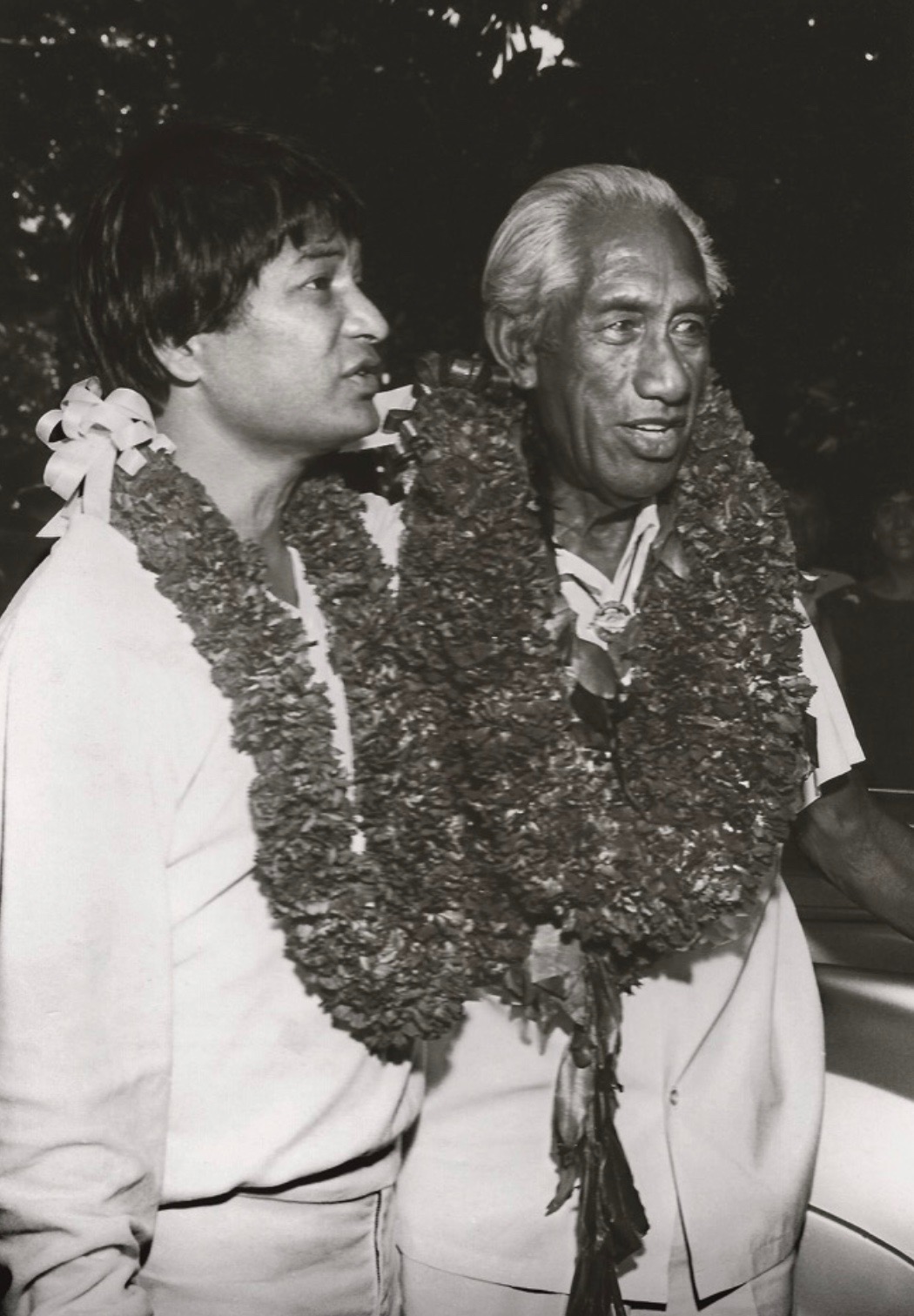
Through the years, Duke stayed very much connected with surfing and when it became the sexy image of Hawaii’s tourist boom, stars like Elvis, Rita Hayworth and Gidget helped popularize the islands. Shows like Hawaii 5-0 and Magnum PI followed. When Duke passed away in 1968, even with all the varied facets of his life, his life was celebrated by a massive Beach Boy funeral on Waikiki. Paying the deepest respect to Duke Kahanamoku’s love for the sea, his ashes were cast into the ocean from an outrigger canoe. His legacy as the touchstone of ancient Hawaii to the modern era of surfing, as a racial pioneer and Olympian, as Hawaii’s most beloved son was celebrated and honoured.

As I researched this piece, I came across an episode of ‘This is Your Life’. Duke is perhaps in his 70’s and being honoured for his life’s work. Each mystery guest places a lei around his neck as they enter the stage, then a handshake, a hug. Three of the men that he had rescued are there, they thank Duke for their life which he accepts humbly. He is charming, and warm taking it all gently in his stride. A few of the surviving Beach Boys pay their respects, as do his siblings, proudly reminiscing, then filling the stage with harmonious songs of Hawaii. Then Nadine enters the stage, pretty and graceful in a floral dress and a bespoke lei. She’s dainty beside her strong, imposing Duke, layers of leis around his neck now almost obscuring his still-handsome face. Nadine’s wrist jangles as shy places her hand over his. She isn’t shy in admitting that it’s his Olympic medals dangling on her wrist. Their love radiates through the black and white screen and I can only imagine what a time these two had at their Club – the darlings of Waikiki, dancing the night away.

Duke’s life makes you smile… a life well lived, a proud Hawaiian legacy, a poster boy for these islands that I came to adore. If you stroll past Duke on the way to the beach, give him my fondest regards!

The Aloha of Hawaii, part one… Feeling Waikiki

Standard

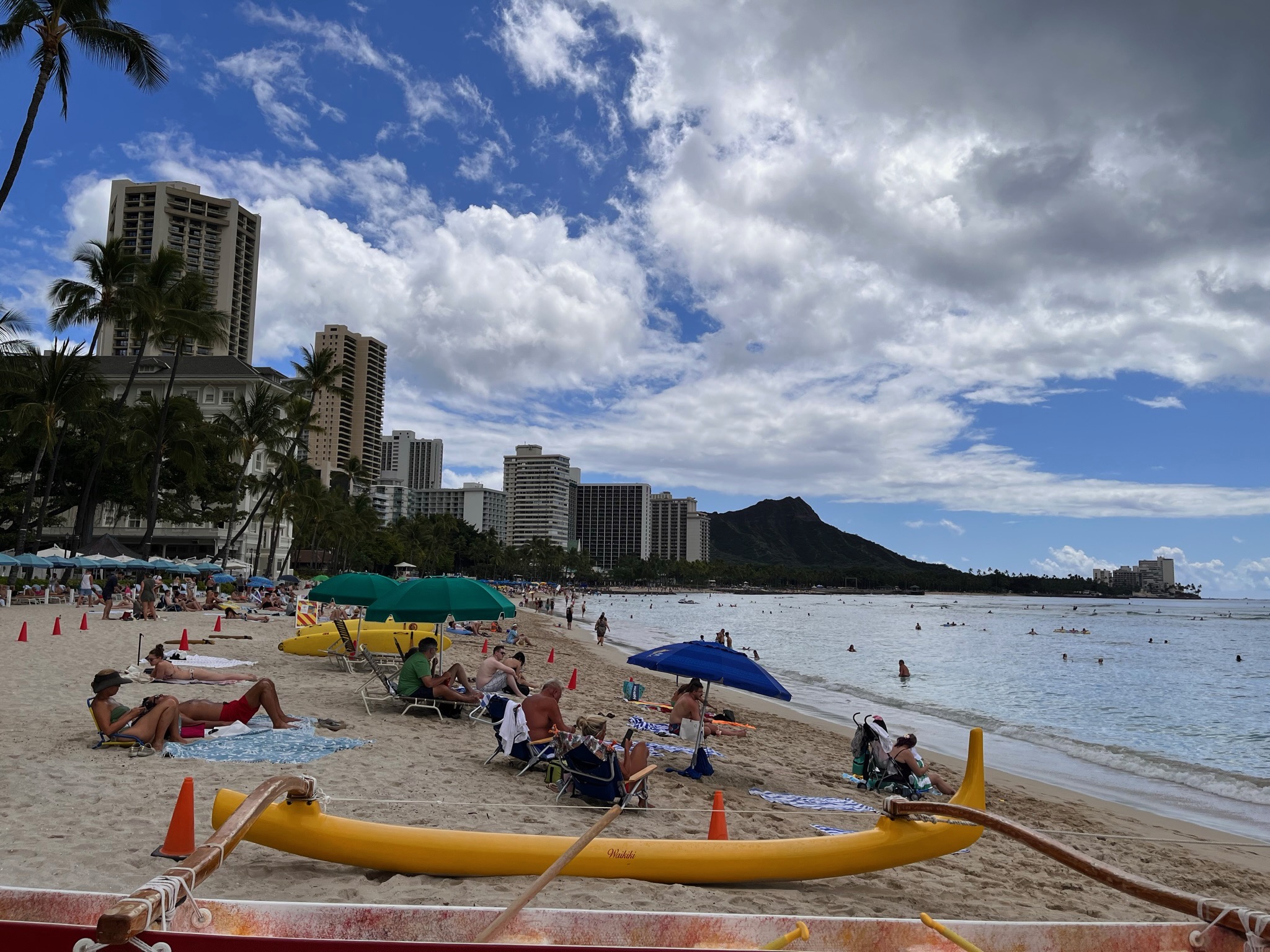
After two years of travel-put-on-hold, where would that first trip take me? Now as I stand on top of Diamond Head, the volcanic cone on the island of Oʻahu, a sense of elation washes over me. Waikiki unfurls along the leeward side against the dazzling blues of the Pacific Ocean, a seemingly endless strip of fine white sand, gangly palm trees and grand hotels. The lush greens of Cook pines, eucalyptus, acacia, and banyan sprawl up the gentle mountains beyond. It’s our first trip to Hawaii and that fact seems to complement this inaugural post pandemic travel. The vista before me is breathtakingly beautiful, the temperature is a perfect 28 C, and throughout the next few weeks, a wide smile and that feeling of aloha are a constant.

Aloha is more than a greeting on the Hawaiian islands. It has a deep cultural and spiritual significance for locals and time and time again, a conversation will conclude with a warm smile and an ‘aloha’. It’s an expression of respect, of love for the land and the ocean, it’s a state of mind. Bumper stickers might even encourage one to ‘Drive with Aloha’. Yet I sense that in the deep roots of the expression is also an intrinsic way of preservation, of how Hawaiians feel regarding their native land, perhaps a reaction to how it was inhabited by missionaries and plantation owners, then eventually appropriated and absorbed by the United States.

After a long Canadian winter of monochrome whites, the palette of Waikiki bursts with vibrant hues and is suffused with history. The name of this iconic district of Honolulu, the capital city of the islands, means ‘spouting fresh water’. Today it’s difficult to imagine how entirely different this now tourist enclave looked less than 150 years ago. Wetlands, fishponds and taro fields were fed from mountain streams rendering it one of O’ahu’s most fertile farming areas. In 1795, Chief Kamehameha successfully united the Hawaiian Islands and his descendants later brought the royal court to Waikiki. In the 19th century, Queen Kapi’olani had two properties here. Her favourite, a modest home on the waterfront, was a haven for her poetry writing and work preserving the ancient forms of the hula dance. Missionaries who arrived on O’ahu in 1820 would condemn these ‘heathen displays’; as they did the ancient art of surfing… more of this in Part Two.

By the 1880’s, well-to-do citizens began building ocean-front cottages but things changed dramatically when Waikiki’s first luxury hotel, The Moana, opened its doors in 1901. Built on the land of a former royal compound, the stage was set for Waikiki’s ineluctable new chapter. The opening of the Royal Hawaiian Hotel in the ’20’s to serve ocean liner passengers sealed that fate.

As I curl my toes in the white sands of Kahanamoku Beach, then splash in the rolling waves, airplanes soar and bank or descend into Honolulu airport, about thirty minutes by car. We come to follow their directions and know if they’re heading to the nearby island of Maui (as we will in a week’s time), to Hawaii, the ‘Big Island’, or whether they are ferrying visitors back to mainland USA, to Canada, or perhaps west to Australia or Japan. Long before attracting tourists, this archipelago – a string of 137 volcanic islands spanning a mere 1500 miles – was reached by voyaging Polynesians.

The first visit by Polynesians in about 300 AD was likely accidental, the second wave around 1000 from the Tahitian islands almost certainly wasn’t. Navigating more than 2400 miles of open ocean by the sun and stars in double-hulled canoes, the settlers brought their beliefs, social structure, plants and animals. The locals were likely absorbed, cultures and genetic lines then entwined. Ancient Hawaii was a highly stratified society run by ali’i or chiefs who gained their right to rule by a human pantheon of demigods. Culture was based on everyone playing their part through work and ritual, maintaining the well-being of the community through enriching traditions of music, dance, sport and the concept of aloha.

Present day O’ahu is a mix of cultures and heritage with tolerance for different ethnicities and religions. Yet I see glimpses of how native Hawaiians struggle with the colonial past and as with so many indigenous peoples, the slow appropriation of their lands. I speak with Hawaiians who mention how difficult it is for them survive the high cost of living, often needing to work two or three jobs. Or perhaps having no choice but to leave their island for the mainland. On O’ahu, I feel the presence, the struggles and the pride of the local heritage.

Here, the value of ‘ohana’, family and friends, is still very important. Yes, you do wear Hawaiian shirts to work and maybe rush barefoot to the beach at lunchtime, surfboard perched on head. Absolutely, the food is a fusion of local, Japanese, Polynesian, Filipino and of course the ‘mainland’ staples. And most days, after enjoying the beach, exploring the streets and gazing at sunsets, at some point we’ve stumbled upon the strains of the traditional ukulele from hometown musicians. This melodic, ubiquitous four-string member of the lute family cradles one in the embrace of Hawaii just as beautifully as the rhythmic beat of the ocean waves. A melodic backdrop for newcomers to the island like us, its strains must surely channel pure nostalgia in islanders, fond memories of simpler times.

After dinner one evening, we chance upon The Gallery on Kalakaua Avenue, just along from the historic Moana Outrigger Hotel and high-end boutiques. The spacious cafe and art gallery is abuzz with sun-kissed surfers and night-cappers. A ‘too big for the stage’ band delights the crowd with a fusion of musical genres, but it seems that the local melodies accompanied by the ukulele draw the most applause. Versions of this scene play out over the weeks and I cherish this glimpse into the island’s heritage – listen to John Cruz’s, Island Style and you’ll hear what I mean.

Back outside and along from The Gallery, we meet Clayton. Set up under a colourful umbrella, an artistic sign announces that he’s an army veteran who has lost his job due to the pandemic. We are the only ones to pause and savour his evocative songs. In a melange of English and Hawaiian, Clayton sings of ‘old Hawaii’. He laments his situation, but is hopeful for the future. He is especially eager about preserving the folk tunes of an island that he loves. I offer that I hope there is room for the younger generation of bands of which we’ve just heard, but also respect for more traditional performers like himself. Still, there’s another sad and alarming point that Clayton makes. Although he now has a place to live after losing his home, homelessness in the Honolulu area is clear and present. As a visitor I feel particularly helpless and can only share some food or give a few dollars perhaps. I have no reference points as to how many came for the warmth and lifestyle but for whom it didn’t work out. I do know that against the backdrop of millions of tourists each year and perpetually sunny skies, it’s particularly heartbreaking to see.

The white sands and gentle waves of Waikiki have attracted visitors – some come and go, some find a way to stay – since it became a jet set destination in the late ’50’s. Steamship travel preceded this, but the emergence of affordable air travel would forever change the landscape of these islands as tourism grew exponentially in the 50’s and 60’s.

Hoping to glimpse vestiges of that era when Polynesian culture and playful hospitality was very much part of the enticement for visitors, I had purposely booked a ‘vintage’ hotel just blocks from the beach. The moment we walked through the music filled bamboo-adorned entrance, I knew White Sands was going to be that delightful nod to the heyday of the Jet Age that I was hoping for.

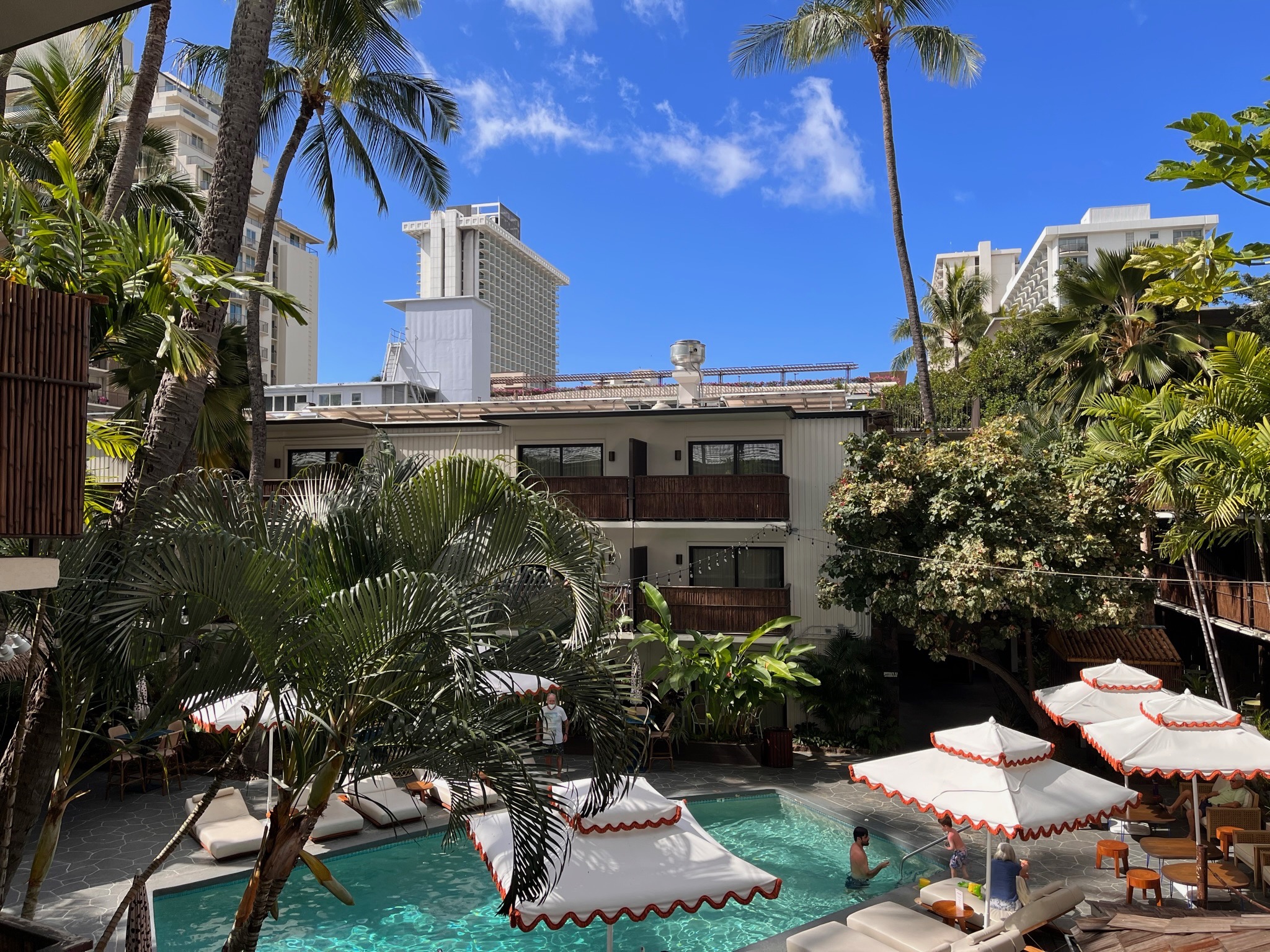
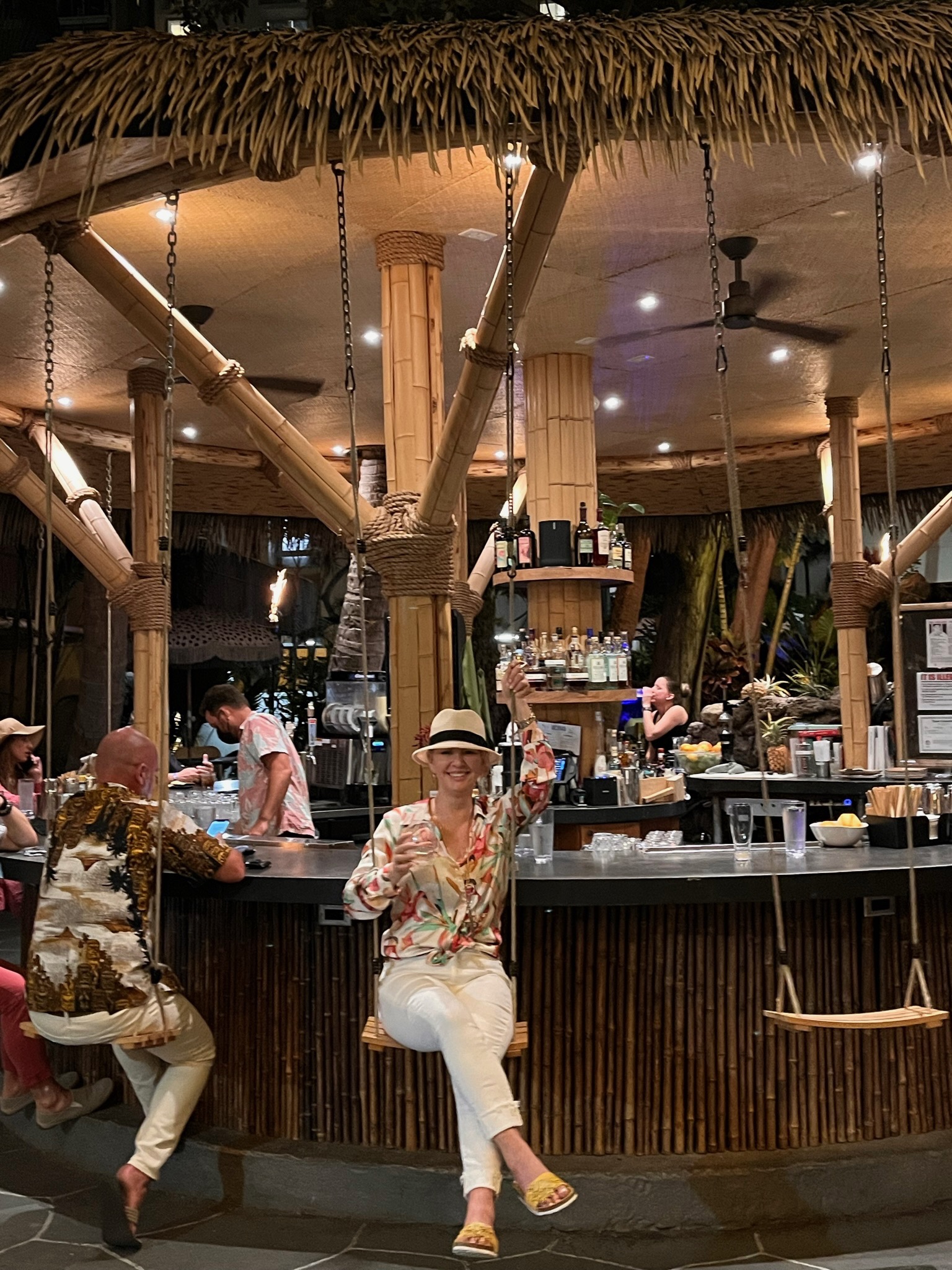
White Sands Hotel was built in 1957 by local architect Edwin Bauer. Framed by tall kukui and coconut trees, the guest rooms were designed around the pool courtyard that becomes a gathering focal point. A recent renovation and re-imagination, transports you sublimely into the past. It is all a veritable vintage oasis, from the Heyday Bar with its playful swing seats and flickering tiki torches, to the oversized orange-fringed umbrellas. Nods to White Sands original days are also in the rooms with vibrant patterns, mid-century furniture, and at reception with landline telephones and a record player that might just serenade you with a Don Ho tune. And just as Bauer would have envisioned, we meet plenty of travellers and locals around the poolside and bar throughout our stay. We all agree… it’s a snapshot of Hawaii that we hoped it to be.

As many of Bauer’s buildings from the 50’s and 60’s have been demolished to make way for high-rise hotels, it’s even more special that White Sands and a few others still remain. Over a prolific twenty-five years or so, Bauer designed and built office and apartment buildings, as well as classic two-story walk up hotels.

I become slightly obsessed with his work along with the early mid-century modern architecture in general and we roam the city by foot in search of the Waikiki of the 50’s and 60’s. Buildings from this period are simple and utilitarian yet, for their time, cutting edge, their designs embracing the tropical climate and celebrating Hawaiiana heritage. Tall palms sway and silhouette against the backdrop of mid-rise apartments. Retro signage announces on walls of black and brown basaltic lava. The ‘tropical hat’ of a hipped roof sheds the rain and protects from the sun.

The scenes transport me back to the tropical places that I’ve lived; their use of sun protecting matchstick blinds, louvered screens, lush hibiscus and bougainvillea filled landscaping. Specific to Hawaii is the version of the balcony, porch or veranda, the lanai. Connecting the inside with the out, the beloved and functional lanai embraces yet also protects from the elements as it acts as an extension of the room or home.

On our last day in Waikiki, I track down two more of Bauer hotels that have survived the march of time. The Breakers Hotel isn’t far from one of his most beloved apartment/hotel buildings, The Kalia, and when I peek into the courtyard at The Breakers I see the signature local lava rock, bespoke wood for ventilation and an oasis of verdant green shading the central pool. Bauer’s iconic Hawaiiana Hotel is right next door, though it’s been rebranded as The Pagoda. As with White Sands, I can easily imagine arriving at these hotels in the 60’s, at once in tropical paradise, a welcoming lei dangling fragrantly on my shoulders, mai tai in hand!

A new generation of architects is revitalizing interest in Edwin Bauer and his significant contribution to Waikiki’s architectural portfolio. Late one afternoon as indeed I am sipping a cocktail poolside at White Sands, I read a little more about the architect who migrated here from San Francisco. After a prolific career, Bauer disappeared at the age of 78. Suffering from Alzheimer’s, he was last seen stepping off a bus, never to return to his Waikiki apartment. Despite a massive search and rewards offered, his four adult children had no choice but to declare him legally deceased.

As palms sway above and water splashes up to me from fellow travellers in the pool, I gaze out to long-stemmed bird of paradises nestled below our lanai. Cocooned in this tucked-away oasis, I’m confident that Bauer’s vision lives on in beautiful Waikiki.

To be continued…

Poolside at White Sands

My Mountain Gardens… oasis of calm and colour

Standard

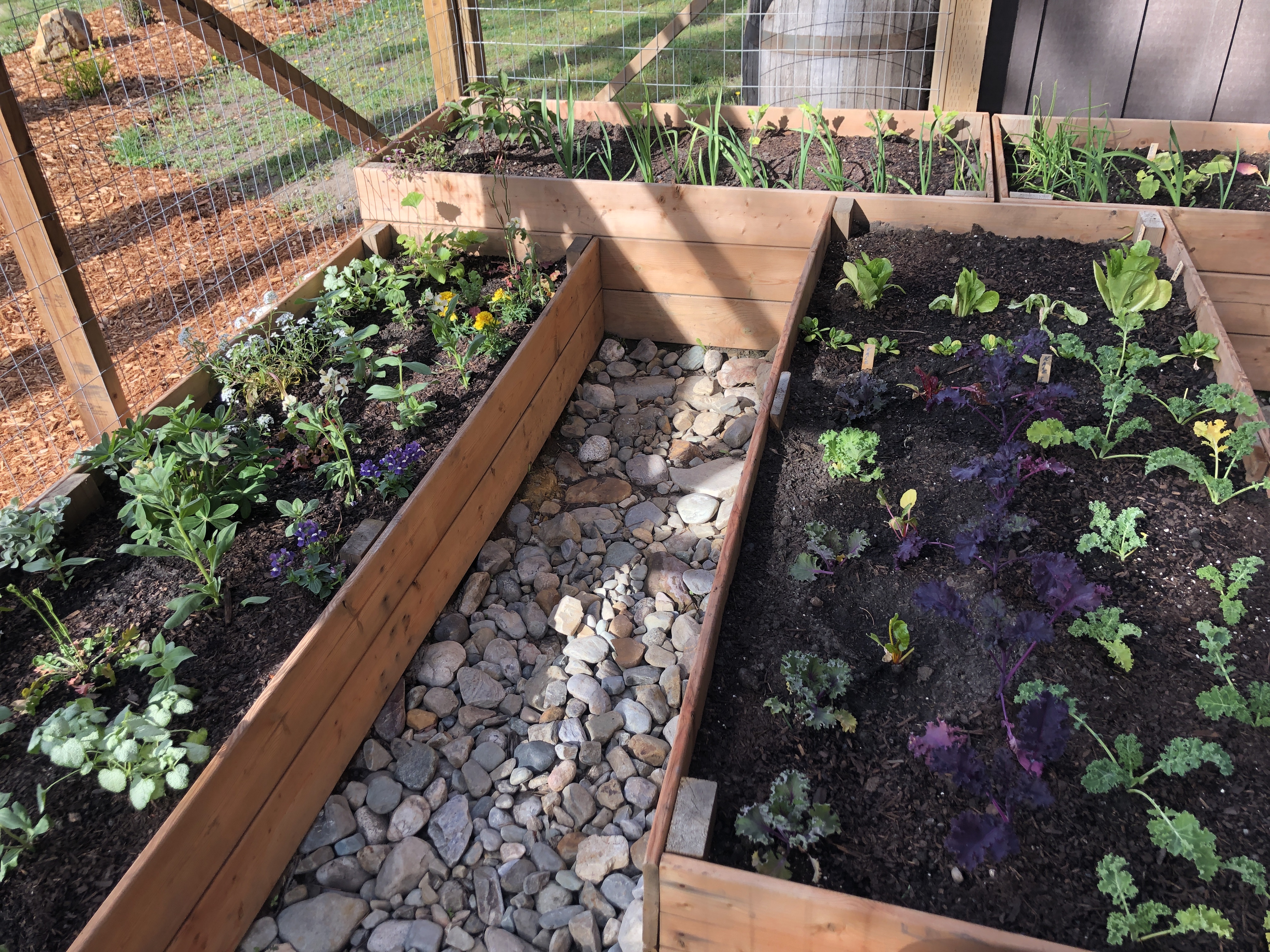
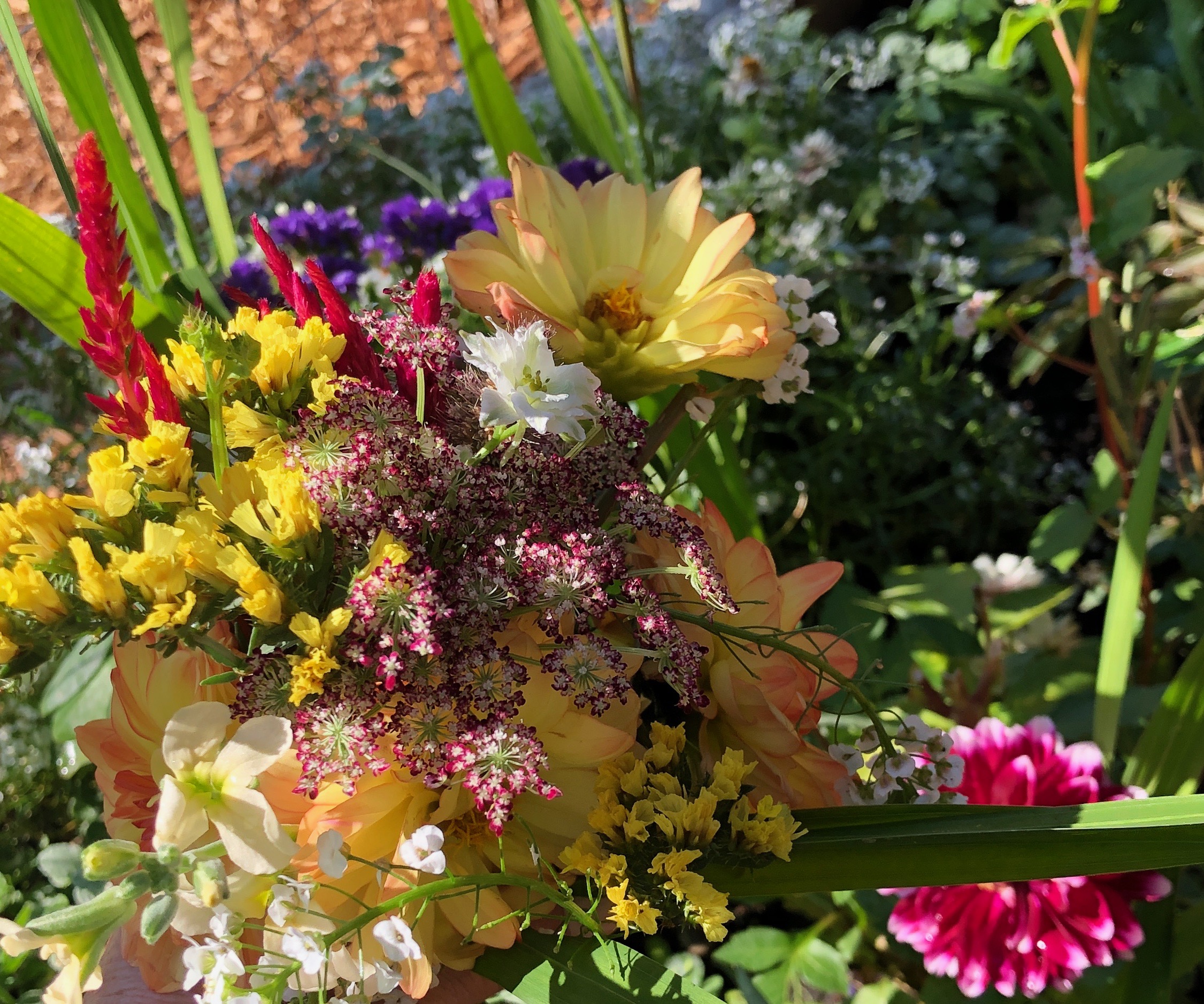
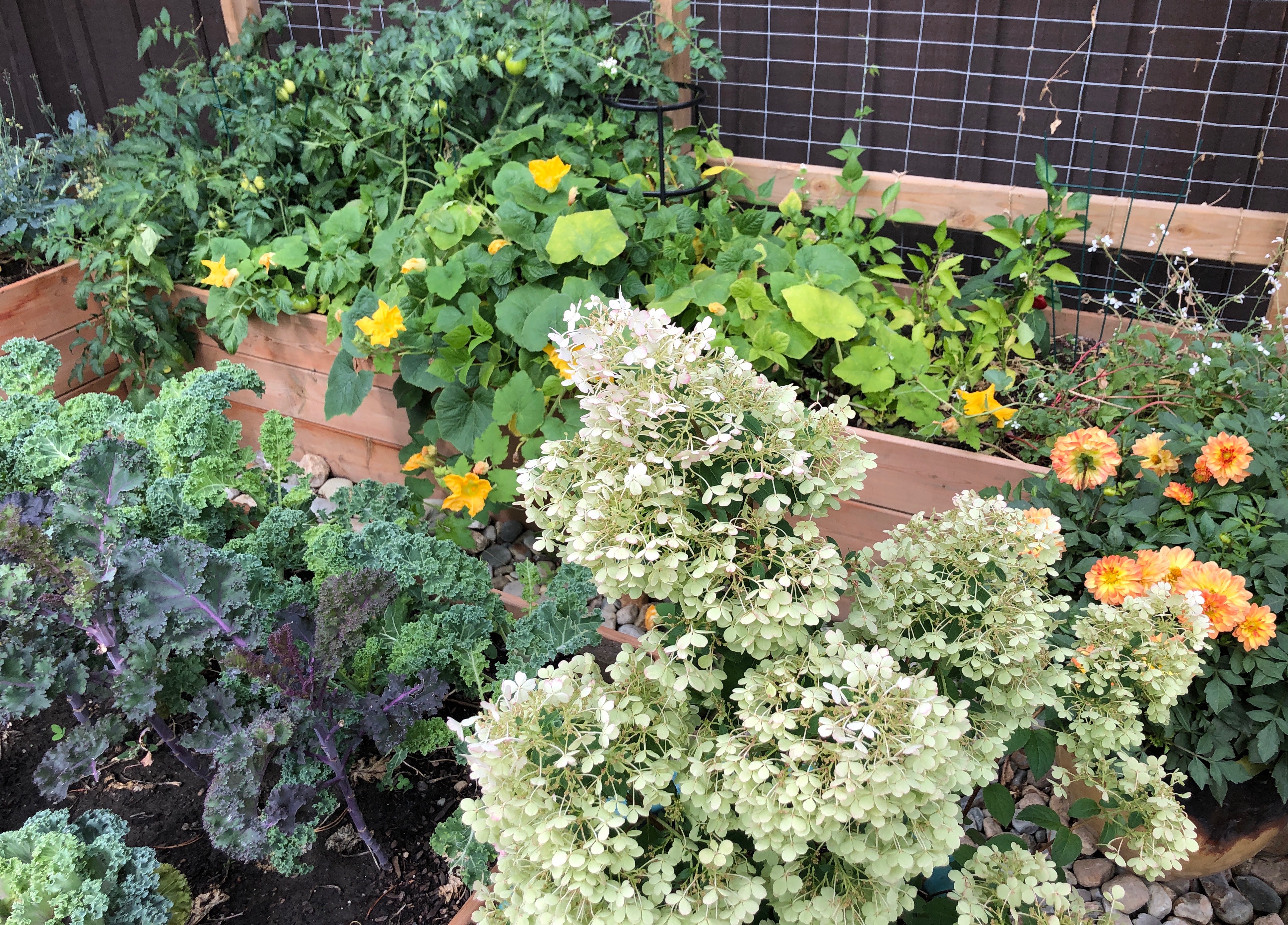
Delicate dahlias mingle with cherry tomatoes and leafy kale. Golden marigolds shine alongside lillies, zinnia and fragrant vintage. Budding morsels of cauliflower and broccoli nestle in their frilly leaves… well I admit, the gophers did enjoy nibbling the cauliflower! My mountain gardens are gloriously abloom and verdant, and I’m surprised to find that I haven’t yet written of my cherished patch of vegetables and flowers. They’ve been an oasis during these unsettling times.

The outdoor garden sprung to life last spring, a reaction to the pandemic, like a lifeline during these unprecedented times. From building the enclosure – to protect from deer – to constructing the beds and a delightfully Japanese-inspired gate, to seeding and planting, the garden was a family project we all took pride and delight in. Then, we were embraced in our covid-bubble of seven and the garden was a solace. Now, I can’t imagine our home without it.

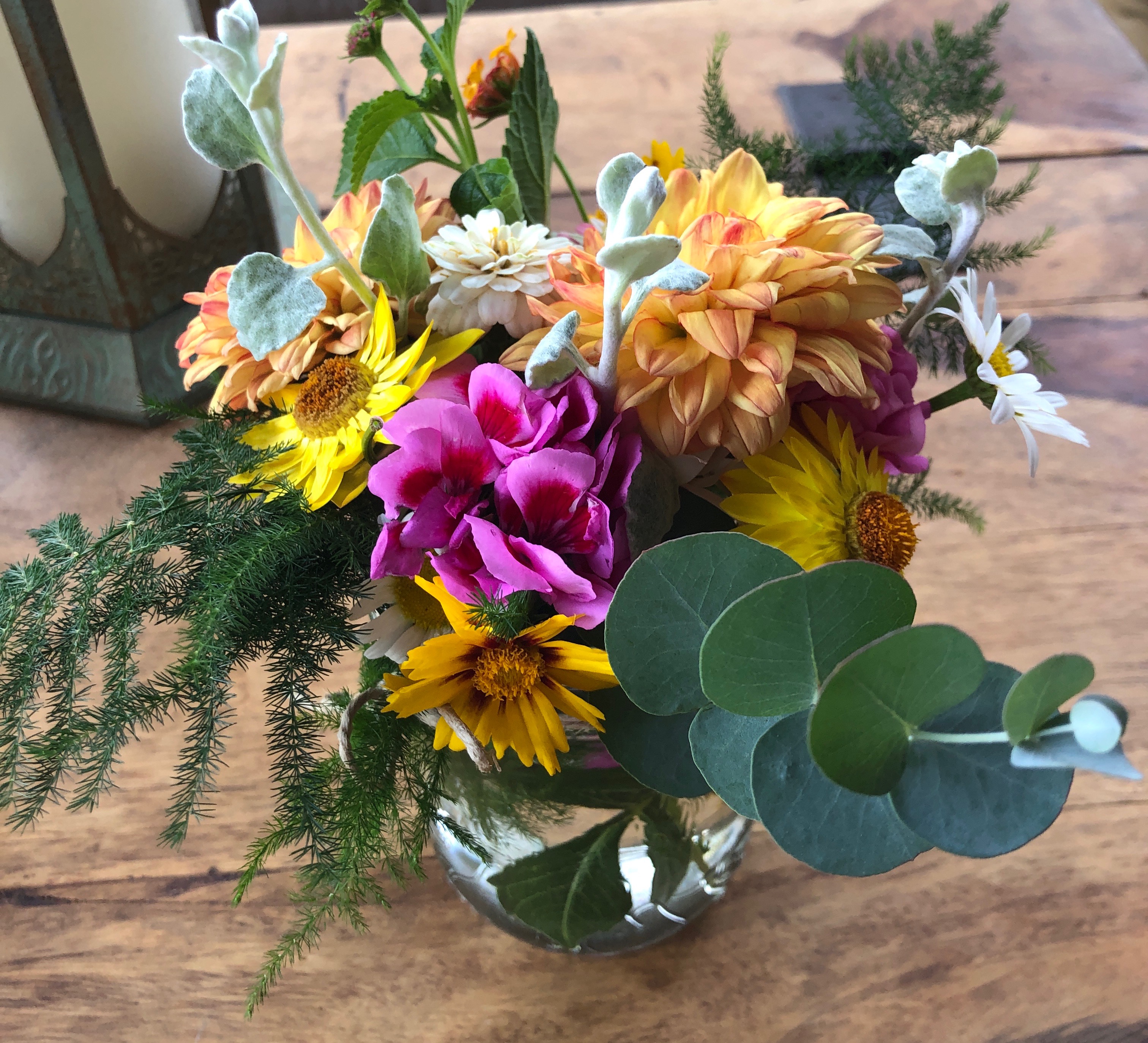
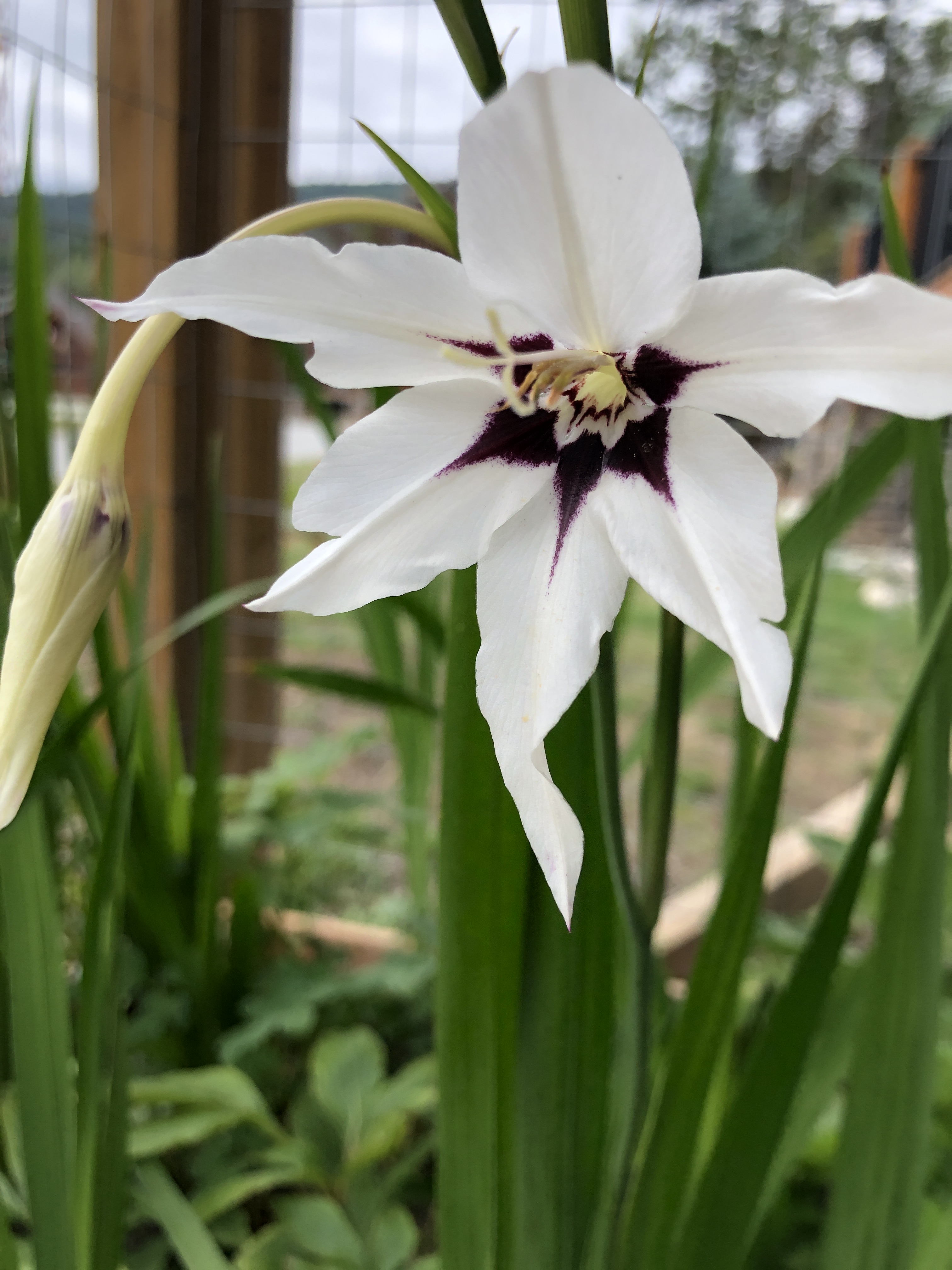
Admittedly it yielded very little the first year, but this second summer not only is it much more profuse, it’s a haven of calm and colour. I’ve always had ample flowers in pots and planters wherever we happened to be living, but this actual garden has ‘home’ stamped and embedded in it, deep down to its roots. We’re now in Canada for much of the year, not travelling afar, and the joy of gardening has become a marker of being settled… and that’s more than alright. The show stopper this year might well have been a single lupine; but oh what a beauty she was! And now as the tomatoes ripen and the carrots are still too dainty to pick, gorgeous white Murilea lilies have burst forth – simple, elegant late bloomers. It’s been such a joy to stroll to the garden and pluck blooms for bouquets and small posies for the guest room.

Alongside the garden we’ve embarked on more landscaping… pines, maples, lupines, wildflowers and peonies. The peonies, I might add, stubbornly refused to bloom again this second year. Each morning it’s a walk of discovery to inspect what the deer might or might not have munched through during the night. Our mountain property is supposedly full of ‘deer resistant’ plants as is the norm here, yet a recently transplanted hollyhock from my parent’s garden was eagerly gobbled up just as it was about to burst forth. It’s an ongoing balance as we share this environment with the local fauna. Just a few months ago, the new-born dappled fawns tentatively browsed the grounds, making sure not to wander too far from their mamas. Now they amble through with confidence, hoping for something new to interest them. Somewhat more welcome are the blue jays, hummingbirds, bees and butterflies.

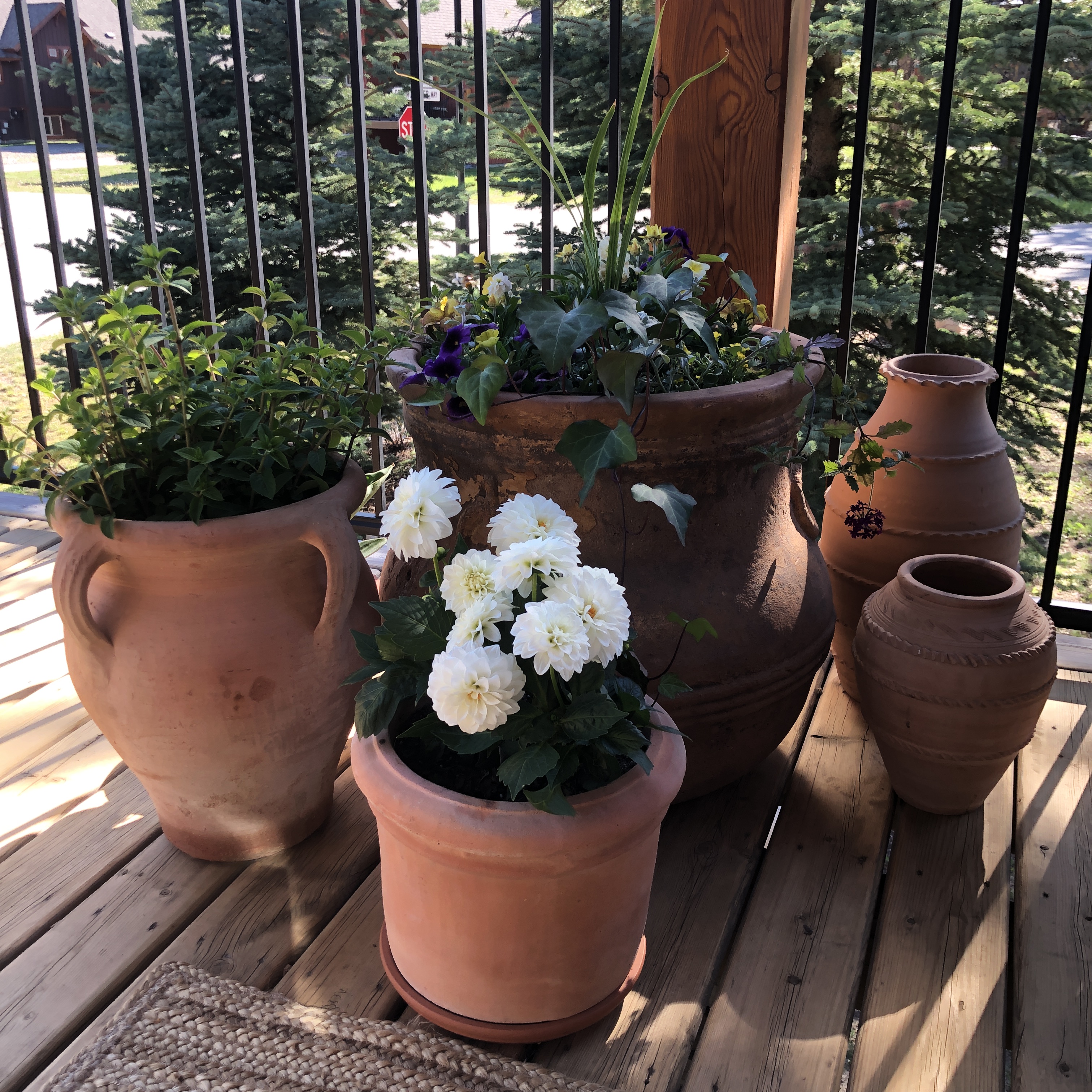
Thankfully there is one protected haven for my blooms. During the summertime in Canada, the deck, usually at the front of a home, becomes like another room; an outdoor living room accented with planters and furniture. As the weather turned warm in the spring, I decided to re-create my deck space, envisioning it more like the warmer places we’ve lived. I wanted palms and romantic flowers, rattan and texture, vestiges of the past, yet evoking modern calm.

And it came together beautifully. Three potted cedars not only provide privacy, but are a mountain-nod to the tall cypresses of Italy. A basket from Thailand holds an emerald-green palm, its gentle swaying in the breeze transports me back to tropical Asia. Lemony delicate straw flowers, snap dragons and mauve petunias grow happily in a planter found in an Omani souk. Antique Japanese parasols are at the ready for shading. And my beloved India is heartily represented… in lanterns and cushions, by a wooden sculpture and a chunky Indian coffee table. With the ski hill as the deck’s backdrop, there’s a peaceful harmony of those places dear to me while still embracing this mountain space.

The joy of creating this outdoor sitting room, as with the garden, has not only brought more beauty to our surroundings, it satisfies the desire we all might have now and then to create and curate; a reimagining that can nourish our soul.

Through the pandemic I have become not only more thankful, perhaps it has offered us the not-so-gentle-reminder to seek what we might want, to infuse with what brings us joy… to simply be happy in the moment. I recall years ago receiving a small handmade tile from a friend upon leaving Houston, just before our move to Norway. It read, ‘Bloom where you’re planted.’ How very apt.

And perhaps the rediscovery of the benefits of gardens – whether it be on terra ferma, on a deck or rooftop, or even just plants in your home – may be one of the few good things to have evolved from the pandemic. There is ample proof of the health benefits. And a feeling of fulfilment, of wonderment and serenity as buds turn to blooms, as seeds and bulbs peek up through the earth, as shrubs and trees mature… as the space you’ve created becomes a backdrop for life.

How wonderful to be savouring in this blooming and I hope the same for you, in whatever shape your ‘blooming’ might be. 

The Tendrils of our Human Connections…

Standard
Connecting in Hampi, India

This past year I decided to take a DNA test, even though I had a pretty clear idea of what the results would reveal. As expected, predominant strains of Northern European, mostly Dutch and British, confirmed my lineage. Yet I was intrigued to see an unexpected strand of heritage.

As a traveller and someone who has lived a global life, I’m a passionate collector of histories, people and places. I’ve gleaned stories from bustling bazaars and affable street vendors, from sacred temples and on slow-travelling trains. It is the weaving of human interactions and narratives that inspire and fascinate me. They also humble me and time and time again, I’m reminded of just how similar we all are.

Is this not why we travel and step out beyond our comfortable boundaries? Is it not to rejoice in the connective tissue that we all share, the common pathways of humanity? The lives of many people have intersected my travels and the places I’ve called home. These tendrils of connections, some long-lasting, others more fleeting, are always meaningful and have changed me in often imperceptible ways.

During these past twelve months or so of the pandemic, many of us have dearly missed traveling. We yearn to stride through the airport, passport gleefully in hand, excited to once again traipse through familiar or unexplored streets in distant places. I also believe there’s an innate desire to feel tangibly connected to the world, to affirm our place on this earth we call home.

Which leads me back to my unexpected strand of DNA. It is Scandinavian and perhaps part of me had hoped for this. While working as a tour guide in Norway, I wove stories and historical tales while often secretly imagining a link to my Dutch mother’s lineage. Perhaps my genes are drawn from one of the many Norwegian sailors who sailed southward to join the Dutch Navy in the 1700’s. Young women also joined that migration, some following their sailor, others in the quest for employment. While some thrived, others found themselves destitute in an unfamiliar, foreign land. Nonetheless, I would be proud if any part of my heritage owes something to their courageous spirit.

Of my own personal odyssey, I’ve come to appreciate that my joy of cultural nuances has actually revealed a common humanity that is stripped of boundaries. There have been times during these enriching experiences that I have felt as connected as if they were family… as if of my own tribe.

During my time in Qatar, there was slim chance of claiming a long-lost ancestor. Yet once, in the desert under the fullness of the new moon, I was invited into a ladies’ Arabian tent. Settling onto lush carpets and plumped cushions, the diminutive, abaya-wrapped matriarch slowly removed her veil. After a welcome of warm frothy goat’s milk, the matriarch took my hand in hers. Her eyes were lively, recalling those of my own grandmother, honest and warm with a playful hint of mischief. With the help of an interpreter, our woman and motherhood united us while moon-shadows danced over the warm glow of our canopy.

When I taught English in the Sultanate of Oman, I certainly didn’t share the same historical lineage as my students – many a blend of Zanzibari and Omani – but the humour and gentleness with which they enveloped me was as welcoming as the warm Indian Ocean surrounding us. They treated me with genuine respect and affection, revealing their proud and generous culture. I was invited into homes, into yet more majlis tents, invariably with the traditional welcome of incense and strong coffee. And to my surprise I was gifted fine delicate filigreed silver – still displayed in my home today – precious tokens of treasured time and acceptance by my Omani friends.

Over the years, this chain of connections has grown, link by precious link. Years later in the south of India while searching for what would become our last overseas family home, we gazed out towards lush coconut palms and profuse mango trees with our prospective landlord.

We learned that his son had attended my hometown college/university in Canada and delighted in ‘what a small world it is.’ We chatted about the vibrant neighbourhood, the monkeys we might glimpse from the terrace, when the mangos would be ripe for the picking.

“I’ve wanted someone to live here who felt like family,” Nando said fondly. And over the next two years, we became just that, family, friends, neighbours, in the bustling heart of Bangalore.

Decades earlier in that same country as twenty-something backpackers, my husband and I happened to meet a teenage girl on a barren plateau. She had exited her remote tumbledown hut, her eyes gleamed with curiosity, then with hospitality. Insisting on preparing chapatis and chai over the smallest of fires, we crouched in the sand and shared the simplest of meals. I still cherish her generosity and wonder about her well-being.

Yes, I can recollect so many caring gestures of humanity.

The gift from a friend – joining her in a hushed tea ceremony in Japan under a fragrant canopy of cherry blossoms.

The caress on my cheek in Slovenia from a vivacious grandmother as we communicated in a common language of gesture and pantomime.

An ebullient greeting in Kazakhstan from a market stall-keeper. “Welcome, welcome to my country,” she boomed as she wrapped me in a warm bear-hug. Or in a boutique where I was entreated to try-on a kamzol. “If you live in Kazakhstan, you must have worn our traditional jacket at least once.”
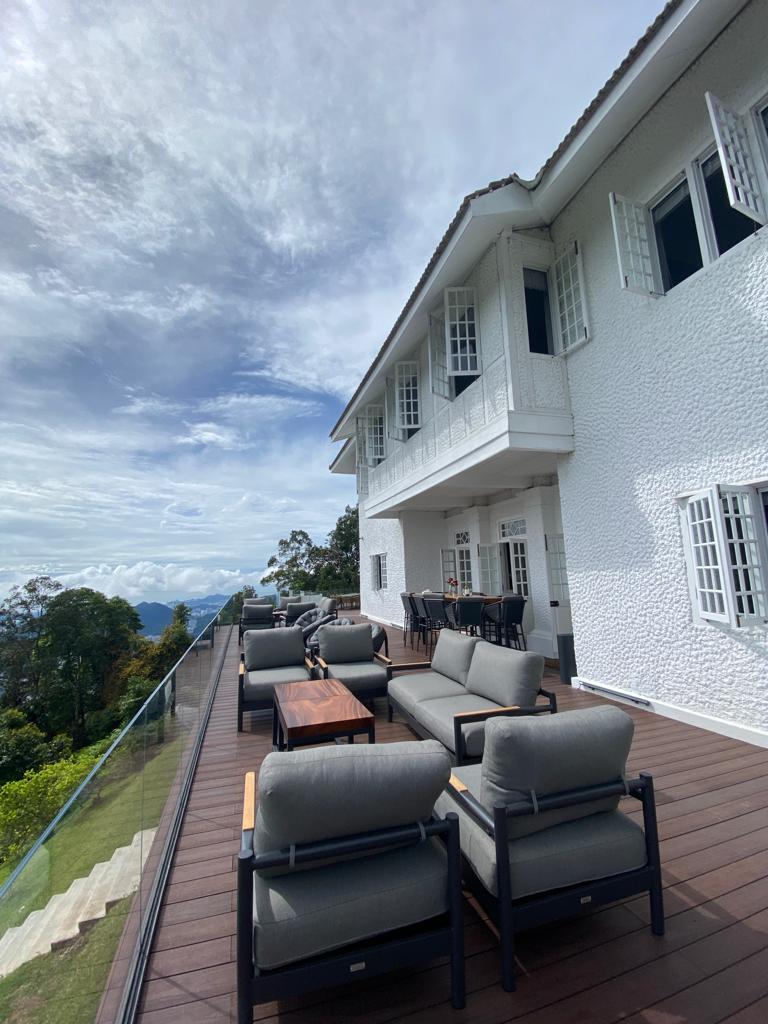
And an impromptu encounter on a Victoria street corner with fellow Emily Carr admirers, who at once became friends as our mutual interest in this iconic artist blossomed into a beguiling conversation.

As my mind dances, conjuring fond vignettes, I reflect that while genetics may tell us where we have come from, our human connections say the most about who we are. We are challenged more than ever during isolation of the pandemic to sustain and grow our connections, but still with a yearning for those serendipitous moments that bring colour and warmth to our everyday lives. For someone who treasures the unscripted happenstance of travelling, I miss this dearly. Yet perhaps, in the present confinement of our horizons, our ties here at home have become even more dear.

The term ‘weak ties’ was coined by the Stanford sociologist Mark Granovetter. He referred to weak ties as ‘acquaintances and people you encounter infrequently, strangers with whom you share a familiarity’ – perhaps at your favourite coffeeshop, on the cross-country ski trails, even mutual acquaintances on social media. These more fleeting tendrils of connections also shape our lives, in fact the essence of community building grows from subtle feelings of connection, shared interests, common pastimes, even a subliminal sense of being.

I see this clearly in the small Canadian mountain city that I now call home. On those days when I dream of a faraway place, a friendly exchange reminds me also of the power of belonging and the desire to be connected wherever you live. These ‘slender tendrils’ are indeed the roots of humanity itself and nurture us all.

One could argue that we’ve never been less connected physically, and yet we are more virtually connected than ever. So connections? Let’s gather and treasure them, share them freely and generously… they are the strands, the tendrils that give meaning to our lives, even now, most especially now.

ELS students in Muscat, Oman
The Kamzol Boutique in Aktau, Kazakhstan

The Florentine Files… Three Women of the Renaissance

Standard


Eleonora di Toledo marked the passage of the months with epicurean delights. In April, asparagus from Milan and healthy doses of oysters. June was graced with figs, peaches, Venetian pears, and olives from her father’s Spanish vineyard. And as autumnal weather cooled Tuscany, feasts of salted cod, artichokes and pheasants were abundant. The setting, after all, was an illustrious Renaissance court; not just any court but that of the Medici’s. Eleonora was the wife of Duke Cosimo I de’ Medici. Yet it was no secret that Eleonara had married beneath her.

Born in 1522, Eleonora was the daughter of one of Spain’s wealthiest and important families. When Charles V, Holy Roman Emperor, made her father Viceroy to Naples, Eleonora couldn’t know that she was destined to take the path of a political marriage to Florence’s all-powerful family. And some argue that Eleonora was among one of the first modern ruling ladies, a political advisor to her husband, commissioning and curating the arts, purchasing a palace with her own funds… and giving birth to eleven children. She was beautiful, intelligent, pious, and without a doubt, influential in helping guide the relatively new Dukedom of the Medici’s.

The Medici’s were not descended from power or royalty. Born in Florence in 1360, Giovanni di Bicci de’ Medici, one of five sons would inherit very little. Yet he would establish two woollen workshops and after securing a job in banking, set up the vastly influential Medici family bank in 1397. Branches were soon established throughout Italian city-states and beyond. Giovanni’s son Cosimo, then his grandson Piero, and in turn his great-grandson Lorenzo the Magnificent, would through the decades– except for two short interruptions – be the defacto rulers of Tuscany. They would endow Florence with patronage of art and architecture, helping facilitate a rebirth of the classical world – a great flourishing of artists, architects, scholars, writers and poets. In short, The Renaissance. 

A distinguished visitor in 1490 declared from the pulpit of Florence’s cathedral that the Florentines were a people ‘whose name is known all over the world and is more blessed than any other.’ Two years later, the Florentine scholar Ficino wrote that the “profusion of golden intellects had restored to life the arts of grammar, poetry, painting, sculpture, architecture and music… and all of this, in Florence.”

A number of years ago, I happily strolled back and forth across Ponte Vecchio during a week-long course of ‘Women in Renaissance Art’ at the British Institute of Florence. The ‘old bridge’ has long spanned over the river Arno. It unites the two halves of the city, between the old Roman centre with Brunelleschi’s towering Duomo, stalwart palazzos and charming piazzas, then beyond, over to the Oltrarno to the more working-class quarter of Florence. The ‘other side’ where the grandeur of Palazzo Pitti meets medieval chapels and neighbourhoods that still echo with the hum of this once-artisanal community – leather ateliers and stationers, wool dyers and sculpture studios. Ponte Vecchio’s origins during Roman times as a stone and wooden crossing, only seems to underscore the palimpsest layering of history and architecture. It enraptures and endears us to this storied city; I’ve written previously of how and when I fell in love with Florence.

During my sojourn to study at the Institute, as I ambled back across the Arno to my pensione, I was transfixed by thoughts of the women of the Renaissance and the roles they played. Their contributions, sacrifices, perceptions and opinions are often overshadowed. Thankfully their stories are slowly and enticingly being peeled back. And not surprisingly, just as women throughout centuries have thrived, persevered, and often quietly made their way, Florence holds colourful, fascinating and heartbreaking tales… as rich as the Ghirlandaio, Lippi or Masaccio canvasses that imbue this richly decorated city.

As I write this however, I’m not nestled in the drawing room of the Hermitage gazing out over the Arno at sunset, ziaboldone in hand, eager to record the tales of the day. No, in this time of the pandemic, I’m in the snowy mountains of British Columbia studying virtually with the British Institute. Tulips evoking spring decorate my desk, Renaissance books lay open and bookmarked, and a painting of Eleonora di Toledo invites me to examine each finely crafted detail. It isn’t my favourite Renaissance painting – that goes to Primavera and Birth of Venus by Botticelli (I can’t settle on just one) – yet the story behind the painting and the life of the subject is captivating. Women’s lives often are.

Portrait of Eleonora di Toledo with Her Son Giovanni de’ Medici, Bronzino 1545

It is 1544, Eleonora and her second son Giovanni will soon be posing for the talented Bronzino, the portrait painter of the Medici court. Despite the Duchy and its tremendous wealth, Duke Cosimo agonizes as to how the portrait will be received. Are the clothes and jewels appropriate and lavish enough? Will the background be too understated? Should both of his young sons appear in the portrait? Yet surely such obvious fecundity, producing two sons in a short period, secures the Medici line and thus the future of Florence?

Cosimo (1519 – 1574) is from a different branch of the Medici family than those who had ruled for the past one-hundred and sixty years or so. He is the son of Maria Salviati, a granddaughter of Lorenzo the Magnificent, and the famous soldier Giovanni delle Bande Nere. In 1537, at the age of only 17 and almost unknown, his mother helps propel him to the head of the family when the Duke of Florence is assassinated by a cousin. Many influential men in the city favour Cosimo, hoping to rule through him as they anticipate he’ll be malleable and inept. Instead, he proves strong-willed, astute, ambitious, ruthless at times, and after his marriage to Eleonora in 1539, only more formidable.

There’s a romantic notion that the Duke first caught glimpse of the young Spanish noblewoman on a business trip to the state of Naples. Her father is allegedly considering an older sister for matrimony, yet legend has it Cosimo was taken with the beauty and grace of the younger sibling. Seemingly, despite the great wealth and their vast patronage of the Renaissance, the Toledo’s family are wary. The Medici’s are no match for their illustrious royal family. It’s time for Cosimo’s mother, Maria Salviati to hone her marriage-brokerage skills!

Duke, later Grand Duke, Cosimo I de’ Medici, Bronzino

Maria is a Medici by birth, a noblewoman, widowed at the age of 27, and had already used her family connections to secure her son’s installation as the new Duke as Florence. And she certainly knows the advantages of a family marriage to royalty, rather than to yet another noble family.

Allore, Maria sends her agents off to Venice, to peruse pearls. She wants only the best, two hundred or so, which are duly purchased. Fifty of the lustrous margaritas, and a pendant, are sent to win over the potential daughter-in-law-to-be… with the promise of the remaining pearls upon marriage. It’s also likely that Maria spends a small fortune on other gifts, as does Cosimo, as does Eleonara’s family when they finally agree upon the marriage and the substantial dowry. A dowry during the Renaissance was held in safe keeping for the wife’s benefit, though husbands could earn interest on the amount. 

After a jubilant welcome to Florence, the spectacular wedding lasts for days and it’s agreed that despite the arrangement, the union is a fond one. To her new home, Eleonora brings an entourage, an art collection and the necessities to set up her casa. Her cassoni, carved wedding chests, would certainly have been overflowing. These chests, often exhibited during the precession that accompanied young brides to their new home, are costly and heavily decorated with representations of legendary heroes and allegories. The most expressive was saved for the heavy inner lid – imagery of those vital conjugal duties. Cosimo, however, needs no inspiration in this regard. He has already fathered a much-loved illegitimate daughter, Bia, who is raised by her grandmother Maria. By this time in 1540, the family had moved from the imposing family palazzo to the stately Pallazo della Signoria.

The couple’s first child, a daughter named after Maria, is born nine months later. A son Francesco, ten months later, Isabella just over a year later, then Giovanni the next year, Lucrezia just over a year after that. In all, Eleonora gives birth to eleven children in fourteen years. Last is Don Pietro in 1554 and sadly, of him, there are dark stories to be told… first, back to the Bronzino painting.

This is an important ‘royal’ portrait, yet perhaps that doesn’t quite compensate for the tedium of portrait posing, or even finding the time for that matter. Eleonora is not only busy as a mother and in her role as Duchess, she is also a traveller at heart.; happiest to escape the confines of Florence and whisked away by Cosimo on business or to one of the many villas in the dukedom. They play tennis, fish and hunt, entertain, and enjoy those vast Tuscan feasts.

Was it perhaps on one of these trips that the couple agrees upon the fabric for the portrait dress, acquiring twenty-seven metres of the finest fabric; worth a small king’s ransom. The three year sartorial undertaking to construct the masterpiece of velvet, brocade, gold and pearls requires ten meters. Eleonora sends the remaining fabric to her sisters in Spain, then gives a little to charity. 

At last, the dress is declared a triumph and the sittings with Bronzino can be arranged. Besides her beautiful self, Eleonora adorns the dress – a golden chain belt with a glimmering pearly tassel and of course, those precious marriage pearls. Bronzino renders the painting exquisitely in the Mannerist style with a sculptural treatment and flat lighting. And he delicately paints a pomegranate on the constricted bodice of the dress, which justifiably symbolizes fertility and abundance. Eleonora looks regal yet distant perhaps, or is it simply what her more-strict Spanish royal upbringing dictates? This portrait is painted to impress, to exalt the Medici dynasty, really a vehicle for propaganda.

Often painted as gifts to noblemen, ruling families and royalty, once approved by their patron (the person who paid for its commission) portraits such as this would be wrapped in fine Florentine paper and transported afar using the Medici’s intricate communication and ‘logistics’ network. In this instance, quite likely intended as a gift to the Emperor himself. The family couldn’t have known just how poignant and treasured this painting will become. Despite her piety and prayers for the safekeeping of her family, tragedy would soon befall it.  

The Palazzo Pitti and Boboli Gardens

Part Two

In 1549, Eleonora purchases the Palazzo Pitti, on that other side of the Arno, commissioning an extension and a grand garden. It becomes one of the family’s residences with room to house some of Eleonora’s and Cosimo’s amassed paintings, sculptures and objects d’art. Yet the Duchess won’t see her project completed. Three years later, the sweet boy in the painting is 19 and already a bishop. His brother Garzia is 16. In 1562, on a trip to Pisa, they and their mother succumb to malaria within weeks of each other. The boys die first. Then, at only forty, Eleonora passes away in the arms of her disconsolate husband.

Prayers are held throughout Florence, especially in the convent that Eleonora had founded, and the mournful funerals and the burials in the family crypts in the Basilica of San Lorenzo are far too premature. The exquisite dress, so carefully created, is now a burial gown.

As I delve deeper into Eleonora’s life, I’m interested in her legacy; a great patron of convents, of the arts, of Palazzo Pitti. Although the public perception of the Duchess was often one of ‘excessively Spanish, too pious and noble’, my perception, along with her legacy, is also one of a loving mother and wife. And I reflect with relief that she didn’t live to see the trials and tragedies that befall her family. 

Cosimo carries on, fathers at least one more illegitimate child, then is conferred upon him the title of Grand Duke of Tuscany in 1569. He hands over the reins of the Duchy to his eldest son Francesco, marries Camilla Martelli, has two more children, then spends most of his remaining years outside of Florence at Villa di Castello. I come across a passage that after ruling Tuscany for thirty-seven years, in his final years, he dedicates himself to the cultivation of jasmine.

Eleonora and Cosimo had ensured all of their children were raised and educated in the classics, languages and the arts. Cosimo’s favourite daughter, Isabella, seems to be a delightful blend of her parents. A beauty like her mother, she has a love of music, is high-spirited and has an aptitude for politics. Yet her fate too is of a political marriage and her father settles the strategic union with the wealthy Roman Orsini clan. 

Isabella de’ Medici

Isabella is betrothed at age eleven, to twelve-year old Paolo Giordano Orsini. The marriage ceremony takes place at the favourite family Villa di Castello when the bride is sixteen and it’s known that the groom departs the next day with the military. Yet Cosimo does something unusual and safe keeps not only the dowry, but makes the paternal decision that his daughter should mostly remain in the Medici family home, rather than at the Corsinis. When her mother dies, Isabella steps in as ‘First Lady.’ 

Isabella also has an unusual amount of freedom and control over her own affairs than is customary for a young Florentine bride. She hosts a creative group of women who gather to appreciate and promote the arts. Isabella has an affair, rather unfortunately, with her husband’s cousin. This leads to a fateful night in 1576 when on a hunting holiday with her husband, Isabella is strangled at midday in the presence of servants at a family villa. Her husband is perhaps the murderer, or gives his tacit permission, as does Isabella’s brother, the now Grand Duke Francesco. An ambassador who knew Eleonora’s daughter wrote, “Her liveliness never leaves her, it is born within her.” 

Yet that trait does not extend to Eleonora’s and Cosimo’s last child, Don Pietro, who appears to have had few redeeming qualities. A spendthrift and serial philanderer, he will truly shame the family name while at yet another country villa with his young wife. She is in fact a cousin of Pietro’s. Eleonora niece who she had taken in as a child, raising her alongside her own children. Leonor Alvarez di Toledo was named after Eleonora. She is witty, talented, and close with Isabella who is like a sister. 

Like Isabella’s, Leonor’s marriage is not a success and she also conducts herself as her husband does, with a tendency to take lovers. In Cosimo’s time, affairs were tolerated if kept quiet; behind the villa doors so to say. Not so with Grand Duke Francesco and he also appears to cover up and approve another murder. 

Leonor is strangled by Pietro de’ Medici on July 10, 1576, six days before Isabella. The Spanish royal house of the Toledos is outraged, yet Pietro is never brought to justice. He ends his days in debt, banished of all places to Spain and when he dies, his five illegitimate children are brought back to Florence to be cared for.

Leonor Alvarez di Toledo

But this story is about Eleonora, Isabella and Leonor, three women of the Renaissance. And indeed, all Renaissance women – with talents, hopes, and dreams. Yet despite the many strides made by Eleonora and the two vibrant women she had loved and nurtured, their lives were ended tragically and senselessly, seemingly without remorse or punishment.

I’m haunted by something that is pointed out during the lectures that have become a part of my daily routine, part of my own Renaissance dream that has kept me grounded through these last winter days. We have to consider that during the Renaissance, close to half of all females were either sent to convents because of lack of dowry funds, or indeed chose to enter one – places of intellect, of learning, of peace and perhaps refuge. 

In this fabled period that witnesses a rebirth of ‘enlightenment’, awakening of patronage and refinement of arts and architecture, a blossoming of knowledge and fresh philosophies, women were often denied access to that freedom of choice and expression. As much as Eleonora, her daughter and her ward epitomised the admirable traits of confidence, talent and opinions, their own flowering took place in the constraints of hypocrisy and their lesser status as women… a strength in adversity that fascinates and endears them even more to me.

The Birth of Venus, Botticelli, 1484 – 86
Primavera (Spring), Botticelli, about 1480

Autumn meanders… National Parks and Swiss Mountain Guides

Standard

Urged on by intimations of winter’s early arrival (but hey, it’s alway early here) we set off on one last meander. We’ve put away our glamping tent for the year, made reservations at a hotel and a lodge, and with the canoe strapped on the car, we journey from our mountain town through Kootenay National Park and, some three hours later, arrive in Alberta’s famed Banff National Park. I wrote of Banff a few years ago and never take it for granted that this international destination is in our own backyard.

Banff National Park holds the distinction of not only being Canada’s oldest National Park, but the fourth oldest in the world after The Bogd Khan Uul in Mongolia – 1783, Yellowstone National Park USA – 1872, and the Royal National Park in Australia – 1879.

In 1885 Prime Minister John A. MacDonald set aside a small tract of land (while, sadly, removing the people of Stoney Nakoda First Nation between the years of 1890 to 1920’s) to establish the park. It soon attracted residents, tourists and sportsmen alike, in time becoming a playground for wealthy Europeans and American tourists. Today, the vibe along Banff Avenue, in the hotels, on the hiking, biking, skiing trails is a blend of nature and small town life… the highest town in Canada at just over 1300 metres.

We check into the Rimrock Hotel and it strikes us how strange it is to be in a hotel again, wonderful, but mildly disorienting during the ongoing pandemic. We welcome that masks are mandatory, inside and outside, and even as people socially distance, Banff bustles as always.

We hike a little, not far from the townsite, where Lake Minnewanka and its environs proclaim the wonder of autumn… russets, oranges and golds in a resplendent canvas. For more than one-hundred centuries, the First Nations hunted and camped along these shores of Mine-waki or Lake of the Spirits, both fearing and respecting its resident spirits. There are few remains of the summer village later established here in 1911, but then as now, boat cruises afforded the most spectacular views.

We choose to hike instead of taking to the water, conscious of and hoping not to encounter grizzly bears. This is the time of year when mamas and their cubs forage buffalo berries before hibernation…. the beauty surrounding us takes my mind (mostly) off their undoubted presence. The scenery is breathtaking and I’m reminded of our great fortune to have these National Parks; they are a gift to the people, to the earth.

Leaving Banff, we drive north through the hamlet of Lake Louise stopping at the glacial lake itself. Tourists pose briefly for photos but I take a while, gazing out towards Mount Leroy, Mount Victoria, Mount Whyte. They are already snowy-wrapped as they anchor the striking emerald lake and the renowned Fairmont Chateau Lake Louise.

Gazing out to Lake Louise

Onward to our next destination, to another emerald-hued lake, aptly named Emerald Lake, which lies in Canada’s second oldest park. Yoho National Park in British Columbia was established in 1886 and in the local Cree language, yoho is an exclamation of awe, of wonder. It applies perfectly to the park’s expansive glaciers, impressive waterfalls, soaring peaks and ancient forests.

A few kilometres before the Emerald Lake turnoff, we pull into the small town of Field. Nestled at the foot of Mount Stephen, it is a gem, a gathering of history where mining preceded the settlement necessary for the advancement of the railway over the Kicking Horse Pass in 1883. A smattering of tents and timber shacks housed construction workers for the Canadian Pacific Railway; then eventually a name change to Field in the hope of wooing a would-be, but ultimately unrequited, American investor.

It’s a cold, misty afternoon as we enter the town. The deep rumbling of a CPR train echoes through the valley as it slowly grinds to a halt, stopping precisely in front of the old Telegraph building. The train seems like ‘a mile long’ but unlike the past, groups of tourists do not hasten off the train to dash-off a quick telegraph during their 20 minute stop.

Imagine it’s the late 1880’s. As in Banff and Lake Louise, the CPR has built yet another hotel to attract tourists and capitalise on the stunning scenery. Yet this smaller hotel in Field is initially designed as a simple meal stop between Banff and Golden – the steep grade of the ‘Big Hill’ at Kicking Horse Pass rendered dining cars too heavy to haul. By 1902 and with a major expansion, Mount Stephen House is as lavish as the outdoors is wild. Wealthy visitors ride the rails, soon stopping for the health, recreation and sheer pleasure of the mountains.

As I read about the Mount Stephen Hotel, I come across this fond endorsement:

“No intimation was given to me, that I should find Field a charming place and it has been a pleasant surprise to discover in the heart of the Rockies, as delightful a nook as any person may desire.” Edward Whymper 1901, First mountaineer to climb the Matterhorn.

His quote leads me deeper into the fascinating history of Swiss guides in the Canadian Rockies. It starts partly in Banff, in Golden, in Field, where to stimulate tourism, and to radiate confidence, experienced Swiss guides were brought in to escort amateur mountaineers. After a climbing accident of an American climber in 1896, the CPR realised the value of these seasoned experts and indeed when Englishman Edward Whymper, renowned for ascending the Matterhorn, promoted the Canadian Rockies as “50 Switzerlands in One“, the Rocky Mountains entered the world stage… waiting to be scaled and explored.

Swiss mountaineers were employed during the summers, returning home to Switzerland over the winter, though a number over-wintered working as caretakers for the seasonal CPR hotels. Of the fifty-six first ascents of mountains over 3000 metres prior to 1911, not less than 50 first ascents were made under the steady hand and sure foot of these experienced men. By 1925, CPR’s 35 Swiss Guides had led more than 250 first ascents in the mountains of western Canada. With no fatalities in their care, and perhaps basking in their reputation as gentlemen and colourful characters, many would bring their families to make Canada their home – especially in Golden at the purpose-built Edelweiss Village. A few striking houses still remain, high above the town on the eastern flank of the Rockies.

Today, Swiss guides are credited with laying the foundation for the birth of skiing and perhaps even shaping winter sports as a pastime in Canada. Their legacy also remains in the names of our mountains, our ‘Swiss chalets’ at ski hills, not to mention our propensity for Swiss fondues after a day on the slopes!

Swiss Guides and their namesake mountains

We meander onward from Field to our final destination, Emerald Lake, the darling of Yoho National Park. Although it’s our first time here, the lake’s image is iconic Canadian… and is as stunning in person as it is in photos. The lake derives its vivid colour from powdered limestone and nestles under Mount Burgess of the famed ‘Burgess Shale’ – the fortunate preservation of middle Cambrian (508 million years old) fossil beds, yielding species never before seen. The basin traps epic storms, and moisture, nurturing forests of western cedar and yew, hemlock and white pine.

We walk the five kilometre route around the lake, marvelling at the old growth, savouring the birdsong, glimpsing the shimmering lake through the thick forest. We stay in the Emerald Lake Lodge, remembering the first tourists and the Swiss guides. We chat with the staff, gathered from other parts of the world who are having their own unique experience in the Canadian Rockies.

And finally, we heave that red canoe off the car. It’s a cool but sunny, clear afternoon and we spend hours on the serene lake. It is simply spectacular in a way that can defy description – and so, abandoning my search for new descriptive adjectives, let’s simply call it ‘Canadian-National-Park-iconic’. In the middle of these emerald waters I spread my arms wide and yell –”Yoho!”

Throughout the long paddle, we gaze into the turquoise water, up to the looming mountains, and over to each other and agree… this is the perfect ending to the season.